

Converting an allocentric goal into an egocentric steering signal
Open accessPublished version of a preprint
The DOI matches its Crossref record; 85 of the 85 references it cites were found in a registry or an index.
Abstract
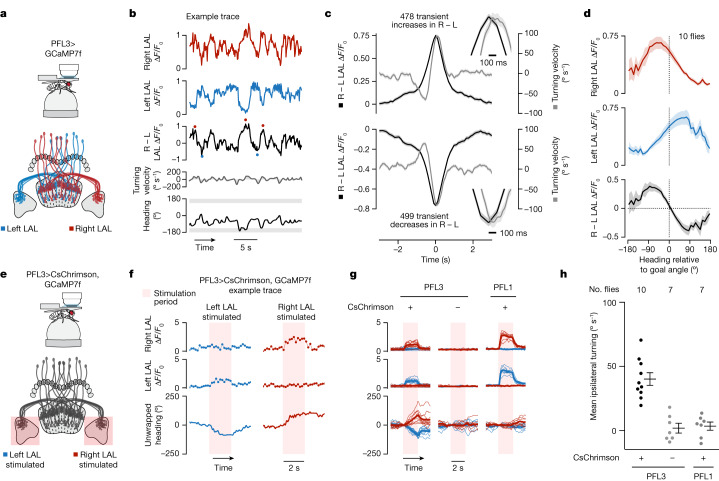
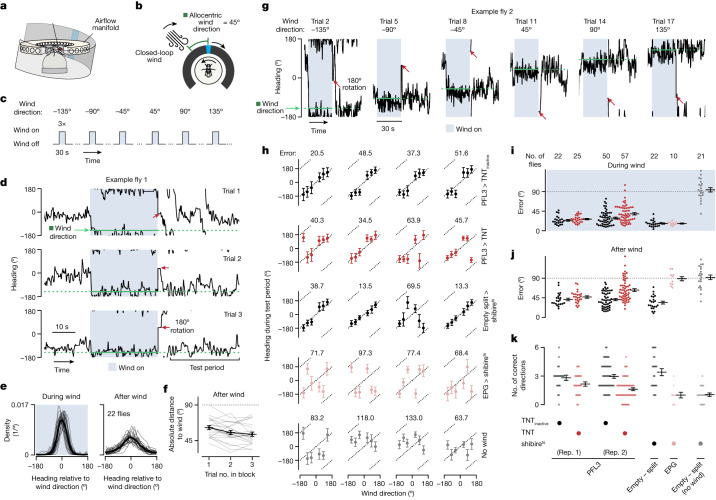
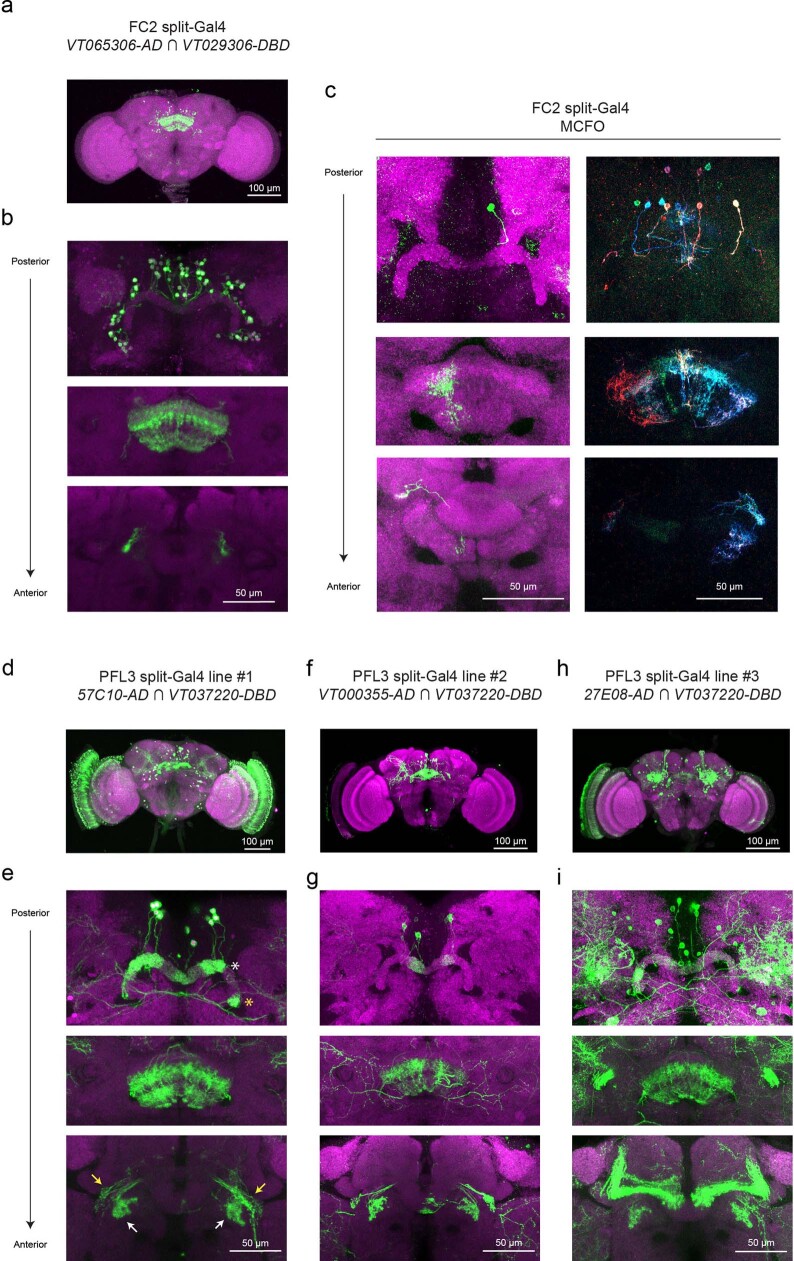
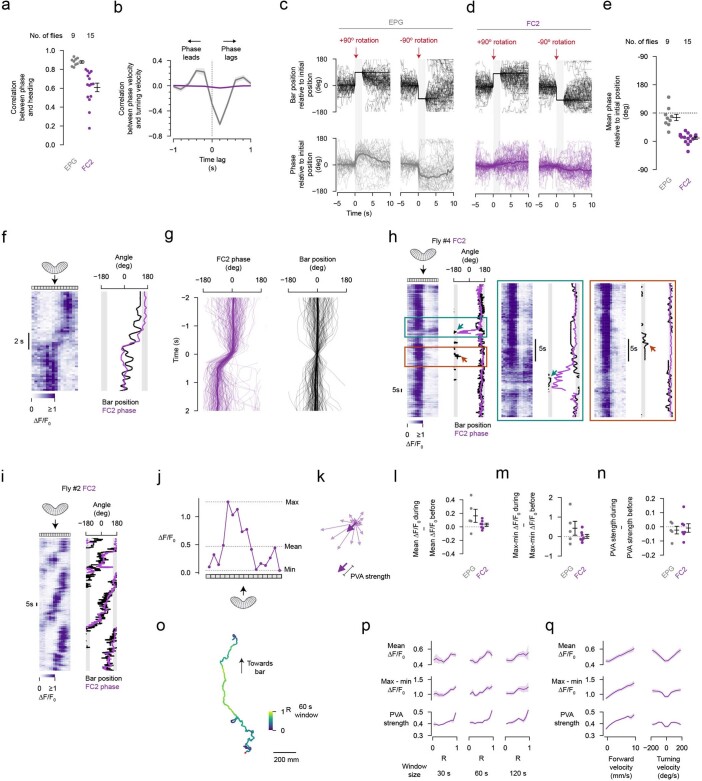
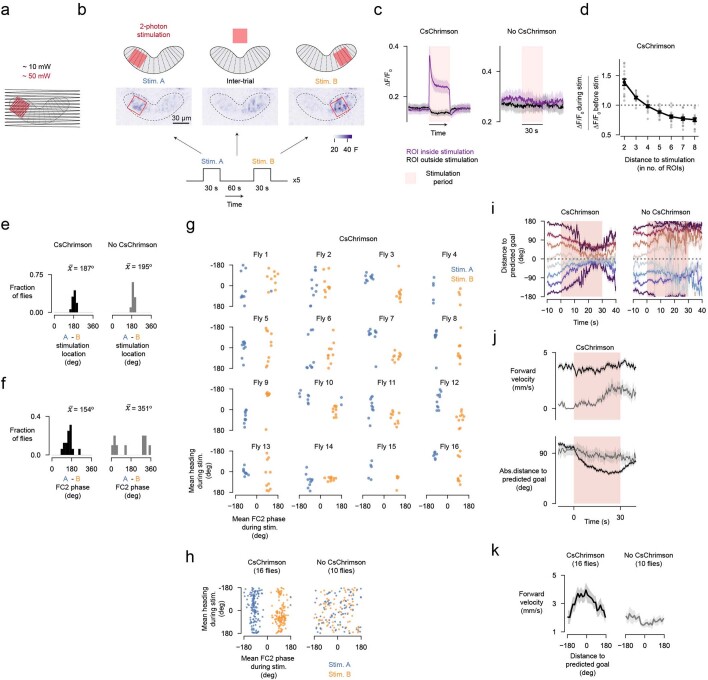
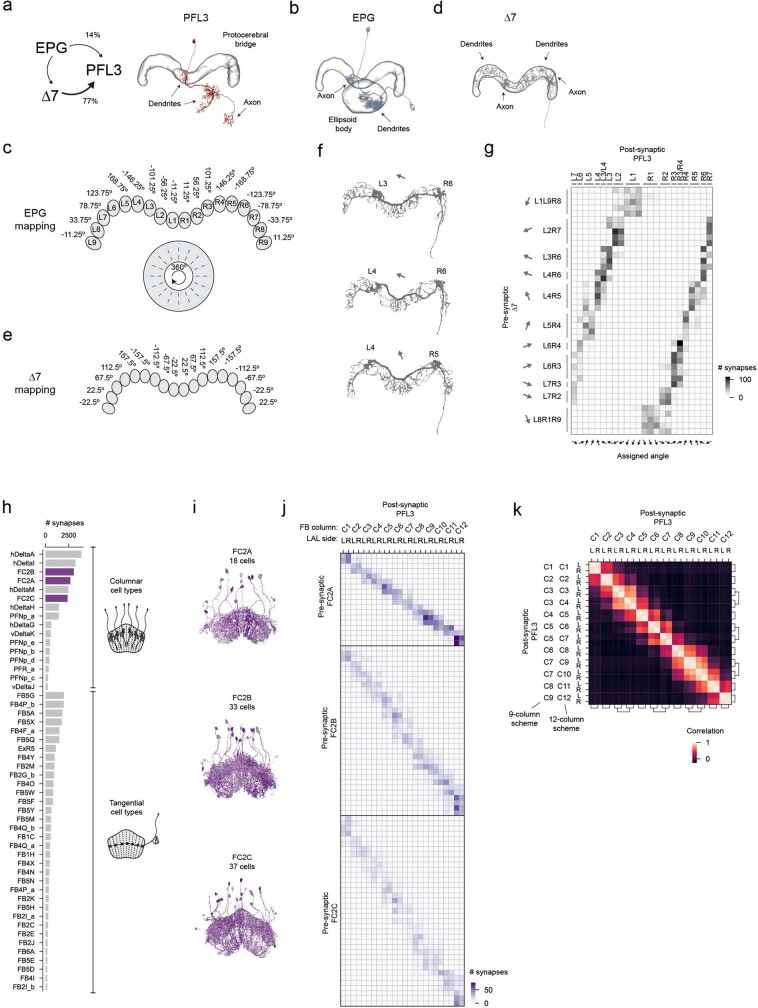
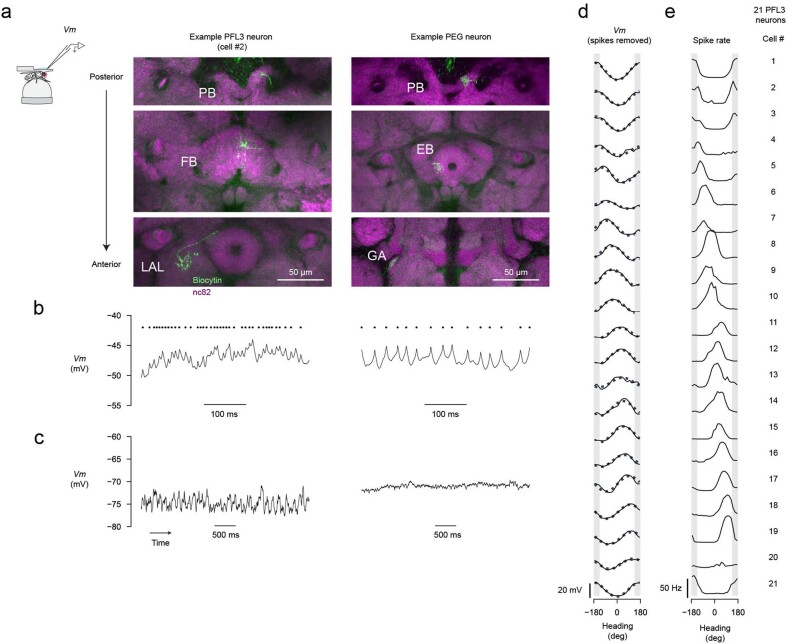
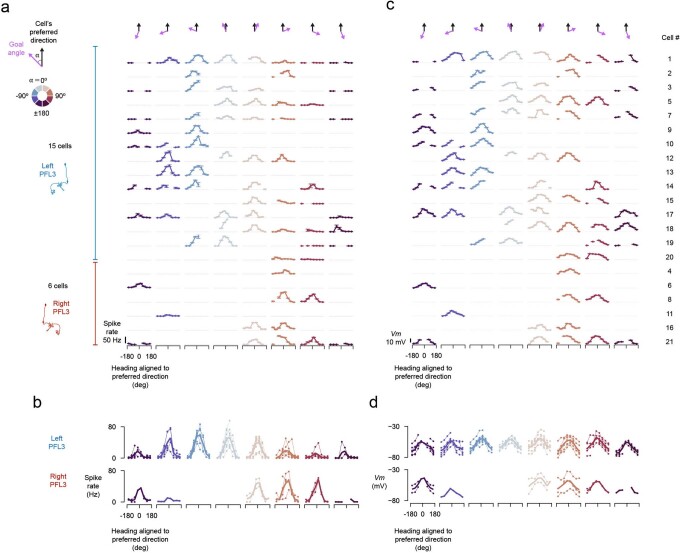
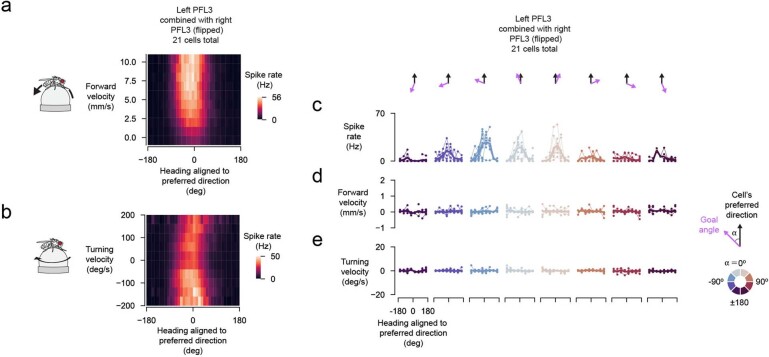
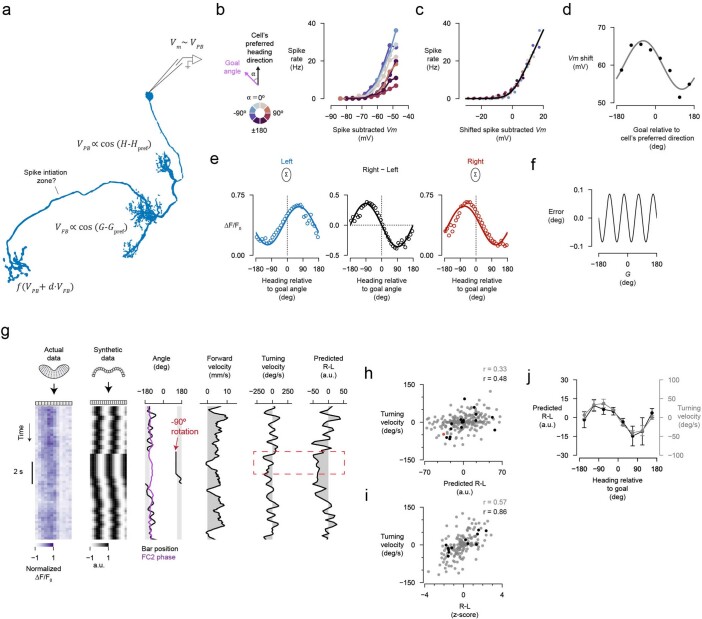
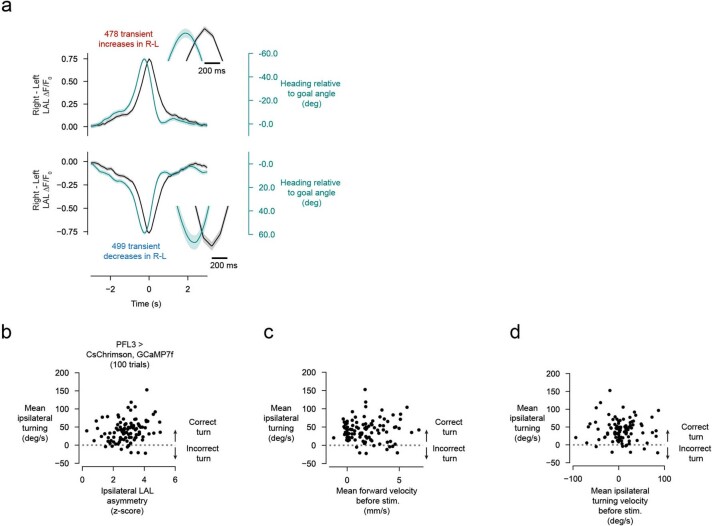
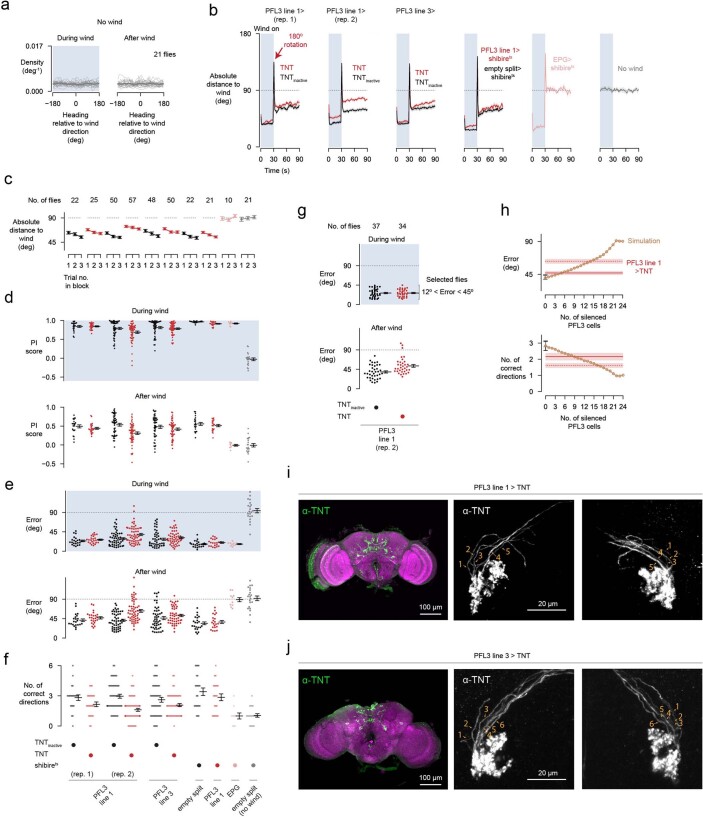
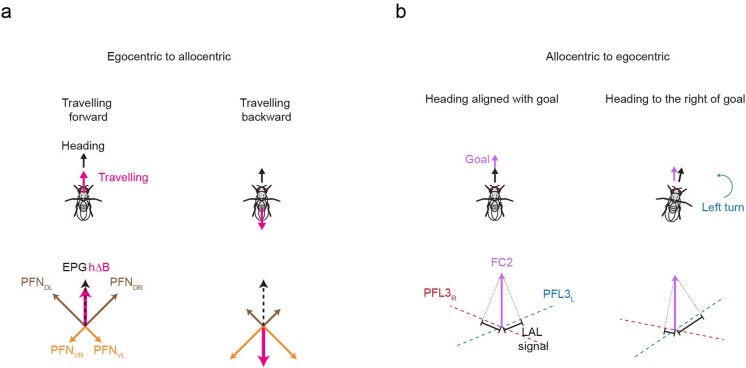
Abstract Neuronal signals that are relevant for spatial navigation have been described in many species1–10. However, a circuit-level understanding of how such signals interact to guide navigational behaviour is lacking. Here we characterize a neuronal circuit in the Drosophila central complex that compares internally generated estimates of the heading and goal angles of the fly—both of which are encoded in world-centred (allocentric) coordinates—to generate a body-centred (egocentric) steering signal. Past work has suggested that the activity of EPG neurons represents the fly’s moment-to-moment angular orientation, or heading angle, during navigation2,11. An animal’s moment-to-moment heading angle, however, is not always aligned with its goal angle—that is, the allocentric direction in which it wishes to progress forward. We describe FC2 cells12, a second set of neurons in the Drosophila brain with activity that correlates with the fly’s goal angle. Focal optogenetic activation of FC2 neurons induces flies to orient along experimenter-defined directions as they walk forward. EPG and FC2 neurons connect monosynaptically to a third neuronal class, PFL3 cells12,13. We found that individual PFL3 cells show conjunctive, spike-rate tuning to both the heading angle and the goal angle during goal-directed navigation. Informed by the anatomy and physiology of these three cell classes, we develop a model that explains how this circuit compares allocentric heading and goal angles to build an egocentric steering signal in the PFL3 output terminals. Quantitative analyses and optogenetic manipulations of PFL3 activity support the model. Finally, using a new navigational memory task, we show that flies expressing disruptors of synaptic transmission in subsets of PFL3 cells have a reduced ability to orient along arbitrary goal directions, with an effect size in quantitative accordance with the prediction of our model. The biological circuit described here reveals how two population-level allocentric signals are compared in the brain to produce an egocentric output signal that is appropriate for motor control.
Overview
The claims and statistics of this paper haven’t been checked yet.
Free: it reads the open-access text and checks the first 5 claims that cite a source we can check. Create a free account to check every claim.
Integrity signals
Registry
Cites
Statistics
Figures
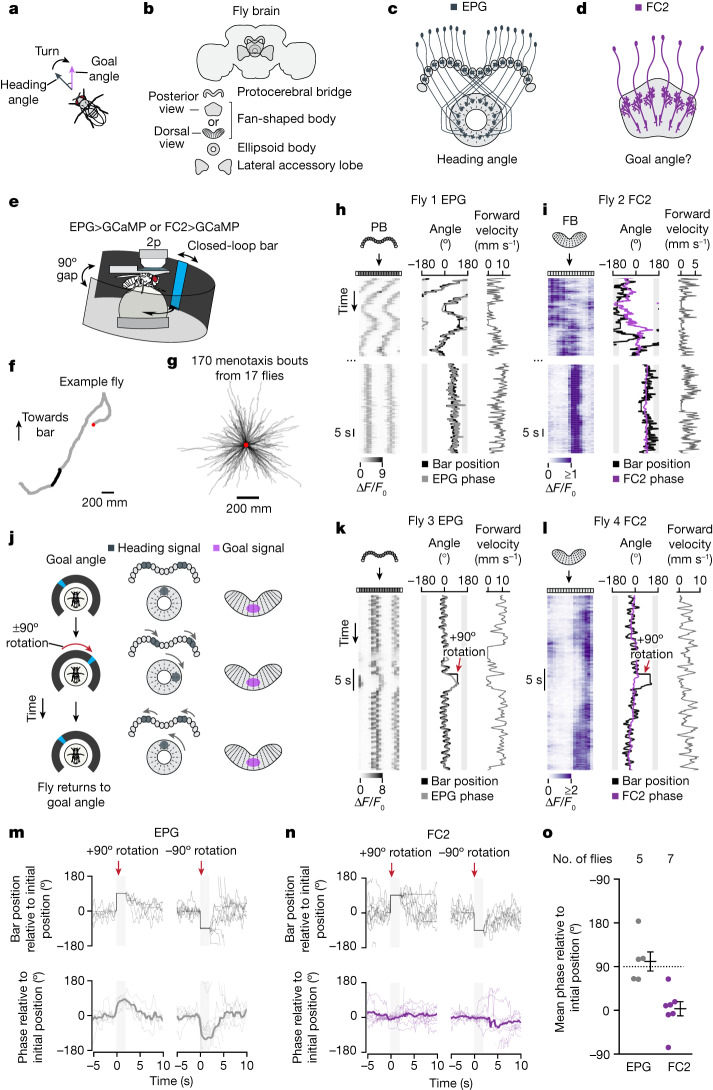
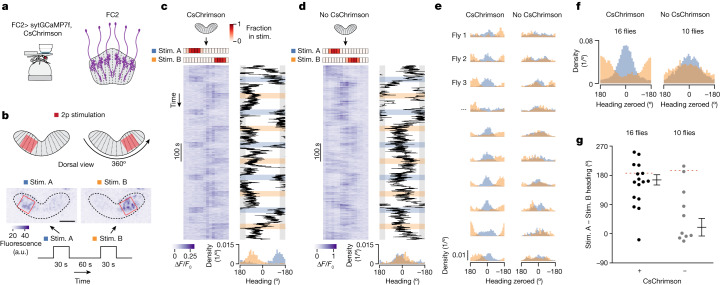
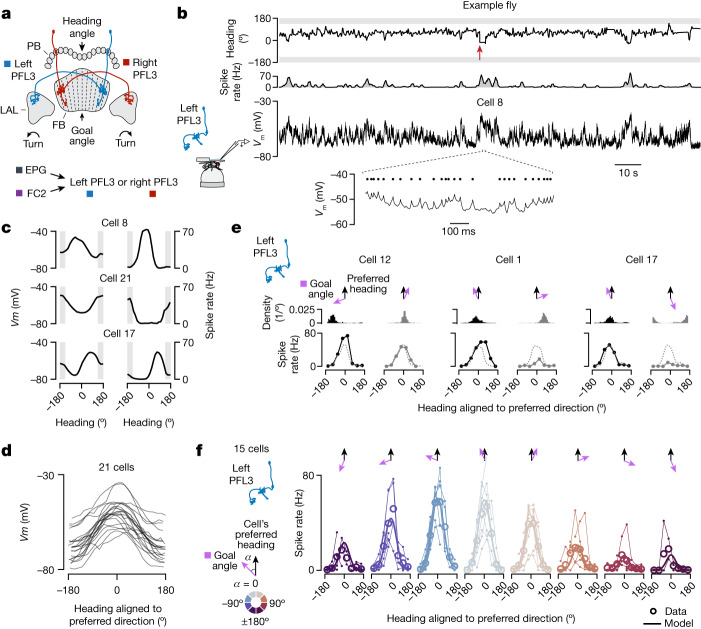
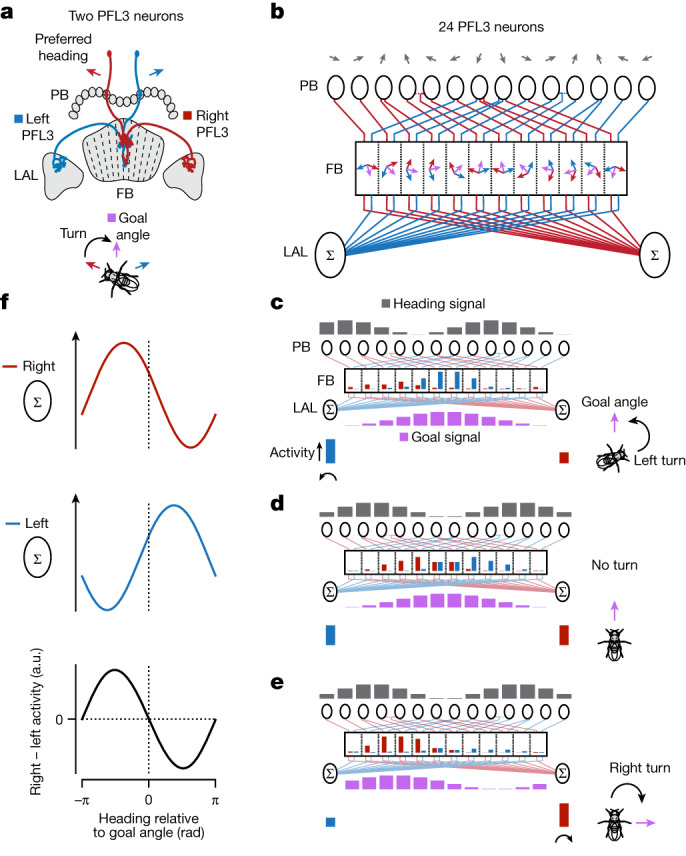
Verification
Claims the paper makes
The claims and statistics of this paper haven’t been checked yet.
Free: it reads the open-access text and checks the first 5 claims that cite a source we can check. Create a free account to check every claim.
Claims other papers make about this one
Each is checked against this paper’s own text: does it say what the citing paper says it does?
The source backs part of the claim, not all of it — or backs it for a different population, condition or comparison.
In the citing paper
“DNa02 is directly targeted by central complex output neurons responsible for feedback control of heading32,62–64”
From Fine-grained descending control of steering in walking Drosophila (2024) · cites this paper as [64]
Experimental — accuracy not yet measuredIn the citing paper
“there are strong anatomical pathways from the central complex to DNa02 (Hulse et al., 2021; Mussells Pires et al., 2024; Rayshubskiy et al., 2020; Westeinde et al., 2024).”
From Neural circuit mechanisms for steering control in walking Drosophila (2025) · cites this paper as Mussells Pires et al., 2024
Self-check
Percentages, sums and reported differences re-computed from the paper’s own numbers.
The self-check needs the paper’s full text.
Citations
Cites
SciPy 1.0: fundamental algorithms for scientific computing in Python
Virtanen, P., Gommers, R., Oliphant, T. E., Haberland, M., Reddy, T., Cournapeau, D., Burovski, E., Peterson, P., Weckesser, W., Bright, J., et al. (2020) · Nature Methods · doi:10.1038/s41592-019-0686-2 · Cited by 38,430
SciPy 1.0: fundamental algorithms for scientific computing in Python
Virtanen, P., Gommers, R., Oliphant, T. E., Haberland, M., Reddy, T., Cournapeau, D., Burovski, E., Peterson, P., Weckesser, W., Bright, J., et al. (2019) · Apollo - University of Cambridge Repository · doi:10.17863/cam.64134 · Cited by 10,460
The hippocampus as a spatial map. Preliminary evidence from unit activity in the freely-moving rat
O'Keefe, J., & Dostrovsky, J. (1971) · Brain Research · doi:10.1016/0006-8993(71)90358-1 · Cited by 6,151
DOUGLAS, D. H., & PEUCKER, T. K. (1973) · Cartographica · doi:10.3138/fm57-6770-u75u-7727 · Cited by 4,229 · cited 1×
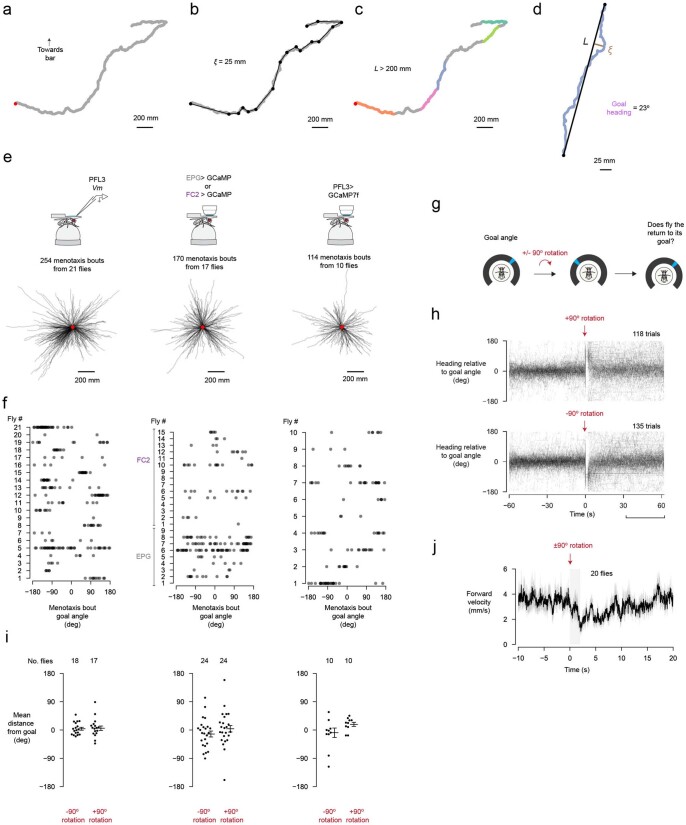
“To analyse the fly’s meno-taxis behaviour, we isolated straight segments (which we call menotaxis bouts) of the fly’s 2D virtual trajectory using the Ramer–Douglas– Peucker algorithm 62,63 (Extended Data Fig.”
MethodIndependent optical excitation of distinct neural populations
Klapoetke, N. C., Murata, Y., Kim, S. S., Pulver, S. R., Birdsey-Benson, A., Cho, Y. K., Morimoto, T. K., Chuong, A. S., Carpenter, E. J., Tian, Z., et al. (2014) · Nature Methods · doi:10.1038/nmeth.2836 · Cited by 2,344
Taube, J., Muller, R., & Ranck, J. (1990) · The Journal of Neuroscience · doi:10.1523/jneurosci.10-02-00420.1990 · Cited by 1,809 · cited 1×
“The fact that these shifts have a cosine shape as a function of the goal angle is consistent with: (1) the existence of a cosine-shaped goal input in the fan-shaped body (as our model assumes) and (2), our hypothesis that the voltage consequences of the goal in the fan-shaped body are not fully evident in the soma, th…”
ResultJammalamadaka, S. R., & SenGupta, A. (2001) · Series on Multivariate Analysis · doi:10.1142/4031 · Cited by 1,779
An iterative procedure for the polygonal approximation of plane curves
Ramer, U. (1972) · Computer Graphics and Image Processing · doi:10.1016/s0146-664x(72)80017-0 · Cited by 1,372
Spatial representation in the entorhinal cortex
Fyhn, M., Molden, S., Witter, M. P., Moser, E. I., & Moser, M.-B. (2004) · Science · doi:10.1126/science.1099901 · Cited by 1,339
ScanImage: Flexible software for operating laser scanning microscopes
Pologruto, T. A., Sabatini, B. L., & Svoboda, K. (2003) · BioMedical Engineering OnLine · doi:10.1186/1475-925x-2-13 · Cited by 1,294
High-performance calcium sensors for imaging activity in neuronal populations and microcompartments
Dana, H., Sun, Y., Mohar, B., Hulse, B. K., Kerlin, A. M., Hasseman, J. P., Tsegaye, G., Tsang, A., Wong, A., Patel, R., et al. (2019) · Nature Methods · doi:10.1038/s41592-019-0435-6 · Cited by 1,182
A connectome and analysis of the adult Drosophila central brain
Scheffer, L. K., Xu, C. S., Januszewski, M., Lu, Z., Takemura, S.-Y., Hayworth, K. J., Huang, G. B., Shinomiya, K., Maitlin-Shepard, J., Berg, S., et al. (2020) · eLife · doi:10.7554/elife.57443 · Cited by 1,128 · cited 10×
“In the bridge, PFL3 cells are post-synaptic to EPG cells 12,13 , from which they can receive signals related to the fly’s heading angle (Extended Data Fig.”
BackgroundMethodInfluentialCaImAn an open source tool for scalable calcium imaging data analysis
Giovannucci, A., Friedrich, J., Gunn, P., Kalfon, J., Brown, B. L., Koay, S. A., Taxidis, J., Najafi, F., Gauthier, J. L., Zhou, P., et al. (2019) · eLife · doi:10.7554/elife.38173 · Cited by 947
Sweeney, S. T., Broadie, K., Keane, J., Niemann, H., & O'Kane, C. J. (1995) · Neuron · doi:10.1016/0896-6273(95)90290-2 · Cited by 938
Neural dynamics for landmark orientation and angular path integration
Seelig, J. D., & Jayaraman, V. (2015) · Nature · doi:10.1038/nature14446 · Cited by 718 · cited 1×
“The fact that these shifts have a cosine shape as a function of the goal angle is consistent with: (1) the existence of a cosine-shaped goal input in the fan-shaped body (as our model assumes) and (2), our hypothesis that the voltage consequences of the goal in the fan-shaped body are not fully evident in the soma, th…”
ResultNern, A., Pfeiffer, B. D., & Rubin, G. M. (2015) · Proceedings of the National Academy of Sciences · doi:10.1073/pnas.1506763112 · Cited by 584
Wilson, R. I., & Laurent, G. (2005) · The Journal of Neuroscience · doi:10.1523/jneurosci.2070-05.2005 · Cited by 469
Active flight increases the gain of visual motion processing in Drosophila
Maimon, G., Straw, A. D., & Dickinson, M. H. (2010) · Nature Neuroscience · doi:10.1038/nn.2492 · Cited by 420 · cited 2×
“We glued flies to custom holders that allowed for physiological measurements from the brain, under a saline bath, while the body remained dry and capable of executing tethered locomotor behaviour, as described previously 33,34 .”
MethodSelf-citationNeuronal architecture of the central complex in Drosophila melanogaster
Hanesch, U., Fischbach, K. F., & Heisenberg, M. (1989) · Cell and Tissue Research · doi:10.1007/bf00261838 · Cited by 416 · cited 1×
“Columnar neurons of the central complex innervate subsections or columns of these larger structures, with each columnar cell class tiling the structure or structures that they innervate 12,30,31 .”
BackgroundWhole-brain annotation and multi-connectome cell typing of Drosophila
Schlegel, P., Yin, Y., Bates, A. S., Dorkenwald, S., Eichler, K., Brooks, P., Han, D. S., Gkantia, M., dos Santos, M., Munnelly, E. J., et al. (2024) · Nature · doi:10.1038/s41586-024-07686-5 · Cited by 413
Heisenberg, M., & Wolf, R. (1984) · Studies of Brain Function · doi:10.1007/978-3-642-69936-8 · Cited by 400
Hulse, B. K., Haberkern, H., Franconville, R., Turner-Evans, D., Takemura, S.-Y., Wolff, T., Noorman, M., Dreher, M., Dan, C., Parekh, R., et al. (2021) · eLife · doi:10.7554/elife.66039 · Cited by 392
Hulse, B. K., Haberkern, H., Franconville, R., Turner-Evans, D. B., Takemura, S., Wolff, T., Noorman, M., Dreher, M., Dan, C., Parekh, R., et al. (2020) · doi:10.1101/2020.12.08.413955 · Cited by 392 · cited 9×
“The ∆7 cells could shape the heading tuning of PFL3 cells in subtle but important ways 4,12 .”
BackgroundInfluentialEichenbaum, H., Kuperstein, M., Fagan, A., & Nagode, J. (1987) · The Journal of Neuroscience · doi:10.1523/jneurosci.07-03-00716.1987 · Cited by 378
An Anatomically Constrained Model for Path Integration in the Bee Brain
Stone, T., Webb, B., Adden, A., Weddig, N. B., Honkanen, A., Templin, R., Wcislo, W., Scimeca, L., Warrant, E., & Heinze, S. (2017) · Current Biology · doi:10.1016/j.cub.2017.08.052 · Cited by 377
Object-vector coding in the medial entorhinal cortex
Høydal, Ø. A., Skytøen, E. R., Andersson, S. O., Moser, M.-B., & Moser, E. I. (2019) · Nature · doi:10.1038/s41586-019-1077-7 · Cited by 366
Maplike Representation of Celestial E -Vector Orientations in the Brain of an Insect
Heinze, S., & Homberg, U. (2007) · Science · doi:10.1126/science.1135531 · Cited by 355
Two-photon calcium imaging from head-fixed Drosophila during optomotor walking behavior
Seelig, J. D., Chiappe, M. E., Lott, G. K., Dutta, A., Osborne, J. E., Reiser, M. B., & Jayaraman, V. (2010) · Nature Methods · doi:10.1038/nmeth.1468 · Cited by 345 · cited 1×
“We performed two-photon calcium imaging in tethered flies while they walked on an air-cushioned ball in a simple virtual environment 32–34 (Fig.”
MethodVectorial representation of spatial goals in the hippocampus of bats
Sarel, A., Finkelstein, A., Las, L., & Ulanovsky, N. (2017) · Science · doi:10.1126/science.aak9589 · Cited by 339 · cited 2×
“For example, neural correlates of moment-to-moment heading (that is, head-direction cells) exist in vertebrates 1,17,18 and invertebrates 2,19,20 as do neurons with activity related to navigational goals 7,8,10,21 and locomotor turns 22–24 .”
BackgroundA neural circuit architecture for angular integration in Drosophila
Green, J., Adachi, A., Shah, K. K., Hirokawa, J. D., Magani, P. S., & Maimon, G. (2017) · Nature · doi:10.1038/nature22343 · Cited by 331 · cited 10×
“For both two-photon calcium imaging and patch-clamp experiments, we placed flies in a virtual reality setup described previously 34 .”
BackgroundMethodInfluentialSelf-citationWolff, T., Iyer, N. A., & Rubin, G. M. (2015) · Journal of Comparative Neurology · doi:10.1002/cne.23705 · Cited by 286
Williams, J. L. D. (1975) · Journal of Zoology · doi:10.1111/j.1469-7998.1975.tb03188.x · Cited by 283
Angular velocity integration in a fly heading circuit
Turner-Evans, D., Wegener, S., Rouault, H., Franconville, R., Wolff, T., Seelig, J. D., Druckmann, S., & Jayaraman, V. (2017) · eLife · doi:10.7554/elife.23496 · Cited by 281 · cited 2×
“Similar to the way in which EPG cells express bumps of activity that shift around the ellipsoid body and protocerebral bridge 2,34,39 (Fig.”
A modular display system for insect behavioral neuroscience
Reiser, M. B., & Dickinson, M. H. (2008) · Journal of Neuroscience Methods · doi:10.1016/j.jneumeth.2007.07.019 · Cited by 280 · cited 2×
“We used a cylindrical LED display that spanned 270° of angular space around the fly 35 .”
BackgroundMethodEgocentric coding of external items in the lateral entorhinal cortex
Wang, C., Chen, X., Lee, H., Deshmukh, S. S., Yoganarasimha, D., Savelli, F., & Knierim, J. J. (2018) · Science · doi:10.1126/science.aau4940 · Cited by 276
Three-dimensional head-direction coding in the bat brain
Finkelstein, A., Derdikman, D., Rubin, A., Foerster, J. N., Las, L., & Ulanovsky, N. (2015) · Nature · doi:10.1038/nature14031 · Cited by 274 · cited 1×
“For example, neural correlates of moment-to-moment heading (that is, head-direction cells) exist in vertebrates 1,17,18 and invertebrates 2,19,20 as do neurons with activity related to navigational goals 7,8,10,21 and locomotor turns 22–24 .”
BackgroundDistinct Dopamine Receptor Pathways Underlie the Temporal Sensitivity of Associative Learning
Handler, A., Graham, T. G. W., Cohn, R., Morantte, I., Siliciano, A. F., Zeng, J., Li, Y., & Ruta, V. (2019) · Cell · doi:10.1016/j.cell.2019.05.040 · Cited by 232 · cited 6×
“Here, we functionally characterize such a neural circuit in the Drosophila brain.”
MethodInfluentialInfluence of local objects on hippocampal representations: Landmark vectors and memory
Deshmukh, S. S., & Knierim, J. J. (2013) · Hippocampus · doi:10.1002/hipo.22101 · Cited by 217
Building an allocentric travelling direction signal via vector computation
Lyu, C., Abbott, L. F., & Maimon, G. (2022) · Nature · doi:10.1038/s41586-021-04067-0 · Cited by 215
Self-citationPoodry, C. A., & Edgar, L. (1979) · The Journal of cell biology · doi:10.1083/jcb.81.3.520 · Cited by 189
Cognitive map–based navigation in wild bats revealed by a new high-throughput tracking system
Toledo, S., Shohami, D., Schiffner, I., Lourie, E., Orchan, Y., Bartan, Y., & Nathan, R. (2020) · Science · doi:10.1126/science.aax6904 · Cited by 187 · cited 1×
“Fruit bats fly kilometres to re-visit the same tree night after night 15 .”
BackgroundThe brain of Drosophila melanogaster
Power, M. E. (1943) · Journal of Morphology · doi:10.1002/jmor.1050720306 · Cited by 181 · cited 1×
“The insect central complex is a set of midline-straddling brain structures that include the ellipsoid body, protocerebral bridge and fan-shaped body 29 (Fig.”
BackgroundHippocampal place cells have goal-oriented vector fields during navigation
Ormond, J., & O'Keefe, J. M. (2022) · Nature · doi:10.1038/s41586-022-04913-9 · Cited by 178 · cited 3×
“For example, neural correlates of moment-to-moment heading (that is, head-direction cells) exist in vertebrates 1,17,18 and invertebrates 2,19,20 as do neurons with activity related to navigational goals 7,8,10,21 and locomotor turns 22–24 .”
BackgroundMethodGeneration of stable heading representations in diverse visual scenes
Kim, S. S., Hermundstad, A. M., Romani, S., Abbott, L. F., & Jayaraman, V. (2019) · Nature · doi:10.1038/s41586-019-1767-1 · Cited by 172 · cited 2×
“This time period gave the fly experience with all possible angular bar positions, which is expected to reinforce the formation of a stable map between the position of the bar on the screen and the EPG heading-estimate in the central complex 41,42 .”
BackgroundSelf-citationThe Neuroanatomical Ultrastructure and Function of a Biological Ring Attractor
Turner-Evans, D. B., Jensen, K. T., Ali, S., Paterson, T., Sheridan, A., Ray, R. P., Wolff, T., Lauritzen, J. S., Rubin, G. M., Bock, D. D., et al. (2020) · Neuron · doi:10.1016/j.neuron.2020.08.006 · Cited by 168
The neuroanatomical ultrastructure and function of a biological ring attractor
Turner-Evans, D. B., Jensen, K. T., Ali, S., Paterson, T., Sheridan, A., Ray, R. P., Wolff, T., Lauritzen, S., Rubin, G. M., Bock, D., et al. (2019) · doi:10.1101/847152 · Cited by 166
Sensorimotor experience remaps visual input to a heading-direction network
Fisher, Y. E., Lu, J., D’Alessandro, I., & Wilson, R. I. (2019) · Nature · doi:10.1038/s41586-019-1772-4 · Cited by 165 · cited 2×
“This time period gave the fly experience with all possible angular bar positions, which is expected to reinforce the formation of a stable map between the position of the bar on the screen and the EPG heading-estimate in the central complex 41,42 .”
BackgroundSun Navigation Requires Compass Neurons in Drosophila
Giraldo, Y. M., Leitch, K. J., Ros, I. G., Warren, T. L., Weir, P. T., & Dickinson, M. H. (2018) · Current Biology · doi:10.1016/j.cub.2018.07.002 · Cited by 161
Wolff, T., & Rubin, G. M. (2018) · Journal of Comparative Neurology · doi:10.1002/cne.24512 · Cited by 156
Brainstem neurons that command mammalian locomotor asymmetries
Cregg, J. M., Leiras, R., Montalant, A., Wanken, P., Wickersham, I. R., & Kiehn, O. (2020) · Nature Neuroscience · doi:10.1038/s41593-020-0633-7 · Cited by 154 · cited 1×
“For example, neural correlates of moment-to-moment heading (that is, head-direction cells) exist in vertebrates 1,17,18 and invertebrates 2,19,20 as do neurons with activity related to navigational goals 7,8,10,21 and locomotor turns 22–24 .”
BackgroundTransforming representations of movement from body- to world-centric space
Lu, J., Behbahani, A. H., Hamburg, L., Westeinde, E. A., Dawson, P. M., Lyu, C., Maimon, G., Dickinson, M. H., Druckmann, S., & Wilson, R. I. (2022) · Nature · doi:10.1038/s41586-021-04191-x · Cited by 152
Self-citationFicTrac: A visual method for tracking spherical motion and generating fictive animal paths
Moore, R. J. D., Taylor, G. J., Paulk, A. C., Pearson, T., van Swinderen, B., & Srinivasan, M. V. (2014) · Journal of Neuroscience Methods · doi:10.1016/j.jneumeth.2014.01.010 · Cited by 138
A neural heading estimate is compared with an internal goal to guide oriented navigation
Green, J., Vijayan, V., Mussells Pires, P., Adachi, A., & Maimon, G. (2019) · Nature Neuroscience · doi:10.1038/s41593-019-0444-x · Cited by 137 · cited 9×
“In addition to controlling their heading angle by turning left or right, flies need to control their forward walking velocity on the basis of whether their heading is aligned with their goal 11 .”
BackgroundResultInfluentialSelf-citationA neural circuit for wind-guided olfactory navigation
Matheson, A. M. M., Lanz, A. J., Medina, A. M., Licata, A. M., Currier, T. A., Syed, M. H., & Nagel, K. I. (2022) · Nature Communications · doi:10.1038/s41467-022-32247-7 · Cited by 136 · cited 6×
“The extreme accuracy of this turning signal, which is also evident in previous modelling studies 16,24,26,28 , is the result of symmetries in the preferred PFL3 heading and goal angles extracted from the connectome (Supplementary Discussion).”
BackgroundResultInfluentialLin, C.-Y., Chuang, C.-C., Hua, T.-E., Chen, C.-C., Dickson, B. J., Greenspan, R. J., & Chiang, A.-S. (2013) · Cell Reports · doi:10.1016/j.celrep.2013.04.022 · Cited by 134 · cited 2×
“In Drosophila , it has been specifically suggested that PFL3 cells 12,24,43 , a columnar cell class with compelling anatomy, might function to compare goal and heading signals to guide turns 12,24,26–28 .”
BackgroundMethodSpinal projection neurons control turning behaviors in zebrafish
Huang, K.-H., Ahrens, M. B., Dunn, T. W., & Engert, F. (2013) · Current Biology · doi:10.1016/j.cub.2013.06.044 · Cited by 133
Neural dynamics and architecture of the heading direction circuit in zebrafish
Petrucco, L., Lavian, H., Wu, Y. K., Svara, F., Štih, V., & Portugues, R. (2023) · Nature Neuroscience · doi:10.1038/s41593-023-01308-5 · Cited by 133 · cited 1×
“For example, neural correlates of moment-to-moment heading (that is, head-direction cells) exist in vertebrates 1,17,18 and invertebrates 2,19,20 as do neurons with activity related to navigational goals 7,8,10,21 and locomotor turns 22–24 .”
BackgroundA cortico-collicular circuit for orienting to shelter during escape
Campagner, D., do Vale, R. D., Tan, Y. L., Ιορδανίδου, Π., Arocas, O. P., Claudi, F., Stempel, A. V., Keshavarzi, S., Petersen, R. S., Margrie, T. W., et al. (2022) · Nature · doi:10.1038/s41586-022-05553-9 · Cited by 127 · cited 2×
“For example, neural correlates of moment-to-moment heading (that is, head-direction cells) exist in vertebrates 1,17,18 and invertebrates 2,19,20 as do neurons with activity related to navigational goals 7,8,10,21 and locomotor turns 22–24 .”
BackgroundA Neural Network for Wind-Guided Compass Navigation
Okubo, T. S., Patella, P., D’Alessandro, I., & Wilson, R. I. (2020) · Neuron · doi:10.1016/j.neuron.2020.06.022 · Cited by 114
Search and anemotactic orientation of cockroaches
Bell, W. J., & Kramer, E. (1979) · Journal of Insect Physiology · doi:10.1016/0022-1910(79)90112-4 · Cited by 104
Whole-brain annotation and multi-connectome cell typing quantifies circuit stereotypy in Drosophila
Schlegel, P., Yin, Y., Bates, A. S., Dorkenwald, S., Eichler, K., Brooks, P., Han, D. S., Gkantia, M., dos Santos, M., Munnelly, E. J., et al. (2023) · doi:10.1101/2023.06.27.546055 · Cited by 102
Color depth MIP mask search: a new tool to expedite Split-GAL4 creation
Otsuna, H., Ito, M., & Kawase, T. (2018) · bioRxiv (Cold Spring Harbor Laboratory) · doi:10.1101/318006 · Cited by 91
Cellular Basis of Head Direction and Contextual Cues in the Insect Brain
Varga, A. G., & Ritzmann, R. E. (2016) · Current Biology · doi:10.1016/j.cub.2016.05.037 · Cited by 87 · cited 1×
“For example, neural correlates of moment-to-moment heading (that is, head-direction cells) exist in vertebrates 1,17,18 and invertebrates 2,19,20 as do neurons with activity related to navigational goals 7,8,10,21 and locomotor turns 22–24 .”
BackgroundTransforming a head direction signal into a goal-oriented steering command
Westeinde, E. A., Kellogg, E., Dawson, P. M., Lu, J., Hamburg, L., Midler, B., Druckmann, S., & Wilson, R. I. (2024) · Nature · doi:10.1038/s41586-024-07039-2 · Cited by 85 · cited 1×
“The accompanying article provides experimental evidence that PFL2 activity drives increases in rotational speed and decreases in forward velocity when flies are oriented far from their goal angle 50 .”
Transforming a head direction signal into a goal-oriented steering command
Westeinde, E. A., Kellogg, E., Dawson, P. M., Lu, J., Hamburg, L., Midler, B., Druckmann, S., & Wilson, R. I. (2022) · doi:10.1101/2022.11.10.516039 · Cited by 85
Context-dependent representations of movement in Drosophila dopaminergic reinforcement pathways
Zolin, A., Cohn, R., Pang, R., Siliciano, A. F., Fairhall, A. L., & Ruta, V. (2021) · Nature Neuroscience · doi:10.1038/s41593-021-00929-y · Cited by 84 · cited 1×
“6c) and flies reliably oriented upwind in this 30 s period (that is, performed anemotaxis 46,47 ) (Fig.”
BackgroundFlight-Induced Compass Representation in the Monarch Butterfly Heading Network
Beetz, M. J., Kraus, C., Franzke, M., Dreyer, D., Strube-Bloss, M. F., Rößler, W., Warrant, E. J., Merlin, C., & el Jundi, B. (2021) · Current Biology · doi:10.1016/j.cub.2021.11.009 · Cited by 80
NeuronBridge: an intuitive web application for neuronal morphology search across large data sets
Clements, J., Goina, C., Hubbard, P. M., Kawase, T., Olbris, D. J., Otsuna, H., Svirskas, R., & Rokicki, K. (2024) · BMC Bioinformatics · doi:10.1186/s12859-024-05732-7 · Cited by 77
Heading direction with respect to a reference point modulates place-cell activity
Jercog, P. E., Ahmadian, Y., Woodruff, C., Deb-Sen, R., Abbott, L. F., & Kandel, E. R. (2019) · Nature Communications · doi:10.1038/s41467-019-10139-7 · Cited by 77
Self-citationPath integration — a network model
Wittmann, T., & Schwegler, H. (1995) · Biological Cybernetics · doi:10.1007/bf00199549 · Cited by 67 · cited 1×
“Early theoretical work presciently suggested how heading and goal angles, encoded in arrays of neurons, could be read out to generate a turning signal 25 and, more recently, how the array-like anatomy of the central-complex could implement a heading to goal comparison 16 .”
BackgroundNeural representation of goal direction in the monarch butterfly brain
Beetz, M. J., Kraus, C., & el Jundi, B. (2023) · Nature Communications · doi:10.1038/s41467-023-41526-w · Cited by 65 · cited 1×
“For example, neural correlates of moment-to-moment heading (that is, head-direction cells) exist in vertebrates 1,17,18 and invertebrates 2,19,20 as do neurons with activity related to navigational goals 7,8,10,21 and locomotor turns 22–24 .”
BackgroundNeural circuit mechanisms for steering control in walking Drosophila
Rayshubskiy, A., Holtz, S. L., Bates, A. S., Vanderbeck, Q. X., Capdevila, L. S., Rockwell, V., & Wilson, R. I. (2020) · doi:10.1101/2020.04.04.024703 · Cited by 64
A neural circuit architecture for rapid behavioral flexibility in goal-directed navigation
Dan, C., Hulse, B. K., Kappagantula, R., Jayaraman, V., & Hermundstad, A. M. (2021) · doi:10.1101/2021.08.18.456004 · Cited by 51 · cited 8×
“The extreme accuracy of this turning signal, which is also evident in previous modelling studies 16,24,26,28 , is the result of symmetries in the preferred PFL3 heading and goal angles extracted from the connectome (Supplementary Discussion).”
BackgroundMethodResultInfluentialA unified mechanism for innate and learned visual landmark guidance in the insect central complex
Goulard, R., Buehlmann, C., Niven, J. E., Graham, P., & Webb, B. (2021) · PLoS Computational Biology · doi:10.1371/journal.pcbi.1009383 · Cited by 51
A neural circuit architecture for rapid learning in goal-directed navigation
Dan, C., Hulse, B. K., Kappagantula, R., Jayaraman, V., & Hermundstad, A. M. (2024) · Neuron · doi:10.1016/j.neuron.2024.04.036 · Cited by 51
Characterizing long-range search behavior in Diptera using complex 3D virtual environments
Kaushik, P. K., Renz, M., & Olsson, S. B. (2020) · Proceedings of the National Academy of Sciences · doi:10.1073/pnas.1912124117 · Cited by 45 · cited 1×
“The design of this device took inspiration from past wind-delivery devices for Drosophila 56–59 .”
MethodBearing selection in ball-rolling dung beetles: is it constant?
Baird, E., Byrne, M. J., Scholtz, C. H., Warrant, E. J., & Dacke, M. (2010) · Journal of Comparative Physiology A · doi:10.1007/s00359-010-0559-8 · Cited by 27 · cited 1×
“Dung beetles pick an arbitrary direction in which to roll their precious ball of dung 14 .”
BackgroundNeuronBridge: an intuitive web application for neuronal morphology search across large data setsPreprint
Clements, J., Goina, C., Hubbard, P. M., et al. (2022) · bioRxiv (Cold Spring Harbor Laboratory) · doi:10.1101/2022.07.20.500311 · Cited by 25
Multisensory Control of Orientation in Tethered Flying Drosophila
Currier, T. A., & Nagel, K. I. (2018) · Current Biology · doi:10.1016/j.cub.2018.09.020 · Cited by 20
Neuronal calcium spikes enable vector inversion in the Drosophila brain
Ishida, I. G., Sethi, S., Mohren, T. L., Haraguchi, M., Abbott, L. F., & Maimon, G. (2025) · Cell · doi:10.1016/j.cell.2025.11.040 · Cited by 15
Self-citationA neural circuit for wind-guided olfactory navigationPreprint
Matheson, A. M. M., Lanz, A. J., Medina, A. M., Licata, A. M., Currier, T. A., Syed, M. H., & Nagel, K. I. (2021) · bioRxiv (Cold Spring Harbor Laboratory) · doi:10.1101/2021.04.21.440842 · Cited by 13
Neural dynamics and architecture of the heading direction circuit in a vertebrate brainPreprint
Petrucco, L., Lavian, H., Wu, Y. K., Svara, F., Štih, V., & Portugues, R. (2022) · bioRxiv (Cold Spring Harbor Laboratory) · doi:10.1101/2022.04.27.489672 · Cited by 13
Neural representation of goal direction in the monarch butterfly brainPreprint
Beetz, M. J., Kraus, C. M., & el Jundi, B. (2022) · bioRxiv (Cold Spring Harbor Laboratory) · doi:10.1101/2022.10.15.512348 · Cited by 7
Neuronal calcium spikes enable vector inversion in the Drosophila brainPreprint
Ishida, I. G., Sethi, S., Mohren, T. L., et al. (2023) · bioRxiv (Cold Spring Harbor Laboratory) · doi:10.1101/2023.11.24.568537 · Cited by 6
State-dependent egocentric and allocentric heading representation in the monarch butterfly brainPreprint
Beetz, M., Kraus, C., Franzke, M., et al. (2021) · bioRxiv · doi:10.1101/2021.04.07.438824 · Cited by 2
Cited by
Eckstein, N., Bates, A. S., Champion, A., Du, M., Yin, Y., Schlegel, P., Lu, A. K.-Y., Rymer, T., Finley-May, S., Paterson, T., et al. (2024) · Cell · doi:10.1016/j.cell.2024.03.016 · Cited by 277
Transforming a head direction signal into a goal-oriented steering command
Westeinde, E. A., Kellogg, E., Dawson, P. M., Lu, J., Hamburg, L., Midler, B., Druckmann, S., & Wilson, R. I. (2024) · Nature · doi:10.1038/s41586-024-07039-2 · Cited by 85
“Our data demonstrate that these theoretical predictions are largely correct, and we show that the two opponent copies are represented by the PFL3R and PFL3L populations; this conclusion is supported by an independent companion paper 30 .”
Transforming a head direction signal into a goal-oriented steering command
Westeinde, E. A., Kellogg, E., Dawson, P. M., Lu, J., Hamburg, L., Midler, B., Druckmann, S., & Wilson, R. I. (2022) · doi:10.1101/2022.11.10.516039 · Cited by 85
Distributed control circuits across a brain-and-cord connectome
Bates, A. S., Phelps, J. S., Kim, M., Yang, H. H., Matsliah, A., Ajabi, Z., Perlman, E., Delgado, K. M., Osman, M. A. M., Salmon, C. K., et al. (2026) · Nature · doi:10.1038/s41586-026-10735-w · Cited by 100
“7, 80,81), but the DN targets of PFL1 have not been fully identifiable until now.”
Neural circuit mechanisms for steering control in walking Drosophila
Rayshubskiy, A., Holtz, S. L., Bates, A. S., Vanderbeck, Q. X., Capdevila, L. S., Rockwell, V., & Wilson, R. I. (2020) · doi:10.1101/2020.04.04.024703 · Cited by 64
“The central complex itself contains no DNs (Hulse et al., 2021; Namiki et al., 2018), but there are strong anatomical pathways from the central complex to DNa02 (Hulse et al., 2021; Mussells Pires et al., 2024; Rayshubskiy et al., 2020; Westeinde et al., 2024).”
Metadata
- Authors
- Mussells Pires, P., Zhang, L., Parache, V., Abbott, L. F., & Maimon, G.
- Affiliations
- Howard Hughes Medical Institute (US)
- Mortimer B. Zuckerman Mind Brain Behavior Institute (US)
- Corresponding author
- Maimon, Gaby
- Venue
- Nature
- Published
- 2024-02-07
- Volume
- 626
- Issue
- 8000
- Pages
- 808-818
- ISSN
- 0028-0836 (ISSN-L)
- 1476-4687
- PMC
- PMC10881393
- OpenAlex
- W4391617402
- Cited by
- 110
- References
- 77
- Citations by year
- 2026: 37 · 2025: 36 · 2024: 27
- FWCI
- 17.50
- Type
- journal article
- Language
- en
- Open access
- hybrid
- doi.org
- Licence
- cc-by
- creativecommons.org/licenses/by/4.0 (tdm)
- creativecommons.org/licenses/by/4.0 (vor)
- Locations
- Nature (publishedVersion, cc-by)
- bioRxiv (Cold Spring Harbor Laboratory) (acceptedVersion, cc-by)
- PubMed Central (publishedVersion, cc-by)
- PubMed (publishedVersion)
- RePEc: Research Papers in Economics (submittedVersion)
- Funders
- National Science Foundation (1707398)
- National Institutes of Health (1707398, NIH P40OD018537, P40OD018537)
- National Institute of Neurological Disorders and Stroke (R01NS104934, R35NS132252)
- Topics
- Life Sciences › Neuroscience › Cellular and Molecular Neuroscience › Neurobiology and Insect Physiology Research
- Life Sciences › Neuroscience › Cognitive Neuroscience › Memory and Neural Mechanisms
- Social Sciences › Psychology › Experimental and Cognitive Psychology › Spatial Cognition and Navigation
- Keywords
- heading angle, goal-directed navigation, optogenetic manipulation, spatial orientation
- MeSH terms
- Orientation, Spatial, Action Potentials, Animals, Brain, Drosophila, Drosophila melanogaster, Goals, Head, Locomotion, Neural Pathways, Synaptic Transmission, Neurons, Space Perception, Optogenetics, Spatial Memory, Spatial Navigation
About these checks
Registry, retraction, Cites and statistics results are computed, not judged, with one exception: a printed reference that no index lists is read once by a model before it counts as a citation error. Claims are extracted by a model and kept only when their quote appears verbatim in the text; each cited source is then checked, with a model’s help, for whether it says what the claim relies on. Those verdicts can be wrong — read the claim’s quote and the cited source before relying on one.
Statistics and arithmetic are recomputed, not judged.
Confidence bands are shown only for fields calibrated on our annotated test set. None is calibrated yet, so no band is shown.
What counts as a claim ›How we measure confidence ›How we check this ›
Are you an author, or do you see a problem with this page? Request a review
Data sources
Bibliographic data: Semantic Scholar, OpenAlex, Crossref.
Contains information from the Semantic Scholar Academic Graph Datasets, made available under the ODC Attribution License (ODC-BY 1.0).
Semantic Scholar’s data is described in: Kinney, R., et al. (2023). The Semantic Scholar Open Data Platform. arXiv:2301.10140.
