

Bridge RNAs direct programmable recombination of target and donor DNA
Open accessThe DOI matches its Crossref record; 72 of the 72 references it cites were found in a registry or an index.
Abstract
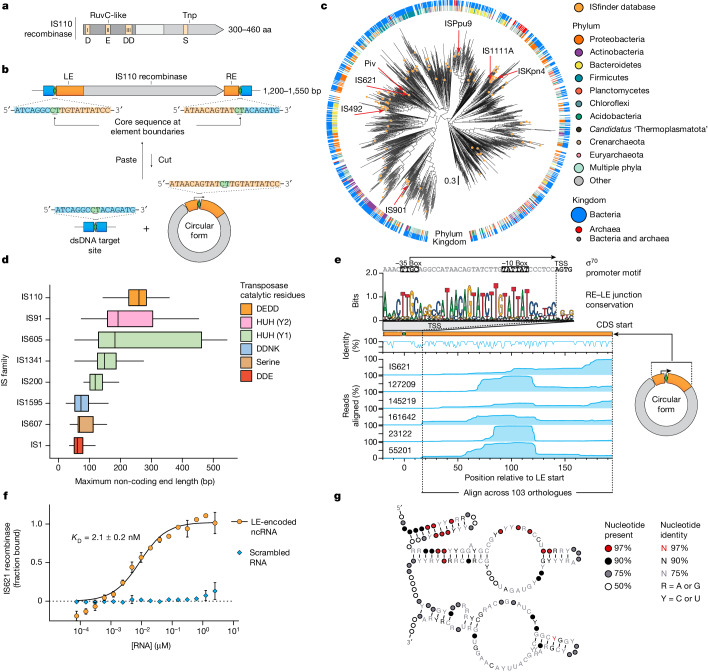
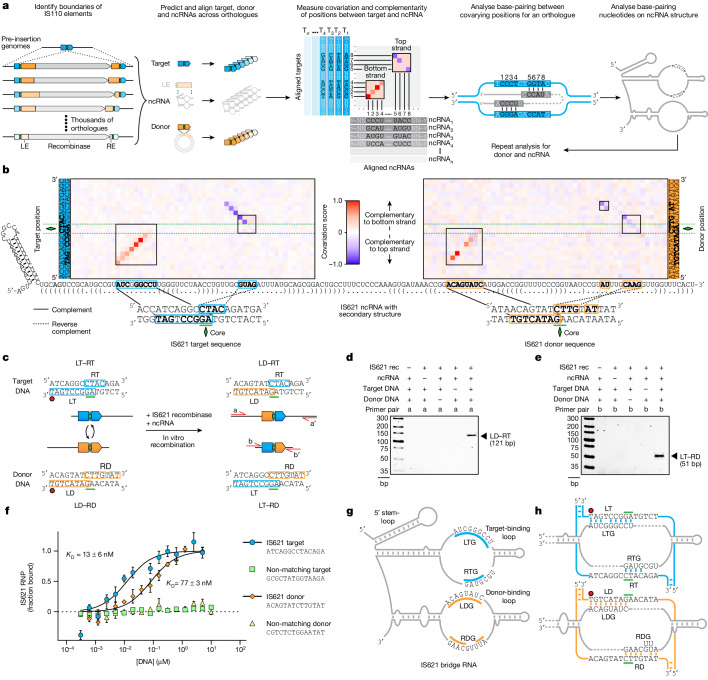
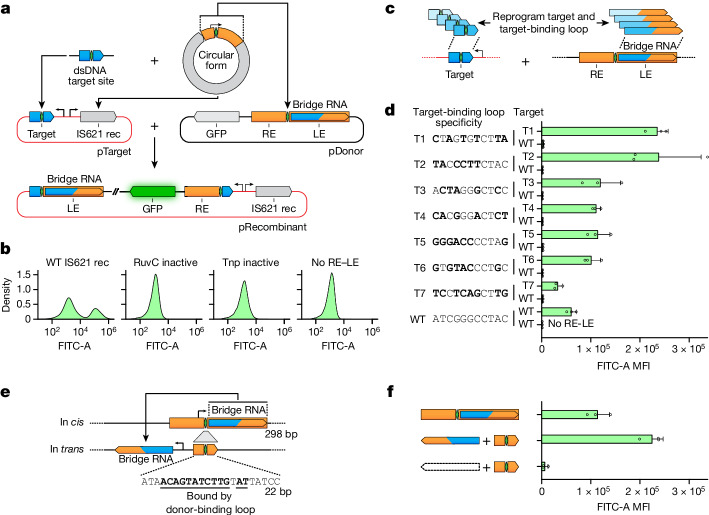
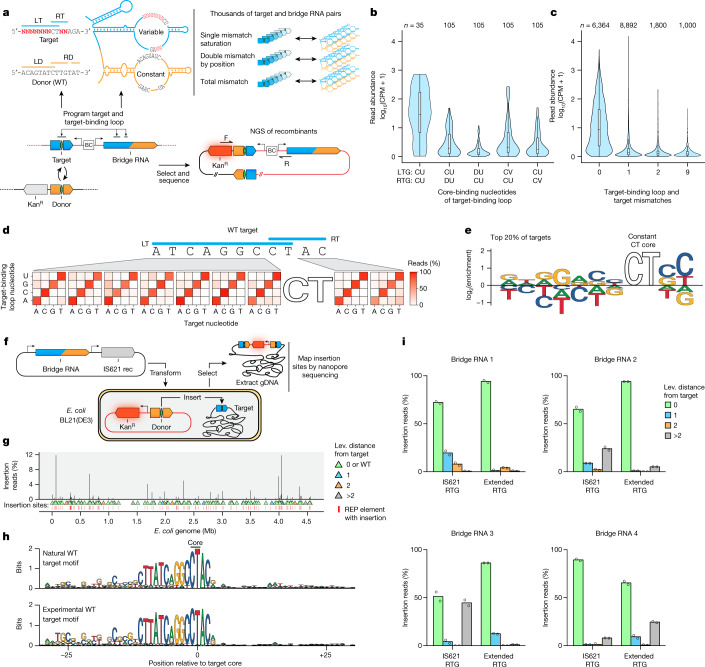
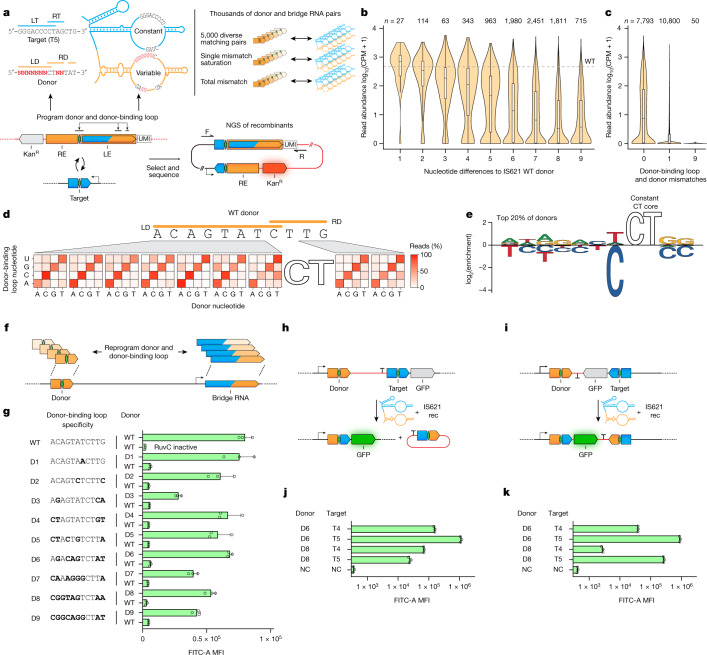
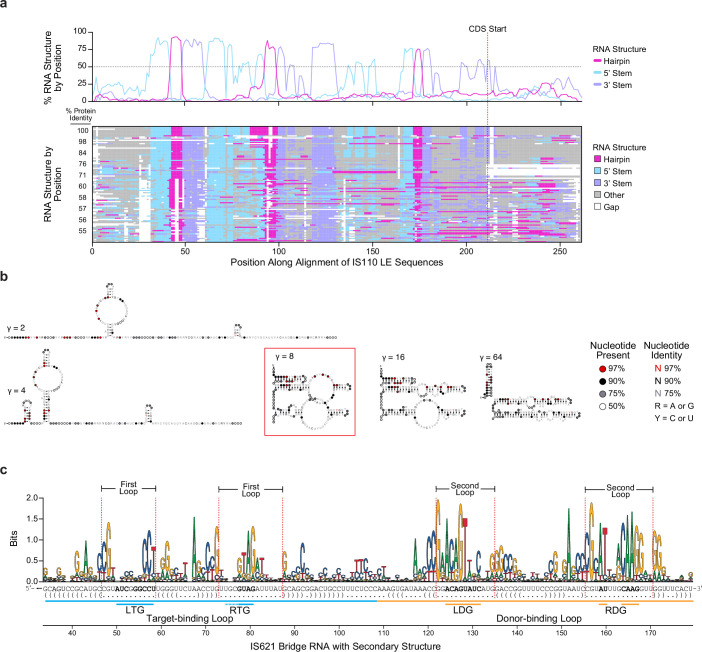
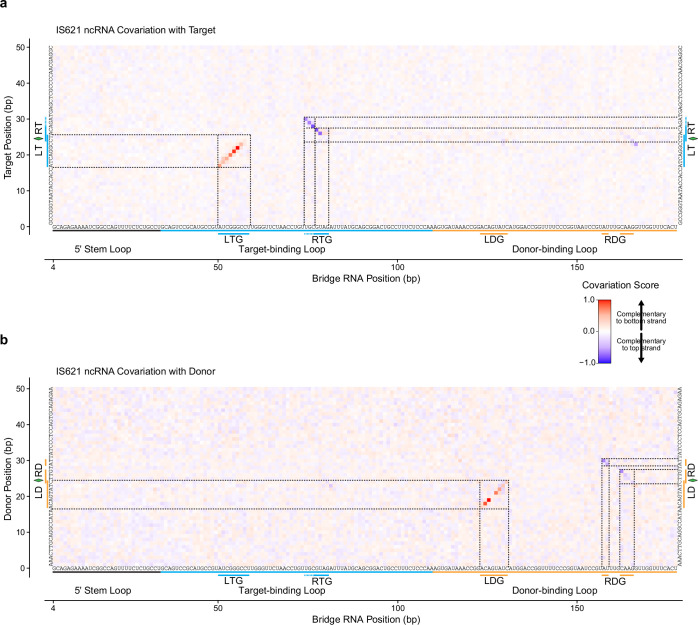
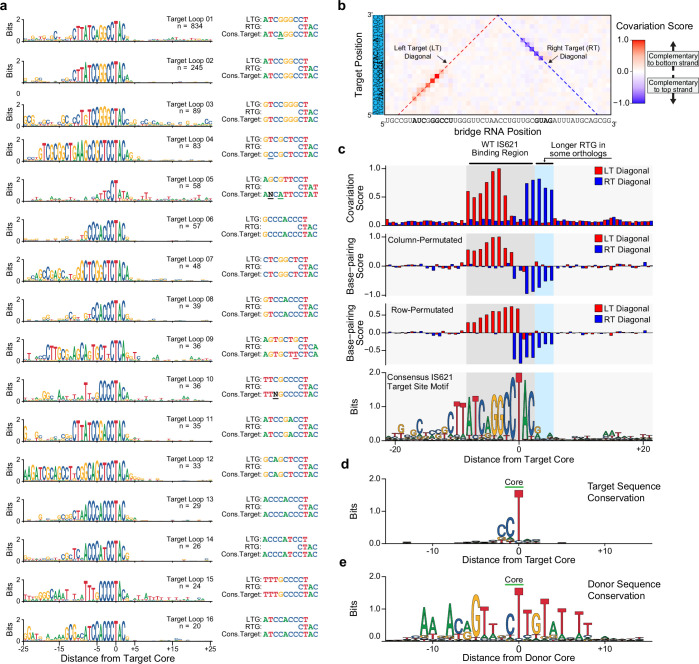
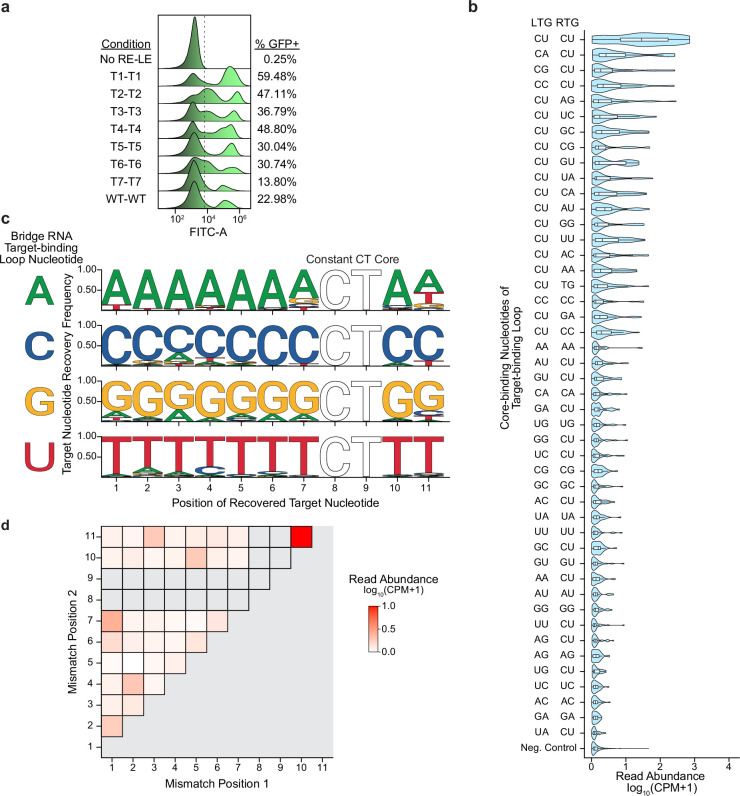
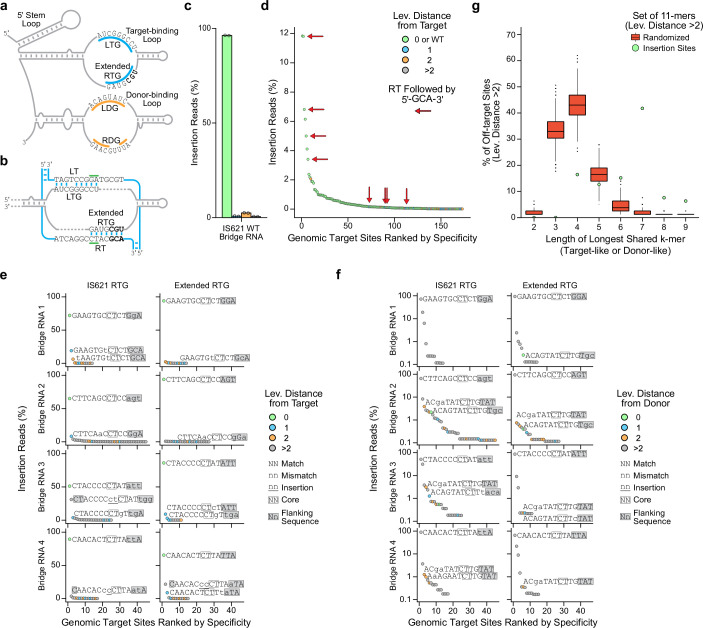
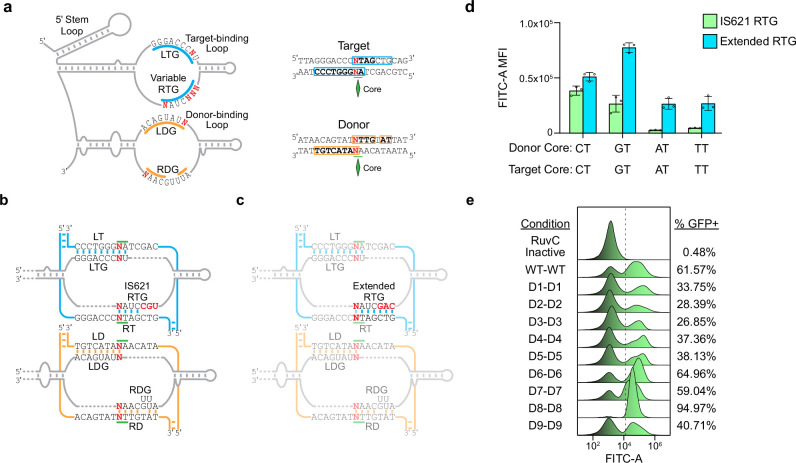
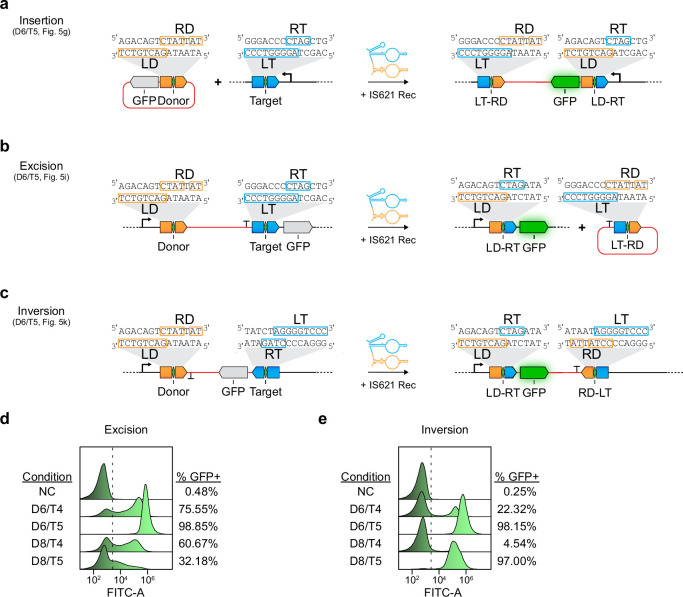
Genomic rearrangements, encompassing mutational changes in the genome such as insertions, deletions or inversions, are essential for genetic diversity. These rearrangements are typically orchestrated by enzymes that are involved in fundamental DNA repair processes, such as homologous recombination, or in the transposition of foreign genetic material by viruses and mobile genetic elements 1,2 . Here we report that IS110 insertion sequences, a family of minimal and autonomous mobile genetic elements, express a structured non-coding RNA that binds specifically to their encoded recombinase. This bridge RNA contains two internal loops encoding nucleotide stretches that base-pair with the target DNA and the donor DNA, which is the IS110 element itself. We demonstrate that the target-binding and donor-binding loops can be independently reprogrammed to direct sequence-specific recombination between two DNA molecules. This modularity enables the insertion of DNA into genomic target sites, as well as programmable DNA excision and inversion. The IS110 bridge recombination system expands the diversity of nucleic-acid-guided systems beyond CRISPR and RNA interference, offering a unified mechanism for the three fundamental DNA rearrangements—insertion, excision and inversion—that are required for genome design.
Overview
The claims and statistics of this paper haven’t been checked yet.
Free: it reads the open-access text and checks the first 5 claims that cite a source we can check. Create a free account to check every claim.
Integrity signals
Registry
Cites
Statistics
Figures
Verification
Claims the paper makes
The claims and statistics of this paper haven’t been checked yet.
Free: it reads the open-access text and checks the first 5 claims that cite a source we can check. Create a free account to check every claim.
Claims other papers make about this one
Each is checked against this paper’s own text: does it say what the citing paper says it does?
The cited source says what the claim attributes to it.
In the citing paper
“Combined with advances in large-scale genome modification (90), Evo expands the scope of biological engineering and design to the scale of whole genomes.”
From Sequence modeling and design from molecular to genome scale with Evo (2024) · cites this paper as [90]
Self-check
Percentages, sums and reported differences re-computed from the paper’s own numbers.
The self-check needs the paper’s full text.
Citations
Cites
Basic local alignment search tool
Altschul, S. F., Gish, W., Miller, W., Myers, E. W., & Lipman, D. J. (1990) · Journal of Molecular Biology · doi:10.1006/jmbi.1990.9999 · Cited by 98,669
Fast and accurate short read alignment with Burrows-Wheeler transform
Li, H., & Durbin, R. (2009) · Bioinformatics · doi:10.1093/bioinformatics/btp324 · Cited by 58,607
BEDTools: a flexible suite of utilities for comparing genomic features
Quinlan, A. R., & Hall, I. M. (2010) · Bioinformatics · doi:10.1093/bioinformatics/btq033 · Cited by 27,437
Prokka: rapid prokaryotic genome annotation
Seemann, T. (2014) · Bioinformatics · doi:10.1093/bioinformatics/btu153 · Cited by 18,818
A Programmable Dual-RNA–Guided DNA Endonuclease in Adaptive Bacterial Immunity
Jinek, M., Chylinski, K., Fonfara, I., Hauer, M., Doudna, J. A., & Charpentier, E. (2012) · Science · doi:10.1126/science.1225829 · Cited by 17,116
MAFFT: a novel method for rapid multiple sequence alignment based on fast Fourier transform
Katoh, K. (2002) · Nucleic Acids Research · doi:10.1093/nar/gkf436 · Cited by 17,027
IQ-TREE 2: New models and efficient methods for phylogenetic inference in the genomic era
(2019) · doi:10.1101/849372 · Cited by 16,873
IQ-TREE 2: New Models and Efficient Methods for Phylogenetic Inference in the Genomic Era
Minh, B. Q., Schmidt, H. A., Chernomor, O., Schrempf, D., Woodhams, M. D., von Haeseler, A., & Lanfear, R. (2020) · Molecular Biology and Evolution · doi:10.1093/molbev/msaa015 · Cited by 16,873
Potent and specific genetic interference by double-stranded RNA in Caenorhabditis elegans
Fire, A., Xu, S., Montgomery, M. K., Kostas, S. A., Driver, S. E., & Mello, C. C. (1998) · Nature · doi:10.1038/35888 · Cited by 15,429
Multiplex Genome Engineering Using CRISPR/Cas Systems
Cong, L., Ran, F. A., Cox, D., Lin, S., Barretto, R., Habib, N., Hsu, P. D., Wu, X., Jiang, W., Marraffini, L. A., et al. (2013) · Science · doi:10.1126/science.1231143 · Cited by 15,339
Self-citation
Cited by
Items 101–171 of 171
Widespread 3D genome reorganization precedes programmed DNA rearrangement in Oxytricha trifallaxPreprint
Villano, D., Prahlad, M., Singhal, A., Sanbonmatsu, K. Y., & Landweber, L. F. (2025) · bioRxiv (Cold Spring Harbor Laboratory) · doi:10.1101/2024.12.31.630814 · Cited by 4
Likely role of promoter reconstitution in Mpr-mediated D29 resistance by Mycobacterium smegmatisPreprint
Yusuf, B., Ju, Y., Zhou, B., Malik, A., Alam, M. S., Li, L., Tadesse, H. A., Mulu, B. A., Fang, C., Tian, X., et al. (2026) · bioRxiv (Cold Spring Harbor Laboratory) · doi:10.64898/2026.02.27.708680 · Cited by 2
Autonomous AI agents discover reverse transcriptases with tandem repeat arraysPreprint
Yoon, P. H., Athukoralage, J. S., Ameisen, E., Kauderer-Abrams, E., Perry, N. T., & Durrant, M. G. (2026) · bioRxiv (Cold Spring Harbor Laboratory) · doi:10.64898/2026.10.05.755809 · Cited by 9
Self-citationFan, J., Lynch, S. E., & Williams, D. T. (2025) · Transboundary and Emerging Diseases · doi:10.1155/tbed/8573171 · Cited by 1
“…such as the IS110 bridge recombination system, which uses a recombinase to drive the expression of a non-coding RNA with binding loops for recognising speci fi c nucleotide sequences, may have potential application to ASFV genome engineering to improve the ef fi ciency of DNA recombination [79].”
Basso, M. F., Pinto, M. D. S., Nonato, J. V. A., Dante, R. A., & Yassitepe, J. É. D. C. T. (2025) · Frontiers in Plant Science · doi:10.3389/fpls.2025.1712585 · Cited by 1
“…RBKI (Zhou et al., 2025), DPET (Liu et al., 2024a), and CRISTTIN (Lin et al., 2025) systems, PrimeRoot (Sun et al., 2024) and dCas9-SSAP (Wang et al., 2022a) editors, and l -red recombineering (Zhou et al., 2011; Thomason et al., 2023) and bridge RNAs (Hiraizumi et al., 2024; Durrant et al., 2024).”
de la Rivière, R., Teixeira, P., Silva, C., Ramos, M. J. N., Dias, E. M., Manageiro, V., & Caniça, M. (2025) · Frontiers in Microbiology · doi:10.3389/fmicb.2025.1673320 · Cited by 1
“…with Tn 3 in bacterial resistance islands and are found integrated in plasmids, where its specific mode of action may facilitate excision, formation of a circular double-stranded DNA, and integration into the target DNA sequence (Durrant et al., 2024; Hiraizumi et al., 2024; Wang and Dagan, 2024).”
Emerging advances in prokaryotic transposition: TnPedia as a promising tool
Chandler, M., Siguier, P., & Varani, A. M. (2026) · Trends in Microbiology · doi:10.1016/j.tim.2025.12.013 · Cited by 1
Ciganek, I., Delehedde, C., Galy, A. H. M., Cogné, M., Rameix, N., Bordeianu, C., & Pichon, C. (2026) · Materials Today Bio · doi:10.1016/j.mtbio.2026.103334 · Cited by 3
“A final emerging modality is the use of so-called bridge RNAs to guide locus-specific DNA recombination [65].”
Molecular basis of single-mismatch-induced nuclease-to-nickase conversion in TIGR–TasH
Zhou, R., Zhan, Y., Sun, Y., Wang, R., Wang, T., Liu, Z., Shan, Z., Li, X., Zhang, S., Sun, N., et al. (2026) · Nucleic Acids Research · doi:10.1093/nar/gkag743 · Cited by 4
“In contrast to the single-strand base pair strategy employed by CRISPR systems, TIGR–Tas systems use a dual-spacer tigRNA, extensively coordinated by the Nop domain, to simultaneously recognize consecutive target sequences on opposite strands of double-stranded DNA (dsDNA) [ 13 , 17 , 18 ].”
Najm, F. M., Ibrahim, H. T., Alsahoo, R. A. A., Jihad, I. A., Lahhob, Q. R., Mudhafar, M., Alsailawi, H. A., & Zaidan, M. A. (2025) · Journal of Animal Health and Production · doi:10.17582/journal.jahp/2024/13.s1.39.48 · Cited by 2
Galdikaitė, E., Krušnauskas, R., Henderson, E., & Bujakowska, K. M. (2026) · Molecular Aspects of Medicine · doi:10.1016/j.mam.2026.101462 · Cited by 2
Multiplex genome engineering: Methodologies and applications
Peng, S., Xie, W., Zhu, J., & Bao, Z. (2026) · Cell Systems · doi:10.1016/j.cels.2026.101614 · Cited by 2
Precision gene editing: From proof-of-concept to curative therapies
Cui, T., Li, B., Cai, B., Wang, H., & Li, W. (2026) · Trends in Molecular Medicine · doi:10.1016/j.molmed.2026.06.004 · Cited by 1
FDA Gene Therapy Approvals (1998–2025): Current Status, Regulatory Evolution, and Future Directions
Oo, C., Qin, X., & Sy, S. K. B. (2026) · The Journal of Clinical Pharmacology · doi:10.1002/jcph.70226 · Cited by 1
“5,29 These capabilities are especially important for liver-directed therapies, where DSB-induced rearrangements remain a primary safety concern.”
RNA-guided transposases: the successors to CRISPR
Jin, C., & Tree, J. J. (2026) · Microbiology Australia · doi:10.1071/ma26036 · Cited by 1
Programmable large-DNA writing in the human genome
Shin, J. A., Hoffman, M., & Gao, X. D. (2026) · Current Opinion in Chemical Biology · doi:10.1016/j.cbpa.2026.102771 · Cited by 1
Come Together: Bridge RNAs Close the Gap to Genome Design
Grinstein, J. D. (2024) · GEN Biotechnology · doi:10.1089/genbio.2024.0035 · Cited by 1
Amplification editing empowers in situ large-scale DNA duplication
Cui, Y., Wu, Y., & Yuan, Y. (2024) · The Innovation · doi:10.1016/j.xinn.2024.100716 · Cited by 1
A Manual for Genome and Transcriptome Engineering
Doctor, Y., Sanghvi, M., & Mali, P. (2024) · IEEE Reviews in Biomedical Engineering · doi:10.1109/rbme.2024.3494715 · Cited by 1
Li, F., Yu, J., Wang, P., Li, T., Tang, Q., & Zhu, J. (2025) · Neuroscience Bulletin · doi:10.1007/s12264-025-01358-8 · Cited by 1
“1) [3].”
InfluentialBello, A., Ning, S., Zhang, Q., Ni, W., & Hu, S. (2025) · Frontiers in Microbiology · doi:10.3389/fmicb.2025.1527546 · Cited by 1
Editorial: Genome Editing Goes Beyond CRISPR with the Emergence of ‘Bridge’ RNA Editing
Parums, D. V. (2024) · Medical Science Monitor · doi:10.12659/msm.945933 · Cited by 1
Controlling and controlled elements: highlights of the year in mobile DNA research
Arkhipova, I. R., Burns, K. H., & Lesage, P. (2024) · Mobile DNA · doi:10.1186/s13100-024-00340-x · Cited by 1
A sequence–structure dual-match logic enables target recognition fidelity by an IS110 transposonPreprint
Na, X.-M., Chen, B.-T., Liu, H., Lin, Y.-T., Chen, T., Yuan, Y., Zhang, Y.-H., Yang, N., Xiong, Y.-N., Zhu, F., et al. (2026) · bioRxiv (Cold Spring Harbor Laboratory) · doi:10.64898/2026.03.19.712850 · Cited by 1
Programmable DNA integration with New-to-Nature tools using Computational Protein DesignPreprint
Wallace, H. M., Park, S. G., Smiley, A. T., Sevik, T., Dubey, S., Fatma, S., Vo, C.-D.-T., Creed, E., Zanghellini, A., & Kellogg, E. H. (2026) · bioRxiv (Cold Spring Harbor Laboratory) · doi:10.64898/2026.05.29.728539 · Cited by 2
Hu, K., Xie, B.-L., Yang, H.-Y., & Rubin, B. E. (2026) · bioRxiv · doi:10.64898/2026.08.14.744561 · Cited by 1
“The natural IS110 donor is a double-stranded circle [18,46], and integration favors double-stranded over single-stranded donors [62].”
InfluentialProgrammable DNA rearrangements using bridge RNAs
Ertl, H. (2024) · Nature Reviews Genetics · doi:10.1038/s41576-024-00763-5
Shentu, J., Zhao, Y., & Duan, S. (2024) · MedComm – Future Medicine · doi:10.1002/mef2.95
L’édition de nouvelle génération
Jordan, B. (2024) · médecine/sciences · doi:10.1051/medsci/2024149
Regolini, M. F. G. (2025) · Advances in Bioscience and Biotechnology · doi:10.4236/abb.2025.162003
Overexpressing OsCCT23 Delays Heading Date and Increases Grain Yield by Activating Ghd7 in Rice
Dong, H., Wen, Q., Wu, B., Yan, Y., Liang, L., Yang, L., Hu, Y., Zhang, B., Xie, W., Jin, W., et al. (2025) · Plant Cell & Environment · doi:10.1111/pce.15513
“As knock ‐ in technology becomes more and more practicable, genes with small size but significant effects will be prioritised (Durrant et al. 2024; Gao 2021).”
Mousa, W. K., Ali, A., Abdelmoteleb, R. W. A., Shami, R. A., Alramadan, N., Moutraji, S. A., & Ghemrawi, R. (2025) · Targeted Cancer Therapy Connect · doi:10.69709/ciconnect.2025.154988
Zanders, E. D. (2025) · Springer eBooks · doi:10.1007/978-3-031-93949-5_5
Yazdani, R., Nasr‐Esfahani, M. H., Eghbalsaied, S., & Karamali, F. (2025) · DNA and Cell Biology · doi:10.1177/10445498251370554
“Recent studies have suggested that RNA molecules can participate in DNA repair processes, including as templates for homologous recombination (Durrant et al., 2024).”
Cryo-EM structure of the RfxCas13d-crRNA-off-target-RNA complex
Yang, Q., Sun, Y., Sun, L., Chi, T., & Chen, Z. (2025) · Structure · doi:10.1016/j.str.2025.09.010
Current and emerging tools for studying animal models of sleep and autism
Kyriakakis, P., & Gonzalez, O. C. (2025) · Journal of Psychiatric Research · doi:10.1016/j.jpsychires.2025.11.031
BridgeRNAton: Scandalously Precise DNA Matchmaking by Non-Coding RNAs
Lonetti, L. (2025) · The CRISPR Journal · doi:10.1177/25731599251404830
“2,3 Before Bridge RNA, there was no compact RNA-guided system capable of orchestrating DNA exchanges between arbitrary genomic sites — a conceptual leap beyond CRISPR ’ s cut-and-repair model.”
An Efficient Workflow for CHO Cell Genome Engineering with OpenCRISPR-1Preprint
Kolakada, D., Ankala, R., Donatelli, J. L., & Smith, D. K. (2025) · bioRxiv (Cold Spring Harbor Laboratory) · doi:10.64898/2025.12.18.695036
“Electroporation achieved INDEL generation efficiencies exceeding 90% for multiple guide RNAs (Figure 1A).”
InfluentialSynthetic rewriting technologies in mammalian cells
Wang, Y., Cui, Y., Zhao, G.-R., Wu, Y., & Yuan, Y. (2026) · Nature Communications · doi:10.1038/s41467-025-68066-9 · Cited by 2
Site-specific integration of transposon via engineered piggyBac transposasePreprint
Xu, N., Han, L., Hu, X., Fang, Y., Wu, L., Wang, X., Tu, H., Deng, X., Cong, W., Sun, K., et al. (2026) · bioRxiv (Cold Spring Harbor Laboratory) · doi:10.64898/2026.01.20.700476
Mao, S., & Chen, P. (2026) · Carbohydrate Research · doi:10.1016/j.carres.2026.109907
Castro, V. D. (2024) · theses.fr (ABES) · doi:10.70675/21fe1180zedcez41e6z84f6z171e779c807e
Pereira, L. F. D. S., Tavares, T., Martins, D. T., Dantas, C. W. D., de Souza, F. O. R., Prazeres, M., Faturi, C., Rogez, H., Ramos, R. T. J., Cardenas-Alegria, O., et al. (2026) · International Microbiology · doi:10.1007/s10123-026-00840-1
“Genomic rearrangements, which include mutational genomic changes such as insertions, deletions, or inversions, are essential for genetic diversity (Durrant et al. 2024).”
TALEs, TALENs, and TALE Base Editors: From Plant Pathology to Biotechnology
Grau, J., & Boch, J. (2026) · Annual Review of Phytopathology · doi:10.1146/annurev-phyto-011325-014601
Gene Editing Technologies for Hereditary Hearing Loss: Prospects and Challenges
Wang, M., Wang, B., Yang, M., Tan, F., Qi, J., & Chai, R. (2026) · Neuroscience Bulletin · doi:10.1007/s12264-026-01651-0 · Cited by 1
Gudi, S., Razzaq, K., Singh, J., Mendoza, L. D. R., Khan, M., Gupta, R., & Gill, U. (2026) · The Plant Genome · doi:10.1002/tpg2.70261
“…recent advances in large segment genome editing tools such as twin prime editing (Anzalone et al., 2022), RNA bridge recombinase (bridge RNA) (Durrant et al., 2024), and EyoCAST (Witte et al., 2025) allows the insertion, deletion, or rearrangement of extensive DNA sequences including…”
Scalisi, G., Sakkal, A., Lacombe, L., Sarnari, F., Rouillon, M., Rosiello, M., Tachtsidi, A., Galbiati, P., Corre, G., Oustelandt, J., et al. (2026) · bioRxiv (Cold Spring Harbor Laboratory) · doi:10.64898/2026.06.15.732298
Transposition mechanism in the IS110 family: Cut or copy?
Dyda, F. (2026) · Molecular Cell · doi:10.1016/j.molcel.2026.06.020
The Diversifying Distribution Trends of Maturing CRISPR Technologies by Addgene
Shepard, A., Miñones-Moyano, E., Mork, C., Pyhtila, B. M., & Barrangou, R. (2026) · The CRISPR Journal · doi:10.1177/25731599261470096
“14 – 17 Yet, CRISPR still appears to be the preferred editing option, in part due to its diversi fi ed toolbox, ease of experimental deployment and accessibility.”
Labant, M. (2026) · Genetic Engineering & Biotechnology News · doi:10.1177/1935472x261468144
Belloch-Molina, C., da Silva, F. V. S., Morrissey, J. P., & Sousa-Gallagher, M. J. (2026) · Biotechnology Advances · doi:10.1016/j.biotechadv.2026.109001
Sun, Y.-D., Song, L.-J., Liu, B., Cheng, C.-Y., Zhang, L., Zhang, J.-P., & Zhang, X.-B. (2026) · The CRISPR Journal · doi:10.1177/25731599261470587
Haseltine, W. A., & Patarca, R. (2026) · Springer eBooks · doi:10.1007/978-3-032-30270-0_9
The use of homology-directed repair in a complex landscape of genome editors
Aird, E. J., & Corn, J. E. (2026) · Nature Reviews Molecular Cell Biology · doi:10.1038/s41580-026-01018-3
Gene editing technologies: A comprehensive overview
Munawar, N., Munir, A., Al‐Harrasi, A., Riaz, M., Asaf, S., & Ahmad, A. (2026) · Elsevier eBooks · doi:10.1016/b978-0-443-44079-3.00006-1
Programmable enzymes for targeted gene insertion
Lampe, G. D., King, R. T., & Sternberg, S. H. (2026) · Nature Reviews Genetics · doi:10.1038/s41576-026-01002-9
De Novo Design of RNA Switches for Conditional Transcription Repression
Sun, C., & Fan, H. B. (2026) · Angewandte Chemie · doi:10.1002/ange.1770267
3D Genome Engineering Using CRISPR/dCas Systems
Mamaeva, N. Y., Yakovlev, V. A., Kristovskiy, N. V., Feskin, P. G., Vinnikov, R. S., Oleinikov, P. D., Shmakov, S., Шайтан, К. В., Kirpichnikov, M. P., & Shaytan, A. К. (2026) · International Journal of Molecular Sciences · doi:10.3390/ijms27188104
“Bridge RNA systems, identified in IS110-family mobile genetic elements, use a bispecific RNA molecule to pair target and donor DNA sequences simultaneously [115].”
Kachiyeva, Z., Nazik, N., Shahid, M., Ashraf, R., Hassan, J. U., Khan, A. A., Khan, M. H., Mushtaq, H., Saeed, F., Arif, U., et al. (2026) · Frontiers in Plant Science · doi:10.3389/fpls.2026.1900057
“In the future, the discovery of Bridge RNA (IS110 family) could be a paradigm-shifting tool in plant biotechnology (Durrant et al., 2024).”
Engineering abiotic stress resilience in crops using CRISPR/Cas: from tools to trait improvement
Sagharyan, M., Mohammadbagherlou, S., Bazvand, F., Wahab, A., Ghorbani, A., & Chen, M. (2026) · Horticultural Plant Journal · doi:10.1016/j.hpj.2026.05.012
Bigger than CRISPR? A guide to the latest genome editors
Ledford, H. (2026) · Nature · doi:10.1038/d41586-026-02964-w
Wang, Y., Li, X., Gao, R., Tian, Y., Wang, C., Chen, Y., Li, D., & Liu, X. (2026) · BMC Microbiology · doi:10.1186/s12866-026-05610-7
The global patent landscape of CRISPR–Cas applications in medicine
Yu, Y., Zhang, Y., Xu, Y., Wen, C., Li, L., & Yu, T. (2026) · Nature Biotechnology · doi:10.1038/s41587-026-03337-4
Esenkaya, H. (2026) · Özgür Yayınları eBooks · doi:10.58830/ozgur.pub1508.c6067
Advances in modeling chromosomal aberrations to recapitulate genomic rearrangements
Ginestet, V., Schwager, A., Vassetzky, Y. S., & Shmakova, A. (2026) · Trends in Molecular Medicine · doi:10.1016/j.molmed.2026.09.010
Mikrobiyoloji, Biyoteknoloji ve Yaşam Bilimlerinde Güncel Konular
(2026) · Özgür Yayınları eBooks · doi:10.58830/ozgur.pub1508
From genome editing to chromosome engineering in plants
Lei, Y., Wu, J., & Gao, C. (2026) · Trends in biotechnology · doi:10.1016/j.tibtech.2026.09.024
Pektaş, A. N., Pektaş, A. N., & AKÇAY, A. (2026) · Bidge Yayınları eBooks · doi:10.70269/brsqsphnjkvi
MICRORNAS (MIRNAS) AS BIOMARKERS: CURRENT PERSPECTIVES AND APPLICATIONS
AKÇAY, A. (2026) · Bidge Yayınları eBooks · doi:10.70269/10.70269/2458146393
Metadata
- Authors
- Durrant, M. G., Perry, N. T., Pai, J. J., Jangid, A. R., Athukoralage, J. S., Hiraizumi, M., McSpedon, J. P., Pawluk, A., Nishimasu, H., Konermann, S., & Hsu, P. D.
- Affiliations
- Arc Research Institute (US)
- University of California, San Francisco (US)
- The University of Tokyo (JP)
- Japan Science and Technology Agency (JP)
- Stanford Medicine (US)
- Corresponding author
- Hsu, Patrick D.
- ORCID
- Venue
- Nature
- Published
- 2024-06-26
- Volume
- 630
- Issue
- 8018
- Pages
- 984-993
- ISSN
- 0028-0836 (ISSN-L)
- 1476-4687
- PMC
- PMC11208160
- OpenAlex
- W4400037959
- Cited by
- 163
- References
- 72
- Citations by year
- 2026: 68 · 2025: 68 · 2024: 27
- FWCI
- 22.19
- Type
- journal article
- Language
- en
- Open access
- hybrid
- doi.org
- Licence
- cc-by
- creativecommons.org/licenses/by/4.0 (tdm)
- creativecommons.org/licenses/by/4.0 (vor)
- Locations
- Nature (publishedVersion, cc-by)
- PubMed Central (publishedVersion, cc-by)
- PubMed (publishedVersion)
- eScholarship (California Digital Library) (submittedVersion, cc-by)
- RePEc: Research Papers in Economics (submittedVersion)
- Funders
- National Institutes of Health
- Japan Society for the Promotion of Science (22H00403, 23K14133, 21H05281)
- National Institute of General Medical Sciences (T32GM139780)
- Topics
- Life Sciences › Biochemistry, Genetics and Molecular Biology › Molecular Biology › CRISPR and Genetic Engineering
- Life Sciences › Biochemistry, Genetics and Molecular Biology › Genetics › Bacterial Genetics and Biotechnology
- Life Sciences › Biochemistry, Genetics and Molecular Biology › Molecular Biology › RNA and protein synthesis mechanisms
- Keywords
- mobile genetic elements, non-coding RNA, recombinases, DNA inversion, DNA excision, DNA insertion, genome rearrangement, genome design
- MeSH terms
- Base Sequence, DNA, DNA Transposable Elements, Recombination, Genetic, Mutagenesis, Insertional, Base Pairing, RNA, Untranslated, Recombinases
About these checks
Registry, retraction, Cites and statistics results are computed, not judged, with one exception: a printed reference that no index lists is read once by a model before it counts as a citation error. Claims are extracted by a model and kept only when their quote appears verbatim in the text; each cited source is then checked, with a model’s help, for whether it says what the claim relies on. Those verdicts can be wrong — read the claim’s quote and the cited source before relying on one.
Statistics and arithmetic are recomputed, not judged.
Confidence bands are shown only for fields calibrated on our annotated test set. None is calibrated yet, so no band is shown.
What counts as a claim ›How we measure confidence ›How we check this ›
Are you an author, or do you see a problem with this page? Request a review
Data sources
Bibliographic data: Semantic Scholar, OpenAlex, Crossref.
Contains information from the Semantic Scholar Academic Graph Datasets, made available under the ODC Attribution License (ODC-BY 1.0).
Semantic Scholar’s data is described in: Kinney, R., et al. (2023). The Semantic Scholar Open Data Platform. arXiv:2301.10140.
