

Nerve-to-cancer transfer of mitochondria during cancer metastasis
Open accessThe DOI matches its Crossref record; 72 of the 72 references it cites were found in a registry or an index; none of the 85 sources its claims cite is checked for support yet.
Abstract
The nervous system has a pivotal role in cancer biology, and pathological investigations have linked intratumoural nerve density to metastasis1. However, the precise impact of cancer-associated neurons and the communication channels at the nerve-cancer interface remain poorly understood. Previous cancer denervation models in rodents and humans have highlighted robust cancer dependency on nerves, but the underlying mechanisms that drive nerve-mediated cancer aggressivity remain unknown2,3. Here we show that cancer-associated neurons enhance cancer metabolic plasticity by transferring mitochondria to cancer cells. Breast cancer denervation and nerve-cancer coculture models confirmed that neurons significantly improve tumour energetics. Neurons cocultured with cancer cells undergo metabolic reprogramming, resulting in increased mitochondrial mass and subsequent transfer of mitochondria to adjacent cancer cells. To precisely track the fate of recipient cells, we developed MitoTRACER, a reporter of cell-to-cell mitochondrial transfer that permanently labels recipient cancer cells and their progeny. Lineage tracing and fate mapping of cancer cells acquiring neuronal mitochondria in primary tumours revealed their selective enrichment at metastatic sites following dissemination. Collectively, our data highlight the enhanced metastatic capabilities of cancer cells that receive mitochondria from neurons in primary tumours, shedding new light on how the nervous system supports cancer metabolism and metastatic dissemination.
Overview
CoChat Summary
TL;DR
Cancer-associated neurons transfer mitochondria to cancer cells, boosting cancer metabolic plasticity, stemness, and resistance to metastatic stressors. MitoTRACER lineage tracing shows mitochondria-recipient cancer cells are enriched at metastatic sites, especially brain and lung.
Key findings
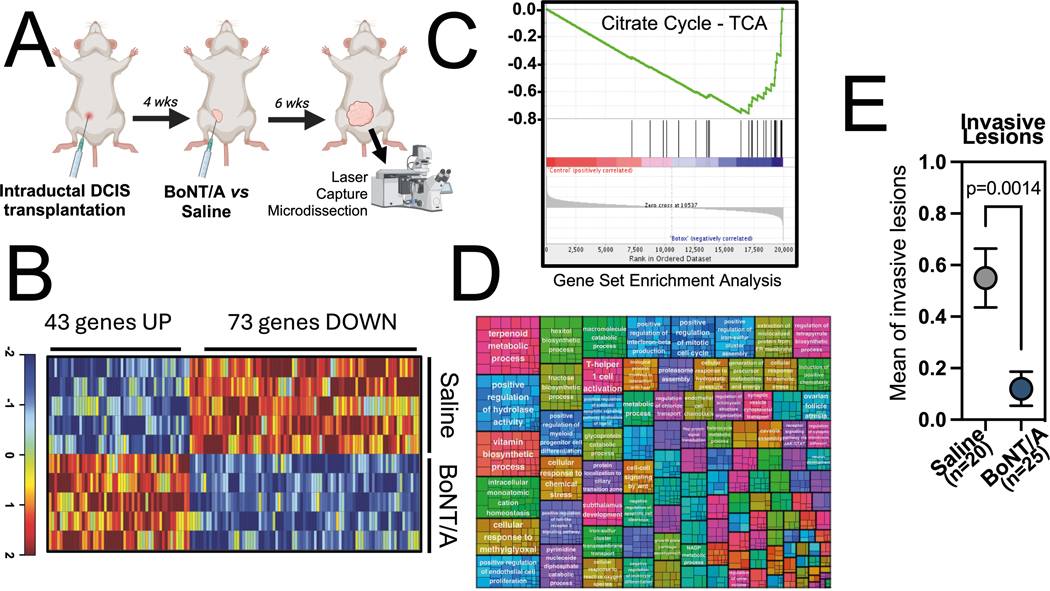
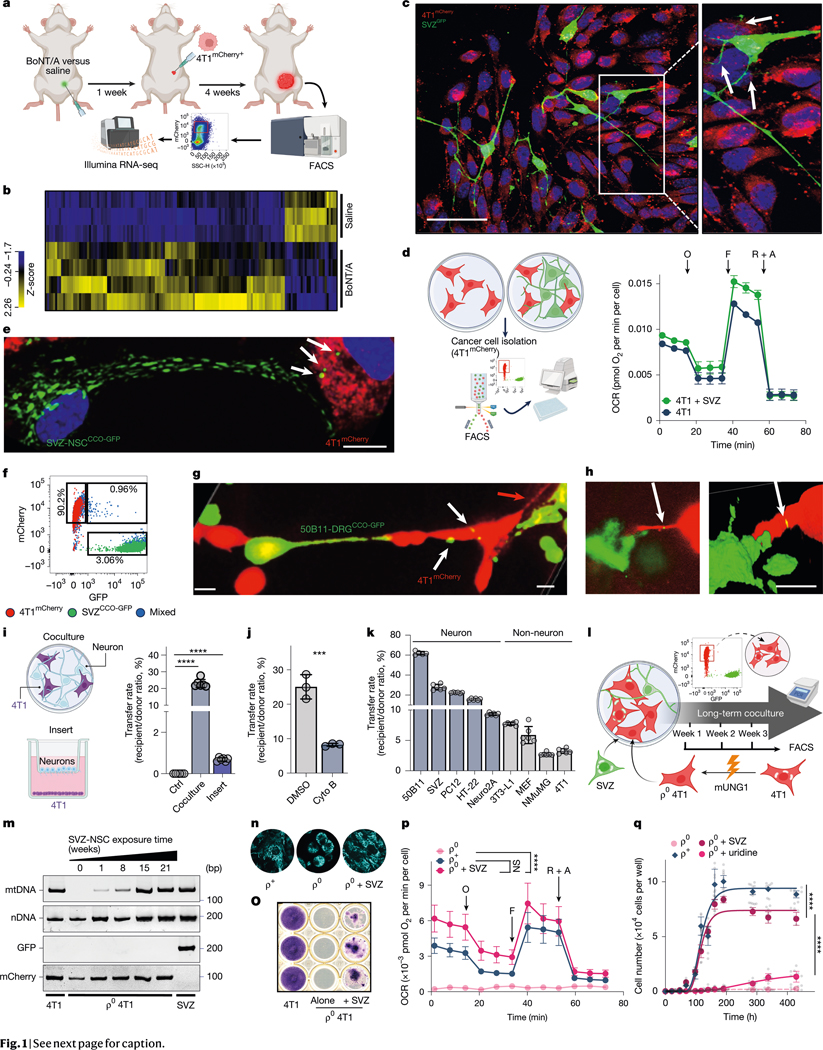
- Denervation impairs breast cancer bioenergetics: BoNT/A denervation in 4T1 TNBC and human DCIS xenograft downregulated metabolic gene signatures, with the TCA cycle most suppressed; invasive lesions fell from 55% in control mice to 12% in denervated mice.
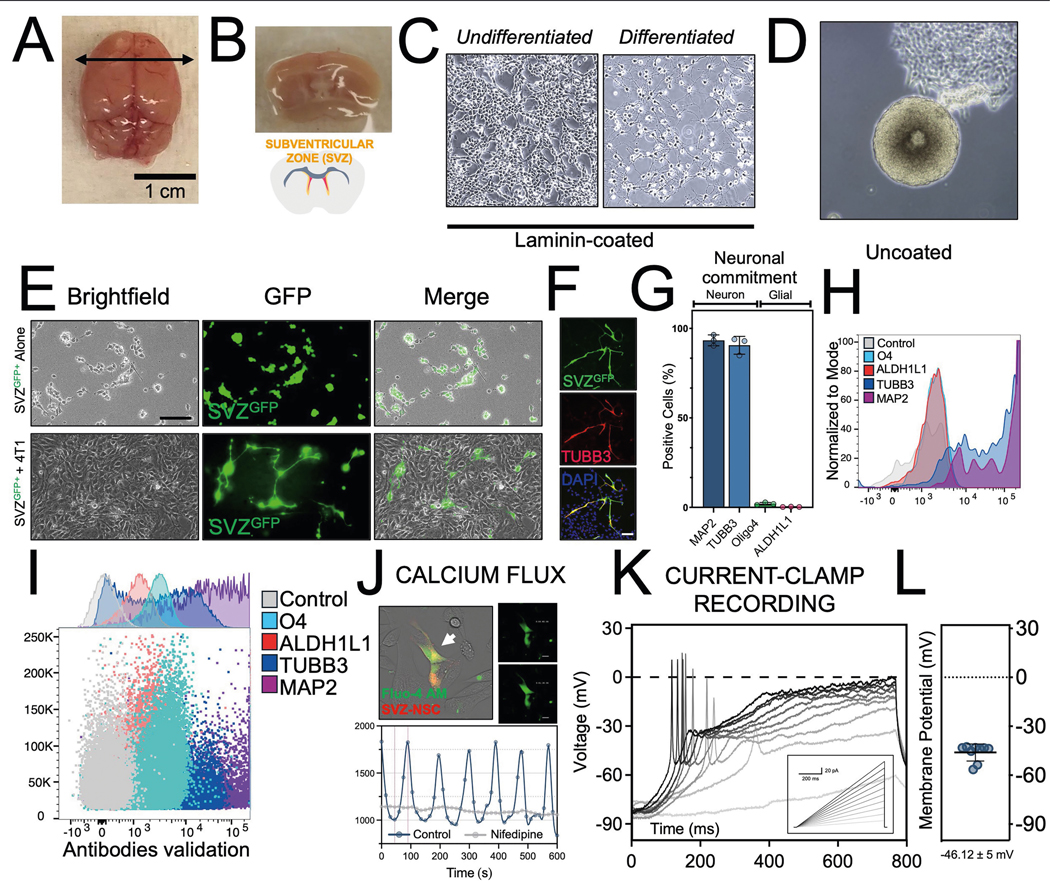
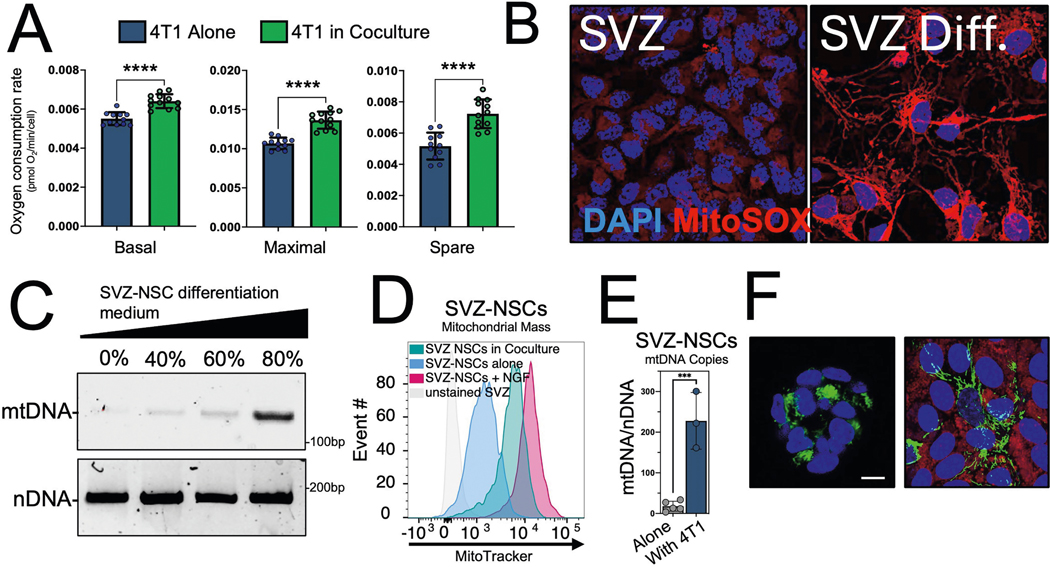
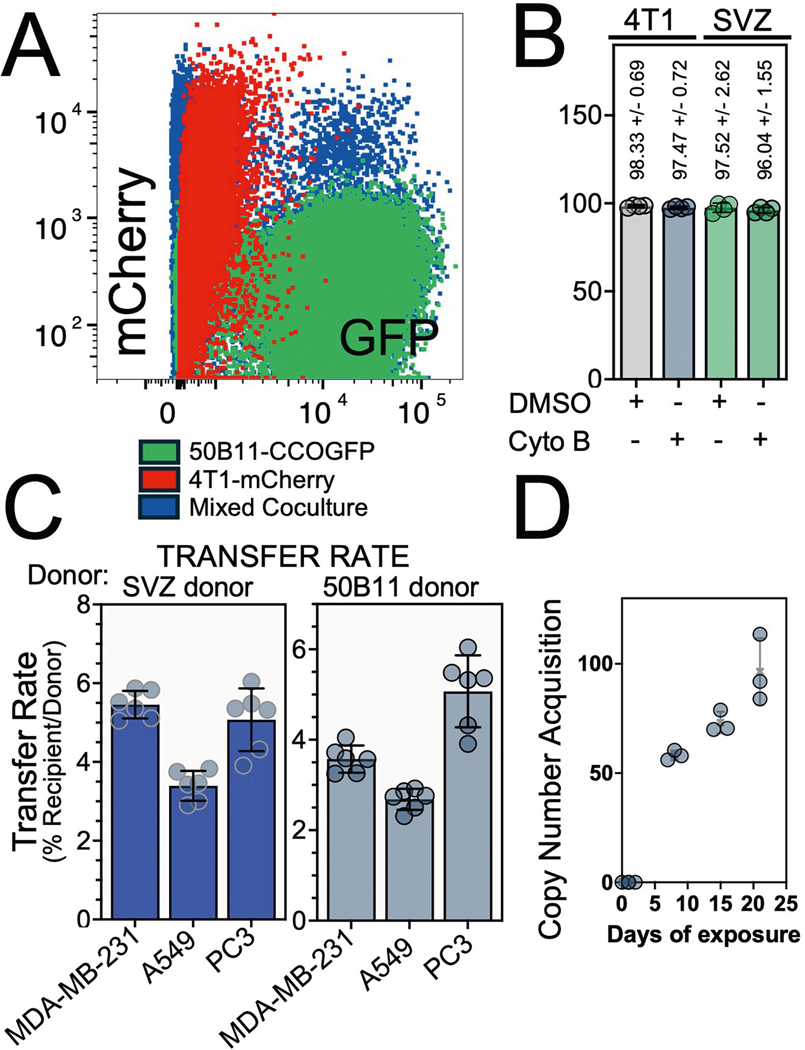
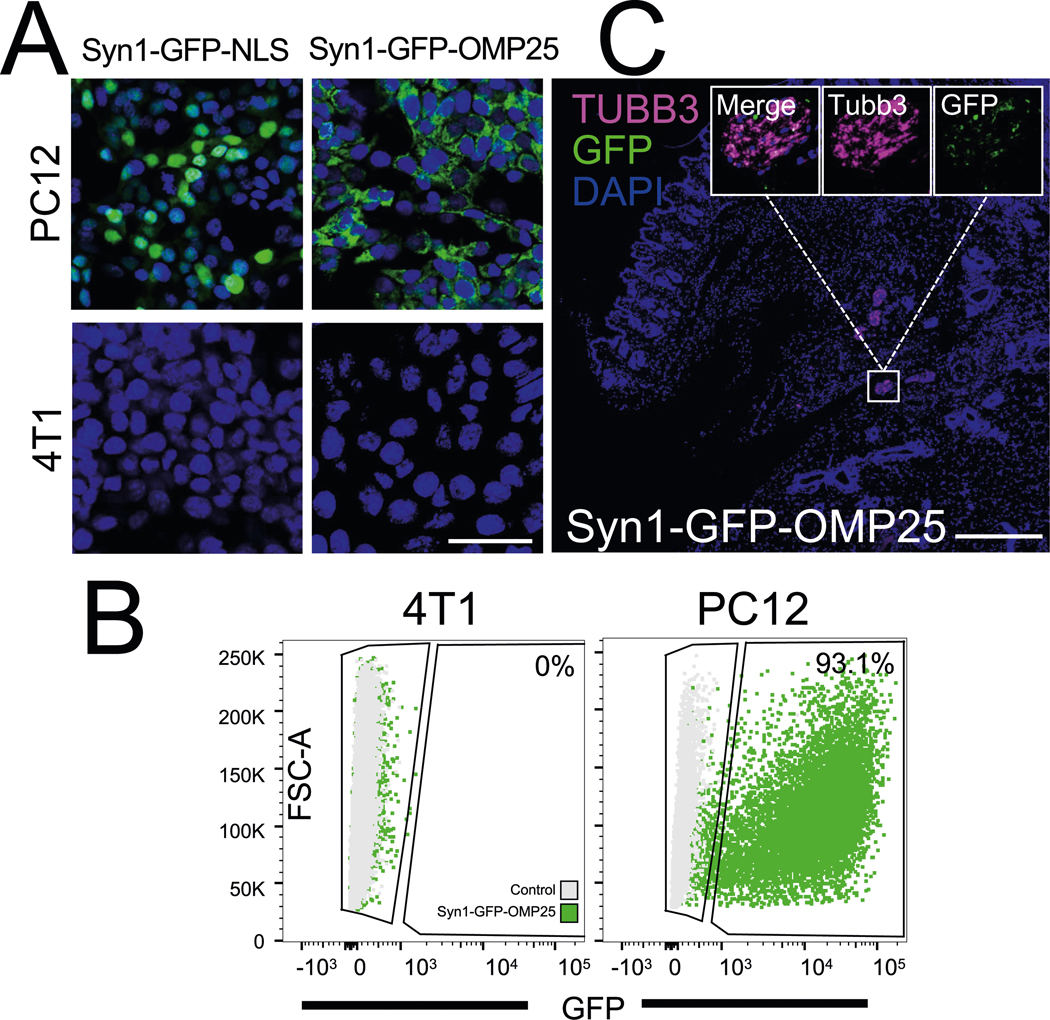
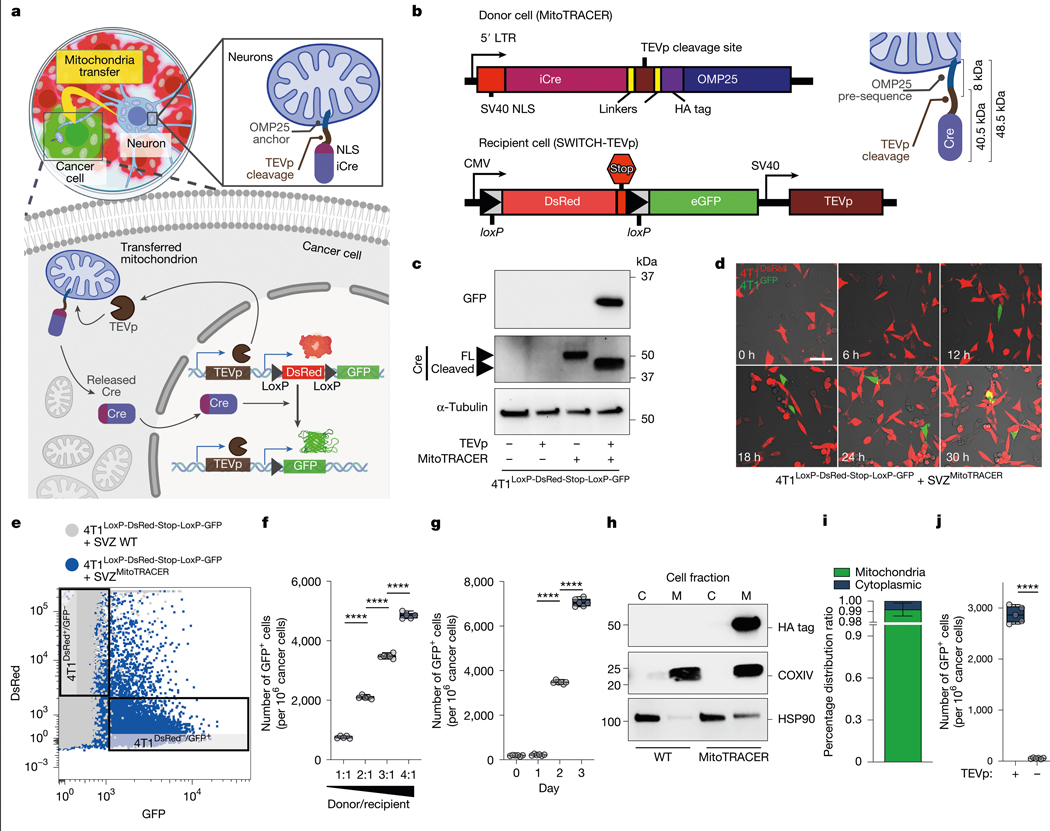
- Nerve–cancer coculture drives neuronal mitochondrial reprogramming and transfer: >90% of SVZ-NSCs differentiated into TUBB3+ MAP2+ neurons (negative for O4/ALDH1L1), action potential threshold averaged −46 mV ± 5 mV, and mtDNA increased from about 16 to 226 mtDNA/nuclear DNA copies per neuron after cancer-induced differentiation. eGFP-labelled neuronal mitochondria transferred to 4T1 cells; double-positive 4T1GFP+/mCherry+ cells averaged 0.96% of coculture, or 31.4% when normalized to donor population.
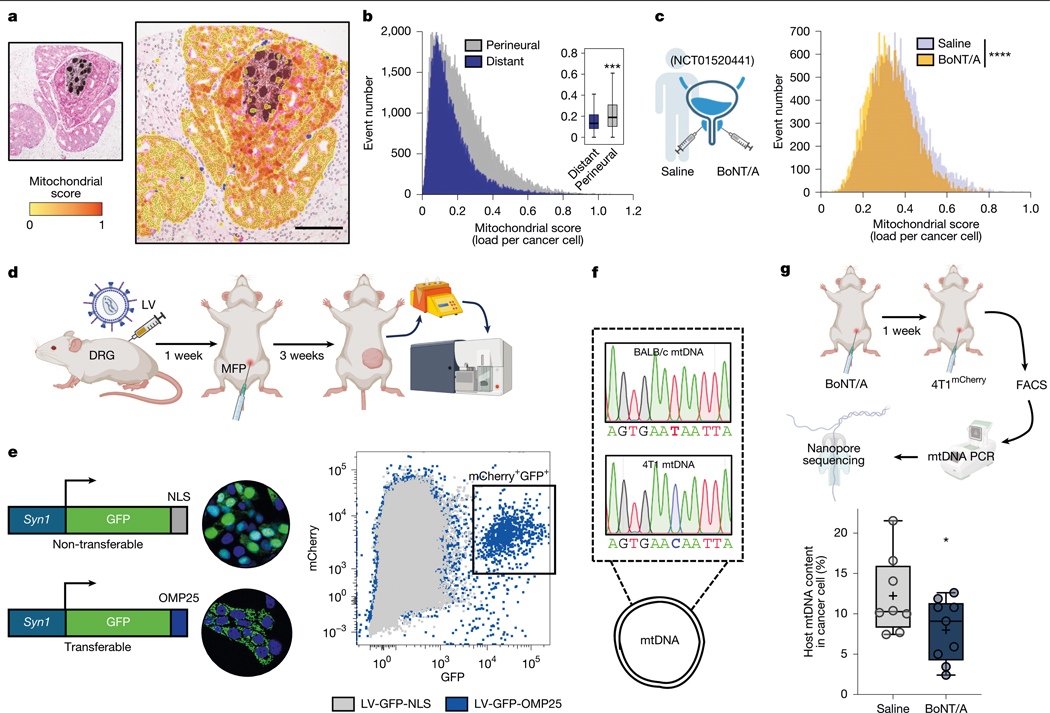
- Transferred mitochondria are functional and prevalent in vivo: ρ0 4T1 cells reacquired mtDNA, rescued uridine auxotrophy, respiration, and proliferation after coculture with ρ+ SVZ-NSCs. In mouse xenografts, neurons accounted for approximately 35% of total mitochondrial transfers; human prostate cancer near nerves and metastatic breast cancer cells showed higher mitochondrial load, while the BoNT/A-denervated prostate side had lower mitochondrial load.
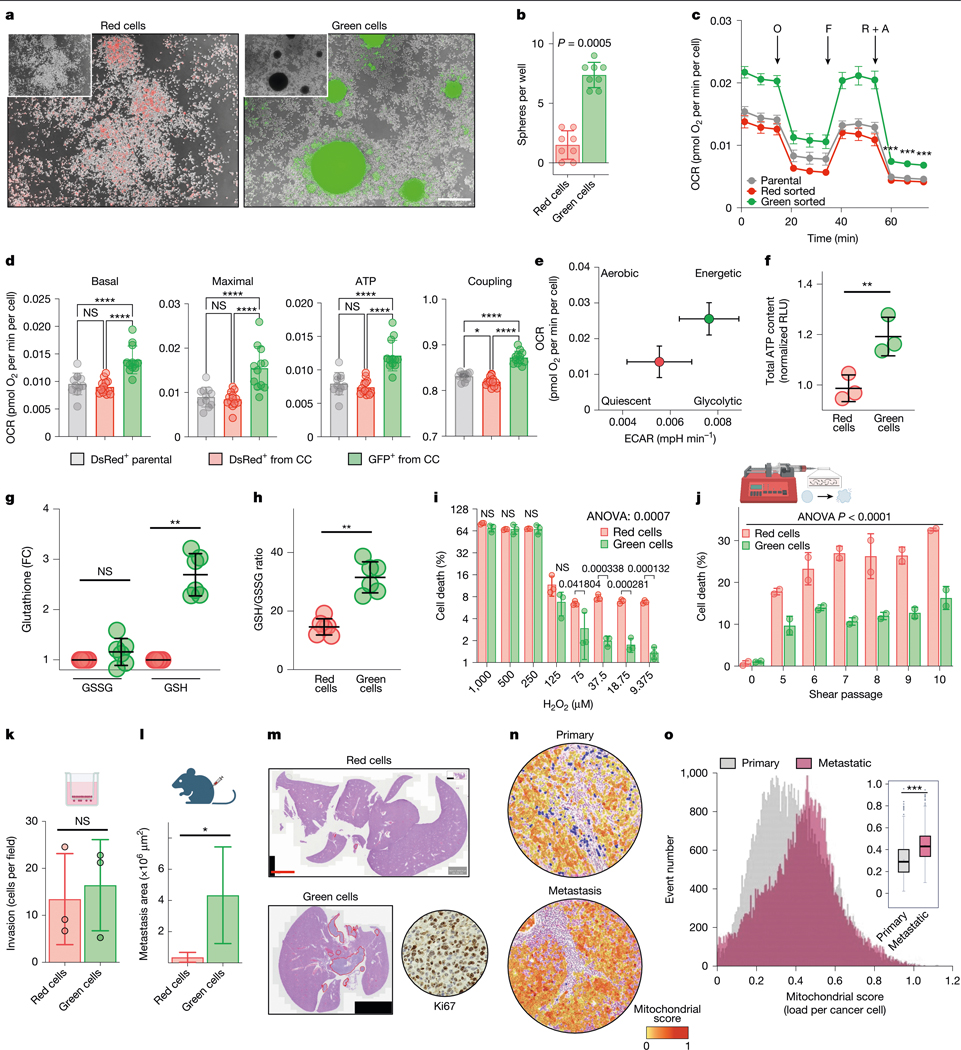
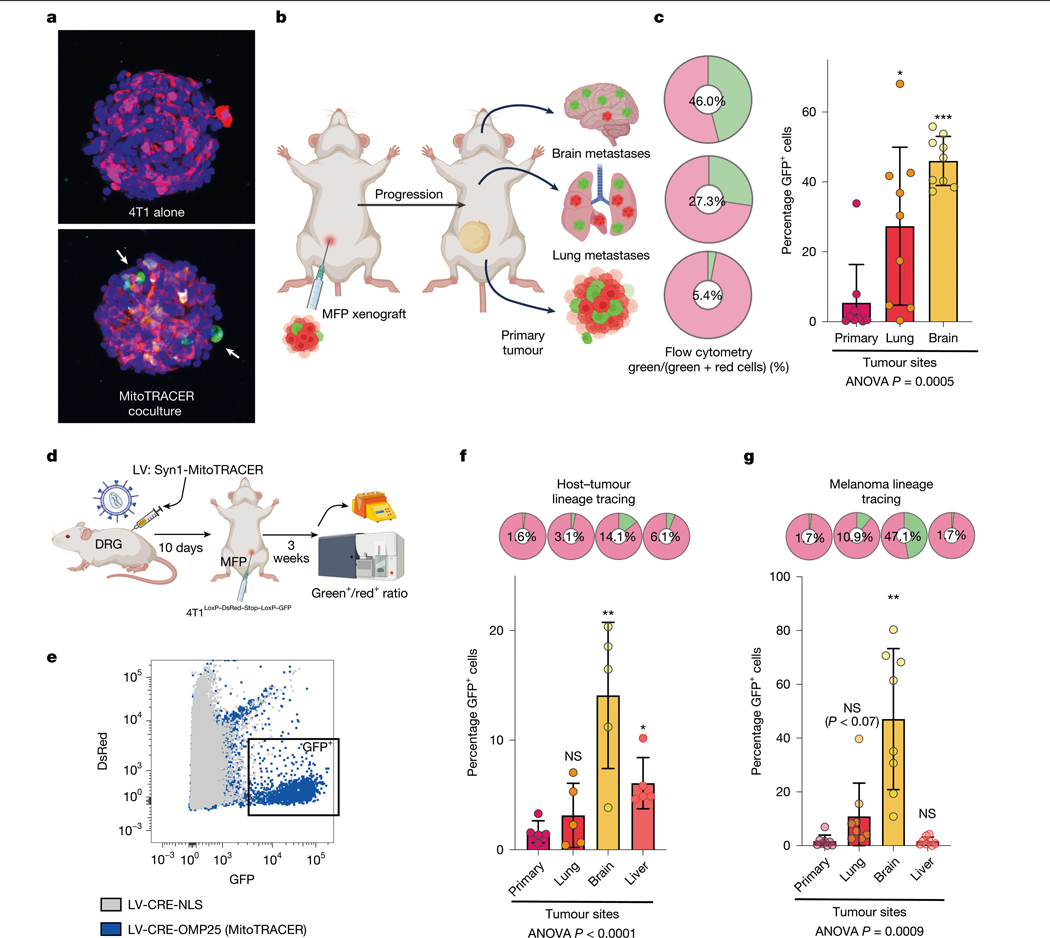
- MitoTRACER fate mapping: recipient cells in primary tumours averaged about 5.4% GFP+ and were enriched in lung (27.3%) and brain (46.0%); a host DRG-labelled model showed 1.6% GFP+ in primary tumour with enrichment in brain and liver. Recipient cells showed increased mammosphere formation, respiration, ATP production, GSH/GSSG, oxidative and shear stress resistance, and higher metastatic potential, without increased intrinsic invasion.
Methods
- Design: orthogonal in vitro and in vivo models of nerve–cancer interaction, including BoNT/A chemical denervation, nerve–cancer coculture, mammary fat pad xenografts, lineage tracing/fate mapping, and human tissue analysis.
- Samples/data: 4T1 TNBC, human DCIS xenograft, SVZ-NSCs, 50B11-DRG neurons, other donor/recipient cell lines, BALB/c and SCID-beige mice, B16-F10 melanoma, human prostate NCT01520441 trial tissue, and breast cancer tissue microarrays.
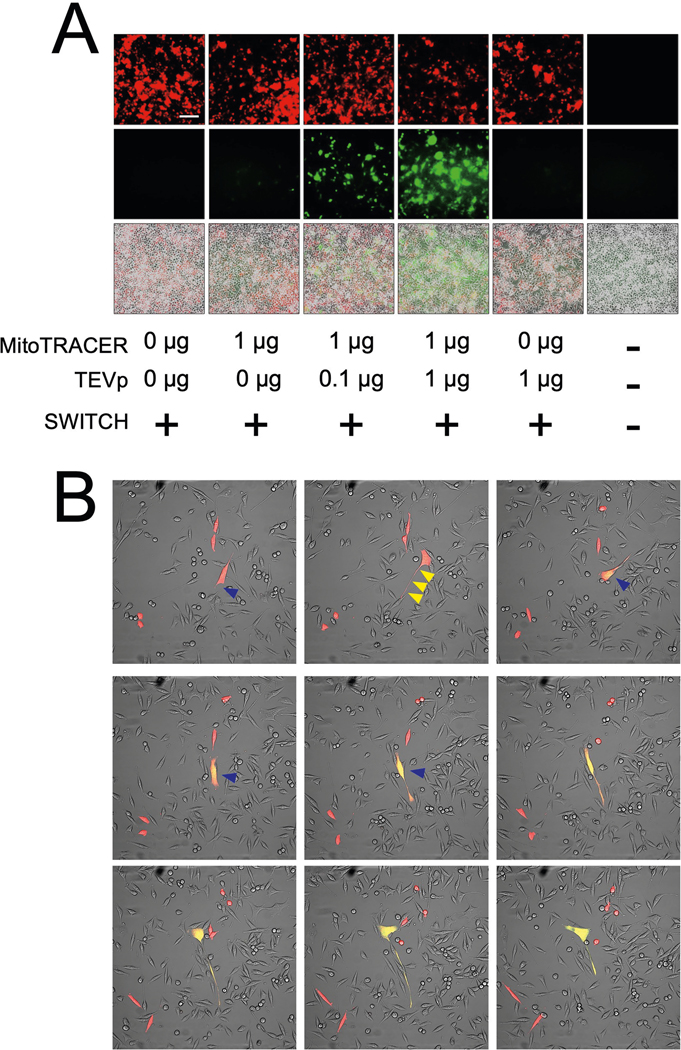
- Main analyses: flow cytometry/FACS, confocal/time-lapse imaging, Seahorse metabolic assays, PCR/qPCR and Nanopore mtDNA heteroplasmy sequencing, RNA-seq/microarray, multispectral imaging with machine-learning deconvolution, and the MitoTRACER red-to-green reporter for permanent lineage tracing.
Limitations
- Stated: exact molecular mechanisms remain unclear; further studies are needed to clarify whether neuronal mitochondria’s impact is due to intrinsic metabolic efficiency or highest transfer frequency; paired treated/control clinical sample was available for only one patient; animal allocation was not randomized at the individual level (random selection at cage level).
- Stated: the ρ0 4T1 model and mitochondrial-bound reporters were limited in biological relevance or unable to track prior transfers, motivating MitoTRACER.
- Evident: clinical denervation evidence is based on one paired patient; most mechanistic and fate-mapping evidence comes from mouse/cell-line models, and melanoma showed lower transfer and no significant lung/liver enrichment.
Model-written summary. Check it against the paper before relying on it.
Integrity signals
Registry
Cites
Statistics
Figures
Verification
Claims the paper makes
0 Valid · 1 Not valid · 43 Not checked · 153 Own results and interpretations
A result the paper reports from its own data — it cites no other source for it, so there is none to check. The quote shows it is in the paper.
In the paper
“Histopathological examination of this model has shown a reduction in the incidence of invasive lesions from 55% in control mice to 12% in denervated mice”
§ Nerve-to-cancer transfer of mitochondria during cancer metastasis > Nerve withdrawal impairs tumour bioenergetics
plainstates a cause- Asserted: passes — The authors put it forward as true.
- Checkable: passes — It can be checked against evidence.
- Load-bearing: passes — The paper’s conclusions depend on it.
- Based: passes — The paper gives a reason why it holds.
A result the paper reports from its own data — it cites no other source for it, so there is none to check. The quote shows it is in the paper.
In the paper
“cancer chemically denervated with botulinum neurotoxin type A (BoNT/A) confirmed reduced mitochondrial load in cancer cells.”
§ Nerve-to-cancer transfer of mitochondria during cancer metastasis > Abstract
plainstates a cause- Asserted: passes — The authors put it forward as true.
- Checkable: passes — It can be checked against evidence.
- Load-bearing: passes — The paper’s conclusions depend on it.
- Based: passes — The paper gives a reason why it holds.
A result the paper reports from its own data — it cites no other source for it, so there is none to check. The quote shows it is in the paper.
In the paper
“Our approach revealed that neuron-derived mitochondria enhance cancer cell metabolic capacity, stemness and resistance to metastatic stressors.”
§ Nerve-to-cancer transfer of mitochondria during cancer metastasis > Abstract
plainstates a cause- Asserted: passes — The authors put it forward as true.
- Checkable: passes — It can be checked against evidence.
- Load-bearing: passes — The paper’s conclusions depend on it.
- Based: passes — The paper gives a reason why it holds.
A result the paper reports from its own data — it cites no other source for it, so there is none to check. The quote shows it is in the paper.
In the paper
“After stimulation by 4T1 cancer cells, SVZ-NSCs rapidly undergo differentiation, evidenced by their morphological transition from round, neural progenitor cells to more elongated cells with neurite extensions and forming close contact with the cancer cell”
§ Nerve-to-cancer transfer of mitochondria during cancer metastasis > Cancer boosts neuronal mitochondria
plainstates a cause- Asserted: passes — The authors put it forward as true.
- Checkable: passes — It can be checked against evidence.
- Load-bearing: passes — The paper’s conclusions depend on it.
- Based: passes — The paper gives a reason why it holds.
A result the paper reports from its own data — it cites no other source for it, so there is none to check. The quote shows it is in the paper.
In the paper
“We examined whether similar reprogramming also occurs during cancer-driven neuronal differentiation and confirmed a robust increase in the mitochondrial mass of SVZ-NSCs exposed to 4T1 cancer cells (Extended Data Fig. 3d)”
§ Nerve-to-cancer transfer of mitochondria during cancer metastasis > Cancer boosts neuronal mitochondria
boostedstates a cause- Asserted: passes — The authors put it forward as true.
- Checkable: passes — It can be checked against evidence.
- Load-bearing: passes — The paper’s conclusions depend on it.
- Based: passes — The paper gives a reason why it holds.
115 more claims
Create a free account to see all 197 claims and to verify the 85 references still open.
- It may state two separate claims as one. 45
- The quote only partly states this claim. 1
- Probably not a substantial claim. 44
Self-check
Percentages, sums and reported differences re-computed from the paper’s own numbers.
Each contradiction between two passages listed here was confirmed by an independent check.
Rated minor: it would not touch a result — a value no result rests on, a p-value that stays on the same side of the significance level, or a conflict that is clerical, resolved elsewhere in the paper, or outside its own findings.
In the paper
§ Nerve-to-cancer transfer of mitochondria during cancer metastasis > Methods > Whole-cell current clamp recordings
“depolarizing currents were injected using 10 current ramp increments from 20 to 200 pm (800 ms duration)”
§ Nerve-to-cancer transfer of mitochondria during cancer metastasis > Extended Data
“Cells clamped at −80 mV, were depolarized with incremental current ramp injections ranging from 20–200 pA”
Rated minor: it would not touch a result — a value no result rests on, a p-value that stays on the same side of the significance level, or a conflict that is clerical, resolved elsewhere in the paper, or outside its own findings.
In the paper
§ Nerve-to-cancer transfer of mitochondria during cancer metastasis > Extended Data
“showed moderate neurite development”
§ Nerve-to-cancer transfer of mitochondria during cancer metastasis > Extended Data
“evidenced by the absence of neurite extensions.”
Citations
Cites
Subramanian, A., Tamayo, P., Mootha, V. K., Mukherjee, S., Ebert, B. L., Gillette, M. A., Paulovich, A., Pomeroy, S. L., Golub, T. R., Lander, E. S., et al. (2005) · Proceedings of the National Academy of Sciences · doi:10.1073/pnas.0506580102 · Cited by 53,625 · cited 1×
“To identify the biological processes and pathways associated with the differentially expressed genes, we performed a GATHER analysis 67 and used gene set enrichment analysis 68 to score association of BoNT/A treatment with Kyoto Encyclopedia of Genes and Genomes (KEGG) 69 pathways.”
Tumor Metastasis: Molecular Insights and Evolving Paradigms
Valastyan, S., & Weinberg, R. A. (2011) · Cell · doi:10.1016/j.cell.2011.09.024 · Cited by 4,011 · cited 1×
“Metabolic reprogramming and plasticity have emerged as crucial adaptive mechanisms for the successful metastatic dissemination of cancer cells 5,41–43 .”
New insights into the mechanisms of epithelial–mesenchymal transition and implications for cancer
Dongre, A., & Weinberg, R. A. (2019) · Nature Reviews Molecular Cell Biology · doi:10.1038/s41580-018-0080-4 · Cited by 3,876 · cited 1×
“The metastatic cascade is inefficient, with cancer cells encountering multiple stressors that impede their successful dissemination and growth at secondary sites 40 .”
Twist, a Master Regulator of Morphogenesis, Plays an Essential Role in Tumor Metastasis
Yang, J., Mani, S. A., Donaher, J. L., Ramaswamy, S., Itzykson, R. A., Come, C., Savagner, P., Gitelman, I., Richardson, A., & Weinberg, R. A. (2004) · Cell · doi:10.1016/j.cell.2004.06.006 · Cited by 3,855 · cited 1×
“We combined the MitoTRACER coculture approach with the 4T1 mammary fat pad xenograft model that can fully recapitulate the breast cancer progression steps and metastasis of TNBC 44,45 .”
Fundamentals of Cancer Metabolism
DeBerardinis, R. J., & Chandel, N. S. (2016) · Science Advances · doi:10.1126/sciadv.1600200 · Cited by 3,013
Metabolic reprogramming and cancer progression
Faubert, B., Solmonson, A., & DeBerardinis, R. J. (2020) · Science · doi:10.1126/science.aaw5473 · Cited by 2,740 · cited 1×
“Metabolic reprogramming and plasticity have emerged as crucial adaptive mechanisms for the successful metastatic dissemination of cancer cells 5,41–43 .”
KEGG for representation and analysis of molecular networks involving diseases and drugs
Kanehisa, M., Goto, S., Furumichi, M., Tanabe, M., & Hirakawa, M. (2010) · Nucleic Acids Research · doi:10.1093/nar/gkp896 · Cited by 2,322
Mitochondrial DNA mutations, oxidative stress, and apoptosis in mammalian aging
Kujoth, G. C., Hiona, A., Pugh, T. D., Someya, S., Panzer, K., Wohlgemuth, S. E., Hofer, T., Seo, A. Y., Sullivan, R., Jobling, W. A., et al. (2005) · Science · doi:10.1126/science.1112125 · Cited by 2,165 · cited 1×
“The mitochondrial morphology was altered in ρ 0 cells, with the mitochondria exhibiting a globular and fragmented appearance as described previously 29 .”
Human Cells Lacking mtDNA: Repopulation with Exogenous Mitochondria by Complementation
King, M. P., & Attardi, G. (1989) · Science · doi:10.1126/science.2814477 · Cited by 1,611 · cited 1×
“1n). ρ 0 cells are also phenotypically characterized by the complete loss of OXPHOS capacities and auxotrophy for uridine 30,31 .”
Autonomic nerve development contributes to prostate cancer progression
Magnon, C., Hall, S. J., Lin, J., Xue, X., Gerber, L., Freedland, S. J., & Frenette, P. S. (2013) · Science · doi:10.1126/science.1236361 · Cited by 1,287 · cited 1×
“Pathological analysis and animal denervation models, including the breast carcinoma denervation model presented herein, have consistently associated cancer nerve density with cancer invasion and metastasis 51–54 .”
Cited by
Hallmarks of cancer—Then and now, and beyond
Hanahan, D. (2026) · Cell · doi:10.1016/j.cell.2025.12.049 · Cited by 225
Mitochondrial transfer from immune to tumor cells enables lymph node metastasis
Terasaki, A., Bhatnagar, K., Weiner, A. T., Tan, Y., Szeifert, V., Huang, H.-L., Wiggers, L., Rodrigues, V., Rada, C. C., Shankar, V., et al. (2026) · Cell Metabolism · doi:10.1016/j.cmet.2025.12.014 · Cited by 50
Du, S., Long, Q., Zhou, Y., Fu, J., Wu, H., Yang, L., Xie, Y., Ding, Y., Zhang, M., Guo, J., et al. (2026) · Cell · doi:10.1016/j.cell.2026.02.023 · Cited by 43
Self-citationCancer neuroscience: The past, the present, and the road ahead
Winkler, F., Heuer, S., Althammer, F., Augustin, H. G., Beleggia, F., Demir, İ. E., Koenig, J., Kuner, R., Kuner, T., Loges, S., et al. (2026) · Cell · doi:10.1016/j.cell.2026.03.018 · Cited by 40
Wang, J., Li, R., & Li, Q. (2026) · Redox Biology · doi:10.1016/j.redox.2026.104019 · Cited by 33
“Human tumor specimens likewise show enriched mitochondrial loads in neuron-infiltrated regions [158].”
A combined enteric neuron-gastric tumor organoid reveals metabolic vulnerabilities in gastric cancer
Chan, B. K. C., Zhang, C., Poon, C. H., Lee, M. H. Y., Chu, H. Y., Wang, B., Chen, S.-G., Yan, H. H. N., Leung, S. Y., & Wong, A. S. L. (2025) · Cell stem cell · doi:10.1016/j.stem.2025.08.006 · Cited by 31
Peripheral Nerve–Cancer Interactions in the Tumor Microenvironment
Shao, F., Wang, J., Li, A., Wu, R., Chen, J., Tuo, Z., Wusiman, D., Yoo, K. H., Wei, W., Zhipeng, W., et al. (2026) · Research · doi:10.34133/research.1221 · Cited by 23
Mitochondrial transfer at the crossroads of cancer, stromal, and immune cells
Ishino, T., Inutsuka, Y., Ikeda, H., & Togashi, Y. (2025) · Trends in Cell Biology · doi:10.1016/j.tcb.2025.10.004 · Cited by 22
Zhong, H., Pan, R., Ouyang, Y., Xiao, T., Gu, W., Yang, H., Wang, H., Li, H., Peng, T., & Chen, P. (2026) · Molecular Cancer · doi:10.1186/s12943-026-02571-3 · Cited by 21
“Cancer cells can acquire intact mitochondria from T cells, macrophages, and even neurons within the TME, thereby boosting their own bioenergetic capacity, while simultaneously impairing immune cell function [36, 160].”
Hou, T., Ding, H., Huang, G., Meng, T., & Song, D. (2026) · Cellular Oncology · doi:10.1007/s13402-025-01151-9 · Cited by 21
“Additionally, BoNT/A-mediated denervation reduces cancer cell oxidative metabolism and invasion, validating neural dependency in breast and prostate cancers [76 ].”
Mitochondrial transfer in cancer: mechanisms, immune evasion, and therapeutic opportunities
Ka, H. I., & Woo, H. G. (2026) · Genomics & Informatics · doi:10.1186/s44342-025-00064-1 · Cited by 20
“Recently, genetic reporter systems such as Mito-TRACER have been introduced, which permanently label recipient cells that have taken up exogenous mitochondria [84].”
Mitochondrial quality control in health and disease: mechanisms and therapeutic targets
Creus, A., Mohapatra, S., Ortega, L., & Sebastián, D. (2026) · Signal Transduction and Targeted Therapy · doi:10.1038/s41392-026-02813-2 · Cited by 16
“338 In melanoma, the adapter protein Miro1 regulates horizontal mitochondrial transfer, whereas in hepatocellular carcinoma, hypoxia has been shown to induce TNT-mediated mitochondrial exchange.”
Targeting sensory nerves in the tumor microenvironment: a new vulnerability in cancer therapy
Jiang, J., Xu, Z., Qu, D., Qin, J., Wen, W., Qin, W., & Han, D. (2026) · Cell Communication and Signaling · doi:10.1186/s12964-025-02637-7 · Cited by 15
“The functional significance of this mitochondrial transfer was confirmed in in vivo models of breast cancer and melanoma, where tumor cells that had assimilated neuronal mitochondria exhibited enhanced metastatic potential and a distinct tropism for the brain [68].”
InfluentialWang, L.-J., Guo, P., Zhang, S., Wang, S., Chen, Y., Yan, H., & Zhang, X. (2025) · Frontiers in Immunology · doi:10.3389/fimmu.2025.1668281 · Cited by 15
“However, recent studies have shown that active mitochondrial transfer also occurs within the tumor microenvironment, potentially supporting cancer cells ’ energy metabolism, promoting tumor growth, invasion, and immune evasion (81 – 83).”
Neuroimmunometabolic co-evolution in the tumor micro- and macroenvironment
Zhang, Y., Zhuang, W., Zhu, H., Meng, F., Chen, M., Guo, Y., Fan, J., Sun, Y., & Ji, T. (2026) · Cell Metabolism · doi:10.1016/j.cmet.2026.02.001 · Cited by 14
Genome instability triggers intercellular DNA transfer between human cells
Maurais, E. G., Mazzagatti, A., Lin, Y.-F., Narożna, M., Hu, Q., Dahiya, R., Santiago-Ferrer, D., Herlihy, C. P., Krebs, M., Pateraki, N., et al. (2026) · Cell · doi:10.1016/j.cell.2026.04.041 · Cited by 14
MitoTracker transfers from astrocytes to neurons independently of mitochondria
Hole, K. L., Norkett, R., Russell, E., Cottilli, P., Strom, M., Howden, J. H., Corbett, N. J., Brownlees, J., & Devine, M. J. (2026) · Cell Reports Methods · doi:10.1016/j.crmeth.2026.101338 · Cited by 14
“28 In summary, in our opinion MitoTracker dye should not be used to study IMT.”
Zhang, L., Zhu, D., Wang, J., Guo, J., Jiang, M., Qi, X., Zhang, Z., & Zheng, Z. (2026) · Frontiers in Immunology · doi:10.3389/fimmu.2025.1693419 · Cited by 13
Wang, Y., Ye, Z., Yuan, Y., Wang, C., Chen, G., & Zhang, Y. (2025) · Biochimica et Biophysica Acta (BBA) - Reviews on Cancer · doi:10.1016/j.bbcan.2025.189464 · Cited by 12
Tunneling nanotubes between glioblastoma cells and T cells and hijack of mitochondria
Venkataratnam, Y., Mukherjee, V., Rai, N., Mahalingaswamy, M., Shandilya, D., Konar, S., Nanjegowda, N. B., Waghmare, G., & Nanjaiah, N. D. (2025) · Journal of Neuro-Oncology · doi:10.1007/s11060-025-05150-6 · Cited by 12
“These results are exciting as the recently published data reported that breast cancer cells hijack ~ 4–6% of neuronal mitochondria [24].”
Chen, Y., Shi, H., Xiao, M., Pan, H., Yu, X., Zhu, Y., Yang, J., Wang, W., Xu, J., Yu, X., et al. (2026) · Biomarker Research · doi:10.1186/s40364-026-00902-6 · Cited by 11
Peripheral Nerves in Cancer: Regulatory Roles and Therapeutic Strategies
Fu, Y., Ge, Z., Cao, Q., Li, Z., Zhang, A., Zhu, H., & Teng, G. (2026) · MedComm · doi:10.1002/mco2.70594 · Cited by 10
“The TME, composed of ECM and various stromal cell types, such as fibroblasts, endothelial cells, and immune cells, plays a crucial role in regulating tumor progression [ 136 ].”
Targeting organelle function in T cells for cancer immunotherapy
Baldwin, J., Heuser-Loy, C., & Gattinoni, L. (2025) · Nature reviews. Immunology · doi:10.1038/s41577-025-01223-9 · Cited by 10
Zhao, H., Tian, H., Nuerbieke, T., Ma, K., Li, W., Niu, X., Li, J., Ashby, C. R., Chen, Z., Zhou, T., et al. (2026) · Cancer Letters · doi:10.1016/j.canlet.2026.218690 · Cited by 10
Neuroscience in prostate cancer
Liu, Z., Peng, Q., Wang, Y., Chiu, P. K., Teoh, J. Y., Wang, R., Liu, X., Wu, D., & Ng, C. (2025) · Prostate Cancer and Prostatic Diseases · doi:10.1038/s41391-025-01042-y · Cited by 9
“After injection of BTX-A, cancer cells had a lower mitochondrial load than those with control saline-injection [6].”
Hu, Z., Qian, S., Liao, B., Wang, Y., Lu, Q., Mao, J., Lu, B., Zhang, L., Wang, F., Wang, D., et al. (2026) · Research · doi:10.34133/research.1042 · Cited by 9
“…as cardio-myocytes and alveolar epithelial cells, which often incorporate transplanted mitochondria into their existing network to support OXPHOS [ 13 , 36 – 38 ], ECs exhibit relatively low mitochondrial abundance and primarily serve as signaling regulators rather than bioenergetic hubs [ 39 ].”
Thyroid hormones, mitochondria, aging, and cancer
Glinsky, G. V., Hercbergs, A. A., & Davis, P. J. (2026) · Frontiers in Endocrinology · doi:10.3389/fendo.2025.1682089 · Cited by 8
“Importantly, cancer cells that accumulated neuronal mitochondria appear to acquire the propensity to spread more ef fi ciently because lineage tracing and fate mapping experiments revealed their selective enrichment at metastatic sites following dissemination from primary tumors (36).”
Zhang, S., Dong, F.-Y., Cai, S., Zhou, B., Jiang, L., Hu, L.-P., Zhu, Y.-H., Li, H., Yang, X., Cai, Z., et al. (2026) · Neuron · doi:10.1016/j.neuron.2026.03.039 · Cited by 8
Targeting mitochondrial complexes for cancer therapy
Osman, A. M., & Arabi, A. A. (2026) · Biochemical Pharmacology · doi:10.1016/j.bcp.2026.117695 · Cited by 8
Nie, S., Yu, Y., Yan, R. L., Taoran, L., Du, Y., Luo, Z., Li, S., & Huang, J. J. (2026) · Frontiers in Pharmacology · doi:10.3389/fphar.2025.1725973 · Cited by 8
Regulation and function of specialized membrane protrusions in intercellular communication
Liu, S., Daly, C. A., Ogden, S. K., & Zurzolo, C. (2026) · Nature Reviews Molecular Cell Biology · doi:10.1038/s41580-026-00982-0 · Cited by 8
“This intercellular circuitry has been linked to multiple aspects of tumour biology, including proliferation 169–173 , invasion 174 , metastasis 175,176 , metabolic plasticity 175 , modulation of antitumour immunity 177 and regulation of angiogenesis in tumour-associated cells 106 .”
Ma, L., Yang, X., Huang, X., Guo, H., Li, Z., Fan, S., Qin, H., Meng, F., Liu, P., Wang, X., et al. (2025) · Journal of Nanobiotechnology · doi:10.1186/s12951-025-03655-w · Cited by 8
“Among them, TNTs have been widely reported as the primary mechanism for mitochondrial transfer [16, 51, 52].”
Mitochondria transfer in glioblastoma
Storevik, S., Augustsson, M. T., Moreino, S. S., Köppe, H., Watson, D. C., Bayık, D., Fernandez, C. D. L. P., Serapiglia, A. M., Panicker, N., Lathia, J. D., et al. (2026) · Neuro-Oncology · doi:10.1093/neuonc/noag038 · Cited by 8
Neural hijacking in cancer metabolism: from nutrients to organelles
Shin, S., Myoung, S. S., Cho, H. J., Kim, S.-J., Lee, N., & Park, S. J. (2025) · Trends in cancer · doi:10.1016/j.trecan.2025.11.006 · Cited by 8
Stefano, G. B. (2025) · Frontiers in Bioscience-Landmark · doi:10.31083/fbl45962 · Cited by 8
“Neurons can even shuttle mitochondria to-2 wards adjacent malignant cells [33], an observation that highlights the potentially complex ramifications of mitochondrial function.”
Fang, F., Liu, Y., Zhao, Y., Gu, S., Zhao, C., Zhuang, J., Wang, Z., Xu, F., & Li, F. (2025) · Analytical Chemistry · doi:10.1021/acs.analchem.5c06365 · Cited by 8
Imperial strategy of cancer cells through mitochondrial transfer
Ishino, T., & Togashi, Y. (2025) · Molecular Oncology · doi:10.1002/1878-0261.70142 · Cited by 7
“Mitochondria have been reported to transfer to cancer cells from a variety of donor cells, including cancer cells [4], immune cells [5], stromal cells such as cancer-associated fibroblasts (CAFs), platelets, and neurons [6 – 11], which can contribute to cancer pathogenesis.”
Cancer Neuroscience: Innovative Conception and Emerging Strategy of Therapy
Wang, T., Dong, Z., Wang, Y., An, Z., Wang, S., & Jin, W. (2026) · MedComm · doi:10.1002/mco2.70708 · Cited by 6
Meng, X., Lu, J., Zhang, Y.-X., Pu, P., Guo, X.-J., Zhu, T., Hu, Z., Yu, L., Sun, Q., Song, G., et al. (2026) · Gut · doi:10.1136/gutjnl-2025-337595 · Cited by 6
“13 Conversely, pharmacological or surgical denervation has been shown to suppress tumour growth in murine models of PDAC and gastric cancer (GC), 14 15 underscoring the therapeutic possibility of targeting neuro-cancer axes.”
Mitochondrial Transfer in the Tumor Microenvironment
Omae, R., Ishino, T., & Togashi, Y. (2026) · Cancer Science · doi:10.1111/cas.70342 · Cited by 6
“Moreover, mitochondria derived from neurons have been found to enhance the metabolic capacity, stemness, and resistance of tumor cells to metastatic stressors such as oxidative and shear stress [23].”
Che, H., Li, Z., Xu, L., Du, Y.-B., Zhang, S.-O., & Ying, X. (2025) · iScience · doi:10.1016/j.isci.2025.114511 · Cited by 6
Wang, D., Yuan, M., Liu, J., Zhao, M. F., & Fang, T. (2025) · Theranostics · doi:10.7150/thno.121956 · Cited by 6
“Similarly, breast cancer cells (e.g., 4T1) acquire neuronal mitochondria via TNTs, augmenting OXPHOS, stemness, and stress resistance to drive metastasis [145].”
Prokaryotic organelle mitochondria drive tumorigenesis: “the original sin”
Wang, C., Luo, M., Zhou, J., Zhang, Q., Xiawei, J., He, J., Wang, L., Huang, Y., Xu, X., & 王方岩 (2026) · Frontiers in Oncology · doi:10.3389/fonc.2025.1632702 · Cited by 5
Neuro-tumor-immune crosstalk in pancreatic cancer: Mechanisms and therapeutic insights
Jin, J., He, B., Wang, X., Zhang, Y., You, H., Mo, S., Guo, D., & Shi, S. (2026) · Biochimica et Biophysica Acta (BBA) - Reviews on Cancer · doi:10.1016/j.bbcan.2026.189575 · Cited by 5
Cancer pain: current practice and emerging targets
Ye, Y., Chwistek, M., Gong, Z., Uzonwanne, V. O., Shi, X., & Szallasi, A. (2026) · British Journal of Pharmacology · doi:10.1111/bph.70410 · Cited by 5
The redox paradox in HGGs: ROS as drivers and destroyers
Kumari, P., Germon, Z. P., Jackson, E. R., Vo, T., & Dun, M. D. (2026) · Trends in cancer · doi:10.1016/j.trecan.2026.01.005 · Cited by 5
Understanding nerve–tumor interactions: From basic biology to therapeutic innovation
Sun, L., Li, X., Wang, Y., Wang, J., Xie, R., Zhang, N., & Zhang, Z. (2025) · Genes & Diseases · doi:10.1016/j.gendis.2025.101955 · Cited by 5
“121 This transfer enhances tumor bioenergetics, metabolic plasticity, and survival, especially during metastasis, and denervation or interruption of neural input diminishes these advantages in coculture and in vivo models.”
Neuron–tumor crosstalk in cancer: molecular mechanisms and translational advances
Jia, B., Zhao, L., Tang, M., Xie, N., Huang, Y., Liang, X., Yang, G., Wu, Q., Sun, Z., Kwan, H. Y., et al. (2026) · Molecular Cancer · doi:10.1186/s12943-026-02715-5 · Cited by 5
“Remarkably, beyond classical neuropeptide secretion, cancer-associated neurons can also directly transfer intact mitochondria to adjacent cancer cells through tunneling nanotubes or direct intercellular contacts, a process that markedly enhances tumor bioenergetics and metastatic fitness [67].”
Intercellular mitochondrial transfer and trans-mitophagy in response to protein import dysfunction
Glover, E., Wiseman, B., Dugdale, C. A., Humphery, C., Ballesteros, L. S., Hodgson, L. R., Wilkinson, K. A., & Collinson, I. R. (2026) · The Journal of Cell Biology · doi:10.1083/jcb.202511211 · Cited by 5
“…can have a significant and sustained beneficial impact on recipient cell metabolism (Baldwin et al., 2024; Islam et al., 2012; Lin et al., 2024; Hoover et al., 2025; Marlein et al., 2017; Marlein et al., 2019; Brestoff et al., 2021), even leading to rescue of cells containing defective…”
Li, Z., Zhu, X., Liao, W., Jiang, R., Sang, E., Zhu, J., Sun, G., Lu, Z., Wang, C., Jiang, Y., et al. (2026) · Redox Biology · doi:10.1016/j.redox.2026.104106 · Cited by 5
“…on prior experiments and respective viral titers, the optimal multiplicity of infection (MOI) for both cell types was determined to be 5) and 0.5 μ L polybrene-plus sensitizing reagent were added to 500 μ L antibiotic-free DMEM/F12 (10% FBS), which was then added to each well for transfection [27].”
InfluentialThe Dorsal Root Ganglia: From a Neuronal Relay to a Sensory Organ
Roger, A., Kaupp, L., Preto, E., Eichwald, T., Dixon, K. O., Lund, H., & Talbot, S. (2026) · Annual Review of Neuroscience · doi:10.1146/annurev-neuro-102124-034329 · Cited by 5
Neuro-tumor interactions in peripheral tumors
Ma, X., 吉佩璇, Zheng, J., Cai, S., Xu, K., Sun, Y., & Liu, D. (2026) · Cancer and Metastasis Reviews · doi:10.1007/s10555-026-10321-6 · Cited by 4
Luminescent-reaction-enabled super-resolution imaging
Zhu, W., Zhang, C., Gui, J., Yang, Y., Wan, Y., Wang, X. L., Qu, L., Guo, A., Zhang, Z., Han, Z., et al. (2026) · Nature · doi:10.1038/s41586-026-10889-7 · Cited by 4
Restoring the powerhouse: mitochondrial transplantation in regenerative medicine and cancer therapy
Tran, N., Liu, H. F., Cho, D., Shie, M., & Hu, S. (2026) · Nanoscale · doi:10.1039/d6nr00488a · Cited by 4
Liang, S. Q., Wang, Q., Zhang, M., Song, X., Zhang, Y., Wang, H., Feng, Y., Li, R. Y., Xia, W., Xu, L., et al. (2026) · Cancer Letters · doi:10.1016/j.canlet.2026.218324 · Cited by 4
Emerging paradigms in the study of brain metastases
Chafe, S. C., Mobilio, D., Zhai, K., Kieliszek, A., Venugopal, C., & Singh, S. K. (2026) · Science Signaling · doi:10.1126/scisignal.adj9726 · Cited by 3
Intercellular Mitochondrial Transfer: Implications in Cardiovascular Health
Wang, Y., & Tian, R. H. (2026) · Circulation Research · doi:10.1161/circresaha.125.326986 · Cited by 3
Role of Advanced Glycation End Products and Mitohormesis in Cancer Development and Progression
Kim, D., Choi, K.-N., Park, J.-I., Kim, E.-H., Majid, A., & Bae, O. (2025) · Antioxidants · doi:10.3390/antiox14101165 · Cited by 3
“A recent study suggested that neuron-to-cancer mitochondrial transfer enhances the oxidative phosphorylation capacity and stemness of cancer cells [62].”
Wang, D., Jiang, Z., Ben‐David, Y., Done, S. J., & Zacksenhaus, E. (2026) · British Journal of Cancer · doi:10.1038/s41416-026-03419-9 · Cited by 3
“A recent study demonstrates that breast cancer innervation promotes metastasis by a nerve-to-cancer transfer of mitochondria, with concomitant increase in oxidative phosphorylation (OXPHOS) [58].”
Sun, J., Zhang, C., Zhong, J., & Zhou, B. (2026) · Cancer Letters · doi:10.1016/j.canlet.2026.218460 · Cited by 3
Cancer Heterogeneity and Cancer Cell Plasticity: Molecular Mechanisms and Precision Therapy
Hu, H., Hao, Z. R., Li, L., Liu, H. B., Yang, C., & Wang, Z. (2026) · MedComm · doi:10.1002/mco2.70812 · Cited by 3
“…to cancer cells vis tunneling nanotubes, and cancer cells acquiring exogenous mitochondria exhibit enhanced mitochondrial respiratory capacity, increased ATP levels, and improved resistance to oxidative stress, forming a subpopulation of cancer cells with higher metabolic activity [ 196 ].”
Ren, L., Liu, C., Chen, W., Wang, Y., Rammes, G., Neckel, P. H., Klingl, A., Istvánffy, R., Friess, H., Ceyhan, G. O., et al. (2026) · Trends in cancer · doi:10.1016/j.trecan.2026.06.008 · Cited by 3
Henstridge, A. Z., Azorsa, P. A., Arya, N., Elhossiny, A. M., Kadiyala, P., Goldwasser, M., Branch, G., Sahai, V., Peterson, N., Machicado, J. D., et al. (2026) · Cancer Research · doi:10.1158/0008-5472.can-26-0823 · Cited by 3
Ali, M., Akpinar, Z. F., Ovando-Ricardez, J. A., Casasent, T. D., Lam, T., Lin, J., Khanmammadova, N., Reville, P. K., Shih, D. J. H., Osunkoya, A. O., et al. (2026) · bioRxiv (Cold Spring Harbor Laboratory) · doi:10.64898/2026.05.06.722652 · Cited by 3
Sáenz‐de‐Santa‐María, I., Pepe, A., Tinévez, J.-Y., Brou, C., Vitrenko, Y. A., Cokelaer, T., Moyal, E. C., Weigert, R., & Zurzolo, C. (2026) · Nature Communications · doi:10.1038/s41467-026-76619-9 · Cited by 3
“The horizontal transfer of mitochondria between different cell types in cancer or other diseases has been linked to tissue repair 53 , rescue mechanisms 11,14,54 , and enhanced tumorigenesis 3,4 and metastasis 13,55 .”
Rethinking mitochondria as a target for cancer therapy
Minarrieta, L., & St‐Pierre, J. (2026) · Trends in Molecular Medicine · doi:10.1016/j.molmed.2025.12.002 · Cited by 3
Neural Innervation of Tumors: Mechanisms, Hallmarks, and Therapeutic Opportunities
Cassim, S., & Montemagno, C. (2026) · Cancers · doi:10.3390/cancers18071063 · Cited by 3
“…modulation of cellular energetics—can further sustain the bioenergetic demands of motile tumor cells, while sympathetic signaling enhances vascular permeability through VEGF induction and remodeling of endothelial junctions, facilitating tumor cell intravasation into the circulation [25,87–91].”
InfluentialNeurons fuel cancer metastasis through mitochondrial transfer
Zhang, Y., Wei, M., Wu, T. Q., & Han, J. (2025) · Molecular Therapy · doi:10.1016/j.ymthe.2025.07.025 · Cited by 3
Yi, Y., Lai, J., Jian, L., Tian, Y., Zhang, X., & Zhang, R. (2026) · Cancer Letters · doi:10.1016/j.canlet.2026.218697 · Cited by 3
Yoshinaga, N., & Numata, K. (2026) · Chemical Biology & Drug Design · doi:10.1111/cbdd.70296 · Cited by 2
“In oncology, mitochondrial transfer has been shown to promote tumor genesis, drug resistance, and altered chemotherapy sensitivity (Ikeda et al. 2025; Hoover et al. 2025; Berridge et al. 2025).”
Cancer neuroscience: Mechanisms to medicine
Pasvolsky, L., Jones, G. H., Vu, Y., Winkler, F., & Amit, M. (2026) · Science Translational Medicine · doi:10.1126/scitranslmed.aeh1718 · Cited by 2
Mitochondrial involvement in PC: improving therapeutic strategies
Zhang, J., & Lou, C. (2025) · Frontiers in Pharmacology · doi:10.3389/fphar.2025.1710923 · Cited by 2
Xu, Z., Zhou, Q., & Miao, J. (2026) · Frontiers in Immunology · doi:10.3389/fimmu.2026.1871148 · Cited by 2
“stemness, metabolic fi tness, and metastatic capacity (19).”
InfluentialAssoni, L., Baboghlian, J., Castilho, R. F., & Reis, L. O. (2026) · Frontiers in Oncology · doi:10.3389/fonc.2025.1710038 · Cited by 2
“Arguably, the biggest novelty regarding the neural-tumoral axis is the transfer of mitochondria from neural to cancer cells (4), however, it remains to be fully elucidated whether the transfer of mitochondria from adjacent neural cells found in the tumoral stroma has similar mechanisms as the ones…”
InfluentialFeng, S., Hu, Y., Li, S., 常玉巧, Li, Z., Liu, Y., & Xu, K. (2026) · Critical Reviews in Oncology/Hematology · doi:10.1016/j.critrevonc.2026.105530 · Cited by 2
Stromal Regulation of Tumor Perineural Invasion: A Multicellular and Neuro‐Ecological Perspective
Lin, X., Liu, Y., Lin, H., Feng, K., & Liu, X. (2026) · Advanced Science · doi:10.1002/advs.76248 · Cited by 2
“…a permissive niche for PNI. tor (NGF) and brain-derived neurotrophic factor (BDNF), that induce axonal extension toward the tumor bed, while nerves reciprocally facilitate tumor migration and proliferation through paracrine signaling, structural guidance, and even mitochondria transfer [ 7–9 ].”
Redox‐Responsive Mitochondrial Delivery from Functionalized Vascular Stent Surfaces
Tang, F., Applewhite, B. C., Wang, B., & Jiang, B. (2025) · Advanced NanoBiomed Research · doi:10.1002/anbr.202500202 · Cited by 2
Heydari, F., Fahmi, S., Alqassimi, S., Mansuri, N., Al-Samawi, R. I., Mozaffari, F., Hamblin, M. R., & Naghinezhad, J. (2026) · Clinical & Experimental Metastasis · doi:10.1007/s10585-026-10424-y · Cited by 2
Tunneling nanotubes and cytonemes in cancer and development
Yamada, K. M., Walma, D. A. C., & Endo, W. (2026) · The Journal of Cell Biology · doi:10.1083/jcb.202601085 · Cited by 2
Gu, Y., Gu, C., Pan, R., & Liu, B. (2026) · Cells · doi:10.3390/cells15161502 · Cited by 2
“Specifically, a recent study demonstrated that breast cancer cells exposed to neurons acquire neuron-derived mitochondria primarily through tunneling nanotube-like structures, thereby confirming active mitochondrial transfer within nerve-cancer co-cultures [80].”
Mitochondrial Metabolism and Dynamics in Cancer Cells
Fadavi, P., & Taghizadeh‐Hesary, F. (2026) · Cancer treatment and research · doi:10.1007/978-3-032-21861-2_6 · Cited by 2
Wang, X., Liu, J., You, H., Zhao, Y., Fu, H., Liu, Z. L., Sun, Y., Geng, B., Wang, X., & Xia, Y. (2026) · International Journal of Molecular Sciences · doi:10.3390/ijms27125193 · Cited by 2
“It is precisely regulated by the MIRO1/2-TRAK1/2 adaptor complex, motor proteins, the cytoskeleton, calcium signals, energy states, and stress signals [6–9].”
Mitochondrial transfer: quality dictates immune-metabolic fate
Liu, K., Shubhra, Q. T. H., & Zhang, H. (2026) · Trends in Molecular Medicine · doi:10.1016/j.molmed.2026.07.002 · Cited by 2
The mitochondrial gambit: Re-evaluating Antimycin A as a multi-pronged anti-cancer agent
Park, W. H. (2026) · European Journal of Medicinal Chemistry · doi:10.1016/j.ejmech.2026.118596 · Cited by 2
Metastasis gets a little help from immune cell mitochondria
Berridge, M. V., Zobalová, R., & Neužil, J. (2026) · Cell Metabolism · doi:10.1016/j.cmet.2026.01.002 · Cited by 2
Cancer might evade immune defences by stealing mitochondria
Dattaro, L. (2026) · Nature · doi:10.1038/d41586-026-00123-9 · Cited by 2
The Main Cancer Theories in Focus
Paul, D. (2025) · Springer eBooks · doi:10.1007/978-3-032-08808-6_5 · Cited by 1
Chen, P., Liu, C., Tsai, C.-C., Sulistyowati, E., Li, F., Liu, C., Wu, D., Chou, S.-H., Kuo, F.-C., & Huang, B. (2026) · The Kaohsiung Journal of Medical Sciences · doi:10.1002/kjm2.70232 · Cited by 1
Cai, W., Wang, Y., Qiu, Y., He, P., Cai, Q., Liu, S., Zhan, J., Chen, M., Chen, L., Xu, C., et al. (2026) · Therapeutic Advances in Medical Oncology · doi:10.1177/17588359261424685 · Cited by 1
“22,49,50 Concurrently, the definition of HER2-negativity is being critically refined to address biological heterogeneity, marked by the formal delineation of the HER2-low and HER2-ultralow categories.”
Kishan, R., Zhang, G., Yang, W., & Su, Y. (2025) · Cancers · doi:10.3390/cancers17152464 · Cited by 1
“Apart from facilitating immunomodulation, a recent study highlights its role in eliciting tumor metabolic plasticity by providing mitochondria to malignant cells [35].”
Luo, Y., Han, Y., Nie, H., Feng, M., Wei, C., Ma, X., Li, K., Zhang, Z., Wang, G., Pan, W., et al. (2026) · Journal of Molecular Medicine · doi:10.1007/s00109-026-02657-x · Cited by 1
Decoding Bone Cancer Pain: Pathological Mechanisms and Targeted Interventions
Zhai, M., Luo, Y., & Sun, W. (2025) · IntechOpen eBooks · doi:10.5772/intechopen.1013037 · Cited by 1
Tumour innervation as a regulatory layer of cancer immunity
Wang, D., Fu, Z., Yang, Z., Liu, H., Li, Q., Zhu, D., & Li, W. (2026) · The Innovation Oncology · doi:10.59717/j.xinn-oncol.2026.100010 · Cited by 1
Fotouhi, F., Nokhbedehghan, Z., Khajavi, M., Taghizadeh‐Hesary, F., Alizadeh, R., Asghari, A., Daneshmehr, M. A., Warnecke, A., Rohde, E., Gimona, M., et al. (2026) · International Journal of Pharmaceutics · doi:10.1016/j.ijpharm.2026.126634 · Cited by 1
Xu, M., Wang, Z., Yang, S., Li, G., Zhang, X., Zhao, L., Yang, L., Qiu, C., Feng, X., Zhang, K., et al. (2026) · Cell Death and Disease · doi:10.1038/s41419-026-08495-6 · Cited by 1
Zhou, C., Sarian, M. N., Tong, X., Han, R., Anasamy, T., & Hamezah, H. S. (2026) · Journal of Pharmaceutical Analysis · doi:10.1016/j.jpha.2025.101538 · Cited by 1
“Such tumor cells typically had low oxygen consumption and poor viability, but after five days of co-culture with neurons, their metabolism and proliferation significantly recovered, likely due to the acquisition of functional mitochondria from nerve cells [121].”
Neuroglial-Breast Cancer Crosstalk Shapes the Brain Metastatic Niche
Hombach‐Klonisch, S., Hall, E. T., Amin, R., Fedora, E., Vriend, J. P., Pitz, M. W., & Klonisch, T. C. (2026) · Cells · doi:10.3390/cells15080735 · Cited by 1
Neuronal transfer of mitochondria to tumour cells promotes cancer spread
Singh, A. K., & Pan, Y. (2025) · Nature · doi:10.1038/d41586-025-01718-4 · Cited by 1
Homoisoflavonoids—From Natural Specificity and Biosynthesis to Precision Health‐Promoting Mechanisms
Zhang, J., Chen, H., Si, J., Han, Z., & Zhang, X. (2026) · Food Frontiers · doi:10.1002/fft2.70282 · Cited by 1
Nwarunma, E., & Williams, M. T. S. (2026) · FEBS Journal · doi:10.1111/febs.70544 · Cited by 1
“However, these methods capture only a snapshot of transferred mitochondria and cannot distinguish acceptors from non-acceptors or track long-term events [60].”
Influential
Metadata
- Authors
- Hoover, G., Gilbert, S., Curley, O., Obellianne, C., Lin, M. T., Hixson, W., Pierce, T. W., Andrews, J. F., Alexeyev, M. F., Ding, Y., Bu, P., Behbod, F., Medina, D., Chang, J. T., Ayala, G., & Grelet, S.
- Affiliations
- USA Mitchell Cancer Institute (US)
- University of South Alabama (US)
- The University of Texas Health Science Center at Houston (US)
- University of Kansas Medical Center (US)
- Baylor College of Medicine (US)
- Corresponding author
- Ayala, Gustavo
- Grelet, Simon
- ORCID
- Venue
- Nature
- Published
- 2025-06-25
- Volume
- 644
- Issue
- 8075
- Pages
- 252-262
- ISSN
- 0028-0836 (ISSN-L)
- 1476-4687
- PMC
- PMC12328229
- OpenAlex
- W4411627179
- Cited by
- 210
- References
- 72
- Citations by year
- 2026: 176 · 2025: 34
- FWCI
- 49.49
- Type
- journal article
- Language
- en
- Open access
- hybrid
- doi.org
- Licence
- cc-by-nc-nd
- creativecommons.org/licenses/by-nc-nd/4.0 (tdm)
- creativecommons.org/licenses/by-nc-nd/4.0 (vor)
- Locations
- Nature (publishedVersion, cc-by-nc-nd)
- PubMed (publishedVersion)
- PubMed Central (acceptedVersion, cc-by-nc-nd)
- Digital Commons-TMC (Texas Medical Center) (submittedVersion)
- Funders
- Vanderbilt University (P30 CA68485, CA68485, EY08126)
- University of South Alabama
- University of Texas Health Science Center at Houston (SCR_025962)
- McGovern Medical School (SCR_025962)
- Georgia Clinical and Translational Science Alliance (RR024975, 5UL1 RR024975-03)
- Breast Cancer Research Foundation of Alabama
- National Institutes of Health (UL1TR003096)
- National Heart, Lung, and Blood Institute (R01HL140182)
- National Eye Institute (P30EY008126)
- National Cancer Institute (P30CA068485, R37CA292711)
- National Center for Research Resources (UL1RR024975, G20RR030956)
- National Center for Advancing Translational Sciences
- Topics
- Life Sciences › Biochemistry, Genetics and Molecular Biology › Cancer Research › Cancer, Stress, Anesthesia, and Immune Response
- Life Sciences › Biochemistry, Genetics and Molecular Biology › Cancer Research › Cancer, Hypoxia, and Metabolism
- Life Sciences › Biochemistry, Genetics and Molecular Biology › Molecular Biology › Metabolism, Diabetes, and Cancer
- Keywords
- mitochondrial transfer, metastasis, cancer metabolism, metabolic reprogramming, breast cancer
- MeSH terms
- Animals, Breast Neoplasms, Cell Communication, Energy Metabolism, Female, Humans, Mitochondria, Neoplasm Metastasis, Neurons, Coculture Techniques, Cell Lineage, Cell Line, Tumor, Mice
About these checks
Registry, retraction, Cites and statistics results are computed, not judged, with one exception: a printed reference that no index lists is read once by a model before it counts as a citation error. Claims are extracted by a model and kept only when their quote appears verbatim in the text; each cited source is then checked, with a model’s help, for whether it says what the claim relies on. Those verdicts can be wrong — read the claim’s quote and the cited source before relying on one.
A language model drew the claims from the paper on 2026-11-28, under version 3 of the claim definition (model deepseek-v4.1-flash, prompt extract-v3).
A second model labelled each claim on 2026-11-28 (model jev-1.13-20260917, definition revision gold-guideline-v0.2).
Statistics and arithmetic are recomputed, not judged.
Confidence bands are shown only for fields calibrated on our annotated test set. None is calibrated yet, so no band is shown.
What counts as a claim ›How we measure confidence ›How we check this ›
Are you an author, or do you see a problem with this page? Request a review
Data sources
Bibliographic data: Semantic Scholar, OpenAlex, Crossref.
Contains information from the Semantic Scholar Academic Graph Datasets, made available under the ODC Attribution License (ODC-BY 1.0).
Semantic Scholar’s data is described in: Kinney, R., et al. (2023). The Semantic Scholar Open Data Platform. arXiv:2301.10140.
