

Nerve-to-cancer transfer of mitochondria during cancer metastasis
Open accessThe DOI matches its Crossref record; 72 of the 72 references it cites were found in a registry or an index; none of the 85 sources its claims cite is checked for support yet.
Abstract
The nervous system has a pivotal role in cancer biology, and pathological investigations have linked intratumoural nerve density to metastasis1. However, the precise impact of cancer-associated neurons and the communication channels at the nerve-cancer interface remain poorly understood. Previous cancer denervation models in rodents and humans have highlighted robust cancer dependency on nerves, but the underlying mechanisms that drive nerve-mediated cancer aggressivity remain unknown2,3. Here we show that cancer-associated neurons enhance cancer metabolic plasticity by transferring mitochondria to cancer cells. Breast cancer denervation and nerve-cancer coculture models confirmed that neurons significantly improve tumour energetics. Neurons cocultured with cancer cells undergo metabolic reprogramming, resulting in increased mitochondrial mass and subsequent transfer of mitochondria to adjacent cancer cells. To precisely track the fate of recipient cells, we developed MitoTRACER, a reporter of cell-to-cell mitochondrial transfer that permanently labels recipient cancer cells and their progeny. Lineage tracing and fate mapping of cancer cells acquiring neuronal mitochondria in primary tumours revealed their selective enrichment at metastatic sites following dissemination. Collectively, our data highlight the enhanced metastatic capabilities of cancer cells that receive mitochondria from neurons in primary tumours, shedding new light on how the nervous system supports cancer metabolism and metastatic dissemination.
Overview
CoChat Summary
TL;DR
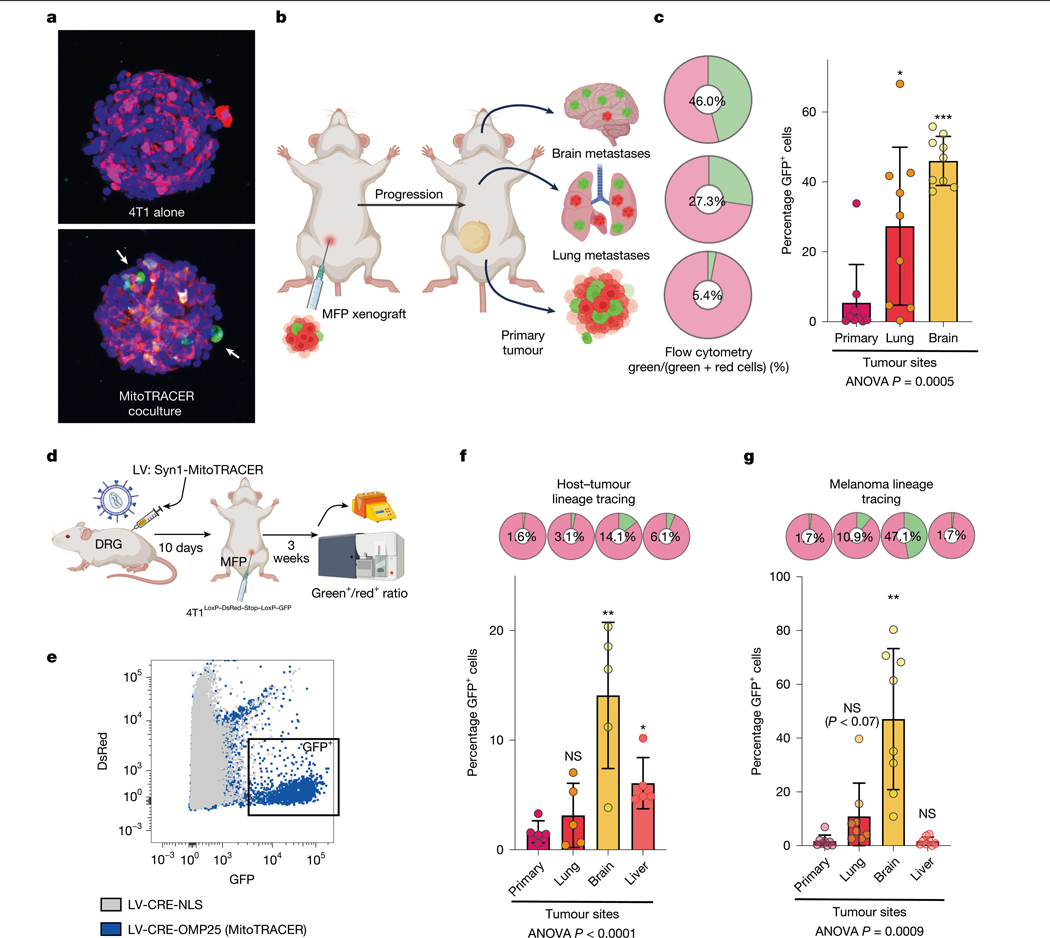
Cancer-associated neurons transfer mitochondria to cancer cells, boosting cancer metabolic plasticity, stemness, and resistance to metastatic stressors. MitoTRACER lineage tracing shows mitochondria-recipient cancer cells are enriched at metastatic sites, especially brain and lung.
Key findings
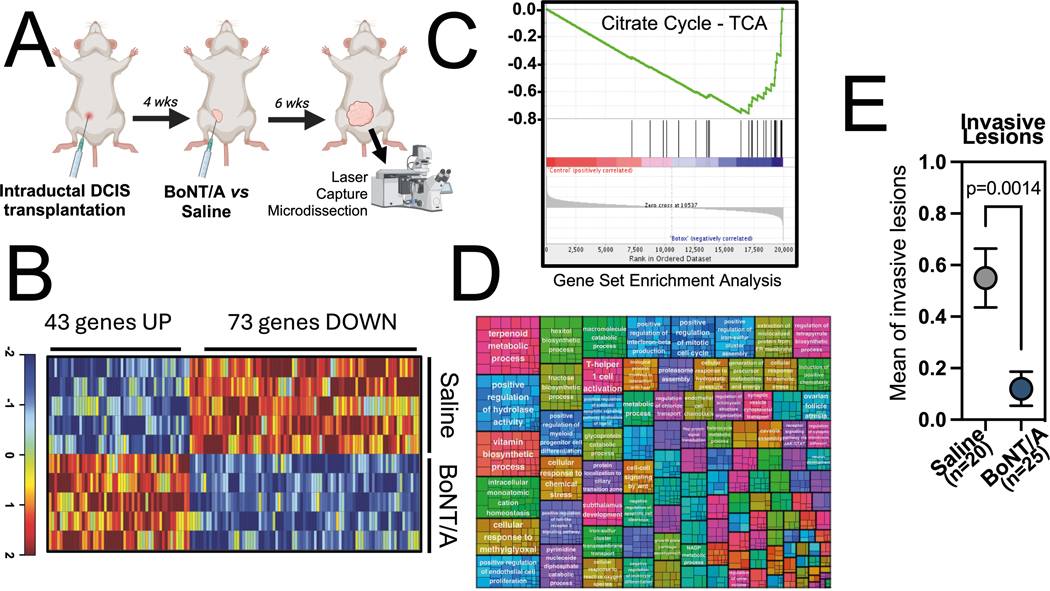
- Denervation impairs breast cancer bioenergetics: BoNT/A denervation in 4T1 TNBC and human DCIS xenograft downregulated metabolic gene signatures, with the TCA cycle most suppressed; invasive lesions fell from 55% in control mice to 12% in denervated mice.
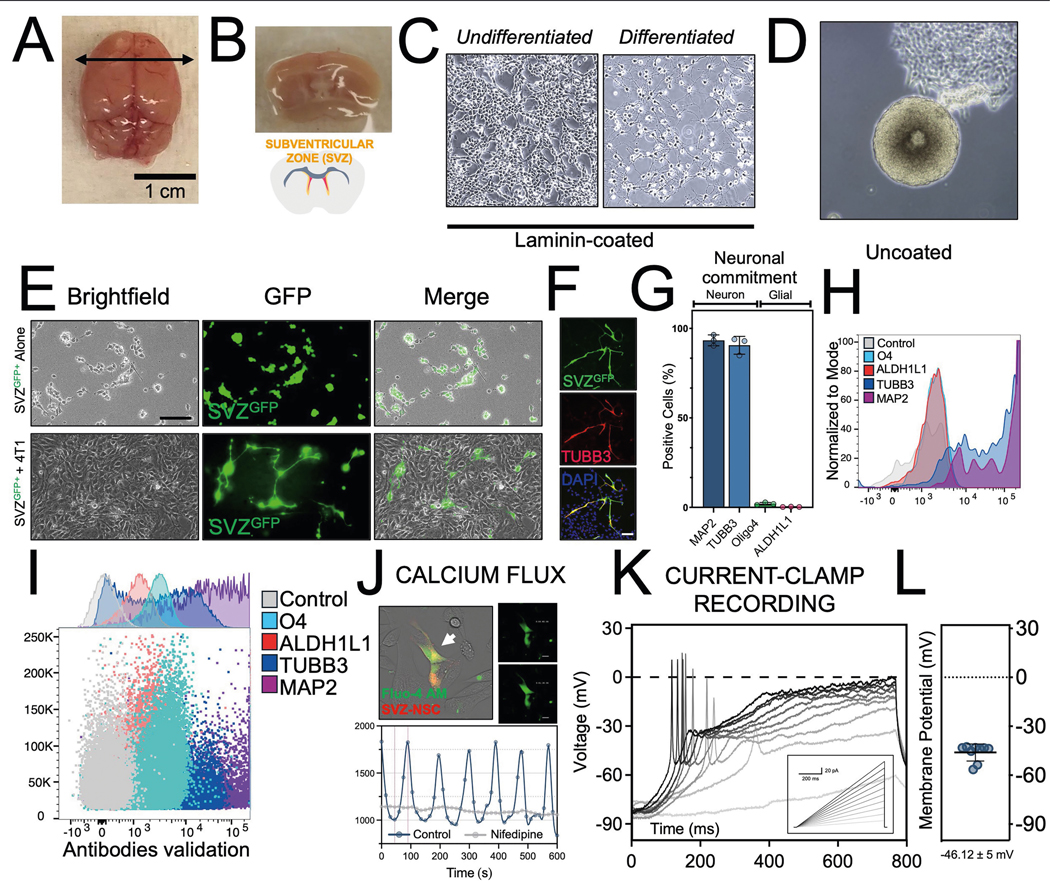
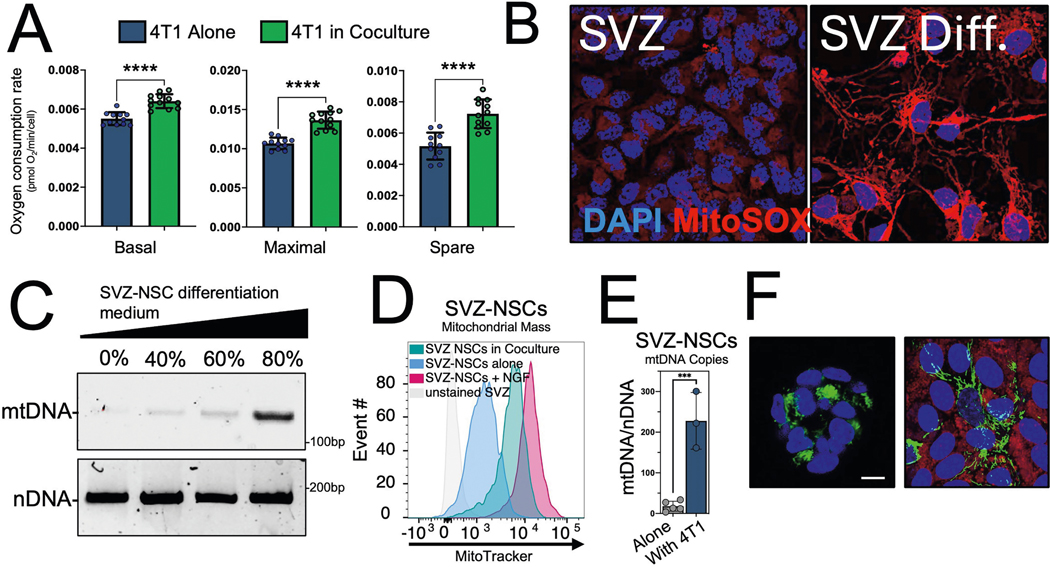
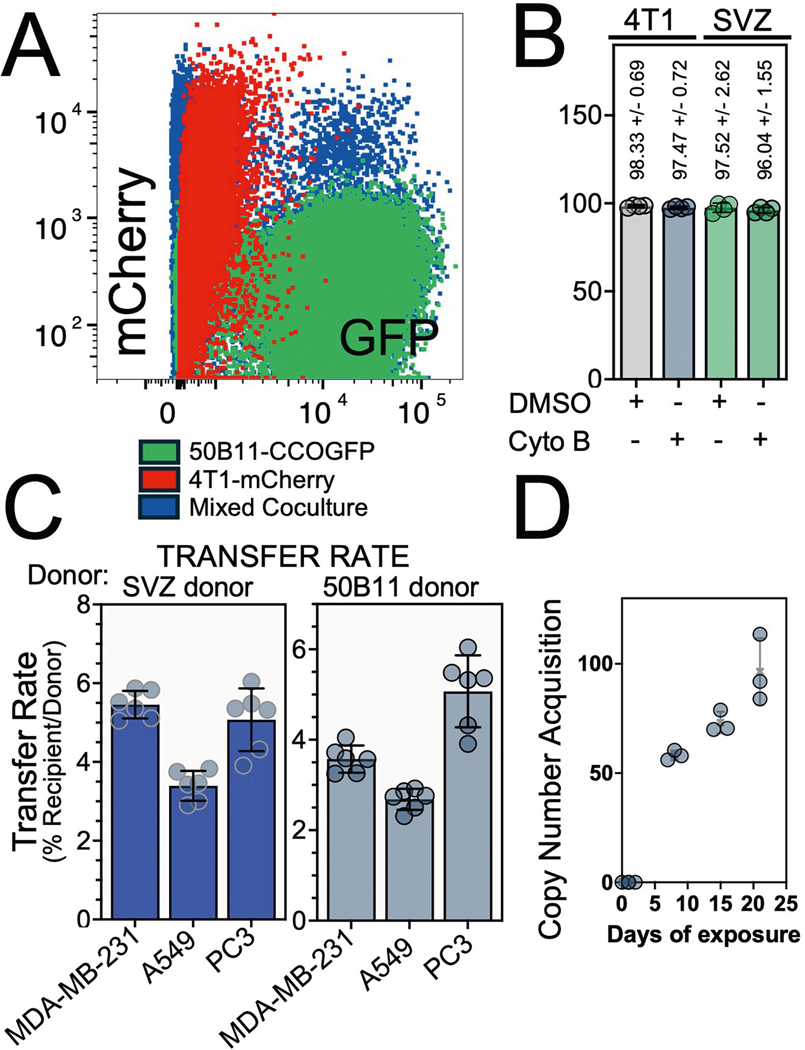
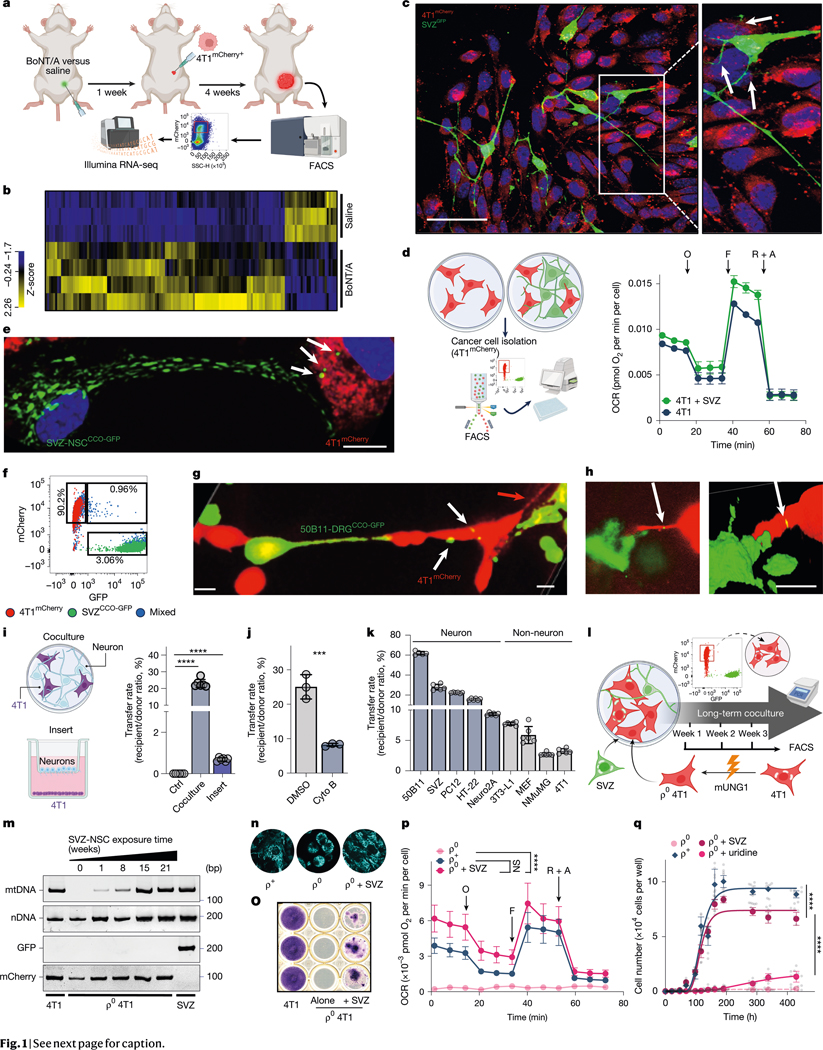
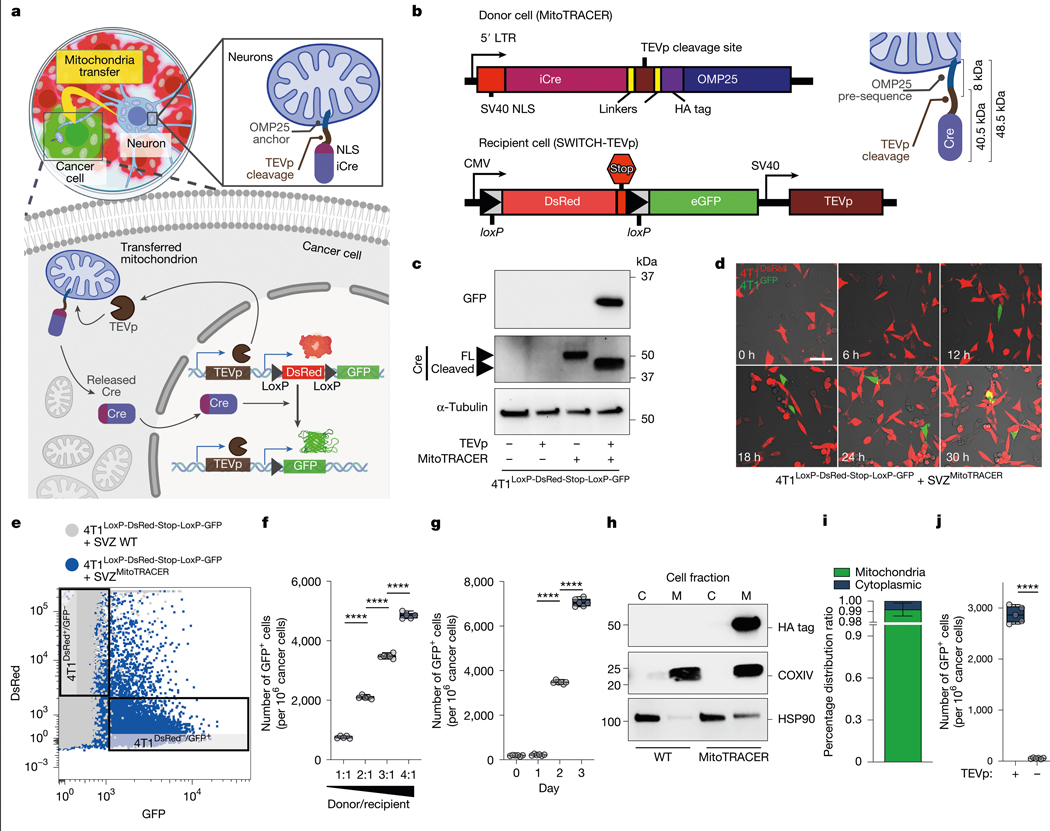
- Nerve–cancer coculture drives neuronal mitochondrial reprogramming and transfer: >90% of SVZ-NSCs differentiated into TUBB3+ MAP2+ neurons (negative for O4/ALDH1L1), action potential threshold averaged −46 mV ± 5 mV, and mtDNA increased from about 16 to 226 mtDNA/nuclear DNA copies per neuron after cancer-induced differentiation. eGFP-labelled neuronal mitochondria transferred to 4T1 cells; double-positive 4T1GFP+/mCherry+ cells averaged 0.96% of coculture, or 31.4% when normalized to donor population.
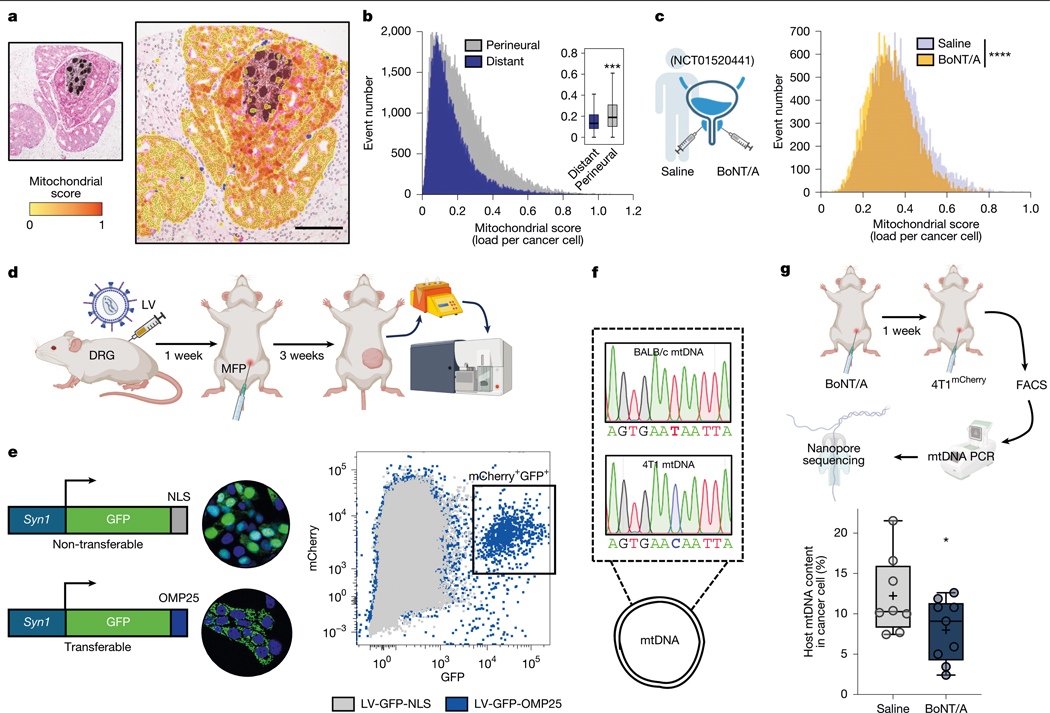
- Transferred mitochondria are functional and prevalent in vivo: ρ0 4T1 cells reacquired mtDNA, rescued uridine auxotrophy, respiration, and proliferation after coculture with ρ+ SVZ-NSCs. In mouse xenografts, neurons accounted for approximately 35% of total mitochondrial transfers; human prostate cancer near nerves and metastatic breast cancer cells showed higher mitochondrial load, while the BoNT/A-denervated prostate side had lower mitochondrial load.
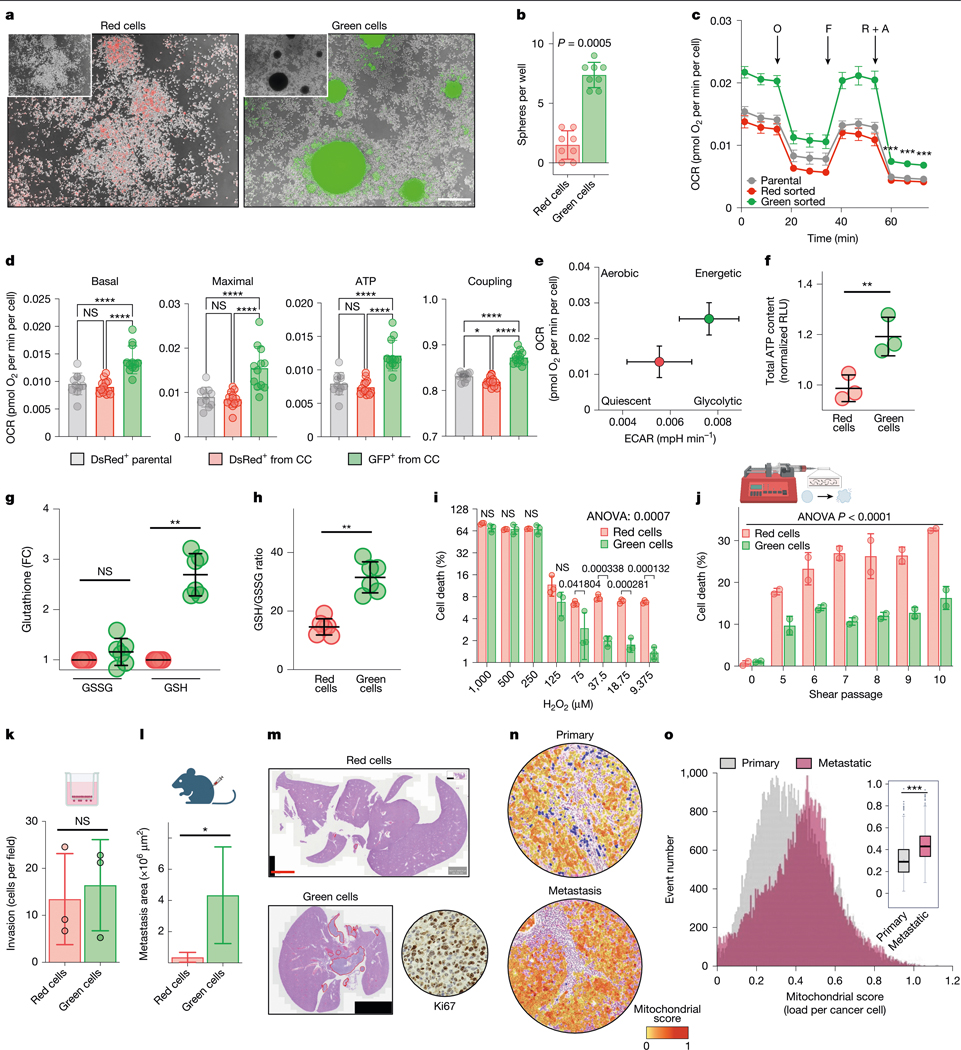
- MitoTRACER fate mapping: recipient cells in primary tumours averaged about 5.4% GFP+ and were enriched in lung (27.3%) and brain (46.0%); a host DRG-labelled model showed 1.6% GFP+ in primary tumour with enrichment in brain and liver. Recipient cells showed increased mammosphere formation, respiration, ATP production, GSH/GSSG, oxidative and shear stress resistance, and higher metastatic potential, without increased intrinsic invasion.
Methods
- Design: orthogonal in vitro and in vivo models of nerve–cancer interaction, including BoNT/A chemical denervation, nerve–cancer coculture, mammary fat pad xenografts, lineage tracing/fate mapping, and human tissue analysis.
- Samples/data: 4T1 TNBC, human DCIS xenograft, SVZ-NSCs, 50B11-DRG neurons, other donor/recipient cell lines, BALB/c and SCID-beige mice, B16-F10 melanoma, human prostate NCT01520441 trial tissue, and breast cancer tissue microarrays.
- Main analyses: flow cytometry/FACS, confocal/time-lapse imaging, Seahorse metabolic assays, PCR/qPCR and Nanopore mtDNA heteroplasmy sequencing, RNA-seq/microarray, multispectral imaging with machine-learning deconvolution, and the MitoTRACER red-to-green reporter for permanent lineage tracing.
Limitations
- Stated: exact molecular mechanisms remain unclear; further studies are needed to clarify whether neuronal mitochondria’s impact is due to intrinsic metabolic efficiency or highest transfer frequency; paired treated/control clinical sample was available for only one patient; animal allocation was not randomized at the individual level (random selection at cage level).
- Stated: the ρ0 4T1 model and mitochondrial-bound reporters were limited in biological relevance or unable to track prior transfers, motivating MitoTRACER.
- Evident: clinical denervation evidence is based on one paired patient; most mechanistic and fate-mapping evidence comes from mouse/cell-line models, and melanoma showed lower transfer and no significant lung/liver enrichment.
Model-written summary. Check it against the paper before relying on it.
Integrity signals
Registry
Cites
Statistics
Figures
Verification
Claims the paper makes
0 Valid · 1 Not valid · 43 Not checked · 153 Own results and interpretations
A result the paper reports from its own data — it cites no other source for it, so there is none to check. The quote shows it is in the paper.
In the paper
“Histopathological examination of this model has shown a reduction in the incidence of invasive lesions from 55% in control mice to 12% in denervated mice”
§ Nerve-to-cancer transfer of mitochondria during cancer metastasis > Nerve withdrawal impairs tumour bioenergetics
plainstates a cause- Asserted: passes — The authors put it forward as true.
- Checkable: passes — It can be checked against evidence.
- Load-bearing: passes — The paper’s conclusions depend on it.
- Based: passes — The paper gives a reason why it holds.
A result the paper reports from its own data — it cites no other source for it, so there is none to check. The quote shows it is in the paper.
In the paper
“cancer chemically denervated with botulinum neurotoxin type A (BoNT/A) confirmed reduced mitochondrial load in cancer cells.”
§ Nerve-to-cancer transfer of mitochondria during cancer metastasis > Abstract
plainstates a cause- Asserted: passes — The authors put it forward as true.
- Checkable: passes — It can be checked against evidence.
- Load-bearing: passes — The paper’s conclusions depend on it.
- Based: passes — The paper gives a reason why it holds.
A result the paper reports from its own data — it cites no other source for it, so there is none to check. The quote shows it is in the paper.
In the paper
“Our approach revealed that neuron-derived mitochondria enhance cancer cell metabolic capacity, stemness and resistance to metastatic stressors.”
§ Nerve-to-cancer transfer of mitochondria during cancer metastasis > Abstract
plainstates a cause- Asserted: passes — The authors put it forward as true.
- Checkable: passes — It can be checked against evidence.
- Load-bearing: passes — The paper’s conclusions depend on it.
- Based: passes — The paper gives a reason why it holds.
A result the paper reports from its own data — it cites no other source for it, so there is none to check. The quote shows it is in the paper.
In the paper
“After stimulation by 4T1 cancer cells, SVZ-NSCs rapidly undergo differentiation, evidenced by their morphological transition from round, neural progenitor cells to more elongated cells with neurite extensions and forming close contact with the cancer cell”
§ Nerve-to-cancer transfer of mitochondria during cancer metastasis > Cancer boosts neuronal mitochondria
plainstates a cause- Asserted: passes — The authors put it forward as true.
- Checkable: passes — It can be checked against evidence.
- Load-bearing: passes — The paper’s conclusions depend on it.
- Based: passes — The paper gives a reason why it holds.
A result the paper reports from its own data — it cites no other source for it, so there is none to check. The quote shows it is in the paper.
In the paper
“We examined whether similar reprogramming also occurs during cancer-driven neuronal differentiation and confirmed a robust increase in the mitochondrial mass of SVZ-NSCs exposed to 4T1 cancer cells (Extended Data Fig. 3d)”
§ Nerve-to-cancer transfer of mitochondria during cancer metastasis > Cancer boosts neuronal mitochondria
boostedstates a cause- Asserted: passes — The authors put it forward as true.
- Checkable: passes — It can be checked against evidence.
- Load-bearing: passes — The paper’s conclusions depend on it.
- Based: passes — The paper gives a reason why it holds.
115 more claims
Create a free account to see all 197 claims and to verify the 85 references still open.
- It may state two separate claims as one. 45
- The quote only partly states this claim. 1
- Probably not a substantial claim. 44
Self-check
Percentages, sums and reported differences re-computed from the paper’s own numbers.
Each contradiction between two passages listed here was confirmed by an independent check.
Rated minor: it would not touch a result — a value no result rests on, a p-value that stays on the same side of the significance level, or a conflict that is clerical, resolved elsewhere in the paper, or outside its own findings.
In the paper
§ Nerve-to-cancer transfer of mitochondria during cancer metastasis > Methods > Whole-cell current clamp recordings
“depolarizing currents were injected using 10 current ramp increments from 20 to 200 pm (800 ms duration)”
§ Nerve-to-cancer transfer of mitochondria during cancer metastasis > Extended Data
“Cells clamped at −80 mV, were depolarized with incremental current ramp injections ranging from 20–200 pA”
Rated minor: it would not touch a result — a value no result rests on, a p-value that stays on the same side of the significance level, or a conflict that is clerical, resolved elsewhere in the paper, or outside its own findings.
In the paper
§ Nerve-to-cancer transfer of mitochondria during cancer metastasis > Extended Data
“showed moderate neurite development”
§ Nerve-to-cancer transfer of mitochondria during cancer metastasis > Extended Data
“evidenced by the absence of neurite extensions.”
Citations
Cites
Subramanian, A., Tamayo, P., Mootha, V. K., Mukherjee, S., Ebert, B. L., Gillette, M. A., Paulovich, A., Pomeroy, S. L., Golub, T. R., Lander, E. S., et al. (2005) · Proceedings of the National Academy of Sciences · doi:10.1073/pnas.0506580102 · Cited by 53,625 · cited 1×
“To identify the biological processes and pathways associated with the differentially expressed genes, we performed a GATHER analysis 67 and used gene set enrichment analysis 68 to score association of BoNT/A treatment with Kyoto Encyclopedia of Genes and Genomes (KEGG) 69 pathways.”
Tumor Metastasis: Molecular Insights and Evolving Paradigms
Valastyan, S., & Weinberg, R. A. (2011) · Cell · doi:10.1016/j.cell.2011.09.024 · Cited by 4,011 · cited 1×
“Metabolic reprogramming and plasticity have emerged as crucial adaptive mechanisms for the successful metastatic dissemination of cancer cells 5,41–43 .”
New insights into the mechanisms of epithelial–mesenchymal transition and implications for cancer
Dongre, A., & Weinberg, R. A. (2019) · Nature Reviews Molecular Cell Biology · doi:10.1038/s41580-018-0080-4 · Cited by 3,876 · cited 1×
“The metastatic cascade is inefficient, with cancer cells encountering multiple stressors that impede their successful dissemination and growth at secondary sites 40 .”
Twist, a Master Regulator of Morphogenesis, Plays an Essential Role in Tumor Metastasis
Yang, J., Mani, S. A., Donaher, J. L., Ramaswamy, S., Itzykson, R. A., Come, C., Savagner, P., Gitelman, I., Richardson, A., & Weinberg, R. A. (2004) · Cell · doi:10.1016/j.cell.2004.06.006 · Cited by 3,855 · cited 1×
“We combined the MitoTRACER coculture approach with the 4T1 mammary fat pad xenograft model that can fully recapitulate the breast cancer progression steps and metastasis of TNBC 44,45 .”
Fundamentals of Cancer Metabolism
DeBerardinis, R. J., & Chandel, N. S. (2016) · Science Advances · doi:10.1126/sciadv.1600200 · Cited by 3,013
Metabolic reprogramming and cancer progression
Faubert, B., Solmonson, A., & DeBerardinis, R. J. (2020) · Science · doi:10.1126/science.aaw5473 · Cited by 2,740 · cited 1×
“Metabolic reprogramming and plasticity have emerged as crucial adaptive mechanisms for the successful metastatic dissemination of cancer cells 5,41–43 .”
KEGG for representation and analysis of molecular networks involving diseases and drugs
Kanehisa, M., Goto, S., Furumichi, M., Tanabe, M., & Hirakawa, M. (2010) · Nucleic Acids Research · doi:10.1093/nar/gkp896 · Cited by 2,322
Mitochondrial DNA mutations, oxidative stress, and apoptosis in mammalian aging
Kujoth, G. C., Hiona, A., Pugh, T. D., Someya, S., Panzer, K., Wohlgemuth, S. E., Hofer, T., Seo, A. Y., Sullivan, R., Jobling, W. A., et al. (2005) · Science · doi:10.1126/science.1112125 · Cited by 2,165 · cited 1×
“The mitochondrial morphology was altered in ρ 0 cells, with the mitochondria exhibiting a globular and fragmented appearance as described previously 29 .”
Human Cells Lacking mtDNA: Repopulation with Exogenous Mitochondria by Complementation
King, M. P., & Attardi, G. (1989) · Science · doi:10.1126/science.2814477 · Cited by 1,611 · cited 1×
“1n). ρ 0 cells are also phenotypically characterized by the complete loss of OXPHOS capacities and auxotrophy for uridine 30,31 .”
Autonomic nerve development contributes to prostate cancer progression
Magnon, C., Hall, S. J., Lin, J., Xue, X., Gerber, L., Freedland, S. J., & Frenette, P. S. (2013) · Science · doi:10.1126/science.1236361 · Cited by 1,287 · cited 1×
“Pathological analysis and animal denervation models, including the breast carcinoma denervation model presented herein, have consistently associated cancer nerve density with cancer invasion and metastasis 51–54 .”
Oxidative stress inhibits distant metastasis by human melanoma cells
Piskounova, E., Agathocleous, M., Murphy, M. M., Hu, Z., Huddlestun, S. E., Zhao, Z., Leitch, A. M., Johnson, T. M., DeBerardinis, R. J., & Morrison, S. J. (2015) · Nature · doi:10.1038/nature15726 · Cited by 1,269 · cited 2×
“Although the exact molecular mechanisms remain unclear, our study shows that cancer cells acquiring mitochondria from neurons gain adaptive advantages, enabling resilience against metastatic stressors such as oxidative 39 and shear stress 37,38,56 , which are well-known key barriers to metastasis.”
Perineural invasion in cancer: A Review of the Literature
Liebig, C., Ayala, G., Wilks, J. A., Berger, D. H., & Albo, D. (2009) · Cancer · doi:10.1002/cncr.24396 · Cited by 1,237
Self-citationMitochondrial transfer between cells can rescue aerobic respiration
Spees, J. L., Olson, S. D., Whitney, M. J., & Prockop, D. J. (2006) · Proceedings of the National Academy of Sciences · doi:10.1073/pnas.0510511103 · Cited by 1,137 · cited 1×
“1n). ρ 0 cells are also phenotypically characterized by the complete loss of OXPHOS capacities and auxotrophy for uridine 30,31 .”
Antioxidant and oncogene rescue of metabolic defects caused by loss of matrix attachment
Schafer, Z. T., Grassian, A. R., Song, L., Jiang, Z., Gerhart-Hines, Z., Irie, H. Y., Gao, S., Puigserver, P., & Brugge, J. S. (2009) · Nature · doi:10.1038/nature08268 · Cited by 1,031
Zheng, X., Boyer, L., Jin, M., Mertens, J., Kim, Y., Ma, L., Ma, L., Hamm, M., Gage, F. H., & Hunter, T. (2016) · eLife · doi:10.7554/elife.13374 · Cited by 671 · cited 1×
“Such changes represent typical hallmarks of metabolic reprogramming, in which maturing neurons transition from glycolytic to mitochondrial oxidative metabolism 20,21 .”
Wallerian degeneration: an emerging axon death pathway linking injury and disease
Conforti, L., Gilley, J., & Coleman, M. P. (2014) · Nature Reviews Neuroscience · doi:10.1038/nrn3680 · Cited by 611 · cited 1×
“As previously described, the loss of nerve function, whether through physical or chemical denervation procedures, resulted in axonal atrophy and decreased intratumoural nerve density with an effect akin to Wallerian degeneration 6,16,70,71 .”
Hallmarks of cancer stem cell metabolism
Sancho, P., Barneda, D., & Heeschen, C. (2016) · British Journal of Cancer · doi:10.1038/bjc.2016.152 · Cited by 574 · cited 1×
“Anchorage-independent growth capacities of cancer cells are associated with their stemness potential and are usually tied to specific metabolic profiles driven by mitochondrial metabolism 33–35 .”
Resurgent Sodium Current and Action Potential Formation in Dissociated Cerebellar Purkinje Neurons
Raman, I. M., & Bean, B. P. (1997) · The Journal of Neuroscience · doi:10.1523/jneurosci.17-12-04517.1997 · Cited by 568 · cited 1×
“The action potential threshold was determined from the dV/dt derivative calculated using IgorPro 6 (WaveMetrics) 64,65 .”
The power and potential of mitochondria transfer
Borcherding, N., & Brestoff, J. R. (2023) · Nature · doi:10.1038/s41586-023-06537-z · Cited by 514 · cited 1×
“The cell–cell transfer of mitochondria has recently become a subject of investigation as it has crucial functions in health and disease 22–24 , and was recently shown to have profound effects on cancer progression 25,26 .”
Brestoff, J. R., Wilen, C. B., Moley, J. R., Li, Y., Zou, W., Malvin, N. P., Rowen, M. N., Saunders, B. T., Ma, H., Mack, M. R., et al. (2021) · Cell Metabolism · doi:10.1016/j.cmet.2020.11.008 · Cited by 397 · cited 1×
“The cell–cell transfer of mitochondria has recently become a subject of investigation as it has crucial functions in health and disease 22–24 , and was recently shown to have profound effects on cancer progression 25,26 .”
Cancer-Related Axonogenesis and Neurogenesis in Prostate Cancer
Ayala, G. E., Dai, H., Powell, M., Li, R., Ding, Y., Wheeler, T. M., Shine, D., Kadmon, D., Thompson, T., Miles, B. J., et al. (2008) · Clinical Cancer Research · doi:10.1158/1078-0432.ccr-08-1164 · Cited by 377 · cited 1×
“…interplay was initially discovered in prostate cancer, in which cancer cells can promote cancer innervation by expressing axon guidance molecules, such as semaphorins, promoting neuronal progenitor differentiation in the cancer stroma and the establishment of the nerve–cancer interface 17,46–48 .”
Self-citationProgenitors from the central nervous system drive neurogenesis in cancer
Mauffrey, P., Tchitchek, N., Barroca, V., Bemelmans, A.-P., Firlej, V., Allory, Y., Roméo, P.-H., & Magnon, C. (2019) · Nature · doi:10.1038/s41586-019-1219-y · Cited by 353 · cited 2×
“The neuronal component of the cancer microenvironment can arise from the recruitment of pre-existing nerves through perineural invasion or the de novo generation of nerves within the cancer stroma through cancer neurogenesis 13,14 .”
Molecular Profiling Reveals Unique Immune and Metabolic Features of Melanoma Brain Metastases
Fischer, G. M., Jalali, A., Kircher, D. A., Lee, W.-C., McQuade, J. L., Haydu, L. E., Joon, A. Y., Reuben, A., de Macedo, M. P., Carapeto, F. C. L., et al. (2019) · Cancer Discovery · doi:10.1158/2159-8290.cd-18-1489 · Cited by 329 · cited 1×
“Previous research supports this idea, as brain-metastatic cancer cells must metabolically adapt to survive in the brain’s nutrient-poor environment 57 due to the high energy demands of neurons 58 .”
GATHER: a systems approach to interpreting genomic signatures
Chang, J. T., & Nevins, J. R. (2006) · Bioinformatics · doi:10.1093/bioinformatics/btl483 · Cited by 321 · cited 1×
“To identify the biological processes and pathways associated with the differentially expressed genes, we performed a GATHER analysis 67 and used gene set enrichment analysis 68 to score association of BoNT/A treatment with Kyoto Encyclopedia of Genes and Genomes (KEGG) 69 pathways.”
Self-citationCancer-Associated Neurogenesis and Nerve-Cancer Cross-talk
Silverman, D. A., Martinez, V. K., Dougherty, P. M., Myers, J. N., Calin, G. A., & Amit, M. (2021) · Cancer Research · doi:10.1158/0008-5472.can-20-2793 · Cited by 290 · cited 2×
“4n,o and Supplementary Tables 8 and 9).”
Metabolic Plasticity as a Determinant of Tumor Growth and Metastasis
Lehuédé, C., Dupuy, F., Rabinovitch, R., Jones, R. G., & Siegel, P. M. (2016) · Cancer Research · doi:10.1158/0008-5472.can-16-0266 · Cited by 289 · cited 1×
“Metabolic reprogramming and plasticity have emerged as crucial adaptive mechanisms for the successful metastatic dissemination of cancer cells 5,41–43 .”
An intraductal human-in-mouse transplantation model mimics the subtypes of ductal carcinoma in situ
Behbod, F., Kittrell, F. S., LaMarca, H., Edwards, D., Kerbawy, S., Heestand, J. C., Young, E., Mukhopadhyay, P., Yeh, H.-W., Allred, D. C., et al. (2009) · Breast Cancer Research · doi:10.1186/bcr2358 · Cited by 268 · cited 2×
“As previously described, the loss of nerve function, whether through physical or chemical denervation procedures, resulted in axonal atrophy and decreased intratumoural nerve density with an effect akin to Wallerian degeneration 6,16,70,71 .”
Self-citationMetabolic reprogramming during neuronal differentiation
Agostini, M., Romeo, F., Inoue, S., Niklison-Chirou, M. V., Elia, A. J., Dinsdale, D., Morone, N., Knight, R. A., Mak, T. W., & Melino, G. (2016) · Cell Death & Differentiation · doi:10.1038/cdd.2016.36 · Cited by 267 · cited 2×
“Physiologically, differentiating neuronal progenitors must undergo a metabolic shift to increase their mitochondrial metabolism and meet their specific energetic demands during physiological differentiation 20 (Extended Data Fig.”
Ayala, G. E., Wheeler, T. M., Shine, H. D., Schmelz, M., Frolov, A., Chakraborty, S., & Rowley, D. (2001) · The Prostate · doi:10.1002/pros.1137 · Cited by 256 · cited 1×
“Initial observations in prostate cancer have shown how the aberrant expression of semaphorin 4F by cancer cells promotes increased prostate nerve density and cancer aggressiveness 18,49 .”
Self-citationGAP43-dependent mitochondria transfer from astrocytes enhances glioblastoma tumorigenicity
Watson, D. C., Bayik, D., Storevik, S., Moreino, S. S., Sprowls, S. A., Han, J., Augustsson, M. T., Lauko, A., Sravya, P., Røsland, G. V., et al. (2023) · Nature Cancer · doi:10.1038/s43018-023-00556-5 · Cited by 249
rrvgo: a Bioconductor package for interpreting lists of Gene Ontology terms
Sayols, S. (2023) · PubMed · doi:10.17912/micropub.biology.000811 · Cited by 243
Jurcak, N. R., Rucki, A. A., Muth, S., Thompson, E., Sharma, R., Ding, D., Zhu, Q., Eshleman, J. R., Anders, R. A., Jaffee, E. M., et al. (2019) · Gastroenterology · doi:10.1053/j.gastro.2019.05.065 · Cited by 215 · cited 1×
“…interplay was initially discovered in prostate cancer, in which cancer cells can promote cancer innervation by expressing axon guidance molecules, such as semaphorins, promoting neuronal progenitor differentiation in the cancer stroma and the establishment of the nerve–cancer interface 17,46–48 .”
Resistance to Fluid Shear Stress Is a Conserved Biophysical Property of Malignant Cells
Barnes, J. M., Nauseef, J. T., & Henry, M. D. (2012) · PLoS ONE · doi:10.1371/journal.pone.0050973 · Cited by 203 · cited 2×
“Although the exact molecular mechanisms remain unclear, our study shows that cancer cells acquiring mitochondria from neurons gain adaptive advantages, enabling resilience against metastatic stressors such as oxidative 39 and shear stress 37,38,56 , which are well-known key barriers to metastasis.”
Neurogenesis in colorectal cancer is a marker of aggressive tumor behavior and poor outcomes
Albo, D., Akay, C. L., Marshall, C. L., Wilks, J. A., Verstovsek, G., Liu, H., Agarwal, N., Berger, D. H., & Ayala, G. E. (2011) · Cancer · doi:10.1002/cncr.26117 · Cited by 184 · cited 1×
“Pathological analysis and animal denervation models, including the breast carcinoma denervation model presented herein, have consistently associated cancer nerve density with cancer invasion and metastasis 51–54 .”
Self-citationRegulation of and challenges in targeting NAD+ metabolism
Migaud, M. E., Ziegler, M., & Baur, J. A. (2024) · Nature Reviews Molecular Cell Biology · doi:10.1038/s41580-024-00752-w · Cited by 152 · cited 1×
“4h), a key marker of cellular redox status 36 .”
Beyond BOTOX: advantages and limitations of individual botulinum neurotoxins
Davletov, B. A., Bajohrs, M., & Binz, T. (2005) · Trends in Neurosciences · doi:10.1016/j.tins.2005.06.001 · Cited by 151
Walker, T. L., & Kempermann, G. (2014) · Journal of Visualized Experiments · doi:10.3791/51225 · Cited by 140
Sustained Adrenergic Signaling Promotes Intratumoral Innervation through BDNF Induction
Allen, J. K., Armaiz-Pena, G. N., Nagaraja, A. S., Sadaoui, N. C., Ortiz, T., Dood, R., Ozcan, M., Herder, D. M., Haemmerle, M., Gharpure, K. M., et al. (2018) · Cancer Research · doi:10.1158/0008-5472.can-16-1701 · Cited by 134
The neural addiction of cancer
Magnon, C., & Hondermarck, H. (2023) · Nature Reviews Cancer · doi:10.1038/s41568-023-00556-8 · Cited by 130
Tumor Innervation: Cancer Has Some Nerve
Reavis, H. D., Chen, H. I., & Drapkin, R. (2020) · Trends in Cancer · doi:10.1016/j.trecan.2020.07.005 · Cited by 128 · cited 1×
“innervation with negative clinical outcomes, and targeted ablation of intratumoural nerves can suppress cancer growth in a tissue-specific manner 1,10–12 .”
Transferred mitochondria accumulate reactive oxygen species, promoting proliferation
Kidwell, C. U., Casalini, J. R., Pradeep, S., Scherer, S. D., Greiner, D., Bayik, D., Watson, D. C., Olson, G. S., Lathia, J. D., Johnson, J. S., et al. (2023) · eLife · doi:10.7554/elife.85494 · Cited by 119 · cited 1×
“The cell–cell transfer of mitochondria has recently become a subject of investigation as it has crucial functions in health and disease 22–24 , and was recently shown to have profound effects on cancer progression 25,26 .”
Malik, A. N., Czajka, A., & Cunningham, P. (2016) · Mitochondrion · doi:10.1016/j.mito.2016.05.003 · Cited by 116
Metabolic reprogramming of the tumour microenvironment
Xing, Y., Zhao, S., Zhou, B. P., & Mi, J. (2015) · The FEBS Journal · doi:10.1111/febs.13402 · Cited by 108 · cited 5×
“2c and Supplementary Tables 6 and 7).”
InfluentialNerve Fibers in Breast Cancer Tissues Indicate Aggressive Tumor Progression
Huang, D., Su, S., Cui, X., Shen, X., Zeng, Y., Wu, W., Chen, J., Chen, F., He, C., Liu, J., et al. (2014) · Medicine · doi:10.1097/md.0000000000000172 · Cited by 104
Cancer cell metabolic plasticity in migration and metastasis
Mosier, J. A., Schwager, S. C., Boyajian, D. A., & Reinhart-King, C. A. (2021) · Clinical & Experimental Metastasis · doi:10.1007/s10585-021-10102-1 · Cited by 94 · cited 1×
“As previously described, the loss of nerve function, whether through physical or chemical denervation procedures, resulted in axonal atrophy and decreased intratumoural nerve density with an effect akin to Wallerian degeneration 6,16,70,71 .”
Cellular and molecular mechanisms of plasticity in cancer
Torborg, S. R., Li, Z., Chan, J. E., & Tammela, T. (2022) · Trends in cancer · doi:10.1016/j.trecan.2022.04.007 · Cited by 93
Influence of the neural microenvironment on prostate cancer
Coarfa, C., Florentin, D., Putluri, N., Ding, Y., Au, J., He, D., Ragheb, A., Frolov, A., Michailidis, G., Lee, M., et al. (2018) · The Prostate · doi:10.1002/pros.23454 · Cited by 92 · cited 4×
“…and metabolism, and metabolomic analysis of denervated cancers across rodent and human species revealed disrupted metabolic efficiency that is characterized by their downregulated mitochondrial metabolism and transition of the cancer cells into a more glycolysis-dependent production of energy 2 .”
InfluentialSelf-citationGoliwas, K. F., Libring, S., Berestesky, E., Gholizadeh, S., Schwager, S. C., Frost, A. R., Gaborski, T. R., Zhang, J., & Reinhart-King, C. A. (2023) · Journal of Cell Science · doi:10.1242/jcs.260419 · Cited by 87 · cited 1×
“The cell–cell transfer of mitochondria has recently become a subject of investigation as it has crucial functions in health and disease 22–24 , and was recently shown to have profound effects on cancer progression 25,26 .”
Nerve Density and Neuronal Biomarkers in Cancer
Ali, S. R., Jordan, M., Nagarajan, P., & Amit, M. (2022) · Cancers · doi:10.3390/cancers14194817 · Cited by 86
Mitochondria transfer-based therapies reduce the morbidity and mortality of Leigh syndrome
Nakai, R., Varnum, S., Field, R. L., Shi, H., Giwa, R., Jia, W., Krysa, S. J., Cohen, E. F., Borcherding, N., Saneto, R. P., et al. (2024) · Nature Metabolism · doi:10.1038/s42255-024-01125-5 · Cited by 77
Dynamics of Low-Threshold Spike Activation in Relay Neurons of the Cat Lateral Geniculate Nucleus
Gutierrez, C., Cox, C. L., Rinzel, J., & Sherman, S. M. (2001) · Journal of Neuroscience · doi:10.1523/jneurosci.21-03-01022.2001 · Cited by 74 · cited 1×
“The action potential threshold was determined from the dV/dt derivative calculated using IgorPro 6 (WaveMetrics) 64,65 .”
Bailey-Downs, L. C., Thorpe, J. E., Disch, B. C., Bastian, A., Hauser, P. J., Farasyn, T., Berry, W. L., Hurst, R. E., & Ihnat, M. A. (2014) · PLoS ONE · doi:10.1371/journal.pone.0098624 · Cited by 67 · cited 3×
“When the xenograft reached appropriate size, cancer cells were collected from the primary tumour and both lung and brain tissues, which are prevalent metastatic sites in TNBC.”
Kaduri, M., Sela, M., Kagan, S., Poley, M., Abumanhal-Masarweh, H., Mora‐Raimundo, P., Ouro, A., Dahan, N., Hershkovitz, D., Shklover, J., et al. (2021) · Science Advances · doi:10.1126/sciadv.abj5435 · Cited by 60
Fiorillo, M., Sotgia, F., & Lisanti, M. P. (2019) · Frontiers in Oncology · doi:10.3389/fonc.2018.00677 · Cited by 58 · cited 1×
“Anchorage-independent growth capacities of cancer cells are associated with their stemness potential and are usually tied to specific metabolic profiles driven by mitochondrial metabolism 33–35 .”
Shao, J., Wang, B., Yao, Y., Pan, Z., Shen, Q., & Zhou, J. (2016) · Thoracic Cancer · doi:10.1111/1759-7714.12374 · Cited by 54
Ding, Y., He, D., Florentin, D., Frolov, A., Hilsenbeck, S., Ittmann, M., Kadmon, D., Miles, B., Rowley, D., & Ayala, G. (2013) · Clinical Cancer Research · doi:10.1158/1078-0432.ccr-12-3669 · Cited by 54 · cited 1×
“Initial observations in prostate cancer have shown how the aberrant expression of semaphorin 4F by cancer cells promotes increased prostate nerve density and cancer aggressiveness 18,49 .”
Self-citationDenervation leads to volume regression in breast cancer
Kappos, E. A., Engels, P. E., Tremp, M., Sieber, P. K., von Felten, S., Madduri, S., Meyer zu Schwabedissen, M., Fischmann, A., Schaefer, D. J., & Kalbermatten, D. F. (2018) · Journal of Plastic, Reconstructive & Aesthetic Surgery · doi:10.1016/j.bjps.2018.03.012 · Cited by 50 · cited 2×
“Overall, converging evidence indicates that denervated cancer actively suffers from nerve withdrawal, with a predominant effect on their energetic metabolism 1,15 .”
High nerve density in breast cancer is associated with poor patient outcome
Li, D., Hu, L. N., Zheng, S. M., La, T., Wei, L. Y., Zhang, X. J., Zhang, Z. H., Xing, J., Wang, L., Li, R. Q., et al. (2022) · FASEB BioAdvances · doi:10.1096/fba.2021-00147 · Cited by 46 · cited 1×
“innervation with negative clinical outcomes, and targeted ablation of intratumoural nerves can suppress cancer growth in a tissue-specific manner 1,10–12 .”
Methods for Efficient Elimination of Mitochondrial DNA from Cultured Cells
Spadafora, D., Kozhukhar, N., Chouljenko, V. N., Kousoulas, K. G., & ALEXEYEV, M. F. (2016) · PLoS ONE · doi:10.1371/journal.pone.0154684 · Cited by 44 · cited 1×
“At 1 day after seeding, cells were lipofected using 15 μl of FuGENE transfection reagent and 2,500 ng each of pMA4008 and pMA3790 plasmids provided by M. Alexeyev 62 .”
Self-citationAnalyzing Tumor Metabolism In Vivo
Faubert, B., & DeBerardinis, R. J. (2017) · Annual Review of Cancer Biology · doi:10.1146/annurev-cancerbio-050216-121954 · Cited by 43
The microenvironment of brain metastases from solid tumors
Srinivasan, E. S., Deshpande, K., Neman, J., Winkler, F., & Khasraw, M. (2021) · Neuro-Oncology Advances · doi:10.1093/noajnl/vdab121 · Cited by 42 · cited 1×
“Previous research supports this idea, as brain-metastatic cancer cells must metabolically adapt to survive in the brain’s nutrient-poor environment 57 due to the high energy demands of neurons 58 .”
Neuronal Trans‐Differentiation in Prostate Cancer Cells
Farach, A. M., Ding, Y., Lee, M., Creighton, C. J., Delk, N. A., Ittmann, M., Miles, B. J., Rowley, D. R., Farach‐Carson, M. C., & Ayala, G. E. (2016) · The Prostate · doi:10.1002/pros.23221 · Cited by 40 · cited 1×
“Laser-capture microdissection, RNA extraction and cDNA microarray analysis were conducted as previously detailed 2,66 .”
Self-citationNeuroepithelial Interactions in Cancer
Ayala, G. (2023) · Annual Review of Pathology: Mechanisms of Disease · doi:10.1146/annurev-pathmechdis-031521-023248 · Cited by 38
Self-citationTravelling under pressure - hypoxia and shear stress in the metastatic journey
Ildiz, E. S., Gvozdenovic, A., Kovacs, W. J., & Aceto, N. (2023) · Clinical & Experimental Metastasis · doi:10.1007/s10585-023-10224-8 · Cited by 31 · cited 1×
“Although the exact molecular mechanisms remain unclear, our study shows that cancer cells acquiring mitochondria from neurons gain adaptive advantages, enabling resilience against metastatic stressors such as oxidative 39 and shear stress 37,38,56 , which are well-known key barriers to metastasis.”
Metabolic Plasticity of Stem Cells and Macrophages in Cancer
Krstic, J., Trivanovic, D., Jaukovic, A., Santibanez, J. F., & Bugarski, D. (2017) · Frontiers in Immunology · doi:10.3389/fimmu.2017.00939 · Cited by 27 · cited 1×
“Metabolic plasticity and stemness potential are essential hallmarks of cancer metastasis 55 .”
Elimination of Mitochondrial DNA from Mammalian Cells
Khozhukhar, N., Spadafora, D., Rodriguez, Y. A. R., & ALEXEYEV, M. F. (2018) · Current Protocols in Cell Biology · doi:10.1002/cpcb.39 · Cited by 25 · cited 2×
“The pLenti-CMV-puro-2A-TEVp plasmid was a gift from M. Tripodi (Addgene plasmid number 99610). ρ 0 4T1 cell lines were developed as described previously 28 .”
Self-citationRuder, S., Gao, Y., Ding, Y., Bu, P., Miles, B., De Marzo, A., Wheeler, T., McKenney, J. K., Auman, H., Fazli, L., et al. (2022) · Human Pathology · doi:10.1016/j.humpath.2022.01.009 · Cited by 24 · cited 2×
“High-throughput multispectral imaging quantification based on machine learning 32 highlighted that cancer cells closer to nerves had a significantly higher mitochondrial load than cells farther from nerves (Fig.”
Self-citationTGFβ-induced expression of long noncoding lincRNA Platr18 controls breast cancer axonogenesis
Grelet, S., Fréreux, C., Obellianne, C., Noguchi, K., Howley, B. V., Dalton, A. C., & Howe, P. H. (2022) · Life Science Alliance · doi:10.26508/lsa.202101261 · Cited by 18 · cited 4×
“Later studies supported the relevance of semaphorin 4F in other biological contexts such as gastric cancer 19 and breast cancer 17 , in which cancer cell plasticity triggers the expression of semaphorin 4F to promote cancer innervation and metastasis 50 .”
InfluentialSelf-citationA CRISPR/Cas9-Based Assay for High-Throughput Studies of Cancer-Induced Innervation
Galappaththi, S. L., Katz, B., Howze, P. H., Hoover, G., & Grelet, S. (2023) · Cancers · doi:10.3390/cancers15072026 · Cited by 9 · cited 2×
“Later studies supported the relevance of semaphorin 4F in other biological contexts such as gastric cancer 19 and breast cancer 17 , in which cancer cell plasticity triggers the expression of semaphorin 4F to promote cancer innervation and metastasis 50 .”
Self-citationBray, N. (2019) · Nature Reviews Neuroscience · doi:10.1038/s41583-019-0229-y · Cited by 7 · cited 1×
“Neuronal mitochondria are renowned for their highly efficient metabolic potential, which contributes to the superior metabolic efficiency of neurons compared to epithelial cells 59 .”
(2018) · Europe PMC (PubMed Central)
(2023) · PubMed Central
Cited by
Hallmarks of cancer—Then and now, and beyond
Hanahan, D. (2026) · Cell · doi:10.1016/j.cell.2025.12.049 · Cited by 225
Mitochondrial transfer from immune to tumor cells enables lymph node metastasis
Terasaki, A., Bhatnagar, K., Weiner, A. T., Tan, Y., Szeifert, V., Huang, H.-L., Wiggers, L., Rodrigues, V., Rada, C. C., Shankar, V., et al. (2026) · Cell Metabolism · doi:10.1016/j.cmet.2025.12.014 · Cited by 50
Du, S., Long, Q., Zhou, Y., Fu, J., Wu, H., Yang, L., Xie, Y., Ding, Y., Zhang, M., Guo, J., et al. (2026) · Cell · doi:10.1016/j.cell.2026.02.023 · Cited by 43
Self-citationCancer neuroscience: The past, the present, and the road ahead
Winkler, F., Heuer, S., Althammer, F., Augustin, H. G., Beleggia, F., Demir, İ. E., Koenig, J., Kuner, R., Kuner, T., Loges, S., et al. (2026) · Cell · doi:10.1016/j.cell.2026.03.018 · Cited by 40
Wang, J., Li, R., & Li, Q. (2026) · Redox Biology · doi:10.1016/j.redox.2026.104019 · Cited by 33
“Human tumor specimens likewise show enriched mitochondrial loads in neuron-infiltrated regions [158].”
Metadata
- Authors
- Hoover, G., Gilbert, S., Curley, O., Obellianne, C., Lin, M. T., Hixson, W., Pierce, T. W., Andrews, J. F., Alexeyev, M. F., Ding, Y., Bu, P., Behbod, F., Medina, D., Chang, J. T., Ayala, G., & Grelet, S.
- Affiliations
- USA Mitchell Cancer Institute (US)
- University of South Alabama (US)
- The University of Texas Health Science Center at Houston (US)
- University of Kansas Medical Center (US)
- Baylor College of Medicine (US)
- Corresponding author
- Ayala, Gustavo
- Grelet, Simon
- ORCID
- Venue
- Nature
- Published
- 2025-06-25
- Volume
- 644
- Issue
- 8075
- Pages
- 252-262
- ISSN
- 0028-0836 (ISSN-L)
- 1476-4687
- PMC
- PMC12328229
- OpenAlex
- W4411627179
- Cited by
- 210
- References
- 72
- Citations by year
- 2026: 176 · 2025: 34
- FWCI
- 49.49
- Type
- journal article
- Language
- en
- Open access
- hybrid
- doi.org
- Licence
- cc-by-nc-nd
- creativecommons.org/licenses/by-nc-nd/4.0 (tdm)
- creativecommons.org/licenses/by-nc-nd/4.0 (vor)
- Locations
- Nature (publishedVersion, cc-by-nc-nd)
- PubMed (publishedVersion)
- PubMed Central (acceptedVersion, cc-by-nc-nd)
- Digital Commons-TMC (Texas Medical Center) (submittedVersion)
- Funders
- Vanderbilt University (P30 CA68485, CA68485, EY08126)
- University of South Alabama
- University of Texas Health Science Center at Houston (SCR_025962)
- McGovern Medical School (SCR_025962)
- Georgia Clinical and Translational Science Alliance (RR024975, 5UL1 RR024975-03)
- Breast Cancer Research Foundation of Alabama
- National Institutes of Health (UL1TR003096)
- National Heart, Lung, and Blood Institute (R01HL140182)
- National Eye Institute (P30EY008126)
- National Cancer Institute (P30CA068485, R37CA292711)
- National Center for Research Resources (UL1RR024975, G20RR030956)
- National Center for Advancing Translational Sciences
- Topics
- Life Sciences › Biochemistry, Genetics and Molecular Biology › Cancer Research › Cancer, Stress, Anesthesia, and Immune Response
- Life Sciences › Biochemistry, Genetics and Molecular Biology › Cancer Research › Cancer, Hypoxia, and Metabolism
- Life Sciences › Biochemistry, Genetics and Molecular Biology › Molecular Biology › Metabolism, Diabetes, and Cancer
- Keywords
- mitochondrial transfer, metastasis, cancer metabolism, metabolic reprogramming, breast cancer
- MeSH terms
- Animals, Breast Neoplasms, Cell Communication, Energy Metabolism, Female, Humans, Mitochondria, Neoplasm Metastasis, Neurons, Coculture Techniques, Cell Lineage, Cell Line, Tumor, Mice
About these checks
Registry, retraction, Cites and statistics results are computed, not judged, with one exception: a printed reference that no index lists is read once by a model before it counts as a citation error. Claims are extracted by a model and kept only when their quote appears verbatim in the text; each cited source is then checked, with a model’s help, for whether it says what the claim relies on. Those verdicts can be wrong — read the claim’s quote and the cited source before relying on one.
A language model drew the claims from the paper on 2026-11-28, under version 3 of the claim definition (model deepseek-v4.1-flash, prompt extract-v3).
A second model labelled each claim on 2026-11-28 (model jev-1.13-20260917, definition revision gold-guideline-v0.2).
Statistics and arithmetic are recomputed, not judged.
Confidence bands are shown only for fields calibrated on our annotated test set. None is calibrated yet, so no band is shown.
What counts as a claim ›How we measure confidence ›How we check this ›
Are you an author, or do you see a problem with this page? Request a review
Data sources
Bibliographic data: Semantic Scholar, OpenAlex, Crossref.
Contains information from the Semantic Scholar Academic Graph Datasets, made available under the ODC Attribution License (ODC-BY 1.0).
Semantic Scholar’s data is described in: Kinney, R., et al. (2023). The Semantic Scholar Open Data Platform. arXiv:2301.10140.
