

Population-scale immune multiome atlas reveals regulatory disease mechanisms
Open accessThe DOI matches its Crossref record; 187 of the 187 references it cites were found in a registry or an index; none of the 92 sources its claims cite is checked for support yet.
Abstract
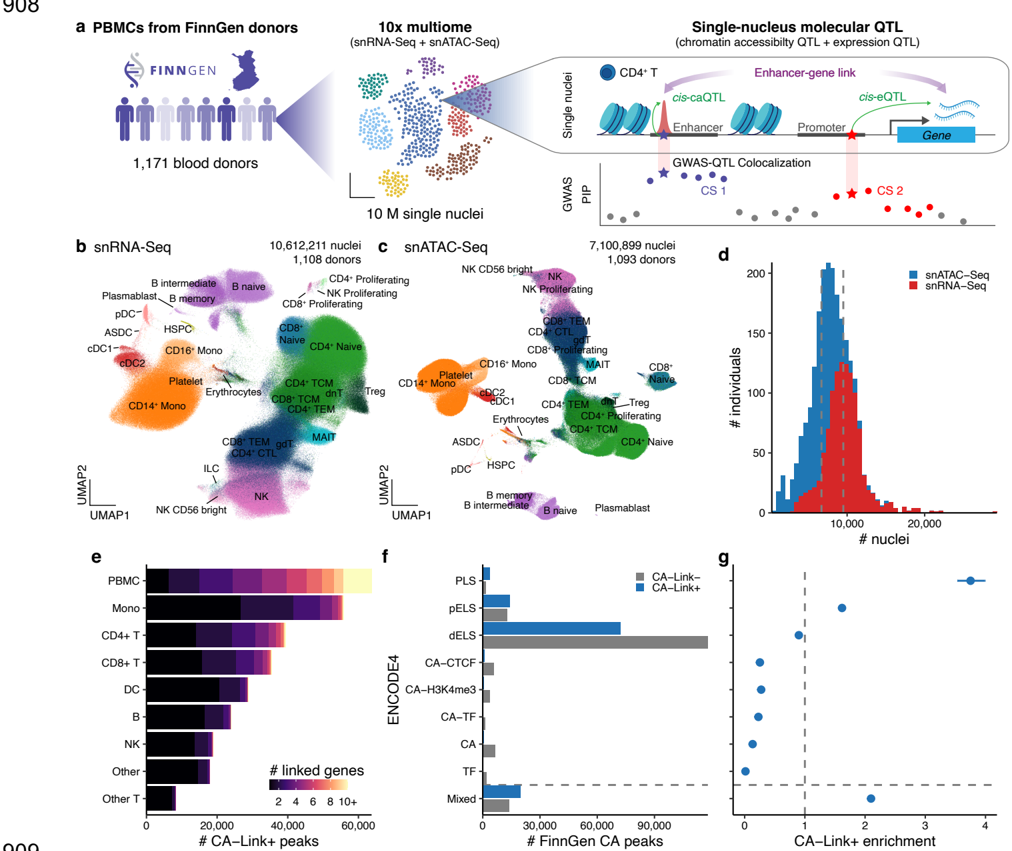
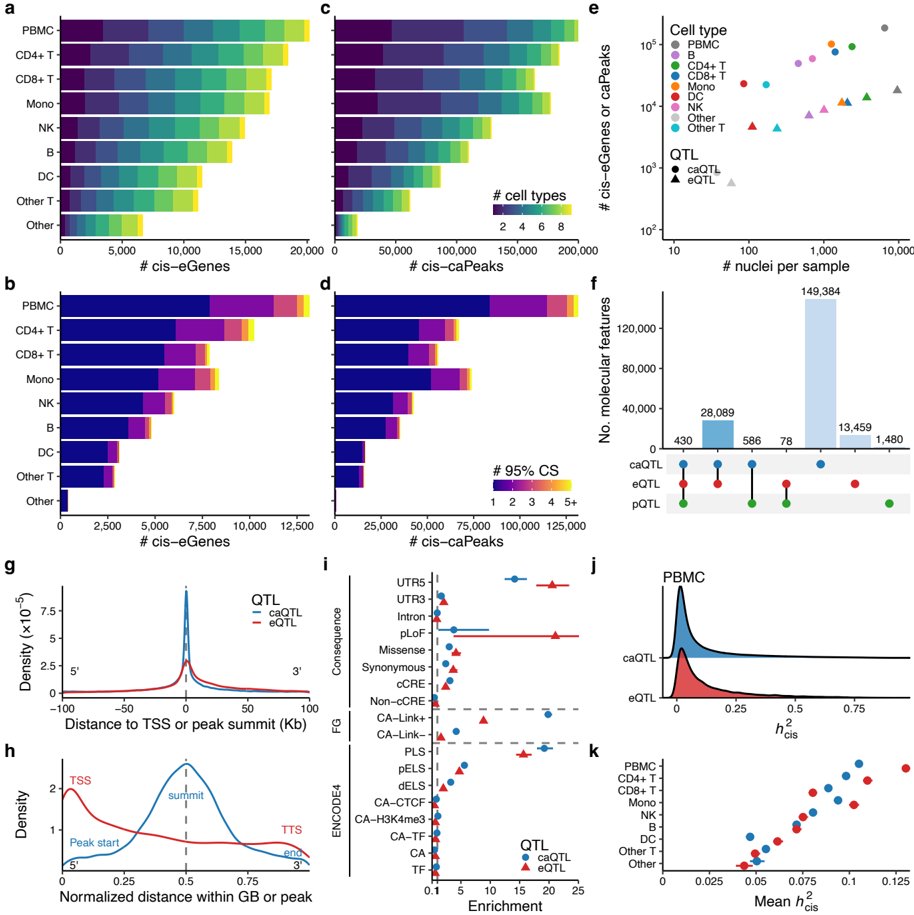
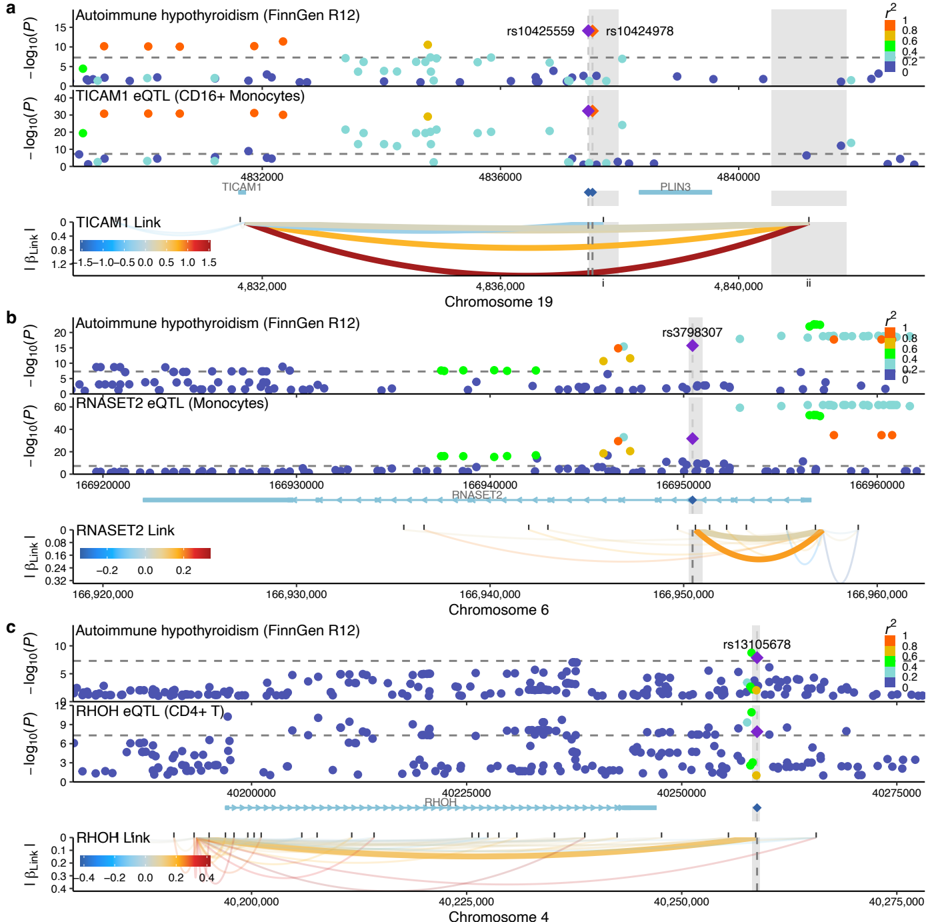
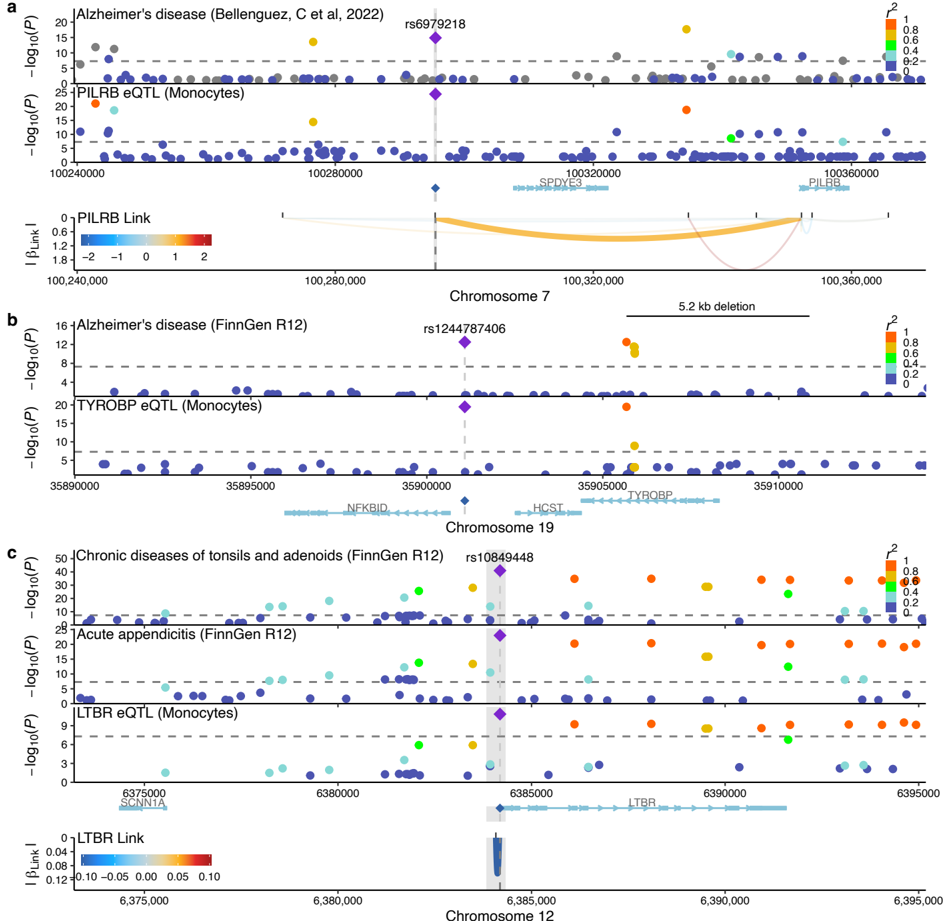
Most disease-associated genetic variants lie in non-coding regions 1,2, yet mechanistic insights are limited by the lack of an empirical framework for characterizing the molecular consequences of regulatory variation. Single-cell molecular quantitative trait locus (QTL) mapping 3,4 connects variants to gene regulation but lacks the power and simultaneous measurements to trace mechanisms from chromatin to expression 5. Here we show that population-scale simultaneous profiling of chromatin accessibility and gene expression across immune cells reveals regulatory architectures connecting variants to disease. From paired single-nucleus assay for transposase-accessible chromatin-sequencing (snATAC-seq) and single-nucleus RNA-sequencing (snRNA-seq) analysis of 10 million peripheral blood mononuclear cells in 1,108 Finnish individuals 6, we identify 51,083 cis-expression QTLs for 20,829 genes, 338,100 cis-chromatin accessibility QTLs for 210,584 peaks, 119,094 putative causal variants and 593,765 peak-gene links. Variants completing chromatin-to-expression cascades show twice the disease colocalization of chromatin-only effects, with massively parallel reporter assays 7 validating 10,428 fine-mapped molecular QTLs. At evolutionarily constrained genes, we identify multilayered regulatory buffering, in which chromatin accessibility changes occur with normal effect sizes, but transmission to expression is attenuated through weaker, more numerous enhancer-gene links. This reconciles why disease variants preferentially target constrained genes despite apparent expression QTL depletion 8-11. Analysis using a massively parallel reporter assay 7 confirms that this buffering acts downstream of the regulatory element, with constraint operating at the chromatin-to-expression interface rather than on intrinsic cis-regulatory activity. Our atlas provides testable hypotheses for over half of immune disease associations, illustrated by cascades at autoimmune loci (TICAM1 and RHOH) and Finnish-enriched variants (TNRC18 and IL21R).
Overview
CoChat Summary
TL;DR
Paired single-nucleus RNA and ATAC profiling of 10 million PBMCs from 1,108 Finnish FinnGen donors produced a population-scale immune multiome atlas with cis-eQTLs, cis-caQTLs, fine-mapped variants, and enhancer-gene links. The authors use a CASCADE framework to show that chromatin-to-expression cascades predict disease colocalization, that constrained genes undergo multi-layered regulatory buffering, and that Finnish-enriched variants can be experimentally validated at loci such as TNRC18.
Key findings
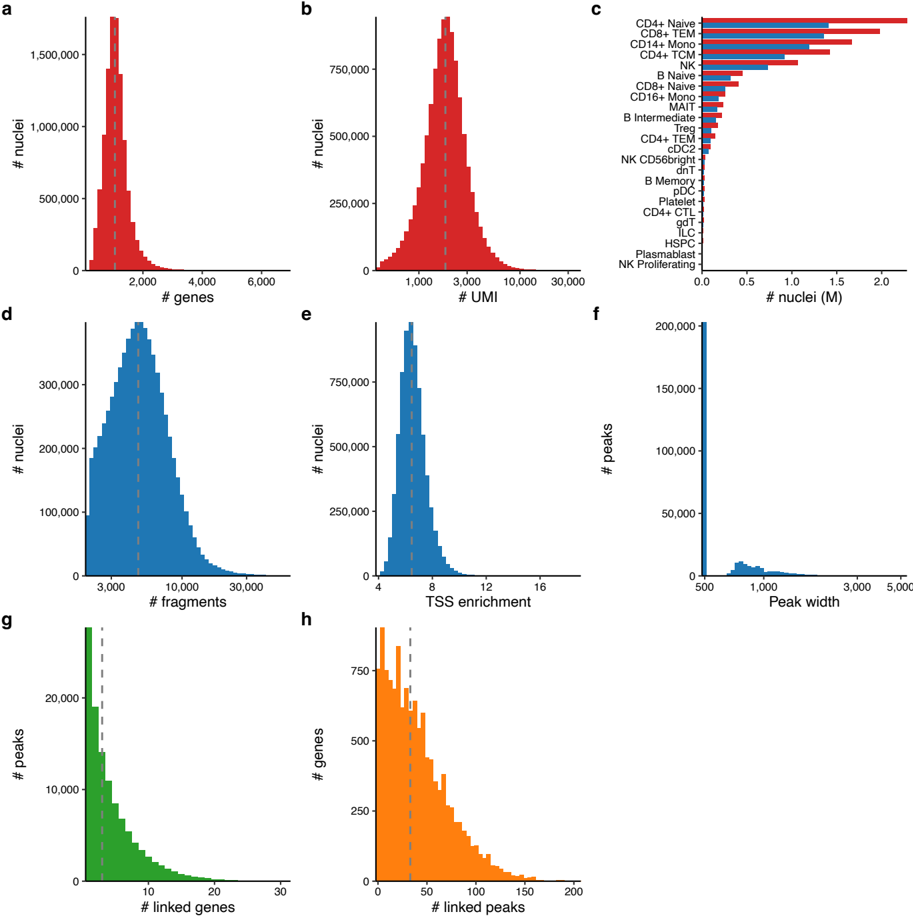
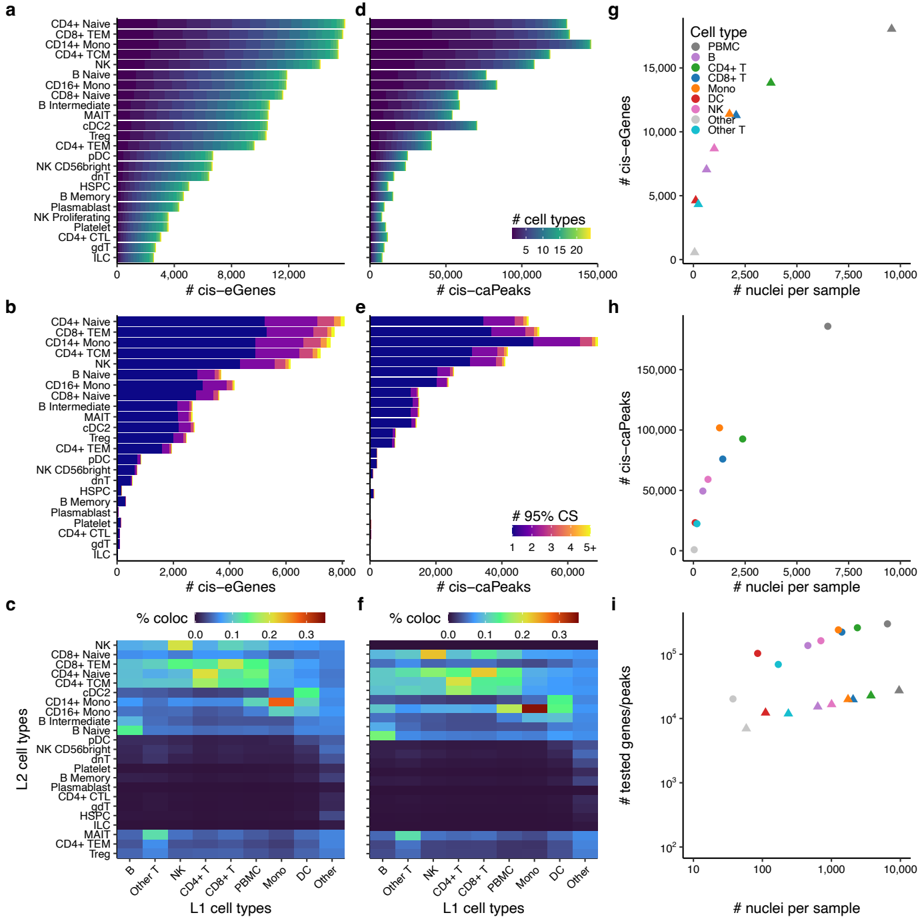
- The atlas identified 51,083 cis-eQTLs for 20,829 genes, 338,100 cis-caQTLs for 210,584 peaks, 119,094 fine-mapped variants, and 496,488 enhancer-gene links; snRNA-seq contained 10,612,211 nuclei and snATAC-seq 7,100,899 nuclei across 297,024 consensus peaks.
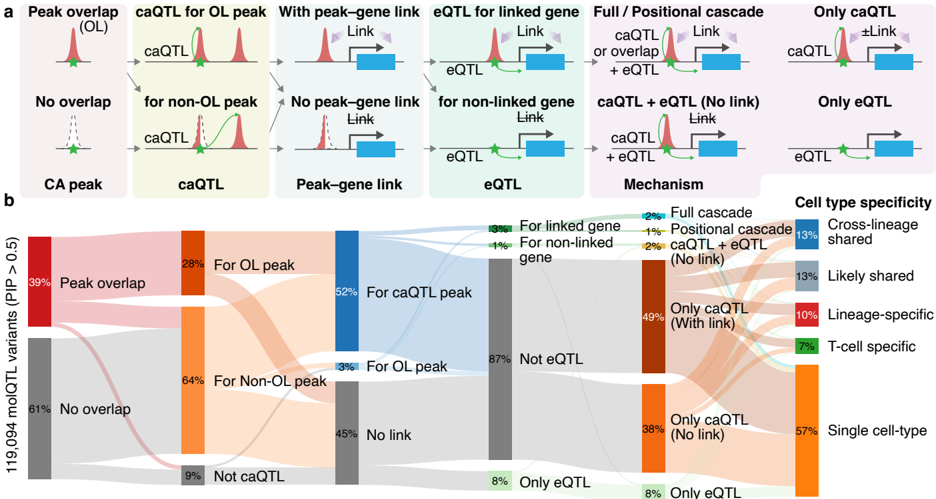
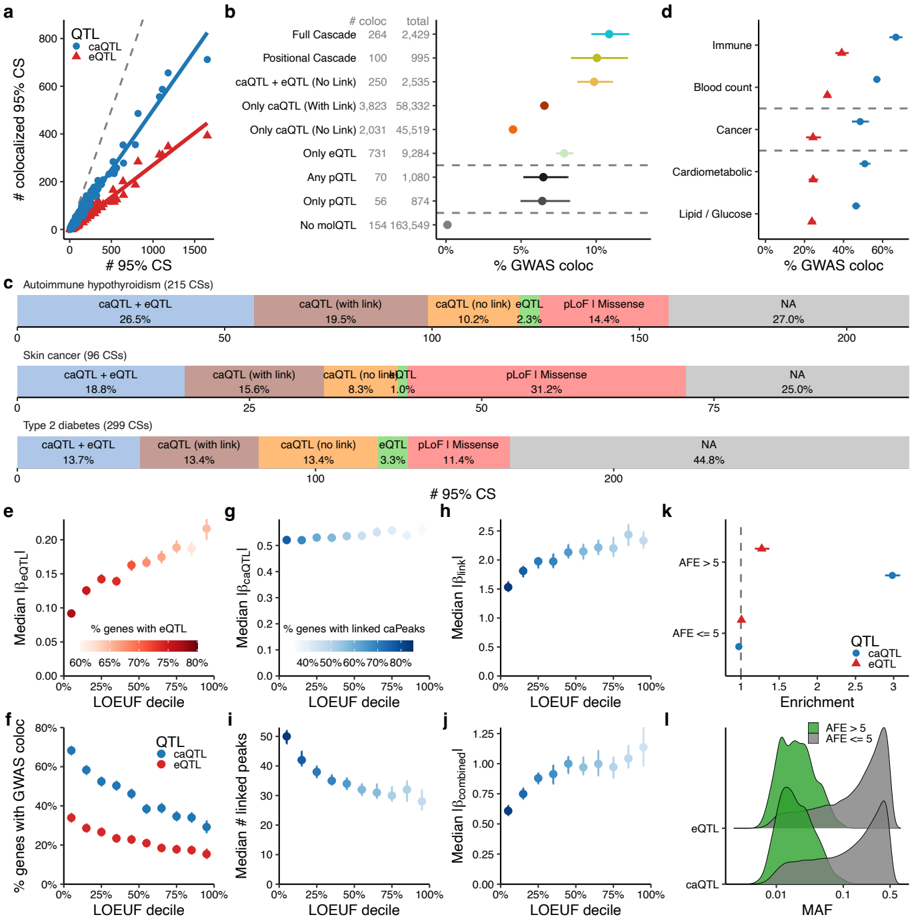
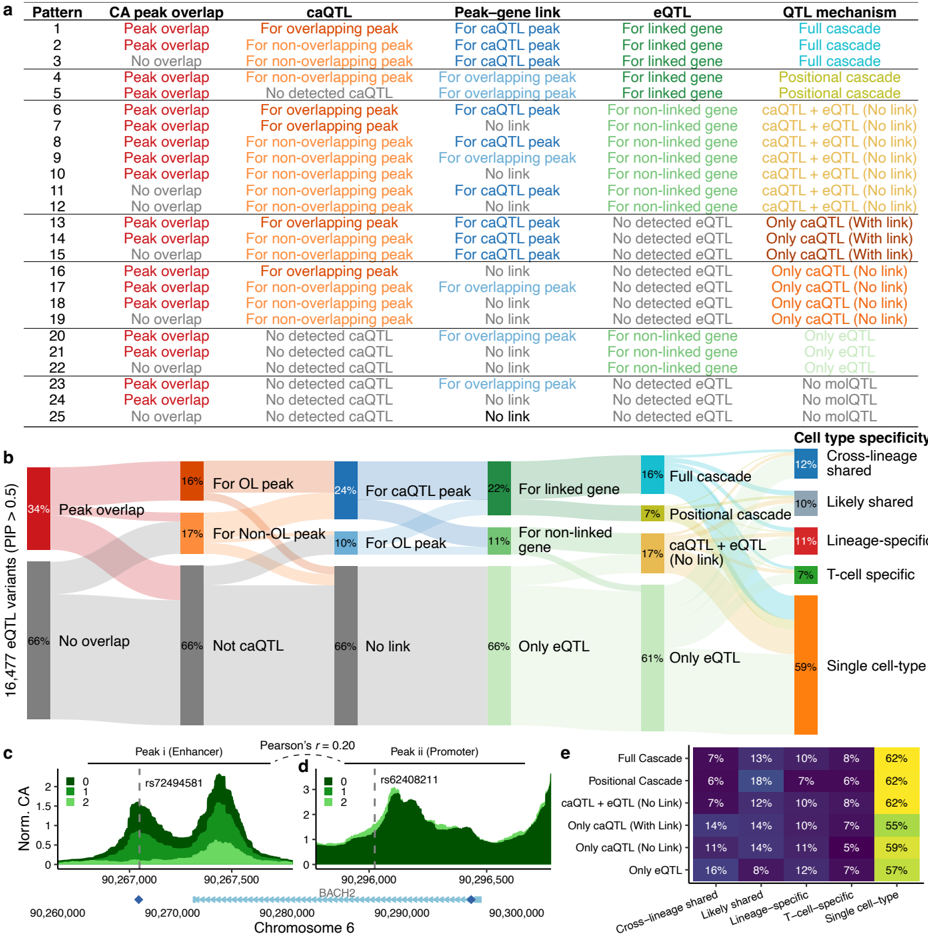
- CASCADE classified fine-mapped molQTL variants into mechanistic categories: full cascades were 2% (n = 2,429) and positional cascades 1% (n = 995); full-cascade variants had the highest GWAS colocalization rate at 11%, followed by positional cascades at 10%, caQTL + eQTL without links at 9.8%, eQTL-only at 7.8%, caQTL-only with links at 6.6%, and caQTL-only without links at 4.4%, versus 0.05% for no-molQTL variants. Across traits, caQTLs showed higher colocalization than eQTLs (51.7% vs 27.4%).
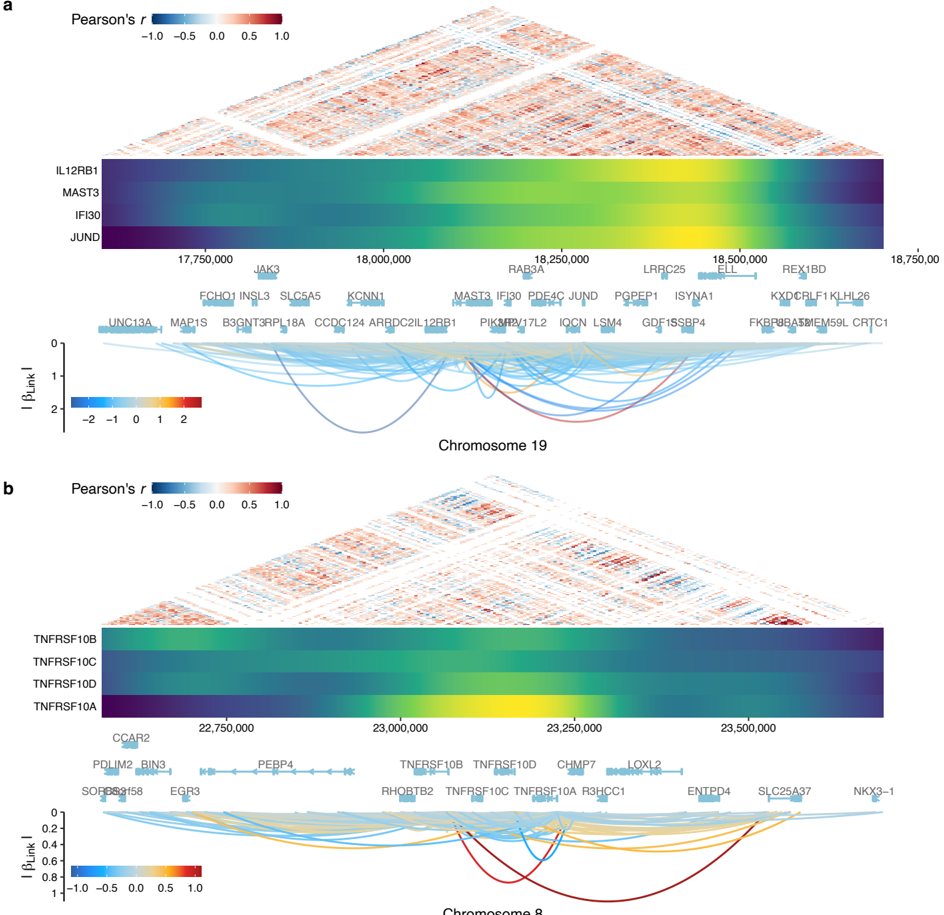
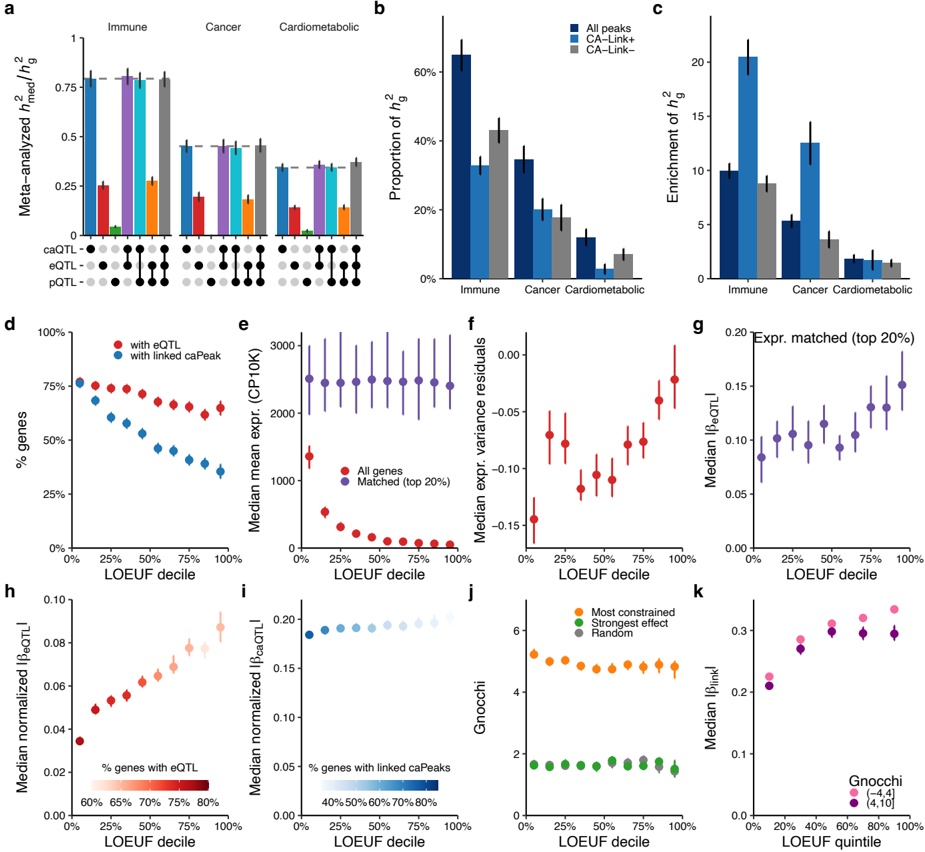
- Constrained genes were more likely to harbor cis-eQTLs but with smaller effect sizes (median |βeQTL| = 0.09 vs 0.22) and higher GWAS colocalization (34% vs 15%); caQTL effect sizes showed only a weak relationship with constraint (median |βcaQTL| = 0.52 vs 0.56), while constrained genes had more but weaker peak-gene links (median linked peaks = 50 vs 28; median |βlink| = 1.5 vs 2.3), and combined chromatin-to-expression effects were attenuated (median |βcombined| = 0.61 vs 1.1). caQTLs affecting peaks linked to constrained genes showed higher GWAS colocalization than eQTLs (68% vs 29% for unconstrained genes).
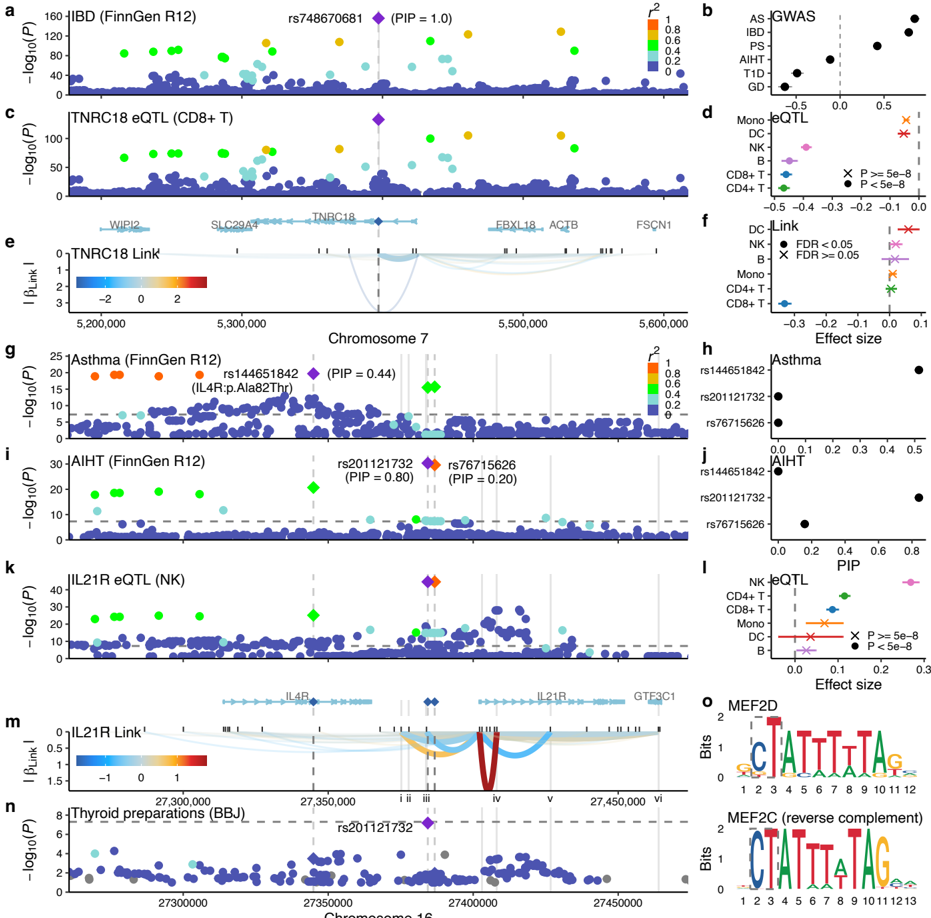
- Among 119,094 fine-mapped molQTL variants, 8,097 were Finnish-enriched; fine-mapped caQTL variants were enriched for Finnish-enriched variants (RR = 2.98) while eQTL variants were attenuated (RR = 1.27). The TNRC18 intronic variant rs748670681 (MAF = 3.6% in Finnish, AFE = 114×) was associated with IBD risk (OR = 2.2, P = 7.9 × 10⁻¹⁵⁷) and protection against autoimmune hypothyroidism (OR = 0.89, P = 4.3 × 10⁻⁹), with base-editing validation in a companion STAG-seq platform.
Methods
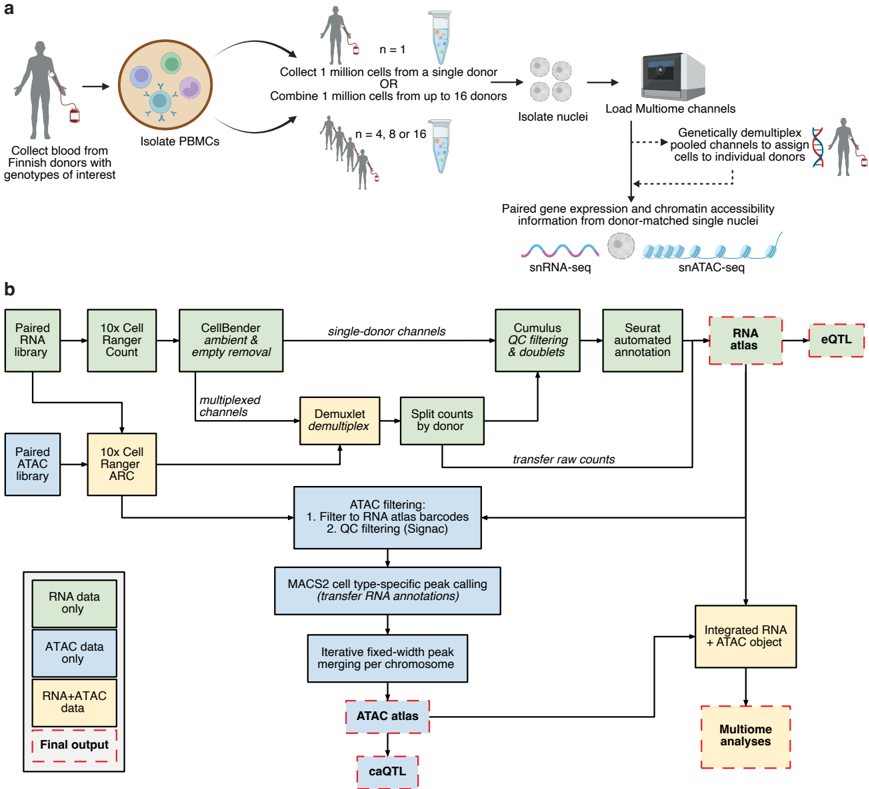
- Paired snRNA-seq and snATAC-seq were generated from PBMCs using the 10x Genomics Chromium Next GEM Single Cell Multiome ATAC + Gene Expression assay; 1,171 healthy Finnish FinnGen donors were recruited, with 1,108 QC-passing donors in the final snRNA-seq atlas and 1,093 in the snATAC-seq atlas. The first 339 donors were profiled in individual channels, and the remaining 832 were multiplexed in batches of 16 across eight channels.
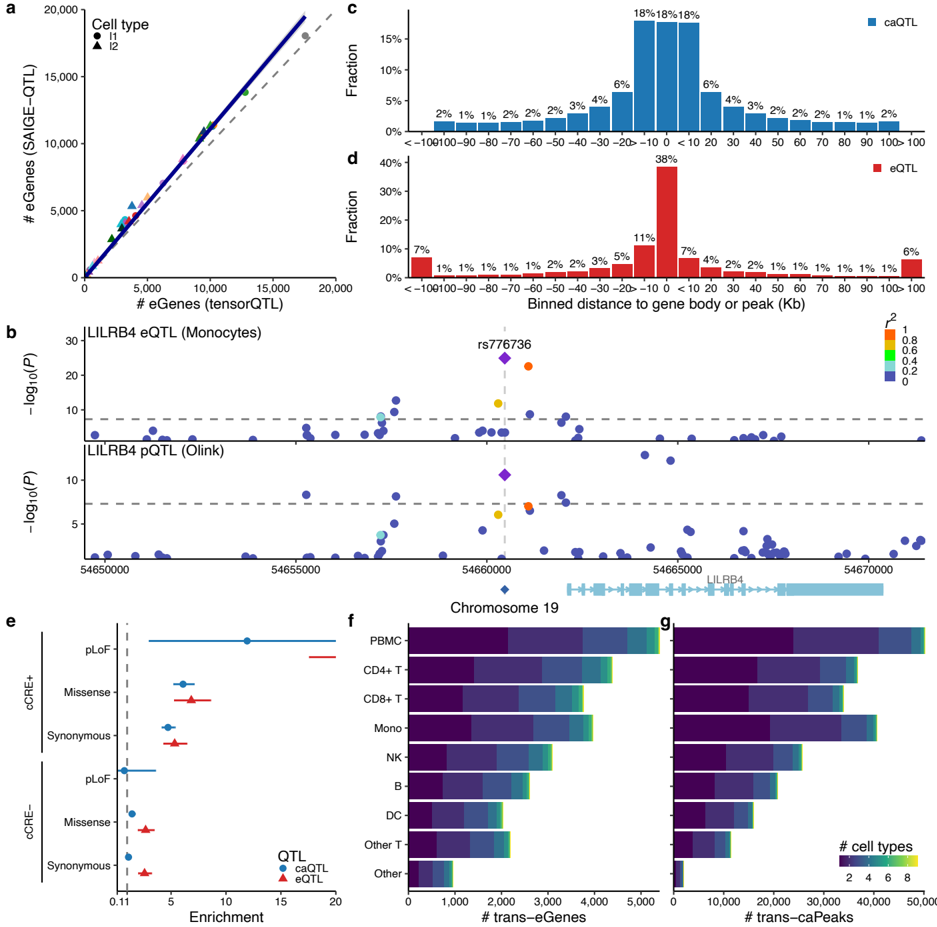
- QTL mapping used SAIGE-QTL for single-cell cis-eQTLs and tensorQTL for pseudobulk cis-eQTLs and cis-caQTLs; cis-caQTLs tested variants within 100 kb of peak centers, and cis-pQTLs used Olink Explore 3072 data from 1,732 unrelated FinnGen samples. Fine-mapping used SuSiE, colocalization used a SuSiE-based coloc framework, and CASCADE classified variants by peak overlap, caQTL status, peak-gene links, and eQTL status.
- Disease relevance was assessed by colocalization with 439 FinnGen R12 GWAS traits, MESC for mediated heritability, S-LDSC for chromatin annotation enrichment, and constraint analyses using gnomAD LOEUF deciles and Gnocchi scores. Experimental validation of selected Finnish-enriched variants used the companion STAG-seq base-editing and phenotyping platform.
Limitations
- Stated: the sparsity inherent to single-cell profiling remains a fundamental challenge despite the large sample size and deeper per-individual profiling; the study profiles baseline PBMCs, so stimulus-responsive regulatory programs and disease-relevant cell states are not captured; tissue-resident immune cells and disease-specific cell states beyond PBMCs may harbor distinct regulatory architectures.
- Stated: the authors were unable to apply alternative methods such as SCENT because of computational burden, and SAIGE-QTL trans-eQTL analysis was not conducted at this scale.
- Evident from the text: only 9% of the 27,294 tested genes had corresponding plasma proteins measured by Olink, limiting pQTL-based colocalization and three-layer analyses; the resource is also based on Finnish FinnGen donors, and only 1% of Finnish-enriched molQTL variants were fine-mapped in non-Finnish datasets, which constrains direct cross-population characterization of those variants.
Model-written summary. Check it against the paper before relying on it.
Integrity signals
Registry
Cites
Statistics
Figures
Verification
Claims the paper makes
0 Valid · 1 Not valid · 57 Not checked · 168 Own results and interpretations
A result the paper reports from its own data — it cites no other source for it, so there is none to check. The quote shows it is in the paper.
In the paper
“variants with complete chromatin-to-expression cascades show twice the disease colocalization of chromatin-only effects”
§ Population-scale multiome immune cell atlas reveals complex disease drivers > Abstract
plainstates an associationn = 1,108- Asserted: passes — The authors put it forward as true.
- Checkable: passes — It can be checked against evidence.
- Load-bearing: passes — The paper’s conclusions depend on it.
- Based: passes — The paper gives a reason why it holds.
A result the paper reports from its own data — it cites no other source for it, so there is none to check. The quote shows it is in the paper.
In the paper
“While the interaction between these variants was sub-significant (OR = 1.04,P = 0.1), the convergence of regulatory and coding variation on T cell receptor signaling components highlights how multiple genetic mechanisms can converge on shared pathways.”
§ Population-scale multiome immune cell atlas reveals complex disease drivers > Leveraging molecular QTLs for GWAS colocalization
plainstates an association- Asserted: passes — The authors put it forward as true.
- Checkable: passes — It can be checked against evidence.
- Load-bearing: unclear — It is unclear whether the paper’s conclusions depend on it.
- Based: passes — The paper gives a reason why it holds.
A result the paper reports from its own data — it cites no other source for it, so there is none to check. The quote shows it is in the paper.
In the paper
“Notably, eQTL-only variants exhibited a relatively high colocalization rate (7.8%), suggesting that some disease variants operate through direct transcriptional regulation or chromatin states not fully captured in our current assays.”
§ Population-scale multiome immune cell atlas reveals complex disease drivers > Leveraging molecular QTLs for GWAS colocalization
hedgedstates an association- Asserted: passes — The authors put it forward as true.
- Checkable: passes — It can be checked against evidence.
- Load-bearing: passes — The paper’s conclusions depend on it.
- Based: passes — The paper gives a reason why it holds.
In the paper
“Intriguingly, we identified a Finnish-enriched missense variant in ZAP70 itself (rs145955907:C>T, p.Thr155Met, MAF = 2%) that independently increases AIHT risk (OR = 1.26,P = 2.3 × 10 -23 , PIP = 0.25) 46 .”
§ Population-scale multiome immune cell atlas reveals complex disease drivers > Leveraging molecular QTLs for GWAS colocalization
What the sources say
- Not checked yetcites [46] Lukic, S., Nicolas, J.-C. & Levine, A. J. The diversity of zinc-finger genes on human chromosome 19 provides an evolutionary mechanism for defense against inherited endogenous retroviruses. Cell Death Differ. 21, 381-387 (2014). source
plainstates a cause- Asserted: passes — The authors put it forward as true.
- Checkable: passes — It can be checked against evidence.
- Load-bearing: passes — The paper’s conclusions depend on it.
- Based: passes — The paper gives a reason why it holds.
A result the paper reports from its own data — it cites no other source for it, so there is none to check. The quote shows it is in the paper.
In the paper
“Despite these weaker individual effects, cis-eQTLs at highly constrained genes were more likely to colocalize with GWAS traits-34% of constrained genes showed colocalization compared to only 15% of unconstrained genes (Fig. 5f).”
§ Population-scale multiome immune cell atlas reveals complex disease drivers > v4.1 (Methods).
plainstates an association- Asserted: passes — The authors put it forward as true.
- Checkable: passes — It can be checked against evidence.
- Load-bearing: passes — The paper’s conclusions depend on it.
- Based: passes — The paper gives a reason why it holds.
73 more claims
Create a free account to see all 226 claims and to verify the 91 references still open.
- It may state two separate claims as one. 101
- The quote only partly states this claim. 10
- Probably not a substantial claim. 62
Self-check
Percentages, sums and reported differences re-computed from the paper’s own numbers.
Each contradiction between two passages listed here was confirmed by an independent check.
Rated minor: it would not touch a result — a value no result rests on, a p-value that stays on the same side of the significance level, or a conflict that is clerical, resolved elsewhere in the paper, or outside its own findings.
In the paper
§ Population-scale multiome immune cell atlas reveals complex disease drivers > Regulatory landscape of enhancer-gene links in cis
“including IFI30, JUND, MAST3, and IL12RB1”
§ Population-scale multiome immune cell atlas reveals complex disease drivers > Constraint analysis
“19p13.11 containing zinc finger clusters (a, IFI30, JUND, MAST3, and 1036 IL21RB1)”
Rated minor: it would not touch a result — a value no result rests on, a p-value that stays on the same side of the significance level, or a conflict that is clerical, resolved elsewhere in the paper, or outside its own findings.
In the paper
§ Population-scale multiome immune cell atlas reveals complex disease drivers > Population-scale, single-nucleus gene expression and chromatin accessibility atlases
“defined 297,024 consensus peaks across cell types”
§ Population-scale multiome immune cell atlas reveals complex disease drivers > Constraint analysis
“f, Distribution of peak widths across 297,924 consensus peaks.”
Rated minor: it would not touch a result — a value no result rests on, a p-value that stays on the same side of the significance level, or a conflict that is clerical, resolved elsewhere in the paper, or outside its own findings.
In the paper
§ Population-scale multiome immune cell atlas reveals complex disease drivers > Leveraging molecular QTLs for GWAS colocalization
“rs3798307:G>A, demonstrates a positional cascade mechanism for RNASET2 expression in monocytes”
§ Population-scale multiome immune cell atlas reveals complex disease drivers > Constraint analysis
“Extended Data Fig. 7 | Full cascade regulatory variants for autoimmune hypothyroidism 1083LocusZoom plots of full cascade variants at TICAM1 (a), RNASET2 (b), and RHOH (c) loci”
Rated minor: it would not touch a result — a value no result rests on, a p-value that stays on the same side of the significance level, or a conflict that is clerical, resolved elsewhere in the paper, or outside its own findings.
In the paper
§ Population-scale multiome immune cell atlas reveals complex disease drivers > Cell type specificity of molecular QTLs
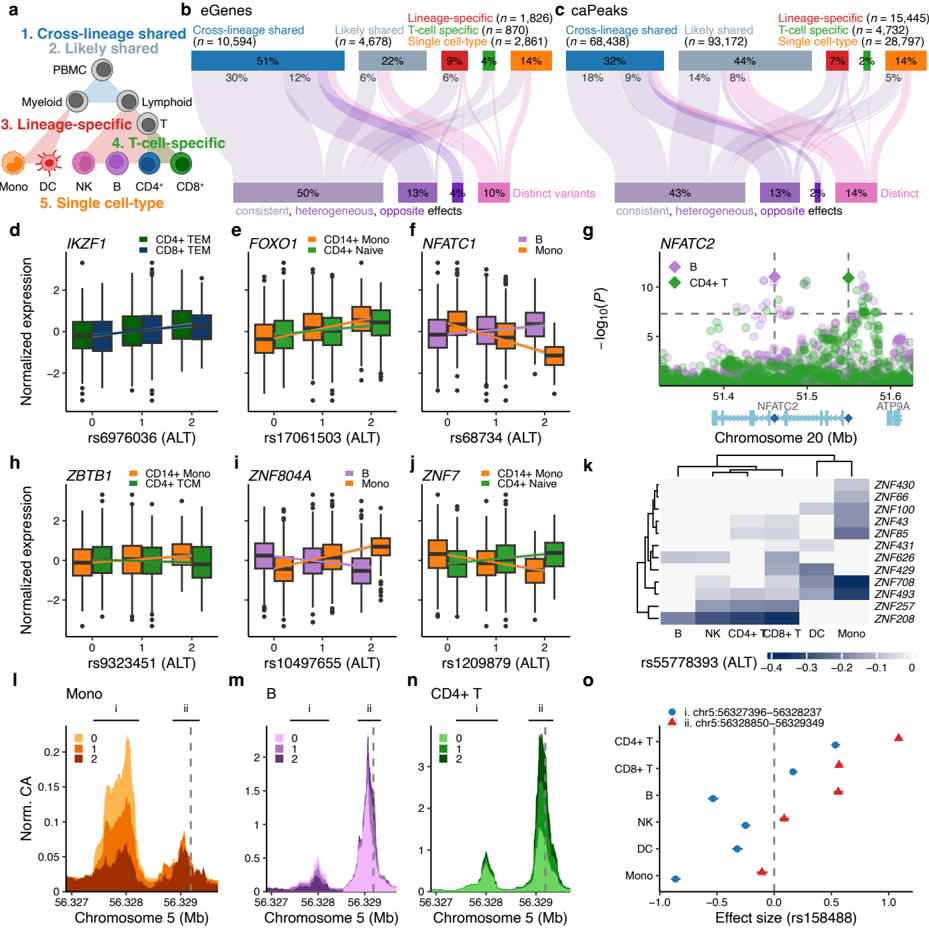
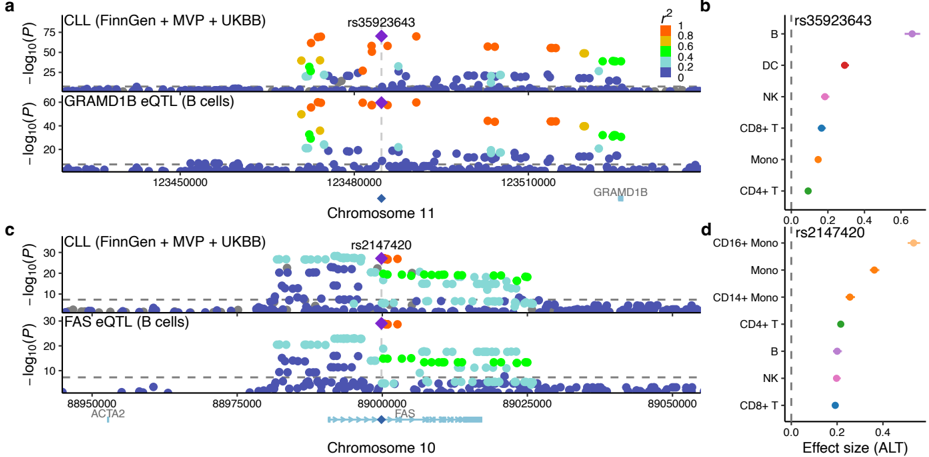
“The cis-eQTL for FOXO1 (rs5803064:ACTT>A) exhibited heterogeneous cross-lineage effects”
§ Population-scale multiome immune cell atlas reveals complex disease drivers > Discussion
“rs17061503 (ALT) CD14+ Mono CD4+ Naive FOXO1 e”
Citations
Cites
Model-based Analysis of ChIP-Seq (MACS)
Zhang, Y., Liu, T., Meyer, C. A., Eeckhoute, J., Johnson, D. S., Bernstein, B. E., Nusbaum, C., Myers, R. M., Brown, M., Li, W., et al. (2008) · Genome Biology · doi:10.1186/gb-2008-9-9-r137 · Cited by 18,386
Self-citationAn integrated encyclopedia of DNA elements in the human genome
The ENCODE Project Consortium (2012) · Nature · doi:10.1038/nature11247 · Cited by 18,072
Integrated analysis of multimodal single-cell data
Hao, Y., Hao, S., Andersen-Nissen, E., Mauck, W. M., Zheng, S., Butler, A., Lee, M. J., Wilk, A. J., Darby, C., Zagar, M., et al. (2020) · doi:10.1101/2020.10.12.335331 · Cited by 15,508
Second-generation PLINK: rising to the challenge of larger and richer datasets
Chang, C. C., Chow, C. C., Tellier, L. C., Vattikuti, S., Purcell, S. M., & Lee, J. J. (2015) · Gigascience · doi:10.1186/s13742-015-0047-8 · Cited by 12,709
Fast, sensitive and accurate integration of single-cell data with Harmony
Korsunsky, I., Millard, N., Fan, J., Slowikowski, K., Zhang, F., Wei, K., Baglaenko, Y., Brenner, M., Loh, P.-R., & Raychaudhuri, S. (2019) · Nature Methods · doi:10.1038/s41592-019-0619-0 · Cited by 10,488
Statistical significance for genomewide studies
Storey, J. D., & Tibshirani, R. (2003) · Proceedings of the National Academy of Sciences · doi:10.1073/pnas.1530509100 · Cited by 9,692
Analysis of protein-coding genetic variation in 60,706 humans
Exome Aggregation Consortium, Lek, M., Karczewski, K. J., Minikel, E. V., Samocha, K. E., Banks, E., Fennell, T., O’Donnell-Luria, A. H., Ware, J. S., Hill, A. J., et al. (2016) · Nature · doi:10.1038/nature19057 · Cited by 9,587
Self-citationThe mutational constraint spectrum quantified from variation in 141,456 humans
Karczewski, K. J., Francioli, L. C., Tiao, G., Cummings, B. B., Alföldi, J., Wang, Q., Collins, R. L., Laricchia, K. M., Ganna, A., Birnbaum, D. P., et al. (2020) · Nature · doi:10.1038/s41586-020-2308-7 · Cited by 9,434
Self-citationSCANPY: large-scale single-cell gene expression data analysis
Wolf, F. A., Angerer, P., & Theis, F. J. (2018) · Genome Biology · doi:10.1186/s13059-017-1382-0 · Cited by 8,881
The Ensembl Variant Effect Predictor
McLaren, W., Gil, L., Hunt, S. E., Riat, H. S., Ritchie, G. R. S., Thormann, A., Flicek, P., & Cunningham, F. (2016) · Genome Biology · doi:10.1186/s13059-016-0974-4 · Cited by 8,099
Cited by
Efficient count-based models improve power and robustness for large-scale single-cell eQTL mapping
Zhang, Z., Kim, A., Suboc, N., Mancuso, N., & Gazal, S. (2026) · Nature Genetics · doi:10.1101/2025.01.18.25320755 · Cited by 17
Common variation of cell abundances and gene expression in the human striatum
Burger, S. C., Nemesh, J., Yoo, O., Muratoglu, E., Vanderburg, C. R., Yuan, J., Shakir, K., Mello, C. J., Gao, H., Rayan, N. A., et al. (2026) · Cell · doi:10.64898/2026.03.20.713160 · Cited by 7
Genetic variants shape single-cell chromatin accessibility and disease risk
Xue, A., Fan, J., Dong, O. A., Huang, H. L., Chen, L., Allen, P. C., Spenceley, E., Sagi-Zsigmond, E., Bowen, B., Henry, A., et al. (2026) · Nature · doi:10.1038/s41586-026-11173-4 · Cited by 3
Self-citationLiu, Y. C., Cuomo, A. S. E., Huang, Y., Pérez‐Schindler, J., Min, B., Datta, S., NAMBRATH, N., Hu, L., Nam, K., Kanai, M., et al. (2026) · medRxiv · doi:10.64898/2026.08.13.26360300 · Cited by 3
Self-citationBlood donor biobank pipeline to collect genome-based samples for research
Honkanen, J., Timonen, V. A., Koski, J. R., Juvila, J., Arvas, M., Blood Service Biobank, F., Hartwall, L., Kilpivaara, O., Rodosthenous, R. S., Wartiovaara-Kautto, U., et al. (2026) · Scientific Reports · doi:10.1038/s41598-026-37772-9 · Cited by 3
Self-citation
Metadata
- Authors
- Kanai, M., Delorey, T. M., Honkanen, J., Rodosthenous, R. S., Juvila, J., Murphy, S., Teixeira-Soldano, I., Hwang, H. S., Karjalainen, J., Halonen, J., Panagiotaropoulou, G., Zhang, Y., McCabe, C., Chen, E., Nanki, K., Yoshida, T., Liu, K., Glean, M., Mehrotra, N., Finan, E. P., Chafamo, D., Zhu, Y., Arvas, M., Ruotsalainen, S., Zheng, Z., Tomofuji, Y., Tokuyasu, D., Namba, S., Sonehara, K., BioBank Japan Project, Matsuda, K., Morisaki, T., Kumasaka, N., Nagai, A., Harada, N., Harada, S., Nagata, Y., Wakita, S., Yamaguchi, H., FinnGen, Steering Committee, Daly, M. J., companies, P., Riley-Gillis, B., Jacob, H., Viollet, C., Petrovski, S., Berton, A., Ramakrishnan, S., Tsai, E., Ding, Z., Holzinger, E., Plenge, R., Maranville, J., McCarthy, M., Pendergrass, R., Davitte, J., Chen, C.-Y., Aksit, M. A., Vlahiotis, A., Klinger, K., Chatelain, C., Blankenstein, J., Estrada, K., Graham, R., Waterworth, D., O’Donnell, C., Renaud, N., University of Helsinki and Biobanks, Mäkelä, T. P., Kaprio, J., Ruddock, M., Kallio, L., Hakanen, A., Kilpi, T., Perola, M., Raivio, T., Punkka, E., Kekonen, T., Serpi, R., Kristiansson, K., Siltanen, S., Kosma, V.-M., Mannermaa, A., Laukkanen, J., Jokela, T., Ahlroth, M., Mäkelä, J., Members, O. E.-V., Tuovila, O., Scientific Committee, companies, P., Waring, J., Riley-Gillis, B., Rahimov, F., Tachmazidou, I., Jung, M., Tuoken, H., Biswas, S., Sun, B., Raghavan, N., Sul, J.-H., Hu, X., Obeidat, M., Chung, J., Zierer, J., Niemi, M., University of Helsinki and Biobanks, Ripatti, S., Schleutker, J., Wahlfors, T., Carpén, O., Hinttala, R., Kettunen, J., Aalto-Setälä, K., Kähönen, M., Mäkelä, J., Clinical Group/Task Force, Kujala, H., Laisk, T., Pujol, N., Salomaa, V., Suvisaari, J., Koskela, S., Lauronen, J., Aittomäki, K., Pussinen, P., Meretoja, T., Joensuu, H., Karihtala, P., Juuri, E., Salminen, A., Salo, T., Rice, D., Nieminen, P., Palotie, U., Åberg, F., Gordin, D., Finne, P., Turunen, J. A., Raivio, M., Tienari, P., Färkkilä, M., Koskela, J., Pikkarainen, S., Eklund, K., Kauppi, P., Sinisalo, J., Taskinen, M.-R., Tuomi, T., Hiltunen, T., Mattson, J., Salminen, E., Ollila, T., Hannula-Jouppi, K., Heikinheimo, O., Kalliala, I., Aaltonen, L., Isometsä, E., Aarnisalo, A., Immonen, I., Ranta, S., Scheperjans, F., Vaura, F., Mars, N., Pitkänen, E., Laivuori, H., Kivinen, K., Widen, E., Tukiainen, T., Ollila, H., Saarentaus, E., Kerola, A., Vuoksimaa, E., Lindbohm, J., Yang, Z., Sampson, M., Banerji, A., McNulty, M., Liu, A., Rämö, J., Argentieri, A., Elliott, A., Rahikkala, E., Sipilä, K., Julkunen, V., Leinonen, V., Toppila-Salmi, S., Hiltunen, M., Solje, E., Kankaanranta, H., Mäkitie, A., Hovatta, I., Välimäki, N., Marttila, M., Portaankorva, A., Laakkonen, E., Silven, H., Sliz, E., Arffman, R., Savukoski, S., Kaarteenaho, R., Tyrmi, J., Kuusalo, L., Pirilä, L., Hellman, T., Vuori, M., Niiranen, T., Blomster, T., Huhtakangas, J., Harju, T., Tasanen, K., Huilaja, L., Anttonen, V., Vääräsmäki, M., Uimari, O., Morin-Papunen, L., Niinimäki, M., Piltonen, T., Kälviäinen, R., Soininen, H., Kiviniemi, M., Kaipiainen-Seppänen, O., Pelkonen, M., Auvinen, P., Siponen, M., Suominen, L., Mäntylä, P., Kaarniranta, K., Peltola, J., Jussila, A., Kaukinen, K., Isomäki, P., Hernesniemi, J., Auranen, A., Uusitalo, H., Salmi, T., Kurra, V., Kotaniemi-Talonen, L., Bizaki-Vallaskangas, A., Rinne, J., Kallionpää, R., Voutilainen, M., Palomäki, A., Lahesmaa, R., Metsärinne, K., Aittokallio, J., Elenius, K., Peltonen, S., Koulu, L., Gursoy, U., Jokimaa, V., Willberg, T., Ziemann, A., Smaoui, N., Lehtonen, A., Lertratanakul, A., Popovic, R., Liu, M., Den Hollander, A., Freudenberg, J., Milkovich, B., Blumenfeld, A., Kumar, T., Paul, D., Prins, B., Wheeler, E., Kundu, K., Atanur, S., Lowe, A., Spargo, T., Burren, O., Fabre, M., Baschiera, F., van Leeuwen, H., Manchanda, H., Heilbron, K., Rao, M., Schmidt, N., Kurki, S., Mielke, J., Immonen, J., Battram, T., Hogrebe, T., Eaton, S., Yu, K., Loomis, S., Paisan-Ruiz, C., Markert, E., Li, F., Hu, Y., Ogris, C., Simon, E., Bolivar Lopez, J. C., Frysz, M., Hochfeld, M., Carty, C., Turchin, M., Jog, N., Bodea, C., Shelton, J., Li, C., Singh, K., Jiang, P., Loomis, S., Sanchez, E., Moss, L., Zhao, Z., Podgornaia, A., Bowers, N., Teng, E., Lu, T., Chen, H., Schutzman, J., Strauss, E., Chen, H., Choy, D., Yaspan, B., Adams, C., Rothenberg, M., Dellepiane, S., Mahajan, A., Holmes, M., Chang, D., Bhangale, T., Xu, F., Addis, L., Eicher, J., McCarthy, L., Esparza Gordillo, J., Betts, J., Mishra, R., Chu, A., Kulkarni, D., Kumar, J., Harlow, C., Sarow-Blat, L., Cousminer, D. L., Nijjar, J., Chao, J., Magid, M., Jariwala, S., Floyd, C., Swerdlow, D., Hu, E., Desai, P., Haddad, S., Croteau-Chonka, D., Fahy, B., Bronson, P., Auro, K., Pulford, D., Vuoti, S., Reilly, D., He, K., Khramtsova, E., Hart, A., Guan, M., Porello, A., Dunnmon, P., Gale, S., Keyes, B., Kwon, J., Sherlock, J., Loza, M., Whelan, C., Galpern, W., Zhang, Y., Selej, M., Doostparast Torshizi, A., Li, Q. S., Mozaffari, S., DeBoever, C., Miller, J., Farias, F., Loboda, A., Del-Aguila, J., Vollmann, E., Karman, J., Fiore, J., Kamath, R., Popescu, A., Fagegaltier, D., Barr, T., Merola, A., Freeman, O., Longerich, S., Ferrero, E., Patsopoulos, N., Finkel, N., Pfister, S., Richards, S., McCauley, K., Xia, X., Mendelson, M., Mouded, M., Ngo, D., Kalpala, K., Miller, M., Bing, N., Parkkinen, J., Lehtonen, H., McDonough, S., Wu, Y., Macdonald-Dunlop, E., Chung, J., McLean, M., Chiou, J., Kim, H. I., Pitchumani, S., Jassal, S., Saxena, M., O’Riordan, C., Lessard, S., Jacobs, S., Mattoo, H., Habiel, D., Huan, G., directors, B., Teams, F., Administration, Jalanko, A., Kajanne, R., Aavikko, M., Cooper, H., Öller, D., Laitinen, T., Kuitunen, S., logistics, S. A. D., Toivola, A., Rodosthenous, R. S., Analysis, Della Briotta Parolo, P., Lehisto, A., Mehtonen, J., Jabal, R., Maasha, M., Jones, S., Walters, R., Häppölä, P., Forces, D. T., Lahtela, L. E., Paltta, J., Partanen, J., Communication, Kaunisto, M., Services, S. A. C., Kilpeläinen, E., Wang, T., Sipilä, T. P., Dada, O. A., Ghazal, A., Weldatsadik, R., Uimonen, J., Genotyping, Donner, K., Coordination, S. C., Loukola, A., Logistics, S., Laiho, P., Registry Data Operations, Lemmelä, S., Paajanen, T., Pietilä, A., Havulinna, A., Phenotype team, Reeve, M. P., Padmanabhuni, S. S., Siirtola, H., Gracia-Tabuenca, J., Kaakinen, M., Luo, S., Llorens, V., Yohannes, D., officer, D. P., Laak, I., Cooperative, F. B., Wihuri, P., Southerington, T., Lähteenmäki, M., Okada, Y., Reeve, M. P., Kurki, M., Porter, C. B. M., Ashenberg, O., Zhou, W., Pitkänen, K., Partanen, J., Palotie, A., Graham, D. B., Daly, M. J., & Xavier, R. J.
- Affiliations
- Broad Institute (US)
- Finnish Red Cross (FI)
- University of Helsinki (FI)
- RIKEN Center for Integrative Medical Sciences (JP)
- Keio University (JP)
- Institute of Medical Science, The University of Tokyo (JP)
- Juntendo University (JP)
- Nippon Medical School (JP)
- AbbVie (United States) (US)
- AstraZeneca (United Kingdom) (GB)
- Bayer (Germany) (DE)
- Biogen (United States) (US)
- Boehringer Ingelheim (Germany) (DE)
- Bristol-Myers Squibb (United States) (US)
- Genentech (US)
- GlaxoSmithKline (United States) (US)
- Merck & Co., Inc., Rahway, NJ, USA (United States) (US)
- Pfizer (United States) (US)
- Maze (United States) (US)
- University of Oulu (FI)
- University of Turku (FI)
- Finnish Institute for Health and Welfare (FI)
- Hospital District of Helsinki and Uusimaa (FI)
- Pirkanmaa Hospital District (FI)
- University of Eastern Finland (FI)
- University of Jyväskylä (FI)
- Business Finland (FI)
- Helsinki University Hospital (FI)
- Northern Ostrobothnia Hospital District (FI)
- Oulu University Hospital (FI)
- Tampere University (FI)
- University of Tampere (FI)
- University of Łódź (PL)
- Varsinais-Suomen Sairaanhoitopiiri (FI)
- GlaxoSmithKline (United Kingdom) (GB)
- Glaxosmithkline (Finland) (FI)
- Johnson & Johnson (United States) (US)
- Novartis (Switzerland) (CH)
- Corresponding author
- Xavier, Ramnik J.
- ORCID
- Kanai, Masahiro
- Delorey, Toni M.
- Hwang, Hee Seung
- Karjalainen, Juha
- Panagiotaropoulou, Georgia
- Zhang, Yuanxiang
- Yoshida, Toshimi
- Liu, Kai
- Mehrotra, Nitya
- Finan, Emily P.
- Chafamo, Daniel
- Arvas, Mikko
- Ruotsalainen, Sanni
- Zheng, Zhili
- Tomofuji, Yoshihiko
- Tokuyasu, Daiki
- Namba, Shinichi
- Sonehara, Kyuto
- Kumasaka, Natsuhiko
- Harada, Norihiro
- Harada, Sonoko
- Wakita, Satoshi
- Yamaguchi, Hiroki
- Jacob, Howard
- Petrovski, Slavé
- Holzinger, Emily
- Plenge, Robert
- Maranville, Joseph
- Davitte, Jonathan
- Estrada, Karol
- Graham, Robert
- Waterworth, Dawn
- Mäkelä, Tomi P.
- Kaprio, Jaakko
- Hakanen, Antti
- Raivio, Taneli
- Punkka, Eero
- Kristiansson, Kati
- Siltanen, Sanna
- Rahimov, Fedik
- Tachmazidou, Ioanna
- Sun, Benjamin
- Hu, Xinli
- Obeidat, Ma’en
- Zierer, Jonas
- Ripatti, Samuli
- Schleutker, Johanna
- Wahlfors, Tiina
- Hinttala, Reetta
- Kettunen, Johannes
- Laisk, Triin
- Salomaa, Veikko
- Suvisaari, Jaana
- Koskela, Satu
- Lauronen, Jouni
- Aittomäki, Kristiina
- Pussinen, Pirkko
- Meretoja, Tuomo
- Joensuu, Heikki
- Karihtala, Peeter
- Juuri, Emma
- Salminen, Aino
- Salo, Tuula
- Nieminen, Pekka
- Palotie, Ulla
- Gordin, Daniel
- Turunen, Joni A.
- Koskela, Jukka
- Pikkarainen, Sampsa
- Eklund, Kari
- Taskinen, Marja-Riitta
- Mattson, Johanna
- Ollila, Terhi
- Heikinheimo, Oskari
- Kalliala, Ilkka
- Isometsä, Erkki
- Scheperjans, Filip
- Vaura, Felix
- Mars, Nina
- Pitkänen, Esa
- Laivuori, Hannele
- Kivinen, Katja
- Tukiainen, Taru
- Ollila, Hanna
- Saarentaus, Elmo
- Kerola, Anne
- Vuoksimaa, Eero
- Lindbohm, Joni
- McNulty, Michelle
- Liu, Aoxing
- Rämö, Joel
- Rahikkala, Elisa
- Julkunen, Valtteri
- Leinonen, Ville
- Toppila-Salmi, Sanna
- Solje, Eino
- Kankaanranta, Hannu
- Hovatta, Iiris
- Välimäki, Niko
- Marttila, Minttu
- Portaankorva, Anne
- Sliz, Eeva
- Arffman, Riikka
- Savukoski, Susanna
- Kaarteenaho, Riitta
- Tyrmi, Jaakko
- Hellman, Tapio
- Niiranen, Teemu
- Tasanen, Kaisa
- Huilaja, Laura
- Vääräsmäki, Marja
- Uimari, Outi
- Morin-Papunen, Laure
- Kälviäinen, Reetta
- Mäntylä, Päivi
- Kaarniranta, Kai
- Jussila, Airi
- Hernesniemi, Jussi
- Auranen, Annika
- Kurra, Venla
- Voutilainen, Markku
- Palomäki, Antti
- Lahesmaa, Riitta
- Aittokallio, Jenni
- Elenius, Klaus
- Jokimaa, Varpu
- Willberg, Tytti
- Lertratanakul, Apinya
- Popovic, Relja
- Freudenberg, Jan
- Paul, Dirk
- Prins, Bram
- Wheeler, Eleanor
- Kundu, Kousik
- Atanur, Santosh
- Burren, Oliver
- Fabre, Margarete
- Baschiera, Fabio
- Manchanda, Himanshu
- Heilbron, Karl
- Mielke, Johanna
- Battram, Thomas
- Yu, Ketian
- Ogris, Christoph
- Frysz, Monika
- Carty, Cara
- Turchin, Michael
- Li, Chen
- Jiang, Peng
- Zhao, Zijie
- Podgornaia, Anna
- Teng, Edmond
- Chen, Hubert
- Chen, Hao
- Choy, David
- Yaspan, Brian
- Rothenberg, Michael
- Dellepiane, Sergio
- Mahajan, Anubha
- Holmes, Michael
- Bhangale, Tushar
- Addis, Laura
- Betts, Joanna
- Cousminer, Diana L.
- Nijjar, Jagtar
- Jariwala, Shashank
- Guan, Meijian
- Keyes, Brice
- Selej, Mona
- Li, Qingqin S.
- DeBoever, Christopher
- Loboda, Andrey
- Fagegaltier, Delphine
- Ferrero, Enrico
- Finkel, Nancy
- Ngo, Debby
- Macdonald-Dunlop, Erin
- Chiou, Joshua
- Lessard, Samuel
- Mattoo, Hamid
- Kajanne, Risto
- Aavikko, Mervi
- Laitinen, Tarja
- Mehtonen, Juha
- Jones, Samuel
- Walters, Raymond
- Häppölä, Paavo
- Paltta, Johanna
- Kaunisto, Mari
- Dada, Oluwaseun Alexander
- Weldatsadik, Rigbe
- Donner, Kati
- Loukola, Anu
- Laiho, Päivi
- Lemmelä, Susanna
- Pietilä, Arto
- Havulinna, Aki
- Padmanabhuni, Shanmukha Sampath
- Siirtola, Harri
- Kaakinen, Marika
- Southerington, Tom
- Okada, Yukinori
- Kurki, Mitja
- Porter, Caroline B. M.
- Ashenberg, Orr
- Zhou, Wei
- Partanen, Jukka
- Palotie, Aarno
- Graham, Daniel B.
- Xavier, Ramnik J.
- Venue
- Nature
- Published
- 2026-09-30
- Volume
- 659
- Issue
- 8141
- Pages
- 729-743
- ISSN
- 0028-0836 (ISSN-L)
- 1476-4687
- OpenAlex
- W7214956138
- Cited by
- 22
- References
- 159
- Citations by year
- 2026: 22
- FWCI
- 24.10
- Type
- journal article
- Language
- en
- Open access
- green
- doi.org
- Licence
- cc-by
- www.springernature.com/gp/researchers/text-and-data-mining (tdm)
- www.springernature.com/gp/researchers/text-and-data-mining (vor)
- Locations
- Nature (publishedVersion)
- medRxiv (submittedVersion, cc-by)
- PubMed (publishedVersion)
- Funders
- Bristol-Myers Squibb
- Pfizer
- AstraZeneca
- Bayer
- GlaxoSmithKline
- Novartis
- Sanofi
- Biogen
- Celgene
- Japan Agency for Medical Research and Development (JP22zf0127008, JP24ek0410113, JP24tm0524002, JP24wm0625504, JP24gm1810011)
- Masason Foundation
- Maze Therapeutics
- Ministry of Education, Culture, Sports, Science and Technology (JP223fa627011, JPMJMS2024, /2016, JPMJMS2021, JPMJMS2021 and JPMJMS2024)
- Ono Pharmaceutical
- Business Finland (UH4386/31/2016, 4685/31/2016, 4386/31/2016, HUS 4685/31/2016 and UH 4386/31/2016, HUS 4685/31/2016)
- National Institutes of Health (JP223fa627001)
- Genentech
- Johnson and Johnson
- Klarman Cell Observatory, Broad Institute
- Japan Society for the Promotion of Science (JP24ek0109594, 25H01057, JP24km0405217, JP24kk0305022)
- RIKEN
- National Human Genome Research Institute (R01HG014518, R00HG012222)
- Moonshot Research and Development Program (JPMJMS2024, JPMJMS2021, JP22zf0127008)
- Topics
- Life Sciences › Biochemistry, Genetics and Molecular Biology › Molecular Biology › Genomics and Chromatin Dynamics
- Life Sciences › Biochemistry, Genetics and Molecular Biology › Genetics › Genetic Associations and Epidemiology
- Life Sciences › Biochemistry, Genetics and Molecular Biology › Molecular Biology › Single-cell and spatial transcriptomics
- Keywords
- cis-regulatory variation, chromatin accessibility, gene expression, immune cells, peripheral blood mononuclear cells, autoimmune disease, TICAM-1, RhoH, interleukin-21 receptor, Finnish population, massively parallel reporter assay, single-nucleus ATAC-seq, single-nucleus RNA sequencing
- MeSH terms
- Multiomics, Chromatin, Disease, Finland, Gene Expression Regulation, Humans, Leukocytes, Mononuclear, Genetic Variation, Quantitative Trait Loci, Single-Cell Analysis
About these checks
Registry, retraction, Cites and statistics results are computed, not judged, with one exception: a printed reference that no index lists is read once by a model before it counts as a citation error. Claims are extracted by a model and kept only when their quote appears verbatim in the text; each cited source is then checked, with a model’s help, for whether it says what the claim relies on. Those verdicts can be wrong — read the claim’s quote and the cited source before relying on one.
A language model drew the claims from the paper on 2026-11-26, under version 3 of the claim definition (model deepseek-v4.1-flash, prompt extract-v3).
A second model labelled each claim on 2026-11-26 (model jev-1.13-20260917, definition revision gold-guideline-v0.2).
Statistics and arithmetic are recomputed, not judged.
Confidence bands are shown only for fields calibrated on our annotated test set. None is calibrated yet, so no band is shown.
What counts as a claim ›How we measure confidence ›How we check this ›
Are you an author, or do you see a problem with this page? Request a review
Data sources
Bibliographic data: Semantic Scholar, OpenAlex, Crossref.
Contains information from the Semantic Scholar Academic Graph Datasets, made available under the ODC Attribution License (ODC-BY 1.0).
Semantic Scholar’s data is described in: Kinney, R., et al. (2023). The Semantic Scholar Open Data Platform. arXiv:2301.10140.
