

The DOI matches its Crossref record; 63 of the 63 references it cites were found in a registry or an index.
Engineered phage with antibacterial CRISPR–Cas selectively reduce E. coli burden in mice
Open accessAbstract
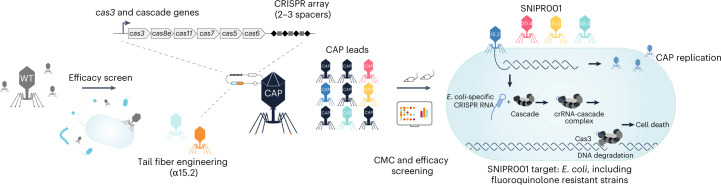
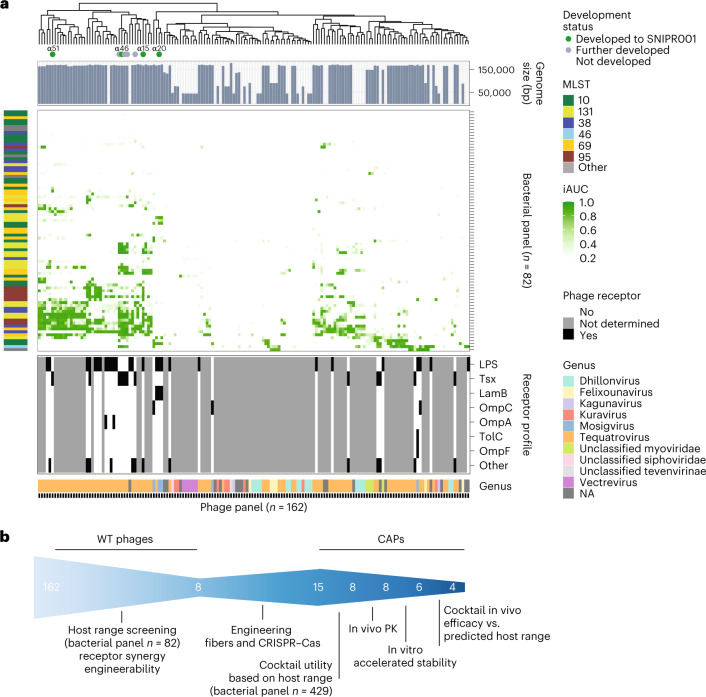
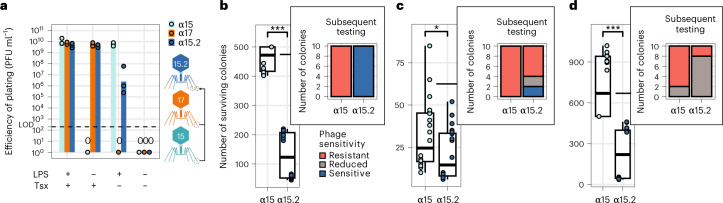
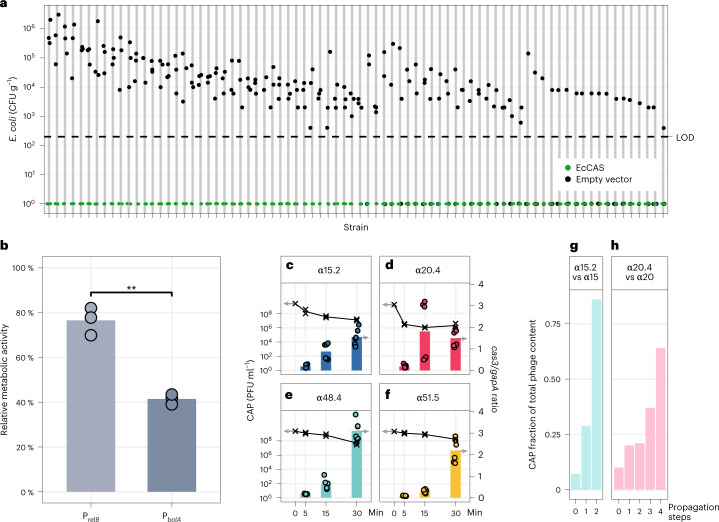
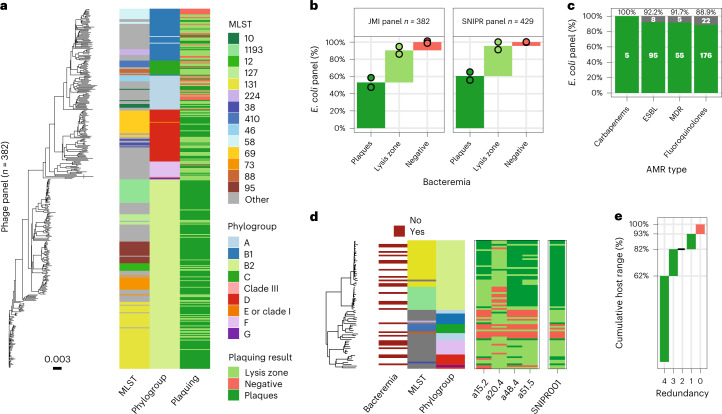
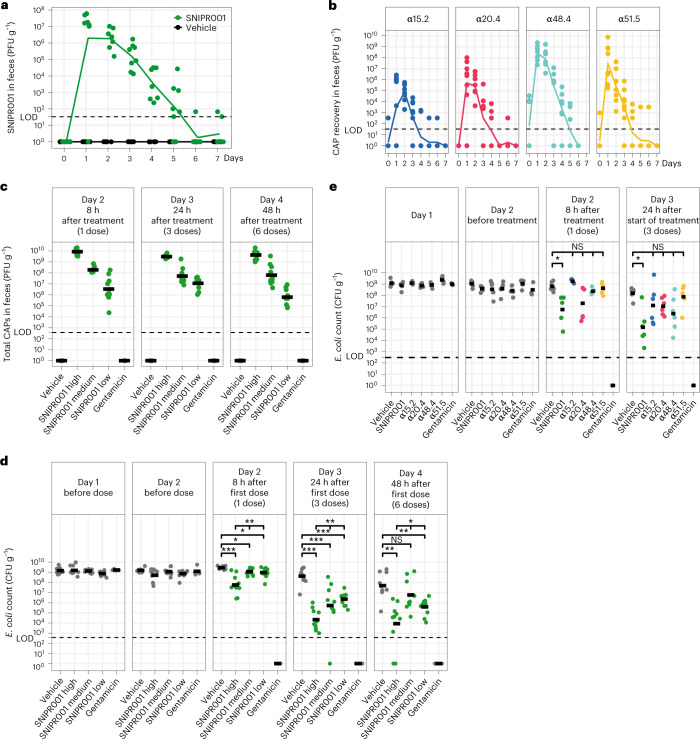
Antibiotic treatments have detrimental effects on the microbiome and lead to antibiotic resistance. To develop a phage therapy against a diverse range of clinically relevant Escherichia coli , we screened a library of 162 wild-type (WT) phages, identifying eight phages with broad coverage of E. coli , complementary binding to bacterial surface receptors, and the capability to stably carry inserted cargo. Selected phages were engineered with tail fibers and CRISPR–Cas machinery to specifically target E. coli . We show that engineered phages target bacteria in biofilms, reduce the emergence of phage-tolerant E. coli and out-compete their ancestral WT phages in coculture experiments. A combination of the four most complementary bacteriophages, called SNIPR001, is well tolerated in both mouse models and minipigs and reduces E. coli load in the mouse gut better than its constituent components separately. SNIPR001 is in clinical development to selectively kill E. coli , which may cause fatal infections in hematological cancer patients.
Overview
The claims and statistics of this paper haven’t been checked yet.
Run the check — free, no account needed. It reads the open-access text and checks the sources it cites.
Integrity signals
Registry
Cites
Statistics
Figures
Verification
Claims the paper makes
The claims and statistics of this paper haven’t been checked yet.
Run the check — free, no account needed. It reads the open-access text and checks the sources it cites.
Claims other papers make about this one
Each is checked against this paper’s own text: does it say what the citing paper says it does?
The source backs part of the claim, not all of it — or backs it for a different population, condition or comparison.
In the citing paper
“Overall, these studies have established encouraging safety profiles and provided preliminary pharmacokinetic and immunogenicity data in immunocompromised populations, laying an important foundation for oncology-directed applications.”
From Phage therapy in oncology: opportunities for cancer prevention and treatment (2026) · cites this paper as [129]
Experimental — accuracy not yet measuredThe source backs part of the claim, not all of it — or backs it for a different population, condition or comparison.
In the citing paper
“SNIPR001 was recovered from fecal samples in a dose-dependent manner and corresponded with a numerical reduction in gut E. coli levels, demonstrating clinical proof of concept for this targeted approach.”
From Phage therapy in oncology: opportunities for cancer prevention and treatment (2026) · cites this paper as [129]
Experimental — accuracy not yet measuredThe source backs part of the claim, not all of it — or backs it for a different population, condition or comparison.
In the citing paper
“In a Phase 1 randomized, double-blind, placebo-controlled, multiple-dose, dose-escalation study trial (NCT05277350i) involving 36 healthy volunteers across three dose levels, 7-day oral administration of SNIPR001 was well tolerated, with only mild to moderate adverse events and no treatment-related discontinuations.”
From Phage therapy in oncology: opportunities for cancer prevention and treatment (2026) · cites this paper as [129]
Experimental — accuracy not yet measuredThe cited source says what the claim attributes to it.
In the citing paper
“SNIPR001 was recovered from fecal samples in a dose-dependent manner and corresponded with a numerical reduction in gut E. coli levels, demonstrating clinical proof of concept for this targeted approach.”
From Phage therapy in oncology: opportunities for cancer prevention and treatment (2026) · cites this paper as [129]
The cited source says what the claim attributes to it.
In the citing paper
“Building on this foundation, SNIPR001 represents a next-generation, orally administered CRISPR–phage therapeutic designed to selectively reduce gut colonization by E. coli, a major source of bloodstream infections in patients with hematological malignancies [129]”
From Phage therapy in oncology: opportunities for cancer prevention and treatment (2026) · cites this paper as [129]
The cited source says what the claim attributes to it.
In the citing paper
“SNIPR001 was recovered from fecal samples in a dose-dependent manner and corresponded with a numerical reduction in gut E. coli levels, demonstrating clinical proof of concept for this targeted approach.”
From Phage therapy in oncology: opportunities for cancer prevention and treatment (2026) · cites this paper as [129]
Self-check
Percentages, sums and reported differences re-computed from the paper’s own numbers.
The self-check needs the paper’s full text.
Citations
Cites
Trimmomatic: a flexible trimmer for Illumina sequence data
Bolger, A. M., Lohse, M., & Usadel, B. (2014) · Bioinformatics · doi:10.1093/bioinformatics/btu170 · Cited by 65,548
SPAdes: A New Genome Assembly Algorithm and Its Applications to Single-Cell Sequencing
Bankevich, A., Nurk, S., Antipov, D., Gurevich, A. A., Dvorkin, M. V., Kulikov, A. S., Lesin, V. M., Nikolenko, S., Pham, S., Prjibelski, A. D., et al. (2012) · Journal of Computational Biology · doi:10.1089/cmb.2012.0021 · Cited by 26,312
Global burden of bacterial antimicrobial resistance in 2019: a systematic analysis
Murray, C. J. L., Ikuta, K. S., Sharara, F., Swetschinski, L., Robles Aguilar, G., Gray, A., Han, C., Bisignano, C., Rao, P., Wool, E., et al. (2022) · The Lancet · doi:10.1016/s0140-6736(21)02724-0 · Cited by 16,316
Mash: fast genome and metagenome distance estimation using MinHash
Ondov, B. D., Treangen, T. J., Melsted, P., Mallonee, A. B., Bergman, N. H., Koren, S., & Phillippy, A. M. (2016) · Genome biology · doi:10.1186/s13059-016-0997-x · Cited by 3,373
Small CRISPR RNAs Guide Antiviral Defense in Prokaryotes
Brouns, S. J. J., Jore, M. M., Lundgren, M., Westra, E. R., Slijkhuis, R. J. H., Snijders, A. P. L., Dickman, M. J., Makarova, K. S., Koonin, E. V., & van der Oost, J. (2008) · Science · doi:10.1126/science.1159689 · Cited by 2,460
Multilocus Sequence Typing of Total-Genome-Sequenced Bacteria
Larsen, M. V., Cosentino, S., Rasmussen, S., Friis, C., Hasman, H., Marvig, R. L., Jelsbak, L., Sicheritz‐Pontén, T., Ussery, D. W., Aarestrup, F. M., et al. (2012) · Journal of Clinical Microbiology · doi:10.1128/jcm.06094-11 · Cited by 2,333
Lutz, R. (1997) · Nucleic Acids Research · doi:10.1093/nar/25.6.1203 · Cited by 1,694
Dedrick, R. M., Guerrero-Bustamante, C. A., Garlena, R. A., Russell, D. A., Ford, K., Harris, K., Gilmour, K. C., Soothill, J. S., Jacobs‐Sera, D., Schooley, R. T., et al. (2019) · Nature Medicine · doi:10.1038/s41591-019-0437-z · Cited by 1,418
Using ggtree to Visualize Data on Tree‐Like Structures
Yu, G. (2020) · Current Protocols in Bioinformatics · doi:10.1002/cpbi.96 · Cited by 1,388
Schooley, R. T., Biswas, B., Gill, J. J., Hernandez-Morales, A., Lancaster, J., Lessor, L., Barr, J. J., Reed, S. L., Rohwer, F., Benler, S., et al. (2017) · Antimicrobial Agents and Chemotherapy · doi:10.1128/aac.00954-17 · Cited by 1,254
Exploiting CRISPR-Cas nucleases to produce sequence-specific antimicrobials
Bikard, D., Euler, C. W., Jiang, W., Nussenzweig, P. M., Goldberg, G. W., Duportet, X., Fischetti, V. A., & Marraffini, L. A. (2014) · Nature Biotechnology · doi:10.1038/nbt.3043 · Cited by 986
Jault, P., Leclerc, T., Jennes, S., Pirnay, J., Que, Y., Resch, G., Rousseau, A., Ravat, F., Carsin, H., Floch, R. L., et al. (2018) · The Lancet Infectious Diseases · doi:10.1016/s1473-3099(18)30482-1 · Cited by 878
Bacteriophage Host Range and Bacterial Resistance
Hyman, P., & Abedon, S. T. (2010) · Advances in applied microbiology · doi:10.1016/s0065-2164(10)70007-1 · Cited by 823
Standard reference strains of Escherichia coli from natural populations
Ochman, H., & Selander, R. K. (1984) · Journal of Bacteriology · doi:10.1128/jb.157.2.690-693.1984 · Cited by 811
Sequence-specific antimicrobials using efficiently delivered RNA-guided nucleases
Citorik, R. J., Mimee, M., & Lu, T. K. (2014) · Nature Biotechnology · doi:10.1038/nbt.3011 · Cited by 808
Levofloxacin to Prevent Bacterial Infection in Patients with Cancer and Neutropenia
Bucaneve, G., Micozzi, A., Menichetti, F., Martino, P., Dionisi, M., Martinelli, G., Allione, B., D’Antonio, D., Buelli, M., Nosari, A., et al. (2005) · New England Journal of Medicine · doi:10.1056/nejmoa044097 · Cited by 643
Taplitz, R. A., Kennedy, E. B., Bow, E. J., Crews, J. R., Gleason, C. L., Hawley, D. K., Langston, A. A., Nastoupil, L. J., Rajotte, M., Rolston, K. V. I., et al. (2018) · Journal of Clinical Oncology · doi:10.1200/jco.18.00374 · Cited by 606
Resistance Development to Bacteriophages Occurring during Bacteriophage Therapy
Oechslin, F. (2018) · Viruses · doi:10.3390/v10070351 · Cited by 605
ClermonTyping: an easy-to-use and accurate in silico method for Escherichia genus strain phylotyping
Beghain, J., Bridier‐Nahmias, A., Nagard, H. L., Denamur, É., & Clermont, O. (2018) · Microbial Genomics · doi:10.1099/mgen.0.000192 · Cited by 583
Sarker, S. A., Sultana, S., Reuteler, G., Moine, D., Descombes, P., Charton, F., Bourdin, G., McCallin, S. E., Ngom‐Bru, C., Neville, T., et al. (2016) · EBioMedicine · doi:10.1016/j.ebiom.2015.12.023 · Cited by 566
Federici, S., Kredo-Russo, S., Valdés-Mas, R., Kviatcovsky, D., Weinstock, E., Matiuhin, Y., Silberberg, Y., Atarashi, K., Furuichi, M., Oka, A., et al. (2022) · Cell · doi:10.1016/j.cell.2022.07.003 · Cited by 542
Westra, E. R., van Erp, P. B. G., Künne, T., Wong, S. P., Staals, R. H. J., Seegers, C. L. C., Bollen, S., Jore, M. M., Semenova, E., Severinov, K., et al. (2012) · Molecular Cell · doi:10.1016/j.molcel.2012.03.018 · Cited by 516
Temperate and lytic bacteriophages programmed to sensitize and kill antibiotic-resistant bacteria
Yosef, I., Manor, M., Kiro, R., & Qimron, U. (2015) · Proceedings of the National Academy of Sciences · doi:10.1073/pnas.1500107112 · Cited by 483
RelE, a global inhibitor of translation, is activated during nutritional stress
Christensen, S. K., Mikkelsen, M., Pedersen, K. B., & Gerdes, K. (2001) · Proceedings of the National Academy of Sciences · doi:10.1073/pnas.251327898 · Cited by 454
Yehl, K. M., Lemire, S., Yang, A. C., Ando, H., Mimee, M., Torres, M. D. T., de la Fuente‐Núñez, C., & Lu, T. K. (2019) · Cell · doi:10.1016/j.cell.2019.09.015 · Cited by 443
Cas3 is a single‐stranded DNA nuclease and ATP‐dependent helicase in the CRISPR/Cas immune system
Šinkūnas, T., Gasiūnas, G., Fremaux, C., Barrangou, R., Horvath, P., & Šikšnys, V. (2011) · The EMBO Journal · doi:10.1038/emboj.2011.41 · Cited by 441
Antibacterial Prophylaxis after Chemotherapy for Solid Tumors and Lymphomas
Cullen, M. H., Steven, N. M., Billingham, L. J., Gaunt, C. H., Hastings, M., Simmonds, P., Stuart, N., Rea, D. W., Bower, M., Fernando, I. N., et al. (2005) · New England Journal of Medicine · doi:10.1056/nejmoa050078 · Cited by 417
Bacteraemia in febrile neutropenic cancer patients
Klastersky, J. A., Ameye, L., Maertens, J. A., Georgala, A., Muanza, F., Aoun, M., Ferrant, A., Rapoport, B. L., Rolston, K. V. I., & Paesmans, M. (2007) · International Journal of Antimicrobial Agents · doi:10.1016/j.ijantimicag.2007.06.012 · Cited by 342
Leitner, L., Ujmajuridze, A., Чанішвілі, Н., Goderdzishvili, M., Chkonia, I., Rigvava, S., Chkhotua, A. B., Changashvili, G., McCallin, S. E., Schneider, M. P., et al. (2020) · The Lancet Infectious Diseases · doi:10.1016/s1473-3099(20)30330-3 · Cited by 340
Averbuch, D., Tridello, G., Hoek, J., Mikulska, M., Akan, H., Yáñez, L., Pabst, T., Özçelik, T., Klyasova, G. A., Donnini, I., et al. (2017) · Clinical Infectious Diseases · doi:10.1093/cid/cix646 · Cited by 274
Gut flora in health and disease
Knight, D., & Girling, K. J. (2003) · The Lancet · doi:10.1016/s0140-6736(03)13438-1 · Cited by 267
Jennes, S., Merabishvili, M., Soentjens, P. H. P., Pang, K. W., Rose, T., Keersebilck, E., Soete, O., François, P.-M., Teodorescu, S., Verween, G., et al. (2017) · Critical Care · doi:10.1186/s13054-017-1709-y · Cited by 249
Trecarichi, E. M., Pagano, L., Candoni, A., Pastore, D., Cattaneo, C. M., Fanci, R., Nosari, A., Caira, M., Spadea, A., Busca, A., et al. (2014) · Clinical Microbiology and Infection · doi:10.1016/j.cmi.2014.11.022 · Cited by 247
In Vivo Targeting of Clostridioides difficile Using Phage-Delivered CRISPR-Cas3 Antimicrobials
Selle, K., Fletcher, J. R., Tuson, H. H., Schmitt, D. S., McMillan, L. J., Vridhambal, G. S., Rivera, A. J., Montgomery, S. A., Fortier, L., Barrangou, R., et al. (2020) · mBio · doi:10.1128/mbio.00019-20 · Cited by 242
Lam, K. N., Spanogiannopoulos, P., Soto-Perez, P., Alexander, M., Nalley, M. J., Bisanz, J. E., Nayak, R. R., Weakley, A. M., Yu, F. B., & Turnbaugh, P. J. (2021) · Cell Reports · doi:10.1016/j.celrep.2021.109930 · Cited by 176
Girmenia, C., Bertaina, A., Piciocchi, A., Perruccio, K., Algarotti, A., Busca, A., Cattaneo, C. M., Raiola, A. M., Guidi, S., Iori, A. P., et al. (2017) · Clinical Infectious Diseases · doi:10.1093/cid/cix690 · Cited by 169
The Escherichia coli CRISPR System Protects from λ Lysogenization, Lysogens, and Prophage Induction
Edgar, R., & Qimron, U. (2010) · Journal of Bacteriology · doi:10.1128/jb.00644-10 · Cited by 165
Galtier, M., Sordi, L. D., Maura, D., Arachchi, H., Volant, S., Dillies, M., & Debarbieux, L. (2016) · Environmental Microbiology · doi:10.1111/1462-2920.13284 · Cited by 156
The gut microbiome: what the oncologist ought to know
Lee, K. A., Luong, M., Shaw, H. M., Nathan, P., Bataille, V. A., & Spector, T. D. (2021) · British Journal of Cancer · doi:10.1038/s41416-021-01467-x · Cited by 154
High‐efficiency delivery of CRISPR‐Cas9 by engineered probiotics enables precise microbiome editing
Neil, K., Allard, N., Roy, P., Grenier, F., Menéndez, A., Burrus, V., & Rodrigue, S. (2021) · Molecular Systems Biology · doi:10.15252/msb.202110335 · Cited by 152
Resolving the structure of phage–bacteria interactions in the context of natural diversity
Kauffman, K. M., Chang, W. K., Brown, J. M., Hussain, F. A., Yang, J., Polz, M. F., & Kelly, L. (2022) · Nature Communications · doi:10.1038/s41467-021-27583-z · Cited by 149
Pulte, D. D., Jansen, L., & Brenner, H. (2020) · Blood Cancer Journal · doi:10.1038/s41408-020-0323-4 · Cited by 148
van der Velden, W. J. F. M., Herbers, A. H. E., Netea, M. G., & Blijlevens, N. M. A. (2014) · British Journal of Haematology · doi:10.1111/bjh.13113 · Cited by 146
In situ reprogramming of gut bacteria by oral delivery
Hsu, B. B., Plant, I. N., Lyon, L. G., Anastassacos, F. M., Way, J. C., & Silver, P. A. (2020) · Nature Communications · doi:10.1038/s41467-020-18614-2 · Cited by 138
Phage Therapy: Towards a Successful Clinical Trial
Górski, A., Borysowski, J., & Międzybrodzki, R. (2020) · Antibiotics · doi:10.3390/antibiotics9110827 · Cited by 111
Salmonella Phage S16 Tail Fiber Adhesin Features a Rare Polyglycine Rich Domain for Host Recognition
Dunne, M., Denyes, J. M., Arndt, H., Loessner, M. J., Leiman, P. G., & Klumpp, J. (2018) · Structure · doi:10.1016/j.str.2018.07.017 · Cited by 103
Constructing and Characterizing Bacteriophage Libraries for Phage Therapy of Human Infections
Gibson, S., Green, S. I., Liu, C. G., Salazar, K. C., Clark, J. R., Terwilliger, A. L., Kaplan, H. B., Maresso, A. W., Trautner, B. W., & Ramig, R. F. (2019) · Frontiers in Microbiology · doi:10.3389/fmicb.2019.02537 · Cited by 97
Henry, M., Biswas, B., Vincent, L. R., Mokashi, V. P., Schuch, R., Bishop‐Lilly, K. A., & Sozhamannan, S. (2012) · Bacteriophage · doi:10.4161/bact.21440 · Cited by 91
Harms, A., Liesch, M., Körner, J., Québatte, M., Engel, P., & Dehio, C. (2017) · PLoS Genetics · doi:10.1371/journal.pgen.1007077 · Cited by 77
Satlin, M. J., Chavda, K. D., Baker, T., Chen, L., Shashkina, E., Soave, R., Small, C. B., Jacobs, S. E., Shore, T. B., van Besien, K., et al. (2018) · Clinical Infectious Diseases · doi:10.1093/cid/ciy363 · Cited by 77
Self-citationDandoy, C. E., Kim, S., Chen, M., Ahn, K. W., Ardura, M. I., Brown, V. I., Chhabra, S., Díaz, M. Á., Dvorak, C. C., Farhadfar, N., et al. (2020) · JAMA Network Open · doi:10.1001/jamanetworkopen.2019.18668 · Cited by 76
Bacterial resistance to CRISPR-Cas antimicrobials
Vazquez-Uribe, R., Rathmer, C., Jahn, L. J., Ellabaan, M. M. H., Li, S. S., & Sommer, M. O. A. (2021) · Scientific Reports · doi:10.1038/s41598-021-96735-4 · Cited by 75
Self-citationEffect of Escherichia coli Morphogene bolA on Biofilms
Vieira, H. L. A., Freire, P., & Arraiano, C. M. (2004) · Applied and Environmental Microbiology · doi:10.1128/aem.70.9.5682-5684.2004 · Cited by 74
See, I., Freifeld, A. G., & Magill, S. S. (2016) · Clinical Infectious Diseases · doi:10.1093/cid/ciw113 · Cited by 73
Marín, M., Gudiol, C., Ardanuy, C., García-Vidal, C., Jiménez, L., Domingo-Domènech, E., Pérez, F., & Carratalà, J. (2015) · Clinical Microbiology and Infection · doi:10.1016/j.cmi.2015.01.029 · Cited by 66
Satlin, M. J., Chen, L., Douglass, C., Hovan, M., Davidson, E., Soave, R., Spina, M. L., Gomez-Arteaga, A., van Besien, K., Mayer, S. A., et al. (2021) · Clinical Infectious Diseases · doi:10.1093/cid/ciab404 · Cited by 59
Self-citationReview article: bacteriophages in gastroenterology—from biology to clinical applications
Sabino, J., Hirten, R. P., & Colombel, J. (2019) · Alimentary Pharmacology & Therapeutics · doi:10.1111/apt.15557 · Cited by 53
Current Updates from the Long-Standing Phage Research Centers in Georgia, Poland, and Russia
Międzybrodzki, R., Hoyle, N. S., Zhvaniya, F., Łusiak-Szelachowska, M., Weber‐Dąbrowska, B., Łobocka, M. B., Borysowski, J., Alavidze, Z., Kutter, E. M., Górski, A., et al. (2018) · Springer eBooks · doi:10.1007/978-3-319-40598-8_31-1 · Cited by 30
Genetic analysis of bacteriophage T4 transducing bacteriophages
Young, K. K., Edlin, G. J., & Wilson, G. G. (1982) · Journal of Virology · doi:10.1128/jvi.41.1.345-347.1982 · Cited by 26
Biocontrol of Shiga Toxigenic Escherichia coli O157:H7 in T urkish Raw Meatball by Bacteriophage
Gençay, Y. E., Ayaz, N. D., Copuroglu, G., & Erol, İ. (2015) · Journal of Food Safety · doi:10.1111/jfs.12219 · Cited by 17
Current Updates from the Long-Standing Phage Research Centers in Georgia, Poland, and Russia
Międzybrodzki, R., Hoyle, N. S., Zhvaniya, F., Łusiak-Szelachowska, M., Weber‐Dąbrowska, B., Łobocka, M. B., Borysowski, J., Alavidze, Z., Kutter, E. M., Górski, A., et al. (2021) · Springer eBooks · doi:10.1007/978-3-319-41986-2_31 · Cited by 16
Targeted Genome Editing of Virulent Phages Using CRISPR-Cas9
Lemay, M.-L., Renaud, A. C., Rousseau, G. M., & Moineau, S. (2018) · BIO-PROTOCOL · doi:10.21769/bioprotoc.2674 · Cited by 10
Riley, M. M.-S., Brown, J. W., Srinivas, S., Johnston, L., Tompkins, L. S., Madison, S., & Schaffner, T. (2017) · American Journal of Infection Control · doi:10.1016/j.ajic.2017.04.063 · Cited by 1
Cited by
Sorted by citations
Past, present, and future of CRISPR genome editing technologies
Pacesa, M., Pelea, O., & Jinek, M. (2024) · Cell · doi:10.1016/j.cell.2024.01.042 · Cited by 609
Role of the microbiota in response to and recovery from cancer therapy
Blake, S. J., Wolf, Y., Boursi, B., & Lynn, D. J. (2023) · Nature reviews. Immunology · doi:10.1038/s41577-023-00951-0 · Cited by 151
In situ targeted base editing of bacteria in the mouse gut
Brödel, A. K., Charpenay, L. H., Galtier, M., Fuche, F. J., Terrasse, R., Poquet, C., Havránek, J., Pignotti, S., Krawczyk, A. O., Arraou, M., et al. (2024) · Nature · doi:10.1038/s41586-024-07681-w · Cited by 141
The gut microbiota in cancer immunity and immunotherapy
Xie, M., Li, X., Lau, H. C.-H., & Yu, J. (2025) · Cellular and Molecular Immunology · doi:10.1038/s41423-025-01326-2 · Cited by 132
Kim, P., Sanchez, A. M., Penke, T. J. R., Tuson, H. H., Kime, J., McKee, R. W., Slone, W. L., Conley, N. R., McMillan, L. J., Prybol, C. J., et al. (2024) · The Lancet Infectious Diseases · doi:10.1016/s1473-3099(24)00424-9 · Cited by 121
Metadata
- Authors
- Gencay, Y. E., Jasinskytė, D., Robert, C., Semsey, S., Martínez, V., Petersen, A. Ø., Brunner, K., de Santiago Torio, A., Salazar, A., Turcu, I. C., Eriksen, M. K., Koval, L., Takos, A., Pascal, R., Schou, T. S., Bayer, L., Bryde, T., Johansen, K. C., Bak, E. G., Smrekar, F., Doyle, T. B., Satlin, M. J., Gram, A., Carvalho, J., Jessen, L., Hallström, B., Hink, J., Damholt, B., Troy, A., Grove, M., Clube, J., Grøndahl, C., Haaber, J. K., van der Helm, E., Zdravkovic, M., & Sommer, M. O. A.
- Affiliations
- JMI Laboratories (US)
- Weill Cornell Medicine (US)
- Novo Nordisk Foundation (DK)
- Corresponding author
- Sommer, Morten Otto Alexander
- ORCID
- Venue
- Nature Biotechnology
- Published
- 2023-05-04
- Volume
- 42
- Issue
- 2
- Pages
- 265-274
- ISSN
- 0733-222X (ISSN-L)
- 1087-0156
- 1546-1696
- PMC
- PMC10869271
- OpenAlex
- W4372330661
- Cited by
- 282
- References
- 63
- Citations by year
- 2026: 92 · 2025: 114 · 2024: 59 · 2023: 17
- FWCI
- 45.54
- Type
- journal article
- Language
- en
- Open access
- hybrid
- doi.org
- Locations
- Nature Biotechnology (publishedVersion, cc-by)
- PubMed Central (publishedVersion, cc-by)
- PubMed (publishedVersion)
- Technical University of Denmark, DTU Orbit (Technical University of Denmark, DTU) (submittedVersion, other-oa)
- Funders
- Wellcome Trust
- Combating Antibiotic-Resistant Bacteria Biopharmaceutical Accelerator (IDSEP160030)
- Lundbeckfonden (R77-2010-6772, R140-2013-13496)
- Novo Nordisk Fonden (NNF21OC0070455, NNF22OC0081058, NNF21OC0072832, NNF14OC0011335, NNF17OC0028232, NNF10CC1016517, NNF22OC0080975, NNF21OC0069281)
- Biomedical Advanced Research and Development Authority (IDSEP160030)
- Topics
- Life Sciences › Immunology and Microbiology › Virology › Bacteriophages and microbial interactions
- Life Sciences › Biochemistry, Genetics and Molecular Biology › Molecular Biology › CRISPR and Genetic Engineering
- Life Sciences › Biochemistry, Genetics and Molecular Biology › Genetics › Virus-based gene therapy research
- Keywords
- phage therapy, CRISPR-Cas, Escherichia coli, bacteriophages, phage engineering, biofilm, gut microbiota, antibiotic resistance, minipig model, phage cocktail
- MeSH terms
- Animals, Anti-Bacterial Agents, Bacteriophages, Escherichia coli, Humans, Swine, Swine, Miniature, Mice, CRISPR-Cas Systems
About these checks
Registry, retraction, Cites and statistics results are computed, not judged, with one exception: a printed reference that no index lists is read once by a model before it counts as a citation error. Claims are extracted by a model and kept only when their quote appears verbatim in the text; each cited source is then checked, with a model’s help, for whether it says what the claim relies on. Those verdicts can be wrong — read the claim’s quote and the cited source before relying on one.
Statistics and arithmetic are recomputed, not judged.
Confidence bands are shown only for fields calibrated on our annotated test set. None is calibrated yet, so no band is shown.
What counts as a claim ›How we measure confidence ›How we check this ›
Are you an author, or do you see a problem with this page? Request a review
