

A small-molecule TNIK inhibitor targets fibrosis in preclinical and clinical models
Open accessThe DOI matches its Crossref record; 90 of the 90 references it cites were found in a registry or an index.
Abstract
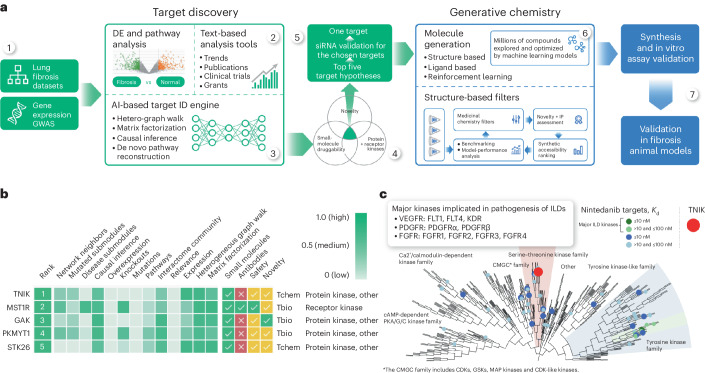
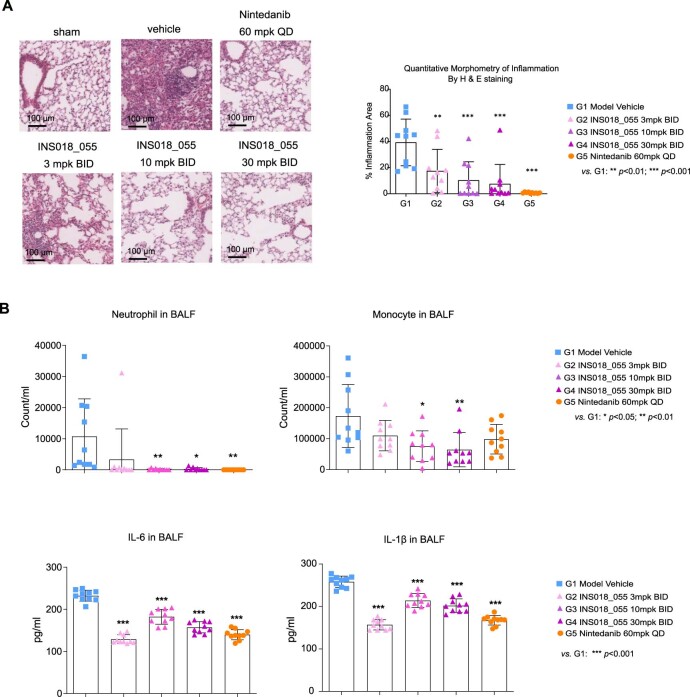
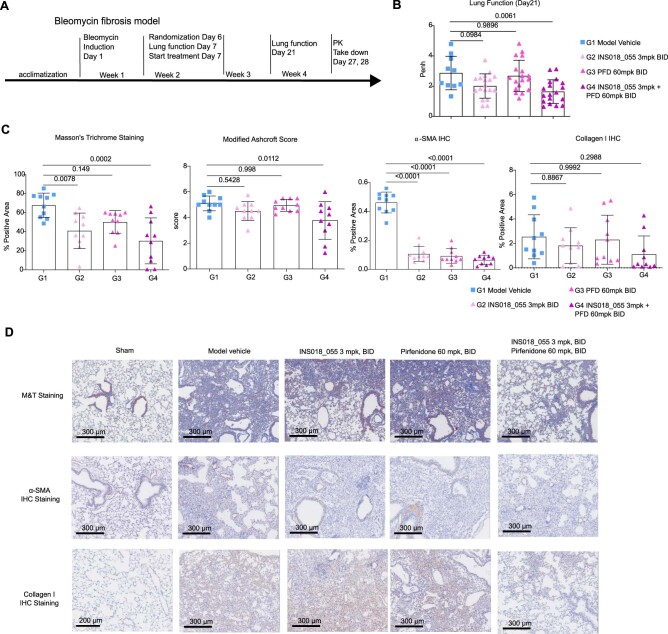
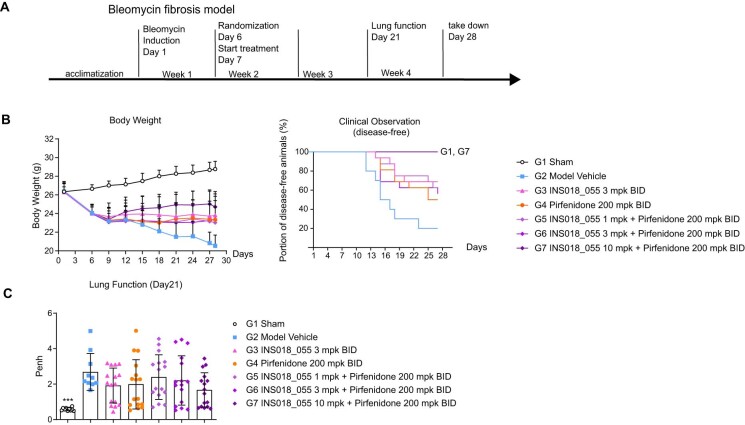
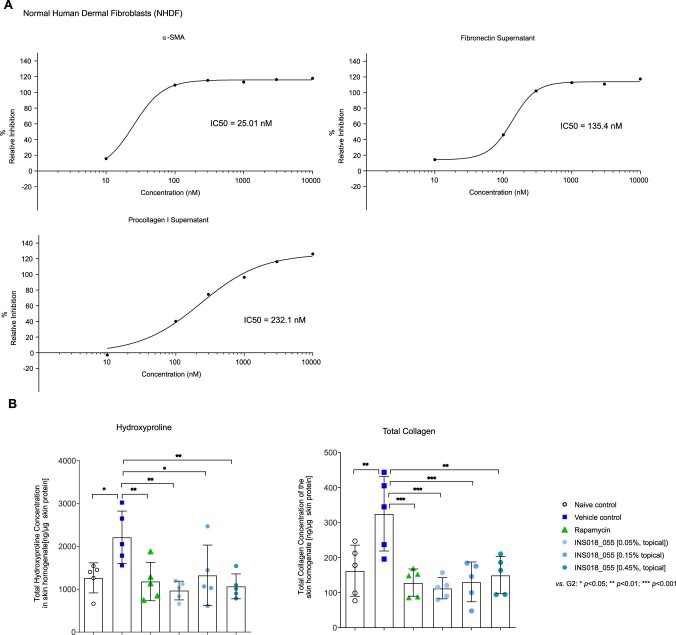
Idiopathic pulmonary fibrosis (IPF) is an aggressive interstitial lung disease with a high mortality rate. Putative drug targets in IPF have failed to translate into effective therapies at the clinical level. We identify TRAF2- and NCK-interacting kinase (TNIK) as an anti-fibrotic target using a predictive artificial intelligence (AI) approach. Using AI-driven methodology, we generated INS018_055, a small-molecule TNIK inhibitor, which exhibits desirable drug-like properties and anti-fibrotic activity across different organs in vivo through oral, inhaled or topical administration. INS018_055 possesses anti-inflammatory effects in addition to its anti-fibrotic profile, validated in multiple in vivo studies. Its safety and tolerability as well as pharmacokinetics were validated in a randomized, double-blinded, placebo-controlled phase I clinical trial (NCT05154240) involving 78 healthy participants. A separate phase I trial in China, CTR20221542, also demonstrated comparable safety and pharmacokinetic profiles. This work was completed in roughly 18 months from target discovery to preclinical candidate nomination and demonstrates the capabilities of our generative AI-driven drug-discovery pipeline.
Overview
The claims and statistics of this paper haven’t been checked yet.
Free: it reads the open-access text and checks the first 5 claims that cite a source we can check. Create a free account to check every claim.
Integrity signals
Registry
Cites
Statistics
Figures
Verification
Claims the paper makes
The claims and statistics of this paper haven’t been checked yet.
Free: it reads the open-access text and checks the first 5 claims that cite a source we can check. Create a free account to check every claim.
Claims other papers make about this one
Each is checked against this paper’s own text: does it say what the citing paper says it does?
The source backs part of the claim, not all of it — or backs it for a different population, condition or comparison.
In the citing paper
“rentosertib (formerly ISM001-055), a first-in-class AI-generated small-molecule inhibitor of TNIK, a first-in-class target in idiopathic pulmonary fibrosis (IPF) discovered using generative AI.”
From A generative AI-discovered TNIK inhibitor for idiopathic pulmonary fibrosis: a randomized phase 2a trial (2025) · cites this paper as [9]
Experimental — accuracy not yet measuredThe source backs part of the claim, not all of it — or backs it for a different population, condition or comparison.
In the citing paper
“We reported the development and positive phase 0 and 1 trial results of rentosertib9 (NCT05154240 and CTR20221542 (accessed via http://www.chinadrugtrials.org.cn/)), the first report of a targeted TNIK inhibitor entering clinical testing, which found rentosertib to be safe and well tolerated by healthy individuals, exhibiting a favorable pharmacokinetic (PK) profile in both trials9.”
From A generative AI-discovered TNIK inhibitor for idiopathic pulmonary fibrosis: a randomized phase 2a trial (2025) · cites this paper as [9]
Experimental — accuracy not yet measuredThe source backs part of the claim, not all of it — or backs it for a different population, condition or comparison.
In the citing paper
“our group used generative AI-driven discovery tools22,23 to identify Traf2- and Nck-interacting kinase (TNIK) de novo as a critical regulator of idiopathic pulmonary fibrosis (IPF) pathology as it orchestrates multiple profibrotic and proinflammatory cellular programs9.”
From A generative AI-discovered TNIK inhibitor for idiopathic pulmonary fibrosis: a randomized phase 2a trial (2025) · cites this paper as [9]
Experimental — accuracy not yet measuredThe source backs part of the claim, not all of it — or backs it for a different population, condition or comparison.
In the citing paper
“Our generative AI-powered approach streamlined preclinical candidate nomination to a mere 18 months and completion of phase 0/1 clinical testing to under 30 months from the initiation of target discovery, representing a revolutionary shift in the streamlining of drug discovery9.”
From A generative AI-discovered TNIK inhibitor for idiopathic pulmonary fibrosis: a randomized phase 2a trial (2025) · cites this paper as [9]
Experimental — accuracy not yet measuredThe cited source says what the claim attributes to it.
In the citing paper
“An unintended consequence of rentosertib’s potential immunomodulatory mechanism of action9 may be a dampened site-specific immune response, potentially leading to increased susceptibility to infection, a known trigger for a subset of AE-IPF45,46.”
From A generative AI-discovered TNIK inhibitor for idiopathic pulmonary fibrosis: a randomized phase 2a trial (2025) · cites this paper as [9]
3 more claims about this paper
Create a free account to see every claim other papers make about this one.
Self-check
Percentages, sums and reported differences re-computed from the paper’s own numbers.
The self-check needs the paper’s full text.
Citations
Cites
Molecular mechanisms of epithelial–mesenchymal transition
Lamouille, S., Xu, J., & Derynck, R. (2014) · Nature Reviews Molecular Cell Biology · doi:10.1038/nrm3758 · Cited by 8,091 · cited 1×
“The WNT–β-catenin signaling pathway is involved in wound healing, regulates fibrogenesis and is known to contribute to EMT elicited by TGF-β stimulation 63 .”
An automated method for finding molecular complexes in large protein interaction networks
Bader, G. D., & Hogue, C. W. (2003) · BMC Bioinformatics · doi:10.1186/1471-2105-4-2 · Cited by 6,072 · cited 1×
“We used this single-cell dataset to simulate TNIK knockout in IPF myofibro-blasts using the scTenifoldKnk approach 54 followed by the Molecular Complex Detection (MCODE) algorithm 55 and performed pathway and biological process enrichment analysis.”
Roberts, A. B., Sporn, M. B., Assoian, R. K., Smith, J. M., Roche, N. S., Wakefield, L. M., Heine, U. I., Liotta, L. A., Falanga, V, & Kehrl, J. H. (1986) · Proceedings of the National Academy of Sciences · doi:10.1073/pnas.83.12.4167 · Cited by 2,866
Desmoulière, A., Geinoz, A., Gabbiani, F., & Gabbiani, G. (1993) · The Journal of cell biology · doi:10.1083/jcb.122.1.103 · Cited by 2,243
Hinz, B., Phan, S. H., Thannickal, V. J., Galli, A., Bochaton-Piallat, M.-L., & Gabbiani, G. (2007) · The American Journal of Pathology · doi:10.2353/ajpath.2007.070112 · Cited by 2,068
Non-Transgenic Mouse Models of Kidney Disease
Rabe, M., & Schaefer, F. (2016) · Nephron · doi:10.1159/000445171 · Cited by 1,922
Fibrosis: from mechanisms to medicines
Henderson, N. C., Rieder, F., & Wynn, T. A. (2020) · Nature · doi:10.1038/s41586-020-2938-9 · Cited by 1,868 · cited 1×
“As fibrosis can affect any organ and is responsible for up to 45% of all deaths in the industrialized world 51 , we hypothesized that inhibition of TNIK may provide therapeutic benefit in multiple pathologies in which fibrosis may be implicated.”
Chronic Kidney Disease Diagnosis and Management: A Review
Chen, T. K., Knicely, D. H., & Grams, M. E. (2019) · JAMA · doi:10.1001/jama.2019.14745 · Cited by 1,811
Clinical course and prediction of survival in idiopathic pulmonary fibrosis
Ley, B., Collard, H. R., & King, T. E. (2011) · American Journal of Respiratory and Critical Care Medicine · doi:10.1164/rccm.201006-0894ci · Cited by 1,765 · cited 2×
“In untreated patients, IPF has a highly inconsistent clinical course, with a median survival of 2 to 3 years 26 .”
Deep learning enables rapid identification of potent DDR1 kinase inhibitors
Zhavoronkov, A., Ivanenkov, Y. A., Aliper, A., Veselov, M. S., Aladinskiy, V. A., Aladinskaya, A. V., Terentiev, V. A., Polykovskiy, D. A., Kuznetsov, M. D., Asadulaev, A., et al. (2019) · Nature Biotechnology · doi:10.1038/s41587-019-0224-x · Cited by 1,573 · cited 1×
“40,41,75–77) to discover the lead inhibitory compounds targeting this kinase.”
Self-citation
Research works printed but not linked: 1
- Aliper, A. et al. Prediction of clinical trials outcomes based on target choice and clinical trial design with multi-modal artificial intelligence. Clin. Pharmacol. Ther. 114, 972–980 (2023). 37483175 · DOI · Paper page
Cited by
Items 101–200 of 348
Cheng, H., Wong, J. L. Y., Quek, C. W. N., Goldberg, J. L., Mahajan, V. B., Wong, T. Y., Mehta, J. S., Ting, D. S. W., & Ting, D. S. J. (2025) · npj Digital Medicine · doi:10.1038/s41746-025-01954-y · Cited by 13
“An exciting example is the development of INS018_055, a TRAF2-and NCK-interacting kinas (TNIK) inhibitor for idiopathic pulmonary fi brosis (IPF), completed in just 18 months using PandaOmics and advanced molecular docking 38 .”
LRRK2 Inhibitors as Promising Treatment for Parkinson’s Disease
Tan, S., Liu, H., & Yao, X. (2024) · ACS Chemical Neuroscience · doi:10.1021/acschemneuro.4c00657 · Cited by 9
Shadid, A., Rich, H. E., DeVaughn, H., Domozhirov, A. Y., Doursout, M., Mills, T., Eckel‐Mahan, K. L., Karmouty‐Quintana, H., Restrepo, M. I., & Shivshankar, P. (2024) · Frontiers in Cellular and Infection Microbiology · doi:10.3389/fcimb.2024.1479801 · Cited by 10
Change of Heart: Can Artificial Intelligence Transform Infective Endocarditis Management?
McHugh, J., Challener, D. W., & Tabaja, H. (2025) · Pathogens · doi:10.3390/pathogens14040371 · Cited by 13
“Indeed, the integration of generative AI in drug design has progressed to the point that the first fully AI-designed drug has entered human clinical trials as of 2023 [45], heralding a new era where algorithms generate candidate molecules for testing.”
Engelbrecht, E., Kooistra, T., Burg, N. D., Hariri, L. P., Nguyen, T. H., Brazee, P. L., Hla, T., Gochuico, B. R., & Knipe, R. S. (2025) · Pulmonary Circulation · doi:10.1002/pul2.70102 · Cited by 15
Unraveling the potential of diffusion models in small-molecule generation
Zhang, P. C., Baker, D., Song, M., & Bi, J. (2025) · Drug Discovery Today · doi:10.1016/j.drudis.2025.104413 · Cited by 14
From clock to clock: Therapeutic target discovery for aging and age-related diseases
Chen, J., Leung, G. H. D., Leung, H., Ustiugova, A. S., Shneyderman, A., Korzinkin, M., Gennert, D. G., Pun, F. W., Aliper, A. M., Ren, F., et al. (2025) · Ageing Research Reviews · doi:10.1016/j.arr.2025.102871 · Cited by 13
Self-citationPotential saviour of pulmonary fibrosis: multi-pathway treatment of natural products
Weng, Y., He, B., Zhou, J., Luo, P., Xu, Z., Yan, H., Yang, B., He, Q., Lu, J., & Yang, X. (2025) · Phytomedicine · doi:10.1016/j.phymed.2025.157174 · Cited by 10
What Happens in Successful Optimizations? A Survey of 2018–2024 Literature
Leeson, P. D. (2026) · Journal of Medicinal Chemistry · doi:10.1021/acs.jmedchem.5c03171 · Cited by 13
Gong, E. J., Bang, C. S., & Shin, Y. S. (2026) · Bioengineering · doi:10.3390/bioengineering13030365 · Cited by 19
“The recent success of AI-discovered therapeutics, including the first AI-identified drug showing efficacy in Phase IIa trials, demonstrates that LLMs are transitioning from assistive tools to active partners in hypothesis generation [123].”
Artificial Intelligence in Drug Discovery and Development: Transforming Pharmaceutical Innovation
Ali, M. S., Alqahtani, T., Shmrany, H. A., Gupta, G., Goh, K. W., Sahebkar, A., & Kesharwani, P. (2026) · Drug Development Research · doi:10.1002/ddr.70281 · Cited by 14
Refined ADME Profiles for ATC Drug Classes
Menestrina, L., Parrondo-Pizarro, R., Gómez, I., García-Serna, R., Boyer, S. K., & Mestres, J. (2025) · Pharmaceutics · doi:10.3390/pharmaceutics17030308 · Cited by 11
Chen, Y., Yang, M., & Hua, Q. (2025) · Pharmacological Research · doi:10.1016/j.phrs.2025.107734 · Cited by 9
Fangma, Y., Zhou, Z., Chen, Z., & Zheng, Y. (2025) · Stroke · doi:10.1161/strokeaha.125.052018 · Cited by 9
Value Addition to African Natural Product-Based Drug Discovery Initiatives
Mayoka, G. W., Cheuka, P. M., Moyo, P., Dziwornu, G. A., & Beukes, D. R. (2025) · Journal of Natural Products · doi:10.1021/acs.jnatprod.5c00446 · Cited by 15
Artificial intelligence for precision medicine
Martel, M.-E., José-García, A., Vens, C., Vos, M. D., & Sobanski, V. (2025) · Therapies · doi:10.1016/j.therap.2025.10.003 · Cited by 9
Wang, B., Fan, P., Guo, F., Song, Z., Zhang, Z., Lu, X., & Shi, J. (2026) · Science Advances · doi:10.1126/sciadv.ady1030 · Cited by 8
“As a result, high doses are required to achieve therapeutic concentrations in lung tissue, which increases systemic side effects and imposes a substantial economic burden on patients ( 8 ).”
Khairil, L., Benny, K. H. S., Jerry, J., Khatib, F. M., Ramli, M. D. C., & Kumar, S. (2026) · Pharmaceuticals · doi:10.3390/ph19060916 · Cited by 11
“For example, in less than 18 months, Insilico medicine developed a lead fibrosis candidate compared to standard multi-year methods [132].”
Nehmeh, B., Rebehmed, J., Nehmeh, R., Taleb, R. I., & Akoury, E. (2024) · Drug Discovery Today · doi:10.1016/j.drudis.2024.104216 · Cited by 9
AI comes to the Nobel Prize and drug discovery
Zhou, Y., Zhang, Y., Zhang, Z., Zhou, Z., & Zhu, F. (2024) · Journal of Pharmaceutical Analysis · doi:10.1016/j.jpha.2024.101160 · Cited by 10
Organelle-oriented nanomedicines in tumor therapy: Targeting, escaping, or collaborating?
Tan, K., Zhang, H., Yang, J., Wang, H., Li, Y., Ding, G., Gu, P., Yang, S., Li, J., & Fan, X. (2025) · Bioactive Materials · doi:10.1016/j.bioactmat.2025.02.040 · Cited by 18
“It is noteworthy that Ren et al. recently developed a novel drug for lung disease treatment using AI for the first time [418].”
Self-citationLiu, Z., Zhang, P., Pei, H., Wang, Z., Li, L., Ma, X., Wang, J., & Huang, D. (2025) · Advanced Functional Materials · doi:10.1002/adfm.202519074 · Cited by 10
Next-generation drug discovery: The AI revolution in pharmaceutical research
Bilotta, M., Rocca, R., & Alcaro, S. (2025) · Artificial Intelligence in the Life Sciences · doi:10.1016/j.ailsci.2025.100149 · Cited by 17
WeMol: A Cloud-Based and Zero-Code Platform for AI-Driven Molecular Design and Simulation
Liu, H., Yan, X., Fang, H., Ge, H., & Hou, X. (2026) · Journal of Chemical Information and Modeling · doi:10.1021/acs.jcim.6c00014 · Cited by 9
Molecular Design with Artificial Intelligence: Progress and Perspectives for Small Molecules
Sumita, M., Ishida, S., Yoshizoe, K., Tamura, R., Terayama, K., & Tsuda, K. (2026) · Chemical Reviews · doi:10.1021/acs.chemrev.5c00689 · Cited by 8
Li, Y., Ladd, Z., Xiong, Z., Bui-Linh, C., Paiboonrungruang, C., Subramaniyan, B., Li, H., Wang, H., Balch, C., Shersher, D. D., et al. (2025) · Cancers · doi:10.3390/cancers17111853 · Cited by 10
“Among these, the TNIK inhibitor has completed a Phase 2a Trial with good tolerability and safety, and dose-dependent improvement of lung function [190].”
Self-citationMedea: An AI agent for therapeutic reasoning across biological contextsPreprint
Sui, P., Li, M. M., Munson, B. P., Gao, S., Shen, W., Giunchiglia, V., Shen, A. N., Huang, Y., Kong, Z., Licon, K., et al. (2026) · bioRxiv (Cold Spring Harbor Laboratory) · doi:10.64898/2026.01.16.696667 · Cited by 16
Crouzet, A., Lopez, N., Riss‐Yaw, B., Lepelletier, Y., & Demange, L. (2024) · Molecules · doi:10.3390/molecules29122716 · Cited by 8
Sica, G., D’Agnano, V., Bate, S., Romano, F., Viglione, V., Franzese, L., Scaglione, M., Tamburrini, S., Reginelli, A., & Perrotta, F. (2025) · Diagnostics · doi:10.3390/diagnostics15030278 · Cited by 9
“In addition, two phase I studies demonstrated the safety and tolerability of INS018_055 in healthy volunteers with good oral bioavailability and dose-proportional PK [47].”
The path to biotechnological singularity: Current breakthroughs and outlook
Wen, Z., Yang, D., Yang, Y., Hu, J., Parviainen, A., Chen, X., Li, Q., VanDeusen, E. A., Ma, J., & Tay, F. R. (2025) · Biotechnology Advances · doi:10.1016/j.biotechadv.2025.108667 · Cited by 8
TCF/LEF-mediated transcriptional regulation in the canonical Wnt pathway
Takano, C., & Higuchi, Y. (2025) · Current Molecular Pharmacology · doi:10.1016/j.cmp.2025.09.004 · Cited by 6
Application and Prospects of Large Language Models in Small-Molecule Drug Discovery
Ma, J., Liu, J., Xu, D., Song, X., & Zhang, Z. (2025) · Analytical Chemistry · doi:10.1021/acs.analchem.5c04083 · Cited by 11
Chen, Y., Guo, X., & Xue, W. (2026) · Drug Discovery Today · doi:10.1016/j.drudis.2026.104634 · Cited by 8
Cai, M., & Liu, T. (2026) · Pharmaceuticals · doi:10.3390/ph19050696 · Cited by 10
F.O.R.W.A.R.D: A Data-Driven Framework for Network-Based Target Prioritization in Drug DiscoveryPreprint
Sinha, S., McLaren, E., Mullick, M., Penrose, H. M., Tindle, C., Singh, S., Boland, B. S., & Ghosh, P. (2024) · bioRxiv (Cold Spring Harbor Laboratory) · doi:10.1101/2024.07.16.602603 · Cited by 6
“The samples were ordered based on their final signature score.”
Remmel, H. L., Hammer, S. S., Singh, H., Shneyderman, A., Veviorskiy, A., Alawi, K. M., Korzinkin, M., Zhavoronkov, A. A., & Quay, S. C. (2024) · bioRxiv (Cold Spring Harbor Laboratory) · doi:10.1101/2024.10.02.616224 · Cited by 8
Self-citationOverview and SWOT analysis of nano-ferroptosis therapy for cancers
Qian, C., Zhu, J., Jiang, J., & Huang, Z. (2025) · Nanoscale Horizons · doi:10.1039/d5nh00170f · Cited by 6
Protecting kidney function: from mechanisms to therapeutic targets and traditional Chinese medicine
Meng, Y., Sui, L., Che, L., Jin, Z., Ma, Y., & Sun, L. (2025) · Renal Failure · doi:10.1080/0886022x.2025.2539936 · Cited by 9
Reimagining computational macromolecular modeling: AI-driven approaches
Özdemir, E. S., Jang, H., Nussinov, R., Keskin, Ö., & Gürsoy, A. (2025) · Biophysical Journal · doi:10.1016/j.bpj.2025.11.028 · Cited by 8
Liang, Y., Zheng, H., & Tian, Y. (2025) · Journal of Nanobiotechnology · doi:10.1186/s12951-025-03822-z · Cited by 7
“4) [62, 63].”
Artificial intelligence in idiopathic pulmonary fibrosis: advances, challenges and future directions
Selman, M., Buendía-Roldán, I., & Pardo, A. (2025) · European Respiratory Journal · doi:10.1183/13993003.01112-2025 · Cited by 10
Dinakarkumar, Y., Ganesan, S. K., John, R. M., Raj, A. L. T., Raja, H., Selvaraj, A., Punitha, N., & Venkatesh, A. (2025) · Advanced Therapeutics · doi:10.1002/adtp.202500532 · Cited by 6
Hu, Y., Fan, Y., Sun, Z., & Song, H. (2026) · BMC Musculoskeletal Disorders · doi:10.1186/s12891-025-09455-5 · Cited by 5
“In recent years, the rapid advancement of artificial intelligence has led to groundbreaking progress across numerous medical domains, including assisted diagnosis, therapeutic interventions, and tumor staging assessments [5–8].”
Tang, J., Gong, D., Li, H., & Li, S. (2026) · Acta Pharmaceutica Sinica B · doi:10.1016/j.apsb.2026.01.039 · Cited by 7
“…for immune and inflammatory diseases 60 ; DSP-0038 (Exscientia) for Alzheimer’s-related psychosis 61 ; EXS21546 (Exscientia/Evotec) targeting the A2a receptor in oncology 62 ; and Rentosertib (ISM001-055), a TNIK inhibitor developed by Insilico Medicine for idiopathic pulmonary fibrosis 63 .”
Abdelhamid, A., Nasrallah, D., Al-Haneedi, Y., Ahmed, E. A., & Eid, A. H. (2026) · Journal of Cardiovascular Pharmacology · doi:10.1097/fjc.0000000000001803 · Cited by 5
Leung, H., Duan, C., Gou, W., Chen, J., Xin, Y., Zheng, Z., Naumov, V., Gennert, D. G., Zhang, M., Aliper, A., et al. (2026) · Scientific Reports · doi:10.1038/s41598-026-47765-3 · Cited by 9
Self-citationPrecision oncology in the age of AI: lessons from AI-driven drug discovery and clinical translation
Yoo, W. (2026) · BJC Reports · doi:10.1038/s44276-026-00221-1 · Cited by 13
Seyhan, A. A., & Carini, C. (2026) · Critical Reviews in Oncology/Hematology · doi:10.1016/j.critrevonc.2026.105461 · Cited by 9
Toker, D., Chiang, J. N., Vespa, P. M., Schnakers, C., & Monti, M. M. (2025) · Neurocritical Care · doi:10.1007/s12028-025-02217-0 · Cited by 7
“Drugs designed de novo by artificial intelligence are already being tested in human trials after demonstrating safety and efficacy in validated animal models [30].”
Generative AI platforms drive drug discovery dealmaking
Dealmakers, B. (2024) · Biopharma Dealmakers · doi:10.1038/d43747-024-00084-w · Cited by 5
Visual analysis of drug research and development based on artificial intelligence
Wei, W., Song, C., Qi, C., Zhang, X., Zhang, X., Pu, R., & Ao, Y. (2024) · Journal of Holistic Integrative Pharmacy · doi:10.1016/j.jhip.2024.12.002 · Cited by 6
Medicinal Chemistry Education: Emphasize Fundamentals and Skillfully Integrate Knowledge
Du, S., Hu, X., Lindsley, C. W., & Zhan, P. (2024) · Journal of Medicinal Chemistry · doi:10.1021/acs.jmedchem.4c02622 · Cited by 6
Polyploid cardiomyocytes define disease-specific transcriptional states in the mammalian heartPreprint
Kießling, P., Joodaki, M., Pikulska, D., Scheidereit, E., Cesaro, G., Ruiz, M., Kühn, D., Peng, K., Goni, O., Foecking, S., et al. (2026) · bioRxiv (Cold Spring Harbor Laboratory) · doi:10.64898/2026.01.31.701472 · Cited by 6
Self-citationDesigning high-affinity 3D drug molecules via geometric spatial perception diffusion model
Lu, H., Wei, Z., Liu, J., Li, J., Wang, Q., & Liu, H. (2025) · Briefings in Bioinformatics · doi:10.1093/bib/bbaf542 · Cited by 4
“…have been used to accelerate antimicrobial discovery [4], small molecule inhibitors [5], malaria-inhibiting compounds [6], integrative platforms like PandaOmics have been employed to identify fibrosis-related targets using multi-omics and naturelanguage processing-driventarget prioritization[7].”
Persona-driven generative AI in pharmaceuticals
Wan, Y., Nakayama, M., Aldana, C. F., & Alvino, F. (2025) · Drug Discovery Today · doi:10.1016/j.drudis.2025.104520 · Cited by 5
Evolution of Molecular Generation Models in Drug Discovery
Xu, H.-X., Peng, J., Yu, J., Hong, X., Xiao, Y., Ye, B.-G., & Li, G.-B. (2026) · Journal of Medicinal Chemistry · doi:10.1021/acs.jmedchem.5c03310 · Cited by 6
Patusco, R., Gyasi, K., & Kaufmann, A. (2026) · Aging Clinical and Experimental Research · doi:10.1007/s40520-025-03278-z · Cited by 7
Structural Basis and Inhibitor Development of SARS-CoV-2 Papain-like Protease
Wang, J., Xu, Y., Yang, Y., Zhang, B. X., Chen, S., Li, Z., Zhu, H., Yang, H. Y., Wang, H., Zhou, Y., et al. (2026) · Molecules · doi:10.3390/molecules31030474 · Cited by 4
“Recently, Insilico Medicine has reported notable progress with the AI-designed small-molecule drug renosertib for idiopathic pulmonary fibrosis [118].”
Self-citationZhavoronkov, A. A., Galkin, F., Chen, S., Ren, F., Aliper, A., Durymanov, M. O., Sidorenko, D., Cui, H., Han, J. J., Xu, H., et al. (2026) · Nature Biotechnology · doi:10.1038/s41587-026-03286-y · Cited by 6
Self-citationChung, D. L., Leung, G. H. D., Liu, S., Lok, S. W. Y., Xin, Y., Xia, Y., Zhavoronkov, A. A., Pun, F. W., Ng, W. T., & Dai, W. (2025) · International Journal of Molecular Sciences · doi:10.3390/ijms26104697 · Cited by 5
Self-citationZhao, L., Liu, H., Yao, X., Ma, X., Liu, B., Li, B., Tong, H. H. Y., & Zhang, Q. (2025) · Journal of Chemical Information and Modeling · doi:10.1021/acs.jcim.5c01521 · Cited by 4
Current Approaches and Strategies Applied in First‐in‐class Drug Discovery
Mohammed, I., & Sagurthi, S. R. (2024) · ChemMedChem · doi:10.1002/cmdc.202400639 · Cited by 6
From ADC to XDC: Opportunities and challenges for AI in revolutionizing drug conjugate development
Liu, M., & Wang, X. (2024) · The Innovation Medicine · doi:10.59717/j.xinn-med.2024.100107 · Cited by 4
AI-driven toolset for IPF and aging research associates lung fibrosis with accelerated aging
Galkin, F., Chen, S., Aliper, A. M., Zhavoronkov, A. A., & Ren, F. (2025) · Aging · doi:10.18632/aging.206295 · Cited by 8
Self-citationCalculation of neutral source terms with deep learning to accelerate edge plasma simulations
Zhang, J., Mao, S., 郭, J. 晋. G., He, J., & Liu, T. (2025) · Plasma Science and Technology · doi:10.1088/2058-6272/add1b0 · Cited by 3
Pre-trained language models for protein and molecular design
Zhang, E., Pan, Z., Yao, Z., Dong, T., Chen, G., Deng, T., Chen, S., & Chen, C. Y. (2025) · Physical Chemistry Chemical Physics · doi:10.1039/d5cp00785b · Cited by 3
Dong, L., Dong, W., Ren, Y., Xu, C., Wang, X., Sun, P., Meng, Y., Li, C., Li, G., Jiang, J., et al. (2025) · Engineering · doi:10.1016/j.eng.2025.10.017 · Cited by 5
Self-citationTanimoto, A., Ramkumar, K., Stewart, C. A., Zhang, B., Concannon, K., Cardnell, R. J., Shen, L., Wang, Q., Wang, J., Gay, C. M., et al. (2025) · Journal of Thoracic Oncology · doi:10.1016/j.jtho.2025.12.102 · Cited by 6
Self-citationGenerative AI for market entry: entrant strategies and uncertainty in new drug development
Xu, X., Nie, J., & Zhao, Y. (2025) · Journal of the Operational Research Society · doi:10.1080/01605682.2025.2605228 · Cited by 4
“In practice, Insilico Medicine leveraged GenAI to complete a first-phase clinical trial in just 2.5 years at a third of the cost (Ren et al., 2025).”
InfluentialMolOrgGPT: De Novo Generation via Large Language Models and Reinforcement Learning
Pardo, P. V., Toledano, O., Marcos-Ayuso, G., Quesada, D., & Campillo, N. E. (2026) · Journal of Chemical Information and Modeling · doi:10.1021/acs.jcim.5c02400 · Cited by 4
What are the limits to biomedical research acceleration through general-purpose AI?
Hebenstreit, K., Convalexius, C., Reichl, S., Huber, S. E., Bock, C., & Samwald, M. (2026) · Scientific Reports · doi:10.1038/s41598-025-32583-w · Cited by 5
“One notable example is GPAI-driven drug discovery for pulmonary fibrosis, where one company reported reducing the time from discovery to preclinical candidate from at least 5–6 years 30 to 18 months 31 .”
Braddock, M., & Jeziorski, K. (2026) · Expert Opinion on Drug Discovery · doi:10.1080/17460441.2026.2624023 · Cited by 4
“…target using a predictive artificial intelligence (AI) approach and subsequently ISM001-055 (later named rentosertib) as a lead candidate [35] for treating patients with idiopathic pulmonary fibrosis (IPF), a condition in which the lungs become scarred and breathing becomes increasingly…”
Artificial Intelligence in Drug Discovery and Development: Raising Quality per Decision
Furukawa, S., Uchida, H., & Kishimoto, T. (2026) · Pharmacopsychiatry · doi:10.1055/a-2810-8972 · Cited by 8
Huang, C., Zuo, W., Xiao, J., Xiong, C., Zhu, L., Su, Y., & Zhan, M. (2026) · Materials Today Advances · doi:10.1016/j.mtadv.2026.100800 · Cited by 7
Artificial intelligence in drug discovery: from algorithmic foundations to clinical translation
Mao, Z., & Yan, L. (2026) · Frontiers in Pharmacology · doi:10.3389/fphar.2026.1870527 · Cited by 5
“ISM001-055, a small-molecule inhibitor of TNIK (traf2-and NCK-interacting kinase) for idiopathic pulmonary fibrosis (IPF), was developed by Insilico Medicine using a generative adversarial network combined with reinforcement learning (Ren et al., 2025; Aladinskiy et al., 2024).”
TTC7A missense variants in intestinal disease can be classified by molecular and cellular phenotypes
Jeshvaghani, Z. S., Mijnders, M., Muffels, I. J. J., van Beekhuizen, S., Kotlarz, D., Lindemans, C. A., Koletzko, S., Klein, C., Mokrý, M., Nieuwenhuis, E. E. S., et al. (2024) · Human Molecular Genetics · doi:10.1093/hmg/ddae185 · Cited by 3
Lang, Z., Fan, X., Qiu, L., Hou, S., Zhou, J., & Lin, H. (2025) · Cell Biology and Toxicology · doi:10.1007/s10565-025-10036-4 · Cited by 4
Advances in novel therapeutics for idiopathic pulmonary fibrosis
Li, M., Chen, B., Zhang, X., Zhuo, T., & Liu, X. (2025) · Pulmonary Pharmacology & Therapeutics · doi:10.1016/j.pupt.2025.102396 · Cited by 3
AI serves up target and inhibitor for lung fibrosis
Kingwell, K. (2024) · Nature Reviews Drug Discovery · doi:10.1038/d41573-024-00053-z · Cited by 2
TRAF2 regulates the progression of pulmonary fibrosis through β-catenin-Snail signaling pathway
Wan, Z., Gu, J., Duan, W., Chen, Y., Song, S., Luo, J., Zhang, X., Yang, Y., Gao, F., & Xu, Y. (2025) · Frontiers in Public Health · doi:10.3389/fpubh.2025.1582860 · Cited by 2
“In patients with idiopathic pulmonary fibrosis (IPF), TRAF2 overexpression is correlated with elevated TNF-α levels (20).”
InfluentialLi, Y., Wang, F., Wang, K., Chen, G., Bai, L., Shi, J., & Yu, D. (2025) · Bioorganic Chemistry · doi:10.1016/j.bioorg.2025.108768 · Cited by 3
Zhavoronkov, A. A., Wilczok, D., Ren, F., & Galkin, F. (2025) · Aging · doi:10.18632/aging.206301 · Cited by 9
“A novel phase-2 (NCT05975983) IPF drug candidate, rentosertib, shows a reduction of senescent cell formation in a replicative senescence model, which could contribute to its clinical efficacy [81–83].”
Self-citationLu, H., Sun, D., Zhang, H., Shi, S., Yu, H., Cui, H., Cai, X., Ding, X., Chen, S., Zhang, M., et al. (2025) · Journal of Medicinal Chemistry · doi:10.1021/acs.jmedchem.5c01944 · Cited by 2
Self-citationRecent Updates on Molecular and Physical Therapies for Organ Fibrosis
Filipski, M., Libergal, N., Mikołajczyk, M., Sznajderowicz, D., Novickij, V., Želvys, A., Malakauskaitė, P., Michel, O., Kulbacka, J., & Choromańska, A. (2025) · Molecules · doi:10.3390/molecules30244766 · Cited by 4
Artificial Intelligence–Powered Strategies for Smart Skin Scarring Management
Wang, Z., Zhang, H., Liu, Y., Sun, Y., Xia, W., Zhao, Y., Gao, Y., Lin, Y., Huang, X., & Zan, T. (2025) · Dermatologic Therapy · doi:10.1155/dth/2874866 · Cited by 2
“Recent studies have utilized predictive AI methods to identify TNIK as an antifbrotic target and have designed its molecular structure through AI-based approaches, with the drug currently undergoing Phase II clinical trials [58].”
The future of mathematical oncology in the age of AI
Rockne, R. C., Andersen, M., Anderson, A. R. A., Basanta, D., Bentivegna, A., Benzekry, S., Branciamore, S., Brüningk, S. C., Conte, M., Farahpour, F., et al. (2026) · npj Systems Biology and Applications · doi:10.1038/s41540-026-00656-9 · Cited by 6
“For instance, in drug discovery, a generative AI platform successfully designed a novel molecule for lung disease, which has since progressed to clinical trials 1 .”
AI for science: Progress, challenges, and perspectives
Xu, Y., Shao, Z., Liu, X., Li, Y., An, Z., Fu, C., Huang, C., Zhang, L., Gao, F., Li, J., et al. (2026) · The Innovation · doi:10.1016/j.xinn.2026.101530 · Cited by 15
Self-citationThe scienthetic method: from Aristotle to AI and the future of medicine
Budhwani, K. I. (2024) · British Journal of Cancer · doi:10.1038/s41416-024-02841-1 · Cited by 2
Patel, R., Rathod, D., Shah, N. J., Vaghela, V., & Patadiya, N. (2025) · Computers in Biology and Medicine · doi:10.1016/j.compbiomed.2025.110889 · Cited by 3
Neutral LPAR1 Antagonists for the Treatment of Idiopathic Pulmonary Fibrosis
Wang, X. (2025) · Journal of Medicinal Chemistry · doi:10.1021/acs.jmedchem.5c00263 · Cited by 1
Can AI reveal the next generation of high-impact bone genomics targets?
Greene, C. S., Gignoux, C. R., Subirana-Granés, M., Pividori, M., Hicks, S. C., & Ackert‐Bicknell, C. L. (2025) · Bone Reports · doi:10.1016/j.bonr.2025.101839 · Cited by 1
“More recently, Artificial Intelligence-based (AI) integration strategies that bring together genetic and other data modalities are pointing toward additional treatments for other conditions, such as TNIK inhibition for interstitial lung disease (Ren et al., 2025).”
Drug discovery technologies–Current and future trends
Noe, M. C., Steppan, C. M., & Weston, A. D. (2025) · Elsevier eBooks · doi:10.1016/b978-0-443-29808-0.00019-4 · Cited by 1
Dey, S., Wallqvist, A., & AbdulHameed, M. D. M. (2025) · Scientific Reports · doi:10.1038/s41598-025-00972-w · Cited by 1
“The improvements in computing power and advanced models have aided the drug discovery process, with several AI-predicted candidates advancing to clinical trials 36,37 .”
Traf2- and Nck-interacting kinase inhibitors: a patent review (2008–2024)
Qin, L., Aladinskiy, V., Gennert, D. G., Cheng, X., Liu, J., Liu, T., Ren, F., & Zhavoronkov, A. A. (2025) · Expert Opinion on Therapeutic Patents · doi:10.1080/13543776.2025.2548585 · Cited by 2
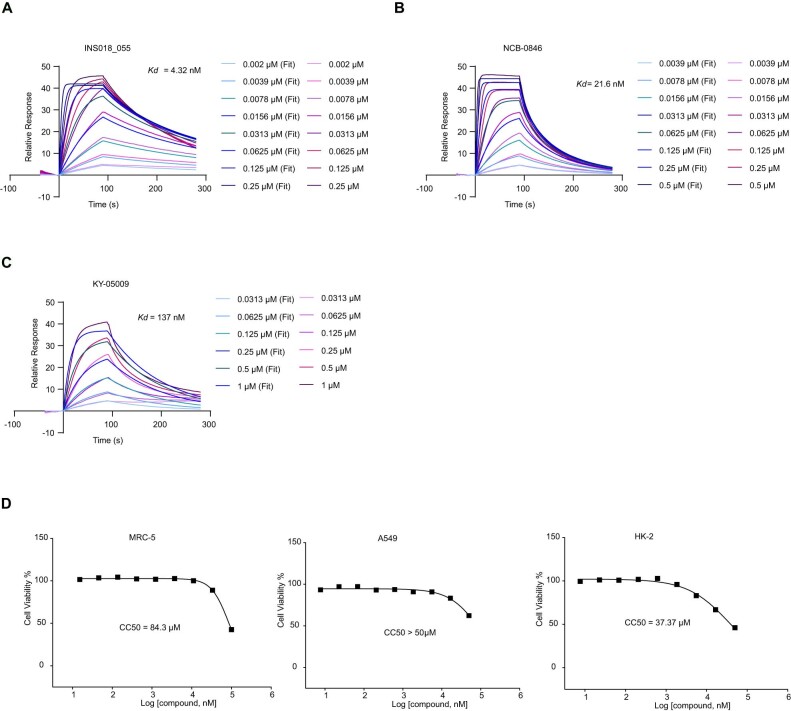
“The specific binding position and amino acid interactions, however, vary among the compounds, with some (e.g. NCB-0846 [25]) exhibiting pan-kinase inhibitory activity and others (e.g. INS018_055 [19]) exhibiting more specificity.”
Self-citationReinforcement of Learning Theoretical Foundations and Exploration of Multi-Domain Applications
Lin, Y. (2025) · ITM Web of Conferences · doi:10.1051/itmconf/20257801008 · Cited by 1
Rising Stars: Bioinformatics of Post-translational Modifications
Xue, Y. (2025) · Journal of Molecular Biology · doi:10.1016/j.jmb.2025.169478 · Cited by 1
Zhao, K., Zhu, H., Zheng, L., Wang, W., Liu, P., Yu, R., & Ma, X. (2025) · Frontiers in Pharmacology · doi:10.3389/fphar.2025.1690036 · Cited by 3
Resilient pathways for drug discovery in challenging times
Ekins, S., & Slusher, B. S. (2025) · Trends in Pharmacological Sciences · doi:10.1016/j.tips.2025.10.006 · Cited by 2
Lu, H., Shi, S., Yu, H., Sun, D., Zhang, H., Cui, H., Cai, X., Ding, X., Chen, S., Zhang, M., et al. (2025) · Journal of Medicinal Chemistry · doi:10.1021/acs.jmedchem.5c01943 · Cited by 1
Self-citationWang, D., Jing, Y., Zang, D., Zhang, C., & Yu, X. (2025) · Letters in Drug Design & Discovery · doi:10.1016/j.lddd.2025.100194 · Cited by 3
Metadata
- Authors
- Ren, F., Aliper, A., Chen, J., Zhao, H., Rao, S., Kuppe, C., Ozerov, I. V., Zhang, M., Witte, K., Kruse, C., Aladinskiy, V., Ivanenkov, Y., Polykovskiy, D., Fu, Y., Babin, E., Qiao, J., Liang, X., Mou, Z., Wang, H., Pun, F. W., Torres-Ayuso, P., Veviorskiy, A., Song, D., Liu, S., Zhang, B., Naumov, V., Ding, X., Kukharenko, A., Izumchenko, E., & Zhavoronkov, A.
- Affiliations
- Hong Kong Science and Technology Parks Corporation (HK)
- Hangzhou Normal University (CN)
- Insilico Medicine (United States) (US)
- Universitätsklinikum Aachen (DE)
- Shanghai Medical College of Fudan University (CN)
- University of Chicago (US)
- Corresponding author
- Zhavoronkov, Alex
- ORCID
- Venue
- Nature Biotechnology
- Published
- 2024-03-08
- Volume
- 43
- Issue
- 1
- Pages
- 63-75
- ISSN
- 0733-222X (ISSN-L)
- 1087-0156
- 1546-1696
- PMC
- PMC11738990
- OpenAlex
- W4392596618
- Cited by
- 348
- References
- 90
- Citations by year
- 2026: 159 · 2025: 136 · 2024: 53
- FWCI
- 101.10
- Type
- journal article
- Language
- en
- Open access
- hybrid
- doi.org
- Licence
- cc-by
- creativecommons.org/licenses/by/4.0 (tdm)
- creativecommons.org/licenses/by/4.0 (vor)
- Locations
- Nature Biotechnology (publishedVersion, cc-by)
- PubMed Central (publishedVersion, cc-by)
- PubMed (publishedVersion)
- TUScholarShare (Temple University) (submittedVersion, cc-by)
- RWTH Publications (RWTH Aachen) (submittedVersion, other-oa)
- Funders
- Nvidia
- NIH Clinical Center
- Topics
- Health Sciences › Medicine › Pulmonary and Respiratory Medicine › Interstitial Lung Diseases and Idiopathic Pulmonary Fibrosis
- Life Sciences › Pharmacology, Toxicology and Pharmaceutics › Drug Discovery › Computational Drug Discovery Methods
- Health Sciences › Medicine › Rheumatology › Systemic Sclerosis and Related Diseases
- Keywords
- TNIK, idiopathic pulmonary fibrosis, fibrosis, small-molecule kinase inhibitors, artificial intelligence in drug discovery, generative AI, anti-inflammatory activity, pharmacokinetics, drug safety and tolerability, interstitial lung disease
- MeSH terms
- Animals, Artificial Intelligence, Double-Blind Method, Drug Evaluation, Preclinical, Female, Humans, Male, Middle Aged, Protein Serine-Threonine Kinases, Protein Kinase Inhibitors, Mice, Idiopathic Pulmonary Fibrosis
About these checks
Registry, retraction, Cites and statistics results are computed, not judged, with one exception: a printed reference that no index lists is read once by a model before it counts as a citation error. Claims are extracted by a model and kept only when their quote appears verbatim in the text; each cited source is then checked, with a model’s help, for whether it says what the claim relies on. Those verdicts can be wrong — read the claim’s quote and the cited source before relying on one.
Statistics and arithmetic are recomputed, not judged.
Confidence bands are shown only for fields calibrated on our annotated test set. None is calibrated yet, so no band is shown.
What counts as a claim ›How we measure confidence ›How we check this ›
Are you an author, or do you see a problem with this page? Request a review
Data sources
Bibliographic data: Semantic Scholar, OpenAlex, Crossref.
Contains information from the Semantic Scholar Academic Graph Datasets, made available under the ODC Attribution License (ODC-BY 1.0).
Semantic Scholar’s data is described in: Kinney, R., et al. (2023). The Semantic Scholar Open Data Platform. arXiv:2301.10140.
