

A small-molecule TNIK inhibitor targets fibrosis in preclinical and clinical models
Open accessThe DOI matches its Crossref record; 90 of the 90 references it cites were found in a registry or an index.
Abstract
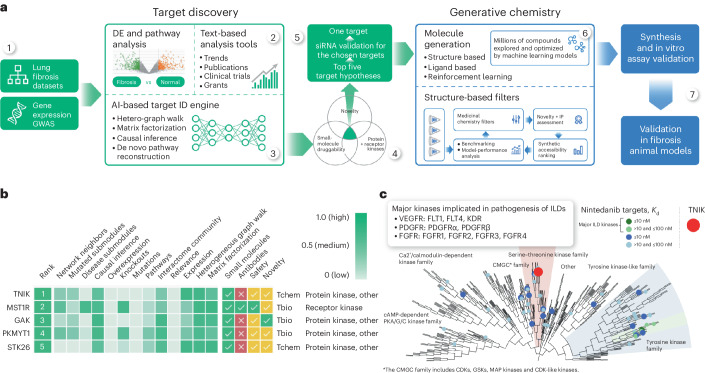
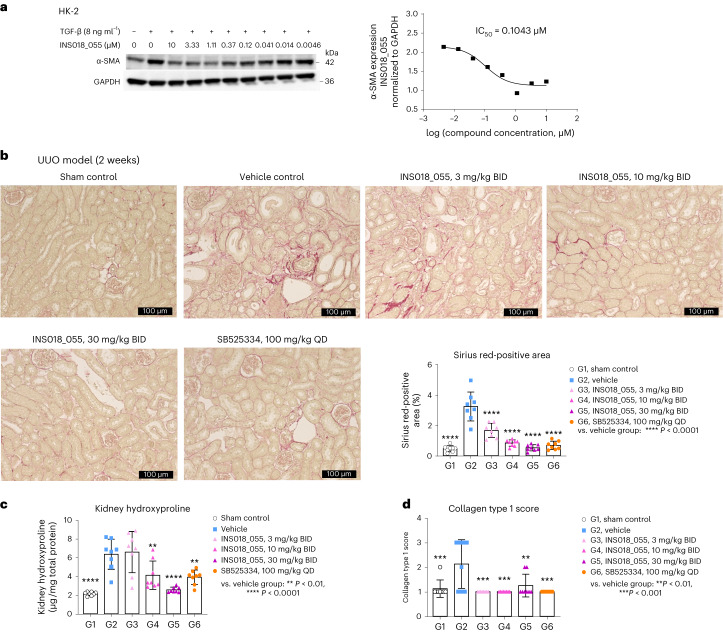
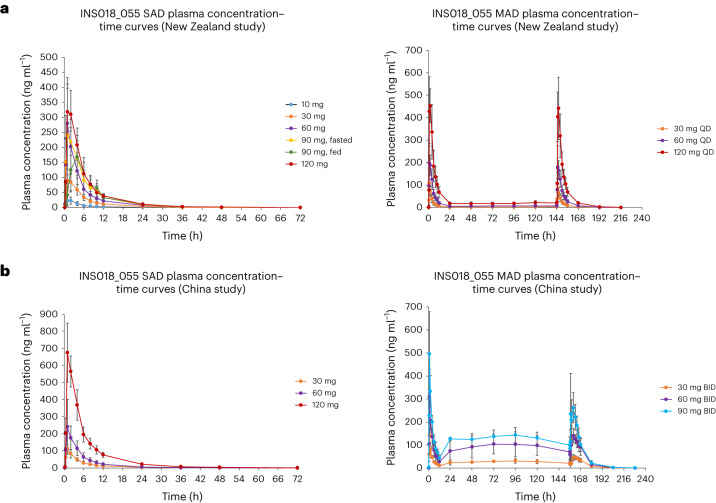
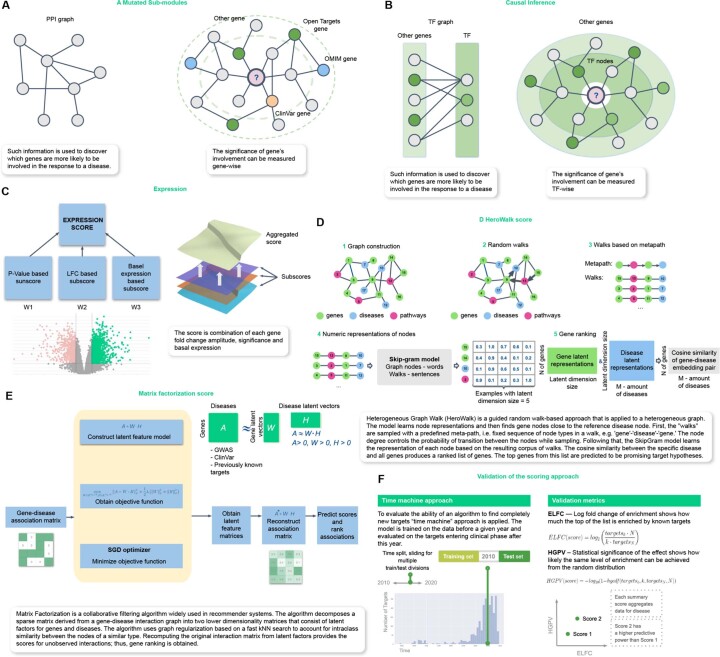
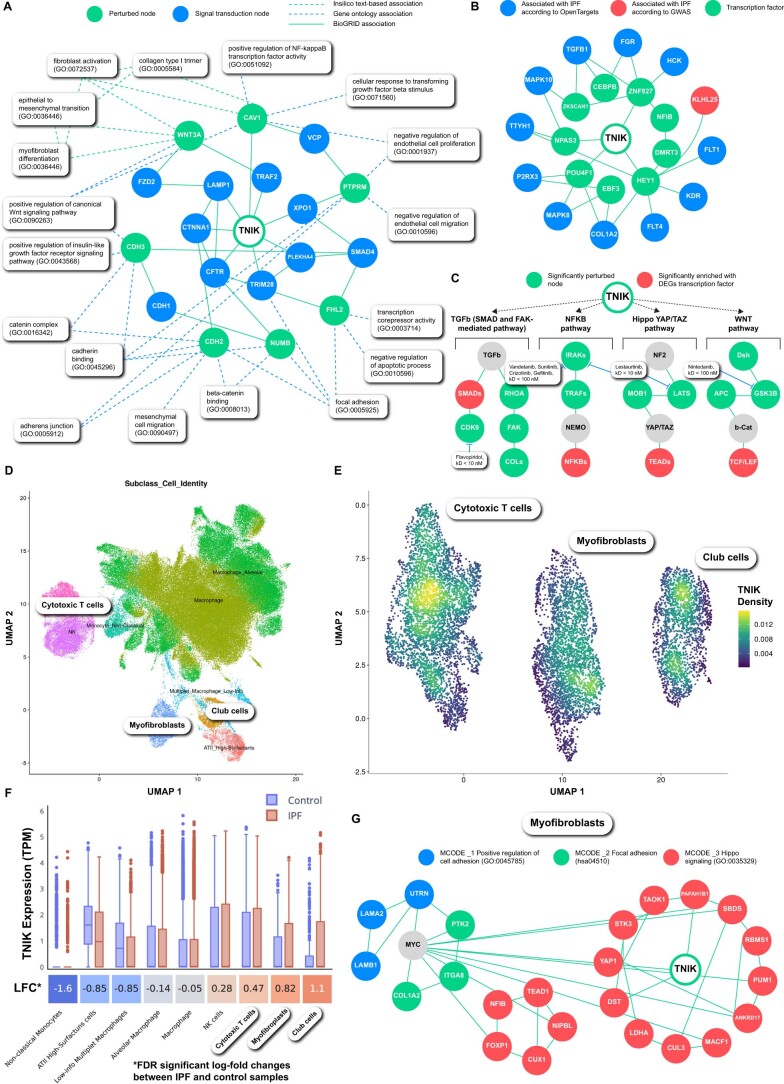
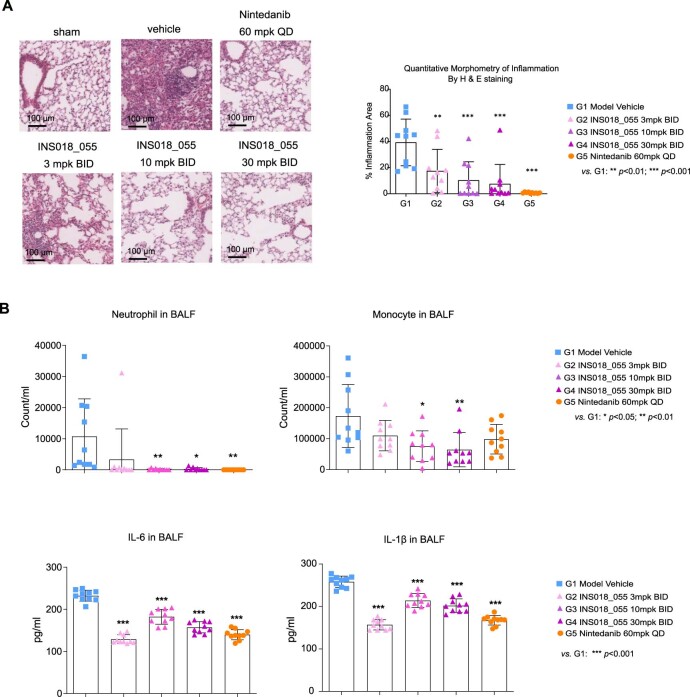
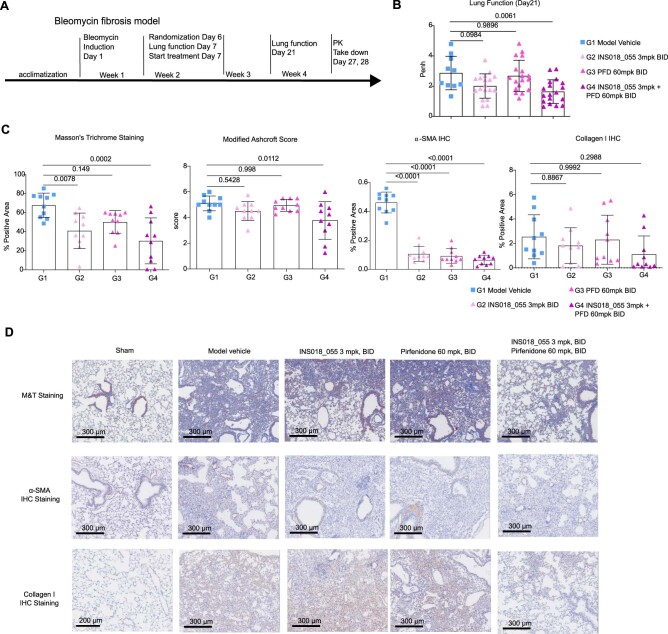
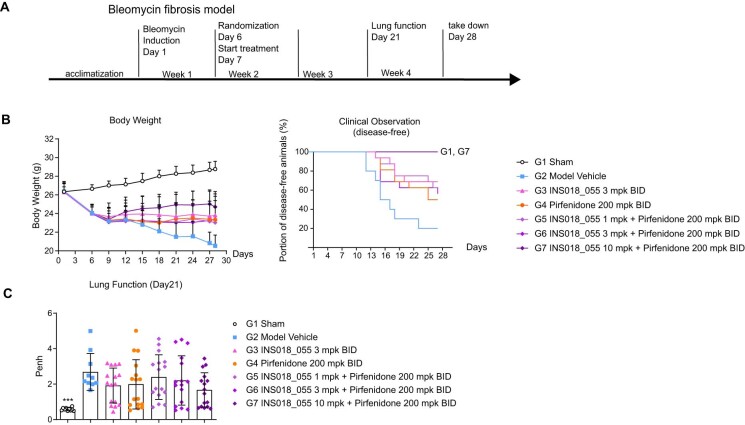
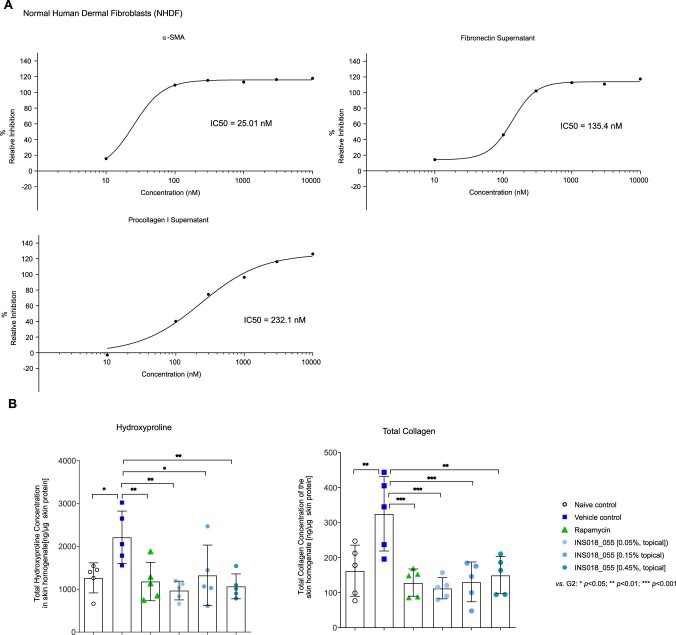
Idiopathic pulmonary fibrosis (IPF) is an aggressive interstitial lung disease with a high mortality rate. Putative drug targets in IPF have failed to translate into effective therapies at the clinical level. We identify TRAF2- and NCK-interacting kinase (TNIK) as an anti-fibrotic target using a predictive artificial intelligence (AI) approach. Using AI-driven methodology, we generated INS018_055, a small-molecule TNIK inhibitor, which exhibits desirable drug-like properties and anti-fibrotic activity across different organs in vivo through oral, inhaled or topical administration. INS018_055 possesses anti-inflammatory effects in addition to its anti-fibrotic profile, validated in multiple in vivo studies. Its safety and tolerability as well as pharmacokinetics were validated in a randomized, double-blinded, placebo-controlled phase I clinical trial (NCT05154240) involving 78 healthy participants. A separate phase I trial in China, CTR20221542, also demonstrated comparable safety and pharmacokinetic profiles. This work was completed in roughly 18 months from target discovery to preclinical candidate nomination and demonstrates the capabilities of our generative AI-driven drug-discovery pipeline.
Overview
The claims and statistics of this paper haven’t been checked yet.
Free: it reads the open-access text and checks the first 5 claims that cite a source we can check. Create a free account to check every claim.
Integrity signals
Registry
Cites
Statistics
Figures
Verification
Claims the paper makes
The claims and statistics of this paper haven’t been checked yet.
Free: it reads the open-access text and checks the first 5 claims that cite a source we can check. Create a free account to check every claim.
Claims other papers make about this one
Each is checked against this paper’s own text: does it say what the citing paper says it does?
The source backs part of the claim, not all of it — or backs it for a different population, condition or comparison.
In the citing paper
“rentosertib (formerly ISM001-055), a first-in-class AI-generated small-molecule inhibitor of TNIK, a first-in-class target in idiopathic pulmonary fibrosis (IPF) discovered using generative AI.”
From A generative AI-discovered TNIK inhibitor for idiopathic pulmonary fibrosis: a randomized phase 2a trial (2025) · cites this paper as [9]
Experimental — accuracy not yet measuredThe source backs part of the claim, not all of it — or backs it for a different population, condition or comparison.
In the citing paper
“We reported the development and positive phase 0 and 1 trial results of rentosertib9 (NCT05154240 and CTR20221542 (accessed via http://www.chinadrugtrials.org.cn/)), the first report of a targeted TNIK inhibitor entering clinical testing, which found rentosertib to be safe and well tolerated by healthy individuals, exhibiting a favorable pharmacokinetic (PK) profile in both trials9.”
From A generative AI-discovered TNIK inhibitor for idiopathic pulmonary fibrosis: a randomized phase 2a trial (2025) · cites this paper as [9]
Experimental — accuracy not yet measuredThe source backs part of the claim, not all of it — or backs it for a different population, condition or comparison.
In the citing paper
“our group used generative AI-driven discovery tools22,23 to identify Traf2- and Nck-interacting kinase (TNIK) de novo as a critical regulator of idiopathic pulmonary fibrosis (IPF) pathology as it orchestrates multiple profibrotic and proinflammatory cellular programs9.”
From A generative AI-discovered TNIK inhibitor for idiopathic pulmonary fibrosis: a randomized phase 2a trial (2025) · cites this paper as [9]
Experimental — accuracy not yet measuredThe source backs part of the claim, not all of it — or backs it for a different population, condition or comparison.
In the citing paper
“Our generative AI-powered approach streamlined preclinical candidate nomination to a mere 18 months and completion of phase 0/1 clinical testing to under 30 months from the initiation of target discovery, representing a revolutionary shift in the streamlining of drug discovery9.”
From A generative AI-discovered TNIK inhibitor for idiopathic pulmonary fibrosis: a randomized phase 2a trial (2025) · cites this paper as [9]
Experimental — accuracy not yet measuredThe cited source says what the claim attributes to it.
In the citing paper
“An unintended consequence of rentosertib’s potential immunomodulatory mechanism of action9 may be a dampened site-specific immune response, potentially leading to increased susceptibility to infection, a known trigger for a subset of AE-IPF45,46.”
From A generative AI-discovered TNIK inhibitor for idiopathic pulmonary fibrosis: a randomized phase 2a trial (2025) · cites this paper as [9]
3 more claims about this paper
Create a free account to see every claim other papers make about this one.
Self-check
Percentages, sums and reported differences re-computed from the paper’s own numbers.
The self-check needs the paper’s full text.
Citations
Cites
Molecular mechanisms of epithelial–mesenchymal transition
Lamouille, S., Xu, J., & Derynck, R. (2014) · Nature Reviews Molecular Cell Biology · doi:10.1038/nrm3758 · Cited by 8,091 · cited 1×
“The WNT–β-catenin signaling pathway is involved in wound healing, regulates fibrogenesis and is known to contribute to EMT elicited by TGF-β stimulation 63 .”
An automated method for finding molecular complexes in large protein interaction networks
Bader, G. D., & Hogue, C. W. (2003) · BMC Bioinformatics · doi:10.1186/1471-2105-4-2 · Cited by 6,072 · cited 1×
“We used this single-cell dataset to simulate TNIK knockout in IPF myofibro-blasts using the scTenifoldKnk approach 54 followed by the Molecular Complex Detection (MCODE) algorithm 55 and performed pathway and biological process enrichment analysis.”
Roberts, A. B., Sporn, M. B., Assoian, R. K., Smith, J. M., Roche, N. S., Wakefield, L. M., Heine, U. I., Liotta, L. A., Falanga, V, & Kehrl, J. H. (1986) · Proceedings of the National Academy of Sciences · doi:10.1073/pnas.83.12.4167 · Cited by 2,866
Desmoulière, A., Geinoz, A., Gabbiani, F., & Gabbiani, G. (1993) · The Journal of cell biology · doi:10.1083/jcb.122.1.103 · Cited by 2,243
Hinz, B., Phan, S. H., Thannickal, V. J., Galli, A., Bochaton-Piallat, M.-L., & Gabbiani, G. (2007) · The American Journal of Pathology · doi:10.2353/ajpath.2007.070112 · Cited by 2,068
Non-Transgenic Mouse Models of Kidney Disease
Rabe, M., & Schaefer, F. (2016) · Nephron · doi:10.1159/000445171 · Cited by 1,922
Fibrosis: from mechanisms to medicines
Henderson, N. C., Rieder, F., & Wynn, T. A. (2020) · Nature · doi:10.1038/s41586-020-2938-9 · Cited by 1,868 · cited 1×
“As fibrosis can affect any organ and is responsible for up to 45% of all deaths in the industrialized world 51 , we hypothesized that inhibition of TNIK may provide therapeutic benefit in multiple pathologies in which fibrosis may be implicated.”
Chronic Kidney Disease Diagnosis and Management: A Review
Chen, T. K., Knicely, D. H., & Grams, M. E. (2019) · JAMA · doi:10.1001/jama.2019.14745 · Cited by 1,811
Clinical course and prediction of survival in idiopathic pulmonary fibrosis
Ley, B., Collard, H. R., & King, T. E. (2011) · American Journal of Respiratory and Critical Care Medicine · doi:10.1164/rccm.201006-0894ci · Cited by 1,765 · cited 2×
“In untreated patients, IPF has a highly inconsistent clinical course, with a median survival of 2 to 3 years 26 .”
Deep learning enables rapid identification of potent DDR1 kinase inhibitors
Zhavoronkov, A., Ivanenkov, Y. A., Aliper, A., Veselov, M. S., Aladinskiy, V. A., Aladinskaya, A. V., Terentiev, V. A., Polykovskiy, D. A., Kuznetsov, M. D., Asadulaev, A., et al. (2019) · Nature Biotechnology · doi:10.1038/s41587-019-0224-x · Cited by 1,573 · cited 1×
“40,41,75–77) to discover the lead inhibitory compounds targeting this kinase.”
Self-citationCellular and molecular mechanisms of renal fibrosis
Liu, Y. (2011) · Nature Reviews Nephrology · doi:10.1038/nrneph.2011.149 · Cited by 1,446 · cited 1×
“As with IPF, renal fibrosis also correlates with organ failure 34 .”
Adams, T. S., Schupp, J. C., Poli, S., Ayaub, E. A., Neumark, N., Ahangari, F., Chu, S. G., Raby, B. A., DeIuliis, G., Januszyk, M., et al. (2020) · Science Advances · doi:10.1126/sciadv.aba1983 · Cited by 1,420
Martinez, F. J., Collard, H. R., Pardo, A., Raghu, G., Richeldi, L., Selman, M., Swigris, J. J., Taniguchi, H., & Wells, A. U. (2017) · Nature Reviews Disease Primers · doi:10.1038/nrdp.2017.74 · Cited by 1,388
Incidence and Prevalence of Idiopathic Pulmonary Fibrosis
Raghu, G., Weycker, D., Edelsberg, J., Bradford, W. Z., & Oster, G. (2006) · American Journal of Respiratory and Critical Care Medicine · doi:10.1164/rccm.200602-163oc · Cited by 1,310 · cited 2×
“Given the increasing incidence, the cost of treating patients with IPF poses a substantial burden on healthcare systems and represents a growing public health problem worldwide 21–25 .”
InfluentialIntegrating mechanisms of pulmonary fibrosis
Wynn, T. A. (2011) · Journal of Experimental Medicine · doi:10.1084/jem.20110551 · Cited by 1,274 · cited 1×
“IPF is a gradually advancing and generally lethal disease, characterized histologically by fibroblast proliferation and substantial extracellular matrix deposition 18,19 .”
Tomazini, B. M., Maia, I. S., Cavalcanti, A. B., Berwanger, O., Rosa, R. G., Veiga, V. C., Avezum, A., Lopes, R. D., Bueno, F. R., Silva, M. V. A. O., et al. (2020) · JAMA · doi:10.1001/jama.2020.17021 · Cited by 1,241
Humphreys, B. D. (2018) · Annual Review of Physiology · doi:10.1146/annurev-physiol-022516-034227 · Cited by 1,231 · cited 1×
“…in the final stage of chronic organ deficiencies, such as pulmonary, kidney or liver diseases and is characterized by excessive proliferation of matrix-producing cells that arise from dysregulated chronic inflammation triggered by infective, chemical, autoimmune or radioactive tissue damage 16,17 .”
BIBF 1120: Triple Angiokinase Inhibitor with Sustained Receptor Blockade and Good Antitumor Efficacy
Hilberg, F., Roth, G. J., Krssak, M., Kautschitsch, S., Sommergruber, W., Tontsch-Grunt, U., Garin-Chesa, P., Bader, G., Zoephel, A., Quant, J., et al. (2008) · Cancer Research · doi:10.1158/0008-5472.can-07-6307 · Cited by 1,056 · cited 2×
“Of these drugs, pirfenidone suppresses TGF-β expression 31 , whereas nintedanib exerts its efficacy in IPF by inhibiting fibroblast growth factor receptor (FGFR), platelet-derived growth factor receptor (PDGFR) and vascular endothelial growth factor (VEGFR) 32 , that is, growth factor receptors in the fibrotic pathway…”
Ureteral obstruction as a model of renal interstitial fibrosis and obstructive nephropathy
Chevalier, R. L., Forbes, M. S., & Thornhill, B. A. (2009) · Kidney International · doi:10.1038/ki.2009.86 · Cited by 1,029
Mode of action of nintedanib in the treatment of idiopathic pulmonary fibrosis
Wollin, L., Wex, E., Pautsch, A., Schnapp, G., Hostettler, K. E., Stowasser, S., & Kolb, M. (2015) · European Respiratory Journal · doi:10.1183/09031936.00174914 · Cited by 1,005 · cited 1×
“…its efficacy in IPF by inhibiting fibroblast growth factor receptor (FGFR), platelet-derived growth factor receptor (PDGFR) and vascular endothelial growth factor (VEGFR) 32 , that is, growth factor receptors in the fibrotic pathway of tyrosine kinase structure, with FGFR being most relevant 33 .”
The epidemiology of interstitial lung diseases.
Coultas, D. B., Zumwalt, R. E., Black, W. C., & Sobonya, R. E. (1994) · American Journal of Respiratory and Critical Care Medicine · doi:10.1164/ajrccm.150.4.7921471 · Cited by 946 · cited 1×
“Given the increasing incidence, the cost of treating patients with IPF poses a substantial burden on healthcare systems and represents a growing public health problem worldwide 21–25 .”
Miettinen, P. J., Ebner, R., Lopez, A. R., & Derynck, R. (1994) · The Journal of cell biology · doi:10.1083/jcb.127.6.2021 · Cited by 937
Molecular Sets (MOSES): A Benchmarking Platform for Molecular Generation Models
Polykovskiy, D., Zhebrak, A., Sanchez-Lengeling, B., Golovanov, S., Tatanov, O., Belyaev, S., Kurbanov, R., Artamonov, A., Aladinskiy, V., Veselov, M., et al. (2020) · Frontiers in Pharmacology · doi:10.3389/fphar.2020.565644 · Cited by 849
Self-citationPhase II and Phase III attrition rates 2011–2012
Arrowsmith, J., & Miller, P. (2013) · Nature Reviews Drug Discovery · doi:10.1038/nrd4090 · Cited by 697
Phase II and phase III failures: 2013–2015
Harrison, R. K. (2016) · Nature Reviews Drug Discovery · doi:10.1038/nrd.2016.184 · Cited by 636 · cited 21×
“6a and Supplementary Information 9).”
InfluentialHost Responses in Tissue Repair and Fibrosis
Duffield, J. S., Lupher, M., Thannickal, V. J., & Wynn, T. A. (2013) · Annual Review of Pathology: Mechanisms of Disease · doi:10.1146/annurev-pathol-020712-163930 · Cited by 624 · cited 1×
“…in the final stage of chronic organ deficiencies, such as pulmonary, kidney or liver diseases and is characterized by excessive proliferation of matrix-producing cells that arise from dysregulated chronic inflammation triggered by infective, chemical, autoimmune or radioactive tissue damage 16,17 .”
Global incidence and prevalence of idiopathic pulmonary fibrosis
Maher, T. M., Bendstrup, E., Dron, L., Langley, J., Smith, G., Khalid, J. M., Patel, H., & Kreuter, M. (2021) · Respiratory Research · doi:10.1186/s12931-021-01791-z · Cited by 612
Aliper, A., Plis, S., Artemov, A., Ulloa, A., Mamoshina, P., & Zhavoronkov, A. (2016) · Molecular Pharmaceutics · doi:10.1021/acs.molpharmaceut.6b00248 · Cited by 610
Self-citationThe pathogenesis of bleomycin-induced pulmonary fibrosis in mice.
Adamson, I. Y. R., & Bowden, D. H. (1974) · PubMed Central · Cited by 549
Through the “Gatekeeper Door”: Exploiting the Active Kinase Conformation
Zuccotto, F., Ardini, E., Casale, E., & Angiolini, M. (2010) · Journal of Medicinal Chemistry · doi:10.1021/jm901443h · Cited by 518 · cited 1×
“Targeting less-conserved adjacent allosteric pockets (such as a hydrophobic back cavity close to the gatekeeper residue) in addition to the active site can achieve better selectivity of the lead compounds 58 .”
Developmental pathways in the pathogenesis of lung fibrosis
Chanda, D., Otoupalova, E., Smith, S. R., Volckaert, T., De Langhe, S. P., & Thannickal, V. J. (2019) · Molecular Aspects of Medicine · doi:10.1016/j.mam.2018.08.004 · Cited by 514 · cited 1×
“As IPF progression is driven by both fibrosis and inflammation 81,82 , INS018_055 targets both main disease-driving processes in IPF evolution.”
Open Targets Platform: supporting systematic drug–target identification and prioritisation
Ochoa, D., Hercules, A., Carmona, M., Suveges, D., Gonzalez-Uriarte, A., Malangone, C., Miranda, A., Fumis, L., Carvalho-Silva, D., Spitzer, M., et al. (2021) · Nucleic Acids Research · doi:10.1093/nar/gkaa1027 · Cited by 495 · cited 1×
“Unlike other target-discovery approaches such as Open Targets 43 or NewDrugTargets 44 , our method was designed and validated to search targets for multiple diseases and aging 15 .”
Pulmonary fibrosis secondary to COVID-19: a call to arms?
Spagnolo, P., Balestro, E., Aliberti, S., Cocconcelli, E., Biondini, D., Casa, G. D., Sverzellati, N., & Maher, T. M. (2020) · The Lancet Respiratory Medicine · doi:10.1016/s2213-2600(20)30222-8 · Cited by 481
Vaughan, M. B., Howard, E. W., & Tomasek, J. J. (2000) · Experimental Cell Research · doi:10.1006/excr.2000.4869 · Cited by 476 · cited 1×
“Myofibroblasts play a crucial role in the fibrotic process, with transforming growth factor (TGF)-β being a major contributor to myofibroblast differentiation 20 .”
Unexplored therapeutic opportunities in the human genome
Oprea, T. I., Bologa, C. G., Brunak, S., Campbell, A., Gan, G. N., Gaulton, A., Gomez, S. M., Guha, R., Hersey, A., Holmes, J., et al. (2018) · Nature Reviews Drug Discovery · doi:10.1038/nrd.2018.14 · Cited by 378 · cited 21×
“6a and Supplementary Information 9).”
InfluentialRen, F., Ding, X., Zheng, M., Korzinkin, M., Cai, X., Zhu, W., Mantsyzov, A., Aliper, A., Aladinskiy, V., Cao, Z., et al. (2023) · Chemical Science · doi:10.1039/d2sc05709c · Cited by 365 · cited 1×
“40,41,75–77) to discover the lead inhibitory compounds targeting this kinase.”
Self-citationAI-powered therapeutic target discovery
Pun, F. W., Ozerov, I. V., & Zhavoronkov, A. (2023) · Trends in Pharmacological Sciences · doi:10.1016/j.tips.2023.06.010 · Cited by 341 · cited 4×
“The IC 50 values of INS018_055 in donors with IPF were 250 nM, 320 nM and 400 nM, whereas IC 50 values for nintedanib were substantially higher (1,600 nM, 6,300 nM and 7,900 nM, respectively) (Supplementary Information 6).”
InfluentialSelf-citationIncidence and prevalence of idiopathic pulmonary fibrosis in US adults 18–64 years old
Raghu, G., Chen, S.-Y., Hou, Q., Yeh, W.-S., & Collard, H. R. (2016) · European Respiratory Journal · doi:10.1183/13993003.01653-2015 · Cited by 338
TGF-β signal transduction and mesangial cell fibrogenesis
Schnaper, H. W., Hayashida, T., Hubchak, S. C., & Poncelet, A.-C. (2003) · American Journal of Physiology-Renal Physiology · doi:10.1152/ajprenal.00300.2002 · Cited by 311 · cited 1×
“Increased TGF-β signaling within stromal cell types in the tubule–interstitial space appears to be central to the initiation of fibrosis 38,39 .”
Erratum: Unexplored therapeutic opportunities in the human genome
Oprea, T. I., Bologa, C. G., Brunak, S., Campbell, A., Gan, G. N., Gaulton, A., Gomez, S. M., Guha, R., Hersey, A., Holmes, J., et al. (2018) · Nature Reviews Drug Discovery · doi:10.1038/nrd.2018.52 · Cited by 311
Osorio, D., Zhong, Y., Li, G., Xu, Q., Yang, Y., Tian, Y., Chapkin, R. S., Huang, J. Z., & Cai, J. J. (2022) · Patterns · doi:10.1016/j.patter.2022.100434 · Cited by 307 · cited 2×
“We used this single-cell dataset to simulate TNIK knockout in IPF myofibro-blasts using the scTenifoldKnk approach 54 followed by the Molecular Complex Detection (MCODE) algorithm 55 and performed pathway and biological process enrichment analysis.”
Self-citationEntangled Conditional Adversarial Autoencoder for de Novo Drug Discovery
Polykovskiy, D., Zhebrak, A., Vetrov, D., Ivanenkov, Y., Aladinskiy, V., Mamoshina, P., Bozdaganyan, M., Aliper, A., Zhavoronkov, A., & Kadurin, A. (2018) · Molecular Pharmaceutics · doi:10.1021/acs.molpharmaceut.8b00839 · Cited by 278
Self-citationSmall Molecule Kinase Inhibitor Drugs (1995–2021): Medical Indication, Pharmacology, and Synthesis
Ayala-Aguilera, C. C., Valero, T., Lorente-Macías, Á., Baillache, D. J., Croke, S., & Unciti-Broceta, A. (2022) · Journal of Medicinal Chemistry · doi:10.1021/acs.jmedchem.1c00963 · Cited by 265 · cited 1×
“As using ATP competitors is a well-established strategy for targeting kinases 57 , we selected the ATP-binding site as a pocket for compound generation.”
SARS-CoV-2 infects the human kidney and drives fibrosis in kidney organoids
Jansen, J., Reimer, K. C., Nagai, J. S., Varghese, F. S., Overheul, G. J., de Beer, M., Roverts, R., Daviran, D., Fermin, L. A. S., Willemsen, B., et al. (2022) · Cell Stem Cell · doi:10.1016/j.stem.2021.12.010 · Cited by 259
Self-citationChronic Kidney Disease and Cardiovascular Disease: Is there Any Relationship?
Vallianou, N. G., Mitesh, S., Gkogkou, A., & Geladari, E. (2018) · Current Cardiology Reviews · doi:10.2174/1573403x14666180711124825 · Cited by 237 · cited 5×
“Moreover, those at high risk of developing organ failure due to progressive CKD may 86 also benefit from preventative therapy with INS018_055.”
InfluentialChemistry42: An AI-Driven Platform for Molecular Design and Optimization
Ivanenkov, Y. A., Polykovskiy, D., Bezrukov, D., Zagribelnyy, B., Aladinskiy, V., Kamya, P., Aliper, A., Ren, F., & Zhavoronkov, A. (2023) · Journal of Chemical Information and Modeling · doi:10.1021/acs.jcim.2c01191 · Cited by 231 · cited 4×
“Given the scarcity of anti-fibrotic therapies for IPF or CKD, we used our published generative AI pipeline 14,15,40–42 to address this clinical need.”
InfluentialSelf-citationImpact of Antifibrotic Therapy on Mortality and Acute Exacerbation in Idiopathic Pulmonary Fibrosis
Petnak, T., Lertjitbanjong, P., Thongprayoon, C., & Moua, T. (2021) · Chest · doi:10.1016/j.chest.2021.06.049 · Cited by 220
Mamoshina, P., Volosnikova, M., Ozerov, I. V., Putin, E., Skibina, E., Cortese, F., & Zhavoronkov, A. (2018) · Frontiers in Genetics · doi:10.3389/fgene.2018.00242 · Cited by 218
Self-citationThe kinase TNIK is an essential activator of Wnt target genes
Mahmoudi, T., Li, V. S. W., Ng, S. S., Taouatas, N., Vries, R. G. J., Mohammed, S., Heck, A. J., & Clevers, H. (2009) · The EMBO Journal · doi:10.1038/emboj.2009.285 · Cited by 209
Hedgehog-Gli Pathway Activation during Kidney Fibrosis
Fabian, S. L., Penchev, R. R., St-Jacques, B., Rao, A. N., Sipilä, P., West, K. A., McMahon, A. P., & Humphreys, B. D. (2012) · The American Journal of Pathology · doi:10.1016/j.ajpath.2011.12.039 · Cited by 205
Fu, C. A., Shen, M., Huang, B. C. B., Lasaga, J., Payan, D. G., & Luo, Y. (1999) · Journal of Biological Chemistry · doi:10.1074/jbc.274.43.30729 · Cited by 192 · cited 1×
“TNIK belongs to the germinal center kinases, which activate the profibrotic c-JUN pathway 73 .”
Renal Inflammation and Fibrosis: A Double-edged Sword
Black, L. M., Lever, J. M., & Agarwal, A. (2019) · Journal of Histochemistry & Cytochemistry · doi:10.1369/0022155419852932 · Cited by 192 · cited 1×
“Like IPF, renal fibrosis develops following prolonged exposure to ischemic conditions or inflammatory insults 37 .”
TNIK inhibition abrogates colorectal cancer stemness
Masuda, M., Uno, Y., Ohbayashi, N., Ohata, H., Mimata, A., Kukimoto-Niino, M., Moriyama, H., Kashimoto, S., Inoue, T., Goto, N., et al. (2016) · Nature Communications · doi:10.1038/ncomms12586 · Cited by 168 · cited 3×
“NCB-0846, an inhibitor with high potency 56 , was developed and found to exhibit anti-cancer activity in multiple preclinical cancer models 56,78,79 .”
InfluentialThe Traf2- and Nck-interacting Kinase as a Putative Effector of Rap2 to Regulate Actin Cytoskeleton
Taira, K., Umikawa, M., Takei, K., Myagmar, B.-E., Shinzato, M., Machida, N., Uezato, H., Nonaka, S., & Kariya, K.-I. (2004) · Journal of Biological Chemistry · doi:10.1074/jbc.m406370200 · Cited by 164 · cited 1×
“TNIK is also a RAP2 effector, which regulates cell spreading 74 .”
MicroRNA-214 Antagonism Protects against Renal Fibrosis
Denby, L., Ramdas, V., Lu, R., Conway, B. R., Grant, J. S., Dickinson, B., Aurora, A. B., McClure, J., Kipgen, D., Delles, C., et al. (2013) · Journal of the American Society of Nephrology · doi:10.1681/asn.2013010072 · Cited by 156
The Advent of Generative Chemistry
Vanhaelen, Q., Lin, Y.-C., & Zhavoronkov, A. (2020) · ACS Medicinal Chemistry Letters · doi:10.1021/acsmedchemlett.0c00088 · Cited by 151
Self-citationIdiopathic pulmonary fibrosis: lessons from clinical trials over the past 25 years
Raghu, G. (2017) · European Respiratory Journal · doi:10.1183/13993003.01209-2017 · Cited by 146
The Myofibroblast: one function, multiple origins
Hinz, B., Phan, S. H., Thannickal, V. J., Galli, A., Bochaton-Piallat, M.-L., & Gabbiani, G. (2007) · Archive ouverte UNIGE (University of Geneva) · Cited by 139
Ozerov, I. V., Lezhnina, K. V., Izumchenko, E., Artemov, A. V., Medintsev, S., Vanhaelen, Q., Aliper, A., Vijg, J., Osipov, A. N., Labat, I., et al. (2016) · Nature Communications · doi:10.1038/ncomms13427 · Cited by 138
Self-citationAdams, T. S., Schupp, J. C., Poli, S., et al. (2019) · bioRxiv (Cold Spring Harbor Laboratory) · doi:10.1101/759902 · Cited by 138
TGF-β Signaling via TAK1 Pathway: Role in Kidney Fibrosis
Choi, M. E., Ding, Y., & Kim, S. I. (2012) · Seminars in Nephrology · doi:10.1016/j.semnephrol.2012.04.003 · Cited by 137 · cited 1×
“Increased TGF-β signaling within stromal cell types in the tubule–interstitial space appears to be central to the initiation of fibrosis 38,39 .”
Lung fibrosis: an undervalued finding in COVID-19 pathological series
Grillo, F., Barisione, E., Ball, L., Mastracci, L., & Fiocca, R. (2021) · The Lancet Infectious Diseases · doi:10.1016/s1473-3099(20)30582-x · Cited by 121 · cited 1×
“Given its potent anti-inflammatory and anti-fibrotic activity, INS018_055 may be used as a preventive agent for patients with a high risk of developing post-COVID-19 acute respiratory distress syndrome, including but not limited to older and immunocompromised individuals 84,85 .”
Severe Acute Lung Injury Related to COVID‐19 Infection: A Review and the Possible Role for Escin
Gallelli, L., Zhang, L., Wang, T., & Fu, F. (2020) · The Journal of Clinical Pharmacology · doi:10.1002/jcph.1644 · Cited by 118 · cited 1×
“Nevertheless, the prevalence of pulmonary fibrosis has dramatically increased due to the COVID-19 pandemic, reiterating the need for effective anti-fibrotic therapeutic interventions 83 .”
Larhammar, M., Huntwork-Rodriguez, S., Rudhard, Y., Sengupta-Ghosh, A., & Lewcock, J. W. (2017) · The Journal of Neuroscience · doi:10.1523/jneurosci.0905-17.2017 · Cited by 117 · cited 1×
“TNIK has been associated with fibrosis-driving pathways including WNT 45,46 , TGF-β 46,47 , Hippo (yes-associated protein (YAP)–transcriptional coactivator with PDZ-binding motif (TAZ)) 46,48 , JNK 46,49,50 and nuclear factor (NF)-κB 46,50 signaling.”
Collard, H. R., Chen, S.-Y., Yeh, W.-S., Li, Q., Lee, Y.-C., Wang, A., & Raghu, G. (2015) · Annals of the American Thoracic Society · doi:10.1513/annalsats.201412-553oc · Cited by 116
Pun, F. W., Liu, B. H. M., Long, X., Leung, H. W., Leung, G. H. D., Mewborne, Q. T., Gao, J., Shneyderman, A., Ozerov, I. V., Wang, J., et al. (2022) · Frontiers in Aging Neuroscience · doi:10.3389/fnagi.2022.914017 · Cited by 115 · cited 3×
“Given the scarcity of anti-fibrotic therapies for IPF or CKD, we used our published generative AI pipeline 14,15,40–42 to address this clinical need.”
Self-citationModulation of the TGFβ/Smad signaling pathway in mesangial cells by CTGF/CCN2
Wahab, N. A., Weston, B. S., & Mason, R. M. (2005) · Experimental Cell Research · doi:10.1016/j.yexcr.2005.03.022 · Cited by 110
Aliper, A., Kudrin, R., Polykovskiy, D., Kamya, P., Tutubalina, E., Chen, S., Ren, F., & Zhavoronkov, A. (2023) · Clinical Pharmacology & Therapeutics · doi:10.1002/cpt.3008 · Cited by 89 · cited 1×
“Given the scarcity of anti-fibrotic therapies for IPF or CKD, we used our published generative AI pipeline 14,15,40–42 to address this clinical need.”
Self-citationStahnke, T., Kowtharapu, B. S., Stachs, O., Schmitz, K.-P., Wurm, J., Wree, A., Guthoff, R. F., & Hovakimyan, M. (2017) · PLOS ONE · doi:10.1371/journal.pone.0172592 · Cited by 87 · cited 1×
“Of these drugs, pirfenidone suppresses TGF-β expression 31 , whereas nintedanib exerts its efficacy in IPF by inhibiting fibroblast growth factor receptor (FGFR), platelet-derived growth factor receptor (PDGFR) and vascular endothelial growth factor (VEGFR) 32 , that is, growth factor receptors in…”
Pun, F. W., Leung, G. H. D., Leung, H. W., Liu, B. H. M., Long, X., Ozerov, I. V., Wang, J., Ren, F., Aliper, A., Izumchenko, E., et al. (2022) · Aging · doi:10.18632/aging.203960 · Cited by 84 · cited 4×
“Given the scarcity of anti-fibrotic therapies for IPF or CKD, we used our published generative AI pipeline 14,15,40–42 to address this clinical need.”
InfluentialSelf-citationShkoda, A., Town, J. A., Griese, J., Romio, M., Sarioglu, H., Knöfel, T., Giehler, F., & Kieser, A. (2012) · PLoS Biology · doi:10.1371/journal.pbio.1001376 · Cited by 78 · cited 1×
“TNIK has been associated with fibrosis-driving pathways including WNT 45,46 , TGF-β 46,47 , Hippo (yes-associated protein (YAP)–transcriptional coactivator with PDZ-binding motif (TAZ)) 46,48 , JNK 46,49,50 and nuclear factor (NF)-κB 46,50 signaling.”
Torres‐Ayuso, P., An, E., Nyswaner, K. M., Bensen, R. C., Ritt, D. A., Specht, S. I., Das, S., Andrésson, Þ., Cachau, R. E., Liang, R. J., et al. (2021) · Cancer Discovery · doi:10.1158/2159-8290.cd-20-0797 · Cited by 64 · cited 1×
“NCB-0846, an inhibitor with high potency 56 , was developed and found to exhibit anti-cancer activity in multiple preclinical cancer models 56,78,79 .”
Self-citationManagement of Idiopathic Pulmonary Fibrosis
Pleasants, R., & Tighe, R. M. (2019) · Annals of Pharmacotherapy · doi:10.1177/1060028019862497 · Cited by 63 · cited 1×
“Following their FDA approval in 2014, nintedanib and pirfenidone are recommended by the American Thoracic Society, the European Respiratory Society, the Japanese Respiratory Society and the Latin American Thoracic Association for treating IPF 30 .”
Kim, J., Moon, S., Kim, B., Chae, C. H., Lee, J. Y., & Kim, S. H. (2014) · PLoS ONE · doi:10.1371/journal.pone.0110180 · Cited by 62 · cited 3×
“TNIK has been associated with fibrosis-driving pathways including WNT 45,46 , TGF-β 46,47 , Hippo (yes-associated protein (YAP)–transcriptional coactivator with PDZ-binding motif (TAZ)) 46,48 , JNK 46,49,50 and nuclear factor (NF)-κB 46,50 signaling.”
Smad inhibition by the Ste20 kinase Misshapen
Kaneko, S., Chen, X., Lu, P., Yao, X., Wright, T. G., Rajurkar, M., Kariya, K., Mao, J., Ip, Y. T., & Xu, L. (2011) · Proceedings of the National Academy of Sciences · doi:10.1073/pnas.1104128108 · Cited by 59 · cited 2×
“TNIK has been associated with fibrosis-driving pathways including WNT 45,46 , TGF-β 46,47 , Hippo (yes-associated protein (YAP)–transcriptional coactivator with PDZ-binding motif (TAZ)) 46,48 , JNK 46,49,50 and nuclear factor (NF)-κB 46,50 signaling.”
West, M. D., Labat, I., Sternberg, H., Larocca, D., Nasonkin, I., Chapman, K. B., Singh, R., Makarev, E., Aliper, A., Kazennov, A., et al. (2018) · Oncotarget · doi:10.18632/oncotarget.23748 · Cited by 48 · cited 21×
“6a and Supplementary Information 9).”
InfluentialSelf-citationWang, W., Liu, H., Dai, X., Fang, S., Wang, X., Zhang, Y., Yao, H., Zhang, X., & Chao, J. (2015) · Scientific Reports · doi:10.1038/srep16900 · Cited by 47 · cited 1×
“65) and PUMA 66 , were downregulated in cells pretreated with INS018_055.”
Treatment of idiopathic pulmonary fibrosis: the rise and fall of corticosteroids
Collard, H. R., & King, T. E. (2001) · The American Journal of Medicine · doi:10.1016/s0002-9343(01)00622-2 · Cited by 39 · cited 1×
“Less than 30% of patients with IPF benefit from administration of corticosteroids, with adverse effects reducing patients’ quality of life 27 .”
Lynch, J. P., Fishbein, M. C., Saggar, R., Zisman, D. A., & Belperio, J. A. (2007) · Expert Review of Respiratory Medicine · doi:10.1586/17476348.1.3.377 · Cited by 37 · cited 1×
“Nevertheless, most of these patients succumb to respiratory failure or progressive decline in lung function 28 .”
TNIK is a conserved regulator of glucose and lipid metabolism in obesity
Pham, T. C. P., Dollet, L., Ali, M. S., Raun, S. H., Møller, L. L. V., Jafari, A., Ditzel, N., Andersen, N. R., Fritzen, A. M., Gerhart‐Hines, Z., et al. (2023) · Science Advances · doi:10.1126/sciadv.adf7119 · Cited by 37 · cited 1×
“In agreement with this hypothesis, TNIK was independently predicted as a disease target associated with multiple hallmarks of aging 15 and as a regulator of lipid metabolism in aged and/or high-fat diet-fed mice 52 .”
Pasteuning-Vuhman, S., der Meulen, J. W. B.-V., van Putten, M., Overzier, M., ten Dijke, P., Kiełbasa, S. M., Arindrarto, W., Wolterbeek, R., Lezhnina, K. V., Ozerov, I. V., et al. (2016) · The FASEB Journal · doi:10.1096/fj.201600675r · Cited by 35
Self-citationTIN-X: target importance and novelty explorer
Cannon, D. C., Yang, J. J., Mathias, S. L., Ursu, O., Mani, S., Waller, A., Schürer, S. C., Jensen, L. J., Sklar, L. A., Bologa, C. G., et al. (2017) · Bioinformatics · doi:10.1093/bioinformatics/btx200 · Cited by 34 · cited 1×
“Unlike other target-discovery approaches such as Open Targets 43 or NewDrugTargets 44 , our method was designed and validated to search targets for multiple diseases and aging 15 .”
Stamatas, G. N., Wu, J., Pappas, A., Mirmirani, P., McCormick, T. S., Cooper, K. D., Consolo, M. C., Schastnaya, J., Ozerov, I. V., Aliper, A. M., et al. (2017) · Cell Cycle · doi:10.1080/15384101.2017.1327492 · Cited by 30
Self-citationMissing Novelty in Drug Development
Krieger, J., Li, D., & Papanikolaou, D. (2018) · National Bureau of Economic Research · doi:10.3386/w24595 · Cited by 29
Shahzeidi, S., Jeffery, P. K., Laurent, G. J., & McAnulty, R. J. (1994) · European Respiratory Journal · doi:10.1183/09031936.94.07111938 · Cited by 26 · cited 1×
“To evaluate the anti-fibrotic activity of INS018_055 in vivo, we used the murine bleomycin-induced lung fibrosis model 67,68 .”
Feasibility of Targeting Traf2-and-Nck-Interacting Kinase in Synovial Sarcoma
Sekita, T., Yamada, T., Kobayashi, E., Yoshida, A., Hirozane, T., Kawai, A., Uno, Y., Moriyama, H., Sawa, M., Nagakawa, Y., et al. (2020) · Cancers · doi:10.3390/cancers12051258 · Cited by 26 · cited 1×
“NCB-0846, an inhibitor with high potency 56 , was developed and found to exhibit anti-cancer activity in multiple preclinical cancer models 56,78,79 .”
Broner, E. C., Trujillo, J., Korzinkin, M., Subbannayya, T., Agrawal, N., Ozerov, I. V., Zhavoronkov, A. A., Rooper, L. M., Kotlov, N., Shen, L., et al. (2021) · Frontiers in Oncology · doi:10.3389/fonc.2021.677051 · Cited by 24 · cited 1×
“These gene sets are regulated by downstream and age-associated diseases 11–15 .”
Self-citationBuchl, S. C., Hanquier, Z., Haak, A. J., Thomason, Y. M., Huebert, R. C., Shah, V. H., & Maiers, J. L. (2021) · Hepatology Communications · doi:10.1002/hep4.1835 · Cited by 21 · cited 2×
“https://doi.org/10.1038/s41587-024-02143-0 fibrosis 80 , which is in line with orthogonal findings in our study.”
InfluentialLi, Q., Nirala, N. K., Chen, H., Nie, Y., Wang, W., Zhang, B., Czech, M., Wang, Q., Xu, L., Mao, J., et al. (2019) · Journal of Cellular Physiology · doi:10.1002/jcp.28756 · Cited by 11 · cited 1×
“TNIK has been associated with fibrosis-driving pathways including WNT 45,46 , TGF-β 46,47 , Hippo (yes-associated protein (YAP)–transcriptional coactivator with PDZ-binding motif (TAZ)) 46,48 , JNK 46,49,50 and nuclear factor (NF)-κB 46,50 signaling.”
Self-citationMontagnani, S., Postiglione, L., Giordano-Lanza, G., Meglio, F. D., Castaldo, C., Sciorio, S., Montuori, N., Spigna, G. D., Ladogana, P., Oriente, A., et al. (2009) · European Journal of Histochemistry · doi:10.4081/1632 · Cited by 8
Research works printed but not linked: 1
- Aliper, A. et al. Prediction of clinical trials outcomes based on target choice and clinical trial design with multi-modal artificial intelligence. Clin. Pharmacol. Ther. 114, 972–980 (2023). 37483175 · DOI · Paper page
Cited by
Artificial intelligence in drug development
Zhang, K., Yang, X., Wang, Y., Yu, Y., Huang, N., Li, G., Li, X., Wu, J. C., & Yang, S. (2025) · Nature Medicine · doi:10.1038/s41591-024-03434-4 · Cited by 498
“…(https://pharma.ai/pandaomics/) successfully utilized multi-omics data and biological network analysis to recognize TRAF2-and NCK-interacting kinase as a potential target for anti-fibrotic therapy, leading to the development of a specific TRAF2-and NCK-interacting kinase inhibitor (INS018_055) 37 .”
Empowering biomedical discovery with AI agents
Gao, S., Fang, A., Huang, Y., Giunchiglia, V., Noori, A., Schwarz, J. R., Ektefaie, Y., Kondic, J., & Zitnik, M. (2024) · Cell · doi:10.1016/j.cell.2024.09.022 · Cited by 315
Ocana, A., Pandiella, A., Privat, C., Bravo, I., Luengo-Oroz, M., Amir, E., & Gyorffy, B. (2025) · Biomarker Research · doi:10.1186/s40364-025-00758-2 · Cited by 187
Xu, Z., Ren, F., Wang, P., Cao, J., Tan, C., Ma, D., Zhao, L., Dai, J., Ding, Y., Fang, H., et al. (2025) · Nature Medicine · doi:10.1038/s41591-025-03743-2 · Cited by 180
“…and CTR20221542 (accessed via http://www.chinadrug-trials.org.cn/)), the first report of a targeted TNIK inhibitor entering clinical testing, which found rentosertib to be safe and well tolerated by healthy individuals, exhibiting a favorable pharmacokinetic (PK) profile in both trials 9 .”
InfluentialSelf-citationMachine learning-aided generative molecular design
Du, Y., Jamasb, A. R., Guo, J., Fu, T., Harris, C., Wang, Y., Duan, C., Liò, P., Schwaller, P., & Blundell, T. L. (2024) · Nature Machine Intelligence · doi:10.1038/s42256-024-00843-5 · Cited by 169
Metadata
- Authors
- Ren, F., Aliper, A., Chen, J., Zhao, H., Rao, S., Kuppe, C., Ozerov, I. V., Zhang, M., Witte, K., Kruse, C., Aladinskiy, V., Ivanenkov, Y., Polykovskiy, D., Fu, Y., Babin, E., Qiao, J., Liang, X., Mou, Z., Wang, H., Pun, F. W., Torres-Ayuso, P., Veviorskiy, A., Song, D., Liu, S., Zhang, B., Naumov, V., Ding, X., Kukharenko, A., Izumchenko, E., & Zhavoronkov, A.
- Affiliations
- Hong Kong Science and Technology Parks Corporation (HK)
- Hangzhou Normal University (CN)
- Insilico Medicine (United States) (US)
- Universitätsklinikum Aachen (DE)
- Shanghai Medical College of Fudan University (CN)
- University of Chicago (US)
- Corresponding author
- Zhavoronkov, Alex
- ORCID
- Venue
- Nature Biotechnology
- Published
- 2024-03-08
- Volume
- 43
- Issue
- 1
- Pages
- 63-75
- ISSN
- 0733-222X (ISSN-L)
- 1087-0156
- 1546-1696
- PMC
- PMC11738990
- OpenAlex
- W4392596618
- Cited by
- 348
- References
- 90
- Citations by year
- 2026: 159 · 2025: 136 · 2024: 53
- FWCI
- 101.10
- Type
- journal article
- Language
- en
- Open access
- hybrid
- doi.org
- Licence
- cc-by
- creativecommons.org/licenses/by/4.0 (tdm)
- creativecommons.org/licenses/by/4.0 (vor)
- Locations
- Nature Biotechnology (publishedVersion, cc-by)
- PubMed Central (publishedVersion, cc-by)
- PubMed (publishedVersion)
- TUScholarShare (Temple University) (submittedVersion, cc-by)
- RWTH Publications (RWTH Aachen) (submittedVersion, other-oa)
- Funders
- Nvidia
- NIH Clinical Center
- Topics
- Health Sciences › Medicine › Pulmonary and Respiratory Medicine › Interstitial Lung Diseases and Idiopathic Pulmonary Fibrosis
- Life Sciences › Pharmacology, Toxicology and Pharmaceutics › Drug Discovery › Computational Drug Discovery Methods
- Health Sciences › Medicine › Rheumatology › Systemic Sclerosis and Related Diseases
- Keywords
- TNIK, idiopathic pulmonary fibrosis, fibrosis, small-molecule kinase inhibitors, artificial intelligence in drug discovery, generative AI, anti-inflammatory activity, pharmacokinetics, drug safety and tolerability, interstitial lung disease
- MeSH terms
- Animals, Artificial Intelligence, Double-Blind Method, Drug Evaluation, Preclinical, Female, Humans, Male, Middle Aged, Protein Serine-Threonine Kinases, Protein Kinase Inhibitors, Mice, Idiopathic Pulmonary Fibrosis
About these checks
Registry, retraction, Cites and statistics results are computed, not judged, with one exception: a printed reference that no index lists is read once by a model before it counts as a citation error. Claims are extracted by a model and kept only when their quote appears verbatim in the text; each cited source is then checked, with a model’s help, for whether it says what the claim relies on. Those verdicts can be wrong — read the claim’s quote and the cited source before relying on one.
Statistics and arithmetic are recomputed, not judged.
Confidence bands are shown only for fields calibrated on our annotated test set. None is calibrated yet, so no band is shown.
What counts as a claim ›How we measure confidence ›How we check this ›
Are you an author, or do you see a problem with this page? Request a review
Data sources
Bibliographic data: Semantic Scholar, OpenAlex, Crossref.
Contains information from the Semantic Scholar Academic Graph Datasets, made available under the ODC Attribution License (ODC-BY 1.0).
Semantic Scholar’s data is described in: Kinney, R., et al. (2023). The Semantic Scholar Open Data Platform. arXiv:2301.10140.
