

A small-molecule TNIK inhibitor targets fibrosis in preclinical and clinical models
Open accessThe DOI matches its Crossref record; 90 of the 90 references it cites were found in a registry or an index.
Abstract
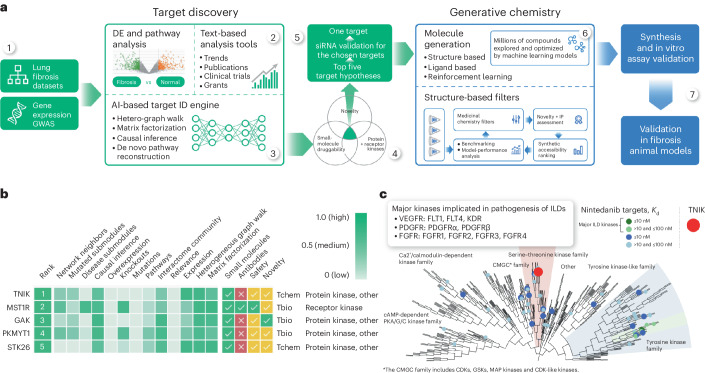
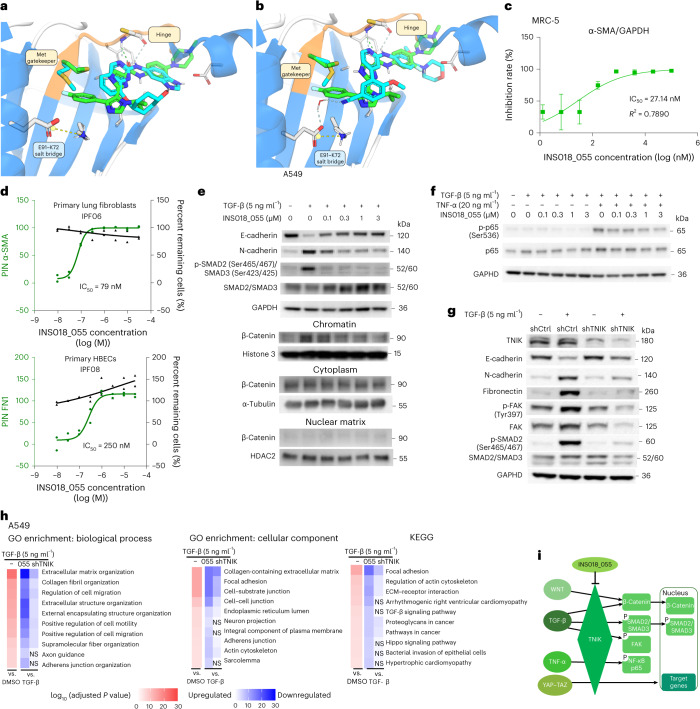
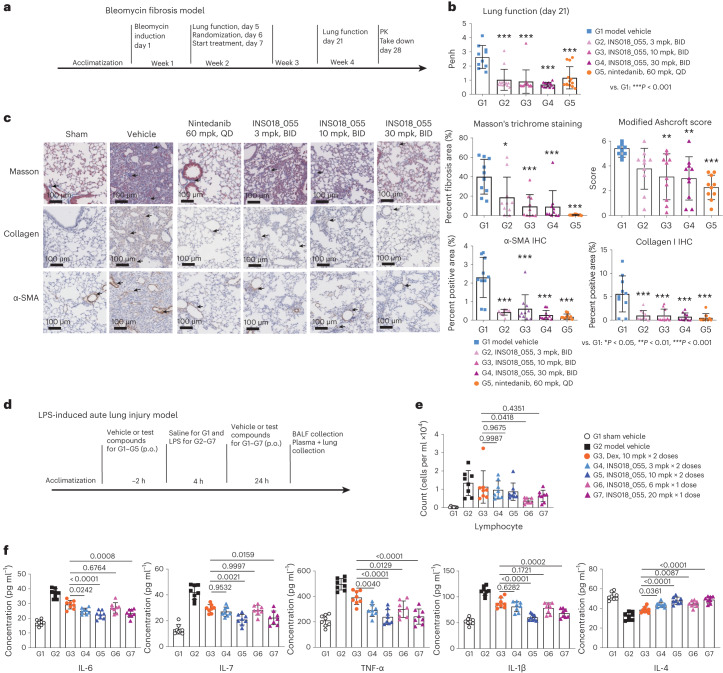
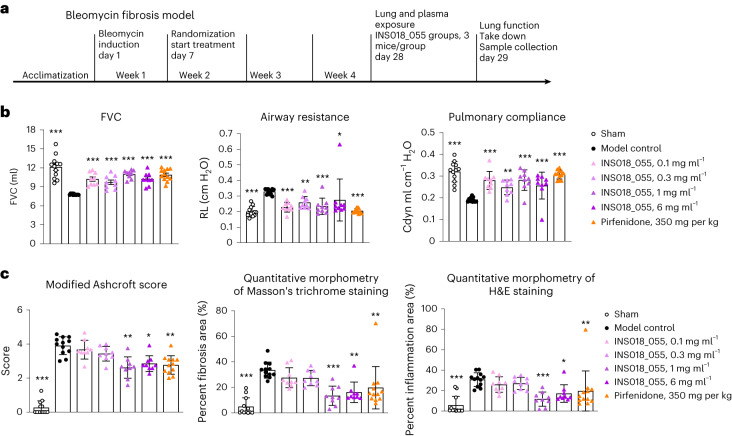
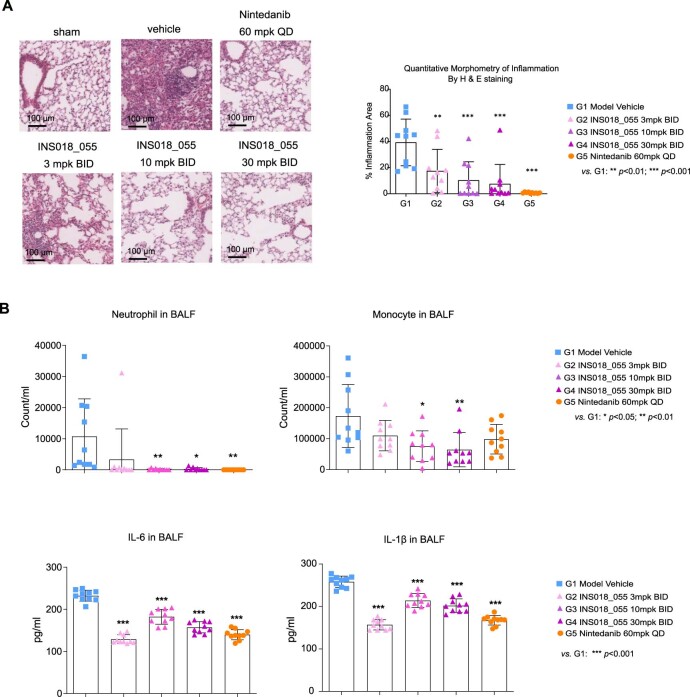
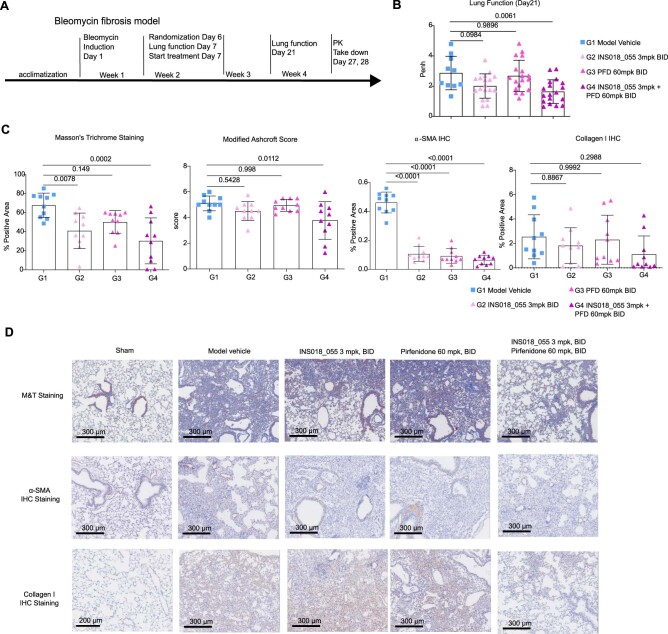
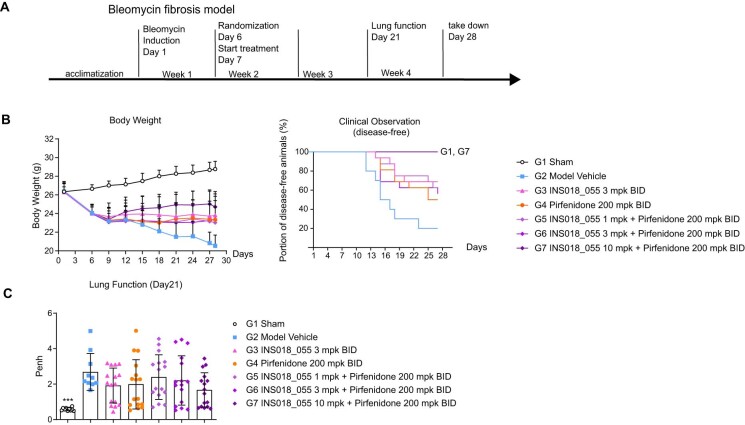
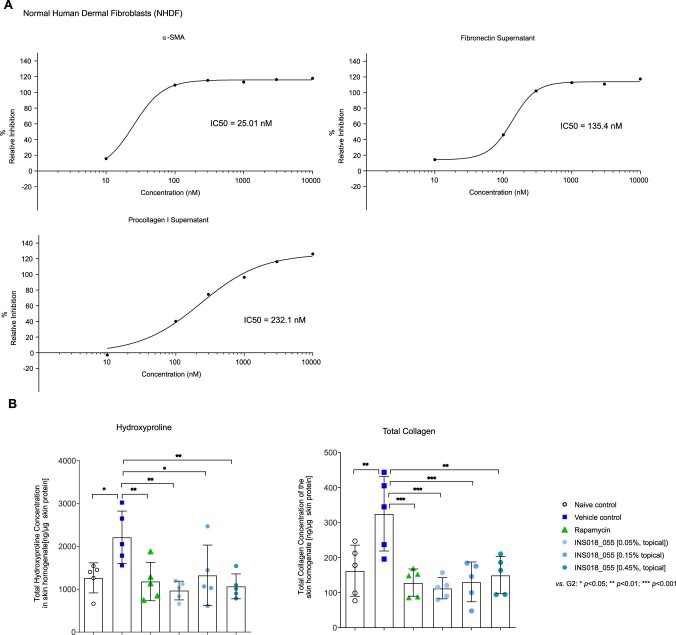
Idiopathic pulmonary fibrosis (IPF) is an aggressive interstitial lung disease with a high mortality rate. Putative drug targets in IPF have failed to translate into effective therapies at the clinical level. We identify TRAF2- and NCK-interacting kinase (TNIK) as an anti-fibrotic target using a predictive artificial intelligence (AI) approach. Using AI-driven methodology, we generated INS018_055, a small-molecule TNIK inhibitor, which exhibits desirable drug-like properties and anti-fibrotic activity across different organs in vivo through oral, inhaled or topical administration. INS018_055 possesses anti-inflammatory effects in addition to its anti-fibrotic profile, validated in multiple in vivo studies. Its safety and tolerability as well as pharmacokinetics were validated in a randomized, double-blinded, placebo-controlled phase I clinical trial (NCT05154240) involving 78 healthy participants. A separate phase I trial in China, CTR20221542, also demonstrated comparable safety and pharmacokinetic profiles. This work was completed in roughly 18 months from target discovery to preclinical candidate nomination and demonstrates the capabilities of our generative AI-driven drug-discovery pipeline.
Overview
The claims and statistics of this paper haven’t been checked yet.
Free: it reads the open-access text and checks the first 5 claims that cite a source we can check. Create a free account to check every claim.
Integrity signals
Registry
Cites
Statistics
Figures
Verification
Claims the paper makes
The claims and statistics of this paper haven’t been checked yet.
Free: it reads the open-access text and checks the first 5 claims that cite a source we can check. Create a free account to check every claim.
Claims other papers make about this one
Each is checked against this paper’s own text: does it say what the citing paper says it does?
The source backs part of the claim, not all of it — or backs it for a different population, condition or comparison.
In the citing paper
“rentosertib (formerly ISM001-055), a first-in-class AI-generated small-molecule inhibitor of TNIK, a first-in-class target in idiopathic pulmonary fibrosis (IPF) discovered using generative AI.”
From A generative AI-discovered TNIK inhibitor for idiopathic pulmonary fibrosis: a randomized phase 2a trial (2025) · cites this paper as [9]
Experimental — accuracy not yet measuredThe source backs part of the claim, not all of it — or backs it for a different population, condition or comparison.
In the citing paper
“We reported the development and positive phase 0 and 1 trial results of rentosertib9 (NCT05154240 and CTR20221542 (accessed via http://www.chinadrugtrials.org.cn/)), the first report of a targeted TNIK inhibitor entering clinical testing, which found rentosertib to be safe and well tolerated by healthy individuals, exhibiting a favorable pharmacokinetic (PK) profile in both trials9.”
From A generative AI-discovered TNIK inhibitor for idiopathic pulmonary fibrosis: a randomized phase 2a trial (2025) · cites this paper as [9]
Experimental — accuracy not yet measuredThe source backs part of the claim, not all of it — or backs it for a different population, condition or comparison.
In the citing paper
“our group used generative AI-driven discovery tools22,23 to identify Traf2- and Nck-interacting kinase (TNIK) de novo as a critical regulator of idiopathic pulmonary fibrosis (IPF) pathology as it orchestrates multiple profibrotic and proinflammatory cellular programs9.”
From A generative AI-discovered TNIK inhibitor for idiopathic pulmonary fibrosis: a randomized phase 2a trial (2025) · cites this paper as [9]
Experimental — accuracy not yet measuredThe source backs part of the claim, not all of it — or backs it for a different population, condition or comparison.
In the citing paper
“Our generative AI-powered approach streamlined preclinical candidate nomination to a mere 18 months and completion of phase 0/1 clinical testing to under 30 months from the initiation of target discovery, representing a revolutionary shift in the streamlining of drug discovery9.”
From A generative AI-discovered TNIK inhibitor for idiopathic pulmonary fibrosis: a randomized phase 2a trial (2025) · cites this paper as [9]
Experimental — accuracy not yet measuredThe cited source says what the claim attributes to it.
In the citing paper
“An unintended consequence of rentosertib’s potential immunomodulatory mechanism of action9 may be a dampened site-specific immune response, potentially leading to increased susceptibility to infection, a known trigger for a subset of AE-IPF45,46.”
From A generative AI-discovered TNIK inhibitor for idiopathic pulmonary fibrosis: a randomized phase 2a trial (2025) · cites this paper as [9]
3 more claims about this paper
Create a free account to see every claim other papers make about this one.
Self-check
Percentages, sums and reported differences re-computed from the paper’s own numbers.
The self-check needs the paper’s full text.
Citations
Cites
Molecular mechanisms of epithelial–mesenchymal transition
Lamouille, S., Xu, J., & Derynck, R. (2014) · Nature Reviews Molecular Cell Biology · doi:10.1038/nrm3758 · Cited by 8,091 · cited 1×
“The WNT–β-catenin signaling pathway is involved in wound healing, regulates fibrogenesis and is known to contribute to EMT elicited by TGF-β stimulation 63 .”
An automated method for finding molecular complexes in large protein interaction networks
Bader, G. D., & Hogue, C. W. (2003) · BMC Bioinformatics · doi:10.1186/1471-2105-4-2 · Cited by 6,072 · cited 1×
“We used this single-cell dataset to simulate TNIK knockout in IPF myofibro-blasts using the scTenifoldKnk approach 54 followed by the Molecular Complex Detection (MCODE) algorithm 55 and performed pathway and biological process enrichment analysis.”
Roberts, A. B., Sporn, M. B., Assoian, R. K., Smith, J. M., Roche, N. S., Wakefield, L. M., Heine, U. I., Liotta, L. A., Falanga, V, & Kehrl, J. H. (1986) · Proceedings of the National Academy of Sciences · doi:10.1073/pnas.83.12.4167 · Cited by 2,866
Desmoulière, A., Geinoz, A., Gabbiani, F., & Gabbiani, G. (1993) · The Journal of cell biology · doi:10.1083/jcb.122.1.103 · Cited by 2,243
Hinz, B., Phan, S. H., Thannickal, V. J., Galli, A., Bochaton-Piallat, M.-L., & Gabbiani, G. (2007) · The American Journal of Pathology · doi:10.2353/ajpath.2007.070112 · Cited by 2,068
Non-Transgenic Mouse Models of Kidney Disease
Rabe, M., & Schaefer, F. (2016) · Nephron · doi:10.1159/000445171 · Cited by 1,922
Fibrosis: from mechanisms to medicines
Henderson, N. C., Rieder, F., & Wynn, T. A. (2020) · Nature · doi:10.1038/s41586-020-2938-9 · Cited by 1,868 · cited 1×
“As fibrosis can affect any organ and is responsible for up to 45% of all deaths in the industrialized world 51 , we hypothesized that inhibition of TNIK may provide therapeutic benefit in multiple pathologies in which fibrosis may be implicated.”
Chronic Kidney Disease Diagnosis and Management: A Review
Chen, T. K., Knicely, D. H., & Grams, M. E. (2019) · JAMA · doi:10.1001/jama.2019.14745 · Cited by 1,811
Clinical course and prediction of survival in idiopathic pulmonary fibrosis
Ley, B., Collard, H. R., & King, T. E. (2011) · American Journal of Respiratory and Critical Care Medicine · doi:10.1164/rccm.201006-0894ci · Cited by 1,765 · cited 2×
“In untreated patients, IPF has a highly inconsistent clinical course, with a median survival of 2 to 3 years 26 .”
Deep learning enables rapid identification of potent DDR1 kinase inhibitors
Zhavoronkov, A., Ivanenkov, Y. A., Aliper, A., Veselov, M. S., Aladinskiy, V. A., Aladinskaya, A. V., Terentiev, V. A., Polykovskiy, D. A., Kuznetsov, M. D., Asadulaev, A., et al. (2019) · Nature Biotechnology · doi:10.1038/s41587-019-0224-x · Cited by 1,573 · cited 1×
“40,41,75–77) to discover the lead inhibitory compounds targeting this kinase.”
Self-citation
Research works printed but not linked: 1
- Aliper, A. et al. Prediction of clinical trials outcomes based on target choice and clinical trial design with multi-modal artificial intelligence. Clin. Pharmacol. Ther. 114, 972–980 (2023). 37483175 · DOI · Paper page
Cited by
Artificial intelligence in drug development
Zhang, K., Yang, X., Wang, Y., Yu, Y., Huang, N., Li, G., Li, X., Wu, J. C., & Yang, S. (2025) · Nature Medicine · doi:10.1038/s41591-024-03434-4 · Cited by 498
“…(https://pharma.ai/pandaomics/) successfully utilized multi-omics data and biological network analysis to recognize TRAF2-and NCK-interacting kinase as a potential target for anti-fibrotic therapy, leading to the development of a specific TRAF2-and NCK-interacting kinase inhibitor (INS018_055) 37 .”
Empowering biomedical discovery with AI agents
Gao, S., Fang, A., Huang, Y., Giunchiglia, V., Noori, A., Schwarz, J. R., Ektefaie, Y., Kondic, J., & Zitnik, M. (2024) · Cell · doi:10.1016/j.cell.2024.09.022 · Cited by 315
Ocana, A., Pandiella, A., Privat, C., Bravo, I., Luengo-Oroz, M., Amir, E., & Gyorffy, B. (2025) · Biomarker Research · doi:10.1186/s40364-025-00758-2 · Cited by 187
Xu, Z., Ren, F., Wang, P., Cao, J., Tan, C., Ma, D., Zhao, L., Dai, J., Ding, Y., Fang, H., et al. (2025) · Nature Medicine · doi:10.1038/s41591-025-03743-2 · Cited by 180
“…and CTR20221542 (accessed via http://www.chinadrug-trials.org.cn/)), the first report of a targeted TNIK inhibitor entering clinical testing, which found rentosertib to be safe and well tolerated by healthy individuals, exhibiting a favorable pharmacokinetic (PK) profile in both trials 9 .”
InfluentialSelf-citationMachine learning-aided generative molecular design
Du, Y., Jamasb, A. R., Guo, J., Fu, T., Harris, C., Wang, Y., Duan, C., Liò, P., Schwaller, P., & Blundell, T. L. (2024) · Nature Machine Intelligence · doi:10.1038/s42256-024-00843-5 · Cited by 169
Huanbutta, K., Burapapadh, K., Kraisit, P., Sriamornsak, P., Ganokratanaa, T., Suwanpitak, K., & Sangnim, T. (2024) · European Journal of Pharmaceutical Sciences · doi:10.1016/j.ejps.2024.106938 · Cited by 234
The future of pharmaceuticals: Artificial intelligence in drug discovery and development
Fu, C., & Chen, Q. (2025) · Journal of Pharmaceutical Analysis · doi:10.1016/j.jpha.2025.101248 · Cited by 264
Generative-AI-Driven Human Digital Twin in IoT Healthcare: A Comprehensive Survey
Chen, J., Shi, Y., Yi, C., Du, H., Kang, J., & Niyato, D. T. (2024) · IEEE Internet of Things Journal · doi:10.1109/jiot.2024.3421918 · Cited by 204
Self-citationPulmonary fibrosis: from mechanisms to therapies
Jiang, M., Bu, W., Wang, X., Ruan, J., Shi, W., Yu, S., Huang, L., Xue, P., Tang, J., Zhao, X., et al. (2025) · Journal of Translational Medicine · doi:10.1186/s12967-025-06514-2 · Cited by 122
Chakraborty, C., Bhattacharya, M., Lee, S., Wen, Z., & Lo, Y.-H. (2024) · Molecular Therapy — Nucleic Acids · doi:10.1016/j.omtn.2024.102295 · Cited by 100
Malheiro, V., Santos, B., Figueiras, A., & Mascarenhas‐Melo, F. (2025) · Pharmaceuticals · doi:10.3390/ph18060788 · Cited by 101
“INS018_055 represents a breakthrough in AI-driven drug discovery, showcasing how machine learning can rapidly identify novel treatments for complex diseases [87].”
Artificial intelligence revolution in drug discovery: A paradigm shift in pharmaceutical innovation
Jarallah, S. J., Almughem, F. A., Alhumaid, N. K., Fayez, N. A., Alradwan, I. A., Alsulami, K. A., Tawfik, E. A., & Alshehri, A. A. (2025) · International Journal of Pharmaceutics · doi:10.1016/j.ijpharm.2025.125789 · Cited by 93
Niazi, S. K. (2025) · Pharmaceuticals · doi:10.3390/ph18091271 · Cited by 61
“…using generative AI in conjunction with traditional medicinal chemistry approaches, progressed from target discovery to Phase II clinical trials in approximately 18 months, demonstrating how AI can accelerate specific aspects of drug development when integrated with conventional methods [3].”
Dewaker, V., Morya, V. K., Kim, Y. H., Park, S. T., Kim, H. S., & Koh, Y. H. (2025) · Biomarker Research · doi:10.1186/s40364-025-00764-4 · Cited by 63
Artificial intelligence (AI) in drug design and discovery: A comprehensive review
Bhat, A. R., & Ahmed, S. (2025) · In Silico Research in Biomedicine · doi:10.1016/j.insi.2025.100049 · Cited by 80
Fu, Y., Ding, X., Zhang, M., Feng, C., Yan, Z., Wang, F., Xu, J., Lin, X., Ding, X., Wang, L., et al. (2024) · Nature Biotechnology · doi:10.1038/s41587-024-02503-w · Cited by 62
“The prolyl hydroxylase 1 and 2 (PHD1 and PHD2)–hypoxia-inducible factor 1α (HIF1α) axis was identified and prioritized by PandaOmics 7–11 , a commercially available artificial intelligence (AI) platform that sources omics and published data for target identification, as a therapeutic target for IBD (Supplementary Fig.”
Self-citationZhang, L., Tian, J., Li, N., Wang, Y., Jin, Y., Bian, H., Xiong, M., Zhang, Z., Meng, J., Han, Z., et al. (2024) · Journal of Hazardous Materials · doi:10.1016/j.jhazmat.2024.136629 · Cited by 50
Artificial intelligence for life sciences: A comprehensive guide and future trends
Luo, M., Yang, W., Bai, L., Zhang, L., Huang, J., Cao, Y.-H., Xie, Y., Tong, L., Zhang, H., Lei, Y., et al. (2024) · The Innovation Life · doi:10.59717/j.xinn-life.2024.100105 · Cited by 66
Self-citationGhislat, G., Hernández-Hernández, S., Piyawajanusorn, C., & Ballester, P. J. (2024) · Expert Opinion on Drug Discovery · doi:10.1080/17460441.2024.2403639 · Cited by 62
“There is no doubt that AI is having a tremendous impact on drug discovery [15,16,22,100,101] by leveraging not only AI innovations, but also the continuous data increase and maturity of relevant multidisciplinary expertise.”
Oualikene-Gonin, W., Jaulent, M., Thierry, J.-P., Oliveira‐Martins, S., Belgodère, L., Maison, P., Ankri, J., & The Scientific Advisory Board of ANSM (2024) · Frontiers in Pharmacology · doi:10.3389/fphar.2024.1437167 · Cited by 58
Lyu, Y.-X., Fu, Q., Wilczok, D., Ying, K., King, A., Antebi, A., Vojta, A., Stolzing, A., Moskalev, A., Georgievskaya, A., et al. (2024) · Aging · doi:10.18632/aging.206135 · Cited by 75
Self-citationMetabolomics‐driven approaches for identifying therapeutic targets in drug discovery
Pan, S., Yin, L., Liu, J., Tong, J., Wang, Z., Zhao, J., Liu, X., Chen, Y., Miao, J., Zhou, Y., et al. (2024) · MedComm · doi:10.1002/mco2.792 · Cited by 59
Dermawan, D., & Alotaiq, N. (2025) · Pharmaceuticals · doi:10.3390/ph18070981 · Cited by 63
“A prominent example is Insilico Medicine’s AI-designed drug candidate INS018_055, a small molecule targeting idiopathic pulmonary fibrosis (IPF) [15].”
Current Status of Computational Approaches for Small Molecule Drug Discovery
Xu, W. (2024) · Journal of Medicinal Chemistry · doi:10.1021/acs.jmedchem.4c02462 · Cited by 56
Generative Deep Learning for de Novo Drug Design─A Chemical Space Odyssey
Özçelik, R., Brinkmann, H., Criscuolo, E., & Grisoni, F. (2025) · Journal of Chemical Information and Modeling · doi:10.1021/acs.jcim.5c00641 · Cited by 74
Zhou, L., Chen, S., Liu, J. O., Zhou, Z., Yan, Z., Li, C., Zeng, X., Tuan, R. S., & Li, Z. A. (2025) · The Innovation Life · doi:10.59717/j.xinn-life.2024.100115 · Cited by 46
A novel, covalent broad-spectrum inhibitor targeting human coronavirus Mpro
Sun, J., Sun, D., Yang, Q., Wang, D., Peng, J., Guo, H., Ding, X., Zhao, C., Yuan, B., Ivanenkov, Y. A., et al. (2025) · Nature Communications · doi:10.1038/s41467-025-59870-4 · Cited by 45
“Our group utilized our generative chemistry platform Chemistry42 26 – 29 , which integrates many generative AI models, virtual screening, and molecular annotation modules to carry out the de novo molecular design of small molecules with desired properties (Fig.”
Self-citationPu, C., Cui, H. F., Yu, H., Cheng, X., Zhang, M., Qin, L., Ning, Z., Zhang, W., Chen, S., Qian, Y., et al. (2025) · Nature Communications · doi:10.1038/s41467-025-59874-0 · Cited by 49
Self-citationSelf-supervised learning in drug discovery
Chen, Y., Wang, Z., Wang, J., Chu, Y., Zhang, Q., Li, Z. A., & Zeng, X. (2025) · Science China Information Sciences · doi:10.1007/s11432-024-4453-4 · Cited by 42
“Utilizing Utilizing de novo generation technology, Insilico Medicine successfully nominated ISM1745 as a preclinical candidate drug targeting PRMT5 in PandaOmics [94].”
Advancements in Protein Kinase Inhibitors: From Discovery to Clinical Applications
Baldi, S., Long, N., Ma, S., Liu, L., Al-Danakh, A., Qin, Y., Deng, X., Xie, J., & Tang, H. (2025) · Research · doi:10.34133/research.0747 · Cited by 59
“Ongoing trials include an AI-designed TNIK inhibitor for fibrosis (phase I) [ 200 ].”
Leading artificial intelligence–driven drug discovery platforms: 2025 landscape and global outlook
Dharmasivam, M., Kaya, B., Akinware, A., Azad, M. G., & Richardson, D. R. (2025) · Pharmacological Reviews · doi:10.1016/j.pharmr.2025.100102 · Cited by 51
Antiviral drug discovery and development: challenges and future directions
Du, S., Hu, X., Li, P., Xu, S., Kim, M., Liu, X., & Zhan, P. (2026) · Signal Transduction and Targeted Therapy · doi:10.1038/s41392-025-02539-7 · Cited by 54
Petrušić, I., Chiang, C., García‐Azorín, D., Ha, W., Ornello, R., Pellesi, L., Rubio‐Beltrán, E., Ruscheweyh, R., Waliszewska‐Prosół, M., & Wells-Gatnik, W. D. (2025) · The Journal of Headache and Pain · doi:10.1186/s10194-024-01944-7 · Cited by 40
“An example of the potential of AI in drug development is INS018_055, which was developed by Insilico Medicine, for the treatment of idiopathic pulmonary fibrosis [76].”
Decoding organ fibrosis: mechanistic insights and emerging therapeutic strategies
Chen, X., Zhang, J., Guo, L., Wu, C., Zhou, J., Xu, M., Mo, L., Li, Y., & He, J. (2026) · Signal Transduction and Targeted Therapy · doi:10.1038/s41392-025-02532-0 · Cited by 59
Navigating the frontier of drug-like chemical space with cutting-edge generative AI models
Lavecchia, A. (2024) · Drug Discovery Today · doi:10.1016/j.drudis.2024.104133 · Cited by 52
New approach methodologies for drug discovery
Liu, W., Pang, P. D., Wu, C. A., Tagle, D. A., & Wu, J. C. (2026) · Cell · doi:10.1016/j.cell.2026.02.012 · Cited by 49
Artificial intelligence-powered nanomedicine
Luo, G., 蒋显超, Hu, C., Li, L., Yan, L., Xiao, G., Duo, Y., & Zhang, X. (2026) · Chemical Society Reviews · doi:10.1039/d5cs01406a · Cited by 40
Possible opportunities and challenges for traditional Chinese medicine research in 2035
Huang, N., Huang, W., Wu, J., Long, S., Luo, Y., & Huang, J. (2024) · Frontiers in Pharmacology · doi:10.3389/fphar.2024.1426300 · Cited by 55
Liu, S., & Jin, P. (2025) · Polymers · doi:10.3390/polym17070948 · Cited by 39
Self-citationGraph neural networks driven acceleration in drug discovery
Wang, R., & Zhuang, C. (2025) · Acta Pharmaceutica Sinica B · doi:10.1016/j.apsb.2025.10.011 · Cited by 38
“The above models and their characteristics are summarized in Table 4 94-110,125”
Advances in Inhaled Nanoparticle Drug Delivery for Pulmonary Disease Management
Fan, Y., Zhou, Y., Zhao, J., & Zhao, Y. (2025) · The FASEB Journal · doi:10.1096/fj.202502624r · Cited by 45
“Moreover, NCK-interacting kinase (TNIK) as a first- in-class target for IPF and rentosertib as a first- in-class TNIK inhibitor are discovered using AI [191, 192].”
Liu, Y., Zhu, K., Peng, W., Liu, Z., & Mao, X. (2026) · Signal Transduction and Targeted Therapy · doi:10.1038/s41392-026-02631-6 · Cited by 50
“142 Furthermore, AI is advancing novel therapeutic strategies, such as targeted protein degradation, which induces proteins to interact with E3 ubiquitin ligases, triggering degradation.”
Peng, J., Ding, X., Chen, C. X., Zhao, P., Ding, X., Zhang, M., Aliper, A. M., Ren, F., Lu, H., & Zhavoronkov, A. A. (2024) · Journal of Medicinal Chemistry · doi:10.1021/acs.jmedchem.4c02421 · Cited by 29
Self-citationThe changing landscape of medicinal chemistry optimization
Rácz, A., Mihalovits, L. M., Beckers, M., Fechner, N., Stiefl, N., Sirockin, F., McCoull, W., Evertsson, E., Lemurell, M., Makara, G. M., et al. (2025) · Nature Reviews Drug Discovery · doi:10.1038/s41573-025-01225-1 · Cited by 54
“These and other AI-assisted tools have sporadically shown promise of progress towards faster and cheaper lead discovery 75 , but the road has been paved with notable struggles and failures of several early champions.”
TNIK’s emerging role in cancer, metabolism, and age-related diseases
Ewald, C. Y., Pulous, F. E., Lok, S. W. Y., Pun, F. W., Aliper, A., Ren, F., & Zhavoronkov, A. (2024) · Trends in Pharmacological Sciences · doi:10.1016/j.tips.2024.04.010 · Cited by 27
Self-citationElgawish, M. S., Almatary, A. M., Zaitone, S. A., & Salem, M. S. H. (2025) · RSC Medicinal Chemistry · doi:10.1039/d5md00494b · Cited by 35
Progress of AI-Driven Drug–Target Interaction Prediction and Lead Optimization
Wang, Q., Sun, B., Yi, Y., Velkov, T., Shen, J., Dai, C., & Jiang, H. (2025) · International Journal of Molecular Sciences · doi:10.3390/ijms262010037 · Cited by 38
“A representative research achievement from Insilico Medicine is rentosertib, an AI-discovered drug that has completed Phase II trials for pulmonary fibrosis, showcasing the power of its AI platform [27].”
Vangala, S. R., Krishnan, S. R., Bung, N., Nandagopal, D., Ramasamy, G., Kumar, S., Sankaran, S., Srinivasan, R., & Roy, A. (2024) · Journal of Cheminformatics · doi:10.1186/s13321-024-00928-8 · Cited by 33
“Artificial intelligence (AI) can discover potential new medicines faster than ever before [1, 2].”
Progress, Pitfalls, and Impact of AI ‐Driven Clinical Trials
Wilczok, D., & Zhavoronkov, A. A. (2024) · Clinical Pharmacology & Therapeutics · doi:10.1002/cpt.3542 · Cited by 32
Self-citationWilczok, D. (2025) · Aging · doi:10.18632/aging.206190 · Cited by 39
Large language models open new way of AI-assisted molecule design for chemists
Ishida, S., Sato, T., Honma, T., & Terayama, K. (2025) · Journal of Cheminformatics · doi:10.1186/s13321-025-00984-8 · Cited by 37
“Similarly, in drug discovery, new proton pump inhibitors [6] and inhibitors for targeting antifibrotic effects [7] were designed and demonstrated their good inhibitory effects.”
Chigozie, V. U., Ugochukwu, C. G., Igboji, K. O., & Okoye, F. B. (2025) · BMC Artificial Intelligence · doi:10.1186/s44398-025-00004-7 · Cited by 30
“Small-Molecule TNIK Inhibitor: In contrast, Ren et a l [95] reported a de novo discovery process for a TNIK inhibitor that targets fibrosis in both preclinical and clinical models.”
Generative AI for the Design of Molecules: Advances and Challenges
Sun, Y., Chen, L., Jing, Z., Li, Y. Y., Kim, D., Gao, J.-Y., Noroozi, R., Yi, G. Y., Feugmo, C. G. T., Klinkova, A., et al. (2025) · Journal of Chemical Information and Modeling · doi:10.1021/acs.jcim.5c02234 · Cited by 39
Macisaac, S., Somboonviboon, D., Scallan, C. J., & Kolb, M. R. J. (2024) · Expert Opinion on Emerging Drugs · doi:10.1080/14728214.2024.2340723 · Cited by 28
“Another promising approach is the augmentation of disease modeling via artificial intelligence and use of human lung tissue to further the goal of human specific drug development [77,78].”
BackgroundKnowledge-guided diffusion model for 3D ligand-pharmacophore mapping
Yu, J.-L., Cong, Z., Ning, X.-L., Mou, J., Meng, F.-B., Wu, J.-W., Chen, Y.-T., Tang, B.-D., Liu, X. F., & Li, G. (2025) · Nature Communications · doi:10.1038/s41467-025-57485-3 · Cited by 34
Target identification and assessment in the era of AI
Pun, F. W., Podolskiy, D. I., Izumchenko, E., Mortlock, A. A., Oprea, T. I., Scheibye‐Knudsen, M., Fortney, K., Morgen, E. K., Ren, F., & Zhavoronkov, A. A. (2026) · Nature Reviews Drug Discovery · doi:10.1038/s41573-026-01412-8 · Cited by 40
“Notably, although the tangential functions of TNIK were previously investigated, it had not been studied as a therapeutic target in IPF, making it a novel target selected by the platform.”
InfluentialSelf-citationA New Era of Artificial Intelligence (AI): Transforming Drug Discovery and Development
Ali, S., Tian, X., Chen, H., & Zhou, J. (2025) · Journal of Medicinal Chemistry · doi:10.1021/acs.jmedchem.5c03159 · Cited by 28
Highlights on Future Treatments of IPF: Clues and Pitfalls
Libra, A., Sciacca, E., Muscato, G., Sambataro, G., Spicuzza, L., & Vancheri, C. (2024) · International Journal of Molecular Sciences · doi:10.3390/ijms25158392 · Cited by 25
“More recently, for the first time in respiratory medicine, a new molecule developed entirely from AI, targeting alfa-SMA protein, will be tested in a phase 3 clinical trial for IPF treatment (NCT05938920) [157].”
BackgroundProtein–ligand data at scale to support machine learning
Edwards, A. M., Owen, D. R., Zhang, L., Young, D. W., Willson, T. M., Wellnitz, J., Wang, Y., Walsh, J. J., Vernet, E., Tropsha, A., et al. (2025) · Nature Reviews Chemistry · doi:10.1038/s41570-025-00737-z · Cited by 42
Chen, W., Mao, X., Wang, X., Liao, Y.-C., Yin, X.-Y., Wu, H., Chen, T.-Y., Liu, M.-Q., Wang, T., & Yu, R. (2025) · Chemical Science · doi:10.1039/d5sc03648h · Cited by 22
Genomics of drug target prioritization for complex diseases
Chen, R. K., Duffy, Á., & Do, R. (2025) · Nature Reviews Genetics · doi:10.1038/s41576-025-00904-4 · Cited by 30
“Another example has used the PandOmics platform of multi-omics and NLP to prioritize targets 155 , which identified PHD1 and PHD2 for inflammatory bowel disease (phase I) and TNIK for fibrosis (phase II) 156,157,160 .”
Aladinskiy, V., Kruse, C. G., Qin, L., Babin, E., Fan, Y., Andreev, G., Zhao, H., Fu, Y., Zhang, M., Ivanenkov, Y. A., et al. (2024) · Journal of Medicinal Chemistry · doi:10.1021/acs.jmedchem.4c01580 · Cited by 21
Self-citationHow generative Artificial Intelligence can transform drug discovery?
Jusoh, A. S., Remli, M. A., Mohamad, M. S., Cazenave, T., & Fong, C. (2025) · European Journal of Medicinal Chemistry · doi:10.1016/j.ejmech.2025.117825 · Cited by 24
“INS018_055 is designed for the treatment of Idiopathic Pulmonary Fibrosis (IPF), a chronic lung disease, and was discovered by Insilico Medicine in 2020 [4].”
Artificial intelligence in orthopedics: fundamentals, current applications, and future perspectives
Song, J., Wang, G.-C., Wang, S., He, C., Zhang, Y., Chen, X., & Su, J. (2025) · Military Medical Research · doi:10.1186/s40779-025-00633-z · Cited by 52
“In the case of INS018_055 [145], PandaOmics integrated multiomics data, literature trends, and biological network analysis to identify TNIK as a novel therapeutic target within just 18 months.”
Artificial intelligence for radiopharmaceutical and molecular imaging
Tao, J., Liang, L., Hao, S., Chen, Y., Yang, Z., Cai, Y., & Zhu, H. (2025) · Acta Pharmaceutica Sinica B · doi:10.1016/j.apsb.2025.09.039 · Cited by 25
“Ren et al. 57 utilized generative AI to design INS018_055, a fibrosis inhibitor, completing pre-clinical studies in just 18 months.”
Discovery of pyrrolopyrimidinone derivatives as potent PKMYT1 inhibitors for the treatment of cancer
Wang, C., Wang, Y., Meng, F., Liu, T., Wang, X., Cai, X., Zhang, M., Aliper, A., Ren, F., Zhavoronkov, A. A., et al. (2024) · European Journal of Medicinal Chemistry · doi:10.1016/j.ejmech.2024.117025 · Cited by 18
Self-citationAI-enabled drug discovery reaches clinical milestone
Žitnik, M. (2025) · Nature Medicine · doi:10.1038/s41591-025-03832-2 · Cited by 25
Niazi, S. K. (2026) · Journal of Chemistry · doi:10.1155/joch/5202999 · Cited by 25
Application of artificial intelligence and machine learning in drug repurposing
Ghandikota, S. K., & Jegga, A. G. (2024) · Progress in molecular biology and translational science · doi:10.1016/bs.pmbts.2024.03.030 · Cited by 29
Emerging pharmacological options in the treatment of idiopathic pulmonary fibrosis (IPF)
Aribindi, K., Liu, G. Y., & Albertson, T. E. (2024) · Expert Review of Clinical Pharmacology · doi:10.1080/17512433.2024.2396121 · Cited by 17
“One such AI identified target is the TRAF2 and NCK-interacting kinase (TNIK) inhibition as a regulator of anti-fibrotic properties [143].”
Morphological map of under- and overexpression of genes in human cells
Chandrasekaran, S. N., Alix, E., Arévalo, J., Borowa, A., Byrne, P. J., Charles, W. G., Chen, Z., Cimini, B. A., Deng, B., Doench, J. G., et al. (2025) · Nature Methods · doi:10.1038/s41592-025-02753-9 · Cited by 30
AI-Designed Molecules in Drug Discovery, Structural Novelty Evaluation, and Implications
Xie, S., Zhu, H., & Huang, N. (2025) · Journal of Chemical Information and Modeling · doi:10.1021/acs.jcim.5c00921 · Cited by 23
Cell–cell crosstalk in kidney health and disease
Scheidereit, E., Mavrommatis, L., & Kuppe, C. (2025) · Nature Reviews Nephrology · doi:10.1038/s41581-025-01025-1 · Cited by 23
“The translational relevance of these findings is highlighted by the demonstration that inhibition of WNT signalling by targeting of NCK-interacting kinase (TNIK) ameliorated the progression of fibrosis across various organs in mice 127 .”
Self-citationShi, C., Gao, T., Lyu, W., Qiang, B., Chen, Y., Chen, Q., Zhang, L., & Liu, Z. (2024) · Journal of Medicinal Chemistry · doi:10.1021/acs.jmedchem.4c01857 · Cited by 19
Wang, Y., Zhang, Y., Liu, J., Zhao, J., Wang, C. W. C., Meng, F., Cai, X., Zhang, M., Aliper, A. M., Liang, T., et al. (2025) · Journal of Medicinal Chemistry · doi:10.1021/acs.jmedchem.4c03205 · Cited by 17
Self-citationLu, H., Sun, D., Wang, Z., Cui, H., Min, L., Zhang, H., Zhang, Y., Wu, J., Cai, X., Ding, X., et al. (2025) · Journal of Medicinal Chemistry · doi:10.1021/acs.jmedchem.4c01616 · Cited by 18
Self-citationDu, H., Rose, J., Bons, J., Guo, L., Valentino, T. R., Wu, F., Burton, J. B., Basisty, N., Manwaring-Mueller, M., Makhijani, P., et al. (2025) · GeroScience · doi:10.1007/s11357-025-01507-x · Cited by 19
“In fact, the increasing identification of mechanosensors as effective therapeutic targets for age-related diseases further underscores their importance in the aging process [73–75].”
Artificial intelligence in antibody–drug conjugate development
Wang, Y., Guo, C., & Li, W. (2025) · Trends in Pharmacological Sciences · doi:10.1016/j.tips.2025.10.005 · Cited by 20
New Horizons of Model Informed Drug Development in Rare Diseases Drug Development
Mitra, A., Tania, N., AHMED, M. A., Rayad, N., Krishna, R., Albusaysi, S., Bakhaidar, R. B., Shang, E. Y., Burian, M., Martin‐Pozo, M., et al. (2024) · Clinical Pharmacology & Therapeutics · doi:10.1002/cpt.3366 · Cited by 19
Sequence-based virtual screening using transformers
Zhang, S., Huo, D., Horne, R. I., Qi, Y., Ojeda, S. P., Yan, A., & Vendruscolo, M. (2025) · Nature Communications · doi:10.1038/s41467-025-61833-8 · Cited by 26
Molecular mechanisms and emerging therapeutics in pulmonary fibrosis: A recent update
Sharma, P. L., Kumari, K., Yadav, R., Verma, K., Paliwal, S., Paliwal, S., & Sharma, S. K. (2025) · European Journal of Pharmacology · doi:10.1016/j.ejphar.2025.178159 · Cited by 17
Artificial intelligence in drug discovery — what it is, where we stand and the path forward
Bender, A., Thomas, M. C., Scannell, J. W., Shaywitz, D. A., Ghiandoni, G. M., Greener, J. G., Pruteanu, L.-L., Jacobson, R. D., Handa, K., Hirano, M., et al. (2026) · Nature Reviews Drug Discovery · doi:10.1038/s41573-026-01496-2 · Cited by 44
“Success has been claimed for some ‘AI-designed’ drugs up to phase IIa trials 90 ; however, attributing these successes to AI alone remains difficult as the lead-optimization steps linking the AI-generated hits to the final drug candidates are often insufficiently described or undisclosed 91 .”
Artificial intelligence in rare diseases: toward clinical impact
Amorim, A. M. B., Orzeł, U., Caniceiro, A. B., Rosário‐Ferreira, N., & Moreira, I. S. (2025) · Trends in Pharmacological Sciences · doi:10.1016/j.tips.2025.10.010 · Cited by 18
Xing, J., Tan, M., Leshchiner, D. R., Sun, M., Abdelgied, M., Huang, L., Paithankar, S., Uhl, K. L., Shankar, R., Lisabeth, E. M., et al. (2026) · Cell · doi:10.1016/j.cell.2026.02.016 · Cited by 21
Design, Synthesis, and Biological Evaluation of a Series of Spiro Analogues as Novel HPK1 Inhibitors
Peng, J., Ding, X., Chen, C. X. J., Shih, P.-Y., Meng, Q., Ding, X., Zhang, M., Aliper, A. M., Ren, F., Lu, H., et al. (2024) · ACS Medicinal Chemistry Letters · doi:10.1021/acsmedchemlett.4c00434 · Cited by 13
Self-citationThinking on the Use of Artificial Intelligence in Drug Discovery
Wang, Y., Hu, Z., Chang, J., & Yu, B. (2025) · Journal of Medicinal Chemistry · doi:10.1021/acs.jmedchem.5c00373 · Cited by 15
Gong, J., Zhao, Z., Niu, X., Ji, Y., Sun, H., Shen, Y., Chen, B., & Wu, B. (2025) · Frontiers in Digital Health · doi:10.3389/fdgth.2025.1666415 · Cited by 23
Deep Learning-Enabled Multi-Omics Integration: A New Frontier in Precise Drug Target Discovery
Ren, Y., Bai, H., Wang, J., Yang, Y., & Wang, Y. (2026) · Biology · doi:10.3390/biology15050410 · Cited by 18
Application progress of deep generative models in de novo drug design
Liu, Y., Xu, C., Yang, X., Zhang, Y., Chen, Y., & Liu, H. (2024) · Molecular Diversity · doi:10.1007/s11030-024-10942-5 · Cited by 15
Graph neural networks are promising for phenotypic virtual screening on cancer cell lines
Vishwakarma, S., Hernández-Hernández, S., & Ballester, P. J. (2024) · Biology Methods and Protocols · doi:10.1093/biomethods/bpae065 · Cited by 13
“In this context, Artificial intelligence (AI) presents a tremendous opportunity to transform the landscape of early drug discovery [13, 14].”
BackgroundArtificial intelligence in drug development for delirium and Alzheimer’s disease
Ai, R., Xiao, X., Deng, S., Yang, N., Xing, X., Watne, L. O., Selbæk, G., Wedatilake, Y., Xie, C., Rubinsztein, D. C., et al. (2025) · Acta Pharmaceutica Sinica B · doi:10.1016/j.apsb.2025.04.026 · Cited by 13
“…AI to design a small-molecule TNIK inhibitor; in a randomized, double-blind, placebo-controlled phase I clinical trial, the new compound demonstrated safety and PK profiles comparable to existing treatments, showcasing the capabilities of the generative AI-driven drug discovery pipeline 168 .”
Antibody-drug conjugates (ADCs): “Smart Missiles” targeting cancer therapy
Yao, X., Lu, Y., Shi, S., & Wang, Y. (2025) · Colloids and Surfaces B Biointerfaces · doi:10.1016/j.colsurfb.2025.115161 · Cited by 17
From Prompt to Drug: Toward Pharmaceutical Superintelligence
Zhavoronkov, A. A., Gennert, D. G., & Shi, J. (2026) · ACS Central Science · doi:10.1021/acscentsci.5c01473 · Cited by 20
Self-citationDeep generative molecular design and its value in modern drug discovery
Özdemir, E. S., Jang, H., Keskin, Ö., Gürsoy, A., & Nussinov, R. (2026) · Expert Opinion on Drug Discovery · doi:10.1080/17460441.2026.2636192 · Cited by 12
“Encouragingly, the field is transitioning from computational novelty to translational success [24,25].”
TNIK in disease: from molecular insights to therapeutic prospects
Wu, X., Zhang, Z., Qiu, Z., Wu, X., Chen, J., Liu, L., Liu, X., Zhao, S., Yang, Y., & Zhao, Y. (2024) · APOPTOSIS · doi:10.1007/s10495-024-01987-w · Cited by 11
“This is a key milestone for the AI pharmaceutical industry [99 ].”
Self-citationDiscovery of a Novel Macrocyclic Noncovalent CDK7 Inhibitor for Cancer Therapy
Lu, H., Zhang, Y., Liu, J., Jiang, T., Yu, X., Zhang, H., Liang, T., Peng, J., Cai, X., Lan, X., et al. (2024) · Journal of Medicinal Chemistry · doi:10.1021/acs.jmedchem.4c02098 · Cited by 11
Self-citationBienstock, R. J. (2025) · Journal of Cheminformatics · doi:10.1186/s13321-025-00995-5 · Cited by 11
“The first consideration should be the assay design for train-ing” [13].”
Brewer, K. D., Santo, N. V., Samanta, A., Nag, R., Trotsyuk, A. A., & Rajadas, J. (2025) · Journal of Clinical Medicine · doi:10.3390/jcm14093118 · Cited by 15
“…advances, from repurposed small-molecule drugs to CRISPR-engineered cell therapies and artificial intelligence (AI)-assisted drug discovery platforms, are actively being explored to optimize existing pharmacologic interventions and to develop novel treatment options (Figure 1) [15,16].”
Rational Design and Identification of ISM7594 as a Tissue-Agnostic FGFR2/3 Inhibitor
Wang, Y., Liu, J., Zhang, Y., Zhao, J., Wang, C. W. C., Cui, H. S., Meng, F., Aliper, A. M., Liang, T., Yan, F., et al. (2025) · Journal of Medicinal Chemistry · doi:10.1021/acs.jmedchem.5c00928 · Cited by 11
Self-citationBraga, D. M., & Rawal, B. S. (2025) · Journal of Pharmaceutical and BioTech Industry · doi:10.3390/jpbi2030011 · Cited by 16
Metadata
- Authors
- Ren, F., Aliper, A., Chen, J., Zhao, H., Rao, S., Kuppe, C., Ozerov, I. V., Zhang, M., Witte, K., Kruse, C., Aladinskiy, V., Ivanenkov, Y., Polykovskiy, D., Fu, Y., Babin, E., Qiao, J., Liang, X., Mou, Z., Wang, H., Pun, F. W., Torres-Ayuso, P., Veviorskiy, A., Song, D., Liu, S., Zhang, B., Naumov, V., Ding, X., Kukharenko, A., Izumchenko, E., & Zhavoronkov, A.
- Affiliations
- Hong Kong Science and Technology Parks Corporation (HK)
- Hangzhou Normal University (CN)
- Insilico Medicine (United States) (US)
- Universitätsklinikum Aachen (DE)
- Shanghai Medical College of Fudan University (CN)
- University of Chicago (US)
- Corresponding author
- Zhavoronkov, Alex
- ORCID
- Venue
- Nature Biotechnology
- Published
- 2024-03-08
- Volume
- 43
- Issue
- 1
- Pages
- 63-75
- ISSN
- 0733-222X (ISSN-L)
- 1087-0156
- 1546-1696
- PMC
- PMC11738990
- OpenAlex
- W4392596618
- Cited by
- 348
- References
- 90
- Citations by year
- 2026: 159 · 2025: 136 · 2024: 53
- FWCI
- 101.10
- Type
- journal article
- Language
- en
- Open access
- hybrid
- doi.org
- Licence
- cc-by
- creativecommons.org/licenses/by/4.0 (tdm)
- creativecommons.org/licenses/by/4.0 (vor)
- Locations
- Nature Biotechnology (publishedVersion, cc-by)
- PubMed Central (publishedVersion, cc-by)
- PubMed (publishedVersion)
- TUScholarShare (Temple University) (submittedVersion, cc-by)
- RWTH Publications (RWTH Aachen) (submittedVersion, other-oa)
- Funders
- Nvidia
- NIH Clinical Center
- Topics
- Health Sciences › Medicine › Pulmonary and Respiratory Medicine › Interstitial Lung Diseases and Idiopathic Pulmonary Fibrosis
- Life Sciences › Pharmacology, Toxicology and Pharmaceutics › Drug Discovery › Computational Drug Discovery Methods
- Health Sciences › Medicine › Rheumatology › Systemic Sclerosis and Related Diseases
- Keywords
- TNIK, idiopathic pulmonary fibrosis, fibrosis, small-molecule kinase inhibitors, artificial intelligence in drug discovery, generative AI, anti-inflammatory activity, pharmacokinetics, drug safety and tolerability, interstitial lung disease
- MeSH terms
- Animals, Artificial Intelligence, Double-Blind Method, Drug Evaluation, Preclinical, Female, Humans, Male, Middle Aged, Protein Serine-Threonine Kinases, Protein Kinase Inhibitors, Mice, Idiopathic Pulmonary Fibrosis
About these checks
Registry, retraction, Cites and statistics results are computed, not judged, with one exception: a printed reference that no index lists is read once by a model before it counts as a citation error. Claims are extracted by a model and kept only when their quote appears verbatim in the text; each cited source is then checked, with a model’s help, for whether it says what the claim relies on. Those verdicts can be wrong — read the claim’s quote and the cited source before relying on one.
Statistics and arithmetic are recomputed, not judged.
Confidence bands are shown only for fields calibrated on our annotated test set. None is calibrated yet, so no band is shown.
What counts as a claim ›How we measure confidence ›How we check this ›
Are you an author, or do you see a problem with this page? Request a review
Data sources
Bibliographic data: Semantic Scholar, OpenAlex, Crossref.
Contains information from the Semantic Scholar Academic Graph Datasets, made available under the ODC Attribution License (ODC-BY 1.0).
Semantic Scholar’s data is described in: Kinney, R., et al. (2023). The Semantic Scholar Open Data Platform. arXiv:2301.10140.
