

The DOI matches its Crossref record; 65 of the 65 references it cites were found in a registry or an index.
Accurate detection of identity-by-descent segments in human ancient DNA
Open accessPublished version of a preprint
Abstract
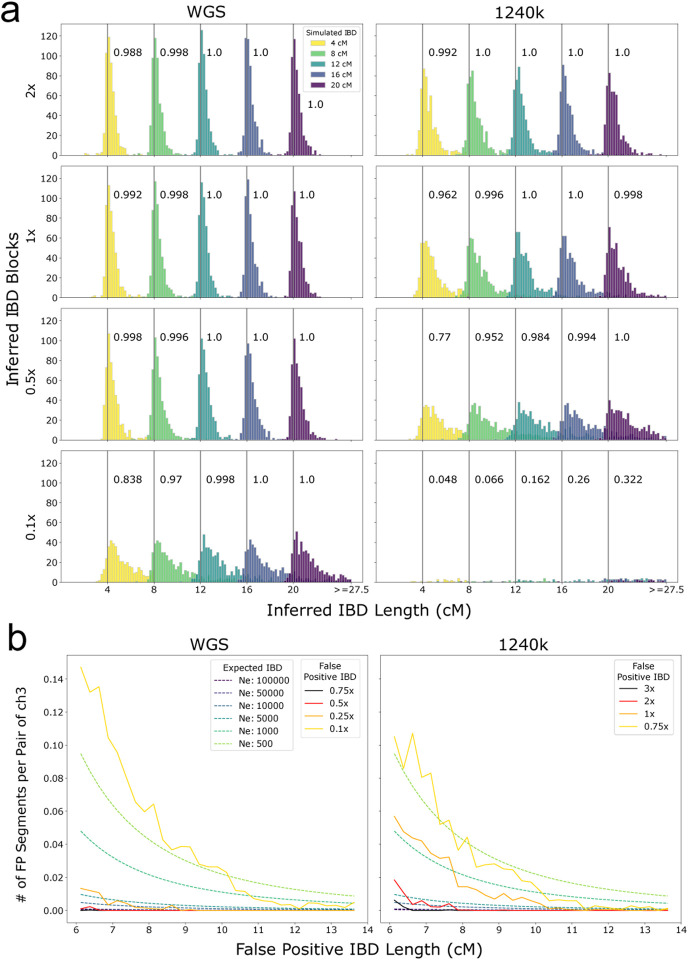
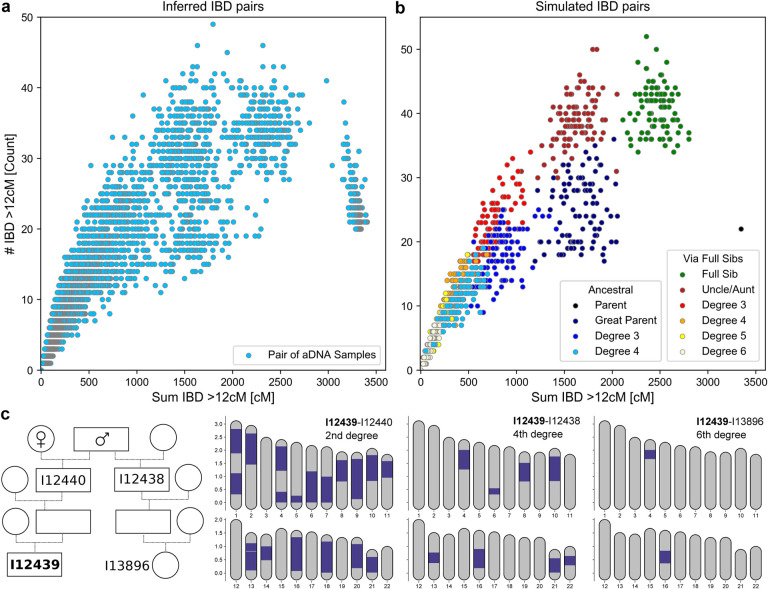
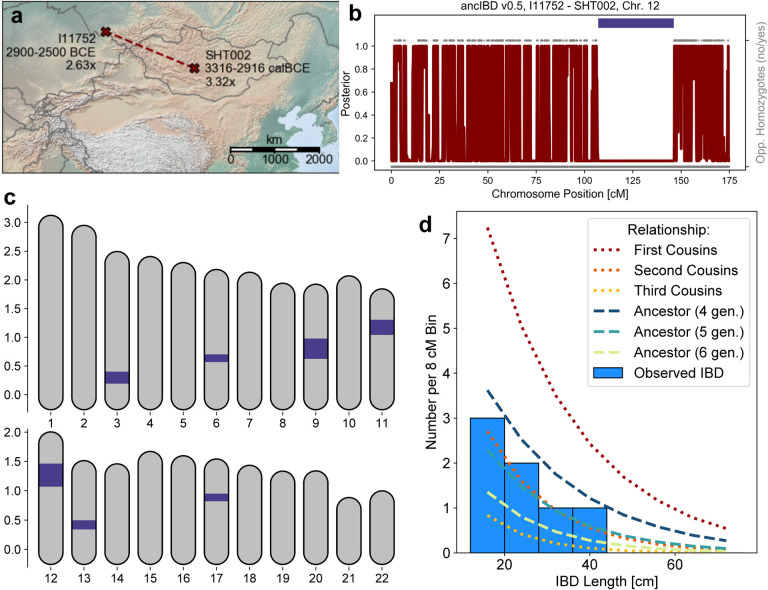
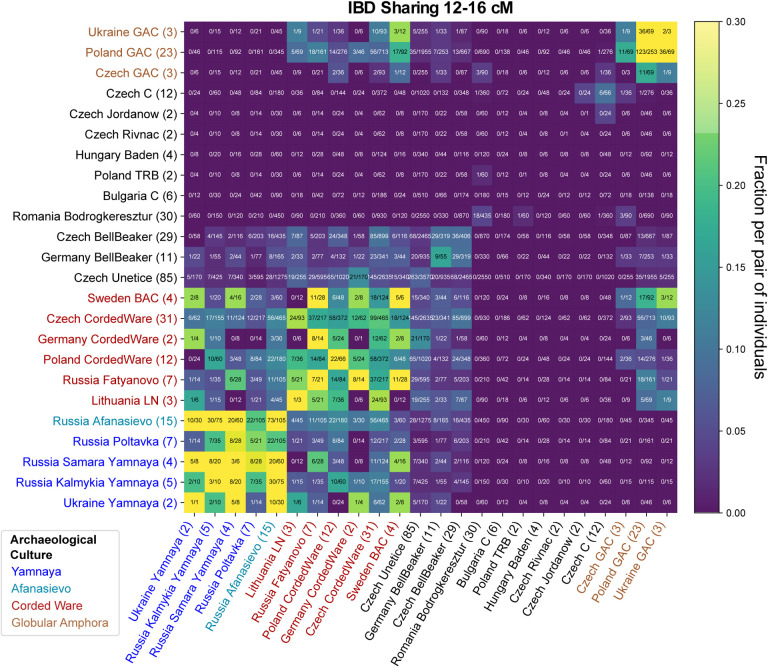
Long DNA segments shared between two individuals, known as identity-by-descent (IBD), reveal recent genealogical connections. Here we introduce ancIBD, a method for identifying IBD segments in ancient human DNA (aDNA) using a hidden Markov model and imputed genotype probabilities. We demonstrate that ancIBD accurately identifies IBD segments >8 cM for aDNA data with an average depth of >0.25× for whole-genome sequencing or >1× for 1240k single nucleotide polymorphism capture data. Applying ancIBD to 4,248 ancient Eurasian individuals, we identify relatives up to the sixth degree and genealogical connections between archaeological groups. Notably, we reveal long IBD sharing between Corded Ware and Yamnaya groups, indicating that the Yamnaya herders of the Pontic-Caspian Steppe and the Steppe-related ancestry in various European Corded Ware groups share substantial co-ancestry within only a few hundred years. These results show that detecting IBD segments can generate powerful insights into the growing aDNA record, both on a small scale relevant to life stories and on a large scale relevant to major cultural-historical events.
Overview
The claims and statistics of this paper haven’t been checked yet.
Run the check — free, no account needed. It reads the open-access text and checks the sources it cites.
Integrity signals
Registry
Cites
Statistics
Figures
Verification
Claims the paper makes
The claims and statistics of this paper haven’t been checked yet.
Run the check — free, no account needed. It reads the open-access text and checks the sources it cites.
Self-check
Percentages, sums and reported differences re-computed from the paper’s own numbers.
The self-check needs the paper’s full text.
Citations
Cites
A global reference for human genetic variation
The 1000 Genomes Project Consortium, authors, C., Auton, A., Abecasis, G. R., Steering committee, Altshuler, D. M., Durbin, R. M., Abecasis, G. R., Bentley, D. R., Chakravarti, A., et al. (2015) · Nature · doi:10.1038/nature15393 · Cited by 18,247
Durbin, R. M., Eddy, S. R., Krogh, A., & Mitchison, G. (1998) · Cambridge University Press eBooks · doi:10.1017/cbo9780511790492 · Cited by 3,255
Massive migration from the steppe was a source for Indo-European languages in Europe
Haak, W., Lazaridis, I., Patterson, N., Rohland, N., Mallick, S., Llamas, B., Brandt, G., Nordenfelt, S., Harney, E., Stewardson, K., et al. (2015) · Nature · doi:10.1038/nature14317 · Cited by 1,940
Self-citationPopulation genomics of Bronze Age Eurasia
Allentoft, M. E., Sikora, M., Sjögren, K.-G., Rasmussen, S., Rasmussen, M., Stenderup, J., Damgaard, P. B., Schroeder, H., Ahlström, T., Vinner, L., et al. (2015) · Nature · doi:10.1038/nature14507 · Cited by 1,550
Genome sequence of a 45,000-year-old modern human from western Siberia
Fu, Q., Li, H., Moorjani, P., Jay, F., Slepchenko, S. M., Bondarev, A. A., Johnson, P. L. F., Aximu-Petri, A., Prüfer, K., de Filippo, C., et al. (2014) · Nature · doi:10.1038/nature13810 · Cited by 1,023
Self-citationThe formation of human populations in South and Central Asia
Narasimhan, V. M., Patterson, N. J., Moorjani, P., Rohland, N., Bernardos, R. L., Mallick, S., Lazaridis, I., Nakatsuka, N. J., Olalde, Í., Lipson, M., et al. (2019) · Science · doi:10.1126/science.aat7487 · Cited by 819
Self-citationAn early modern human from Romania with a recent Neanderthal ancestor
Fu, Q., Hajdinjak, M., Moldovan, O. T., Constantin, S., Mallick, S., Skoglund, P., Patterson, N., Rohland, N., Lazaridis, I., Nickel, B., et al. (2015) · Nature · doi:10.1038/nature14558 · Cited by 802
Self-citationThe genomic history of southeastern Europe
Mathieson, I., Alpaslan-Roodenberg, S., Posth, C., Szécsényi‐Nagy, A., Rohland, N., Mallick, S., Olalde, Í., Broomandkhoshbacht, N., Candilio, F., Cheronet, O., et al. (2018) · Nature · doi:10.1038/nature25778 · Cited by 759
Self-citationImproving the Accuracy and Efficiency of Identity-by-Descent Detection in Population Data
Browning, B. L., & Browning, S. R. (2013) · Genetics · doi:10.1534/genetics.113.150029 · Cited by 649
Accurate, scalable and integrative haplotype estimation
Delaneau, O., Zagury, J., Robinson, M. R., Marchini, J., & Dermitzakis, E. T. (2019) · Nature Communications · doi:10.1038/s41467-019-13225-y · Cited by 604
Research works printed but not linked: 1
- Bishop, C. M. Pattern Recognition and Machine Learning (Information Science and Statistics) 627–628 (Springer, 2006).
Cited by
Sorted by citations
Extensive pedigrees reveal the social organization of a Neolithic community
Rivollat, M., Rohrlach, A. B., Ringbauer, H., Childebayeva, A., Mendisco, F., Barquera, R., Szolek, A., Roy, M. L., Colleran, H., Tuke, J., et al. (2023) · Nature · doi:10.1038/s41586-023-06350-8 · Cited by 118
Self-citationThe genetic origin of the Indo-Europeans
Lazaridis, I., Patterson, N. J., Anthony, D. W., Vyazov, L. A., Fournier, R., Ringbauer, H., Olalde, Í., Khokhlov, A. A., Kitov, E. P., Shishlina, N., et al. (2025) · Nature · doi:10.1038/s41586-024-08531-5 · Cited by 118
Self-citationREADv2: advanced and user-friendly detection of biological relatedness in archaeogenomics
Alaçamlı, E., Naidoo, T., Güler, M. N., Sağlıcan, E., Aktürk, Ş., Mapelli, I., Vural, K. B., Somel, M., Malmström, H., & Günther, T. (2024) · Genome biology · doi:10.1186/s13059-024-03350-3 · Cited by 89
Network of large pedigrees reveals social practices of Avar communities
Gnecchi‐Ruscone, G. A., Rácz, Z., Samu, L., Szeniczey, T., Faragó, N., Knipper, C., Friedrich, R., Zlámalová, D., Traverso, L., Liccardo, S., et al. (2024) · Nature · doi:10.1038/s41586-024-07312-4 · Cited by 75
Earliest modern human genomes constrain timing of Neanderthal admixture
Sümer, A. P., Rougier, H., Villalba-Mouco, V., Huang, Y., Iasi, L. N. M., Essel, E., Bossoms Mesa, A., Furtwaengler, A., Peyrégne, S., de Filippo, C., et al. (2025) · Nature · doi:10.1038/s41586-024-08420-x · Cited by 58
Self-citationChildebayeva, A., Fricke, F., Rohrlach, A. B., Huang, L. H., Schiffels, S., Vesakoski, O., Mannermaa, K., Semerau, L., Aron, F., Солодовников, К. Н., et al. (2024) · Communications Biology · doi:10.1038/s42003-024-06343-x · Cited by 48
Early contact between late farming and pastoralist societies in southeastern Europe
Penske, S., Rohrlach, A. B., Childebayeva, A., Gnecchi‐Ruscone, G. A., Schmid, C., Spyrou, M. A., Neumann, G. U., Atanassova, N., Beutler, K., Boyadzhiev, K., et al. (2023) · Nature · doi:10.1038/s41586-023-06334-8 · Cited by 44
Self-citationWang, M., Chen, H., Luo, L., Huang, Y., Duan, S., Yuan, H., Tang, R., Liu, C., & He, G. (2024) · Journal of genetics and genomics/Journal of Genetics and Genomics · doi:10.1016/j.jgg.2024.06.016 · Cited by 44
Self-citationHigh-resolution genomic history of early medieval Europe
Speidel, L., Silva, M. S. D., Booth, T. J., Raffield, B., Anastasiadou, K., Barrington, C., Götherström, A., Heather, P., & Skoglund, P. (2025) · Nature · doi:10.1038/s41586-024-08275-2 · Cited by 48
Descent, marriage, and residence practices of a 3,800-year-old pastoral community in Central Eurasia
Blöcher, J., Brami, M., Feinauer, I. S., Stolarczyk, E., Diekmann, Y., Vetterdietz, L., Karapetian, M. K., Winkelbach, L., Kokot, V., Vallini, L., et al. (2023) · Proceedings of the National Academy of Sciences · doi:10.1073/pnas.2303574120 · Cited by 45
Rohrlach, A. B., Tuke, J., Popli, D., & Haak, W. (2025) · The Journal of Open Source Software · doi:10.21105/joss.07916 · Cited by 36
Female lineages and changing kinship patterns in Neolithic Çatalhöyük
Yüncü, E., Doğu, A. K., Kaptan, D., Kılıç, M. S., Mazzucato, C., Güler, M. N., Eker, E., Katırcıoğlu, B., Chyleński, M., Vural, K. B., et al. (2025) · Science · doi:10.1126/science.adr2915 · Cited by 41
Prehistoric genomes from Yunnan reveal ancestry related to Tibetans and Austroasiatic speakers
Wang, T., Yang, M. A., Zhu, Z., Ma, M., Shi, H., Speidel, L., Min, R., Yuan, H., Jiang, Z., Hu, C., et al. (2025) · Science · doi:10.1126/science.adq9792 · Cited by 35
Ancient DNA reveals reproductive barrier despite shared Avar-period culture
Wang, K., Tóbiás, B., Pany‐Kucera, D., Berner, M. E., Eggers, S., Gnecchi‐Ruscone, G. A., Zlámalová, D., Gretzinger, J., Ingrová, P., Rohrlach, A. B., et al. (2025) · Nature · doi:10.1038/s41586-024-08418-5 · Cited by 37
Evidence for dynastic succession among early Celtic elites in Central Europe
Gretzinger, J., Schmitt, F., Mötsch, A., Carlhoff, S., Lamnidis, T. C., Huang, Y., Ringbauer, H., Knipper, C., Francken, M., Mandt, F., et al. (2024) · Nature Human Behaviour · doi:10.1038/s41562-024-01888-7 · Cited by 27
Self-citationKinship practices at the early bronze age site of Leubingen in Central Germany
Penske, S., Küßner, M., Rohrlach, A. B., Knipper, C., Nováček, J., Childebayeva, A., Krause, J., & Haak, W. (2024) · Scientific Reports · doi:10.1038/s41598-024-54462-6 · Cited by 24
Ancient DNA reveals a two-clanned matrilineal community in Neolithic China
Wang, J., Yan, S. L., Li, Z., Zan, J., Zhao, Y., Zhao, J. W., Chen, K., Wang, X., Ji, T., Zhang, C., et al. (2025) · Nature · doi:10.1038/s41586-025-09103-x · Cited by 22
Self-citationAncient DNA connects large-scale migration with the spread of Slavs
Gretzinger, J., Biermann, F., Mager, H., King, B., Zlámalová, D., Traverso, L., Gnecchi‐Ruscone, G. A., Peltola, S., Salmela, E., Neumann, G. U., et al. (2025) · Nature · doi:10.1038/s41586-025-09437-6 · Cited by 39
Yang, Q., Sun, Y., Duan, S., Nie, S., Liu, C., Hong, D., Wang, M., & He, G. (2025) · Genomics Proteomics & Bioinformatics · doi:10.1093/gpbjnl/qzaf022 · Cited by 21
Ancient Rapanui genomes reveal resilience and pre-European contact with the Americas
Moreno-Mayar, J. V., Sousa da Mota, B., Higham, T., Klemm, S., Gorman Edmunds, M., Stenderup, J., Iraeta-Orbegozo, M., Laborde, V., Heyer, E., Torres Hochstetter, F., et al. (2024) · Nature · doi:10.1038/s41586-024-07881-4 · Cited by 20
“We used IBDseq 40 and ancIBD 41 on the imputed genotypes and focused on segments ≥15 cM, which were inferred consistently across methods.”
Erven, J. A. M., Scheu, A., Verdugo, M. P., Cassidy, L. M., Chen, N., Gehlen, B., Street, M., Madsen, O., & Mullin, V. E. (2024) · Molecular Biology and Evolution · doi:10.1093/molbev/msae076 · Cited by 21
The rise and transformation of Bronze Age pastoralists in the Caucasus
Ghalichi, A., Reinhold, S., Rohrlach, A. B., Kalmykov, A., Childebayeva, A., He, Y. H., Aron, F., Semerau, L., Bastert-Lamprichs, K., Belinskiy, A. B., et al. (2024) · Nature · doi:10.1038/s41586-024-08113-5 · Cited by 18
Review: Computational analysis of human skeletal remains in ancient DNA and forensic genetics
Childebayeva, A., & Zavala, E. I. (2023) · iScience · doi:10.1016/j.isci.2023.108066 · Cited by 20
Tracing the spread of Germanic languages using ancient genomics
McColl, H., Kroonen, G., Moreno-Mayar, J. V., Seersholm, F. V., Scorrano, G., Pinotti, T., Vimala, T., Sindbæk, S. M., Ethelberg, P., Fyfe, R., et al. (2026) · Nature · doi:10.1101/2024.03.13.584607 · Cited by 30
Tian, Y., Koncz, I., Defant, S., Giostra, C., Vyas, D. N., Sołtysiak, A., Baricco, L. P., Fetner, R. A., Posth, C., Brandt, G., et al. (2024) · Proceedings of the National Academy of Sciences · doi:10.1073/pnas.2317868121 · Cited by 15
Punic people were genetically diverse with almost no Levantine ancestors
Ringbauer, H., Salman‐Minkov, A., Regev, D., Olalde, Í., Peled, T., Sìneo, L., Falsone, G., DOMMELEN, P. V., Mittnik, A., Lazaridis, I., et al. (2025) · Nature · doi:10.1038/s41586-025-08913-3 · Cited by 16
Self-citationThe genomic history of Iberian horses since the last Ice Age
Garrido, J. L., Tressières, G., Chauvey, L., Schiavinato, S., Tonasso‐Calvière, L., Seguin‐Orlando, A., Southon, J. R., Shapiro, B., Bataille, C. P., Birgel, J., et al. (2025) · Nature Communications · doi:10.1038/s41467-025-62266-z · Cited by 18
High continuity of forager ancestry in the Neolithic period of the eastern Maghreb
Lipson, M., Ringbauer, H., Lucarini, G., Aouadi, N., Aoudia, L., Belhouchet, L., Cheronet, O., Dahmani, A.-R., Genchi, F., Pastina, F. L., et al. (2025) · Nature · doi:10.1038/s41586-025-08699-4 · Cited by 20
Self-citationCarlhoff, S., Kutanan, W., Rohrlach, A. B., Posth, C., Stoneking, M., Nägele, K., Shoocongdej, R., & Krause, J. (2023) · Nature Communications · doi:10.1038/s41467-023-44328-2 · Cited by 14
READv2: Advanced and user-friendly detection of biological relatedness in archaeogenomicsPreprint
Alaçamlı, E., Naidoo, T., Aktürk, Ş., Güler, M. N., Mapelli, I., Vural, K. B., Somel, M., Malmström, H., & Günther, T. (2024) · bioRxiv (Cold Spring Harbor Laboratory) · doi:10.1101/2024.01.23.576660 · Cited by 13
Benchmarking kinship estimation tools for ancient genomes using pedigree simulations
Aktürk, Ş., Mapelli, I., Güler, M. N., Gürün, K., Katırcıoğlu, B., Vural, K. B., Sağlıcan, E., Çetin, M., Yaka, R., Sürer, E., et al. (2024) · Molecular Ecology Resources · doi:10.1111/1755-0998.13960 · Cited by 10
Ancient genomes reveal trans-Eurasian connections between the European Huns and the Xiongnu Empire
Gnecchi‐Ruscone, G. A., Rácz, Z., Liccardo, S., Lee, J., Huang, Y., Traverso, L., Radzevičiūtė, R., Hajnal, Z., Szécsényi‐Nagy, A., Gyuris, B., et al. (2025) · Proceedings of the National Academy of Sciences · doi:10.1073/pnas.2418485122 · Cited by 14
Self-citationAncient DNA from Shimao city records kinship practices in Neolithic China
Chen, Z., Gardner, J. D., Sun, Z., Bennett, E. A., Han, Q., Pei, X., Shao, J., Shi, H., Wang, W., Xue, J., et al. (2025) · Nature · doi:10.1038/s41586-025-09799-x · Cited by 12
Out-of-Anatolia: Cultural and genetic interactions during the Neolithic expansion in the Aegean
Koptekin, D., Aydoğan, A., Karamurat, C., Altınışık, N. E., Vural, K. B., Kazancı, D. D., Doğu, A. K., Kaptan, D., Gemici, H. C., Yüncü, E., et al. (2025) · Science · doi:10.1126/science.adr3326 · Cited by 14
Schütz, O., Maróti, Z., Tihanyi, B., Kiss, A. P., Nyerki, E., Gînguță, A., Kiss, P., Varga, G. I. B., Kovács, B., Maár, K., et al. (2025) · Cell · doi:10.1016/j.cell.2025.05.009 · Cited by 12
Lasting Lower Rhine–Meuse forager ancestry shaped Bell Beaker expansion
Olalde, Í., Altena, E., Bourgeois, Q. P. J., Fokkens, H., Amkreutz, L. W. S. W., Baetsen, S., Deguilloux, M., Fichera, A., Flas, D., Gandini, F., et al. (2026) · Nature · doi:10.1038/s41586-026-10111-8 · Cited by 17
Self-citationEstimating effective population size trajectories from time-series identity-by-descent segments
Huang, Y., Carmi, S., & Ringbauer, H. (2025) · Genetics · doi:10.1093/genetics/iyae212 · Cited by 9
Self-citationAncient genomes reveal Avar-Hungarian transformations in the 9th-10th centuries CE Carpathian Basin
Gerber, D., Csáky, V., Szeifert, B., Borbély, N., Jakab, K., Mező, G., Petkes, Z., Szücsi, F., Évinger, S., Líbor, C., et al. (2024) · Science Advances · doi:10.1126/sciadv.adq5864 · Cited by 12
The genomic footprints of migration: how ancient DNA reveals our history of mobility
Williams, M. P., & Huber, C. D. (2025) · Genome biology · doi:10.1186/s13059-025-03664-w · Cited by 8
Yang, T., He, J., Li, C., Ning, C., Zhang, T., Wang, J., Hai, Z., Wang, G., Jia, X., Zhang, C., et al. (2025) · Nature Communications · doi:10.1038/s41467-025-63743-1 · Cited by 9
Self-citationEvaluation of ancient DNA imputation: a simulation study
Escobar‐Rodríguez, M., & Veeramah, K. R. (2024) · Human Population Genetics and Genomics · doi:10.47248/hpgg2404010002 · Cited by 7
Estimating realized relatedness in free-ranging macaques by inferring identity-by-descent segments
Freudiger, A., Jovanović, V., Huang, Y., Snyder‐Mackler, N., Conrad, D. F., Miller, B., Montague, M. J., Westphal, H., Stadler, P. F., Bley, S., et al. (2025) · Proceedings of the National Academy of Sciences · doi:10.1073/pnas.2401106122 · Cited by 6
Self-citationNägele, K., Kinaston, R. L., Gaffney, D., Walworth, M., Rohrlach, A. B., Carlhoff, S., Huang, Y., Ringbauer, H., Bertolini, E., Tromp, M., et al. (2025) · Nature Ecology & Evolution · doi:10.1038/s41559-025-02710-x · Cited by 8
Self-citationAncient DNA reveals diverse community organizations in the 5th millennium BCE Carpathian Basin
Szécsényi‐Nagy, A., Virag, C., Jakab, K., Rohland, N., Ringbauer, H., Anders, A., Raczky, P., Hajdu, T., Kiss, K., Szeniczey, T., et al. (2025) · Nature Communications · doi:10.1038/s41467-025-60368-2 · Cited by 8
Self-citationАндреева, Т. В., Дмитриевна, С. А., Gusev, F. E., Malyarchuk, A. B., Доценко, Г. С., Dudko, N. A., Plotnikova, M. Y., Станиславовна, К. С., Manakhov, A. D., Ustkachkintseva, T. V., et al. (2025) · Science Advances · doi:10.1126/sciadv.ads8179 · Cited by 8
Gyuris, B., Vyazov, L. A., Türk, A., Flegontov, P., Szeifert, B., Langó, P., Mende, B. G., Csáky, V., Chizhevskiy, A. A., Gazimzyanov, I. R., et al. (2025) · Cell · doi:10.1016/j.cell.2025.09.002 · Cited by 9
Self-citationBeyond Genetics: Exploring Aspects of Non-Biological Kinship in Prehistoric Times
Sabina, C., Corral, A. M. H., Rebay‐Salisbury, K., Eszter, B., Brami, M., Chaix, R., Hrnčíř, V., Kent, J., David, F. L., Roy, M. L., et al. (2025) · Nature anthropology · doi:10.70322/natanthropol.2025.10016 · Cited by 6
A genetic window into the human social past
Orlando, L. (2023) · Proceedings of the National Academy of Sciences · doi:10.1073/pnas.2312672120 · Cited by 6
Population, culture history, and the dynamics of change in European prehistory★
Shennan, S. J. (2024) · Journal of the Royal Anthropological Institute · doi:10.1111/1467-9655.14153 · Cited by 8
The Genetic Origin of the Indo-EuropeansPreprint
Lazaridis, I., Patterson, N. J., Anthony, D. W., Vyazov, L. A., Fournier, R., Ringbauer, H., Olalde, Í., Khokhlov, A. A., Kitov, E. P., Shishlina, N., et al. (2024) · bioRxiv (Cold Spring Harbor Laboratory) · doi:10.1101/2024.04.17.589597 · Cited by 6
Self-citationPower and Limitations of Inferring Genetic Ancestry
Bird, N., King, T., & Hellenthal, G. (2025) · Annals of Human Genetics · doi:10.1111/ahg.70007 · Cited by 5
Multiple-testing corrections in selection scans using identity-by-descent segments
Temple, S. D., & Browning, S. R. (2025) · The American Journal of Human Genetics · doi:10.1016/j.ajhg.2025.09.004 · Cited by 5
Optimizing Strategy for Whole-Genome Genotype Imputation in Scallops
Wang, Y., Yao, R., Zhao, L., Zhang, Q., Li, M., Kong, X., Liu, P., Huang, S., Hu, C., Bao, Z., et al. (2024) · Aquaculture · doi:10.1016/j.aquaculture.2024.741492 · Cited by 5
Archaeogenetic analysis revealed East Eurasian paternal origin to the Aba royal family of Hungary
Varga, G. I. B., Maróti, Z., Schütz, O., Maár, K., Nyerki, E., Tihanyi, B., Váradi, O. A., Gînguță, A., Kovács, B., Kiss, P., et al. (2024) · iScience · doi:10.1016/j.isci.2024.110892 · Cited by 9
Bourgeois, Q. P. J., Helmecke, F., Olerud, L., Djakovic, I., González, M. G. C., & Kroon, E. (2025) · Science Advances · doi:10.1126/sciadv.adx2262 · Cited by 4
Furtwängler, A., Rebay‐Salisbury, K., Neumann, G. U., Kanz, F., Ringbauer, H., Bianco, R. A., Schmidt, T., Semerau, L., Radzevičiūtė, R., Barquera, R., et al. (2025) · Nature Communications · doi:10.1038/s41467-025-67906-y · Cited by 5
Self-citationGenomes of the Golden Horde elites and their implications for the rulers of the Mongol Empire
Askapuli, A., Kanzawa‐Kiriyama, H., Kakuda, T., Kassenalı, A., Yessen, S., Schamiloglu, U., Schrodi, S. J., Hawks, J. D., & Saitou, N. (2026) · Proceedings of the National Academy of Sciences · doi:10.1073/pnas.2531003123 · Cited by 5
Biological and substitute parents in Beaker period adult–child graves
Zedda, N., Meheux, K., Blöcher, J., Diekmann, Y., Gorelik, A. V., Kalle, M., Klein, K., Titze, A.-L., Winkelbach, L., Naish, E., et al. (2023) · Scientific Reports · doi:10.1038/s41598-023-45612-3 · Cited by 5
Veselka, B., Reich, D., Capuzzo, G., Olalde, Í., Callan, K. A., Zalzala, F., Altena, E., Goffette, Q., Ringbauer, H., van der Velde, H. M., et al. (2024) · Antiquity · doi:10.15184/aqy.2024.158 · Cited by 3
Self-citationTales from the end of the world: three decades of paleogenetic research in Patagonia
Castro, C. D. L. F., Motti, J. M. B., Arencibia, V., & Luisi, P. (2024) · Human Population Genetics and Genomics · doi:10.47248/hpgg2404010003 · Cited by 4
L’ADN ancien parle de plus en plus
Jordan, B. (2024) · médecine/sciences · doi:10.1051/medsci/2024070 · Cited by 4
High-resolution genomic ancestry reveals mobility in early medieval EuropePreprint
Speidel, L., Silva, M. S. D., Booth, T. J., Raffield, B., Anastasiadou, K., Barrington, C., Götherström, A., Heather, P., & Skoglund, P. (2024) · bioRxiv (Cold Spring Harbor Laboratory) · doi:10.1101/2024.03.15.585102 · Cited by 4
Yediay, F. E., Kroonen, G., Sabatini, S., Frei, K. M., Frank, A. B., Pinotti, T., Wigman, A., Thorsø, R., Vimala, T., McColl, H., et al. (2024) · bioRxiv (Cold Spring Harbor Laboratory) · doi:10.1101/2024.12.02.626332 · Cited by 8
Genomic profiling of a six-generation patrilineal family of the Ming-Qing dynasties in China
Wang, J., Zhang, T., Jia, X., Zhang, Z., He, J., Ning, C., Wang, J., Yang, T., Wang, G., Pang, Y., et al. (2025) · iScience · doi:10.1016/j.isci.2025.112968 · Cited by 3
Self-citationLi, R., Zang, Y., Liu, Z., Yang, J., Wang, N., Liu, J., Wu, E., Wu, R., & Sun, H. (2025) · Genomics Proteomics & Bioinformatics · doi:10.1093/gpbjnl/qzaf055 · Cited by 3
Nordfors, U., Peltola, S., O’Sullivan, R. J., Valtueña, A. A., Lamnidis, T. C., Majander, K., Traverso, L., Krause, J., Salmela, E., & Onkamo, P. (2025) · iScience · doi:10.1016/j.isci.2025.113086 · Cited by 3
Gill, H., Seidualy, M., Lee, J., Lee, J., Moon, H., Walter, A., Bianco, R. A., Kurmangaliev, A. K., Рахманкулов, Е., Самашев, З., et al. (2025) · Science Advances · doi:10.1126/sciadv.adw8219 · Cited by 3
Fibiger, L., Iraeta-Orbegozo, M., Koledin, J., Laffoon, J. E., Makarewicz, C. A., Mylopotamitaki, D., Bruyère, C., Booth, T. J., Ramsey, C. B., Layfield, R., et al. (2026) · Nature Human Behaviour · doi:10.1038/s41562-025-02399-9 · Cited by 3
Self-citationOrfanou, E., Ghalichi, A., Rohrlach, A. B., Paust, E., Valtueña, A. A., Ernée, M., Furmanek, M., Hałuszko, A., Hermes, T. R., Himmel, M., et al. (2026) · Nature Communications · doi:10.1038/s41467-026-69895-y · Cited by 3
Skourtanioti, E., Jia, X., Tavartkiladze, N., Bitadze, L., Shengelia, R., Tushabramishvili, N., Aslanishvili, V., Gasparyan, B., Kandel, A. W., Naumann, D., et al. (2025) · Cell · doi:10.1016/j.cell.2025.07.013 · Cited by 7
Self-citationAncient DNA reveals the origins of the AlbaniansPreprint
Davranoglou, L., Lauka, A., Aristodemou, A., Maróti, Z., Bojaxhi, G., Muhaj, A., Mikerezi, I., Wesolowski, D., Joseph, B. D., & Heraclides, A. (2023) · bioRxiv (Cold Spring Harbor Laboratory) · doi:10.1101/2023.06.05.543790 · Cited by 3
Genomic history and selection in Roman and early medieval BritainPreprint
Silva, M. S. D., Booth, T. J., Anastasiadou, K., McCabe, J., Barrington, C., Kelly, M., Williams, M., Mohamedy, Y., Masters, M., Gilardet, A., et al. (2026) · bioRxiv (Cold Spring Harbor Laboratory) · doi:10.64898/2026.04.28.721361 · Cited by 3
Genetic Insights into Ancient Kinship and Human History: Methods, Applications, and Implications
Wang, L., Duan, C., & Ning, C. (2025) · Nature anthropology · doi:10.70322/natanthropol.2025.10009 · Cited by 2
Slab Grave expansion disrupted long co-existence of distinct Bronze Age herders in central Mongolia
Lee, J., Brosseder, U. B., Moon, H., Stahl, R., Semerau, L., Gantulga, J.-O., Magail, J., Bemmann, J., Yeruul-Erdene, C., Warinner, C., et al. (2025) · Nature Communications · doi:10.1038/s41467-025-63789-1 · Cited by 2
Hajdu, T., Borbély, N., Bernert, Z., Buzár, Á., Szeniczey, T., Major, I., Cavazzuti, C., Molnár, M., Horváth, A., Palcsu, L., et al. (2025) · Forensic Science International Genetics · doi:10.1016/j.fsigen.2025.103381 · Cited by 3
Self-citationDetecting and quantifying networks of biological kinship via exponential family random graph models
Rohrlach, A. B., Gnecchi‐Ruscone, G. A., Hofmanová, Z., Rácz, Z., Roughan, M., Haak, W., & Tuke, J. (2026) · Genetics · doi:10.1093/genetics/iyag053 · Cited by 2
Lefeuvre, M., Marsolier‐Kergoat, M., & Bon, C. (2026) · Genome biology · doi:10.1186/s13059-026-04016-y · Cited by 4
Varela, R., Pochon, Z., Mas-Sandoval, À., Yaka, R., Fortes‐Lima, C., Ruiz, A. G.-R., Márquez‐Grant, N., Marí, J., Echávarri, G. G., Abárzuza, A. F., et al. (2026) · Nature Communications · doi:10.1038/s41467-026-70615-9 · Cited by 2
Allelic association analyses: estimation recommendations
Weir, B. S., & Goudet, J. (2026) · Genetics · doi:10.1093/genetics/iyag088 · Cited by 2
Zhur, K. V., Сергеевич, Ш. Ф., Leonova, M. V., Mey, A., Prokhortchouk, E., & Trifonov, V. A. (2024) · iScience · doi:10.1016/j.isci.2024.110963 · Cited by 2
Unveiling the narrative behind the neonate burials at Lepenski Vir in present-day Serbia
Žegarac, A., Jovanović, J., Blagojević, T., de Becdelièvre, C., & Stefanović, S. (2025) · Journal of Archaeological Science · doi:10.1016/j.jas.2025.106214 · Cited by 2
Skourtanioti, E., Jia, X., Tavartkiladze, N., Bitadze, L., Shengelia, R., Tushabramishvili, N., Neumann, G. U., Bianco, R. A., Mötsch, A., Prüfer, K., et al. (2024) · bioRxiv (Cold Spring Harbor Laboratory) · doi:10.1101/2024.06.11.597880 · Cited by 2
Self-citationRaiyn, J., Rayan, A., Abu‐Lafi, S., & Rayan, A. (2024) · BioTech · doi:10.3390/biotech13030033 · Cited by 1
Fontani, F., Larocca, F., Cilli, E., Iacovera, R., Andrews, A. J., Latorre, A., Arena, F., Veneziano, R., Calcagnile, L., Quarta, G., et al. (2025) · Communications Biology · doi:10.1038/s42003-025-09194-2 · Cited by 2
Self-citationAn ancient DNA perspective on the Russian conquest of Yakutia
Crubézy, É., Guarino‐Vignon, P., Seguin‐Orlando, A., Sarkissian, C. S. I. D., Hanghøj, K., Duchesne, S., Gérard, P., Thèves, C., Alcouffe, A., Romanova, L., et al. (2026) · Nature · doi:10.1038/s41586-025-09856-5 · Cited by 1
Golubiński, M., Baca, M., Popović, D., Speidel, L., Schiffels, S., Niezabitowska-Wiśniewska, B., Kokowski, A., & Molak, M. (2026) · Genome biology · doi:10.1186/s13059-026-03969-4 · Cited by 1
MetaGLIMPSE: Meta-imputation of low-coverage sequencing data for modern and ancient genomes
Kumar, K. H., Rubinacci, S., & Zoellner, S. (2026) · The American Journal of Human Genetics · doi:10.1016/j.ajhg.2026.02.004 · Cited by 3
Moon, H., Kim, D., Hiss, A. N., Lee, D.-N., Lee, J., Skourtanioti, E., Gnecchi‐Ruscone, G. A., Krause, J., Woo, E. J., & Jeong, C. (2026) · Science Advances · doi:10.1126/sciadv.ady8614 · Cited by 1
Scrutinizing Kinship and Biological Relatedness Through the Lens of Palaeogenomics
Amorim, C. E. G., & Raff, J. (2026) · Cambridge Archaeological Journal · doi:10.1017/s0959774326100432 · Cited by 1
Kinship Trouble: What, When, Where, Why, and How—and So What?
Cveček, S., Raghavan, M., & Bickle, P. (2026) · Cambridge Archaeological Journal · doi:10.1017/s0959774326100389 · Cited by 1
Cveček, S., & Gingrich, A. (2026) · Cambridge Archaeological Journal · doi:10.1017/s0959774326100390 · Cited by 1
Ancient DNA evidence for the history of the Albanians
Davranoglou, L., Lauka, A., Aristodemou, A., Maróti, Z., Bojaxhi, G., Muhaj, A., Mikerezi, I., Wesolowski, D., Joseph, B. D., & Heraclides, A. (2026) · Nature Human Behaviour · doi:10.1038/s41562-026-02462-z · Cited by 5
Peltola, S., Nordfors, U., Arppe, L., Oinonen, M., Sarkkinen, M., Voutilainen, M., Majander, K., Lamnidis, T. C., Traverso, L., Krause, J., et al. (2026) · BMC Genomics · doi:10.1186/s12864-026-12962-x · Cited by 1
Unveiling the complexity of post-Roman polity formation in Pannonia using ancient DNA
Tian, Y., Koncz, I., Faragó, N., Knipper, C., Friedrich, R., Vyas, D. N., Samu, L., Spekker, O., Szeniczey, T., Hajdu, T., et al. (2026) · Science · doi:10.1126/science.aec2634 · Cited by 2
Equal in death: Ancient genomic analysis of children’s early Christian burials
Krzewińska, M., Kjellström, A., Yaka, R., Varela, R., Pochon, Z., Lagerholm, V. K., Hedenstierna‐Jonson, C., Zachrisson, T., Kashuba, N., Sobrado, V., et al. (2026) · Science Advances · doi:10.1126/sciadv.aeb8588 · Cited by 1
Fraser, M., Sánchez‐Quinto, F., Kırdök, E., Ausmees, K., Kılınç, G. M., Larena, M., Correa-Mendoza, L., Meur, A. L., Blanchet, A., Bergfeldt, N., et al. (2026) · Communications Biology · doi:10.1038/s42003-026-10498-0 · Cited by 1
DNA insights into Neolithic society
Sirak, K. A. (2023) · Nature Human Behaviour · doi:10.1038/s41562-023-01668-9 · Cited by 1
Historic Genomes Uncover Demographic Shifts and Kinship Structures in Post-Roman Central EuropePreprint
Blöcher, J., Vallini, L., Velte, M., Eckel, R., Guyon, L., Winkelbach, L., Thomas, M., Gharehbaghi, N., Mitchell, C. T., Schümann, J., et al. (2025) · bioRxiv (Cold Spring Harbor Laboratory) · doi:10.1101/2025.03.01.640862 · Cited by 1
Olalde, Í., Altena, E., Bourgeois, Q. P. J., Fokkens, H., Amkreutz, L. W. S. W., Deguilloux, M., Fichera, A., Flas, D., Gandini, F., Kegler, J. F., et al. (2025) · bioRxiv (Cold Spring Harbor Laboratory) · doi:10.1101/2025.03.24.644985 · Cited by 1
Self-citationLong-distance kinship in megalithic EuropePreprint
Krause‐Kyora, B., da Silva, N. A., Nebel, A., Kolbe, D., Myburgh, D., Klimscha, F., Görner, I., Fuchs, K., Meyer, C., Schierhold, K., et al. (2025) · Research Square · doi:10.21203/rs.3.rs-6464608/v1 · Cited by 1
Metadata
- Authors
- Ringbauer, H., Huang, Y., Akbari, A., Mallick, S., Olalde, I., Patterson, N., & Reich, D.
- Affiliations
- Harvard University (US)
- Max Planck Institute for Evolutionary Anthropology (DE)
- Broad Institute (US)
- Corresponding author
- Ringbauer, Harald
- Reich, David
- ORCID
- Venue
- Nature Genetics
- Published
- 2023-12-20
- Volume
- 56
- Issue
- 1
- Pages
- 143-151
- ISSN
- 1061-4036 (ISSN-L)
- 1546-1718
- PMC
- PMC10028887
- OpenAlex
- W4390070832
- Cited by
- 155
- References
- 65
- Citations by year
- 2026: 62 · 2025: 49 · 2024: 32 · 2023: 12
- FWCI
- 25.73
- Type
- journal article
- Language
- en
- Open access
- hybrid
- doi.org
- Locations
- Nature Genetics (publishedVersion, cc-by)
- bioRxiv (Cold Spring Harbor Laboratory) (acceptedVersion, cc-by-nc-nd)
- PubMed Central (publishedVersion, cc-by)
- PubMed (publishedVersion)
- PubMed Central (submittedVersion, cc-by-nc-nd)
- Funders
- Max-Planck-Gesellschaft
- U.S. Department of Health & Human Services | National Institutes of Health (HG012287)
- John Templeton Foundation (61220)
- Topics
- Life Sciences › Biochemistry, Genetics and Molecular Biology › Genetics › Forensic and Genetic Research
- Life Sciences › Biochemistry, Genetics and Molecular Biology › Genetics › Genetic diversity and population structure
- Life Sciences › Biochemistry, Genetics and Molecular Biology › Genetics › Genetic Associations and Epidemiology
- Keywords
- identity by descent, ancient DNA, hidden Markov models, genotype imputation, coancestry, Corded Ware, Yamnaya, Steppe ancestry
About these checks
Registry, retraction, Cites and statistics results are computed, not judged, with one exception: a printed reference that no index lists is read once by a model before it counts as a citation error. Claims are extracted by a model and kept only when their quote appears verbatim in the text; each cited source is then checked, with a model’s help, for whether it says what the claim relies on. Those verdicts can be wrong — read the claim’s quote and the cited source before relying on one.
Statistics and arithmetic are recomputed, not judged.
Confidence bands are shown only for fields calibrated on our annotated test set. None is calibrated yet, so no band is shown.
What counts as a claim ›How we measure confidence ›How we check this ›
Are you an author, or do you see a problem with this page? Request a review
