

The DOI matches its Crossref record; 56 of the 56 references it cites were found in a registry or an index.
High-definition spatial transcriptomic profiling of immune cell populations in colorectal cancer
Open accessAbstract
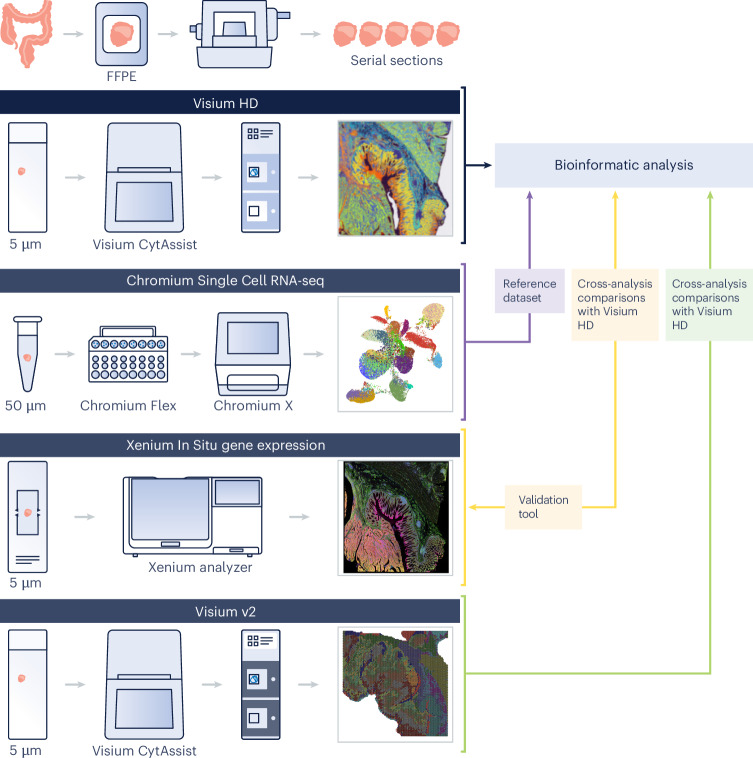
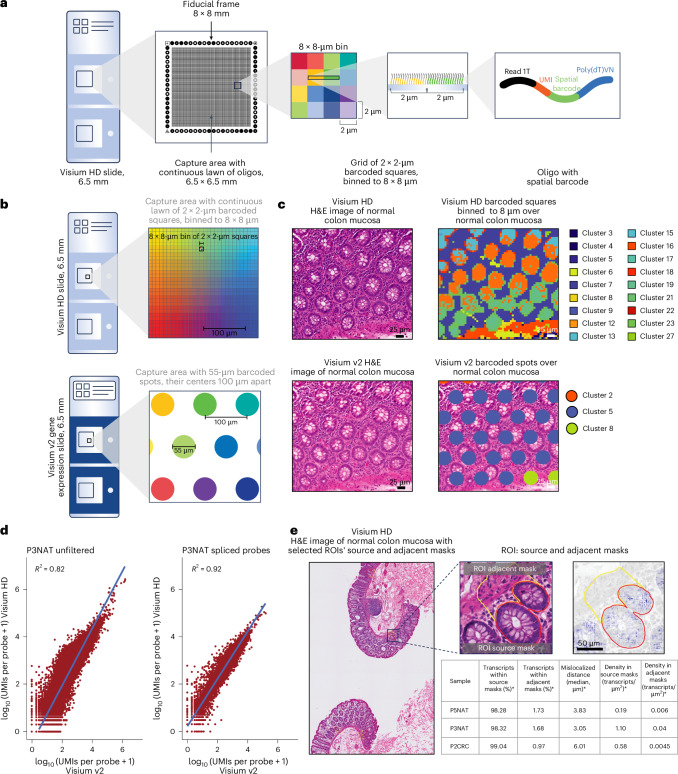
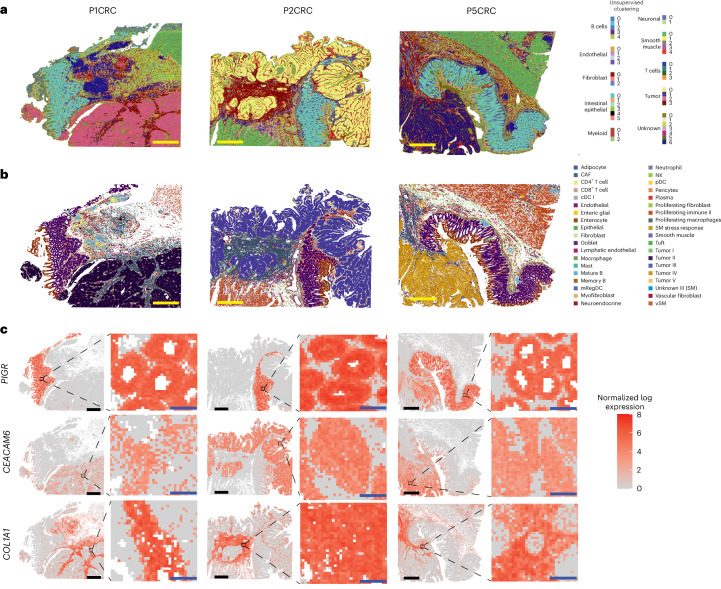
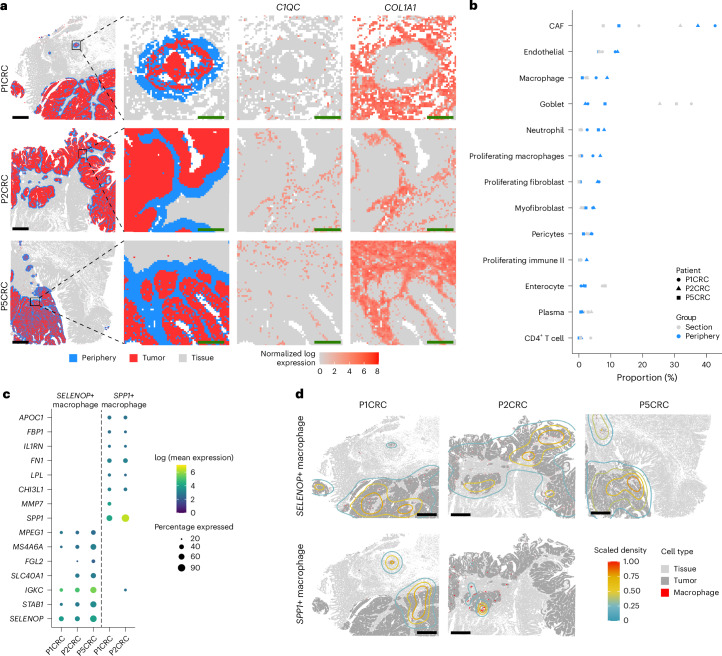
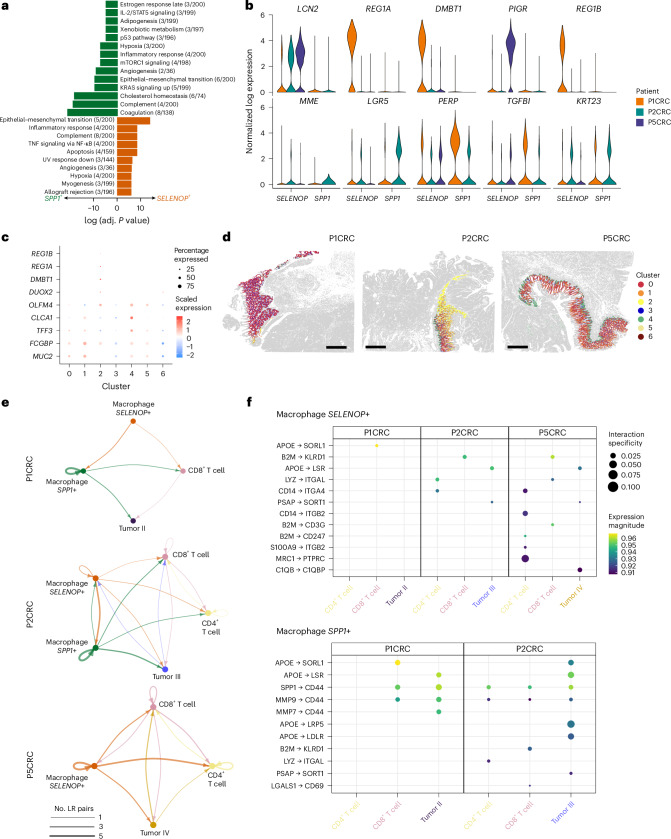
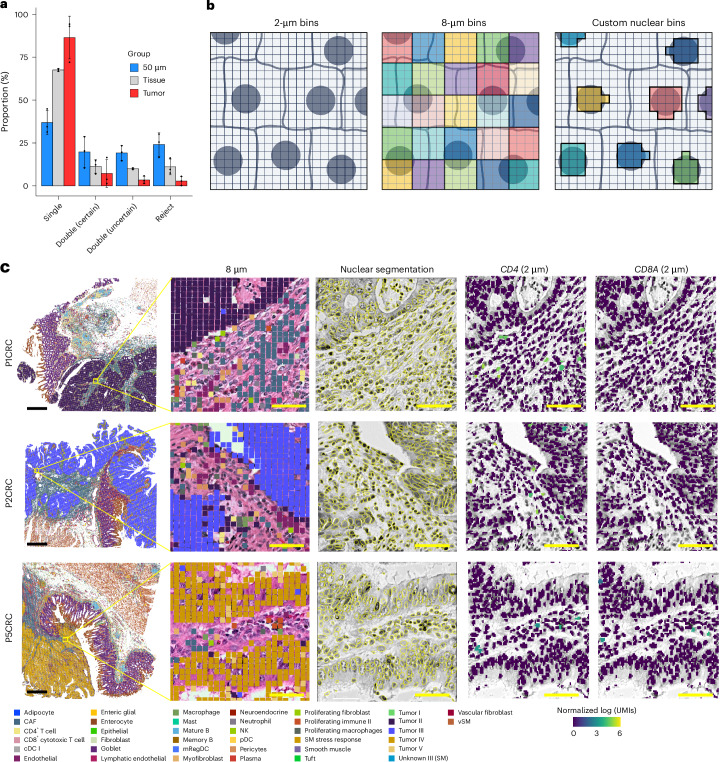
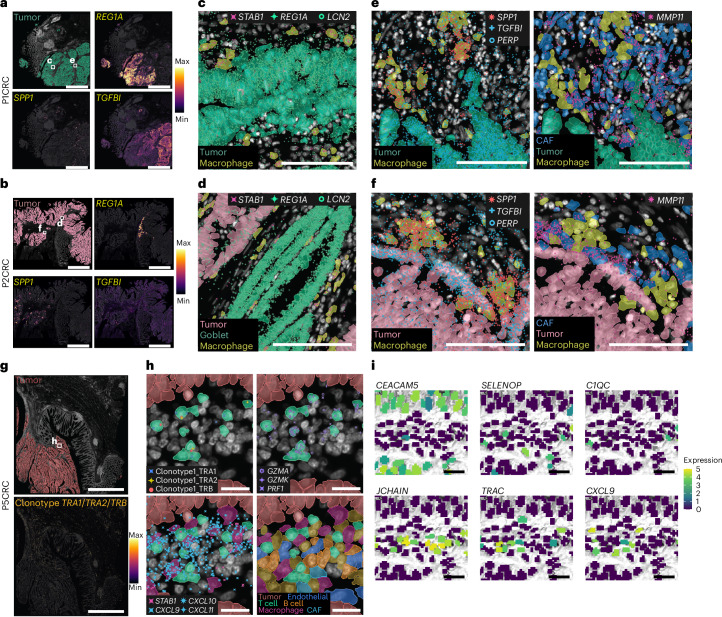
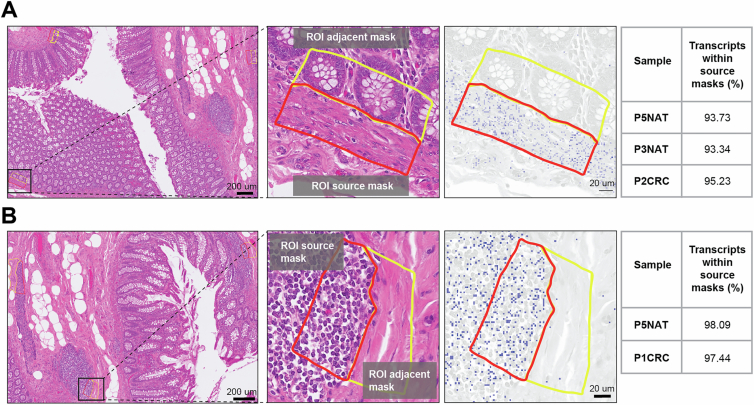
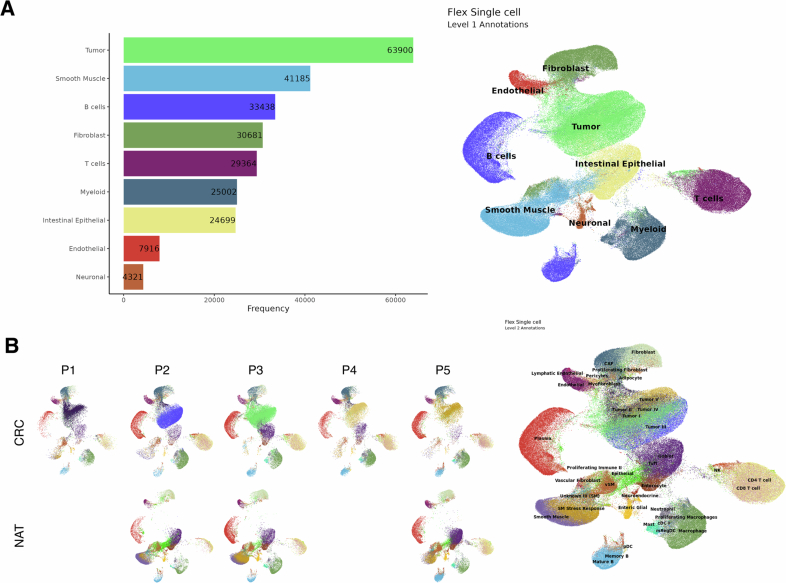
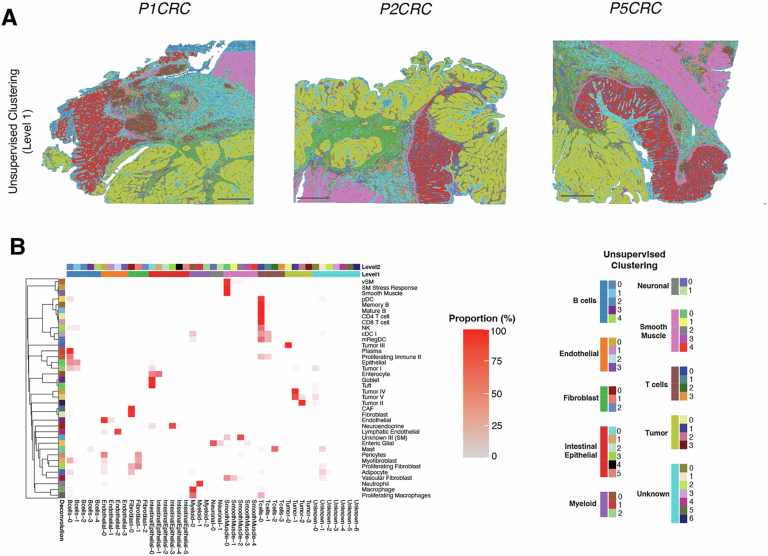
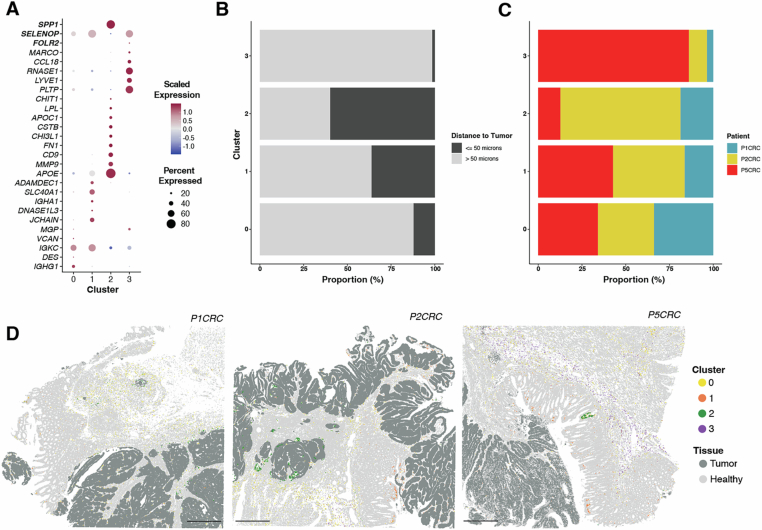
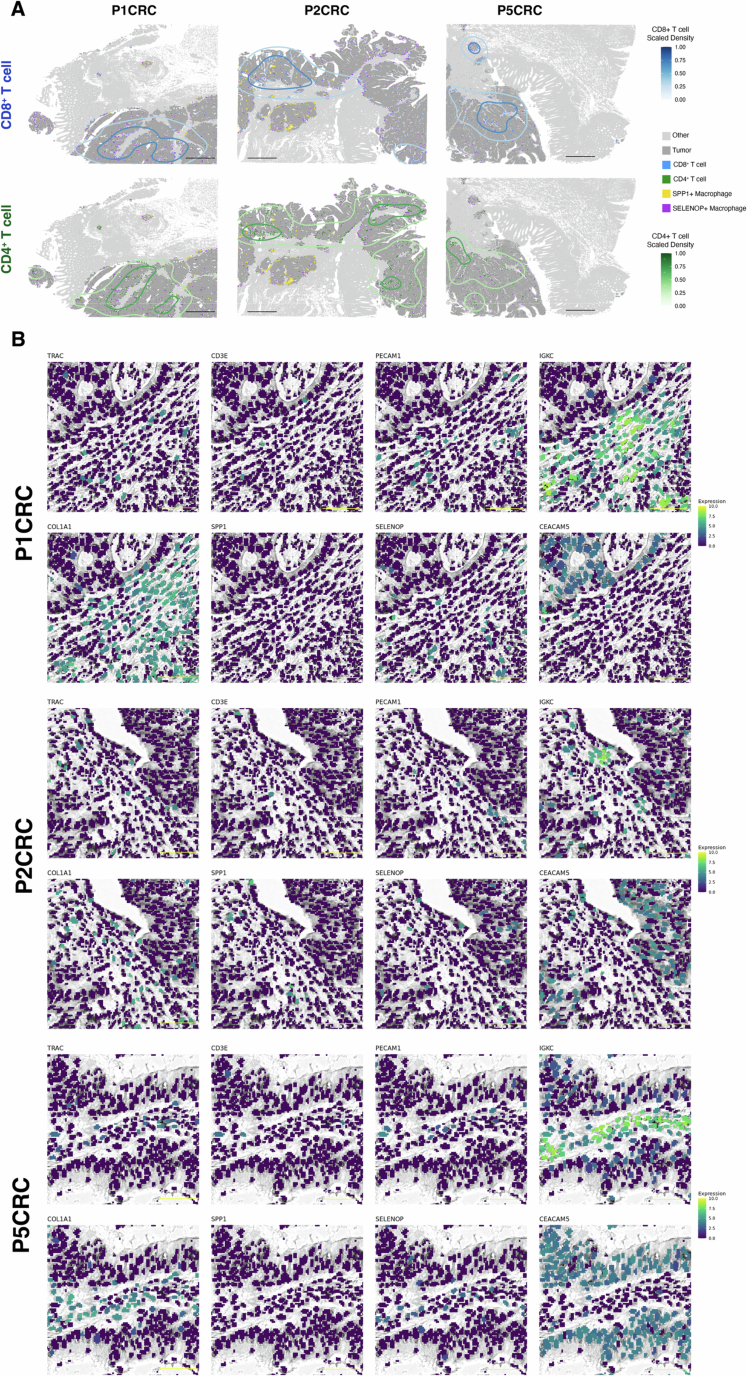
A comprehensive understanding of cellular behavior and response to the tumor microenvironment (TME) in colorectal cancer (CRC) remains elusive. Here, we introduce the high-definition Visium spatial transcriptomic technology (Visium HD) and investigate formalin-fixed paraffin-embedded human CRC samples (n = 5). We demonstrate the high sensitivity, single-cell-scale resolution and spatial accuracy of Visium HD, generating a highly refined whole-transcriptome spatial profile of CRC samples. We identify transcriptomically distinct macrophage subpopulations in different spatial niches with potential pro-tumor and anti-tumor functions via interactions with tumor and T cells. In situ gene expression analysis validates our findings and localizes a clonally expanded T cell population close to macrophages with anti-tumor features. Our study demonstrates the power of high-resolution spatial technologies to understand cellular interactions in the TME and paves the way for larger studies that will unravel mechanisms and biomarkers of CRC biology, improving diagnosis and disease management strategies.
Overview
The claims and statistics of this paper haven’t been checked yet.
Run the check — free, no account needed. It reads the open-access text and checks the sources it cites.
Integrity signals
Registry
Cites
Statistics
Figures
Verification
Claims the paper makes
The claims and statistics of this paper haven’t been checked yet.
Run the check — free, no account needed. It reads the open-access text and checks the sources it cites.
Claims other papers make about this one
Each is checked against this paper’s own text: does it say what the citing paper says it does?
The source backs part of the claim, not all of it — or backs it for a different population, condition or comparison.
In the citing paper
“Moreover, vascular-immune interactions were primarily inferred from histological proximity, flow cytometry and gene-expression patterns; spatial transcriptomics and single-cell multiomics approaches will be valuable for elucidating cell-type-specific crosstalk at single-cell resolution 54,55 .”
From Vascularized human skin assembloids model compartmental skin organization and immune responsiveness in vitro (2026) · cites this paper as [54]
Experimental — accuracy not yet measured
Self-check
Percentages, sums and reported differences re-computed from the paper’s own numbers.
The self-check needs the paper’s full text.
Citations
Cites
The Molecular Signatures Database Hallmark Gene Set Collection
Liberzon, A., Birger, C., Thorvaldsdóttir, H., Ghandi, M., Mesirov, J. P., & Tamayo, P. (2015) · Cell Systems · doi:10.1016/j.cels.2015.12.004 · Cited by 13,807
QuPath: Open source software for digital pathology image analysis
Bankhead, P., Loughrey, M. B., Fernández, J. A., Dombrowski, Y., McArt, D. G., Dunne, P. D., McQuaid, S., Gray, R. T., Murray, L. J., Coleman, H. G., et al. (2017) · Scientific Reports · doi:10.1038/s41598-017-17204-5 · Cited by 8,908
Dictionary learning for integrative, multimodal and scalable single-cell analysis
Hao, Y., Stuart, T., Kowalski, M. H., Choudhary, S., Hoffman, P., Hartman, A., Srivastava, A., Molla, G., Madad, S., Fernandez-Granda, C., et al. (2024) · Nature Biotechnology · doi:10.1038/s41587-023-01767-y · Cited by 5,631
The consensus molecular subtypes of colorectal cancer
Guinney, J., Dienstmann, R., Wang, X., de Reyniès, A., Schlicker, A., Soneson, C., Marisa, L., Roepman, P., Nyamundanda, G., Angelino, P., et al. (2015) · Nature Medicine · doi:10.1038/nm.3967 · Cited by 5,170
Global colorectal cancer burden in 2020 and projections to 2040
Xi, Y., & Xu, P. (2021) · Translational Oncology · doi:10.1016/j.tranon.2021.101174 · Cited by 2,633
Immunotherapy in colorectal cancer: Rationale, challenges and potential
Ganesh, K., Stadler, Z. K., Cercek, A., Mendelsohn, R. B., Shia, J., Segal, N. H., & Diaz, L. A. (2019) · Nature Reviews Gastroenterology & Hepatology · doi:10.1038/s41575-019-0126-x · Cited by 1,954 · cited 1×
“Figure 7D has been updated to show SELENOP +/ STAB1 + macrophages near REG1A + cells.”
CXCL9, CXCL10, CXCL11/CXCR3 axis for immune activation - a target for novel cancer therapy
Tokunaga, R., Zhang, W., Naseem, M., Puccini, A., Berger, M. D., Soni, S., McSkane, M., Baba, H., & Lenz, H.-J. (2018) · Cancer Treatment Reviews · doi:10.1016/j.ctrv.2017.11.007 · Cited by 1,627 · cited 2×
“Figure 7D has been updated to show SELENOP +/ STAB1 + macrophages near REG1A + cells.”
Single-Cell Analyses Inform Mechanisms of Myeloid-Targeted Therapies in Colon Cancer
Zhang, L., Li, Z., Skrzypczynska, K. M., Fang, Q., Zhang, W., O’Brien, S. A., He, Y., Wang, L., Zhang, Q., Kim, A., et al. (2020) · Cell · doi:10.1016/j.cell.2020.03.048 · Cited by 1,620 · cited 1×
“These cells were localized in microenvironments with a higher density of SELENOP +/ STAB1 + macrophages (Figure 4D) .”
Colon Cancer Survival Rates With the New American Joint Committee on Cancer Sixth Edition Staging
O'Connell, J. B., Maggard, M. A., & Ko, C. Y. (2004) · JNCI Journal of the National Cancer Institute · doi:10.1093/jnci/djh275 · Cited by 1,598 · cited 1×
“Additionally, comparing these metrics with other high-resolution methods like Stereo-seq or Seq-scope could enhance the manuscript's appeal and provide a clearer benchmark for readers.”
Robust decomposition of cell type mixtures in spatial transcriptomics
Cable, D. M., Murray, E., Zou, L. S., Goeva, A., Macosko, E. Z., Chen, F., & Irizarry, R. A. (2022) · Nature Biotechnology · doi:10.1038/s41587-021-00830-w · Cited by 1,487
Research works printed but not linked: 1
- Avraham-Davidi, I. et al. Spatially defined multicellular functional units in colorectal cancer revealed from single cell and spatial transcriptomics. eLife 14, RP104815 (2025).
Cited by
Sorted by citations
Items 201–300 of 316
CXCR3 signaling promotes Delta One T cell recruitment and antitumor efficacy in colorectal cancer
Carreira, M., Barros, L., Cruz, R. M., Ferreira, C., Costa, C., Ferreira, C. M., Mensurado, S., Silva‐Santos, B., & Blanco-Domínguez, R. (2026) · Journal for ImmunoTherapy of Cancer · doi:10.1136/jitc-2025-014668
“21 Here, we observed that overexpression of these ligands by the malignant CRC TME correlates with TRDV1 expression, suggesting that CXCR3 may also contribute to the infiltration or retention of endogenous V δ 1 T cells.”
TopOmics: Topic Modelling for All OmicsPreprint
Caretti, F., Kazwini, N. E., & Sanguinetti, G. (2026) · bioRxiv (Cold Spring Harbor Laboratory) · doi:10.64898/2026.05.26.727810
“Major advances in sequencing technologies have enabled the direct measurement of many such molecular players [1, 2, 3], as well as the quantification of their spatial variability at the single cell or near-single-cell resolution [4, 5].”
Muscat, S. N., Lecaj, E., Sparks, N., Kollar, A., Kroening, E., Buckley, M. R., & Nichols, A. E. C. (2026) · bioRxiv (Cold Spring Harbor Laboratory) · doi:10.64898/2026.05.28.722285
“Voluntary Wheel Running (VWR), however, does not require a negative stimulus, as it takes advantage of a mouse’s natural inclination to run (34).”
platpy: A spatial-first framework for multi-layer spatial transcriptomic analysisPreprint
Maynard, T. M. (2026) · bioRxiv (Cold Spring Harbor Laboratory) · doi:10.64898/2026.05.26.727917
“The emergence of accessible spatial transcriptomic platforms such as 10X Visium HD [1] and Xenium [2] has caught the attention of biologists across disparate fields.”
STID: A Standardized Spatial Transcriptomic Analysis Framework for Infectious DiseasesPreprint
Qin, Y., Peng, Y., Chen, Q., Chen, J., Ren, P., Deng, H., Wang, D., Liu, X., Ou, Z., Deng, Z., et al. (2026) · SSRN Electronic Journal · doi:10.64898/2026.05.24.727492
“Spatial transcriptomics technologies enable quantitative transcriptome-wide profiling while preserving tissue spatial information 3,4 and have been widely applied in developmental biology 5 , cancer research 6 , and neuroanatomy 7 , thereby facilitating systematic analysis of the structural and…”
The applications of single cell RNA-seq and spatial transcriptomics in organ transplantation
Fan, Z., Li, X., Jiang, P., Wang, X., Teng, D., & Cai, J. (2026) · Transplantation Reviews · doi:10.1016/j.trre.2026.101028
MGCL-ST: multi-view graph contrastive learning for spatial transcriptomics imputation
Chen, J., Huang, W., Chen, X., Ding, S., Liao, Y., Cai, S., & Cai, H. (2026) · Genome Medicine · doi:10.1186/s13073-026-01683-1
“The data used in this study primarily originates from multiple slices obtained from the 10X Visium platform [20], mouse brain data collected using the Visium HD platform [21], and tumor-related data provided from the Xenium platform [22, 23].”
Cellpin enables reference-based imputation and denoising of spatial transcriptomesPreprint
Putze, P., Lucarelli, D., Wellappili, D., Bahrami, M., Luecken, M. D., Theis, F. J., & Saur, D. (2026) · bioRxiv (Cold Spring Harbor Laboratory) · doi:10.64898/2026.06.02.729566
“We performed a five-fold held-out gene prediction using paired single-cell 23–27 and spatially resolved transcriptomics 24,25,28 datasets ( Supplementary Table 1 ) spanning diverse cell types, tissue origins, and transcriptional states ( Fig.”
Yu, N., Jin, Z., Zhu, S., Hu, Z., Tang, X., Liang, C., Zhang, J., & Yang, B. (2026) · Analytical Chemistry · doi:10.1021/acs.analchem.6c01070 · Cited by 2
Spatial Transcriptomics Open a New Era of Pan-Cancer Analysis
Sheng, Y., Yang, Y., Zhang, R., Li, M., & Ge, Q. (2026) · Cancer Investigation · doi:10.1080/07357907.2026.2681845
Heterogeneity of macrophages in PD-1/PD-L1 inhibitor therapy: a single-cell perspective
Wu, J., Zhou, D., Jiang, K., Li, Z., Yao, Y., Rao, S., Yang, X., & Luo, D. (2026) · Cellular & Molecular Biology Letters · doi:10.1186/s11658-026-00956-2
“The spatial colocalization of SPP1 + TAMs, tumor cells, and cancer-associated fibroblasts (CAFs) creates a synergistic protumorigenic niche [77].”
Robust integration of weakly anchored spatial multi-omicsPreprint
Wang, C., Liu, Y., Wang, Z., Sun, P., Li, Z., Li, J., Wang, X., Chen, K. C., Zou, Q., Zhang, D., et al. (2026) · bioRxiv (Cold Spring Harbor Laboratory) · doi:10.64898/2026.06.10.731246
SECTOR: structural entropy-based learning of spatiotemporal organisation in spatial transcriptomics
Huang, L., Zhang, J., Gong, W., Zeng, G., Peng, H., & Chen, D. (2026) · Bioinformatics · doi:10.1093/bioinformatics/btag367
“…(Moffitt et al. 2018), STARmap mouse cortex (Wang et al. 2018) and BaristaSeq mouse primary cortex (Long et al. 2023); and modern large-scale high-resolution ST, including Visium HD colorectal cancer (CRC) (Oliveira et al. 2025) and Xenium infiltrating ductal carcinoma (IDC) (Bhuva et al. 2024).”
InfluentialIntegrative transcriptomic analysis reveals tumor-adjacent mucosal remodeling in colorectal cancer
Wu, S., Wu, L., Li, R., et al. (2026) · Functional & Integrative Genomics · doi:10.1007/s10142-026-02066-w
“…extent and cellular origin of adjacent-tissue alterations may vary according to sampling distance, anatomical region, tissue composition, cell type, platform, and analytical design (Roelands et al. 2023; Guan et al. 2025; de Oliveira et al. 2025; Raude et al. 2026; Avraham-Davidi et al. 2025 ).”
Yamasaki, R. (2026) · Research Square · doi:10.21203/rs.3.rs-10093252/v1
STORM: spatial transcriptomics optimization by resolution via matrix factorization
Gurarslan, D., Camargo, O., Zeyveli, O., Almalıoğlu, Y., Li, Y., Turan, M., & Kahveci, T. (2026) · Briefings in Bioinformatics · doi:10.1093/bib/bbag324
“Sequencing-based platforms, including Visium [ 7], Stereo-seq [ 8], and GeoMx [ 9], use spatially indexed sequencing to provide genome-wide coverage.”
Kim, S.-H. (2026) · Bioinformatics Advances · doi:10.1093/bioadv/vbag176
Fayyad‐Kazan, M. (2026) · Molecular Biology Reports · doi:10.1007/s11033-026-12209-8
“Spatial mapping further highlights that Treg function depends on their localization and interactions within the tumor microenvironment, providing critical insight for therapeutic design [92, 93].”
Decoding the complexity of intestinal immunity with spatial transcriptomics
Suarez-Alvarez, M., Ulloa, M. A., & Villablanca, E. J. (2026) · Current Opinion in Immunology · doi:10.1016/j.coi.2026.102806
Tian, J., Xu, F., Gao, Y., & Quan, M. (2026) · International Immunopharmacology · doi:10.1016/j.intimp.2026.117054
Multimodal Human Scalp Atlas Defines Cell Landscape and Lineage Architecture In SituPreprint
Li, E. B., Stephens, C. M., Klay, M., Carcamo, A., Han, J., Quan, V. L., Colavincenzo, M. L., Pearlman, R. L., Yoo, S. S., Wang, D., et al. (2026) · bioRxiv (Cold Spring Harbor Laboratory) · doi:10.64898/2026.06.29.735239
Oo, H. M., Anekpuritanang, T., Angkathunyakul, N., Degirmenci, U., Pongpaibul, A., Punyawatthananukool, S., Korphaisarn, K., & Sampattavanich, S. (2026) · bioRxiv (Cold Spring Harbor Laboratory) · doi:10.64898/2026.06.28.734525
Targeting the Barriers Driving Immune Exclusion
Álvarez-Lorenzo, S., Inés, V.-Q., & Velasco-Velázquez, M. A. (2026) · Pharmaceuticals · doi:10.3390/ph19071012
Huang, R., & Goods, B. A. (2026) · Reproduction · doi:10.1093/reprod/xaag079 · Cited by 1
Li, B., Song, H., Dai, Y., & Wu, X. (2026) · Frontiers in Cell and Developmental Biology · doi:10.3389/fcell.2026.1788177
“…stromal programs are regionally organized and that vessel-proximal or niche-specific neighborhoods can contain transcriptional states not captured by bulk profiling or dissociated single-cell analysis alone (Wang YF. et al., 2022; Ren et al., 2023; Greenwald et al., 2024; Oliveira et al., 2025).”
wang, H., Yang, X., Wang, S., Yang, Z., Yang, X., Yang, Y., Li, Z., Ren, Y., Zhang, Q., Zhao, B., et al. (2026) · iMeta · doi:10.1002/imt2.70146
BAG3+ CAF-T cell neighborhood predicts resistance to neoadjuvant chemoimmunotherapy in NSCLC
Sun, J., Cao, Z., Jin, Y., et al. (2026) · Frontiers in Immunology · doi:10.3389/fimmu.2026.1823199
Mapping the dialogue: Decoding alveolar stem–niche interactions
Nabhan, A. N., Biton, A., Everrett, C., Foo, C., Wu, D., Webster, J. D., Alam, A. A., Penna, E., Rost, S., Rohatgi, N., et al. (2026) · Proceedings of the National Academy of Sciences · doi:10.1073/pnas.2606113123
Immune-epithelial crosstalk governs immune checkpoint inhibitor efficacy in colorectal cancer
Lee, S. L., Bateman, A. C., Ashton‐Key, M., Primrose, J. N., Mirnezami, A., Al‐Shamkhani, A., & Thirdborough, S. M. (2026) · iScience · doi:10.1016/j.isci.2026.116544
Larionova, I. V., Shmakova, E. O., Ямщиков, П. С., Ямщикова, С. А., Чердынцева, Н. В., & Kzhyshkowska, J. G. (2026) · Molecular Biology · doi:10.1134/s0026893325604963
“CXCL13+ CTLs expressed GZMB and IFNG, and their accumulation within and around tumor regions is consistent with treatment-associated cytotoxic T-cell activity [31].”
Angulo-Valdez, D. S., Garcia-Thomas, M. E., Guijarro, M. V., Palmer, G. D., Paniz‐Mondolfi, A., Cordon‐Cardo, C., & Balzano‐Nogueira, L. (2026) · Diagnostic histopathology · doi:10.1016/j.mpdhp.2026.06.013
D3aist: data-driven detection of atypical interactions in spatial transcriptomics
León, T., Domingo, J., Ayala, G., & Riffo‐Campos, Á. L. (2026) · BMC Genomics · doi:10.1186/s12864-026-13147-2
“For each of the three colorectal cancer patients analyzed in the GSE280318 dataset [16], the figure presents a sequential visualization of spatial transcriptomic information within tumor micro-environment (TME) regions previously defined and analyzed by de Oliveira et al. [22].”
InfluentialNiu, J., Sun, W., Gong, R., & Pan, Q. (2026) · Clinical & Translational Oncology · doi:10.1007/s12094-026-04496-1
Cai, Z., Zhang, J., Ding, Y., et al. (2026) · Cellular & Molecular Biology Letters · doi:10.1186/s11658-026-00991-z
“Visium HD enables near single-cell spatial resolution through a densely packed array of contiguous 2 × 2 µm barcoded features [29].”
Wang, Z., Yang, C., Tang, X., Yin, E., Yao, Y., Luo, Y., He, J., & Sun, N. (2026) · Genome Medicine · doi:10.1186/s13073-026-01713-y
“(2) Shared expert isolation: we reserve a fraction of the experts (e.g. 1 out of 8) to be always active for every token as shared experts.”
Spatial multiomics to inform immunocytokine engineering: knowledge base, gaps, and QC solutions
Patel, P., Batty, L. D., Bleck, M., & Nathan, S. (2026) · Frontiers in Immunology · doi:10.3389/fimmu.2026.1852790
Spatial Topology Reveals Biologically Distinct Recurrent Motifs in Colorectal CancerPreprint
Yao, J., Yang, Y., Jiang, Y., Zhou, Q., Cai, L., Shi, W., Chi, Z., Quan, P., Buhaya, M. H., Yao, B., et al. (2026) · bioRxiv (Cold Spring Harbor Laboratory) · doi:10.64898/2026.07.09.737584
“The development of single-cell-resolution spatial transcriptomic platforms such as Xenium 4 , MERFISH 5,6 , VisiumHD 7 and CosMx 8 has made it possible to map the cellular ecosystems of solid tumors at unprecedented detail, but tools that exploit this resolution to identify recurrent multicellular…”
Xie, J., Tan, X., Jiang, Y., Nguyen, H., Ye, N., & Nguyen, Q. H. (2026) · Bioinformatics Advances · doi:10.1093/bioadv/vbag202
“Recently, Visium HD has further refined this process by utilizing a continuous grid of 2 μ m capture squares, significantly increasing the resolution of spatial molecular profiling (de Oliveira et al .”
Heilijgers, F., Le, H., Coudray, N., Karimkhan, A., Chen, D., Peeters, K. C. M. J., Hacking, S. M., Mesker, W. E., & Tsirigos, A. (2026) · bioRxiv (Cold Spring Harbor Laboratory) · doi:10.64898/2026.07.15.738753
Organism-scale annotation with Pan-human AzimuthPreprint
Sarkar, S., Li, Z., Molla, G., Shenoy, A., Zhang, B. Y., Collins, D., Vasilevsky, N., Gaut, J. P., Puig-Barbe, A., Bueckle, A., et al. (2026) · bioRxiv (Cold Spring Harbor Laboratory) · doi:10.64898/2026.07.16.738997 · Cited by 2
“Finally, Pan-human Azimuth extends naturally to high-resolution spatial transcriptomic data: when applied to Visium HD kidney samples 26,27 , it recovers canonical cortical organization and supports classification of healthy and sclerosed glomeruli in agreement with expert pathologist annotations.”
Huang, L., Östman, A., & Sun, Y. (2026) · Clinical and Translational Medicine · doi:10.1002/ctm2.70742
Machado, M., He, M., Galicia, L. A., Andrusivová, Ž., Perisynaki, E., Myers, M. W., Giatrellis, S., O'Toole, S. A., Kiedik, B., Mauron, R., et al. (2026) · bioRxiv (Cold Spring Harbor Laboratory) · doi:10.64898/2026.09.07.749790
Wang, S., Shi, Q., Xu, W., Haibo, L. I., Zhu, L., Chen, M., Li, S., Guo, L., Zhao, L., Xing, B., et al. (2026) · Frontiers in Immunology · doi:10.3389/fimmu.2026.1857240
Redefining healthy human liver zonation using high-resolution spatial multiomics
Ramachandran, P. (2026) · Journal of Hepatology · doi:10.1016/j.jhep.2026.07.002
SpatialFlux: an R package for distance gradient analysis in spatial transcriptomics
Sokolowskei, D., Trostle, A. J., Shah, A., & Tower, R. J. (2026) · Bioinformatics · doi:10.1093/bioinformatics/btag543
“SpatialFlux is an R programming package applicable to 10 × genomics Visium/VisiumHD-based (Ståhl et al. 2016, Oliveira et al. 2025) ST data and employs Seurat package object data format (Hao et al. 2024) as input.”
Towards liquid biopsy-based analysis of antitumour immunity
Pantel, K., Masmoudi, D., & Alix‐Panabières, C. (2026) · Nature Reviews Clinical Oncology · doi:10.1038/s41571-026-01181-8 · Cited by 1
“…have offered new insights into the crosstalk between cancer cells and immune cells in the tumour microenvironment (TME), revealing spatially organized immune niches, distinct macrophage subpopulations and immunosuppressive cell interactions that are associated with tumour progression 1–3 .”
Gui, K., Chen, Y., Du, Q., Lv, K., Wang, W. Y., Li, Z., Cheng, Y., Wu, W., Tang, M., Zhang, C., et al. (2026) · Journal of Translational Medicine · doi:10.1186/s12967-026-08678-x
“These findings describe a P4HA1 ⁺ CAF subpopulation closely associated with spatially organized tumor niches and multiple tumor-related processes in CRC. previously published study [16], while two high-resolution spatial transcriptomic datasets were obtained from GSE280315 [17].”
Gu, Y., & Jia, G. (2026) · Genomics Communications · doi:10.48130/gcomm-0026-0016
Fishing with two lines: a hybrid approach to spatial transcriptomics discovery
Williams-Katek, A. L., Mallapragada, S., Mee, E. D., et al. (2026) · Life Science Alliance · doi:10.26508/lsa.202603690
“Sequencing-based technologies generally rely on a pull-down method of probe or transcript binding to a separate capture oligonucleotide (4).”
Feature screening in clustering analysis
Chen, Z., Wang, X., Wang, X., & Xi, R. (2026) · Scientia Sinica Mathematica · doi:10.1360/ssm-2026-0017
Chen, Y., Chen, R., Zhang, S., & Chen, Y. (2026) · Briefings in Bioinformatics · doi:10.1093/bib/bbag404
“Even with recently developed high-resolution platforms such as Visium HD ( ∼ 2 μ m resolution) [ 14], integration with scRNA-seq remains valuable because different protocols capture distinct aspects of transcriptional and technical variation [ 15].”
Integrative spatial profiling of 3D genome organization and gene expression in tissue
Guo, P., Cui, Y., He, J., Waldman, A. J., Zhu, J., Chen, Y., Huang, Z., Zhou, J., Phillips‐Cremins, J. E., & Deng, Y. (2026) · Cell · doi:10.1016/j.cell.2026.07.039
Dang, J. L., Hu, Q., Lu, Y., Wang, J., Li, X., Chen, Y., Zhao, J., Liu, Y., Wang, J., Zang, N., et al. (2026) · Cancer Letters · doi:10.1016/j.canlet.2026.218772
Shimizu, K., Sanpei, A., Liu, Y., Ishibashi, T., Yanagawa, M., Nakazato, H., Shinga, J., Ueda, S., Yamasaki, S., & Fujii, S. (2026) · Cancer Research · doi:10.1158/0008-5472.can-25-4957
Betanzos, C. M., Federspiel, J. D., Syed, J., Pillai, S. P. S., Vargas, S., Coskran, T., & Ocaña, M. F. (2026) · Journal of Proteome Research · doi:10.1021/acs.jproteome.6c00389
Jia, P., Chu, L., Ren, Z., Cui, H., & Shao, B. (2026) · bioRxiv (Cold Spring Harbor Laboratory) · doi:10.64898/2026.08.02.741948
Image-guided spatial omics enhancement reveals hidden spatial microstructures
Liu, J., Luo, G., Liu, Q.-M., Dong, S., Wang, G., & Zhao, Y.-M. (2026) · Bioinform. · doi:10.1093/bioinformatics/btag596
“To more stringently assess whether Bell can recover genuine high-resolution spatial molecular patterns, rather than artifacts introduced by simulated downsampling, we selected one human lung cancer dataset and one human tonsil dataset generated by high-resolution Visium HD (Oliveira et al. 2025).”
Khatri, A., McKernan, C. M., Swearingen, A. E. D. V., Jain, V., Thrash, H. L., Towne, A., Gu, J., Gregory, S. G., Anders, C. K., & Pendergast, A. M. (2026) · iScience · doi:10.1016/j.isci.2026.116517 · Cited by 1
Spatial ecotype in tumor immune exclusion: from spatial architecture to therapeutic strategies
Ying, M., Zhang, L., Jia, M., Sun, X., Su, Y., Liu, C., Gong, M., Sun, T., & Zhang, B. (2026) · Molecular Cancer · doi:10.1186/s12943-026-02766-8
“The mainstream sequencing-based spatial transcriptomic platforms, including Visium [97], Visium HD [98], Slide-seq [99], and Stereo-seq [14], integrate spatial barcoding with whole-transcriptome capture, enabling the localization of gene expression from multicellular to subcellular scales.”
Kong, W., Wu, C., Chen, Y.-H., Li, J.-Y., Tin, K. X., Lee, Y., Soh, Z. T., Wu, C.-S., Chang, Y., Li, W., et al. (2026) · Nature Plants · doi:10.1038/s41477-026-02364-y
“While these factors currently restrict cellular-level resolution of vein initiation, rapidly advancing technologies—including Visium HD 70 and other sub-cellular Resource https://doi.org/10.1038/s41477-026-02364-y high-throughput spatial platforms—are expected to overcome these constraints,…”
InfluentialSTRESS: spatial transcriptomics resolution enhancing method based on the state-space model
Wang, X., Ye, F., Zhao, Y., Wang, F., Ma, L., & Liu, X. (2026) · Briefings in Bioinformatics · doi:10.1093/bib/bbag444
“Recently, high-resolution ST technologies, represented by Visium HD [ 15], have been developed.”
Guo, L., Tong, B., 高晓敏, Jia, X., Liu, X., Li, L., Xu, M., Zhang, Y., Wang, J., Liu, Q., et al. (2026) · Cell Genomics · doi:10.1016/j.xgen.2026.101335
“Most GI at-lases focus primarily on model mammals, emphasizing development, 2,29,30 tissue organization, 31–33 regeneration, 34 organoid, 8,35 GI conservation, 36 immunity, 37 cancers, 38,39 and other diseases, 1,40 with limited evolutionary scope.”
Jiang, T., Zhang, S., Chen, X., Xiao, X., Cao, W., Li, W., Zhao, T. Z., Li, B., Xu, X., & Li, Z. (2026) · Advanced Science · doi:10.1002/advs.77240
“The dataset comprised 545913 spatial spots and 18, 085 genes [ 32 ].”
Babu, P., Prakash, V., Subhash, S., Vanuopadath, M., Haripriyan, J., Rajan, K., Anu, A. G., Padmakumar, S., Kumar, G. B., Nair, B. G., et al. (2026) · Frontiers in Cellular and Infection Microbiology · doi:10.3389/fcimb.2026.1905445 · Cited by 1
An integrated spatially defined roadmap of normal and cancer-associated colon fibroblasts
Viitala, E. W., Salminen, E. S., Miihkinen, M., Lemmetyinen, T. T., Sévigny, M., Porvari, K. K., Malpani, T., Chalkidi, N., Stavropoulou, A., Päivinen, P., et al. (2026) · Molecular Systems Biology · doi:10.1038/s44320-026-00247-0 · Cited by 2
The microbiota-NK cell axis in colorectal cancer: a spatial and subset-centric framework
Wen, J., Gao, Y., Xu, M., Li, M., Dong, X., Zhao, M., Xuan, B., Meng, X., He, L., Zhang, W., et al. (2026) · Frontiers in Immunology · doi:10.3389/fimmu.2026.1934819
Deng, L., Liu, M., Linton, R. E., Hu, K., Sridhar, S., Bertolazzi, G., Leong, S. M., Ding, L., Syn, N., Fan, S., et al. (2026) · Leukemia · doi:10.1038/s41375-026-03118-7
Shi, Y., Li, T., Li, X., & Wang, F. (2026) · Tissue and Cell · doi:10.1016/j.tice.2026.103896
Cai, L., Yang, T.-H. O., & Anastassiou, D. (2026) · Frontiers in Immunology · doi:10.3389/fimmu.2026.1886779
Emerging technologies and future research directions in inflammation and cancer research
Zhao, X., & Yu, Y. (2026) · Elsevier eBooks · doi:10.1016/b978-0-443-36649-9.00010-4
Yang, X., Hao, N., Zhao, R., et al. (2026) · bioRxiv (Cold Spring Harbor Laboratory) · doi:10.64898/2026.08.25.747122
Dao, W., Zhang, S., Zhang, T., Fan, X., & Miao, Y. (2026) · Animals · doi:10.3390/ani16172700
“Their latest iterations (e.g., Visium HD) have reduced capture areas to the micron scale, approaching subcellular or single-cell resolution [66].”
Decker, L., Olisov, D., Schleußner, N., Wiethoff, H., Schmidt, T., Nienhueser, H., Pausch, T. M., Korbel, J. O., & Diz-Muñoz, A. (2026) · bioRxiv (Cold Spring Harbor Laboratory) · doi:10.64898/2026.08.29.747727
“With the emergence of high-resolution ST approaches 46 , a higher-resolution version of MechanoMaST using more closely spaced AFM measurements, would be feasible, given sufficient registration accuracy.”
Lin, Y.-S., Huang, G.-J., Lu, B.-Q., Qi-ping, L., Fan, Z., Yang, X., & Long, C.-Q. (2026) · Frontiers in Immunology · doi:10.3389/fimmu.2026.1914559
Unifying physical and molecular coordinate systems across modalities in spatial biologyPreprint
Dai, B., Yan, Y., Wang, Z., Liang, Y., Li, S., Hu, P., Yang, X., Wang, C., Yi, L., Sun, C., et al. (2026) · bioRxiv (Cold Spring Harbor Laboratory) · doi:10.64898/2026.09.01.748536
Spatial multiomics in biomedical research: advances beyond transcriptomics
Mao, X., Chen, Z., Hwang, E. J., Liu, J., Huang, J., & Li, H. (2026) · JCI Insight · doi:10.1172/jci.insight.206951
Zang, C., Schueddig, E., Guo, C. C., et al. (2026) · Cell Reports Methods · doi:10.1016/j.crmeth.2026.101600
Li, X., Yang, Z., Li, J., Cao, H., Xu, K., Shen, J., Wang, Y., Gomaa, S. E., Cheng, G., Teng, T., et al. (2026) · The FASEB Journal · doi:10.1096/fj.202502942rrr
Accurate and scalable decontamination of imaging-based spatial transcriptomics via optimal transportPreprint
Chen, Y., Liu, Y., Chao, Z., Han, S., Zeng, Y., Yu, B., Zhang, F., Wu, A. R., Wang, J., Chen, H., et al. (2026) · bioRxiv (Cold Spring Harbor Laboratory) · doi:10.64898/2026.09.09.750350
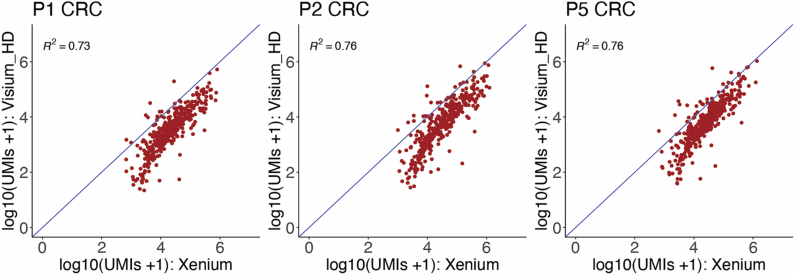
“In addition to Xe-186 nium, matched samples were profiled using the whole-transcriptome sequencing-based ST technologies Vi-187 sium HD[20] and Visium[21].”
The role of spatial transcriptomics in exploring the tumor microenvironment in neuroblastoma
Zobel, M. J., Riccardi, C., McKenney, S., & Asgharzadeh, S. (2026) · Biochemical Pharmacology · doi:10.1016/j.bcp.2026.118474
Ten quick tips for spatial transcriptomics analysis
Kurogi, N., Shimbara, K., Koreeda, T., & Tsuyuzaki, K. (2026) · PLoS Computational Biology · doi:10.1371/journal.pcbi.1014757
Single-cell and spatial profiling of histone modifications: technologies and emerging frontiers
Zhu, M., Zha, Z., Xuan, J., & Zhang, H. (2026) · Scientia Sinica Chimica · doi:10.1360/ssc-2026-0122
Omics Studies in Osteoarthritis: A Review of Molecular Mechanisms and Candidate Molecules
Sun, Y., Xiao, Q., Jin, M., Liu, G., Zhang, Q., & Wei, X. (2026) · Biomolecules · doi:10.3390/biom16091363
Zhang, H., Xu, K., 镇澜, et al. (2026) · Journal for ImmunoTherapy of Cancer · doi:10.1136/jitc-2026-015080
Yuan, R., Zhao, C., Liu, T., Wang, Q., Yu, Z., Tang, L., Huang, H., & Chen, W. (2026) · Lecture notes in computer science · doi:10.1007/978-3-032-38224-5_26
Extracting interpretable single-cell metabolic states with graph-guided representation learningPreprint
Lewinsohn, D. P., Dias, N., Chau, A., Koike, Y., Smith, Z. D., Ioannidis, N. M., & Wagner, A. (2026) · bioRxiv (Cold Spring Harbor Laboratory) · doi:10.64898/2026.09.17.751504
Shi, H., Zhang, X., Shouliang, C., Xu, B., Wang, H., Cui, J., Yang, Z., Chen, S., Zhou, Z., Zhang, S., et al. (2026) · Science Advances · doi:10.1126/sciadv.aeg7722
Niwase, S., & Fujiyama, A. (2026) · bioRxiv (Cold Spring Harbor Laboratory) · doi:10.64898/2026.09.21.753083
Platform-specific count-matrix preprocessing workflows for spatial transcriptomics data analysisPreprint
Du, Y., Li, S., Yang, X., Shu, H., Wang, Z., Zhang, D., Zou, Q., & Yuan, Z. (2026) · bioRxiv (Cold Spring Harbor Laboratory) · doi:10.64898/2026.09.24.753981
Gu, Y., Li, L., Zhang, Y., Tang, J., Wang, Z., & Luo, X. (2026) · Frontiers in Immunology · doi:10.3389/fimmu.2026.1961075
ST-DISTAL: Dual-Branch Graph Convolution with Distributional Alignment for Cell-Type DeconvolutionPreprint
Abir, A. R., Alif, M. N., & Zhang, W. (2026) · bioRxiv (Cold Spring Harbor Laboratory) · doi:10.64898/2026.09.27.754868
Spatial transcriptomics profiling across tissue boundaries in the developing mouse brain
Hammer, V., & Ossowski, S. (2026) · iScience · doi:10.1016/j.isci.2026.117765
“23,24 These then become the smallest units of analysis and define the achievable resolution.”
Wang, X., & Lin, L. (2026) · Frontiers in Immunology · doi:10.3389/fimmu.2026.1865949
Macrophages in spatial context: cellular niches in lung disease
Yamamoto, A., Fujii, N., & Maeda, Y. (2026) · Frontiers in Immunology · doi:10.3389/fimmu.2026.1977224
He, X.-S., Yang, X., Wan, S., Yang, Y., Gan, W.-J., Liu, Y.-X., Pan, Z.-D., Zhang, H.-Y., He, K., Guo, X., et al. (2026) · Nature Cancer · doi:10.1038/s43018-026-01253-9 · Cited by 1
Pan-cancer biomarkers of immune therapy resistance: mechanisms and clinical translation
Wang, C., & Yang, D. (2026) · Frontiers in Cell and Developmental Biology · doi:10.3389/fcell.2026.1895670
“In colorectal cancer, Visium HD identified transcriptionally distinct macrophage subpopulations occupying different spatial niches and localized clonally expanded T cells near macrophages with potential antitumor features (Oliveira et al., 2025).”
VINTER: a generative vision–language model for annotating and interrogating spatial tissuesPreprint
JinYu, W., Xu, W., Zhuang, Y., Zhang, Y., Loza, M., Yang, Y., & Nakai, K. (2026) · bioRxiv (Cold Spring Harbor Laboratory) · doi:10.64898/2026.10.01.752251
Spathology: The Birth of Spatial Pathology as a Discipline
Long, M., Nilsson, M., & Hu, T. (2026) · Life · doi:10.3390/life16101680
Zhong, Z., Zhu, X., Guo, J., Liao, S., & Chen, A. (2026) · Briefings in Bioinformatics · doi:10.1093/bib/bbag512
“We used the reference annotations from the original study [ 11] as a baseline for our evaluation.”
Metadata
- Authors
- Oliveira, M. F. D., Romero, J. P., Chung, M., Williams, S. R., Gottscho, A. D., Gupta, A., Pilipauskas, S. E., Mohabbat, S., Raman, N., Sukovich, D. J., Patterson, D. M., Visium HD Development Team, de Oliveira, M. F., Romero, J. P., Williams, S. R., Patterson, D. M., Taylor, S. E. B., & Taylor, S. E. B.
- Affiliations
- 10X Genomics (United States) (US)
- Venue
- Nature Genetics
- Published
- 2025-06
- Volume
- 57
- Issue
- 6
- Pages
- 1512-1523
- ISSN
- 1061-4036 (ISSN-L)
- 1546-1718
- PMC
- PMC12165841
- OpenAlex
- W4411069266
- Cited by
- 321
- References
- 56
- Citations by year
- 2026: 253 · 2025: 68
- FWCI
- 95.95
- Type
- journal article
- Language
- en
- Open access
- hybrid
- doi.org
- Licence
- Locations
- Nature Genetics (publishedVersion, cc-by-nc-nd)
- Europe PMC (PubMed Central) (publishedVersion, cc-by-nc-nd)
- PubMed Central (publishedVersion, cc-by-nc-nd)
- PubMed (publishedVersion)
- Topics
- Life Sciences › Biochemistry, Genetics and Molecular Biology › Molecular Biology › Single-cell and spatial transcriptomics
- Health Sciences › Medicine › Oncology › Cancer Immunotherapy and Biomarkers
- Life Sciences › Immunology and Microbiology › Immunology › Immune cells in cancer
- Keywords
- colorectal cancer, tumor microenvironment, spatial transcriptomics, Visium HD, macrophage subpopulations, T cell clonal expansion, immune cell interactions, formalin-fixed paraffin-embedded tissue, in situ gene expression, antitumor immunity
- MeSH terms
- Female, Humans, Macrophages, Male, T-Lymphocytes, Biomarkers, Tumor, Colorectal Neoplasms, Gene Expression Regulation, Neoplastic, Gene Expression Profiling, Single-Cell Analysis, Tumor Microenvironment, Transcriptome
About these checks
Registry, retraction, Cites and statistics results are computed, not judged, with one exception: a printed reference that no index lists is read once by a model before it counts as a citation error. Claims are extracted by a model and kept only when their quote appears verbatim in the text; each cited source is then checked, with a model’s help, for whether it says what the claim relies on. Those verdicts can be wrong — read the claim’s quote and the cited source before relying on one.
Statistics and arithmetic are recomputed, not judged.
Confidence bands are shown only for fields calibrated on our annotated test set. None is calibrated yet, so no band is shown.
What counts as a claim ›How we measure confidence ›How we check this ›
Are you an author, or do you see a problem with this page? Request a review
