

A meta-analysis of single-nucleus expression quantitative trait loci linking genetic risk to brain disorders
Open accessThe DOI matches its Crossref record; 85 of the 85 references it cites were found in a registry or an index; 2 of the 39 sources its claims cite were checked for support.
Abstract
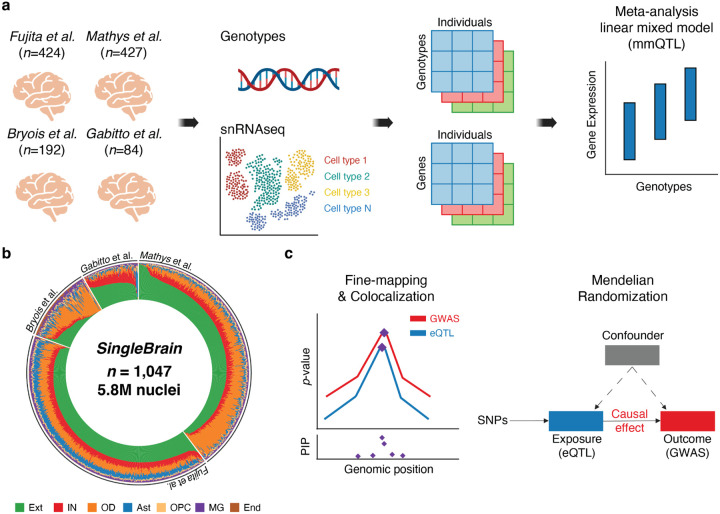
Most genetic risk variants for neurological diseases are located in noncoding regulatory regions, where they often act as expression quantitative trait loci (eQTLs), modulating gene expression and influencing disease susceptibility. However, eQTL studies in bulk brain tissue or cell lines fail to capture the brain's cellular diversity. Single-nucleus RNA sequencing (snRNA-seq) allows high-resolution mapping of eQTLs across diverse brain cell types. Here we performed a meta-analysis by integrating snRNA-seq and genotype data from four cohorts, totaling 5.8 million nuclei from 983 individuals of European ancestry. We mapped cis-eQTLs and trans-eQTLs across major brain cell types and subtypes, including disease-specific and sex-specific eQTLs, and applied colocalization and Mendelian randomization to identify genes that mediate neurological disease risk. We observed up to tenfold more cis-eQTLs and uncovered cell-type-specific genes linked to neurological disease. SingleBrain is a comprehensive single-cell eQTL resource that provides insights into the genetic mechanism of brain disorders.
Overview
CoChat Summary
TL;DR
SingleBrain is a meta-analysis of single-nucleus RNA-seq and genotype data from four cohorts, integrating 5.8 million nuclei from 983 individuals to map cis-eQTLs across seven major brain cell types and 28 subtypes. It reports up to 10-fold more cis-eQTLs than prior studies and links cell-type-specific eQTLs to Alzheimer’s disease, Parkinson’s disease, and schizophrenia through colocalization, Mendelian randomization, and fine-mapping.
Key findings
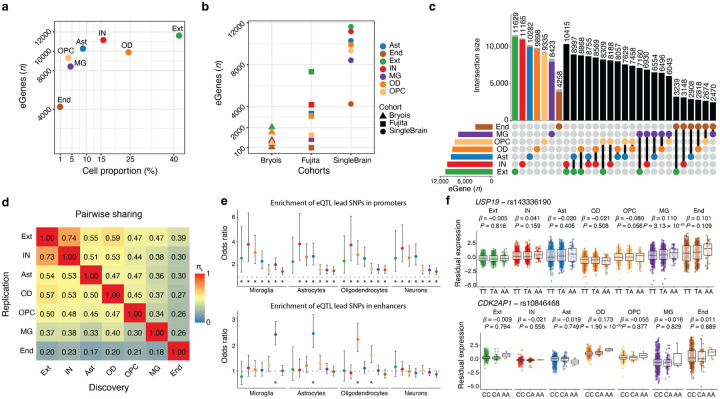
- cis-eQTL mapping at FDR < 0.05 identified eGenes ranging from 11,629 in excitatory neurons to 4,258 in endothelial cells, with a 3.21–10.42-fold increase in eQTL discovery over previous studies; 1,793 cell type-specific eQTLs were identified.
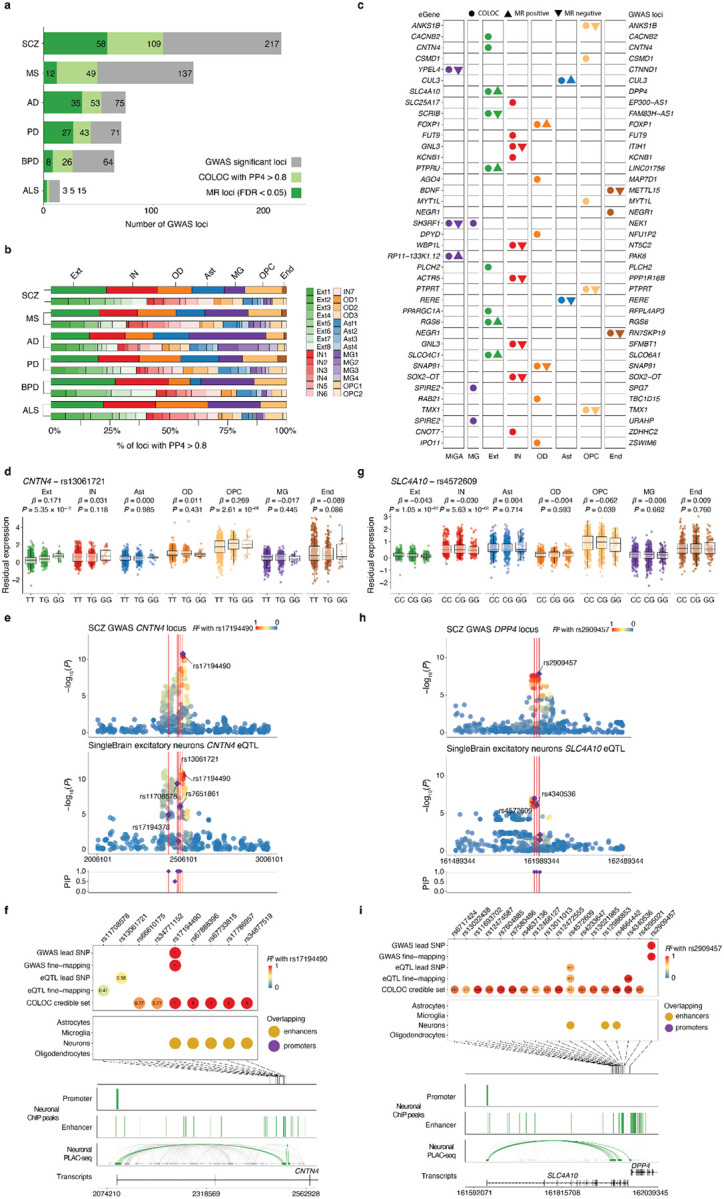
- Disease colocalization (PP4 > 0.8) and MR (FDR < 0.05): SCZ had 109 of 217 loci colocalized and 58 MR-supported; AD had 53 of 75 loci colocalized and 35 MR-supported; PD had 43 of 76 loci colocalized and 27 MR-supported; BPD had 26 of 64 loci colocalized. The Discussion reports 143 loci significantly colocalizing with SingleBrain eQTLs based on COLOC and MR.
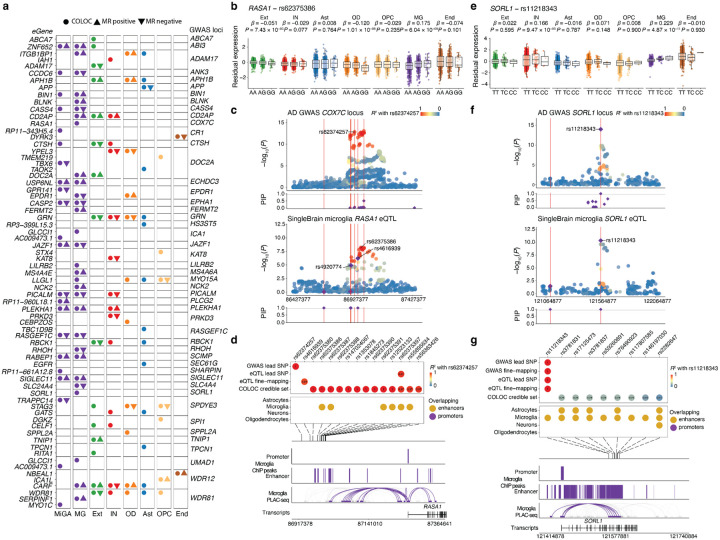
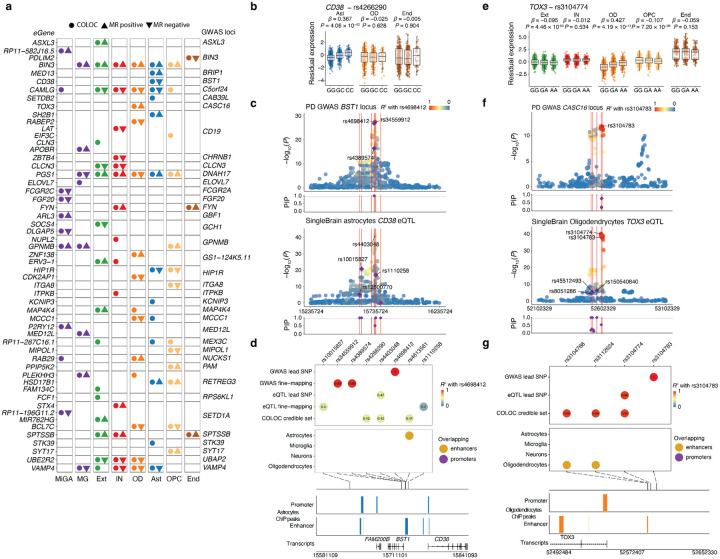
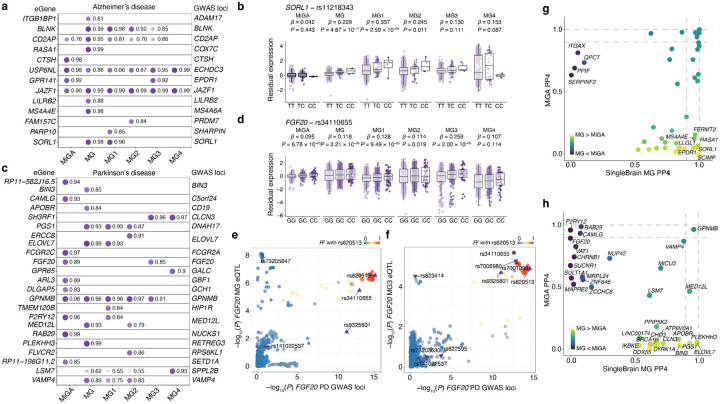
- Microglia eQTLs showed the highest AD heritability mediation and the most AD colocalizations (30 of 75 GWAS loci); novel microglial AD eQTLs included BLNK, RASA1, FERMT2, LILRB2, MS4A4E, LLGL1, NCK2, and SORL1. PD colocalizations included neuronal ASXL3, CLCN3, FCF1 and non-neuronal CD38 in astrocytes, TOX3 in oligodendrocytes.
- Subtype analysis found 11,118 eGenes in Ext1 versus 6,863 in Ext6; microglia subtype-specific eQTLs included SORL1/PARP1 in MG1 and FGF20 in MG3; SingleBrain MG had 8,423 eGenes versus MiGA 3 with 20,084 and low sharing (π1 = 0.34).
Methods
- Integrated public snRNA-seq and genotype data from Fujita et al., Mathys et al., Gabitto et al., and Bryois et al.; samples came from DLPFC or MTG; QC retained 5.8 million nuclei across seven major cell types and 28 subtypes; genotypes from SNP arrays or WGS were imputed to 5.9M–8.6M SNPs with MAF > 0.01 per dataset.
- Pseudobulk expression was quantified per individual per gene per cell type/subtype; cis-eQTL mapping used mmQTL linear mixed models within 1 Mb up/down, PEER factors, and a GCTA relatedness matrix, followed by random-effects meta-analysis and FDR plus Storey’s q-value correction.
- Downstream analyses used COLOC v.3.2-1 colocalization, TwoSampleMR v.0.6.8 inverse-variance-weighted Mendelian randomization, POLYFUN + FINEMAP/SUSIE fine-mapping, and integration with cell-type-specific promoter/enhancer and PLAC-seq data from Nott et al.
Limitations
- Stated: snRNA-seq primarily captures nuclear RNA, not the full cytoplasmic transcriptome; 10× 3′ libraries and exonic/intronic quantification may misassign reads to overlapping genes and pre-mRNAs, limiting detection for some transcripts.
- Stated: rare cell types and microglial subtypes had limited nuclei per donor, reducing power; the analysis was restricted to donors of European ancestry, limiting generalizability.
- Evident from the text: all snRNA-seq data came from frozen DLPFC or MTG samples, and eQTL analyses focused on common variants (MAF > 0.01; fine-mapping removed MAF < 1%), so findings may not extend to other brain regions or rare variants.
Model-written summary. Check it against the paper before relying on it.
Integrity signals
Registry
Cites
Statistics
Figures
Verification
Claims the paper makes
1 Valid · 0 Not valid · 17 Not checked · 54 Own results and interpretations
The cited sources support only part of this claim — read each source’s verdict below.
In the paper
“We observed up to a 10-fold increase in cis-eQTLs compared to previous studies”
- Also stated in: § Cell-type specific eQTL mapping in the human brain · boosted
“SingleBrain demonstrates a 3.21- to 10.42-fold increase in eQTL discovery compared to previous studies11,12”
§ SingleBrain: A Meta-Analysis of Single-Nucleus eQTLs Linking Genetic Risk to Brain Disorders > Abstract
What the sources say
- Partly supportedcites [11] Fujita M. Cell subtype-specific effects of genetic variation in the Alzheimer’s disease brain. Nat. Genet. 56, 605– 614 (2024). 38514782 PMC12288883 sourceExperimental — accuracy not yet measured
Our copy does report that this ROSMAP snucRNAseq resource discovered substantially more cis-eQTL signal than prior work — the Discussion states the prior merged snucRNAseq effort 'identified only a third of our eGenes' (roughly a 3-fold gain) and Results 'Comparison to existing datasets' notes 15,335 new eGene:cell type pairs and that 40% of snucRNAseq-derived eGenes were absent from the larger bulk DLPFC dataset. However, no passage in our copy states or implies 'up to a 10-fold increase' in cis-eQTLs versus previous studies (searched: 10-fold / tenfold increase, fold change in eQTL discovery, comparison to existing datasets), so the specific magnitude attributed here is not supported. The paper also frames its counts as eGenes and eGene:cell type/subtype pairs rather than a fold-increase in cis-eQTLs. (LLM, conf=0.65)
- Partly supportedcites [12] Bryois J. Cell-type-specific cis-eQTLs in eight human brain cell types identify novel risk genes for psychiatric and neurological disorders. Nat. Neurosci. 25, 1104– 1112 (2022). 35915177 sourceExperimental — accuracy not yet measured
Our copy supports the direction of the claim but not its magnitude: the Results (cis-eQTL replication section) state that the 'tissue-like' bulk-style analysis 'discovered substantially fewer eQTLs than the cell-type-level analysis (3,058 at 5% FDR)' against 7,607 cis-eQTL genes at 5% FDR across the eight cell types (Results/Abstract), i.e. roughly 2.5-fold, plus larger effect sizes than the bulk Metabrain study (mean absolute beta 0.44 vs 0.34). No passage in our copy reports an 'up to 10-fold' increase in cis-eQTLs relative to previous studies (searched: 10-fold/ten-fold increase, number of eQTLs vs bulk eQTL studies, CommonMind/GTEx comparisons); the comparisons made are with the external Metabrain bulk study and with the authors' own tissue-like analysis, not a fold-increase benchmark against prior literature. (LLM, conf=0.68)
boostedstates a causen = 983- Asserted: passes — The authors put it forward as true.
- Checkable: passes — It can be checked against evidence.
- Load-bearing: passes — The paper’s conclusions depend on it.
- Based: passes — The paper gives a reason why it holds.
- Also stated in: § Cell-type specific eQTL mapping in the human brain · boosted
A result the paper reports from its own data — it cites no other source for it, so there is none to check. The quote shows it is in the paper.
In the paper
“We mapped cis-eQTLs across major brain cell types and subtypes”
- Also stated in: § Introduction · plain
“we performed eQTL analyses across seven major neocortical cell types and 28 subtypes”
§ SingleBrain: A Meta-Analysis of Single-Nucleus eQTLs Linking Genetic Risk to Brain Disorders > Abstract
plainn = 983- Asserted: passes — The authors put it forward as true.
- Checkable: passes — It can be checked against evidence.
- Load-bearing: passes — The paper’s conclusions depend on it.
- Based: passes — The paper gives a reason why it holds.
- Also stated in: § Introduction · plain
A result the paper reports from its own data — it cites no other source for it, so there is none to check. The quote shows it is in the paper.
In the paper
“Here, we performed a meta-analysis, “SingleBrain,” integrating publicly available snRNA-seq and genotype data from four cohorts, totaling 5.8 million nuclei from 983 individuals.”
§ SingleBrain: A Meta-Analysis of Single-Nucleus eQTLs Linking Genetic Risk to Brain Disorders > Abstract
plainn = 983- Asserted: passes — The authors put it forward as true.
- Checkable: passes — It can be checked against evidence.
- Load-bearing: passes — The paper’s conclusions depend on it.
- Based: passes — The paper gives a reason why it holds.
A result the paper reports from its own data — it cites no other source for it, so there is none to check. The quote shows it is in the paper.
In the paper
“uncovered novel cell type-specific genes linked to Alzheimer’s disease, Parkinson’s disease, and schizophrenia that were previously undetectable in bulk tissue analyses”
§ SingleBrain: A Meta-Analysis of Single-Nucleus eQTLs Linking Genetic Risk to Brain Disorders > Abstract
plainstates an associationn = 983- Asserted: passes — The authors put it forward as true.
- Checkable: passes — It can be checked against evidence.
- Load-bearing: passes — The paper’s conclusions depend on it.
- Based: passes — The paper gives a reason why it holds.
None of the sources cited for this claim have been checked yet.
In the paper
“The lead eQTL SNPs are predominantly located near the transcription start sites of their target genes18,19”
§ SingleBrain: A Meta-Analysis of Single-Nucleus eQTLs Linking Genetic Risk to Brain Disorders > Results > Cell-type specific eQTL mapping in the human brain
What the sources say
- Not checked yetcites [18] Gamazon E. R. Using an atlas of gene regulation across 44 human tissues to inform complex disease- and trait-associated variation. Nat. Genet. 50, 956– 967 (2018). 29955180 PMC6248311 source
- Not checked yetcites [19] Nott A. Brain cell type-specific enhancer-promoter interactome maps and disease-risk association. Science 366, 1134– 1139 (2019). 31727856 PMC7028213 source
plainstates an association- Asserted: passes — The authors put it forward as true.
- Checkable: passes — It can be checked against evidence.
- Load-bearing: unclear — It is unclear whether the paper’s conclusions depend on it.
- Based: passes — The paper gives a reason why it holds.
36 more claims
Create a free account to see all 72 claims and to verify the 36 references still open.
- It may state two separate claims as one. 18
- Probably not a substantial claim. 14
Self-check
Percentages, sums and reported differences re-computed from the paper’s own numbers.
Each contradiction between two passages listed here was confirmed by an independent check.
Rated minor: it would not touch a result — a value no result rests on, a p-value that stays on the same side of the significance level, or a conflict that is clerical, resolved elsewhere in the paper, or outside its own findings.
In the paper
§ SingleBrain: A Meta-Analysis of Single-Nucleus eQTLs Linking Genetic Risk to Brain Disorders > Results > SingleBrain eQTLs mediate neuropsychiatric disease
“multiple sclerosis (MS)28, bipolar disorder (BPD)28”
§ SingleBrain: A Meta-Analysis of Single-Nucleus eQTLs Linking Genetic Risk to Brain Disorders > Methods > GWAS summary stats
“BPD (Mullins et al.46, MS (IMSGC et al.28)”
Citations
Cites
PLINK: a tool set for whole-genome association and population-based linkage analyses.
Purcell, S., Neale, B., Todd-Brown, K., Thomas, L., Ferreira, M. A. R., Bender, D., Maller, J., Sklar, P., de Bakker, P. I. W., Daly, M. J., et al. (2007) · The American Journal of Human Genetics · doi:10.1086/519795 · Cited by 34,089
A global reference for human genetic variation
The 1000 Genomes Project Consortium, authors, C., Auton, A., Abecasis, G. R., Steering committee, Altshuler, D. M., Durbin, R. M., Abecasis, G. R., Bentley, D. R., Chakravarti, A., et al. (2015) · Nature · doi:10.1038/nature15393 · Cited by 18,247
Fast, sensitive and accurate integration of single-cell data with Harmony
Korsunsky, I., Millard, N., Fan, J., Slowikowski, K., Zhang, F., Wei, K., Baglaenko, Y., Brenner, M., Loh, P.-R., & Raychaudhuri, S. (2019) · Nature Methods · doi:10.1038/s41592-019-0619-0 · Cited by 10,488
Bowden, J., Davey Smith, G., & Burgess, S. (2015) · International Journal of Epidemiology · doi:10.1093/ije/dyv080 · Cited by 9,816
Bowden, J., Davey Smith, G., Haycock, P. C., & Burgess, S. (2016) · Genetic Epidemiology · doi:10.1002/gepi.21965 · Cited by 8,922
SCANPY: large-scale single-cell gene expression data analysis
Wolf, F. A., Angerer, P., & Theis, F. J. (2018) · Genome Biology · doi:10.1186/s13059-017-1382-0 · Cited by 8,881
GCTA: a tool for genome-wide complex trait analysis
Yang, J., Lee, S. H., Goddard, M. E., & Visscher, P. M. (2011) · The American Journal of Human Genetics · doi:10.1016/j.ajhg.2010.11.011 · Cited by 8,279
The MR-Base platform supports systematic causal inference across the human phenome
Hemani, G., Zheng, J., Elsworth, B., Wade, K. H., Haberland, V., Baird, D., Laurin, C., Burgess, S., Bowden, J., Langdon, R., et al. (2018) · eLife · doi:10.7554/elife.34408 · Cited by 7,959
The GTEx Consortium atlas of genetic regulatory effects across human tissues
The GTEx Consortium, Aguet, F., Anand, S., Ardlie, K. G., Gabriel, S., Getz, G. A., Graubert, A., Hadley, K., Handsaker, R. E., Huang, K. H., et al. (2020) · Science · doi:10.1126/science.aaz1776 · Cited by 5,547
Software for Computing and Annotating Genomic Ranges
Lawrence, M., Huber, W., Pagès, H., Aboyoun, P., Carlson, M., Gentleman, R., Morgan, M. T., & Carey, V. J. (2013) · PLoS Computational Biology · doi:10.1371/journal.pcbi.1003118 · Cited by 4,398
Genetic effects on gene expression across human tissues
GTEx Consortium (2017) · Nature · doi:10.1038/nature24277 · Cited by 4,036
Robust inference in summary data Mendelian randomization via the zero modal pleiotropy assumption
Hartwig, F. P., Davey Smith, G., & Bowden, J. (2017) · International Journal of Epidemiology · doi:10.1093/ije/dyx102 · Cited by 3,485
Mapping genomic loci implicates genes and synaptic biology in schizophrenia
Trubetskoy, V., Pardiñas, A. F., Qi, T., Panagiotaropoulou, G., Awasthi, S., Bigdeli, T. B., Bryois, J., Chen, C.-Y., Dennison, C. A., Hall, L. S., et al. (2022) · Nature · doi:10.1038/s41586-022-04434-5 · Cited by 2,964
Self-citationAlzheimer Disease Genetics Consortium (ADGC), Kunkle, B. W., The European Alzheimer’s Disease Initiative (EADI), Cohorts for Heart and Aging Research in Genomic Epidemiology Consortium (CHARGE), Genetic and Environmental Risk in AD/Defining Genetic, P. A. E. R. F. A. D. C. (., Grenier-Boley, B., Sims, R., Bis, J. C., Damotte, V., Naj, A. C., et al. (2019) · Nature Genetics · doi:10.1038/s41588-019-0358-2 · Cited by 2,946
Scrublet: computational identification of cell doublets in single-cell transcriptomic data
Wolock, S. L., Lopez, R., & Klein, A. M. (2019) · Cell Systems · doi:10.1016/j.cels.2018.11.005 · Cited by 2,758
New insights into the genetic etiology of Alzheimer’s disease and related dementias
Bellenguez, C., Küçükali, F., Jansen, I. E., Kleineidam, L., Moreno-Grau, S., Amin, N., Naj, A. C., Campos-Martin, R., Grenier-Boley, B., Andrade, V., et al. (2022) · Nature Genetics · doi:10.1038/s41588-022-01024-z · Cited by 2,498
Nalls, M. A., Blauwendraat, C., Vallerga, C. L., Heilbron, K., Bandres-Ciga, S., Chang, D., Tan, M., Kia, D. A., Noyce, A. J., Xue, A., et al. (2019) · The Lancet Neurology · doi:10.1016/s1474-4422(19)30320-5 · Cited by 2,454
Jansen, I. E., Savage, J. E., Watanabe, K., Bryois, J., Williams, D. M., Steinberg, S., Sealock, J., Karlsson, I. K., Hägg, S., Athanasiu, L., et al. (2019) · Nature Genetics · doi:10.1038/s41588-018-0311-9 · Cited by 2,277
Microglia states and nomenclature: A field at its crossroads
Paolicelli, R. C., Sierra, A., Stevens, B., Tremblay, M.-E., Aguzzi, A., Ajami, B., Amit, I., Audinat, E., Bechmann, I., Bennett, M., et al. (2022) · Neuron · doi:10.1016/j.neuron.2022.10.020 · Cited by 1,973
Self-citationMultiple sclerosis genomic map implicates peripheral immune cells and microglia in susceptibility
International Multiple Sclerosis Genetics Consortium, Patsopoulos, N. A., Baranzini, S. E., Santaniello, A., Shoostari, P., Cotsapas, C., Wong, G., Beecham, A. H., James, T., Replogle, J., et al. (2019) · Science · doi:10.1126/science.aav7188 · Cited by 1,818
Mullins, N., Forstner, A. J., O’Connell, K. S., Coombes, B., Coleman, J. R. I., Qiao, Z., Als, T. D., Bigdeli, T. B., Børte, S., Bryois, J., et al. (2021) · Nature Genetics · doi:10.1038/s41588-021-00857-4 · Cited by 1,517
Self-citationGene map of the extended human MHC
Horton, R., Wilming, L., Rand, V., Lovering, R. C., Bruford, E. A., Khodiyar, V. K., Lush, M. J., Povey, S., Talbot, C. C., Wright, M. W., et al. (2004) · Nature Reviews Genetics · doi:10.1038/nrg1489 · Cited by 1,198
Gene expression elucidates functional impact of polygenic risk for schizophrenia
Fromer, M., Roussos, P., Sieberts, S. K., Johnson, J. S., Kavanagh, D. H., Perumal, T. M., Ruderfer, D. M., Oh, E. C., Topol, A., Shah, H. R., et al. (2016) · Nature Neuroscience · doi:10.1038/nn.4399 · Cited by 1,091
Self-citationA structural variation reference for medical and population genetics
Collins, R. L., Brand, H., Karczewski, K. J., Zhao, X., Alföldi, J., Francioli, L. C., Khera, A. V., Lowther, C., Gauthier, L. D., Wang, H., et al. (2020) · Nature · doi:10.1038/s41586-020-2287-8 · Cited by 1,037
Common Regulatory Variation Impacts Gene Expression in a Cell Type–Dependent Manner
Dimas, A. S., Deutsch, S., Stranger, B. E., Montgomery, S. B., Borel, C., Attar-Cohen, H., Ingle, C., Beazley, C., Arcelus, M. G., Sekowska, M., et al. (2009) · Science · doi:10.1126/science.1174148 · Cited by 745
Brain cell type–specific enhancer–promoter interactome maps and disease - risk association
Nott, A., Holtman, I. R., Coufal, N. G., Schlachetzki, J. C. M., Yu, M., Hu, R., Han, C. Z., Pena, M., Xiao, J., Wu, Y., et al. (2019) · Science · doi:10.1126/science.aay0793 · Cited by 699
GWAS on family history of Alzheimer’s disease
Marioni, R. E., Harris, S. E., Zhang, Q., McRae, A. F., Hagenaars, S. P., Hill, W. D., Davies, G., Ritchie, C. W., Gale, C. R., Starr, J. M., et al. (2018) · Translational Psychiatry · doi:10.1038/s41398-018-0150-6 · Cited by 564
van Rheenen, W., van der Spek, R. A. A., Bakker, M. K., van Vugt, J. J. F. A., Hop, P. J., Zwamborn, R. A. J., de Klein, N., Westra, H.-J., Bakker, O. B., Deelen, P., et al. (2021) · Nature Genetics · doi:10.1038/s41588-021-00973-1 · Cited by 542
Integrated multimodal cell atlas of Alzheimer’s disease
Gabitto, M. I., Travaglini, K. J., Rachleff, V. M., Kaplan, E. S., Long, B., Ariza, J., Ding, Y., Mahoney, J. T., Dee, N., Goldy, J., et al. (2024) · Nature Neuroscience · doi:10.1038/s41593-024-01774-5 · Cited by 536
Stegle, O., Parts, L., Durbin, R., & Winn, J. (2010) · PLoS Computational Biology · doi:10.1371/journal.pcbi.1000770 · Cited by 497
Mathys, H., Peng, Z., Boix, C. A., Victor, M. B., Leary, N., Babu, S., Abdelhady, G., Jiang, X., Ng, A. P., Ghafari, K., et al. (2023) · Cell · doi:10.1016/j.cell.2023.08.039 · Cited by 495
Human microglial state dynamics in Alzheimer’s disease progression
Sun, N., Victor, M. B., Park, Y. P., Xiong, X., Scannail, A. N., Leary, N., Prosper, S., Viswanathan, S., Luna, X., Boix, C. A., et al. (2023) · Cell · doi:10.1016/j.cell.2023.08.037 · Cited by 462
An xQTL map integrates the genetic architecture of the human brain's transcriptome and epigenome
Ng, B., White, C. C., Klein, H.-U., Sieberts, S. K., McCabe, C., Patrick, E., Xu, J., Yu, L., Gaiteri, C., Bennett, D. A., et al. (2017) · Nature Neuroscience · doi:10.1038/nn.4632 · Cited by 452
ACAT: A Fast and Powerful p Value Combination Method for Rare-Variant Analysis in Sequencing Studies
Liu, Y., Chen, S., Li, Z., Morrison, A. C., Boerwinkle, E., & Lin, X. (2019) · The American Journal of Human Genetics · doi:10.1016/j.ajhg.2019.01.002 · Cited by 450
Myers, T. A., Chanock, S. J., & Machiela, M. J. (2020) · Frontiers in Genetics · doi:10.3389/fgene.2020.00157 · Cited by 429
Qi, T., Wu, Y., Zeng, J., Zhang, F., Xue, A., Jiang, L., Zhu, Z., Kemper, K., Yengo, L., Zheng, Z., et al. (2018) · Nature Communications · doi:10.1038/s41467-018-04558-1 · Cited by 427
Integrated multimodal cell atlas of Alzheimer’s disease
Gabitto, M. I., Travaglini, K. J., Rachleff, V. M., Kaplan, E. S., Long, B., Ariza, J., Ding, Y., Mahoney, J. T., Dee, N., Goldy, J., et al. (2023) · doi:10.1101/2023.05.08.539485 · Cited by 425
GTEx Consortium, Gamazon, E. R., Segrè, A. V., van de Bunt, M., Wen, X., Xi, H. S., Hormozdiari, F., Ongen, H., Konkashbaev, A., Derks, E. M., et al. (2018) · Nature Genetics · doi:10.1038/s41588-018-0154-4 · Cited by 412
Functionally informed fine-mapping and polygenic localization of complex trait heritability
Weissbrod, O., Hormozdiari, F., Benner, C., Cui, R., Ulirsch, J., Gazal, S., Schoech, A. P., van de Geijn, B., Reshef, Y., Márquez-Luna, C., et al. (2020) · Nature Genetics · doi:10.1038/s41588-020-00735-5 · Cited by 364
Single-Nucleus RNA-Seq Is Not Suitable for Detection of Microglial Activation Genes in Humans
Thrupp, N., Sala Frigerio, C., Wolfs, L., Skene, N. G., Fattorelli, N., Poovathingal, S., Fourne, Y., Matthews, P. M., Theys, T., Mancuso, R., et al. (2020) · Cell Reports · doi:10.1016/j.celrep.2020.108189 · Cited by 351
Mapping of long-range chromatin interactions by proximity ligation-assisted ChIP-seq
Fang, R., Yu, M., Li, G., Chee, S., Liu, T., Schmitt, A. D., & Ren, B. (2016) · Cell Research · doi:10.1038/cr.2016.137 · Cited by 344
Bryois, J., Calini, D., Macnair, W., Foo, L., Urich, E., Ortmann, W., Iglesias, V. A., Selvaraj, S., Nutma, E., Marzin, M., et al. (2022) · Nature Neuroscience · doi:10.1038/s41593-022-01128-z · Cited by 311
Population-scale single-cell RNA-seq profiling across dopaminergic neuron differentiation
Jerber, J., Seaton, D. D., Cuomo, A. S. E., Kumasaka, N., Haldane, J., Steer, J., Patel, M., Pearce, D., Andersson, M., Bonder, M. J., et al. (2021) · Nature Genetics · doi:10.1038/s41588-021-00801-6 · Cited by 300
Quantifying genetic effects on disease mediated by assayed gene expression levels
Yao, D. W., O’Connor, L. J., Price, A. L., & Gusev, A. (2020) · Nature Genetics · doi:10.1038/s41588-020-0625-2 · Cited by 298
Lopes, K. D. P., Snijders, G. J. L., Humphrey, J., Allan, A., Sneeboer, M. A. M., Navarro, E., Schilder, B. M., Vialle, R. A., Parks, M., Missall, R., et al. (2022) · Nature Genetics · doi:10.1038/s41588-021-00976-y · Cited by 273
Self-citationde Klein, N., Tsai, E. A., Vochteloo, M., Baird, D., Huang, Y., Chen, C.-Y., van Dam, S., Oelen, R., Deelen, P., Bakker, O. B., et al. (2023) · Nature Genetics · doi:10.1038/s41588-023-01300-6 · Cited by 272
Cell subtype-specific effects of genetic variation in the Alzheimer’s disease brain
Fujita, M., Gao, Z., Zeng, L., McCabe, C., White, C. C., Ng, B., Green, G. S., Rozenblatt-Rosen, O., Phillips, D., Amir-Zilberstein, L., et al. (2024) · Nature Genetics · doi:10.1038/s41588-024-01685-y · Cited by 219
A Map of Transcriptional Heterogeneity and Regulatory Variation in Human Microglia
Young, A. M. H., Kumasaka, N., Calvert, F., Hammond, T. R., Knights, A., Panousis, N., Park, J. S., Schwartzentruber, J., Liu, J., Kundu, K., et al. (2021) · Nature Genetics · doi:10.1038/s41588-021-00875-2 · Cited by 213
Cellular communities reveal trajectories of brain ageing and Alzheimer’s disease
Green, G. S., Fujita, M., Yang, H.-S., Taga, M., Cain, A., McCabe, C., Comandante-Lou, N., White, C. C., Schmidtner, A. K., Zeng, L., et al. (2024) · Nature · doi:10.1038/s41586-024-07871-6 · Cited by 204
Genetics of the human microglia regulome refines Alzheimer’s disease risk loci
Kosoy, R., Fullard, J. F., Zeng, B., Bendl, J., Dong, P., Rahman, S., Kleopoulos, S. P., Shao, Z., Girdhar, K., Humphrey, J., et al. (2022) · Nature Genetics · doi:10.1038/s41588-022-01149-1 · Cited by 168
Self-citationSingle-cell genomics and regulatory networks for 388 human brains
Emani, P. S., Liu, J. J., Clarke, D., Jensen, M., Warrell, J., Gupta, C., Meng, R., Lee, C. Y., Xu, S., Dursun, C., et al. (2024) · Science · doi:10.1126/science.adi5199 · Cited by 163
Self-citationPedersen, B. S., Bhetariya, P. J., Brown, J., Kravitz, S. N., Marth, G., Jensen, R. L., Bronner, M. P., Underhill, H. R., & Quinlan, A. R. (2020) · Genome Medicine · doi:10.1186/s13073-020-00761-2 · Cited by 133
Novel Parkinson’s Disease Genetic Risk Factors Within and Across European PopulationsPreprint
(GP2), T. G. P. G. P., & Leonard, H. L. (2025) · medRxiv · doi:10.1101/2025.03.14.24319455 · Cited by 113
Zeng, B., Bendl, J., Kosoy, R., Fullard, J. F., Hoffman, G. E., & Roussos, P. (2022) · Nature Genetics · doi:10.1038/s41588-021-00987-9 · Cited by 96
PCA outperforms popular hidden variable inference methods for molecular QTL mapping
Zhou, H. J., Li, L., Li, Y., Li, W., & Li, J. J. (2022) · Genome Biology · doi:10.1186/s13059-022-02761-4 · Cited by 88
Tuddenham, J. F., Taga, M. F., Haage, V. C., Marshe, V. S., Roostaei, T., White, C. C., Lee, A., Fujita, M., Khairallah, A., Zhang, Y., et al. (2024) · Nature Neuroscience · doi:10.1038/s41593-024-01764-7 · Cited by 85
Saha, A., & Battle, A. (2018) · F1000Research · doi:10.12688/f1000research.17145.1 · Cited by 75
Saha, A., & Battle, A. (2019) · F1000Research · doi:10.12688/f1000research.17145.2 · Cited by 62
Nonparametric Bayesian Estimation of Positive False Discovery Rates
Tang, Y., Ghosal, S., & Roy, A. (2007) · Biometrics · doi:10.1111/j.1541-0420.2007.00819.x · Cited by 50
Systematic investigation of allelic regulatory activity of schizophrenia-associated common variants
McAfee, J. C., Lee, S., Lee, J., Bell, J. L., Krupa, O., Davis, J., Insigne, K., Bond, M. L., Zhao, N., Boyle, A. P., et al. (2023) · Cell Genomics · doi:10.1016/j.xgen.2023.100404 · Cited by 49
Self-citationHumphrey, J., Brophy, E., Kosoy, R., Zeng, B., Coccia, E., Mattei, D., Ravi, A., Naito, T., Efthymiou, A. G., Navarro, E., et al. (2025) · Nature Genetics · doi:10.1038/s41588-025-02099-0 · Cited by 44
Self-citationCell-subtype specific effects of genetic variation in the aging and Alzheimer cortex
Fujita, M., Gao, Z., Zeng, L., McCabe, C., White, C. C., Ng, B., Green, G. S., Rozenblatt-Rosen, O., Phillips, D., Amir-Zilberstein, L., et al. (2022) · doi:10.1101/2022.11.07.515446 · Cited by 36
Zinc Finger RNA-Binding Protein Zn72D Regulates ADAR-Mediated RNA Editing in Neurons
Sapiro, A. L., Freund, E. C., Restrepo, L., Qiao, H., Bhate, A., Li, Q., Ni, J., Mosca, T. J., & Li, J. B. (2020) · Cell Reports · doi:10.1016/j.celrep.2020.107654 · Cited by 36
Kunkle, B., Grenier-Boley, B., Sims, R., Bis, J., Naj, A., Boland, A., Vronskaya, M., van der Lee, S., Amlie-Wolf, A., Bellenguez, C., et al. (2018) · doi:10.1101/294629 · Cited by 35
African ancestry neurodegeneration risk variant disrupts an intronic branchpoint in GBA1
Álvarez Jerez, P., Wild Crea, P., Ramos, D. M., Gustavsson, E. K., Radefeldt, M., Damianov, A., Makarious, M. B., Ojo, O. O., Billingsley, K. J., Malik, L., et al. (2024) · Nature Structural & Molecular Biology · doi:10.1038/s41594-024-01423-2 · Cited by 27
Efficient and accurate mixed model association tool for single-cell eQTL analysis
Zhou, W., Cuomo, A. S. E., Xue, A., Kanai, M., Chau, G., Krishna, C., Xavier, R. J., MacArthur, D. G., Powell, J. E., Daly, M. J., et al. (2024) · doi:10.1101/2024.05.15.24307317 · Cited by 26
Self-citationCooler, S., & Schwartz, G. W. (2020) · Nature Neuroscience · doi:10.1038/s41593-020-00747-8 · Cited by 26
Humphrey, J., Brophy, E., Kosoy, R., Zeng, B., Coccia, E., Mattei, D., Ravi, A., Efthymiou, A. G., Navarro, E., Muller, B. Z., et al. (2023) · medRxiv · doi:10.1101/2023.12.01.23299073 · Cited by 5
Self-citationJang, B., Won, H.-H., & Raj, T. (2025) · Zenodo (CERN European Organization for Nuclear Research) · doi:10.5281/zenodo.14907598 · Cited by 4
Self-citationRegulatory landscape of Alzheimer’s disease variants in human microgliaPreprint
Lee, C.-Y. J., Ravi, A., Huang, T.-C., Wyman, B., Liu, Z., Chriss, A., Humphrey, J., Knowles, D. A., Cotsapas, C. J., Huckins, L. M., et al. (2025) · medRxiv · doi:10.1101/2025.10.13.25337902 · Cited by 3
Self-citationRajLabMSSM/downstream-QTL: publication_v2.1
Humphrey, J., Jang, B., & Kailash, B. P. (2024) · Zenodo (CERN European Organization for Nuclear Research) · doi:10.5281/zenodo.13864728 · Cited by 2
Self-citationRajLabMSSM/mmQTL-pipeline: publication_v2.0
Kailash, B. P., Humphrey, J., Jang, B., Brophy, E., & Naito, T. (2024) · Zenodo (CERN European Organization for Nuclear Research) · doi:10.5281/zenodo.13864734 · Cited by 2
Self-citationJang, B., Hong, W. H., & Raj, T. (2025) · Zenodo (CERN European Organization for Nuclear Research) · doi:10.5281/zenodo.15860606 · Cited by 1
Self-citationSAIGE-QTL: Single-nucleus Expression QTL Summary Statistics using Human Brain Cohort
Jang, B., Hong, W. H., & Raj, T. (2025) · Zenodo (CERN European Organization for Nuclear Research) · doi:10.5281/zenodo.15860972 · Cited by 1
Self-citationRajLabMSSM/SingleBrain: RajLabMSSM/SingleBrain: Publication version
Jang, B. (2026) · Zenodo (CERN European Organization for Nuclear Research) · doi:10.5281/zenodo.18239089 · Cited by 1
Self-citationRajLabMSSM/SAIGEQTL-pipeline: RajLabMSSM/SAIGEQTL-pipeline: Publication version
Jang, B. (2026) · Zenodo (CERN European Organization for Nuclear Research) · doi:10.5281/zenodo.18239114 · Cited by 1
Self-citationJang, B., Hong, W. H., & Raj, T. (2025) · Zenodo (CERN European Organization for Nuclear Research) · doi:10.5281/zenodo.15860712 · Cited by 1
Self-citationJang, B., Won, H.-H., & Raj, T. (2025) · Zenodo · doi:10.5281/zenodo.14908182
Self-citationJang, B., Hong, W. H., & Raj, T. (2025) · Zenodo · doi:10.5281/zenodo.15860673
Self-citationSAIGE-QTL: Single-nucleus Expression QTL Summary Statistics using Human Brain Cohort
Jang, B., Hong, W. H., & Raj, T. (2025) · Zenodo · doi:10.5281/zenodo.15860973
Self-citationJang, B., Hong, W. H., & Raj, T. (2025) · Zenodo · doi:10.5281/zenodo.16051904
Self-citationRajLabMSSM/mmQTL-pipeline: publication_v2.0
Kailash, B. P., Humphrey, J., Jang, B., Brophy, E., & Naito, T. (2026) · Zenodo · doi:10.5281/zenodo.18332620
Self-citationRajLabMSSM/SAIGEQTL-pipeline: RajLabMSSM/SAIGEQTL-pipeline: Publication version
Jang, B. (2026) · Zenodo · doi:10.5281/zenodo.18239115
Self-citationRajLabMSSM/downstream-QTL: publication_v2.1
Humphrey, J., Jang, B., & Kailash, B. P. (2026) · Zenodo · doi:10.5281/zenodo.18320789
Self-citationRajLabMSSM/SingleBrain: RajLabMSSM/SingleBrain: Publication version
Jang, B. (2026) · Zenodo · doi:10.5281/zenodo.18239090
Self-citation
Cited by
PICALM Alzheimer’s risk allele causes aberrant lipid droplets in microglia
Kozlova, A., Zhang, S., Sudwarts, A., Zhang, H., Smirnou, S., Byeon, S. K., Thapa, C., Sun, X., Stephenson, K., Zhao, X., et al. (2025) · Nature · doi:10.1038/s41586-025-09486-x · Cited by 69
Population-scale immune multiome atlas reveals regulatory disease mechanisms
Kanai, M., Delorey, T. M., Honkanen, J., Rodosthenous, R. S., Juvila, J., Murphy, S., Teixeira-Soldano, I., Hwang, H. S., Karjalainen, J., Halonen, J., et al. (2026) · Nature · doi:10.1038/s41586-026-11078-2 · Cited by 22
The brain neurovascular epigenome and its association with dementia
Ziegler, K. C., Askarova, A., Gergian, C., Yaa, R. M., van Dalen, J. D., Transfeld, J. L., Zoppi, F., Du, J., Clode, D., Rahbar, F., et al. (2026) · Neuron · doi:10.1016/j.neuron.2025.10.001 · Cited by 17
Cell-type signatures of Alzheimer’s disease shared across population groups
Luquez, T., Algoo, J., Chiu, R., Mares, J. A., Yadav, A., Lam, M., Gaur, P., Lai, X., Lee, D. I., Paryani, F., et al. (2026) · Nature · doi:10.1038/s41586-026-10793-0 · Cited by 15
Single-cell analysis of chromatin state and transcriptome in the human basal ganglia
Chang, L., Li, K., Xie, Y., Zhong, G., Rink, J. A., Báez-Becerra, C. T., Lie, A., Indralingam, H. S., Loe, T. H., Dong, K., et al. (2026) · Cell · doi:10.64898/2026.02.03.703645 · Cited by 11
Metadata
- Authors
- Jang, B., BP, K., Tokolyi, A., Dredge, W. H., Ravi, A., Jung, S.-H., Naito, T., Kim, B., Kim, M. S., Cho, M., Park, M.-S., Rosen, M., Blanchard, J., Humphrey, J., Knowles, D. A., Won, H.-H., & Raj, T.
- Affiliations
- Samsung Medical Center (KR)
- New York Genome Center (US)
- Icahn School of Medicine at Mount Sinai (US)
- University of California, San Francisco (US)
- Kangwon National University (KR)
- Broad Institute (US)
- Corresponding author
- Won, Hong-Hee
- Raj, Towfique
- ORCID
- Venue
- Nature Genetics
- Published
- 2026-03-19
- Volume
- 58
- Issue
- 4
- Pages
- 737-747
- ISSN
- 1061-4036 (ISSN-L)
- 1546-1718
- PMC
- PMC11908325
- OpenAlex
- W7138919572
- Cited by
- 41
- References
- 72
- Citations by year
- 2026: 34
- FWCI
- 20.80
- Type
- journal article
- Language
- en
- Update notices
- correction (2026-04-07)
- Open access
- green
- doi.org
- Licence
- cc-by-nc-nd
- www.springernature.com/gp/researchers/text-and-data-mining (tdm)
- www.springernature.com/gp/researchers/text-and-data-mining (vor)
- Locations
- Nature Genetics (publishedVersion)
- medRxiv (submittedVersion, cc-by-nc-nd)
- PubMed (publishedVersion)
- Europe PMC (PubMed Central) (submittedVersion, cc-by-nc-nd)
- PubMed Central (submittedVersion, cc-by-nc-nd)
- PubMed (submittedVersion)
- Funders
- U.S. Department of Health & Human Services | NIH | National Institute on Aging (U01-AG058635, R01-AG054005, U01-AG068880, RF1-AG065926, R56-AG055824, P30-AG066514)
- U.S. Department of Health & Human Services | NIH | National Institute of Neurological Disorders and Stroke (U54-NS123743, R01-NS116006)
- National Research Foundation of Korea (RS-2023-00223277, RS-2023-00262527)
- Future Medicine 2030 Project of the Samsung Medical Center
- Topics
- Life Sciences › Biochemistry, Genetics and Molecular Biology › Genetics › Genetic Associations and Epidemiology
- Life Sciences › Biochemistry, Genetics and Molecular Biology › Molecular Biology › Single-cell and spatial transcriptomics
- Life Sciences › Biochemistry, Genetics and Molecular Biology › Molecular Biology › Genomics and Chromatin Dynamics
- Keywords
- expression quantitative trait loci, single-nucleus RNA sequencing, brain cell types, cis-eQTL, trans-eQTL, colocalization, Mendelian randomization
- MeSH terms
- Single-Cell Gene Expression Analysis, Brain, Brain Diseases, Cell Nucleus, Female, Humans, Male, Genetic Predisposition to Disease, Polymorphism, Single Nucleotide, Quantitative Trait Loci, Genome-Wide Association Study
About these checks
Registry, retraction, Cites and statistics results are computed, not judged, with one exception: a printed reference that no index lists is read once by a model before it counts as a citation error. Claims are extracted by a model and kept only when their quote appears verbatim in the text; each cited source is then checked, with a model’s help, for whether it says what the claim relies on. Those verdicts can be wrong — read the claim’s quote and the cited source before relying on one.
The claim verdicts this report counts are experimental: their accuracy is not yet measured.
A language model drew the claims from the paper on 2026-11-26, under version 3 of the claim definition (model deepseek-v4.1-flash, prompt extract-v3).
A second model labelled each claim on 2026-11-26 (model jev-1.13-20260917, definition revision gold-guideline-v0.2).
Cited sources are checked with a language model’s help (qwen3.8-omni-flash).
Statistics and arithmetic are recomputed, not judged.
Confidence bands are shown only for fields calibrated on our annotated test set. None is calibrated yet, so no band is shown.
What counts as a claim ›How we measure confidence ›How we check this ›
Are you an author, or do you see a problem with this page? Request a review
Data sources
Bibliographic data: Semantic Scholar, OpenAlex, Crossref.
Contains information from the Semantic Scholar Academic Graph Datasets, made available under the ODC Attribution License (ODC-BY 1.0).
Semantic Scholar’s data is described in: Kinney, R., et al. (2023). The Semantic Scholar Open Data Platform. arXiv:2301.10140.
