

The DOI matches its Crossref record; 81 of the 81 references it cites were found in a registry or an index.
Integrative molecular and clinical modeling of clinical outcomes to PD1 blockade in patients with metastatic melanoma
Open accessAbstract
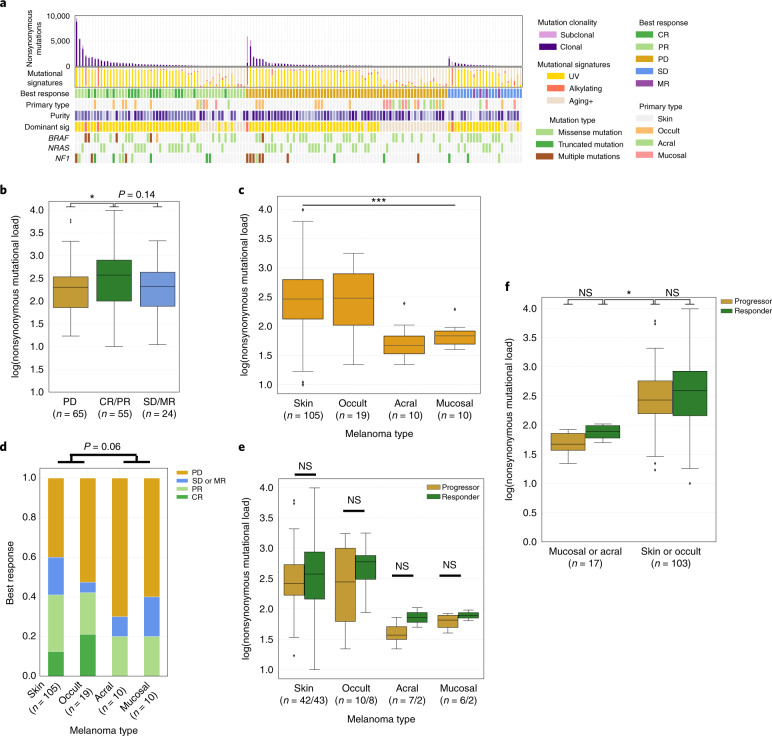
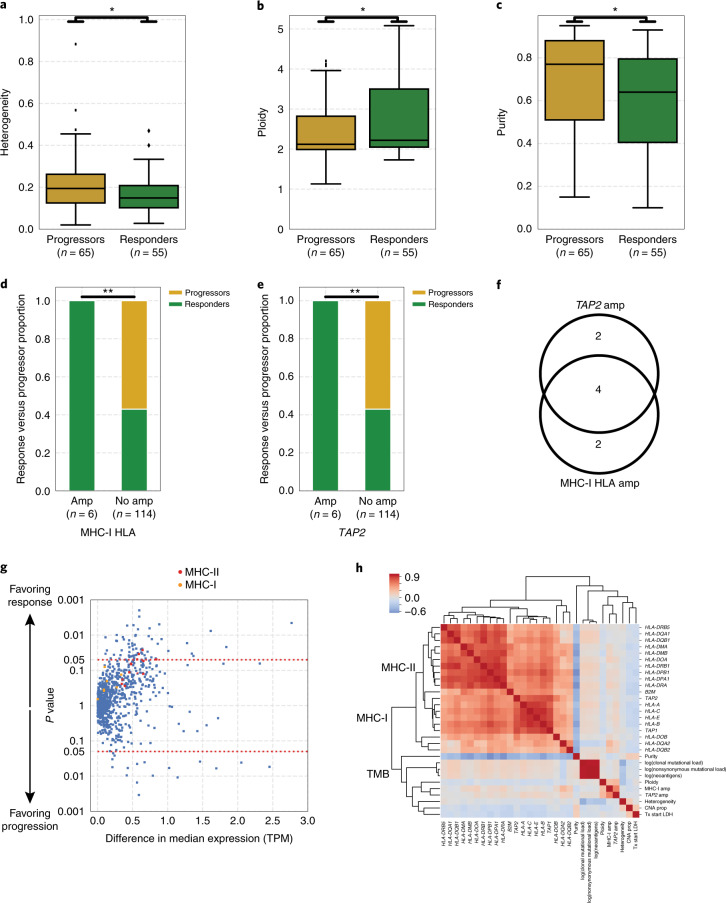
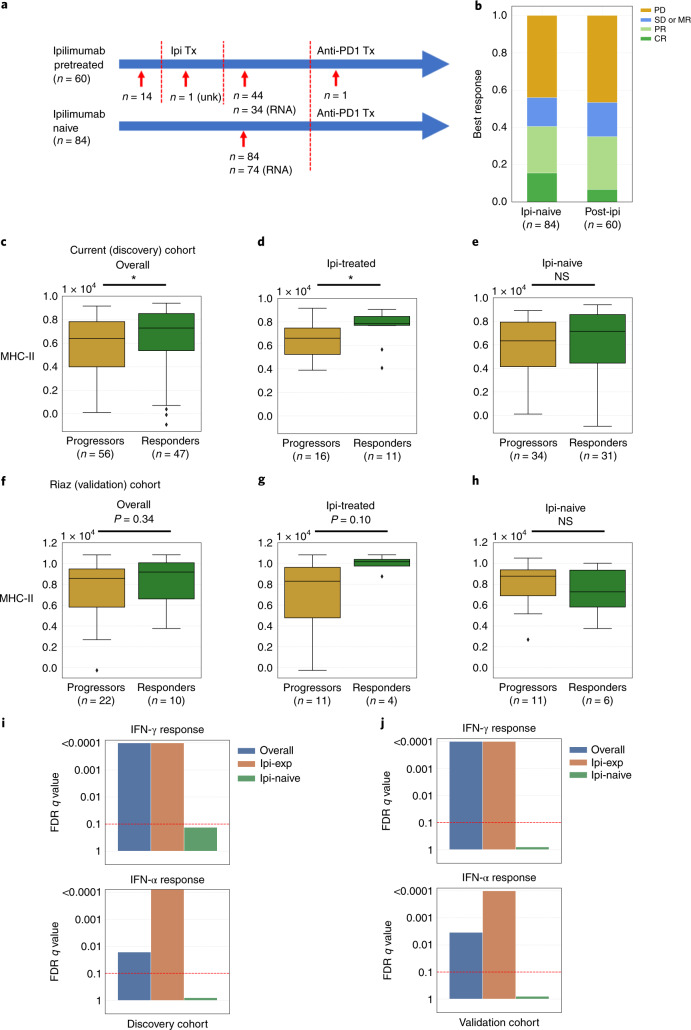
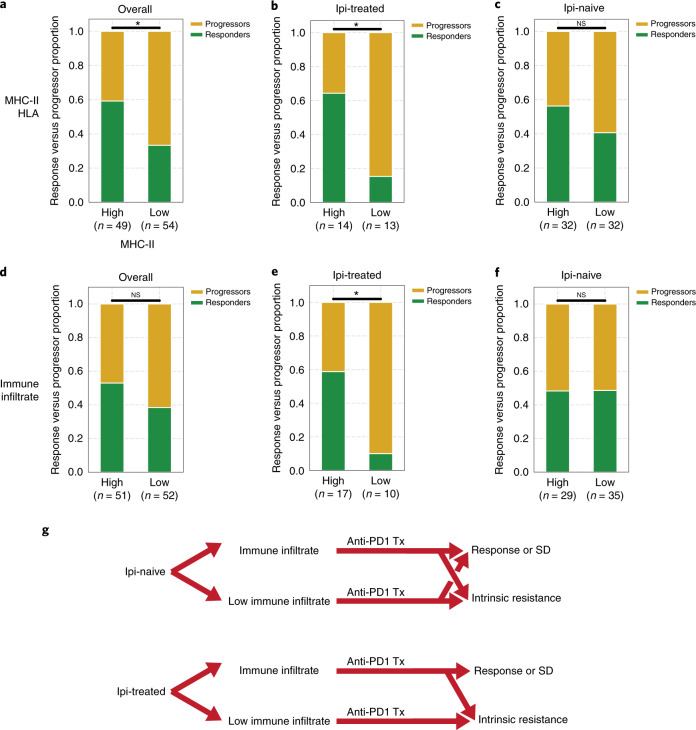
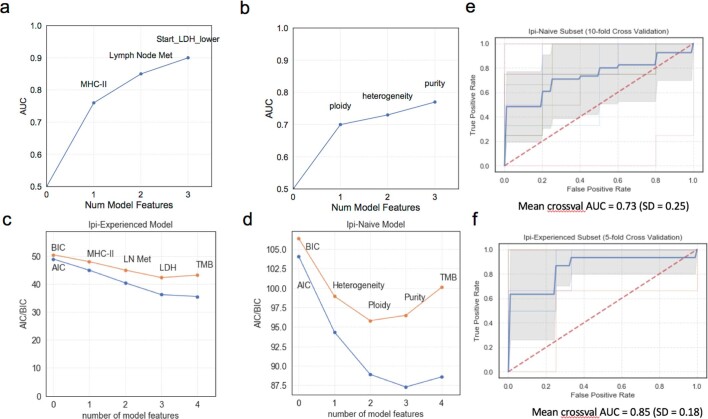
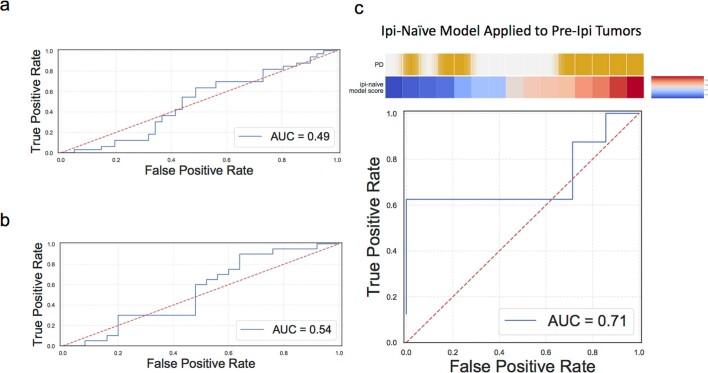
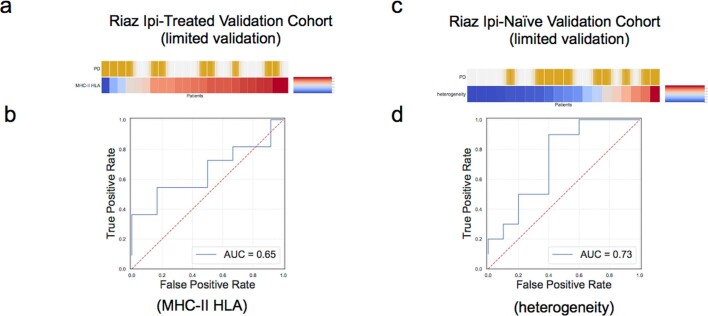
Immune-checkpoint blockade (ICB) has demonstrated efficacy in many tumor types, but predictors of responsiveness to anti-PD1 ICB are incompletely characterized. In this study, we analyzed a clinically annotated cohort of patients with melanoma (n = 144) treated with anti-PD1 ICB, with whole-exome and whole-transcriptome sequencing of pre-treatment tumors. We found that tumor mutational burden as a predictor of response was confounded by melanoma subtype, whereas multiple novel genomic and transcriptomic features predicted selective response, including features associated with MHC-I and MHC-II antigen presentation. Furthermore, previous anti-CTLA4 ICB exposure was associated with different predictors of response compared to tumors that were naive to ICB, suggesting selective immune effects of previous exposure to anti-CTLA4 ICB. Finally, we developed parsimonious models integrating clinical, genomic and transcriptomic features to predict intrinsic resistance to anti-PD1 ICB in individual tumors, with validation in smaller independent cohorts limited by the availability of comprehensive data. Broadly, we present a framework to discover predictive features and build models of ICB therapeutic response.
Overview
The claims and statistics of this paper haven’t been checked yet.
Run the check — free, no account needed. It reads the open-access text and checks the sources it cites.
Integrity signals
Registry
Cites
Statistics
Figures
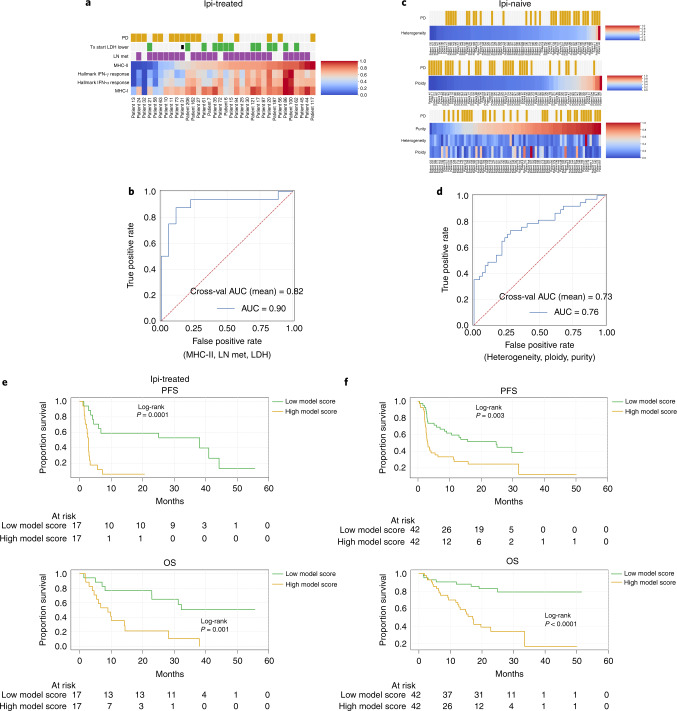
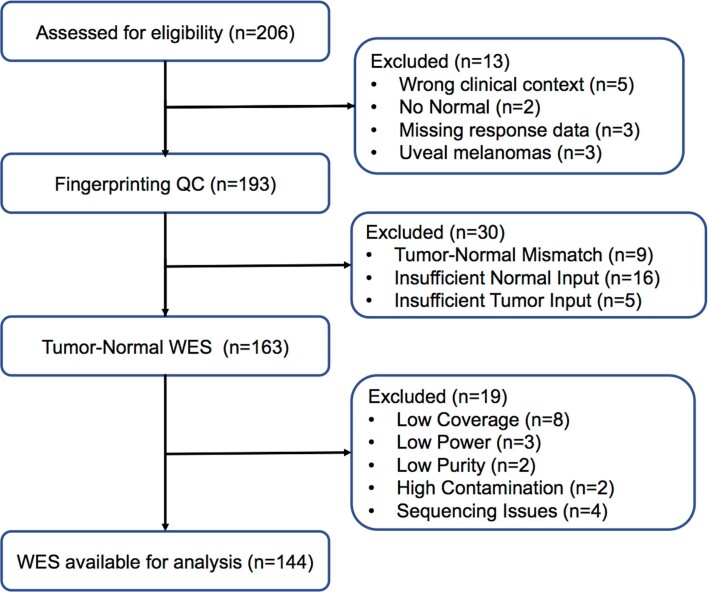
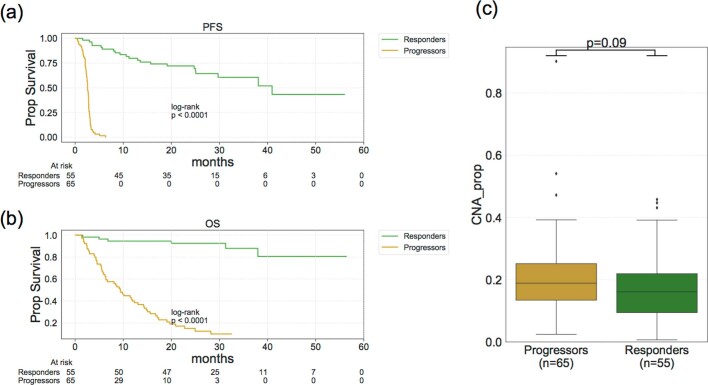
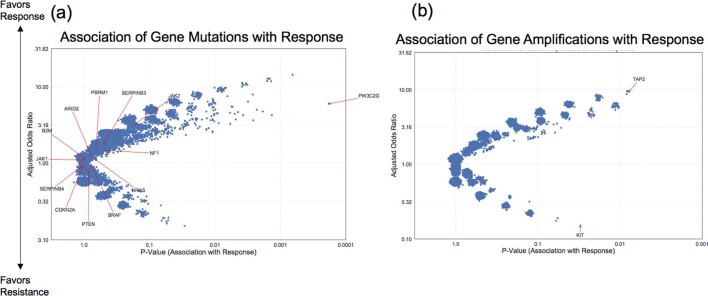
Verification
Claims the paper makes
The claims and statistics of this paper haven’t been checked yet.
Run the check — free, no account needed. It reads the open-access text and checks the sources it cites.
Claims other papers make about this one
Each is checked against this paper’s own text: does it say what the citing paper says it does?
The source backs part of the claim, not all of it — or backs it for a different population, condition or comparison.
In the citing paper
“Our analysis identified distinct pathway signatures differentiating responders from nonresponders, with 78 pathways showing significant dysregulation (two-sided t test, P < 0.05; Fig. 6A, Supplementary Text, and fig. S4, A to E).”
From PathTIGR: A pathway topology-informed graph representation learning framework for immunotherapy response prediction (2026) · cites this paper as [34]
Experimental — accuracy not yet measuredThe source backs part of the claim, not all of it — or backs it for a different population, condition or comparison.
In the citing paper
“Analysis demonstrated statistically significant improvements in both overall survival (OS) and progression-free survival (PFS) among model-predicted responders compared to nonresponders (log-rank test, P < 0.0001; Fig. 2, E and F).”
From PathTIGR: A pathway topology-informed graph representation learning framework for immunotherapy response prediction (2026) · cites this paper as [34]
Experimental — accuracy not yet measuredThe source backs part of the claim, not all of it — or backs it for a different population, condition or comparison.
In the citing paper
“univariate Cox proportional hazard regression analysis further revealed that bone metastasis, brain metastasis, and the PathTIGR model were significantly associated with patient outcomes, with PathTIGR showing the lowest hazard ratio (HR = 0.189, P < 0.001; Fig. 2H)”
From PathTIGR: A pathway topology-informed graph representation learning framework for immunotherapy response prediction (2026) · cites this paper as [34]
Experimental — accuracy not yet measuredThe source backs part of the claim, not all of it — or backs it for a different population, condition or comparison.
In the citing paper
“Analysis demonstrated statistically significant improvements in both overall survival (OS) and progression-free survival (PFS) among model-predicted responders compared to nonresponders (log-rank test, P < 0.0001; Fig. 2, E and F).”
From PathTIGR: A pathway topology-informed graph representation learning framework for immunotherapy response prediction (2026) · cites this paper as [34]
Experimental — accuracy not yet measuredThe source backs part of the claim, not all of it — or backs it for a different population, condition or comparison.
In the citing paper
“Receiver operating characteristic (ROC) curve analysis demonstrated exceptional discriminatory performance for immune checkpoint inhibitor (ICI) response prediction, yielding an area under the ROC curve (AUC) of 0.975 [95% confidence interval (CI): 0.962 to 0.997; Fig. 2A].”
From PathTIGR: A pathway topology-informed graph representation learning framework for immunotherapy response prediction (2026) · cites this paper as [34]
Experimental — accuracy not yet measured
The cited source says what the claim attributes to it.
In the citing paper
“The clinical validation of PathTIGR predictions was established through the comparative analysis of objective response rates (ORRs) between PathTIGR-stratified responder and nonresponder subgroups, revealing significantly elevated response rates among predicted responders relative to nonresponders (Fisher’s exact test, P < 0.0001; Fig. 2D)”
From PathTIGR: A pathway topology-informed graph representation learning framework for immunotherapy response prediction (2026) · cites this paper as [34]
The check wasn’t confident either way, so it gives no verdict — never disputed.
In the citing paper
“precision-recall curve analysis was used, revealing an area under the precision-recall curve (AUPRC) of 0.969 (Fig. 2B).”
From PathTIGR: A pathway topology-informed graph representation learning framework for immunotherapy response prediction (2026) · cites this paper as [34]
Experimental — accuracy not yet measuredThe check wasn’t confident either way, so it gives no verdict — never disputed.
In the citing paper
“with PathTIGR achieving an AUC of 0.85 for 4-year survival prognostication (Fig. 2G)”
From PathTIGR: A pathway topology-informed graph representation learning framework for immunotherapy response prediction (2026) · cites this paper as [34]
Experimental — accuracy not yet measuredThe check wasn’t confident either way, so it gives no verdict — never disputed.
In the citing paper
“multivariate Cox regression analysis confirmed that PathTIGR remained an independent prognostic factor in training cohort (HR = 0.141, P < 0.001; Fig. 2H and Table 1)”
From PathTIGR: A pathway topology-informed graph representation learning framework for immunotherapy response prediction (2026) · cites this paper as [34]
Experimental — accuracy not yet measuredThe check wasn’t confident either way, so it gives no verdict — never disputed.
In the citing paper
“maintaining AUC values consistently exceeding 0.8 at 2-year and 3-year intervals”
From PathTIGR: A pathway topology-informed graph representation learning framework for immunotherapy response prediction (2026) · cites this paper as [34]
Experimental — accuracy not yet measuredThe check wasn’t confident either way, so it gives no verdict — never disputed.
In the citing paper
“The PathTIGR model consistently outperformed all these individual clinical variables in predicting patient prognosis (fig. S1).”
From PathTIGR: A pathway topology-informed graph representation learning framework for immunotherapy response prediction (2026) · cites this paper as [34]
Experimental — accuracy not yet measuredIn the citing paper
“We observed similar results in a larger validation cohort of advanced melanoma patients treated with ICB (Liu et al., 2019) (Figures 6C, S6E, and S6F).”
From Microbiota triggers STING-type I IFN-dependent monocyte reprogramming of the tumor microenvironment (2021) · cites this paper as Liu et al., 2019
Self-check
Percentages, sums and reported differences re-computed from the paper’s own numbers.
The self-check needs the paper’s full text.
Citations
Cites
Subramanian, A., Tamayo, P., Mootha, V. K., Mukherjee, S., Ebert, B. L., Gillette, M. A., Paulovich, A., Pomeroy, S. L., Golub, T. R., Lander, E. S., et al. (2005) · Proceedings of the National Academy of Sciences · doi:10.1073/pnas.0506580102 · Cited by 53,625
STAR: ultrafast universal RNA-seq aligner
Dobin, A., Davis, C. A., Schlesinger, F., Drenkow, J., Zaleski, C., Jha, S., Batut, P., Chaisson, M., & Gingeras, T. R. (2013) · Bioinformatics · doi:10.1093/bioinformatics/bts635 · Cited by 51,709
PD-1 and PD-L1 Immune Checkpoint Blockade to Treat Breast Cancer
Hartkopf, A. D., Taran, F., Wallwiener, M., Walter, C. B., Krämer, B., Grischke, E., & Brucker, S. Y. (2016) · Breast Care · doi:10.1159/000453569 · Cited by 30,989
RSEM: accurate transcript quantification from RNA-Seq data with or without a reference genome
Li, B., & Dewey, C. N. (2011) · BMC Bioinformatics · doi:10.1186/1471-2105-12-323 · Cited by 22,179
Improved Survival with Ipilimumab in Patients with Metastatic Melanoma
Hodi, F. S., O'Day, S. J., McDermott, D. F., Weber, R. W., Sosman, J. A., Haanen, J. B., Gonzalez, R., Robert, C., Schadendorf, D., Hassel, J. C., et al. (2010) · New England Journal of Medicine · doi:10.1056/nejmoa1003466 · Cited by 15,155
Self-citationLearning the parts of objects by non-negative matrix factorization
Lee, D. D., & Seung, H. S. (1999) · Nature · doi:10.1038/44565 · Cited by 14,193
The Molecular Signatures Database Hallmark Gene Set Collection
Liberzon, A., Birger, C., Thorvaldsdóttir, H., Ghandi, M., Mesirov, J. P., & Tamayo, P. (2015) · Cell Systems · doi:10.1016/j.cels.2015.12.004 · Cited by 13,807
Robust enumeration of cell subsets from tissue expression profiles
Newman, A. M., Liu, C. L., Green, M. R., Gentles, A. J., Feng, W., Xu, Y., Hoang, C. D., Diehn, M., & Alizadeh, A. A. (2015) · Nature Methods · doi:10.1038/nmeth.3337 · Cited by 13,224
Pembrolizumab versus Chemotherapy for PD-L1-Positive Non-Small-Cell Lung Cancer
Reck, M., Rodríguez-Abreu, D., Robinson, A. G., Hui, R., Csőszi, T., Fülöp, A., Gottfried, M., Peled, N., Tafreshi, A., Cuffe, S., et al. (2016) · New England Journal of Medicine · doi:10.1056/nejmoa1606774 · Cited by 10,089
Signatures of mutational processes in human cancer
Initiative, A. P. C. G., Alexandrov, L. B., ICGC Breast Cancer Consortium, ICGC MMML-Seq Consortium, PedBrain, I., Nik-Zainal, S., Wedge, D. C., Aparicio, S. A. J. R., Behjati, S., Biankin, A. V., et al. (2013) · Nature · doi:10.1038/nature12477 · Cited by 9,660
Cited by
Sorted by citations
Items 901–1,000 of 1,003
Huang, Y., Liu, H., Liu, B., Chen, X., Li, D., Xue, J., Li, N., Zhu, L., Yang, L., Xiao, J., et al. (2024) · Figshare · doi:10.6084/m9.figshare.26678840
Long, J., Wang, D., Yang, X., Wang, A., Lin, Y., Zheng, M., Zhang, H., Sang, X., Wang, H., Hu, K., et al. (2021) · Figshare · doi:10.6084/m9.figshare.15026730
Zhong, W., Chen, H., Yang, J., Huang, C., Lin, Y., & Huang, J. (2024) · Figshare · doi:10.6084/m9.figshare.26632474
Zhong, W., Chen, H., Yang, J., Huang, C., Lin, Y., & Huang, J. (2024) · Figshare · doi:10.6084/m9.figshare.26632456
Qiu, J., Li, X., He, Y., Wang, Q., Li, J., Wu, J., Jiang, Y., & Han, J. (2024) · Figshare · doi:10.6084/m9.figshare.26556980
Huang, Y., Liu, H., Liu, B., Chen, X., Li, D., Xue, J., Li, N., Zhu, L., Yang, L., Xiao, J., et al. (2024) · Figshare · doi:10.6084/m9.figshare.25194768
Ralser, D. J., Herr, E., de Vos, L., Kulcsár, Z., Zarbl, R., Klümper, N., Gielen, G. H., Maas, A. P., Hoffmann, F., Dietrich, J., et al. (2023) · Figshare · doi:10.6084/m9.figshare.23273359
Wood, M. A., Weeder, B. R., David, J. K., Nellore, A., & Thompson, R. F. (2020) · Figshare · doi:10.6084/m9.figshare.12050634
Wang, L., He, T., Liu, J., Tai, J., Wang, B., Chen, Z., & Zhengxue, Q. (2021) · Figshare · doi:10.6084/m9.figshare.14570611
Long, J., Wang, D., Yang, X., Wang, A., Lin, Y., Zheng, M., Zhang, H., Sang, X., Wang, H., Hu, K., et al. (2021) · Figshare · doi:10.6084/m9.figshare.15026724
Liu, H., Sima, X., Xiao, B., Gulizeba, H., Zhao, S., Zhou, T., & Huang, Y. (2024) · Figshare · doi:10.6084/m9.figshare.26723933
Steinfass, T., Poelchen, J., Sun, Q., Mastrogiulio, G., Novak, D., Vierthaler, M., Pardo, S., Federico, A., Hüser, L., Hielscher, T., et al. (2023) · Figshare · doi:10.6084/m9.figshare.22623706
Self-citationZhong, W., Chen, H., Yang, J., Huang, C., Lin, Y., & Huang, J. (2024) · Figshare · doi:10.6084/m9.figshare.24447629
Wang, D.-X., Long, J.-Y., Li, R.-Z., Zhang, D.-L., Liu, H., Liu, J., Tian, J., Li, H., Liu, J., Zhao, H., et al. (2024) · Figshare · doi:10.6084/m9.figshare.25001749
Qin, Q., Zhou, Y., Guo, J., Chen, Q., Tang, W., Li, Y., You, J., & Li, Q. (2024) · Figshare · doi:10.6084/m9.figshare.25530249
Yang, J., Bergdorf, K. N., Yan, C., Luo, W., Chen, S. C., Ayers, G. D., Liu, Q., Liu, X., Boothby, M., Weiss, V. L., et al. (2023) · Figshare · doi:10.6084/m9.figshare.23292053
Zhou, Y., Tan, Y., Zhang, Q., Duan, Q., & Chen, J. (2022) · Figshare · doi:10.6084/m9.figshare.21434012
Zhong, W., Chen, H., Yang, J., Huang, C., Lin, Y., & Huang, J. (2023) · Figshare · doi:10.6084/m9.figshare.24447532
Zhou, Y., Tan, Y., Zhang, Q., Duan, Q., & Chen, J. (2022) · Figshare · doi:10.6084/m9.figshare.21434018
Obermayer, A., Chang, D., Nobles, G., Teng, M., Tan, A.-C., Wang, X., Chen, Y. A., Eschrich, S., Rodriguez, P. C., Grass, G. D., et al. (2023) · Figshare · doi:10.6084/m9.figshare.23597434
Fu, X., Qin, P., Li, F., Zhu, H., You, H., Zhang, Y., Xu, B., Li, T., Zhang, F., Han, L., et al. (2024) · Figshare · doi:10.6084/m9.figshare.26654485
Gao, Y., Wang, H., Chen, S., An, R., Chu, Y., Li, G., Wang, Y., Xie, X., & Zhang, J. (2022) · Figshare · doi:10.6084/m9.figshare.19711088
Steinfass, T., Poelchen, J., Sun, Q., Mastrogiulio, G., Novak, D., Vierthaler, M., Pardo, S., Federico, A., Hüser, L., Hielscher, T., et al. (2023) · Figshare · doi:10.6084/m9.figshare.22623715
Self-citationZhong, W., Chen, H., Yang, J., Huang, C., Lin, Y., & Huang, J. (2024) · Figshare · doi:10.6084/m9.figshare.26632468
Obermayer, A., Chang, D., Nobles, G., Teng, M., Tan, A.-C., Wang, X., Chen, Y. A., Eschrich, S., Rodriguez, P. C., Grass, G. D., et al. (2023) · Figshare · doi:10.6084/m9.figshare.23597419
Zhong, W., Chen, H., Yang, J., Huang, C., Lin, Y., & Huang, J. (2024) · Figshare · doi:10.6084/m9.figshare.26632471
Fu, X., Qin, P., Li, F., Zhu, H., You, H., Zhang, Y., Xu, B., Li, T., Zhang, F., Han, L., et al. (2024) · Figshare · doi:10.6084/m9.figshare.26654461
Obermayer, A., Chang, D., Nobles, G., Teng, M., Tan, A.-C., Wang, X., Chen, Y. A., Eschrich, S., Rodriguez, P. C., Grass, G. D., et al. (2023) · Figshare · doi:10.6084/m9.figshare.23597428
Steinfass, T., Poelchen, J., Sun, Q., Mastrogiulio, G., Novak, D., Vierthaler, M., Pardo, S., Federico, A., Hüser, L., Hielscher, T., et al. (2023) · Figshare · doi:10.6084/m9.figshare.22623703
Self-citationObermayer, A., Chang, D., Nobles, G., Teng, M., Tan, A.-C., Wang, X., Chen, Y. A., Eschrich, S., Rodriguez, P. C., Grass, G. D., et al. (2023) · Figshare · doi:10.6084/m9.figshare.23597437
Li, Y.-D., Huang, H., Ren, Z.-J., Yuan, Y., Wu, H., & Liu, C. (2023) · Figshare · doi:10.6084/m9.figshare.24030802
Hu, J., zhang, L., Xia, H., Yan, Y., Zhu, X., Sun, F., Sun, L., Li, S., Li, D., Wang, J., et al. (2023) · Figshare · doi:10.6084/m9.figshare.22617400
Zhou, Y., Tan, Y., Zhang, Q., Duan, Q., & Chen, J. (2022) · Figshare · doi:10.6084/m9.figshare.21434021
Liu, H., Sima, X., Xiao, B., Gulizeba, H., Zhao, S., Zhou, T., & Huang, Y. (2024) · Figshare · doi:10.6084/m9.figshare.26723930
Zhong, W., Chen, H., Yang, J., Huang, C., Lin, Y., & Huang, J. (2024) · Figshare · doi:10.6084/m9.figshare.26632465
Fu, X., Qin, P., Li, F., Zhu, H., You, H., Zhang, Y., Xu, B., Li, T., Zhang, F., Han, L., et al. (2024) · Figshare · doi:10.6084/m9.figshare.26654482
Zhong, W., Chen, H., Yang, J., Huang, C., Lin, Y., & Huang, J. (2024) · Figshare · doi:10.6084/m9.figshare.26632462
Long, J., Wang, D., Yang, X., Wang, A., Lin, Y., Zheng, M., Zhang, H., Sang, X., Wang, H., Hu, K., et al. (2021) · Figshare · doi:10.6084/m9.figshare.15026736
Additional file 1 of An atlas of cell-type-specific interactome networks across 44 human tumor types
Li, Z., Liu, G., Yang, X., Shu, M., Jin, W., Tong, Y., Liu, X., Wang, Y., Yuan, J., & Yang, Y. (2024) · Figshare · doi:10.6084/m9.figshare.25210504
Obermayer, A., Chang, D., Nobles, G., Teng, M., Tan, A.-C., Wang, X., Chen, Y. A., Eschrich, S., Rodriguez, P. C., Grass, G. D., et al. (2023) · Figshare · doi:10.6084/m9.figshare.23597431
Wang, M., Banik, I., Shain, A. H., Yeh, I., & Bastian, B. C. (2022) · Figshare · doi:10.6084/m9.figshare.20080968
Zheng, K., Hai, Y., Chen, H., Zhang, Y., Hu, X., & Ni, K. (2024) · Figshare · doi:10.6084/m9.figshare.25632967
Fu, X., Qin, P., Li, F., Zhu, H., You, H., Zhang, Y., Xu, B., Li, T., Zhang, F., Han, L., et al. (2024) · Figshare · doi:10.6084/m9.figshare.26654479
Liu, H., Sima, X., Xiao, B., Gulizeba, H., Zhao, S., Zhou, T., & Huang, Y. (2024) · Figshare · doi:10.6084/m9.figshare.25876126
Saamarthy, K., Ahlqvist, K., Daams, R., Balagunaseelan, N., Rinaldo-Matthis, A., Kazi, J. U., Sime, W., & Massoumi, R. (2024) · Figshare · doi:10.6084/m9.figshare.25025822
Fu, X., Qin, P., Li, F., Zhu, H., You, H., Zhang, Y., Xu, B., Li, T., Zhang, F., Han, L., et al. (2024) · Figshare · doi:10.6084/m9.figshare.26654470
Wang, D.-X., Long, J.-Y., Li, R.-Z., Zhang, D., Liu, H., Liu, J., Tian, J., Li, H., Liu, J., Zhao, H., et al. (2024) · Figshare · doi:10.6084/m9.figshare.25001704
Liu, H., Sima, X., Xiao, B., Gulizeba, H., Zhao, S., Zhou, T., & Huang, Y. (2024) · Figshare · doi:10.6084/m9.figshare.26723942
Wang, D.-X., Long, J.-Y., Li, R.-Z., Zhang, D.-L., Liu, H., Liu, J., Tian, J., Li, H., Liu, J., Zhao, H., et al. (2024) · Figshare · doi:10.6084/m9.figshare.26667921
Zhou, Y., Tan, Y., Zhang, Q., Duan, Q., & Chen, J. (2022) · Figshare · doi:10.6084/m9.figshare.21434015
Additional file 2 of An atlas of cell-type-specific interactome networks across 44 human tumor types
Li, Z., Liu, G., Yang, X., Shu, M., Jin, W., Tong, Y., Liu, X., Wang, Y., Yuan, J., & Yang, Y. (2024) · Figshare · doi:10.6084/m9.figshare.25210831
Zhong, W., Chen, H., Yang, J., Huang, C., Lin, Y., & Huang, J. (2024) · Figshare · doi:10.6084/m9.figshare.26632459
Fu, X., Qin, P., Li, F., Zhu, H., You, H., Zhang, Y., Xu, B., Li, T., Zhang, F., Han, L., et al. (2024) · Figshare · doi:10.6084/m9.figshare.26654467
Steinfass, T., Poelchen, J., Sun, Q., Mastrogiulio, G., Novak, D., Vierthaler, M., Pardo, S., Federico, A., Hüser, L., Hielscher, T., et al. (2023) · Figshare · doi:10.6084/m9.figshare.22623712
Self-citationObermayer, A., Chang, D., Nobles, G., Teng, M., Tan, A.-C., Wang, X., Chen, Y. A., Eschrich, S., Rodriguez, P. C., Grass, G. D., et al. (2023) · Figshare · doi:10.6084/m9.figshare.23597425
Liu, H., Sima, X., Xiao, B., Gulizeba, H., Zhao, S., Zhou, T., & Huang, Y. (2024) · Figshare · doi:10.6084/m9.figshare.26723936
Long, J., Wang, D., Yang, X., Wang, A., Lin, Y., Zheng, M., Zhang, H., Sang, X., Wang, H., Hu, K., et al. (2021) · Figshare · doi:10.6084/m9.figshare.15026742
Obermayer, A., Chang, D., Nobles, G., Teng, M., Tan, A.-C., Wang, X., Chen, Y. A., Eschrich, S., Rodriguez, P. C., Grass, G. D., et al. (2023) · Figshare · doi:10.6084/m9.figshare.23597422
Liu, H., Sima, X., Xiao, B., Gulizeba, H., Zhao, S., Zhou, T., & Huang, Y. (2024) · Figshare · doi:10.6084/m9.figshare.25876345
Long, J., Wang, D., Yang, X., Wang, A., Lin, Y., Zheng, M., Zhang, H., Sang, X., Wang, H., Hu, K., et al. (2021) · Figshare · doi:10.6084/m9.figshare.15026733
Fu, X., Qin, P., Li, F., Zhu, H., You, H., Zhang, Y., Xu, B., Li, T., Zhang, F., Han, L., et al. (2023) · Figshare · doi:10.6084/m9.figshare.24844603
Long, J., Wang, D., Yang, X., Wang, A., Lin, Y., Zheng, M., Zhang, H., Sang, X., Wang, H., Hu, K., et al. (2021) · Figshare · doi:10.6084/m9.figshare.15026727
Liu, Y., Lin, W., Qian, H., Yang, Y., Zhou, X., Wu, C., Pan, X., Liu, Y., & Wang, G. (2024) · Figshare · doi:10.6084/m9.figshare.24934480
Fu, X., Qin, P., Li, F., Zhu, H., You, H., Zhang, Y., Xu, B., Li, T., Zhang, F., Han, L., et al. (2024) · Figshare · doi:10.6084/m9.figshare.26654464
Steinfass, T., Poelchen, J., Sun, Q., Mastrogiulio, G., Novak, D., Vierthaler, M., Pardo, S., Federico, A., Hüser, L., Hielscher, T., et al. (2023) · Figshare · doi:10.6084/m9.figshare.22623700
Self-citationZheng, K., Hai, Y., Chen, H., Zhang, Y., Hu, X., & Ni, K. (2024) · Figshare · doi:10.6084/m9.figshare.25633068
Chen, D., Liu, P., Lu, X., Li, J., Qi, D., Zang, L., Lin, J., Liu, Y., Zhai, S., Fu, D., et al. (2024) · Figshare · doi:10.6084/m9.figshare.25698270
Obermayer, A., Chang, D., Nobles, G., Teng, M., Tan, A.-C., Wang, X., Chen, Y. A., Eschrich, S., Rodriguez, P. C., Grass, G. D., et al. (2023) · Figshare · doi:10.6084/m9.figshare.23597443
Hu, Z., Chen, S., Xie, D., Wang, J., & Zhou, D. (2023) · Research Square · doi:10.21203/rs.3.rs-3215481/v1
Zhong, W., Chen, H., Yang, J., Huang, C., Lin, Y., & Huang, J. (2024) · Figshare · doi:10.6084/m9.figshare.26632450
Wang, D.-X., Long, J.-Y., Li, R.-Z., Zhang, D.-L., Liu, H., Liu, J., Tian, J., Li, H., Liu, J., Zhao, H., et al. (2024) · Figshare · doi:10.6084/m9.figshare.26667924
Chen, D., Liu, P., Lu, X., Li, J., Qi, D., Zang, L., Lin, J., Liu, Y., Zhai, S., Fu, D., et al. (2024) · Figshare · doi:10.6084/m9.figshare.25698385
A mediterranean-mimicking diet harnesses gut microbiota–derived 3-IAA to rejuvenate T cellPreprint
Yu, X., Li, W., Feng, H., Li, Z., Zheng, H., Sun, S., Li, J., Li, B., & Wu, Q. (2026) · bioRxiv (Cold Spring Harbor Laboratory) · doi:10.64898/2026.01.05.697620
Association of copy number alterations with the immune transcriptomic landscape in cancer
Loipfinger, S., Bhattacharya, A., Urzúa-Traslaviña, C. G., van Vugt, M. A. T. M., de Bruyn, M., & Fehrmann, R. S. N. (2026) · npj Systems Biology and Applications · doi:10.1038/s41540-026-00649-8
Mutation-informed gene pairs to predict melanoma metastasis
Lim, S., Lim, Y., & Kim, J. H. (2026) · Cell Communication and Signaling · doi:10.1186/s12964-025-02602-4
Improving TCR-pMHC Binding Prediction with Deep Learning and Feature Analysis
Gowda, N. L., & Gondi, D. S. (2026) · Lecture notes in networks and systems · doi:10.1007/978-981-95-2875-2_39
Harnessing inflammatory monocytes to overcome resistance to anti-PD-1 immunotherapy
Zimmerman, M. P., Huang, A. Y., Cox, E. K., Abosy, R. A., Chong, W. L., Bastian, A., Vietor, K. J., Choutri, Y. A., Collier, J. L., Zhabotynsky, V., et al. (2026) · Journal for ImmunoTherapy of Cancer · doi:10.64898/2026.02.05.704029
A mediterranean-mimicking diet harnesses gut microbiota–derived 3-IAA to rejuvenate T cellPreprint
Yu, X., Li, W., Feng, H., Li, Z., Zheng, H., Sun, S., Li, J., Li, B., & Wu, Q. (2026) · eLife · doi:10.7554/elife.110468.1
A mediterranean-mimicking diet harnesses gut microbiota–derived 3-IAA to rejuvenate T cellPreprint
Yu, X., Li, W., Feng, H., Li, Z., Zheng, H., Sun, S., Li, J., Li, B., & Wu, Q. (2026) · eLife · doi:10.7554/elife.110468
Cai, J., Huang, Z., Li, Y., Zhou, J., Xu, Y., Cai, M., Zhao, H., & Zhao, B. (2026) · The Oncologist · doi:10.1093/oncolo/oyag049
Oh, D. E., Kee, G., Oh, J.-H., Kim, W., Kang, Y. G., Park, C. W., Jun, T. J., & Sung, C. O. (2026) · PLoS ONE · doi:10.1371/journal.pone.0343633
Xiao, Y., Zhang, X., Xie, Z., Tao, L., Jin, X., Wang, X., Liu, B., Zhou, X., Pan, J., & Shao, Y. (2026) · International Journal of Surgery · doi:10.1097/js9.0000000000005112
Jin, C. G., Ma, Y., Yao, J., Li, X., Ma, T., & Li, L. (2026) · Human Mutation · doi:10.1155/humu/7170837
Imamura, H., Chiang, S., Kuronishi, M., Funahashi, Y., Nishino, T., & Yachie‐Kinoshita, A. (2026) · Cancers · doi:10.3390/cancers18071067
Xu, R., Wong, J. J.-L., & Feng, Y. (2026) · Cancer Letters · doi:10.1016/j.canlet.2026.218442
Doğan, T., Taş, S., Kantar, T. G., İspir, E., Hafızoğlu, E., Özdemir, M., Bir, F., Taşköylü, B. Y., Demiray, A. G., Yaren, A., et al. (2026) · Turkish Journal of Clinics and Laboratory · doi:10.18663/tjcl.1849630
DKK1 expression associates with tertiary lymphoid structure maturity in non-small cell lung cancer
Ma, L., Yang, L., Wen, J., Lu, F., Yu, J., & Meng, X. (2026) · APOPTOSIS · doi:10.1007/s10495-026-02332-z
Gut microbiota-related biomarkers in immuno-oncology
Silva, C. A. C. (2023) · theses.fr (ABES) · doi:10.70675/9022496ez0bbbz4f94z9760z4ae0a6ee5e7a
Xu, J., Ni, C., Qin, L., Wang, P., & Xu, J. (2026) · Clinical & Translational Oncology · doi:10.1007/s12094-026-04330-8
Proteome profiles of esophageal squamous cell carcinoma tie mitochondrial complex I to immunotherapy
Ma, F., Li, Y., Xiang, C., Wang, B., Lv, J., Shang, Z., Zhang, W., Qin, Z., Pu, Y., Li, K., et al. (2026) · EMBO Molecular Medicine · doi:10.1038/s44321-026-00413-9
Forcelloni, S., Giron‐Michel, J., Boccio, P. D., Cufaro, M. C., Sebastiano, A. D., Mariotti, F. R., Ciancaglini, C., Chouaı̈b, S., Padelli, M., Vespa, S., et al. (2026) · Frontiers in Immunology · doi:10.3389/fimmu.2026.1798481
Immune classification of advanced melanoma identifies non-responders to anti-PD1 therapy
Gámez‐Pozo, A., Trilla‐Fuertes, L., Becerril-Gomez, F., Lalanda-Delgado, P., Soriano, V., Garicano, F., Lecumberri, M. J., de la Borbolla, M. R., Majem, M., Pérez-Ruíz, E., et al. (2026) · Cancer Immunology Immunotherapy · doi:10.1007/s00262-026-04392-1
Immune microenvironment and strategy of immunotherapy in acral melanoma
Minowa, T., Murata, K., Watowich, S. S., Gubin, M. M., & Hirohashi, Y. (2026) · Immunological Medicine · doi:10.1080/25785826.2026.2670041
A Hallmark-Integrated, Agent-Based Framework for Intratumor Heterogeneity in Melanoma Evolution
Jamshad, K., & Jackson, T. L. (2026) · Bulletin of Mathematical Biology · doi:10.1007/s11538-026-01654-y
Shi, Y., Savchenko, A., Brase, J. C., Reardon, B. M., Ricker, C. A., Park, J., Tarantino, G., Manos, M. P., Huang, A. Y., Allen, E. M. V., et al. (2026) · bioRxiv (Cold Spring Harbor Laboratory) · doi:10.64898/2026.05.09.721157
Self-citationCao, Y., Zhou, Q., Yang, J., Mo, S., Yuan, W., Che, J., Luo, R., Liang, D., Ma, B., Gao, W., et al. (2026) · Cancer Genetics · doi:10.1016/j.cancergen.2026.04.010
Wang, Y., Tang, W., Wang, Y., Lu, X., Zhang, L., Yang, J., Yang, J., & Yang, J. (2026) · Discover Oncology · doi:10.1007/s12672-026-05221-8
Liu, R., Gong, J., Zhang, Y., Chen, Q., Han, T., Li, W., Zhang, H., & Li, Y. (2026) · Discover Oncology · doi:10.1007/s12672-026-05305-5
Metadata
- Authors
- Liu, D., Schilling, B., Liu, D., Sucker, A., Livingstone, E., Jerby-Arnon, L., Zimmer, L., Gutzmer, R., Satzger, I., Loquai, C., Grabbe, S., Vokes, N., Margolis, C. A., Conway, J., He, M. X., Elmarakeby, H., Dietlein, F., Miao, D., Tracy, A., Gogas, H., Goldinger, S. M., Utikal, J., Blank, C. U., Rauschenberg, R., von Bubnoff, D., Krackhardt, A., Weide, B., Haferkamp, S., Kiecker, F., Izar, B., Garraway, L., Regev, A., Flaherty, K., Paschen, A., Van Allen, E. M., & Schadendorf, D.
- Affiliations
- Broad Institute (US)
- German Cancer Research Center (DE)
- Medizinische Hochschule Hannover (DE)
- University Medical Center of the Johannes Gutenberg University Mainz (DE)
- National and Kapodistrian University of Athens (GR)
- University Hospital Zurich (CH)
- The Netherlands Cancer Institute (NL)
- Universitätsklinikum Tübingen (DE)
- University Hospital Regensburg (DE)
- Charité – Universitätsmedizin Berlin (DE)
- Eli Lilly (United States) (US)
- Massachusetts General Hospital (US)
- Corresponding author
- Schadendorf, Dirk
- ORCID
- Liu, David
- Schilling, Bastian
- Liu, Derek
- Sucker, Antje
- Livingstone, Elisabeth
- Zimmer, Lisa
- Gutzmer, Ralf
- Satzger, Imke
- Loquai, Carmen
- Grabbe, Stephan
- Vokes, Natalie
- Margolis, Claire A.
- Conway, Jake
- He, Meng Xiao
- Elmarakeby, Haitham
- Dietlein, Felix
- Miao, Diana
- Tracy, Adam
- Gogas, Helen
- Goldinger, Simone M.
- Utikal, Jochen
- Blank, Christian U.
- Rauschenberg, Ricarda
- Krackhardt, Angela
- Weide, Benjamin
- Haferkamp, Sebastian
- Garraway, Levi
- Regev, Aviv
- Flaherty, Keith
- Paschen, Annette
- Van Allen, Eliezer M.
- Schadendorf, Dirk
- Venue
- Nature Medicine
- Published
- 2019-12
- Volume
- 25
- Issue
- 12
- Pages
- 1916-1927
- ISSN
- 1078-8956 (ISSN-L)
- 1546-170X
- PMC
- PMC6898788
- OpenAlex
- W2991341799
- Cited by
- 1,039
- References
- 80
- Citations by year
- 2026: 118 · 2025: 156 · 2024: 203 · 2023: 210 · 2022: 157 · 2021: 129 · 2020: 64
- FWCI
- 37.04
- Type
- journal article
- Language
- en
- Update notices
- correction (2020-06-19)
- Open access
- hybrid
- doi.org
- Locations
- Nature Medicine (publishedVersion, cc-by)
- PubMed Central (publishedVersion, cc-by)
- PubMed (publishedVersion)
- DSpace@MIT (Massachusetts Institute of Technology) (submittedVersion, cc-by)
- University of Regensburg Publication Server (University of Regensburg) (submittedVersion)
- mediaTUM – the media and publications repository of the Technical University Munich (Technical University Munich) (submittedVersion, other-oa)
- mediaTUM – the media and publications repository of the Technical University Munich (Technical University Munich) (submittedVersion)
- Nature
- Funders
- National Science Foundation (1144152)
- Conquer Cancer Foundation (T32 GM008313)
- Damon Runyon Cancer Research Foundation
- Dr. Miriam and Sheldon G. Adelson Medical Research Foundation
- Deutsche Forschungsgemeinschaft (SCHA422/17-1, SCHA 422/17, PA 2376/1‐, HO 6389/2-1, KFO337, 2376/1-1, 6389/2-1, PA 2376/1‐1)
- Universität des Saarlandes
- Nationales Centrum für Tumorerkrankungen Heidelberg
- National Institutes of Health (DGE1144152)
- National Human Genome Research Institute (T32HG002295)
- National Cancer Institute (R01CA227388, K08CA222663, K08CA234458, U01CA233100)
- National Institute of General Medical Sciences (T32GM008313)
- Topics
- Health Sciences › Medicine › Oncology › Cancer Immunotherapy and Biomarkers
- Health Sciences › Medicine › Oncology › Cutaneous Melanoma Detection and Management
- Life Sciences › Immunology and Microbiology › Immunology › Immunotherapy and Immune Responses
- Keywords
- metastatic melanoma, predictive biomarkers, tumor mutational burden, MHC class I antigen presentation, MHC class II antigen presentation, immune checkpoint inhibitor resistance, transcriptomic features, clinical outcome prediction
- MeSH terms
- Exome Sequencing, Nivolumab, Female, Humans, Male, Melanoma, Mutation, Neoplasm Metastasis, Antigen Presentation, Drug Resistance, Neoplasm, Transcriptome, CTLA-4 Antigen, Programmed Cell Death 1 Receptor, Antibodies, Monoclonal, Humanized
About these checks
Registry, retraction, Cites and statistics results are computed, not judged, with one exception: a printed reference that no index lists is read once by a model before it counts as a citation error. Claims are extracted by a model and kept only when their quote appears verbatim in the text; each cited source is then checked, with a model’s help, for whether it says what the claim relies on. Those verdicts can be wrong — read the claim’s quote and the cited source before relying on one.
Statistics and arithmetic are recomputed, not judged.
Confidence bands are shown only for fields calibrated on our annotated test set. None is calibrated yet, so no band is shown.
What counts as a claim ›How we measure confidence ›How we check this ›
Are you an author, or do you see a problem with this page? Request a review
