

Claudin18.2-specific CAR T cells in gastrointestinal cancers: phase 1 trial interim results
Open accessThe DOI matches its Crossref record; 40 of the 40 references it cites were found in a registry or an index.
Abstract
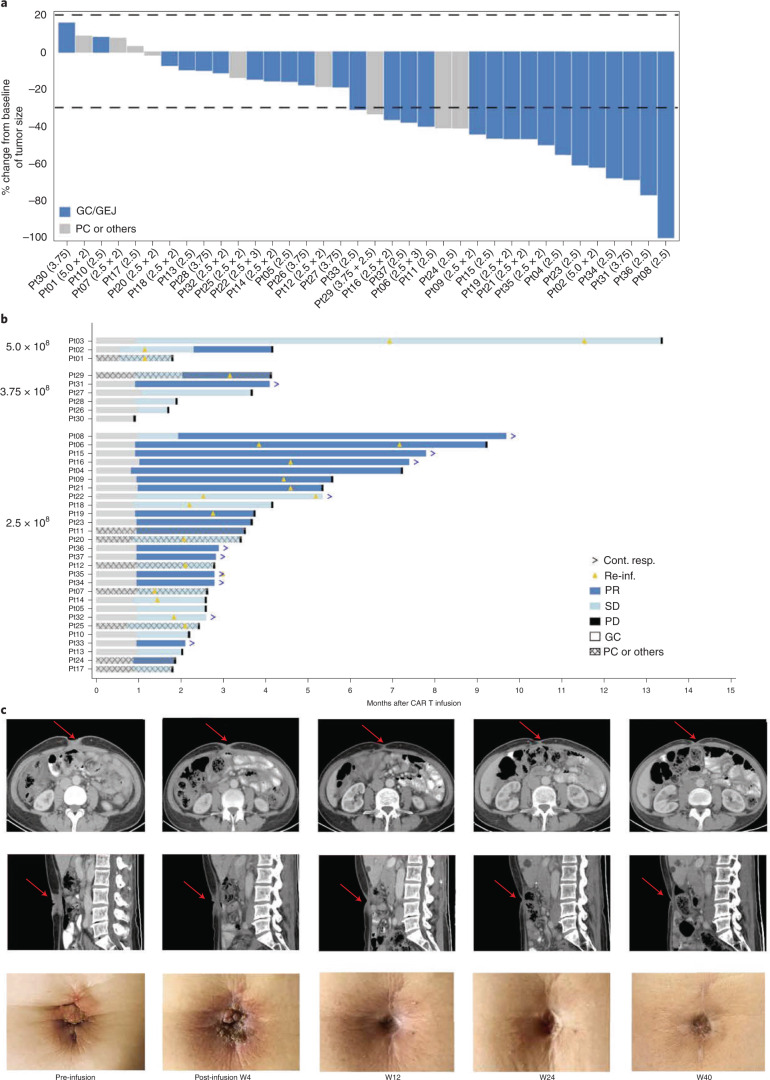
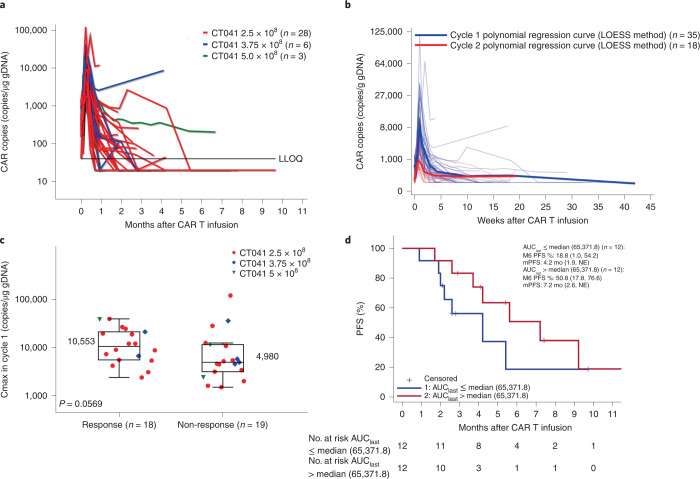
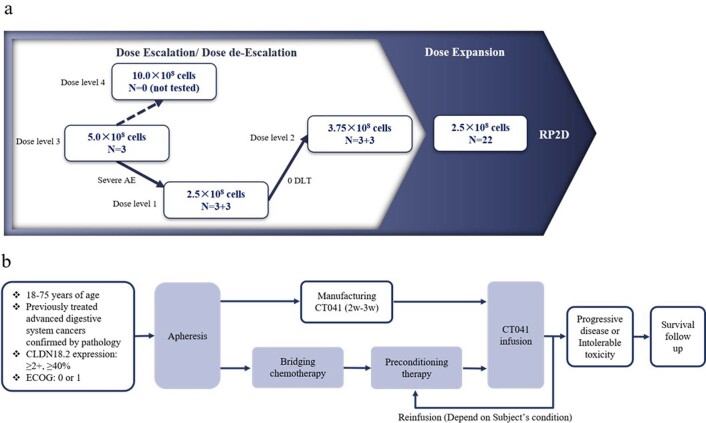
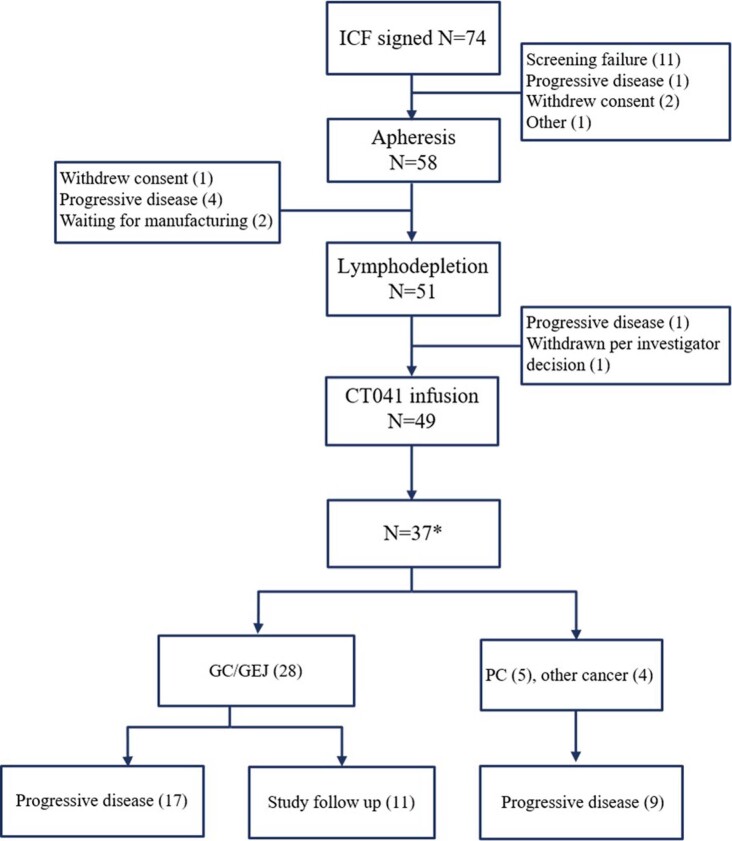
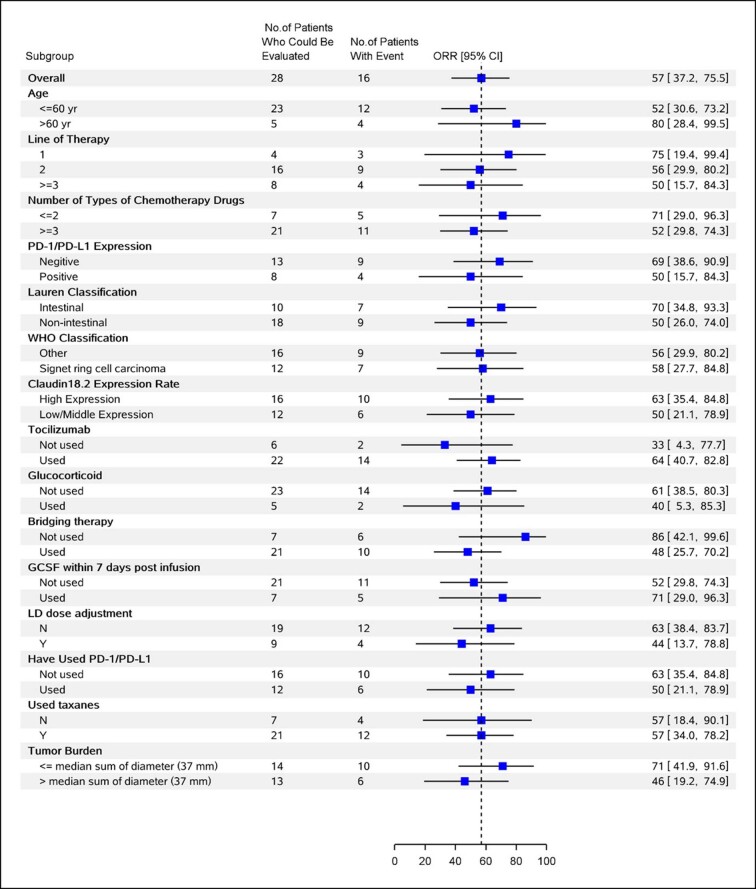
Despite success in hematologic malignancies, the treatment landscape of chimeric antigen receptor (CAR) T cell therapy for solid tumors remains limited. Claudin18.2 (CLDN18.2)-redirected CAR T cells showed promising efficacy against gastric cancer (GC) in a preclinical study. Here we report the interim analysis results of an ongoing, open-label, single-arm, phase 1 clinical trial of CLDN18.2-targeted CAR T cells (CT041) in patients with previously treated, CLDN18.2-positive digestive system cancers ( NCT03874897 ). The primary objective was safety after CT041 infusion; secondary objectives included CT041 efficacy, pharmacokinetics and immunogenicity. We treated 37 patients with one of three CT041 doses: 2.5 × 10 8 , 3.75 × 10 8 or 5.0 × 10 8 cells. All patients experienced a grade 3 or higher hematologic toxicity. Grade 1 or 2 cytokine release syndrome (CRS) occurred in 94.6% of patients. No grade 3 or higher CRS or neurotoxicities, treatment-related deaths or dose-limiting toxicities were reported. The overall response rate (ORR) and disease control rate (DCR) reached 48.6% and 73.0%, respectively. The 6-month duration of response rate was 44.8%. In patients with GC, the ORR and DCR reached 57.1% and 75.0%, respectively, and the 6-month overall survival rate was 81.2%. These initial results suggest that CT041 has promising efficacy with an acceptable safety profile in patients with heavily pretreated, CLDN18.2-positive digestive system cancers, particularly in those with GC.
Overview
The claims and statistics of this paper haven’t been checked yet.
Free: it reads the open-access text and checks the first 5 claims that cite a source we can check. Create a free account to check every claim.
Integrity signals
Registry
Cites
Statistics
Figures
Verification
Claims the paper makes
The claims and statistics of this paper haven’t been checked yet.
Free: it reads the open-access text and checks the first 5 claims that cite a source we can check. Create a free account to check every claim.
Claims other papers make about this one
Each is checked against this paper’s own text: does it say what the citing paper says it does?
The source backs part of the claim, not all of it — or backs it for a different population, condition or comparison.
In the citing paper
“Several CLDN18.2-targeting therapies have demonstrated efficacy in clinical trials for GI cancers, including antibodies, antibody-drug conjugates (ADC), and CAR-T cells (64–66).”
From Mechanisms of Resistance to Oncogenic KRAS Inhibition in Pancreatic Cancer (2024) · cites this paper as [64]
Experimental — accuracy not yet measured
Self-check
Percentages, sums and reported differences re-computed from the paper’s own numbers.
The self-check needs the paper’s full text.
Citations
Cites
Tisagenlecleucel in children and young adults with B-cell lymphoblastic leukemia
Maude, S. L., Laetsch, T. W., Buechner, J., Rives, S., Boyer, M., Bittencourt, H., Bader, P., Verneris, M. R., Stefanski, H. E., Myers, G. D., et al. (2018) · New England Journal of Medicine · doi:10.1056/nejmoa1709866 · Cited by 5,735
Tisagenlecleucel in Adult Relapsed or Refractory Diffuse Large B-Cell Lymphoma
Schuster, S. J., Bishop, M. R., Tam, C. S., Waller, E. K., Borchmann, P., McGuirk, J. P., Jäger, U., Jaglowski, S., Andreadis, C., Westin, J. R., et al. (2019) · New England Journal of Medicine · doi:10.1056/nejmoa1804980 · Cited by 4,112
Lee, D. W., Santomasso, B. D., Locke, F. L., Ghobadi, A., Turtle, C. J., Brudno, J. N., Maus, M. V., Park, J. H., Mead, E., Pavletic, S., et al. (2019) · Biology of Blood and Marrow Transplantation · doi:10.1016/j.bbmt.2018.12.758 · Cited by 3,675
Idecabtagene Vicleucel in Relapsed and Refractory Multiple Myeloma.
Munshi, N. C., Anderson, L. D., Shah, N., Madduri, D., Berdeja, J., Lonial, S., Raje, N., Lin, Y., Siegel, D., Oriol, A., et al. (2021) · New England Journal of Medicine · doi:10.1056/nejmoa2024850 · Cited by 2,560
Kang, Y.-K., Boku, N., Satoh, T., Ryu, M.-H., Chao, Y., Kato, K., Chung, H. C., Chen, J.-S., Muro, K., Kang, W. K., et al. (2017) · The Lancet · doi:10.1016/s0140-6736(17)31827-5 · Cited by 2,252
Fuchs, C. S., Doi, T., Jang, R. W., Muro, K., Satoh, T., Machado, M., Sun, W., Jalal, S. I., Shah, M. A., Metges, J.-P., et al. (2018) · JAMA Oncology · doi:10.1001/jamaoncol.2018.0013 · Cited by 1,784
Role of the tumor microenvironment in PD-L1/PD-1-mediated tumor immune escape
Jiang, X., Wang, J., Deng, X., Xiong, F., Ge, J., Xiang, B., Wu, X., Ma, J., Zhou, M., Li, X., et al. (2019) · Molecular Cancer · doi:10.1186/s12943-018-0928-4 · Cited by 1,457
Von Hoff, D. D., Ramanathan, R. K., Borad, M. J., Laheru, D. A., Smith, L. S., Wood, T. E., Korn, R. L., Desai, N., Trieu, V., Iglesias, J. L., et al. (2011) · Journal of Clinical Oncology · doi:10.1200/jco.2011.36.5742 · Cited by 1,044
Li, J., Qin, S., Xu, J., Xiong, J., Wu, C., Bai, Y., Liu, W., Tong, J., Liu, Y., Xu, R., et al. (2016) · Journal of Clinical Oncology · doi:10.1200/jco.2015.63.5995 · Cited by 972
Self-citationCAR T Cell Therapy for Solid Tumors
Newick, K., O'Brien, S., Moon, E., & Albelda, S. M. (2017) · Annual Review of Medicine · doi:10.1146/annurev-med-062315-120245 · Cited by 909
Research works printed but not linked: 1
- 1. data and code availability are available at https://doi.org/10.1038/ s41591-022-01800-8.
Cited by
Items 301–400 of 646
CAR T cell–mediated bone marrow inflammation causes hematotoxicity and favors clonal hematopoiesis
Khelil, M. B., Arbab, A., Srikanthan, J., Marcos-Kovandzic, L., Vergé, V., Pagès, A., Rengassamy, J., Amine-Hneineh, R., Aglave, M., Jelin, R., et al. (2025) · Science Translational Medicine · doi:10.1126/scitranslmed.adu9790 · Cited by 17
Waldow, A., Beier, L., Arndt, J., Schallenberg, S., Vollbrecht, C., Bischoff, P., Farrera-Sal, M., Loch, F. N., Bojarski, C., Schümann, M., et al. (2023) · Pharmaceutics · doi:10.3390/pharmaceutics15071980 · Cited by 11
A consolidated working classification of gastric cancer for histopathologists (Review)
Costache, S., Sajin, M., Wedden, S. E., & D’Arrigo, C. (2023) · Biomedical Reports · doi:10.3892/br.2023.1640 · Cited by 11
“It is targeted by antibody‑drug conjugates, bispecific antibodies (zolbetuximab) and cell therapies such as chimeric antigen receptor T‑cells (61).”
BackgroundBalmaceda, N. B., Petrillo, A., Krishnan, M., Zhao, J. J., Kim, S. S. Y., Klute, K. A., & Sundar, R. (2024) · American Society of Clinical Oncology Educational Book · doi:10.1200/edbk_431060 · Cited by 11
Research advances of nanoparticles for CAR-T therapy in solid tumors
Chen, B., Gong, L., Feng, J. Q., Jin, M., Chen, L., Gao, Z., & Huang, W. (2023) · Chinese Chemical Letters · doi:10.1016/j.cclet.2023.109432 · Cited by 11
The expanded application of CAR-T cell therapy for the treatment of multiple non-tumoral diseases
Liu, Z., Xiao, Y., Lyu, J., Jing, D., Liu, L., Fu, Y., Niu, W., Jin, L., & Zhang, C. (2023) · Protein & Cell · doi:10.1093/procel/pwad061 · Cited by 11
“Notably, CT041, the first CAR-T cell therapy targeting Claudin 18.2, has demonstrated a significant therapeutic effect on gastrointestinal tumors (NCT03874897) (Qi et al., 2022), with an ORR of 48.6% and a total disease control rate of 73.0%.”
BackgroundInfluentialSelf-citationProgress of Clinical Studies Targeting Claudin18.2 for the Treatment of Gastric Cancer
Jin, W.-M., Zhu, Y., Cai, Z., He, N., Yu, Z.-Q., Li, S., & Yang, J. (2024) · Digestive Diseases and Sciences · doi:10.1007/s10620-024-08435-4 · Cited by 10
“2-positive gastrointestinal cancers showed an mPFS of 4.2 months and an ORR of 57.1% for objective remission in China [92].”
InfluentialYaga, M., Hasegawa, K., Ikeda, S., Matsubara, M., Hiroshima, T., Kimura, T., Shirai, Y., Wibowo, T., Uehara, H., Tachikawa, M., et al. (2024) · Scientific Reports · doi:10.1038/s41598-024-68779-9 · Cited by 11
Xu, S. X., Wang, L., Ip, P., Randhawa, R. R., Benatar, T., Prosser, S. L., Lal, P., Khan, A. N., Nitya-Nootan, T., Thakor, G., et al. (2024) · Cancer Immunology Research · doi:10.1158/2326-6066.cir-24-0138 · Cited by 10
“2-specific CAR T product evaluated in patients with gastrointestinal and metastatic pancreatic cancers (15, 16).”
Seidmann, L., Wingerter, A., Metzig, M. O., Bornas, A., Malki, K. E., Ustjanzew, A., Ortmüller, F., Kamyshanskiy, Y., Kindler, T., Laible, M., et al. (2025) · Cancers · doi:10.3390/cancers17060920 · Cited by 11
“2 [22,23] and HER2 [24].”
Kim, N. I., Koo, J. Y., Kim, S. S., Lee, J. Y., Lee, J. S., Bang, H. J., Bae, W. K., Yoon, T. M., Moon, K., Lee, J.-H., et al. (2025) · BMC Cancer · doi:10.1186/s12885-025-13940-4 · Cited by 10
Chimeric antigen receptor therapies: Development, design, and implementation
Lee, M. J., Cichocki, F. M., & Miller, J. S. (2025) · Journal of Allergy and Clinical Immunology · doi:10.1016/j.jaci.2025.04.005 · Cited by 10
Animal models in preclinical evaluation of CAR-T cell therapy: Advantages and limitations
Fløe, L. V. B., Pedersen, M. G., & Møller, B. K. (2025) · Biochimica et Biophysica Acta (BBA) - Reviews on Cancer · doi:10.1016/j.bbcan.2025.189455 · Cited by 12
Dong, A., Shen, W., Shen, X., Liu, S., Li, D., Li, M., Li, M., Ma, Y., Zhou, J. Q., Hu, L., et al. (2025) · Journal of Extracellular Vesicles · doi:10.1002/jev2.70200 · Cited by 10
Self-citationIsidro, R. A., Abukhiran, I. M., Dunseth, C. D., Gosse, M. D., Humble, R. M., Pelletier, D. J., Varshney, N., Bellizzi, A. M., & Hornick, J. L. (2022) · The American Journal of Surgical Pathology · doi:10.1097/pas.0000000000001994 · Cited by 10
Lewis, C. R., Dadgar, N., Yellin, S. A., Donnenberg, V. S., Donnenberg, A. D., Bartlett, D. L., Allen, C. J., & Wagner, P. L. (2023) · Cancers · doi:10.3390/cancers15205107 · Cited by 10
Clinical Management of Gastric Cancer Treatment Regimens
Boilève, J., Touchefeu, Y., & Matysiak‐Budnik, T. (2023) · Current topics in microbiology and immunology · doi:10.1007/978-3-031-47331-9_11 · Cited by 10
Liu, M., Akahori, Y., Imai, N., Wang, L., Negishi, K., Kato, T., Fujiwara, H., Miwa, H., Shiku, H., & Miyahara, Y. (2024) · Journal for ImmunoTherapy of Cancer · doi:10.1136/jitc-2024-010248 · Cited by 10
“7 A major challenge is the scarcity of tumor-specific cell surface molecules, which are ideal targets for CAR-T therapy.”
Zhu, M., Zhang, L., Lai, W., Yang, F., Zhou, D., Xu, R., & Tong, G. (2024) · PeerJ · doi:10.7717/peerj.18659 · Cited by 9
Diverse potential of chimeric antigen receptor‐engineered cell therapy: Beyond cancer
Wu, L., Zhu, L., & Chen, J. (2025) · Clinical and Translational Medicine · doi:10.1002/ctm2.70306 · Cited by 9
“24,25 Although some preclinical and clinical studies have preliminar-ily shown the potential of CAR-T therapy for solid tumours, 15,26,27 its application continues to face challenges such as tumour microenvironment suppression FIGURE 2 General process of chimeric antigen receptor (CAR) therapy.”
Correlation of CLDN18.2 and Tumor Microenvironment in Gastric Cancer: A Systematic Review
Zarampouka, K., Tsiantas, C., Stavropoulou, M. A., Efthymiadis, K., Theotokis, P., Gargani, S., Vrettou, E., Κoletsa, T., Μanthou, M. E., & Meditskou, S. (2025) · Cancers · doi:10.3390/cancers17132120 · Cited by 9
“2-positive advanced gastrointestinal cancer, including GC and GEJ cancer [44].”
InfluentialConstructing the cure: engineering the next wave of antibody and cellular immune therapies
Bailey, S. R., Bartee, E., Daniels, K. G., Heery, C. R., Kaumaya, P. T. P., Lesinski, G. B., Lowinger, T. B., Nelson, M. H., Rubinstein, M. P., Wittling, M. C., et al. (2025) · Journal for ImmunoTherapy of Cancer · doi:10.1136/jitc-2025-011761 · Cited by 9
Small non-coding RNAs: key regulatory factors and potential therapeutic targets in tumor immunity
Liu, Z., Dong, H., Ye, C., Yan, J., Miao, M., & Shao, Y. (2025) · Frontiers in Immunology · doi:10.3389/fimmu.2025.1639763 · Cited by 10
Self-citationEgebjerg, K., Lordick, F., Liu, L. L., Dahlgaard, N. B., & Mau‐Sørensen, M. (2026) · Expert Review of Anticancer Therapy · doi:10.1080/14737140.2026.2615855 · Cited by 9
Emerging targets in gastroesophageal adenocarcinoma: what the future looks like
Petrillo, A., Smyth, E. C., & van Laarhoven, H. W. M. (2023) · Therapeutic Advances in Medical Oncology · doi:10.1177/17588359231173177 · Cited by 9
Zhu, C., Zhao, Y., He, J., Zhao, H., Ni, L., Cheng, X., Chen, Y., Mu, L., Zhou, X., Shi, Q., et al. (2023) · Cancers · doi:10.3390/cancers15235567 · Cited by 12
Emerging strategies to overcome ovarian cancer: advances in immunotherapy
Pimenta, T. M., de Souza, J. C., Martins, B. D. S., Butzene, S. M. S., Padilha, J. M. S., Marçal, M. G., Elias, G. D. S., & Rangel, L. B. A. (2024) · Frontiers in Pharmacology · doi:10.3389/fphar.2024.1490896 · Cited by 10
“2) (Qi et al., 2022), glioblastoma (IL13RA2 or EGFRv3) (Sampson et al., 2020), and neuroblastoma (GD2) (Del Bufalo et al., 2023).”
Tight Junction Proteins as Therapeutic Targets to Treat Liver Fibrosis and Hepatocellular Carcinoma
Saviano, A., Roehlen, N., & Baumert, T. F. (2024) · Seminars in Liver Disease · doi:10.1055/s-0044-1785646 · Cited by 9
“8 TJ proteins not only form intercellular junctions but are also exposed at the cell surface outside the TJs in a nonjunctional form ( ► Fig.”
BackgroundPorter, L. H., Harrison, S., Risbridger, G. P., Lister, N. L., & Taylor, R. A. (2024) · The Journal of Steroid Biochemistry and Molecular Biology · doi:10.1016/j.jsbmb.2024.106571 · Cited by 10
“2-CAR T cells for gastric cancer demonstrated a high response in the majority of patients (21 out of 28) following treatment with a low-dose of nab-paclitaxel, with acceptable tolerability [77].”
Immunometabolic Maladaptations to the Tumor Microenvironment
Hathaway, E. S., Jennings, E. Q., & Rathmell, J. C. (2024) · Cold Spring Harbor Perspectives in Medicine · doi:10.1101/cshperspect.a041547 · Cited by 10
Sheng, Y., Li, Y., Liu, Q., Peng, Y., Tan, J., Li, W., Mao, W., Wei, W., Chang, Y., Cao, L., et al. (2025) · British Journal of Cancer · doi:10.1038/s41416-025-03114-1 · Cited by 9
Emerging therapeutic advancements in pancreatic cancer: a contemporary review
Malla, M., Sakr, Y., Gupta, G., Akce, M., & El‐Rayes, B. F. (2025) · Discover Oncology · doi:10.1007/s12672-025-03027-8 · Cited by 8
“Both patients experienced CRS managed with tocili-zumab and demonstrated significant tumor control; one had a partial response while the other achieved a complete response [98].”
Frontiers in mechanobiology and mechanomedicine
Hwang, P. Y., Mistriotis, P., Cai, H., Liu, L., Zhang, B., Smith, Q., Ferruzzi, J., Wang, P. Y., & Li, S. (2025) · Med-X · doi:10.1007/s44258-025-00071-5 · Cited by 12
“…[59–61], but its application to solid tumors is limited by life-threatening non-specific targeting of the CAR T cells against normal/ nonmalignant tissues (on-target off-tumor toxicities; OTOT) [59, 62–69], T cell exhaustion [70–72] and poor T cell persistence after infusion into patients [73].”
Lee, H.-J., Cho, E., Song, K., & Kim, T. W. (2026) · Immune Network · doi:10.4110/in.2026.26.e11 · Cited by 8
“However, in most epithelial cancers, engineered T-cell therapies encounter multiple barriers, including insufficient trafficking, Ag heterogeneity, early exhaustion, and potent TME-mediated dysfunction, leading to limited and transient clinical benefits (35,36).”
Qi, C., Liu, C., Gong, J., Wang, X., Wang, Z., Xu, T., Liu, D., Zhang, P., Li, J., Zhang, M., et al. (2026) · Journal of Clinical Oncology · doi:10.1200/jco-25-01090 · Cited by 9
Self-citationThe emerging role for CAR T cells in solid tumor oncology
Klobuch, S., Seijkens, T. T. P., & Haanen, J. B. A. G. (2023) · Chinese Clinical Oncology · doi:10.21037/cco-22-125 · Cited by 8
Shi, T., Sun, M., Tuerhong, S., Li, M., Wang, J., Wang, Y., Zheng, Q., Zou, L., Lu, C., Sun, Z., et al. (2024) · Biomaterials · doi:10.1016/j.biomaterials.2024.122607 · Cited by 9
Self-citationYousef, M., Hurd, M. W., Yousef, A. M. G., Ludmir, E. B., Pillai, A. B., Peterson, J., Koay, E. J., Albarouki, S., Tzeng, C.-W. D., Snyder, R. A., et al. (2024) · The Oncologist · doi:10.1093/oncolo/oyae182 · Cited by 8
Self-citationImmunotherapy in Gastrointestinal Cancers
Lote, H., & Chau, I. (2024) · Cancer treatment and research · doi:10.1007/978-3-031-61238-1_14 · Cited by 8
Bethke, M., Abramowski, P., Droste, M., Felsberger, A., Kochsiek, L., Kotter, B., Plettig, L., Antonova, K., Baghdo, S., Burzan, N. B., et al. (2024) · Cells · doi:10.3390/cells13221880 · Cited by 8
CAR-T Cells for the Treatment of Central Nervous System Tumours: Known and Emerging Neurotoxicities
Palazzo, L., Pieri, V., Berzero, G., & Filippi, M. (2024) · Brain Sciences · doi:10.3390/brainsci14121220 · Cited by 11
Qian, X., Jia, W., Li, Y., Chen, J., Zhang, J., & Sun, Y. (2025) · Current Medicinal Chemistry · doi:10.2174/0109298673351943250314074632 · Cited by 8
Zhang, X., Wu, L., Jia, L., Hu, X., Yao, Y., Liu, H., Ma, J., Wang, W. J., Li, L., Chen, K., et al. (2024) · iScience · doi:10.1016/j.isci.2024.108897 · Cited by 8
“69 Thus, we can hypothesize that BCMA is expected to facilitate the development and applicationof CAR-T therapyin GC by regulating the epigenetic mechanism of multiple RNA modifications.”
BackgroundSelf-citationLi, J., Chen, Z., Li, Q., Liu, R., Zheng, J., Gu, Q., Xiang, F., Li, X., Zhang, M., Kang, X., et al. (2024) · PeerJ · doi:10.7717/peerj.16660 · Cited by 8
Self-citationSignalling in pancreatic cancer: from pathways to therapy
Zhou, K., Liu, Y., Yuan, S., Zhou, Z., Ji, P., Huang, Q., Wen, F., & Li, Q. (2023) · Journal of drug targeting · doi:10.1080/1061186x.2023.2274806 · Cited by 8
Synthetic NKG2D receptor (SNR) armored CAR-T cells overcome antigen heterogeneity of solid tumor
Sun, M., Bian, L., Wang, H., Liu, X., Li, Y., Wu, Z., Zhang, S., Hao, R., Xin, H., Zhai, B., et al. (2025) · Cellular Oncology · doi:10.1007/s13402-025-01066-5 · Cited by 7
“2 CAR-T has shown a favorable objective response rate (ORR) of 57.1% and disease control rate (DC) of 75% in patients with GC [11].”
InfluentialSelf-citationYuan, X., Chen, C., Pang, Y., Wang, X., Yang, T., Long, A., Liang, N., Yang, Y., & Li, C. (2025) · Frontiers in Immunology · doi:10.3389/fimmu.2025.1623588 · Cited by 7
Wang, S., Du, X., Shen, Z., & Nie, Y. (2025) · Chinese Medical Journal · doi:10.1097/cm9.0000000000003803 · Cited by 8
“[71] Similarly, prostate-specific membrane antigen-cells in combination with low-dose docetaxel were found to eradicate established tumors in a human xenograft mouse model.”
Evolving precision: Updates in targeted therapy for cholangiocarcinoma
Tesini, G., Ibrahim, H., Rimassa, L., & Braconi, C. (2025) · Hepatology · doi:10.1097/hep.0000000000001541 · Cited by 7
CAR-T in the Treatment of Solid Tumors—A Review of Current Research and Future Perspectives
Picheta, N., Piekarz, J., Daniłowska, K., Szklener, K., & Mańdziuk, S. (2025) · International Journal of Molecular Sciences · doi:10.3390/ijms26199486 · Cited by 7
“2), which demonstrated efficacy in the treatment of gastric cancer in preclinical studies [43].”
InfluentialLuo, H., Wu, J., Yan, Y., Xu, D., Zhang, J., Zhou, X., Yang, G., & Zhong, X. (2025) · Frontiers in Immunology · doi:10.3389/fimmu.2025.1681539 · Cited by 7
Heydari, F., Zendehdel, H., Varkiani, M. M., Fahmi, S., Derakhshani, M., Anvari, S., Farhid, F., Hamblin, M. R., & Naghinezhad, J. (2026) · Biomarker Research · doi:10.1186/s40364-026-00957-5 · Cited by 8
ASTCT Consensus Grading for Toxicities after Immune Effector Cell Therapy
Perales, M., Dietrich, J., Gust, J., Santomasso, B., Rejeski, K., Hansen, D. K., Shah, N. N., Berdeja, J., Bishop, M., Bleickardt, E., et al. (2026) · Transplantation and Cellular Therapy · doi:10.1016/j.jtct.2026.05.020 · Cited by 7
Liao, Z., & Xie, Z. (2024) · Clinical & Translational Oncology · doi:10.1007/s12094-024-03457-w · Cited by 7
“Currently, human epidermal growth factor receptor 2 (HER-2) monoclonal antibody, programmed death 1 (PD-1) monoclonal antibody, programmed death ligand 1 (PD-L1) monoclonal antibody, and Chimeric antigen receptor t cells (CRA-T)have all been used as targeted immunotherapy regimens for GC [34–37].”
Changing lanes: extending CAR T-cell therapy to high-risk plasma cell dyscrasias
Morgan, H. T., Derman, B. A., Ma, H., & Kumar, S. K. (2025) · Frontiers in Immunology · doi:10.3389/fimmu.2025.1558275 · Cited by 8
Self-citationYang, J., & Liu, B. (2025) · Cancer Nanotechnology · doi:10.1186/s12645-025-00322-5 · Cited by 7
Coexpression of C-Jun in Multiple-Chain DAP-CAR-engineered T-Cells for Solid Tumor Therapy
Xu, T., Wang, C., Chen, X., Bai, J., Wang, E., & Sun, M. (2022) · Immunotherapy · doi:10.2217/imt-2022-0171 · Cited by 7
Chen, C., Jung, A., Yang, A., Monroy, I., Zhang, Z., Chaurasiya, S., Deshpande, S., Priceman, S. J., Fong, Y., Park, A. K., et al. (2023) · Cancers · doi:10.3390/cancers15235661 · Cited by 8
T lymphocyte‑related immune response and immunotherapy in gastric cancer (Review)
Zhang, Z., Zhang, W., Liu, X., Yan, Y., & Fu, W. (2024) · Oncology Letters · doi:10.3892/ol.2024.14670 · Cited by 7
“The application of CAR T‑cell therapy in GC still has limitations that may be related to the heterogeneity of tumor‑specific biomarkers (119).”
SHR-1806, a robust OX40 agonist to promote T cell-mediated antitumor immunity
Zhang, J., Zhou, L., Sun, X., Lin, Y., Yuan, J., Yang, C., & Liao, C. (2024) · Cancer Biology & Therapy · doi:10.1080/15384047.2024.2426305 · Cited by 7
“11,12 18 Tregs create “physical” barriers by impeding dendritic cell (DC) maturation and activation, thereby limiting Teff recruitment to tumors, but also “functional” barriers by secreting inhibitory cytokines that suppress Teff activity.”
Self-citationThe Role of STEAP1 in Prostate Cancer: Implications for Diagnosis and Therapeutic Strategies
Zhang, L., Ren, X., An, R., Song, H., Tian, Y., Wei, X., Shi, M., & Wang, Z. (2025) · Biomedicines · doi:10.3390/biomedicines13040794 · Cited by 7
“2 CAR-T showed a good anti-gastric cancer effect [66].”
Self-citationLiao, Y., Hsu, S., & Chiou, S. (2024) · International Journal of Molecular Sciences · doi:10.3390/ijms25042416 · Cited by 7
Prognostic role of claudin-18.2 in intrahepatic cholangiocarcinoma
Kuo, Y., Ong, K. H., Sun, D., Tian, Y., Chou, C., Chan, T., Hsing, C., Li, W., Li, C., & Shiue, Y. (2025) · Archiv für Pathologische Anatomie und Physiologie und für Klinische Medicin · doi:10.1007/s00428-025-04081-x · Cited by 6
DNA scaffold-framed natural killer cell with programmed drug release for chemo-adoptive cell therapy
Bi, S., Shen, J., Zhu, Y., Fan, L., Ju, H., & Liu, Y. (2025) · Journal of Controlled Release · doi:10.1016/j.jconrel.2025.113679 · Cited by 6
ASO Practice Guideline Series: Management of Colorectal Peritoneal Metastases
Wach, M. M., & Dineen, S. P. (2025) · Annals of Surgical Oncology · doi:10.1245/s10434-025-17650-w · Cited by 6
“104 113 Treatment approaches to CRPM will likely evolve over the coming years as more of these promising therapeutics are transitioning to the clinical setting within phase 1 trials.”
Landscape of ex vivo gene therapies: Technological trends and future prospects
Almeida-Oliveira, A., Bonamino, M., Simões, M., Martins, V. H. V., Freire, D. P. B., Danowski, A., Catão, T. P., Varela, J. D. N. E. S., Mazzi, M. T., Gottgtroy, C., et al. (2025) · Molecular Therapy — Methods & Clinical Development · doi:10.1016/j.omtm.2025.101580 · Cited by 7
“51 The translation of these targets to CAR T cell platforms leverages their surface accessibility to extend immunotherapeutic reach beyond hematology.”
Habibi, M. A., Nejati, N., Najafi, M. B., Khodadadiyan, A., Dashti, M., Lorestani, P., Karimizadeh, Z., Ahmadpour, M., Kalantari, A., Jokar-Derisi, A., et al. (2025) · Cancer Treatment and Research Communications · doi:10.1016/j.ctarc.2025.100999 · Cited by 11
Wang, C.-Y., Wang, M., & Xie, C. (2025) · International Journal of Oncology · doi:10.3892/ijo.2025.5817 · Cited by 6
“T cell therapy is constrained by suboptimal efficacy and the absence of well‑defined molecular targets, which substantially impedes the advancement of novel treatment paradigms (104,105).”
Innovative CAR-T approaches targeting Claudin 18.2 to counteract drug resistance in gastric cancer
Calice, G., Calabrese, C., & Notarangelo, T. (2025) · Biomedicine & Pharmacotherapy · doi:10.1016/j.biopha.2025.118863 · Cited by 6
Wu, H., Li, M., Wang, G., Liao, P., Zhang, P., Yang, L., Li, Y., Liu, T., & He, W. (2026) · Journal of Pathology and Translational Medicine · doi:10.4132/jptm.2025.09.11 · Cited by 6
“2-high GC subsets [12,13].”
Turlej, E., Domaradzka, A., Koksharov, R., & Gizak, A. (2026) · Cancers · doi:10.3390/cancers18030344 · Cited by 6
Immunotherapies for Breast Cancer: From Checkpoint Inhibition to Emerging Cellular Therapies
Tsagkaraki, I., Gannon, I., Rampotas, A., Singh, D., Roddy, H., Ottaviani, D., & Roddie, C. (2026) · Cancers · doi:10.3390/cancers18060911 · Cited by 6
“So far, CAR-T cells have shown some efficacy in paediatric neuroblastoma [69] and colorectal cancer [70].”
MUC18-Directed chimeric antigen receptor T cells for the treatment of mucosal melanoma
Zhang, F., Du, H., Liu, K., Guo, Q., Liang, M., Shi, J., Feng, S., He, T., Lu, X., Tang, Y., et al. (2025) · Journal of Translational Medicine · doi:10.1186/s12967-025-06365-x · Cited by 6
Utilization of universal-targeting mSA2 CAR-T cells for the treatment of glioblastoma
Kourtesakis, A., Bailey, E., Chow, H. N. H., Rohdjeß, H., Mussnig, N., Agardy, D. A., Hoffmann, D. C. F., Chih, Y., Will, R. D., Kaulen, L. D., et al. (2025) · OncoImmunology · doi:10.1080/2162402x.2025.2518631 · Cited by 6
“39 Based on biotin’s transport in the brain by sodium-dependent multi-vitamin transporters, 40,41 demonstrating that mSA2 CAR-T cells do not interact with endogenous biotin is critical for showcasing their safety profile in vivo .”
Pyrotinib targeted EGFR/GRP78 mediated cell apoptosis in high EGFR gene copy number gastric cancer
Bao, L., Wang, X., Liao, X., Dong, L., Li, C., Dai, N., Dai, X., Yang, J., Hu, N., Tong, X., et al. (2025) · Journal of Experimental & Clinical Cancer Research · doi:10.1186/s13046-025-03485-6 · Cited by 6
Self-citationCAR-T Cell Therapy for Solid Tumors
Tony, L. T., Stabile, A., Schauer, M. P., Hudecek, M., & Weber, J. (2025) · Transfusion Medicine and Hemotherapy · doi:10.1159/000542438 · Cited by 12
Targeting HER2 in metastatic gastroesophageal adenocarcinomas: What is new?
Coutzac, C., Funk-Debleds, P., Cattey-Javouhey, A., Desseigne, F., Guibert, P., Marolleau, P., Rochefort, P., & de la Fouchardière, C. (2022) · Bulletin du Cancer · doi:10.1016/j.bulcan.2022.08.013 · Cited by 8
CAR designs for solid tumors: overcoming hurdles and paving the way for effective immunotherapy
Cui, Y., Luo, M., Gu, C., He, Y., Yao, Y., & Li, P. (2023) · Biophysics Reports · doi:10.52601/bpr.2023.230020 · Cited by 6
“Interestingly, the coexpression of CSR specific for PD-L1 promotes the differentiation of CARMz T cells into central memory-like T cells, as evidenced by the upregulation of Th1-related genes and downregulation of Th2-associated cytokines mediated through the CD70-CD27 axis (Qin et al. 2022).”
BackgroundHe, X.-X., Du, B., Wu, T., & Shen, H. (2024) · World Journal of Gastrointestinal Oncology · doi:10.4251/wjgo.v16.i4.1268 · Cited by 6
Current status and challenges of gastrointestinal cancer treatment in China
Shen, L. (2023) · International Journal of Cancer · doi:10.1002/ijc.34729 · Cited by 6
Self-citationEpigenetic checkpoints regulate the fate and function of CAR-T cells
Casucci, M., Bonini, C., & Ruggiero, E. (2024) · Nature Immunology · doi:10.1038/s41590-023-01708-6 · Cited by 6
Current progress in chimeric antigen receptor T‐cell therapy for malignant tumors
Zheng, Y., Huang, J., Xu, Y., & Luo, H. (2024) · MedComm – Future Medicine · doi:10.1002/mef2.79 · Cited by 8
CLDN18.2: a potential nanotherapeutic target for cholangiocarcinoma
Huang, Y., Ye, Y., Yi, T., Yuan, C., & Li, D. (2025) · Frontiers in Pharmacology · doi:10.3389/fphar.2025.1559558 · Cited by 6
Classical biomarkers and non-coding RNAs associated with diagnosis and treatment in gastric cancer
QUAN, J., WAN, Z., Wu, W., CAO, X., QIU, J., Liu, X., & Zhang, Z. (2025) · Oncology Research Featuring Preclinical and Clinical Cancer Therapeutics · doi:10.32604/or.2025.063005 · Cited by 6
“2-CAR-T (CT041) has shown promising treatment potential for gastric cancer [54].”
European survey on CAR T-Cell analytical methods from apheresis to post-infusion immunomonitoring
Angelis, B. D., D'Amore, M. L., Lecot, P., Neininger, K., Lorrain, M., Gambotti, L., Dreuillet, C., Courcault, E., Chatterjee, S., Delgado, J., et al. (2025) · Frontiers in Immunology · doi:10.3389/fimmu.2025.1567582 · Cited by 6
Zhang, W., Zeng, M., Ma, X., Chen, J., Qiao, J., He, Z., Zhong, G., Li, Y., & Yu, L. (2025) · Oncogene · doi:10.1038/s41388-025-03414-z · Cited by 5
Advanced therapies for stomach cancer
Luo, D., Liu, Y., & Huang, L. (2025) · Journal of Investigative Medicine · doi:10.1177/10815589251348919 · Cited by 5
Kouro, T., Sasada, T., & Imai, K. (2025) · International Immunopharmacology · doi:10.1016/j.intimp.2025.115010 · Cited by 5
CAR-T cell therapy in china: innovations, challenges, and strategic pathways
Yan, L., Duan, B., Sun, P., Wang, T., Wang, T., Jiang, S., & Wang, Y. (2025) · Discover Oncology · doi:10.1007/s12672-025-03282-9 · Cited by 7
“2-targeted CAR-T (CT041) in advanced gastric cancer achieved an objective response rate (ORR) of 48.6%, which is notably higher than the 32% ORR reported in HER2-targeted CAR-T trials in the United States [42].”
InfluentialSelf-citationYu, C., Pan, Y., Li, F., Guo, Z., Xu, D., Zhu, Y., & Yin, B. (2025) · Frontiers in Oncology · doi:10.3389/fonc.2025.1636367 · Cited by 5
“2-speci fi c CAR T cell therapy (satri-cel/ CT041) is entering clinical exploration for gastrointestinal cancers, showing promising activity with a 50% objective response rate in biliary tract cancer patients and overall response rates of 42.2% across various digestive system malignancies (27, 28).”
InfluentialOliva, J., Milewski, D., Banks, L. B., Bailey, K. M., Moding, E. J., Lake, J. A., Chen, A. P., Daley, J. D., Resch, E. E., Kaplan, R. N., et al. (2025) · Cancers · doi:10.3390/cancers17183068 · Cited by 5
“…of tracking bulk numbers of CAR-T cells, some studies have assessed populations of different T cell subsets like effector or central memory in the infused product or circulation by assaying CD45RA, CD45RO, CCR7, and CD27 staining and relating their expansion to clinical benefit [112,116,117].”
Targeted DDR1 Treatment Strategy Enhances PD-1 Immunotherapy Efficacy against Gastric Cancer
Tian, Y., Wang, J., Qin, L., Wang, X., Yu, Y., Sun, H. M., Bai, F., & Zhang, D. (2025) · Journal of Medicinal Chemistry · doi:10.1021/acs.jmedchem.5c02505 · Cited by 6
Advances in the management of gastric cancer
Ghaffar, S. A., McCarter, M. D., Kim, S. S., Bilal, M., Chiaro, M. D., & Mungo, B. (2025) · BMJ · doi:10.1136/bmj-2024-081304 · Cited by 6
Xue, L.-M., Liu, Y., Liu, W.-C., & Phang, K. C. (2025) · International Immunopharmacology · doi:10.1016/j.intimp.2025.115948 · Cited by 5
Yang, Y., Tang, J., Wu, Z., Zhang, J., Liu, D., Fan, J., Wu, G., Zhang, T., & Xue, J. (2025) · Cancer Pathogenesis and Therapy · doi:10.1016/j.cpt.2025.12.002 · Cited by 5
“9,10 13 CAR-GPC3 T cells have been shown to effectively eliminate HCC cells and tumors both in vitro and in vivo .”
Self-citationYao, Z., Kang, K., Li, P., Yin, L., Tong, R., Yi, L., Song, Y., Luo, R., Wu, Y., Liu, S., et al. (2026) · Molecular Therapy · doi:10.1016/j.ymthe.2025.12.068 · Cited by 6
Self-citationCAR-T/NK/M-based combination therapies in cancer: A comprehensive review
Vaja, S., Khandelwal, S., Vora, C., Khan, A. A., Wajeed, S., Sk, M. H., & Baig, M. S. (2026) · Current Problems in Cancer · doi:10.1016/j.currproblcancer.2026.101269 · Cited by 5
Zhao, Y., Sui, J.-F., Wu, D., Chen, M., Ni, J., Zhang, Y., Xin, S.-Y., & Fan, M. (2026) · Frontiers in Immunology · doi:10.3389/fimmu.2025.1682356 · Cited by 5
Zhao, X., Liu, J., Zhang, Z., Zhou, Y., Jin, S., Zong, H., Wang, F., Song, M., Zhong, Y., Li, Q., et al. (2026) · Signal Transduction and Targeted Therapy · doi:10.1038/s41392-026-02621-8 · Cited by 6
Xie, D., Yang, C. C.-K., Gao, S., Li, J., Yang, J., Li, X., Jiang, R., Cao, F., Zhang, S., Wang, L., et al. (2026) · International Journal of Molecular Sciences · doi:10.3390/ijms27073287 · Cited by 6
Self-citation
Metadata
- Authors
- Qi, C., Gong, J., Li, J., Liu, D., Qin, Y., Ge, S., Zhang, M., Peng, Z., Zhou, J., Cao, Y., Zhang, X., Lu, Z., Lu, M., Yuan, J., Wang, Z., Wang, Y., Peng, X., Gao, H., Liu, Z., Wang, H., Yuan, D., Xiao, J., Ma, H., Wang, W., Li, Z., & Shen, L.
- Affiliations
- Peking University Cancer Hospital (CN)
- First Affiliated Hospital of Zhengzhou University (CN)
- Corresponding author
- Shen, Lin
- ORCID
- Venue
- Nature Medicine
- Published
- 2022-05-09
- Volume
- 28
- Issue
- 6
- Pages
- 1189-1198
- ISSN
- 1078-8956 (ISSN-L)
- 1546-170X
- PMC
- PMC9205778
- OpenAlex
- W4229445969
- Cited by
- 604
- References
- 40
- Citations by year
- 2026: 109 · 2025: 157 · 2024: 169 · 2023: 135 · 2022: 34
- FWCI
- 51.79
- Type
- journal article
- Language
- en
- Open access
- hybrid
- doi.org
- Licence
- cc-by
- creativecommons.org/licenses/by/4.0 (tdm)
- creativecommons.org/licenses/by/4.0 (vor)
- Locations
- Nature Medicine (publishedVersion, cc-by)
- PubMed Central (publishedVersion, cc-by)
- PubMed (publishedVersion)
- Greater South Information System
- Topics
- Health Sciences › Medicine › Oncology › CAR-T cell therapy research
- Life Sciences › Immunology and Microbiology › Immunology › Immunotherapy and Immune Responses
- Health Sciences › Medicine › Oncology › Cancer Immunotherapy and Biomarkers
- Keywords
- claudin 18.2, CAR T-cell therapy, gastrointestinal cancer, gastric cancer, solid tumor immunotherapy, cytokine release syndrome, hematologic toxicity, pharmacokinetics, immunogenicity, heavily pretreated patients, overall response rate
- MeSH terms
- Cytokine Release Syndrome, Humans, Stomach Neoplasms, T-Lymphocytes, Immunotherapy, Adoptive, Claudins
About these checks
Registry, retraction, Cites and statistics results are computed, not judged, with one exception: a printed reference that no index lists is read once by a model before it counts as a citation error. Claims are extracted by a model and kept only when their quote appears verbatim in the text; each cited source is then checked, with a model’s help, for whether it says what the claim relies on. Those verdicts can be wrong — read the claim’s quote and the cited source before relying on one.
Statistics and arithmetic are recomputed, not judged.
Confidence bands are shown only for fields calibrated on our annotated test set. None is calibrated yet, so no band is shown.
What counts as a claim ›How we measure confidence ›How we check this ›
Are you an author, or do you see a problem with this page? Request a review
Data sources
Bibliographic data: Semantic Scholar, OpenAlex, Crossref.
Contains information from the Semantic Scholar Academic Graph Datasets, made available under the ODC Attribution License (ODC-BY 1.0).
Semantic Scholar’s data is described in: Kinney, R., et al. (2023). The Semantic Scholar Open Data Platform. arXiv:2301.10140.
