

Claudin18.2-specific CAR T cells in gastrointestinal cancers: phase 1 trial interim results
Open accessThe DOI matches its Crossref record; 40 of the 40 references it cites were found in a registry or an index.
Abstract
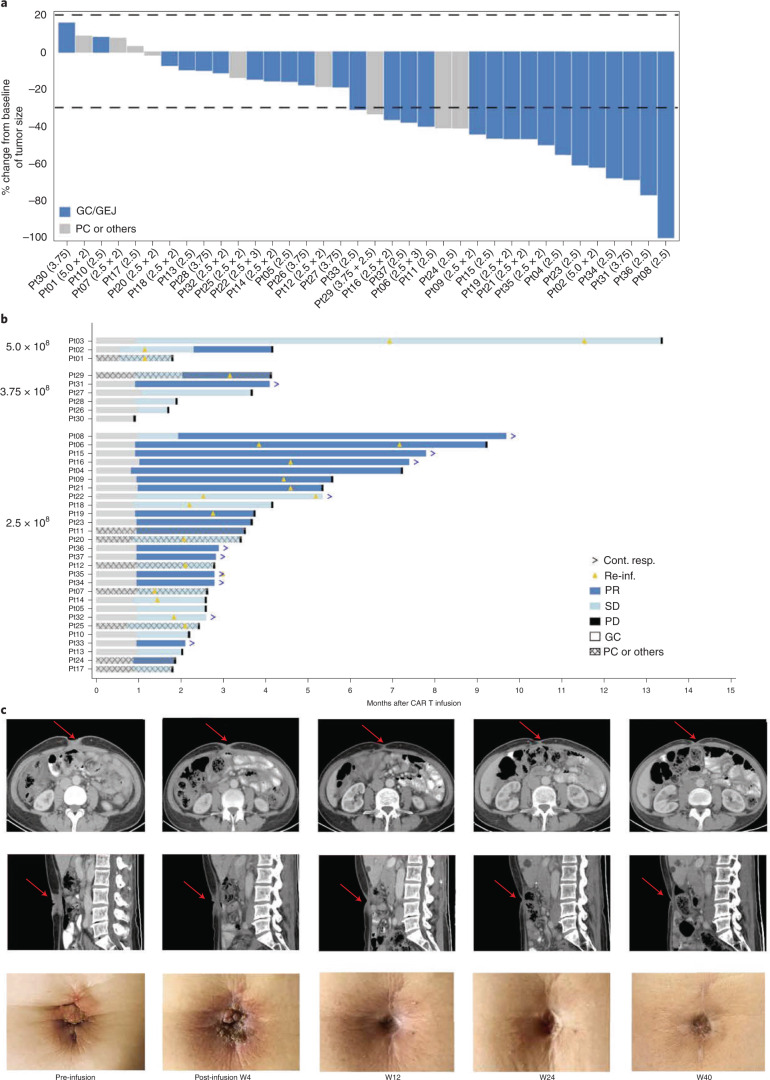
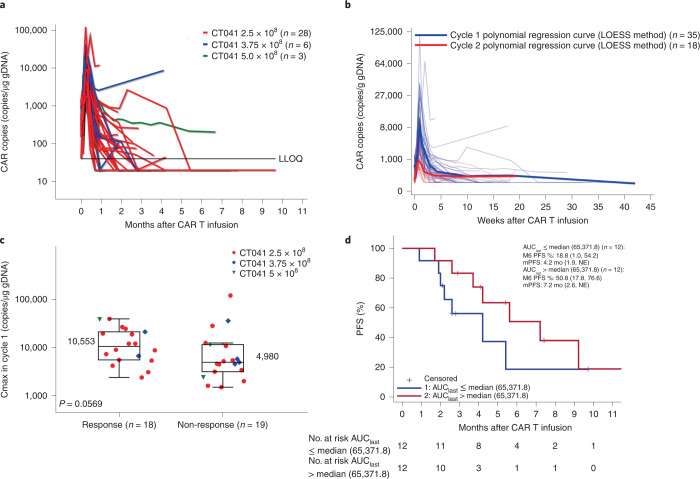
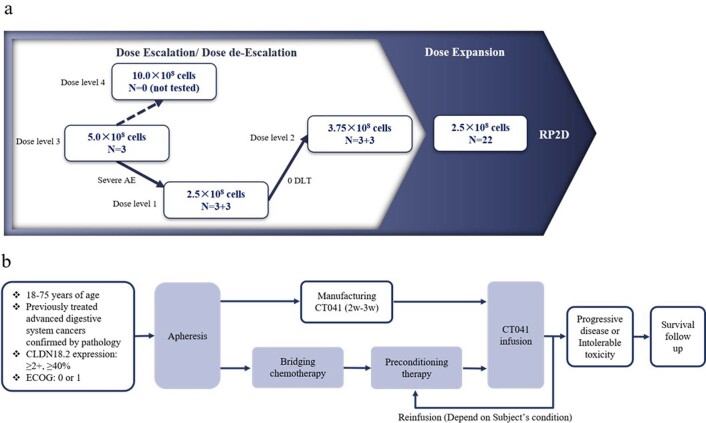
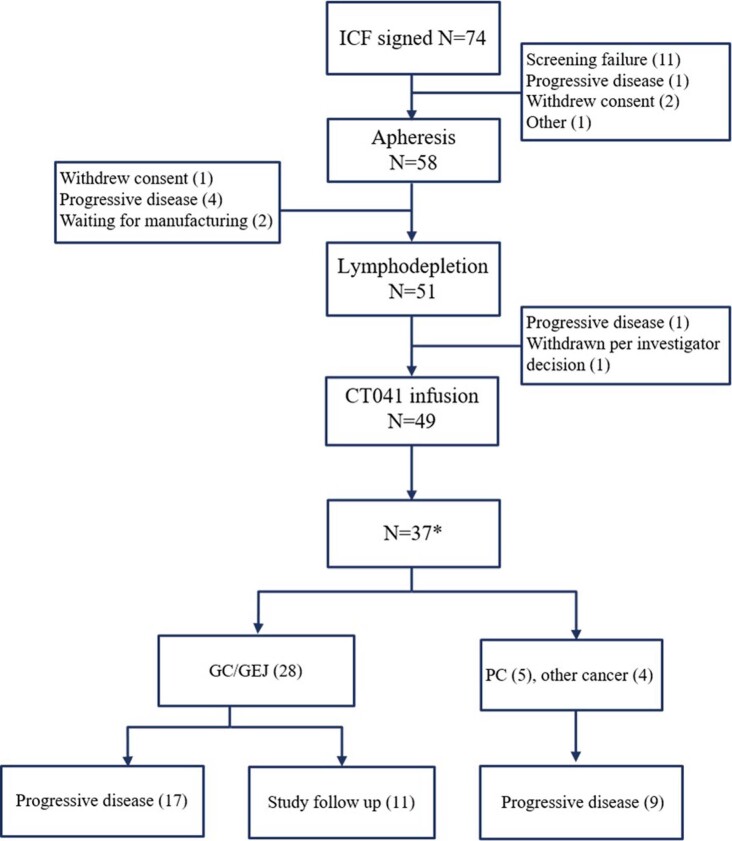
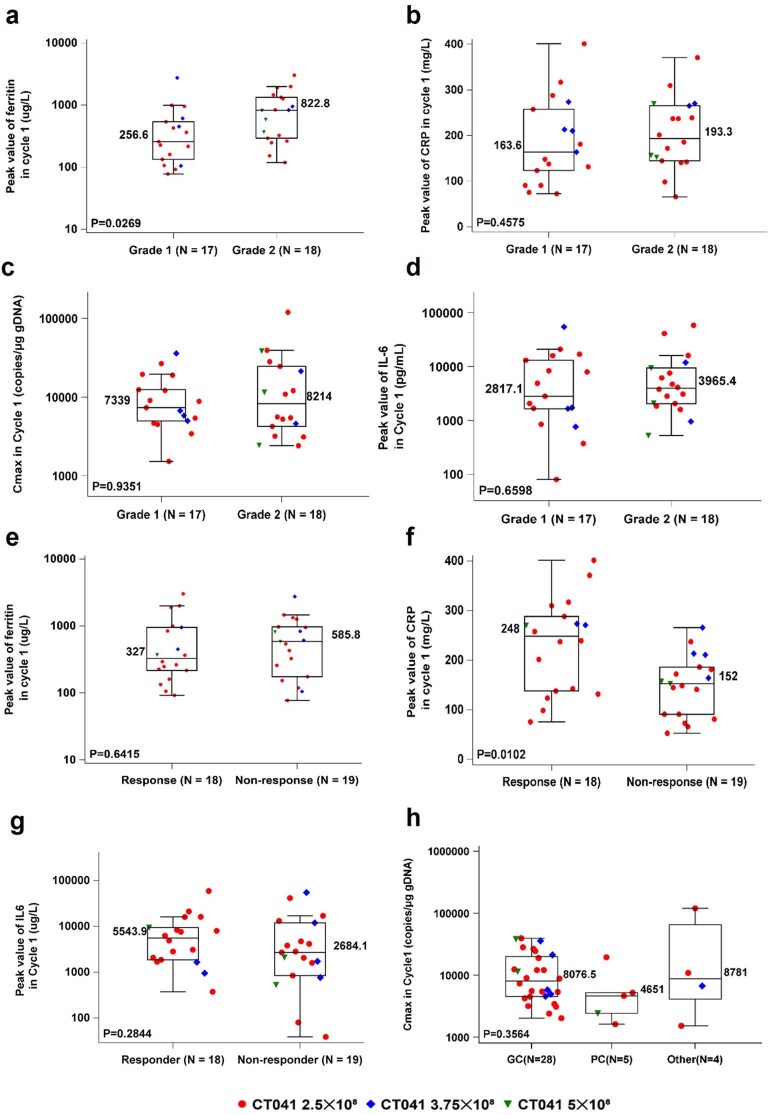
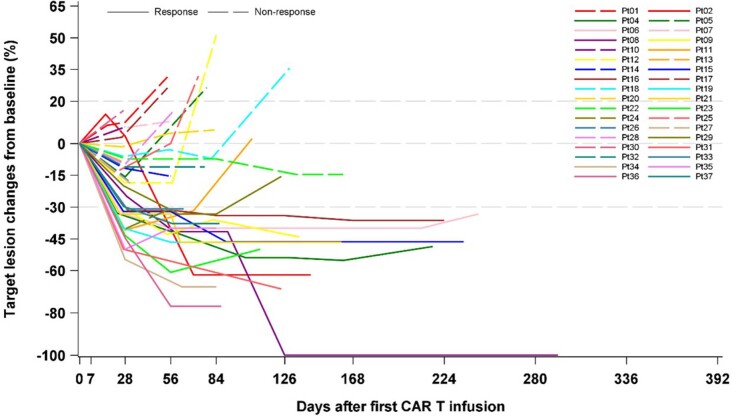
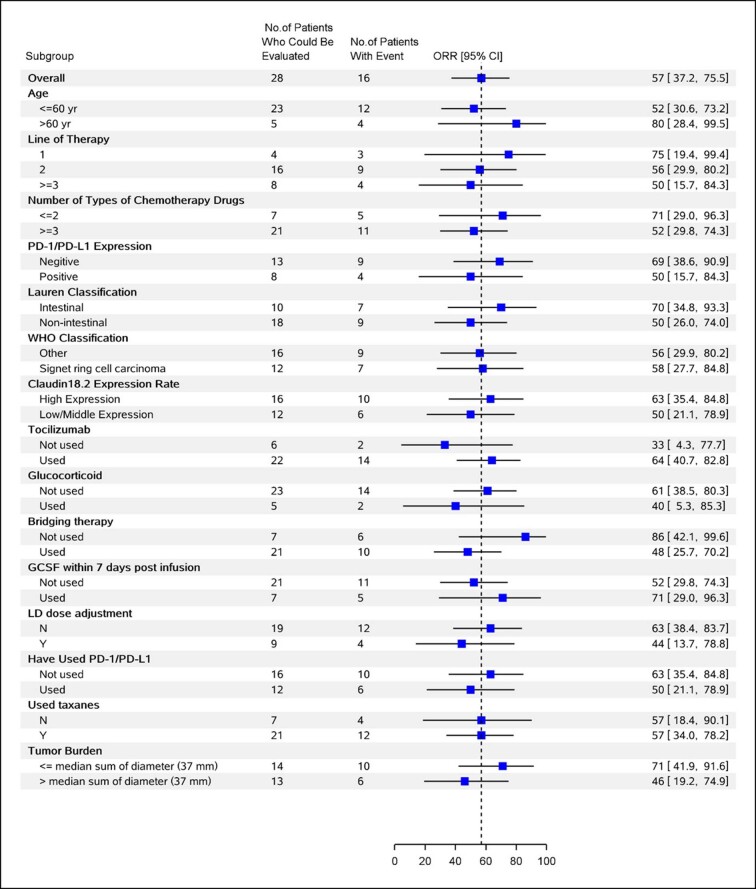
Despite success in hematologic malignancies, the treatment landscape of chimeric antigen receptor (CAR) T cell therapy for solid tumors remains limited. Claudin18.2 (CLDN18.2)-redirected CAR T cells showed promising efficacy against gastric cancer (GC) in a preclinical study. Here we report the interim analysis results of an ongoing, open-label, single-arm, phase 1 clinical trial of CLDN18.2-targeted CAR T cells (CT041) in patients with previously treated, CLDN18.2-positive digestive system cancers ( NCT03874897 ). The primary objective was safety after CT041 infusion; secondary objectives included CT041 efficacy, pharmacokinetics and immunogenicity. We treated 37 patients with one of three CT041 doses: 2.5 × 10 8 , 3.75 × 10 8 or 5.0 × 10 8 cells. All patients experienced a grade 3 or higher hematologic toxicity. Grade 1 or 2 cytokine release syndrome (CRS) occurred in 94.6% of patients. No grade 3 or higher CRS or neurotoxicities, treatment-related deaths or dose-limiting toxicities were reported. The overall response rate (ORR) and disease control rate (DCR) reached 48.6% and 73.0%, respectively. The 6-month duration of response rate was 44.8%. In patients with GC, the ORR and DCR reached 57.1% and 75.0%, respectively, and the 6-month overall survival rate was 81.2%. These initial results suggest that CT041 has promising efficacy with an acceptable safety profile in patients with heavily pretreated, CLDN18.2-positive digestive system cancers, particularly in those with GC.
Overview
The claims and statistics of this paper haven’t been checked yet.
Free: it reads the open-access text and checks the first 5 claims that cite a source we can check. Create a free account to check every claim.
Integrity signals
Registry
Cites
Statistics
Figures
Verification
Claims the paper makes
The claims and statistics of this paper haven’t been checked yet.
Free: it reads the open-access text and checks the first 5 claims that cite a source we can check. Create a free account to check every claim.
Claims other papers make about this one
Each is checked against this paper’s own text: does it say what the citing paper says it does?
The source backs part of the claim, not all of it — or backs it for a different population, condition or comparison.
In the citing paper
“Several CLDN18.2-targeting therapies have demonstrated efficacy in clinical trials for GI cancers, including antibodies, antibody-drug conjugates (ADC), and CAR-T cells (64–66).”
From Mechanisms of Resistance to Oncogenic KRAS Inhibition in Pancreatic Cancer (2024) · cites this paper as [64]
Experimental — accuracy not yet measured
Self-check
Percentages, sums and reported differences re-computed from the paper’s own numbers.
The self-check needs the paper’s full text.
Citations
Cites
Tisagenlecleucel in children and young adults with B-cell lymphoblastic leukemia
Maude, S. L., Laetsch, T. W., Buechner, J., Rives, S., Boyer, M., Bittencourt, H., Bader, P., Verneris, M. R., Stefanski, H. E., Myers, G. D., et al. (2018) · New England Journal of Medicine · doi:10.1056/nejmoa1709866 · Cited by 5,735
Tisagenlecleucel in Adult Relapsed or Refractory Diffuse Large B-Cell Lymphoma
Schuster, S. J., Bishop, M. R., Tam, C. S., Waller, E. K., Borchmann, P., McGuirk, J. P., Jäger, U., Jaglowski, S., Andreadis, C., Westin, J. R., et al. (2019) · New England Journal of Medicine · doi:10.1056/nejmoa1804980 · Cited by 4,112
Lee, D. W., Santomasso, B. D., Locke, F. L., Ghobadi, A., Turtle, C. J., Brudno, J. N., Maus, M. V., Park, J. H., Mead, E., Pavletic, S., et al. (2019) · Biology of Blood and Marrow Transplantation · doi:10.1016/j.bbmt.2018.12.758 · Cited by 3,675
Idecabtagene Vicleucel in Relapsed and Refractory Multiple Myeloma.
Munshi, N. C., Anderson, L. D., Shah, N., Madduri, D., Berdeja, J., Lonial, S., Raje, N., Lin, Y., Siegel, D., Oriol, A., et al. (2021) · New England Journal of Medicine · doi:10.1056/nejmoa2024850 · Cited by 2,560
Kang, Y.-K., Boku, N., Satoh, T., Ryu, M.-H., Chao, Y., Kato, K., Chung, H. C., Chen, J.-S., Muro, K., Kang, W. K., et al. (2017) · The Lancet · doi:10.1016/s0140-6736(17)31827-5 · Cited by 2,252
Fuchs, C. S., Doi, T., Jang, R. W., Muro, K., Satoh, T., Machado, M., Sun, W., Jalal, S. I., Shah, M. A., Metges, J.-P., et al. (2018) · JAMA Oncology · doi:10.1001/jamaoncol.2018.0013 · Cited by 1,784
Role of the tumor microenvironment in PD-L1/PD-1-mediated tumor immune escape
Jiang, X., Wang, J., Deng, X., Xiong, F., Ge, J., Xiang, B., Wu, X., Ma, J., Zhou, M., Li, X., et al. (2019) · Molecular Cancer · doi:10.1186/s12943-018-0928-4 · Cited by 1,457
Von Hoff, D. D., Ramanathan, R. K., Borad, M. J., Laheru, D. A., Smith, L. S., Wood, T. E., Korn, R. L., Desai, N., Trieu, V., Iglesias, J. L., et al. (2011) · Journal of Clinical Oncology · doi:10.1200/jco.2011.36.5742 · Cited by 1,044
Li, J., Qin, S., Xu, J., Xiong, J., Wu, C., Bai, Y., Liu, W., Tong, J., Liu, Y., Xu, R., et al. (2016) · Journal of Clinical Oncology · doi:10.1200/jco.2015.63.5995 · Cited by 972
Self-citationCAR T Cell Therapy for Solid Tumors
Newick, K., O'Brien, S., Moon, E., & Albelda, S. M. (2017) · Annual Review of Medicine · doi:10.1146/annurev-med-062315-120245 · Cited by 909
Research works printed but not linked: 1
- 1. data and code availability are available at https://doi.org/10.1038/ s41591-022-01800-8.
Cited by
Exploring treatment options in cancer: tumor treatment strategies
Liu, B., Zhou, H., Tan, L., Siu, K. T. H., & Guan, X.-Y. (2024) · Signal Transduction and Targeted Therapy · doi:10.1038/s41392-024-01856-7 · Cited by 1,201
Gastric cancer treatment: recent progress and future perspectives
Guan, W.-L., He, Y., & Xu, R.-H. (2023) · Journal of Hematology & Oncology · doi:10.1186/s13045-023-01451-3 · Cited by 944
CAR immune cells: design principles, resistance and the next generation
Labanieh, L., & Mackall, C. L. (2023) · Nature · doi:10.1038/s41586-023-05707-3 · Cited by 658
Overcoming on-target, off-tumour toxicity of CAR T cell therapy for solid tumours
Flugel, C. L., Majzner, R. G., Krenciute, G., Dotti, G., Riddell, S. R., Wagner, D. L., & Abou-el-Enein, M. (2023) · Nature Reviews Clinical Oncology · doi:10.1038/s41571-022-00704-3 · Cited by 554
CAR T cell therapy for patients with solid tumours: key lessons to learn and unlearn
Albelda, S. M. (2024) · Nature Reviews Clinical Oncology · doi:10.1038/s41571-023-00832-4 · Cited by 517
“2-specific CAR T cell and had an overall response rate of 48.6% and a disease control rate of 73.0%, with 44.8% of responses lasting ≥6 months 30 .”
BackgroundResultInfluentialLipid Nanoparticle (LNP) Enables mRNA Delivery for Cancer Therapy
Zong, Y., Lin, Y., Wei, T., & Cheng, Q. (2023) · Advanced Materials · doi:10.1002/adma.202303261 · Cited by 477
Wang, F., Zhang, X., Tang, L., Wu, Q., Cai, M., Li, Y., Qu, X., Qiu, H., Zhang, Y., Ying, J., et al. (2024) · Cancer Communications · doi:10.1002/cac2.12516 · Cited by 428
“Among 18 patients who had previously failed second-line treatment, the ORR was as high as 61.1%, with median PFS and OS of 5.4 months and 9.5 months, respectively [208].”
BackgroundInfluentialSelf-citationTherapeutic developments in pancreatic cancer
Hu, Z. I., & O’Reilly, E. M. (2024) · Nature Reviews Gastroenterology & Hepatology · doi:10.1038/s41575-023-00840-w · Cited by 413
“Interim results from a phase I trial of claudin 18.2-targeted CAR T cells in 37 patients with previously treated claudin 18.2-positive gastrointestinal malignancies, including PDAC, reported an ORR of 48.6% 184 .”
InfluentialCAR T Cells and T-Cell Therapies for Cancer: A Translational Science Review
Brudno, J. N., Maus, M. V., & Hinrichs, C. S. (2024) · JAMA · doi:10.1001/jama.2024.19462 · Cited by 359
Current developments in gastric cancer: from molecular profiling to treatment strategy
Alsina, M., Arrazubi, V., Diez, M., & Tabernero, J. (2023) · Nature Reviews Gastroenterology & Hepatology · doi:10.1038/s41575-022-00703-w · Cited by 350
Signaling pathways and therapeutic interventions in gastric cancer
Lei, Z.-N., Teng, Q.-X., Tian, Q., Chen, W., Xie, Y., Wu, K., Zeng, Q., Zeng, L., Pan, Y., Chen, Z.-S., et al. (2022) · Signal Transduction and Targeted Therapy · doi:10.1038/s41392-022-01190-w · Cited by 322
“These initial results suggest that CT041 has promising efficacy in treating GC.(605)”
BackgroundMechanisms of Resistance to Oncogenic KRAS Inhibition in Pancreatic Cancer
Dilly, J., Hoffman, M. T., Abbassi, L., Li, Z., Paradiso, F., Parent, B. D., Hennessey, C. J., Jordan, A. C., Morgado, M., Dasgupta, S., et al. (2024) · Cancer Discovery · doi:10.1158/2159-8290.cd-24-0177 · Cited by 308
“2-targeting therapies have demonstrated efficacy in clinical trials for GI cancers, including antibodies, antibody-drug conjugates (ADC), and CAR-T cells (64–66).”
BackgroundSelf-citationMackensen, A., Haanen, J. B. A. G., Koenecke, C., Alsdorf, W., Wagner-Drouet, E., Borchmann, P., Heudobler, D., Ferstl, B., Klobuch, S., Bokemeyer, C., et al. (2023) · Nature Medicine · doi:10.1038/s41591-023-02612-0 · Cited by 297
“2 in patients with gastrointestinal cancers 24 .”
CAR-T cell therapy for cancer: current challenges and future directions
Zugasti, I., Espinosa-Aroca, L., Fidyt, K., Mulens-Arias, V., Diaz-Beya, M., Juan, M., Urbano-Ispizua, Á., Esteve, J., Velasco-Hernandez, T., & Menéndez, P. (2025) · Signal Transduction and Targeted Therapy · doi:10.1038/s41392-025-02269-w · Cited by 281
Yasuda, T., & Wang, Y. A. (2024) · Trends in Cancer · doi:10.1016/j.trecan.2024.03.008 · Cited by 261
Self-citationChallenges and new technologies in adoptive cell therapy
Zhang, P., Zhang, G., & Wan, X. (2023) · Journal of Hematology & Oncology · doi:10.1186/s13045-023-01492-8 · Cited by 259
Intravenous and intracranial GD2-CAR T cells for H3K27M+ diffuse midline gliomas
Monje, M., Mahdi, J., Majzner, R., Yeom, K. W., Schultz, L. M., Richards, R. M., Barsan, V., Song, K.-W., Kamens, J., Baggott, C., et al. (2025) · Nature · doi:10.1038/s41586-024-08171-9 · Cited by 225
Claudin 18.2 as a novel therapeutic target
Nakayama, I., Qi, C., Chen, Y., Nakamura, Y., Shen, L., & Shitara, K. (2024) · Nature Reviews Clinical Oncology · doi:10.1038/s41571-024-00874-2 · Cited by 210
Self-citationCurrent and future immunotherapeutic approaches in pancreatic cancer treatment
Farhangnia, P., Khorramdelazad, H., Nickho, H., & Delbandi, A.-A. (2024) · Journal of Hematology & Oncology · doi:10.1186/s13045-024-01561-6 · Cited by 229
Claudin18.2-specific CAR T cells in gastrointestinal cancers: phase 1 trial final results
Qi, C., Liu, C., Gong, J., Liu, D., Wang, X., Zhang, P., Qin, Y., Ge, S., Zhang, M., Peng, Z., et al. (2024) · Nature Medicine · doi:10.1038/s41591-024-03037-z · Cited by 221
Self-citationDaei Sorkhabi, A., Mohamed Khosroshahi, L., Sarkesh, A., Mardi, A., Aghebati-Maleki, A., Aghebati-Maleki, L., & Baradaran, B. (2023) · Frontiers in Immunology · doi:10.3389/fimmu.2023.1113882 · Cited by 208
Qi, C., Liu, C., Peng, Z., Zhang, Y., Wei, J., Qiu, W., Zhang, X., Pan, H., Niu, Z., Qiu, M., et al. (2025) · The Lancet · doi:10.1016/s0140-6736(25)00860-8 · Cited by 216
Self-citationAdvancements and challenges in developing in vivo CAR T cell therapies for cancer treatment
Bui, T. A., Mei, H., Sang, R., Ortega, D. G., & Deng, W. (2024) · eBioMedicine · doi:10.1016/j.ebiom.2024.105266 · Cited by 173
Kubota, Y., Kawazoe, A., Mishima, S., Nakamura, Y., Kotani, D., Kuboki, Y., Bando, H., Kojima, T., Doi, T., Yoshino, T., et al. (2023) · ESMO Open · doi:10.1016/j.esmoop.2022.100762 · Cited by 174
CD70-Targeted Allogeneic CAR T-Cell Therapy for Advanced Clear Cell Renal Cell Carcinoma
Pal, S. K., Tran, B., Haanen, J. B. A. G., Hurwitz, M. E., Sacher, A., Tannir, N. M., Budde, L. E., Harrison, S. J., Klobuch, S., Patel, S. S., et al. (2024) · Cancer Discovery · doi:10.1158/2159-8290.cd-24-0102 · Cited by 168
“Encouraging results were reported with a few autologous CAR T-cell studies targeting tumors expressing claudin 18.2 (51), interleukin-13 receptor alpha 2 (52), and disialoganglioside 2 (53).”
InfluentialCurrent challenges and therapeutic advances of CAR-T cell therapy for solid tumors
Chen, T. R., Wang, M., Chen, Y., & Liu, Y. (2024) · Cancer Cell International · doi:10.1186/s12935-024-03315-3 · Cited by 186
“Furthermore, in a phase I clinical trial [159], the exploration of a combined therapy involving CAR-T cells along with paclitaxel and cyclophosphamide revealed noteworthy clinical improvements in 21 of the 28 patients who had previously experienced unsuccessful paclitaxel therapy.”
BackgroundMetabolic challenges and interventions in CAR T cell therapy
Peng, J.-J., Wang, L., Li, Z., Ku, C., & Ho, P. (2023) · Science Immunology · doi:10.1126/sciimmunol.abq3016 · Cited by 173
Self-citationUpdated Epidemiology of Gastric Cancer in Asia: Decreased Incidence but Still a Big Challenge
Shin, W. S., Xie, F., Chen, B., Yu, P., Yu, J. Q., To, K. F., & Kang, W. (2023) · Cancers · doi:10.3390/cancers15092639 · Cited by 160
Recent developments in immunotherapy for gastrointestinal tract cancers
Chong, X., Madeti, Y., Cai, J., Li, W., Cong, L., Lu, J., Mo, L., Liu, H., He, S., Yu, C., et al. (2024) · Journal of Hematology & Oncology · doi:10.1186/s13045-024-01578-x · Cited by 147
Self-citationLiu, Y., Sun, Y., Wang, P., Li, S., Dong, Y., Zhou, M., Shi, B., Jiang, H., Sun, R., & Li, Z. (2023) · Journal of Translational Medicine · doi:10.1186/s12967-023-04080-z · Cited by 137
Self-citationMechanisms of resistance to immune checkpoint inhibitors
Nagasaki, J., Ishino, T., & Togashi, Y. (2022) · Cancer Science · doi:10.1111/cas.15497 · Cited by 138
Advancing CAR T cell therapy through the use of multidimensional omics data
Yang, J., Chen, Y., Jing, Y., Green, M. R., & Han, L. (2023) · Nature Reviews Clinical Oncology · doi:10.1038/s41571-023-00729-2 · Cited by 136
Hassan, R., Butler, M. O., O'Cearbhaill, R. E., Oh, D. Y., Johnson, M. L., Zikaras, K., Smalley, M., Ross, M. G., Tanyi, J. L., Ghafoor, A., et al. (2023) · Nature Medicine · doi:10.1038/s41591-023-02452-y · Cited by 130
CD8+ T cell-based cancer immunotherapy
Chen, Y., Yu, D., Qian, H., Shi, Y., & Tao, Z. (2024) · Journal of Translational Medicine · doi:10.1186/s12967-024-05134-6 · Cited by 130
“…CLDN 18.2-targeted CAR-T therapy in a Phase 1 clinical trial for the treatment of adult patients with relapsed or refractory gastric or pancreatic cancers, where insofar an acceptable safety profile was reported along with a mild cytokine release syndrome occurred in the majority of patients [130].”
BackgroundInfluentialEnhancing the safety of CAR-T cell therapy: Synthetic genetic switch for spatiotemporal control
Lu, L., Xie, M., Yang, B., Zhao, W., & Cao, J. (2024) · Science Advances · doi:10.1126/sciadv.adj6251 · Cited by 129
Sun, R., Sun, Y., Wu, C., Liu, Y., Zhou, M., Yiwei, D., Du, G., Luo, H., Shi, B., Jiang, H., et al. (2023) · Molecular Therapy · doi:10.1016/j.ymthe.2023.09.010 · Cited by 125
Self-citationAdoptive T cell therapy for solid tumors: current landscape and future challenges
Albarrán, V., Román, M. S., Pozas, J., Chamorro, J., Rosero, D. I., Guerrero, P., Calvo, J. C., González-Merino, C., de Quevedo, C. G., de Aguado, P. P., et al. (2024) · Frontiers in Immunology · doi:10.3389/fimmu.2024.1352805 · Cited by 128
“2 (85)- and EGFR (41, 42)-targeted CAR-T cells.”
Viral oncogenesis in cancer: from mechanisms to therapeutics
Xiao, Q., Liu, Y., Li, T., Wang, C., He, S., Zhai, L., Yang, Z., Zhang, X., Wu, Y., & Liu, Y. (2025) · Signal Transduction and Targeted Therapy · doi:10.1038/s41392-025-02197-9 · Cited by 131
Self-citationThe affinity of antigen-binding domain on the antitumor efficacy of CAR T cells: Moderate is better
Mao, R., Kong, W., & He, Y. (2022) · Frontiers in Immunology · doi:10.3389/fimmu.2022.1032403 · Cited by 119
Engineered T cell therapy for viral and non-viral epithelial cancers
Norberg, S. M., & Hinrichs, C. S. (2022) · Cancer Cell · doi:10.1016/j.ccell.2022.10.016 · Cited by 116
Synthetic biology-inspired cell engineering in diagnosis, treatment and drug development
Zhao, N., Song, Y., Xie, X., Zhu, Z., Duan, C., Nong, C., Wang, H., & Bao, R. (2023) · Signal Transduction and Targeted Therapy · doi:10.1038/s41392-023-01375-x · Cited by 121
“0% disease control rate exceeding the best result of CAR-T-cell therapy for hematoma treatment (remission rate <30%).(143) In the last decade, CAR has been developed to the fourth generation, the present CAR consists of a single-chain variable fragment (scFv), a flexible hinge, a transmembrane domain (CD8a), one or mo…”
BackgroundSelf-citationLuo, D., Liu, Y., Lu, Z., & Huang, L. (2025) · Molecular Medicine · doi:10.1186/s10020-025-01075-y · Cited by 111
“An interim analysis of a phase I trial (Qi et al. 2022) showed that in advanced GI cancers CLDN18.”
Self-citationCombining chemotherapy with CAR-T cell therapy in treating solid tumors
Wang, A. X., Ong, X., D’Souza, C., Neeson, P. J., & Zhu, J. J. (2023) · Frontiers in Immunology · doi:10.3389/fimmu.2023.1140541 · Cited by 113
The landscape of cancer research and cancer care in China
Lu, Z., Chen, Y., Liu, D., Jiao, X., Liu, C. X., Wang, Y., Zhang, Z., Jia, K., Gong, J., Yang, Z., et al. (2023) · Nature Medicine · doi:10.1038/s41591-023-02655-3 · Cited by 106
“2 CAR T cell therapy for treating advanced gastrointestinal tumors 92 .”
Self-citationAdvancing cell-based cancer immunotherapy through stem cell engineering
Li, Y.-R., Dunn, Z. S., Yu, Y., Li, M., Wang, P., & Yang, L. (2023) · Cell stem cell · doi:10.1016/j.stem.2023.02.009 · Cited by 100
Klempner, S. J., Lee, K., Shitara, K., Metges, J., Lonardi, S., Ilson, D. H., Fazio, N., Kim, T., Bai, L., Moran, D. M., et al. (2023) · Clinical Cancer Research · doi:10.1158/1078-0432.ccr-23-0204 · Cited by 100
Ruan, D., Liu, F., Wei, X., Luo, S.-X., Zhuang, Z., Wang, Z.-N., Liu, F., Zhang, Y., Yang, J., Chen, Z., et al. (2025) · The Lancet Oncology · doi:10.1016/s1470-2045(24)00636-3 · Cited by 93
Self-citationDigestive cancers: mechanisms, therapeutics and management
Zhan, T., Betge, J., Schulte, N., Dreikhausen, L., Hirth, M., Li, M., Weidner, P., Leipertz, A., Teufel, A., & Ebert, M. P. A. (2025) · Signal Transduction and Targeted Therapy · doi:10.1038/s41392-024-02097-4 · Cited by 100
The role and mechanism of claudins in cancer
Wang, D., Zhang, W., Galiullin, D., Yang, K., & Hu, J. (2022) · Frontiers in Oncology · doi:10.3389/fonc.2022.1051497 · Cited by 98
CRISPR/Cas9: A Powerful Strategy to Improve CAR-T Cell Persistence
Wei, W., Chen, Z., & Wang, X. (2023) · International Journal of Molecular Sciences · doi:10.3390/ijms241512317 · Cited by 100
CAR affinity modulates the sensitivity of CAR-T cells to PD-1/PD-L1-mediated inhibition
Andreu-Saumell, I., Rodríguez-García, A., Mühlgrabner, V., Giménez-Alejandre, M., Marzal, B., Castellsagué, J., Brasó‐Maristany, F., Calderón, H., Angelats, L., Colell, S., et al. (2024) · Nature Communications · doi:10.1038/s41467-024-47799-z · Cited by 94
Recent Advances in CAR-Based Solid Tumor Immunotherapy
Shin, M. H., Oh, E., Kim, Y. J., Nam, D.-H., Jeon, S., Yu, J. H., & Minn, D. (2023) · Cells · doi:10.3390/cells12121606 · Cited by 94
“Grade 3 or higher CRS occurred in 6% and grade 3 or higher neurotoxicities in 21% of Cells 2023, 12, 1606 7 of 25 the axicabtagene ciloleucel group [72].”
BackgroundInfluentialCT041 CAR T cell therapy for Claudin18.2-positive metastatic pancreatic cancer
Qi, C., Xie, T., Zhou, J., Wang, X., Gong, J., Zhang, X., Li, J., Yuan, J., Liu, C., & Shen, L. (2023) · Journal of Hematology & Oncology · doi:10.1186/s13045-023-01491-9 · Cited by 89
Self-citationCAR-T cell therapy for the treatment of adult high-grade gliomas
Park, S., Maus, M. V., & Choi, B. D. (2024) · npj Precision Oncology · doi:10.1038/s41698-024-00753-0 · Cited by 91
Khan, S. H., Choi, Y., Veena, M. S., Lee, J. K., & Shin, D. S. (2025) · Frontiers in Immunology · doi:10.3389/fimmu.2024.1489827 · Cited by 98
“Encouraged by this result, a phase II trial was initiated in heavily pretreated patients with gastric cancer (149).”
Lei, W., Liu, H., Deng, W., Chen, W., Liang, Y., Gao, W., Yuan, X., Guo, S., Li, P., Wang, J., et al. (2025) · Nature Cancer · doi:10.1038/s43018-025-00940-3 · Cited by 90
Engineering sonogenetic EchoBack-CAR T cells
Liu, L., He, P., Wang, Y., Ma, F., Li, D., Bai, Z., Qu, Y., Zhu, L., Yoon, C. W., Yu, X., et al. (2025) · Cell · doi:10.1016/j.cell.2025.02.035 · Cited by 87
Self-citationMechanisms underlying dose-limiting toxicities of conventional chemotherapeutic agents
Manavi, M. A., Nasab, M. H. F., Jafari, R. M., & Dehpour, A. R. (2024) · Journal of Chemotherapy · doi:10.1080/1120009x.2023.2300217 · Cited by 82
Claudin 18.2 as a New Biomarker in Gastric Cancer—What Should We Know?
Mathias-Machado, M. C., de Jesus, V. H. F., Jacome, A. A. D. A., Donadio, M. D. S., Aruquipa, M. P. S., de Farias, J. P. F., Cunha, R., Silva, L. M. D., & Peixoto, R. D. (2024) · Cancers · doi:10.3390/cancers16030679 · Cited by 83
“In the subgroup of patients with gastric cancer (GC), the ORR and DCR reached 57.1% and 75.0%, with a 6-month overall survival (OS) rate of 81.2% [65].”
BackgroundInfluentialLiu, J., Yang, J., Sun, Y., Gong, J., Yue, J., Pan, Y., Sun, M., Song, R., Xiao, X., Tazbirkova, A., et al. (2025) · Nature Medicine · doi:10.1038/s41591-025-03783-8 · Cited by 82
“2, including bispecific antibodies 16,17 , chimeric antigen receptor (CAR) T cells 18,19 and antibody–drug conjugates (ADCs) 20 have also shown potential in treating individuals with CLDN18.”
Self-citationTargeting CLDN18.2 in cancers of the gastrointestinal tract: new drugs and new indications
Chen, J., Xu, Z., Hu, C., Zhang, S., Zi, M., Yuan, L., & Cheng, X. (2023) · Frontiers in Oncology · doi:10.3389/fonc.2023.1132319 · Cited by 78
Promises and challenges of a decentralized CAR T-cell manufacturing model
Shah, M., Krull, A., Odonnell, L., de Lima, M. J., & Bezerra, E. (2023) · Frontiers in Transplantation · doi:10.3389/frtra.2023.1238535 · Cited by 77
“An example is provided by Nanjing Biolegend with its anti-BCMA CAR T cell for multiple myeloma, now approved by FDA and promising data from early phase clinical trials with anti-claudin CAR T cells in gastrointestinal malignancies (4, 18, 71).”
MethodLuo, D. Y., Zhou, J., Ruan, S., Zhang, B., Zhu, H., Que, Y., Ying, S., Li, X., Hu, Y., & Song, Z. (2025) · Cell Death and Disease · doi:10.1038/s41419-025-07385-7 · Cited by 79
Self-citationTumor buster - where will the CAR-T cell therapy ‘missile’ go?
Qu, C., Zhang, H., Cao, H., Tang, L., Mo, H., Liu, F., Zhang, L., Yi, Z., Long, L., Yan, L., et al. (2022) · Molecular Cancer · doi:10.1186/s12943-022-01669-8 · Cited by 75
Self-citationFassan, M., Kuwata, T., Matkowskyj, K. A., Röcken, C., & Rüschoff, J. (2024) · Modern Pathology · doi:10.1016/j.modpat.2024.100589 · Cited by 72
Zolbetuximab for Claudin18.2-positive gastric or gastroesophageal junction cancer
Kubota, Y., & Shitara, K. (2024) · Therapeutic Advances in Medical Oncology · doi:10.1177/17588359231217967 · Cited by 72
Pan, Q., Weng, D., Liu, J., Han, Z., Ou, Y., Xu, B.-S., Peng, R., Que, Y., Wen, X., Yang, J., et al. (2023) · Cell Reports Medicine · doi:10.1016/j.xcrm.2023.101133 · Cited by 73
Self-citationCAR-T cell therapy: Where are we now, and where are we heading?
Wang, J., & Wang, L. (2023) · Blood Science · doi:10.1097/bs9.0000000000000173 · Cited by 71
“108 Meister et al developed a multifunctional mRNA-based CAR-T cell that exhibited strong anti-glioma activity and showed no signs of toxicity in in vivo or in vitro assays.”
BackgroundImplications of High Tumor Burden on Chimeric Antigen Receptor T-Cell Immunotherapy: A Review
Ventin, M., Cattaneo, G., Maggs, L., Arya, S., Wang, X., & Ferrone, C. R. (2023) · JAMA Oncology · doi:10.1001/jamaoncol.2023.4504 · Cited by 69
Jilani, S., Saco, J. D., Mugarza, E., Pujol-Morcillo, A., Chokry, J., Ng, C., Abril-Rodríguez, G., Berger-Manerio, D., Pant, A., Hu, J. G., et al. (2024) · Nature Communications · doi:10.1038/s41467-024-45221-2 · Cited by 65
Qi, C., Zhang, P., Liu, C., Zhang, J., Zhou, J., Yuan, J., Liu, D., Zhang, M., Gong, J., Wang, X., et al. (2024) · Journal of Clinical Oncology · doi:10.1200/jco.23.02314 · Cited by 65
“12 The potential reasons for different outcomes be-tween PC and GC cohorts are mainly considered to be the distinctive biologic behaviors and microenvironment (TME) in PC. 22 Speci fi cally, several physical and biologic barriers prevent CAR T cells from traf fi cking and in fi ltrating the tumor site…”
Self-citationAzeez, S. S., Yashooa, R. K., Smail, S. W., Salihi, A. B., Ali, A. S., Mamand, S., & Janson, C. (2025) · Molecular Cancer · doi:10.1186/s12943-025-02386-8 · Cited by 65
“The authors suggested that the therapeutic effect may be due to the accumulation of nab-paclitaxel in the tumour stroma, which disrupts cancer-stromal interactions and enhances CAR-T cell infiltration, thus improving the overall efficacy of the treatment [375].”
Lu, L., Xiao, S.-X., Lin, Z., Bai, J. J., Li, W., Song, Z., Zhou, Y., Lu, B., & Wu, W. (2023) · Cell Biology and Toxicology · doi:10.1007/s10565-023-09821-w · Cited by 65
“2-CAR-T cell therapy was 61.1%, the disease control rate was 83.3%, and the progression-free survival (PFS) was 5.6 months (Qi et al. 2022).”
BackgroundInfluentialTumor immune microenvironment in pancreatic ductal adenocarcinoma revisited – Exploring the “Space”
Bräutigam, K., Skok, K., Szymoński, K., Rift, C. V., & Karamitopoulou, E. (2025) · Cancer Letters · doi:10.1016/j.canlet.2025.217699 · Cited by 66
Vo, M.-C., Tran, V.-D.-H., Nguyen, V., Ruzimurodov, N., Trung, D. T., Kim, S. K., Jung, S., & Lee, J. (2025) · Journal of Hematology & Oncology · doi:10.1186/s13045-025-01744-9 · Cited by 64
“Qi et al. [195] evaluated CLDN18.”
Deciphering and advancing CAR T-cell therapy with single-cell sequencing technologies
Huang, S., Wang, X., Wang, Y., Wang, Y., Fang, C., Wang, Y., Chen, S., Chen, R., Lei, T., Zhang, Y., et al. (2023) · Molecular Cancer · doi:10.1186/s12943-023-01783-1 · Cited by 62
Self-citationKim, H., Choi, E. K., Shin, J., Lee, I., Ko, C. S., Ryu, M., & Park, Y. S. (2023) · Scientific Reports · doi:10.1038/s41598-023-47178-6 · Cited by 59
“In addition, given that novel claudin 18.2-targeting agents other than zolbetuximab are currently under investigation 19–22 , the method of evaluating claudin 18.2 expression adopted in our analysis may not be universally applied to other claudin 18.2-targeted agents.”
InfluentialStein, M. N., Dumbrava, E. E. I., Teply, B. A., Gergis, U. S., Guiterrez, M., Reshef, R., Subudhi, S. K., Jacquemont, C. F., Senesac, J. H., Bayle, J. H., et al. (2024) · Nature Communications · doi:10.1038/s41467-024-53220-6 · Cited by 60
Ouladan, S., & Orouji, E. (2025) · Journal of Clinical Oncology · doi:10.1200/jco-24-02081 · Cited by 64
Advances in mRNA-Based Cancer Vaccines
Ni, L. (2023) · Vaccines · doi:10.3390/vaccines11101599 · Cited by 61
Next-generation cancer vaccines and emerging immunotherapy combinations
Brandenburg, A., Heine, A., & Brossart, P. (2024) · Trends in cancer · doi:10.1016/j.trecan.2024.06.003 · Cited by 58
Qiao, Y., Chen, J., Wang, X., Yan, S., Tan, J., Xia, B., Chen, Y., Lin, K., Zou, F., Liu, B., et al. (2023) · 癌症:英文版 · doi:10.1002/cac2.12452 · Cited by 56
“6% overall response rate (ORR) against gastric cancer [36].”
BackgroundSelf-citationLee, D., Dunn, Z. S., Guo, W., Rosenthal, C. J., Penn, N. E., Yu, Y., Zhou, K., Li, Z., Ma, F., Li, M., et al. (2023) · Nature Communications · doi:10.1038/s41467-023-42619-2 · Cited by 57
Self-citationSynNotch CAR-T cell, when synthetic biology and immunology meet again
Shirzadian, M., Moori, S., Rabbani, R., & Rahbarizadeh, F. (2025) · Frontiers in Immunology · doi:10.3389/fimmu.2025.1545270 · Cited by 61
CAR-engineered lymphocyte persistence is governed by a FAS ligand–FAS autoregulatory circuit
Yi, F., Cohen, T., Zimmerman, N., Dündar, F., Zumbo, P., Eltilib, R., Brophy, E. J., Arkin, H., Feucht, J., Gormally, M. V., et al. (2025) · Nature Cancer · doi:10.1038/s43018-025-01009-x · Cited by 57
Adoptive Cell Therapy for Nonhematologic Solid Tumors
Olson, D. J., & Odunsi, K. O. (2023) · Journal of Clinical Oncology · doi:10.1200/jco.22.01618 · Cited by 56
Niu, Z., Wu, J., Zhao, Q., Zhang, J., Zhang, P., & Yang, Y. (2024) · Frontiers in Immunology · doi:10.3389/fimmu.2024.1385571 · Cited by 56
CRISPR/Cas9-Mediated Genome Editing in Cancer Therapy
Ding, S., Liu, J., Han, X., & Tang, M. (2023) · International Journal of Molecular Sciences · doi:10.3390/ijms242216325 · Cited by 60
Liu, S., Zhang, Z., Jiang, L., Zhang, M., Zhang, C., & Shen, L. (2024) · Cell Communication and Signaling · doi:10.1186/s12964-023-01406-8 · Cited by 56
“2 could inhibit tumor growth, increase the survival rates of GC patients [5].”
BackgroundSelf-citationClaudins in Cancer: A Current and Future Therapeutic Target
Hana, C. K., Dar, N. N. T., Venegas, M. G., & Vulfovich, M. (2024) · International Journal of Molecular Sciences · doi:10.3390/ijms25094634 · Cited by 53
Updated Immunotherapy for Gastric Cancer
Narita, Y., & Muro, K. (2023) · Journal of Clinical Medicine · doi:10.3390/jcm12072636 · Cited by 55
Infusion and delivery strategies to maximize the efficacy of CAR-T cell immunotherapy for cancers
Gu, X., Zhang, Y., Zhou, W., Wang, F., Yan, F., Gao, H., & Wang, W. (2024) · Experimental Hematology and Oncology · doi:10.1186/s40164-024-00542-2 · Cited by 53
“While intravenous ( i.v ) injection of CAR-T cells remains a prevalent method to treat solid tumors [19, 20], which typically requires multiple doses to achieve sufficient effectiveness [21, 22].”
BackgroundSelf-citationOptimizing CAR T cell therapy for solid tumours: a clinical perspective
Li, J., Liu, C., Zhang, P., Shen, L., & Qi, C. (2025) · Nature Reviews Clinical Oncology · doi:10.1038/s41571-025-01075-1 · Cited by 56
Self-citationAngerilli, V., Ghelardi, F., Nappo, F., Grillo, F., Parente, P., Lonardi, S., Luchini, C., Pietrantonio, F., Ugolini, C., Vanoli, A., et al. (2024) · Pathology - Research and Practice · doi:10.1016/j.prp.2024.155145 · Cited by 51
Bright future or blind alley? CAR-T cell therapy for solid tumors
Zhang, K., Chen, H., Li, F., Sheng, H., Chen, F., & Li, Y. (2023) · Frontiers in Immunology · doi:10.3389/fimmu.2023.1045024 · Cited by 56
CAR-macrophage versus CAR-T for solid tumors: The race between a rising star and a superstar
Chen, K., Liu, M., Wang, J., & Fang, S. (2024) · Biomolecules and Biomedicine · doi:10.17305/bb.2023.9675 · Cited by 49
Bell, M. R., Lange, S., Sejdiu, B. I., Ibañez-Vega, J., Shi, H., Sun, X., Meng, X., Nguyen, P., Sutton, M. T., Wagner, J., et al. (2023) · Nature Biomedical Engineering · doi:10.1038/s41551-023-01143-w · Cited by 49
Chimeric Antigen Receptor T Cell Therapy for Pancreatic Cancer: A Review of Current Evidence
Czaplicka, A., Lachota, M., Pączek, L., Zagożdżon, R., & Kaleta, B. (2024) · Cells · doi:10.3390/cells13010101 · Cited by 50
“2 positive tumors [88].”
Altered cancer metabolism and implications for next-generation CAR T-cell therapies
Ramapriyan, R., Vykunta, V. S., Vandecandelaere, G., Richardson, L. G., Sun, J. M., Curry, W. T., & Choi, B. D. (2024) · Pharmacology & Therapeutics · doi:10.1016/j.pharmthera.2024.108667 · Cited by 49
Therapeutic strategies for gastric cancer targeting immune cells: Future directions
Zhao, Y. F., Bai, Y., Shen, M., & Li, Y. (2022) · Frontiers in Immunology · doi:10.3389/fimmu.2022.992762 · Cited by 57
Metadata
- Authors
- Qi, C., Gong, J., Li, J., Liu, D., Qin, Y., Ge, S., Zhang, M., Peng, Z., Zhou, J., Cao, Y., Zhang, X., Lu, Z., Lu, M., Yuan, J., Wang, Z., Wang, Y., Peng, X., Gao, H., Liu, Z., Wang, H., Yuan, D., Xiao, J., Ma, H., Wang, W., Li, Z., & Shen, L.
- Affiliations
- Peking University Cancer Hospital (CN)
- First Affiliated Hospital of Zhengzhou University (CN)
- Corresponding author
- Shen, Lin
- ORCID
- Venue
- Nature Medicine
- Published
- 2022-05-09
- Volume
- 28
- Issue
- 6
- Pages
- 1189-1198
- ISSN
- 1078-8956 (ISSN-L)
- 1546-170X
- PMC
- PMC9205778
- OpenAlex
- W4229445969
- Cited by
- 604
- References
- 40
- Citations by year
- 2026: 109 · 2025: 157 · 2024: 169 · 2023: 135 · 2022: 34
- FWCI
- 51.79
- Type
- journal article
- Language
- en
- Open access
- hybrid
- doi.org
- Licence
- cc-by
- creativecommons.org/licenses/by/4.0 (tdm)
- creativecommons.org/licenses/by/4.0 (vor)
- Locations
- Nature Medicine (publishedVersion, cc-by)
- PubMed Central (publishedVersion, cc-by)
- PubMed (publishedVersion)
- Greater South Information System
- Topics
- Health Sciences › Medicine › Oncology › CAR-T cell therapy research
- Life Sciences › Immunology and Microbiology › Immunology › Immunotherapy and Immune Responses
- Health Sciences › Medicine › Oncology › Cancer Immunotherapy and Biomarkers
- Keywords
- claudin 18.2, CAR T-cell therapy, gastrointestinal cancer, gastric cancer, solid tumor immunotherapy, cytokine release syndrome, hematologic toxicity, pharmacokinetics, immunogenicity, heavily pretreated patients, overall response rate
- MeSH terms
- Cytokine Release Syndrome, Humans, Stomach Neoplasms, T-Lymphocytes, Immunotherapy, Adoptive, Claudins
About these checks
Registry, retraction, Cites and statistics results are computed, not judged, with one exception: a printed reference that no index lists is read once by a model before it counts as a citation error. Claims are extracted by a model and kept only when their quote appears verbatim in the text; each cited source is then checked, with a model’s help, for whether it says what the claim relies on. Those verdicts can be wrong — read the claim’s quote and the cited source before relying on one.
Statistics and arithmetic are recomputed, not judged.
Confidence bands are shown only for fields calibrated on our annotated test set. None is calibrated yet, so no band is shown.
What counts as a claim ›How we measure confidence ›How we check this ›
Are you an author, or do you see a problem with this page? Request a review
Data sources
Bibliographic data: Semantic Scholar, OpenAlex, Crossref.
Contains information from the Semantic Scholar Academic Graph Datasets, made available under the ODC Attribution License (ODC-BY 1.0).
Semantic Scholar’s data is described in: Kinney, R., et al. (2023). The Semantic Scholar Open Data Platform. arXiv:2301.10140.
