

Claudin18.2-specific CAR T cells in gastrointestinal cancers: phase 1 trial interim results
Open accessThe DOI matches its Crossref record; 40 of the 40 references it cites were found in a registry or an index.
Abstract
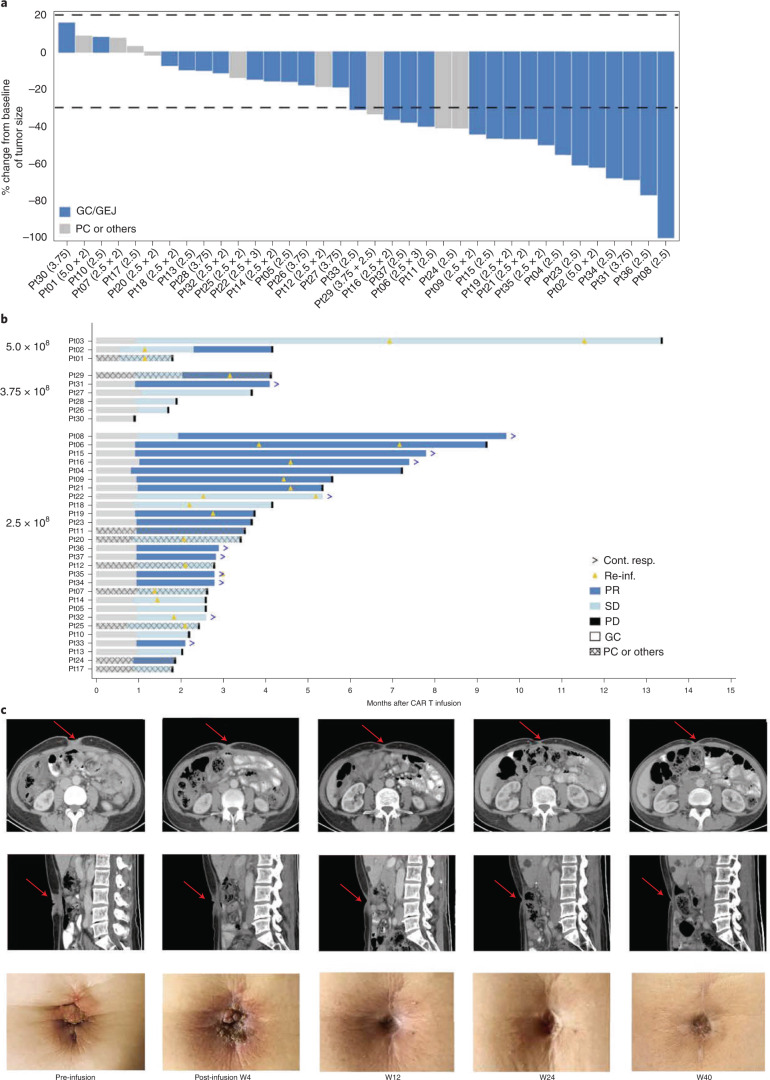
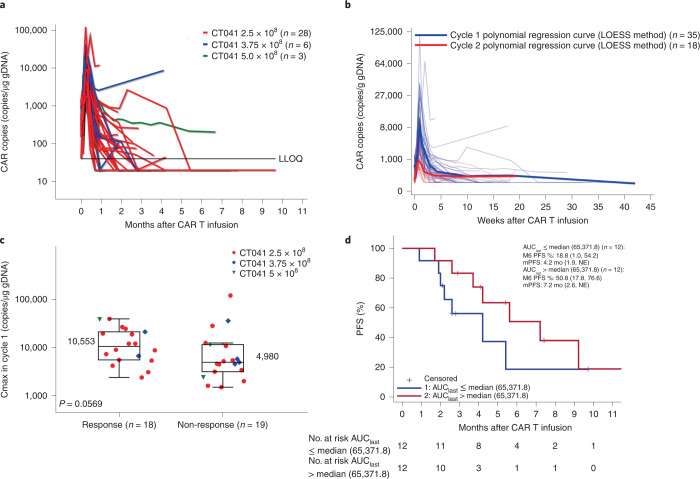
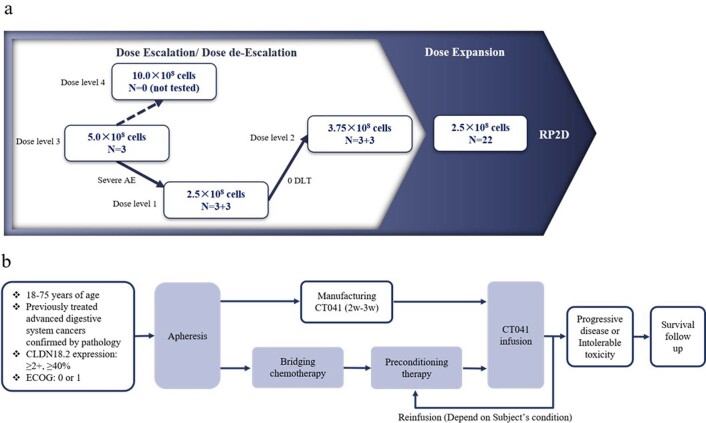
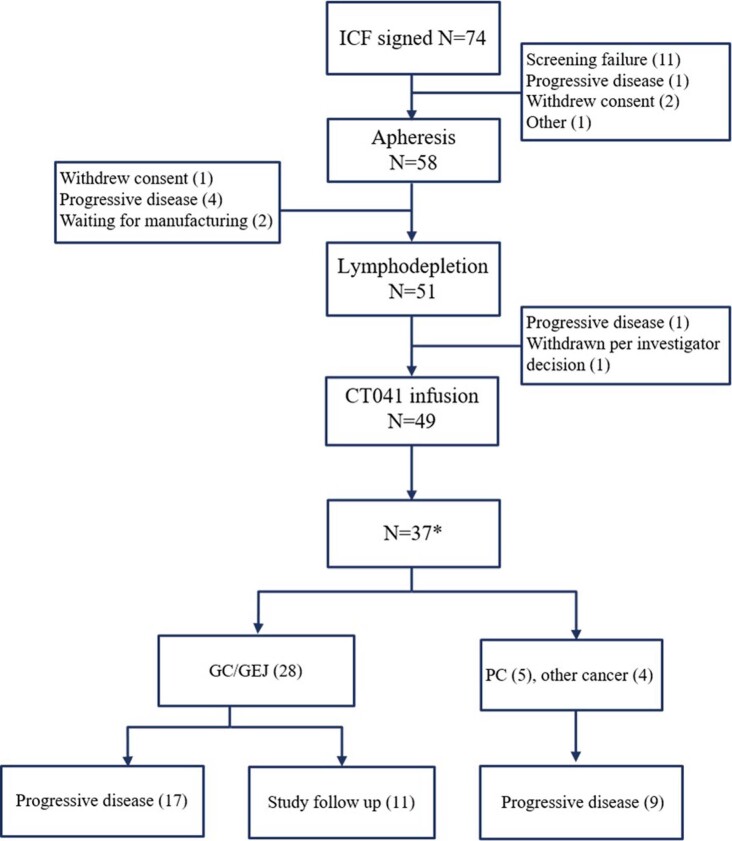
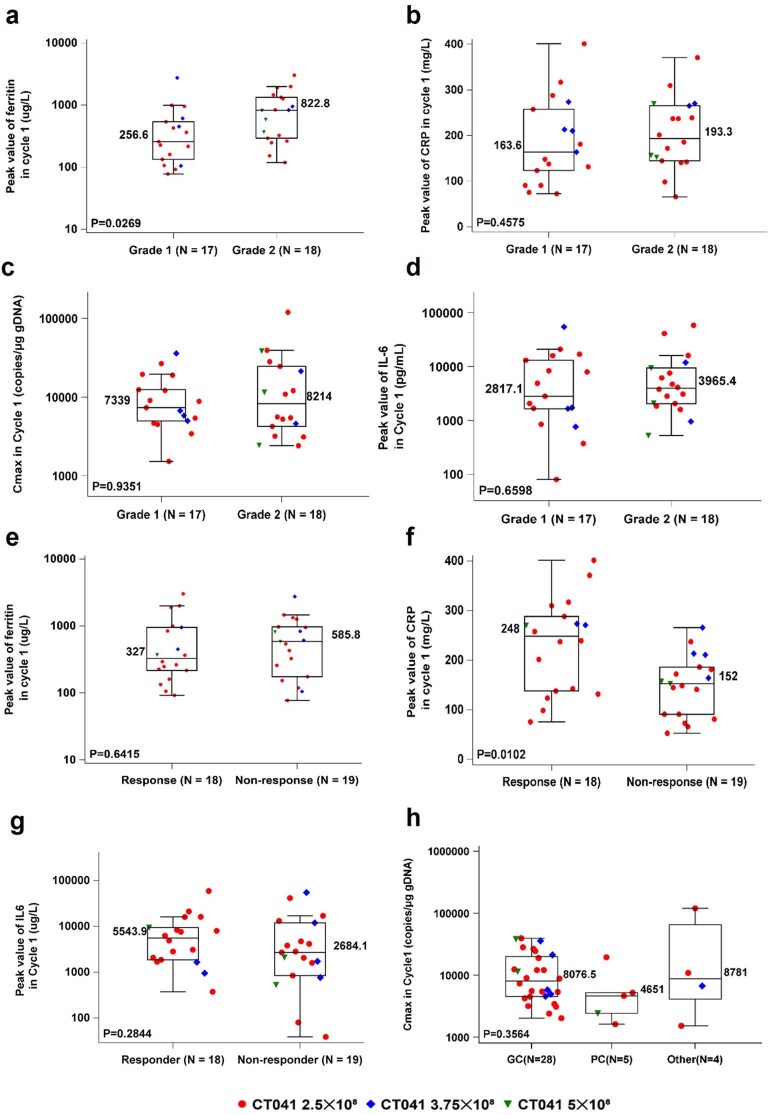
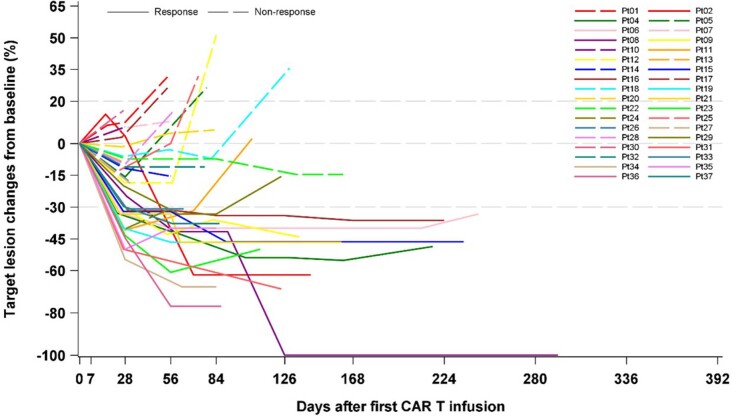
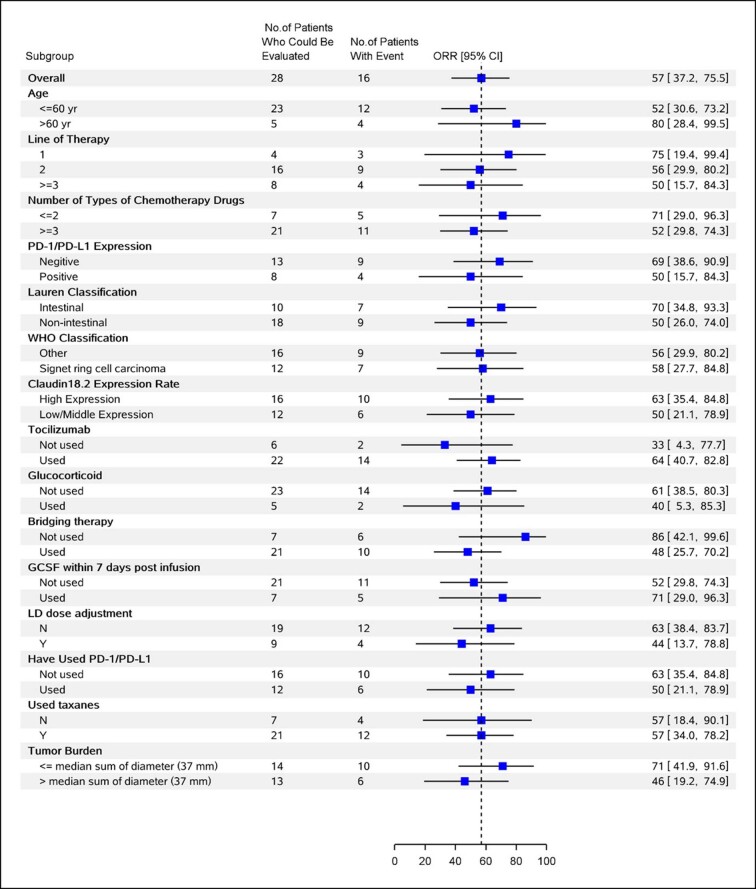
Despite success in hematologic malignancies, the treatment landscape of chimeric antigen receptor (CAR) T cell therapy for solid tumors remains limited. Claudin18.2 (CLDN18.2)-redirected CAR T cells showed promising efficacy against gastric cancer (GC) in a preclinical study. Here we report the interim analysis results of an ongoing, open-label, single-arm, phase 1 clinical trial of CLDN18.2-targeted CAR T cells (CT041) in patients with previously treated, CLDN18.2-positive digestive system cancers ( NCT03874897 ). The primary objective was safety after CT041 infusion; secondary objectives included CT041 efficacy, pharmacokinetics and immunogenicity. We treated 37 patients with one of three CT041 doses: 2.5 × 10 8 , 3.75 × 10 8 or 5.0 × 10 8 cells. All patients experienced a grade 3 or higher hematologic toxicity. Grade 1 or 2 cytokine release syndrome (CRS) occurred in 94.6% of patients. No grade 3 or higher CRS or neurotoxicities, treatment-related deaths or dose-limiting toxicities were reported. The overall response rate (ORR) and disease control rate (DCR) reached 48.6% and 73.0%, respectively. The 6-month duration of response rate was 44.8%. In patients with GC, the ORR and DCR reached 57.1% and 75.0%, respectively, and the 6-month overall survival rate was 81.2%. These initial results suggest that CT041 has promising efficacy with an acceptable safety profile in patients with heavily pretreated, CLDN18.2-positive digestive system cancers, particularly in those with GC.
Overview
The claims and statistics of this paper haven’t been checked yet.
Free: it reads the open-access text and checks the first 5 claims that cite a source we can check. Create a free account to check every claim.
Integrity signals
Registry
Cites
Statistics
Figures
Verification
Claims the paper makes
The claims and statistics of this paper haven’t been checked yet.
Free: it reads the open-access text and checks the first 5 claims that cite a source we can check. Create a free account to check every claim.
Claims other papers make about this one
Each is checked against this paper’s own text: does it say what the citing paper says it does?
The source backs part of the claim, not all of it — or backs it for a different population, condition or comparison.
In the citing paper
“Several CLDN18.2-targeting therapies have demonstrated efficacy in clinical trials for GI cancers, including antibodies, antibody-drug conjugates (ADC), and CAR-T cells (64–66).”
From Mechanisms of Resistance to Oncogenic KRAS Inhibition in Pancreatic Cancer (2024) · cites this paper as [64]
Experimental — accuracy not yet measured
Self-check
Percentages, sums and reported differences re-computed from the paper’s own numbers.
The self-check needs the paper’s full text.
Citations
Cites
Tisagenlecleucel in children and young adults with B-cell lymphoblastic leukemia
Maude, S. L., Laetsch, T. W., Buechner, J., Rives, S., Boyer, M., Bittencourt, H., Bader, P., Verneris, M. R., Stefanski, H. E., Myers, G. D., et al. (2018) · New England Journal of Medicine · doi:10.1056/nejmoa1709866 · Cited by 5,735
Tisagenlecleucel in Adult Relapsed or Refractory Diffuse Large B-Cell Lymphoma
Schuster, S. J., Bishop, M. R., Tam, C. S., Waller, E. K., Borchmann, P., McGuirk, J. P., Jäger, U., Jaglowski, S., Andreadis, C., Westin, J. R., et al. (2019) · New England Journal of Medicine · doi:10.1056/nejmoa1804980 · Cited by 4,112
Lee, D. W., Santomasso, B. D., Locke, F. L., Ghobadi, A., Turtle, C. J., Brudno, J. N., Maus, M. V., Park, J. H., Mead, E., Pavletic, S., et al. (2019) · Biology of Blood and Marrow Transplantation · doi:10.1016/j.bbmt.2018.12.758 · Cited by 3,675
Idecabtagene Vicleucel in Relapsed and Refractory Multiple Myeloma.
Munshi, N. C., Anderson, L. D., Shah, N., Madduri, D., Berdeja, J., Lonial, S., Raje, N., Lin, Y., Siegel, D., Oriol, A., et al. (2021) · New England Journal of Medicine · doi:10.1056/nejmoa2024850 · Cited by 2,560
Kang, Y.-K., Boku, N., Satoh, T., Ryu, M.-H., Chao, Y., Kato, K., Chung, H. C., Chen, J.-S., Muro, K., Kang, W. K., et al. (2017) · The Lancet · doi:10.1016/s0140-6736(17)31827-5 · Cited by 2,252
Fuchs, C. S., Doi, T., Jang, R. W., Muro, K., Satoh, T., Machado, M., Sun, W., Jalal, S. I., Shah, M. A., Metges, J.-P., et al. (2018) · JAMA Oncology · doi:10.1001/jamaoncol.2018.0013 · Cited by 1,784
Role of the tumor microenvironment in PD-L1/PD-1-mediated tumor immune escape
Jiang, X., Wang, J., Deng, X., Xiong, F., Ge, J., Xiang, B., Wu, X., Ma, J., Zhou, M., Li, X., et al. (2019) · Molecular Cancer · doi:10.1186/s12943-018-0928-4 · Cited by 1,457
Von Hoff, D. D., Ramanathan, R. K., Borad, M. J., Laheru, D. A., Smith, L. S., Wood, T. E., Korn, R. L., Desai, N., Trieu, V., Iglesias, J. L., et al. (2011) · Journal of Clinical Oncology · doi:10.1200/jco.2011.36.5742 · Cited by 1,044
Li, J., Qin, S., Xu, J., Xiong, J., Wu, C., Bai, Y., Liu, W., Tong, J., Liu, Y., Xu, R., et al. (2016) · Journal of Clinical Oncology · doi:10.1200/jco.2015.63.5995 · Cited by 972
Self-citationCAR T Cell Therapy for Solid Tumors
Newick, K., O'Brien, S., Moon, E., & Albelda, S. M. (2017) · Annual Review of Medicine · doi:10.1146/annurev-med-062315-120245 · Cited by 909
Research works printed but not linked: 1
- 1. data and code availability are available at https://doi.org/10.1038/ s41591-022-01800-8.
Cited by
Items 401–500 of 646
Immune checkpoint inhibitors in resectable gastroesophageal cancers - a review
Mukherjee, S., Parmar, K., & Smyth, E. C. (2022) · Therapeutic Advances in Medical Oncology · doi:10.1177/17588359221139625 · Cited by 5
Target selection and clinical chimeric antigen receptor T cell activity against solid tumors
Hofe, E. V., Yang, Y., & Jin, M. M. (2023) · iLABMED · doi:10.1002/ila2.8 · Cited by 5
Current and Future Biomarkers in Esophagogastric Adenocarcinoma
Sappenfield, R., Mehlhaff, E., Miller, D. D., Ebben, J. E., & Uboha, N. V. (2024) · Journal of Gastrointestinal Cancer · doi:10.1007/s12029-023-01007-1 · Cited by 5
“Multiple studies with novel therapeutic agents, such as bispecific antibodies, ADCs, and cell therapy products [65–68], as well as combination studies with immune checkpoint inhibitors [61], are also underway.”
Advances in targeted therapy for gastric cancer based on tumor driver genes
Wu, S., Xu, P., & Zhang, F. (2024) · Journal of Zhejiang University (Medical Sciences) · doi:10.3724/zdxbyxb-2023-0522 · Cited by 7
Tulsian, K., Thakker, D., & Vyas, V. K. (2025) · International Journal of Biological Macromolecules · doi:10.1016/j.ijbiomac.2025.141364 · Cited by 6
Immunotherapy in Gastrointestinal Cancers: Current Insights
Jiang, X., Zhan, Y., Yang, D., & Bao, L. (2025) · Clinical Pharmacology Advances and Applications · doi:10.2147/cpaa.s497836 · Cited by 9
Solid tumours: Building bridges to CAR‐T success
Maher, J. F. (2023) · Clinical and Translational Discovery · doi:10.1002/ctd2.179 · Cited by 5
Targeted Approaches to Treatment of Pleural Mesothelioma: A Review
Dagogo‐Jack, I. (2023) · JCO Precision Oncology · doi:10.1200/po.23.00344 · Cited by 7
“…conjugates (ADCs) and early success with chimeric antigen receptor-T (CAR-T) cells and bispeci fi c T-cell engagers in solid tumors have rede fi ned the boundaries of precision medicine, 12-14 paving the way for similar strategies in diseases traditionally treated with a chemotherapy-centric lens.”
Advancement in “Off-the-Shelf” CAR T-Cell Therapy for Cancer Immunotherapy
Sheykhhasan, M., La’ah, A. S., Ahmadieh-Yazdi, A., Yang, P., Tanzadehpanah, H., Mahaki, H., Manoochehri, H., Poondla, N., Kalhor, N., & Al-Musawi, S. (2024) · Advances in medical diagnosis, treatment, and care (AMDTC) book series · doi:10.4018/979-8-3693-3976-3.ch002 · Cited by 6
Infections in Patients with Solid Tumors Undergoing Adoptive Cellular Therapy
Avutu, V., Algazaq, J. N., Seier, K. P., Desir, R., Qin, L., Babatunde, O. O., Adusumilli, P. S., Klebanoff, C. A., Kotecha, R. R., Shoushtari, A. N., et al. (2025) · Transplantation and Cellular Therapy · doi:10.1016/j.jtct.2025.02.017 · Cited by 5
Current and Future Directions in Immunotherapy for Gastrointestinal Malignancies
Lewis, C. R., Samhouri, Y., Sherry, C., Dadgar, N., Raj, M. S., & Wagner, P. L. (2025) · International Journal of Translational Medicine · doi:10.3390/ijtm5030033 · Cited by 4
Sato, S., Nakayama, I., & Shitara, K. (2025) · Expert Review of Clinical Pharmacology · doi:10.1080/17512433.2025.2551748 · Cited by 4
“2, of whom 73 had AGC [113].”
An evaluation of known predictive biomarkers for gastric cancer
Callegarin, M., Angerilli, V., Gasparello, J., & Fassan, M. (2025) · Expert Review of Molecular Diagnostics · doi:10.1080/14737159.2025.2573461 · Cited by 9
“2-positive GC reported a 57.1% ORR following CT041 therapy [164].”
InfluentialFettiplace, A., Regev, A., Kiazand, A., Heinzel-Pleines, U., Bahjat, M., Garg, A., Kikuchi, L., Li, H., Hamidi, A., Alpers, D., et al. (2025) · Drug Safety · doi:10.1007/s40264-025-01635-5 · Cited by 6
Antibody-Mediated Therapy in Gastric Cancer: Past, Present, and Future
Kim, H.-B., & Park, S.-G. (2025) · Current Issues in Molecular Biology · doi:10.3390/cimb47121044 · Cited by 4
Wu, L., Rizaev, J., Fawy, K. F., Kadham, M. J., Dildora, N., Kurbanova, S., Atamuratova, Z., Dauletbaev, A., Lakshmaiya, N., & Al-Aouadi, R. F. A. (2026) · Clinical & Translational Oncology · doi:10.1007/s12094-025-04175-7 · Cited by 6
“After a six-month follow-up, the overall survival (OS) rate was found to be 81.2% [22].”
InfluentialLiu, P., Li, N., Jiwu, G. U. O., Zhao, G. T., Wang, J., Mou, Z., & Mao, J. (2026) · Frontiers in Immunology · doi:10.3389/fimmu.2026.1716934 · Cited by 4
Zheng, M., Ma, H., Xu, T., Mu, H., Liu, Q., Zhang, K., Bian, Y., Zhang, H., Li, W., Zhang, B., et al. (2026) · Journal of Nuclear Medicine · doi:10.2967/jnumed.125.271704 · Cited by 4
Self-citationShen, S., Ruan, Z., Jiang, B., Qiu, W., Zhang, F., & Shu, R. (2026) · Frontiers in Immunology · doi:10.3389/fimmu.2026.1764452 · Cited by 6
Autologous T-cell antigen coupler targeting HER2 (TAC01-HER2) in advanced or metastatic solid tumors
Dumbrava, E. I., Olson, D., Gouda, M. A., George, M. A., Saibil, S. D., Apostolopoulou, M., Bishop, M. R., Gavriliuc, M., Kennon, A. M., Weiss, J. A., et al. (2026) · Annals of Oncology · doi:10.1016/j.annonc.2026.05.696 · Cited by 4
van den Broecke, L., der Vreken, A. V., Watté, F., Meeus, F., Veirman, K. D., Breckpot, K., Bruyne, E. D., & Menu, E. (2026) · Signal Transduction and Targeted Therapy · doi:10.1038/s41392-026-02923-x · Cited by 5
Sato, Y., Yamashita, H., Kobayashi, Y., Nagaoka, K., Hisayoshi, T., Kawahara, T., Kuroda, A., Saito, N., Iwata, R., Okumura, Y., et al. (2023) · International Journal of Molecular Sciences · doi:10.3390/ijms242316602 · Cited by 4
“2-positive gastrointestinal cancers, showed promising efficacy with an acceptable safety profile especially in gastric cancer [23].”
BackgroundDarwısh, I. A., Zhang, D., & Alsalhi, M. S. (2024) · Heliyon · doi:10.1016/j.heliyon.2024.e34611 · Cited by 4
Inconsistent Reporting and Definitions of Time-to-Event Endpoints in CAR T Clinical Trials: A Review
Grady, C. B., Li, Y., Maude, S. L., Hexner, E. O., Frey, N. V., Porter, D. L., & Hwang, W. (2024) · Transplantation and Cellular Therapy · doi:10.1016/j.jtct.2024.11.012 · Cited by 4
Advancing Immunotherapy in Gastroesophageal Cancer Through Rational Combinations and Biomarkers
Çetin, B., Wabl, C. A., & Gümüşay, Ö. (2023) · Immunotherapy · doi:10.2217/imt-2022-0287 · Cited by 4
Guo, C., Yu, C., Gao, W., Ren, D., Zhang, Y., & Zheng, P. (2023) · Frontiers in Pharmacology · doi:10.3389/fphar.2023.1093263 · Cited by 4
“, 2022), such as chimeric antigen receptor T-cell immunotherapy (CAR-T) therapy (Berdeja et al., 2021; Fowler et al., 2022; Hu et al., 2022; Ottaviano et al., 2022; Qi et al., 2022; Sallman et al., 2023), the outcomes in GBM immune therapy have been unsatisfactory (Cloughesy et al.”
BackgroundBrave new world—new and emerging treatments for gastric cancer
Lynch, E., Duffy, A. G., & Kelly, R. J. (2023) · Chinese Clinical Oncology · doi:10.21037/cco-23-13 · Cited by 4
Wang, J., Dong, T., Gong, X., De-li, L., Sun, J., Luo, Y., & Wu, H. (2023) · International Journal of Toxicology · doi:10.1177/10915818231221282 · Cited by 4
Construction and characterization of a novel secreted MsC-CAR-T cell in solid tumors
Mao, Y., Chen, Y., Yang, X., He, Y., Cui, D., Huang, W. M., Jiang, L., Zhou, X., Chang, X., Zhu, J., et al. (2024) · Cancer Letters · doi:10.1016/j.canlet.2024.217382 · Cited by 5
Jasim, S. A., Pallathadka, H., Sivaprasad, G. V., Kumar, A., Mustafa, Y. F., Mohammed, J. S., Eldesoqui, M. B., Pramanik, A., Abdukarimovna, R. K., & Zwamel, A. H. (2025) · Functional & Integrative Genomics · doi:10.1007/s10142-025-01584-3 · Cited by 4
“2 (Qi et al. 2022).”
Advances in gastric cancer research will light the way to control this cancer
de Assumpção, P. P., & Burbano, R. M. R. (2022) · Chinese Journal of Cancer Research · doi:10.21147/j.issn.1000-9604.2022.06.04 · Cited by 4
Next-Generation Approaches to Immuno-Oncology in GI Cancers
Hecht, J. R., Mitchell, J., Morelli, M. P., Anandappa, G., & Yang, J. C.-H. (2023) · American Society of Clinical Oncology Educational Book · doi:10.1200/edbk_389072 · Cited by 5
Gaspar, M., Natoli, M., Castan, L., Rahmy, S., Kelton, C. R., Mulgrew, K. A., Korade, M., Huhn, O., Rees, D. G., Sigurdardottir, A., et al. (2023) · Journal for ImmunoTherapy of Cancer · doi:10.1136/jitc-2023-sitc2023.1169 · Cited by 4
Kimble, E. L., Wright, J. H., Torkelson, A., Kirchmeier, D. R., Braathen, K., Ruff, R. O., Shimp, K. R., Seaton, B. W., Gauthier, J., Kolokythas, O., et al. (2025) · Journal for ImmunoTherapy of Cancer · doi:10.1136/jitc-2025-013123 · Cited by 3
Li, J., Liu, L., Tao, M., Han, Z., Ma, M., Jiang, L., Liu, C., Liu, D., Zhang, P., Zhang, M., et al. (2025) · British Journal of Cancer · doi:10.1038/s41416-025-03289-7 · Cited by 3
“The prescription of medications was at the discretion of the treating physicians and in adherence to the study protocol and related guidelines [3, 4, 6].”
Self-citationFan, Y.-Y., Liu, Y.-L., Liu, X.-F., Jiang, S.-Q., Yang, H., Zhang, H.-R., Wei, P., & Huang, Q.-R. (2025) · Cancer Immunology Immunotherapy · doi:10.1007/s00262-025-04267-x · Cited by 3
“2 has achieved prolonged tumor regression with a favorable response rate [13–15], which suggests that with an appropriate target, CAR-T cell therapy has the potential to be an effective component of clinical therapy for pancreatic cancer.”
CAR-adapted PIK3CD base editing enhances T cell anti-tumor potency
Bucher, P., Brückner, N., Kortendieck, J., Grimm, M., Schleicher, J., Bartels, K., Hardy, S., Rausch, M., Wurzer, H., Thiemann, M., et al. (2026) · Nature Cancer · doi:10.1038/s43018-025-01099-7 · Cited by 6
Cell therapy in sarcoma: current landscape and future directions
Sahin, T. K., Germetaki, T., Güven, D. C., Serkan, A. K. I. N., Dizdar, O., Thistlethwaite, F. C., Connolly, E. A., & Lim, K. H. J. (2026) · Journal for ImmunoTherapy of Cancer · doi:10.1136/jitc-2025-013396 · Cited by 4
“72 134–136 Additionally, some investigators have explored biomarker strategies based on tracking CAR-T cells engineered to recognize soluble antigens; for example, reductions in soluble transforming growth factor-β (TGF)- β have been shown to correlate with indirect CAR-T effector activity in…”
Guan, Z., Han, L., Chen, B., Ma, Y., Ni, Q., Wang, Z., Yang, J., & Liu, Z. (2026) · Oncology Letters · doi:10.3892/ol.2026.15461 · Cited by 4
“2‑positive digestive system cancers (135).”
Self-citationShan, Y., Ding, B., Ji, F., Lin, H., Shi, W., Wang, E., Wang, C., & Shen, Y. (2026) · Cancer · doi:10.1002/cncr.70279 · Cited by 3
“17,18 The amendment was approved by the institutional review board, and one additional patient was enrolled to confirm safety before dose escalation continued.”
Targeting urological cancers with CAR-T cell therapy: current landscape and future directions
Chen, K., Wang, Y., Zhang, P., He, Y., Wusiman, D., Yoo, K. H., Lin, L., Hu, Q., Wu, W., Wu, L., et al. (2026) · Journal of Translational Medicine · doi:10.1186/s12967-026-07737-7 · Cited by 3
“2 CAR-T cells demonstrated encouraging effectiveness and safety in treating 37 patients with digestive system cancers, with a 48.6% overall response rate and a 73.0% disease control rate [29].”
InfluentialSelf-citationZhang, H., Ito, Y., Kasuya, H., Hayakawa, T., Li, Y., Inoue, S., Ouchida, T., & Kagoya, Y. (2026) · Cancer Immunology Research · doi:10.1158/2326-6066.cir-25-0611 · Cited by 3
Advancements in targeted therapy for gastric cancer
Wang, Y., Li, J., Liu, G., Zhang, C., Li, P., Kang, W., & Ye, X. (2026) · Therapeutic Advances in Gastroenterology · doi:10.1177/17562848261439234 · Cited by 3
Self-citationCao, J.-Z., zhao, W., & Xia, X. (2026) · Acta Pharmacologica Sinica · doi:10.1038/s41401-026-01811-y · Cited by 3
B7-H3 CAR T cells eradicate intrahepatic cholangiocarcinoma and induce durable response
Arya, S., Ventin, M., Cattaneo, G., Nebbia, M., Sanatkar, S. A., Martin, C., Jia, J., 김방진, Bailey, C. A., Bardeesy, N. M., et al. (2026) · Journal of Experimental & Clinical Cancer Research · doi:10.1186/s13046-026-03723-5 · Cited by 3
“The use of CAR T therapies against solid tumors has promising results in several clinical trials [23–25].”
Liu, J., Liu, Y., Du, Y., & Sun, G. (2026) · Cancer Management and Research · doi:10.2147/cmar.s611187 · Cited by 3
The evolving role of cytokines for CAR-T cell manufacturing and beyond
Guaza-Lasheras, M., Nimmerfroh, J., Schwarz, D., de Gruijl, T. D., Hartmann, J., Klein, C., Laubli, H. P., Lotem, M., Mittelstaet, J., Paget, C., et al. (2026) · Nature Biomedical Engineering · doi:10.1038/s41551-026-01703-w · Cited by 3
“Notably, compared to earlier GPC3 CAR-T cell trials 134 , antitumour effects were more frequent (disease con-trol rate of 66%), despite the injection of lower cell numbers.”
Organoid technology in cancer research
Zhang, J., & He, J. (2026) · Molecular Biomedicine · doi:10.1186/s43556-026-00505-5 · Cited by 3
“2) in gastric and esophageal cancer, testing the cytotoxic activity and off-target toxicity of different CAR designs against patient-matched gastric tumor organoids and normal gastric organoids [167, 169].”
Integrated Engineering of CAR ‐T Cells for Solid Tumours
Yang, C., Li, T., He, P., Zhao, Z., Li, S., & Wang, L. (2026) · Cell Proliferation · doi:10.1111/cpr.70263 · Cited by 3
DIALing-up the preclinical characterization of gene-modified adoptive cellular immunotherapies
Torchia, M. L. G., & Moody, G. E. (2023) · Frontiers in Immunology · doi:10.3389/fimmu.2023.1264882 · Cited by 3
Hall, A., Brown, S., Mettu, N. B., Miller, P. C., Smyth, E. C., & Nixon, A. B. (2024) · American Society of Clinical Oncology Educational Book · doi:10.1200/edbk_433640 · Cited by 3
Popova, M. O., & Витальевич, М. В. (2024) · Oncohematology · doi:10.17650/1818-8346-2024-19-3-185-198 · Cited by 3
Claudine 18.2 : nouvelle cible thérapeutique dans les cancers digestifs
Blondet, L., Cervantes, B., Renaud, F., Cohen, R., André, T., & Samaille, T. (2024) · Bulletin du Cancer · doi:10.1016/j.bulcan.2024.10.006 · Cited by 3
Advances in T Cell-Based Cancer Immunotherapy: From Fundamental Mechanisms to Clinical Prospects
Zhang, K., Zhang, Y., Pan, X., Wang, Y., Li, Y., Jiang, S., Zhang, Y., Chen, M., Su, W., Li, X., et al. (2025) · Molecular Pharmaceutics · doi:10.1021/acs.molpharmaceut.4c01502 · Cited by 4
Self-citationPitfalls in patenting academic CAR-T cells therapy
Constantinescu, C. S., Constantinescu, R., Bergþorsson, J. Þ., Greiff, V., Tănase, A., Coliţă, A., Gulei, D., & Tomuleasa, C. (2023) · Expert Opinion on Therapeutic Patents · doi:10.1080/13543776.2023.2220883 · Cited by 3
“Only in the last decade has biomedical research focused on the potential of CAR-T cells to create medicines, with ever-increasing clinical trials in progress both in hematologic malignancies and solid tumors [8,9].”
BackgroundNext stage of collaboration in East Asia gastric cancer treatment
Xie, T., Zhang, Z., Peng, Z., & Shen, L. (2023) · Chinese Clinical Oncology · doi:10.21037/cco-23-33 · Cited by 3
Self-citationImmunotherapy in Esophagogastric Cancer: Treatment Landscape, Challenges, and New Directions
Balmaceda, N. B., & Kim, S. S. (2023) · Journal of Gastrointestinal Cancer · doi:10.1007/s12029-023-01000-8 · Cited by 3
“2 targeted CAR, which include a humanized single-chain variable fragment, a CD8α hinge region, a CD28 co-stimulatory domain, and a CD3ζ signaling domain [76].”
Developing CAR T-Cell Therapies for Pediatric Solid Tumors
Canciani, G., Fabozzi, F., Pinacchio, C., Ceccarelli, M., & Bufalo, F. D. (2024) · Pediatric Drugs · doi:10.1007/s40272-024-00653-7 · Cited by 3
“2-directed CAR T cells was reported in 2022 and the updated results recently presented at the American Society for Clinical Oncology meeting confirm the therapeutic potential of the approach [14–16].”
Anticancer mechanisms and applications based on γδ T cells in cancer immunotherapy
Yang, Q., Na, J., Qin, S., Su, J., Huang, H., & Zhong, L. (2025) · Critical Reviews in Oncology/Hematology · doi:10.1016/j.critrevonc.2025.104814 · Cited by 3
Justiz-Vaillant, A. A., Soodeen, S., Gopaul, D., Arozarena-Fundora, R., & Akpaka, P. E. (2026) · Frontiers in Molecular Medicine · doi:10.3389/fmmed.2026.1931159 · Cited by 3
“Satricabtagene autoleucel (satri-cel; formerly CT041) provided early clinical proof that these barriers could be overcome, at least partly, through careful antigen selection and biomarker-guided treatment (Qi et al., 2022) (Figure 7).”
Tumor-Infiltrating Lymphocytes, CAR-, and T-Cell Receptor-Modified T Cells in Solid Cancer Oncology
Echchannaoui, H., Legscha, K. J., & Theobald, M. (2025) · Oncology Research and Treatment · doi:10.1159/000543998 · Cited by 2
Autocrine p40 enhances the efficacy of CLDN18.2 CAR-T cells in gastrointestinal cancer
Zhang, W., Zeng, M., Ma, X., Chen, J., Li, Y., & Li, Y. (2025) · Genome Instability & Disease · doi:10.1007/s42764-025-00149-9 · Cited by 2
“2-spe - cific CAR in patients with gastrointestinal and pancreatic cancers (Qi et al., 2022, 2024 ).”
Pancreatic Cancer: Early Detection and Novel Therapies
Murthy, A. V., Nagendran, A., & Rao, D. (2025) · Journal of Translational Gastroenterology · doi:10.14218/jtg.2024.00037 · Cited by 4
Non-coding RNAs in gastric cancer immunotherapy: mechanisms and clinical implications
Dong, H., Ye, C., Yu, X., & Shao, Y. (2025) · Frontiers in Immunology · doi:10.3389/fimmu.2025.1688181 · Cited by 2
“In a phase I study, Qi et al. reported an objective response rate (ORR) of 57.1% and a disease control rate (DCR) of 75%, with a six-month OS rate of 81.2% in gastric cancer patients (87).”
InfluentialBroadening CAR-T access: lessons from real-world implementation of talicabtagene autoleucel in India
Purwar, A., Jain, H., & Kumar, S. (2025) · Blood Immunology & Cellular Therapy · doi:10.1016/j.bict.2025.100026 · Cited by 2
Sato, T., Chida, K., Gandhi, S., & Takabe, K. (2025) · World Journal of Oncology · doi:10.14740/wjon2660 · Cited by 2
Marchesi, S., Sciortino, C., Etessami, J. D., Damonte, C., Villa, C., Bottelli, A., Alessandrini, S., Chiaramonte, A., Sabella, G., Pietrantonio, F., et al. (2025) · Therapeutic Advances in Medical Oncology · doi:10.1177/17588359251389741 · Cited by 2
Agrawal, R., Jurel, P., Garg, A., Prajapati, B. G., & Ashique, S. (2025) · Cancer Biotherapy and Radiopharmaceuticals · doi:10.1177/10849785251408598 · Cited by 3
Deng, J., Zhang, Z., Li, K., Zheng, Y. B., & Zheng, Y. (2026) · Materials Today Bio · doi:10.1016/j.mtbio.2026.102769 · Cited by 2
“The advent of nanoscale molecular probes and advancements in multimodal optical imaging have revolutionized preclinical cancer di-agnostics, with the integration of diagnostic and therapeutic functionalities emerging as a transformative paradigm [6,7].”
Current status and perspective of off-the-shelf CAR-T cells in cancer immunotherapy
Fallahianshafiei, S., Babaeizad, A., Yang, P., La’ah, A. S., & Sheykhhasan, M. (2026) · Biomedicine & Pharmacotherapy · doi:10.1016/j.biopha.2026.118986 · Cited by 2
Activation of FCGR2A enhances the antitumor efficacy of hPSC-derived CAR-M
Xu, Y., Li, L., Zhu, S., Li, S., Wang, X., Han, Y., & Yang, L. (2026) · Frontiers in Cell and Developmental Biology · doi:10.3389/fcell.2025.1698030 · Cited by 2
Wang, S., Wang, M., & Yao, W. (2026) · Oncology Research Featuring Preclinical and Clinical Cancer Therapeutics · doi:10.32604/or.2025.073554 · Cited by 2
“In the pancreatic cancer subgroup (n = 9), ORR was 22.2% and DCR 66.7%, with mPFS of 2.6 months [197].”
InfluentialHe, M., Liu, L., Chen, Z., Liu, Y., Liu, C., Ma, M., Li, J., Dong, B., Gong, J., Shen, L., et al. (2026) · Cancer Immunology Immunotherapy · doi:10.1007/s00262-026-04341-y · Cited by 3
Self-citationConquering aging-related immunosenescence and tumor immune escape
Zhang, S., Yang, B., Xu, M., 邴英, Zhang, J., Wang, Y. L., Zheng, C., Zhang, G., & Zhang, L. (2026) · Frontiers in Immunology · doi:10.3389/fimmu.2026.1785351 · Cited by 4
Self-citationWang, G., Li, Z., Tan, S., Ma, J., Yin, Z., Du, J., & Fan, L. (2026) · Cancer Biology & Therapy · doi:10.1080/15384047.2026.2641263 · Cited by 2
“58 Furthermore, studies show that CAR-T cells targeting MUC1 successfully kill ESCC cells in vitro and have increased proliferative potential and long-lasting anticancer effects in mice models, notably subcutaneous xenograft tumors and humanized PDX models.”
Self-citationZhu, Y., Liu, X., Zhang, C., Zhou, S., Ye, D., Tang, Q., Xiao, H., & Bi, F. (2026) · Translational Cancer Research · doi:10.21037/tcr-2026-0474 · Cited by 2
“2) has recently emerged as a promising therapeutic target due to its limited expression in normal gastric mucosa and aberrant exposure on the surface of malignant cells during carcinogenesis (8,9).”
Biomarker-guided immunotherapy in gastric cancer: current insights and future perspectives
Mulet, M. T., Rodríguez, J. V., Terán, E., Piñol, M., Vilardell, F., Iglesias, M., Hierro, C., Calvo, M., Matías‐Guiu, X., Salud, A., et al. (2026) · Cancer Treatment Reviews · doi:10.1016/j.ctrv.2026.103124 · Cited by 2
Non-coding RNA delivery via lipid nanoparticles: a novel strategy for cancer immunotherapy
Sheng, Y., Yang, L., Wang, B., Hu, W., Zhou, C., & Gong, Z. (2026) · Cancer Biology and Medicine · doi:10.20892/j.issn.2095-3941.2025.0825 · Cited by 2
Targeting claudins in gastric cancer: A novel GLOWing strategy in the SPOTLIGHT
Pena, M. B., Alonso, S., Sánchez, L., Bugés, C., Layos, L., Calvo, M., Garsot, E., Viciano, M., Clavell, A., López, R., et al. (2026) · Cancer Treatment Reviews · doi:10.1016/j.ctrv.2026.103141 · Cited by 2
Wen, M., Li, J., Xu, S., Li, W., Wang, S., Guo, Z., Chen, J., & He, L. (2026) · Transplantation and Cellular Therapy · doi:10.1016/j.jtct.2026.05.019 · Cited by 2
Self-citationCurrent status and future prospects of immunotherapy for pancreatic ductal adenocarcinoma
Lou, Y., Zhou, H., Liu, F., Chang, R., Chen, Z., Dong, C., Liu, J., Tang, X. Y., Yang, Q., Lu, C., et al. (2026) · Journal of Cancer Research and Therapeutics · doi:10.4103/jcrt.jcrt_1142_25 · Cited by 2
Liu, K., Pham, V. T., Fu, S., Sun, L., & Huang, G. (2026) · Hematological Oncology · doi:10.1002/hon.70209 · Cited by 2
“In contrast, ICANS appears less common and generally milder in non‐CNS solid tumor trials such as gastrointestinal and hepatobiliary cancers, where systemic delivery predominates and neurotoxicity rates are low relative to cytokine release syndrome [183, 240].”
CAR-T and TIL therapies in solid tumors: barriers, clinical lessons, and convergent solutions
Bach, D., Hoang, V. H., Pham, T. V., Nguyen, D. D., & Nguyen, T. L. (2026) · Cancer Cell International · doi:10.1186/s12935-026-04425-w · Cited by 2
“…disease) are where CAR-T’s engineering can shine, especially with regional delivery; and (iii) cross-platform biomarkers (lesion accessibility; spatial antigen maps; T-cell fitness; soluble target shedding) should be prospectively embedded into phase I/II designs [5, 62, 65, 68, 70, 74, 75].”
Yan, J., Zhou, T., Shi, S., Mao, G., Xu, J., Zhang, Y., Zhang, Y., Sun, H., Wang, Y., Wang, X., et al. (2026) · Cell · doi:10.1016/j.cell.2026.09.031 · Cited by 2
Self-citationNeoadjuvant and adjuvant approaches in gastroesophageal cancers
Scheck, M. K., Masetti, M., & Lorenzen, S. (2023) · Current Opinion in Oncology · doi:10.1097/cco.0000000000000950 · Cited by 2
Role of Immunotherapy in Gastroesophageal Cancers—Advances, Challenges and Future Strategies
Lynch, E., Duffy, A. G., & Kelly, R. J. (2023) · Cancers · doi:10.3390/cancers15225401 · Cited by 2
“Very early phase I data have been presented utilizing CAR-T Cells engineered to target claudin 18.2 in a cohort of 37 patients with claudin-expressing GI malignancies, 28 of whom had gastric or GEJ cancers [75].”
BackgroundInfluentialMa, C., Teng, Q., Shang, L., Du, F., & Li, L. (2024) · Cancer Reports · doi:10.1002/cnr2.1959 · Cited by 2
“39,40 TML can serve as an indicator for screening individuals who may benefit from immunotherapies.”
BackgroundCLDN18: Clinical, Pathological, and Genetic Signatures with Drug Screening in Gastric Adenocarcinoma
Hur, J. Y., Min, K., Noh, Y., Won, Y., Yeo, Y., Kim, D., Son, B. K., Kwon, M. J., & Pyo, J. (2024) · Current Medicinal Chemistry · doi:10.2174/0109298673288604240408065715 · Cited by 2
Tang, X., Liu, Y., Zhao, J., Fu, C., & Yang, W. (2024) · Discover Oncology · doi:10.1007/s12672-024-01238-z · Cited by 3
“Immunotherapy is a cancer treatment that has recently been developed, and an increasing number of studies/clinical trials have demonstrated the efficacy and power of immunotherapy [4–7].”
BackgroundCAR-NK/CAR-T Cells: Emerging Immunotherapy of Cancer
Elemam, N. M., Youness, R. A., Abdelhamid, A. M., & Talaat, I. M. (2024) · Interdisciplinary cancer research · doi:10.1007/16833_2024_429 · Cited by 5
Experimental Modeling and Treatment Strategies for Peritoneal Carcinomatosis
Canda, A. E., & Sever, T. (2024) · Turkish Journal of Colorectal Disease · doi:10.4274/tjcd.galenos.2024.2024-10-5 · Cited by 2
Cai, Y., Guo, Y., Ma, W., Cheng, P., Jiang, L., Shen, S., Song, F., Zhu, L., Hu, Y., Chen, Y., et al. (2025) · European Journal of Endocrinology · doi:10.1093/ejendo/lvaf003 · Cited by 2
Advancements and challenges in CAR T cell therapy for pediatric brain tumors: A review
Gaoual, Y., Mahyaoui, A., Yachi, L., Bouatia, M., Aliat, Z., & Rahali, Y. (2025) · Journal of Oncology Pharmacy Practice · doi:10.1177/10781552251331609 · Cited by 2
The Evolving Role of Immunotherapy for Gastroesophageal Malignancies
Emiloju, O. E., Miao, R., & Alese, O. B. (2025) · Annals of Surgical Oncology · doi:10.1245/s10434-025-17386-7 · Cited by 2
Development and optimization of Eva1 (MPZL2) targeting chimeric antigen receptor T cells
Osaki, M., Terakura, S., Hirano, S., Iwasa, T., Hatanaka, K. C., Hatanaka, Y., Sunagawa, M., Kokuryo, T., Adachi, Y., Takeuchi, Y., et al. (2025) · Journal for ImmunoTherapy of Cancer · doi:10.1136/jitc-2024-009825 · Cited by 2
The research trends and hotspots of claudins in the field of cancer
Jing, W., Long, L., Zhang, X., Li, X., & Huang, H. (2025) · Cell Adhesion & Migration · doi:10.1080/19336918.2025.2520641 · Cited by 2
“2 CAR-T cells therapy was clinically shown to be effective in patients with gastric cancer, resulting in an objective response rate (ORR) of 57.1% and a disease control rate (DCR) of 75.0% [ 73].”
InfluentialSelf-citationDéveloppement des CAR-T cells dans les tumeurs solides
El-Ghazzi, N., Italiano, A., Bay, J., & Dougé, A. (2022) · Bulletin du Cancer · doi:10.1016/j.bulcan.2022.12.001 · Cited by 2
Targeted Therapies for Pancreatic Cancer
Lee, M. S., & Pant, S. (2023) · Springer eBooks · doi:10.1007/978-3-031-38623-7_5 · Cited by 3
ALKemy to enhance chimeric antigen receptor T cell immunotherapy for neuroblastoma
Ruella, M. (2023) · Cancer Cell · doi:10.1016/j.ccell.2023.11.009 · Cited by 2
Avances presentes y futuros en el tratamiento del cáncer esofagogástrico
Bonilla, C., Ávila, V., Jiménez, P., González, A., Canro, F., & García‐Foncillas, J. (2023) · Medicina · doi:10.56050/01205498.2313 · Cited by 2
Metadata
- Authors
- Qi, C., Gong, J., Li, J., Liu, D., Qin, Y., Ge, S., Zhang, M., Peng, Z., Zhou, J., Cao, Y., Zhang, X., Lu, Z., Lu, M., Yuan, J., Wang, Z., Wang, Y., Peng, X., Gao, H., Liu, Z., Wang, H., Yuan, D., Xiao, J., Ma, H., Wang, W., Li, Z., & Shen, L.
- Affiliations
- Peking University Cancer Hospital (CN)
- First Affiliated Hospital of Zhengzhou University (CN)
- Corresponding author
- Shen, Lin
- ORCID
- Venue
- Nature Medicine
- Published
- 2022-05-09
- Volume
- 28
- Issue
- 6
- Pages
- 1189-1198
- ISSN
- 1078-8956 (ISSN-L)
- 1546-170X
- PMC
- PMC9205778
- OpenAlex
- W4229445969
- Cited by
- 604
- References
- 40
- Citations by year
- 2026: 109 · 2025: 157 · 2024: 169 · 2023: 135 · 2022: 34
- FWCI
- 51.79
- Type
- journal article
- Language
- en
- Open access
- hybrid
- doi.org
- Licence
- cc-by
- creativecommons.org/licenses/by/4.0 (tdm)
- creativecommons.org/licenses/by/4.0 (vor)
- Locations
- Nature Medicine (publishedVersion, cc-by)
- PubMed Central (publishedVersion, cc-by)
- PubMed (publishedVersion)
- Greater South Information System
- Topics
- Health Sciences › Medicine › Oncology › CAR-T cell therapy research
- Life Sciences › Immunology and Microbiology › Immunology › Immunotherapy and Immune Responses
- Health Sciences › Medicine › Oncology › Cancer Immunotherapy and Biomarkers
- Keywords
- claudin 18.2, CAR T-cell therapy, gastrointestinal cancer, gastric cancer, solid tumor immunotherapy, cytokine release syndrome, hematologic toxicity, pharmacokinetics, immunogenicity, heavily pretreated patients, overall response rate
- MeSH terms
- Cytokine Release Syndrome, Humans, Stomach Neoplasms, T-Lymphocytes, Immunotherapy, Adoptive, Claudins
About these checks
Registry, retraction, Cites and statistics results are computed, not judged, with one exception: a printed reference that no index lists is read once by a model before it counts as a citation error. Claims are extracted by a model and kept only when their quote appears verbatim in the text; each cited source is then checked, with a model’s help, for whether it says what the claim relies on. Those verdicts can be wrong — read the claim’s quote and the cited source before relying on one.
Statistics and arithmetic are recomputed, not judged.
Confidence bands are shown only for fields calibrated on our annotated test set. None is calibrated yet, so no band is shown.
What counts as a claim ›How we measure confidence ›How we check this ›
Are you an author, or do you see a problem with this page? Request a review
Data sources
Bibliographic data: Semantic Scholar, OpenAlex, Crossref.
Contains information from the Semantic Scholar Academic Graph Datasets, made available under the ODC Attribution License (ODC-BY 1.0).
Semantic Scholar’s data is described in: Kinney, R., et al. (2023). The Semantic Scholar Open Data Platform. arXiv:2301.10140.
