

Drivers and determinants of strain dynamics following fecal microbiota transplantation
Open accessPublished version of a preprint
The DOI matches its Crossref record; 109 of the 109 references it cites were found in a registry or an index.
Abstract
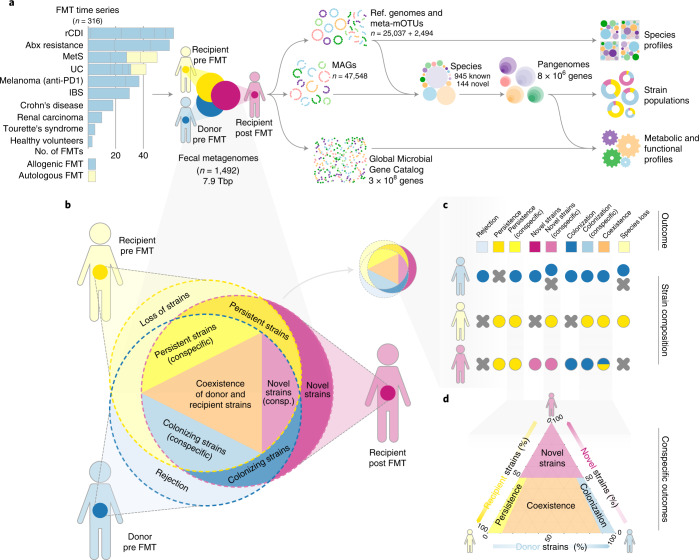
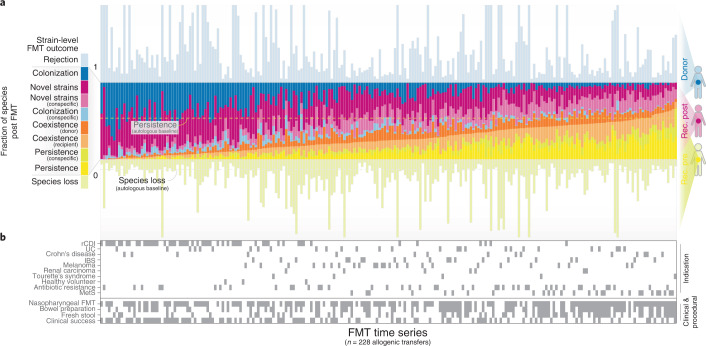
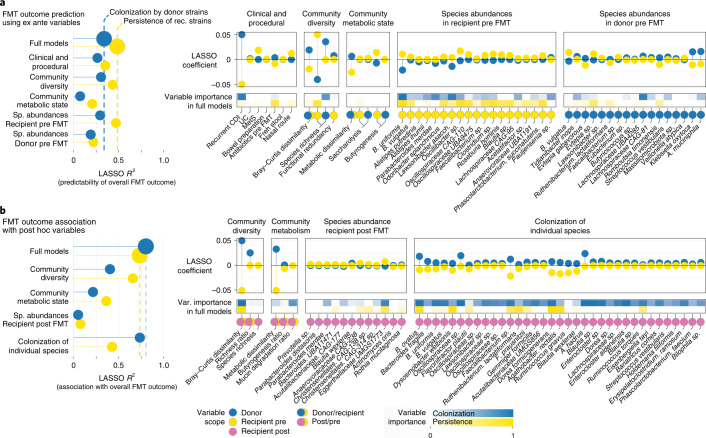
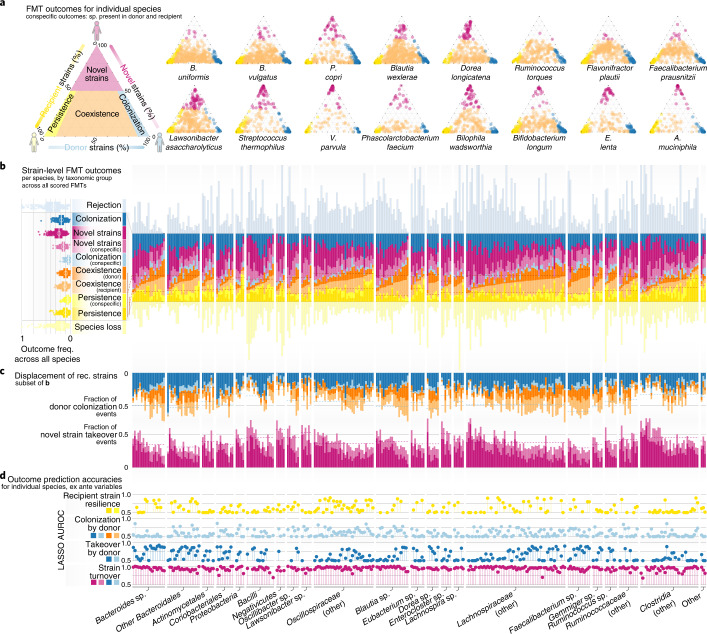
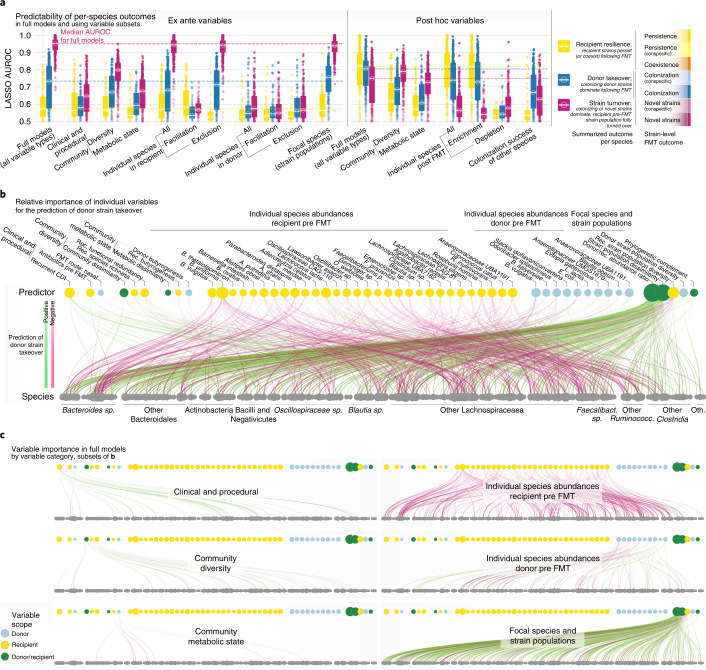
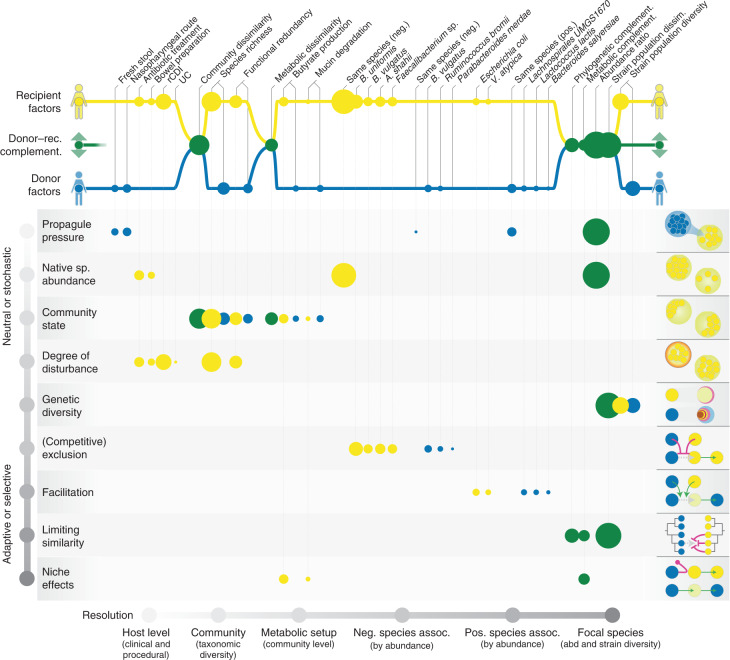
Fecal microbiota transplantation (FMT) is a therapeutic intervention for inflammatory diseases of the gastrointestinal tract, but its clinical mode of action and subsequent microbiome dynamics remain poorly understood. Here we analyzed metagenomes from 316 FMTs, sampled pre and post intervention, for the treatment of ten different disease indications. We quantified strain-level dynamics of 1,089 microbial species, complemented by 47,548 newly constructed metagenome-assembled genomes. Donor strain colonization and recipient strain resilience were mostly independent of clinical outcomes, but accurately predictable using LASSO-regularized regression models that accounted for host, microbiome and procedural variables. Recipient factors and donor–recipient complementarity, encompassing entire microbial communities to individual strains, were the main determinants of strain population dynamics, providing insights into the underlying processes that shape the post-FMT gut microbiome. Applying an ecology-based framework to our findings indicated parameters that may inform the development of more effective, targeted microbiome therapies in the future, and suggested how patient stratification can be used to enhance donor microbiota colonization or the displacement of recipient microbes in clinical practice.
Overview
The claims and statistics of this paper haven’t been checked yet.
Free: it reads the open-access text and checks the first 5 claims that cite a source we can check. Create a free account to check every claim.
Integrity signals
Registry
Cites
Statistics
Figures
Verification
Claims the paper makes
The claims and statistics of this paper haven’t been checked yet.
Free: it reads the open-access text and checks the first 5 claims that cite a source we can check. Create a free account to check every claim.
Claims other papers make about this one
Each is checked against this paper’s own text: does it say what the citing paper says it does?
The cited source doesn’t support the claim as written.
In the citing paper
“In this context, metabolic independence — the capacity to synthesize essential cofactors, amino acids, and nucleotides — has emerged as a key ecological trait that promotes enteric health.228,230”
From Gut dysbiosis in oncology: a risk factor for immunoresistance (2026) · doi:10.1038/s41422-025-01212-6 · cites this paper as [230]
Checked by a reasoning model — may be wrong.
Experimental — accuracy not yet measuredThe source backs part of the claim, not all of it — or backs it for a different population, condition or comparison.
In the citing paper
“In fact, a metagenomics analysis of 316 FMTs indicated that clinical success does not rely on successful colonization, microbial displacement, or bacterial reinstatement.230”
From Gut dysbiosis in oncology: a risk factor for immunoresistance (2026) · doi:10.1038/s41422-025-01212-6 · cites this paper as [230]
Experimental — accuracy not yet measuredIn the citing paper
“based on two recent meta-analyses that reported a higher degree of donor microbiome engraftment in recipients with a precarious microbial community.746–748”
From Microbiota–gut–brain axis and its therapeutic applications in neurodegenerative diseases (2024) · cites this paper as [748]
In the citing paper
“This finding, however, was not replicated in another similar study, probably due to the heterogeneity of cohorts, diseases, FMTworkingprotocols, and differences in microbiome analytical methods. 90”
From Key determinants of success in fecal microbiota transplantation: From microbiome to clinic (2023) · cites this paper as [90]
Self-check
Percentages, sums and reported differences re-computed from the paper’s own numbers.
The self-check needs the paper’s full text.
Citations
Cites
The Sequence Alignment/Map format and SAMtools
Li, H., Handsaker, B., Wysoker, A., Fennell, T., Ruan, J., Homer, N., Marth, G., Abecasis, G., Durbin, R., & 1000 Genome Project Data Processing Subgroup (2009) · Bioinformatics · doi:10.1093/bioinformatics/btp352 · Cited by 62,041
BEDTools: a flexible suite of utilities for comparing genomic features
Quinlan, A. R., & Hall, I. M. (2010) · Bioinformatics · doi:10.1093/bioinformatics/btq033 · Cited by 27,437
Regularization and Variable Selection Via the Elastic Net
Zou, H., & Hastie, T. (2005) · Journal of the Royal Statistical Society Series B: Statistical Methodology · doi:10.1111/j.1467-9868.2005.00503.x · Cited by 20,957
Regularization Paths for Generalized Linear Models via Coordinate Descent
Friedman, J., Hastie, T., & Tibshirani, R. (2010) · Journal of Statistical Software · doi:10.18637/jss.v033.i01 · Cited by 19,927
Prokka: rapid prokaryotic genome annotation
Seemann, T. (2014) · Bioinformatics · doi:10.1093/bioinformatics/btu153 · Cited by 18,818
FastTree 2 – Approximately Maximum-Likelihood Trees for Large Alignments
Price, M. N., Dehal, P. S., & Arkin, A. P. (2010) · PLoS ONE · doi:10.1371/journal.pone.0009490 · Cited by 14,894
Prodigal: prokaryotic gene recognition and translation initiation site identification
Hyatt, D., Chen, G.-L., LoCascio, P. F., Land, M. L., Larimer, F. W., & Hauser, L. J. (2010) · BMC Bioinformatics · doi:10.1186/1471-2105-11-119 · Cited by 12,587
Parks, D. H., Imelfort, M., Skennerton, C. T., Hugenholtz, P., & Tyson, G. W. (2015) · Genome Research · doi:10.1101/gr.186072.114 · Cited by 12,496
Li, D., Liu, C.-M., Luo, R., Sadakane, K., & Lam, T.-W. (2015) · Bioinformatics · doi:10.1093/bioinformatics/btv033 · Cited by 9,893
MUSCLE: a multiple sequence alignment method with reduced time and space complexity
Edgar, R. C. (2004) · BMC Bioinformatics · doi:10.1186/1471-2105-5-113 · Cited by 8,970
Research works printed but not linked: 1
- Mende, D. R., Sunagawa, S., Zeller, G. & Bork, P. Accurate and universal delineation of prokaryotic species. Nat. Publ. Group 10, 881-884 (2013).
Cited by
Microbiota–gut–brain axis and its therapeutic applications in neurodegenerative diseases
Loh, J. S., Mak, W. Q., Tan, L. K. S., Ng, C. X., Chan, H. H., Yeow, S. H., Foo, J. B., Ong, Y. S., How, C. W., & Khaw, K. Y. (2024) · Signal Transduction and Targeted Therapy · doi:10.1038/s41392-024-01743-1 · Cited by 1,193
Discovery of antimicrobial peptides in the global microbiome with machine learning
Santos-Júnior, C. D., Torres, M. D. T., Duan, Y., Rodríguez del Río, Á., Schmidt, T. S. B., Chong, H., Fullam, A., Kuhn, M., Zhu, C., Houseman, A., et al. (2024) · Cell · doi:10.1016/j.cell.2024.05.013 · Cited by 419
Self-citationFecal microbiota transplantation: current challenges and future landscapes
Yadegar, A., Bar-Yoseph, H., Monaghan, T. M., Pakpour, S., Severino, A., Kuijper, E. J., Smits, W. K., Terveer, E. M., Neupane, S., Nabavi-Rad, A., et al. (2024) · Clinical Microbiology Reviews · doi:10.1128/cmr.00060-22 · Cited by 351
Key determinants of success in fecal microbiota transplantation: From microbiome to clinic
Porcari, S., Benech, N., Valles-Colomer, M., Segata, N., Gasbarrini, A., Cammarota, G., Sokol, H., & Ianiro, G. (2023) · Cell Host & Microbe · doi:10.1016/j.chom.2023.03.020 · Cited by 331
Peery, A. F., Kelly, C. R., Kao, D., Vaughn, B. P., Lebwohl, B., Singh, S., Imdad, A., & Altayar, O. (2024) · Gastroenterology · doi:10.1053/j.gastro.2024.01.008 · Cited by 258
Ma, Z., Zuo, T., Frey, N., & Rangrez, A. Y. (2024) · Signal Transduction and Targeted Therapy · doi:10.1038/s41392-024-01946-6 · Cited by 259
Machine learning for microbiologists
Asnicar, F., Thomas, A. M., Passerini, A., Waldron, L., & Segata, N. (2024) · Nature Reviews Microbiology · doi:10.1038/s41579-023-00984-1 · Cited by 256
“Early results suggest that machine learning-based matching of donor-recipient individuals can expand the clinical relevance of faecal microbiota transplantation beyond the current consolidated indication for the treatment of recurrent Clostridiodes difficile infections 42–44 .”
Microbiome-based interventions to modulate gut ecology and the immune system
Hitch, T. C. A., Hall, L. J., Walsh, S. K., Leventhal, G. E., Slack, E., de Wouters, T., Walter, J., & Clavel, T. (2022) · Mucosal Immunology · doi:10.1038/s41385-022-00564-1 · Cited by 243
Inflammatory Bowel Diseases and Gut Microbiota
Haneishi, Y., Furuya, Y., Hasegawa, M., Picarelli, A., Rossi, M., & Miyamoto, J. (2023) · International Journal of Molecular Sciences · doi:10.3390/ijms24043817 · Cited by 242
Utilization of the microbiome in personalized medicine
Ratiner, K., Ciocan, D., Abdeen, S. K., & Elinav, E. (2024) · Nature Reviews Microbiology · doi:10.1038/s41579-023-00998-9 · Cited by 170
“The importance of donor–recipient microbiome compatibility was recently confirmed by two meta-analyses 122,124 , suggesting that strain engraftment is essential for a successful FMT outcome across multiple conditions.”
Longitudinal gut microbiome changes in immune checkpoint blockade-treated advanced melanoma
Björk, J. R., Bolte, L. A., Maltez Thomas, A., Lee, K. A., Rossi, N., Wind, T. T., Smit, L. M., Armanini, F., Asnicar, F., Blanco-Miguez, A., et al. (2024) · Nature Medicine · doi:10.1038/s41591-024-02803-3 · Cited by 156
“Inter-individual variability in the response and engraftment of strains is widely described after FMT for different clinical contexts 52,53 in which various treatment and host factors play a role 16,22,54,55 .”
Role of the microbiota in response to and recovery from cancer therapy
Blake, S. J., Wolf, Y., Boursi, B., & Lynn, D. J. (2023) · Nature reviews. Immunology · doi:10.1038/s41577-023-00951-0 · Cited by 158
“Finally, two recent meta-analyses suggest that better FMT engraftment can lead to increased efficacy of FMT in other disease contexts 139,140 .”
Karimi, M., Shirsalimi, N., Hashempour, Z., Omran, H. S., Sedighi, E., Beigi, F., & Mortezazadeh, M. (2024) · Frontiers in Immunology · doi:10.3389/fimmu.2024.1439176 · Cited by 163
Intestinal colonization resistance in the context of environmental, host, and microbial determinants
Woelfel, S., Silva, M. S., & Stecher, B. (2024) · Cell Host & Microbe · doi:10.1016/j.chom.2024.05.002 · Cited by 165
Genome-resolved metagenomics: a game changer for microbiome medicine
Kim, N., Ma, J., Kim, W., Kim, J., Belenky, P. A., & Lee, I. (2024) · Experimental & Molecular Medicine · doi:10.1038/s12276-024-01262-7 · Cited by 144
Synthetic microbial communities (SynComs) of the human gut: design, assembly, and applications
van Leeuwen, P. T., Brul, S., Zhang, J., & Wortel, M. T. (2023) · FEMS Microbiology Reviews · doi:10.1093/femsre/fuad012 · Cited by 125
Podlesny, D., Durdevic, M., Paramsothy, S., Kaakoush, N. O., Högenauer, C., Gorkiewicz, G., Walter, J., & Fricke, W. F. (2022) · Cell Reports Medicine · doi:10.1016/j.xcrm.2022.100711 · Cited by 111
“The concept of propagule pressure is used in invasion ecology to explain the successful colonization of a newly introduced population as determined by the quality, quantity, and frequency of invading organisms(39) identified as an important neutral or stochastic factor that shapes the post-FMT microbiome assembly proc…”
BackgroundSequencing-based analysis of microbiomes
Pinto, Y., & Bhatt, A. S. (2024) · Nature Reviews Genetics · doi:10.1038/s41576-024-00746-6 · Cited by 117
Fecal microbiota transplantation: Emerging applications in autoimmune diseases
Yang, R., Chen, Z., & Cai, J. (2023) · Journal of Autoimmunity · doi:10.1016/j.jaut.2023.103038 · Cited by 111
Liao, C., Rolling, T., Djuković, A., Fei, T., Mishra, V., Liu, H., Lindberg, C., Dai, L., Zhai, B., Peled, J. U., et al. (2024) · Nature Microbiology · doi:10.1038/s41564-024-01680-3 · Cited by 103
“Supporting this idea, a recent study found that Streptococcus salivarius , a typical oral bacterial species, in the recipient’s microbiota facilitates donor strain colonization 36 .”
The Next Generation Fecal Microbiota Transplantation: To Transplant Bacteria or Virome
Yu, Y., Wang, W., & Zhang, F. (2023) · Advanced Science · doi:10.1002/advs.202301097 · Cited by 113
Melanoma and microbiota: Current understanding and future directions
Routy, B., Jackson, T., Mählmann, L., Baumgartner, C. K., Blaser, M., Byrd, A., Corvaia, N., Couts, K., Davar, D., Derosa, L., et al. (2024) · Cancer Cell · doi:10.1016/j.ccell.2023.12.003 · Cited by 89
Yadegar, A., Pakpour, S., Ibrahim, F. F., Nabavi-Rad, A., Cook, L., Walter, J., Seekatz, A. M., Wong, K., Monaghan, T. M., & Kao, D. (2023) · Cell Host & Microbe · doi:10.1016/j.chom.2023.03.019 · Cited by 85
Advances in Fecal Microbiota Transplantation for Gut Dysbiosis‐Related Diseases
Hou, S., Yu, J., Li, Y., Zhao, D., & Zhang, Z. (2025) · Advanced Science · doi:10.1002/advs.202413197 · Cited by 117
Intrahost evolution of the gut microbiota
Barreto, H. C., & Gordo, I. (2023) · Nature Reviews Microbiology · doi:10.1038/s41579-023-00890-6 · Cited by 94
Fullam, A., Letunić, I., Schmidt, T., Ducarmon, Q. R., Karcher, N., Khedkar, S., Kuhn, M., Larralde, M., Maistrenko, O. M., Malfertheiner, L., et al. (2022) · Nucleic Acids Research · doi:10.1093/nar/gkac1078 · Cited by 88
Self-citationFecal microbiota transplantation: no longer cinderella in tumour immunotherapy
Yang, Y., An, Y., Dong, Y., Chu, Q., Wei, J., Wang, B., & Cao, H. (2024) · EBioMedicine · doi:10.1016/j.ebiom.2024.104967 · Cited by 90
“On the contrary, colony structure and diversity, and donor-recipient colony complementarity determined resilience, coexistence, and colonization of gut microbiota after FMT. 61 In another integrated shotgun meta-genomic systematic meta-analysis, higher donor strain engraftment was reported to be more likely to experie…”
BackgroundInfluentialYin, H., Huang, J., Guo, X., Xia, J., & Hu, M. (2023) · FEMS Microbiology Letters · doi:10.1093/femsle/fnad016 · Cited by 70
Gut microbiota strain richness is species specific and affects engraftment
Chen-Liaw, A., Aggarwala, V., Mogno, I., Haifer, C., Li, Z., Eggers, J., Helmus, D. S., Hart, A. B., Wehkamp, J., Lamousé-Smith, E. S. N., et al. (2024) · Nature · doi:10.1038/s41586-024-08242-x · Cited by 73
Self-citationPaternal and induced gut microbiota seeding complement mother-to-infant transmission
Dubois, L., Valles‐Colomer, M., Ponsero, A. J., Helve, O., Andersson, S., Kolho, K.-L., Asnicar, F., Korpela, K., Salonen, A., Segata, N., et al. (2024) · Cell Host & Microbe · doi:10.1016/j.chom.2024.05.004 · Cited by 73
Zhang, Z., Mocanu, V., Deehan, E. C., Hotte, N., Zhu, Y., Wei, S., Kao, D. H., Karmali, S., Birch, D. W., Walter, J., et al. (2024) · Gut Microbes · doi:10.1080/19490976.2024.2345134 · Cited by 59
“Other emerging work suggests that pre-FMT recipient microbiota composition 18 and donor-recipient complementarity 19,20 may be key determinants of FMT success.”
Targeting nonalcoholic fatty liver disease via gut microbiome-centered therapies
Koning, M., Herrema, H., Nieuwdorp, M., & Meijnikman, A. S. (2023) · Gut Microbes · doi:10.1080/19490976.2023.2226922 · Cited by 56
“A recent study, reanalyzing 316 FMTs derived from a wide range of indications, suggests, however, that clinical success is not dependent on colonization of donor strains, displacement of recipient species or the reinstatement of specific bacterial functions.(62) This is line with the success of the autologous FMT, in…”
BackgroundInfluentialSelf-citationEmerging clinical relevance of microbiome in cancer: promising biomarkers and therapeutic targets
Dai, J.-H., Tan, X.-R., Qiao, H., & Liu, N. (2023) · Protein & Cell · doi:10.1093/procel/pwad052 · Cited by 59
Fecal microbiota transplantation in clinical practice: Present controversies and future prospects
Tian, H., Wang, X., Fang, Z., Li, L., Wu, C., Bi, D., Li, N., Chen, Q., & Qin, H. (2024) · hLife · doi:10.1016/j.hlife.2024.01.006 · Cited by 56
Precision microbiota therapy for IBD: premise and promise
Nagayama, M., Gogokhia, L., & Longman, R. (2025) · Gut Microbes · doi:10.1080/19490976.2025.2489067 · Cited by 70
Oliveira, R. A., & Pamer, E. G. (2023) · Cell Host & Microbe · doi:10.1016/j.chom.2023.03.002 · Cited by 52
Chen, Q., Wu, C., Xu, J., Ye, C., Chen, X., Tian, H., Zong, N., Zhang, S., Li, L., Gao, Y., et al. (2024) · Cell Host & Microbe · doi:10.1016/j.chom.2024.01.013 · Cited by 51
Recipient-independent, high-accuracy FMT-response prediction and optimization in mice and humans
Shtossel, O., Turjeman, S., Riumin, A., Goldberg, M. R., Elizur, A., Bekor, Y., Mor, H., Koren, O., & Louzoun, Y. (2023) · Microbiome · doi:10.1186/s40168-023-01623-w · Cited by 50
“To analyze this distribution, we utilized data from the 5 aforementioned conditions as well as additional data from the study conducted by Schmidt et al. [61].”
Human microbiome acquisition and transmission
Heidrich, V., Valles‐Colomer, M., & Segata, N. (2025) · Nature Reviews Microbiology · doi:10.1038/s41579-025-01166-x · Cited by 56
“Several studies assessed in detail the engraftment of donor strains in FMT recipients using strain-tracking tools 145,146 , and a meta-analysis found that strain engraftment is linked to the clinical efficacy of FMT 111 , although another one failed to detect such association 147 .”
From hype to hope: Considerations in conducting robust microbiome science
McGuinness, A. J., Stinson, L. F., Snelson, M., Loughman, A., Stringer, A. M., Hannan, A. J., Cowan, C. S. M., Jama, H. A., Caparros-Martin, J. A., West, M. L., et al. (2023) · Brain Behavior and Immunity · doi:10.1016/j.bbi.2023.09.022 · Cited by 47
Evidence for the contribution of the gut microbiome to obesity and its reversal
de Wit, D. F., Hanssen, N. M. J., Wortelboer, K., Herrema, H., Rampanelli, E., & Nieuwdorp, M. (2023) · Science Translational Medicine · doi:10.1126/scitranslmed.adg2773 · Cited by 51
“A recent metagenome analysis of data from 316 FMT studies suggested that recipient factors (but not donor parameters) drive post-FMT strain dynamics ( 98 ).”
BackgroundSelf-citationByndloss, M. X., Devkota, S., Duca, F. A., Niess, J. H., Nieuwdorp, M., Orho‐Melander, M., Sanz, Y., Tremaroli, V., & Zhao, L. (2024) · Diabetologia · doi:10.1007/s00125-024-06198-1 · Cited by 63
Self-citationFrom microbiome to metabolism: Bridging a two-decade translational gap
Hul, M. V., & Cani, P. D. (2025) · Cell Metabolism · doi:10.1016/j.cmet.2025.10.011 · Cited by 57
Past, present, and future of microbiome-based therapies
Manrique, P., Montero, I., Fernández-Gosende, M., Martínez, N., Hidalgo-Cantabrana, C., & Ríos-Covián, D. (2024) · Microbiome Research Reports · doi:10.20517/mrr.2023.80 · Cited by 51
Mullish, B. H., Merrick, B., Quraishi, M. N., Bak, A., Green, C., Moore, D., Porter, R. J., Elumogo, N., Segal, J. P., Sharma, N., et al. (2024) · Journal of Hospital Infection · doi:10.1016/j.jhin.2024.03.001 · Cited by 45
Ghassab, F. T., Mahmoudi, F. S., Tinjani, R. T., Meibodi, A. E., Zali, M. R., & Yadegar, A. (2024) · Life Sciences · doi:10.1016/j.lfs.2024.122748 · Cited by 41
Tsitou, V.-M., Rallis, D., Cekova, M., & Yanev, N. (2024) · Biotechnology & Biotechnological Equipment · doi:10.1080/13102818.2024.2349587 · Cited by 58
Optimizing Cancer Treatment Through Gut Microbiome Modulation
Kim, K., Lee, M., Shin, Y., Lee, Y., & Kim, T. J. (2025) · Cancers · doi:10.3390/cancers17071252 · Cited by 40
“The therapeutic success of FMT is highly dependent on donor-specific microbial composition, particularly strain-level differences that govern engraftment dynamics and long-term microbiome stability in the recipient [94].”
Mullish, B. H., Merrick, B., Quraishi, M. N., Bak, A., Green, C., Moore, D., Porter, R. J., Elumogo, N., Segal, J. P., Sharma, N., et al. (2024) · Gut · doi:10.1136/gutjnl-2023-331550 · Cited by 43
Liu, Y., Li, X., Chen, Y., Yao, Q., Zhou, J., Wang, X., Meng, Q., Ji, J., Yu, Z., & Chen, X. (2025) · Frontiers in Microbiology · doi:10.3389/fmicb.2025.1556827 · Cited by 52
“Various possible ecological scenarios within the gut of recipients could be observed, which depends on the baseline gut microbiota of both colonizers and residents, further emphasizing the importance of donor-recipient interplay (Schmidt et al., 2022; Wilson et al., 2021).”
Imbalance in gut microbial interactions as a marker of health and disease
López, R. C., Bonachela, J. A., Dominguez-Bello, M. G., Manhart, M., Levin, S. A., Blaser, M. J., & Muñoz, M. A. (2026) · Science · doi:10.1126/science.ady1729 · Cited by 54
Gut microbiota-targeted interventions: from conventional approaches to genetic engineering
Zuo, Z., & Zhao, F. (2023) · Science Bulletin · doi:10.1016/j.scib.2023.05.018 · Cited by 33
Zhuang, Y.-P., Zhou, H., Chen, H., Zheng, M.-Y., Liang, Y., Gu, Y.-T., Li, W., Qiu, W., & Zhou, H. (2023) · Biomedicine & Pharmacotherapy · doi:10.1016/j.biopha.2023.115040 · Cited by 38
Allegretti, J. R., Khanna, S., Mullish, B. H., & Feuerstadt, P. (2024) · Gastroenterology · doi:10.1053/j.gastro.2024.05.004 · Cited by 37
Fecal microbiota transplantation alters gut phage communities in a clinical trial for obesity
Zuppi, M., Vatanen, T., Wilson, B. C., Golovina, E., Portlock, T., Cutfield, W. S., Vickers, M. H., & O'Sullivan, J. M. (2024) · Microbiome · doi:10.1186/s40168-024-01833-w · Cited by 36
“…any significant correlation between the donor’s microbiome composition and microbial engraftment efficacy in FMT, reporting that this was prevalently connected to the recipient’s microbiome composition and microbial compositional similarities between donors and recipients at baseline [44, 45].”
BackgroundKao, D. H., Wong, K., Jijon, H. B., Moayyedi, P., Franz, R., McDougall, C., Hotte, N., Panaccione, R., Semlacher, E. A., Kroeker, K. I., et al. (2024) · The American Journal of Gastroenterology · doi:10.14309/ajg.0000000000003196 · Cited by 36
“Furthermore, a lower degree of engraftment is expected than that observed in recurrent Clostridioides di ffi cile infection (33).”
Bénard, M. V., Arretxe, I., Wortelboer, K., Harmsen, H. J. M., Davids, M., de Bruijn, C. M. A., Benninga, M. A., Hugenholtz, F., Herrema, H., & Ponsioen, C. Y. (2023) · Microorganisms · doi:10.3390/microorganisms11092238 · Cited by 35
“Conversely, a recent metastudy assessing several FMT indications did not find a correlation between higher donor strain engraftment and clinical success of FMT [21], highlighting the importance of other determinants such as donor–recipient complementarity [21] and procedural factors.”
BackgroundSelf-citationFaecal (or intestinal) microbiota transplant: a tool for repairing the gut microbiome
Ghani, R., Chrysostomou, D., Roberts, L. A., Pandiaraja, M., Marchesi, J. R., & Mullish, B. H. (2024) · Gut Microbes · doi:10.1080/19490976.2024.2423026 · Cited by 33
“42,44 However, as of yet, there is no published study that has convin-cingly demonstrated use of machine learning approaches to improve donor selection and enhance efficacy of FMT in a clinical context.”
InfluentialA review of engraftment assessments following fecal microbiota transplant
Herman, C., Barker, B. M., Bartelli, T. F., Chandra, V., Krajmalnik‐Brown, R., Jewell, M., Li, L., Liao, C., McAllister, F. M., Nirmalkar, K., et al. (2025) · Gut Microbes · doi:10.1080/19490976.2025.2525478 · Cited by 36
Byndloss, M. X., Devkota, S., Duca, F. A., Niess, J. H., Nieuwdorp, M., Orho‐Melander, M., Sanz, Y., Tremaroli, V., & Zhao, L. (2024) · Diabetes Care · doi:10.2337/dci24-0052 · Cited by 51
“Other studies have been performed for type 2 diabetes and insulin resistance, showing a modest effect of FMT on insulin resistance and nonalcoholic fatty liver disease (216,217, 220 – 223), whereas one study showed no effect on these parameters (224).”
BackgroundInfluentialSelf-citationGoldman, D. A., Xue, K. S., Parrott, A. B., Lopez, J. A., Vila, J. C. C., Jeeda, R. R., Franzese, L. R., Porter, R. L., Gray, I. J., DeFelice, B. C., et al. (2025) · Proceedings of the National Academy of Sciences · doi:10.1073/pnas.2322440122 · Cited by 34
“…the effect of propagule size in the human gut is important for designing microbiome therapeutics ( 35 , 36 ), but prior studies have come to inconsistent conclusions about how inoculation dose affects the outcome of probiotic intro-ductions and fecal microbiota transplants (FMTs) ( 37 – 42 ).”
Bénard, M. V., de Goffau, M. C., Blonk, J., Hugenholtz, F., van Buuren, J., Paramsothy, S., Kaakoush, N. O., D’Haens, G., Borody, T. J., Kamm, M. A., et al. (2024) · Clinical Gastroenterology and Hepatology · doi:10.1016/j.cgh.2024.10.001 · Cited by 36
Self-citationWang, X., Zhao, D., Bi, D., Li, L., Tian, H., Yin, F., Zuo, T., Ianiro, G., Li, N., Chen, Q., et al. (2025) · Science Bulletin · doi:10.1016/j.scib.2025.01.029 · Cited by 31
The role of the early-life gut microbiome in childhood asthma
Boulund, U., Thorsen, J., Trivedi, U., Tranæs, K., Jiang, J., Shah, S. A., & Stokholm, J. (2025) · Gut Microbes · doi:10.1080/19490976.2025.2457489 · Cited by 31
Using the microbiome in clinical practice
Turjeman, S., & Koren, O. (2021) · Microbial Biotechnology · doi:10.1111/1751-7915.13971 · Cited by 26
“Once banked, samples could theoretically be characterized and classified to highlight which would most likely improve certain disease states, improve treatment responsiveness and help with weight loss and ageing, even taking into account recipient characteristics (Schmidt et al., 2021).”
BackgroundMicrobiome Responses to Fecal Microbiota Transplantation in Cats with Chronic Digestive Issues
Rojas, C. A., Entrolezo, Z., Jarett, J. K., Jospin, G., Kingsbury, D. D., Martin, A., Eisen, J. A., & Ganz, H. H. (2023) · Veterinary Sciences · doi:10.3390/vetsci10090561 · Cited by 33
“They reported that the most important predictors of strain-level retention were the diversity and the abundance of bacterial species in FMT recipients [78].”
Backgroundvan Lingen, E., Nooij, S., Terveer, E. M., Crossette, E. M., Prince, A., Bhattarai, S. K., Watson, A., Galazzo, G., Menon, R., Szabady, R. L., et al. (2024) · Journal of Crohn s and Colitis · doi:10.1093/ecco-jcc/jjae043 · Cited by 32
“41 Podlesney et al . found that the role of engraftment and clinical outcomes is probably disease-dependent and suggested that IBD patients rather benefit from targeted FMT strategies with the goal to induce engraftment of specific donor species or strains instead of maximizing overall engraftment.”
BackgroundThe role of faecal microbiota transplantation in chronic noncommunicable disorders
Mullish, B. H., Tohumcu, E., Porcari, S., Fiorani, M., Tommaso, N. D., Gasbarrini, A., Cammarota, G., Ponziani, F. R., & Ianiro, G. (2023) · Journal of Autoimmunity · doi:10.1016/j.jaut.2023.103034 · Cited by 27
Gut dysbiosis in oncology: a risk factor for immunoresistance
(2026) · doi:10.1038/s41422-025-01212-6 · Cited by 24
“228,230 Clinical evidence from FMT trials, which are being investigated to correct dysbiosis, appears to illustrate this ecological perspective.”
Gulumbe, B. H., & Abdulrahim, A. (2023) · Future Science OA · doi:10.2144/fsoa-2023-0089 · Cited by 24
Byndloss, M. X., Devkota, S., Duca, F. A., Niess, J. H., Nieuwdorp, M., Orho‐Melander, M., Sanz, Y., Tremaroli, V., & Zhao, L. (2024) · Diabetes · doi:10.2337/dbi24-0028 · Cited by 35
Self-citationMerrick, B., Prossomariti, D., Allen, E. M., Bisnauthsing, K. N., Kertanegara, M., Sergaki, C., Guennec, A. D. L., Delord, M., Bell, J. T., Conte, M. R., et al. (2025) · Journal of Infection · doi:10.1016/j.jinf.2025.106504 · Cited by 28
Within-host bacterial evolution and the emergence of pathogenicity
Tonkin‐Hill, G. Q., Ruis, C., Bentley, S. D., Lythgoe, K., & Bryant, J. M. (2025) · Nature Microbiology · doi:10.1038/s41564-025-02036-1 · Cited by 33
“This approach has also revealed species dynamics following faecal microbiota transplantation, where increased colonization rates have been linked to improved clinical outcomes 116 , although there is variability in the strength of this association between studies 117 .”
The gut microbiota in osteoporosis: dual roles and therapeutic prospects
Xie, X., Liu, H., Wan, K., Li, J., & Qi, P. (2025) · Frontiers in Immunology · doi:10.3389/fimmu.2025.1617459 · Cited by 26
High-resolution metagenome assembly for modern long reads with myloasm
Shaw, J., Marin, M. G., & Li, H. (2026) · Nature Biotechnology · doi:10.1038/s41587-026-03053-z · Cited by 40
Bahitham, W., Alghamdi, S., Omer, I., Alsudais, A. S., Hakeem, I., Alghamdi, A., Abualnaja, R., Sanai, F. M., Rosado, A. S., & Sergi, C. M. (2024) · Biomedicines · doi:10.3390/biomedicines12030550 · Cited by 24
Hartikainen, A. K., Jalanka, J., Lahtinen, P., Ponsero, A. J., Mertsalmi, T. H., Finnegan, L., Crispie, F., Cotter, P. D., Arkkila, P. E. T., & Satokari, R. M. (2024) · npj Biofilms and Microbiomes · doi:10.1038/s41522-024-00549-x · Cited by 26
“On one hand, the fi rst study showed no associations between donor strain colonization and the clinical success in general 28 .”
BackgroundMethodCheng, W., Pei, S., Wu, J., Wang, Y., Yang, Y.-W., Xiao, M., Chen, J., Wang, Y., Wu, L., & Huang, Z. (2025) · Acta Pharmacologica Sinica · doi:10.1038/s41401-025-01495-w · Cited by 22
“Interestingly, the microbial similarity of CB2R – / – mice and NAFLD model mice seems to prevent FMT colonization [41, 42], and CB2R – / – mice transplanted microbiota from NAFLD mice did not aggravate NAFLD phenotype (Fig.”
Luo, S., Hou, Y., Xie, L., Zhang, H., Liu, C., & Chen, T. (2023) · LWT · doi:10.1016/j.lwt.2023.114621 · Cited by 23
Zhang, Y. J., Bousvaros, A., Docktor, M., Kaplan, A. L., Rufo, P. A., Leier, M., Weatherly, M., Zimmerman, L. A., Nguyen, L. T. T., Barton, B., et al. (2024) · Scientific Reports · doi:10.1038/s41598-024-68619-w · Cited by 25
“Recent studies tracking strain dynamics in FMT across various disease indications have shown that both antibiotic pre-treatment and decreased alpha diversity of recipients are associated with improved engraftment 19,21 .”
Pinto, S., Šajbenová, D., Benincà, E., Nooij, S., Terveer, E. M., Keller, J. J., Jong, A. E. V. D. M., Bogaards, J. A., & Steyerberg, E. W. (2024) · Journal of Crohn s and Colitis · doi:10.1093/ecco-jcc/jjae137 · Cited by 25
“This contrasts with earlier studies that suggested that a donor-like microbiota is preferred after FMT treatment, 20,21,23,40 and suggests that some complementarity in microbiota compositions between donors and recipients is required for a successful clinical response.”
Metabolic regulation of intestinal homeostasis: molecular and cellular mechanisms and diseases
Zhang, R., Perekatt, A. O., & Chen, L. (2024) · MedComm · doi:10.1002/mco2.776 · Cited by 22
Hassib, L., Kanashiro, A., Pedrazzi, J. F. C., Vercesi, B. F., Higa, S., Arruda, Í., Soares, Y., de Souza, A. P., Barichello, T., Guimarães, F. S., et al. (2025) · Progress in Neuro-Psychopharmacology and Biological Psychiatry · doi:10.1016/j.pnpbp.2025.111385 · Cited by 22
Understanding and predicting the efficacy of FMT
Lavelle, A., & Sokol, H. (2022) · Nature Medicine · doi:10.1038/s41591-022-01991-0 · Cited by 21
Microbiota‐related metabolites fueling the understanding of ischemic heart disease
Fan, Y., Ying, J., Ma, H., & Cui, H. (2023) · iMeta · doi:10.1002/imt2.94 · Cited by 18
Fecal Microbiota Transplantation as a Cancer Therapeutic
Stoff, R., Wolf, Y., & Boursi, B. (2023) · The Cancer Journal · doi:10.1097/ppo.0000000000000651 · Cited by 23
Kamath, S., Sokolenko, E., Clark, S. R., Cross, C., Scott, J. S., Wardill, H. R., Margolis, K. G., Forsythe, P., Burnet, P. W. J., Dinan, T. G., et al. (2025) · Nature Mental Health · doi:10.1038/s44220-025-00498-0 · Cited by 28
“• FMT: Depression-associated microbiota induce anxiety and anhedonia in germ-free rodents, replicating core psychiatric features 43,109,110 .”
Nurturing longevity through natural compounds: Where do we stand, and where do we go?
Todorova, M. N., Savova, M. S., Mihaylova, L. V., & Georgiev, M. I. (2024) · Food Frontiers · doi:10.1002/fft2.350 · Cited by 20
Kragsnæs, M. S., Jensen, J. R. B., Nilsson, A. C., Malik, M. I., Munk, H. L., Stengaard‐Pedersen, K., Horn, H. C., Kruhøffer, M., Kristiansen, K., Mullish, B. H., et al. (2024) · RMD Open · doi:10.1136/rmdopen-2023-003750 · Cited by 21
Daisley, B. A., & Allen‐Vercoe, E. (2024) · Annals of the New York Academy of Sciences · doi:10.1111/nyas.15237 · Cited by 20
Gut microbiome and gastric cancer: microbial interactions and therapeutic potential
El-Ghannam, M., Hassanien, M. H., Ameen, Y. A., Turky, E. A., ELattar, G. M., Ray, A. A. E., & Eltalkawy, M. D. (2025) · Gut Pathogens · doi:10.1186/s13099-025-00729-w · Cited by 16
“Recipient parameters, not donor factors, determine strain dynamics particular to a species after FMT [179].”
Enteropathway: the metabolic pathway database for the human gut microbiota
Shiroma, H., Darzi, Y., Terajima, E., Nakagawa, Z., Tsuchikura, H., Tsukuda, N., Moriya, Y., Okuda, S., Goto, S., & Yamada, T. (2024) · Briefings in Bioinformatics · doi:10.1093/bib/bbae419 · Cited by 18
Alaeddin, S., Chatterjee, A., Roberts, T. L., Steiner-Lim, G. Z., Jensen, S. O., Gyengési, E., Muench, G. W., & Ho, V. (2025) · Brain Behavior & Immunity - Health · doi:10.1016/j.bbih.2025.101049 · Cited by 18
Microbiota transplant therapy in inflammatory bowel disease: advances and mechanistic insights
Moutsoglou, D., Ramakrishnan, P., & Vaughn, B. P. (2025) · Gut Microbes · doi:10.1080/19490976.2025.2477255 · Cited by 18
“28 As several studies have found different taxa that correlate to clinical responses, and these findings may be tied to either baseline recipient characteristics or donor-recipient compatibility; pooling metagenomic data from multiple trials will be needed to identify whether specific taxa are key…”
InfluentialKousgaard, S. J., Cold, F., Halkjær, S. I., Petersen, A. M., Kjeldsen, J., Hansen, J. M., Dall, S. M., Albertsen, M., Nielsen, H. L., Kirk, K. F., et al. (2024) · Journal of Crohn s and Colitis · doi:10.1093/ecco-jcc/jjae066 · Cited by 17
Can fecal microbiota transplantations modulate autoimmune responses in type 1 diabetes?
Snethlage, C. M. F., de Wit, D. F., Wortelboer, K., Rampanelli, E., Hanssen, N. M. J., & Nieuwdorp, M. (2024) · Immunological Reviews · doi:10.1111/imr.13345 · Cited by 14
Self-citationMicrobiome time series data reveal predictable patterns of change
Karwowska, Z., Szczerbiak, P., & Kościółek, T. (2024) · Microbiology Spectrum · doi:10.1128/spectrum.04109-23 · Cited by 20
Leveraging strain competition to address antimicrobial resistance with microbiota therapies
Steed, D. B., Koundakjian, D., Harris, A. D., Rosato, A. E., Konstantinidis, K. T., & Woodworth, M. H. (2025) · Gut Microbes · doi:10.1080/19490976.2025.2488046 · Cited by 15
“23,24 A key example of the importance of dose was the SER-109 phase two trial that did not meet its endpoints but in post-hoc metagenomic analysis was determined to be related to dosing.”
Ecology of the gut microbiota and colonization resistance: mechanisms and therapeutic implications
Liang, L., Yang, Z., & Fu, X. (2025) · FEMS Microbiology Ecology · doi:10.1093/femsec/fiaf124 · Cited by 15
“However, FMT still faces many challenges, including the selection of donor microbiota, the safety of microbial transplantation, and the identification of biomarkers for key mechanisms (Schmidt et al. 2022 ).”
Pandey, P., & Khan, F. (2023) · Biochimica et Biophysica Acta (BBA) - General Subjects · doi:10.1016/j.bbagen.2023.130401 · Cited by 13
Metadata
- Authors
- Schmidt, T. S. B., Li, S. S., Maistrenko, O. M., Akanni, W., Coelho, L. P., Dolai, S., Fullam, A., Glazek, A. M., Hercog, R., Herrema, H., Jung, F., Kandels, S., Orakov, A., Thielemann, R., von Stetten, M., Van Rossum, T., Benes, V., Borody, T. J., de Vos, W. M., Ponsioen, C. Y., Nieuwdorp, M., & Bork, P.
- Affiliations
- European Molecular Biology Laboratory (DE)
- The University of Queensland (AU)
- Royal Netherlands Institute for Sea Research (NL)
- Fudan University (CN)
- Centre For Digestive Diseases (AU)
- Amsterdam University Medical Centers (NL)
- Amsterdam UMC Location University of Amsterdam (NL)
- ORCID
- Venue
- Nature Medicine
- Published
- 2022-09
- Volume
- 28
- Issue
- 9
- Pages
- 1902-1912
- ISSN
- 1078-8956 (ISSN-L)
- 1546-170X
- PMC
- PMC9499871
- OpenAlex
- W4295929883
- Cited by
- 233
- References
- 103
- Citations by year
- 2026: 56 · 2025: 63 · 2024: 70 · 2023: 37 · 2022: 5
- FWCI
- 14.36
- Type
- journal article
- Language
- en
- Open access
- hybrid
- doi.org
- Licence
- cc-by
- creativecommons.org/licenses/by/4.0 (tdm)
- creativecommons.org/licenses/by/4.0 (vor, 14 d)
- Locations
- Nature Medicine (publishedVersion, cc-by)
- PubMed Central (publishedVersion, cc-by)
- PubMed (publishedVersion)
- Pure Amsterdam UMC (publishedVersion, cc-by)
- Amsterdam UMC (VU Amsterdam) - Institutional Repository (publishedVersion, other-oa)
- MDC Repository (Max-Delbrueck-Center for Molecular Medicine) (acceptedVersion)
- Socio-Environmental Systems Modeling (acceptedVersion, cc-by)
- Data Archiving and Networked Services (DANS) (submittedVersion, other-oa)
- Työväentutkimus Vuosikirja (submittedVersion)
- Technical University of Denmark, DTU Orbit (Technical University of Denmark, DTU) (submittedVersion, cc-by)
- Data Archiving and Networked Services (DANS) (submittedVersion, cc-by)
- Funders
- Harvard University
- Universitetet i Tromsø
- Universität Hohenheim
- European Molecular Biology Laboratory (ALTF 137-2018)
- European Commission (669830, 686070)
- ZonMw ([09150182010020], 2019.82.004)
- Bundesministerium für Bildung und Forschung (031L0181A)
- Diabetes Fonds (2019.82.004)
- Nederlandse Organisatie voor Wetenschappelijk Onderzoek (024.002.002)
- Université de Genève
- Medical Research Council
- National Health and Medical Research Council (1166180)
- Topics
- Life Sciences › Biochemistry, Genetics and Molecular Biology › Molecular Biology › Gut microbiota and health
- Health Sciences › Medicine › Infectious Diseases › Clostridium difficile and Clostridium perfringens research
- Health Sciences › Medicine › Gastroenterology › Inflammatory Bowel Disease
- Keywords
- fecal microbiota transplantation, gut microbiota, metagenome-assembled genomes, microbiome ecology, patient stratification, microbiota-based therapy, inflammatory bowel disease
- MeSH terms
- Gastrointestinal Microbiome, Fecal Microbiota Transplantation, Clostridium Infections, Feces, Humans, Gastrointestinal Tract, Microbiota
About these checks
Registry, retraction, Cites and statistics results are computed, not judged, with one exception: a printed reference that no index lists is read once by a model before it counts as a citation error. Claims are extracted by a model and kept only when their quote appears verbatim in the text; each cited source is then checked, with a model’s help, for whether it says what the claim relies on. Those verdicts can be wrong — read the claim’s quote and the cited source before relying on one.
Statistics and arithmetic are recomputed, not judged.
Confidence bands are shown only for fields calibrated on our annotated test set. None is calibrated yet, so no band is shown.
What counts as a claim ›How we measure confidence ›How we check this ›
Are you an author, or do you see a problem with this page? Request a review
Data sources
Bibliographic data: Semantic Scholar, OpenAlex, Crossref.
Contains information from the Semantic Scholar Academic Graph Datasets, made available under the ODC Attribution License (ODC-BY 1.0).
Semantic Scholar’s data is described in: Kinney, R., et al. (2023). The Semantic Scholar Open Data Platform. arXiv:2301.10140.
