

Variability of strain engraftment and predictability of microbiome composition after fecal microbiota transplantation across different diseases
Open accessThe DOI matches its Crossref record; 89 of the 89 references it cites were found in a registry or an index.
Abstract
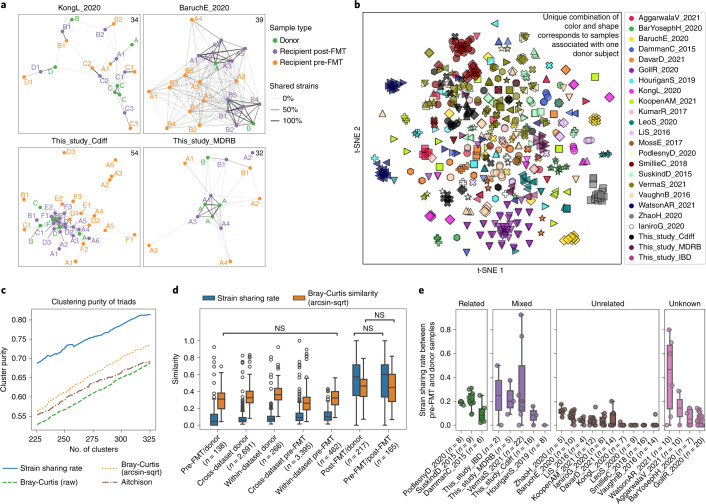
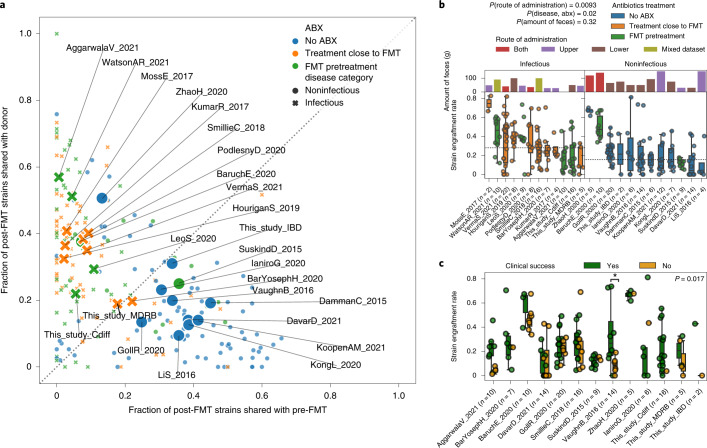
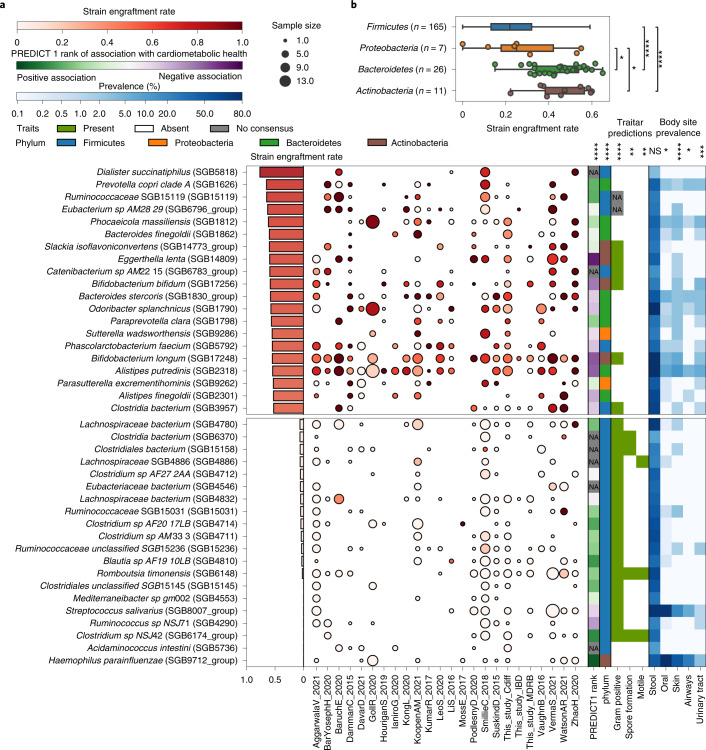
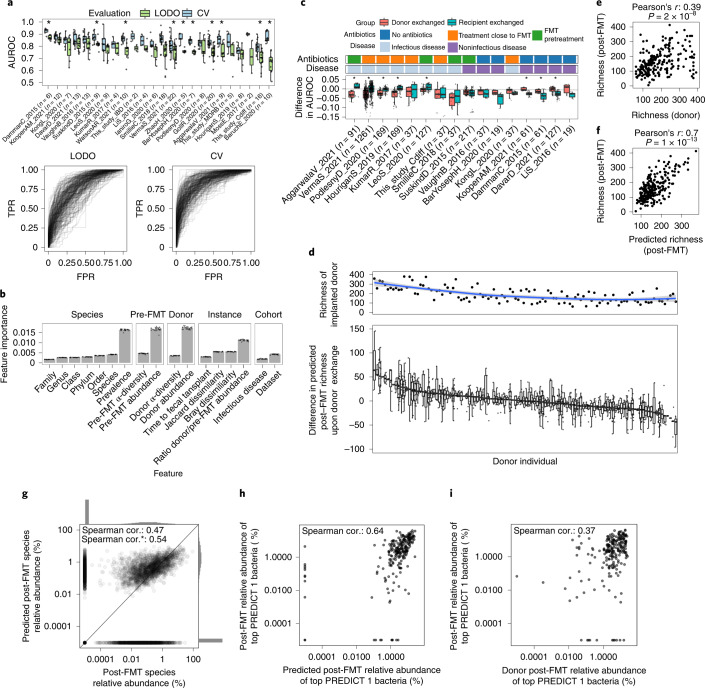
Fecal microbiota transplantation (FMT) is highly effective against recurrent Clostridioides difficile infection and is considered a promising treatment for other microbiome-related disorders, but a comprehensive understanding of microbial engraftment dynamics is lacking, which prevents informed applications of this therapeutic approach. Here, we performed an integrated shotgun metagenomic systematic meta-analysis of new and publicly available stool microbiomes collected from 226 triads of donors, pre-FMT recipients and post-FMT recipients across eight different disease types. By leveraging improved metagenomic strain-profiling to infer strain sharing, we found that recipients with higher donor strain engraftment were more likely to experience clinical success after FMT ( P = 0.017) when evaluated across studies. Considering all cohorts, increased engraftment was noted in individuals receiving FMT from multiple routes (for example, both via capsules and colonoscopy during the same treatment) as well as in antibiotic-treated recipients with infectious diseases compared with antibiotic-naïve patients with noncommunicable diseases. Bacteroidetes and Actinobacteria species (including Bifidobacteria ) displayed higher engraftment than Firmicutes except for six under-characterized Firmicutes species. Cross-dataset machine learning predicted the presence or absence of species in the post-FMT recipient at 0.77 average AUROC in leave-one-dataset-out evaluation, and highlighted the relevance of microbial abundance, prevalence and taxonomy to infer post-FMT species presence. By exploring the dynamics of microbiome engraftment after FMT and their association with clinical variables, our study uncovered species-specific engraftment patterns and presented machine learning models able to predict donors that might optimize post-FMT specific microbiome characteristics for disease-targeted FMT protocols.
Overview
The claims and statistics of this paper haven’t been checked yet.
Free: it reads the open-access text and checks the first 5 claims that cite a source we can check. Create a free account to check every claim.
Integrity signals
Registry
Cites
Statistics
Figures
Verification
Claims the paper makes
The claims and statistics of this paper haven’t been checked yet.
Free: it reads the open-access text and checks the first 5 claims that cite a source we can check. Create a free account to check every claim.
Claims other papers make about this one
Each is checked against this paper’s own text: does it say what the citing paper says it does?
The source backs part of the claim, not all of it — or backs it for a different population, condition or comparison.
In the citing paper
“Moreover, combined routes of FMT administration are an effective strategy to enhance strain engraftment.747”
From Microbiota–gut–brain axis and its therapeutic applications in neurodegenerative diseases (2024) · cites this paper as [747]
Experimental — accuracy not yet measuredThe source backs part of the claim, not all of it — or backs it for a different population, condition or comparison.
In the citing paper
“For example, although a family or household member donor was found associated with higher strain sharing at baseline, this did not result in higher strain engraftment rates once prior strain sharing was considered. 75”
From Key determinants of success in fecal microbiota transplantation: From microbiome to clinic (2023) · cites this paper as [75]
Experimental — accuracy not yet measuredThe source backs part of the claim, not all of it — or backs it for a different population, condition or comparison.
In the citing paper
“With this approach, microbial engraftment has been associated with clinical success, regardless of disease, in a large metagenomic metanalysis of 24 FMT trials and almost 1,400 fecal samples. 75”
From Key determinants of success in fecal microbiota transplantation: From microbiome to clinic (2023) · cites this paper as [75]
Experimental — accuracy not yet measuredThe source backs part of the claim, not all of it — or backs it for a different population, condition or comparison.
In the citing paper
“Although the infusion of a healthy microbiome is clinically effective regardless of its composition in rCDI, the composition of donor microbial communities appears to play a key role in treating noncommunicable disorders, 56 likely mediated by the achievement of successful microbial engraftment. 75”
From Key determinants of success in fecal microbiota transplantation: From microbiome to clinic (2023) · cites this paper as [75]
Experimental — accuracy not yet measuredThe cited source says what the claim attributes to it.
In the citing paper
“Notably, FMT using combined routes was associated with a higher likelihood of microbial engraftment than single-route infusion in a metagenomic metanalysis of 24 studies. 75”
From Key determinants of success in fecal microbiota transplantation: From microbiome to clinic (2023) · cites this paper as [75]
15 more claims about this paper
Create a free account to see every claim other papers make about this one.
Self-check
Percentages, sums and reported differences re-computed from the paper’s own numbers.
The self-check needs the paper’s full text.
Citations
Cites
Breiman, L. (2001) · Machine Learning · doi:10.1023/a:1010933404324 · Cited by 133,538
Fitting Linear Mixed-Effects Models Using lme4
Bates, D., Mächler, M., Bolker, B., & Walker, S. (2015) · Journal of Statistical Software · doi:10.18637/jss.v067.i01 · Cited by 86,835
Scikit-learn: Machine Learning in Python
Pedregosa, F., Varoquaux, G., Gramfort, A., Michel, V., Thirion, B., Grisel, O., Blondel, M., Müller, A., Nothman, J., Louppe, G., et al. (2012) · arXiv · doi:10.48550/arxiv.1201.0490 · Cited by 71,016
Fast gapped-read alignment with Bowtie 2
Langmead, B., & Salzberg, S. L. (2012) · Nature Methods · doi:10.1038/nmeth.1923 · Cited by 56,400
SciPy 1.0: fundamental algorithms for scientific computing in Python
Virtanen, P., Gommers, R., Oliphant, T. E., Haberland, M., Reddy, T., Cournapeau, D., Burovski, E., Peterson, P., Weckesser, W., Bright, J., et al. (2020) · Nature Methods · doi:10.1038/s41592-019-0686-2 · Cited by 38,430
Prokka: rapid prokaryotic genome annotation
Seemann, T. (2014) · Bioinformatics · doi:10.1093/bioinformatics/btu153 · Cited by 18,818
Fast and sensitive protein alignment using DIAMOND
Buchfink, B., Xie, C., & Huson, D. H. (2015) · Nature Methods · doi:10.1038/nmeth.3176 · Cited by 14,201
Parks, D. H., Imelfort, M., Skennerton, C. T., Hugenholtz, P., & Tyson, G. W. (2015) · Genome Research · doi:10.1101/gr.186072.114 · Cited by 12,496
SciPy 1.0: fundamental algorithms for scientific computing in Python
Virtanen, P., Gommers, R., Oliphant, T. E., Haberland, M., Reddy, T., Cournapeau, D., Burovski, E., Peterson, P., Weckesser, W., Bright, J., et al. (2019) · Apollo - University of Cambridge Repository · doi:10.17863/cam.64134 · Cited by 10,460
Li, D., Liu, C.-M., Luo, R., Sadakane, K., & Lam, T.-W. (2015) · Bioinformatics · doi:10.1093/bioinformatics/btv033 · Cited by 9,893
Research works printed but not linked: 1
- Gemelli IRCCS (ID 3555/2021) and Ospedale Pediatrico Bambino Gesù IRCCS (1107_ OPBG_2016). Written informed consent was obtained from all adult participants, and from parents of pediatric (2-17 years old) participants. The systematic review was not registered.
Cited by
Items 201–300 of 367
The Gut Resistome Atlas in Preterm Infants Enables Prediction of Necrotizing Enterocolitis Onset
Zeng, S., Wang, H., Zhang, L., Li, S., Yuan, Y., Tian, M., Qu, Y., Ying, J., Zhou, M., Hu, Y., et al. (2025) · Advanced Science · doi:10.1002/advs.202505154 · Cited by 10
Yoshinami, Y., Yamaguchi, S., Shoji, H., Okita, N. T., Takamaru, H., Hirose, T., Hirano, H., Takashima, A., Imazeki, H., Yamamoto, S., et al. (2025) · Future Oncology · doi:10.1080/14796694.2025.2599371 · Cited by 8
“In addition, it has been reported that pretreatment with antibiotics improves the colonization rate of intestinal bacteria [17,18].”
Zhu, S., 邹梦洁, Wu, Q., Zou, Y., Tan, T., Huang, Z., Gong, Z., Luo, H., & Dong, X. (2026) · The FASEB Journal · doi:10.1096/fj.202503607rr · Cited by 13
“The next generation of therapeutics will likely employ bacteriophages and functionally defined microbial consortia to achieve surgical-grade precision in microbiome modification [46].”
Ecological principles of fecal microbiota transplantation
Dini‐Andreote, F., & Custer, G. (2023) · Trends in Microbiology · doi:10.1016/j.tim.2023.05.009 · Cited by 13
Jenior, M. L., Leslie, J. L., Kolling, G. L., Archbald‐Pannone, L. R., Powers, D. A., Petri, W. A., & Papin, J. A. (2023) · bioRxiv (Cold Spring Harbor Laboratory) · doi:10.1101/2023.08.08.552483 · Cited by 9
Ronkainen, A., Khan, I., & Satokari, R. M. (2024) · Microbiome Research Reports · doi:10.20517/mrr.2024.43 · Cited by 9
Lee, S.-H., Lopes, E. W., Colombel, J., & Ungaro, R. C. (2025) · Inflammatory Bowel Diseases · doi:10.1093/ibd/izaf168 · Cited by 7
Microbial Metabolic Pathways Guide Response to Immune Checkpoint Blockade Therapy
Mimpen, I. L., Battaglia, T., Parra-Martinez, M., Toner-Bartelds, C., Zeverijn, L. J., Geurts, B. S., Verkerk, K., Hoes, L. R., van Renterghem, A. W. J., Noë, M., et al. (2025) · Cancer Discovery · doi:10.1158/2159-8290.cd-24-1669 · Cited by 11
Gut–liver axis dysregulation and microbial dysbiosis in invasive liver abscess: a narrative review
Bai, X., Wang, Z., Guo, K., Zhou, P., & Shi, L. (2025) · Frontiers in Immunology · doi:10.3389/fimmu.2025.1646893 · Cited by 7
“Faces regulatory challenges and its long-term safety pro fi le remains to be fully established (107).”
The gut as a central hub for multi-organ crosstalk in aging
Zhang, X., Li, R., Gao, Y., Zhang, W., Ni, T., & Liu, Y. (2026) · Cellular and Molecular Life Sciences · doi:10.1007/s00018-026-06129-w · Cited by 9
Lewandowski, R. (2026) · FEMS Microbiology Letters · doi:10.1093/femsle/fnag035 · Cited by 8
Strain-level transmission inference across multi-kingdom metagenomic data using TRACS
Tonkin‐Hill, G. Q., Shao, Y., Zarebski, A. E., Mallawaarachchi, S., Xie, O., Mäklin, T., Thorpe, H. A., Davies, M. R., Bentley, S. D., Lawley, T. D., et al. (2026) · Nature Microbiology · doi:10.1038/s41564-026-02339-x · Cited by 13
“The default databases for each tool were used in the analysis of the FMT metagenomic data 35 .”
Ishikawa, D., Watanabe, H., Nomura, K., Zhang, X., Maruyama, T., Odakura, R., Koma, M., Shibuya, T., Osada, T., Fukuda, S., et al. (2025) · Journal of Crohn s and Colitis · doi:10.1093/ecco-jcc/jjaf054 · Cited by 9
Ramirez, Z. E., & Surana, N. K. (2023) · ImmunoHorizons · doi:10.4049/immunohorizons.2200096 · Cited by 8
Manipulation of the intestinal microbiome-a slow journey to primetime
Kriger-Sharabi, O., Malnick, S. D. H., & Fisher, D. (2023) · World Journal of Clinical Cases · doi:10.12998/wjcc.v11.i21.4975 · Cited by 7
Microbiome Responses to Oral Fecal Microbiota Transplantation in a Cohort of Domestic Dogs
Rojas, C. A., Entrolezo, Z., Jarett, J. K., Jospin, G., Martin, A., & Ganz, H. H. (2024) · Veterinary Sciences · doi:10.3390/vetsci11010042 · Cited by 17
“Nonetheless, a plethora of other factors such as the type of FMT [74], dosage/frequency of FMT, host genetics, and host health history are also thought to influence bacterial engraftment.”
BackgroundEnhanced metagenomics-enabled transmission inference with TRACSPreprint
Tonkin‐Hill, G. Q., Shao, Y., Zarebski, A. E., Mallawaarachchi, S., Xie, O., Mäklin, T., Thorpe, H. A., Davies, M. R., Bentley, S. D., Lawley, T. D., et al. (2024) · bioRxiv (Cold Spring Harbor Laboratory) · doi:10.1101/2024.08.19.608527 · Cited by 6
“To further evaluate the efficacy of the TRACS algorithm in metagenomics applications, we analysed an extensively characterised Faecal Microbiota Trans-plantation (FMT) dataset with well-defined transmission (or engraftment) relationships between samples(31).”
van der Vossen, E. W. J., Davids, M., Voermans, B., Wortelboer, K., Hartstra, A. V., Koopen, A. M., de Groot, P. F., Levin, E., & Nieuwdorp, M. (2024) · Gut Microbes · doi:10.1080/19490976.2024.2388295 · Cited by 7
“As no consensus exists on the definition of strain, we adopted the method earlier used in Ianiro et al. 7 This definition includes an operational species-specific definition of “strain” obtained by comparing phylogenetic distance distributions of microbial genetic profiles sampled from potentially related pairs and co…”
BackgroundMethodInfluentialEbadi, M., Reddi, S., Senyshyn, L., Minot, S. S., Gooley, T. A., Kabage, A. J., Lee, S. J., Hill, G. R., Khoruts, A., & Rashidi, A. (2025) · Gut Microbes · doi:10.1080/19490976.2025.2551882 · Cited by 6
“6,54 This approach might also enhance the introduction of new pathways and/or reduction of expanded pathways, concepts to be explored in future work.”
Su, S., Chen, M., Lu, D., Wu, Y.-F., Huang, X.-S., & Zhang, L. (2025) · The Journal of Nutritional Biochemistry · doi:10.1016/j.jnutbio.2025.110122 · Cited by 5
Fecal Microbiota Transplantation for Inflammatory Bowel Disease: Where We Stand and What Is Next
Ishikawa, D., Zhang, X., Nomura, K., & Nagahara, A. (2025) · Inflammatory Intestinal Diseases · doi:10.1159/000549227 · Cited by 7
“However, one study reported that combining multiple delivery routes might promote microbial engraftment better than a single-route administration [48].”
Schlüter, J., Jogia, W., Matheis, F., Ebina, W., Sullivan, A. P., Gordon, K., de la Cruz, E. F., Victory-Hays, M. E., Heinly, M. J., Diefenbach, C., et al. (2025) · Infection and Immunity · doi:10.1128/iai.00390-25 · Cited by 8
Behling, A. H., Portlock, T., Ho, D., Wilson, B. C., Paramsothy, S., Kamm, M. A., Cutfield, W. S., Kaakoush, N. O., O'Sullivan, J. M., & Vatanen, T. (2025) · Gut Microbes · doi:10.1080/19490976.2025.2597628 · Cited by 9
“The engraftment potential of specific donor microbial strains is dependent on their phenotype and environmental niche, 10,23 as well as their complementarity with available niches within the recipient microbial community.”
InfluentialMachine Learning in Microbiome Research and Engineering
Sotto, R. D., Aggarwal, N., Tham, E. H., & Chang, M. W. (2025) · ACS Synthetic Biology · doi:10.1021/acssynbio.5c00273 · Cited by 8
Bethlehem, L., Bartu, L., Marke, G., Mar, P., Feldman, S., Eggers, J., Ruprecht, C., Britton, G. J., Aggarwala, V., Bongers, G., et al. (2026) · Nature Medicine · doi:10.1038/s41591-026-04442-2 · Cited by 7
Straining to define a healthy microbiome
Seekatz, A. M. (2025) · mSphere · doi:10.1128/msphere.00797-24 · Cited by 4
Microbiota Transplant Therapy Is Safe and Feasible in Pulmonary Arterial Hypertension
Moutsoglou, D., Blake, M., Belhasan, D. C., Peichel, G. A., Vang, B. M., Weir, Ε. K., Lopez, S., Prins, K. W., Kabage, A. J., Prisco, S. Z., et al. (2025) · JACC Basic to Translational Science · doi:10.1016/j.jacbts.2025.101347 · Cited by 9
Human-microbes symbiosis in health and disease, on earth and beyond planetary boundaries
Dore, J. M., & Ugalde, S. O. (2023) · Frontiers in Astronomy and Space Sciences · doi:10.3389/fspas.2023.1180522 · Cited by 5
Precision Targeting of the Gut Microbiome for Cancer Immunotherapy
Lombardi, P., & Pinato, D. J. (2024) · Cancer Discovery · doi:10.1158/2159-8290.cd-24-0538 · Cited by 5
Assessing live microbial therapeutic transmission
Faith, J. J. (2025) · Gut Microbes · doi:10.1080/19490976.2024.2447836 · Cited by 4
“While early assessments have differed on whether higher strain engraftment is predictive of clinical response to FMT, 35,36 collection of strain-level engraftment data across microbial therapeutic trials across diseases combined with clinical and basic science readouts of host physiology and pathology could identify i…”
InfluentialBeyond personal space: Unveiling the transmission pattern of the human gut and oral microbiome
Andreu‐Sánchez, S., Wu, J., & Fu, J. (2023) · iMeta · doi:10.1002/imt2.98 · Cited by 7
“Strain transmission may be a random process across social interactions, but strain engraftment or colonization after transmission can vary greatly, as has been observed in fecal microbiota transplantation [8].”
BackgroundValidation methods for encapsulated faecal microbiota transplantation: a scoping review
Rågård, N., Baunwall, S. M. D., Paaske, S. E., Hansen, M. M., Høyer, K. L., Mikkelsen, S., Erikstrup, C., Dahlerup, J. F., & Hvas, C. L. (2025) · Therapeutic Advances in Gastroenterology · doi:10.1177/17562848251314820 · Cited by 5
“84 Coupled with quantitative analysis, metagenomic analysis shows great promise in elucidating the role of engraftment and identifying potential validation markers.”
Trends in the Application of Multiomics Based on Machine Learning in the Development of Probiotics
Chen, Y., Xing, Z., Sheng, J., Liu, X., Ding, W., & Chen, X. (2026) · Journal of Agricultural and Food Chemistry · doi:10.1021/acs.jafc.5c15387 · Cited by 7
Su, Q., Chen, S., Lau, L. H., Lui, R. N.-S., Wang, Y., Xu, Z., Cheung, C. P., Ching, J. Y. L., Shen, X., Peng, Y., et al. (2026) · Cell Reports · doi:10.1016/j.celrep.2026.117301 · Cited by 7
Self-citationLin, Z., Mu, S., Zhang, W., Guo, Y., Dong, C., Song, L., Zhang, H., Wu, R., Luo, P., & Liang, L. (2026) · Genes & Diseases · doi:10.1016/j.gendis.2026.102428 · Cited by 4
Beyond Random Fecal Microbial Transplants
Sartor, R. B. (2024) · Gastroenterology Clinics of North America · doi:10.1016/j.gtc.2024.11.002 · Cited by 7
The role of the fecal microbiota in inflammatory bowel disease
Khalaf, R., Sciberras, M., & Ellul, P. (2024) · European Journal of Gastroenterology & Hepatology · doi:10.1097/meg.0000000000002818 · Cited by 5
“In addition, patients with higher engraftment rates are more likely to show clinical success post-FMT [110].”
Mullish, B. H., Innes, A. J., Roberts, L. A., Anim-Burton, S., Webber, L., Johnson, N. A., Ghani, R., Farshi, P., Khan, A. B., Kinsella, F. A. M., et al. (2024) · BMJ Open · doi:10.1136/bmjopen-2024-093120 · Cited by 8
“30 Our experience to date is that IMT mitigates the risk of invasive infections related to MDROs rather than decolonises them from the gut, 15 but there is still uncertainty regarding this; one recent trial of IMT in a Open access renal transplant population suggested certain extended-spectrum…”
Metagenomic source tracking after microbiota transplant therapy
Hoops, S., Moutsoglou, D., Vaughn, B. P., Khoruts, A., & Knights, D. (2025) · Gut Microbes · doi:10.1080/19490976.2025.2487840 · Cited by 6
Orr, M. R. (2022) · Frontiers in Medicine · doi:10.3389/fmed.2022.1059148 · Cited by 4
“In addition, patients with infectious conditions treated with antibiotics exhibited better engraftment than those with non-communicable conditions who did not receive antibiotics (12), although this finding was confounded by different disease conditions.”
BackgroundInfluentialUsing gut microorganisms to treat cancer
Seo, Y. D., Ajami, N. J., & Wargo, J. A. (2023) · Nature Medicine · doi:10.1038/s41591-023-02460-y · Cited by 5
Algavi, Y. M., & Borenstein, E. (2024) · Nature Communications · doi:10.1038/s41467-024-48717-z · Cited by 4
“This is in line with previously reported phylum-dependent colonization rates during FMT 20 – 22 .”
InfluentialThe MTIST platform: a microbiome time series inference standardized testPreprint
Schlüter, J., Hussey, G. A., Valeriano, J., Zhang, C., Sullivan, A., & Fenyö, D. (2024) · Research Square · doi:10.21203/rs.3.rs-4343683/v1 · Cited by 5
“…microbial interactions within the microbiome could explain why fecal microbiota transplants (FMTs) fail to reliably manipulate ecosystems in the microbiome 25 , even in autologous FMTs where the transplant material is sourced from the recipient themselves prior to a microbiome-injuring therapy 26 .”
BackgroundBurdette, R. A., Whitt, C. C., Behm, B. W., & Warren, C. A. (2025) · ACG Case Reports Journal · doi:10.14309/crj.0000000000001660 · Cited by 3
Paaske, S. E., Baunwall, S. M. D., Rubak, T., Rågård, N., Kelsen, J., Hansen, M. M., Lødrup, A. B., Lyhne, S., Glavind, E., Fernis, C. M. C., et al. (2025) · Alimentary Pharmacology & Therapeutics · doi:10.1111/apt.70395 · Cited by 5
“…underlying mechanism of FMT remains largely unknown, despite metagenomic data indicating a relationship between strain engraftment and clinical outcomes across multiple diseases [21], examining differences among donors with poor or variable clinical effectiveness is of great scientific interest.”
Chen, X., Zuo, Z., Xiao, B., & Zhao, F. (2026) · Gut · doi:10.1136/gutjnl-2025-337778 · Cited by 5
Han, W., Li, Q., & Yuan, G. (2026) · Frontiers in Immunology · doi:10.3389/fimmu.2026.1802676 · Cited by 4
“Donor selection is a plausible determinant of effect size, but even with “ responder donors, ” not all recipients respond, suggesting that microbiome transfer interacts with tumor and host constraints (33, 34).”
Targeting the gut-lung axis in COPD: from microbial metabolites to fecal microbiota transplantation
Yu, Z., Qian, W., & Chu, Y. (2026) · Frontiers in Microbiology · doi:10.3389/fmicb.2026.1798150 · Cited by 5
“However, optimal donor selection criteria and reproducible functional indicators specific to COPD, such as enrichment of SCFA-producing taxa or microbiota with defined metabolic advantages, have yet to be established (Ianiro et al., 2022; Paramsothy et al., 2019).”
From Microbial Ecology to Functional Components in Microbe–Host Interactions
Wang, T., Wang, Z., Yang, X., & Zhang, L. (2026) · Biology · doi:10.3390/biology15080635 · Cited by 3
“This perspective is reflected both in the organism-based definition of pathogens rooted in Koch’s postulates and in contemporary intervention strategies that rely on intact microbial consortia, such as probiotics and fecal microbiota transplantation (FMT) [2,3].”
InfluentialThe human microbiome at translational crossroads: an ecological and causal perspective
Wong, S. H. (2026) · Singapore Medical Journal · doi:10.4103/singaporemedj.smj-2026-102 · Cited by 3
“[13] Similarly, despite widespread public use, probiotics lack sufficient evidence to support routine recommendation for most medical indications.”
Alexander, J. L., Mullish, B. H., Thomas, L., Weersma, R. K., Sokol, H., Roberts, L. A., Edwards, L. A., Emmanuel, A. V., Gerasimidis, K., Hall, L. J., et al. (2026) · Gut · doi:10.1136/gutjnl-2026-338252 · Cited by 6
Advances and challenges in microbiome transplantation
Sen, P., Kaulmann, D., Youngster, I., Abdeen, S. K., & Elinav, E. (2026) · Cell Host & Microbe · doi:10.1016/j.chom.2026.06.006 · Cited by 5
Ninkov, M., & Vareki, S. M. (2026) · Nature Communications · doi:10.1038/s41467-026-76051-z · Cited by 6
“Among Actinobacteria , both dysbiosis-associated taxa, such as Egger-thella lenta , and immunoregulatory species, including Bi fi dobacterium bi fi dum and B. longum , similarly demonstrated robust engraftment capacity 49 .”
InfluentialCao, J. L., Meltzer, R. S., Cohn, E., Benjamin, A., Keskey, R. C., & Alverdy, J. C. (2025) · Gut Microbes · doi:10.1080/19490976.2025.2552346 · Cited by 5
“In fact, some groups have identified species-specific engraftment patterns after FMT and have leveraged this to develop ways to predict donors that might optimize post-FMT recipient microbiota characteristics for specific diseases 136 .”
DOCHERTY, J. M. (2025) · Progress in Neuro-Psychopharmacology and Biological Psychiatry · doi:10.1016/j.pnpbp.2025.111354 · Cited by 3
Phages modulate bacterial communities in the human gut following fecal microbiota transplantationPreprint
Zuppi, M., Vatanen, T., Wilson, B. C., Golovina, E., Cutfield, W. S., Vickers, M. H., & O'Sullivan, J. M. (2024) · Research Square · doi:10.21203/rs.3.rs-3883935/v1 · Cited by 3
Unraveling the role of mucins and gut microbiota in gastrointestinal cancers chemoresistance
Vrinda, A. M., Thangaraju, M., Nair, S. A., Howarth, G. S., & Pothuraju, R. (2025) · Biochimica et Biophysica Acta (BBA) - Reviews on Cancer · doi:10.1016/j.bbcan.2025.189385 · Cited by 5
Moreno, M. B., Medina-Gómez, C., Núñez, D. G., Saiz-Escobedo, L., Martí, S., Domínguez, M. Á., Carrera-Salinas, A., & Rodríguez-Sevilla, G. (2025) · Journal of Hospital Infection · doi:10.1016/j.jhin.2025.09.004 · Cited by 2
Integrating gut microbiome and host transcriptomics for the personalized management of IBD
Barry, D., Thachuk, C., & Trink, J. (2025) · Epigenomics · doi:10.1080/17501911.2025.2591594 · Cited by 3
Drew, G., Kraft, C. S., & Mehta, N. (2025) · Clinical Chemistry · doi:10.1093/clinchem/hvaf156 · Cited by 2
He, F., Liu, G. Q., Wu, H., Elsabagh, M., Huang, Y., Wang, J., Wang, M., & Zhang, H. (2025) · Biology of Reproduction · doi:10.1093/biolre/ioaf253 · Cited by 4
Microbial Therapeutics for the Prevention and Treatment of Food Allergy
Lynch, S. V., Nagler‐Anderson, C., & Rachid, R. A. (2026) · The Journal of Allergy and Clinical Immunology In Practice · doi:10.1016/j.jaip.2026.02.024 · Cited by 3
Glucose metabolism's impact on Blastocystis presence in the human gut
Pauli, S., Rosell-Díaz, M., Moreno‐Navarrete, J. M., Pons, J., Pérez‐Brocal, V., Moya, A., Puig, J., Garre‐Olmo, J., Ramos, R., Fernández‐Real, J. M., et al. (2026) · Clinical Nutrition · doi:10.1016/j.clnu.2026.106647 · Cited by 2
Narang, H., Talukdar, D., Kumar, B., Mathur, P., Ningombam, A., Singh, M., Bajaj, A., Markandey, M., Kalaivani, M., Verma, M., et al. (2026) · JAMA Internal Medicine · doi:10.1001/jamainternmed.2026.0655 · Cited by 5
Ma, Z., Shi, H., Bai, X., Wang, Z. P., Cao, J., Dong, Y., & Chen, Y. (2026) · Gut Microbes · doi:10.1080/19490976.2026.2667735 · Cited by 3
“125,126 Emerging research is shifting toward a “host-centric” paradigm, positing that host metabolic states—particularly mitochondrial function and intestinal oxygen consumption—are the fundamental determinants of microbial community structure.”
Aumpan, N., Watanabe, J., Yuan, Y., Kanno, T., Leontiadis, G. I., Chan, F. K. L., & Moayyedi, P. (2026) · Gastroenterology · doi:10.1053/j.gastro.2026.04.039 · Cited by 6
Integration of donor microbiota following FMT correlates with anti-PD-1 response in melanoma
Fessler, J. L., Olm, M. R., Engleman, E. G., & Sonnenburg, J. L. (2026) · Nature Communications · doi:10.1038/s41467-026-73465-7 · Cited by 7
“While certain bacterial families were more readily transmitted, as has been previously reported 37 – 39 (Supplementary Fig.”
Rationale and current status of fecal microbiota transplantations for Parkinson's disease
Bruggeman, A., Vandenbroucke, R. E., & Santens, P. (2026) · Journal of Parkinson s Disease · doi:10.1177/1877718x261455608 · Cited by 2
“90 Although only a limited number of studies have assessed the gut microbiome one year after FMT, the available data indicate that microbial pro fi les remain similar to those of the healthy donors, suggesting that repeat FMT is not required within the fi rst year post-treatment.”
Niculescu, A.-G., Iacob, C.-M., Brătilă, E., Tocariu, R., Coroleucă, C. A., Corcionivoschi, N., Vrâncianu, C. O., Popescu, D., Popa, G. L., Popa, M. I., et al. (2026) · Antibiotics · doi:10.3390/antibiotics15070688 · Cited by 5
Fecal microbiota transplantation as a novel therapeutic strategy for pancreatic cancer
Yamamura, R., & Sonoshita, M. (2025) · Translational and Regulatory Sciences · doi:10.33611/trs.2025-003 · Cited by 3
Assessing Engraftment Following Fecal Microbiota TransplantPreprint
Herman, C., Barker, B. M., Bartelli, T. F., Chandra, V., Krajmalnik‐Brown, R., Jewell, M., Li, L., Liao, C., McAllister, F. M., Nirmalkar, K., et al. (2024) · PubMed · doi:10.48550/arxiv.2404.07325 · Cited by 2
“However, Ianiro et al. (2022) 118 found that donated microbiome strain engraftment was highly correlated with clinical response, but also noted that administration frequency and antibiotics increased engraftment extent.”
BackgroundZhang, Y., Xu, X., Wang, S., Yin, X., Zhang, B., Zhu, Z., Ji, R., Zhu, J., He, H., Cheng, S., et al. (2024) · medRxiv · doi:10.1101/2024.08.21.24312340 · Cited by 2
Fecal Microbiota Transplantation (FMT) in Ulcerative Colitis: Holding Out for a Superdonor?
Claytor, J. D., & Faith, J. J. (2024) · Clinical Gastroenterology and Hepatology · doi:10.1016/j.cgh.2024.07.047 · Cited by 4
Bethlehem, L., Bartu, L., Marke, G., Mar, P., Feldman, S., Eggers, J., Ruprecht, C., Britton, G. J., Aggarwala, V., Bongers, G., et al. (2025) · medRxiv · doi:10.1101/2025.09.08.25335342 · Cited by 2
“…observations that higher engraftment of FMT and LBP donor strains is predictive of relapse prevention in rCDI trials of microbial therapeutics 8,13,22–25 , we hypothesized that an LBP comprised of strains with high FMT engraftment frequencies would facilitate high LBP engraftment and protection…”
Strainify: Strain-Level Microbiome Profiling for Low-Coverage Short-Read Metagenomic DatasetsPreprint
Luo, S., Kille, B., Vaughan, E. E., Clark, J. R., Maresso, A. W., Nute, M., & Treangen, T. J. (2025) · bioRxiv (Cold Spring Harbor Laboratory) · doi:10.1101/2025.10.10.681738 · Cited by 2
“In addition, microbiome studies investigating mother-to-infant transmission 8,9 and fecal microbiota transplants (FMT) 10,11 have underscored the importance of characterizing strain-level composition to understand microbial inheritance and community dynamics.”
Wang, T., Luo, Y., Kong, X., Fang, L., Zhu, L., Yu, B., Zheng, P., Huang, Z., Mao, X., Yu, J., et al. (2024) · Microbiology Spectrum · doi:10.1128/spectrum.01983-24 · Cited by 1
“The samples were stored in a refrigerator at −80°C. Composed of broad-spectrum antibiotics: ciprofloxacin 1 g (Northeast Pharma ceutical Group Co., Ltd) and oral metronidazole 5 g (Northeast Pharmaceutical Group Co., Ltd) (19, 20).”
Zhang, X., Ishikawa, D., & Nagahara, A. (2025) · International Immunology · doi:10.1093/intimm/dxaf038 · Cited by 4
Adamowicz, E. M., Kraft, C. S., Ward, T., Mehta, N., Shannon, W. D., Mishra, R., & Blount, K. (2025) · Open Forum Infectious Diseases · doi:10.1093/ofid/ofaf382 · Cited by 2
“A published meta-analysis of donors from 24 fecal microbiota transplantation (FMT) studies was used to define a healthy cohort for comparison against PUNCH CD3 participants [25].”
Pinto, S., Benincà, E., Nooij, S., Terveer, E. M., Keller, J. J., Jong, A. E. V. D. M., Steyerberg, E. W., & Bogaards, J. A. (2025) · ISME Communications · doi:10.1093/ismeco/ycaf119 · Cited by 2
Wilson, B. C., Tweedie‐Cullen, R. Y., Albert, B. B., Derraik, J. G. B., Ho, D., Depczynski, M., Creagh, C., Edwards, T., Gali, S., Thabrew, H., et al. (2025) · Nature Communications · doi:10.1038/s41467-025-67267-6 · Cited by 1
“Our fi ndings are consistent with microbiome restoration trials in other conditions 29 – 31 , demonstrating that FMT successfully altered the gut microbiome in individuals with AN, with participants acquiring an averageof38newspecies.”
Fecal Microbiota Transplantation in Healthy Aging: Challenges and Prospects in Personalized Medicine
Borrego-Ruiz, A., & Borrego, J. J. (2025) · Journal of Molecular and Clinical Medicine · doi:10.31083/jmcm40022 · Cited by 2
“A metagenomic meta-analysis of 24 studies demonstrated that FMT using combined delivery routes was more likely to result in successful microbial engraftment compared to single-route administration [74].”
Baral, B., Parajuli, M., Pinilla, J., Muniz, J., Baral, B., & Cançado, G. G. L. (2026) · Scandinavian Journal of Gastroenterology · doi:10.1080/00365521.2026.2616310 · Cited by 1
“…preconditioning, which reduces the C. difficile load and creates a favorable environment for donor microbiota engraftment. indeed, a metagenomic meta-analysis has shown that antibiotic pretreatment before FMt is associated with increased donor strain engraftment and improved clinical outcomes [12].”
Zhang, X., Lin, X., Zhang, W., Tan, T., Han, X., Ni, Y., & Qin, H. (2026) · Journal of Parenteral and Enteral Nutrition · doi:10.1002/jpen.70056 · Cited by 4
Tuft Cells in the Gut Limit Cognitive Disorders by Regulating Gut Homeostasis
Chen, L., Yang, Y., Zhang, Y., Yang, X., Zhang, X., Chen, L., Li, W., Zhang, S. L., Xiong, R., Wang, J., et al. (2026) · Cellular and Molecular Gastroenterology and Hepatology · doi:10.1016/j.jcmgh.2026.101747 · Cited by 2
“This divergence not only reflects different engraftment efficiencies between Firmicutes and Bacter-oidota , 46 but also underscores the complex microbial ecological dynamics during FMT.”
Fusco, W., Maio, F. D., Porcari, S., Severino, A., Salvi, D., Piccirelli, S., Ferrari, C., Sibilla, A., Quaranta, G., Masucci, L., et al. (2026) · Nutrients · doi:10.3390/nu18030490 · Cited by 1
“Finally, we do not have post-treatment microbiome profiling, to understand whether clinical outcomes are associated with microbial shifts, as already proven for FMT [21].”
Self-citationYu, J., Allela, O. Q. B., Alkhazali, W. H., Bishoyi, A. K., Oweis, R. J., Varma, P., Kashyap, A., Panigrahi, R., Chauhan, A. S., Sameer, H. N., et al. (2026) · Microbial Pathogenesis · doi:10.1016/j.micpath.2026.108357 · Cited by 1
Gut microbial metabolites for potentiating cancer therapy
Kamrad, S., Gagliani, N., Lawley, T. D., Patil, K. R., & Tintelnot, J. (2026) · Trends in cancer · doi:10.1016/j.trecan.2026.04.005 · Cited by 3
Ali, H., Xie, B., Yang, J., & Nadeem, U. (2026) · Cancers · doi:10.3390/cancers18121948 · Cited by 1
“This gap limits mechanistic interpretation into how microbial communities influence ICI response in NSCLC [177,194].”
Yoon, S. J., Eom, J. A., & Suk, K. T. (2026) · Frontiers in Immunology · doi:10.3389/fimmu.2026.1864805 · Cited by 1
He, T., Zhang, S., Chen, J., Zheng, X., Zhao, J., Li, H., Mao, J., Luo, J., Zheng, J., Ma, D., et al. (2026) · iMetaOmics. · doi:10.1002/imo2.70133 · Cited by 1
Exogenous Engraftment: Host-specificity in Probiotic Administration
Long, T. J. (2023) · Current Probiotics · doi:10.2174/0126666499268615231127065836 · Cited by 1
Oladele, P. O., Dong, W., Richert, B. T., & Johnson, T. A. (2025) · Animal Microbiome · doi:10.1186/s42523-025-00495-9 · Cited by 1
“…in our study could be because antibiotics were not administered to deplete the microbiome of recipient pig prior to FMT. Contrary to observations in humans where Bacteroidetes were the predominant colonizing taxa after FMT [39, 40], Firmicutes were the predominant colonizing taxa after pig FMT.”
InfluentialHygiene, J. O. P. M. A. (2023) · PubMed Central · doi:10.15167/2421-4248/jpmh2022.63.3s2 · Cited by 2
Korpak, K., Defourny, L., Lali, S. E., Delvallée, M., Demeester, R. P., & Toussaint, E. (2023) · Acta gastro-enterologica belgica · doi:10.51821/86.3.11795 · Cited by 1
Bioetica - clonazione - tutela persona e della vita
Riz, R. (2000) · Indice penale · Cited by 2
Long-term impacts of SARS-CoV-2 on gastrointestinal tractPreprint
He, K.-Y., Lu, L., Xu, Z., & Jian, Y. (2023) · doi:10.33774/coe-2023-s7pnp
Microbial dispersion in the human gut through the lens of fecal transplantPreprint
Algavi, Y. M., & Borenstein, E. (2023) · bioRxiv (Cold Spring Harbor Laboratory) · doi:10.1101/2023.08.29.555267
Kousgaard, S. J. (2023) · VBN Forskningsportal (Aalborg Universitet) · doi:10.54337/aau561823572 · Cited by 1
Liu, X., & Wu, S. (2023) · World Chinese Journal of Digestology · doi:10.11569/wcjd.v31.i22.922
Shtossel, O., Turjeman, S., Riumin, A., Goldberg, M. R., Elizur, A., Bekor, Y., Mor, H., Koren, O., & Louzoun, Y. (2023) · Figshare · doi:10.6084/m9.figshare.23949883
Metadata
- Authors
- Ianiro, G., Punčochář, M., Karcher, N., Porcari, S., Armanini, F., Asnicar, F., Beghini, F., Blanco-Míguez, A., Cumbo, F., Manghi, P., Pinto, F., Masucci, L., Quaranta, G., De Giorgi, S., Sciumè, G. D., Bibbò, S., Del Chierico, F., Putignani, L., Sanguinetti, M., Gasbarrini, A., Valles-Colomer, M., Cammarota, G., & Segata, N.
- Affiliations
- Università Cattolica del Sacro Cuore (IT)
- University of Trento (IT)
- Bambino Gesù Children's Hospital (IT)
- Corresponding author
- Ianiro, Gianluca
- Segata, Nicola
- ORCID
- Ianiro, Gianluca
- Punčochář, Michal
- Karcher, Nicolai
- Porcari, Serena
- Armanini, Federica
- Asnicar, Francesco
- Beghini, Francesco
- Blanco-Míguez, Aitor
- Cumbo, Fabio
- Manghi, Paolo
- Pinto, Federica
- Masucci, Luca
- Quaranta, Gianluca
- De Giorgi, Silvia
- Sciumè, Giusi Desirè
- Bibbò, Stefano
- Putignani, Lorenza
- Sanguinetti, Maurizio
- Gasbarrini, Antonio
- Valles-Colomer, Mireia
- Cammarota, Giovanni
- Segata, Nicola
- Venue
- Nature Medicine
- Published
- 2022-09
- Volume
- 28
- Issue
- 9
- Pages
- 1913-1923
- ISSN
- 1078-8956 (ISSN-L)
- 1546-170X
- PMC
- PMC9499858
- OpenAlex
- W4295925800
- Cited by
- 366
- References
- 89
- Citations by year
- 2026: 92 · 2025: 119 · 2024: 84 · 2023: 67 · 2022: 3
- FWCI
- 22.37
- Type
- journal article
- Language
- en
- Open access
- hybrid
- doi.org
- Licence
- cc-by
- creativecommons.org/licenses/by/4.0 (tdm)
- creativecommons.org/licenses/by/4.0 (vor, 14 d)
- Locations
- Nature Medicine (publishedVersion, cc-by)
- PubMed Central (publishedVersion, cc-by)
- PubMed (publishedVersion)
- Iris (University of Trento) (submittedVersion, cc-by)
- PubliCatt (Università Cattolica del Sacro Cuore) (submittedVersion, cc-by)
- Funders
- Ospedale Pediatrico Bambino Gesù
- Ministero della Salute (2018-, GR-2018-12365734, “5×1000”)
- Ministero dell’Istruzione, dell’Università e della Ricerca (H2020, RBFR13EWWI_001)
- Università degli Studi di Trento
- Fondazione Roma
- National Institutes of Health (1u01ca230551-01a1, H2020, 1U01CA230551)
- Horizon 2020 Framework Programme (OncoBiome 825410, 818368, ONCOBIOME-825410 project, MASTER-818368 project, 825410)
- National Cancer Institute (1U01CA230551, U01 CA230551)
- H2020 European Research Council (716575)
- Topics
- Life Sciences › Biochemistry, Genetics and Molecular Biology › Molecular Biology › Gut microbiota and health
- Health Sciences › Medicine › Infectious Diseases › Clostridium difficile and Clostridium perfringens research
- Health Sciences › Medicine › Gastroenterology › Gastrointestinal motility and disorders
- Keywords
- fecal microbiota transplantation, microbiota composition, Clostridium difficile infection, Bifidobacterium, Bacteroidetes, actinobacteria, Firmicutes, donor selection, antibiotic therapy, non-communicable diseases
- MeSH terms
- Gastrointestinal Microbiome, Fecal Microbiota Transplantation, Anti-Bacterial Agents, Clostridium Infections, Feces, Humans, Treatment Outcome, Microbiota
About these checks
Registry, retraction, Cites and statistics results are computed, not judged, with one exception: a printed reference that no index lists is read once by a model before it counts as a citation error. Claims are extracted by a model and kept only when their quote appears verbatim in the text; each cited source is then checked, with a model’s help, for whether it says what the claim relies on. Those verdicts can be wrong — read the claim’s quote and the cited source before relying on one.
Statistics and arithmetic are recomputed, not judged.
Confidence bands are shown only for fields calibrated on our annotated test set. None is calibrated yet, so no band is shown.
What counts as a claim ›How we measure confidence ›How we check this ›
Are you an author, or do you see a problem with this page? Request a review
Data sources
Bibliographic data: Semantic Scholar, OpenAlex, Crossref.
Contains information from the Semantic Scholar Academic Graph Datasets, made available under the ODC Attribution License (ODC-BY 1.0).
Semantic Scholar’s data is described in: Kinney, R., et al. (2023). The Semantic Scholar Open Data Platform. arXiv:2301.10140.
