

Variability of strain engraftment and predictability of microbiome composition after fecal microbiota transplantation across different diseases
Open accessThe DOI matches its Crossref record; 89 of the 89 references it cites were found in a registry or an index.
Abstract
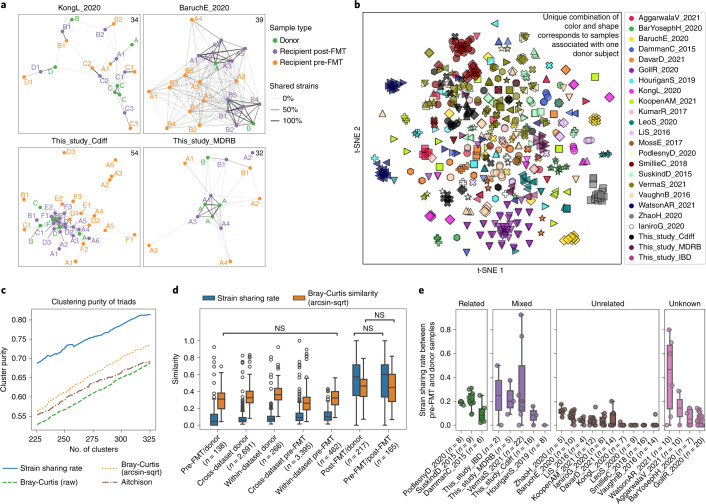
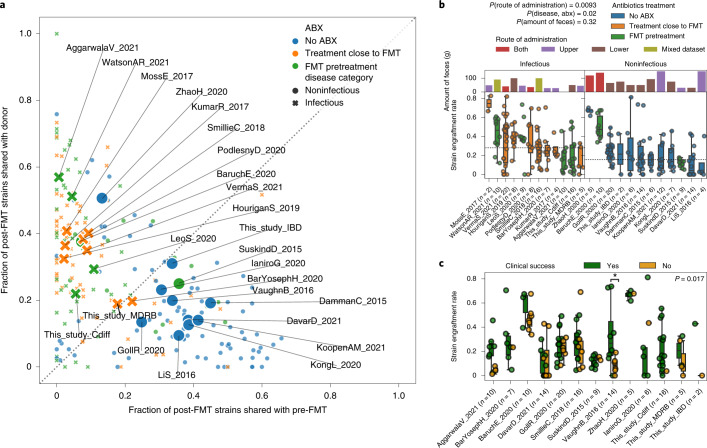
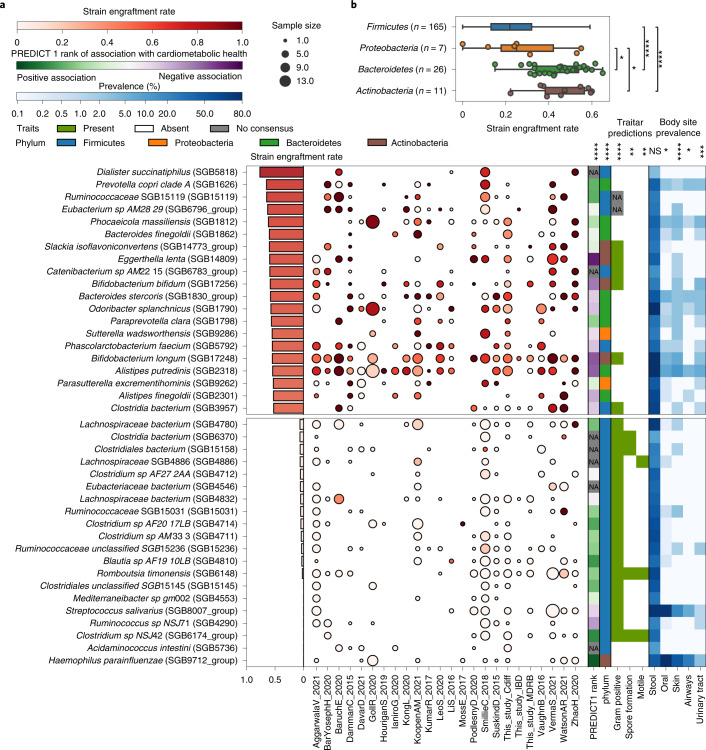
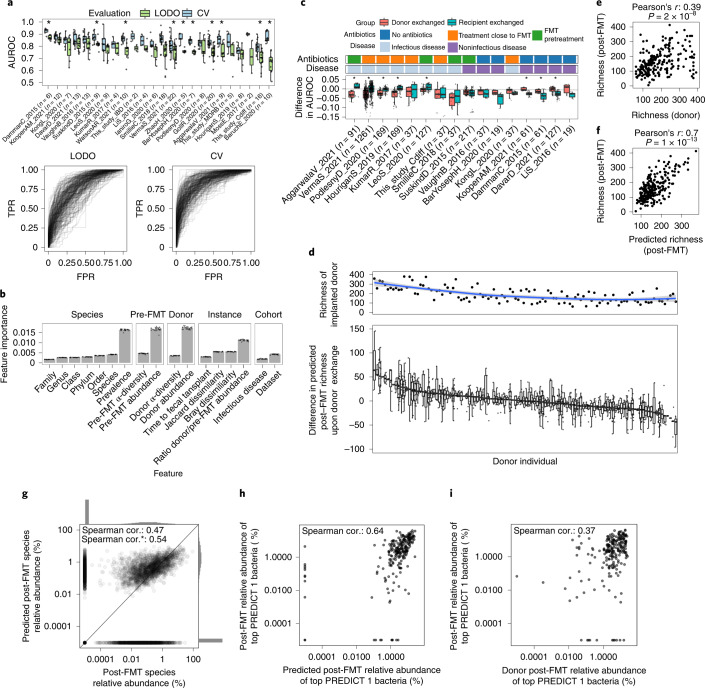
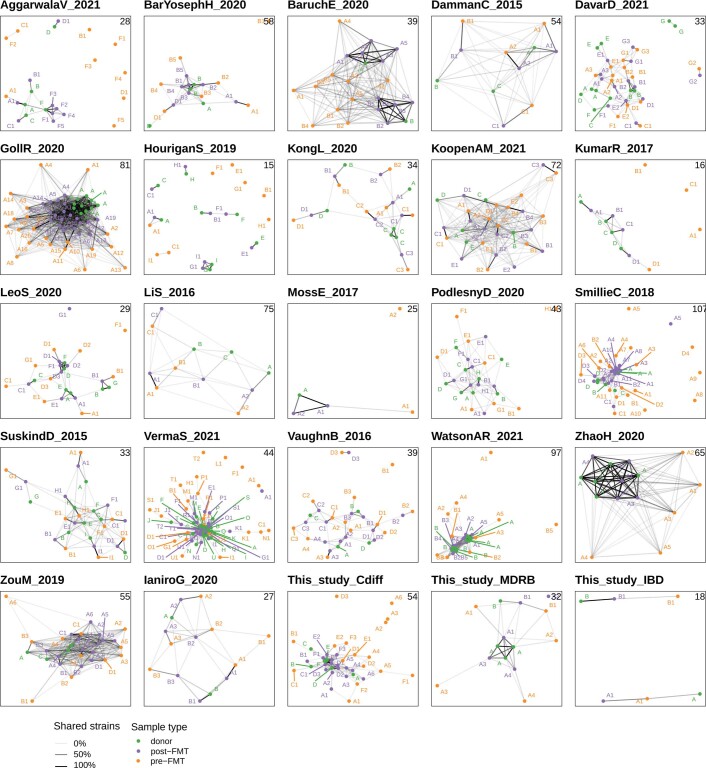
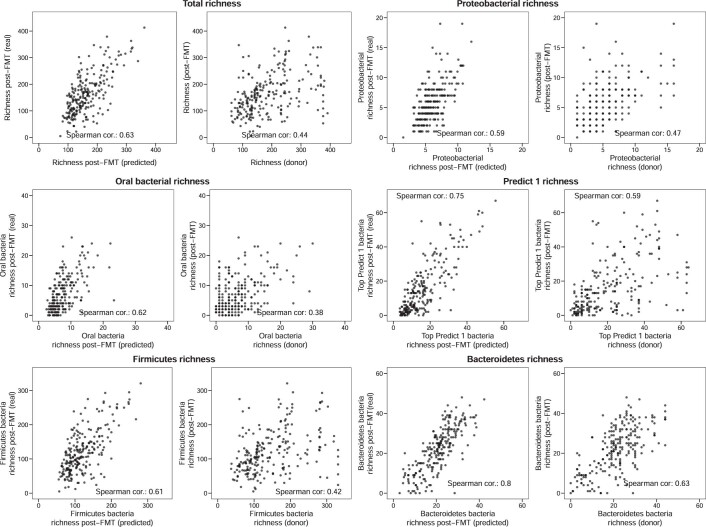
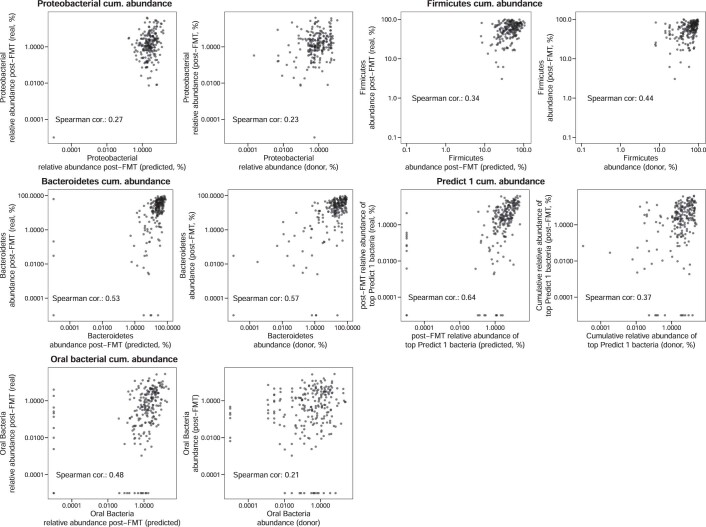
Fecal microbiota transplantation (FMT) is highly effective against recurrent Clostridioides difficile infection and is considered a promising treatment for other microbiome-related disorders, but a comprehensive understanding of microbial engraftment dynamics is lacking, which prevents informed applications of this therapeutic approach. Here, we performed an integrated shotgun metagenomic systematic meta-analysis of new and publicly available stool microbiomes collected from 226 triads of donors, pre-FMT recipients and post-FMT recipients across eight different disease types. By leveraging improved metagenomic strain-profiling to infer strain sharing, we found that recipients with higher donor strain engraftment were more likely to experience clinical success after FMT ( P = 0.017) when evaluated across studies. Considering all cohorts, increased engraftment was noted in individuals receiving FMT from multiple routes (for example, both via capsules and colonoscopy during the same treatment) as well as in antibiotic-treated recipients with infectious diseases compared with antibiotic-naïve patients with noncommunicable diseases. Bacteroidetes and Actinobacteria species (including Bifidobacteria ) displayed higher engraftment than Firmicutes except for six under-characterized Firmicutes species. Cross-dataset machine learning predicted the presence or absence of species in the post-FMT recipient at 0.77 average AUROC in leave-one-dataset-out evaluation, and highlighted the relevance of microbial abundance, prevalence and taxonomy to infer post-FMT species presence. By exploring the dynamics of microbiome engraftment after FMT and their association with clinical variables, our study uncovered species-specific engraftment patterns and presented machine learning models able to predict donors that might optimize post-FMT specific microbiome characteristics for disease-targeted FMT protocols.
Overview
The claims and statistics of this paper haven’t been checked yet.
Free: it reads the open-access text and checks the first 5 claims that cite a source we can check. Create a free account to check every claim.
Integrity signals
Registry
Cites
Statistics
Figures
Verification
Claims the paper makes
The claims and statistics of this paper haven’t been checked yet.
Free: it reads the open-access text and checks the first 5 claims that cite a source we can check. Create a free account to check every claim.
Claims other papers make about this one
Each is checked against this paper’s own text: does it say what the citing paper says it does?
The source backs part of the claim, not all of it — or backs it for a different population, condition or comparison.
In the citing paper
“Moreover, combined routes of FMT administration are an effective strategy to enhance strain engraftment.747”
From Microbiota–gut–brain axis and its therapeutic applications in neurodegenerative diseases (2024) · cites this paper as [747]
Experimental — accuracy not yet measuredThe source backs part of the claim, not all of it — or backs it for a different population, condition or comparison.
In the citing paper
“For example, although a family or household member donor was found associated with higher strain sharing at baseline, this did not result in higher strain engraftment rates once prior strain sharing was considered. 75”
From Key determinants of success in fecal microbiota transplantation: From microbiome to clinic (2023) · cites this paper as [75]
Experimental — accuracy not yet measuredThe source backs part of the claim, not all of it — or backs it for a different population, condition or comparison.
In the citing paper
“With this approach, microbial engraftment has been associated with clinical success, regardless of disease, in a large metagenomic metanalysis of 24 FMT trials and almost 1,400 fecal samples. 75”
From Key determinants of success in fecal microbiota transplantation: From microbiome to clinic (2023) · cites this paper as [75]
Experimental — accuracy not yet measuredThe source backs part of the claim, not all of it — or backs it for a different population, condition or comparison.
In the citing paper
“Although the infusion of a healthy microbiome is clinically effective regardless of its composition in rCDI, the composition of donor microbial communities appears to play a key role in treating noncommunicable disorders, 56 likely mediated by the achievement of successful microbial engraftment. 75”
From Key determinants of success in fecal microbiota transplantation: From microbiome to clinic (2023) · cites this paper as [75]
Experimental — accuracy not yet measuredThe cited source says what the claim attributes to it.
In the citing paper
“Notably, FMT using combined routes was associated with a higher likelihood of microbial engraftment than single-route infusion in a metagenomic metanalysis of 24 studies. 75”
From Key determinants of success in fecal microbiota transplantation: From microbiome to clinic (2023) · cites this paper as [75]
15 more claims about this paper
Create a free account to see every claim other papers make about this one.
Self-check
Percentages, sums and reported differences re-computed from the paper’s own numbers.
The self-check needs the paper’s full text.
Citations
Cites
Breiman, L. (2001) · Machine Learning · doi:10.1023/a:1010933404324 · Cited by 133,538
Fitting Linear Mixed-Effects Models Using lme4
Bates, D., Mächler, M., Bolker, B., & Walker, S. (2015) · Journal of Statistical Software · doi:10.18637/jss.v067.i01 · Cited by 86,835
Scikit-learn: Machine Learning in Python
Pedregosa, F., Varoquaux, G., Gramfort, A., Michel, V., Thirion, B., Grisel, O., Blondel, M., Müller, A., Nothman, J., Louppe, G., et al. (2012) · arXiv · doi:10.48550/arxiv.1201.0490 · Cited by 71,016
Fast gapped-read alignment with Bowtie 2
Langmead, B., & Salzberg, S. L. (2012) · Nature Methods · doi:10.1038/nmeth.1923 · Cited by 56,400
SciPy 1.0: fundamental algorithms for scientific computing in Python
Virtanen, P., Gommers, R., Oliphant, T. E., Haberland, M., Reddy, T., Cournapeau, D., Burovski, E., Peterson, P., Weckesser, W., Bright, J., et al. (2020) · Nature Methods · doi:10.1038/s41592-019-0686-2 · Cited by 38,430
Prokka: rapid prokaryotic genome annotation
Seemann, T. (2014) · Bioinformatics · doi:10.1093/bioinformatics/btu153 · Cited by 18,818
Fast and sensitive protein alignment using DIAMOND
Buchfink, B., Xie, C., & Huson, D. H. (2015) · Nature Methods · doi:10.1038/nmeth.3176 · Cited by 14,201
Parks, D. H., Imelfort, M., Skennerton, C. T., Hugenholtz, P., & Tyson, G. W. (2015) · Genome Research · doi:10.1101/gr.186072.114 · Cited by 12,496
SciPy 1.0: fundamental algorithms for scientific computing in Python
Virtanen, P., Gommers, R., Oliphant, T. E., Haberland, M., Reddy, T., Cournapeau, D., Burovski, E., Peterson, P., Weckesser, W., Bright, J., et al. (2019) · Apollo - University of Cambridge Repository · doi:10.17863/cam.64134 · Cited by 10,460
Li, D., Liu, C.-M., Luo, R., Sadakane, K., & Lam, T.-W. (2015) · Bioinformatics · doi:10.1093/bioinformatics/btv033 · Cited by 9,893
Research works printed but not linked: 1
- Gemelli IRCCS (ID 3555/2021) and Ospedale Pediatrico Bambino Gesù IRCCS (1107_ OPBG_2016). Written informed consent was obtained from all adult participants, and from parents of pediatric (2-17 years old) participants. The systematic review was not registered.
Cited by
Blanco-Míguez, A., Beghini, F., Cumbo, F., McIver, L. J., Thompson, K. N., Zolfo, M., Manghi, P., Dubois, L., Huang, K. D., Thomas, A. M., et al. (2023) · Nature Biotechnology · doi:10.1038/s41587-023-01688-w · Cited by 1,442
“StrainPhlAn 4 also allows the analysis of strain sharing and transmission between communities 4,25,28,73,77–79 for uncharacterized species, that is, uSGBs (see Methods).”
BackgroundSelf-citationShort-Chain Fatty-Acid-Producing Bacteria: Key Components of the Human Gut Microbiota
Fusco, W., Lorenzo, M. B., Cintoni, M., Porcari, S., Rinninella, E., Kaitsas, F., Lener, E., Mele, M. C., Gasbarrini, A., Collado, M. C., et al. (2023) · Nutrients · doi:10.3390/nu15092211 · Cited by 1,243
Self-citationMicrobiota–gut–brain axis and its therapeutic applications in neurodegenerative diseases
Loh, J. S., Mak, W. Q., Tan, L. K. S., Ng, C. X., Chan, H. H., Yeow, S. H., Foo, J. B., Ong, Y. S., How, C. W., & Khaw, K. Y. (2024) · Signal Transduction and Targeted Therapy · doi:10.1038/s41392-024-01743-1 · Cited by 1,193
The gut–liver axis and gut microbiota in health and liver disease
Hsu, C. L., & Schnabl, B. (2023) · Nature Reviews Microbiology · doi:10.1038/s41579-023-00904-3 · Cited by 737
Fecal microbiota transplantation plus anti-PD-1 immunotherapy in advanced melanoma: a phase I trial
Routy, B., Lenehan, J. G., Miller, W. H., Jamal, R., Messaoudene, M., Daisley, B. A., Hes, C., Al, K. F., Martinez-Gili, L., Punčochář, M., et al. (2023) · Nature Medicine · doi:10.1038/s41591-023-02453-x · Cited by 526
Self-citationThe person-to-person transmission landscape of the gut and oral microbiomes
Valles-Colomer, M., Blanco-Míguez, A., Manghi, P., Asnicar, F., Dubois, L., Golzato, D., Armanini, F., Cumbo, F., Huang, K. D., Manara, S., et al. (2023) · Nature · doi:10.1038/s41586-022-05620-1 · Cited by 449
Self-citationFecal microbiota transplantation: current challenges and future landscapes
Yadegar, A., Bar-Yoseph, H., Monaghan, T. M., Pakpour, S., Severino, A., Kuijper, E. J., Smits, W. K., Terveer, E. M., Neupane, S., Nabavi-Rad, A., et al. (2024) · Clinical Microbiology Reviews · doi:10.1128/cmr.00060-22 · Cited by 351
Self-citationKey determinants of success in fecal microbiota transplantation: From microbiome to clinic
Porcari, S., Benech, N., Valles-Colomer, M., Segata, N., Gasbarrini, A., Cammarota, G., Sokol, H., & Ianiro, G. (2023) · Cell Host & Microbe · doi:10.1016/j.chom.2023.03.020 · Cited by 331
Self-citationMachine learning for microbiologists
Asnicar, F., Thomas, A. M., Passerini, A., Waldron, L., & Segata, N. (2024) · Nature Reviews Microbiology · doi:10.1038/s41579-023-00984-1 · Cited by 256
“Early results suggest that machine learning-based matching of donor-recipient individuals can expand the clinical relevance of faecal microbiota transplantation beyond the current consolidated indication for the treatment of recurrent Clostridiodes difficile infections 42–44 .”
Self-citationTheodosiou, A. A., & Read, R. C. (2023) · Journal of Infection · doi:10.1016/j.jinf.2023.07.006 · Cited by 237
“47 Moreover, the ZOE Predict study employed AI-based analysis of continuous blood glucose monitoring, faecal metagenomics and detailed dietary, life-style and biometric measures to study the relationship between diet, gut microbiome and metabolism in over 1000 participants.”
The role of diet in shaping human gut microbiota
Rinninella, E., Tohumcu, E., Raoul, P., Fiorani, M., Cintoni, M., Mele, M. C., Cammarota, G., Gasbarrini, A., & Ianiro, G. (2023) · Best Practice & Research Clinical Gastroenterology · doi:10.1016/j.bpg.2023.101828 · Cited by 214
Self-citationCritical role of the gut microbiota in immune responses and cancer immunotherapy
Li, Z., Xiong, W., Liang, Z., Wang, J., Zeng, Z., Kołat, D., Li, X., Zhou, D., Xu, X., & Zhao, L. (2024) · Journal of Hematology & Oncology · doi:10.1186/s13045-024-01541-w · Cited by 176
“…products all can alter intestinal bacteria to enhance anti-tumor immune responses inside the TME, which consequently improve the efficacy of cancer immunotherapy methods for the procedure, and build machine learning models that can to predict responses to minimize FMT-associated risks [339–341].”
BackgroundUtilization of the microbiome in personalized medicine
Ratiner, K., Ciocan, D., Abdeen, S. K., & Elinav, E. (2024) · Nature Reviews Microbiology · doi:10.1038/s41579-023-00998-9 · Cited by 170
“The importance of donor–recipient microbiome compatibility was recently confirmed by two meta-analyses 122,124 , suggesting that strain engraftment is essential for a successful FMT outcome across multiple conditions.”
Gut microbiota shapes cancer immunotherapy responses
Lei, W., Zhou, K., Lei, Y., Li, Q., & Zhu, H. (2025) · npj Biofilms and Microbiomes · doi:10.1038/s41522-025-00786-8 · Cited by 196
“Safety concernsfurthercomplicateclinicaltranslation — approacheslikeFMTmay not reliably restore bene fi cial bacteria, and unintended microbial shifts could lead to adverse effects 407 .”
Longitudinal gut microbiome changes in immune checkpoint blockade-treated advanced melanoma
Björk, J. R., Bolte, L. A., Maltez Thomas, A., Lee, K. A., Rossi, N., Wind, T. T., Smit, L. M., Armanini, F., Asnicar, F., Blanco-Miguez, A., et al. (2024) · Nature Medicine · doi:10.1038/s41591-024-02803-3 · Cited by 156
“Inter-individual variability in the response and engraftment of strains is widely described after FMT for different clinical contexts 52,53 in which various treatment and host factors play a role 16,22,54,55 .”
Self-citationRole of the microbiota in response to and recovery from cancer therapy
Blake, S. J., Wolf, Y., Boursi, B., & Lynn, D. J. (2023) · Nature reviews. Immunology · doi:10.1038/s41577-023-00951-0 · Cited by 158
“Finally, two recent meta-analyses suggest that better FMT engraftment can lead to increased efficacy of FMT in other disease contexts 139,140 .”
Genome-resolved metagenomics: a game changer for microbiome medicine
Kim, N., Ma, J., Kim, W., Kim, J., Belenky, P. A., & Lee, I. (2024) · Experimental & Molecular Medicine · doi:10.1038/s12276-024-01262-7 · Cited by 144
“Another signi fi cant application of metagenotyp-ing is analyzing strain-level changes in the gut microbiome composition following fecal microbiota transplantation (FMT), providing valuable insights into this therapeutic intervention 135 – 137 .”
BackgroundLopetuso, L. R., Deleu, S., Godny, L., Petito, V., Puca, P., Facciotti, F., Sokol, H., Ianiro, G., Masucci, L., Abreu, M., et al. (2023) · Gut · doi:10.1136/gutjnl-2023-329948 · Cited by 129
Self-citationCardiometabolic health, diet and the gut microbiome: a meta-omics perspective
Valles-Colomer, M., Menni, C., Berry, S. E., Valdes, A. M., Spector, T. D., & Segata, N. (2023) · Nature Medicine · doi:10.1038/s41591-023-02260-4 · Cited by 114
Self-citationMachine Learning and Artificial Intelligence in the Multi-Omics Approach to Gut Microbiota
Rozera, T., Pasolli, E., Segata, N., & Ianiro, G. (2025) · Gastroenterology · doi:10.1053/j.gastro.2025.02.035 · Cited by 112
Self-citationPiperni, E., Nguyen, L. H., Manghi, P., Kim, H., Pasolli, E., Andreu‐Sánchez, S., Arrè, A., Bermingham, K. M., Blanco‐Míguez, A., Manara, S., et al. (2024) · Cell · doi:10.1016/j.cell.2024.06.018 · Cited by 117
Self-citationSequencing-based analysis of microbiomes
Pinto, Y., & Bhatt, A. S. (2024) · Nature Reviews Genetics · doi:10.1038/s41576-024-00746-6 · Cited by 117
“…fundamental questions about microbial transmission between and within individuals such as mother-to-child transmission 77–79 , in-hospital patient-to-patient transmission 80 , transmission between body sites 81 and to the bloodstream 82 , or following faecal microbiota transplantation 83–86 .”
Fecal microbiota transplantation: Emerging applications in autoimmune diseases
Yang, R., Chen, Z., & Cai, J. (2023) · Journal of Autoimmunity · doi:10.1016/j.jaut.2023.103038 · Cited by 111
Yip, A. Y. G., King, O. G., Omelchenko, O., Kurkimat, S., Horrocks, V., Mostyn, P., Danckert, N., Ghani, R., Satta, G., Jauneikaite, E., et al. (2023) · doi:10.1101/2023.03.25.533086 · Cited by 91
“Moreover, a recent study demonstrated that Bacteroidota and Actinobacteria (including Bi fi dobacterium ) engraft very highly within the intestine following faecal microbiota transplantation 33 .”
The Next Generation Fecal Microbiota Transplantation: To Transplant Bacteria or Virome
Yu, Y., Wang, W., & Zhang, F. (2023) · Advanced Science · doi:10.1002/advs.202301097 · Cited by 113
Liu, S., Rodriguez, J. S., Munteanu, V., Ronkowski, C., Sharma, N. K., Alser, M., Andreace, F., Blekhman, R., Błaszczyk, D., Chikhi, R., et al. (2025) · Nature Reviews Methods Primers · doi:10.1038/s43586-024-00376-6 · Cited by 115
“Information gathered from these strategies holds incredible potential for personalized medicine 137,236–238 .”
Elkrief, A., Pidgeon, R., Vareki, S. M., Messaoudene, M., Castagner, B., & Routy, B. (2025) · Nature Reviews Drug Discovery · doi:10.1038/s41573-025-01211-7 · Cited by 109
“The extent and determinants of microbiome shift at the species level in patients receiving FMT will be fundamental to understand how engraftment correlates with outcome 86 .”
Yadegar, A., Pakpour, S., Ibrahim, F. F., Nabavi-Rad, A., Cook, L., Walter, J., Seekatz, A. M., Wong, K., Monaghan, T. M., & Kao, D. (2023) · Cell Host & Microbe · doi:10.1016/j.chom.2023.03.019 · Cited by 85
Advances in Fecal Microbiota Transplantation for Gut Dysbiosis‐Related Diseases
Hou, S., Yu, J., Li, Y., Zhao, D., & Zhang, Z. (2025) · Advanced Science · doi:10.1002/advs.202413197 · Cited by 117
Andreu-Sánchez, S., Blanco-Míguez, A., Wang, D., Golzato, D., Manghi, P., Heidrich, V., Fackelmann, G., Zhernakova, D. V., Kurilshikov, A., Valles-Colomer, M., et al. (2025) · Cell · doi:10.1016/j.cell.2025.04.014 · Cited by 81
Self-citationIntrahost evolution of the gut microbiota
Barreto, H. C., & Gordo, I. (2023) · Nature Reviews Microbiology · doi:10.1038/s41579-023-00890-6 · Cited by 94
Puig‐Castellví, F., Pacheco‐Tapia, R., Deslande, M., Jia, M., Andrikopoulos, P., Chechi, K., Bonnefond, A., Froguel, P., & Dumas, M. (2023) · TrAC Trends in Analytical Chemistry · doi:10.1016/j.trac.2023.117248 · Cited by 91
The gut microbiome in disorders of gut–brain interaction
Kraïmi, N., Ross, T., Pujo, J., & Palma, G. D. (2024) · Gut Microbes · doi:10.1080/19490976.2024.2360233 · Cited by 101
Fecal microbiota transplantation: no longer cinderella in tumour immunotherapy
Yang, Y., An, Y., Dong, Y., Chu, Q., Wei, J., Wang, B., & Cao, H. (2024) · EBioMedicine · doi:10.1016/j.ebiom.2024.104967 · Cited by 90
“…gut microbiota after FMT. 61 In another integrated shotgun meta-genomic systematic meta-analysis, higher donor strain engraftment was reported to be more likely to experience clinical success after FMT. 62 Robust randomized controlled trials are warranted to outline the linkage more unambiguously.”
BackgroundMethodInfluentialMicrobiota therapeutics for inflammatory bowel disease: the way forward
Bethlehem, L., Estevinho, M. M., Grinspan, A. M., Magro, F., Faith, J. J., & Colombel, J. (2024) · The Lancet. Gastroenterology & hepatology · doi:10.1016/s2468-1253(23)00441-7 · Cited by 91
Gut microbiota strain richness is species specific and affects engraftment
Chen-Liaw, A., Aggarwala, V., Mogno, I., Haifer, C., Li, Z., Eggers, J., Helmus, D. S., Hart, A. B., Wehkamp, J., Lamousé-Smith, E. S. N., et al. (2024) · Nature · doi:10.1038/s41586-024-08242-x · Cited by 73
The Role of Gut Microbiota and Leaky Gut in the Pathogenesis of Food Allergy
Poto, R., Fusco, W., Rinninella, E., Cintoni, M., Kaitsas, F., Raoul, P. C., Caruso, C., Mele, M. C., Varricchi, G., Gasbarrini, A., et al. (2023) · Nutrients · doi:10.3390/nu16010092 · Cited by 83
“An increased body of evidence suggests the use of FMT in other disorders, including GI disorders (i.e., IBD and irritable bowel syndrome) [204], liver disease [205], metabolic disorders [206], and malignancies [207].”
Self-citationMa, Z., Wang, Z., Cao, J., Dong, Y., & Chen, Y. (2025) · Gut Microbes · doi:10.1080/19490976.2025.2560019 · Cited by 78
“135 Consequently, the selection of recipients is of the utmost importance.”
Future Modulation of Gut Microbiota: From Eubiotics to FMT, Engineered Bacteria, and Phage Therapy
Airola, C., Severino, A., Porcari, S., Fusco, W. G., Mullish, B. H., Gasbarrini, A., Cammarota, G., Ponziani, F. R., & Ianiro, G. (2023) · Antibiotics · doi:10.3390/antibiotics12050868 · Cited by 85
Self-citationPaternal and induced gut microbiota seeding complement mother-to-infant transmission
Dubois, L., Valles‐Colomer, M., Ponsero, A. J., Helve, O., Andersson, S., Kolho, K.-L., Asnicar, F., Korpela, K., Salonen, A., Segata, N., et al. (2024) · Cell Host & Microbe · doi:10.1016/j.chom.2024.05.004 · Cited by 73
Self-citationImmune mechanisms and shared immune targets in neurodegenerative diseases
Weiner, H. L. (2024) · Nature Reviews Neurology · doi:10.1038/s41582-024-01046-7 · Cited by 74
“Case reports indicate success of FMT in MS 368,369 , AD 370 , ALS 371 and PD 372 , although strain engraftment and predictability of microbiome composition after FMT seems to vary between the diseases 373 .”
Fecal microbiota transplantation in clinical practice: Present controversies and future prospects
Tian, H., Wang, X., Fang, Z., Li, L., Wu, C., Bi, D., Li, N., Chen, Q., & Qin, H. (2024) · hLife · doi:10.1016/j.hlife.2024.01.006 · Cited by 56
“Leveraging these critical factors, machine learning techniques, such as the random forest [48] or LASSO regression algorithm [25], offer a more precise way of predicting donor microbes ’ The donor-recipient matching models can be established through the FMTdb, achieving more than 90% matching…”
InfluentialPorcari, S., CICCARESE, C., Heidrich, V., Rondinella, D., Quaranta, G., Severino, A., Arduini, D., Buti, S., Fornarini, G., Primi, F., et al. (2026) · Nature Medicine · doi:10.1038/s41591-025-04189-2 · Cited by 71
“Notably, we did not use antibiotic preconditioning, as this trial was started before our discovery of its association with microbiome engraftment 31 and the publication of relevant studies 7,8 .”
Self-citationGut microbiome therapy: fecal microbiota transplantation vs live biotherapeutic products
Kim, D.-Y., Lee, S.-Y., Lee, J., Whon, T. W., Lee, J., Jeon, C. O., & Bae, J. (2024) · Gut Microbes · doi:10.1080/19490976.2024.2412376 · Cited by 67
“While recipients with higher engraftment levels of donor strains tend to have better clinical outcomes, 176 the relationship between donor strain colonization, recipient strains resilience, and clinical success requires further investigation.”
Reddi, S., Senyshyn, L., Ebadi, M., Podlesny, D., Minot, S. S., Gooley, T. A., Kabage, A. J., Hill, G. R., Lee, S. J., Khoruts, A., et al. (2025) · Nature Communications · doi:10.1038/s41467-025-56375-y · Cited by 57
“This species speci fi city of engraftment potential is consistent with prior studies 21,22 .”
InfluentialGut microbiome strain-sharing within isolated village social networks
Beghini, F., Pullman, J., Alexander, M., Shridhar, S. V., Prinster, D., Singh, A., Matute Juárez, R., Airoldi, E. M., Brito, I. L., & Christakis, N. A. (2025) · Nature · doi:10.1038/s41586-024-08222-1 · Cited by 51
Self-citationTian, H., Cui, J., Ye, C., Zhao, J., Yang, B. K., Xu, Y., Ji, S., Wang, L., Lv, X., Ma, C., et al. (2023) · Gut Microbes · doi:10.1080/19490976.2023.2236362 · Cited by 57
“recently been reported to be associated with overall colonization-resistance of the donor microbiota.(20) A lot of evidence shows that Oscillospira is generally less abundant in gastrointestinal inflammatory diseases, such as inflammatory bowel disease.”
BackgroundPorcari, S., Ng, S. C., Zitvogel, L., Sokol, H., Weersma, R. K., Elinav, E., Gasbarrini, A., Cammarota, G., Tilg, H., & Ianiro, G. (2025) · Cell · doi:10.1016/j.cell.2025.04.016 · Cited by 61
Self-citationGut micro-organisms associated with health, nutrition and dietary interventions
Asnicar, F., Manghi, P., Fackelmann, G., Baldanzi, G., Bakker, E., Ricci, L., Piccinno, G., Piperni, E., Mladenović, K., Amati, F., et al. (2025) · Nature · doi:10.1038/s41586-025-09854-7 · Cited by 82
Self-citationDua, A., KUMARI, R. R., Singh, M., Kumar, R., Pradeep, S., Ojesina, A. I., & Kumar, R. (2025) · Frontiers in Medicine · doi:10.3389/fmed.2025.1618275 · Cited by 72
“Engraftment of donor microbes is unpredictable and often influenced by host factors, such as baseline microbiota composition and diet (214).”
Oliveira, R. A., & Pamer, E. G. (2023) · Cell Host & Microbe · doi:10.1016/j.chom.2023.03.002 · Cited by 52
The Role of Fecal Microbiota Transplantation in IBD
Fanizzi, F., D’Amico, F., Bombassaro, I., Zilli, A., Furfaro, F., Parigi, T. L., Cicerone, C., Fiorino, G., Peyrin‐Biroulet, L., Danese, S., et al. (2024) · Microorganisms · doi:10.3390/microorganisms12091755 · Cited by 52
“These findings support the advancement of efforts in this field [62,110,111].”
Halkjær, S. I., Lo, B. Z. S., Cold, F., Christensen, A. H., Holster, S., König, J., Brummer, R. J., Aroniadis, O. C., Lahtinen, P., Holvoet, T., et al. (2023) · World Journal of Gastroenterology · doi:10.3748/wjg.v29.i20.3185 · Cited by 59
AI-empowered human microbiome research
Tian, Z., & Zhao, F. (2025) · Gut · doi:10.1136/gutjnl-2025-335946 · Cited by 84
“138 Recent clinical advancements have further demonstrated the feasibility and efficacy of such strategies.”
Button, J. E., Cosetta, C. M., Reens, A. L., Brooker, S. L., Rowan-Nash, A. D., Lavin, R., Saur, R., Zheng, S., Autran, C. A., Lee, M. L., et al. (2023) · Cell Host & Microbe · doi:10.1016/j.chom.2023.08.004 · Cited by 53
Toward an integrative framework for microbial community coalescence
Custer, G., Bresciani, L., & Dini‐Andreote, F. (2023) · Trends in Microbiology · doi:10.1016/j.tim.2023.09.001 · Cited by 46
Chen, Q., Wu, C., Xu, J., Ye, C., Chen, X., Tian, H., Zong, N., Zhang, S., Li, L., Gao, Y., et al. (2024) · Cell Host & Microbe · doi:10.1016/j.chom.2024.01.013 · Cited by 51
Gastrointestinal Biofilms: Endoscopic Detection, Disease Relevance, and Therapeutic Strategies
Jandl, B., Dighe, S. N., Baumgartner, M., Makristathis, A., Gasché, C., & Muttenthaler, M. (2024) · Gastroenterology · doi:10.1053/j.gastro.2024.04.032 · Cited by 57
Human microbiome acquisition and transmission
Heidrich, V., Valles‐Colomer, M., & Segata, N. (2025) · Nature Reviews Microbiology · doi:10.1038/s41579-025-01166-x · Cited by 56
“Next-generation probiotics and synbiotics could exploit the strains that are best at engrafting in the microbiome of an individual, and future faecal microbiota transplantation (FMT) protocols are likely to become personalized based on the microbiome configuration of the recipient.”
InfluentialSelf-citationGut microbial metabolites in cancer immunomodulation
Liu, H., Xiong, X., Zhu, W., Wang, S., Huang, W.-C., Zhu, G., Xu, H., & Yang, L. (2025) · Molecular Cancer · doi:10.1186/s12943-025-02521-5 · Cited by 62
Recipient-independent, high-accuracy FMT-response prediction and optimization in mice and humans
Shtossel, O., Turjeman, S., Riumin, A., Goldberg, M. R., Elizur, A., Bekor, Y., Mor, H., Koren, O., & Louzoun, Y. (2023) · Microbiome · doi:10.1186/s40168-023-01623-w · Cited by 50
“…microbial richness in the recipient, and a successful FMT would be one in which a maximum number of key microbial taxa colonize the recipient’s gut [34], although recent studies have also demonstrated that the abundance of certain species might be just as important as overall richness [35, 36].”
InfluentialFrom hype to hope: Considerations in conducting robust microbiome science
McGuinness, A. J., Stinson, L. F., Snelson, M., Loughman, A., Stringer, A. M., Hannan, A. J., Cowan, C. S. M., Jama, H. A., Caparros-Martin, J. A., West, M. L., et al. (2023) · Brain Behavior and Immunity · doi:10.1016/j.bbi.2023.09.022 · Cited by 47
“Our understanding of the mechanisms 331 of action of FMT are also unclear, with weak evidence of an association between donor strain 332 engraftment and clinical outcome success commonly observed across studies (Ianiro et al., 2022; 333 Schmidt et al., 2022).”
Byndloss, M. X., Devkota, S., Duca, F. A., Niess, J. H., Nieuwdorp, M., Orho‐Melander, M., Sanz, Y., Tremaroli, V., & Zhao, L. (2024) · Diabetologia · doi:10.1007/s00125-024-06198-1 · Cited by 63
Macandog, A. D. G., Catozzi, C., Capone, M., Nabinejad, A., Nanaware, P. P., Liu, S., Vinjamuri, S., Stunnenberg, J. A., Galiè, S., Jodice, M. G., et al. (2024) · Cell Host & Microbe · doi:10.1016/j.chom.2024.10.006 · Cited by 40
Self-citationPorcari, S., Fusco, W. G., Spivak, I., Fiorani, M., Gasbarrini, A., Elinav, E., Cammarota, G., & Ianiro, G. (2024) · The Lancet. Gastroenterology & hepatology · doi:10.1016/s2468-1253(23)00357-6 · Cited by 47
Self-citationTian, S., Kim, M. S., Zhao, J., Heber, K., Hao, F., Koslicki, D., Tian, S., Singh, V., Patterson, A. D., & Bisanz, J. E. (2025) · Cell Host & Microbe · doi:10.1016/j.chom.2025.02.007 · Cited by 50
Mullish, B. H., Merrick, B., Quraishi, M. N., Bak, A., Green, C., Moore, D., Porter, R. J., Elumogo, N., Segal, J. P., Sharma, N., et al. (2024) · Journal of Hospital Infection · doi:10.1016/j.jhin.2024.03.001 · Cited by 45
Toward a health-associated core keystone index for the human gut microbiome
Goel, A., Shete, O., Goswami, S., Samal, A., C.B., L., Kedia, S., Ahuja, V., O’Toole, P. W., Shanahan, F., & Ghosh, T. S. (2025) · Cell Reports · doi:10.1016/j.celrep.2025.115378 · Cited by 37
Potential of Fecal Microbiota Transplantation to Prevent Acute GVHD: Analysis from a Phase II Trial
Rashidi, A., Ebadi, M., Rehman, T. U., Elhusseini, H., Kazadi, D., Halaweish, H., Khan, M. H., Hoeschen, A. L., Cao, Q., Luo, X., et al. (2023) · Clinical Cancer Research · doi:10.1158/1078-0432.ccr-23-2369 · Cited by 39
Tsitou, V.-M., Rallis, D., Cekova, M., & Yanev, N. (2024) · Biotechnology & Biotechnological Equipment · doi:10.1080/13102818.2024.2349587 · Cited by 58
Novel fermentations integrate traditional practice and rational design of fermented-food microbiomes
Arrigan, D., Kothe, C. I., Oliverio, A., Evans, J. D., & Wolfe, B. E. (2024) · Current Biology · doi:10.1016/j.cub.2024.09.047 · Cited by 40
Large-scale metagenomic analysis of oral microbiomes reveals markers for autism spectrum disorders
Manghi, P., Filosi, M., Zolfo, M., Casten, L. G., García-Valiente, A., Mattevi, S., Heidrich, V., Golzato, D., Perini, S., Thomas, A. M., et al. (2024) · Nature Communications · doi:10.1038/s41467-024-53934-7 · Cited by 52
Self-citationGroenewegen, B., Ruissen, M. M., Crossette, E. M., Menon, R., Prince, A., Norman, J. M., Ballieux, B. E. P. B., Lamb, H. J., Terveer, E. M., Keller, J. J., et al. (2025) · Gut Microbes · doi:10.1080/19490976.2025.2541035 · Cited by 49
“57 In the present study, we found an increased engraftment fraction in patients treated using D01, but no difference between treatment groups or for treatment response.”
The human gut microbiota is associated with host lifestyle: a comprehensive narrative review
Zeng, Q., Feng, X., Hu, Y., & Su, S. (2025) · Frontiers in Microbiology · doi:10.3389/fmicb.2025.1549160 · Cited by 57
“Key foundational works (David et al., 2014; Turnbaugh et al., 2009) were considered alongside cutting-edge research [e.g., fecal microbiota transplantation studies (Ianiro et al., 2022)] to provide both historical context and contemporary perspectives.”
Pantazi, A. C., Kassim, M. A. K., Nori, W., Tuta, L. A., Mihai, C. M., Chisnoiu, T., Bălașa, A. L., Mihai, L., Lupu, A., Frecuș, C. E., et al. (2023) · Biomedicines · doi:10.3390/biomedicines11092480 · Cited by 42
Metagenomic editing of commensal bacteria in vivo using CRISPR-associated transposases
Gelsinger, D. R., Ronda, C., Ma, J., Kar, O. B., Edwards, M., Huang, Y., Mavros, C. F., Sun, Y., Perdue, T., Vo, P. L. H., et al. (2025) · Science · doi:10.1126/science.adx7604 · Cited by 42
“Antibiotics and fecal microbiota transplantation (FMT) broadly reshape microbial composition but lack specificity and can have unintended effects (12, 13).”
Mullish, B. H., Merrick, B., Quraishi, M. N., Bak, A., Green, C., Moore, D., Porter, R. J., Elumogo, N., Segal, J. P., Sharma, N., et al. (2024) · Gut · doi:10.1136/gutjnl-2023-331550 · Cited by 43
“…novelty of exploration of the gut microbiome mean that there is no clear agreed definition of what a ‘healthy’ or ‘unhealthy’ gut microbiome is, 73 either compositionally or functionally, there is the theoretical potential for transmission of gut microbiome traits (and therefore potential for…”
BackgroundMcMillan, A. S., & Theriot, C. M. (2024) · Gut Microbes · doi:10.1080/19490976.2024.2393766 · Cited by 45
“136 However, engraftment is not always required for successful treatment with FMTs or LBPs.”
BackgroundLiu, Y., Li, X., Chen, Y., Yao, Q., Zhou, J., Wang, X., Meng, Q., Ji, J., Yu, Z., & Chen, X. (2025) · Frontiers in Microbiology · doi:10.3389/fmicb.2025.1556827 · Cited by 52
Porcari, S., Baunwall, S. M. D., Occhionero, A. S., Ingrosso, M. R., Ford, A. C., Hvas, C. L., Gasbarrini, A., Cammarota, G., & Ianiro, G. (2023) · Journal of Autoimmunity · doi:10.1016/j.jaut.2023.103036 · Cited by 48
Self-citationAllegretti, J. R., Khanna, S., Mullish, B. H., & Feuerstadt, P. (2024) · Gastroenterology · doi:10.1053/j.gastro.2024.05.004 · Cited by 37
Fecal microbiota transplantation alters gut phage communities in a clinical trial for obesity
Zuppi, M., Vatanen, T., Wilson, B. C., Golovina, E., Portlock, T., Cutfield, W. S., Vickers, M. H., & O'Sullivan, J. M. (2024) · Microbiome · doi:10.1186/s40168-024-01833-w · Cited by 36
“The importance of the donor’s microbiome composition in microbial engraftment in FMT is currently under debate [44–47].”
BackgroundTurpin, W., Lee, S.-H., & Croitoru, K. (2025) · Gastroenterology · doi:10.1053/j.gastro.2025.01.004 · Cited by 37
Meta-analysis of oral microbiome reveals sex-based diversity in biofilms during periodontitis
Pinto, R. D., Ferri, C., Giannoni, M., Cominelli, F., Pizarro, T. T., & Pietropaoli, D. (2024) · JCI Insight · doi:10.1172/jci.insight.171311 · Cited by 37
Queen, J., Shaikh, F. Y., & Sears, C. L. (2023) · Nature Cancer · doi:10.1038/s43018-023-00602-2 · Cited by 36
Caminero, A., Tropini, C., Valles‐Colomer, M., Shung, D. L., Gibbons, S. M., Surette, M. G., Sokol, H., Tomeo, N. J., Alenghat, T., Awoniyi, M., et al. (2025) · Nature Reviews Gastroenterology & Hepatology · doi:10.1038/s41575-025-01100-9 · Cited by 47
“…transcriptomics and metabolomics with host response and/or physiological measurements (for example, heart rate variability or genomes) would facilitate discovery (via AI) and validation (via targeted assays and sequencing) that could catalyse the development of microbiome therapeutics 105 .”
Self-citationPitfalls of genotyping microbial communities with rapidly growing genome collections
Zhao, C., Shi, Z. J., & Pollard, K. S. (2023) · Cell Systems · doi:10.1016/j.cels.2022.12.007 · Cited by 46
Bénard, M. V., Arretxe, I., Wortelboer, K., Harmsen, H. J. M., Davids, M., de Bruijn, C. M. A., Benninga, M. A., Hugenholtz, F., Herrema, H., & Ponsioen, C. Y. (2023) · Microorganisms · doi:10.3390/microorganisms11092238 · Cited by 35
“The clinical success of FMT has been described to relate to higher donor strain engraftment [15], which in turn is largely dependent on the taxonomic composition of recipient and donor and the abundance of species [16].”
BackgroundThe Relationship Between the Microbiome and Antimicrobial Resistance
Nhu, N. T. Q., & Young, V. B. (2023) · Clinical Infectious Diseases · doi:10.1093/cid/ciad641 · Cited by 31
Faecal (or intestinal) microbiota transplant: a tool for repairing the gut microbiome
Ghani, R., Chrysostomou, D., Roberts, L. A., Pandiaraja, M., Marchesi, J. R., & Mullish, B. H. (2024) · Gut Microbes · doi:10.1080/19490976.2024.2423026 · Cited by 33
“42,44 However, as of yet, there is no published study that has convin-cingly demonstrated use of machine learning approaches to improve donor selection and enhance efficacy of FMT in a clinical context.”
InfluentialTranslational strategies for oral delivery of faecal microbiota transplantation
Kamath, S., Bryant, R. V., Costello, S. P., Day, A. S., Forbes, B., Haifer, C., Hold, G. L., Kelly, C. R., Li, A., Pakuwal, E., et al. (2025) · Gut · doi:10.1136/gutjnl-2025-335077 · Cited by 38
“98 Unlike LBPs, which rely on defined strain compositions, OralFMT delivers an adaptable microbial ecosystem that can engage in competitive niche colonisation and horizontal gene transfer, conferring functional resilience in ways that remain poorly characterised.”
Stallmach, A., Quickert, S., Puta, C., & Reuken, P. A. (2024) · Frontiers in Immunology · doi:10.3389/fimmu.2024.1352744 · Cited by 33
A review of engraftment assessments following fecal microbiota transplant
Herman, C., Barker, B. M., Bartelli, T. F., Chandra, V., Krajmalnik‐Brown, R., Jewell, M., Li, L., Liao, C., McAllister, F. M., Nirmalkar, K., et al. (2025) · Gut Microbes · doi:10.1080/19490976.2025.2525478 · Cited by 36
“Many studies find positive correlation between engraftment signal and clinical response, 33,48 and in a meta-analysis of 24 FMT cohorts, Ianiro et al. 49 found a significant relationship between clinical response and increased percentage of donor strain engrafted, 49 although they did note that the percentage associat…”
InfluentialTayyab, M. B., Zhao, Y., & Zhang, Y. (2025) · Frontiers in Microbiology · doi:10.3389/fmicb.2025.1625265 · Cited by 46
Roussel, C., Sola, M., Lessard‐Lord, J., Nallabelli, N., Généreux, P., Cavestri, C., Wallen, O. A., Villano, R., Raymond, F., Flamand, N., et al. (2024) · Gut Microbes · doi:10.1080/19490976.2024.2335879 · Cited by 28
“The ASVs count data table was converted to presence – absence binary data to calculate the ASVs sharing rate (SR) between donors per gut region, as adapted from Laniro et al: 70”
MethodByndloss, M. X., Devkota, S., Duca, F. A., Niess, J. H., Nieuwdorp, M., Orho‐Melander, M., Sanz, Y., Tremaroli, V., & Zhao, L. (2024) · Diabetes Care · doi:10.2337/dci24-0052 · Cited by 51
Porcari, S., Severino, A., Rondinella, D., Bibbò, S., Quaranta, G., Masucci, L., Maida, M. F., Scaldaferri, F., Sanguinetti, M., Gasbarrini, A., et al. (2023) · Journal of Autoimmunity · doi:10.1016/j.jaut.2023.103033 · Cited by 32
Self-citationBénard, M. V., de Goffau, M. C., Blonk, J., Hugenholtz, F., van Buuren, J., Paramsothy, S., Kaakoush, N. O., D’Haens, G., Borody, T. J., Kamm, M. A., et al. (2024) · Clinical Gastroenterology and Hepatology · doi:10.1016/j.cgh.2024.10.001 · Cited by 36
Wang, X., Zhao, D., Bi, D., Li, L., Tian, H., Yin, F., Zuo, T., Ianiro, G., Li, N., Chen, Q., et al. (2025) · Science Bulletin · doi:10.1016/j.scib.2025.01.029 · Cited by 31
Self-citationThe role of the early-life gut microbiome in childhood asthma
Boulund, U., Thorsen, J., Trivedi, U., Tranæs, K., Jiang, J., Shah, S. A., & Stokholm, J. (2025) · Gut Microbes · doi:10.1080/19490976.2025.2457489 · Cited by 31
Metadata
- Authors
- Ianiro, G., Punčochář, M., Karcher, N., Porcari, S., Armanini, F., Asnicar, F., Beghini, F., Blanco-Míguez, A., Cumbo, F., Manghi, P., Pinto, F., Masucci, L., Quaranta, G., De Giorgi, S., Sciumè, G. D., Bibbò, S., Del Chierico, F., Putignani, L., Sanguinetti, M., Gasbarrini, A., Valles-Colomer, M., Cammarota, G., & Segata, N.
- Affiliations
- Università Cattolica del Sacro Cuore (IT)
- University of Trento (IT)
- Bambino Gesù Children's Hospital (IT)
- Corresponding author
- Ianiro, Gianluca
- Segata, Nicola
- ORCID
- Ianiro, Gianluca
- Punčochář, Michal
- Karcher, Nicolai
- Porcari, Serena
- Armanini, Federica
- Asnicar, Francesco
- Beghini, Francesco
- Blanco-Míguez, Aitor
- Cumbo, Fabio
- Manghi, Paolo
- Pinto, Federica
- Masucci, Luca
- Quaranta, Gianluca
- De Giorgi, Silvia
- Sciumè, Giusi Desirè
- Bibbò, Stefano
- Putignani, Lorenza
- Sanguinetti, Maurizio
- Gasbarrini, Antonio
- Valles-Colomer, Mireia
- Cammarota, Giovanni
- Segata, Nicola
- Venue
- Nature Medicine
- Published
- 2022-09
- Volume
- 28
- Issue
- 9
- Pages
- 1913-1923
- ISSN
- 1078-8956 (ISSN-L)
- 1546-170X
- PMC
- PMC9499858
- OpenAlex
- W4295925800
- Cited by
- 366
- References
- 89
- Citations by year
- 2026: 92 · 2025: 119 · 2024: 84 · 2023: 67 · 2022: 3
- FWCI
- 22.37
- Type
- journal article
- Language
- en
- Open access
- hybrid
- doi.org
- Licence
- cc-by
- creativecommons.org/licenses/by/4.0 (tdm)
- creativecommons.org/licenses/by/4.0 (vor, 14 d)
- Locations
- Nature Medicine (publishedVersion, cc-by)
- PubMed Central (publishedVersion, cc-by)
- PubMed (publishedVersion)
- Iris (University of Trento) (submittedVersion, cc-by)
- PubliCatt (Università Cattolica del Sacro Cuore) (submittedVersion, cc-by)
- Funders
- Ospedale Pediatrico Bambino Gesù
- Ministero della Salute (2018-, GR-2018-12365734, “5×1000”)
- Ministero dell’Istruzione, dell’Università e della Ricerca (H2020, RBFR13EWWI_001)
- Università degli Studi di Trento
- Fondazione Roma
- National Institutes of Health (1u01ca230551-01a1, H2020, 1U01CA230551)
- Horizon 2020 Framework Programme (OncoBiome 825410, 818368, ONCOBIOME-825410 project, MASTER-818368 project, 825410)
- National Cancer Institute (1U01CA230551, U01 CA230551)
- H2020 European Research Council (716575)
- Topics
- Life Sciences › Biochemistry, Genetics and Molecular Biology › Molecular Biology › Gut microbiota and health
- Health Sciences › Medicine › Infectious Diseases › Clostridium difficile and Clostridium perfringens research
- Health Sciences › Medicine › Gastroenterology › Gastrointestinal motility and disorders
- Keywords
- fecal microbiota transplantation, microbiota composition, Clostridium difficile infection, Bifidobacterium, Bacteroidetes, actinobacteria, Firmicutes, donor selection, antibiotic therapy, non-communicable diseases
- MeSH terms
- Gastrointestinal Microbiome, Fecal Microbiota Transplantation, Anti-Bacterial Agents, Clostridium Infections, Feces, Humans, Treatment Outcome, Microbiota
About these checks
Registry, retraction, Cites and statistics results are computed, not judged, with one exception: a printed reference that no index lists is read once by a model before it counts as a citation error. Claims are extracted by a model and kept only when their quote appears verbatim in the text; each cited source is then checked, with a model’s help, for whether it says what the claim relies on. Those verdicts can be wrong — read the claim’s quote and the cited source before relying on one.
Statistics and arithmetic are recomputed, not judged.
Confidence bands are shown only for fields calibrated on our annotated test set. None is calibrated yet, so no band is shown.
What counts as a claim ›How we measure confidence ›How we check this ›
Are you an author, or do you see a problem with this page? Request a review
Data sources
Bibliographic data: Semantic Scholar, OpenAlex, Crossref.
Contains information from the Semantic Scholar Academic Graph Datasets, made available under the ODC Attribution License (ODC-BY 1.0).
Semantic Scholar’s data is described in: Kinney, R., et al. (2023). The Semantic Scholar Open Data Platform. arXiv:2301.10140.
