

Optimized glycemic control of type 2 diabetes with reinforcement learning: a proof-of-concept trial
Open accessThe DOI matches its Crossref record; 44 of the 44 references it cites were found in a registry or an index.
Abstract
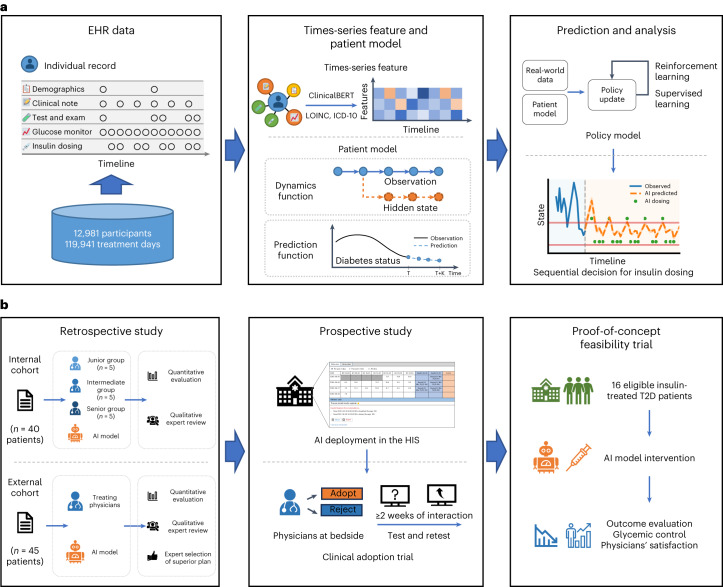
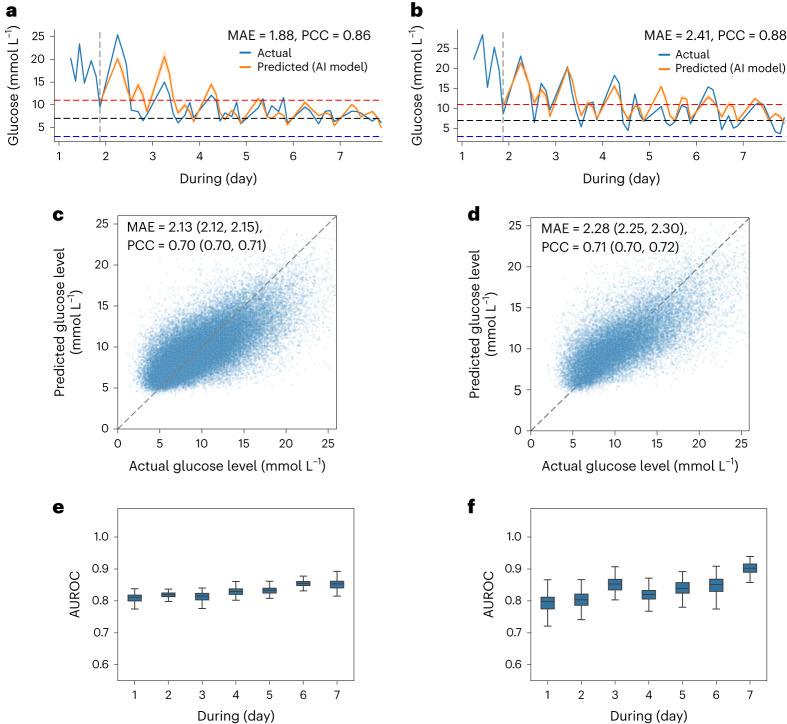
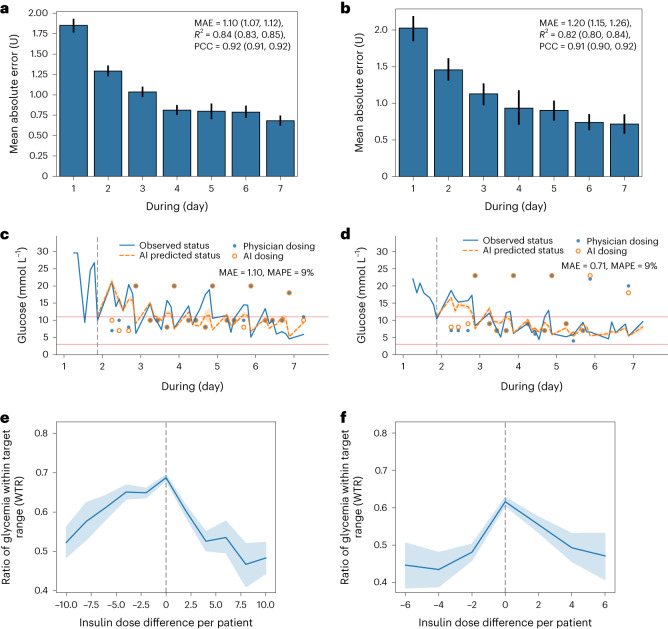
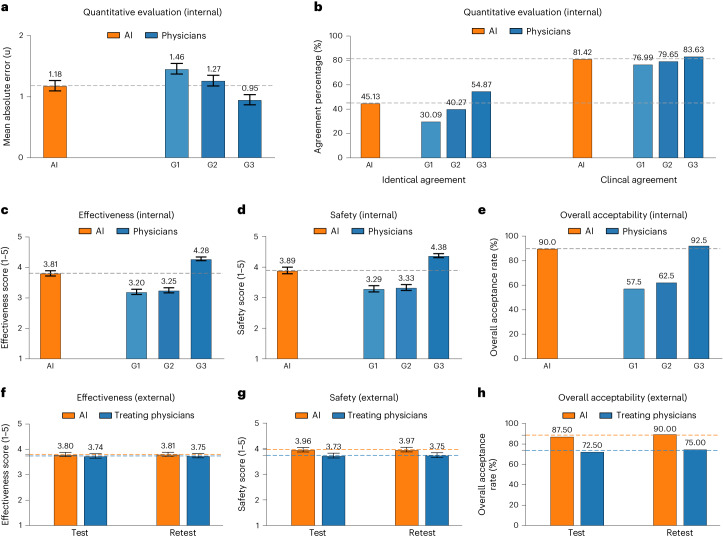
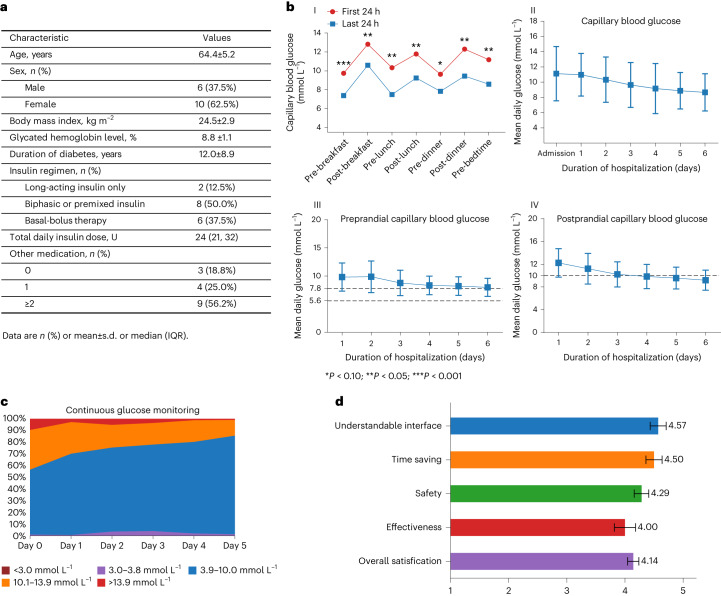
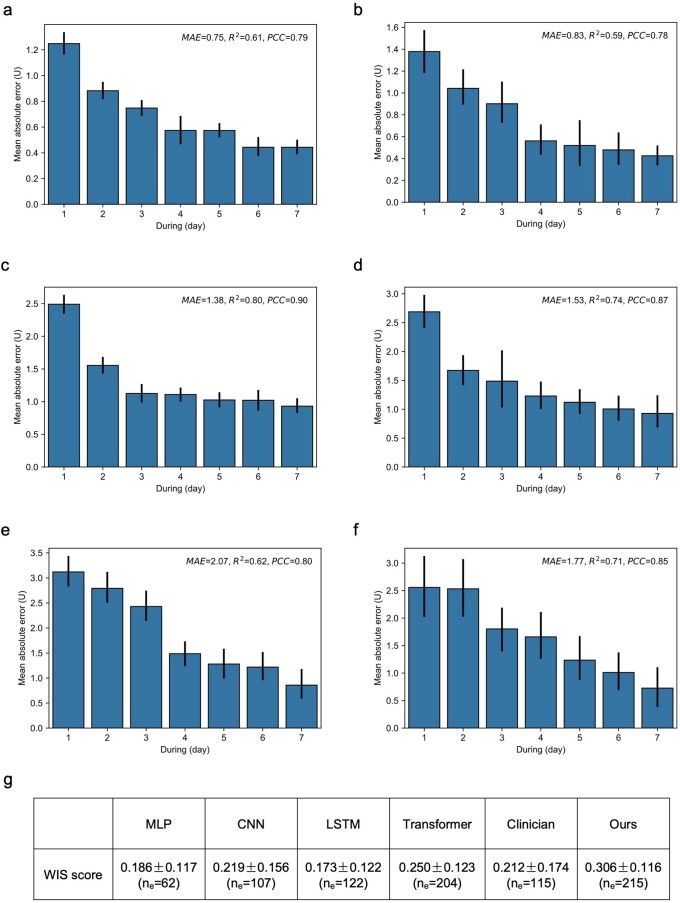
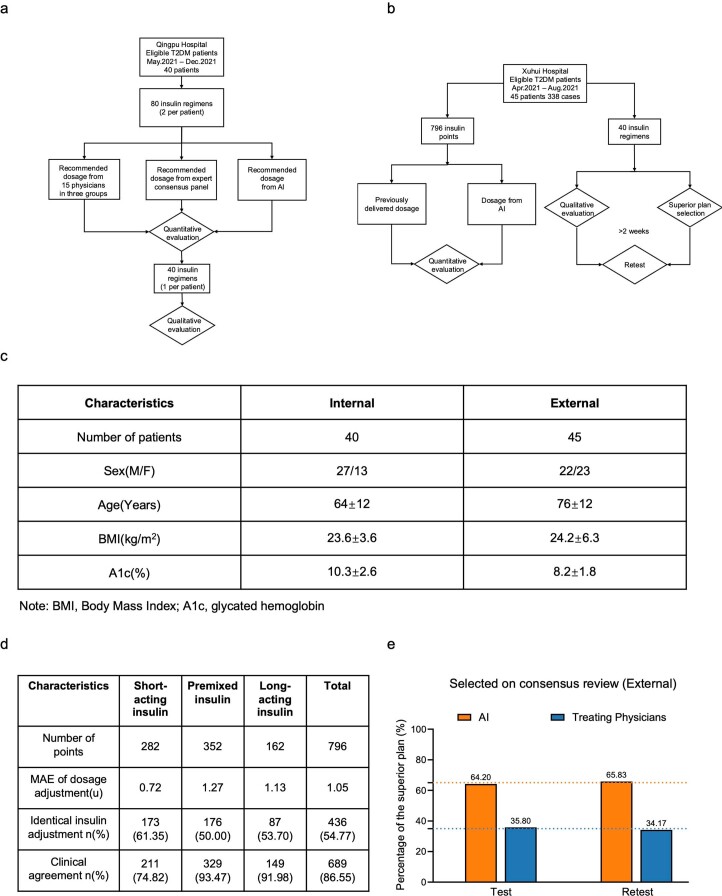
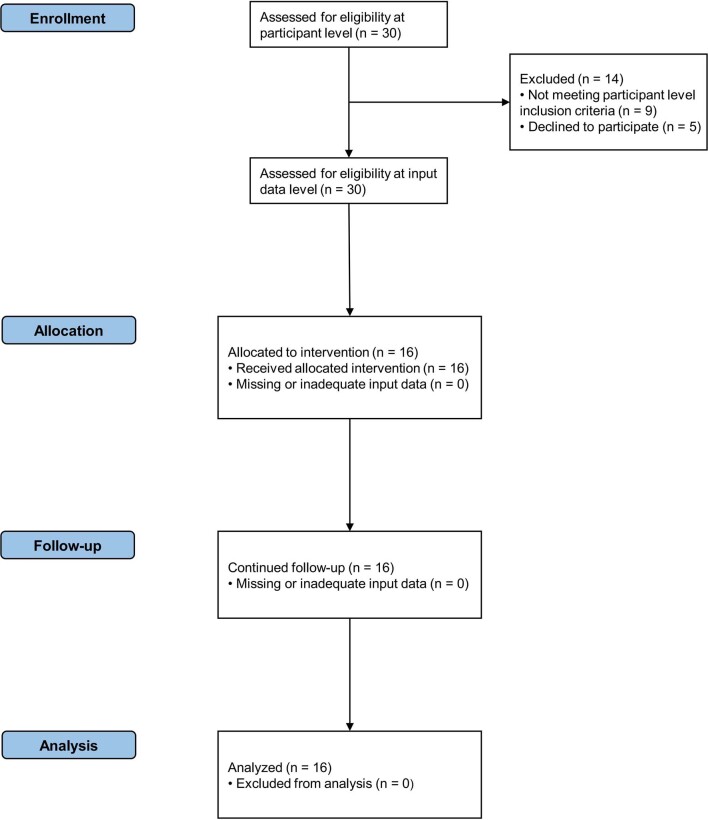
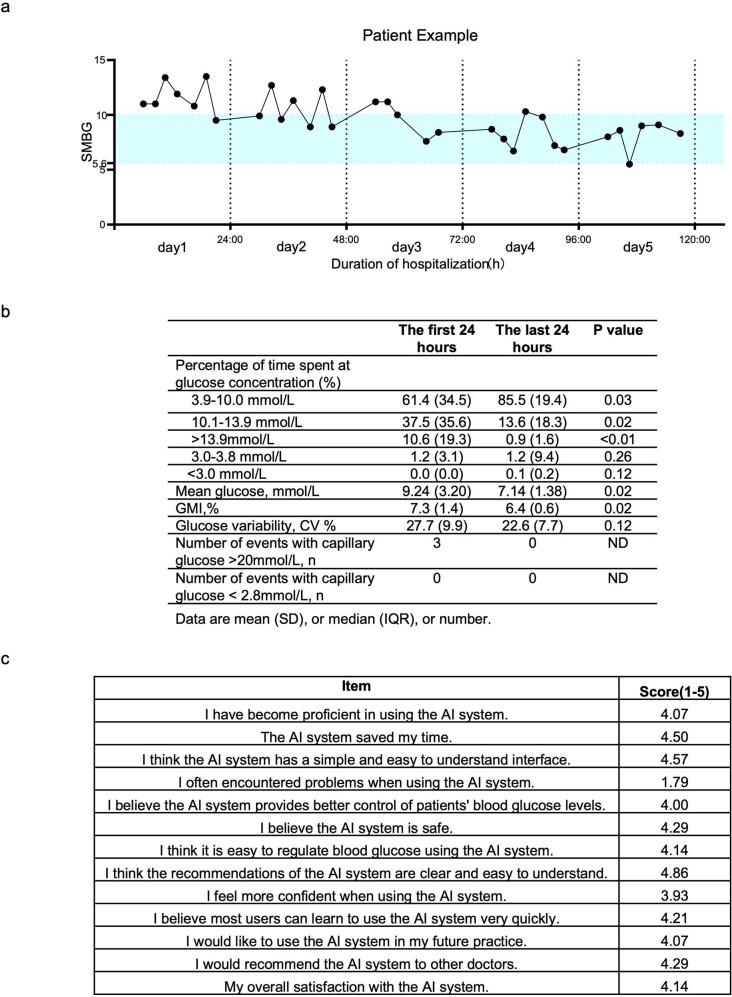
The personalized titration and optimization of insulin regimens for treatment of type 2 diabetes (T2D) are resource-demanding healthcare tasks. Here we propose a model-based reinforcement learning (RL) framework (called RL-DITR), which learns the optimal insulin regimen by analyzing glycemic state rewards through patient model interactions. When evaluated during the development phase for managing hospitalized patients with T2D, RL-DITR achieved superior insulin titration optimization (mean absolute error (MAE) of 1.10 ± 0.03 U) compared to other deep learning models and standard clinical methods. We performed a stepwise clinical validation of the artificial intelligence system from simulation to deployment, demonstrating better performance in glycemic control in inpatients compared to junior and intermediate-level physicians through quantitative (MAE of 1.18 ± 0.09 U) and qualitative metrics from a blinded review. Additionally, we conducted a single-arm, patient-blinded, proof-of-concept feasibility trial in 16 patients with T2D. The primary outcome was difference in mean daily capillary blood glucose during the trial, which decreased from 11.1 (±3.6) to 8.6 (±2.4) mmol L −1 ( P < 0.01), meeting the pre-specified endpoint. No episodes of severe hypoglycemia or hyperglycemia with ketosis occurred. These preliminary results warrant further investigation in larger, more diverse clinical studies. ClinicalTrials.gov registration: NCT05409391 .
Overview
The claims and statistics of this paper haven’t been checked yet.
Free: it reads the open-access text and checks the first 5 claims that cite a source we can check. Create a free account to check every claim.
Integrity signals
Registry
Cites
Statistics
Figures
Verification
Claims the paper makes
The claims and statistics of this paper haven’t been checked yet.
Free: it reads the open-access text and checks the first 5 claims that cite a source we can check. Create a free account to check every claim.
Claims other papers make about this one
Each is checked against this paper’s own text: does it say what the citing paper says it does?
The source backs part of the claim, not all of it — or backs it for a different population, condition or comparison.
In the citing paper
“AI-driven real-time patient monitoring systems are revolutionizing clinical care by enabling continuous, data-driven tracking of patient health.90,104,105”
From A foundational architecture for AI agents in healthcare (2025) · cites this paper as [105]
Experimental — accuracy not yet measured
Self-check
Percentages, sums and reported differences re-computed from the paper’s own numbers.
The self-check needs the paper’s full text.
Citations
Cites
Dermatologist-level classification of skin cancer with deep neural networks
Esteva, A., Kuprel, B., Novoa, R. A., Ko, J., Swetter, S. M., Blau, H. M., & Thrun, S. (2017) · Nature · doi:10.1038/nature21056 · Cited by 14,362
Sun, H., Saeedi, P., Karuranga, S., Pinkepank, M., Ogurtsova, K., Duncan, B. B., Stein, C., Basit, A., Chan, J. C. N., Mbanya, J. C., et al. (2022) · Diabetes Research and Clinical Practice · doi:10.1016/j.diabres.2021.109119 · Cited by 10,123
Stratton, I. M. (2000) · BMJ · doi:10.1136/bmj.321.7258.405 · Cited by 9,059
Reinforcement Learning: A Survey
Kaelbling, L. P., Littman, M. L., & Moore, A. W. (1996) · Journal of Artificial Intelligence Research · doi:10.1613/jair.301 · Cited by 8,972 · cited 1×
“Reinforcement learning (RL) has been proposed as a subfield of machine learning, enabling an agent to learn effective strategies through trial-and-error interactions with a dynamic environment 13 .”
BackgroundReinforcement Learning: An Introduction
Johnson, J. D., Li, J., & Chen, Z. (2000) · Neurocomputing · doi:10.1016/s0925-2312(00)00324-6 · Cited by 8,414
Self-citation10-year follow-up of intensive glucose control in type 2 diabetes
Holman, R. R., Paul, S. K., Bethel, M. A., Matthews, D. R., & Neil, H. A. W. (2008) · New England Journal of Medicine · doi:10.1056/nejmoa0806470 · Cited by 7,751
Identifying Medical Diagnoses and Treatable Diseases by Image-Based Deep Learning
Kermany, D. S., Goldbaum, M., Cai, W., Valentim, C. C. S., Liang, H., Baxter, S. L., McKeown, A., Yang, G., Wu, X., Yan, F., et al. (2018) · Cell · doi:10.1016/j.cell.2018.02.010 · Cited by 4,842
Self-citationArtificial intelligence in cancer imaging: Clinical challenges and applications
Bi, W. L., Hosny, A., Schabath, M. B., Giger, M. L., Birkbak, N. J., Mehrtash, A., Allison, T., Arnaout, O., Abbosh, C., Dunn, I. F., et al. (2019) · CA: A Cancer Journal for Clinicians · doi:10.3322/caac.21552 · Cited by 1,846 · cited 2×
“Artificial intelligence (AI) approaches have emerged as potentially powerful tools to aid in disease diagnosis and management 8–10 .”
BackgroundMoghissi, E. S., Korytkowski, M. T., DiNardo, M., Einhorn, D., Hellman, R., Hirsch, I. B., Inzucchi, S. E., Ismail-Beigi, F., Kirkman, M. S., & Umpierrez, G. E. (2009) · Diabetes Care · doi:10.2337/dc09-9029 · Cited by 1,444 · cited 1×
“The traditional clinical methods of insulin dosage titration were used as the standard clinical methods for comparison, consisting of guidelines 42 and consensus formulas 43,44 for premixed insulin regimen, basal regimen and basal-bolus regimen. https://doi.org/10.1038/s41591-023-02552-9 The…”
MethodInfluentialMastering Atari, Go, chess and shogi by planning with a learned model
Schrittwieser, J., Antonoglou, I., Hubert, T., Simonyan, K., Sifre, L., Schmitt, S., Guez, A., Lockhart, E., Hassabis, D., Graepel, T., et al. (2020) · RePEc: Research Papers in Economics · Cited by 1,310
Research works printed but not linked: 5
- Thomas MM Joost B Aske P Catholijn MJ Model-based reinforcement learning: a survey Found. Trends Mach. Learn 2020 16 1 118
- Farajtabar, M., Chow, Y. & Ghavamzadeh, M. More robust doubly robust off-policy evaluation. In Proc. of the 35th International Conference on Machine Learning, Vol. 80, 1447–1456 (PMLR, 2018).
- Srivastava N Hinton G Krizhevsky A Sutskever I Salakhutdinov R Dropout: a simple way to prevent neural networks from overfitting J. Mach. Learn. Res. 2014 15 1929 1958
- Fox, I. & Wiens, J. Reinforcement learning for blood glucose control: challenges and opportunities. https://openreview.net/forum?id=ByexVzSAs4 (2019).
- Zhang, H., Xu, W. & Yu, H. Generative planning for temporally coordinated exploration in reinforcement learning. In 10th International Conference on Learning Representations (ICLR 2022) (IEEE, 2022).
Cited by
A Primer on Reinforcement Learning in Medicine for Clinicians
Jayaraman, P., Desman, J. M., Sabounchi, M., Nadkarni, G. N., & Sakhuja, A. (2024) · npj Digital Medicine · doi:10.1038/s41746-024-01316-0 · Cited by 199
“Despite their complexity, studies have demonstrated the suitability of relatively simple methods like FQE for policy 77,78 79 andaproof-of-concepttrialofinsulincontrolfortype2diabetes 80 .”
Artificial intelligence for diabetes care: current and future prospects
Sheng, B., Pushpanathan, K., Guan, Z., Lim, Q. H., Lim, Z. W., Yew, S. M. E., Goh, J. H. L., Bee, Y. M., Sabanayagam, C., Sevdalis, N., et al. (2024) · The Lancet Diabetes & Endocrinology · doi:10.1016/s2213-8587(24)00154-2 · Cited by 106
Large language models for diabetes care: Potentials and prospects
Sheng, B., Guan, Z., Lim, L., Jiang, Z., Mathioudakis, N. N., Li, J., Liu, R., Bao, Y., Bee, Y. M., Wang, Y. X., et al. (2024) · Science Bulletin · doi:10.1016/j.scib.2024.01.004 · Cited by 85
Nagayach, A., Bhaskar, R., Ghosh, S., Singh, K. K., Han, S. S., & Sinha, J. K. (2024) · Ageing Research Reviews · doi:10.1016/j.arr.2024.102450 · Cited by 59
A foundational architecture for AI agents in healthcare
Liu, F., Niu, Y., Zhang, Q., Wang, K., Dong, Z., Wong, I. N., Cheng, L., Li, T., Duan, L., Li, K., et al. (2025) · Cell Reports Medicine · doi:10.1016/j.xcrm.2025.102374 · Cited by 41
“90,104,105 Through integration of wearable devices, biosensors, and remote monitoring tools, AI agents can collect and analyze a range of physiological data, including heart rate, blood pressure, and blood glucose levels.”
Wu, Q., Han, J., Yan, Y., Kuo, Y., & Shen, Z. M. (2025) · Health Care Management Science · doi:10.1007/s10729-025-09699-6 · Cited by 68
Towards intelligent and miniaturized drug delivery devices
Wei, X., Buse, J. B., Chen, H., Desai, T. A., Stevens, M. M., Traverso, G., Langer, R., & Gu, Z. (2026) · Nature · doi:10.1038/s41586-026-10221-3 · Cited by 51
Med3DVLM: An Efficient Vision-Language Model for 3D Medical Image Analysis
Xin, Y., Ates, G. C., Gong, K., & Shao, W. (2025) · IEEE Journal of Biomedical and Health Informatics · doi:10.1109/jbhi.2025.3604595 · Cited by 116
“We used DCFormer-small [1] as the vision encoder, and ClinicalBERT [34] as the text encoder.”
The coming era of proteomics-driven precision medicine
Jiang, Y., Wang, J., Sun, A., Zhang, H., Yu, X., Qin, W., Ying, W., Li, Y., Chang, C., Wang, X., et al. (2025) · National Science Review · doi:10.1093/nsr/nwaf278 · Cited by 38
“Utilizing artificial intelligence (AI), especially deep reinforcement learning, has shown superior decision-making capabilities in various fields and is proving effective in managing complex medical conditions, suggesting a significant role for AI in future healthcare advancements [151 ,152 ] ( Fig.”
Alharthi, S. (2025) · Saudi Pharmaceutical Journal · doi:10.1007/s44446-025-00055-x · Cited by 44
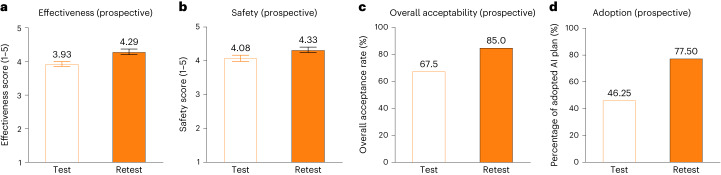
“A prospective study further assessed the effectiveness, safety, overall acceptability, and adoption rate of AI-generated regimens directly at the bedside (Wang et al. 2023).”
InfluentialLarge Language Models in Psychiatry: Current Applications, Limitations, and Future Scope
Liu, Z., Bao, Y., Zeng, S., Qian, R., Deng, M., Gu, A., Li, J., Wang, W., Cai, W., Li, W., et al. (2024) · Big Data Mining and Analytics · doi:10.26599/bdma.2024.9020046 · Cited by 32
Self-citationFuture horizons in diabetes: integrating AI and personalized care
Zhang, K., Qi, Y. P., Wang, W., Tian, X., Wang, J., Xu, L., & Zhai, X. (2025) · Frontiers in Endocrinology · doi:10.3389/fendo.2025.1583227 · Cited by 36
Artificial Intelligence in Diabetes Care: Applications, Challenges, and Opportunities Ahead
Parab, R., Feeley, J. M., Valero, M., Chadalawada, L., Garcia, G. P., Kar, S. S., Madabhushi, A., Breton, M. D., Li, J., Shao, H., et al. (2025) · Endocrine Practice · doi:10.1016/j.eprac.2025.07.008 · Cited by 36
Banumathi, K., Venkatesan, L., Benjamin, L. S., Vijayalakshmi, K., & Satchi, N. S. (2025) · Cureus · doi:10.7759/cureus.82756 · Cited by 62
Morey, D. A., Rayo, M. F., & Woods, D. D. (2025) · npj Digital Medicine · doi:10.1038/s41746-025-01784-y · Cited by 36
“Though recent trends towards increased practitioner involvement are promising 23,28,29,61,62 , this has yet to become standard practice in the early evaluation of new AI technologies.”
Safety of human-AI cooperative decision-making within intensive care: A physical simulation study
Festor, P., Nagendran, M., Gordon, A. C., Faisal, A. A., & Komorowski, M. (2025) · PLOS Digital Health · doi:10.1371/journal.pdig.0000726 · Cited by 32
“Artificial Intelligence (AI) driven systems have an increasingly prominent role in decision-making including in high-stakes (e.g., potentially life-threatening) settings [1–3].”
Advancing Precision Oncology Through Modeling of Longitudinal and Multimodal Data
Zhuang, L., Park, S., Skates, S. J., Prosper, A. E., Aberle, D. R., & Hsu, W. W. Y. (2025) · IEEE Reviews in Biomedical Engineering · doi:10.1109/rbme.2025.3577587 · Cited by 34
“Several recent studies have leveraged sequential medical imaging and clinical data to optimize treatment and screening policies using this approach [128], [129], [130], [131].”
Natural Language Processing for Digital Health in the Era of Large Language Models
Sarker, A., Zhang, R., Wang, Y., Xiao, Y., Das, S., Schutte, D., Oniani, D., Xie, Q., & Xu, H. (2024) · Yearbook of Medical Informatics · doi:10.1055/s-0044-1800750 · Cited by 39
“Encoder-only transformer models like BERT [2] led the way to the current generative models we refer to as LLMs. Early adaptation of transformer models to the medical domain came through the release of models like BioBERT [7], PubMedBERT [38], and ClinicalBERT [39].”
Yu, X., Yang, Z., Sun, X., Liu, H., Li, H., Lu, J., Zhou, J. H., & Çınar, A. (2025) · AI · doi:10.3390/ai6050087 · Cited by 31
“…Error between the BGC and 4.5 mmol/L Sayyar Ahmad [57] BGC, maximum, minimum, Area under the curve Mohammad Ali Raheb [73] BGC, IOB Guangyu Wang [86] BGC, demographics, diagnosis, symptom, medication, laboratory test index Jonas Nordhaug Myhre [69] BGC, insulin, IOB Hybrid Taiyu Zhu [71] BGC,…”
InfluentialLee, H. Y., Chung, S., Hyeon, D., Yang, H.-L., Lee, H., Ryu, H. G., & Lee, H. (2024) · npj Digital Medicine · doi:10.1038/s41746-024-01335-x · Cited by 29
“Despite theseefforts,extensivevalidationstudiesarenecessarytoestablishthe model ’ s ef fi cacy further 44 .”
A review of ChatGPT in medical education: exploring advantages and limitations
Cheng, Y., & Zhu, L. (2025) · International Journal of Surgery · doi:10.1097/js9.0000000000002505 · Cited by 29
Contreras, M., Kapoor, S., Zhang, J., Davidson, A., Ren, Y., Guan, Z., Ozrazgat‐Baslanti, T., Sena, J., Nerella, S., Bihorac, A., et al. (2025) · Scientific Reports · doi:10.1038/s41598-025-22634-7 · Cited by 39
“The text EHR baselines consisted of seven LLM models: ModernBERT 38 , ClinicalBERT 18 , GatorTron-8b 19 , GatorTronS 29 , LLaMa 3-8b, LLaMa 3.1-8b, and LLaMa 3.2-1b 30 .”
InfluentialZeng, Q., Huang, C., & Zhu, J. (2026) · Frontiers in Public Health · doi:10.3389/fpubh.2025.1656603 · Cited by 28
RoBERTa-Assisted Outcome Prediction in Ovarian Cancer Cytoreductive Surgery Using Operative Notes
Laios, A., Kalampokis, E., Mamalis, M. E., Tarabanis, C., Nugent, D., Thangavelu, A., Theophilou, G., & Jong, D. D. (2023) · Cancer Control · doi:10.1177/10732748231209892 · Cited by 22
Khunte, A., Sangha, V., Oikonomou, E. K., Dhingra, L. S., Aminorroaya, A., Coppi, A. C., Shankar, S. V., Rockers, E., Mortazavi, B. J., Bhatt, D. L., et al. (2026) · European Heart Journal - Digital Health · doi:10.1093/ehjdh/ztag031 · Cited by 29
A distributional reinforcement learning model for optimal glucose control after cardiac surgery
Desman, J. M., Hong, Z.-W., Sabounchi, M., Sawant, A. S., Gill, J., Costa, A. C., Kumar, G., Sharma, R., Gupta, A., McCarthy, P. J., et al. (2025) · npj Digital Medicine · doi:10.1038/s41746-025-01709-9 · Cited by 26
“To ensure clinical applicability and acceptability of our study we performed a comprehensive 3-phase human evaluation inspired by prior work 46 , which is a signi fi cant strength of our study.”
Haque, M. A., & Siddique, H. R. (2025) · Computational Biology and Chemistry · doi:10.1016/j.compbiolchem.2025.108611 · Cited by 24
Jaloli, M., & Cescon, M. (2023) · Control Engineering Practice · doi:10.1016/j.conengprac.2023.105762 · Cited by 23
Applications of artificial intelligence‐driven microfluidics in medical laboratory science
Jiang, Q., Mo, Q., Ge, C., Li, W., Mai, J., Chen, Y., Liu, Y., Deng, X., Yang, Z., & Wang, D. (2025) · Interdisciplinary medicine · doi:10.1002/inmd.20240135 · Cited by 19
Self-citationMarchetti, A., Sasso, D., D’Antoni, F., Morandin, F., Parton, M., Matarrese, M. A. G., & Merone, M. (2025) · Computers in Biology and Medicine · doi:10.1016/j.compbiomed.2025.110147 · Cited by 20
A Review of Applying Large Language Models in Healthcare
Liu, Q., Yang, R., Gao, Q. F., Liang, T., Wang, X., Li, S., Lei, B., & Gao, K. (2024) · IEEE Access · doi:10.1109/access.2024.3524588 · Cited by 24
“Leveraging pre-trained models like Clinical BERT and NLP techniques led to an insulin regimen guidance model [36], showing promising results in improving response accuracy and relevance, addressing the dynamic needs of diabetes management [37].”
Ying, Z., Li, X., & Chen, Y. (2025) · Journal of Translational Internal Medicine · doi:10.1515/jtim-2025-0039 · Cited by 12
“[8] In a randomized clinical trial of a voice-based conversational AI application that provided autonomous basal insulin management for adults with type 2 diabetes, participants in the AI group had significantly improved time to optimal insulin dose, insulin adherence, glycemic control, and…”
Self-citationFrom Molecular Insights to Clinical Management of Gestational Diabetes Mellitus—A Narrative Review
Assani, M.-Z., Boldeanu, L., Manolea, M. M., Boldeanu, M. V., Siloşi, I., Assani, A.-D., Văduva, C.-C., & Dijmărescu, A. L. (2025) · International Journal of Molecular Sciences · doi:10.3390/ijms26178719 · Cited by 14
“Translating such systems to GDM may improve maternal and fetal outcomes while reducing the burden of frequent monitoring [120–123].”
Manzini, E., Vlacho, B., Franch‐Nadal, J., Escudero, J., Génova, A., Reixach, E., Andrés, E., Pizarro, I., Mauricio, D., & Perera-Lluna, A. (2025) · Expert Systems with Applications · doi:10.1016/j.eswa.2025.126876 · Cited by 18
Federated multimodal AI for precision-equitable diabetes care
Bai, B., Liu, X., & Li, H. Q. (2026) · Frontiers in Digital Health · doi:10.3389/fdgth.2025.1678047 · Cited by 12
Self-citationChen, D., Zhang, W., & Ding, Z. (2024) · Expert Systems with Applications · doi:10.1016/j.eswa.2024.126215 · Cited by 15
Unveiling Discrete Clues: Superior Healthcare Predictions for Rare Diseases
Zhao, C., Tang, H., Zhang, J., & Li, X. (2025) · International World Wide Web Conference (WWW) · doi:10.1145/3696410.3714831 · Cited by 18
Self-citationUMCL: Unified Medical Image-Text-Label Contrastive Learning With Continuous Prompt
Wang, Y., & Wang, G. (2023) · IEEE International Conference on Bioinformatics and Biomedicine (BIBM) · doi:10.1109/bibm58861.2023.10386034 · Cited by 10
Self-citationEnhanced ICD-10 code assignment of clinical texts: A summarization-based approach
Sun, Y., Sang, L., Wu, D., He, S., Chen, Y., Duan, H., Chen, H., & Lü, X. (2024) · Artificial Intelligence in Medicine · doi:10.1016/j.artmed.2024.102967 · Cited by 11
Self-citationThomsen, C. H. N., Kronborg, T., Hangaard, S., Vestergaard, P., & Jensen, M. H. (2025) · International Journal of Medical Informatics · doi:10.1016/j.ijmedinf.2024.105783 · Cited by 14
Chen, F., Zhang, G., Fang, Y., Peng, Y., & Weng, C. (2025) · Journal of the American Medical Informatics Association · doi:10.1093/jamia/ocae326 · Cited by 12
FedPC: An Efficient Prototype-Based Clustered Federated Learning on Medical Imaging
Gao, T., Liu, K., Yang, Y., Liu, X., Zhang, P., & Wang, G. (2025) · IEEE Journal of Biomedical and Health Informatics · doi:10.1109/jbhi.2025.3567055 · Cited by 13
“A I-DRIVEN healthcare applications have emerged as trans-formative technologies for disease [1] and prediction [2], [3], but raise concerns regarding the security of patient data [4], [5].”
Self-citationPanagiotou, M., Brigato, L., Streit, V., Hayoz, A., Proennecke, S., Athanasopoulos, S., Olsen, M. T., Brok, E. J. D., Svensson, C. H., Makrilakis, K., et al. (2025) · IEEE Access · doi:10.1109/access.2025.3600738 · Cited by 9
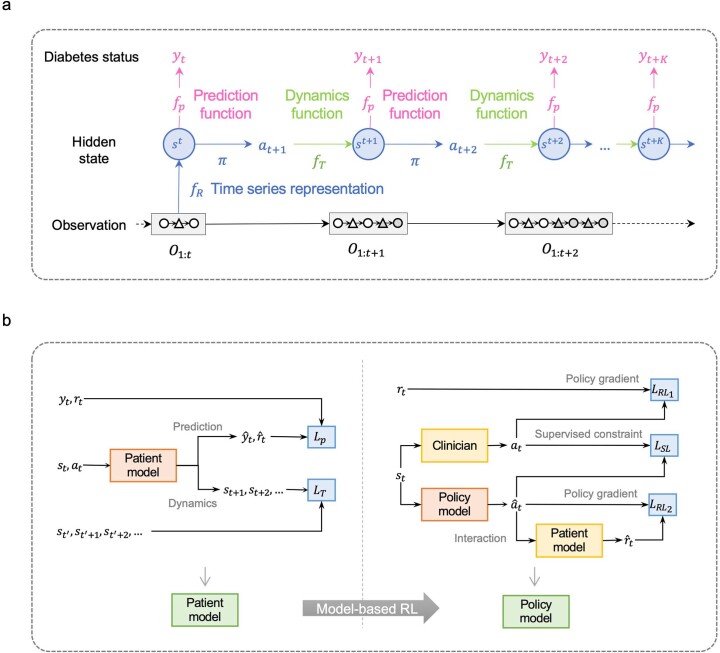
“Wang et al. [49] introduced RL based dynamic insulin titration regimen, model-based framework that determine the optimal insulin regimen by evaluating rewards associated with the glycemic state through interactions with person’s models.”
Ghaffarzadeh-Esfahani, M., Ghaffarzadeh-Esfahani, M., Salahi‐Niri, A., Toreyhi, H., Atf, Z., Mohsenzadeh-Kermani, A., Sarikhani, M., Tajabadi, Z., Shojaeian, F., Bagheri, M. H., et al. (2025) · Scientific Reports · doi:10.1038/s41598-025-26705-7 · Cited by 14
“We also tested the performance of two pretrained language models, BERT 18 and ClincicalBERT 19 , which are fine-tuned versions of BERT on medical text.”
Thomsen, C. H. N., Kronborg, T., Hangaard, S., Vestergaard, P., Hejlesen, O. K., & Jensen, M. H. (2024) · International Journal of Medical Informatics · doi:10.1016/j.ijmedinf.2024.105758 · Cited by 7
Isaradech, N., Riedel, A., Sirikul, W., Kreuzthaler, M., & Schulz, S. (2025) · Artificial Intelligence in Medicine · doi:10.1016/j.artmed.2025.103165 · Cited by 14
Büyüktoka, R. E., Sürücü, M., Erekli, P. B., Adıbelli, Z. H., Şalbaş, A., Koç, A. M., Büyüktoka, A. D., İşler, Y., Ugur, M., & Işıklar, E. (2025) · European Radiology · doi:10.1007/s00330-025-11933-2 · Cited by 11
Zhu, Y., Shu, X., Liu, X., Li, Y., Yi, B., & Ma, D. (2025) · Anesthesiology and Perioperative Science · doi:10.1007/s44254-025-00156-9 · Cited by 9
Self-citationAI-supported insulin dosing for type 2 diabetes
Davis, G. M., Shao, H., & Pasquel, F. J. (2023) · Nature Medicine · doi:10.1038/s41591-023-02573-4 · Cited by 7
Large Language Models for Electronic Health Record De-Identification in English and German
Sousa, S., Jantscher, M., Kröll, M., & Kern, R. (2025) · Information · doi:10.3390/info16020112 · Cited by 13
Imani, F., Bayani, A., Kargar, M., & Assadzadeh, A. (2025) · Iran Journal of Computer Science · doi:10.1007/s42044-025-00321-0 · Cited by 10
Multimodal Clinical Prediction with Unified Prompts and Pretrained Large-Language Models
Winston, C., Winston, C., Winston, C., Winston, C., & Winston, C. (2024) · 2024 IEEE 12th International Conference on Healthcare Informatics (ICHI) · doi:10.1109/ichi61247.2024.00108 · Cited by 6
“2) Models: In our evaluation, we use ClinicalBERT [22], a large-language model (LLM) trained on clinical reports, as an encoder model.”
MethodKaufmann, B., Busby, D., Das, C. K., Tillu, N., Menon, M., Tewari, A. K., & Gorin, M. A. (2024) · European Urology Focus · doi:10.1016/j.euf.2024.01.009 · Cited by 10
Ultrasound-driven deep learning for glucose monitoring in flowing blood
Lee, J. E., Sharma, A. K., Kwon, T., Sridharan, B., Kim, D., Kang, J., & Lim, H. G. (2025) · Sensors and Actuators A Physical · doi:10.1016/j.sna.2025.117028 · Cited by 7
Guan, Z., Li, H., Hernández-Jiménez, S. C., Amissah-Arthur, K. N., Schmidt, M. I., Masood, S., Zeng, D., Jia, W., Lim, L.-L., & Sheng, B. (2026) · The Lancet Diabetes & Endocrinology · doi:10.1016/s2213-8587(26)00010-0 · Cited by 9
Abdullah, Fatima, Z., Ather, M. A., & Rodríguez, J. L. O. (2026) · Scientific Reports · doi:10.1038/s41598-026-50418-0 · Cited by 7
Role of artificial intelligence in enhancing insulin recommendations and therapy outcomes
Panagiotou, M., Strømmen, K. J., Brigato, L., de Galan, B. E., & Mougiakakou, S. G. (2025) · Die Diabetologie · doi:10.1007/s11428-025-01332-y · Cited by 13
Xin, Z., Lin, W., Zhang, J., Peng, K., & Liu, Q. (2025) · Scientific Reports · doi:10.1038/s41598-025-01424-1 · Cited by 5
Wu, M., Wang, K., Huang, H., Wu, X., Liu, Z., & Li, S. (2025) · Nature and Science of Sleep · doi:10.2147/nss.s543091 · Cited by 6
“81,82”
Self-citationZhou, Y., Luo, R., Blais, J. E., Tan, K. C. B., Lui, D. T. W., Yiu, K. H., Lai, F. T. T., Wan, E. Y. F., Cheung, C., Wong, I. C. K., et al. (2025) · npj Digital Medicine · doi:10.1038/s41746-025-01951-1 · Cited by 12
“Furthermore, in contrast to model-free techniques, model-based methods can offer the rationale behind prescriptions 28 , a feature highly valued by clinicians for ensuring safety 21 .”
InfluentialDigital management of diabetes global research trends: a bibliometric study
Zhu, S., Bian, H., Zhan, J., Ni, L., Huo, L., & Hu, J. (2025) · Frontiers in Medicine · doi:10.3389/fmed.2025.1620307 · Cited by 9
Interpretable Deep Reinforcement Learning Via Concept-Based Policy Distillation
Bekkemoen, Y., & Langseth, H. (2025) · Machine Learning · doi:10.1007/s10994-025-06928-5 · Cited by 7
“RL have been applied in high-stake domains like medicine (Wang et al. 2023 ; Lauffenburger et al. 2024), autonomous driving (Kiran et al. 2022), and robotics (Tang et al. 2025 ).”
Mir, R. R., Haq, N. U., Ishaq, K., Safie, N., & Dogar, A. B. (2025) · PeerJ Computer Science · doi:10.7717/peerj-cs.2568 · Cited by 11
Zou, H., & Wang, Y. (2025) · Neurocomputing · doi:10.1016/j.neucom.2025.129589 · Cited by 7
Jian, D., Ye, K., Wang, L., Jin, L., Yang, H., Ma, L., Yi, C., Mao, Z., & Wu, J. (2025) · Nano Today · doi:10.1016/j.nantod.2025.102787 · Cited by 5
Global research trends in AI-assisted blood glucose management: a bibliometric study
Li, Y., Wang, Y., Xing, M., Liu, T., & Xiang, D. (2025) · Frontiers in Endocrinology · doi:10.3389/fendo.2025.1579640 · Cited by 12
“The fi ndings demonstrate that AI is not only reshaping diabetes research but is also paving the way for more personalized and effective clinical interventions (9, 13).”
InfluentialSynthetic4Health: generating annotated synthetic clinical letters
Ren, L., Belkadi, S., Han, L., Del-Pinto, W., & Nenadić, G. (2025) · Frontiers in Digital Health · doi:10.3389/fdgth.2025.1497130 · Cited by 18
“Speci fi cally, the encoder-only models we explored include Bio_ClinicalBERT (59), medicalai/ClinicalBERT (60), RoBERTa-base (62), and Clinical-Longformer (65).”
Poppitt, S. D., Miles-Chan, J. L., & Silvestre, M. P. (2025) · Expert Review of Endocrinology & Metabolism · doi:10.1080/17446651.2025.2532559 · Cited by 4
“Some procedures have been shown to have utility for improving treatment approaches for T2D management, using AI forecasting meth-ods [95–97].”
Somani, S. S., Kim, D. D., Pérez-Guerrero, E. J., Ngo, S., Seto, T., Al-Kindi, S. G., Hernandez‐Boussard, T., & Rodríguez, F. (2025) · Journal of the American Heart Association · doi:10.1161/jaha.124.040419 · Cited by 6
Benchmarking transformer embedding models for biomedical terminology standardization
Lahiri, A., Shukla, S., Stear, B. J., Ahooyi, T. M., Beigel, K., Margolskee, E. M., & Taylor, D. M. (2025) · Machine Learning with Applications · doi:10.1016/j.mlwa.2025.100683 · Cited by 12
Liu, Y., Tan, Z. D., Zhang, Z., Wang, S., Guo, J. S., Liu, H., Chen, T., & Bian, J. (2025) · Knowledge-Based Systems · doi:10.1016/j.knosys.2025.114102 · Cited by 6
Inpatient Insulin Dosing Calculators
Hansen, J. J., Bacani, G., Juang, P. S., & Kulasa, K. M. (2025) · Diabetes Spectrum · doi:10.2337/dsi25-0002 · Cited by 4
Fan, L., Liu, X., Wang, Y., Yang, G., Du, Z., & Wang, G. (2023) · IEEE International Conference on Bioinformatics and Biomedicine (BIBM) · doi:10.1109/bibm58861.2023.10385287 · Cited by 5
“Using deep learning techniques [4], LLMs show great potential in generating responses, making them incredibly valuable in a variety of applications like language translation, question answering, and text generation.”
BackgroundSelf-citationFine-tuning foundational models to code diagnoses from veterinary health records
Boguslav, M. R., Kiehl, A., Kott, D., Strecker, G. J., Webb, T. L., Saklou, N., Ward, T., & Kirby, M. J. L. (2026) · PLOS Digital Health · doi:10.1371/journal.pdig.0001147 · Cited by 11
“For human medical data, Medical Information Mart for Intensive Care III (MIMIC-III) [22] discharge summaries constitute a prominent publicly available foundational dataset used for benchmarking ( MIMIC-IV MIMIC-IV [ 21”
Festor, P., Nagendran, M., Gordon, A. C., Faisal, A. A., & Komorowski, M. (2023) · medRxiv · doi:10.1101/2023.10.03.23296437 · Cited by 6
“Photo of the simulation suite with: (1) Bedside monitor 547 (2) AI screen (3) Participant (4) Bedside nurse (5) Patient mannequin (6) Intensive care unit 548 (ICU) bedside information chart.”
MethodCOBIAS: Assessing the Contextual Reliability of Bias Benchmarks for Language Models
Govil, P., Jain, H., Bonagiri, V. K., Chadha, A. R., Kumaraguru, P., Gaur, M., & Dey, S. (2025) · ACM Web Science Conference (WebSci) · doi:10.1145/3717867.3717923 · Cited by 13
Machine learning in endocrinology: current applications and future perspectives
Kamińska, M., Trofimiuk–Müldner, M., Sokołowski, G., & Hubalewska–Dydejczyk, A. (2025) · Endocrine · doi:10.1007/s12020-025-04378-6 · Cited by 4
“[ 66 ] Endocrine (2025) 90:357 – 366 been applied in optimizing levothyroxine dosage and identifying clinical factors in fl uencing its dosing in post-thyroidectomy patients as was presented by Chen et al. [15].”
Enhancing ICD Code assignment with hierarchical multi-agent collaboration and reinforcement learning
Lu, P., Yang, X. K., Xue, J., & Gao, F. (2025) · Biomedical Signal Processing and Control · doi:10.1016/j.bspc.2025.109094 · Cited by 4
Prashanthan, A., & Prashanthan, J. (2026) · Journal of Future Artificial Intelligence and Technologies · doi:10.62411/faith.3048-3719-321 · Cited by 3
Chen, X., Deng, Y. C., Yang, X., Zhang, Y., Huang, Y., Li, S., Yang, H., Shi, Q., Wu, S., Chen, S., et al. (2026) · Nature Machine Intelligence · doi:10.1038/s42256-026-01192-1 · Cited by 3
Self-citationUncertainty-Aware Pre-Trained Foundation Models for Patient Risk Prediction via Gaussian Process
Lu, J., Zhao, S., Ma, W., Shao, H., Hu, X., Xi, Y., & Yang, C. (2024) · International World Wide Web Conference (WWW) · doi:10.1145/3589335.3651456 · Cited by 5
Type 2 diabetes risk prediction using glycemic control Metrics: A machine learning approach
Qasrawi, R., Thwib, S., Issa, G., Ghoush, R. A., & Amro, M. (2025) · Human Nutrition & Metabolism · doi:10.1016/j.hnm.2025.200341 · Cited by 7
Wang, M., Sushil, M., Williams, C. Y. K., Miao, B. Y., Kim, S., Masharani, U. B., Ku, G., Hsiao, V. C., Shah, A., Koliwad, S. K., et al. (2025) · Clinical Diabetes · doi:10.2337/cd25-0015 · Cited by 5
“An increasing number of studies have leveraged machine learning approaches to enhance treatment decisions, but have primarily relied on structured electronic health record (EHR) data (e.g., diagnosis, medication, and measurement) (9,13 – 16).”
Visual-action AI agents for medical diagnosis and treatment: advances and future outlook
Yao, Y., Luxue, Y., Chen, X., Shen, C., Yang, H., Lee, S., Chen, T., Ge, H., & Shen, J. (2025) · The Visual Computer · doi:10.1007/s00371-025-04153-8 · Cited by 2
Federated task-adaptive learning for personalized selection of human IVF-derived embryos
Gao, T., Yang, Y., Wang, K., Gao, Y., Ma, L., Chen, L., Liu, G., Zhang, P., Liu, X., & Wang, G. (2025) · Communications Medicine · doi:10.1038/s43856-025-01182-1 · Cited by 5
Self-citationYang, L., Du, L., Jiang, L., Zhang, Y., & Fan, Q. (2026) · British Journal of Hospital Medicine · doi:10.31083/bjhm50385 · Cited by 3
He, H., Ying, Z., Li, B., Fan, Y., Wang, P., Lu, J., Wu, L., Zhao, H., Guo, Y., Wang, G., et al. (2026) · Communications Medicine · doi:10.1038/s43856-026-01449-1 · Cited by 3
“First, we collected EHR datasets of hospitalized patients with T2DM and developed the “ black box ” insulin prediction model 6 .”
Self-citationLanguage Models and Food–Health Evidence: Challenges, Opportunities, and Implications
Jackson, D., Gousiopoulos, A., & Soldatos, T. G. (2026) · BioMedInformatics · doi:10.3390/biomedinformatics6020013 · Cited by 3
AI-powered closed-loop wearable bioelectronics for personalized and autonomous healthcare
Gao, B., Ge, Z., Sun, X., Lin, B., Gao, Y., Min, J., Zhang, Q., Rogers, J. A., Yu, X., Gao, W. F., et al. (2026) · Nature Sensors · doi:10.1038/s44460-026-00105-4 · Cited by 6
Self-citationLanguage Model-Based Text Augmentation System for Cerebrovascular Disease Related Medical Report
Kim, Y.-H., Kim, Y.-S., & Kim, Y.-S. (2024) · Applied Sciences · doi:10.3390/app14198652 · Cited by 2
“The process is as follows: (1) Fine-tune BioBERT, ClinicalBERT, and BiomedBERT using the original data for each pair and incrementally adding augmented data for fine-tuning [11,12].”
A LLMs-Assisted Framework for Parkinson's Disease Assessment Based on PPMI Dataset
Gao, Z., Ni, Q., Liu, W., & Zhang, L. (2024) · International Conference on Algorithms, Computing and Artificial Intelligence (ACAI) · doi:10.1109/acai63924.2024.10899636 · Cited by 6
“For model training and prediction, we used a model named ClinicalBERT [10] as the base model and supervised fine-tuned it using the corpora obtained from the data generation step and the LoRA framework.”
InfluentialEvidence Extraction for Automated Medical Coding: Preliminary Evaluation
Jiang, X., Khan, K., Vasantha, S. T., & Haider, S. (2024) · International Conference on Natural Language Processing and Information Retrieval (NLPIR) · doi:10.1145/3711542.3711580 · Cited by 4
Malins, S., Figueredo, G. P., Saxon, D. H., Horton, K., Clos, J., Trimble, T., Fatehi, K., Waldram, D., Higton, F., Hardy, G. E., et al. (2026) · Digital Health · doi:10.1177/20552076251413316 · Cited by 1
Personalized Diabetes Management and Treatment Planning using Reinforcement Learning
Rathore, S. P. S., Prajapat, D., Sharma, S., Pooja, S., Seth, R., & Sharma, G. (2024) · International Conference on Advancement in Electronics & Communication Engineering (AECE) · doi:10.1109/aece62803.2024.10911581 · Cited by 3
“Wang et al. (2023) demonstrate how reinforcement learning can optimize glycemic control in type 2 diabetes, offering a promising adaptive approach to managing blood glucose levels with improved precision [4].”
CLEAR: Addressing Representation Contamination in Multimodal Healthcare Analytics
Su, G., Zheng, K., Zhao, T., & Yin, J. (2025) · ACM SIGKDD Conference on Knowledge Discovery and Data Mining (KDD) · doi:10.1145/3690624.3709164 · Cited by 3
Zhao, C., Tang, H., Zhao, H., & Li, X. (2025) · ACM SIGKDD Conference on Knowledge Discovery and Data Mining (KDD) · doi:10.1145/3711896.3736908 · Cited by 8
Self-citationReinforcement Learning Models for Obesity Detection and Personalized Health Recommendations
Yeasmin, T., Satu, M. S., & Rahman, M. M. (2025) · IEEE International Conference on Quantum Photonics, Artificial Intelligence & Networking (QPAIN) · doi:10.1109/qpain66474.2025.11171721 · Cited by 1
GeneQuery: Generalized Gene Expression Prediction from Histology Images via Image-Gene QA
Xiong, Y., Liu, L., Cui, Y., Wu, S., Liu, X., Chan, A. B., & Xue, C. J. (2025) · IEEE International Conference on Bioinformatics and Biomedicine (BIBM) · doi:10.1109/bibm66473.2025.11356542 · Cited by 1
“And we used clinical BERT [16] as the gene encoder.”
Self-citationEskandar, K. (2026) · Geriatric Pharmacology · doi:10.1080/2994399x.2025.2596797 · Cited by 2
Artificial intelligence-empowered multi-scale data integration for precision exercise biomedicine
Li, J., Song, H., Ge, Z., & Luo, S. (2026) · Translational Exercise Biomedicine · doi:10.1515/teb-2026-0009 · Cited by 1
“Second, a set of complementary modeling paradigms has emerged – time-series learning, multimodal fusion, causal inference, and reinforcement learning – that collectively address prediction, integration, attribution, and sequential optimization in exercise interventions [6, 13, 19].”
Metadata
- Authors
- Wang, G., Liu, X., Ying, Z., Yang, G., Chen, Z., Liu, Z., Zhang, M., Yan, H., Lu, Y., Gao, Y., Xue, K., Li, X., & Chen, Y.
- Affiliations
- Shanghai Medical College of Fudan University (CN)
- Beijing University of Posts and Telecommunications (CN)
- Fudan University (CN)
- Shanghai Xuhui Central Hospital (CN)
- Peking University (CN)
- University of Oxford (GB)
- Corresponding author
- Wang, Guangyu
- Li, Xiaoying
- Chen, Ying
- ORCID
- Venue
- Nature Medicine
- Published
- 2023-09-14
- Volume
- 29
- Issue
- 10
- Pages
- 2633-2642
- ISSN
- 1078-8956 (ISSN-L)
- 1546-170X
- PMC
- PMC10579102
- OpenAlex
- W4386741020
- Cited by
- 156
- References
- 43
- Citations by year
- 2026: 49 · 2025: 75 · 2024: 26 · 2023: 6
- FWCI
- 31.77
- Type
- journal article
- Language
- en
- Open access
- hybrid
- doi.org
- Licence
- cc-by
- creativecommons.org/licenses/by/4.0 (tdm)
- creativecommons.org/licenses/by/4.0 (vor)
- Locations
- Nature Medicine (publishedVersion, cc-by)
- PubMed Central (publishedVersion, cc-by)
- PubMed (publishedVersion)
- Funders
- National Natural Science Foundation of China (62272055, 81820108008, 31830041, 82000822)
- the Tencent Foundation through the XPLORER PRIZE, and Young Elite Scientists Sponsorship Program by cs
- Topics
- Health Sciences › Medicine › Endocrinology, Diabetes and Metabolism › Diabetes Management and Research
- Health Sciences › Medicine › Endocrinology, Diabetes and Metabolism › Hyperglycemia and glycemic control in critically ill and hospitalized patients
- Health Sciences › Medicine › Endocrinology, Diabetes and Metabolism › Diabetes Treatment and Management
- Keywords
- type 2 diabetes, insulin dose adjustment, glycemic control, reinforcement learning, hospitalized patients, hypoglycemia, hyperglycemia, capillary blood glucose
- MeSH terms
- Glycemic Control, Artificial Intelligence, Blood Glucose, Diabetes Mellitus, Type 2, Humans, Hypoglycemic Agents, Insulin
About these checks
Registry, retraction, Cites and statistics results are computed, not judged, with one exception: a printed reference that no index lists is read once by a model before it counts as a citation error. Claims are extracted by a model and kept only when their quote appears verbatim in the text; each cited source is then checked, with a model’s help, for whether it says what the claim relies on. Those verdicts can be wrong — read the claim’s quote and the cited source before relying on one.
Statistics and arithmetic are recomputed, not judged.
Confidence bands are shown only for fields calibrated on our annotated test set. None is calibrated yet, so no band is shown.
What counts as a claim ›How we measure confidence ›How we check this ›
Are you an author, or do you see a problem with this page? Request a review
Data sources
Bibliographic data: Semantic Scholar, OpenAlex, Crossref.
Contains information from the Semantic Scholar Academic Graph Datasets, made available under the ODC Attribution License (ODC-BY 1.0).
Semantic Scholar’s data is described in: Kinney, R., et al. (2023). The Semantic Scholar Open Data Platform. arXiv:2301.10140.
