

Optimized glycemic control of type 2 diabetes with reinforcement learning: a proof-of-concept trial
Open accessThe DOI matches its Crossref record; 44 of the 44 references it cites were found in a registry or an index.
Abstract
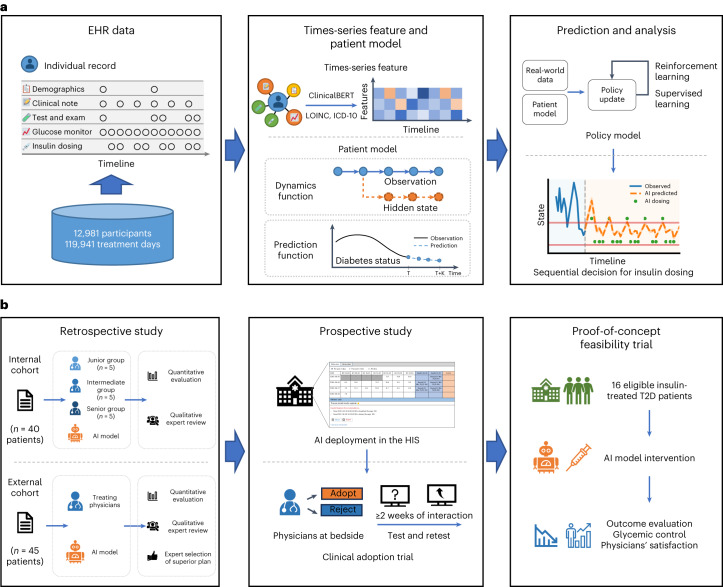
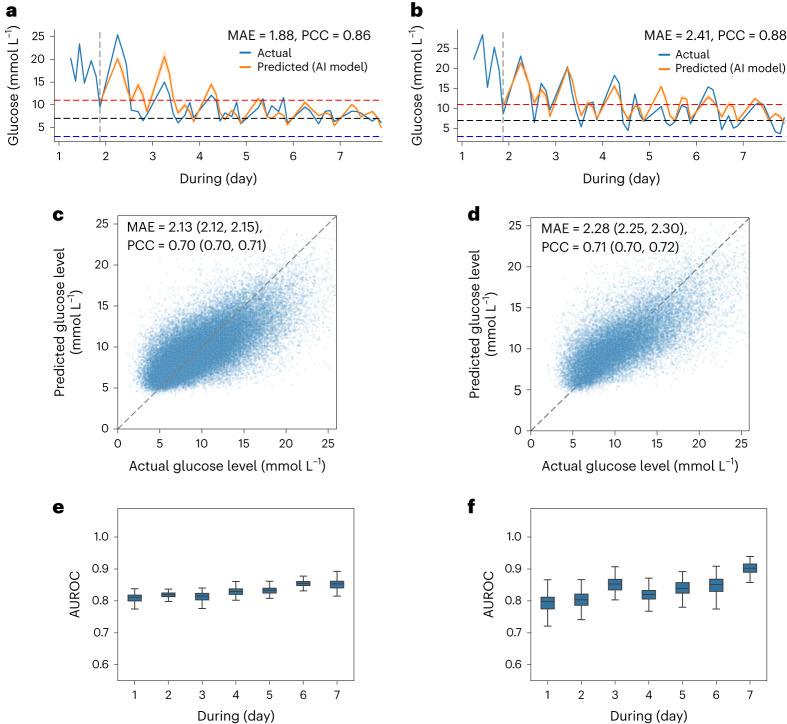
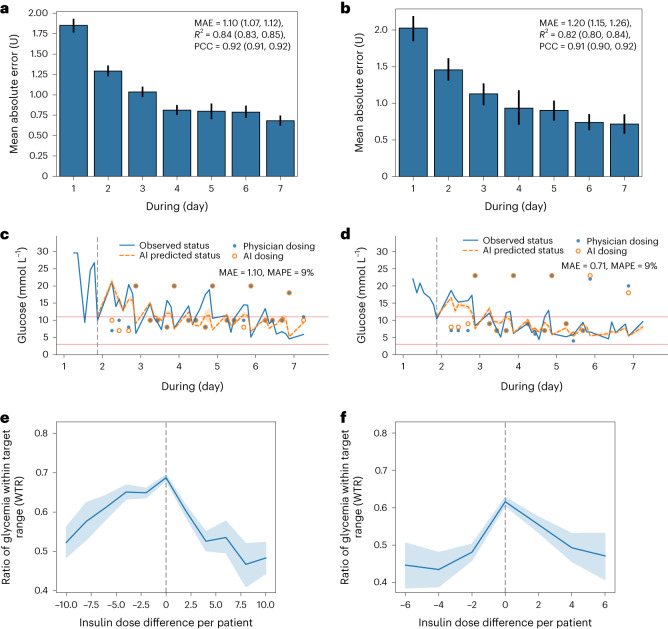
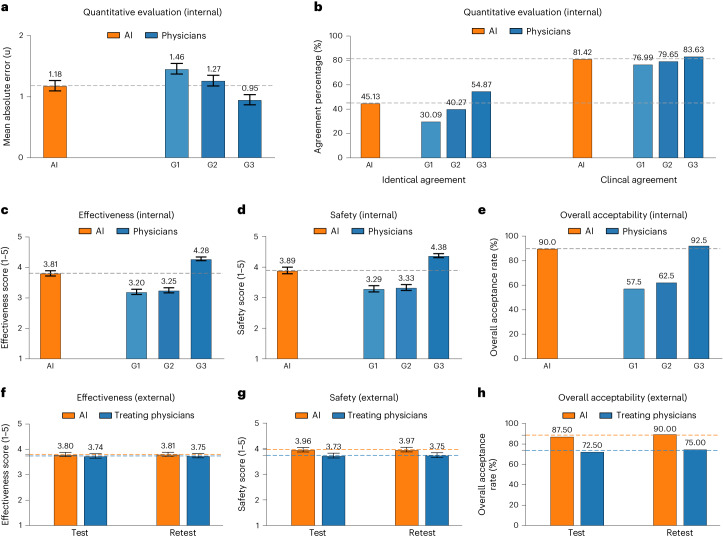
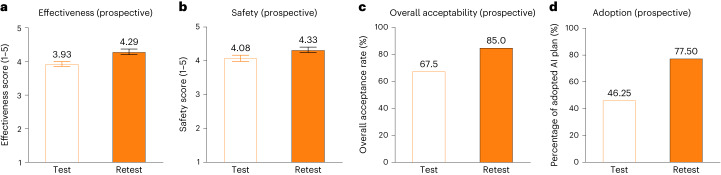
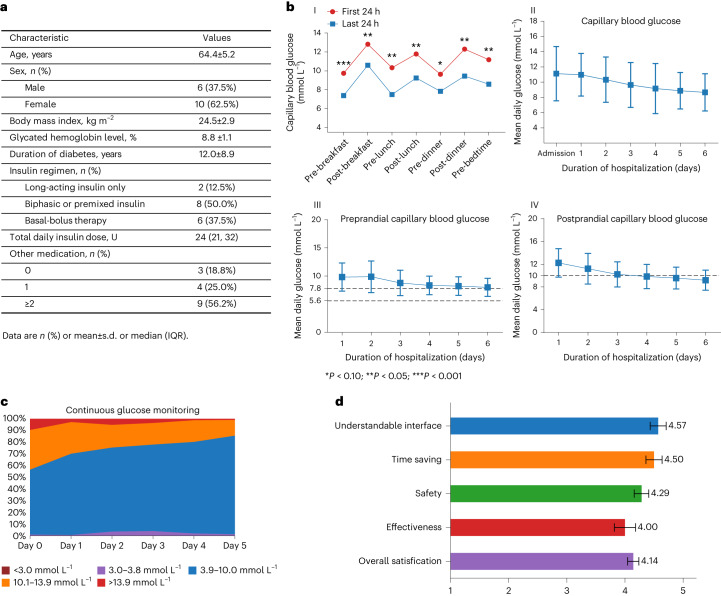
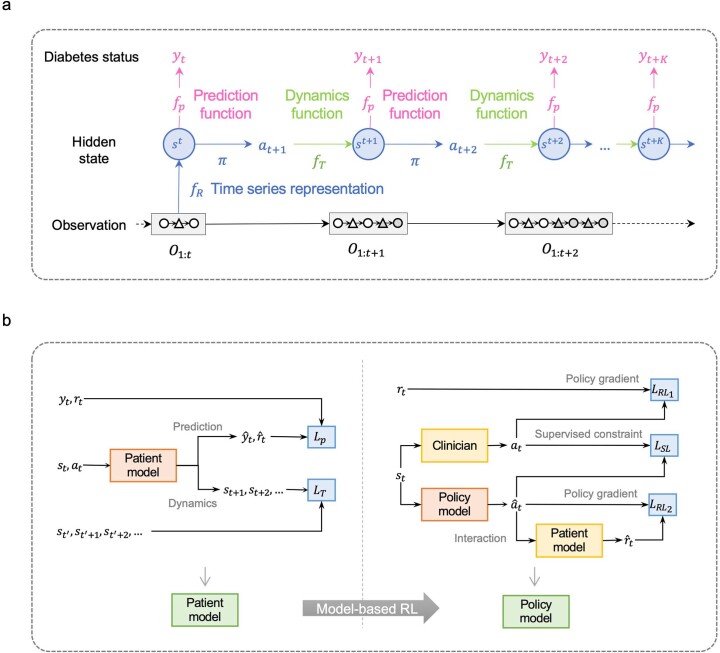
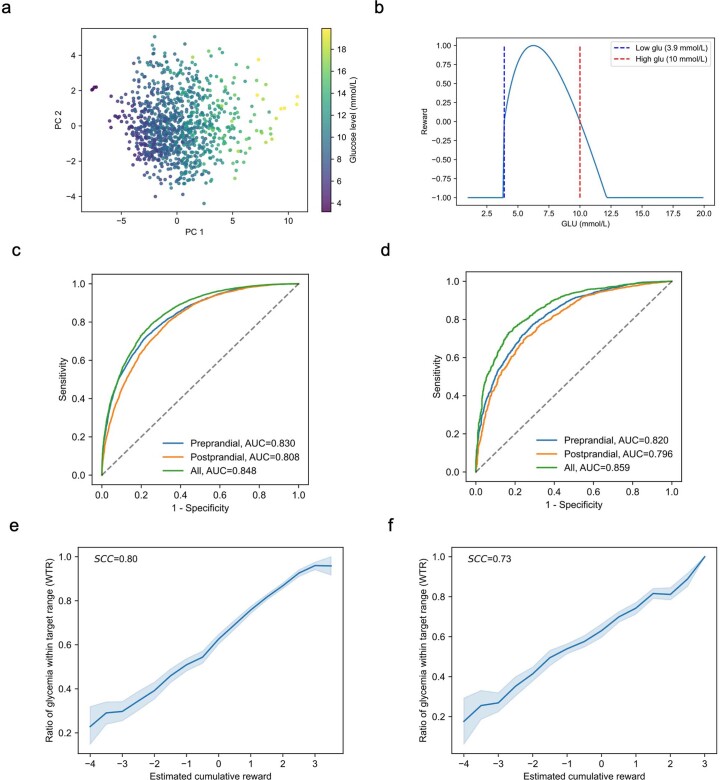
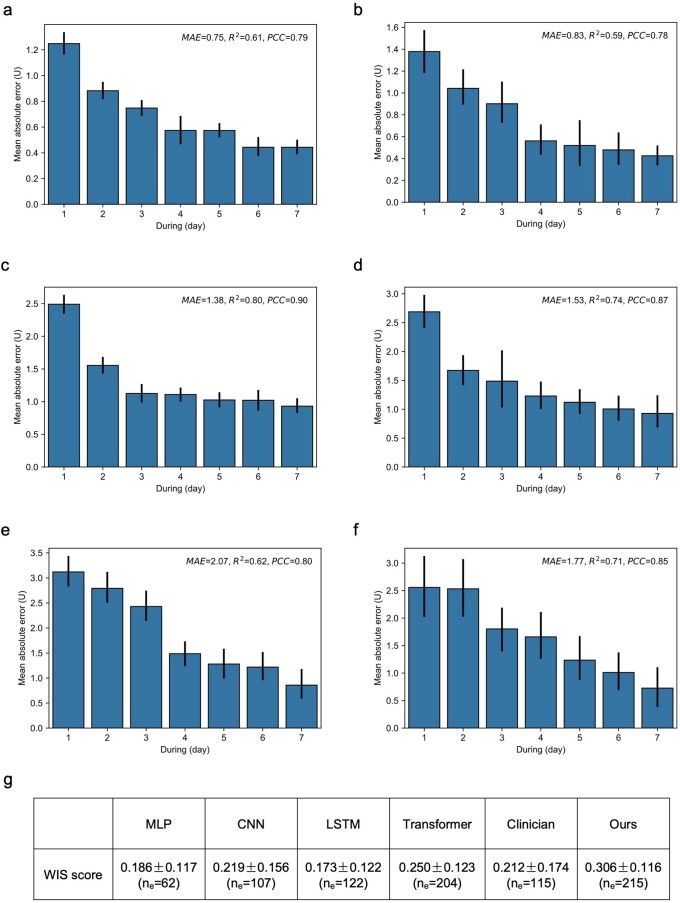
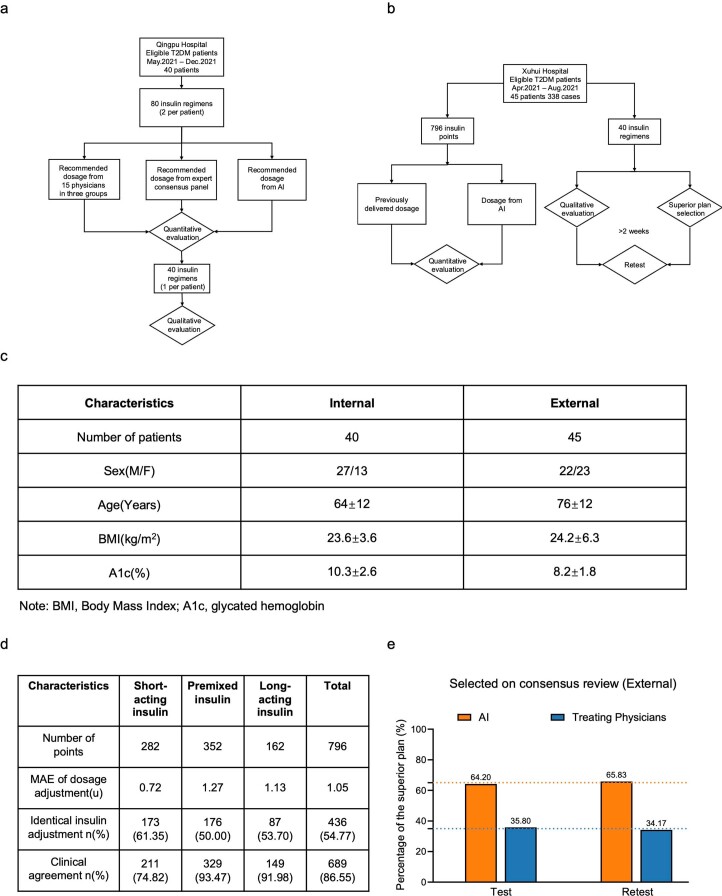
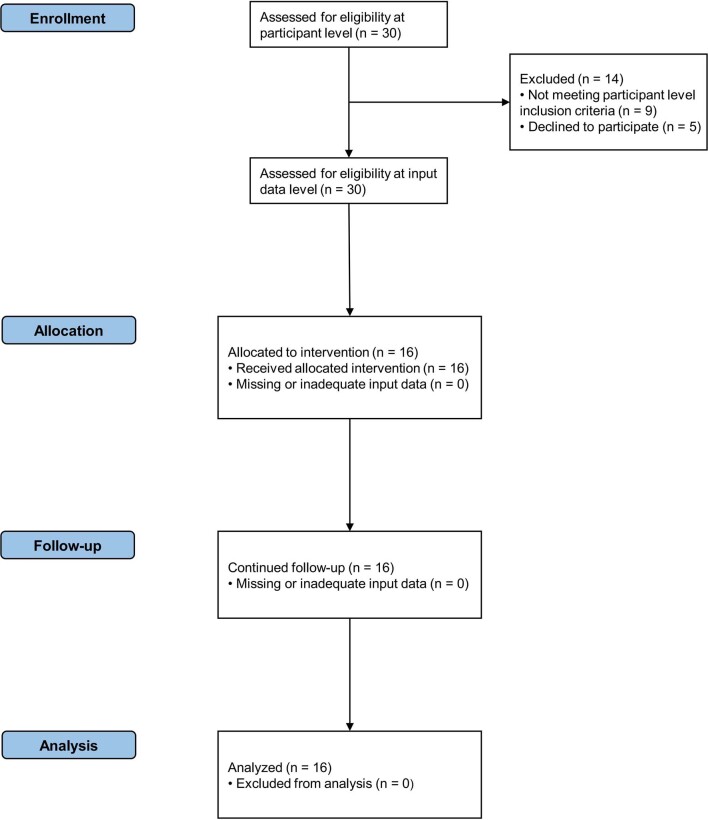
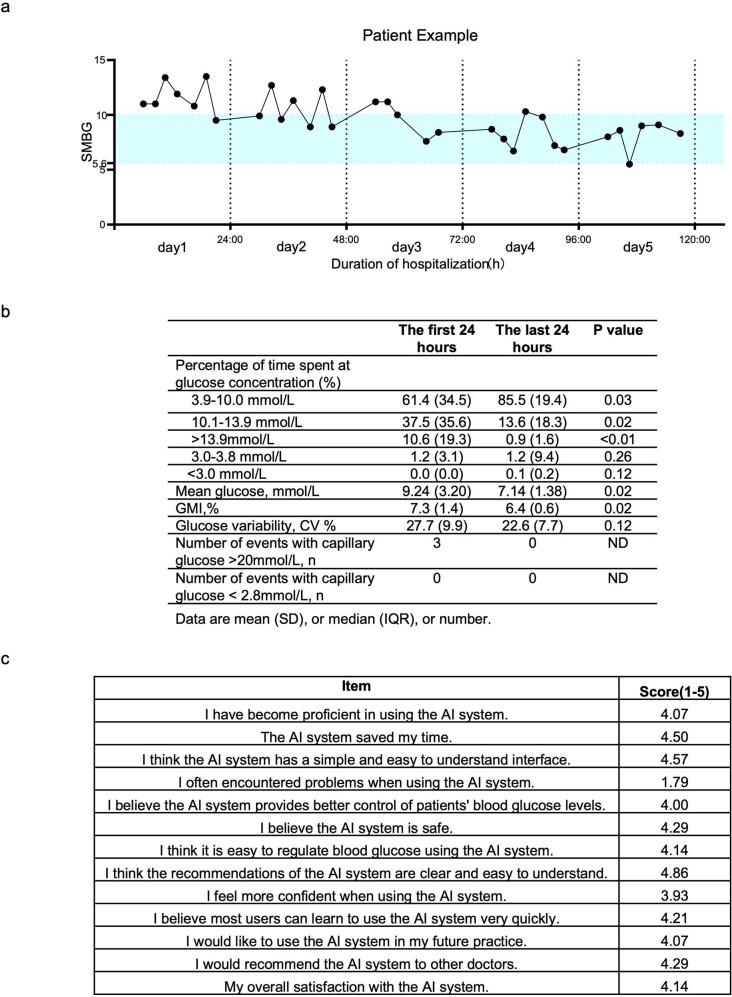
The personalized titration and optimization of insulin regimens for treatment of type 2 diabetes (T2D) are resource-demanding healthcare tasks. Here we propose a model-based reinforcement learning (RL) framework (called RL-DITR), which learns the optimal insulin regimen by analyzing glycemic state rewards through patient model interactions. When evaluated during the development phase for managing hospitalized patients with T2D, RL-DITR achieved superior insulin titration optimization (mean absolute error (MAE) of 1.10 ± 0.03 U) compared to other deep learning models and standard clinical methods. We performed a stepwise clinical validation of the artificial intelligence system from simulation to deployment, demonstrating better performance in glycemic control in inpatients compared to junior and intermediate-level physicians through quantitative (MAE of 1.18 ± 0.09 U) and qualitative metrics from a blinded review. Additionally, we conducted a single-arm, patient-blinded, proof-of-concept feasibility trial in 16 patients with T2D. The primary outcome was difference in mean daily capillary blood glucose during the trial, which decreased from 11.1 (±3.6) to 8.6 (±2.4) mmol L −1 ( P < 0.01), meeting the pre-specified endpoint. No episodes of severe hypoglycemia or hyperglycemia with ketosis occurred. These preliminary results warrant further investigation in larger, more diverse clinical studies. ClinicalTrials.gov registration: NCT05409391 .
Overview
The claims and statistics of this paper haven’t been checked yet.
Free: it reads the open-access text and checks the first 5 claims that cite a source we can check. Create a free account to check every claim.
Integrity signals
Registry
Cites
Statistics
Figures
Verification
Claims the paper makes
The claims and statistics of this paper haven’t been checked yet.
Free: it reads the open-access text and checks the first 5 claims that cite a source we can check. Create a free account to check every claim.
Claims other papers make about this one
Each is checked against this paper’s own text: does it say what the citing paper says it does?
The source backs part of the claim, not all of it — or backs it for a different population, condition or comparison.
In the citing paper
“AI-driven real-time patient monitoring systems are revolutionizing clinical care by enabling continuous, data-driven tracking of patient health.90,104,105”
From A foundational architecture for AI agents in healthcare (2025) · cites this paper as [105]
Experimental — accuracy not yet measured
Self-check
Percentages, sums and reported differences re-computed from the paper’s own numbers.
The self-check needs the paper’s full text.
Citations
Cites
Dermatologist-level classification of skin cancer with deep neural networks
Esteva, A., Kuprel, B., Novoa, R. A., Ko, J., Swetter, S. M., Blau, H. M., & Thrun, S. (2017) · Nature · doi:10.1038/nature21056 · Cited by 14,362
Sun, H., Saeedi, P., Karuranga, S., Pinkepank, M., Ogurtsova, K., Duncan, B. B., Stein, C., Basit, A., Chan, J. C. N., Mbanya, J. C., et al. (2022) · Diabetes Research and Clinical Practice · doi:10.1016/j.diabres.2021.109119 · Cited by 10,123
Stratton, I. M. (2000) · BMJ · doi:10.1136/bmj.321.7258.405 · Cited by 9,059
Reinforcement Learning: A Survey
Kaelbling, L. P., Littman, M. L., & Moore, A. W. (1996) · Journal of Artificial Intelligence Research · doi:10.1613/jair.301 · Cited by 8,972 · cited 1×
“Reinforcement learning (RL) has been proposed as a subfield of machine learning, enabling an agent to learn effective strategies through trial-and-error interactions with a dynamic environment 13 .”
BackgroundReinforcement Learning: An Introduction
Johnson, J. D., Li, J., & Chen, Z. (2000) · Neurocomputing · doi:10.1016/s0925-2312(00)00324-6 · Cited by 8,414
Self-citation10-year follow-up of intensive glucose control in type 2 diabetes
Holman, R. R., Paul, S. K., Bethel, M. A., Matthews, D. R., & Neil, H. A. W. (2008) · New England Journal of Medicine · doi:10.1056/nejmoa0806470 · Cited by 7,751
Identifying Medical Diagnoses and Treatable Diseases by Image-Based Deep Learning
Kermany, D. S., Goldbaum, M., Cai, W., Valentim, C. C. S., Liang, H., Baxter, S. L., McKeown, A., Yang, G., Wu, X., Yan, F., et al. (2018) · Cell · doi:10.1016/j.cell.2018.02.010 · Cited by 4,842
Self-citationArtificial intelligence in cancer imaging: Clinical challenges and applications
Bi, W. L., Hosny, A., Schabath, M. B., Giger, M. L., Birkbak, N. J., Mehrtash, A., Allison, T., Arnaout, O., Abbosh, C., Dunn, I. F., et al. (2019) · CA: A Cancer Journal for Clinicians · doi:10.3322/caac.21552 · Cited by 1,846 · cited 2×
“Artificial intelligence (AI) approaches have emerged as potentially powerful tools to aid in disease diagnosis and management 8–10 .”
BackgroundMoghissi, E. S., Korytkowski, M. T., DiNardo, M., Einhorn, D., Hellman, R., Hirsch, I. B., Inzucchi, S. E., Ismail-Beigi, F., Kirkman, M. S., & Umpierrez, G. E. (2009) · Diabetes Care · doi:10.2337/dc09-9029 · Cited by 1,444 · cited 1×
“The traditional clinical methods of insulin dosage titration were used as the standard clinical methods for comparison, consisting of guidelines 42 and consensus formulas 43,44 for premixed insulin regimen, basal regimen and basal-bolus regimen. https://doi.org/10.1038/s41591-023-02552-9 The…”
MethodInfluentialMastering Atari, Go, chess and shogi by planning with a learned model
Schrittwieser, J., Antonoglou, I., Hubert, T., Simonyan, K., Sifre, L., Schmitt, S., Guez, A., Lockhart, E., Hassabis, D., Graepel, T., et al. (2020) · RePEc: Research Papers in Economics · Cited by 1,310
Research works printed but not linked: 5
- Thomas MM Joost B Aske P Catholijn MJ Model-based reinforcement learning: a survey Found. Trends Mach. Learn 2020 16 1 118
- Farajtabar, M., Chow, Y. & Ghavamzadeh, M. More robust doubly robust off-policy evaluation. In Proc. of the 35th International Conference on Machine Learning, Vol. 80, 1447–1456 (PMLR, 2018).
- Srivastava N Hinton G Krizhevsky A Sutskever I Salakhutdinov R Dropout: a simple way to prevent neural networks from overfitting J. Mach. Learn. Res. 2014 15 1929 1958
- Fox, I. & Wiens, J. Reinforcement learning for blood glucose control: challenges and opportunities. https://openreview.net/forum?id=ByexVzSAs4 (2019).
- Zhang, H., Xu, W. & Yu, H. Generative planning for temporally coordinated exploration in reinforcement learning. In 10th International Conference on Learning Representations (ICLR 2022) (IEEE, 2022).
Cited by
Items 101–156 of 156
Can Machine Learning Personalize Cardiovascular Therapy in Sepsis?
Catling, F. J. R., Nagendran, M., Festor, P., Bien, Z., Harris, S. K., Faisal, A. A., Gordon, A. C., & Komorowski, M. (2024) · Critical Care Explorations · doi:10.1097/cce.0000000000001087 · Cited by 3
TRINet: Team Role Interaction Network for automatic radiology report generation
Zheng, Z., Zhang, Y., Liang, E., Weng, Z., Chai, J., & Li, J. (2024) · Computers in Biology and Medicine · doi:10.1016/j.compbiomed.2024.109275 · Cited by 4
Local-Global Context Encoding Architecture for the Insulin Prescription Recommendation
Wang, Y., Zhao, Q., Rao, W., Wu, C., Lu, X., Zhang, J., Li, M., Ge, Q., & Wang, C. (2025) · International Conference on Computer Supported Cooperative Work in Design (CSCWD) · doi:10.1109/cscwd64889.2025.11033499 · Cited by 1
“Apart from supervised or unsupervised machine learning, work from [6] use model-based reinforcement learning (RL) framework to learn the optimal insulin regimen by analyzing glycemic state rewards through patient model interactions.”
Panagiotou, M., Brigato, L., Streit, V., Hayoz, A., Proennecke, S., Athanasopoulos, S., Olsen, M. T., den Brok, E. J., Svensson, C. H., Makrilakis, K., et al. (2024) · SSRN Electronic Journal · doi:10.2139/ssrn.4994103 · Cited by 1
Aguiar, M., Zweigenbaum, P., & Naderi, N. (2024) · International Workshop on Semantic Evaluation (SemEval) · doi:10.18653/v1/2024.semeval-1.143 · Cited by 4
Using Enhanced Representations to Predict Medical Procedures from Clinician Notes
Móstoles, R., Araque, Ó., & Iglesias, C. Á. (2024) · Applied Sciences · doi:10.3390/app14156431
Les outils digitaux utiles en rhumatologie
Hügle, T. (2024) · Revue du Rhumatisme · doi:10.1016/j.rhum.2024.10.004
Would You Trust an AI Doctor? Building Reliable Medical Predictions with Kernel Dropout Uncertainty
Azam, U., Razzak, I., Vishwakarma, S., Hacid, H., Zhang, D., & Jameel, S. (2024) · Lecture notes in computer science · doi:10.1007/978-981-96-0573-6_24 · Cited by 4
Optimizing long-term prevention of cardiovascular disease with reinforcement learningPreprint
Zhou, Y., Luo, R., Blais, J. E., Tan, K. C. B., Lui, D. T. W., Yiu, K. H., Lai, F. T. T., Wan, E. Y. F., Cheung, C., Wong, I. C. K., et al. (2024) · medRxiv · doi:10.1101/2024.12.09.24318697
BAKER: Bayesian Kernel Uncertainty in Domain-Specific Document Modelling
Azam, U., Razzak, I., Vishwakarma, S., Hacid, H., Zhang, D., & Jameel, S. (2025) · ACM International Conference on Web Search and Data Mining (WSDM) · doi:10.1145/3701551.3703517
Ahmed, T. (2025) · Springer eBooks · doi:10.1007/978-981-96-2120-0_7
Niu, Y. (2025) · Journal of Contemporary Medical Practice · doi:10.53469/jcmp.2025.07(03).28
“…screening: compared with traditional methods, artificial intelligence screening follow-up rate of diabetes patients significantly increased, and the whole screening process the amount of time is only 1/104 of the traditional method, realized the optimization [24] of existing health resources.”
Automated TNM Staging of Gastric Cancer Using Large Language Models: A Multicenter StudyPreprint
Gao, X., Liu, J., Zhang, Y., Wang, L., Ma, T., Song, T., Li, B., Cui, J., Sun, Y., & Ye, Z. (2025) · SSRN Electronic Journal · doi:10.2139/ssrn.5219321
Abdeljaber, L., Alatrush, N., Alsarra, S., Billah, M., Alshammari, A. S., & Khan, L. R. (2025) · IEEE International Conference on Healthcare Informatics (ICHI) · doi:10.1109/ichi64645.2025.00033 · Cited by 2
“Six active learning strategies are analyzed using five transformer-based models: BioBERT [6], bert-base-uncased and bert-base-cased [9], distilBERT [14], and ClinicalBERT [15].”
Hybrid Machine Learning Optimization Models for Disease Prediction
Kotha, K. K., Rajasekhar, E. S. K., Bukke, S. P. N., Veluru, H., & Kumarachari, R. K. (2025) · Advances in computational intelligence and robotics book series · doi:10.4018/979-8-3373-5137-7.ch003
Machine Learning in Biomedicine
Kazi, J. U. (2025) · Springer eBooks · doi:10.1007/978-3-031-85600-6_8
Ortner, V. K., Lent, H., Karmisholt, K. E., Lei, U., Gyldenløve, M., Omland, S. H., Kaur‐Knudsen, D., Kainu, K., Togsverd‐Bo, K., Wiegell, S. R., et al. (2025) · Experimental Dermatology · doi:10.1111/exd.70175
“Specifically, we embedded all LLM responses using ClinicalBERT [12], a domain-specific variant of the Bidirectional Encoder Representations from Transformers (BERT).”
Endocrinologist at a crossroads: professional obsolescence challenged by artificial intelligence
Xiong, X. (2025) · Precision Clinical Medicine · doi:10.1093/pcmedi/pbaf029
“A landmark study demonstrated that an AI-based decision support system for insulin dosing achieved non-inferior glycemic control with a significant reduction in hypoglycemic events compared to decisions made by senior endocrinologists [ 5 ].”
Reproducibility and Case Sensitivity of LLMs for Anonymizing Depressed Tweets
Mansha, S., Mahmood, H., Håkansson, A., Kamiran, F., & Vlassov, V. (2025) · IEEE International Conference on Data Science and Advanced Analytics (DSAA) · doi:10.1109/dsaa65442.2025.11247966
“2) Clinical [10] Three million patient records containing diverse diseases such as diabetes are used [22].”
Ren, H. (2025) · International Conference on Biomedicine and Intelligent Technology (ICBIT) · doi:10.1117/12.3089173
“…real time is massive heterogeneous time series. not only increases dramatically but also exhibits complex characteristics of multi-modality, multi-granularity, and a non-uniform structure distribution that is known to contain rich information on the evolution of an individual'\s health status [1].”
Cave, S., Peterson, K., Plomondon, M. E., & Waldo, S. W. (2025) · BMC Research Notes · doi:10.1186/s13104-025-07586-5
“Using the HuggingFace infrastructure, the Transform-ers Python packages [22], an 8GB GPU, and the training dataset, we fine-tuned four pre-trained transformer models in the BERT family [23] including DistilBERT Base Uncased and Cased [24], Bio + Clinical BERT [25], and ClinicalBERT [26].”
Shae, W., Saif, M. S. I., Fife, J., Mudaranthakam, D. P., Pei, D., Harlan-Williams, L. M., Thompson, J. A., & Koestler, D. C. (2025) · JAMIA Open · doi:10.1093/jamiaopen/ooaf156
Personalized entropy-informed deep learning for identifying opioid misuse
Luo, Y., Deznabi, I., Gullapalli, B. T., Tuomenoksa, M., Fiterau, M., Garland, E. L., & Rahman, T. (2026) · Nature Mental Health · doi:10.1038/s44220-025-00555-8 · Cited by 2
“To ensure privacy and computational efficiency, we leverage compact domain-specific models such as ClinicalBERT 74 and ClinicalTinyLlama 75 .”
AI-Driven Advances in Personalized Therapeutic Strategies for Precision Medicine
Simone, L., Chen, Y. F. F., Lussier, Y. A., Elkin, P., & Zhu, X. (2026) · Springer eBooks · doi:10.1007/978-3-031-98022-0_26 · Cited by 2
Self-citationCai, J., Lian, S., Pan, D., Chen, G., Li, L., Luo, Z., & Li, S. (2026) · Lecture notes in computer science · doi:10.1007/978-981-95-5631-1_3
Chowdhury, S. A., Sh, L., Lee, Y.-K., & Park, J. (2026) · IEEE Access · doi:10.1109/access.2026.3659181
“Similarly, RL-DITR [16] introduces a model-based RL framework for insulin titration in hospitalized patients with type 2 diabetes and demonstrates superior performance compared to clinicians and standard protocols in a proof-of-concept clinical trial.”
InfluentialEnhanced Diabetes Management with Digital Twins: A Scoping Review (Preprint)Preprint
Cinar, B., van den Boom, L., & Maleshkova, M. (2026) · doi:10.2196/preprints.91729
Liver transplant donor-recipient matching with offline reinforcement learning
Melehy, A., Feng, J., Amara, D., Agopian, V. G., & Bui, A. A. T. (2026) · npj Digital Medicine · doi:10.1038/s41746-026-02529-1
“While the design of reward functions is understood to often require a trial-and-error approach 68 – 70 , we followed best practices and exemplars from existing RL examples in healthcare 37,40,43,48,51 .”
Gudu, J., Balikuddembe, J. K., Mwebaze, J., & Opiyo, D. (2026) · Research Square · doi:10.21203/rs.3.rs-9087634/v1
Isaradech, N., Sirikul, W., Schulz, S., & Kreuzthaler, M. (2026) · JMIR Formative Research · doi:10.2196/82685
“We chose the following pretrained transformer models for model fine-tuning: (1) BioClinicalBERT [25], (2) Clinical-BERT [26,27], (3) PubMedBERT [28], (4) multilingualBERT [29], and (5) ThaiBERT [30].”
Tejera-Perez, C., Hernández-Olmeda, F., de Villar, N. G. P., & Tejera-Perez, R. (2026) · Reviews in Endocrine and Metabolic Disorders · doi:10.1007/s11154-026-10032-x
“No severe hypoglycemia or hyperglycemia events occurred, and clinical adoption exceeded 70% [65, 66].”
AIGC-driven virtual patients for diabetes: a systematic review
Tang, Y., Wen, G., & Wu, H. (2026) · Diabetes Research and Clinical Practice · doi:10.1016/j.diabres.2026.113261
Engineering a Safe and Explainable ML-Based Insulin Recommender for Clinical Deployment
Li, Z., Lu, Y., Xu, J. F., Rao, W., Zhao, Q., Wang, C., Yao, L., & Chen, H. (2025) · International Conference on Biomedical and Bioinformatics Engineering (ICBBE) · doi:10.1145/3794209.3794280
Self-citationArtificial intelligence in diabetes care: Toward precision diagnosis and personalized management
Aburjai, T. A., Agha, A. S. A. A., Abuhilaleh, Y., Miqdad, A., Aburjai, A., Alzweiri, M. H., & Khassawna, T. E. (2026) · Journal of Investigative Medicine · doi:10.1177/10815589261452671
Early Stroke Functional Outcome Prediction from Admission Clinical Records
Gómez, S., Moreno, J. G., Mantilla, D., & Martínez, F. (2026) · Lecture notes in computer science · doi:10.1007/978-3-032-23176-5_12
Artificial intelligence in geriatric healthcare: a scoping review
Zhang, Y., Yang, L., Li, M., Zhao, H., Zhou, Y., & Li, J. N. (2026) · BMC Geriatrics · doi:10.1186/s12877-026-07798-9 · Cited by 1
“For example, an artificial intelligence algorithm can monitor the dynamic glycemia of diabetes patients and optimize the medication scheme [27]; Intelligent devices combined with machine learning can remotely predict hypertensive patients and adjust treatment strategies in a timely manner [28].”
Medical AI across Data Regimes to Promote Proactive Health
Li, P., Wu, J., Zuo, Q., Zhang, L., & Zhan, Q. (2026) · Health Data Science · doi:10.34133/hds.0495
“RL models have been widely applied to support the customization of therapeutic strategies to individual patient profiles [ 47 , 48 ].”
A, M. Y. B., & Jayashree, J. (2026) · Frontiers in Artificial Intelligence · doi:10.3389/frai.2026.1881082
Advancing ICU decision making through multimodal data fusion in predicting cardiovascular disorders
Krones, F., Papastylianou, T., Qian, G., Parsons, G., Shukla, B., Papież, B. W., & Mahdi, A. (2026) · Information Fusion · doi:10.1016/j.inffus.2026.104573 · Cited by 2
Najafi, A., Farhadi, A., & Zamanifar, A. (2026) · Discover Data · doi:10.1007/s44248-026-00112-3
“Only a small minority of systems report prospectively collected datasets or reader/pilot-style evaluations [16, 48], and real-time streaming data are typically emulated via retrospective time series rather than acquired online.”
InfluentialProbing the Intrinsic Effectiveness of Large Language Models for Medical Classifications
Lunardi, R., Roitero, K., & Mea, V. D. (2026) · ACM International Conference on Bioinformatics, Computational Biology, and Health Informatics (ACM-BCB) · doi:10.1145/3807503.3819373
MedTVL: Harnessing Vision and Language for Medical Time Series Classification
Ye, J., Li, J., & Tsung, F. (2026) · ACM SIGKDD Conference on Knowledge Discovery and Data Mining (KDD) · doi:10.1145/3770855.3818883 · Cited by 1
Reinforcement learning for optimizing cardiovascular treatment strategies: A narrative review
Rahman, M. M., Mustafa, N., Rony, M. K. K., Shohag, M., Akhter, M. A., Saima, S. M., Sultana, J., & Akter, F. (2026) · Journal of Medicine Surgery and Public Health · doi:10.1016/j.glmedi.2026.100246
Data, Process, and Data-Driven Representations of Digital Twins in Diabetes: Scoping Review
Cinar, B., van den Boom, L., & Maleshkova, M. (2026) · JMIR Diabetes · doi:10.2196/91729
“Furthermore, studies apply multilayer perceptron models to predict glucose levels using transformer-based vector encodings of the input data [61].”
InfluentialA Chain-of-Thought Framework for Drug Interpretation and Predictive Modelling using LLMs
Satheesh, M. V., Pratheba, E., & Ramesh, C. (2026) · International Conference on Advanced Computing and Knowledge Engineering (ICACKE) · doi:10.1109/icacke65470.2026.11651095
Prediction, Prescription, and Proactive Medication Management in the Intensive Care Unit
Murray, B. (2026) · Critical Care Clinics · doi:10.1016/j.ccc.2026.07.002
Buckley, C. T., Mulherin, D. W., & Cogle, S. V. (2026) · Nutrition in Clinical Practice · doi:10.1002/ncp.70175
“7 Artificial intelligence use has demonstrated benefits in insulin optimization 74 and estimating total daily insulin dose 75 and would likely be of benefit in the management of hyperglycemia with nutrition support.”
Liu, Y., Wang, Y., Huang, X., Li, Y., zhu, A., Wang, M., Yao, H., & Liang, L. (2026) · Pharmacological Research · doi:10.1016/j.phrs.2026.108438
Artificial intelligence meets continuous glucose monitoring data: Genie in the bottle
Lu, J., Zhang, Z., Wang, Y., Cai, J., Yu, X., Zong, G., & Zhou, J. (2026) · Chinese Medical Journal · doi:10.1097/cm9.0000000000004229
In silico biomedicine in the era of artificial intelligence: opportunities and challenges
Mustaffa, F.-E., Sajid, T., Ali, M., & Ashraf, N. M. (2026) · In Silico Research in Biomedicine · doi:10.1016/j.insi.2026.100629
Artificial intelligence in orthopaedics should be built with surgeons, not just for them!
Oettl, F. C., Zsidai, B., Oeding, J. F., Cong, T., Herbst, E., Pánics, G., Winkler, P. W., Musahl, V., Senorski, E. H., Seil, R., et al. (2026) · Journal of Experimental Orthopaedics · doi:10.1002/jeo2.70920
“A recent trial found that outpatient reception handled jointly by nurses and a large language model outperformed them working independently [19] and a proof ‐ of ‐ concept trial of reinforcement learning for glycaemic control in Type 2 diabetes reached a comparable conclusion [20].”
Artificial intelligence in orthopaedics should be built with surgeons, not just for them!
Oettl, F. C., Zsidai, B., Oeding, J. F., Cong, T., Herbst, E., Pánics, G., Winkler, P. W., Musahl, V., Senorski, E. H., Seil, R., et al. (2026) · Knee Surgery Sports Traumatology Arthroscopy · doi:10.1002/ksa.70628
“A recent trial found that outpatient reception handled jointly by nurses and a large language model outperformed them working independently [19] and a proof ‐ of ‐ concept trial of reinforcement learning for glycaemic control in Type 2 diabetes reached a comparable conclusion [20].”
Torquati, M. C., Moreno-Sánchez, P. A., & van Gils, M. (2026) · International Journal of Medical Informatics · doi:10.1016/j.ijmedinf.2026.106765
Tai, C. G.-L., Smith, J. Y., Curtis, C. S., Adams, N., Charlerie, S., Doubleday, P., & Doshi, R. (2026) · Springer handbooks · doi:10.1007/978-3-031-92372-2_21
Alqarni, M. A., Alharbi, A. A., Mashyakhi, S. Q., Alamri, W. S., Asiri, G. M., Alamri, S. T., Mubarak, S., Alsharif, A. N., Alshahrani, J. A., Shahrani, A. K. A., et al. (2026) · Cureus · doi:10.7759/cureus.117889
Metadata
- Authors
- Wang, G., Liu, X., Ying, Z., Yang, G., Chen, Z., Liu, Z., Zhang, M., Yan, H., Lu, Y., Gao, Y., Xue, K., Li, X., & Chen, Y.
- Affiliations
- Shanghai Medical College of Fudan University (CN)
- Beijing University of Posts and Telecommunications (CN)
- Fudan University (CN)
- Shanghai Xuhui Central Hospital (CN)
- Peking University (CN)
- University of Oxford (GB)
- Corresponding author
- Wang, Guangyu
- Li, Xiaoying
- Chen, Ying
- ORCID
- Venue
- Nature Medicine
- Published
- 2023-09-14
- Volume
- 29
- Issue
- 10
- Pages
- 2633-2642
- ISSN
- 1078-8956 (ISSN-L)
- 1546-170X
- PMC
- PMC10579102
- OpenAlex
- W4386741020
- Cited by
- 156
- References
- 43
- Citations by year
- 2026: 49 · 2025: 75 · 2024: 26 · 2023: 6
- FWCI
- 31.77
- Type
- journal article
- Language
- en
- Open access
- hybrid
- doi.org
- Licence
- cc-by
- creativecommons.org/licenses/by/4.0 (tdm)
- creativecommons.org/licenses/by/4.0 (vor)
- Locations
- Nature Medicine (publishedVersion, cc-by)
- PubMed Central (publishedVersion, cc-by)
- PubMed (publishedVersion)
- Funders
- National Natural Science Foundation of China (62272055, 81820108008, 31830041, 82000822)
- the Tencent Foundation through the XPLORER PRIZE, and Young Elite Scientists Sponsorship Program by cs
- Topics
- Health Sciences › Medicine › Endocrinology, Diabetes and Metabolism › Diabetes Management and Research
- Health Sciences › Medicine › Endocrinology, Diabetes and Metabolism › Hyperglycemia and glycemic control in critically ill and hospitalized patients
- Health Sciences › Medicine › Endocrinology, Diabetes and Metabolism › Diabetes Treatment and Management
- Keywords
- type 2 diabetes, insulin dose adjustment, glycemic control, reinforcement learning, hospitalized patients, hypoglycemia, hyperglycemia, capillary blood glucose
- MeSH terms
- Glycemic Control, Artificial Intelligence, Blood Glucose, Diabetes Mellitus, Type 2, Humans, Hypoglycemic Agents, Insulin
About these checks
Registry, retraction, Cites and statistics results are computed, not judged, with one exception: a printed reference that no index lists is read once by a model before it counts as a citation error. Claims are extracted by a model and kept only when their quote appears verbatim in the text; each cited source is then checked, with a model’s help, for whether it says what the claim relies on. Those verdicts can be wrong — read the claim’s quote and the cited source before relying on one.
Statistics and arithmetic are recomputed, not judged.
Confidence bands are shown only for fields calibrated on our annotated test set. None is calibrated yet, so no band is shown.
What counts as a claim ›How we measure confidence ›How we check this ›
Are you an author, or do you see a problem with this page? Request a review
Data sources
Bibliographic data: Semantic Scholar, OpenAlex, Crossref.
Contains information from the Semantic Scholar Academic Graph Datasets, made available under the ODC Attribution License (ODC-BY 1.0).
Semantic Scholar’s data is described in: Kinney, R., et al. (2023). The Semantic Scholar Open Data Platform. arXiv:2301.10140.
