

Long-term weight loss effects of semaglutide in obesity without diabetes in the SELECT trial
Open accessThe DOI matches its Crossref record; 25 of the 25 references it cites were found in a registry or an index.
Abstract
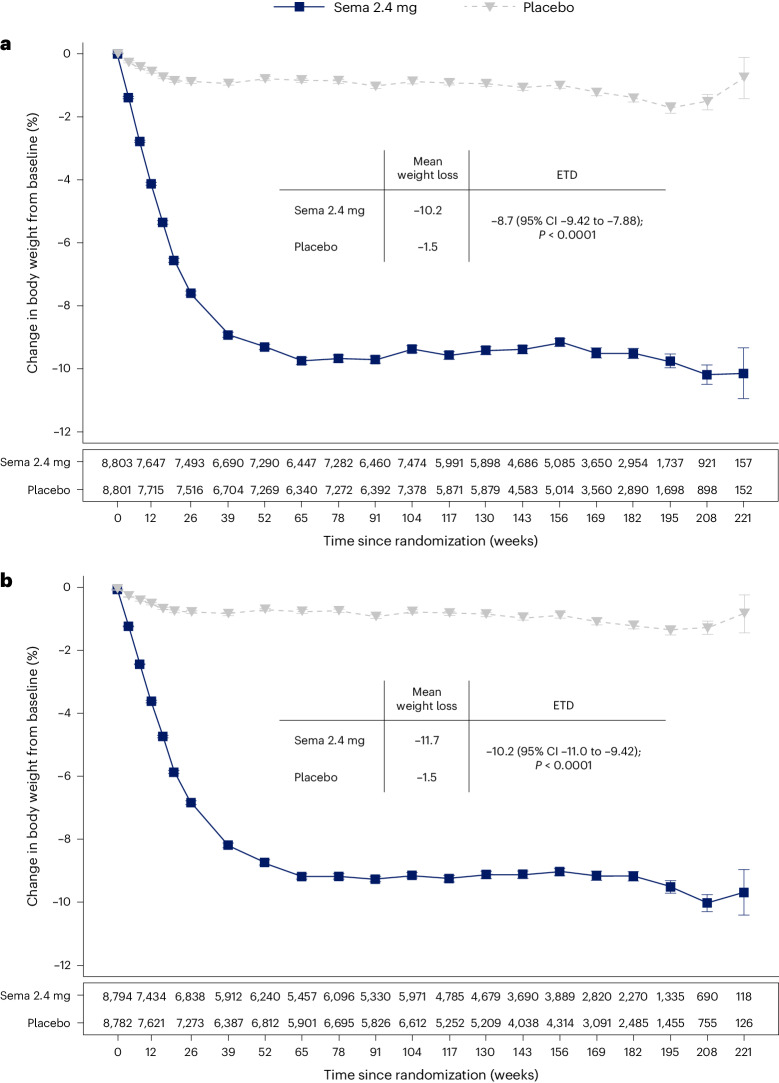
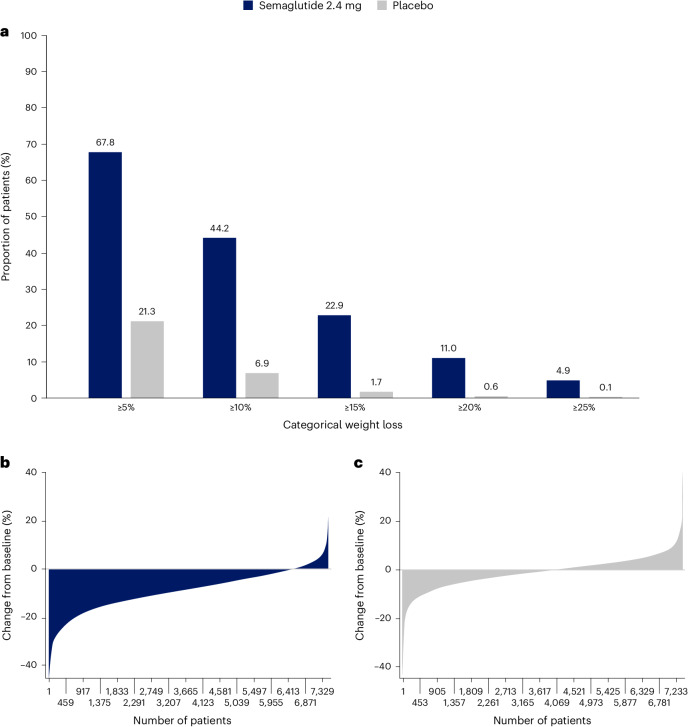
In the SELECT cardiovascular outcomes trial, semaglutide showed a 20% reduction in major adverse cardiovascular events in 17,604 adults with preexisting cardiovascular disease, overweight or obesity, without diabetes. Here in this prespecified analysis, we examined effects of semaglutide on weight and anthropometric outcomes, safety and tolerability by baseline body mass index (BMI). In patients treated with semaglutide, weight loss continued over 65 weeks and was sustained for up to 4 years. At 208 weeks, semaglutide was associated with mean reduction in weight (−10.2%), waist circumference (−7.7 cm) and waist-to-height ratio (−6.9%) versus placebo (−1.5%, −1.3 cm and −1.0%, respectively; P < 0.0001 for all comparisons versus placebo). Clinically meaningful weight loss occurred in both sexes and all races, body sizes and regions. Semaglutide was associated with fewer serious adverse events. For each BMI category (<30, 30 to <35, 35 to <40 and ≥40 kg m − 2 ) there were lower rates (events per 100 years of observation) of serious adverse events with semaglutide (43.23, 43.54, 51.07 and 47.06 for semaglutide and 50.48, 49.66, 52.73 and 60.85 for placebo). Semaglutide was associated with increased rates of trial product discontinuation. Discontinuations increased as BMI class decreased. In SELECT, at 208 weeks, semaglutide produced clinically significant weight loss and improvements in anthropometric measurements versus placebo. Weight loss was sustained over 4 years. ClinicalTrials.gov identifier: NCT03574597 .
Overview
The claims and statistics of this paper haven’t been checked yet.
Free: it reads the open-access text and checks the first 5 claims that cite a source we can check. Create a free account to check every claim.
Integrity signals
Registry
Cites
Statistics
Figures
Verification
Claims the paper makes
The claims and statistics of this paper haven’t been checked yet.
Free: it reads the open-access text and checks the first 5 claims that cite a source we can check. Create a free account to check every claim.
Claims other papers make about this one
Each is checked against this paper’s own text: does it say what the citing paper says it does?
The source backs part of the claim, not all of it — or backs it for a different population, condition or comparison.
In the citing paper
“When GLP‐1 use is continued, weight reduction is sustained for at least 4 years in controlled and observational studies [16, 17].”
From Nutritional priorities to support GLP ‐1 therapy for obesity: A joint Advisory from the American College of Lifestyle Medicine, the American Society for Nutrition, the Obesity Medicine Association, and The Obesity Society (2025) · cites this paper as [16]
Experimental — accuracy not yet measuredThe source backs part of the claim, not all of it — or backs it for a different population, condition or comparison.
In the citing paper
“When GLP-1 use is continued, weight reduction is sustained for at least 4 years in controlled and observational studies [17].”
From Nutritional priorities to support GLP-1 therapy for obesity: A joint advisory from the American College of Lifestyle Medicine, the American Society for Nutrition, the Obesity Medicine Association, and the Obesity Society (2025) · cites this paper as [17]
Experimental — accuracy not yet measuredThe source backs part of the claim, not all of it — or backs it for a different population, condition or comparison.
In the citing paper
“Notably, GLP-1RA efficacy is lessened in participants with a lower starting weight/BMI or with prior exposure to GLP-1RAs (95, 102), and it is reduced by a third in type 2 diabetics and in male individuals (79, 93, 95‐97, 99).”
From GLP-1 and the Neurobiology of Eating Control: Recent Advances (2025) · cites this paper as [95]
Experimental — accuracy not yet measuredThe source backs part of the claim, not all of it — or backs it for a different population, condition or comparison.
In the citing paper
“and in univariate (crude) analyses with semaglutide, female sex (48% greater weight loss in kilograms), younger age (24% greater for age <55 vs. ≥75 years), and higher baseline BMI (23% greater for ≥40 vs. <30 kg/m2) [16].”
From Nutritional priorities to support GLP ‐1 therapy for obesity: A joint Advisory from the American College of Lifestyle Medicine, the American Society for Nutrition, the Obesity Medicine Association, and The Obesity Society (2025) · cites this paper as [16]
Experimental — accuracy not yet measuredThe cited source says what the claim attributes to it.
In the citing paper
“SAEs occurring in >5% of patients were reported in 26 studies [11][12][13][14]35,40,42,51,52,58,62,63,[65][66][67]70,74,77,[84][85][86]93,94,96,103,104], with 9 publications reporting SAEs in >10% of patients [11,14,66,67,85,86,89,103,104].”
From Symptomatic Adverse Events and Quality of Life Related to Incretin-Based Medicines for Obesity: A Systematic Review Involving >400,000 Subjects (2025) · cites this paper as [86]
7 more claims about this paper
Create a free account to see every claim other papers make about this one.
Self-check
Percentages, sums and reported differences re-computed from the paper’s own numbers.
The self-check needs the paper’s full text.
Citations
Cites
Health effects of overweight and obesity in 195 countries over 25 years
Collaborators, T. G. 2. O. (2017) · New England Journal of Medicine · doi:10.1056/nejmoa1614362 · Cited by 7,918 · cited 10×
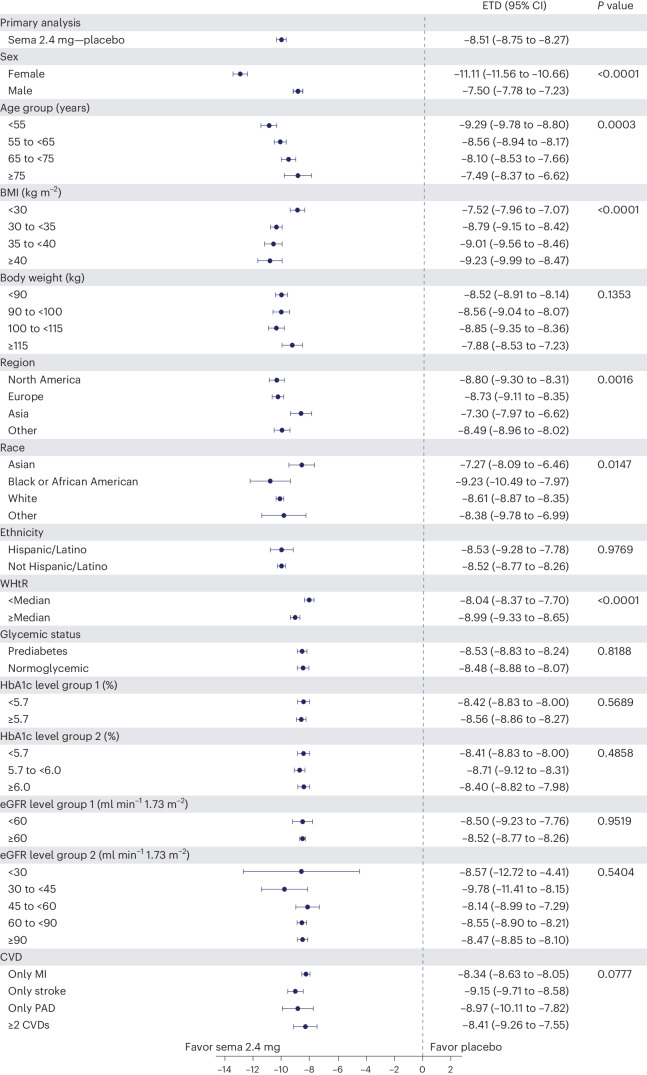
“BMI , body mass index; CI, confidence interval; CV, cardiovascular; CVD, cardiovascular disease; eGFR, estimated glomerular filtration rate; ETD, estimated treatment difference; HbA1c, glycated hemoglobin; MI, myocardial infarction; PAD, peripheral artery disease; sema, semaglutide.”
BackgroundInfluentialSemaglutide and Cardiovascular Outcomes in Patients with Type 2 Diabetes
Marso, S. P., Bain, S. C., Consoli, A., Eliaschewitz, F. G., Jódar, E., Leiter, L. A., Lingvay, I., Rosenstock, J., Seufert, J., Warren, M. L., et al. (2016) · New England Journal of Medicine · doi:10.1056/nejmoa1607141 · Cited by 6,900 · cited 1×
“In patients with type 2 diabetes and high CV risk, semaglutide at doses of 0.5 mg and 1.0 mg has been shown to significantly lower the risk of CV events 20 .”
BackgroundInfluentialSelf-citationOnce-Weekly Semaglutide in Adults with Overweight or Obesity
Wilding, J. P. H., Batterham, R. L., Calanna, S., Davies, M., Van Gaal, L. F., Lingvay, I., McGowan, B. M., Rosenstock, J., Tran, M. T. D., Wadden, T. A., et al. (2021) · New England Journal of Medicine · doi:10.1056/nejmoa2032183 · Cited by 5,205 · cited 3×
“Second, the respective study populations were quite different, with STEP 1 including a younger, healthier population with more women (73.1% of the semaglutide arm in STEP 1 versus 27.7% in SELECT) and higher mean BMI (37.8 kg m −2 versus 33.3 kg m −2 , respectively) 14,21 .”
BackgroundResultInfluentialSelf-citation2013 AHA/ACC/TOS Guideline for the Management of Overweight and Obesity in Adults
Jensen, M. D., Ryan, D. H., Apovian, C. M., Ard, J. D., Comuzzie, A. G., Donato, K. A., Hu, F. B., Hubbard, V. S., Jakicic, J. M., Kushner, R. F., et al. (2014) · Journal of the American College of Cardiology · doi:10.1016/j.jacc.2013.11.004 · Cited by 4,058
Self-citationEuropean Guidelines for Obesity Management in Adults
Yumuk, V., Tsigos, C., Fried, M., Schindler, K., Busetto, L., Micic, D., & Toplak, H. (2015) · Obesity Facts · doi:10.1159/000442721 · Cited by 3,432
Semaglutide and Cardiovascular Outcomes in Obesity without Diabetes
Lincoff, A. M., Brown-Frandsen, K., Colhoun, H. M., Deanfield, J., Emerson, S. S., Esbjerg, S., Hardt-Lindberg, S., Hovingh, G. K., Kahn, S. E., Kushner, R. F., et al. (2023) · New England Journal of Medicine · doi:10.1056/nejmoa2307563 · Cited by 3,236 · cited 9×
“At week 208, average reduction in WC was −7.7 cm with semaglutide versus −1.3 cm with placebo, with a treatment difference of −6.4 cm (95% CI −7.18 to −5.61; P < 0.0001) 21 .”
BackgroundResultInfluentialSelf-citationPoirier, P., Giles, T. D., Bray, G. A., Hong, Y., Stern, J. S., Pi-Sunyer, F. X., & Eckel, R. H. (2006) · Circulation · doi:10.1161/circulationaha.106.171016 · Cited by 3,165 · cited 1×
“Excess abnormal body fat, especially visceral adiposity and ectopic fat, is a driver of cardiovascular (CV) disease (CVD) 3–5 , and contributes to the global chronic disease burden of diabetes, chronic kidney disease, cancer and other chronic conditions 6,7 .”
BackgroundCardiovascular-kidney-metabolic health: a presidential advisory from the American Heart Association
Ndumele, C. E., Rangaswami, J., Chow, S. L., Neeland, I. J., Tuttle, K. R., Khan, S. S., Coresh, J., Mathew, R. O., Baker-Smith, C. M., Carnethon, M. R., et al. (2023) · Circulation · doi:10.1161/cir.0000000000001184 · Cited by 2,208 · cited 1×
“Excess abnormal body fat, especially visceral adiposity and ectopic fat, is a driver of cardiovascular (CV) disease (CVD) 3–5 , and contributes to the global chronic disease burden of diabetes, chronic kidney disease, cancer and other chronic conditions 6,7 .”
BackgroundRoss, R., Neeland, I. J., Yamashita, S., Shai, I., Seidell, J., Magni, P., Santos, R. D., Arsenault, B., Cuevas, A., Hu, F. B., et al. (2020) · Nature Reviews Endocrinology · doi:10.1038/s41574-019-0310-7 · Cited by 1,966 · cited 3×
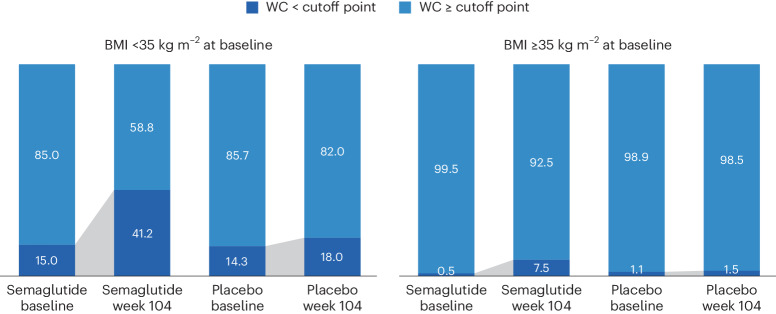
“The diverse population can also be evaluated for changes in sex-and race-specific ‘cutoff points’ for BMI and WC, which have been identified as anthropometric measures that predict cardiometabolic risk 8,22,23 .”
BackgroundMethodGarvey, W. T., Mechanick, J. I., Brett, E. M., Garber, A. J., Hurley, D. L., Jastreboff, A. M., Nadolsky, K., Pessah-Pollack, R., & Plodkowski, R. (2016) · Endocrine Practice · doi:10.4158/ep161365.gl · Cited by 1,914 · cited 1×
“The diverse population can also be evaluated for changes in sex-and race-specific ‘cutoff points’ for BMI and WC, which have been identified as anthropometric measures that predict cardiometabolic risk 8,22,23 .”
Background
Research works printed but not linked: 1
- Tchang, B. G. et al. Pharmacologic treatment of overweight and obesity in adults. in (eds. Feingold, K. R. et al.) Endotext https://www.ncbi.nlm.nih.gov/books/NBK279038/ (MDText.com, 2000).
Cited by
Items 201–300 of 427
Goldberg, M., Blevins, J. E., Wolden‐Hanson, T., Elfers, C., Chichura, K. S., Ashlaw, E. F., den Hartigh, L. J., Roth, C. L., & Doyle, R. P. (2025) · International Journal of Molecular Sciences · doi:10.3390/ijms26073032 · Cited by 2
“…resulted in a prolonged loss in body weight that has ranged from ≈ 6.7% over 40 weeks [5], ≈ 14.9% over 68 weeks [6], and ≈ 10.2% over 208 weeks [7], further highlighting the need to optimize anti-obesity treatment options that result in more marked weight loss over more sustained treatment…”
InfluentialOnboarding obesity management in cardiovascular care: A cardiologist's guide to latest advances
Schiele, F., Diévart, F., Jacobi, D., Angoulvant, D., Czernichow, S., Puymirat, É., Sabouret, P. F., & Aboyans, V. (2025) · American Journal of Preventive Cardiology · doi:10.1016/j.ajpc.2025.100987 · Cited by 2
“In addition, the STEP HFpEF study demonstrated semaglutide improved Kansas City Cardiomyopathy Questionnaire clinical summary score (KCCQ-CSS) by 7.8 points, increased 6-minute walking distance by 20.3 m, and reduced body weight by 10.7 % compared to placebo [42 – 44].”
InfluentialSemaglutide may provide sustained weight loss for at least four years, study reports
Mahase, E. (2024) · BMJ · doi:10.1136/bmj.q1113 · Cited by 2
The GLP-1 receptor agonist revolution comes to nephrology
Thomas, M. C., & Cooper, M. E. (2024) · Nature Reviews Nephrology · doi:10.1038/s41581-024-00876-4 · Cited by 2
“More recently, treatment with semaglutide was associated with a 20% reduction in MACE in non-diabetic individuals with obesity (HR 0.80; 95% CI, 0.72–0.90; P < 0.001) 3 .”
InfluentialAre GLP-1 drugs really for everybody?
(2024) · Nature Medicine · doi:10.1038/s41591-024-03382-z · Cited by 3
Shang, R., & Rodrigues, B. B. (2025) · Cardiovascular Research · doi:10.1093/cvr/cvaf006 · Cited by 2
Guo, J., Bachor, T. P., Takahashi, R., Steffek, M., Fitzgerald, G. A., Huffman, B. J., Braun, D., Han, S. J., Sandmann, T., Ha, C., et al. (2025) · bioRxiv (Cold Spring Harbor Laboratory) · doi:10.1101/2025.10.06.680810 · Cited by 2
Alexander, G. C., Xu, Y., Xiao, X., Lewis, S. V., Zeger, S., & Mehta, H. B. (2026) · Obesity · doi:10.1002/oby.70076 · Cited by 1
“By contrast, while individuals in our analyses without diabetes had greater weight loss, several randomized trials examining heterogeneity of treatment effects among those with and without diabetes found similar effectiveness across these two groups [29, 30] .”
GLP-1 receptor agonism in cardiovascular disease prevention
Saleh, H. (2025) · Asia-Pacific Journal of Pharmacotherapy & Toxicology · doi:10.32948/ajpt.2024.11.22 · Cited by 1
A new homozygous pathogenic LEPR variant causing severe, early onset obesity in a Senegalese child
Deswarte, V., Lebreton, L., Barat, P., Delplanque, J., Bonnefond, A., & Delagrange, M. (2025) · Obesity Research & Clinical Practice · doi:10.1016/j.orcp.2025.04.007 · Cited by 1
The Limitations and Risks Associated With Semaglutide Treatment
Rahman, V. J. (2025) · JAMA Cardiology · doi:10.1001/jamacardio.2025.1095 · Cited by 1
de Almeida, F. F., Gomes, K. M., Pereira, R. D., Leonel, Z. V., Vieira, G. S., Lago, H. D. L., Santana, I. G. C., & Nunes, P. L. (2025) · Caderno Pedagógico · doi:10.54033/cadpedv22n7-215 · Cited by 3
Backbone Protecting Groups for Enhanced Peptide and Protein Synthesis
Paravizzini, S. J., Haugaard‐Kedström, L. M., Hutton, C. A., & Karas, J. A. (2025) · Angewandte Chemie · doi:10.1002/ange.202509939 · Cited by 2
Harnessing Personalized Nutrition and Clinical Chemistry: Opportunities to Improve Public Health
Mathers, J. C. (2025) · Clinical Chemistry · doi:10.1093/clinchem/hvaf114 · Cited by 1
Position Statement on Cardiometabolic Health Across the Woman's Life Course – 2025
de Oliveira, G. M. M., de Almeida, M. C. C., Valério, C. M., Giuffrida, F. M. A., Espíndola, L. N., Izar, M. C. D. O., Marques-Santos, C., Freire, C. M. V., Albuquerque, C. J. D. M., Chagas, A. C. P., et al. (2025) · Arquivos Brasileiros de Cardiologia · doi:10.36660/abc.20250615i · Cited by 2
ENT1 inhibition enhances weight control and metabolic health in diet-induced obesity
Chaible, L. M., Preillon, J., Philippart, C., Canevat, A., Saerens, L., Kondratow, D., Deligny, M., Goffaux, A., Michaux, A.-C., Letellier, M.-C., et al. (2025) · Biomedicine & Pharmacotherapy · doi:10.1016/j.biopha.2025.118848 · Cited by 1
Brenisin, K., Kinnafick, F., King, J. A., Millard, L., Arya, D., Hodgson, E., Huggins, M., Simmons-Roberts, A., O'Dowd, M., Rayment, N., et al. (2025) · JMIR Research Protocols · doi:10.2196/76013 · Cited by 1
“While semaglutide shows benefits for weight-related health issues in the general population living with obesity [35,36], its effectiveness for AIWG in a specific psychiatric setting remains unclear.”
Campbell, C., peddi, P., Rogers, A. M., DuCoin, C. G., Sujka, J. A., & Docimo, S. (2025) · Obesity Surgery · doi:10.1007/s11695-025-08412-4 · Cited by 2
Kuo, N. I.-H., Hill, F. R., Arnott, C. G., Douglas, K. A., Barbieri, S., Ferdousi, S., Gandomkar, Z., Luxan, B. G., Woodward, M., & Jorm, L. R. (2026) · Heart Lung and Circulation · doi:10.1016/j.hlc.2025.09.012 · Cited by 1
Management of obesity in the menopause transition and postmenopausal period
Allen, J. T., Zahler‐Miller, C., Lough, M., & Titus, H. (2026) · Surgery for Obesity and Related Diseases · doi:10.1016/j.soard.2026.01.015 · Cited by 1
Correra, A., Mauriello, A., Cetoretta, V., Maratea, A. C., Riegler, L., Sarno, I. D., Giallauria, F., Guerra, F., Russo, V., & D’Andrea, A. (2026) · Pharmaceuticals · doi:10.3390/ph19020297 · Cited by 3
“Semaglutide exerts profound protective effects on the cardiovascular system, as documented in large-scale clinical trials such as SUSTAIN-6 [32] and SELECT [29], which showed a reduction of up to 26% in major adverse cardiovascular events (MACE).”
InfluentialUse of semaglutide after acute coronary syndrome: an exploratory retrospective study
Biasin, M., Stratinaki, M., Cordioli, N., Armani, I., Giovanni, S. D., Aletras, G., Betta, D., Callegarin, L., Gambaro, A., & Morani, G. (2026) · Journal of Cardiovascular Medicine · doi:10.2459/jcm.0000000000001837 · Cited by 1
A Narrative Review of the Metabolic Benefits of GLP-1 and GIP Receptor Agonists in Obesity
Lee, A.-H., & Holmes-Walker, D. J. (2026) · Healthcare · doi:10.3390/healthcare14060734 · Cited by 2
“Weight nadir occurs at approximately 12–18 months [9], with durability in effect demonstrated out to three years for semaglutide and tirzepatide [10,11].”
Luzik, Y. V., Svidinskaya, E. A., Baburin, D. V., Борисович, А. М., Proklova, G. F., & Sosnova, E. A. (2026) · V F Snegirev Archives of Obstetrics and Gynecology · doi:10.17816/aog701296 · Cited by 1
“…исходов при ожирении без диабета (SELECT) показало, что семаглутид снижает риск серьёзных сердечно-сосудистых событий на 20%, становясь единственным препаратом против ожирения, который, как было показано, улучшает сердечно-сосудистые исходы у взрослых с избыточным весом и ожирением [12].”
Eiswirth, E., & Salib-Barrios, M. (2026) · The Journal for Nurse Practitioners · doi:10.1016/j.nurpra.2026.105766 · Cited by 1
Mylavarapu, M., Obi, O. S., Abarca, Y. A., Fatima, H., Roshni, P., Huda, N. U., Lysak, Y., Gandapur, A., Vazquez, S. A. C., Siddiqui, M. A., et al. (2026) · World Journal of Cardiology · doi:10.4330/wjc.v18.i3.112189 · Cited by 1
Kapoor, N., Kalra, S., Naskar, A., Shaikh, S. S., Das, S., KOTA, S., Bhattacharya, S., Bhattacharya, R., Giri, R., Karnik, N., et al. (2026) · Cureus · doi:10.7759/cureus.105749 · Cited by 1
“Both treatments were administered once per week and followed a dose-escalation schedule as defined [13].”
InfluentialDayel, F. F. B., Alanazi, R. J., Alenazi, M. A., Alkhalifah, S., Dayel, D. F. B., Mawkili, W., & Alwhaibi, A. M. (2026) · Healthcare · doi:10.3390/healthcare14070845 · Cited by 1
“Such results were reported in the SELECT trial, where women had a larger weight-loss difference in semaglutide vs. placebo treatment than men, and age-related differences were also observed [39].”
Laraib, A., Ahmad, U., Laraib, S. W., Laraib, S. W., Ali, M., Ahmad, M. H., & Hassan, M. (2026) · Health Science Reports · doi:10.1002/hsr2.72144 · Cited by 1
Butensky, S. D., Hamid, S. A., Graetz, E., Ying, L., Schwartz, J. S., Schneider, E. B., Ghiassi, S., & Gibbs, K. E. (2026) · Obesity Surgery · doi:10.1007/s11695-026-08645-x · Cited by 1
Lisco, G., Tullio, A. D., Disoteo, O., Dicorato, P., Tortora, A., Geronimo, V. D., & Triggiani, V. (2026) · Reviews in Endocrine and Metabolic Disorders · doi:10.1007/s11154-026-10033-w · Cited by 1
“Incretin-based therapies have substantially reshaped the treatment paradigm for obesity, as demonstrated by the long-term administration of semaglutide in the SELECT trial [143].”
Jo, G., Park, D., Kim, S. K., Jun, H. J., Magkos, F., Merino, J., Sun, Q., Kim, R., Subramanian, S. V., Franks, P. W., et al. (2026) · Diabetes & Metabolism Journal · doi:10.4093/dmj.2025.0918 · Cited by 1
Obesity management medications for the surgeon
Harris, M., Mahdi, S., Fairfield, C. J., Brown, L. R., Wadley, M., & Miras, A. D. (2026) · Frontline Gastroenterology · doi:10.1136/flgastro-2025-103307 · Cited by 1
Zhang, T., Man, Z. Y., Zhang, S.-M., Mu, J. J., & Liao, Y. (2026) · Frontiers in Endocrinology · doi:10.3389/fendo.2026.1805355 · Cited by 1
Quality and Reliability of Semaglutide–Related Short Videos on TikTok and Bilibili
Zeng, J. Z., Leng, C., Chen, X., Tang, R., Wang, Q., Zhang, L., Liu, Y., Huang, F., & Li, X. (2026) · American Journal of Health Promotion · doi:10.1177/08901171261447644 · Cited by 1
The cardiometabolic triad: obesity, sleep-disordered breathing, and epicardial adipose tissue
Cacciapuoti, F., Carpinella, G., Sessa, F., Liguori, M., Casolaro, F., Russo, M., Verde, N., & Mauro, C. (2026) · Minerva Cardiology and Angiology · doi:10.23736/s2724-5683.26.07120-6 · Cited by 1
Paceana, M.-A., Mititelu-Tarțău, L., Boboc, I. K. Ş., Oancea, C. N., Berbecaru-Iovan, A., Foia, C. I., Tartau, C. G., & Bogdán, M. (2026) · Pharmaceutics · doi:10.3390/pharmaceutics18050620 · Cited by 1
“Ryan et al. showed that semaglutide treatment can reduce MACEs in patients with overweight or obesity and established CVD without DM [86,90].”
Estler, B., Fröhlich, H., Täger, T., Frey, N., & Frankenstein, L. (2026) · PharmacoEconomics · doi:10.1007/s40273-026-01621-4 · Cited by 1
“However, the assumption was informed by longer-term semaglutide follow-up data in obesity without diabetes, in which the main between-group weight-loss effect was established during the first year and then largely stabilized over subsequent follow-up [17].”
Monami, M., Bertoli, S., Ciudin, A., McGowan, B. M., & Mannucci, E. (2026) · Diabetes Obesity and Metabolism · doi:10.1111/dom.70956 · Cited by 1
Johnsen, E., Bengtsson, J., Halasa, T., Lotfi, A., Miller, C. P., Sustarsic, R. K., & Sattar, N. A. (2026) · Diabetes Care · doi:10.2337/dc26-0937 · Cited by 2
Lee, C.-W. (2026) · Korean Journal of Family Practice · doi:10.21215/kjfp.2026.16.2.81 · Cited by 1
Barrett, P., Brooks, C. P., McCluskey, S., & Brown, A. (2026) · Journal of Eating Disorders · doi:10.1186/s40337-026-01634-6 · Cited by 2
“GLP-1 RAs have shown significant clinical benefits in the treatment of obesity and are approved for adults with obesity (BMI ≥ 30) or overweight (BMI ≥ 27), with at least one weight-related comorbidity [5].”
Baek, J., Ioannidou, A., Borg, M. L., Robert‐Nicoud, G., Pietiläinen, K. H., Rössner, S., Johnston, E. V., & Bengtsson, T. (2026) · EClinicalMedicine · doi:10.1016/j.eclinm.2026.104042 · Cited by 1
Chen, J., Liu, K.-W., Huang, Y., Meyerowitz‐Katz, G., Tsai, T., & Su, P. (2026) · Therapeutic Advances in Endocrinology and Metabolism · doi:10.1177/20420188261460592 · Cited by 1
“In sensitivity analyses (Table S7 21,22 ; in LEADER, body weight was not a significant mediator, whereas HbA1c and urinary albumin-to-creatinine ratio dominated 23 ; and pooled SUSTAIN and PIONEER hsCRP analyses found only 21% to 62% of CRP lowering mediated by HbA1c and weight.”
Oral Adverse Effects of Semaglutide Therapy: A Narrative Review
Al-Zawawi, A. S. (2026) · Journal of International Society of Preventive and Community Dentistry · doi:10.4103/jispcd.jispcd_5_26 · Cited by 1
Nutritional Assessment and Management in MASLD: A Practical Guide for Primary Care
Patel, A. B., Liaqat, M., & Trivedi, H. D. (2026) · Livers · doi:10.3390/livers6040069 · Cited by 1
“Semaglutide works synergistically with nutritional interventions in reducing steatotic liver disease progression, as detailed in later sections [28].”
Milani, I., Parrotta, M. E., Chinucci, M., Franzò, E., Gintoli, E., Franco, F., Sbraccia, P., Guglielmi, V., & Capoccia, D. (2026) · Frontiers in Endocrinology · doi:10.3389/fendo.2026.1819337 · Cited by 1
“Given that STEP1 patients achieved weight loss of approximately 6%, 10% and 14% at mean 3, 6 and 12 months, our results support the effectiveness of semaglutide beyond the controlled conditions of RCTs.”
InfluentialAdinolfi, L. E., Marrone, A., Izzi, A., & Craxì, A. (2026) · Expert Review of Endocrinology & Metabolism · doi:10.1080/17446651.2026.2714267 · Cited by 1
“After this point, the achieved weight is maintained without any further significant loss [68].”
Vignera, S. L., & Condorelli, R. A. (2026) · Pharmaceuticals · doi:10.3390/ph19081236 · Cited by 1
“The SELECT trial demonstrated that s.c. semaglutide 2.4 mg reduced major adverse cardiovascular events (MACE) by 20% in adults with obesity and established CVD [23,24].”
InfluentialBao, W., Xu, J., Nian, W., Pang, P., Wu, W., Huang, Z., Hu, L., Zhang, Q., Pan, W., Gao, X., et al. (2026) · Arteriosclerosis Thrombosis and Vascular Biology · doi:10.1161/atvbaha.126.324797 · Cited by 1
Jarroudi, M. E. (2026) · Frontiers in Sustainable Food Systems · doi:10.3389/fsufs.2026.1916378 · Cited by 1
Beyond Weight Loss: The Challenge of Stopping Obesity Management Medications
Kermansaravi, M., & COHEN, R. V. (2026) · Diabetes Obesity and Metabolism · doi:10.1111/dom.71317 · Cited by 1
Wireless electrocatalytic closed-loop system for drug-free management of diabesity
Maity, D., Ray, P. G., Buchmann, P., Hamri, G. C., & Fussenegger, M. (2026) · Science · doi:10.1126/science.ady8560 · Cited by 2
Melamed, B., Parsi‐Zahabi, M., Omrani, M. A., Baskaran, B. S., Eddin, L. E., Kermanshahi, N., Chalabianloo, N., & Muanda, F. T. (2026) · Pharmacoepidemiology and Drug Safety · doi:10.1002/pds.70517 · Cited by 1
Wang, J., Fan, Y., Dube, S., Benz, P. M., Dube, D. K., Sanger, J. M., & Sanger, J. W. (2024) · Cytoskeleton · doi:10.1002/cm.21950 · Cited by 1
Clinical considerations in the management of obesity in children and adolescents
Herring, W., Kugelmas, C., Nadler, E. P., Novick, M. B., Santos, M., Shah, R. D., Srivastava, G., & Walsh, S. (2025) · Obesity Pillars · doi:10.1016/j.obpill.2025.100160 · Cited by 1
“Four-year data on treatment of obesity with injectable semaglutide 2.4 mg in adults demonstrated a sustained average weight loss of ~10 % [20].”
InfluentialAs, A., Beliy, P. A., Zaslavskaya, K. Y., Rogozhina, E. A., Shcherbakova, V. S., Kazaishvili, Y. G., Таганов, А. В., Геннадьевна, Б. Т., Mishchenko, E. S., Koryanova, K. N., et al. (2025) · Pharmacy & Pharmacology · doi:10.19163/2307-9266-2024-12-3-231-246 · Cited by 3
GLP-1 receptor agonists and obesity care
Franco, J. V. A., & Manne‐Goehler, J. (2024) · BMJ · doi:10.1136/bmj.q2732 · Cited by 2
Editorial: Food, nutrition, and diets at net zero. 10 years of Frontiers in Nutrition
le Coutre, J. (2025) · Frontiers in Nutrition · doi:10.3389/fnut.2025.1600417 · Cited by 1
Pina, L., Chang, A., Wood, G. C., Nguyen-Lee, J. J., Horsley, R. D., Falvo, A. M., Mahan, M. E., Obradovic, V. N., Petrick, A. T., & Parker, D. M. (2025) · Surgical Endoscopy · doi:10.1007/s00464-025-12417-6 · Cited by 3
“[25] Similarly, the SURMOUNT-5 trial by Aronne et al. found mean weight loss at 72 weeks to be 20% with tirzepatide and 14% with semaglutide.”
Lobo, A. M. R., & Maechler, P. (2026) · Science · doi:10.1126/science.aef2173 · Cited by 1
Sköldheden, S. B., Teixidor-Deulofeu, J., Ruud, J., & Engström, L. (2026) · bioRxiv (Cold Spring Harbor Laboratory) · doi:10.64898/2026.09.04.749561 · Cited by 1
Seven days in medicine: 15-21 May 2024
British Medical Journal Publishing Group (2024) · BMJ · doi:10.1136/bmj.q1130
Arena, R. A., Pronk, N. P., & Lavie, C. J. (2024) · Current Problems in Cardiology · doi:10.1016/j.cpcardiol.2024.102676
Greener, M. (2024) · Independent Nurse · doi:10.12968/indn.2024.6.10
Preventing escape and malfunction of recoded cells due to tRNA base changesPreprint
Chiappino-Pepe, A., Radford, F., Budnik, B., Taş, H., Augustin, T. L., Burgess, H. M., Moret, M., Dharani, A. M., Zheng, Q., Fan, W., et al. (2024) · bioRxiv (Cold Spring Harbor Laboratory) · doi:10.1101/2024.07.18.604179
“Such free codons have been extensively used for genetically encoding non-standard amino acids 5–7 with broad, relevant applications, like the discovery of new-to-nature enzyme biochemistries 8 and the production of peptide drugs 9,10 .”
MethodMakowska, K., Billewicz, M., Marczyk, A., & Lis, L. (2024) · Quality in Sport · doi:10.12775/qs.2024.20.54194
“Moreover, this weight loss was maintained over a period of 4 years [29].”
BackgroundResponse to the Letter to the Editor by Bett et al.
Almandoz, J. P., Wadden, T. A., Tewksbury, C. M., Apovian, C. M., Fitch, A., Ard, J. D., Li, Z., Richards, J. R., Butsch, W. S., Jouravskaya, I., et al. (2024) · Obesity · doi:10.1002/oby.24140
Precision mitochondrial medicine: Uncovering pathways across diverse diseases
Sainero‐Alcolado, L., Garde-Lapido, E., Liaño-Pons, J., & Arsenian‐Henriksson, M. (2024) · Elsevier eBooks · doi:10.1016/b978-0-323-98808-7.00007-2 · Cited by 1
Inducing Factors of Obesity and Weight Management: Research Progress
Zhu, L. (2024) · Highlights in Science Engineering and Technology · doi:10.54097/4t09cm88
“Defects in the LEPR gene can also lead to obesity [6].”
Thérapeutiques de l’obésité et maladies cardiovasculaires
Lassen, P. B., & Aron‐Wisnewsky, J. (2025) · Archives des Maladies du Coeur et des Vaisseaux - Pratique · doi:10.1016/j.amcp.2024.12.006
Resilience selection: a grave potential bias in clinical trials
Watve, M., Shunyaka, P., & Keskar, A. (2026) · International Journal of Clinical Trials · doi:10.18203/2349-3259.ijct20261391
Adipositastherapie und Diabetesprävention mit Tirzepatid
Schürfeld, R. (2025) · Die Diabetologie · doi:10.1007/s11428-025-01295-0
GLP-1RA: New Hope in Obesity Therapy
Zhang, D., & Lu, H. (2025) · Journal of Biosciences and Medicines · doi:10.4236/jbm.2025.132035
“Over the 208-week study period, patients in the treatment group had an average weight loss of 10.2%, a waist circumference reduction of 7.7 cm, and a 6.9% decrease in waist-to-height ratio, which reflects abdominal fat accumulation [54].”
InfluentialRivero-Moreno, Y., Estrada, A., Hindosh, N., Zamata-Ovalle, D., Choi, J., Moran-Atkin, E., & Camacho, D. R. (2025) · Research Square · doi:10.21203/rs.3.rs-6033446/v1
Klasa, A. M., Sobaś, A. E., Biedka, K., Ziobro, O., Błaszczyk, K., Bulski, J. M., Maj, F. J., Sornat, K. B., Pokora, B., & Estreicher, A. (2024) · MEDICAL SCIENCE PULSE · doi:10.5604/01.3001.0055.0721
Alfadliah, R. S., Alasgah, S., & Kofi, M. A. (2025) · Scientia. Technology, science and society. · doi:10.59324/stss.2025.2(4).06
Khalid, S., Malik, M. A., Khan, M. N., Khan, M. U., Sultan, H., & Noor, D. (2025) · Pakistan Journal of Health Sciences · doi:10.54393/pjhs.v6i4.2541
Dickie, D. A., Burden, R., Miller, A. C., Mackillop, L. H., Heath, K., Dutta, S., & Dawson, J. (2025) · Journal of Diabetes · doi:10.1111/1753-0407.70102
“These changes are lower than reported in previous clinical trials [2] and may reflect the healthcare challenges people from lower socioeconomic backgrounds face in the real world.”
Yesterday’s Plombage, Today’s Bypass, Tomorrow’s Pill
Kirkpatrick, I. D. C. (2025) · Canadian Association of Radiologists Journal · doi:10.1177/08465371251347859
Pediatric Obesity Pharmacotherapy
Speakman, A., Ali-Geiger, F., & Mouzaki, M. (2025) · Gastroenterology Clinics of North America · doi:10.1016/j.gtc.2025.05.001
Giese, S. Y. (2025) · Preprints.org · doi:10.20944/preprints202506.1737.v1
Tirzepatide: The Most Effective Drug Therapy for Prevention of Type 2 Diabetes
Mikhail, N. (2025) · Clinical Endocrinology and Metabolism · doi:10.31579/2834-8761/073
Giese, S. Y. (2025) · Preprints.org · doi:10.21203/rs.3.rs-7190602/v1
Tratamentos farmacológicos contra a obesidade: uma revisão de escopo
Monteiro, C. T. D. P., de Almeida, G. V., Silva, L. A., & Machado, R. R. P. (2025) · Brazilian Journal of Health Review · doi:10.34119/bjhrv8n4-175
Semaglutide’s dilemma: A lifesaver with a price?
Dingal, N. S. (2025) · Annals of Medical Science and Research · doi:10.4103/amsr.amsr_19_25
Zlatkovic, J., Bellman, J., Hägg, D. A., Magnusson, M., Ohlsson, C., DiBona, G. F., Anesten, F., & Jansson, J. (2025) · Pflügers Archiv - European Journal of Physiology · doi:10.1007/s00424-025-03114-3
“Novel incretin-based treatments show great promise for the treatment of obesity and its comorbidities, but the underlying mechanism for body weight regulation is still not fully elucidated [29].”
Food, Nutrition, and Diets at Net Zero. 10 years of Frontiers in Nutrition
(2025) · Frontiers research topics · doi:10.3389/978-2-8325-6369-4 · Cited by 1
SEMAGLUTIDE- REVOLUTIONARY DRUG IN OBESITY MANAGEMENT
Majka, G., Bednarz, K., Pitrus, P., Krowiak, A., Kowalczyk, M., Krowiak, K., Karnaś, A., Warzocha, A., Hander, W., & Jasiewicz, M. (2025) · International Journal of Innovative Technologies in Social Science · doi:10.31435/ijitss.3(47).2025.3877
Lavenburg, L.-M. U., Mosslemi, M., Han, Z., Weltman, M. R., Alghwiri, A. A., Fischer, G. S., Rollman, B. L., Yabes, J. G., & Jhamb, M. (2025) · Diabetes Spectrum · doi:10.2337/ds25-0046
“…SGLT2 inhibitors or GLP-1 receptor agonists despite evidence of up to 10 – 15% weight loss from initial body weight with GLP-1 receptor agonists (30,31), which received U.S. Food and Drug Administration (FDA) approval for chronic weight management in people with overweight or obesity and type 2…”
Sex Differences in Cardiovascular-Related Responses to Obesity Treatment
Silver, N., Ghanta, A., Abene, J., Pinto, Y., & Chao, A. M. (2025) · Current Cardiovascular Risk Reports · doi:10.1007/s12170-025-00774-9
“[ 39] However, semaglu-tide was similarly beneficial for males and females, with no difference in the primary cardiovascular outcome based on sex.”
Durey, B. J., Coates, A. M., Davison, K., Tarca, B. D., Mok, J., Parmar, C. D., Fernandez-Munoz, N., Burton, K., Tetlow, N., Dewar, A., et al. (2025) · JMIR Research Protocols · doi:10.2196/77538
“For those living with clinically severe obesity (BMI ≥ 35 kg/m 2 , or ≥ 30 kg/m 2 with comorbidities), metabolic bariatric surgery (MBS) has been shown to be the most effective treatment for weight loss compared to nonsurgical interventions [6,7].”
Rosa, D. M., Santos, K. N., & Cruz, J. F. (2025) · Brazilian Journal of Health Review · doi:10.34119/bjhrv8n5-251
Coleman, M. F., McDonell, S. B., Eisenbeis, L. K., Devericks, E. N., Chandi, J., Dave, O., Pearce, J. B., Wang, S., Cody, M., Bustamante-Marin, X. M., et al. (2025) · Breast Cancer Research · doi:10.1186/s13058-025-02134-2
“Similarly, modern incretin-mimetic drugs, such as semaglutide and tirzepatide, are effective treatments for obesity [10, 11] but high cost limits their accessibility, and their anticancer effects remain to be fully established.”
Will bariatric surgery survive to the new obesity drugs?
Balibrea, J. M., & Puig‐Domingo, M. (2025) · Endocrine · doi:10.1007/s12020-025-04384-8
“The advent of second and third-generation pharmacological agents for obesity treatment marks the onset of a transfor-mative era in managing one of the most widespread global health issues, potentially signifying a paradigm shift in obesity treatment strategies [1].”
Petermann-Rocha, F. E., Briones‐Valdivieso, C., Nazar, G., Sugg, D., Reyes‐Molina, D., Celis-Morales, C. A., Diaz‐Toro, F., & Deo, S. V. (2025) · Diabetes Obesity and Metabolism · doi:10.1111/dom.70260
Benicio, L. F. M. A., Nascimento, É. C. M., & Martins, J. B. L. (2025) · Series in bioengineering · doi:10.1007/978-3-032-07366-2_3
ABORDAGEM E MANEJO CLÍNICO DO PACIENTE IDOSO COM EAP NA EMERGÊNCIA
́Anna, C. O. M. D. S., & Perez, M. C. A. (2025) · Jornada Científica do Internato Médico · doi:10.29327/1718890.46-24
TRANSTORNO DO ESPECTRO AUTISTA: O DIAGNÓSTICO TARDIO E O SUBDIAGNÓSTICO
Bernardino, L. F. M., & Desiderati, M. (2025) · Jornada Científica do Internato Médico · doi:10.29327/1718890.46-20
QUEIMADURA: MANEJO NA EMERGÊNCIA
Gaspar, L. M. A., & Rodriguez, L. M. (2025) · Jornada Científica do Internato Médico · doi:10.29327/1718890.46-12
Metadata
- Authors
- Ryan, D. H., Lingvay, I., Deanfield, J., Kahn, S. E., Barros, E., Burguera, B., Colhoun, H. M., Cercato, C., Dicker, D., Horn, D. B., Hovingh, G. K., Jeppesen, O. K., Kokkinos, A., Lincoff, A. M., Meyhöfer, S. M., Oral, T. K., Plutzky, J., van Beek, A. P., Wilding, J. P. H., & Kushner, R. F.
- Affiliations
- Pennington Biomedical Research Center (US)
- The University of Texas Southwestern Medical Center (US)
- University College London (GB)
- University of Washington (US)
- Novo Nordisk (Denmark) (DK)
- Cleveland Clinic (US)
- Institute of Genetics and Cancer (GB)
- Tel Aviv University (IL)
- National and Kapodistrian University of Athens (GR)
- University of Lübeck (DE)
- Brigham and Women's Hospital (US)
- University of Liverpool (GB)
- Northwestern University (US)
- Corresponding author
- Ryan, Donna H.
- ORCID
- Venue
- Nature Medicine
- Published
- 2024-05-13
- Volume
- 30
- Issue
- 7
- Pages
- 2049-2057
- ISSN
- 1078-8956 (ISSN-L)
- 1546-170X
- PMC
- PMC11271387
- OpenAlex
- W4396850943
- Semantic Scholar
- c09f134631148cf1e05a1051a5184a005f1ac22d
- Cited by
- 347
- References
- 25
- Citations by year
- 2026: 143 · 2025: 154 · 2024: 50
- FWCI
- 98.58
- Type
- journal article
- Language
- en
- Open access
- hybrid
- doi.org
- Licence
- cc-by
- creativecommons.org/licenses/by/4.0 (tdm)
- creativecommons.org/licenses/by/4.0 (vor)
- Locations
- Nature Medicine (publishedVersion, cc-by)
- PubMed Central (publishedVersion, cc-by)
- PubMed (publishedVersion)
- Edinburgh Research Explorer (University of Edinburgh) (submittedVersion, cc-by)
- Digital Commons-TMC (Texas Medical Center) (submittedVersion)
- Pure Amsterdam UMC (submittedVersion, cc-by)
- University of Groningen research database (University of Groningen / Centre for Information Technology) (submittedVersion, cc-by)
- Funders
- Novo Nordisk A/S
- Topics
- Health Sciences › Medicine › Pharmacology (medical) › Pharmacology and Obesity Treatment
- Health Sciences › Medicine › Endocrinology, Diabetes and Metabolism › Diabetes Treatment and Management
- Health Sciences › Medicine › Endocrinology, Diabetes and Metabolism › Diabetes, Cardiovascular Risks, and Lipoproteins
- Keywords
- semaglutide, weight loss, sustained weight loss, waist circumference, waist-to-height ratio, anthropometric outcomes, body mass index, serious adverse events, drug safety and tolerability, GLP-1 receptor agonists, SELECT trial
- MeSH terms
- Semaglutide, Adult, Aged, Cardiovascular Diseases, Double-Blind Method, Glucagon-Like Peptides, Female, Humans, Male, Middle Aged, Obesity, Weight Loss, Body Mass Index, Treatment Outcome
About these checks
Registry, retraction, Cites and statistics results are computed, not judged, with one exception: a printed reference that no index lists is read once by a model before it counts as a citation error. Claims are extracted by a model and kept only when their quote appears verbatim in the text; each cited source is then checked, with a model’s help, for whether it says what the claim relies on. Those verdicts can be wrong — read the claim’s quote and the cited source before relying on one.
Statistics and arithmetic are recomputed, not judged.
Confidence bands are shown only for fields calibrated on our annotated test set. None is calibrated yet, so no band is shown.
What counts as a claim ›How we measure confidence ›How we check this ›
Are you an author, or do you see a problem with this page? Request a review
Data sources
Bibliographic data: Semantic Scholar, OpenAlex, Crossref.
Contains information from the Semantic Scholar Academic Graph Datasets, made available under the ODC Attribution License (ODC-BY 1.0).
Semantic Scholar’s data is described in: Kinney, R., et al. (2023). The Semantic Scholar Open Data Platform. arXiv:2301.10140.
