

Long-term weight loss effects of semaglutide in obesity without diabetes in the SELECT trial
Open accessThe DOI matches its Crossref record; 25 of the 25 references it cites were found in a registry or an index.
Abstract
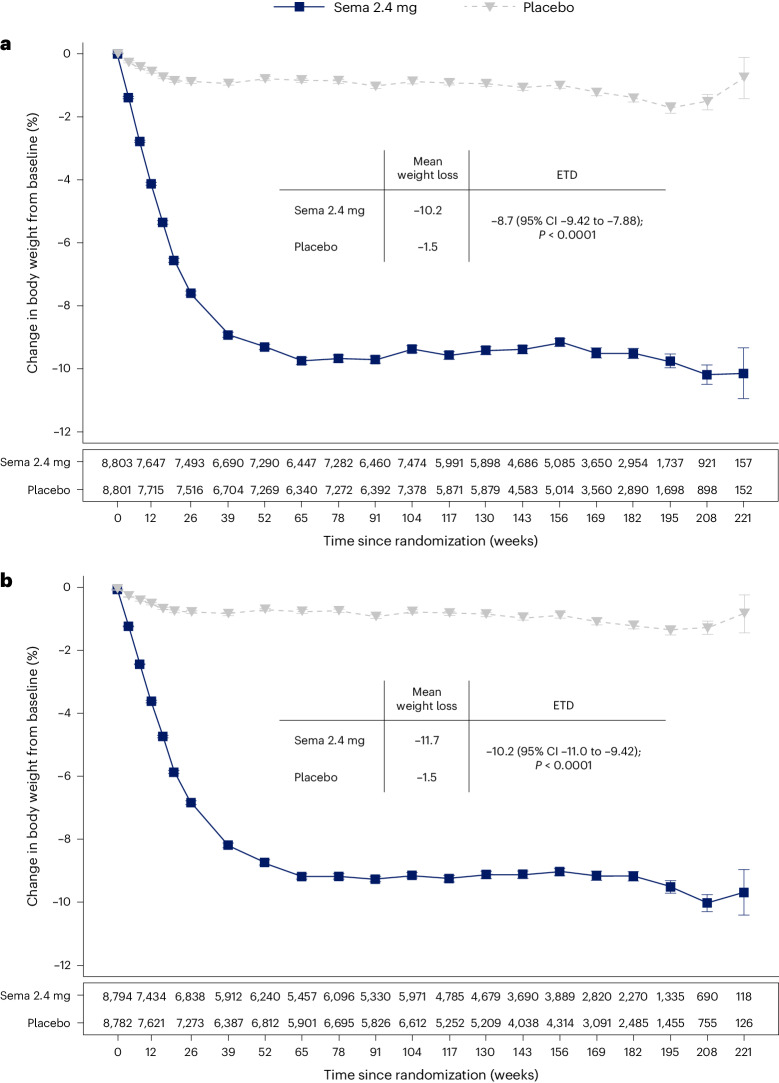
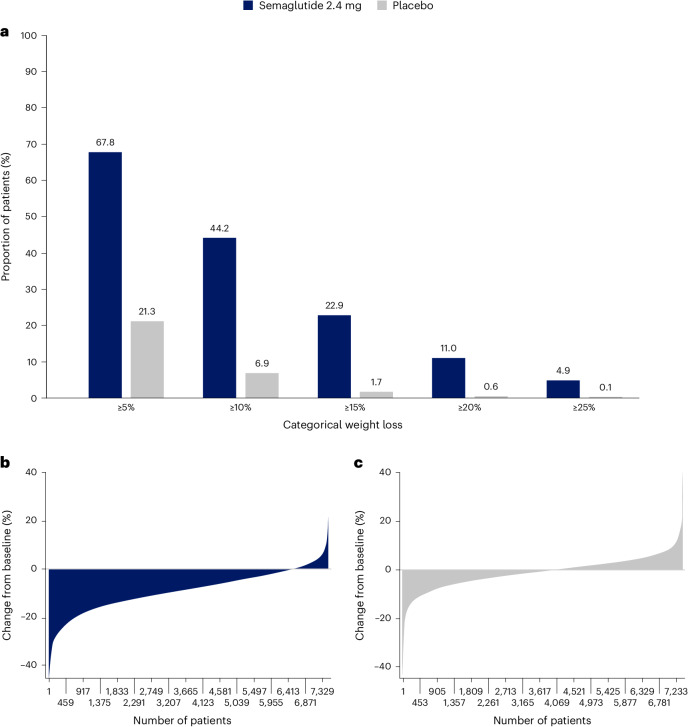
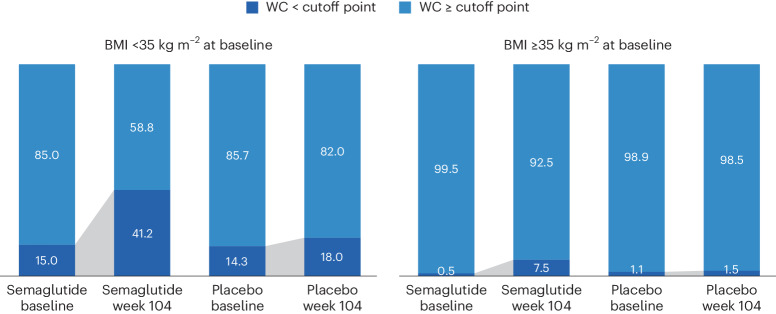
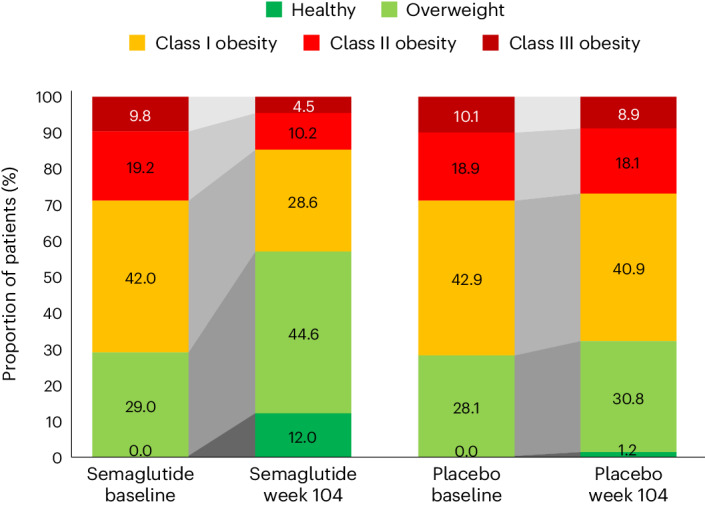
In the SELECT cardiovascular outcomes trial, semaglutide showed a 20% reduction in major adverse cardiovascular events in 17,604 adults with preexisting cardiovascular disease, overweight or obesity, without diabetes. Here in this prespecified analysis, we examined effects of semaglutide on weight and anthropometric outcomes, safety and tolerability by baseline body mass index (BMI). In patients treated with semaglutide, weight loss continued over 65 weeks and was sustained for up to 4 years. At 208 weeks, semaglutide was associated with mean reduction in weight (−10.2%), waist circumference (−7.7 cm) and waist-to-height ratio (−6.9%) versus placebo (−1.5%, −1.3 cm and −1.0%, respectively; P < 0.0001 for all comparisons versus placebo). Clinically meaningful weight loss occurred in both sexes and all races, body sizes and regions. Semaglutide was associated with fewer serious adverse events. For each BMI category (<30, 30 to <35, 35 to <40 and ≥40 kg m − 2 ) there were lower rates (events per 100 years of observation) of serious adverse events with semaglutide (43.23, 43.54, 51.07 and 47.06 for semaglutide and 50.48, 49.66, 52.73 and 60.85 for placebo). Semaglutide was associated with increased rates of trial product discontinuation. Discontinuations increased as BMI class decreased. In SELECT, at 208 weeks, semaglutide produced clinically significant weight loss and improvements in anthropometric measurements versus placebo. Weight loss was sustained over 4 years. ClinicalTrials.gov identifier: NCT03574597 .
Overview
The claims and statistics of this paper haven’t been checked yet.
Free: it reads the open-access text and checks the first 5 claims that cite a source we can check. Create a free account to check every claim.
Integrity signals
Registry
Cites
Statistics
Figures
Verification
Claims the paper makes
The claims and statistics of this paper haven’t been checked yet.
Free: it reads the open-access text and checks the first 5 claims that cite a source we can check. Create a free account to check every claim.
Claims other papers make about this one
Each is checked against this paper’s own text: does it say what the citing paper says it does?
The source backs part of the claim, not all of it — or backs it for a different population, condition or comparison.
In the citing paper
“When GLP‐1 use is continued, weight reduction is sustained for at least 4 years in controlled and observational studies [16, 17].”
From Nutritional priorities to support GLP ‐1 therapy for obesity: A joint Advisory from the American College of Lifestyle Medicine, the American Society for Nutrition, the Obesity Medicine Association, and The Obesity Society (2025) · cites this paper as [16]
Experimental — accuracy not yet measuredThe source backs part of the claim, not all of it — or backs it for a different population, condition or comparison.
In the citing paper
“When GLP-1 use is continued, weight reduction is sustained for at least 4 years in controlled and observational studies [17].”
From Nutritional priorities to support GLP-1 therapy for obesity: A joint advisory from the American College of Lifestyle Medicine, the American Society for Nutrition, the Obesity Medicine Association, and the Obesity Society (2025) · cites this paper as [17]
Experimental — accuracy not yet measuredThe source backs part of the claim, not all of it — or backs it for a different population, condition or comparison.
In the citing paper
“Notably, GLP-1RA efficacy is lessened in participants with a lower starting weight/BMI or with prior exposure to GLP-1RAs (95, 102), and it is reduced by a third in type 2 diabetics and in male individuals (79, 93, 95‐97, 99).”
From GLP-1 and the Neurobiology of Eating Control: Recent Advances (2025) · cites this paper as [95]
Experimental — accuracy not yet measuredThe source backs part of the claim, not all of it — or backs it for a different population, condition or comparison.
In the citing paper
“and in univariate (crude) analyses with semaglutide, female sex (48% greater weight loss in kilograms), younger age (24% greater for age <55 vs. ≥75 years), and higher baseline BMI (23% greater for ≥40 vs. <30 kg/m2) [16].”
From Nutritional priorities to support GLP ‐1 therapy for obesity: A joint Advisory from the American College of Lifestyle Medicine, the American Society for Nutrition, the Obesity Medicine Association, and The Obesity Society (2025) · cites this paper as [16]
Experimental — accuracy not yet measuredThe cited source says what the claim attributes to it.
In the citing paper
“SAEs occurring in >5% of patients were reported in 26 studies [11][12][13][14]35,40,42,51,52,58,62,63,[65][66][67]70,74,77,[84][85][86]93,94,96,103,104], with 9 publications reporting SAEs in >10% of patients [11,14,66,67,85,86,89,103,104].”
From Symptomatic Adverse Events and Quality of Life Related to Incretin-Based Medicines for Obesity: A Systematic Review Involving >400,000 Subjects (2025) · cites this paper as [86]
7 more claims about this paper
Create a free account to see every claim other papers make about this one.
Self-check
Percentages, sums and reported differences re-computed from the paper’s own numbers.
The self-check needs the paper’s full text.
Citations
Cites
Health effects of overweight and obesity in 195 countries over 25 years
Collaborators, T. G. 2. O. (2017) · New England Journal of Medicine · doi:10.1056/nejmoa1614362 · Cited by 7,918 · cited 10×
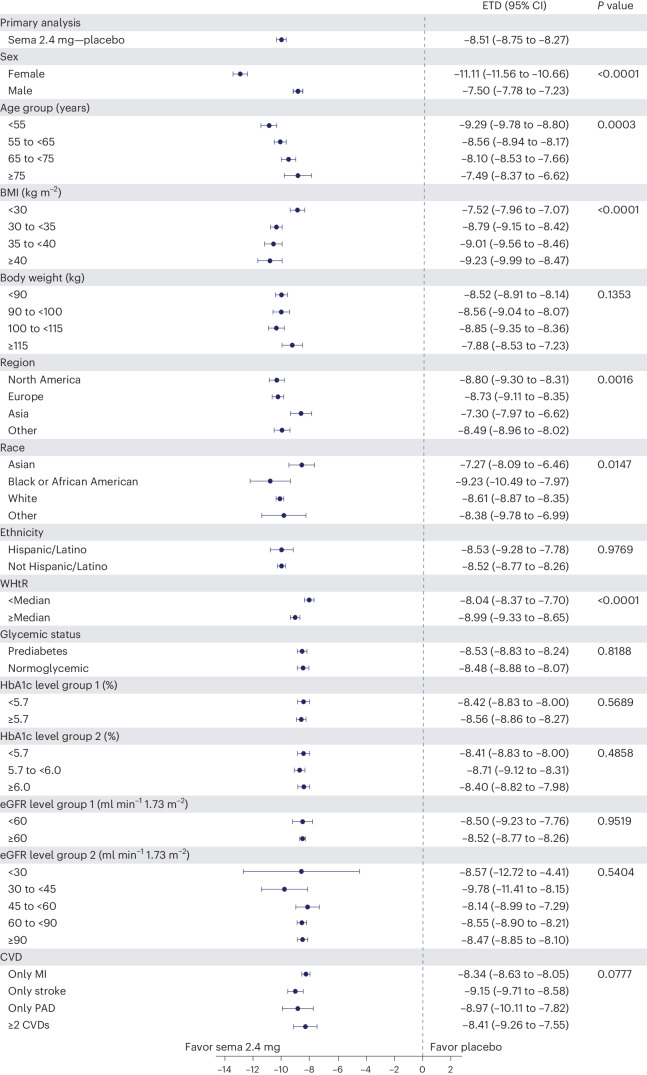
“BMI , body mass index; CI, confidence interval; CV, cardiovascular; CVD, cardiovascular disease; eGFR, estimated glomerular filtration rate; ETD, estimated treatment difference; HbA1c, glycated hemoglobin; MI, myocardial infarction; PAD, peripheral artery disease; sema, semaglutide.”
BackgroundInfluentialSemaglutide and Cardiovascular Outcomes in Patients with Type 2 Diabetes
Marso, S. P., Bain, S. C., Consoli, A., Eliaschewitz, F. G., Jódar, E., Leiter, L. A., Lingvay, I., Rosenstock, J., Seufert, J., Warren, M. L., et al. (2016) · New England Journal of Medicine · doi:10.1056/nejmoa1607141 · Cited by 6,900 · cited 1×
“In patients with type 2 diabetes and high CV risk, semaglutide at doses of 0.5 mg and 1.0 mg has been shown to significantly lower the risk of CV events 20 .”
BackgroundInfluentialSelf-citationOnce-Weekly Semaglutide in Adults with Overweight or Obesity
Wilding, J. P. H., Batterham, R. L., Calanna, S., Davies, M., Van Gaal, L. F., Lingvay, I., McGowan, B. M., Rosenstock, J., Tran, M. T. D., Wadden, T. A., et al. (2021) · New England Journal of Medicine · doi:10.1056/nejmoa2032183 · Cited by 5,205 · cited 3×
“Second, the respective study populations were quite different, with STEP 1 including a younger, healthier population with more women (73.1% of the semaglutide arm in STEP 1 versus 27.7% in SELECT) and higher mean BMI (37.8 kg m −2 versus 33.3 kg m −2 , respectively) 14,21 .”
BackgroundResultInfluentialSelf-citation2013 AHA/ACC/TOS Guideline for the Management of Overweight and Obesity in Adults
Jensen, M. D., Ryan, D. H., Apovian, C. M., Ard, J. D., Comuzzie, A. G., Donato, K. A., Hu, F. B., Hubbard, V. S., Jakicic, J. M., Kushner, R. F., et al. (2014) · Journal of the American College of Cardiology · doi:10.1016/j.jacc.2013.11.004 · Cited by 4,058
Self-citationEuropean Guidelines for Obesity Management in Adults
Yumuk, V., Tsigos, C., Fried, M., Schindler, K., Busetto, L., Micic, D., & Toplak, H. (2015) · Obesity Facts · doi:10.1159/000442721 · Cited by 3,432
Semaglutide and Cardiovascular Outcomes in Obesity without Diabetes
Lincoff, A. M., Brown-Frandsen, K., Colhoun, H. M., Deanfield, J., Emerson, S. S., Esbjerg, S., Hardt-Lindberg, S., Hovingh, G. K., Kahn, S. E., Kushner, R. F., et al. (2023) · New England Journal of Medicine · doi:10.1056/nejmoa2307563 · Cited by 3,236 · cited 9×
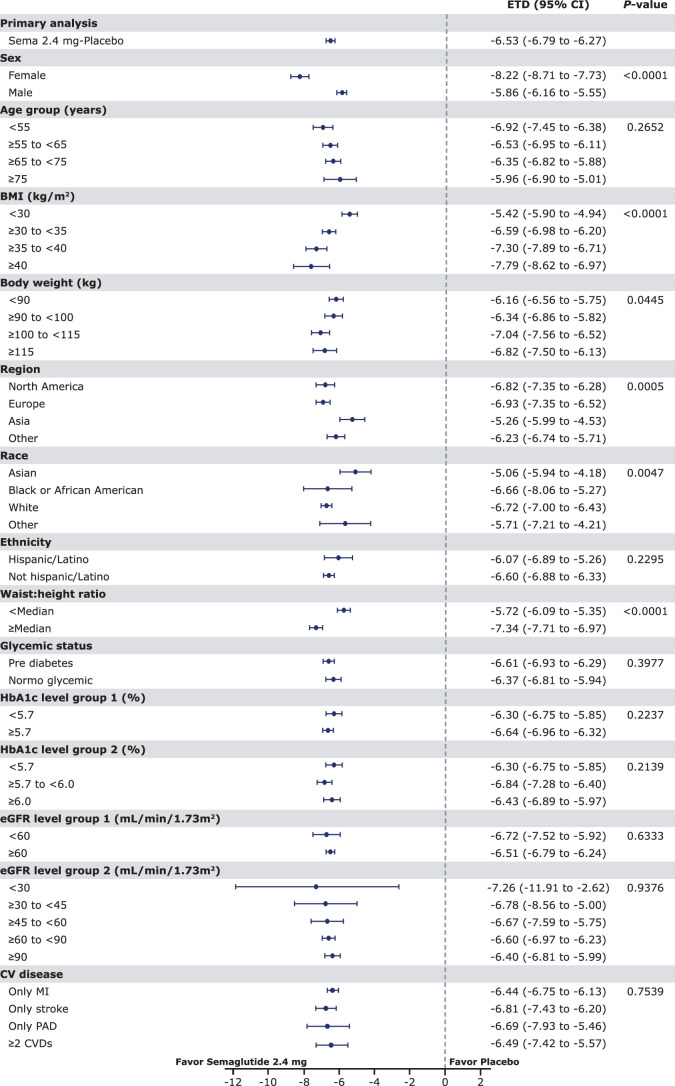
“At week 208, average reduction in WC was −7.7 cm with semaglutide versus −1.3 cm with placebo, with a treatment difference of −6.4 cm (95% CI −7.18 to −5.61; P < 0.0001) 21 .”
BackgroundResultInfluentialSelf-citationPoirier, P., Giles, T. D., Bray, G. A., Hong, Y., Stern, J. S., Pi-Sunyer, F. X., & Eckel, R. H. (2006) · Circulation · doi:10.1161/circulationaha.106.171016 · Cited by 3,165 · cited 1×
“Excess abnormal body fat, especially visceral adiposity and ectopic fat, is a driver of cardiovascular (CV) disease (CVD) 3–5 , and contributes to the global chronic disease burden of diabetes, chronic kidney disease, cancer and other chronic conditions 6,7 .”
BackgroundCardiovascular-kidney-metabolic health: a presidential advisory from the American Heart Association
Ndumele, C. E., Rangaswami, J., Chow, S. L., Neeland, I. J., Tuttle, K. R., Khan, S. S., Coresh, J., Mathew, R. O., Baker-Smith, C. M., Carnethon, M. R., et al. (2023) · Circulation · doi:10.1161/cir.0000000000001184 · Cited by 2,208 · cited 1×
“Excess abnormal body fat, especially visceral adiposity and ectopic fat, is a driver of cardiovascular (CV) disease (CVD) 3–5 , and contributes to the global chronic disease burden of diabetes, chronic kidney disease, cancer and other chronic conditions 6,7 .”
BackgroundRoss, R., Neeland, I. J., Yamashita, S., Shai, I., Seidell, J., Magni, P., Santos, R. D., Arsenault, B., Cuevas, A., Hu, F. B., et al. (2020) · Nature Reviews Endocrinology · doi:10.1038/s41574-019-0310-7 · Cited by 1,966 · cited 3×
“The diverse population can also be evaluated for changes in sex-and race-specific ‘cutoff points’ for BMI and WC, which have been identified as anthropometric measures that predict cardiometabolic risk 8,22,23 .”
BackgroundMethodGarvey, W. T., Mechanick, J. I., Brett, E. M., Garber, A. J., Hurley, D. L., Jastreboff, A. M., Nadolsky, K., Pessah-Pollack, R., & Plodkowski, R. (2016) · Endocrine Practice · doi:10.4158/ep161365.gl · Cited by 1,914 · cited 1×
“The diverse population can also be evaluated for changes in sex-and race-specific ‘cutoff points’ for BMI and WC, which have been identified as anthropometric measures that predict cardiometabolic risk 8,22,23 .”
Background
Research works printed but not linked: 1
- Tchang, B. G. et al. Pharmacologic treatment of overweight and obesity in adults. in (eds. Feingold, K. R. et al.) Endotext https://www.ncbi.nlm.nih.gov/books/NBK279038/ (MDText.com, 2000).
Cited by
Items 401–427 of 427
Women’s Kidney Health in Focus: A Scientific Statement From the American Heart Association
Gohar, E. Y., Oh, E. S., Ahmed, S. B., Karumanchi, S. A., Mathew, R. O., Norouzi, S., Piccoli, G. B., Reckelhoff, J. F., Vinson, A., Cardozo, L. L. Y., et al. (2026) · Circulation · doi:10.1161/cir.0000000000001471 · Cited by 1
Nazari, A., Chinchankar, S., Ambite, I., Chaudhuri, A., Haq, F., Ahmadi, S., Gomes, I., Svanborg, C., & Tran, H. (2026) · Scientific Reports · doi:10.1038/s41598-026-71811-9
Goñi, J. A., Sánchez‐Barba, M., López, G. P., Megías, S. M., & Albarrán, O. G. (2026) · Endocrine Practice · doi:10.1016/j.eprac.2026.09.005
Brucar, L. R., Miller, K. M., & Volkow, N. D. (2026) · Neuroscience & Biobehavioral Reviews · doi:10.1016/j.neubiorev.2026.106990
“…factors such as baseline BMI, prior GLP-1RA exposure, sex, and comorbid T2DM (Apostolopoulou and Koufakis, 2025; Squire et al., 2025; Crabtree et al., 2023; Ryan et al., 2024), underscoring the need to better understand the neurobiological mechanisms underlying differential treatment responsivity.”
Beyond efficacy: the treatment lifecycle of incretin and multi-receptor agonists
Rabbani, S. A., El-Tanani, M., Matalka, I. I., & Rizzo, M. (2026) · Frontiers in Endocrinology · doi:10.3389/fendo.2026.1902185
Beyond Prescribing: GLP-1 Care and Obesity Prevention in Primary Care
Jerjes, W., Pineda, E., El-Osta, A. A. R., & Majeed, A. (2026) · Journal of Primary Care & Community Health · doi:10.1177/21501319261494129
Espinoza‐Carhuancho, F., Delgado-Cumpa, B., Temoche, A., Alvítez, J., Munive-Degregori, A., Pacheco‐Mendoza, J., & Mayta-Tovalino, F. (2026) · International Journal of Preventive Medicine · doi:10.4103/ijpvm.ijpvm_217_25
Lovatel, E. A. M., Rauber, R., REZENDE, M. L. P., Silva, J. D. P. E., & Cruz, V. H. R. (2026) · Revista Ibero-Americana de Humanidades, Ciências e Educação · doi:10.51891/rease.v12i9.30696
Elradi, Y. M. Z., Casanova-Moreno, M. D. L. C., & Espariz-Tejido, M. (2025) · Revista de Ciencias Médicas de Pinar del Río
Шаші, К., Alhalabi, A., Bilani, N., Jabbal, I. S., Herrán, M., Abdo, T., Sabbagh, S., Sarna, K., Stevenson, A., Saravia, D., et al. (2026) · Cancers · doi:10.3390/cancers18193198
Biernat, P., Czerwińska, A., Cybulska, D., Cybulska, K., Morka, J., Sobczak, M., Wołyniec, E., & Kulpa, B. (2026) · African Journal of Biomedical Research · doi:10.69980/ajbr.v29i1s.9889
Kulkarni, N. S., Hutton, D. W., Rhyan, C., McCullough, J. S., Greenlee, M., & Pandya, A. (2026) · Obesity · doi:10.1002/oby.70311 · Cited by 1
Comorbidity in Internal Medicine: Shared Mechanisms of Cardiovascular, Metabolic and Kidney Diseases
Likhosherstova, U. (2026) · Journal of chemical health risks
Richardson, R., Woods, T., Grzesiak, N., Jenkins, A., & Kern, C. C. (2026) · Experimental Physiology · doi:10.1113/ep092854
“Research emerging over the past few years suggests that GLP-1 receptor agonists may also play important roles in the treatment of cardio-vascular, kidney and liver diseases, as well as neurodegeneration, and potentially even ageing itself (Jumper et al., 2021; Ryan et al., 2024; Zheng et al., 2024).”
Mikhael, F. G., Ayoub, C., Teperikidis, E., Biondi-Zoccai, G., Booz, G. W., Zouein, F. A., & Makarem, N. N. (2026) · Current Atherosclerosis Reports · doi:10.1007/s11883-026-01471-7
“In the SELECT trial, a randomized, double-blind, placebo-controlled trial including 17,604 adults with overweight or obesity and established cardiovascular disease but without diabetes, semaglutide produced sustained weight reduction over four years [36].”
Sharata, E. E., Abdel-Samea, A. S., Reda, Y., Abdelnaser, M., Rofaeil, R. R., & Mohyeldin, R. H. (2026) · SN Comprehensive Clinical Medicine · doi:10.1007/s42399-026-02757-2
GLP‐1 Receptor Agonists and Cancer Risk in Obesity Treatment
Hofseth, L. J., Murphy, E. A., Playdon, M. C., Makowski, L., Ibele, A. R., Fairman, C. M., & Hébert, J. R. (2026) · Obesity Reviews · doi:10.1111/obr.70247
Kochar, I. S., Anusha, K., & Uppal, S. (2026) · Cureus · doi:10.7759/cureus.118279
Roslin, K., Andrews, R., Baella-Olivieri, B., & Roslin, M. S. (2026) · Journal of Clinical Medicine · doi:10.3390/jcm15218265
Chu, Z., Hu, Z., Zhu, B., Luo, F., Zhou, Y., & Lin, Q. (2026) · Nutrition Reviews · doi:10.1093/nutrit/nuag161
Lim, D., Hawton, K., Dias, R. P., Aswani, N., Steele, C. A., Sachdev, P., Peacock, A., Robertson, S., Marshall, A. S. J., Tang, W., et al. (2026) · Archives of Disease in Childhood · doi:10.1136/archdischild-2026-330728
Surma, S., Barylski, M., Bhatt, D. L., Ray, K. K., Shapiro, M. D., Mancia, G., Lip, G. Y. H., Borghi, C., Schmieder, R. E., Narkiewicz, K., et al. (2026) · Nutrients · doi:10.3390/nu18213662
Long-term effect of Ozempic vs. bariatric surgery on weight loss in Lebanon
Khairallah, M., Chahine, A., Bassil, J., Karam, C., Estephan, L., Nakhoul, N., Hallit, S. R., & Elias, B. (2026) · JPRAS Open · doi:10.1016/j.jpra.2026.11.002
Genetically-proxied GLP1R agonism and cardiometabolic outcomes in East Asian Biobank populations
Tinworth, A. C., Koyama, S., Belbasis, L., Valdés‐Márquez, E., Ito, K., Matsuda, K., Gajendragadkar, P. R., Yu, C., Sun, D., Pei, P., et al. (2026) · Frontiers in Genetics · doi:10.3389/fgene.2026.1954956
GLP-1 based therapy of obesity and type 2 diabetes
Holst, J. J. (2026) · Diabetology International · doi:10.1007/s13340-026-00946-x
Labres, A. L. F., Vilela, V. D. F. C., Barbosa, M. V. M., & Fernandes, T. A. (2026) · Revista Foco · doi:10.54751/revistafoco.v19n12-035
Metadata
- Authors
- Ryan, D. H., Lingvay, I., Deanfield, J., Kahn, S. E., Barros, E., Burguera, B., Colhoun, H. M., Cercato, C., Dicker, D., Horn, D. B., Hovingh, G. K., Jeppesen, O. K., Kokkinos, A., Lincoff, A. M., Meyhöfer, S. M., Oral, T. K., Plutzky, J., van Beek, A. P., Wilding, J. P. H., & Kushner, R. F.
- Affiliations
- Pennington Biomedical Research Center (US)
- The University of Texas Southwestern Medical Center (US)
- University College London (GB)
- University of Washington (US)
- Novo Nordisk (Denmark) (DK)
- Cleveland Clinic (US)
- Institute of Genetics and Cancer (GB)
- Tel Aviv University (IL)
- National and Kapodistrian University of Athens (GR)
- University of Lübeck (DE)
- Brigham and Women's Hospital (US)
- University of Liverpool (GB)
- Northwestern University (US)
- Corresponding author
- Ryan, Donna H.
- ORCID
- Venue
- Nature Medicine
- Published
- 2024-05-13
- Volume
- 30
- Issue
- 7
- Pages
- 2049-2057
- ISSN
- 1078-8956 (ISSN-L)
- 1546-170X
- PMC
- PMC11271387
- OpenAlex
- W4396850943
- Semantic Scholar
- c09f134631148cf1e05a1051a5184a005f1ac22d
- Cited by
- 347
- References
- 25
- Citations by year
- 2026: 143 · 2025: 154 · 2024: 50
- FWCI
- 98.58
- Type
- journal article
- Language
- en
- Open access
- hybrid
- doi.org
- Licence
- cc-by
- creativecommons.org/licenses/by/4.0 (tdm)
- creativecommons.org/licenses/by/4.0 (vor)
- Locations
- Nature Medicine (publishedVersion, cc-by)
- PubMed Central (publishedVersion, cc-by)
- PubMed (publishedVersion)
- Edinburgh Research Explorer (University of Edinburgh) (submittedVersion, cc-by)
- Digital Commons-TMC (Texas Medical Center) (submittedVersion)
- Pure Amsterdam UMC (submittedVersion, cc-by)
- University of Groningen research database (University of Groningen / Centre for Information Technology) (submittedVersion, cc-by)
- Funders
- Novo Nordisk A/S
- Topics
- Health Sciences › Medicine › Pharmacology (medical) › Pharmacology and Obesity Treatment
- Health Sciences › Medicine › Endocrinology, Diabetes and Metabolism › Diabetes Treatment and Management
- Health Sciences › Medicine › Endocrinology, Diabetes and Metabolism › Diabetes, Cardiovascular Risks, and Lipoproteins
- Keywords
- semaglutide, weight loss, sustained weight loss, waist circumference, waist-to-height ratio, anthropometric outcomes, body mass index, serious adverse events, drug safety and tolerability, GLP-1 receptor agonists, SELECT trial
- MeSH terms
- Semaglutide, Adult, Aged, Cardiovascular Diseases, Double-Blind Method, Glucagon-Like Peptides, Female, Humans, Male, Middle Aged, Obesity, Weight Loss, Body Mass Index, Treatment Outcome
About these checks
Registry, retraction, Cites and statistics results are computed, not judged, with one exception: a printed reference that no index lists is read once by a model before it counts as a citation error. Claims are extracted by a model and kept only when their quote appears verbatim in the text; each cited source is then checked, with a model’s help, for whether it says what the claim relies on. Those verdicts can be wrong — read the claim’s quote and the cited source before relying on one.
Statistics and arithmetic are recomputed, not judged.
Confidence bands are shown only for fields calibrated on our annotated test set. None is calibrated yet, so no band is shown.
What counts as a claim ›How we measure confidence ›How we check this ›
Are you an author, or do you see a problem with this page? Request a review
Data sources
Bibliographic data: Semantic Scholar, OpenAlex, Crossref.
Contains information from the Semantic Scholar Academic Graph Datasets, made available under the ODC Attribution License (ODC-BY 1.0).
Semantic Scholar’s data is described in: Kinney, R., et al. (2023). The Semantic Scholar Open Data Platform. arXiv:2301.10140.
