

Long-term weight loss effects of semaglutide in obesity without diabetes in the SELECT trial
Open accessThe DOI matches its Crossref record; 25 of the 25 references it cites were found in a registry or an index.
Abstract
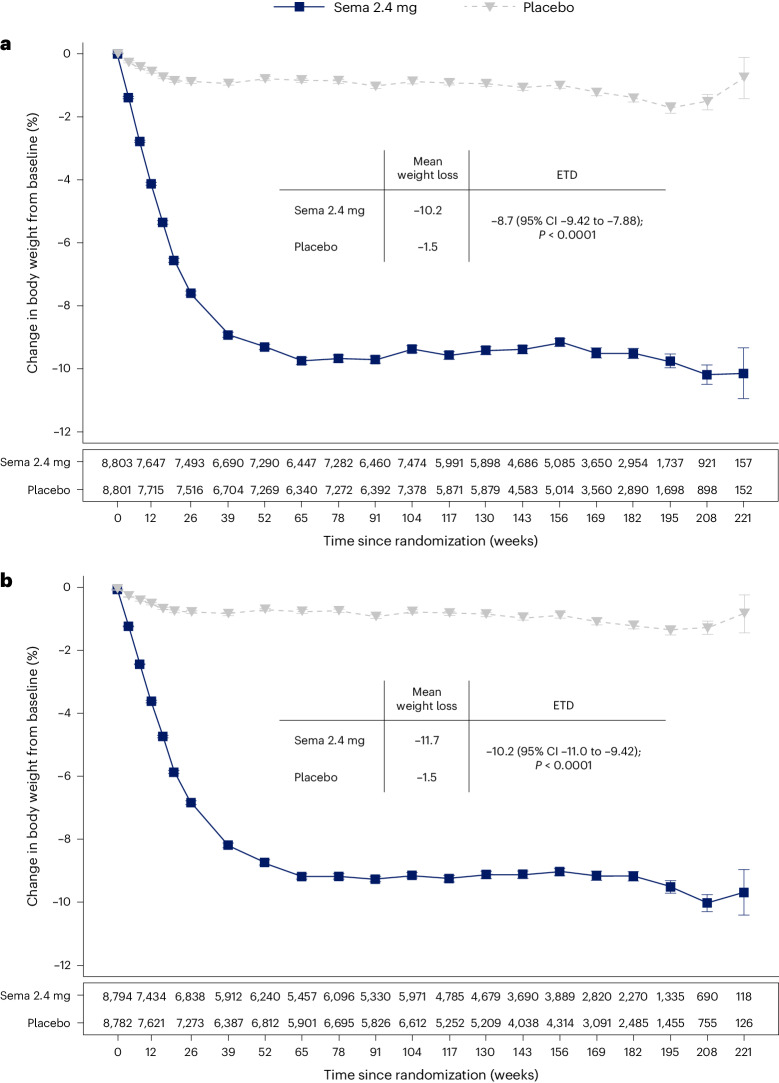
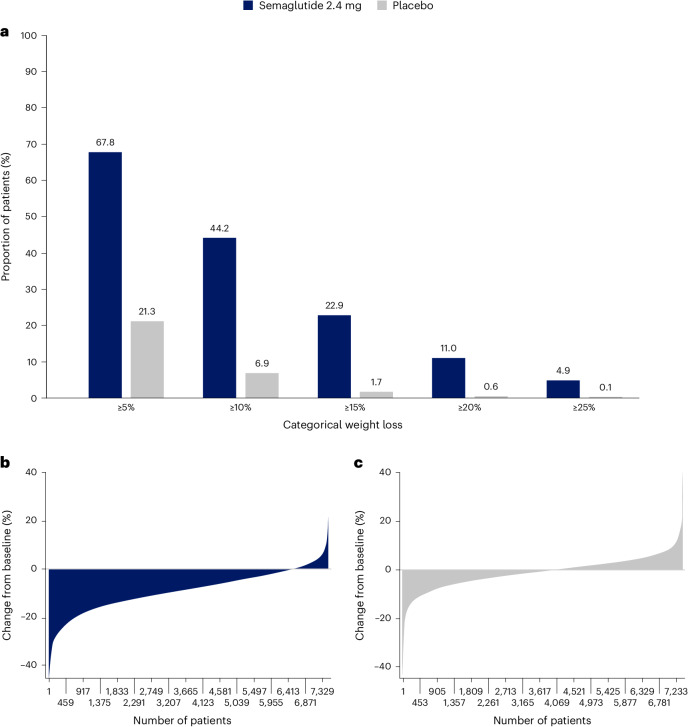
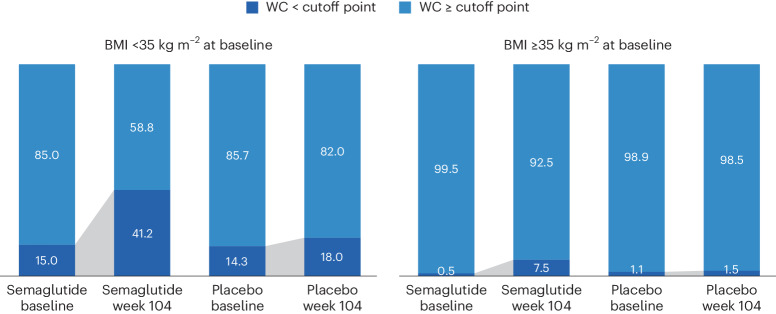
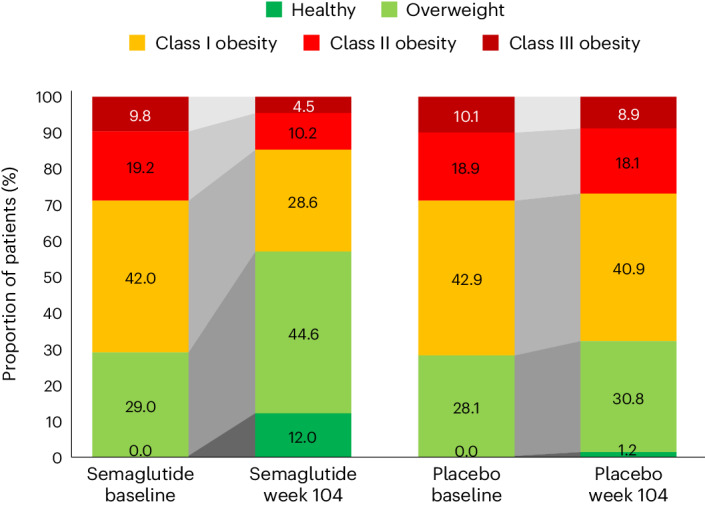
In the SELECT cardiovascular outcomes trial, semaglutide showed a 20% reduction in major adverse cardiovascular events in 17,604 adults with preexisting cardiovascular disease, overweight or obesity, without diabetes. Here in this prespecified analysis, we examined effects of semaglutide on weight and anthropometric outcomes, safety and tolerability by baseline body mass index (BMI). In patients treated with semaglutide, weight loss continued over 65 weeks and was sustained for up to 4 years. At 208 weeks, semaglutide was associated with mean reduction in weight (−10.2%), waist circumference (−7.7 cm) and waist-to-height ratio (−6.9%) versus placebo (−1.5%, −1.3 cm and −1.0%, respectively; P < 0.0001 for all comparisons versus placebo). Clinically meaningful weight loss occurred in both sexes and all races, body sizes and regions. Semaglutide was associated with fewer serious adverse events. For each BMI category (<30, 30 to <35, 35 to <40 and ≥40 kg m − 2 ) there were lower rates (events per 100 years of observation) of serious adverse events with semaglutide (43.23, 43.54, 51.07 and 47.06 for semaglutide and 50.48, 49.66, 52.73 and 60.85 for placebo). Semaglutide was associated with increased rates of trial product discontinuation. Discontinuations increased as BMI class decreased. In SELECT, at 208 weeks, semaglutide produced clinically significant weight loss and improvements in anthropometric measurements versus placebo. Weight loss was sustained over 4 years. ClinicalTrials.gov identifier: NCT03574597 .
Overview
The claims and statistics of this paper haven’t been checked yet.
Free: it reads the open-access text and checks the first 5 claims that cite a source we can check. Create a free account to check every claim.
Integrity signals
Registry
Cites
Statistics
Figures
Verification
Claims the paper makes
The claims and statistics of this paper haven’t been checked yet.
Free: it reads the open-access text and checks the first 5 claims that cite a source we can check. Create a free account to check every claim.
Claims other papers make about this one
Each is checked against this paper’s own text: does it say what the citing paper says it does?
The source backs part of the claim, not all of it — or backs it for a different population, condition or comparison.
In the citing paper
“When GLP‐1 use is continued, weight reduction is sustained for at least 4 years in controlled and observational studies [16, 17].”
From Nutritional priorities to support GLP ‐1 therapy for obesity: A joint Advisory from the American College of Lifestyle Medicine, the American Society for Nutrition, the Obesity Medicine Association, and The Obesity Society (2025) · cites this paper as [16]
Experimental — accuracy not yet measuredThe source backs part of the claim, not all of it — or backs it for a different population, condition or comparison.
In the citing paper
“When GLP-1 use is continued, weight reduction is sustained for at least 4 years in controlled and observational studies [17].”
From Nutritional priorities to support GLP-1 therapy for obesity: A joint advisory from the American College of Lifestyle Medicine, the American Society for Nutrition, the Obesity Medicine Association, and the Obesity Society (2025) · cites this paper as [17]
Experimental — accuracy not yet measuredThe source backs part of the claim, not all of it — or backs it for a different population, condition or comparison.
In the citing paper
“Notably, GLP-1RA efficacy is lessened in participants with a lower starting weight/BMI or with prior exposure to GLP-1RAs (95, 102), and it is reduced by a third in type 2 diabetics and in male individuals (79, 93, 95‐97, 99).”
From GLP-1 and the Neurobiology of Eating Control: Recent Advances (2025) · cites this paper as [95]
Experimental — accuracy not yet measuredThe source backs part of the claim, not all of it — or backs it for a different population, condition or comparison.
In the citing paper
“and in univariate (crude) analyses with semaglutide, female sex (48% greater weight loss in kilograms), younger age (24% greater for age <55 vs. ≥75 years), and higher baseline BMI (23% greater for ≥40 vs. <30 kg/m2) [16].”
From Nutritional priorities to support GLP ‐1 therapy for obesity: A joint Advisory from the American College of Lifestyle Medicine, the American Society for Nutrition, the Obesity Medicine Association, and The Obesity Society (2025) · cites this paper as [16]
Experimental — accuracy not yet measuredThe cited source says what the claim attributes to it.
In the citing paper
“SAEs occurring in >5% of patients were reported in 26 studies [11][12][13][14]35,40,42,51,52,58,62,63,[65][66][67]70,74,77,[84][85][86]93,94,96,103,104], with 9 publications reporting SAEs in >10% of patients [11,14,66,67,85,86,89,103,104].”
From Symptomatic Adverse Events and Quality of Life Related to Incretin-Based Medicines for Obesity: A Systematic Review Involving >400,000 Subjects (2025) · cites this paper as [86]
7 more claims about this paper
Create a free account to see every claim other papers make about this one.
Self-check
Percentages, sums and reported differences re-computed from the paper’s own numbers.
The self-check needs the paper’s full text.
Citations
Cites
Health effects of overweight and obesity in 195 countries over 25 years
Collaborators, T. G. 2. O. (2017) · New England Journal of Medicine · doi:10.1056/nejmoa1614362 · Cited by 7,918 · cited 10×
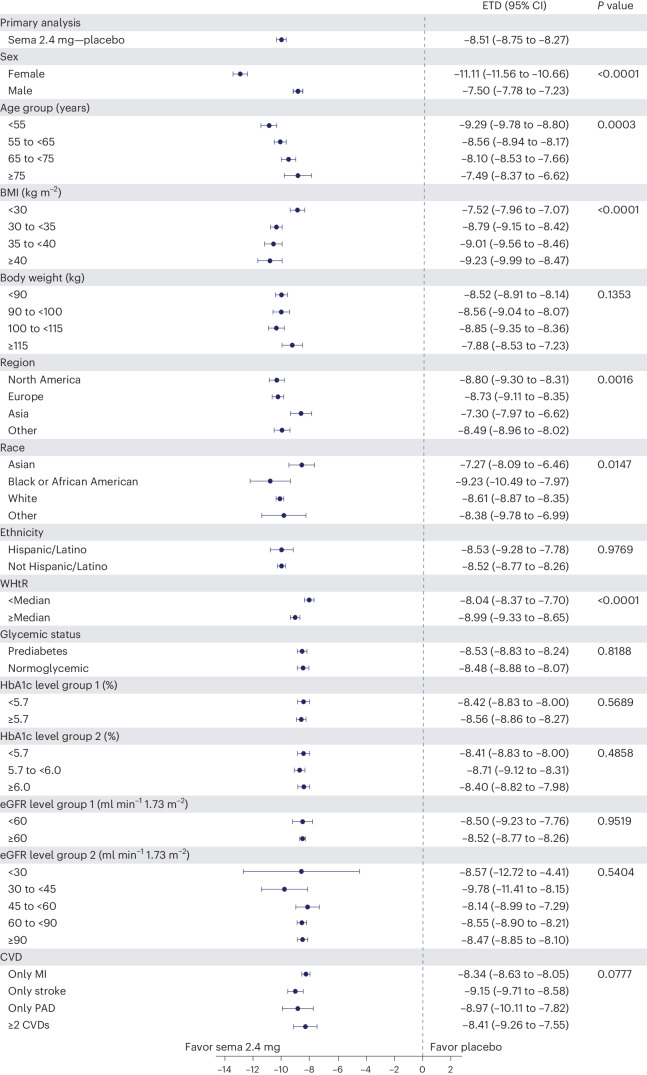
“BMI , body mass index; CI, confidence interval; CV, cardiovascular; CVD, cardiovascular disease; eGFR, estimated glomerular filtration rate; ETD, estimated treatment difference; HbA1c, glycated hemoglobin; MI, myocardial infarction; PAD, peripheral artery disease; sema, semaglutide.”
BackgroundInfluentialSemaglutide and Cardiovascular Outcomes in Patients with Type 2 Diabetes
Marso, S. P., Bain, S. C., Consoli, A., Eliaschewitz, F. G., Jódar, E., Leiter, L. A., Lingvay, I., Rosenstock, J., Seufert, J., Warren, M. L., et al. (2016) · New England Journal of Medicine · doi:10.1056/nejmoa1607141 · Cited by 6,900 · cited 1×
“In patients with type 2 diabetes and high CV risk, semaglutide at doses of 0.5 mg and 1.0 mg has been shown to significantly lower the risk of CV events 20 .”
BackgroundInfluentialSelf-citationOnce-Weekly Semaglutide in Adults with Overweight or Obesity
Wilding, J. P. H., Batterham, R. L., Calanna, S., Davies, M., Van Gaal, L. F., Lingvay, I., McGowan, B. M., Rosenstock, J., Tran, M. T. D., Wadden, T. A., et al. (2021) · New England Journal of Medicine · doi:10.1056/nejmoa2032183 · Cited by 5,205 · cited 3×
“Second, the respective study populations were quite different, with STEP 1 including a younger, healthier population with more women (73.1% of the semaglutide arm in STEP 1 versus 27.7% in SELECT) and higher mean BMI (37.8 kg m −2 versus 33.3 kg m −2 , respectively) 14,21 .”
BackgroundResultInfluentialSelf-citation2013 AHA/ACC/TOS Guideline for the Management of Overweight and Obesity in Adults
Jensen, M. D., Ryan, D. H., Apovian, C. M., Ard, J. D., Comuzzie, A. G., Donato, K. A., Hu, F. B., Hubbard, V. S., Jakicic, J. M., Kushner, R. F., et al. (2014) · Journal of the American College of Cardiology · doi:10.1016/j.jacc.2013.11.004 · Cited by 4,058
Self-citationEuropean Guidelines for Obesity Management in Adults
Yumuk, V., Tsigos, C., Fried, M., Schindler, K., Busetto, L., Micic, D., & Toplak, H. (2015) · Obesity Facts · doi:10.1159/000442721 · Cited by 3,432
Semaglutide and Cardiovascular Outcomes in Obesity without Diabetes
Lincoff, A. M., Brown-Frandsen, K., Colhoun, H. M., Deanfield, J., Emerson, S. S., Esbjerg, S., Hardt-Lindberg, S., Hovingh, G. K., Kahn, S. E., Kushner, R. F., et al. (2023) · New England Journal of Medicine · doi:10.1056/nejmoa2307563 · Cited by 3,236 · cited 9×
“At week 208, average reduction in WC was −7.7 cm with semaglutide versus −1.3 cm with placebo, with a treatment difference of −6.4 cm (95% CI −7.18 to −5.61; P < 0.0001) 21 .”
BackgroundResultInfluentialSelf-citationPoirier, P., Giles, T. D., Bray, G. A., Hong, Y., Stern, J. S., Pi-Sunyer, F. X., & Eckel, R. H. (2006) · Circulation · doi:10.1161/circulationaha.106.171016 · Cited by 3,165 · cited 1×
“Excess abnormal body fat, especially visceral adiposity and ectopic fat, is a driver of cardiovascular (CV) disease (CVD) 3–5 , and contributes to the global chronic disease burden of diabetes, chronic kidney disease, cancer and other chronic conditions 6,7 .”
BackgroundCardiovascular-kidney-metabolic health: a presidential advisory from the American Heart Association
Ndumele, C. E., Rangaswami, J., Chow, S. L., Neeland, I. J., Tuttle, K. R., Khan, S. S., Coresh, J., Mathew, R. O., Baker-Smith, C. M., Carnethon, M. R., et al. (2023) · Circulation · doi:10.1161/cir.0000000000001184 · Cited by 2,208 · cited 1×
“Excess abnormal body fat, especially visceral adiposity and ectopic fat, is a driver of cardiovascular (CV) disease (CVD) 3–5 , and contributes to the global chronic disease burden of diabetes, chronic kidney disease, cancer and other chronic conditions 6,7 .”
BackgroundRoss, R., Neeland, I. J., Yamashita, S., Shai, I., Seidell, J., Magni, P., Santos, R. D., Arsenault, B., Cuevas, A., Hu, F. B., et al. (2020) · Nature Reviews Endocrinology · doi:10.1038/s41574-019-0310-7 · Cited by 1,966 · cited 3×
“The diverse population can also be evaluated for changes in sex-and race-specific ‘cutoff points’ for BMI and WC, which have been identified as anthropometric measures that predict cardiometabolic risk 8,22,23 .”
BackgroundMethodGarvey, W. T., Mechanick, J. I., Brett, E. M., Garber, A. J., Hurley, D. L., Jastreboff, A. M., Nadolsky, K., Pessah-Pollack, R., & Plodkowski, R. (2016) · Endocrine Practice · doi:10.4158/ep161365.gl · Cited by 1,914 · cited 1×
“The diverse population can also be evaluated for changes in sex-and race-specific ‘cutoff points’ for BMI and WC, which have been identified as anthropometric measures that predict cardiometabolic risk 8,22,23 .”
Background
Research works printed but not linked: 1
- Tchang, B. G. et al. Pharmacologic treatment of overweight and obesity in adults. in (eds. Feingold, K. R. et al.) Endotext https://www.ncbi.nlm.nih.gov/books/NBK279038/ (MDText.com, 2000).
Cited by
Items 101–200 of 427
Ambia, J., van Sighem, A., Pantazis, N., Gill, M. J., Grabar, S., Monforte, A. D., Zangerle, R., Bruguera, A., Teira, R., Jarrín, I., et al. (2025) · The Lancet HIV · doi:10.1016/s2352-3018(25)00197-3 · Cited by 7
Constantine, E. P., Enthoven, L. F., Kahan, R., Pflug, E. M., & Lauder, A. S. (2025) · Journal of the American Academy of Orthopaedic Surgeons · doi:10.5435/jaaos-d-24-01505 · Cited by 7
Advances in GLP-1 receptor agonists delivery systems for obesity and diabetes
Abbasi, M., Sun, K., Huggins, K. W., Heath, B., DeLoit, H., McGinness, L., & Mccamy, K. (2026) · Acta Pharmaceutica Sinica B · doi:10.1016/j.apsb.2026.01.035 · Cited by 11
“%) compared to other GLP-1RAs 84,86,87 .”
Korus, S., Cembrowska-Lech, D., Kłoda, K., & Stachowska, E. (2026) · Journal of Translational Medicine · doi:10.1186/s12967-026-07702-4 · Cited by 8
Tronieri, J. S., Allison, K. C., DeRouen, K., Amaro, A., Collins, K. G., Roy, A., Watts, S., Ananna, T., & Wadden, T. A. (2026) · American Journal of Clinical Nutrition · doi:10.1016/j.ajcnut.2026.101403 · Cited by 11
“Weight loss with semaglutide typically continues until approximately week 60 [1,8], and longer-term studies suggest that a majority of lost weight is maintained 1 to 3 y later with continued use of the medication [9,10].”
Sequence variants associated with BMI affect disease risk through BMI itself
Einarsson, G., Þorleifsson, G., Steinthórsdóttir, V., Zink, F., Helgason, H., Ólafsdóttir, Þ., Rögnvaldsson, S., Tragante, V., Ulfarsson, M. O., Sveinbjörnsson, G., et al. (2024) · Nature Communications · doi:10.1038/s41467-024-53568-9 · Cited by 7
“…a GLP-1 agonist as a treatment for major CVDs demonstrates that the protective effect of treatment is observed from the start of interventionand is consistent throughout the trialperiod 27 , yet thefull effect of the treatment on weight isnot observed untilone year after treatment initiation 28 .”
Bellman, J., Westerterp, K. R., Wouters, L., Johannesson, M., Lundqvist, N., Kullberg, J., Larsson, C. L., Gustafsson, M., Pettersson, S., Fridolfsson, J., et al. (2025) · BMC Medicine · doi:10.1186/s12916-025-04143-6 · Cited by 7
“Obesity treatment has advanced significantly with the introduction of long-acting GLP-1 receptor agonists [62, 63], which have led to substantial reductions in both body weight and fat mass.”
Katrevula, A., Kalapala, R., Agrawal, S., Jagtap, N., Chhabra, P., Kulkarni, A. V., Merugu, C., Katukuri, G. R., & Duvvur, N. R. (2025) · Indian Journal of Gastroenterology · doi:10.1007/s12664-025-01856-7 · Cited by 7
“However, sub-cutaneous semaglutide 2.4 mg has demonstrated sustained weight loss over four years [13].”
InfluentialPeng, J., & Wang, Y. (2025) · Biochemical Pharmacology · doi:10.1016/j.bcp.2025.117108 · Cited by 6
Barazzoni, R., Monami, M., Buscemi, S., Busetto, L., Luca, M. D., Navarra, G., Ragghianti, B., Silverii, G. A., Belluzzi, A., Mannucci, E., et al. (2025) · Diabetes Obesity and Metabolism · doi:10.1111/dom.70204 · Cited by 7
Chen, H., Guo, X., Long, T., & Li, M. (2026) · Obesity Surgery · doi:10.1007/s11695-025-08415-1 · Cited by 7
Dâmaso, A. R., Corgosinho, F. C., Masquio, D. C. L., Figueiredo, N., Kattah, F. M., Cercato, C., Tock, L., & Campos, R. M. D. S. (2026) · Obesity Reviews · doi:10.1111/obr.70093 · Cited by 7
Self-citationJi, L., Gao, L., Tian, J., DONG, R., Zhang, Z., Shu, H., Zhao, J., Zhao, L., He, A., Xie, T., et al. (2026) · Signal Transduction and Targeted Therapy · doi:10.1038/s41392-026-02586-8 · Cited by 6
“16 However, real-world observational studies have consistently reported lower effectiveness of GLP-1 RAs compared with outcomes observed in prospective controlled clinical trials.”
Strategies for Loading and Releasing Peptide Therapeutics in Biodegradable Carriers
Jang, W., & Bong, K. W. (2026) · Advanced Functional Materials · doi:10.1002/adfm.202531987 · Cited by 8
“This enhanced stability has also supported the use of GLP-1 derivatives for weight management by sustained appetite control [58].”
Genetic architecture of obesity and advances in precision pharmacotherapy: a comprehensive review
Kavaja, F., Liehr, T., & Temaj, G. (2026) · Acta Biochimica Polonica · doi:10.3389/abp.2026.15484 · Cited by 6
Blevins, J. E., Honeycutt, M. K., Slattery, J. D., Goldberg, M., Rambousek, J. R., Tsui, E. W., Dodson, A. D., Shelton, K. A., Salemeh, T. S., Elfers, C., et al. (2024) · Frontiers in Endocrinology · doi:10.3389/fendo.2024.1432928 · Cited by 6
“However, improvements still need to be made in terms of improving overall weight loss effectiveness over more prolonged periods [ ≈ 10.2% weight loss over 208 weeks (6)].”
InfluentialSauter, E. R., Butera, G., & Agurs‐Collins, T. (2024) · Cancers · doi:10.3390/cancers16193296 · Cited by 6
“There are now pharmacologic weight loss strategies centered on GLP-1 receptor agonists, which can lead to a mean of 10% weight loss for at least 4 years [78] as long as the individual continues on the agent.”
BackgroundOswald, T., Coombs, S., Ellery, S. M., & Liu, A. (2025) · Journal of Clinical Medicine · doi:10.3390/jcm14113948 · Cited by 7
“More importantly, post hoc analysis of the data discovered that these CVD benefits were maintained in the long term for patients that lost at least 10% of their body weight [34].”
Adams, R. N., Athinarayanan, S. J., Zoller, A. R., McKenzie, A. L., & Ratner, R. E. (2025) · Diabetes Obesity and Metabolism · doi:10.1111/dom.16525 · Cited by 7
“23 By 2 and 3 years, Veterans lost an average of 9% of their initial body weight, similar to some pharmacologic treatments, including GLP-1 receptor agonists 24,25 and approaching the threshold for bariatric surgery eligibility.”
A geriatrician's approach to managing the complex older adult with obesity
Dewar, S. (2025) · Obesity · doi:10.1002/oby.24267 · Cited by 7
Comprehensive Access to Semaglutide: Clinical and Economic Implications for Medicare
Dayer, V. W., Nourhussein, I., Kasle, A., Hansen, R. N., Navas, A., & Sullivan, S. D. (2025) · Value in Health · doi:10.1016/j.jval.2025.07.007 · Cited by 7
Illiano, J., Green, C. L., Chao, A., Zhu, G., Lopez, L., Schaepkens, O., Jang, C., Lamming, D. W., & Harris, D. A. (2025) · Cell Reports Medicine · doi:10.1016/j.xcrm.2025.102471 · Cited by 6
An analysis of national news coverage of semaglutide for weight loss
Gionfriddo, M. R., Owens, K. M., Banks, H., Sherigar, A., & Covvey, J. R. (2024) · Journal of the American Pharmacists Association · doi:10.1016/j.japh.2024.102297 · Cited by 7
Kachmar, M., Corpodean, F., Popiv, I., LaPenna, K. B., Danos, D., Cook, M. W., Saunders, B. A., Domercant, J. J., Albaugh, V. L., & Schauer, P. R. (2025) · International Journal of Obesity · doi:10.1038/s41366-025-01798-2 · Cited by 6
Levy, M. E., Telis, N., Barrett, K. M. S., Bolze, A., Stoller, D. A., Chapman, C. N., Chahal, C. A. A., Judge, D. P., Olson, D. A., Grzymski, J. J., et al. (2024) · medRxiv · doi:10.1101/2024.10.31.24316494 · Cited by 7
Kushner, R. F., Johansen, O. E., Araujo Torres, K., Phan, T.-M., & Marczewska, A. (2025) · Obesities · doi:10.3390/obesities5020029 · Cited by 5
Self-citationSrivastava, G., Campbell, S. L., Hill, C. R., Stanley, T. L., Lawson, E. A., Apovian, C. M., Almandoz, J. P., Leggio, L., Lakdawalla, D. N., Dar, M., et al. (2025) · The American Journal of Clinical Nutrition · doi:10.1016/j.ajcnut.2025.06.015 · Cited by 5
“Comprehensive safety data over a 4-y period were recently published through a semaglutide trial conducted by Ryan et al. [32].”
Lübker, C., Bhavsar, J., Duque do Vale, R., Emerson, S. S., Nørtoft, E., Plutzky, J., Roberts, G., Tarp, J. M., & Lincoff, A. M. (2025) · Advances in Therapy · doi:10.1007/s12325-025-03176-w · Cited by 5
Self-citationLin, C., Chen, J., Meyerowitz‐Katz, G., Huang, Y., & Su, P. (2025) · Diabetes Obesity and Metabolism · doi:10.1111/dom.16191 · Cited by 6
Varghese, J. S., Goldsmith, D. R., Cotes, R. O., Ravikumar, V., Ali, M. K., & Pasquel, F. J. (2025) · International Journal of Obesity · doi:10.1038/s41366-025-01885-4 · Cited by 6
“…that the magnitude of weight loss in this study was less than that observed in the general population with obesity or overweight from the randomized trials of incretin-based weight loss medications with lifestyle that report roughly 8 – 16% average weight loss in 6 months after initiation [16, 17].”
Semaglutide in the Real World: Attitudes of the Population
Rušić, D., Durdov, T., Jadrijević, I., Perišin, A. Š., Leskur, D., Božić, J., Klusmeier, M. M., & Bukić, J. (2025) · Pharmacy · doi:10.3390/pharmacy13050128 · Cited by 6
“%) compared to an 8.2% rate of discontinuation in the placebo group [12].”
InfluentialWhy Early, Large-scale Weight Loss Is the Future of Type 2 Diabetes Care
Sattar, N. A., & Buse, J. B. (2025) · Diabetes Care · doi:10.2337/dci25-0069 · Cited by 6
“Sustained weight loss with these agents has also now been demonstrated in individuals without diabetes at least over 3–4 years in trials such as SURMOUNT-1 (35) and SELECT (36).”
Baik, J., & Lee, Y. (2025) · Journal of Bone Metabolism · doi:10.11005/jbm.25.919 · Cited by 6
“[44-46] GLP-1 analogs exert multiple beneficial effects in humans, including suppression of appetite,[47] reduction of fat mass,[45] and regulation of blood glucose levels.”
Gasbarrini, A., Galli, F. S., Ianiro, G., Ponziani, F. R., & Rinninella, E. (2026) · The American Journal of Gastroenterology · doi:10.14309/ajg.0000000000003907 · Cited by 5
Semaglutide and tirzepatide: Oral cavity effects of weight-loss therapies
Bernardo, M. E., Dallepiane, F. G., Escobar, M., da Cruz, A. C. C., & Benfatti, C. A. M. (2026) · EXCLI journal · doi:10.17179/excli2025-9065 · Cited by 5
GLP-1 medications for weight-loss: a triumph of marketing over patient care
Chastain, R., Meadows, A., & Adams, L. (2026) · Fat Studies · doi:10.1080/21604851.2026.2646492 · Cited by 6
“In the 4-year SELECT trial, approximately 5% of participants could not tolerate doses above the sub-therapeutic 0.25 mg, and around 25% were unable to maintain the full 2.4 mg dose for most of the study (Ryan et al. 2024; Lincoff et al. 2023, supplementary materials).”
InfluentialBeyond Glycemic Control: GLP-1RA–Based Therapies and Emerging Targets Beyond the Metabolic Axis
Matuszewski, W., Wołos-Kłosowicz, K., Włodarczyk, P., Waśniewska, P., Modzelewski, R., Górny, J. M., Szklarz, M., Madeksza, M., & Juranek, J. K. (2026) · Journal of Clinical Medicine · doi:10.3390/jcm15072786 · Cited by 5
Oral Health Considerations and Dental Management Guidelines for Semaglutide Medications
Kofman, K., & Ouanounou, A. (2026) · Canadian Journal of Diabetes · doi:10.1016/j.jcjd.2026.03.008 · Cited by 6
Mind the Plateau: A Mathematical Modeling Analysis of Long-Term GLP-1 Receptor Agonist Treatment
Hubert, P. A., Coleman, C. D., Grosicki, G. J., Kiel, J., Shepherd, M., Lofton, H. F., Heymsfield, S. B., Thomas, J. G., Dhurandhar, N. V., & Jonnalagadda, S. S. (2026) · Journal of the Academy of Nutrition and Dietetics · doi:10.1016/j.jand.2026.156366 · Cited by 6
Mann, J. F. E., Badve, S. V., Baeres, F. M. M., Belmar, N., Brown‐Frandsen, K., Buse, J. B., Colhoun, H. M., Deanfield, J. E., Engelmann, M. D. M., Hovingh, G. K., et al. (2026) · The Lancet Diabetes & Endocrinology · doi:10.1016/s2213-8587(26)00134-8 · Cited by 8
Self-citationHolst, J. J. (2024) · The Journal of Physiology · doi:10.1113/jp287461 · Cited by 5
Chiu, Y., Chen, Y., Lee, F., & Chang, C. (2025) · Digestive and Liver Disease · doi:10.1016/j.dld.2025.03.004 · Cited by 5
Obesity, insulin resistance and fertility: unresolved questions and emerging insights
Narula, K., Kenkre, J. S., Loh, W. J., & Tan, T. (2025) · Current Opinion in Endocrinology Diabetes and Obesity · doi:10.1097/med.0000000000000907 · Cited by 7
Koufakis, T., Kouroupis, D., Dimakopoulos, G., Georgiadis, T., Kourti, A., Karalazou, P., Thisiadou, K., Doukelis, P., Zografou, I., Patoulias, D., et al. (2025) · Biomedicines · doi:10.3390/biomedicines13081800 · Cited by 5
“…induce weight loss and alleviate cardiorenal risk in patients with obesity and established cardiovascular disease have been shown to parallelly improve hs-CRP levels, highlighting the crucial role of inflammation not only in the pathophysiology of the disease but also in its complications [23].”
Self-citationIncretin Mimetics as Potential Disease Modifying Treatment for Alzheimer’s Disease
Crook, H., & Edison, P. (2024) · Journal of Alzheimer s Disease · doi:10.3233/jad-240730 · Cited by 6
Efficacy of antiobesity medications for weight reduction in older adults: a systematic review
Chen, A. S., Hajduk, A. M., Grimshaw, A. A., Fried, T. R., Jastreboff, A. M., & Lipska, K. J. (2024) · Obesity · doi:10.1002/oby.24160 · Cited by 8
“[48] Our study also found trials that assessed the weight-reduction effect of older medications, including phentermine/ topiramate and orlistat; however, the use of these medications in older adults may be limited by their side effects, including dizziness, insomnia, cognitive impairment [54], and…”
InfluentialThe Real-World Costs of GLP-1 Receptor Agonist TreatmentPreprint
Wennberg, D. E., Coetzer, H., Marr, A. L., Margiotta, C., Hashmi, R., Kay, J., Vats, V., Hagen, S., Anatale‐Tardiff, L., Rao, S., et al. (2025) · medRxiv · doi:10.1101/2025.10.24.25338255 · Cited by 8
Obesity is always a clinically relevant chronic disease
Donini, L. M., Ballesteros-Pomar, M. D., Batsis, J. A., Boirie, Y., Cappellari, G. G., Poggiogalle, E., & Barazzoni, R. (2026) · Eating and Weight Disorders - Studies on Anorexia Bulimia and Obesity · doi:10.1007/s40519-026-01820-0 · Cited by 5
Human Sports Drug Testing: Analytical Challenges and Solutions
Thevis, M., Walpurgis, K., & Thomas, A. (2025) · Analytical Chemistry · doi:10.1021/acs.analchem.5c00339 · Cited by 5
The cardiology community begins to embrace obesity as an important target for cardiovascular health
Sattar, N. A., & Rutter, M. K. (2025) · PLoS Medicine · doi:10.1371/journal.pmed.1004578 · Cited by 4
Ramirez, S., Yang, R., Habibovic, M., Kennedy, S., Bennett, J. P., Shepherd, J., Thomas, D. M., & Heymsfield, S. B. (2025) · International Journal of Obesity · doi:10.1038/s41366-025-01842-1 · Cited by 5
Liang, L., Chen, J., Zhu, J., Kang, Z., Sun, B., & Zhang, Y. (2025) · Journal of Agricultural and Food Chemistry · doi:10.1021/acs.jafc.5c05665 · Cited by 4
Gemesi, K., Holzapfel, C., & Hauner, H. (2025) · Obesity Facts · doi:10.1159/000549069 · Cited by 4
Established and emerging pharmacologic options and unmet needs in HFpEF and HFmrEF
Sauer, A. J., ter Maaten, J. M., & Savarese, G. (2026) · ESC Heart Failure · doi:10.1093/eschf/xvag056 · Cited by 5
Bruno, A., Calicchia, A., & Schirosi, M. (2026) · Aesthetic Plastic Surgery · doi:10.1007/s00266-026-05978-x · Cited by 7
“Originally developed for glycemic control in type 2 diabetes mellitus [3], these incretin mimetics have demonstrated unprecedented efficacy in promoting weight loss, leading to their widespread off-label use in non-diabetic individuals with overweight and obesity [4].”
Assessment of Adipocyte Transduction Using Different AAV Capsid Variants
Boychenko, S. S., Abdullina, A., Laktyushkin, V. S., Brovin, A. N., & Egorov, A. D. (2024) · Pharmaceuticals · doi:10.3390/ph17091227 · Cited by 4
“Currently, the development of promising therapeutic strategies for obesity is in progress, among which the correction of nutritional habits [3], surgical interventions [4], and the use of most recently approved drugs, such as semaglutide, positively affect the obese and diabetic status [5].”
BackgroundEffects of semaglutide on chronic kidney disease in patients with type 2 diabetes
Rico-Fontalvo, J. E., Daza-Arnedo, R., Yánez, T. R., & Soler, M. J. (2024) · Nefrología Latinoamericana · doi:10.24875/nefro.24000031 · Cited by 4
Kaye, A. D., Lien, N., Vuong, C. A., Schmitt, M. H., Soorya, Y., Abubakar, B. A., Muiznieks, L., Embry, N. J., Siddaiah, H. B., Kaye, A. M., et al. (2024) · Cureus · doi:10.7759/cureus.76101 · Cited by 6
Safety Choice Drivers of the Coming Treatment Options for Non‐Cirrhotic Metabolic Steatohepatitis
Mangia, A., & Valenti, L. V. C. (2025) · Liver International · doi:10.1111/liv.70271 · Cited by 4
Therapy for HFpEF: A step forward brings new hope for people with obesity and diabetes
Lim, L., & Khunti, K. (2024) · Med · doi:10.1016/j.medj.2024.06.011 · Cited by 4
Role of Microneedles for Improved Treatment of Obesity: Progress and Challenges
Chilamakuri, S. N., Manasa, N., Thalla, M., Ravichandiran, V., Lee, Y., Cho, S. M., Jung, H., & Natesan, S. (2025) · Molecular Pharmaceutics · doi:10.1021/acs.molpharmaceut.4c01115 · Cited by 5
Giordano, S. A., Salval, A., Summa, P. G. D., & Oranges, C. M. (2025) · Surgeries · doi:10.3390/surgeries6020042 · Cited by 4
What the SELECT trial of semaglutide means for clinicians
Sattar, N. A., Lee, M. M. Y., & McGuire, D. K. (2024) · Nature Medicine · doi:10.1038/s41591-024-03013-7 · Cited by 4
Incretin-Based Therapies in Women With Obesity-Related HFpEF
Ostrominski, J. W., & Lala, A. (2024) · Journal of the American College of Cardiology · doi:10.1016/j.jacc.2024.06.006 · Cited by 4
Single-cell genetics identifies cell-type-specific effector genes across complex traits and diseasesPreprint
Henry, A., Senabouth, A., Tyebally, M., Bowen, B., Allen, P. C., Spenceley, E., Sagi-Zsigmond, E., McCloy, R. A., Cuomo, A. S. E., Fan, J., et al. (2025) · medRxiv · doi:10.1101/2025.08.28.25334614 · Cited by 6
January, S. E., Fester, K. A., Escamilla, J. E., & Cano, M. (2025) · Clinical Transplantation · doi:10.1111/ctr.70246 · Cited by 3
“Previous studies indicate weight loss on semaglutide occurs until approximately week 65 of therapy [17]; the average duration of therapy in this study was 73 weeks, but not all individuals received therapy this long, so the impact of therapy may not have been fully seen.”
Galindo, R. J., Lee, C. J., Allen, S. E., Dib, A., Boye, K. S., Thieu, V. T., Dong, W., Sapin, H., & Wiese, R. J. (2025) · Diabetes Obesity and Metabolism · doi:10.1111/dom.16620 · Cited by 3
“24,25 Although the use of weight-reducing treatments (for the treat-ment of both diabetes and other concomitant conditions) generally increased slightly over the period 2010 – 2019 among individuals living with obesity and type 2 diabetes in the USA, the use of weight-inducing medications…”
Holmbäck, U. C., Grudén, S., Kuusk, S., Litorp, H., Englund, J., Söderhäll, A., Alderborn, G., & Forslund, A. H. (2025) · Obesity · doi:10.1002/oby.24369 · Cited by 3
Beyond GLP‐1s: The blueprint for systemic therapeutics that will reshape aging and medicine
Kern, C. C., Jenkins, A., Reddy, D. N., Davis, B., Grzesiak, N., Faragher, R., Woods, T., Ayrton, J., & Stebbing, J. (2025) · British Journal of Clinical Pharmacology · doi:10.1002/bcp.70312 · Cited by 3
Yuan, D., Qian, J., Lin, H., Chu, J., Zhu, G., Chen, F., & Liu, X. (2025) · Frontiers in Cardiovascular Medicine · doi:10.3389/fcvm.2025.1614183 · Cited by 3
Li, C. L., Lin, C., Cai, X., Lv, F., Yang, W., & Ji, L. (2025) · Obesity · doi:10.1002/oby.70054 · Cited by 3
“While effective for weight management and cardiovascular risk reduction [35, 36], their impact on cancer risk remains inconsistent across studies [9–11, 13, 37–39].”
Brain Amylin Signaling, Feeding, and Reward
Mietlicki‐Baase, E. G. (2026) · Comprehensive physiology · doi:10.1002/cph4.70120 · Cited by 3
“…1R-targeting drugs clearly reduce body weight in many individuals with obesity (Blundell et al. 2017; Davies et al. 2021; Jastreboff et al. 2022; Ryan et al. 2024; Aronne et al. 2025), these medications also can produce undesired side effects (Witkowski et al. 2018; Smits and Van Raalte 2021;…”
The Epidemiology, Prevention, and Control of Type 2 Diabetes in Low- and Middle-Income Countries
Kocher, E. L., Teufel, F., Carrillo-Larco, R. M., Chakkalakal, R. J., & Ali, M. K. (2026) · Annual Review of Public Health · doi:10.1146/annurev-publhealth-081624-060046 · Cited by 3
Can obesity medications replace metabolic and bariatric surgery? A comprehensive review
Ko, T. Y. L., COHEN, R. V., & le Roux, C. W. (2026) · Proceedings of The Nutrition Society · doi:10.1017/s0029665126102973 · Cited by 3
GLP-1 Receptor Agonists: A Paradigm Shift in Cardiovascular Prevention Beyond Diabetes
Almohammadi, A. A. (2026) · International Journal of Preventive Medicine · doi:10.4103/ijpvm.ijpvm_388_25 · Cited by 3
“[1,2] The absolute risk reduction of 1.5% translates to preventing one cardiovascular event per 67 treated patients over 3.3 years (Number Needed to Treat = 67), efficacy comparable to statin therapy in high‑risk populations.”
InfluentialSleep and obesity—known interactions and open questions
Schmickl, C. N., Gomez, R., Sunwoo, B. Y., Mesarwi, O. A., Kumar, A., & Malhotra, A. (2026) · Journal of Clinical Sleep Medicine · doi:10.1007/s44470-026-00130-7 · Cited by 3
“Pharmacotherapy requires ongoing adherence [117, 118], in which case current data show that weight loss with GLP-1-RAs can be maintained for at least 3–4 years [24, 119, 120].”
Plutzky, J., Bogdański, P., Colhoun, H. M., Dağdelen, S., Deanfield, J. E., Emerson, S. S., Hovingh, G. K., Kahn, S. E., Ekström, K., Latkovskis, G., et al. (2026) · Circulation · doi:10.1161/circulationaha.125.074482 · Cited by 5
“20,31 This pattern suggests that some semaglutide effects on hsCRP level may precede major changes in body weight or occur with minimal weight loss.”
Self-citationDeciphering the Effects of Semaglutide Across the Glycemic Spectrum
Misra, S. (2024) · Diabetes Care · doi:10.2337/dci24-0057 · Cited by 3
Toon, J., Bennett, S., Lavin, J., Pallister, C., & Avery, A. (2024) · Journal of Primary Care & Community Health · doi:10.1177/21501319241291784 · Cited by 3
Dewar, S., Janevic, M. R., Batsis, J. A., & Alexander, N. B. (2025) · Current Developments in Nutrition · doi:10.1016/j.cdnut.2025.107526 · Cited by 3
“…on cardiovascular outcomes in people with overweight or obesity (SELECT) cardio-vascular outcome trial found that the use of a semaglutide led to 20% reduction in the incidence of death from cardiovascular causes, nonfatal myocardial infarction, or nonfatal stroke among adults older than 45 y [28].”
Characterization of prevalent genetic variants in the Estonian Biobank body-mass index GWAS
Abner, E., Batool, K., Taba, N., Nikopensius, T., Läll, K., Alekseienko, A., Eriksson, A., Rämö, J., Haapaniemi, H., Kariis, H. M., et al. (2025) · Nature Communications · doi:10.1038/s41467-025-64006-9 · Cited by 2
“Long-termclinicaltrials with GLP-1 receptor agonists have proven sustainable 77,78 , conceivably providing variant carriers as a therapeutic option.”
Borel, A., Ngo, T. H. V., Coumes, S., Pépin, J., Abba, J., Tamisier, R., Tonetti, G., Suzeau, P., Reche, F., & Bailly, S. (2025) · Clinical Nutrition · doi:10.1016/j.clnu.2025.09.022 · Cited by 2
Theodorakis, N., Kreouzi, M., & Nikolaou, M. (2025) · Heart Failure Reviews · doi:10.1007/s10741-025-10506-1 · Cited by 3
“Regarding safety, approximately 10% of participants in the semaglutide group discontinued treatment due to adverse events, mostly gastrointestinal, while no serious adverse events have been noted [5, 27–30].”
Solid-State Pharmaceutics Research in India: Present and Future
Bansal, A. K., & Kumar, D. K. (2025) · Molecular Pharmaceutics · doi:10.1021/acs.molpharmaceut.5c00534 · Cited by 2
Zufry, H., & Hariyanto, T. I. (2025) · Diabetes Obesity and Metabolism · doi:10.1111/dom.70073 · Cited by 2
“Ultimately, five RCTs (SELECT, combined STEP 1 and 3, STEP 2, STEP 6 and STEP 7) reported across four publications 16 – 19 were included in the final analysis.”
Jeon, C. W., Lee, H. Y., Kim, H. S., Seo, M. J., Park, K. W., & Yoon, J.-H. (2025) · International Journal of Molecular Sciences · doi:10.3390/ijms26189056 · Cited by 2
“A range of methods, including dietary, pharmacological, and surgical interventions, have been employed to manage obesity, and new drugs have recently garnered considerable attention [5,6].”
Wiebe, N., Thompson, S., Spellman, A., Lam, N. N., & Tonelli, M. A. (2025) · American Journal of Kidney Diseases · doi:10.1053/j.ajkd.2025.09.013 · Cited by 3
Lee, H. M., Lee, J. H., Kim, S. H., Marakkalage, K. G., Hur, J., Park, H. S., Kim, K. P., Shin, G., & Yoo, S. (2025) · Biomedicine & Pharmacotherapy · doi:10.1016/j.biopha.2025.118759 · Cited by 2
Posicionamento sobre a Saúde Cardiometabólica ao Longo do Ciclo de Vida da Mulher – 2025
de Oliveira, G. M. M., de Almeida, M. C. C., Valério, C. M., Giuffrida, F. M. A., Espíndola, L. N., Izar, M. C. D. O., Marques-Santos, C., Freire, C. M. V., Albuquerque, C. J. D. M., Chagas, A. C. P., et al. (2025) · Arquivos Brasileiros de Cardiologia · doi:10.36660/abc.20250615 · Cited by 5
Position Statement on Cardiometabolic Health Across the Woman's Life Course – 2025
de Oliveira, G. M. M., de Almeida, M. C. C., Valério, C. M., Giuffrida, F. M. A., Espíndola, L. N., Izar, M. C. D. O., Marques-Santos, C., Freire, C. M. V., Albuquerque, C. J. D. M., Chagas, A. C. P., et al. (2025) · Revista Brasileira Ginecologia e Obstetrícia · doi:10.61622/rbgo/2025rbgo200 · Cited by 2
Barenbaum, S. R., Aras, M., Kashyap, S. R., & Aronne, L. J. (2025) · The Journal of Clinical Endocrinology & Metabolism · doi:10.1210/clinem/dgaf641 · Cited by 2
Navigating the benefits and harms of GLP-1 and GLP-1/GIP agonists in obesity
O'Connor, R. G. (2026) · Drug and Therapeutics Bulletin · doi:10.1136/dtb.2025.000039 · Cited by 2
Lv, J., Zhang, S., Qu, Y., Cao, Y., Zhang, J., Dai, X., & Shi, L. S. (2026) · Health and Metabolism · doi:10.53941/hm.2026.100005 · Cited by 3
“Besides, a long -term, open-label extension study lasting up to 2 years in patients with T2D found liraglutide to be well-tolerated, and had a lower risk of hypoglycemia compared to glimepiride [17].”
Murugadoss, K., Venkatakrishnan, A., & Soundararajan, V. (2026) · npj Exercise Medicine and Health · doi:10.21203/rs.3.rs-9407186/v1 · Cited by 4
Kaiser, A. M., Carmichael, H., Lee, L., Aminpour, N., Alkhamesi, N. A., Ore, A. S., Dantu, S., Bonilla, E. J., deBeche-Adams, T., Krane, M. K., et al. (2026) · Surgical Endoscopy · doi:10.1007/s00464-026-12878-3 · Cited by 2
Negative effects of semaglutide on bone in obese mice
Eisner, K., Jeromson, S., Tahboub, K., Zimmerman, E. A., & Wright, D. C. (2026) · Cell Reports Medicine · doi:10.1016/j.xcrm.2026.102875 · Cited by 2
Bosy‐Westphal, A., Enderle, J., Norman, K., & Müller, M. J. (2026) · Journal of Cachexia Sarcopenia and Muscle · doi:10.1002/jcsm.70334 · Cited by 2
Dietary fibers to boost endogenous GLP-1 secretion and satiety: a scoping review
de Jong, J. C. B. C., Lentjes, M. G. W., Pietersma, K. F., Pasman, W. J., Wopereis, S., & Hoevenaars, F. P. M. (2026) · Frontiers in Endocrinology · doi:10.3389/fendo.2026.1880500 · Cited by 3
Porterfield, L. R., Nadeem, S., Swanson, D., Hayek, S. S., & Vaughan, E. M. (2026) · Current Atherosclerosis Reports · doi:10.1007/s11883-026-01448-6 · Cited by 2
Ahmed, M. M., Nazari, R., Othman, Z. K., Musa, S. S., Okesanya, O. J., Adebayo, U. O., Branda, F., Elmi, A. H., & Prisno, D. E. L. (2026) · Therapeutic Advances in Endocrinology and Metabolism · doi:10.1177/20420188261472587 · Cited by 2
Metadata
- Authors
- Ryan, D. H., Lingvay, I., Deanfield, J., Kahn, S. E., Barros, E., Burguera, B., Colhoun, H. M., Cercato, C., Dicker, D., Horn, D. B., Hovingh, G. K., Jeppesen, O. K., Kokkinos, A., Lincoff, A. M., Meyhöfer, S. M., Oral, T. K., Plutzky, J., van Beek, A. P., Wilding, J. P. H., & Kushner, R. F.
- Affiliations
- Pennington Biomedical Research Center (US)
- The University of Texas Southwestern Medical Center (US)
- University College London (GB)
- University of Washington (US)
- Novo Nordisk (Denmark) (DK)
- Cleveland Clinic (US)
- Institute of Genetics and Cancer (GB)
- Tel Aviv University (IL)
- National and Kapodistrian University of Athens (GR)
- University of Lübeck (DE)
- Brigham and Women's Hospital (US)
- University of Liverpool (GB)
- Northwestern University (US)
- Corresponding author
- Ryan, Donna H.
- ORCID
- Venue
- Nature Medicine
- Published
- 2024-05-13
- Volume
- 30
- Issue
- 7
- Pages
- 2049-2057
- ISSN
- 1078-8956 (ISSN-L)
- 1546-170X
- PMC
- PMC11271387
- OpenAlex
- W4396850943
- Semantic Scholar
- c09f134631148cf1e05a1051a5184a005f1ac22d
- Cited by
- 347
- References
- 25
- Citations by year
- 2026: 143 · 2025: 154 · 2024: 50
- FWCI
- 98.58
- Type
- journal article
- Language
- en
- Open access
- hybrid
- doi.org
- Licence
- cc-by
- creativecommons.org/licenses/by/4.0 (tdm)
- creativecommons.org/licenses/by/4.0 (vor)
- Locations
- Nature Medicine (publishedVersion, cc-by)
- PubMed Central (publishedVersion, cc-by)
- PubMed (publishedVersion)
- Edinburgh Research Explorer (University of Edinburgh) (submittedVersion, cc-by)
- Digital Commons-TMC (Texas Medical Center) (submittedVersion)
- Pure Amsterdam UMC (submittedVersion, cc-by)
- University of Groningen research database (University of Groningen / Centre for Information Technology) (submittedVersion, cc-by)
- Funders
- Novo Nordisk A/S
- Topics
- Health Sciences › Medicine › Pharmacology (medical) › Pharmacology and Obesity Treatment
- Health Sciences › Medicine › Endocrinology, Diabetes and Metabolism › Diabetes Treatment and Management
- Health Sciences › Medicine › Endocrinology, Diabetes and Metabolism › Diabetes, Cardiovascular Risks, and Lipoproteins
- Keywords
- semaglutide, weight loss, sustained weight loss, waist circumference, waist-to-height ratio, anthropometric outcomes, body mass index, serious adverse events, drug safety and tolerability, GLP-1 receptor agonists, SELECT trial
- MeSH terms
- Semaglutide, Adult, Aged, Cardiovascular Diseases, Double-Blind Method, Glucagon-Like Peptides, Female, Humans, Male, Middle Aged, Obesity, Weight Loss, Body Mass Index, Treatment Outcome
About these checks
Registry, retraction, Cites and statistics results are computed, not judged, with one exception: a printed reference that no index lists is read once by a model before it counts as a citation error. Claims are extracted by a model and kept only when their quote appears verbatim in the text; each cited source is then checked, with a model’s help, for whether it says what the claim relies on. Those verdicts can be wrong — read the claim’s quote and the cited source before relying on one.
Statistics and arithmetic are recomputed, not judged.
Confidence bands are shown only for fields calibrated on our annotated test set. None is calibrated yet, so no band is shown.
What counts as a claim ›How we measure confidence ›How we check this ›
Are you an author, or do you see a problem with this page? Request a review
Data sources
Bibliographic data: Semantic Scholar, OpenAlex, Crossref.
Contains information from the Semantic Scholar Academic Graph Datasets, made available under the ODC Attribution License (ODC-BY 1.0).
Semantic Scholar’s data is described in: Kinney, R., et al. (2023). The Semantic Scholar Open Data Platform. arXiv:2301.10140.
