

A new Bayesian factor analysis method improves detection of genes and biological processes affected by perturbations in single-cell CRISPR screening
Open accessThe DOI matches its Crossref record; 51 of the 51 references it cites were found in a registry or an index.
Abstract
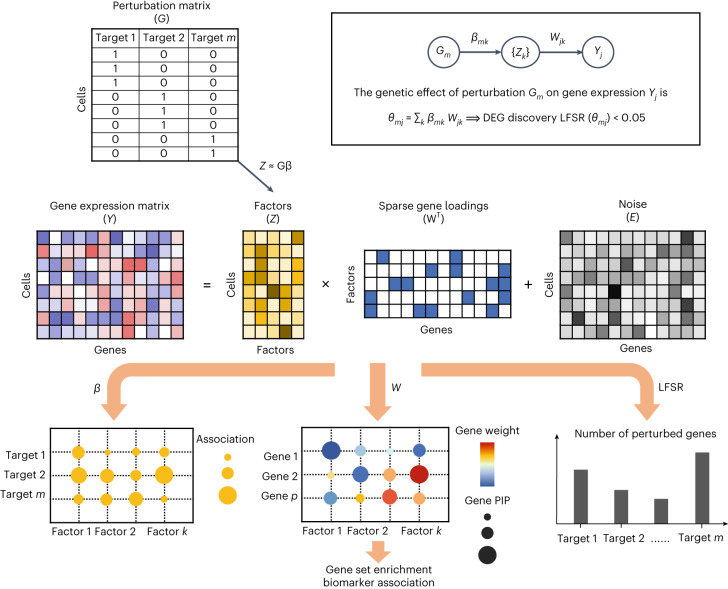
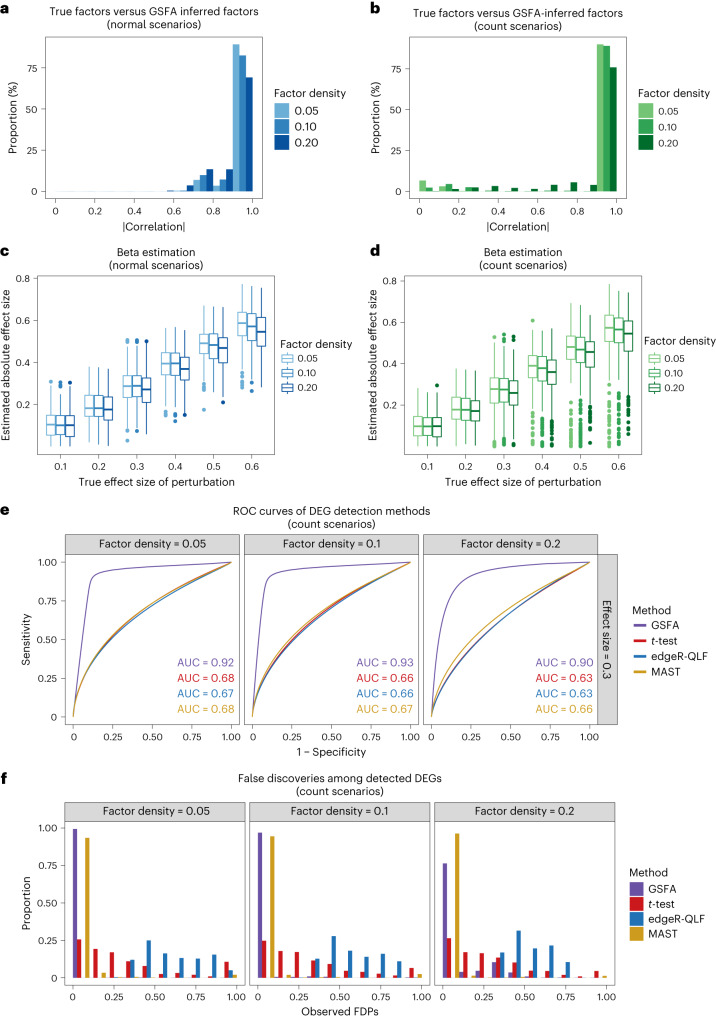
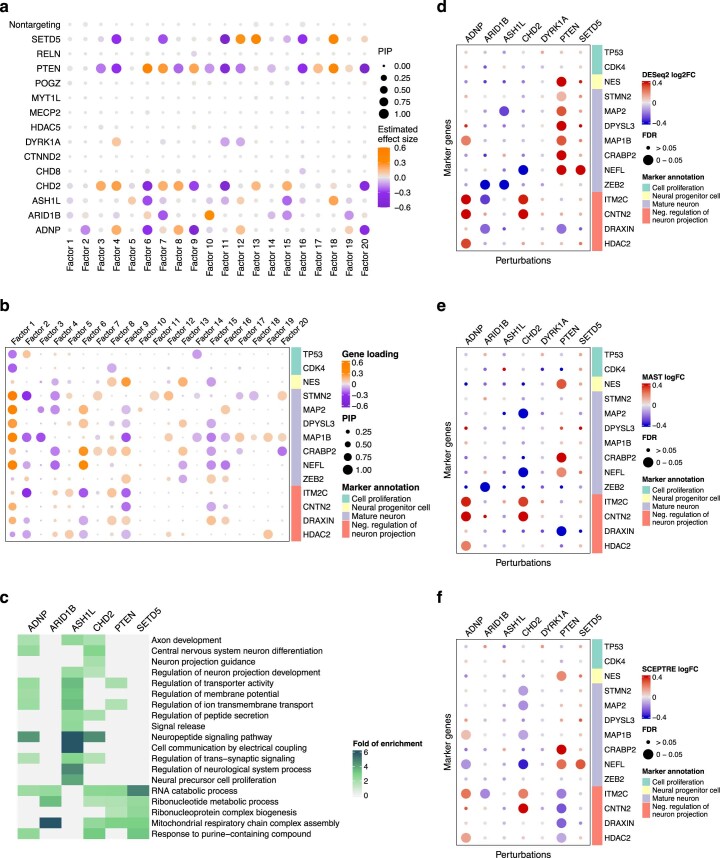
Clustered regularly interspaced short palindromic repeats (CRISPR) screening coupled with single-cell RNA sequencing has emerged as a powerful tool to characterize the effects of genetic perturbations on the whole transcriptome at a single-cell level. However, due to its sparsity and complex structure, analysis of single-cell CRISPR screening data is challenging. In particular, standard differential expression analysis methods are often underpowered to detect genes affected by CRISPR perturbations. We developed a statistical method for such data, called guided sparse factor analysis (GSFA). GSFA infers latent factors that represent coregulated genes or gene modules; by borrowing information from these factors, it infers the effects of genetic perturbations on individual genes. We demonstrated through extensive simulation studies that GSFA detects perturbation effects with much higher power than state-of-the-art methods. Using single-cell CRISPR data from human CD8+ T cells and neural progenitor cells, we showed that GSFA identified biologically relevant gene modules and specific genes affected by CRISPR perturbations, many of which were missed by existing methods, providing new insights into the functions of genes involved in T cell activation and neurodevelopment.
Overview
The claims and statistics of this paper haven’t been checked yet.
Free: it reads the open-access text and checks the first 5 claims that cite a source we can check. Create a free account to check every claim.
Integrity signals
Registry
Cites
Statistics
Figures
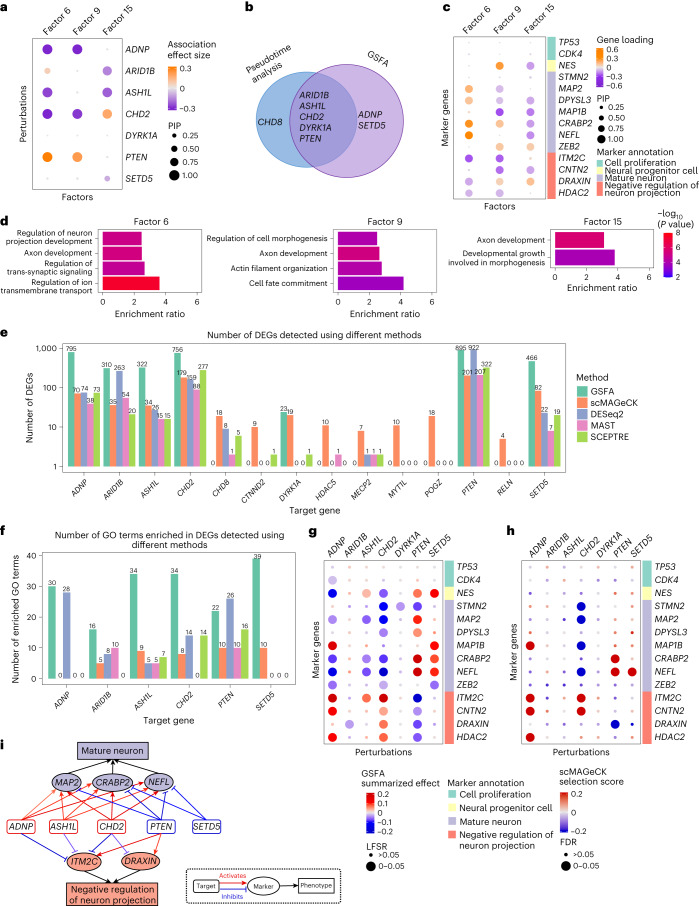
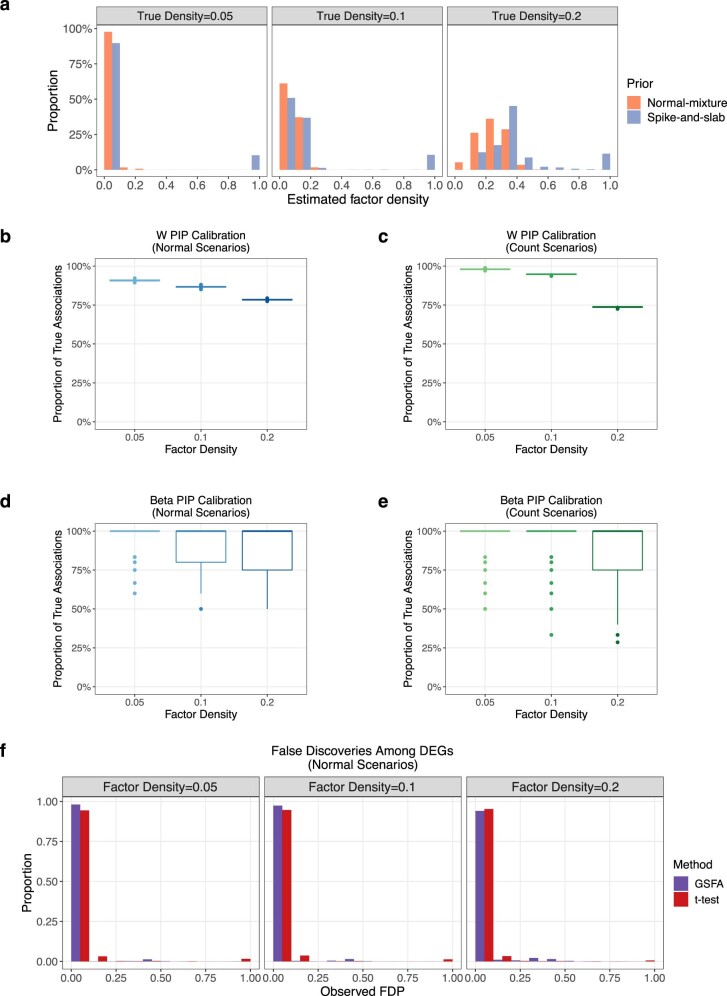
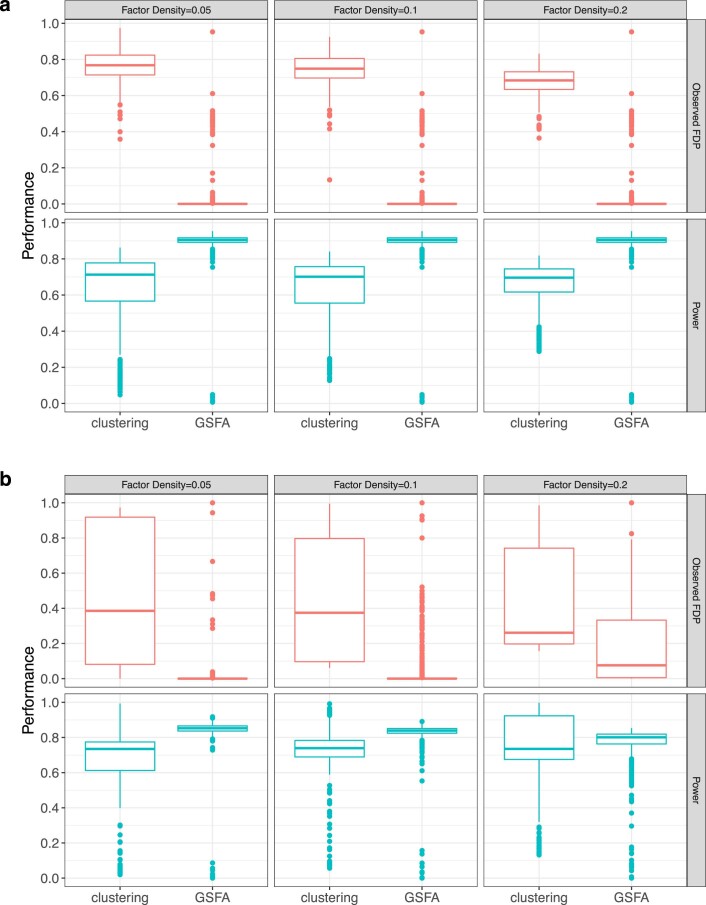
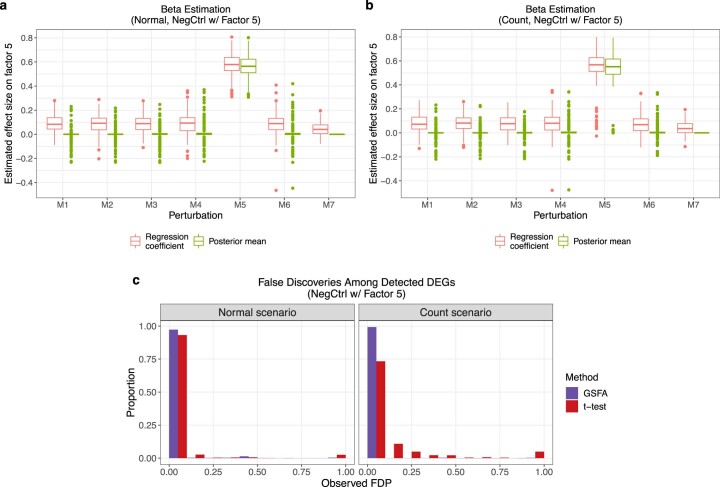
Verification
Claims the paper makes
The claims and statistics of this paper haven’t been checked yet.
Free: it reads the open-access text and checks the first 5 claims that cite a source we can check. Create a free account to check every claim.
Claims other papers make about this one
Each is checked against this paper’s own text: does it say what the citing paper says it does?
The source backs part of the claim, not all of it — or backs it for a different population, condition or comparison.
In the citing paper
“GSFA is a Bayesian method, returning a posterior inclusion probability instead of a p-value for each test of association.”
From Robust differential expression testing for single-cell CRISPR screens at low multiplicity of infection (2024) · cites this paper as Zhou et al. [39]
Experimental — accuracy not yet measuredThe cited source says what the claim attributes to it.
In the citing paper
“guided sparse factor analysis (GSFA; introduced by Zhou et al. [39]) couples factor analysis to differential expression analysis to infer the effects of perturbations on gene modules and individual genes.”
From Robust differential expression testing for single-cell CRISPR screens at low multiplicity of infection (2024) · cites this paper as Zhou et al. [39]
Self-check
Percentages, sums and reported differences re-computed from the paper’s own numbers.
The self-check needs the paper’s full text.
Citations
Cites
Moderated estimation of fold change and dispersion for RNA-seq data with DESeq2
Love, M. I., Huber, W., & Anders, S. (2014) · Genome Biology · doi:10.1186/s13059-014-0550-8 · Cited by 95,106 · cited 1×
“Standard differential gene expression (DGE) analysis 12–14 , when applied to single-cell screening data, can be underpowered because of the sparsity and noise inherent to scRNA-seq data, and the relatively small numbers of cells per perturbation (often hundreds or less) in typical experiments.”
A Programmable Dual-RNA–Guided DNA Endonuclease in Adaptive Bacterial Immunity
Jinek, M., Chylinski, K., Fonfara, I., Hauer, M., Doudna, J. A., & Charpentier, E. (2012) · Science · doi:10.1126/science.1225829 · Cited by 17,116 · cited 1×
“The discovery of CRISPR and development of the CRISPR–Cas9 system for genomic editing has revolutionized biology 1,2 .”
BackgroundSpatial reconstruction of single-cell gene expression data
Satija, R., Farrell, J. A., Gennert, D., Schier, A. F., & Regev, A. (2015) · Nature Biotechnology · doi:10.1038/nbt.3192 · Cited by 7,055
CDK inhibitors: positive and negative regulators of G1-phase progression
Sherr, C. J., & Roberts, J. M. (1999) · Genes & Development · doi:10.1101/gad.13.12.1501 · Cited by 6,115 · cited 2×
“Accordingly, several genes of the SOCS family have been reported to inhibit cell-cycle progression 34 .”
BackgroundResultGenome-scale CRISPR-Cas9 knockout screening in human cells
Shalem, O., Sanjana, N. E., Hartenian, E., Shi, X., Scott, D. A., Mikkelsen, T. S., Heckl, D., Ebert, B. L., Root, D. E., Doench, J. G., et al. (2014) · Science · doi:10.1126/science.1247005 · Cited by 5,234 · cited 1×
“This approach has enabled the discovery of many genes involved in processes such as cell proliferation and survival, immune responses and drug resistance 3–5 .”
BackgroundTHE GENERALIZATION OF ‘STUDENT'S’ PROBLEM WHEN SEVERAL DIFFERENT POPULATION VARLANCES ARE INVOLVED
WELCH, B. L. (1947) · Biometrika · doi:10.1093/biomet/34.1-2.28 · Cited by 4,135
Performance of neural network basecalling tools for Oxford Nanopore sequencing
Wick, R. R., Judd, L. M., & Holt, K. E. (2019) · Genome Biology · doi:10.1186/s13059-019-1727-y · Cited by 3,221
Finak, G., McDavid, A., Yajima, M., Deng, J., Gersuk, V., Shalek, A. K., Slichter, C. K., Miller, H. W., McElrath, M. J., Prlic, M., et al. (2015) · Genome Biology · doi:10.1186/s13059-015-0844-5 · Cited by 3,159 · cited 8×
“We then compared the performance of GSFA in detecting genes affected by perturbations, with commonly used DEG analysis methods: the Welch’s t -test 29 ; the edgeR quasi-likelihood F -test (edgeR-QLF) 13 ; and MAST, a method designed for single-cell analysis 30 .”
MethodInfluentialVariable Selection via Gibbs Sampling
George, E. I., & McCulloch, R. E. (1993) · Journal of the American Statistical Association · doi:10.1080/01621459.1993.10476353 · Cited by 2,828
Dixit, A., Parnas, O., Li, B., Chen, J., Fulco, C. P., Jerby-Arnon, L., Marjanovic, N. D., Dionne, D., Burks, T., Raychowdhury, R., et al. (2016) · Cell · doi:10.1016/j.cell.2016.11.038 · Cited by 1,863 · cited 1×
“Technologies such as CROP sequencing (CROP-seq) 6 and Perturb sequencing (Perturb-seq) 7 combine the multiplexed CRISPR screening approach with single-cell RNA sequencing (scRNA-seq), providing comprehensive molecular readouts of the target perturbations within single cells.”
Method
Research works printed but not linked: 1
- O’Hara RB Sillanpää MJ A review of Bayesian variable selection methods: what, how and which Bayesian Anal. 2009 4 85 117
Cited by
An, M., Raguram, A., Du, S. W., Banskota, S., Davis, J. R., Newby, G. A., Chen, P. Z., Palczewski, K., & Liu, D. R. (2024) · Nature Biotechnology · doi:10.1038/s41587-023-02078-y · Cited by 263
Pertpy: an end-to-end framework for perturbation analysis
Heumos, L., Ji, Y., May, L. T., Green, T. D., Peidli, S., Zhang, X., Wu, X., Ostner, J., Schumacher, A., Hrovatin, K., et al. (2025) · Nature Methods · doi:10.1038/s41592-025-02909-7 · Cited by 112
“Current perturbation analysis frameworks such as MUSIC 6 , ScMAGeCK 7 , SCEPTRE 8 , GSFA 9 and FR-Perturb 10 primarily focus on CRISPR perturbation analysis, neglecting other perturbation data types and perturbation analysis steps.”
CRISPR–Cas9 applications in T cells and adoptive T cell therapies
Chen, X., Zhong, S., Zhan, Y., & Zhang, X. (2024) · Cellular & Molecular Biology Letters · doi:10.1186/s11658-024-00561-1 · Cited by 62
“It holds the potential to accelerate our understanding of biology and medicine, as well as the development of disease treatment approaches [177].”
BackgroundUnlocking Plant Resilience: Metabolomic Insights into Abiotic Stress Tolerance in Crops
Głuchowska, A., Zieniuk, B., & Pawełkowicz, M. E. (2025) · Metabolites · doi:10.3390/metabo15060384 · Cited by 48
“Network-based and Bayesian inference methods facilitate interaction modeling and probabilistic data integration [129,130].”
Decoding heterogeneous single-cell perturbation responses
Song, B., Liu, D., Dai, W., McMyn, N. F., Wang, Q., Yang, D., Krejčí, A., Vasilyev, A., Untermoser, N., Loregger, A., et al. (2025) · Nature Cell Biology · doi:10.1038/s41556-025-01626-9 · Cited by 58
PerturBase: a comprehensive database for single-cell perturbation data analysis and visualization
Wei, Z., Si, D., Duan, B., Gao, Y., Yu, Q., Zhang, Z., Guo, L., & Liu, Q. (2024) · Nucleic Acids Research · doi:10.1093/nar/gkae858 · Cited by 44
Barry, T., Mason, K., Roeder, K., & Katsevich, E. (2024) · Genome Biology · doi:10.1186/s13059-024-03254-2 · Cited by 28
Modeling and predicting single-cell multi-gene perturbation responses with scLAMBDAPreprint
Wang, G., Liu, T., Zhao, J., Cheng, Y., & Zhao, H. (2024) · bioRxiv (Cold Spring Harbor Laboratory) · doi:10.1101/2024.12.04.626878 · Cited by 46
“Many computational tools have been developed to understand the causality and hetero-34 geneity behind single-cell perturbation effects using factor analysis or deep generative modeling approaches, such as GSFA [9], contrastiveVI [10], sparse VAE [11] and SAMS-VAE [12].”
Dziubańska-Kusibab, P. J., Nevedomskaya, E., & Haendler, B. (2024) · International Journal of Molecular Sciences · doi:10.3390/ijms25020705 · Cited by 16
Analysis of multi-condition single-cell data with latent embedding multivariate regression
Ahlmann-Eltze, C., & Huber, W. (2025) · Nature Genetics · doi:10.1038/s41588-024-01996-0 · Cited by 15
“We use a stochastic sampling algorithm that works on the differential expression matrix ∆ to identify neighborhoods of cells that show consistent differential expression.”
Interpretation, extrapolation and perturbation of single cells
Dimitrov, D., Schrod, S., Rohbeck, M., & Stegle, O. (2026) · Nature Reviews Genetics · doi:10.1038/s41576-025-00920-4 · Cited by 38
Guide assignment in single-cell CRISPR screens using crispat
Braunger, J. M., & Velten, B. (2024) · Bioinformatics · doi:10.1093/bioinformatics/btae535 · Cited by 13
“…with crispat, the learnt assignments can serve as input to a wide range of different down-stream analysis, including differential expression analysis with SCEPTRE, Seurat or scanpy (Wolf et al. 2018, Barry et al. 2023, Hao et al. 2024) or dimension reduction (Duan et al. 2019, Zhou et al. 2023).”
MethodExplainable modeling of single-cell perturbation data using attention and sparse dictionary learning
Xu, Y., Fleming, S., Tegtmeyer, M., McCarroll, S. A., & Babadi, M. (2025) · Cell Systems · doi:10.1016/j.cels.2025.101245 · Cited by 16
Brown, B. C., Tokolyi, A., Morris, J. A., Lappalainen, T., & Knowles, D. A. (2025) · Nature Communications · doi:10.1038/s41467-025-64353-7 · Cited by 20
“Other approaches, such as GSFA 32 and SAMS-VAE 33 use factor modeling techniques to identify sets of genes impacted by perturbations.”
High-throughput screening for optimizing adoptive T cell therapies
Zhang, Y., Xu, Q., Gao, Z., Zhang, H., Xie, X., & Li, M. (2024) · Experimental Hematology and Oncology · doi:10.1186/s40164-024-00580-w · Cited by 14
GPerturb: Gaussian process modelling of single-cell perturbation data
Xing, H., & Yau, C. (2025) · Nature Communications · doi:10.1038/s41467-025-61165-7 · Cited by 19
“For GSFA, the results are obtained based on the recommended settings 28 .”
InfluentialComputational modeling of single-cell dynamics data
Guo, W., Chen, Z., & Gu, J. (2025) · Briefings in Bioinformatics · doi:10.1093/bib/bbaf305 · Cited by 10
“…regulatory priors or sparsity constraints on W , these methods can identify key genes driving dynamic changes and infer time-dependent GRNs. Guided sparse factor analysis (GSFA) method combines sparse FA and multi-variate linear modeling to study perturbation effects on gene expression [46].”
Multiplexed multimodal single-cell technologies: From observation to perturbation analysis
Lee, S.-H., Park, J., & Hwang, B. (2024) · Molecules and Cells · doi:10.1016/j.mocell.2024.100147 · Cited by 5
Decoding Heterogenous Single-cell Perturbation ResponsesPreprint
Song, B., Liu, D., Dai, W., McMyn, N. F., Wang, Q., Yang, D., Krejčí, A., Vasilyev, A., Untermoser, N., Loregger, A., et al. (2023) · bioRxiv (Cold Spring Harbor Laboratory) · doi:10.1101/2023.10.30.564796 · Cited by 4
Effective leukemia-to-granulocyte induction by a cocktail of RUNX1, SPI1 and CEBPE
Xiang, G., Zhu, P., Zhang, L., Yu, S., Jiang, F., Wang, S., Wang, J., Dai, Y., Wang, S., Tan, Y., et al. (2025) · Cancer Letters · doi:10.1016/j.canlet.2025.217820 · Cited by 2
Causal effect estimation from trans-regulatory single-cell CRISPR screens
Christensen, O. P., Markham, A., Kang, H., Gabriel, E., & Pers, T. H. (2026) · Cell Genomics · doi:10.1016/j.xgen.2026.101251 · Cited by 5
“Finally, several of the methods described here (e.g., FR-per-turb, 8 GSFA 33 ) primarily address the statistical power limitations often present in single-cell CRISPR screen studies.”
Estimating protein isoform abundances with PAQu
Testa, L., Klei, L., Rengle, A., Yocum, A. K., Lewis, D. A., Devlin, B., Roeder, K., & MacDonald, M. L. (2026) · Proceedings of the National Academy of Sciences · doi:10.1073/pnas.2614319123 · Cited by 1
Inference of heterogeneous effects in single-cell genetic perturbation screensPreprint
Fu, Z., & Hou, L. (2024) · bioRxiv (Cold Spring Harbor Laboratory) · doi:10.1101/2024.05.28.596224 · Cited by 2
Sun, X., LaPierre, N., Gu, J., Tan, W., & He, X. (2026) · The American Journal of Human Genetics · doi:10.1016/j.ajhg.2026.03.004 · Cited by 1
Self-citationWang, X., Lalli, M. A., Thopte, U., & Buxbaum, J. D. (2024) · bioRxiv (Cold Spring Harbor Laboratory) · doi:10.1101/2024.09.25.614184 · Cited by 1
“In addition, specialized methods, such as differential expression (DE) analysis using tools like GSFA ( 39 ), MUSIC ( 35 ), and scMAGeCK ( 36 ), have been developed to address the unique characteristics of scCRISPR screens, focusing more on perturbation effects, differentially expressed genes, and…”
MethodA review on single-cell perturbation data analysis
Fu, Z., Yang, M., & Hou, L. (2025) · Scientia Sinica Mathematica · doi:10.1360/ssm-2024-0315
Location tests with noisy proxies for latent variables
Deutsch, L., & Katsevich, E. (2025) · Statistics & Probability Letters · doi:10.1016/j.spl.2025.110590
Cancer pathway connectivity resolved by drug perturbation and RNA sequencingPreprint
Do, T. H. L., Lohoff, C., Jung, F., Kummer, S., Pohly, M. F., Scheinost, S., Hüellein, J., Beneš, V., Huber, W. K., Lu, J., et al. (2025) · bioRxiv (Cold Spring Harbor Laboratory) · doi:10.64898/2025.12.11.692401
Barry, T., Mason, K., Roeder, K., & Katsevich, E. (2024) · Figshare · doi:10.6084/m9.figshare.26722062
Barry, T., Mason, K., Roeder, K., & Katsevich, E. (2024) · Figshare · doi:10.6084/m9.figshare.26722065
Qoku, A., Stickel, T., AmeriFar, S., Oellerich, T., Wolf, S., & Buettner, F. (2026) · bioRxiv (Cold Spring Harbor Laboratory) · doi:10.64898/2026.03.20.713295
“To enable direct comparison with GSFA [Zhou et al., 2023], which operates on transcriptomic data only, we generated datasets with a single modality consisting of 10,000 samples, 5,000 features, 20 latent factors and 20 perturbation conditions.”
InfluentialLiu, L., Chen, S., Ding, M., Duan, Y., Pu, L., Li, L., Peng, H., & Yu, Q. (2026) · Frontiers in Oncology · doi:10.3389/fonc.2026.1787786
Modeling Dynamics, Cell Type Specificity, and Perturbations in Gene Regulatory Networks
Shin, J., Halberg, S., Liu, Y., Hazra, S., Lee, E. D.-I., & Roy, S. (2026) · Annual Review of Genomics and Human Genetics · doi:10.1146/annurev-genom-120922-103729
Charting the computational landscape of single-cell genetic perturbation
Zhang, Y., Huang, J., Li, Y., Liu, T., Ren, L., Huang, J. H., Lin, H., Feng, J., & Zhang, Y. (2026) · Journal of Advanced Research · doi:10.1016/j.jare.2026.06.012 · Cited by 1
Metadata
- Authors
- Zhou, Y., Luo, K., Liang, L., Chen, M., & He, X.
- Affiliations
- University of Chicago (US)
- Corresponding author
- Chen, Mengjie
- He, Xin
- Venue
- Nature Methods
- Published
- 2023-09-28
- Volume
- 20
- Issue
- 11
- Pages
- 1693-1703
- ISSN
- 1548-7091 (ISSN-L)
- 1548-7105
- PMC
- PMC10630124
- OpenAlex
- W4387130415
- Cited by
- 34
- References
- 50
- Citations by year
- 2026: 8 · 2025: 12 · 2024: 13 · 2023: 1
- FWCI
- 3.03
- Type
- journal article
- Language
- en
- Open access
- hybrid
- doi.org
- Licence
- cc-by
- creativecommons.org/licenses/by/4.0 (tdm)
- creativecommons.org/licenses/by/4.0 (vor)
- Locations
- Nature Methods (publishedVersion, cc-by)
- PubMed Central (publishedVersion, cc-by)
- PubMed (publishedVersion)
- Knowledge@UChicago (University of Chicago) (submittedVersion, cc-by-nc-nd)
- University of Chicago (cc-by)
- Funders
- U.S. Department of Health & Human Services | National Institutes of Health (R01MH110531, R01MH116281, R01HG010773, R01GM126553, R01HG011883)
- National Science Foundation (2016307)
- Topics
- Life Sciences › Biochemistry, Genetics and Molecular Biology › Molecular Biology › Single-cell and spatial transcriptomics
- Life Sciences › Biochemistry, Genetics and Molecular Biology › Molecular Biology › Gene expression and cancer classification
- Life Sciences › Biochemistry, Genetics and Molecular Biology › Molecular Biology › CRISPR and Genetic Engineering
- Keywords
- Bayesian factor analysis, differential expression detection, gene modules, co-regulated genes, single-cell RNA sequencing, CD8+ T cells, neural progenitor cells, T cell activation, brain development
- MeSH terms
- Bayes Theorem, Biological Phenomena, Humans, CD8-Positive T-Lymphocytes, Transcriptome, Clustered Regularly Interspaced Short Palindromic Repeats, CRISPR-Cas Systems
About these checks
Registry, retraction, Cites and statistics results are computed, not judged, with one exception: a printed reference that no index lists is read once by a model before it counts as a citation error. Claims are extracted by a model and kept only when their quote appears verbatim in the text; each cited source is then checked, with a model’s help, for whether it says what the claim relies on. Those verdicts can be wrong — read the claim’s quote and the cited source before relying on one.
Statistics and arithmetic are recomputed, not judged.
Confidence bands are shown only for fields calibrated on our annotated test set. None is calibrated yet, so no band is shown.
What counts as a claim ›How we measure confidence ›How we check this ›
Are you an author, or do you see a problem with this page? Request a review
Data sources
Bibliographic data: Semantic Scholar, OpenAlex, Crossref.
Contains information from the Semantic Scholar Academic Graph Datasets, made available under the ODC Attribution License (ODC-BY 1.0).
Semantic Scholar’s data is described in: Kinney, R., et al. (2023). The Semantic Scholar Open Data Platform. arXiv:2301.10140.
