

A new Bayesian factor analysis method improves detection of genes and biological processes affected by perturbations in single-cell CRISPR screening
Open accessThe DOI matches its Crossref record; 51 of the 51 references it cites were found in a registry or an index.
Abstract
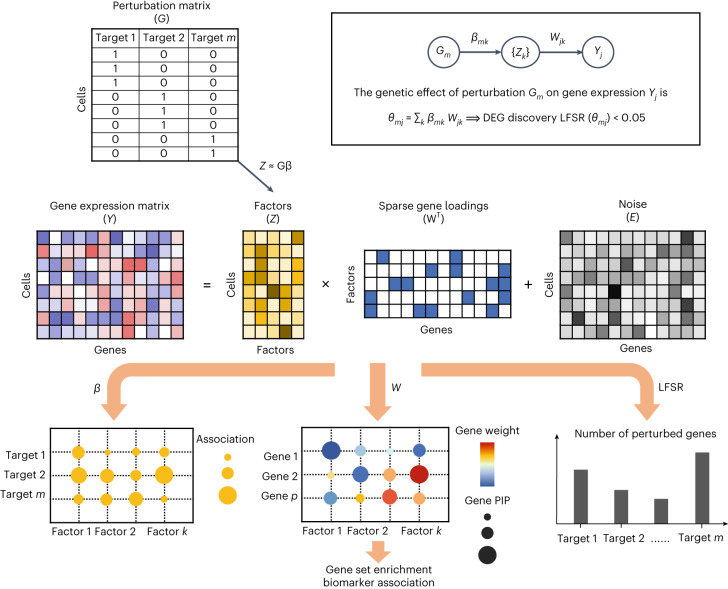
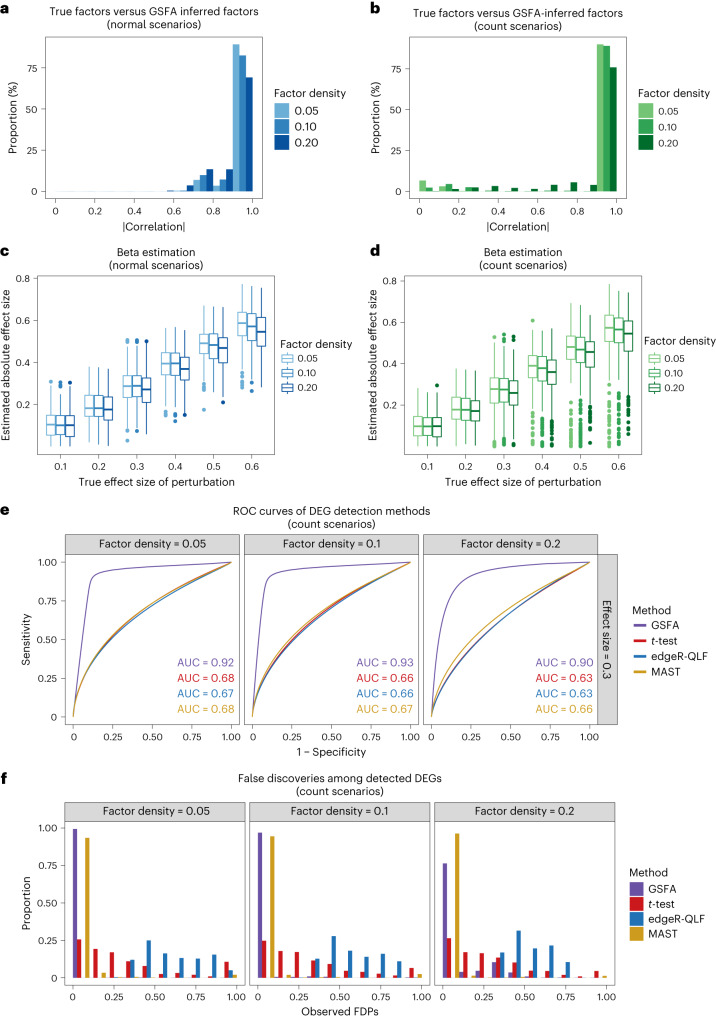
Clustered regularly interspaced short palindromic repeats (CRISPR) screening coupled with single-cell RNA sequencing has emerged as a powerful tool to characterize the effects of genetic perturbations on the whole transcriptome at a single-cell level. However, due to its sparsity and complex structure, analysis of single-cell CRISPR screening data is challenging. In particular, standard differential expression analysis methods are often underpowered to detect genes affected by CRISPR perturbations. We developed a statistical method for such data, called guided sparse factor analysis (GSFA). GSFA infers latent factors that represent coregulated genes or gene modules; by borrowing information from these factors, it infers the effects of genetic perturbations on individual genes. We demonstrated through extensive simulation studies that GSFA detects perturbation effects with much higher power than state-of-the-art methods. Using single-cell CRISPR data from human CD8+ T cells and neural progenitor cells, we showed that GSFA identified biologically relevant gene modules and specific genes affected by CRISPR perturbations, many of which were missed by existing methods, providing new insights into the functions of genes involved in T cell activation and neurodevelopment.
Overview
The claims and statistics of this paper haven’t been checked yet.
Free: it reads the open-access text and checks the first 5 claims that cite a source we can check. Create a free account to check every claim.
Integrity signals
Registry
Cites
Statistics
Figures
Verification
Claims the paper makes
The claims and statistics of this paper haven’t been checked yet.
Free: it reads the open-access text and checks the first 5 claims that cite a source we can check. Create a free account to check every claim.
Claims other papers make about this one
Each is checked against this paper’s own text: does it say what the citing paper says it does?
The source backs part of the claim, not all of it — or backs it for a different population, condition or comparison.
In the citing paper
“GSFA is a Bayesian method, returning a posterior inclusion probability instead of a p-value for each test of association.”
From Robust differential expression testing for single-cell CRISPR screens at low multiplicity of infection (2024) · cites this paper as Zhou et al. [39]
Experimental — accuracy not yet measuredThe cited source says what the claim attributes to it.
In the citing paper
“guided sparse factor analysis (GSFA; introduced by Zhou et al. [39]) couples factor analysis to differential expression analysis to infer the effects of perturbations on gene modules and individual genes.”
From Robust differential expression testing for single-cell CRISPR screens at low multiplicity of infection (2024) · cites this paper as Zhou et al. [39]
Self-check
Percentages, sums and reported differences re-computed from the paper’s own numbers.
The self-check needs the paper’s full text.
Citations
Cites
Moderated estimation of fold change and dispersion for RNA-seq data with DESeq2
Love, M. I., Huber, W., & Anders, S. (2014) · Genome Biology · doi:10.1186/s13059-014-0550-8 · Cited by 95,106 · cited 1×
“Standard differential gene expression (DGE) analysis 12–14 , when applied to single-cell screening data, can be underpowered because of the sparsity and noise inherent to scRNA-seq data, and the relatively small numbers of cells per perturbation (often hundreds or less) in typical experiments.”
A Programmable Dual-RNA–Guided DNA Endonuclease in Adaptive Bacterial Immunity
Jinek, M., Chylinski, K., Fonfara, I., Hauer, M., Doudna, J. A., & Charpentier, E. (2012) · Science · doi:10.1126/science.1225829 · Cited by 17,116 · cited 1×
“The discovery of CRISPR and development of the CRISPR–Cas9 system for genomic editing has revolutionized biology 1,2 .”
BackgroundSpatial reconstruction of single-cell gene expression data
Satija, R., Farrell, J. A., Gennert, D., Schier, A. F., & Regev, A. (2015) · Nature Biotechnology · doi:10.1038/nbt.3192 · Cited by 7,055
CDK inhibitors: positive and negative regulators of G1-phase progression
Sherr, C. J., & Roberts, J. M. (1999) · Genes & Development · doi:10.1101/gad.13.12.1501 · Cited by 6,115 · cited 2×
“Accordingly, several genes of the SOCS family have been reported to inhibit cell-cycle progression 34 .”
BackgroundResultGenome-scale CRISPR-Cas9 knockout screening in human cells
Shalem, O., Sanjana, N. E., Hartenian, E., Shi, X., Scott, D. A., Mikkelsen, T. S., Heckl, D., Ebert, B. L., Root, D. E., Doench, J. G., et al. (2014) · Science · doi:10.1126/science.1247005 · Cited by 5,234 · cited 1×
“This approach has enabled the discovery of many genes involved in processes such as cell proliferation and survival, immune responses and drug resistance 3–5 .”
BackgroundTHE GENERALIZATION OF ‘STUDENT'S’ PROBLEM WHEN SEVERAL DIFFERENT POPULATION VARLANCES ARE INVOLVED
WELCH, B. L. (1947) · Biometrika · doi:10.1093/biomet/34.1-2.28 · Cited by 4,135
Performance of neural network basecalling tools for Oxford Nanopore sequencing
Wick, R. R., Judd, L. M., & Holt, K. E. (2019) · Genome Biology · doi:10.1186/s13059-019-1727-y · Cited by 3,221
Finak, G., McDavid, A., Yajima, M., Deng, J., Gersuk, V., Shalek, A. K., Slichter, C. K., Miller, H. W., McElrath, M. J., Prlic, M., et al. (2015) · Genome Biology · doi:10.1186/s13059-015-0844-5 · Cited by 3,159 · cited 8×
“We then compared the performance of GSFA in detecting genes affected by perturbations, with commonly used DEG analysis methods: the Welch’s t -test 29 ; the edgeR quasi-likelihood F -test (edgeR-QLF) 13 ; and MAST, a method designed for single-cell analysis 30 .”
MethodInfluentialVariable Selection via Gibbs Sampling
George, E. I., & McCulloch, R. E. (1993) · Journal of the American Statistical Association · doi:10.1080/01621459.1993.10476353 · Cited by 2,828
Dixit, A., Parnas, O., Li, B., Chen, J., Fulco, C. P., Jerby-Arnon, L., Marjanovic, N. D., Dionne, D., Burks, T., Raychowdhury, R., et al. (2016) · Cell · doi:10.1016/j.cell.2016.11.038 · Cited by 1,863 · cited 1×
“Technologies such as CROP sequencing (CROP-seq) 6 and Perturb sequencing (Perturb-seq) 7 combine the multiplexed CRISPR screening approach with single-cell RNA sequencing (scRNA-seq), providing comprehensive molecular readouts of the target perturbations within single cells.”
MethodWang, J., Vasaikar, S., Shi, Z., Greer, M., & Zhang, B. (2017) · Nucleic Acids Research · doi:10.1093/nar/gkx356 · Cited by 1,157
CRISPR/Cas9 in Genome Editing and Beyond
Wang, H., La Russa, M., & Qi, L. S. (2016) · Annual Review of Biochemistry · doi:10.1146/annurev-biochem-060815-014607 · Cited by 1,110 · cited 1×
“The discovery of CRISPR and development of the CRISPR–Cas9 system for genomic editing has revolutionized biology 1,2 .”
BackgroundPooled CRISPR screening with single-cell transcriptome readout.
Datlinger, P., Rendeiro, A. F., Schmidl, C., Krausgruber, T., Traxler, P., Klughammer, J., Schuster, L. C., Kuchler, A., Alpar, D., & Bock, C. (2017) · Nature Methods · doi:10.1038/nmeth.4177 · Cited by 1,096 · cited 1×
“Technologies such as CROP sequencing (CROP-seq) 6 and Perturb sequencing (Perturb-seq) 7 combine the multiplexed CRISPR screening approach with single-cell RNA sequencing (scRNA-seq), providing comprehensive molecular readouts of the target perturbations within single cells.”
MethodMOFA+: a statistical framework for comprehensive integration of multi-modal single-cell data
Argelaguet, R., Arnol, D., Bredikhin, D., Deloro, Y., Velten, B., Marioni, J. C., & Stegle, O. (2020) · Genome Biology · doi:10.1186/s13059-020-02015-1 · Cited by 1,091 · cited 1×
“The GSFA model is built on factor analysis 41,42 and is related to existing factor models.”
MethodFalse discovery rates: a new deal
Stephens, M. (2016) · Biostatistics · doi:10.1093/biostatistics/kxw041 · Cited by 1,067 · cited 17×
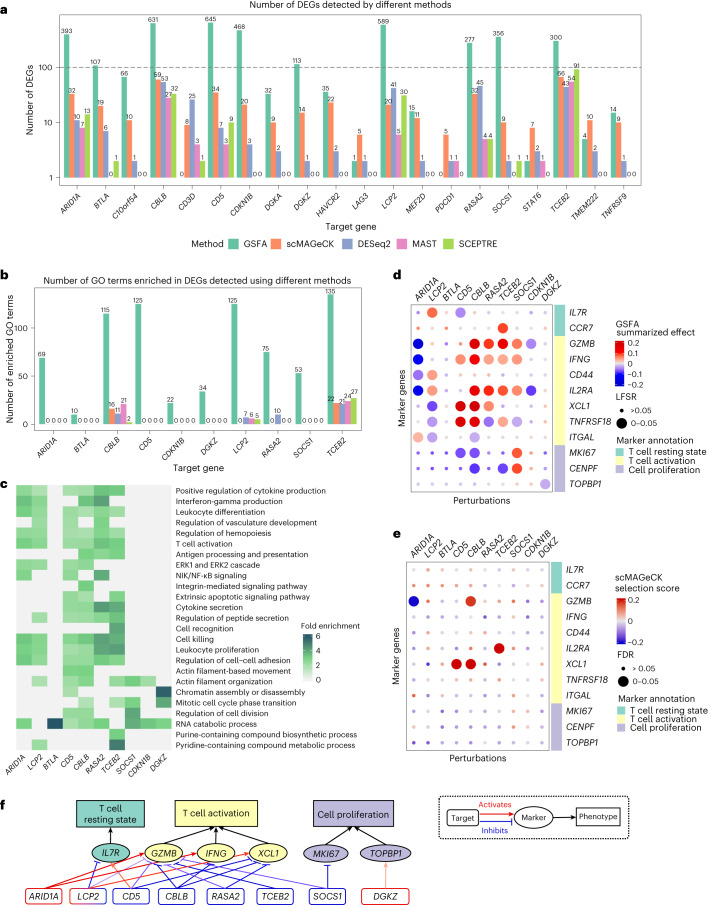
“GSFA detected more than 100 DEGs at LFSR 0.05 for the same six gene targets (Fig.”
MethodInfluentialSpike and slab variable selection: Frequentist and Bayesian strategies
Ishwaran, H., & Rao, J. S. (2005) · The Annals of Statistics · doi:10.1214/009053604000001147 · Cited by 1,033
Moderated statistical tests for assessing differences in tag abundance
Robinson, M. D., & Smyth, G. K. (2007) · Bioinformatics · doi:10.1093/bioinformatics/btm453 · Cited by 856
Polygenic Modeling with Bayesian Sparse Linear Mixed Models
Zhou, X., Carbonetto, P., & Stephens, M. (2013) · PLoS Genetics · doi:10.1371/journal.pgen.1003264 · Cited by 800 · cited 1×
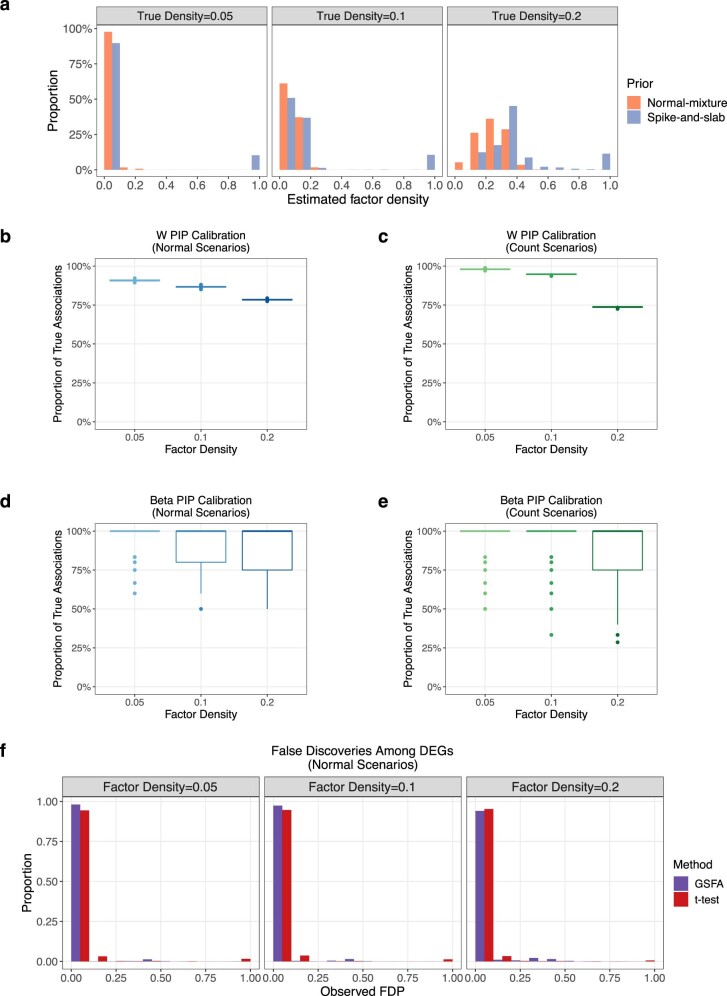
“We evaluated two choices, the standard spike-and-slab prior and a normal-mixture prior (Methods), where the effect is sampled from a mixture of two normal distributions, one ‘foreground’ component capturing true effects and the other a ‘background’ component absorbing small effects 25,26 .”
MethodDissecting Immune Circuits by Linking CRISPR-Pooled Screens with Single-Cell RNA-Seq
Jaitin, D. A., Weiner, A., Yofe, I., Lara-Astiaso, D., Keren-Shaul, H., David, E., Salame, T. M., Tanay, A., van Oudenaarden, A., & Amit, I. (2016) · Cell · doi:10.1016/j.cell.2016.11.039 · Cited by 777 · cited 1×
“This justifies our choice of normal-mixture prior as the default prior for read count data. is clustering cells based on their transcriptome similarity and then assessing whether cells with a specific perturbation are enriched or depleted in any cluster 10,15 .”
MethodA Genome-wide Framework for Mapping Gene Regulation via Cellular Genetic Screens
Gasperini, M., Hill, A. J., McFaline-Figueroa, J. L., Martin, B., Kim, S., Zhang, M. D., Jackson, D., Leith, A., Schreiber, J., Noble, W. S., et al. (2019) · Cell · doi:10.1016/j.cell.2018.11.029 · Cited by 613
Genome-wide CRISPR Screens in Primary Human T Cells Reveal Key Regulators of Immune Function
Shifrut, E., Carnevale, J., Tobin, V., Roth, T. L., Woo, J. M., Bui, C. T., Li, P. J., Diolaiti, M. E., Ashworth, A., & Marson, A. (2018) · Cell · doi:10.1016/j.cell.2018.10.024 · Cited by 573
High-Dimensional Sparse Factor Modeling: Applications in Gene Expression Genomics
Carvalho, C. M., Chang, J., Lucas, J. E., Nevins, J. R., Wang, Q., & West, M. (2008) · Journal of the American Statistical Association · doi:10.1198/016214508000000869 · Cited by 471
Feature selection and dimension reduction for single-cell RNA-Seq based on a multinomial model
Townes, F. W., Hicks, S. C., Aryee, M. J., & Irizarry, R. A. (2019) · Genome Biology · doi:10.1186/s13059-019-1861-6 · Cited by 471 · cited 1×
“In applying GSFA to scRNA-seq data, we first converted the raw unique molecular identifier (UMI) counts into deviance residuals 28 , a continuous quantity analogous to z -scores.”
MethodIn vivo Perturb-Seq reveals neuronal and glial abnormalities associated with autism risk genes
Jin, X., Simmons, S. K., Guo, A., Shetty, A. S., Ko, M., Nguyen, L., Jokhi, V., Robinson, E., Oyler, P., Curry, N., et al. (2020) · Science · doi:10.1126/science.aaz6063 · Cited by 317 · cited 1×
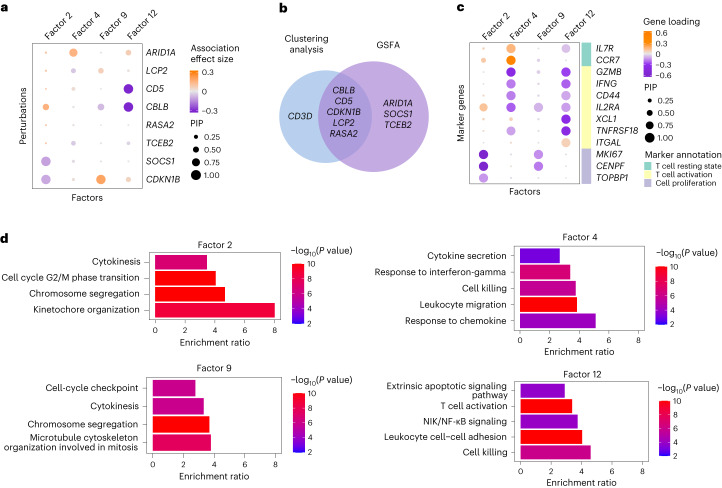
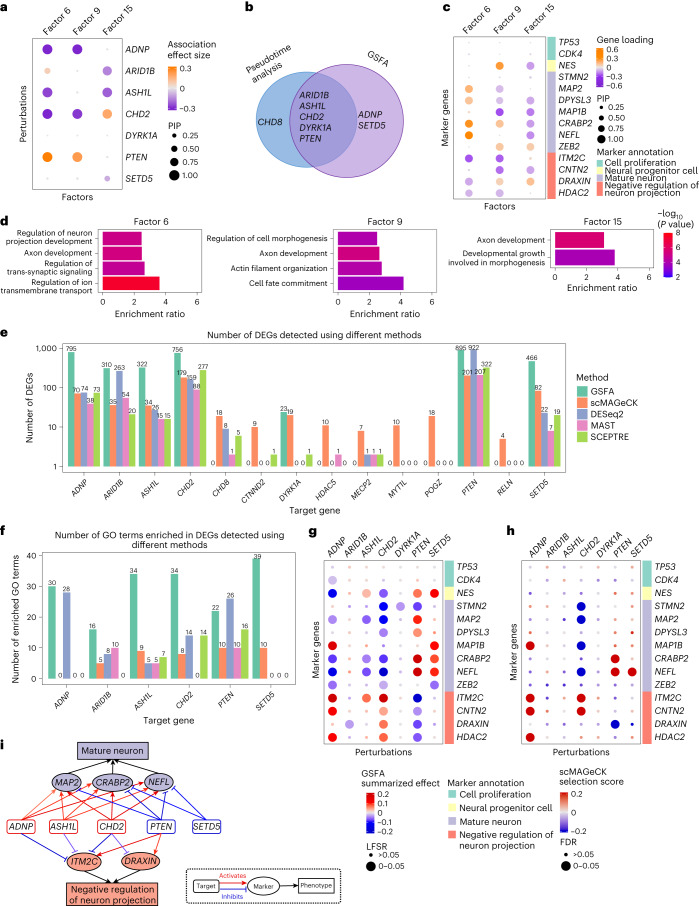
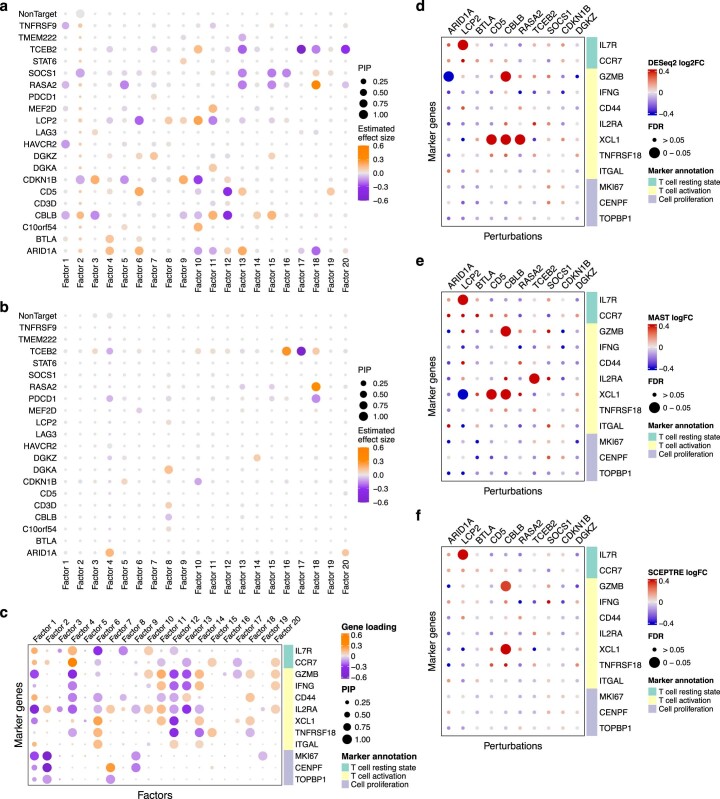
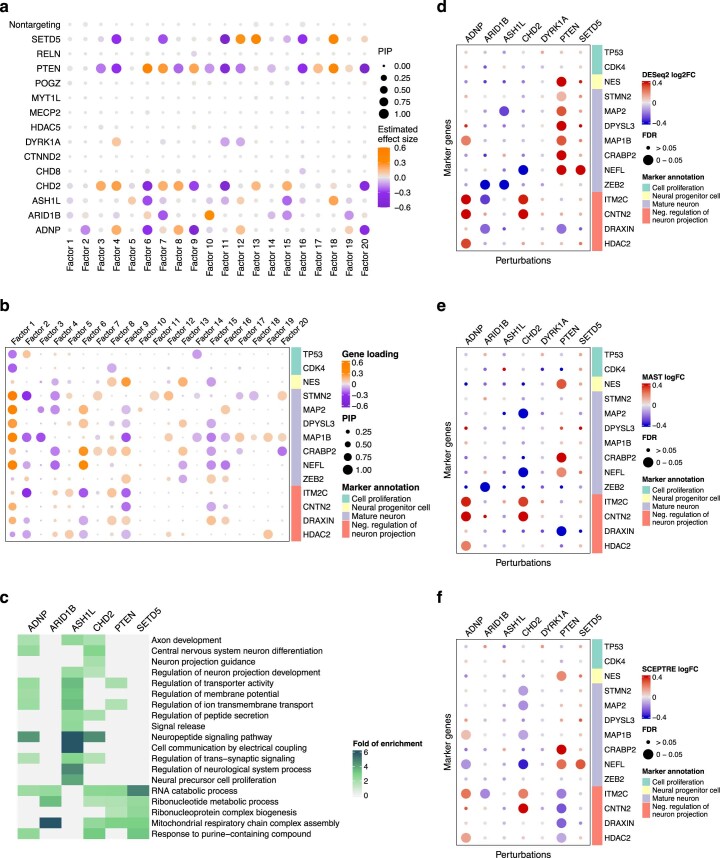
“The size of a dot represents the gene PIP in a factor and the color represents the gene weight (magnitude of contribution) in a factor. d , Fold of enrichment of selected GO ‘biological process’ terms enriched in factors 4, 9 and 16 ( q < 0.05).”
BackgroundInfluentialGuan, Y., & Stephens, M. (2011) · The Annals of Applied Statistics · doi:10.1214/11-aoas455 · Cited by 302 · cited 1×
“This is a well-studied problem in the statistics literature 47,48 .”
BackgroundYang, Z., & Michailidis, G. (2016) · Bioinformatics · doi:10.1093/bioinformatics/btv544 · Cited by 295
Somatic mutations in the chromatin remodeling gene ARID1A occur in several tumor types
Jones, S., Li, M., Parsons, D. W., Zhang, X., Wesseling, J., Kristel, P., Schmidt, M. K., Markowitz, S., Yan, H., Bigner, D., et al. (2012) · Human Mutation · doi:10.1002/humu.21633 · Cited by 285
The emerging roles of ARID1A in tumor suppression
Wu, R.-C., Wang, T.-L., & Shih, I.-M. (2014) · Cancer Biology & Therapy · doi:10.4161/cbt.28411 · Cited by 261 · cited 1×
“Targeting of ARID1A , a chromatin remodeler and potential tumor suppressor 35–37 , had strong negative effects on effector markers (Fig.”
BackgroundEnter the Matrix: Factorization Uncovers Knowledge from Omics
Stein-O’Brien, G. L., Arora, R., Culhane, A. C., Favorov, A. V., Garmire, L. X., Greene, C. S., Goff, L. A., Li, Y., Ngom, A., Ochs, M. F., et al. (2018) · Trends in Genetics · doi:10.1016/j.tig.2018.07.003 · Cited by 230 · cited 2×
“The size of a dot represents the gene PIP in a factor and the color represents the gene weight (magnitude of contribution) in a factor. d , Fold of enrichment of selected GO ‘biological process’ terms enriched in factors 4, 9 and 16 ( q < 0.05).”
BackgroundInfluentialEpigenetic driver mutations in ARID1A shape cancer immune phenotype and immunotherapy
Li, J., Wang, W., Zhang, Y., Cieślik, M., Guo, J., Tan, M., Green, M. D., Wang, W., Lin, H., Li, W., et al. (2020) · Journal of Clinical Investigation · doi:10.1172/jci134402 · Cited by 191 · cited 1×
“Indeed, ARID1A mutations occur in many human cancer types and result in limited chromatin accessibility and downregulation of interferon-responsive genes, leading to poor tumor immunity 38 .”
BackgroundSupervised probabilistic principal component analysis
Yu, S., Yu, K., Tresp, V., Kriegel, H., & Wu, M. (2006) · ACM SIGKDD Conference on Knowledge Discovery and Data Mining (KDD) · doi:10.1145/1150402.1150454 · Cited by 181 · cited 1×
“GSFA is also related to a class of factor models in the statistics literature, sometimes called supervised factor analysis, where the factors depend on covariates of the samples 43–45 .”
BackgroundMcFaline-Figueroa, J. L., Hill, A. J., Qiu, X., Jackson, D., Shendure, J., & Trapnell, C. (2019) · Nature Genetics · doi:10.1038/s41588-019-0489-5 · Cited by 174 · cited 1×
“Single-cell CRISPR screening technologies have found many applications in studies of cellular differentiation, immune responses and regulatory elements 8–11 .”
BackgroundProjected principal component analysis in factor models
Fan, J., Liao, Y., & Wang, W. (2016) · The Annals of Statistics · doi:10.1214/15-aos1364 · Cited by 150
f-scLVM: scalable and versatile factor analysis for single-cell RNA-seq
Buettner, F., Pratanwanich, N., McCarthy, D. J., Marioni, J. C., & Stegle, O. (2017) · Genome Biology · doi:10.1186/s13059-017-1334-8 · Cited by 135
Projected Principal Component Analysis in Factor ModelsPreprint
Fan, J., Liao, Y., & Wang, W. (2016) · Cited by 135
Nonparametric Bayesian sparse factor models with application to gene expression modeling
Knowles, D., & Ghahramani, Z. (2011) · The Annals of Applied Statistics · doi:10.1214/10-aoas435 · Cited by 128
Sessa, A., Fagnocchi, L., Mastrototaro, G., Massimino, L., Zaghi, M., Indrigo, M., Cattaneo, S., Martini, D., Gabellini, C., Pucci, C., et al. (2019) · Neuron · doi:10.1016/j.neuron.2019.07.013 · Cited by 116 · cited 1×
“These predictions are consistent with the experimental finding of ADNP 39 and with the finding that SETD5 knockdown increases the proliferation of cortical progenitor cells and neural stem cells 40 .”
ResultPathway-level information extractor (PLIER) for gene expression data
Mao, W., Zaslavsky, E., Hartmann, B. M., Sealfon, S. C., & Chikina, M. (2019) · Nature Methods · doi:10.1038/s41592-019-0456-1 · Cited by 112
Model-based understanding of single-cell CRISPR screening
Duan, B., Zhou, C., Zhu, C., Yu, Y., Li, G., Zhang, S., Zhang, C., Ye, X., Ma, H., Qu, S., et al. (2019) · Nature Communications · doi:10.1038/s41467-019-10216-x · Cited by 98 · cited 2×
“This type of procedure has been used in previous single-cell CRISPR screening data 31 .”
BackgroundMethodscMAGeCK links genotypes with multiple phenotypes in single-cell CRISPR screens
Yang, L., Zhu, Y., Yu, H., Cheng, X., Chen, S., Chu, Y., Huang, H., Zhang, J., & Li, W. (2020) · Genome Biology · doi:10.1186/s13059-020-1928-4 · Cited by 94 · cited 3×
“…MAST 30 , a statistical method tailored for scRNA-seq data, using the zlm() and lrTest() functions in the R package MAST v.1.16.0; (5) scMAGeCK-LR 32 , a linear regression-based approach tailored to single-cell CRISPR screening data, using the scmageck_lr() function in the R package scMAGeCK…”
MethodInfluentialLalli, M. A., Avey, D., Dougherty, J. D., Milbrandt, J., & Mitra, R. D. (2020) · Genome Research · doi:10.1101/gr.262295.120 · Cited by 91 · cited 8×
“Among the six genes, the transcriptomic effects of ADNP and SETD5 were missed in the original pseudotime-based analysis (Fig.”
BackgroundMethodResultInfluentialDetecting heterogeneity in single-cell RNA-Seq data by non-negative matrix factorization
Zhu, X., Ching, T., Pan, X., Weissman, S. M., & Garmire, L. (2017) · PeerJ · doi:10.7717/peerj.2888 · Cited by 86
SCEPTRE improves calibration and sensitivity in single-cell CRISPR screen analysis
Barry, T., Wang, X., Morris, J. A., Roeder, K., & Katsevich, E. (2021) · Genome Biology · doi:10.1186/s13059-021-02545-2 · Cited by 86 · cited 4×
“8d–f for DESeq2, MAST and SCEPTRE).”
BackgroundMethodInfluentialGenomic and functional evidence for an ARID1A tumor suppressor role
Huang, J., Zhao, Y., Li, Y., Fletcher, J. A., & Xiao, S. (2007) · Genes, Chromosomes and Cancer · doi:10.1002/gcc.20459 · Cited by 79 · cited 1×
“Targeting of ARID1A , a chromatin remodeler and potential tumor suppressor 35–37 , had strong negative effects on effector markers (Fig.”
BackgroundIn vivo functional screening for systems-level integrative cancer genomics
Weber, J., Braun, C. J., Saur, D., & Rad, R. (2020) · Nature reviews. Cancer · doi:10.1038/s41568-020-0275-9 · Cited by 64 · cited 1×
“This approach has enabled the discovery of many genes involved in processes such as cell proliferation and survival, immune responses and drug resistance 3–5 .”
BackgroundSupervised singular value decomposition and its asymptotic properties
Li, G., Yang, D., Nobel, A. B., & Shen, H. (2015) · Journal of Multivariate Analysis · doi:10.1016/j.jmva.2015.02.016 · Cited by 58
Lucas, J. E., Kung, H.-N., & Chi, J.-T. A. (2010) · PLoS Computational Biology · doi:10.1371/journal.pcbi.1000920 · Cited by 49
Zhang, L., & Zhang, S. (2019) · Nucleic Acids Research · doi:10.1093/nar/gkz488 · Cited by 45
Wang, L. (2021) · Nature Communications · doi:10.1038/s41467-021-26682-1 · Cited by 33 · cited 1×
“Standard differential gene expression (DGE) analysis 12–14 , when applied to single-cell screening data, can be underpowered because of the sparsity and noise inherent to scRNA-seq data, and the relatively small numbers of cells per perturbation (often hundreds or less) in typical experiments.”
Interrogating immune cells and cancer with CRISPR-Cas9
Buquicchio, F. A., & Satpathy, A. T. (2021) · Trends in Immunology · doi:10.1016/j.it.2021.03.003 · Cited by 21 · cited 14×
“Details of how other methods were run in the simulations are also provided in Supplementary Note 6.”
BackgroundMethodInfluentialCovariate-dependent negative binomial factor analysis of RNA sequencing data
Dadaneh, S. Z., Zhou, M., & Qian, X. (2018) · Bioinformatics · doi:10.1093/bioinformatics/bty237 · Cited by 8
Research works printed but not linked: 1
- O’Hara RB Sillanpää MJ A review of Bayesian variable selection methods: what, how and which Bayesian Anal. 2009 4 85 117
Cited by
An, M., Raguram, A., Du, S. W., Banskota, S., Davis, J. R., Newby, G. A., Chen, P. Z., Palczewski, K., & Liu, D. R. (2024) · Nature Biotechnology · doi:10.1038/s41587-023-02078-y · Cited by 263
Pertpy: an end-to-end framework for perturbation analysis
Heumos, L., Ji, Y., May, L. T., Green, T. D., Peidli, S., Zhang, X., Wu, X., Ostner, J., Schumacher, A., Hrovatin, K., et al. (2025) · Nature Methods · doi:10.1038/s41592-025-02909-7 · Cited by 112
“Current perturbation analysis frameworks such as MUSIC 6 , ScMAGeCK 7 , SCEPTRE 8 , GSFA 9 and FR-Perturb 10 primarily focus on CRISPR perturbation analysis, neglecting other perturbation data types and perturbation analysis steps.”
CRISPR–Cas9 applications in T cells and adoptive T cell therapies
Chen, X., Zhong, S., Zhan, Y., & Zhang, X. (2024) · Cellular & Molecular Biology Letters · doi:10.1186/s11658-024-00561-1 · Cited by 62
“It holds the potential to accelerate our understanding of biology and medicine, as well as the development of disease treatment approaches [177].”
BackgroundUnlocking Plant Resilience: Metabolomic Insights into Abiotic Stress Tolerance in Crops
Głuchowska, A., Zieniuk, B., & Pawełkowicz, M. E. (2025) · Metabolites · doi:10.3390/metabo15060384 · Cited by 48
“Network-based and Bayesian inference methods facilitate interaction modeling and probabilistic data integration [129,130].”
Decoding heterogeneous single-cell perturbation responses
Song, B., Liu, D., Dai, W., McMyn, N. F., Wang, Q., Yang, D., Krejčí, A., Vasilyev, A., Untermoser, N., Loregger, A., et al. (2025) · Nature Cell Biology · doi:10.1038/s41556-025-01626-9 · Cited by 58
Metadata
- Authors
- Zhou, Y., Luo, K., Liang, L., Chen, M., & He, X.
- Affiliations
- University of Chicago (US)
- Corresponding author
- Chen, Mengjie
- He, Xin
- Venue
- Nature Methods
- Published
- 2023-09-28
- Volume
- 20
- Issue
- 11
- Pages
- 1693-1703
- ISSN
- 1548-7091 (ISSN-L)
- 1548-7105
- PMC
- PMC10630124
- OpenAlex
- W4387130415
- Cited by
- 34
- References
- 50
- Citations by year
- 2026: 8 · 2025: 12 · 2024: 13 · 2023: 1
- FWCI
- 3.03
- Type
- journal article
- Language
- en
- Open access
- hybrid
- doi.org
- Licence
- cc-by
- creativecommons.org/licenses/by/4.0 (tdm)
- creativecommons.org/licenses/by/4.0 (vor)
- Locations
- Nature Methods (publishedVersion, cc-by)
- PubMed Central (publishedVersion, cc-by)
- PubMed (publishedVersion)
- Knowledge@UChicago (University of Chicago) (submittedVersion, cc-by-nc-nd)
- University of Chicago (cc-by)
- Funders
- U.S. Department of Health & Human Services | National Institutes of Health (R01MH110531, R01MH116281, R01HG010773, R01GM126553, R01HG011883)
- National Science Foundation (2016307)
- Topics
- Life Sciences › Biochemistry, Genetics and Molecular Biology › Molecular Biology › Single-cell and spatial transcriptomics
- Life Sciences › Biochemistry, Genetics and Molecular Biology › Molecular Biology › Gene expression and cancer classification
- Life Sciences › Biochemistry, Genetics and Molecular Biology › Molecular Biology › CRISPR and Genetic Engineering
- Keywords
- Bayesian factor analysis, differential expression detection, gene modules, co-regulated genes, single-cell RNA sequencing, CD8+ T cells, neural progenitor cells, T cell activation, brain development
- MeSH terms
- Bayes Theorem, Biological Phenomena, Humans, CD8-Positive T-Lymphocytes, Transcriptome, Clustered Regularly Interspaced Short Palindromic Repeats, CRISPR-Cas Systems
About these checks
Registry, retraction, Cites and statistics results are computed, not judged, with one exception: a printed reference that no index lists is read once by a model before it counts as a citation error. Claims are extracted by a model and kept only when their quote appears verbatim in the text; each cited source is then checked, with a model’s help, for whether it says what the claim relies on. Those verdicts can be wrong — read the claim’s quote and the cited source before relying on one.
Statistics and arithmetic are recomputed, not judged.
Confidence bands are shown only for fields calibrated on our annotated test set. None is calibrated yet, so no band is shown.
What counts as a claim ›How we measure confidence ›How we check this ›
Are you an author, or do you see a problem with this page? Request a review
Data sources
Bibliographic data: Semantic Scholar, OpenAlex, Crossref.
Contains information from the Semantic Scholar Academic Graph Datasets, made available under the ODC Attribution License (ODC-BY 1.0).
Semantic Scholar’s data is described in: Kinney, R., et al. (2023). The Semantic Scholar Open Data Platform. arXiv:2301.10140.
