

Flexible neural control of transition points within the egg-laying behavioral sequence in Drosophila
Open accessThe DOI matches its Crossref record; 83 of the 83 references it cites were found in a registry or an index.
Abstract
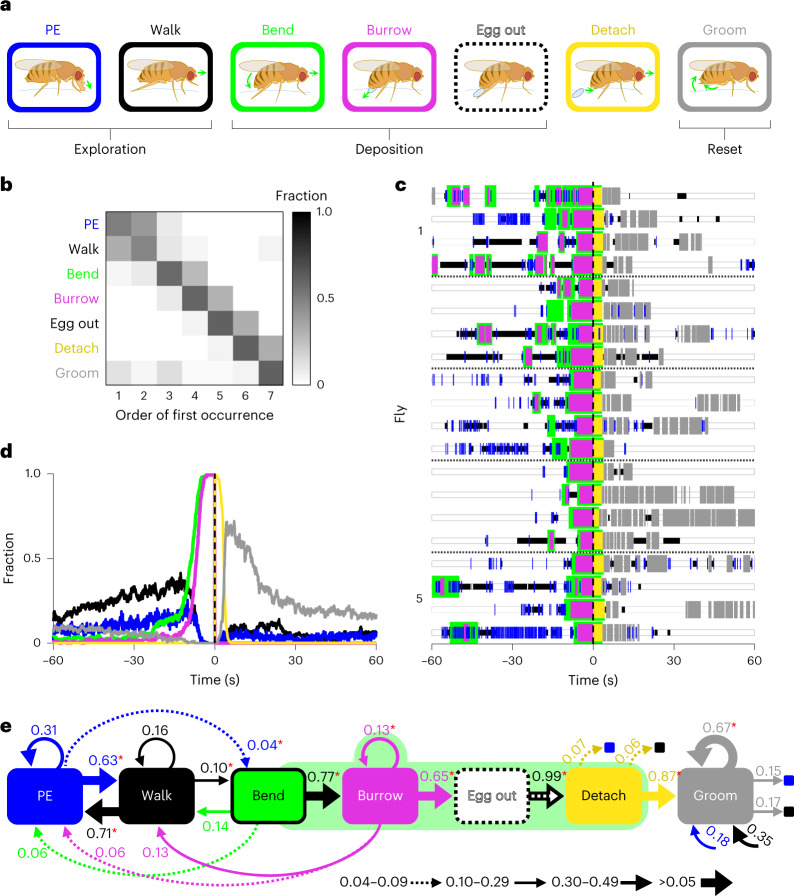
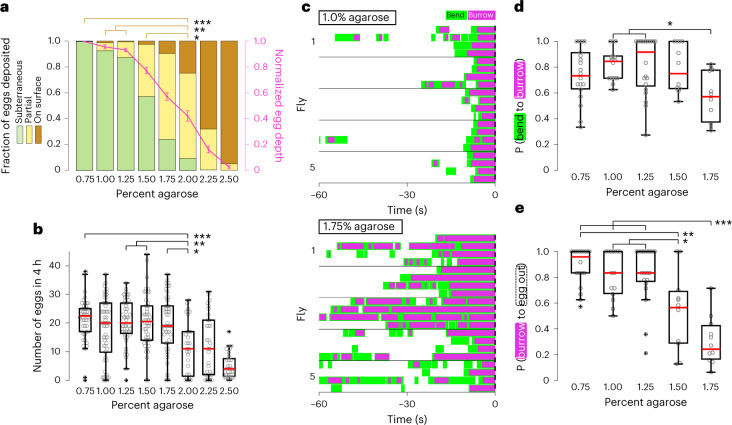
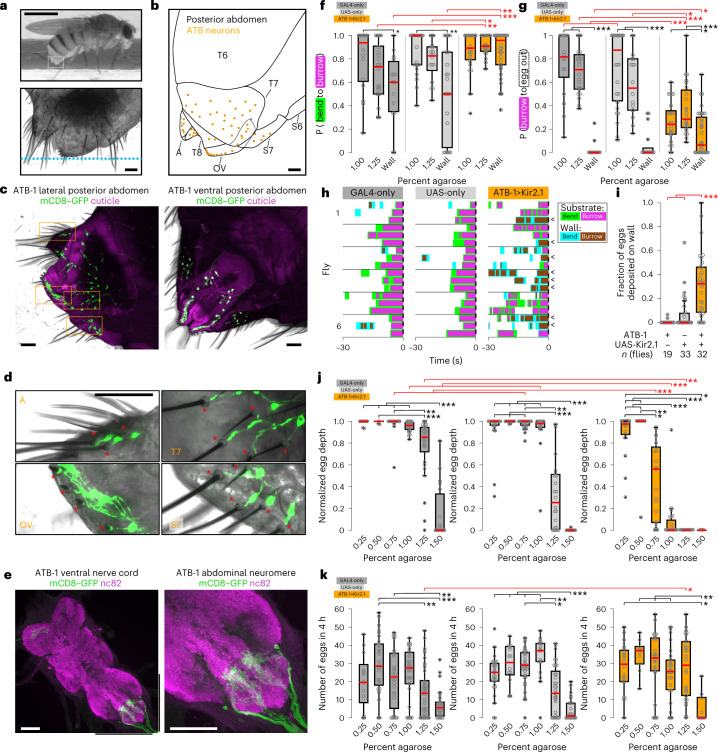
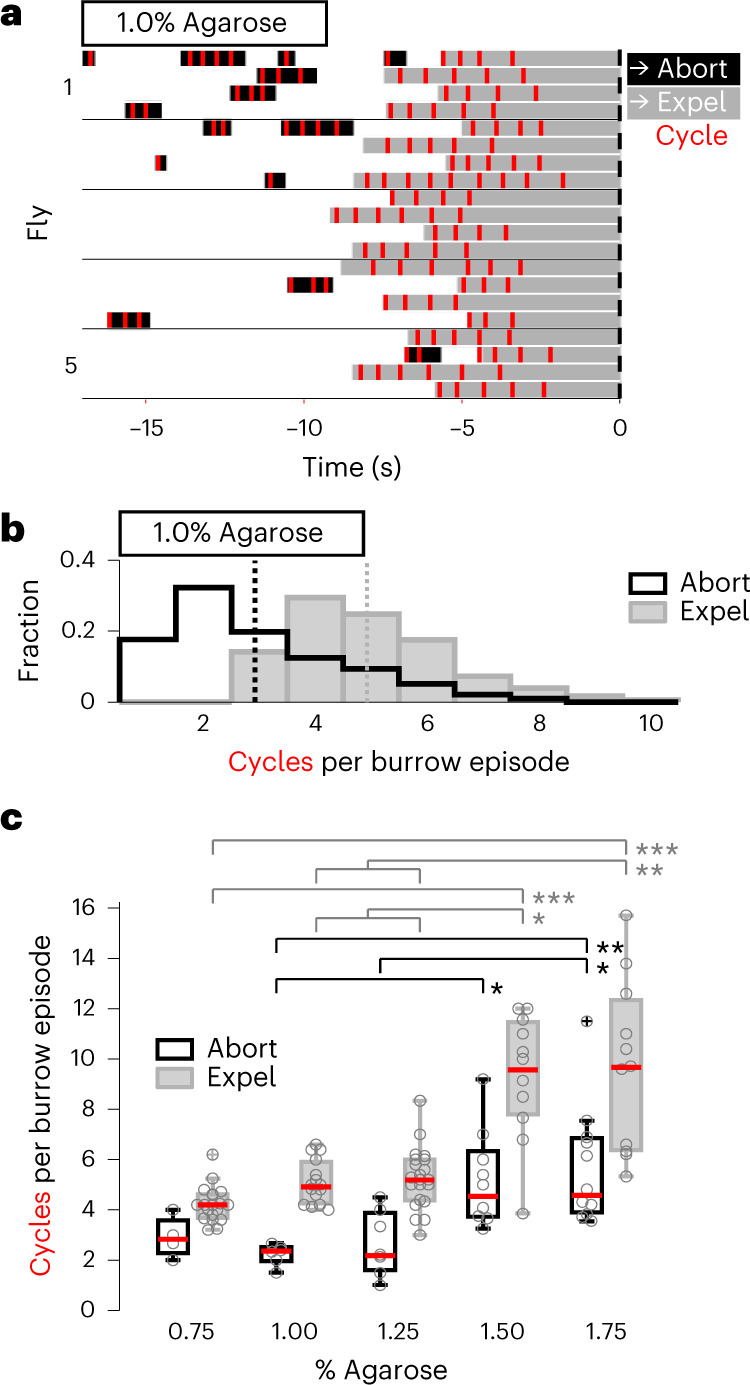
Innate behaviors are frequently comprised of ordered sequences of component actions that progress to satisfy essential drives. Progression is governed by specialized sensory cues that induce transitions between components within the appropriate context. Here we have characterized the structure of the egg-laying behavioral sequence in Drosophila and found significant variability in the transitions between component actions that affords the organism an adaptive flexibility. We identified distinct classes of interoceptive and exteroceptive sensory neurons that control the timing and direction of transitions between the terminal components of the sequence. We also identified a pair of motor neurons that enact the final transition to egg expulsion. These results provide a logic for the organization of innate behavior in which sensory information processed at critical junctures allows for flexible adjustments in component actions to satisfy drives across varied internal and external environments.
Overview
The claims and statistics of this paper haven’t been checked yet.
Free: it reads the open-access text and checks the first 5 claims that cite a source we can check. Create a free account to check every claim.
Integrity signals
Registry
Cites
Statistics
Figures
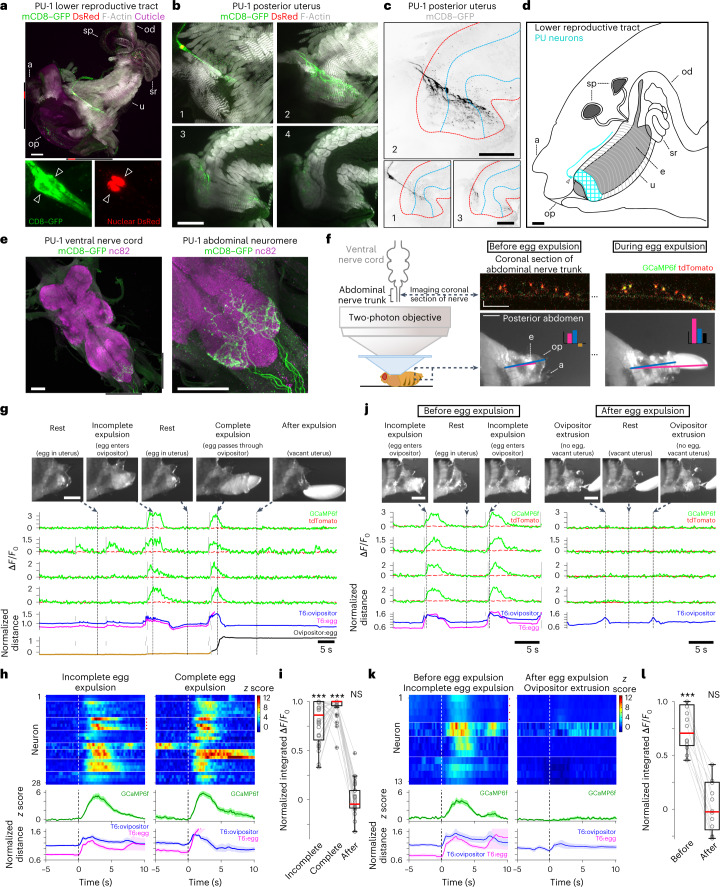
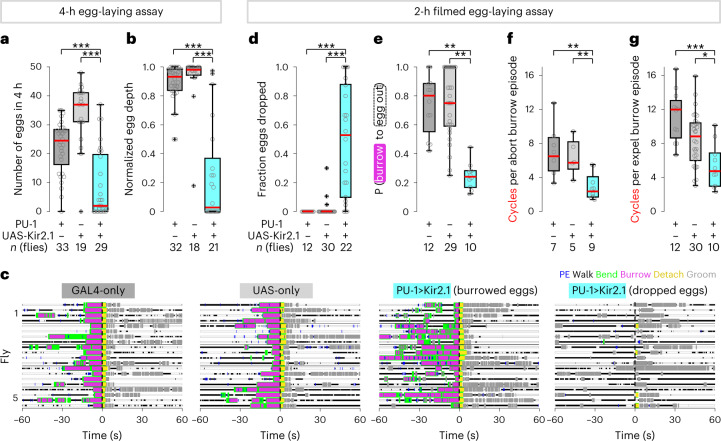
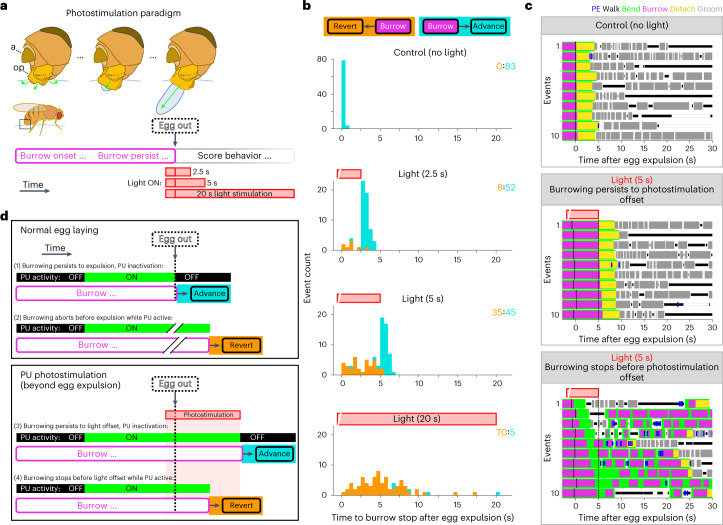
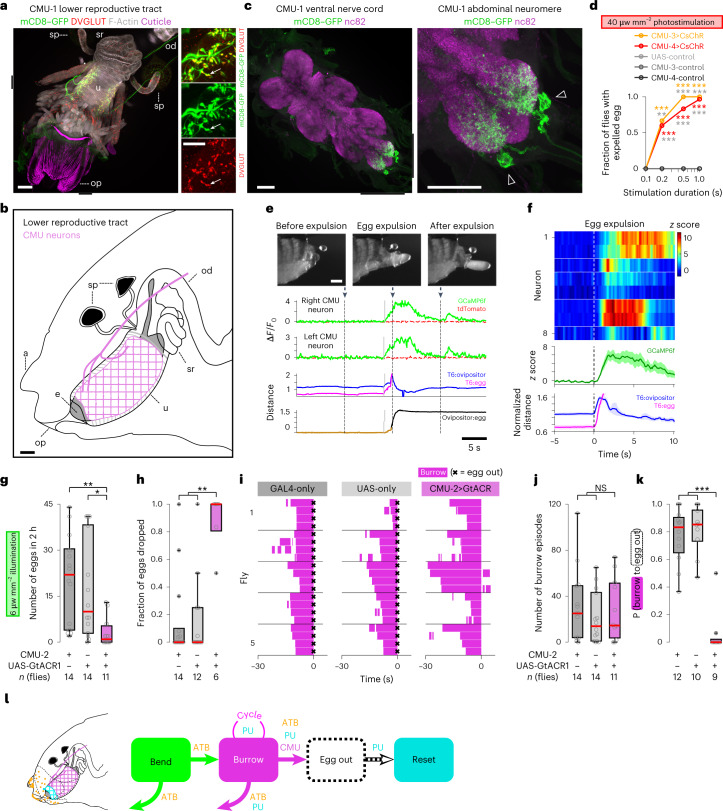
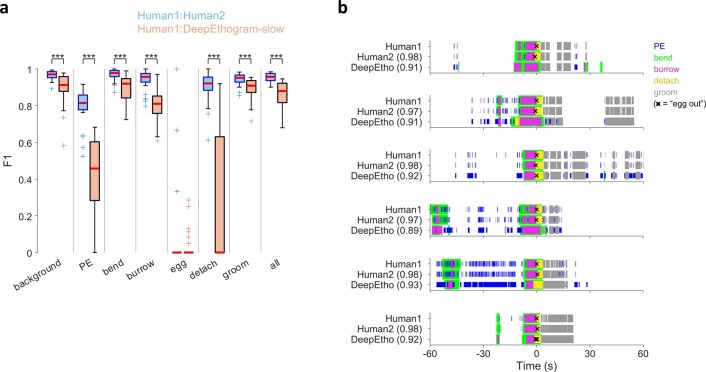
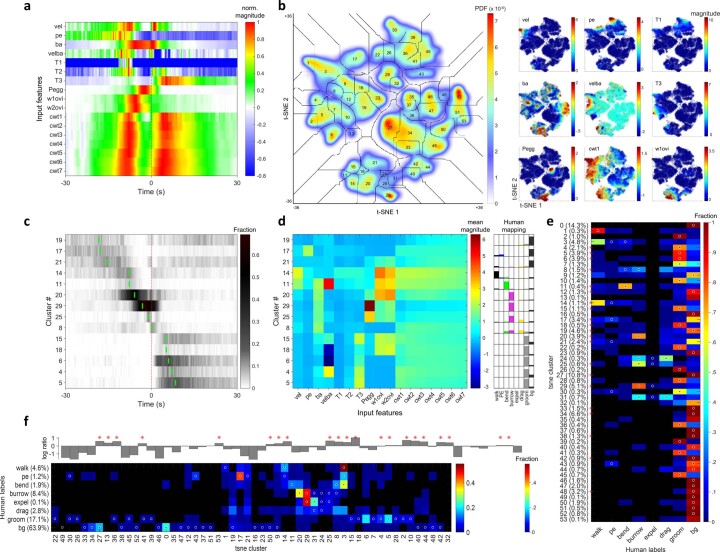
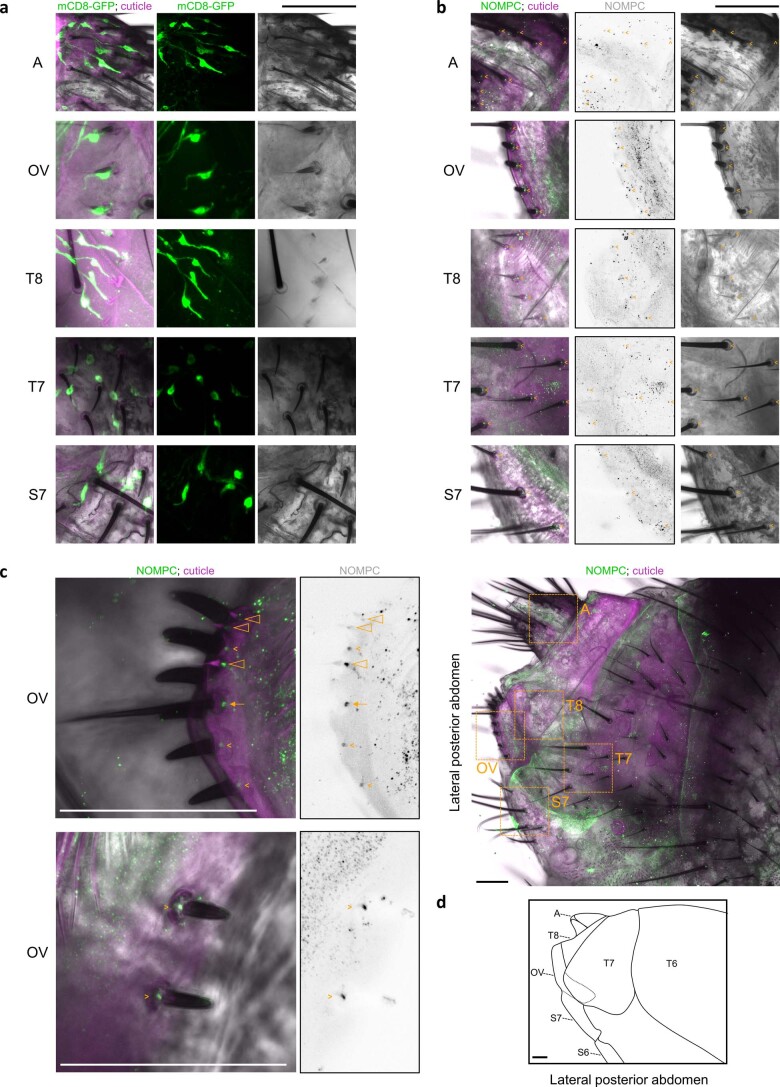
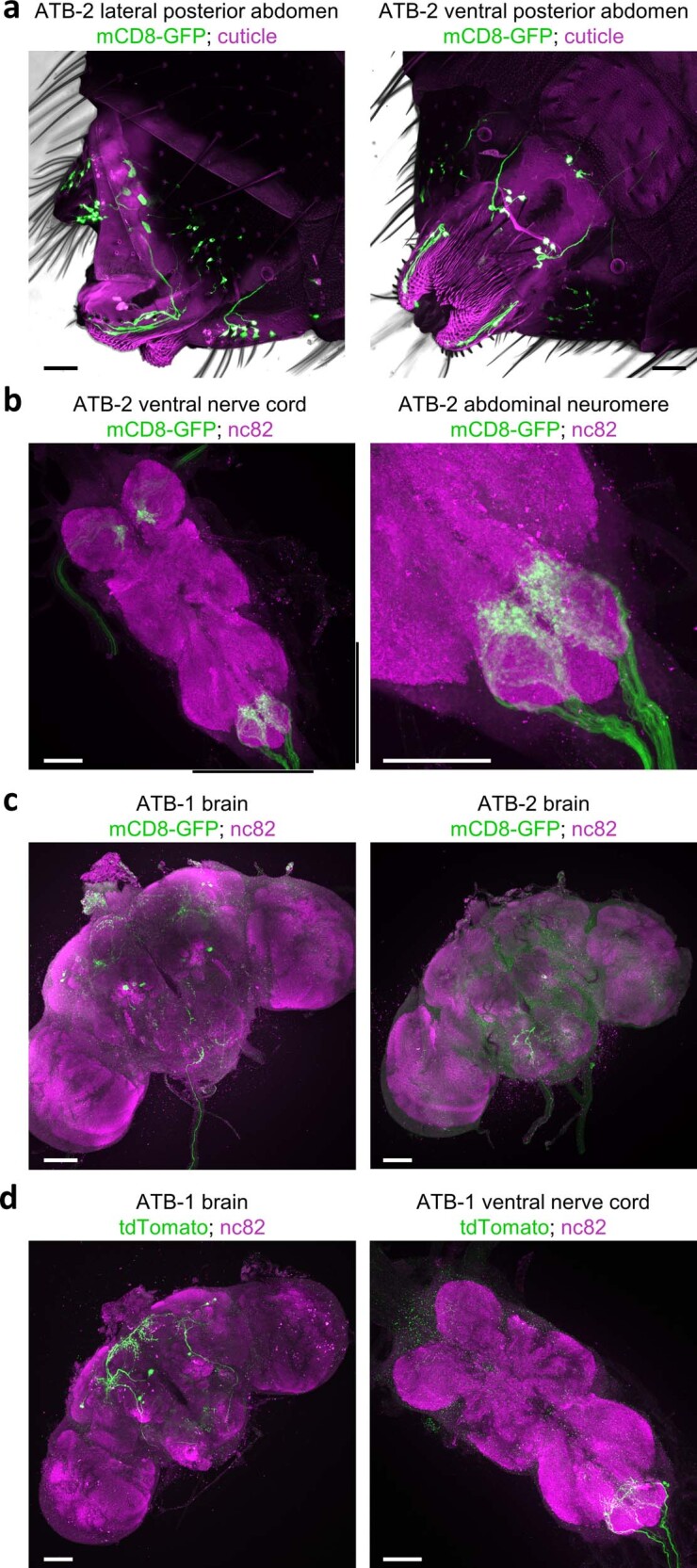
Verification
Claims the paper makes
The claims and statistics of this paper haven’t been checked yet.
Free: it reads the open-access text and checks the first 5 claims that cite a source we can check. Create a free account to check every claim.
Claims other papers make about this one
Each is checked against this paper’s own text: does it say what the citing paper says it does?
In the citing paper
“OviDN may encode the overarching command, but sensory and motor feedback contribute to the functional flexibility of the execution of its component steps [89].”
From Descending control of motor sequences in Drosophila (2024) · cites this paper as [89]
In the citing paper
“OviDN may encode the overarching command, but sensory and motor feedback contribute to the functional flexibility of the execution of its component steps [89].”
From Descending control of motor sequences in Drosophila (2024) · cites this paper as [89]
Self-check
Percentages, sums and reported differences re-computed from the paper’s own numbers.
The self-check needs the paper’s full text.
Citations
Cites
Ultrasensitive fluorescent proteins for imaging neuronal activity
Chen, T.-W., Wardill, T. J., Sun, Y., Pulver, S. R., Renninger, S. L., Baohan, A., Schreiter, E. R., Kerr, R. A., Orger, M. B., Jayaraman, V., et al. (2013) · Nature · doi:10.1038/nature12354 · Cited by 6,474
DeepLabCut: markerless pose estimation of user-defined body parts with deep learning
Mathis, A., Mamidanna, P., Cury, K. M., Abe, T., Murthy, V. N., Mathis, M. W., & Bethge, M. (2018) · Nature Neuroscience · doi:10.1038/s41593-018-0209-y · Cited by 5,187
Self-citationIndependent optical excitation of distinct neural populations
Klapoetke, N. C., Murata, Y., Kim, S. S., Pulver, S. R., Birdsey-Benson, A., Cho, Y. K., Morimoto, T. K., Chuong, A. S., Carpenter, E. J., Tian, Z., et al. (2014) · Nature Methods · doi:10.1038/nmeth.2836 · Cited by 2,344
Descending Pathways in Motor Control
Lemon, R. N. (2008) · Annual Review of Neuroscience · doi:10.1146/annurev.neuro.31.060407.125547 · Cited by 1,599
A GAL4-Driver Line Resource for Drosophila Neurobiology
Jenett, A., Rubin, G. M., Ngo, T.-T. B., Shepherd, D., Murphy, C., Dionne, H., Pfeiffer, B. D., Cavallaro, A., Hall, D., Jeter, J., et al. (2012) · Cell Reports · doi:10.1016/j.celrep.2012.09.011 · Cited by 1,449
Refinement of Tools for Targeted Gene Expression in Drosophila
Pfeiffer, B. D., Ngo, T.-T. B., Hibbard, K. L., Murphy, C., Jenett, A., Truman, J. W., & Rubin, G. M. (2010) · Genetics · doi:10.1534/genetics.110.119917 · Cited by 1,153
Biological Pattern Generation: The Cellular and Computational Logic of Networks in Motion
Grillner, S. (2006) · Neuron · doi:10.1016/j.neuron.2006.11.008 · Cited by 925
A Drosophila Mechanosensory Transduction Channel
Walker, R. G., Willingham, A. T., & Zuker, C. S. (2000) · Science · doi:10.1126/science.287.5461.2229 · Cited by 696
A male accessory gland peptide that regulates reproductive behavior of female D. melanogaster
Chen, P. S., Stumm-Zollinger, E., Aigaki, T., Balmer, J., Bienz, M., & Böhlen, P. (1988) · Cell · doi:10.1016/0092-8674(88)90192-4 · Cited by 671
Altered Electrical Properties in Drosophila Neurons Developing without Synaptic Transmission
Baines, R. A., Uhler, J. P., Thompson, A., Sweeney, S. T., & Bate, M. (2001) · The Journal of Neuroscience · doi:10.1523/jneurosci.21-05-01523.2001 · Cited by 634
A receptor that mediates the post-mating switch in Drosophila reproductive behaviour
Yapici, N., Kim, Y.-J., Ribeiro, C., & Dickson, B. J. (2008) · Nature · doi:10.1038/nature06483 · Cited by 588
Mapping the stereotyped behaviour of freely moving fruit flies
Berman, G. J., Choi, D. M., Bialek, W., & Shaevitz, J. W. (2014) · Journal of The Royal Society Interface · doi:10.1098/rsif.2014.0672 · Cited by 565
Luan, H., Peabody, N. C., Vinson, C. R., & White, B. H. (2006) · Neuron · doi:10.1016/j.neuron.2006.08.028 · Cited by 500
Saper, C. B., & Lowell, B. B. (2014) · Current Biology · doi:10.1016/j.cub.2014.10.023 · Cited by 423
The Courtship of Drosophila Melanogaster
Bastock, M., & Manning, A. (1955) · Behaviour · doi:10.1163/156853955x00184 · Cited by 400 · cited 1×
“(1) Burrowing persists to expulsion, PU inactivation:”
L‐glutamate as an excitatory transmitter at the Drosophila larval neuromuscular junction.
Jan, L. Y., & Jan, Y. N. (1976) · The Journal of Physiology · doi:10.1113/jphysiol.1976.sp011593 · Cited by 400
Drosophila Egg-Laying Site Selection as a System to Study Simple Decision-Making Processes
Yang, C.-H., Belawat, P., Hafen, E., Jan, L. Y., & Jan, Y.-N. (2008) · Science · doi:10.1126/science.1151842 · Cited by 394
Atallah, J., Teixeira, L., Salazar, R., Zaragoza, G., & Kopp, A. (2014) · Proceedings of the Royal Society B: Biological Sciences · doi:10.1098/rspb.2013.2840 · Cited by 381
Tachykinin-Expressing Neurons Control Male-Specific Aggressive Arousal in Drosophila
Asahina, K., Watanabe, K., Duistermars, B. J., Hoopfer, E., González, C. R., Eyjólfsdóttir, E. A., Perona, P., & Anderson, D. J. (2014) · Cell · doi:10.1016/j.cell.2013.11.045 · Cited by 351
The functional organization of descending sensory-motor pathways in Drosophila
Namiki, S., Dickinson, M. H., Wong, A. M., Korff, W., & Card, G. M. (2018) · eLife · doi:10.7554/elife.34272 · Cited by 337
Daniels, R. W., Collins, C. A., Gelfand, M. V., Dant, J., Brooks, E. S., Krantz, D. E., & DiAntonio, A. (2004) · The Journal of Neuroscience · doi:10.1523/jneurosci.3001-04.2004 · Cited by 335
Control of the Postmating Behavioral Switch in Drosophila Females by Internal Sensory Neurons
Yang, C.-H., Rumpf, S., Xiang, Y., Gordon, M. D., Song, W., Jan, L. Y., & Jan, Y.-N. (2009) · Neuron · doi:10.1016/j.neuron.2008.12.021 · Cited by 330
Circuit modules linking internal states and social behaviour in flies and mice
Anderson, D. J. (2016) · Nature Reviews Neuroscience · doi:10.1038/nrn.2016.125 · Cited by 327
Hypothalamic Survival Circuits: Blueprints for Purposive Behaviors
Sternson, S. M. (2013) · Neuron · doi:10.1016/j.neuron.2013.02.018 · Cited by 313
Sensory Neurons in the Drosophila Genital Tract Regulate Female Reproductive Behavior
Häsemeyer, M., Yapici, N., Heberlein, U., & Dickson, B. J. (2009) · Neuron · doi:10.1016/j.neuron.2009.01.009 · Cited by 306
Invertebrate Central Pattern Generation Moves along
Marder, E., Bucher, D., Schulz, D. J., & Taylor, A. L. (2005) · Current Biology · doi:10.1016/j.cub.2005.08.022 · Cited by 301
Mechanosensation and Adaptive Motor Control in Insects
Tuthill, J. C., & Wilson, R. I. (2016) · Current Biology · doi:10.1016/j.cub.2016.06.070 · Cited by 290
Olfactory Preference for Egg Laying on Citrus Substrates in Drosophila
Dweck, H. K. M., Ebrahim, S. A. M., Kromann, S., Bown, D., Hillbur, Y., Sachse, S., Hansson, B. S., & Stensmyr, M. C. (2013) · Current Biology · doi:10.1016/j.cub.2013.10.047 · Cited by 283
Optogenetic inhibition of behavior with anion channelrhodopsins
Mohammad, F., Stewart, J. C., Ott, S., Chlebikova, K., Chua, J. Y., Koh, T.-W., Ho, J., & Claridge-Chang, A. (2017) · Nature Methods · doi:10.1038/nmeth.4148 · Cited by 276
Kohatsu, S., Koganezawa, M., & Yamamoto, D. (2011) · Neuron · doi:10.1016/j.neuron.2010.12.017 · Cited by 270
Genetically encoded dendritic marker sheds light on neuronal connectivity in Drosophila
Nicolaï, L. J. J., Ramaekers, A., Raemaekers, T., Drozdzecki, A., Mauss, A. S., Yan, J., Landgraf, M., Annaert, W., & Hassan, B. A. (2010) · Proceedings of the National Academy of Sciences · doi:10.1073/pnas.1010198107 · Cited by 262
Multimodal Chemosensory Circuits Controlling Male Courtship in Drosophila
Clowney, E. J., Iguchi, S., Bussell, J. J., Scheer, E., & Ruta, V. (2015) · Neuron · doi:10.1016/j.neuron.2015.07.025 · Cited by 255
Ankyrin Repeats Convey Force to Gate the NOMPC Mechanotransduction Channel
Zhang, W., Cheng, L. E., Kittelmann, M., Li, J., Petkovic, M., Cheng, T., Jin, P., Guo, Z., Göpfert, M. C., Jan, L. Y., et al. (2015) · Cell · doi:10.1016/j.cell.2015.08.024 · Cited by 242
Evolution of a central neural circuit underlies Drosophila mate preferences
Seeholzer, L. F., Seppo, M., Stern, D. L., & Ruta, V. (2018) · Nature · doi:10.1038/s41586-018-0322-9 · Cited by 240 · cited 1×
“Sample size No statistical methods were used to pre-determine sample sizes but our sample sizes are comparable to the other functional and behavioral studies in Drosophila (e.g. Feng et al., 2014; Gou et al., 2014; Seeholzer et al., 2018; Bräcker et al., 2019; Wang et al., 2020; Zhang et al., 2020.)”
MethodKarageorgi, M., Bräcker, L. B., Lebreton, S., Minervino, C., Cavey, M., Siju, K. P., Grunwald Kadow, I. C., Gompel, N., & Prud’homme, B. (2017) · Current Biology · doi:10.1016/j.cub.2017.01.055 · Cited by 235
Segalin, C., Williams, J., Karigo, T., Hui, M., Zelikowsky, M., Sun, J. J., Perona, P., Anderson, D. J., & Kennedy, A. (2021) · eLife · doi:10.7554/elife.63720 · Cited by 234
Living synaptic vesicle marker: Synaptotagmin‐GFP
Zhang, Y. Q., Rodesch, C. K., & Broadie, K. (2002) · genesis · doi:10.1002/gene.10144 · Cited by 233
Olfactory receptor and circuit evolution promote host specialization
Auer, T. O., Khallaf, M. A., Silbering, A. F., Zappia, G., Ellis, K., Álvarez-Ocaña, R., Arguello, J. R., Hansson, B. S., Jefferis, G. S. X. E., Caron, S. J. C., et al. (2020) · Nature · doi:10.1038/s41586-020-2073-7 · Cited by 226
Joseph, R. M., Devineni, A. V., King, I. F. G., & Heberlein, U. (2009) · Proceedings of the National Academy of Sciences · doi:10.1073/pnas.0901419106 · Cited by 225
Neuronal Control of Drosophila Walking Direction
Bidaye, S. S., Machacek, C., Wu, Y., & Dickson, B. J. (2014) · Science · doi:10.1126/science.1249964 · Cited by 222
DeepEthogram, a machine learning pipeline for supervised behavior classification from raw pixels
Bohnslav, J. P., Wimalasena, N. K., Clausing, K. J., Dai, Y. Y., Yarmolinsky, D. A., Cruz, T., Kashlan, A. D., Chiappe, M. E., Orefice, L. L., Woolf, C. J., et al. (2021) · eLife · doi:10.7554/elife.63377 · Cited by 220
Evolution of Acid-Sensing Olfactory Circuits in Drosophilids
Prieto-Godino, L. L., Rytz, R., Cruchet, S., Bargeton, B., Abuin, L., Silbering, A. F., Ruta, V., Dal Peraro, M., & Benton, R. (2017) · Neuron · doi:10.1016/j.neuron.2016.12.024 · Cited by 205
A suppression hierarchy among competing motor programs drives sequential grooming in Drosophila
Seeds, A. M., Ravbar, P., Chung, P., Hampel, S., Midgley, F. M., Mensh, B. D., & Simpson, J. H. (2014) · eLife · doi:10.7554/elife.02951 · Cited by 200
Neural circuitry linking mating and egg laying in Drosophila females
Wang, F., Wang, K., Forknall, N., Patrick, C., Yang, T., Parekh, R., Bock, D., & Dickson, B. J. (2020) · Nature · doi:10.1038/s41586-020-2055-9 · Cited by 191 · cited 1×
“Sample size No statistical methods were used to pre-determine sample sizes but our sample sizes are comparable to the other functional and behavioral studies in Drosophila (e.g. Feng et al., 2014; Gou et al., 2014; Seeholzer et al., 2018; Bräcker et al., 2019; Wang et al., 2020; Zhang et al., 2020.)”
MethodAscending SAG Neurons Control Sexual Receptivity of Drosophila Females
Feng, K., Palfreyman, M. T., Häsemeyer, M., Talsma, A., & Dickson, B. J. (2014) · Neuron · doi:10.1016/j.neuron.2014.05.017 · Cited by 163 · cited 1×
“Sample size No statistical methods were used to pre-determine sample sizes but our sample sizes are comparable to the other functional and behavioral studies in Drosophila (e.g. Feng et al., 2014; Gou et al., 2014; Seeholzer et al., 2018; Bräcker et al., 2019; Wang et al., 2020; Zhang et al., 2020.)”
MethodNatural courtship song variation caused by an intronic retroelement in an ion channel gene
Ding, Y., Berrocal, A., Morita, T., Longden, K. D., & Stern, D. L. (2016) · Nature · doi:10.1038/nature19093 · Cited by 163
Optogenetic dissection of descending behavioral control in Drosophila
Cande, J., Namiki, S., Qiu, J., Korff, W., Card, G. M., Shaevitz, J. W., Stern, D. L., & Berman, G. J. (2018) · eLife · doi:10.7554/elife.34275 · Cited by 163
Neural circuit mechanisms of sexual receptivity in Drosophila females
Wang, K., Wang, F., Forknall, N., Yang, T., Patrick, C., Parekh, R., & Dickson, B. J. (2021) · Nature · doi:10.1038/s41586-020-2972-7 · Cited by 152
�ber die Orientierung des Bienenwolfes (Philanthus triangulum Fabr.)
Tinbergen, N. (1935) · Journal of Comparative Physiology A · doi:10.1007/bf00340916 · Cited by 149
Büschges, A., Scholz, H., & Manira, A. E. (2011) · Current Biology · doi:10.1016/j.cub.2011.05.029 · Cited by 139
Neuron hemilineages provide the functional ground plan for the Drosophila ventral nervous system
Harris, R. M., Pfeiffer, B. D., Rubin, G. M., & Truman, J. W. (2015) · eLife · doi:10.7554/elife.04493 · Cited by 125
Cell types and neuronal circuitry underlying female aggression in Drosophila
Schretter, C. E., Aso, Y., Robie, A. A., Dreher, M., Dolan, M.-J., Chen, N., Ito, M., Yang, T., Parekh, R., Branson, K. M., et al. (2020) · eLife · doi:10.7554/elife.58942 · Cited by 125
Organization of descending neurons in Drosophila melanogaster
Hsu, C. T., & Bhandawat, V. (2016) · Scientific Reports · doi:10.1038/srep20259 · Cited by 117
Drosophila TRPN( = NOMPC) Channel Localizes to the Distal End of Mechanosensory Cilia
Lee, J., Moon, S., Cha, Y., & Chung, Y. D. (2010) · PLoS ONE · doi:10.1371/journal.pone.0011012 · Cited by 116
The neural basis for a persistent internal state in Drosophila females
Deutsch, D., Pacheco, D., Encarnacion-Rivera, L., Pereira, T., Fathy, R., Clemens, J., Girardin, C., Calhoun, A., Ireland, E., Burke, A., et al. (2020) · eLife · doi:10.7554/elife.59502 · Cited by 115
The Neural Basis for a Persistent Internal State in Drosophila Females
Deutsch, D., Pacheco, D. A., Encarnacion-Rivera, L. J., Pereira, T., Fathy, R., Calhoun, A., Ireland, E. C., Burke, A. T., Dorkenwald, S., McKellar, C., et al. (2020) · doi:10.1101/2020.02.13.947952 · Cited by 115
Neural Evolution of Context-Dependent Fly Song
Ding, Y., Lillvis, J. L., Cande, J., Berman, G. J., Arthur, B. J., Long, X., Xu, M., Dickson, B. J., & Stern, D. L. (2019) · Current Biology · doi:10.1016/j.cub.2019.02.019 · Cited by 109
Topological and modality-specific representation of somatosensory information in the fly brain
Tsubouchi, A., Yano, T., Yokoyama, T. K., Murtin, C., Otsuna, H., & Ito, K. (2017) · Science · doi:10.1126/science.aan4428 · Cited by 108
Parallel Transformation of Tactile Signals in Central Circuits of Drosophila
Tuthill, J. C., & Wilson, R. I. (2016) · Cell · doi:10.1016/j.cell.2016.01.014 · Cited by 103
A short guide to insect oviposition: when, where and how to lay an egg
Cury, K. M., Prud’homme, B., & Gompel, N. (2019) · Journal of Neurogenetics · doi:10.1080/01677063.2019.1586898 · Cited by 99 · cited 1×
“(4) Burrowing stops before light offset while PU active: PU photostimulation (beyond egg expulsion)”
BackgroundSelf-citationA systematic nomenclature for the Drosophila ventral nerve cord
Court, R., Namiki, S., Armstrong, J. D., Börner, J., Card, G., Costa, M., Dickinson, M., Duch, C., Korff, W., Mann, R., et al. (2020) · Neuron · doi:10.1016/j.neuron.2020.08.005 · Cited by 96
Egg Laying Decisions in Drosophila Are Consistent with Foraging Costs of Larval Progeny
Schwartz, N. U., Zhong, L., Bellemer, A., & Tracey, W. D. (2012) · PLoS ONE · doi:10.1371/journal.pone.0037910 · Cited by 94
Gou, B., Liu, Y., Guntur, A. R., Stern, U., & Yang, C.-H. (2014) · Cell Reports · doi:10.1016/j.celrep.2014.09.033 · Cited by 85 · cited 1×
“Sample size No statistical methods were used to pre-determine sample sizes but our sample sizes are comparable to the other functional and behavioral studies in Drosophila (e.g. Feng et al., 2014; Gou et al., 2014; Seeholzer et al., 2018; Bräcker et al., 2019; Wang et al., 2020; Zhang et al., 2020.)”
MethodImaging neural activity in the ventral nerve cord of behaving adult Drosophila
Chen, C.-L., Hermans, L., Viswanathan, M. C., Fortun, D., Aymanns, F., Unser, M., Cammarato, A., Dickinson, M. H., & Ramdya, P. (2018) · Nature Communications · doi:10.1038/s41467-018-06857-z · Cited by 84
Kimura, K.-I., Sato, C., Koganezawa, M., & Yamamoto, D. (2015) · PLOS ONE · doi:10.1371/journal.pone.0126445 · Cited by 77
Deciphering Drosophila female innate behaviors
Aranha, M. M., & Vasconcelos, M. L. (2018) · Current Opinion in Neurobiology · doi:10.1016/j.conb.2018.06.005 · Cited by 77
Neural circuitry coordinating male copulation
Pavlou, H. J., Lin, A. C., Neville, M. C., Nojima, T., Diao, F., Chen, B. E., White, B. H., & Goodwin, S. F. (2016) · eLife · doi:10.7554/elife.20713 · Cited by 76
Parallel Mechanosensory Pathways Direct Oviposition Decision-Making in Drosophila
Zhang, L., Yu, J., Guo, X., Wei, J., Liu, T., & Zhang, W. (2020) · Current Biology · doi:10.1016/j.cub.2020.05.076 · Cited by 69 · cited 1×
“Sample size No statistical methods were used to pre-determine sample sizes but our sample sizes are comparable to the other functional and behavioral studies in Drosophila (e.g. Feng et al., 2014; Gou et al., 2014; Seeholzer et al., 2018; Bräcker et al., 2019; Wang et al., 2020; Zhang et al., 2020.)”
MethodThreshold-based ordering of sequential actions during Drosophila courtship
McKellar, C. E., Lillvis, J. L., Bath, D. E., Fitzgerald, J. E., Cannon, J. G., Simpson, J. H., & Dickson, B. J. (2019) · Current Biology · doi:10.1016/j.cub.2018.12.019 · Cited by 67
Serial order of maternal responses in mice
Noirot, É. (1969) · Animal Behaviour · doi:10.1016/0003-3472(69)90162-6 · Cited by 64 · cited 1×
“PU activity: OFF ON (2) Burrowing aborts before expulsion while PU active:”
BackgroundBrain Architecture: Understanding the Basic Plan
Swanson, L. W. (2011) · Oxford University Press eBooks · doi:10.1093/med/9780195378580.001.0001 · Cited by 58
Mechanosensory circuits coordinate two opposing motor actions in Drosophila feeding
Zhou, Y., Cao, L.-H., Sui, X.-W., Guo, X.-Q., & Luo, D.-G. (2019) · Science Advances · doi:10.1126/sciadv.aaw5141 · Cited by 49
A rise-to-threshold process for a relative-value decision
Vijayan, V., Wang, F., Wang, K., Chakravorty, A., Adachi, A., Akhlaghpour, H., Dickson, B. J., & Maimon, G. (2023) · Nature · doi:10.1038/s41586-023-06271-6 · Cited by 49
Structural and transcriptional evidence of mechanotransduction in the Drosophila suzukii ovipositor
Crava, C. M., Zanini, D., Amati, S., Sollai, G., Crnjar, R., Paoli, M., Stacconi, M. V. R., Rota‐Stabelli, O., Tait, G., Haase, A., et al. (2020) · Journal of Insect Physiology · doi:10.1016/j.jinsphys.2020.104088 · Cited by 47
Drosophila: Behavioral Cues for Oviposition
Rockwell, R. F., & Grossfield, J. (1978) · The American Midland Naturalist · doi:10.2307/2424813 · Cited by 42
Thomas, A. (1979) · Journal of Insect Physiology · doi:10.1016/0022-1910(79)90084-2 · Cited by 31
Belanger, J. H., & Orchard, I. (1992) · Journal of Comparative Physiology A · doi:10.1007/bf00194582 · Cited by 24
Evidence of a neural loop involved in controlling spermathecal contractions in Locusta migratoria
Clark, J., & Lange, A. B. (2001) · Journal of Insect Physiology · doi:10.1016/s0022-1910(00)00149-9 · Cited by 23
Neuronal substrates of egg-laying behaviour at the abdominal ganglion of Drosophila melanogaster
Oliveira-Ferreira, C., Gaspar, M., & Vasconcelos, M. L. (2023) · Scientific Reports · doi:10.1038/s41598-023-48109-1 · Cited by 19
Bräcker, L. B., Schmid, C. A., Bolini, V., Holz, C. A., Prud’homme, B., Sirota, A., & Gompel, N. (2019) · Frontiers in Behavioral Neuroscience · doi:10.3389/fnbeh.2019.00118 · Cited by 18 · cited 1×
“Sample size No statistical methods were used to pre-determine sample sizes but our sample sizes are comparable to the other functional and behavioral studies in Drosophila (e.g. Feng et al., 2014; Gou et al., 2014; Seeholzer et al., 2018; Bräcker et al., 2019; Wang et al., 2020; Zhang et al., 2020.)”
MethodTakamura, T. (1984) · The Japanese Journal of Genetics · doi:10.1266/jjg.59.71 · Cited by 11
A rise-to-threshold signal for a relative value deliberationPreprint
Vijayan, V., Wang, F., Wang, K., Chakravorty, A., Adachi, A., Akhlaghpour, H., Dickson, B. J., & Maimon, G. (2021) · bioRxiv · doi:10.1101/2021.09.23.461548 · Cited by 10
Oliveira-Ferreira, C., Gaspar, M., & Vasconcelos, M. L. (2021) · bioRxiv (Cold Spring Harbor Laboratory) · doi:10.1101/2021.08.23.457359 · Cited by 3
Research works printed but not linked: 4
- Tinbergen, N. The Study of Instinct (Clarendon Press, 1951).
- Bryant, P. J. in The Genetics and Biology of Drosophila (eds Ashburner, M. & Wright, T. R. F.) 255–260 (Academic Press, 1978).
- Tsacas L Fine structure and functioning of the ovipositor of Drosophila melanogaster Meigen (Diptera, Drosophilidae) Arch. de Zool. Exp. Génér. 1975 116 431 436
- Demerec, M. Biology of Drosophila (Wiley, 1950).
Cited by
A rise-to-threshold process for a relative-value decision
Vijayan, V., Wang, F., Wang, K., Chakravorty, A., Adachi, A., Akhlaghpour, H., Dickson, B. J., & Maimon, G. (2023) · Nature · doi:10.1038/s41586-023-06271-6 · Cited by 49
Odor-regulated oviposition behavior in an ecological specialist
Álvarez-Ocaña, R., Shahandeh, M. P., Ray, V., Auer, T. O., Gompel, N., & Benton, R. (2023) · Nature Communications · doi:10.1038/s41467-023-38722-z · Cited by 53
Descending control of motor sequences in Drosophila
Simpson, J. H. (2024) · Current Opinion in Neurobiology · doi:10.1016/j.conb.2023.102822 · Cited by 33
“OviDN may encode the overarching command, but sensory and motor feedback contribute to the functional flexibility of the execution of its component steps [89].”
Distributed control circuits across a brain-and-cord connectome
Bates, A. S., Phelps, J. S., Kim, M., Yang, H. H., Matsliah, A., Ajabi, Z., Perlman, E., Delgado, K. M., Osman, M. A. M., Salmon, C. K., et al. (2026) · Nature · doi:10.1038/s41586-026-10735-w · Cited by 100
“…the antennae 226 , eyes 227 , neck 64 , crop 228,229 , haltere 8 , proboscis 95,229–231 , pharynx 95,229,230,232 , salivary glands 95,229 and uterus 233 ; octopaminergic effector neurons involved in ovulation 193,234,235 ; endocrine neurons of the brain and VNC 131,201,236,237 ; and chemosensory,…”
Neuronal substrates of egg-laying behaviour at the abdominal ganglion of Drosophila melanogaster
Oliveira-Ferreira, C., Gaspar, M., & Vasconcelos, M. L. (2023) · Scientific Reports · doi:10.1038/s41598-023-48109-1 · Cited by 19
Metadata
- Authors
- Cury, K. M., & Axel, R.
- Affiliations
- Mortimer B. Zuckerman Mind Brain Behavior Institute (US)
- Howard Hughes Medical Institute (US)
- Corresponding author
- Cury, Kevin M.
- Axel, Richard
- Venue
- Nature Neuroscience
- Published
- 2023-05-22
- Volume
- 26
- Issue
- 6
- Pages
- 1054-1067
- ISSN
- 1097-6256 (ISSN-L)
- 1546-1726
- PMC
- PMC10244180
- OpenAlex
- W4377290341
- Cited by
- 40
- References
- 79
- Citations by year
- 2026: 10 · 2025: 9 · 2024: 15 · 2023: 6
- FWCI
- 4.85
- Type
- journal article
- Language
- en
- Open access
- hybrid
- doi.org
- Licence
- cc-by
- creativecommons.org/licenses/by/4.0 (tdm)
- creativecommons.org/licenses/by/4.0 (vor)
- Locations
- Nature Neuroscience (publishedVersion, cc-by)
- PubMed Central (publishedVersion, cc-by)
- PubMed (publishedVersion)
- Funders
- Howard Hughes Medical Institute
- Simons Foundation
- Bill and Melinda Gates Foundation
- Topics
- Life Sciences › Neuroscience › Cellular and Molecular Neuroscience › Neurobiology and Insect Physiology Research
- Life Sciences › Neuroscience › Cellular and Molecular Neuroscience › Neuroscience and Neuropharmacology Research
- Life Sciences › Neuroscience › Cognitive Neuroscience › Motor Control and Adaptation
- Keywords
- egg-laying behavior, Drosophila, innate behavior, behavioral sequences, behavioral transitions, motor neurons, behavioral flexibility, sensory cues, neural control of behavior
- MeSH terms
- Animals, Drosophila, Motor Neurons, Sensory Receptor Cells, Sexual Behavior, Animal, Drosophila Proteins
About these checks
Registry, retraction, Cites and statistics results are computed, not judged, with one exception: a printed reference that no index lists is read once by a model before it counts as a citation error. Claims are extracted by a model and kept only when their quote appears verbatim in the text; each cited source is then checked, with a model’s help, for whether it says what the claim relies on. Those verdicts can be wrong — read the claim’s quote and the cited source before relying on one.
Statistics and arithmetic are recomputed, not judged.
Confidence bands are shown only for fields calibrated on our annotated test set. None is calibrated yet, so no band is shown.
What counts as a claim ›How we measure confidence ›How we check this ›
Are you an author, or do you see a problem with this page? Request a review
Data sources
Bibliographic data: Semantic Scholar, OpenAlex, Crossref.
Contains information from the Semantic Scholar Academic Graph Datasets, made available under the ODC Attribution License (ODC-BY 1.0).
Semantic Scholar’s data is described in: Kinney, R., et al. (2023). The Semantic Scholar Open Data Platform. arXiv:2301.10140.
