

The translational landscape of HIV-1 infected cells reveals key gene regulatory principles
Open accessPublished version of a preprint
The DOI matches its Crossref record; 117 of the 117 references it cites were found in a registry or an index.
Abstract
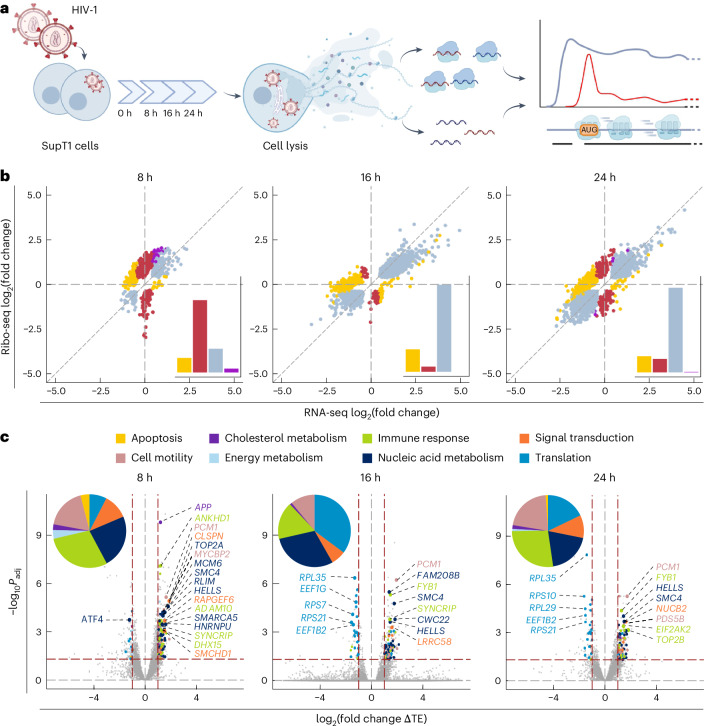
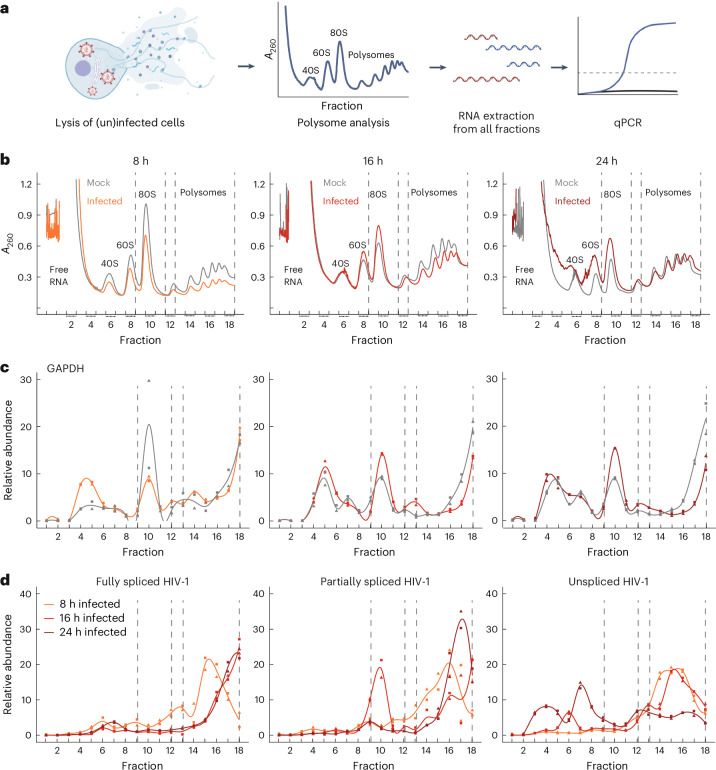
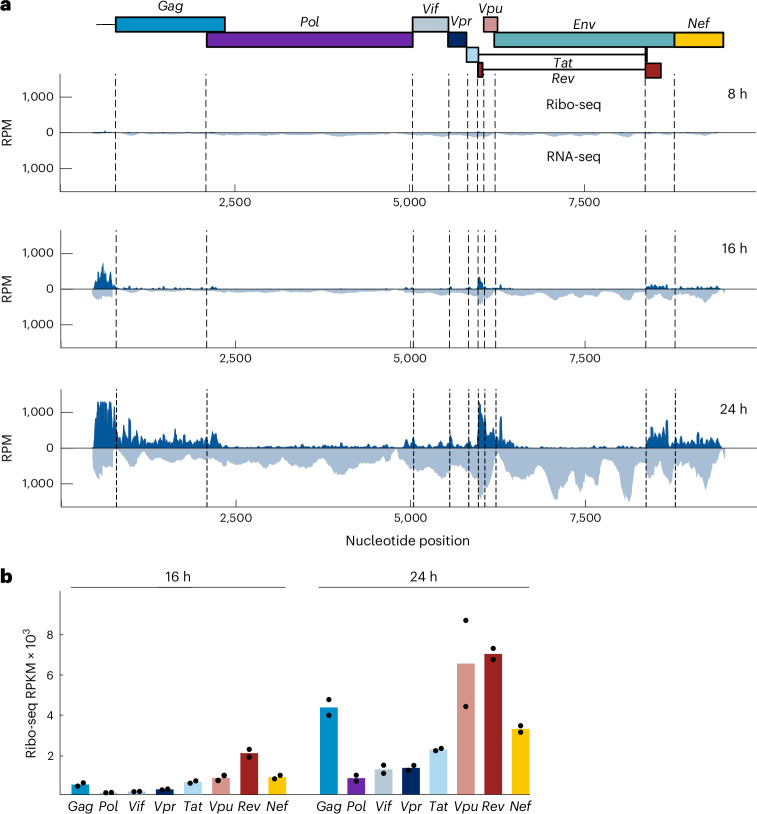
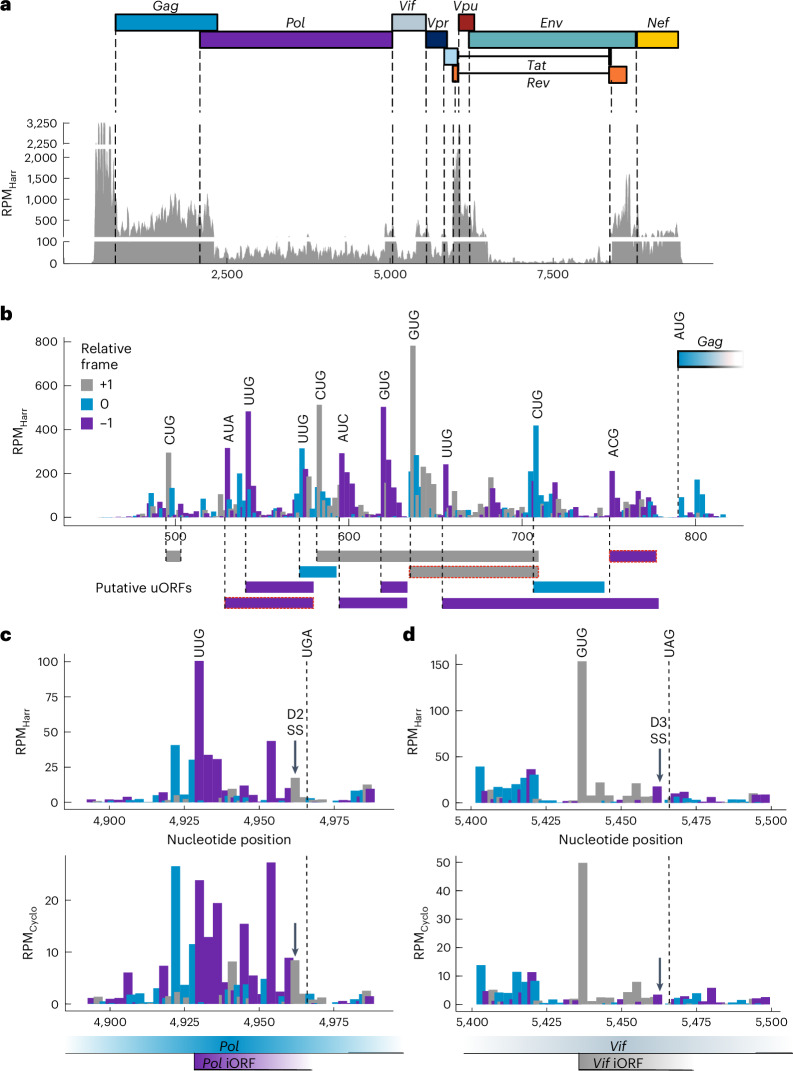
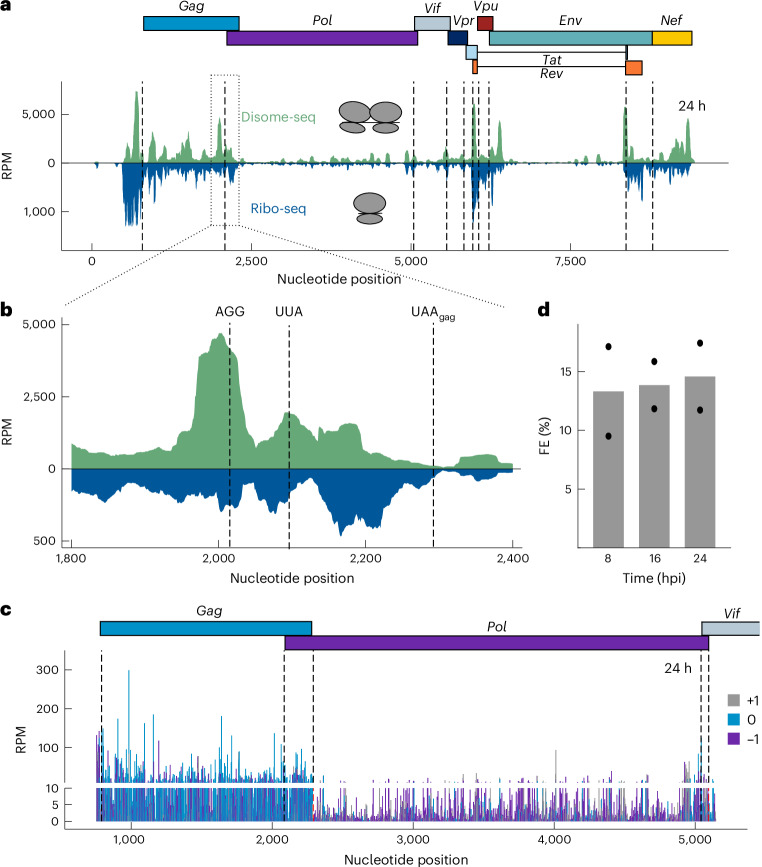
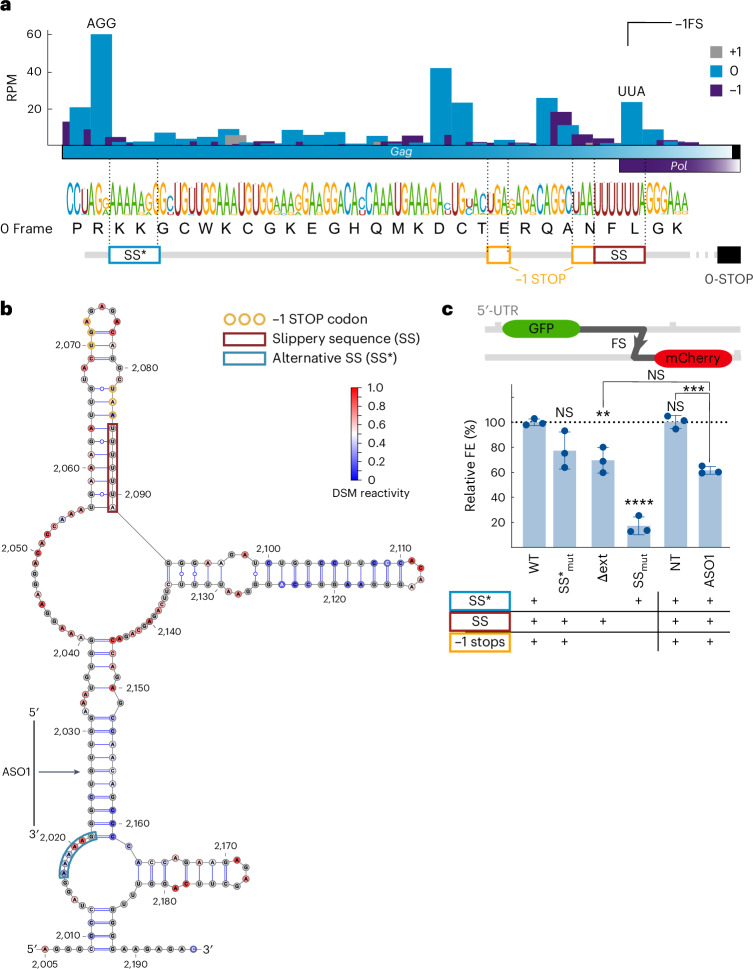
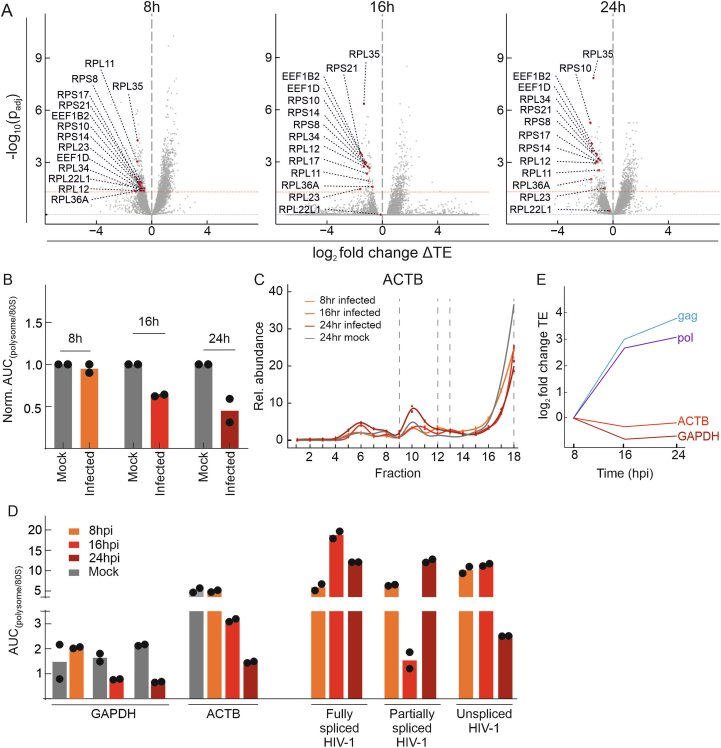
Human immunodeficiency virus-1 (HIV-1) uses a number of strategies to modulate viral and host gene expression during its life cycle. To characterize the transcriptional and translational landscape of HIV-1 infected cells, we used a combination of ribosome profiling, disome sequencing and RNA sequencing. We show that HIV-1 messenger RNAs are efficiently translated at all stages of infection, despite evidence for a substantial decrease in the translational efficiency of host genes that are implicated in host cell translation. Our data identify upstream open reading frames in the HIV-1 5′-untranslated region as well as internal open reading frames in the Vif and Pol coding domains. We also observed ribosomal collisions in Gag-Pol upstream of the ribosome frameshift site that we attributed to an RNA structural fold using RNA structural probing and functional analysis. Antisense oligonucleotides designed to alter the base of this structure decreased frameshift efficiency. Overall, our data highlight the complexity of HIV-1 gene regulation and provide a key resource for decoding of host–pathogen interactions upon HIV-1 infection. Furthermore, we provide evidence for a RNA structural fold including the frameshift site that could serve as a target for antiviral therapy.
Overview
The claims and statistics of this paper haven’t been checked yet.
Free: it reads the open-access text and checks the first 5 claims that cite a source we can check. Create a free account to check every claim.
Integrity signals
Registry
Cites
Statistics
Figures
Verification
Claims the paper makes
The claims and statistics of this paper haven’t been checked yet.
Free: it reads the open-access text and checks the first 5 claims that cite a source we can check. Create a free account to check every claim.
Claims other papers make about this one
Each is checked against this paper’s own text: does it say what the citing paper says it does?
The cited source says what the claim attributes to it.
In the citing paper
“Approximately 5–10% of ribosomes initiating translation on the full-length vRNA shift into the −1 reading frame via a programed−1 ribosomal frameshift, resulting in Gag-Pol rather than Gag (23).”
From Research progress on HIV-1 structural proteins and antiviral therapies (2026) · cites this paper as [23]
Self-check
Percentages, sums and reported differences re-computed from the paper’s own numbers.
The self-check needs the paper’s full text.
Citations
Cites
featureCounts: an efficient general purpose program for assigning sequence reads to genomic features
Liao, Y., Smyth, G. K., & Shi, W. (2014) · Bioinformatics · doi:10.1093/bioinformatics/btt656 · Cited by 27,219 · cited 1×
“For analysis of differential gene expression, the mapped reads were first assigned to annotated genomic features using the featureCounts tool 79 .”
The Proceedings of the National Academy of Sciences
Richards, J. W. (1915) · Science · doi:10.1126/science.42.1074.161 · Cited by 13,983
The PRIDE database resources in 2022: a hub for mass spectrometry-based proteomics evidences
Perez-Riverol, Y., Bai, J., Bandla, C., García-Seisdedos, D., Hewapathirana, S., Kamatchinathan, S., Kundu, D. J., Prakash, A., Frericks-Zipper, A., Eisenacher, M., et al. (2022) · Nucleic Acids Research · doi:10.1093/nar/gkab1038 · Cited by 6,125
Genome-Wide Analysis in Vivo of Translation with Nucleotide Resolution Using Ribosome Profiling
Ingolia, N. T., Ghaemmaghami, S., Newman, J. R. S., & Weissman, J. S. (2009) · Science · doi:10.1126/science.1168978 · Cited by 3,853 · cited 1×
“1b) 33–35 .”
Coping with stress: eIF2 kinases and translational control
Wek, R. C., Jiang, H.-Y., & Anthony, T. G. (2006) · Biochemical Society Transactions · doi:10.1042/bst0340007 · Cited by 1,289 · cited 1×
“Interestingly, at 8 hpi, ATF4 , whose encoded protein is a key regulator of cellular adaptive stress response and HIV-1 regulation, was translationally downregulated, although its TE normalized at later stages 46,47 .”
Ingolia, N. T., Brar, G. A., Rouskin, S., McGeachy, A. M., & Weissman, J. S. (2012) · Nature Protocols · doi:10.1038/nprot.2012.086 · Cited by 1,259
Translational control by 5′-untranslated regions of eukaryotic mRNAs
Hinnebusch, A. G., Ivanov, I. P., & Sonenberg, N. (2016) · Science · doi:10.1126/science.aad9868 · Cited by 1,079 · cited 1×
“Such uORFs are extensively used by other viruses as well as eukaryotes 65–67 .”
Characterization of ribosomal frameshifting in HIV-1 gag-pol expression
Jacks, T., Power, M. D., Masiarz, F. R., Luciw, P. A., Barr, P. J., & Varmus, H. E. (1988) · Nature · doi:10.1038/331280a0 · Cited by 966 · cited 3×
“Approximately, 12–17% of the Gag-Pol coverage was observed at Pol at both 16 and 24 hpi, slightly higher than reported in previous in vitro studies 23 .”
Calvo, S. E., Pagliarini, D. J., & Mootha, V. K. (2009) · Proceedings of the National Academy of Sciences · doi:10.1073/pnas.0810916106 · Cited by 914
RNA granules: post-transcriptional and epigenetic modulators of gene expression
Anderson, P., & Kedersha, N. (2009) · Nature Reviews Molecular Cell Biology · doi:10.1038/nrm2694 · Cited by 863
Cited by
Andersen, M. H. (2026) · Signal Transduction and Targeted Therapy · doi:10.1038/s41392-026-02710-8 · Cited by 20
Direct translation of incoming retroviral genomes
Köppke, J., Keller, L.-E., Stuck, M., Arnow, N. D., Bannert, N., Doellinger, J., & Cingöz, O. (2024) · Nature Communications · doi:10.1038/s41467-023-44501-7 · Cited by 10
“24 In support of our findings, a ribosome profiling study of HIV-1 infected cells detected ribosome-244 protected RNA fragments indicative of active translation in the gag coding region already within one hour of infection.”
ResultRespiratory syncytial virus (RSV) enhances translation of virus-resembling AU-rich host transcripts
Kerkhofs, K., Guydosh, N. R., & Bayfield, M. A. (2025) · Virology Journal · doi:10.1186/s12985-025-02838-z · Cited by 7
Boris‐Lawrie, K., Liebau, J., Hayir, A., & Heng, X. (2025) · Viruses · doi:10.3390/v17030372 · Cited by 5
“With the development of ribosome pro fi ling of HIV mRNAs [119–121], the relationship With the development of ribosome profiling of HIV mRNAs [119–121], the relationship between the dual translation mechanisms licensed by TMG-cap or m7G-cap can now be investigated with great precision. between the…”
Pereira-Montecinos, C., Pittet-Díaz, I., Morales-Vejar, I., Millán-Hidalgo, C., Rojas-Celis, V., Vallejos‐Vidal, E., Reyes‐López, F. E., Fuenzalida, L., Reyes-Cerpa, S., & Toro‐Ascuy, D. (2025) · International Journal of Molecular Sciences · doi:10.3390/ijms26104745 · Cited by 5
“These results allow us to conclude that, on both days, HIV-1 is in a stage of active replication in microglia, similar to results observed in other cell types, such as T cells and macrophages [5,60,61].”
Phosphorylation of Shiftless by casein kinase 1 δ/ε is required for its antiviral activity
Wang, Y., Fu, S., Wang, X., & Gao, G. (2025) · Journal of Virology · doi:10.1128/jvi.01864-25 · Cited by 3
How tailored Ribo-seq methods probe unique translation events
Marks, J., & Meydan, S. (2025) · RNA · doi:10.1261/rna.080654.125 · Cited by 3
Research progress on HIV-1 structural proteins and antiviral therapies
Wang, H., Yuan, J., & Wang, H. (2026) · Frontiers in Immunology · doi:10.3389/fimmu.2026.1805597 · Cited by 2
“The Gag precursor (p55) consists of the matrix protein (MA/p17), capsid protein (CA/p24), nucleo-capsid protein (NC/p7), and the p6 domain, each of which performs distinct functions (3) (Figure 1A).”
InfluentialComprehensive Transcriptome Annotation of Thousands of HIV-1 GenomesPreprint
Varabyou, A., Artamonov, M. V., Cheng, S., Bolton, D. L., Salzberg, S. L., & Pertea, M. (2025) · bioRxiv (Cold Spring Harbor Laboratory) · doi:10.1101/2025.09.24.675449 · Cited by 2
De Novo Expressed Vpr Stimulates HIV-1 Replication in T Cells
Enya, B., & Skowroński, J. (2025) · Viruses · doi:10.3390/v17070958 · Cited by 1
“Under physiological conditions, Vpr is translated from a singly spliced, early HIV-1 mRNA shortly after proviral integration [53,54].”
Qiu, Y., Banerjee, P., Grabarkewitz, K., Wysocki, V. H., Rouzina, I. F., Voth, G., & Musier‐Forsyth, K. (2026) · RNA · doi:10.1261/rna.081222.126 · Cited by 1
Chamond, N., Bisschop, G. D., Faria, L., Laoudi, Y., Martynov, V., & Sargueil, B. (2025) · Nucleic Acids Research · doi:10.1093/nar/gkaf834
“First, efficient dimer destabilization to the benefit of monomers would favor viral translation [ 83 ].”
Zhao, J., Li, T., Huang, H., Servellita, V., Sotomayor-González, A., Yakovleva, O., Wang, X., Ragupathy, V., Biswas, S., Barilko, P., et al. (2026) · Journal of Clinical Virology · doi:10.1016/j.jcv.2026.105941
Transcriptomic Profiling Identifies TALAM1 and LINC00702 as HIV-1-Responsive lncRNAs in Microglia
Rojas-Celis, V., Millán-Hidalgo, C., Mamede, I., Morales-Vejar, I., Pittet-Díaz, I., Fernández-Rodríguez, D., Amaral, P., Nakaya, H. I., Reyes-Cerpa, S., Valiente‐Echeverría, F., et al. (2026) · International Journal of Molecular Sciences · doi:10.3390/ijms27073271
“Transcriptomic analyses were performed at 24 h post infection, a time point widely used in HIV-1 models in which viral integration and productive infection have already been established [36,97,98].”
Moris, A., Ricci, E. P., & Namy, O. (2026) · médecine/sciences · doi:10.1051/medsci/2026051
Host mature tRNAome as a decoding switch regulates antiviral and proviral responses
Ou, X., Lin, X., Chen, J., Yang, W., Sun, D., Chen, S. Y., Liu, M., Zhu, D., Wang, M., Jia, R., et al. (2026) · Nature Communications · doi:10.1038/s41467-026-73434-0
“Primer sequences targeting human and duck ISGs are provided in Supplementary Tables 5 and 6.”
InfluentialFox, J. A. (2026) · Carolina Digital Repository (University of North Carolina at Chapel Hill) · doi:10.17615/a6as-7c03
Changes in the translational landscape during red clover necrotic mosaic virus infection
Kanodia, P., Lozier, Z. R., Lastovka, F., Walker, D. C., Liu, P., Chung, B., & Miller, W. A. (2026) · Journal of Virology · doi:10.1128/jvi.00834-26
Mind the gap between RNA and protein levels: A general phenomenon with implications for virology
Bertzbach, L. D., Kapischke, T., Kaderali, L., Pfaender, S., & Ip, W.-H. (2026) · PLoS Pathogens · doi:10.1371/journal.ppat.1014470
“In HIV-1 infection, global translational profiling shows that extensive RNA diversity generated through splicing and processing is subject to strong post-transcriptional filtering, such that only a sub-set of transcripts is productively translated into protein [12].”
Javaran, V. J. (2025) · Knowledge UdeS (Institutional Deposit of the University of Sherbrooke)
Structure-guided antisense oligonucleotides selectively modulate frameshifting of a human genePreprint
Kostov, O., Swanton, M. M., Waldon, K., Matthews, A. M., Ciba, M., Danielsen, M. B., Schäfer, B., Ganguly, S., Ebmeier, C. C., Caruthers, M. H., et al. (2026) · bioRxiv (Cold Spring Harbor Laboratory) · doi:10.64898/2026.09.03.748613
“Although antisense-mediated modulation of ribosomal frameshifting has been demonstrated in viral and reporter systems (Kibe et al. 2025; Zhang et al. 2021; Kelly et al. 2021; Howard et al. 2004; Henderson et al. 2006), the selective suppression of endogenous frameshifting in a mammalian gene…”
Hancks, D. C., & Baker, S. F. (2026) · Journal of Virology · doi:10.1128/jvi.01746-25
Hughes, I. A., & Gummuluru, S. (2026) · mBio · doi:10.1128/mbio.03340-25
Al, K. B. D. H. (2026) · International Journal of Science and Research Archive · doi:10.30574/ijsra.2026.21.1.1912
Metadata
- Authors
- Kibe, A., Buck, S., Gribling-Burrer, A.-S., Gilmer, O., Bohn, P., Koch, T., Mireisz, C. N.-M., Schlosser, A., Erhard, F., Smyth, R. P., & Caliskan, N.
- Affiliations
- Helmholtz Centre for Infection Research (DE)
- Centre National de la Recherche Scientifique (FR)
- University of Würzburg (DE)
- University of Regensburg (DE)
- Helmholtz Institute for RNA-based Infection Research (DE)
- ORCID
- Venue
- Nature Structural & Molecular Biology
- Published
- 2025-01-15
- Volume
- 32
- Issue
- 5
- Pages
- 841-852
- ISSN
- 1545-9985 (ISSN-L)
- 1545-9993
- PMC
- PMC12086091
- OpenAlex
- W4406401018
- Semantic Scholar
- fe7412321b5bf289e1088bf38771ad1ae8698bd3
- Cited by
- 19
- References
- 116
- Citations by year
- 2026: 10 · 2025: 8
- FWCI
- 5.41
- Type
- journal article
- Language
- en
- Open access
- hybrid
- doi.org
- Licence
- cc-by
- creativecommons.org/licenses/by/4.0 (tdm)
- creativecommons.org/licenses/by/4.0 (vor)
- Locations
- Nature Structural & Molecular Biology (publishedVersion, cc-by)
- Research Square (acceptedVersion, cc-by)
- Europe PMC (PubMed Central) (publishedVersion, cc-by)
- PubMed Central (publishedVersion, cc-by)
- PubMed (publishedVersion)
- HAL (submittedVersion, cc-by)
- univOAK (4 institutions : Université de Strasbourg, Université de Haute Alsace, INSA Strasbourg, Bibliothèque Nationale et Universitaire de Strasbourg) (submittedVersion, cc-by)
- Funders
- National Institutes of Health
- National Institute of Allergy and Infectious Diseases (U54AI170660)
- H2020 European Research Council (948636)
- Topics
- Life Sciences › Biochemistry, Genetics and Molecular Biology › Molecular Biology › RNA and protein synthesis mechanisms
- Life Sciences › Immunology and Microbiology › Virology › HIV Research and Treatment
- Life Sciences › Biochemistry, Genetics and Molecular Biology › Molecular Biology › RNA Research and Splicing
- Keywords
- HIV-1, viral protein synthesis, ribosome profiling, upstream open reading frames, ribosomal frameshifting, Gag-Pol, RNA secondary structure, antisense oligonucleotides, host-pathogen interaction, gene expression regulation, antiviral drug targets
- MeSH terms
- Humans, Ribosomes, RNA, Messenger, RNA, Viral, Protein Biosynthesis, HIV-1, HIV Infections, Gene Expression Regulation, Viral, Open Reading Frames, Frameshifting, Ribosomal, 5' Untranslated Regions, vif Gene Products, Human Immunodeficiency Virus, Host-Pathogen Interactions
About these checks
Registry, retraction, Cites and statistics results are computed, not judged, with one exception: a printed reference that no index lists is read once by a model before it counts as a citation error. Claims are extracted by a model and kept only when their quote appears verbatim in the text; each cited source is then checked, with a model’s help, for whether it says what the claim relies on. Those verdicts can be wrong — read the claim’s quote and the cited source before relying on one.
Statistics and arithmetic are recomputed, not judged.
Confidence bands are shown only for fields calibrated on our annotated test set. None is calibrated yet, so no band is shown.
What counts as a claim ›How we measure confidence ›How we check this ›
Are you an author, or do you see a problem with this page? Request a review
Data sources
Bibliographic data: Semantic Scholar, OpenAlex, Crossref.
Contains information from the Semantic Scholar Academic Graph Datasets, made available under the ODC Attribution License (ODC-BY 1.0).
Semantic Scholar’s data is described in: Kinney, R., et al. (2023). The Semantic Scholar Open Data Platform. arXiv:2301.10140.
