

The translational landscape of HIV-1 infected cells reveals key gene regulatory principles
Open accessPublished version of a preprint
The DOI matches its Crossref record; 117 of the 117 references it cites were found in a registry or an index.
Abstract
Human immunodeficiency virus-1 (HIV-1) uses a number of strategies to modulate viral and host gene expression during its life cycle. To characterize the transcriptional and translational landscape of HIV-1 infected cells, we used a combination of ribosome profiling, disome sequencing and RNA sequencing. We show that HIV-1 messenger RNAs are efficiently translated at all stages of infection, despite evidence for a substantial decrease in the translational efficiency of host genes that are implicated in host cell translation. Our data identify upstream open reading frames in the HIV-1 5′-untranslated region as well as internal open reading frames in the Vif and Pol coding domains. We also observed ribosomal collisions in Gag-Pol upstream of the ribosome frameshift site that we attributed to an RNA structural fold using RNA structural probing and functional analysis. Antisense oligonucleotides designed to alter the base of this structure decreased frameshift efficiency. Overall, our data highlight the complexity of HIV-1 gene regulation and provide a key resource for decoding of host–pathogen interactions upon HIV-1 infection. Furthermore, we provide evidence for a RNA structural fold including the frameshift site that could serve as a target for antiviral therapy.
Overview
The claims and statistics of this paper haven’t been checked yet.
Free: it reads the open-access text and checks the first 5 claims that cite a source we can check. Create a free account to check every claim.
Integrity signals
Registry
Cites
Statistics
Figures
Verification
Claims the paper makes
The claims and statistics of this paper haven’t been checked yet.
Free: it reads the open-access text and checks the first 5 claims that cite a source we can check. Create a free account to check every claim.
Claims other papers make about this one
Each is checked against this paper’s own text: does it say what the citing paper says it does?
The cited source says what the claim attributes to it.
In the citing paper
“Approximately 5–10% of ribosomes initiating translation on the full-length vRNA shift into the −1 reading frame via a programed−1 ribosomal frameshift, resulting in Gag-Pol rather than Gag (23).”
From Research progress on HIV-1 structural proteins and antiviral therapies (2026) · cites this paper as [23]
Self-check
Percentages, sums and reported differences re-computed from the paper’s own numbers.
The self-check needs the paper’s full text.
Citations
Cites
featureCounts: an efficient general purpose program for assigning sequence reads to genomic features
Liao, Y., Smyth, G. K., & Shi, W. (2014) · Bioinformatics · doi:10.1093/bioinformatics/btt656 · Cited by 27,219 · cited 1×
“For analysis of differential gene expression, the mapped reads were first assigned to annotated genomic features using the featureCounts tool 79 .”
The Proceedings of the National Academy of Sciences
Richards, J. W. (1915) · Science · doi:10.1126/science.42.1074.161 · Cited by 13,983
The PRIDE database resources in 2022: a hub for mass spectrometry-based proteomics evidences
Perez-Riverol, Y., Bai, J., Bandla, C., García-Seisdedos, D., Hewapathirana, S., Kamatchinathan, S., Kundu, D. J., Prakash, A., Frericks-Zipper, A., Eisenacher, M., et al. (2022) · Nucleic Acids Research · doi:10.1093/nar/gkab1038 · Cited by 6,125
Genome-Wide Analysis in Vivo of Translation with Nucleotide Resolution Using Ribosome Profiling
Ingolia, N. T., Ghaemmaghami, S., Newman, J. R. S., & Weissman, J. S. (2009) · Science · doi:10.1126/science.1168978 · Cited by 3,853 · cited 1×
“1b) 33–35 .”
Coping with stress: eIF2 kinases and translational control
Wek, R. C., Jiang, H.-Y., & Anthony, T. G. (2006) · Biochemical Society Transactions · doi:10.1042/bst0340007 · Cited by 1,289 · cited 1×
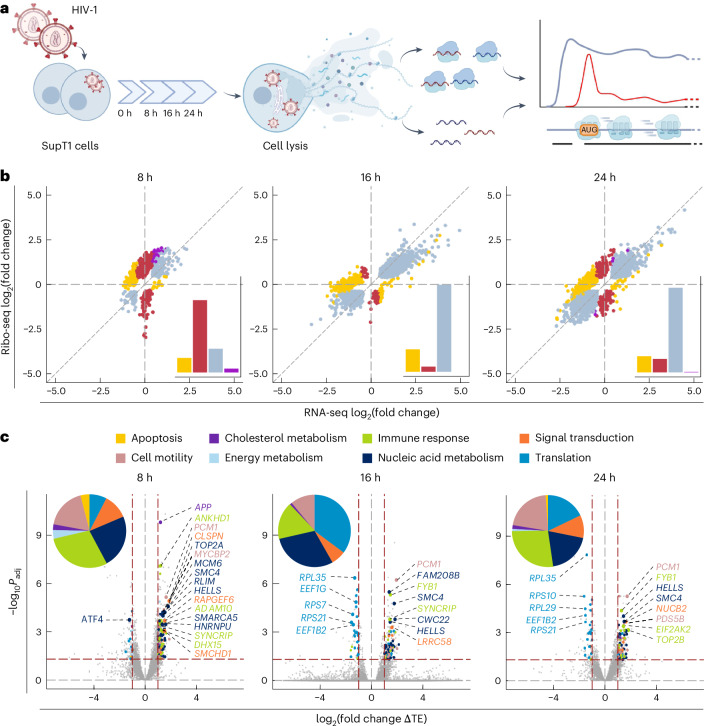
“Interestingly, at 8 hpi, ATF4 , whose encoded protein is a key regulator of cellular adaptive stress response and HIV-1 regulation, was translationally downregulated, although its TE normalized at later stages 46,47 .”
Ingolia, N. T., Brar, G. A., Rouskin, S., McGeachy, A. M., & Weissman, J. S. (2012) · Nature Protocols · doi:10.1038/nprot.2012.086 · Cited by 1,259
Translational control by 5′-untranslated regions of eukaryotic mRNAs
Hinnebusch, A. G., Ivanov, I. P., & Sonenberg, N. (2016) · Science · doi:10.1126/science.aad9868 · Cited by 1,079 · cited 1×
“Such uORFs are extensively used by other viruses as well as eukaryotes 65–67 .”
Characterization of ribosomal frameshifting in HIV-1 gag-pol expression
Jacks, T., Power, M. D., Masiarz, F. R., Luciw, P. A., Barr, P. J., & Varmus, H. E. (1988) · Nature · doi:10.1038/331280a0 · Cited by 966 · cited 3×
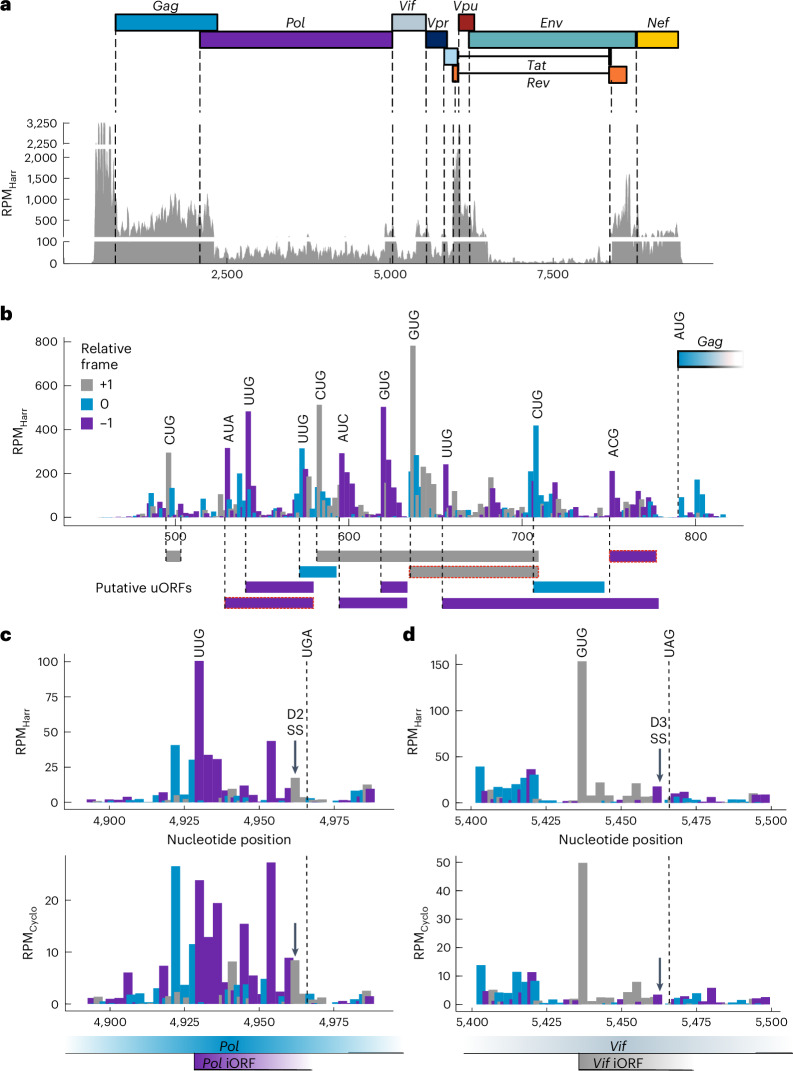
“Approximately, 12–17% of the Gag-Pol coverage was observed at Pol at both 16 and 24 hpi, slightly higher than reported in previous in vitro studies 23 .”
Calvo, S. E., Pagliarini, D. J., & Mootha, V. K. (2009) · Proceedings of the National Academy of Sciences · doi:10.1073/pnas.0810916106 · Cited by 914
RNA granules: post-transcriptional and epigenetic modulators of gene expression
Anderson, P., & Kedersha, N. (2009) · Nature Reviews Molecular Cell Biology · doi:10.1038/nrm2694 · Cited by 863
Architecture and secondary structure of an entire HIV-1 RNA genome
Watts, J. M., Dang, K. K., Gorelick, R. J., Leonard, C. W., Bess Jr, J. W., Swanstrom, R., Burch, C. L., & Weeks, K. M. (2009) · Nature · doi:10.1038/nature08237 · Cited by 837 · cited 1×
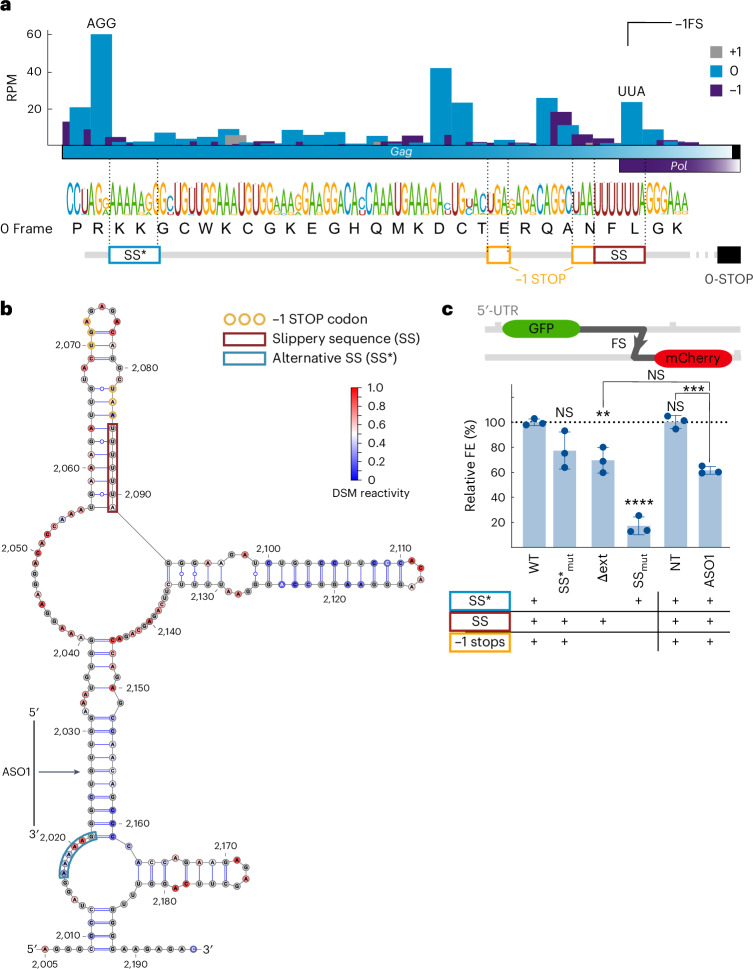
“Past studies using this frameshift element in vitro indicated ribosomal pausing over the P-site UUA codon of the slippery site (UUUUUA), although exactly where the RNA secondary structure begins is still under debate 27,28,52,53 .”
Genome-Scale RNAi Screen for Host Factors Required for HIV Replication
Zhou, H., Xu, M., Huang, Q., Gates, A. T., Zhang, X. D., Castle, J. C., Stec, E., Ferrer, M., Strulovici, B., Hazuda, D. J., et al. (2008) · Cell Host & Microbe · doi:10.1016/j.chom.2008.10.004 · Cited by 789
Design of the linkers which effectively separate domains of a bifunctional fusion protein
Arai, R., Ueda, H., Kitayama, A., Kamiya, N., & Nagamune, T. (2001) · Protein Engineering Design and Selection · doi:10.1093/protein/14.8.529 · Cited by 753 · cited 1×
“EGFP and mCherry were separated by StopGo signals 81 as well as an alpha-helical linker 82 .”
Ribosome Profiling Reveals Pervasive Translation Outside of Annotated Protein-Coding Genes
Ingolia, N. T., Brar, G. A., Stern-Ginossar, N., Harris, M. S., Talhouarne, G. J. S., Jackson, S. E., Wills, M. R., & Weissman, J. S. (2014) · Cell Reports · doi:10.1016/j.celrep.2014.07.045 · Cited by 652 · cited 1×
“Although proteomic detection of such peptides is challenging because of low abundance or instability, their role in immune recognition warrants further study, because all translation products can serve as antigens, even if they do not accumulate in cells 70 .”
Kim, S. Y., Byrn, R., Groopman, J., & Baltimore, D. (1989) · Journal of Virology · doi:10.1128/jvi.63.9.3708-3713.1989 · Cited by 577 · cited 1×
“…to the identified noncanonical iORFs, HIV-1 is already known to use noncanonical translation events such as the −1FS, achieved through the means of a frameshift stimulatory site (FSS) comprising an SS and an RNA secondary structure, spanning nucleotides 2,084–2,130 at the Gag-Pol overlapping gene.”
Transcriptome-wide measurement of translation by ribosome profiling
McGlincy, N. J., & Ingolia, N. T. (2017) · Methods · doi:10.1016/j.ymeth.2017.05.028 · Cited by 542 · cited 1×
“Ribosome profiling samples were prepared according to the protocol outlined by McGlincy and Ingolia 78 , with modifications for suspension cell lines.”
Coping with stress: eIF2 kinases and translational control
Jiang, H.-Y., Wek, R. C., & Anthony, T. G. (2005) · Biochemical Society Transactions · doi:10.1042/bst20060007 · Cited by 517
Transcriptional and Posttranscriptional Regulation of HIV-1 Gene Expression
Karn, J., & Stoltzfus, C. M. (2012) · Cold Spring Harbor Perspectives in Medicine · doi:10.1101/cshperspect.a006916 · Cited by 437 · cited 1×
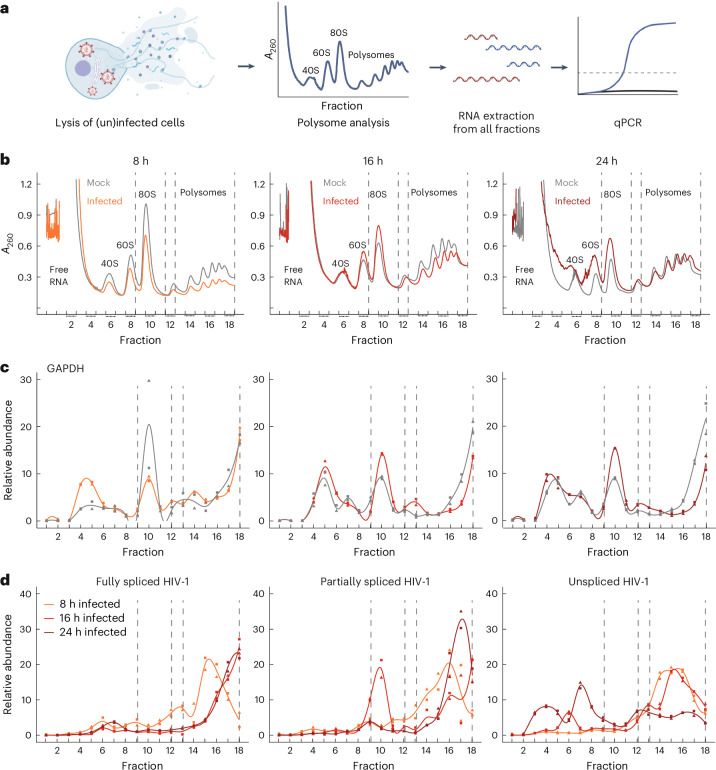
“Translation of unspliced and partially spliced products is temporally regulated through the Rev protein, which binds to the Rev response element structure to facilitate their nuclear export 4,5 .”
Young, S. K., & Wek, R. C. (2016) · Journal of Biological Chemistry · doi:10.1074/jbc.r116.733899 · Cited by 383 · cited 1×
“For instance, they may inhibit translation of the main ORF by restricting the fraction of initiating and/or scanning 40S ribosomal subunits that can reach the canonical start codon 67–69 .”
Paxton, W., Connor, R. I., & Landau, N. R. (1993) · Journal of Virology · doi:10.1128/jvi.67.12.7229-7237.1993 · Cited by 371 · cited 1×
“It has been shown to be essential for incorporating Vpr and Pol into the virions 75–77 .”
Dom34 Rescues Ribosomes in 3′ Untranslated Regions
Guydosh, N. R., & Green, R. (2014) · Cell · doi:10.1016/j.cell.2014.02.006 · Cited by 363 · cited 1×
“However, we see a larger fraction of shorter footprints with a median length of approximately 54–57 nucleotides, which could be attributed to ribosome quality control intermediates 59 .”
Lipid Rafts and HIV Pathogenesis: Host Membrane Cholesterol Is Required for Infection by HIV Type 1
Liao, Z., Cimakasky, L. M., Hampton, R., Nguyen, D. H., & Hildreth, J. E. K. (2001) · AIDS Research and Human Retroviruses · doi:10.1089/088922201300343690 · Cited by 355
Ribosome Profiling: Global Views of Translation
Ingolia, N. T., Hussmann, J. A., & Weissman, J. S. (2019) · Cold Spring Harbor Perspectives in Biology · doi:10.1101/cshperspect.a032698 · Cited by 286 · cited 1×
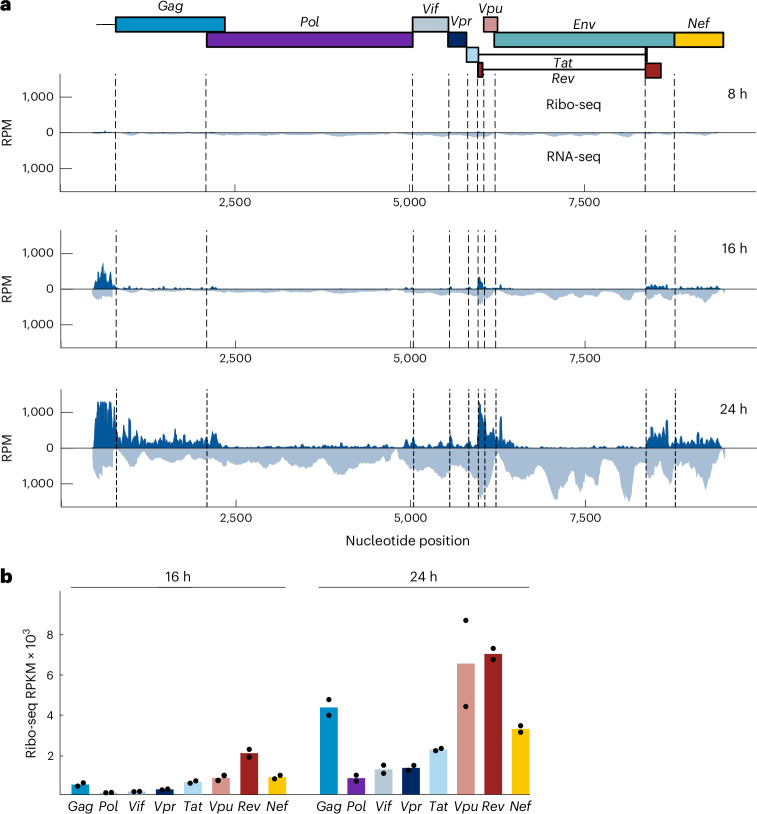
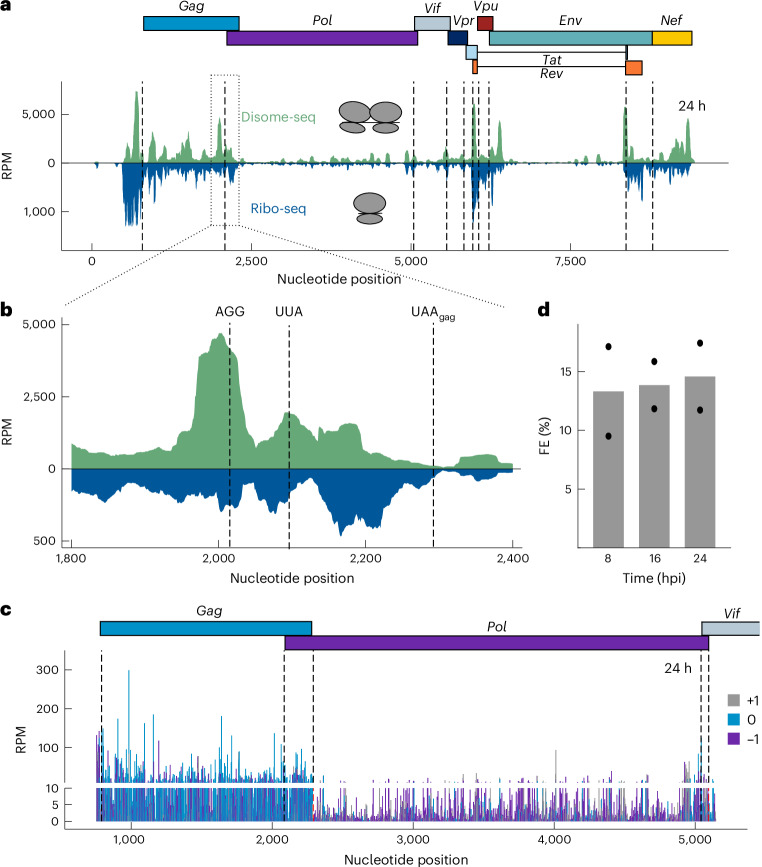
“High ribosome density was observed in the 5′-UTR, likely because of its shared usage among splice isoforms and potential ribosome pausing in the highly structured 5′-UTRs of the HIV-1 transcripts, which were also shown across species in Ribo-seq datasets 50 (Fig.”
Human immunodeficiency virus type 1 viral protein R localization in infected cells and virions
Lu, Y. L., Spearman, P., & Ratner, L. (1993) · Journal of Virology · doi:10.1128/jvi.67.11.6542-6550.1993 · Cited by 278
Molecular and biochemical analyses of human immunodeficiency virus type 1 vpu protein
Strebel, K., Klimkait, T., Maldarelli, F., & Martin, M. A. (1989) · Journal of Virology · doi:10.1128/jvi.63.9.3784-3791.1989 · Cited by 275
RNA granules: The good, the bad and the ugly
Thomas, M. G., Loschi, M., Desbats, M. A., & Boccaccio, G. L. (2011) · Cellular Signalling · doi:10.1016/j.cellsig.2010.08.011 · Cited by 262
Shehu-Xhilaga, M., Crowe, S. M., & Mak, J. (2001) · Journal of Virology · doi:10.1128/jvi.75.4.1834-1841.2001 · Cited by 243 · cited 1×
“These elements ensure the correct expression ratio of Gag and Gag-Pol, critical for viral replication 26 .”
High-Resolution Analysis of Coronavirus Gene Expression by RNA Sequencing and Ribosome Profiling
Irigoyen, N., Firth, A. E., Jones, J. D., Chung, B. Y.-W., Siddell, S. G., & Brierley, I. (2016) · PLOS Pathogens · doi:10.1371/journal.ppat.1005473 · Cited by 212 · cited 2×
“1b) 33–35 .”
InfluentialImproved Ribo-seq enables identification of cryptic translation events
Erhard, F., Halenius, A., Zimmermann, C., L'Hernault, A., Kowalewski, D. J., Weekes, M. P., Stevanovic, S., Zimmer, R., & Dölken, L. (2018) · Nature Methods · doi:10.1038/nmeth.4631 · Cited by 212 · cited 2×
“To determine the reading frame distribution and predict the most likely P-site of every RPF, the probabilistic analysis pipeline (PRICE) was used 36 .”
Self-citationProducer-cell modification of human immunodeficiency virus type 1: Nef is a virion protein
Pandori, M. W., Fitch, N. J., Craig, H. M., Richman, D. D., Spina, C. A., & Guatelli, J. C. (1996) · Journal of Virology · doi:10.1128/jvi.70.7.4283-4290.1996 · Cited by 201
Parkin, N. T., Chamorro, M., & VARMUS, H. E. (1992) · Journal of Virology · doi:10.1128/jvi.66.8.5147-5151.1992 · Cited by 192
Hyrcza, M. D., Kovacs, C., Loutfy, M., Halpenny, R., Heisler, L., Yang, S., Wilkins, O., Ostrowski, M., & Der, S. D. (2007) · Journal of Virology · doi:10.1128/jvi.01552-06 · Cited by 190
Disome and Trisome Profiling Reveal Genome-wide Targets of Ribosome Quality Control
Meydan, S., & Guydosh, N. R. (2020) · Molecular Cell · doi:10.1016/j.molcel.2020.06.010 · Cited by 185 · cited 1×
“6b) 55,58 .”
WELKER, R., KOTTLER, H., KALBITZER, H. R., & KRÄUSSLICH, H.-G. (1996) · Virology · doi:10.1006/viro.1996.0240 · Cited by 180 · cited 1×
“Cholesterol metabolism, critical for viral entry, is likely stimulated by the viral Nef protein 38–42 .”
Kontos, H., Napthine, S., & Brierley, I. (2001) · Molecular and Cellular Biology · doi:10.1128/mcb.21.24.8657-8670.2001 · Cited by 159
Function and Evolution of Upstream ORFs in Eukaryotes
Zhang, H., Wang, Y., & Lu, J. (2019) · Trends in Biochemical Sciences · doi:10.1016/j.tibs.2019.03.002 · Cited by 158 · cited 2×
“Such uORFs are extensively used by other viruses as well as eukaryotes 65–67 .”
HIV-1 protease cleaves eukaryotic initiation factor 4G and inhibits cap-dependent translation
Ventoso, I., Blanco, R., Perales, C., & Carrasco, L. (2001) · Proceedings of the National Academy of Sciences · doi:10.1073/pnas.231343498 · Cited by 156 · cited 1×
“Internal ribosome entry sites (IRESs) in the 5′-untranslated region (UTR) of HIV-1 RNAs as well as the coding region of Gag have also been proposed 11–19 , with 5′-UTR IRES activity reportedly increasing under cellular stress and later stages of infection 20,21 .”
Chothani, S., Adami, E., Ouyang, J. F., Viswanathan, S., Hubner, N., Cook, S. A., Schafer, S., & Rackham, O. J. L. (2019) · Current Protocols in Molecular Biology · doi:10.1002/cpmb.108 · Cited by 153 · cited 2×
“Next, the deltaTE pipeline was utilized to perform statistical differential expression analysis on the featureCounts matrices between every infection time point to the mock sample (8 h uninfected SupT1 cells) 37 .”
Dulude, D., Baril, M., & Brakier‐Gingras, L. (2002) · Nucleic Acids Research · doi:10.1093/nar/gkf657 · Cited by 147 · cited 1×
“Past studies using this frameshift element in vitro indicated ribosomal pausing over the P-site UUA codon of the slippery site (UUUUUA), although exactly where the RNA secondary structure begins is still under debate 27,28,52,53 .”
HIV entry in macrophages is dependent on intact lipid rafts
Carter, G. C., Bernstone, L., Sangani, D., Bee, J. W., Harder, T., & James, W. (2009) · Virology · doi:10.1016/j.virol.2008.12.031 · Cited by 145 · cited 1×
“Cholesterol metabolism, critical for viral entry, is likely stimulated by the viral Nef protein 38–42 .”
Ocwieja, K. E., Sherrill-Mix, S., Mukherjee, R., Custers-Allen, R., David, P., Brown, M., Wang, S., Link, D. R., Olson, J., Travers, K., et al. (2012) · Nucleic Acids Research · doi:10.1093/nar/gks753 · Cited by 144 · cited 2×
“Although individual aspects of HIV-1 gene expression—such as alternative splicing, noncanonical initiation and programmed frameshifting— have been studied extensively, the global translational landscape of host and viral mRNAs during infection remains poorly understood 3,27–32 .”
Translational control of retroviruses
Balvay, L., Lastra, M. L., Sargueil, B., Darlix, J.-L., & Ohlmann, T. (2007) · Nature Reviews Microbiology · doi:10.1038/nrmicro1599 · Cited by 142 · cited 1×
“HIV-1 HIV-1 mRNAs are capped, polyadenylated and rely on canonical cap-dependent translation, although under certain conditions, noncanonical mechanisms are also used 6–8 .”
Lavallée, C., Yao, X., Ladha, A., Göttlinger, H. G., Haseltine, W. A., & Cohen, É. A. (1994) · Journal of Virology · doi:10.1128/jvi.68.3.1926-1934.1994 · Cited by 132 · cited 1×
“It has been shown to be essential for incorporating Vpr and Pol into the virions 75–77 .”
Selig, L., Pages, J.-C., Tanchou, V., Prévéral, S., Berlioz-Torrent, C., Liu, L. X., Erdtmann, L., Darlix, J.-L., Benarous, R., & Benichou, S. (1999) · Journal of Virology · doi:10.1128/jvi.73.1.592-600.1999 · Cited by 132
Disome-seq reveals widespread ribosome collisions that promote cotranslational protein folding
Zhao, T., Chen, Y., Li, Y., Wang, J., Chen, S., Gao, N., & Qian, W. (2021) · Genome biology · doi:10.1186/s13059-020-02256-0 · Cited by 132 · cited 2×
“5a) 58 .”
Trimethylguanosine capping selectively promotes expression of Rev-dependent HIV-1 RNAs
Yedavalli, V. S. R. K., & Jeang, K. (2010) · Proceedings of the National Academy of Sciences · doi:10.1073/pnas.1009490107 · Cited by 126
HIV-2 genomic RNA contains a novel type of IRES located downstream of its initiation codon
Herbreteau, C. H., Weill, L., Décimo, D., Prévôt, D., Darlix, J., Sargueil, B., & Ohlmann, T. (2005) · Nature Structural & Molecular Biology · doi:10.1038/nsmb1011 · Cited by 121
In vitro nuclear interactome of the HIV-1 Tat protein
Gautier, V. W., Gu, L., O'Donoghue, N., Pennington, S., Sheehy, N., & Hall, W. W. (2009) · Retrovirology · doi:10.1186/1742-4690-6-47 · Cited by 110 · cited 1×
“Immune response genes, including HELLS and TOP2B , as well as stress-response genes SMC4 and SMCDH1 , where the encoded proteins are Tat inter-actors, showed persistent TE upregulation 45 .”
Mobius Assembly: A versatile Golden-Gate framework towards universal DNA assembly
Andreou, A. I., & Nakayama, N. (2018) · PLOS ONE · doi:10.1371/journal.pone.0189892 · Cited by 109
HIV-1: To Splice or Not to Splice, That Is the Question
Swanstrom, R., & Emery, A. (2021) · Viruses · doi:10.3390/v13020181 · Cited by 102 · cited 1×
“Translation of unspliced and partially spliced products is temporally regulated through the Rev protein, which binds to the Rev response element structure to facilitate their nuclear export 4,5 .”
Mouzakis, K. D., Lang, A. L., Meulen, K. A. V., Easterday, P. D., & Butcher, S. E. (2012) · Nucleic Acids Research · doi:10.1093/nar/gks1254 · Cited by 100 · cited 1×
“Past studies using this frameshift element in vitro indicated ribosomal pausing over the P-site UUA codon of the slippery site (UUUUUA), although exactly where the RNA secondary structure begins is still under debate 27,28,52,53 .”
Gendron, K., Ferbeyre, G., Heveker, N., & Brakier‐Gingras, L. (2010) · Nucleic Acids Research · doi:10.1093/nar/gkq885 · Cited by 96 · cited 2×
“Internal ribosome entry sites (IRESs) in the 5′-untranslated region (UTR) of HIV-1 RNAs as well as the coding region of Gag have also been proposed 11–19 , with 5′-UTR IRES activity reportedly increasing under cellular stress and later stages of infection 20,21 .”
Zimmer, M. M., Kibe, A., Rand, U., Pekarek, L., Ye, L., Buck, S., Smyth, R. P., Cicin-Sain, L., & Caliskan, N. (2021) · Nature Communications · doi:10.1038/s41467-021-27431-0 · Cited by 95 · cited 1×
“To assess the functional relevance of extended RNA fold, we used our frameshift reporter assay in HEK293 cells 62 .”
Self-citationLocker, N., Chamond, N., & Sargueil, B. (2011) · Nucleic Acids Research · doi:10.1093/nar/gkq1118 · Cited by 92 · cited 1×
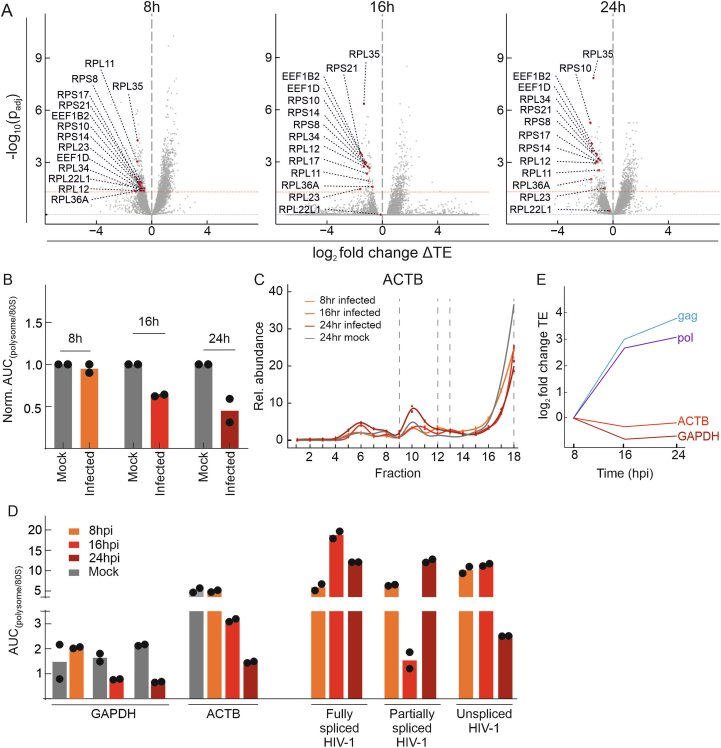
“…study is that translation of specific mRNAs encoding for ribosomal proteins, including RPS17 , RPS21 , RPS14 , RPS8 , RPL34 and RPL11 , was consistently downregulated, with RPL13a —encoding for a ribosomal protein implicated in antiviral responses—showed reduced translation at 16 and 24 hpi 63 .”
Avoidance of reporter assay distortions from fused dual reporters
Loughran, G., Howard, M. T., Firth, A. E., & Atkins, J. F. (2017) · RNA · doi:10.1261/rna.061051.117 · Cited by 92
CDK-regulated dimerization of M18BP1 on a Mis18 hexamer is necessary for CENP-A loading
Pan, D., Klare, K., Petrovic, A., Take, A., Walstein, K., Singh, P., Rondelet, A., Bird, A. W., & Musacchio, A. (2017) · eLife · doi:10.7554/elife.23352 · Cited by 88
A cellular handbook for collided ribosomes: Surveillance pathways and collision types
Meydan, S., & Guydosh, N. R. (2021) · Current Genetics · doi:10.1007/s00294-020-01111-w · Cited by 87 · cited 1×
“First, the pause may be caused by ribosome collisions, which can trigger ribosome-mediated Article https://doi.org/10.1038/s41594-024-01468-3 quality control mechanisms leading to ribosomal drop-off and potential release of the nascent peptide 74 .”
InfluentialHIV-1 Replication and the Cellular Eukaryotic Translation Apparatus
Guerrero, S. X., Batisse, J., Libre, C., Bernacchi, S., Marquet, R., & Paillart, J. (2015) · Viruses · doi:10.3390/v7010199 · Cited by 86 · cited 1×
“HIV-1 HIV-1 mRNAs are capped, polyadenylated and rely on canonical cap-dependent translation, although under certain conditions, noncanonical mechanisms are also used 6–8 .”
Carbon, S., & Mungall, C. (2018) · Figshare · doi:10.5281/zenodo.1205166 · Cited by 84
Rubio, A., Ghosh, S., Mülleder, M., Ralser, M., & Mata, J. (2020) · Nucleic Acids Research · doi:10.1093/nar/gkaa1180 · Cited by 81
The frameshift signal of HIV-1 involves a potential intramolecular triplex RNA structure
Dinman, J. D., Richter, S. N., Plant, E. P., Taylor, R. C., Hammell, A. B., & Rana, T. M. (2002) · Proceedings of the National Academy of Sciences · doi:10.1073/pnas.082102199 · Cited by 79
Yang, Q., Yu, C., Zhao, F., Dang, Y., Wu, C., Xie, P., Sachs, M. S., & Liu, Y. (2019) · Nucleic Acids Research · doi:10.1093/nar/gkz710 · Cited by 77
Chaudhuri, S., Vyas, K., Kapasi, P., Komar, A. A., Dinman, J. D., Barik, S., & Mazumder, B. (2007) · RNA · doi:10.1261/rna.694007 · Cited by 76
Protocol for Disome Profiling to Survey Ribosome Collision in Humans and Zebrafish
Mito, M., Mishima, Y., & Iwasaki, S. (2020) · STAR Protocols · doi:10.1016/j.xpro.2020.100168 · Cited by 75
Solution structure of the HIV-1 frameshift inducing stem-loop RNA
Staple, D. W., & Butcher, S. E. (2003) · Nucleic Acids Research · doi:10.1093/nar/gkg654 · Cited by 74 · cited 1×
“−1FS occurs with 5–10% efficiency and relies on two conserved elements: a slippery sequence ((SS) UUUUUUA) and a downstream RNA structure, generally accepted to be a stem loop 23–25 .”
Plank, T. M., Whitehurst, J., & Kieft, J. S. (2013) · Nucleic Acids Research · doi:10.1093/nar/gkt358 · Cited by 74
Quang, N. N., Goudey, S., Ségéral, E., Mohammad, A., Lemoine, S., Blugeon, C., Versapuech, M., Paillart, J., Berlioz‐Torrent, C., Emiliani, S., et al. (2020) · Retrovirology · doi:10.1186/s12977-020-00533-1 · Cited by 74 · cited 4×
“Early infection down-regulated apoptotic and energy metabolism pathways, consistent with Nef-mediated prevention of apoptosis 43 , whereas later stages showed suppression of translation-related genes, including those involved in ribosomal RNA processing and ribosome assembly.”
InfluentialLentiviral RNAs can use different mechanisms for translation initiation
Ricci, E. P., Soto‐Rifo, R., Herbreteau, C. H., Décimo, D., & Ohlmann, T. (2008) · Biochemical Society Transactions · doi:10.1042/bst0360690 · Cited by 73
Streamlined and sensitive mono- and di-ribosome profiling in yeast and human cells
Ferguson, L., Upton, H. E., Pimentel, S. C., Mok, A., Lareau, L. F., Collins, K., & Ingolia, N. T. (2023) · Nature Methods · doi:10.1038/s41592-023-02028-1 · Cited by 69 · cited 2×
“Motivated by previous work highlighting the importance of ribosome collisions for viral frameshifting 54 , we complemented our analysis by Disome-seq on mock and infected samples, by selecting 50–80-nucleotide protected fragments 54–57 .”
Mechanism of HIV-1 Tat RNA translation and its activation by the Tat protein
Charnay, N., Iványi-Nagy, R., Soto‐Rifo, R., Ohlmann, T., López‐Lastra, M., & Darlix, J. (2009) · Retrovirology · doi:10.1186/1742-4690-6-74 · Cited by 68
Virus Escape and Manipulation of Cellular Nonsense-Mediated mRNA Decay
Balistreri, G., Bognanni, C., & Mühlemann, O. (2017) · Viruses · doi:10.3390/v9010024 · Cited by 66
Nano-DMS-MaP allows isoform-specific RNA structure determination
Bohn, P. S., Gribling-Burrer, A.-S., Ambi, U. B., & Smyth, R. P. (2023) · Nature Methods · doi:10.1038/s41592-023-01862-7 · Cited by 63
Self-citationAmorim, R., Costa, S. M., Cavaleiro, N. P., da Silva, E. E., & da Costa, L. J. (2014) · PLoS ONE · doi:10.1371/journal.pone.0088619 · Cited by 59 · cited 1×
“Internal ribosome entry sites (IRESs) in the 5′-untranslated region (UTR) of HIV-1 RNAs as well as the coding region of Gag have also been proposed 11–19 , with 5′-UTR IRES activity reportedly increasing under cellular stress and later stages of infection 20,21 .”
Krummheuer, J., Johnson, A. T., Hauber, I., Kammler, S., Anderson, J. L., Hauber, J., Purcell, D. F. J., & Schaal, H. (2007) · Virology · doi:10.1016/j.virol.2007.01.022 · Cited by 58 · cited 1×
“Although individual aspects of HIV-1 gene expression—such as alternative splicing, noncanonical initiation and programmed frameshifting— have been studied extensively, the global translational landscape of host and viral mRNAs during infection remains poorly understood 3,27–32 .”
Vallejos, M., Carvajal, F., V, Pino, K., Navarrete, C., Ferrés, M., Huidobro-Toro, J. P., Sargueil, B., & López‐Lastra, M. (2012) · PLoS ONE · doi:10.1371/journal.pone.0035031 · Cited by 55
Yu, X.-F., Dawson, L., Tian, C.-J., Flexner, C., & Dettenhofer, M. (1998) · Journal of Virology · doi:10.1128/jvi.72.4.3412-3417.1998 · Cited by 53
Modulation of HIV-1 Gag/Gag-Pol frameshifting by tRNA abundance
Korniy, N., Goyal, A., Hoffmann, M., Samatova, E., Peske, F., Pöhlmann, S., & Rodnina, M. V. (2019) · Nucleic Acids Research · doi:10.1093/nar/gkz202 · Cited by 53
Selective regulation in ribosome biogenesis and protein production for efficient viral translation
Dong, H.-J., Zhang, R., Kuang, Y., & Wang, X. (2020) · Archives of Microbiology · doi:10.1007/s00203-020-02094-5 · Cited by 51 · cited 2×
“Such regulation suggests heterogeneity in ribosome composition may favor HIV-1 RNA translation over host RNAs, as proposed for other viruses 60,61,64 .”
de Breyne, S., Chamond, N., Décimo, D., Trabaud, M., André, P., Sargueil, B., & Ohlmann, T. (2012) · FEBS Journal · doi:10.1111/j.1742-4658.2012.08689.x · Cited by 49
Identification of the 15FRFG domain in HIV-1 Gag p6 essential for Vpr packaging into the virion
Zhu, H., Jian, H., & Zhao, L. (2004) · Retrovirology · doi:10.1186/1742-4690-1-26 · Cited by 46 · cited 1×
“These peptides, formed by a combination of splicing and alternative reading frames, may modulate canonical protein translation, as reported previously for other viruses 71,72 .”
Visualizing the translation and packaging of HIV-1 full-length RNA
Chen, J., Liu, Y., Wu, B., Nikolaitchik, O. A., Mohan, P. R., Chen, J., Pathak, V. K., & Hu, W.-S. (2020) · Proceedings of the National Academy of Sciences · doi:10.1073/pnas.1917590117 · Cited by 46
Ribosomal control in RNA virus-infected cells
Wang, X., Zhu, J., Zhang, D., & Liu, G. (2022) · Frontiers in Microbiology · doi:10.3389/fmicb.2022.1026887 · Cited by 45 · cited 2×
“The insert was derived from nucleotides 64 to 2,687 (Δ1,870–1,881) of the HIV-1 genome; a 3× FLAG-tag was introduced at the N terminus to facilitate detection.”
AMP-activated Protein Kinase As a Target For Pathogens: Friends Or Foes?
Moreira, D., Silvestre, R., Cordeiro‐da‐Silva, A., Estaquier, J., Foretz, M., & Viollet, B. (2016) · Current Drug Targets · doi:10.2174/1389450116666150416120559 · Cited by 44
Two ribosome recruitment sites direct multiple translation events within HIV1 Gag open reading frame
Deforges, J., de Breyne, S., Ameur, M., Ulryck, N., Chamond, N., Saaidi, A., Ponty, Y., Ohlmann, T., & Sargueil, B. (2017) · Nucleic Acids Research · doi:10.1093/nar/gkx303 · Cited by 44 · cited 1×
“Internal ribosome entry sites (IRESs) in the 5′-untranslated region (UTR) of HIV-1 RNAs as well as the coding region of Gag have also been proposed 11–19 , with 5′-UTR IRES activity reportedly increasing under cellular stress and later stages of infection 20,21 .”
Structure and Dynamics of the HIV-1 Frameshift Element RNA
Low, J., García‐Miranda, P., Mouzakis, K. D., Gorelick, R. J., Butcher, S. E., & Weeks, K. M. (2014) · Biochemistry · doi:10.1021/bi5004926 · Cited by 43 · cited 5×
“We also validated the presence of the alternative structure using RNA structure probing in infected cells, which somewhat resembles the predicted three-helix junction proposed in a previous in vitro study 27 .”
InfluentialZhang, W., Ambikan, A. T., Sperk, M., van Domselaar, R., Nowak, P., Noyan, K., Russom, A., Sönnerborg, A. B., & Neogi, U. (2017) · EBioMedicine · doi:10.1016/j.ebiom.2017.11.031 · Cited by 43
Focus on Translation Initiation of the HIV-1 mRNAs
de Breyne, S., & Ohlmann, T. (2018) · International Journal of Molecular Sciences · doi:10.3390/ijms20010101 · Cited by 43
Interaction of the HIV-1 frameshift signal with the ribosome
Mazauric, M., Seol, Y., Yoshizawa, S., Visscher, K. M., & Fourmy, D. (2009) · Nucleic Acids Research · doi:10.1093/nar/gkp779 · Cited by 41
Retrovirus Translation Initiation: Issues and Hypotheses Derived from Study of HIV-1
Yilmaz, A., Bolinger, C., & Boris-Lawrie, K. (2006) · Current HIV Research · doi:10.2174/157016206776055039 · Cited by 40
Proteo-Transcriptomic Dynamics of Cellular Response to HIV-1 Infection
Golumbeanu, M., Desfarges, S., Hernandez, C., Quadroni, M., Rato, S., Mohammadi, P., Telenti, A., Beerenwinkel, N., & Ciuffi, A. (2019) · Scientific Reports · doi:10.1038/s41598-018-36135-3 · Cited by 40
Fatal attraction: The roles of ribosomal proteins in the viral life cycle
Miller, C. M., Selvam, S., & Fuchs, G. (2020) · Wiley Interdisciplinary Reviews - RNA · doi:10.1002/wrna.1613 · Cited by 40 · cited 2×
“Such regulation suggests heterogeneity in ribosome composition may favor HIV-1 RNA translation over host RNAs, as proposed for other viruses 60,61,64 .”
HIV-1 requires Staufen1 to dissociate stress granules and to produce infectious viral particles
Rao, S., Hassine, S., Monette, A., Amorim, R., DesGroseillers, L., & Mouland, A. J. (2019) · RNA · doi:10.1261/rna.069351.118 · Cited by 39
Ribosomal Protein L13 Participates in Innate Immune Response Induced by Foot-and-Mouth Disease Virus
Guan, J., Han, S., Wu, J., Zhang, Y., Bai, M., Abdullah, S. W., Sun, S., & Guo, H. (2021) · Frontiers in Immunology · doi:10.3389/fimmu.2021.616402 · Cited by 39 · cited 1×
“…study is that translation of specific mRNAs encoding for ribosomal proteins, including RPS17 , RPS21 , RPS14 , RPS8 , RPL34 and RPL11 , was consistently downregulated, with RPL13a —encoding for a ribosomal protein implicated in antiviral responses—showed reduced translation at 16 and 24 hpi 63 .”
HIV-1 hypermethylated guanosine cap licenses specialized translation unaffected by mTOR
Singh, G., Seufzer, B., Song, Z., Zucko, D., Heng, X., & Boris-Lawrie, K. (2022) · Proceedings of the National Academy of Sciences · doi:10.1073/pnas.2105153118 · Cited by 39 · cited 1×
“For example, hypermethylation of the m 7 G cap in unspliced and partially spliced HIV-1 mRNAs may enhance translation of late-stage proteins 9,10 .”
The Translational Landscape of SARS-CoV-2-infected Cells Reveals Suppression of Innate Immune Genes
Puray-Chavez, M., Lee, N., Tenneti, K., Wang, Y., Vuong, H. R., Liu, Y., Horani, A., Huang, T., Gunsten, S. P., Case, J. B., et al. (2022) · mBio · doi:10.1128/mbio.00815-22 · Cited by 37 · cited 1×
“Our distinctive approach with disome analysis revealed notable ribosome stacking at the 3′-end of Gag upstream of the Gag-Pol frameshift site, a departure from other viruses such as SARS-CoV-2 and TMEV in which pausing occurs at the frameshift site itself 54,73 .”
Deep conservation of ribosome stall sites across RNA processing genes
Chyżyńska, K., Labun, K., Jones, C. M., Grellscheid, S. N., & Valen, E. (2021) · NAR Genomics and Bioinformatics · doi:10.1093/nargab/lqab038 · Cited by 36 · cited 1×
“3c) 49 .”
Structural and molecular basis for Cardiovirus 2A protein as a viral gene expression switch
Hill, C. H., Pekarek, L., Napthine, S., Kibe, A., Firth, A. E., Graham, S. C., Caliskan, N., & Brierley, I. (2021) · Nature Communications · doi:10.1038/s41467-021-27400-7 · Cited by 36
Self-citationRibosome Profiling as a Tool to Decipher Viral Complexity
Stern‐Ginossar, N., & Ingolia, N. T. (2015) · Annual Review of Virology · doi:10.1146/annurev-virology-100114-054854 · Cited by 35 · cited 1×
“These peptides, formed by a combination of splicing and alternative reading frames, may modulate canonical protein translation, as reported previously for other viruses 71,72 .”
Pekárek, L., Zimmer, M. M., Gribling-Burrer, A.-S., Buck, S., Smyth, R. P., & Caliskan, N. (2022) · Nucleic Acids Research · doi:10.1093/nar/gkac1184 · Cited by 35
Self-citationConformational dynamics of the frameshift stimulatory structure in HIV-1
Ritchie, D. B., Cappellano, T. R., Tittle, C., Rezajooei, N., Rouleau, L., Sikkema, W. K. A., & Woodside, M. T. (2017) · RNA · doi:10.1261/rna.061655.117 · Cited by 30
Role of Apoptosis in HIV Pathogenesis
Ekabe, C. J., Asaba, C. N., Agyei, E. K., & Kehbila, J. (2022) · Advances in Virology · doi:10.1155/2022/8148119 · Cited by 29 · cited 1×
“Early infection down-regulated apoptotic and energy metabolism pathways, consistent with Nef-mediated prevention of apoptosis 43 , whereas later stages showed suppression of translation-related genes, including those involved in ribosomal RNA processing and ribosome assembly.”
Regulation of human immunodeficiency virus type 1 (HIV-1) mRNA translation
Hidalgo, L., & Swanson, C. M. (2017) · Biochemical Society Transactions · doi:10.1042/bst20160357 · Cited by 25
Napthine, S., Bell, S., Hill, C. H., Brierley, I., & Firth, A. E. (2019) · Nucleic Acids Research · doi:10.1093/nar/gkz503 · Cited by 25
Hill, C. H., Cook, G. M., Napthine, S., Kibe, A., Brown, K., Caliskan, N., Firth, A. E., Graham, S. C., & Brierley, I. (2021) · Nucleic Acids Research · doi:10.1093/nar/gkab969 · Cited by 23 · cited 2×
“Motivated by previous work highlighting the importance of ribosome collisions for viral frameshifting 54 , we complemented our analysis by Disome-seq on mock and infected samples, by selecting 50–80-nucleotide protected fragments 54–57 .”
Self-citationLee, S.-D., Yu, K.-L., Park, S., Jung, Y.-M., Kim, M., & You, J.-C. (2018) · BMB Reports · doi:10.5483/bmbrep.2018.51.8.054 · Cited by 20 · cited 1×
“Interestingly, at 8 hpi, ATF4 , whose encoded protein is a key regulator of cellular adaptive stress response and HIV-1 regulation, was translationally downregulated, although its TE normalized at later stages 46,47 .”
Russo, L. C., Ferruzo, P. Y. M., & Forti, F. L. (2021) · Frontiers in Cell and Developmental Biology · doi:10.3389/fcell.2021.624933 · Cited by 17
Sequestering the 5′‐cap for viral RNA packaging
Ding, P., & Summers, M. F. (2022) · BioEssays · doi:10.1002/bies.202200104 · Cited by 16 · cited 1×
“The increased availability of untranslated unspliced RNA could provide genomes for assembly into viral particles, because active translation of unspliced RNA is proposed to inhibit viral packaging 48 .”
Labaronne, E., Décimo, D., Bertrand, L., Guiguettaz, L., Sohier, T. J. M., Cluet, D., Vivet‐Boudou, V., Valadão, A. L. C., Dahoui, C., François, P., et al. (2025) · Nature Communications · doi:10.1038/s41467-025-56772-3 · Cited by 16
Hawkes, D. J., Jones, K. L., Smyth, R. P., Pereira, C. F., Bittman, R., Jaworowski, A., & Mak, J. (2015) · Virus Research · doi:10.1016/j.virusres.2015.06.023 · Cited by 14
Self-citationHIV-1 sequences isolated from patients promote expression of shorter isoforms of the Gag polyprotein
Daudé, C., Décimo, D., Trabaud, M., André, P., Ohlmann, T., & de Breyne, S. (2016) · Archives of Virology · doi:10.1007/s00705-016-3073-7 · Cited by 12
Carlin, E., Greer, B. D., Duverger, A. E., Wagner, F., Moylan, D. C., Dalecki, A. G., Samuel, S., Perez, M. D., Lowman, K. E., Sabbaj, S., et al. (2021) · PLoS Pathogens · doi:10.1371/journal.ppat.1008748 · Cited by 12
Basu, A., Penumutchu, S. R., Nguyen, K., Mbonye, U. R., Tolbert, B. S., Karn, J., Komar, A. A., & Mazumder, B. (2021) · Journal of Virology · doi:10.1128/jvi.01678-21 · Cited by 12
Isoform-specific RNA structure determination using Nano-DMS-MaP
Gribling-Burrer, A.-S., Bohn, P. S., & Smyth, R. P. (2024) · Nature Protocols · doi:10.1038/s41596-024-00959-3 · Cited by 11
Self-citationPOTATO: Automated pipeline for batch analysis of optical tweezers data
Buck, S., Pekárek, L., & Caliskan, N. (2022) · Biophysical Journal · doi:10.1016/j.bpj.2022.06.030 · Cited by 10
Self-citationLncRNA-ENST00000421645Promotes T Cells to Secrete IFN-γ by Sponging PCM1 in Neurosyphilis
Liu, W.-N., Wu, K., Wang, X., Lin, L., Tong, M.-L., & Liu, L. (2021) · Epigenomics · doi:10.2217/epi-2021-0163 · Cited by 8 · cited 1×
“Among these, PCM1 gene was consistently upregulated at all time points, where the encoded protein was reported to interact with long noncoding RNAs to modulate interferon levels, although its role in HIV-1 infection remains unclear 44 .”
Labaronne, E., Décimo, D., Bertrand, L., et al. (2022) · bioRxiv (Cold Spring Harbor Laboratory) · doi:10.1101/2022.04.29.489990 · Cited by 8 · cited 3×
“Together, these analyses demonstrate a gradual decline in host global translation initiation upon HIV-1 infection, possibly because of decreased translation as a HIV-1, further demonstrating the virus’s ability to exploit diverse translation strategies 22 .”
InfluentialOptical Tweezers to Study RNA-Protein Interactions in Translation Regulation
Pekárek, L., Buck, S., & Caliskan, N. (2022) · Journal of Visualized Experiments · doi:10.3791/62589 · Cited by 6
Self-citation
Cited by
Andersen, M. H. (2026) · Signal Transduction and Targeted Therapy · doi:10.1038/s41392-026-02710-8 · Cited by 20
Direct translation of incoming retroviral genomes
Köppke, J., Keller, L.-E., Stuck, M., Arnow, N. D., Bannert, N., Doellinger, J., & Cingöz, O. (2024) · Nature Communications · doi:10.1038/s41467-023-44501-7 · Cited by 10
“24 In support of our findings, a ribosome profiling study of HIV-1 infected cells detected ribosome-244 protected RNA fragments indicative of active translation in the gag coding region already within one hour of infection.”
ResultRespiratory syncytial virus (RSV) enhances translation of virus-resembling AU-rich host transcripts
Kerkhofs, K., Guydosh, N. R., & Bayfield, M. A. (2025) · Virology Journal · doi:10.1186/s12985-025-02838-z · Cited by 7
Boris‐Lawrie, K., Liebau, J., Hayir, A., & Heng, X. (2025) · Viruses · doi:10.3390/v17030372 · Cited by 5
“With the development of ribosome pro fi ling of HIV mRNAs [119–121], the relationship With the development of ribosome profiling of HIV mRNAs [119–121], the relationship between the dual translation mechanisms licensed by TMG-cap or m7G-cap can now be investigated with great precision. between the…”
Pereira-Montecinos, C., Pittet-Díaz, I., Morales-Vejar, I., Millán-Hidalgo, C., Rojas-Celis, V., Vallejos‐Vidal, E., Reyes‐López, F. E., Fuenzalida, L., Reyes-Cerpa, S., & Toro‐Ascuy, D. (2025) · International Journal of Molecular Sciences · doi:10.3390/ijms26104745 · Cited by 5
“These results allow us to conclude that, on both days, HIV-1 is in a stage of active replication in microglia, similar to results observed in other cell types, such as T cells and macrophages [5,60,61].”
Metadata
- Authors
- Kibe, A., Buck, S., Gribling-Burrer, A.-S., Gilmer, O., Bohn, P., Koch, T., Mireisz, C. N.-M., Schlosser, A., Erhard, F., Smyth, R. P., & Caliskan, N.
- Affiliations
- Helmholtz Centre for Infection Research (DE)
- Centre National de la Recherche Scientifique (FR)
- University of Würzburg (DE)
- University of Regensburg (DE)
- Helmholtz Institute for RNA-based Infection Research (DE)
- ORCID
- Venue
- Nature Structural & Molecular Biology
- Published
- 2025-01-15
- Volume
- 32
- Issue
- 5
- Pages
- 841-852
- ISSN
- 1545-9985 (ISSN-L)
- 1545-9993
- PMC
- PMC12086091
- OpenAlex
- W4406401018
- Semantic Scholar
- fe7412321b5bf289e1088bf38771ad1ae8698bd3
- Cited by
- 19
- References
- 116
- Citations by year
- 2026: 10 · 2025: 8
- FWCI
- 5.41
- Type
- journal article
- Language
- en
- Open access
- hybrid
- doi.org
- Licence
- cc-by
- creativecommons.org/licenses/by/4.0 (tdm)
- creativecommons.org/licenses/by/4.0 (vor)
- Locations
- Nature Structural & Molecular Biology (publishedVersion, cc-by)
- Research Square (acceptedVersion, cc-by)
- Europe PMC (PubMed Central) (publishedVersion, cc-by)
- PubMed Central (publishedVersion, cc-by)
- PubMed (publishedVersion)
- HAL (submittedVersion, cc-by)
- univOAK (4 institutions : Université de Strasbourg, Université de Haute Alsace, INSA Strasbourg, Bibliothèque Nationale et Universitaire de Strasbourg) (submittedVersion, cc-by)
- Funders
- National Institutes of Health
- National Institute of Allergy and Infectious Diseases (U54AI170660)
- H2020 European Research Council (948636)
- Topics
- Life Sciences › Biochemistry, Genetics and Molecular Biology › Molecular Biology › RNA and protein synthesis mechanisms
- Life Sciences › Immunology and Microbiology › Virology › HIV Research and Treatment
- Life Sciences › Biochemistry, Genetics and Molecular Biology › Molecular Biology › RNA Research and Splicing
- Keywords
- HIV-1, viral protein synthesis, ribosome profiling, upstream open reading frames, ribosomal frameshifting, Gag-Pol, RNA secondary structure, antisense oligonucleotides, host-pathogen interaction, gene expression regulation, antiviral drug targets
- MeSH terms
- Humans, Ribosomes, RNA, Messenger, RNA, Viral, Protein Biosynthesis, HIV-1, HIV Infections, Gene Expression Regulation, Viral, Open Reading Frames, Frameshifting, Ribosomal, 5' Untranslated Regions, vif Gene Products, Human Immunodeficiency Virus, Host-Pathogen Interactions
About these checks
Registry, retraction, Cites and statistics results are computed, not judged, with one exception: a printed reference that no index lists is read once by a model before it counts as a citation error. Claims are extracted by a model and kept only when their quote appears verbatim in the text; each cited source is then checked, with a model’s help, for whether it says what the claim relies on. Those verdicts can be wrong — read the claim’s quote and the cited source before relying on one.
Statistics and arithmetic are recomputed, not judged.
Confidence bands are shown only for fields calibrated on our annotated test set. None is calibrated yet, so no band is shown.
What counts as a claim ›How we measure confidence ›How we check this ›
Are you an author, or do you see a problem with this page? Request a review
Data sources
Bibliographic data: Semantic Scholar, OpenAlex, Crossref.
Contains information from the Semantic Scholar Academic Graph Datasets, made available under the ODC Attribution License (ODC-BY 1.0).
Semantic Scholar’s data is described in: Kinney, R., et al. (2023). The Semantic Scholar Open Data Platform. arXiv:2301.10140.
