

MIMIC-IV, a freely accessible electronic health record dataset
Open accessThe DOI matches its Crossref record; 28 of the 28 references it cites were found in a registry or an index; 15 of the 20 sources its claims cite were checked for support.
Abstract
Digital data collection during routine clinical practice is now ubiquitous within hospitals. The data contains valuable information on the care of patients and their response to treatments, offering exciting opportunities for research. Typically, data are stored within archival systems that are not intended to support research. These systems are often inaccessible to researchers and structured for optimal storage, rather than interpretability and analysis. Here we present MIMIC-IV, a publicly available database sourced from the electronic health record of the Beth Israel Deaconess Medical Center. Information available includes patient measurements, orders, diagnoses, procedures, treatments, and deidentified free-text clinical notes. MIMIC-IV is intended to support a wide array of research studies and educational material, helping to reduce barriers to conducting clinical research.
Overview
CoChat Summary
## TL;DR
MIMIC-IV is a publicly available, deidentified electronic health record database from Beth Israel Deaconess Medical Center designed to support research, education, and technology development. It covers hospital and ICU care from 2008–2019 and adds modular structured data plus free-text clinical notes.
## Key findings
- The database includes patient measurements, orders, diagnoses, procedures, treatments, and deidentified free-text clinical notes, and is available through PhysioNet.
- The clinical cohort includes patients admitted to the emergency department or an ICU between 2008–2019; after exclusions, the authors linked 65,805 of 150,832 unique individuals (43.6%) to Massachusetts state death records.
- The paper reports that 51,022/65,803 (77.5%) of the successful death-record links were exact matches on last name, date of birth, and social security number; 11,634/65,803 (17.7%) were exact last name and date of birth plus approximate first name.
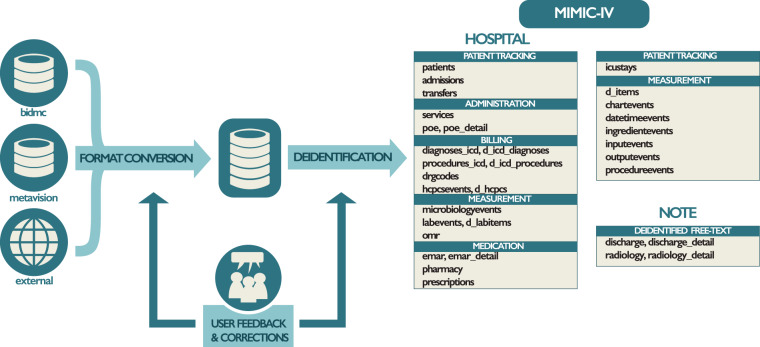
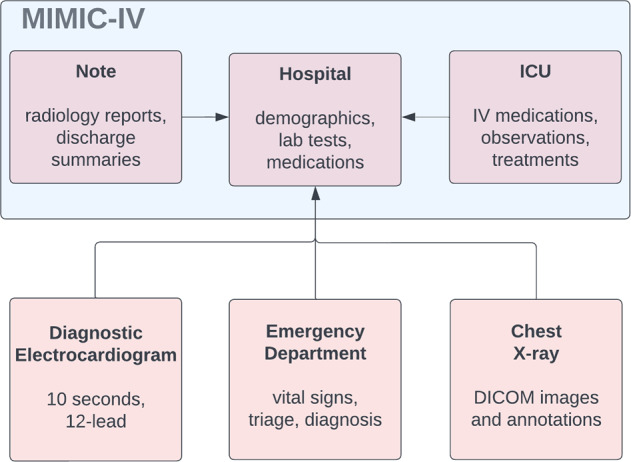
- MIMIC-IV was designed to be backward compatible with MIMIC-III while minimizing processing and organizing data into three modules: hosp, icu, and note.
## Methods
- Collaborative database construction from BIDMC clinical data, transformed and deidentified for release under IRB waiver and data use agreement; the process had three steps: acquisition, transformation, and deidentification.
- Sample/data: all patients admitted to the emergency department or an ICU at BIDMC between 2008–2019, excluding patients younger than 18 at first visit or on a protected list; external coding systems and Massachusetts death records were added.
- Main analysis/workflow: custom SQL scripts to restructure data into relational modules, plus custom linkage algorithms for out-of-hospital mortality and deidentification algorithms for HIPAA identifiers and free text; validation used integrity, consistency, and deidentification checks.
## Limitations
- The paper states that out-of-hospital mortality is only available through linkage to state death records, and deaths are censored at one year from last hospital discharge, so null death dates only indicate survival up to that point.
- The text makes evident that some data are incomplete or unevenly available across modules and time periods (for example, eMAR was deployed hospital-wide only by 2016, and the note module contains only discharge summaries and radiology reports); this is an evident coverage limitation from the text.
- The paper notes that clinical data are “sporadic and noisy,” reflecting routine care rather than research collection; this is a general data-quality limitation stated in the background.
Model-written summary. Check it against the paper before relying on it.
Integrity signals
Registry
Cites
Statistics
Figures
Verification
Claims the paper makes
13 Valid · 3 Not valid · 3 Not checked · 110 Own results and interpretations
Every source the paper cites for this claim was checked and supports it.
In the paper
“Finally, we combined two published algorithms for removing PHI from free-text17,18.”
§ MIMIC-IV, a freely accessible electronic health record dataset > Methods > Deidentification
What the sources say
- Supportedcites [17] Neamatullah I Automated de-identification of free-text medical records BMC medical informatics and decision making 2008 8 1 17 10.1186/1472-6947-8-32 18652655 PMC2526997 source
The Methods sections describe this paper's published algorithm for identifying and removing PHI from free-text medical records. The citing authors' statement that they combined two algorithms describes their own method; this citation identifies one of the algorithms. (LLM, conf=0.92)
- Supportedcites [18] Johnson, A. E. W., Bulgarelli, L. & Pollard, T. J. Deidentification of free-text medical records using pre-trained bidirectional transformers. In Proceedings of the ACM Conference on Health, Inference, and Learning, 214–221 (2020). PMC8330601 34350426 source
The Introduction (page not available in our copy) presents this paper’s BERT model for deidentifying free-text health records and describes measuring how much PHI it removes. The citation can therefore identify one of the two published algorithms; this source need not establish that the citing authors combined them. (LLM, conf=0.91)
plain- Asserted: passes — The authors put it forward as true.
- Checkable: passes — It can be checked against evidence.
- Load-bearing: passes — The paper’s conclusions depend on it.
- Based: passes — The paper gives a reason why it holds.
- Supported
Every source the paper cites for this claim was checked and supports it.
In the paper
“Due to data quality concerns regarding the Social Security Death Master File (SSDMF)13, we did not attempt to link patients to the SSDMF for determining out-of-hospital mortality.”
§ MIMIC-IV, a freely accessible electronic health record dataset > Methods > Acquisition
What the sources say
- Supportedcites [13] Levin MA Lin H-M Prabhakar G McCormick PJ Egorova NN Alive or dead: Validity of the social security administration death master file after 2011 Health Serv Res 2019 51 24 33 10.1111/1475-6773.13069 PMC6338290 30520023 source
The Discussion states that the Death Master File is no longer a reliable single source for mortality data, including out-of-hospital deaths. The decision not to link patients is the citing authors’ own methodological choice; the citation supports the data-quality concern motivating it. (LLM, conf=0.93)
plainstates a cause- Asserted: passes — The authors put it forward as true.
- Checkable: passes — It can be checked against evidence.
- Load-bearing: passes — The paper’s conclusions depend on it.
- Based: passes — The paper gives a reason why it holds.
- Supported
The cited sources support only part of this claim — read each source’s verdict below.
In the paper
“To support research that spans the periods of MIMIC-III (2002–2008) and MIMIC-IV (2008–2019), we have published the MIMIC-III Clinical Database CareVue subset22.”
§ MIMIC-IV, a freely accessible electronic health record dataset > Data Records > Building on earlier versions of MIMIC
What the sources say
- Partly supportedcites [22] Johnson AEW Pollard TJ Mark RG 2022 R. G. Mimic-iii clinical database carevue subset (version 1.4) PhysioNet 10.13026/8a4q-w170 sourceExperimental — accuracy not yet measured
The Abstract says the subset was provided to simplify combining MIMIC-III with MIMIC-IV, and the publication record identifies the released dataset. However, the Background and Methods give the CareVue period as 2001–2008, not the claim’s 2002–2008; the Background confirms MIMIC-IV’s 2008–2019 period. (LLM, conf=0.84)
plainstates a cause- Asserted: passes — The authors put it forward as true.
- Checkable: passes — It can be checked against evidence.
- Load-bearing: passes — The paper’s conclusions depend on it.
- Based: passes — The paper gives a reason why it holds.
- Partly supported
In the paper
“Access to MIMIC-IV is provided via PhysioNet19.”
§ MIMIC-IV, a freely accessible electronic health record dataset > Data Records
What the sources say
- Not checked — no full text of the sourcecites [19] Goldberger AL Physiobank, physiotoolkit, and physionet: components of a new research resource for complex physiologic signals circulation 2000 101 e215 e220 10.1161/01.CIR.101.23.e215 10851218 source
- Asserted: passes — The authors put it forward as true.
- Checkable: passes — It can be checked against evidence.
- Load-bearing: unclear — It is unclear whether the paper’s conclusions depend on it.
- Based: passes — The paper gives a reason why it holds.
A result the paper states — it cites no source for it, so there is none to check. The quote shows it is in the paper.
In the paper
“the d_icd_diagnoses and d_icd_procedures tables contain all codes which were valid at any point during the 2008–2019 time period.”
§ MIMIC-IV, a freely accessible electronic health record dataset > Data Records > Hospital module (hosp)
plain- Asserted: passes — The authors put it forward as true.
- Checkable: passes — It can be checked against evidence.
- Load-bearing: unclear — It is unclear whether the paper’s conclusions depend on it.
- Based: passes — The paper gives a reason why it holds.
29 more claims
Create a free account to see all 129 claims and every source verdict.
- Probably not a substantial claim. 84
- It may state two separate claims as one. 30
Claims other papers make about this one
Each is checked against this paper’s own text: does it say what the citing paper says it does?
The source backs part of the claim, not all of it — or backs it for a different population, condition or comparison.
In the citing paper
“We conducted a study using the publicly available MIMIC-IV dataset, which comprises 431,231 unique hospital admissions from 299,712 patients admitted to an ICU or the ED of the Beth Israel Deaconess Medical Center in Boston, Massachusetts27.”
From DRG-LLaMA : tuning LLaMA model to predict diagnosis-related group for hospitalized patients (2024) · cites this paper as [27]
Experimental — accuracy not yet measuredThe source backs part of the claim, not all of it — or backs it for a different population, condition or comparison.
In the citing paper
“For instance, the MIMIC-IV [148] includes a limited range of modalities, including clinical notes, medical images (chest x-ray Digital Imaging and Communications in Medicine [DICM] images), and time series (diagnostic electrocardiogram and patient records), making it a valuable but constrained resource for training medical M-LLMs.”
From Multimodal Large Language Models in Health Care: Applications, Challenges, and Future Outlook. (2024) · cites this paper as [148]
Experimental — accuracy not yet measuredThe source backs part of the claim, not all of it — or backs it for a different population, condition or comparison.
In the citing paper
“Existing multimodal medical data sets available for public use [84,85,148] are often relatively small in scale and demand the consolidation of numerous resources.”
From Multimodal Large Language Models in Health Care: Applications, Challenges, and Future Outlook. (2024) · cites this paper as [148]
Experimental — accuracy not yet measuredThe source backs part of the claim, not all of it — or backs it for a different population, condition or comparison.
In the citing paper
“- MIMIC-IV: A comprehensive, de-identified EHR dataset supporting tasks such as summarization, question answering, and document retrieval [17].”
From Retrieval-Augmented Generation (RAG) in Healthcare: A Comprehensive Review (2025) · cites this paper as [17]
Experimental — accuracy not yet measuredThe cited source says what the claim attributes to it.
In the citing paper
“In order to build agents that are grounded in medically relevant situations, we use a random sample of diagnostic questions from the US Medical Licensing Exam (USMLE), from deidentified electronic health records (MIMIC-IV)16, and from the New England Journal of Medicine (NEJM) case challenges.”
From AgentClinic: a multimodal benchmark for tool-using clinical AI agents (2026) · cites this paper as [16]
4 more claims about this paper
Create a free account to see every claim other papers make about this one.
Citations
Cites
Goldberger, A. L., Amaral, L. A. N., Glass, L., Hausdorff, J. M., Ivanov, P. C., Mark, R. G., Mietus, J. E., Moody, G. B., Peng, C.-K., & Stanley, H. E. (2000) · Circulation · doi:10.1161/01.cir.101.23.e215 · Cited by 14,809
Self-citationMIMIC-III, a freely accessible critical care database
Johnson, A. E. W., Pollard, T. J., Shen, L., Lehman, L.-W. H., Feng, M., Ghassemi, M., Moody, B., Szolovits, P., Anthony Celi, L., & Mark, R. G. (2016) · Scientific Data · doi:10.1038/sdata.2016.35 · Cited by 8,141 · cited 1×
“More recently, MIMIC-III was published in 2015 and significantly expanded MIMIC-II, containing data for over 40,000 patients 3 .”
MethodSelf-citationPollard, T. J., Johnson, A. E. W., Raffa, J. D., Celi, L. A., Mark, R. G., & Badawi, O. (2018) · Scientific Data · doi:10.1038/sdata.2018.178 · Cited by 1,993 · cited 2×
“0 comprises of 200,859 stays at ICUs and step-down units across 208 hospitals in the continental United States 4 .”
BackgroundSelf-citationSaeed, M., Villarroel, M., Reisner, A. T., Clifford, G., Lehman, L.-W., Moody, G., Heldt, T., Kyaw, T. H., Moody, B., & Mark, R. G. (2011) · Critical Care Medicine · doi:10.1097/ccm.0b013e31820a92c6 · Cited by 1,162
Self-citationBest Practices for Scientific Computing
Wilson, G., Aruliah, D. A., Brown, C. T., Chue Hong, N. P., Davis, M., Guy, R. T., Haddock, S. H. D., Huff, K. D., Mitchell, I. M., Plumbley, M. D., et al. (2014) · PLoS Biology · doi:10.1371/journal.pbio.1001745 · Cited by 723 · cited 1×
“The creation of MIMIC-IV followed best practices in scientific computing 23 .”
MethodJohnson, A., Bulgarelli, L., Pollard, T., Gow, B., Moody, B., Horng, S., Celi, L. A., & Mark, R. (2024) · PhysioNet · doi:10.13026/07hj-2a80 · Cited by 524
Self-citationJohnson, A., Bulgarelli, L., Pollard, T., Horng, S., Celi, L. A., & Mark, R. (2023) · PhysioNet · doi:10.13026/s6n6-xd98 · Cited by 524
Self-citationEarly prediction of circulatory failure in the intensive care unit using machine learning
Hyland, S. L., Faltys, M., Hüser, M., Lyu, X., Gumbsch, T., Esteban, C., Bock, C., Horn, M., Moor, M., Rieck, B., et al. (2020) · Nature Medicine · doi:10.1038/s41591-020-0789-4 · Cited by 477 · cited 1×
“The HiRID database contains high-resolution data for almost 34,000 admissions between 2008–2016 at Bern University Hospital in Switzerland 6,7 .”
BackgroundThe MIMIC Code Repository: enabling reproducibility in critical care research
Johnson, A. E. W., Stone, D. J., Celi, L. A., & Pollard, T. J. (2018) · Journal of the American Medical Informatics Association · doi:10.1093/jamia/ocx084 · Cited by 442 · cited 1×
“The MIMIC Code Repository was originally created for MIMIC-III to enable researchers to share and reuse code 24 .”
MethodSelf-citationAutomated de-identification of free-text medical records
Neamatullah, I., Douglass, M. M., Lehman, L.-W. H., Reisner, A., Villarroel, M., Long, W. J., Szolovits, P., Moody, G. B., Mark, R. G., & Clifford, G. D. (2008) · BMC Medical Informatics and Decision Making · doi:10.1186/1472-6947-8-32 · Cited by 413
Self-citation
Cited by
Items 1,001–1,100 of 3,269
Hong, T., Liu, X., Deng, J., Li, H., Sun, M., Pan, D., Zhao, Y., Cai, Z., Zhao, J., Yu, L., et al. (2025) · Clinical Cardiology · doi:10.1002/clc.70101 · Cited by 5
Wang, J., Hu, X., Cao, S., Zhao, Y., Chen, M., Hua, T., & Yang, M. (2025) · Frontiers in Pharmacology · doi:10.3389/fphar.2025.1514392 · Cited by 3
Xu, J., Cai, H., & Zheng, X. (2025) · BMC Infectious Diseases · doi:10.1186/s12879-025-10731-x · Cited by 4
“0 database [14, 15], which include over 94,458 critically ill patients admitted to the Beth Israel Deaconess Medical Center (BIDMC) ICU from 2008 to 2022.”
Summarizing Clinical Notes using LLMs for ICU Bounceback and Length-of-Stay Prediction
Choudhuri, A., Polgreen, P. M., Segre, A. M., & Adhikari, B. (2024) · IEEE ... International Conference on Data Mining workshops · doi:10.1109/icdmw65004.2024.00118 · Cited by 13
Benchmarking Interpretability in Healthcare Using Pattern Discovery and Disentanglement
Zhou, P.-Y., Takeuchi, A., Lopez, F. M., Ehghaghi, M., Wong, A. K. C., & Lee, E.-S. A. (2025) · Bioengineering · doi:10.3390/bioengineering12030308 · Cited by 8
“This paper extends the study [8] by applying the Pa tt ern Discovery and Disentangle-ment (PDD) [9] approach to the MIMIC-IV dataset [10] and comparing it to popular post hoc patients’ fi cant trait decision post hoc highlights reliability of First, we extract features from the free text in the…”
InfluentialRisk factors and prediction model for carbapenem-resistant organism infection in sepsis patients
Liu, R., Li, X., Yang, J., et al. (2025) · European journal of medical research · doi:10.1186/s40001-025-02448-z · Cited by 3
“The data set consolidates a variety of accurate digital data sources, including patient vital signs, laboratory test results, medication usage, nursing documentation, surgical procedure codes, disease diagnosis codes, and more [24].”
Lu, Y., Zhang, J., Zhang, W., Shi, H., Wang, K., Li, Z., & Sun, L. (2025) · BMC Pulmonary Medicine · doi:10.1186/s12890-025-03610-3 · Cited by 8
Gao, S., Zhu, Z., & Zheng, W. (2025) · Frontiers in Neurology · doi:10.3389/fneur.2025.1448439 · Cited by 3
Lin, J., Liu, L., Zhu, S., Gao, J., Liu, L., Hong, H., Wei, Y., Yang, J., Liu, X., Li, R. P., et al. (2025) · Clinical Kidney Journal · doi:10.1093/ckj/sfaf142 · Cited by 6
“In this retrospective multicentre study, the raw data of two cohorts were extracted from two independent study centres in the USA: the Medical Information Mart for Intensive Care IV ( MIMIC-IV) dataset and the eICU Collaborative Research ( eICU) dataset [18 , 19 ].”
Wang, J., Kang, Q., Tian, S., Zhang, S., Wang, K., & Feng, G. (2025) · Bioengineering · doi:10.3390/bioengineering12050511 · Cited by 9
“…and validated a time-dependent ML model to predict one-year all-cause mortality in ICU-admitted heart failure patients, utilizing the Medical Information Mart for Intensive Care IV database (MIMIC-IV version 3.1, https://physionet.org/content/mimiciv/3.1/, accessed on 24 November 2024) [16].”
InfluentialAssociation between anion gap and postoperative delirium in patients undergoing open heart surgery
Wang, J., Zhong, H., Chen, L., Ding, H., Lu, Z.-J., Wang, B.-S., Liu, S.-B., Luo, J., Hou, L.-W., Liu, Y.-Z., et al. (2025) · Frontiers in Cardiovascular Medicine · doi:10.3389/fcvm.2025.1592161 · Cited by 5
“The MIMIC-IV encompasses over 70,000 intensive care unit (ICU) admissions at the Beth Israel Deaconess Medical Center in Boston, Massachusetts (19).”
Liang, Y., Xu, F., Zhang, H., Li, J., Chen, W., Yang, Q., Cheng, L. Z., & Dong, X. (2025) · Journal of Intensive Care · doi:10.1186/s40560-025-00797-9 · Cited by 5
“Data were obtained from the MIMIC-IV (version 3.1) database [10, 11].”
InfluentialShi, H.-J., Li, H.-W., Lu, Y.-F., et al. (2025) · Medicine · doi:10.1097/md.0000000000042589 · Cited by 3
He, K., Zhu, Y. Y., Wang, W., Wang, Z., Guo, S., & Wu, J. (2025) · BMC Nephrology · doi:10.1186/s12882-025-04214-z · Cited by 5
“…Mart for Intensive Care IV (MIMIC-IV version 3.1) data-base (https://mimic.mit.edu), which is a publicly available clinical database that encompasses comprehensive health records of over 65,000 patients admitted to the ICU at the Beth Israel Deaconess Medical Center from 2008 to 2022 [14]”
InfluentialMulti-Level Transfer Learning for irregular clinical time series prediction
Li, X., Teng, F., Ma, M., Qin, Z., Guo, J. K., Xu, J., & Li, T. (2025) · Knowledge-Based Systems · doi:10.1016/j.knosys.2025.113825 · Cited by 7
Hasidim, A. A., Klein, M. A., Shitrit, I. B., Einav, S., Ilan, K., & Fuchs, L. (2025) · Scientific Reports · doi:10.1038/s41598-025-95535-4 · Cited by 5
Li, J., Pang, S., Huang, H., Lu, Y., Tang, T., Wu, J., & Chen, M. (2025) · Frontiers in Medicine · doi:10.3389/fmed.2025.1610726 · Cited by 5
“…using the Medical Information Mart for Intensive Care (MIMIC-IV) database (version 3.0), which contains a comprehensive and high-granularity dataset of well-defined patients admitted to the intensive care unit (ICU) of Beth Israel Deaconess Medical Center (BIDMC) between 2008 and 2022 (27).”
InfluentialWang, M., Li, W., Xu, H., et al. (2025) · Journal of Surgical Research · doi:10.1016/j.jss.2025.05.021 · Cited by 3
Zhu, X., Xue, J., Maimaitituerxun, R., Liu, Y., Zhou, Q., Zhou, Q., Zhao, S., Xu, H., Xie, H. W., Dai, W., et al. (2025) · Scientific Reports · doi:10.1038/s41598-025-05515-x · Cited by 4
“The MIMIC-IV database is a comprehensive critical care database that stores patient data from the intensive care units (ICUs) of the Beth Israel Deaconess Medical Center in Boston, Massachusetts, covering the period from 2008 to 2019 13 .”
Lumlertgul, N., Wannakittirat, A., Kung, J. Y. C., Srisawat, N., Collister, D., See, E. J., Pannu, N., Mehta, R. L., Soranno, D. E., Ostermann, M., et al. (2025) · BMC Medicine · doi:10.1186/s12916-025-04202-y · Cited by 3
Qu, J., Tang, X., Cheng, Y., Xiong, W. G., & Zhao, Y. (2025) · The Clinical Respiratory Journal · doi:10.1111/crj.70100 · Cited by 3
“Clinical data of patients admitted to Beth Israel Deaconess Medical Center (BIDMC) from 2008 to 2019 was obtained through MIMIC-IV, an openly accessible real-world database [10].”
TransEHR: Alignment-free electronic health records continual learning across feature spaces
Zhao, X., Liu, Z., Ji, B., Xi, P., & Peng, S. (2025) · Expert Systems with Applications · doi:10.1016/j.eswa.2025.129020 · Cited by 6
Pretraining-Based Relevance-Aware Visit Similarity Network for Drug Recommendation
He, Y., Dong, S., Lin, Y., Zheng, X., & Hu, J. (2025) · IEEE Journal of Biomedical and Health Informatics · doi:10.1109/jbhi.2025.3590391 · Cited by 7
Song, Q. Y., Wu, X., Taheri, F., et al. (2025) · BMC Gastroenterology · doi:10.1186/s12876-025-04167-5 · Cited by 3
“The MIMIC-IV (Medical Information Mart for Intensive Care IV) version 3.1 database is an extensive and open database of patient data [18].”
InfluentialZhang, Z., Zhao, C., Zhou, Y., Yao, L., Liu, P., Fang, Z., & Fang, N. (2025) · Frontiers in Medicine · doi:10.3389/fmed.2025.1624899 · Cited by 4
In-context learning for label-efficient cancer image classification in oncology
Shrestha, M., Mandal, B., Mandal, V., Shrestha, A., & Shrestha, A. B. (2025) · Informatics in Medicine Unlocked · doi:10.1016/j.imu.2025.101683 · Cited by 8
Wu, J., Mei, X., Mao, R., He, K., & Cambria, E. (2025) · Information Fusion · doi:10.1016/j.inffus.2025.103620 · Cited by 12
Cao, Z., Chen, N., Jiang, H., et al. (2025) · Reviews in Cardiovascular Medicine · doi:10.31083/rcm43942 · Cited by 3
“It includes a wide range of patient-specific information, including demographic details, diagnostic classifications, vital parameters, laboratory findings, medication usage, and discharge status [20].”
Zhang, J., Xie, L., & Zhu, J. (2025) · BMC Cardiovascular Disorders · doi:10.1186/s12872-025-05149-x · Cited by 4
Alqahtani, M. Q., Al-Barakati, A. A., Alotaibi, F. S., Shibli, M. A., & Almousa, S. (2025) · JMIR Formative Research · doi:10.2196/80917 · Cited by 4
Li, X., Wang, L., Liang, X., Ling, Y., Tang, Y., Meng, J., Cheng, H., Lyu, J., & Wang, Y. (2025) · Geriatrics and gerontology international/Geriatrics & gerontology international · doi:10.1111/ggi.70200 · Cited by 4
Liu, C., Liu, X., Hu, M., Mao, Z., Zhou, Y., Peng, J., Geng, X., Chi, K., Hong, Q., Cao, D., et al. (2023) · The Journals of Gerontology Series A · doi:10.1093/gerona/glad124 · Cited by 3
AnnoDash, a clinical terminology annotation dashboard
Xu, J., Mazwi, M., & Johnson, A. E. W. (2023) · JAMIA Open · doi:10.1093/jamiaopen/ooad046 · Cited by 3
“We evaluated the dashboard using the Medical Information Mart for Intensive Care IV (MIMIC-IV) database.(15,16) MIMIC-IV is a large, publicly available dataset that contains deidentified health data for over 60 000 intensive care unit admissions at the Beth Israel Deaconess Medical Center.”
MethodSelf-citationShi, Y., Shi, Y., Xu, Z., & Wang, Y. (2023) · International Journal of COPD · doi:10.2147/copd.s427433 · Cited by 3
López, D. M. (2023) · Biomédica · doi:10.7705/biomedica.7242 · Cited by 8
Li, Y., & Dong, B. (2023) · Journal of Orthopaedic Surgery and Research · doi:10.1186/s13018-023-04395-z · Cited by 3
A nomogram based on HALP score for predicting 28-day mortality in ICU-admitted cancer patients
Dai, H., & Shi, Q. (2023) · Updates in Surgery · doi:10.1007/s13304-023-01731-0 · Cited by 3
“…through a collaboration between Beth Israel Dea-coness Medical Center (BIDMC) and the Massachusetts Institute of Technology (MIT) The data were anonymized by substituting personal information with random codes to ensure patient privacy, so we did not require patient consent or ethical approval [3].”
Duan, J., Ge, H., Fan, W., et al. (2024) · Clinical and Applied Thrombosis/Hemostasis · doi:10.1177/10760296231221986 · Cited by 3
Liu, X., Shen, M., Lie, M., Zhang, Z., Liu, C., Li, D., Mark, R. G., Zhang, Z., & Celi, L. A. (2024) · Critical Care Explorations · doi:10.1097/cce.0000000000001033 · Cited by 12
Self-citationKAMEL: Knowledge Aware Medical Entity Linkage to Automate Health Insurance Claims Processing
Lui, S. J., Xiang, C., & Krishnaswamy, S. P. (2024) · Proceedings of the AAAI Conference on Artificial Intelligence · doi:10.1609/aaai.v38i21.30314 · Cited by 5
“The MIMICIV-ICD-10-N3 dataset originates from the MIMICIV dataset (Johnson et al. 2023).”
MethodCui, X., Shi, Y., He, X., Zhang, M., Zhang, H., Yang, J., & Leng, Y. (2024) · Frontiers in Medicine · doi:10.3389/fmed.2024.1338061 · Cited by 4
Wang, Q., Wang, F., & Wang, F. (2024) · BMC Neurology · doi:10.1186/s12883-024-03690-4 · Cited by 4
Karankot, M. I., Marceau, M., Glenn, E. M., Fowers, R., Hedges, D. M., Sheehey, B., & Whitaker, B. M. (2024) · Intermountain Engineering, Technology and Computing (IETC) · doi:10.1109/ietc61393.2024.10564463 · Cited by 6
“Further information on this dataset can be found in [12].”
BackgroundThe open data revolution: Enhancing healthcare in intensive care units
Lezcano, S. M., de la Fuente, C., Estella, Á., et al. (2024) · Medicina Intensiva · doi:10.1016/j.medin.2024.03.006 · Cited by 3
Development of a Mapping Table for Nursing Notes Based on Nurses’ Concerns in ICU Patients
Choi, M., Kim, Y.-J., & Kim, Y. (2024) · Studies in health technology and informatics · doi:10.3233/shti240299 · Cited by 3
Lin, S., Zheng, J., Zhou, C., Feng, S., & Lin, Z. (2024) · Journal of Gastrointestinal Surgery · doi:10.1016/j.gassur.2024.07.025 · Cited by 3
Wang, Q., Carson, A. L., & Zheng, S. Y. (2024) · Production and Operations Management · doi:10.1177/10591478241270115 · Cited by 3
“We use the Medical Information Mart for Intensive Care (MIMIC) IV database (Goldberger et al., 2000; Johnson et al., 2023), a comprehensive electronic health record database that contains de-identified healthcare data from over 75,000 ICU stays at Beth Israel Deaconess Medical Center (BIDMC) in…”
Lei, J., Zhang, Z., Li, Y., Wu, Z., Pu, H., Xu, Z., Yang, X., Hu, J., Liu, G., Qiu, P., et al. (2024) · Digital Health · doi:10.1177/20552076241269450 · Cited by 3
“This study is based on the Medical Information Mart for Intensive Care (MIMIC)-IV critical care data set 7,8 and the eICU Collaborative Research Database.”
MethodShi, Q., Dai, H., Ba, G., Li, M., & Zhang, J. (2024) · Heart & Lung · doi:10.1016/j.hrtlng.2024.09.003 · Cited by 4
Which Intravenous Isotonic Fluid Offers Better Outcomes for Patients with a Brain Injury?
Mistry, A. M. (2024) · Neurocritical Care · doi:10.1007/s12028-024-02139-3 · Cited by 3
“For example, a 2022 study using 1,787 patients with aSAH in the publicly available Medical Information Mart for Intensive Care-IV data [50] found that these three electrolytes consistently ranked among the top five variables that predicted inpatient mortality in eight different machine learning…”
Zeng, J., He, H., Song, Y., Wei, W., Han, Y., Su, X., Lyu, W., Zhao, J., Han, L., Wu, Z., et al. (2024) · European Journal of Gastroenterology & Hepatology · doi:10.1097/meg.0000000000002868 · Cited by 3
“The MIMIC-IV database is an extensive, retrospective, freely accessible single-center critical care dataset comprising admissions from 2008 to 2019 at the Beth Israel Deaconess Medical Center in Boston, Massachusetts [19].”
Chen, M., Chen, X., Ling, H., et al. (2024) · Frontiers in Nephrology · doi:10.3389/fneph.2024.1398386 · Cited by 3
Hyper-Relational Knowledge Enhanced Network for Hypertension Medication Recommendation
Zhang, K., Zhang, Z., Wang, W., Liang, Y., & Wang, X. (2024) · IEEE Transactions on Computational Social Systems · doi:10.1109/tcss.2024.3489973 · Cited by 6
“Comprehensive experiments on MIMIC-III [9] and MIMIC-IV [10] dataset confirm the effectiveness of the HKRec model, showing superior performance compared to existing methods.”
Chen, H., Tang, X., Li, X., & Xie, Y. (2024) · Shock · doi:10.1097/shk.0000000000002528 · Cited by 3
“This study is a retrospective cohort study with electronic health data obtained from the Medical Information Mart for Intensive Care IV (MIMIC-IV, version 2.2) database (23).”
InfluentialXie, B., Shi, Y., Liu, M., Jin, Z., Wen, W., Yan, Y., Gao, M., Jiang, L., Yang, L., Liu, J., et al. (2024) · Frontiers in Cardiovascular Medicine · doi:10.3389/fcvm.2024.1442957 · Cited by 5
Lin, W., Lin, B., Chen, J., Li, R., Yu, Y., Huang, S., Li, S., & Lin, J. (2024) · Scientific Reports · doi:10.1038/s41598-024-83260-3 · Cited by 3
Ma, Q., Tian, W., Wang, K., Xu, B., & Lou, T. (2025) · BMC Anesthesiology · doi:10.1186/s12871-024-02870-6 · Cited by 5
“This database, a creation of the Computational Physiology Laboratory at the Massachu-setts Institute of Technology, is maintained and developed by the same [14].”
Liu, Y., Ouyang, J., Zhang, C., et al. (2025) · Frontiers in Pharmacology · doi:10.3389/fphar.2024.1529167 · Cited by 3
Anion gap predicting 90-Day mortality and guiding furosemide use in ARDS
Li, Y., Luo, W., Wang, Q., et al. (2025) · Scientific Reports · doi:10.1038/s41598-025-89163-1 · Cited by 3
“The Medical Information Mart for Intensive Care (MIMIC-IV) electronic database (version 2.2), developed jointly by the Massachusetts Institute of Technology (MIT) and Beth Israel Deaconess Medical Center (BIDMC), was utilized in this study 43 .”
InfluentialZhao, Y., Zhao, Y., Wang, S., Fan, Z., Wang, Y., Liu, F., & Liu, Z. (2025) · BMC Cardiovascular Disorders · doi:10.1186/s12872-025-04573-3 · Cited by 3
“This study leveraged the MIMIC-IV 3.0 database, which contains de-identified clinical data for 94,458 patients admitted to the intensive care units (ICUs) of Beth Israel Deaconess Medical Center between 2008 and 2022 [10, 11].”
InfluentialRole of Rifaximin in the Prognosis of Critically Ill Patients with Liver Cirrhosis
Bai, Z., Li, C., Lai, Y., Hu, X., Shi, L., Guan, X., & Xu, Y. (2025) · Antibiotics · doi:10.3390/antibiotics14030287 · Cited by 3
“We used the Medical Information Mart for Intensive Care (MIMIC) IV database, which is a large, freely available database comprising deidentified health-related data from patients who were admitted to the critical care units of the Beth Israel Deaconess Medical Center [28].”
Mechanical power of ventilation and survival in critically ill obese patients
Yan, Y., Chai, X., Luo, G., et al. (2025) · The American Journal of Emergency Medicine · doi:10.1016/j.ajem.2025.03.066 · Cited by 3
Lee, S. M., & Shim, H. (2025) · Acute and Critical Care · doi:10.4266/acc.004464 · Cited by 3
Zou, L. J., Sun, D., Zhang, L., Xie, Y., Zhang, R., Li, H., Dan, B., Liu, Y., & Mei, B. (2025) · Frontiers in Neurology · doi:10.3389/fneur.2025.1534381 · Cited by 4
Dexmedetomidine Reduces Chronic Stress–Related Thrombosis in a Mouse FeCl 3 Model
Wang, H., Zhang, M., Xin, M., Yue, X., Piao, J., Zhao, L., Bi, H., Wang, S., Jin, C., Nan, Y., et al. (2025) · The FASEB Journal · doi:10.1096/fj.202500724r · Cited by 3
“We extracted coagulation-related data (PT, PTT, INR) from the MIMIC-IV database for patients with a hospital stay longer than 7 days [27].”
Xu, Z., & Xu, B. (2025) · BMC Gastroenterology · doi:10.1186/s12876-025-03966-0 · Cited by 3
MedCT: A Clinical Terminology Graph for Generative AI Applications in Healthcare
Chen, Y., Huang, D., Shen, Y., Xu, H., Sheng, L., Zhou, Q., & Wang, K. (2025) · Lecture notes in computer science · doi:10.1007/978-3-031-97557-8_3 · Cited by 6
Jimenez, D., Castano-Villegas, N., Llano, I., Martinez, J., Ortiz, L., Velásquez, L., & Zea, J. (2025) · IEEE Conference on Artificial Intelligence (CAI) · doi:10.1109/cai64502.2025.00280 · Cited by 3
Pan, L., Lu, F., Cheng, B., et al. (2025) · Journal of Health Population and Nutrition · doi:10.1186/s41043-025-01008-9 · Cited by 3
Chen, D., Lu, F., Cheng, B., & Wang, B. (2025) · Renal Failure · doi:10.1080/0886022x.2025.2536731 · Cited by 6
Fluid balance after cardiac arrest: Any impact on outcome? Insights from the MIMIC IV database
Didier, J., Murris, J., Schopper, H., Guérin, E., Flajoliet, N., Amiot, M., Hermann, B., Germain, S., Cariou, A., Diehl, J., et al. (2025) · Resuscitation Plus · doi:10.1016/j.resplu.2025.101037 · Cited by 3
Liang, M., Guan, F., Sun, L., Xi, W., Jia, H.-L., Xu, Y., Jin, M., Chen, X., Huang, D., & Qiu, Z. (2025) · Dose-Response · doi:10.1177/15593258251374417 · Cited by 4
Jiang, M.-H., Yu, F., Yang, H., Yin, S., Yang, L.-J., Chen, Y., Li, D.-M., Guo, Y., Zhu, J.-D., Cai, W., et al. (2025) · Clinics · doi:10.1016/j.clinsp.2025.100775 · Cited by 3
“23,24 The MIMIC databases were approved by the Massachusetts Institute of Technology Institutional Review Board (MIT-IRB), and the health information within the databases was de-identified, thus eliminating the necessity for patient-informed consent.”
Yang, M., Hu, W., & Yan, J. (2023) · Research Square · doi:10.21203/rs.3.rs-3221576/v1 · Cited by 3
DiabetIA: Building Machine Learning Models for Type 2 Diabetes ComplicationsPreprint
Tripp, J., Santana-Quinteros, D., Pérez‐Estrada, R., Rodríguez-Moran, M. F., Arcos-Gonzalez, C., Mercado-Ríos, J., Cristobal-Perez, F., Hernandez-Martinez, B. R., Nava-Aguilar, M. A., Gonzalez-Arroyo, G., et al. (2023) · medRxiv · doi:10.1101/2023.10.22.23297277 · Cited by 4
“Unlike counterparts such as the United States’ eMERGE consortium 16 , the Million Veteran Program 17 , the MIMIC-IV database 18 , and the UK Biobank 19 , which are situated outside Latin America, DiabetIA represents a unique regional contribution.”
BackgroundGottlieb, E. R., & Celi, L. A. (2024) · medRxiv · doi:10.1101/2024.03.08.24303993 · Cited by 3
Self-citationFenske, S. W., Peltekian, A., Kang, M., Markov, N. S., Zhu, M., Grudzinski, K. M., Bak, M. J., Pawlowski, A. E., Gupta, V., Mao, Y., et al. (2024) · medRxiv · doi:10.1101/2024.06.28.24309547 · Cited by 3
“Our dataset is small compared with larger ICU cohorts such as MIMIC or eICU 36,37 and future work validated on these datasets is needed.”
MethodAdejumo, P., Thangaraj, P., Dhingra, L. S., Biswas, D., Aminorroaya, A., Shankar, S. V., Pedroso, A. F., Croon, P. M., & Khera, R. (2024) · medRxiv · doi:10.1101/2024.09.19.24313992 · Cited by 5
Dalal, S., Ardabili, A. K., & Bonavia, A. S. (2024) · medRxiv · doi:10.1101/2024.11.21.24317716 · Cited by 3
Chen, S., Fan, J., Abdollahi, A., Ashrafi, N., Alaei, K., Placencia, G., & Pishgar, M. (2025) · medRxiv · doi:10.1101/2025.01.01.24319585 · Cited by 3
Schmiegel, S., Marchi, H., Hege, P., et al. (2025) · medRxiv · doi:10.1101/2025.05.28.25328512 · Cited by 3
“The most suitable source for this purpose was the MIMIC IV database (Medical Information Mart for Intensive Care, [42]), which contained health-related data from patients admitted to the ICU of the Beth Israel Deaconess Medical Center (Boston, Massachusetts) between 2008 and 2019.”
MoMA: a mixture-of-multimodal-agents architecture for enhancing clinical prediction modelling
Gao, J., Rahman, M., Caskey, J., Oguss, M., O’Rourke, A., Brown, R., Stey, A., Mayampurath, A., Churpek, M. M., Chen, G., et al. (2025) · npj Digital Medicine · doi:10.1038/s41746-025-02219-4 · Cited by 2
“…summary overwrote textual information (e.g., “ The specialist reports right basal atelectasis, small right pleural effusion, and cardiomegaly, whereas the Aggregator — guided by the original clinical and radiology notes — states no effusion or atelectasis and does not mention cardiomegaly ” ).”
Fan, Z.-K., Zhang, Z., Yi, R.-Q., Feng, W. M., Li, C.-E., Chen, W., & Shen, Y. (2023) · BMC Cardiovascular Disorders · doi:10.1186/s12872-023-03647-4 · Cited by 6
“Patient identifications were removed to comply with the Health Insurance Portability and Accountability Act’s (HIPAA) Safe Harbor provision [18, 19].”
MethodKong, X., Zhang, P., Ling, Y., Lv, D., Xu, J., & Zhang, G. (2023) · IEEE International Conference on Bioinformatics and Biomedicine (BIBM) · doi:10.1109/bibm58861.2023.10385530 · Cited by 2
“We conducted a retrospective study using two public available databases: Medical Information Mart for Intensive Care IV (MIMIC IV) dataset[24, 25] and eICU Collaborative Research Database data set (eICU) dataset[26].”
MethodSemantic details in autobiographical memory narratives increase with age among younger adults
Matijevic, S., Hoscheidt, S. M., & Ryan, L. (2024) · Memory · doi:10.1080/09658211.2024.2365302 · Cited by 2
Normalized lactate load as an independent prognostic indicator in patients with cardiogenic shock
Wu, X., Yuan, L., Xu, J., Qi, J., & Zheng, K. (2024) · BMC Cardiovascular Disorders · doi:10.1186/s12872-024-04013-8 · Cited by 5
The multivariate Bernoulli detector: change point estimation in discrete survival analysis
van den Boom, W., Iorio, M. D., Qian, F., & Guglielmi, A. (2024) · Biometrics · doi:10.1093/biomtc/ujae075 · Cited by 2
Schwinn, J., Sheikhalishahi, S., Morhart, M., Kaspar, M., & Hinske, L. C. (2024) · Studies in health technology and informatics · doi:10.3233/shti240529 · Cited by 3
A Mild Increase in Serum Creatinine after Surgery Is Associated with Increased Mortality
Xu, L., Tang, L., Zheng, X., et al. (2024) · Journal of Clinical Medicine · doi:10.3390/jcm13164905 · Cited by 2
“This retrospective cohort study used data from the publicly available Medical Information Mart for Intensive Care IV (MIMIC IV) database, which contains 180,747 de-identified electronic admission records of Beth Israel Deaconess Medical Center in Boston from 2008 to 2019 [19].”
MethodLi, Y., Guo, T., Yang, Z., Zhang, R., Wang, Z., & Li, Y. (2024) · Frontiers in Medicine · doi:10.3389/fmed.2024.1415425 · Cited by 4
Retrospective Outcomes of Patients With Spontaneous Bacterial Empyema Given Albumin
Gupta, P., & Lee, T. A. (2024) · CHEST Journal · doi:10.1016/j.chest.2024.09.025 · Cited by 3
“These patients were linked to the MIMIC IV hospital database, 6,7 which contains deidenti fi ed records of patients either admitted to the institution through the ED or those with an ICU stay.”
Improving Fairness in Chest X-Ray Interpretation Models Using Attention-Driven Masked Image Modeling
Chen, C.-J., Wang, S., & Kuo, P. (2024) · Annual International Conference of the IEEE Engineering in Medicine and Biology Society (EMBC) · doi:10.1109/embc53108.2024.10782563 · Cited by 2
“In this research, the MIMIC-CXR [1] and MIMIC-IV [11] datasets, originating from the Massachusetts Institute of Technology lab and disseminated by Johnson, Alistair, et al., were employed.”
Heo, S., Jeong, D., Choi, M., Kim, I., Kim, M., Lee, Y. R., Ko, B. S., Ryoo, S. M., Han, E., Chang, H., et al. (2024) · Emergencias · doi:10.55633/s3me/108.2024 · Cited by 2
Ding, J., Long, Z., Liu, Y., & Wang, M. (2025) · Frontiers in Medicine · doi:10.3389/fmed.2025.1497662 · Cited by 3
Chen, S., Nie, R., Shen, X., Wang, Y., Luan, H., Zeng, X., Chen, Y., & Yuan, H. (2025) · Arthritis Research & Therapy · doi:10.1186/s13075-025-03477-z · Cited by 2
Zhang, F., Shen, Z., Zhang, L., Zheng, X., Li, X., & Wang, Y. (2025) · Diabetology & Metabolic Syndrome · doi:10.1186/s13098-025-01647-2 · Cited by 2
Li, L., Li, R., Liu, Y.-J., Wang, Z., Chen, X., Xu, L., Chen, Z., Xu, J.-C., & Shan, Z. (2025) · Frontiers in Cardiovascular Medicine · doi:10.3389/fcvm.2025.1480163 · Cited by 4
Pehrson, L. M., Li, D., Mayar, A., Fraccaro, M., Bonnevie, R., Sørensen, P. J., Rykkje, A. M., Andersen, T. T., Steglich‐Arnholm, H., Stærk, D. M. R., et al. (2025) · Diagnostics · doi:10.3390/diagnostics15070902 · Cited by 2
Shen, X., Shang, D., Sun, W., & Ru, S. (2025) · PLoS ONE · doi:10.1371/journal.pone.0319519 · Cited by 3
Shang, M., Shang, A., & Xu, Y. (2025) · Frontiers in Neurology · doi:10.3389/fneur.2025.1555166 · Cited by 3
“(18).”
Metadata
- Authors
- Johnson, A. E. W., Bulgarelli, L., Shen, L., Gayles, A., Shammout, A., Horng, S., Pollard, T. J., Hao, S., Moody, B., Gow, B., Lehman, L.-W. H., Celi, L. A., & Mark, R. G.
- Affiliations
- Hospital for Sick Children (CA)
- Massachusetts Institute of Technology (US)
- Beth Israel Deaconess Medical Center (US)
- Corresponding author
- Johnson, Alistair E. W.
- ORCID
- Venue
- Scientific Data
- Published
- 2023-01-03
- Volume
- 10
- Issue
- 1
- Pages
- 1-1
- ISSN
- 2052-4463 (ISSN-L)
- PMC
- PMC9810617
- OpenAlex
- W4313439128
- Semantic Scholar
- 5425de16356015c2f26d2a50684c6c46d6998f51
- Cited by
- 3,401
- References
- 25
- Citations by year
- 2026: 1421 · 2025: 1175 · 2024: 649 · 2023: 154
- Type
- data paper
- Language
- en
- Update notices
- Open access
- gold
- doi.org
- Licence
- cc-by
- creativecommons.org/licenses/by/4.0 (tdm)
- creativecommons.org/licenses/by/4.0 (vor)
- Locations
- Scientific Data (publishedVersion, cc-by)
- PubMed Central (publishedVersion, cc-by)
- PubMed (publishedVersion)
- DOAJ (DOAJ: Directory of Open Access Journals) (submittedVersion, cc-by-sa)
- Funders
- U.S. Department of Health & Human Services | National Institutes of Health (NIH-R01-EB017205)
- Topics
- Physical Sciences › Computer Science › Artificial Intelligence › Machine Learning in Healthcare
- Health Sciences › Health Professions › Health Information Management › Electronic Health Records Systems
- Health Sciences › Health Professions › Health Information Management › Medical Coding and Health Information
- Keywords
- MIMIC-IV, electronic health records, clinical research data, hospital patient data, open data access, Beth Israel Deaconess Medical Center
- MeSH terms
- Hospitals, Humans, Databases, Factual, Electronic Health Records
About these checks
Registry, retraction, Cites and statistics results are computed, not judged, with one exception: a printed reference that no index lists is read once by a model before it counts as a citation error. Claims are extracted by a model and kept only when their quote appears verbatim in the text; each cited source is then checked, with a model’s help, for whether it says what the claim relies on. Those verdicts can be wrong — read the claim’s quote and the cited source before relying on one.
The claim verdicts this report counts are experimental: their accuracy is not yet measured.
A language model drew the claims from the paper on 2026-10-02, under version 3 of the claim definition (model deepseek-v4.1-flash, prompt extract-v3).
A second model labelled each claim on 2026-10-02 (model jev-1.13-20260917, definition revision gold-guideline-v0.2).
Cited sources are checked with a language model’s help (gpt-6-sol).
Statistics and arithmetic are recomputed, not judged.
Confidence bands are shown only for fields calibrated on our annotated test set. None is calibrated yet, so no band is shown.
What counts as a claim ›How we measure confidence ›How we check this ›
Are you an author, or do you see a problem with this page? Request a review
Data sources
Bibliographic data: Semantic Scholar, OpenAlex, Crossref.
Contains information from the Semantic Scholar Academic Graph Datasets, made available under the ODC Attribution License (ODC-BY 1.0).
Semantic Scholar’s data is described in: Kinney, R., et al. (2023). The Semantic Scholar Open Data Platform. arXiv:2301.10140.
