

MIMIC-IV, a freely accessible electronic health record dataset
Open accessThe DOI matches its Crossref record; 28 of the 28 references it cites were found in a registry or an index; 15 of the 20 sources its claims cite were checked for support.
Abstract
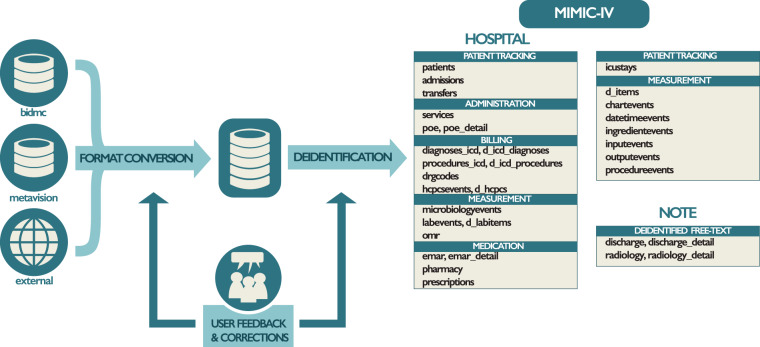
Digital data collection during routine clinical practice is now ubiquitous within hospitals. The data contains valuable information on the care of patients and their response to treatments, offering exciting opportunities for research. Typically, data are stored within archival systems that are not intended to support research. These systems are often inaccessible to researchers and structured for optimal storage, rather than interpretability and analysis. Here we present MIMIC-IV, a publicly available database sourced from the electronic health record of the Beth Israel Deaconess Medical Center. Information available includes patient measurements, orders, diagnoses, procedures, treatments, and deidentified free-text clinical notes. MIMIC-IV is intended to support a wide array of research studies and educational material, helping to reduce barriers to conducting clinical research.
Overview
CoChat Summary
## TL;DR
MIMIC-IV is a publicly available, deidentified electronic health record database from Beth Israel Deaconess Medical Center designed to support research, education, and technology development. It covers hospital and ICU care from 2008–2019 and adds modular structured data plus free-text clinical notes.
## Key findings
- The database includes patient measurements, orders, diagnoses, procedures, treatments, and deidentified free-text clinical notes, and is available through PhysioNet.
- The clinical cohort includes patients admitted to the emergency department or an ICU between 2008–2019; after exclusions, the authors linked 65,805 of 150,832 unique individuals (43.6%) to Massachusetts state death records.
- The paper reports that 51,022/65,803 (77.5%) of the successful death-record links were exact matches on last name, date of birth, and social security number; 11,634/65,803 (17.7%) were exact last name and date of birth plus approximate first name.
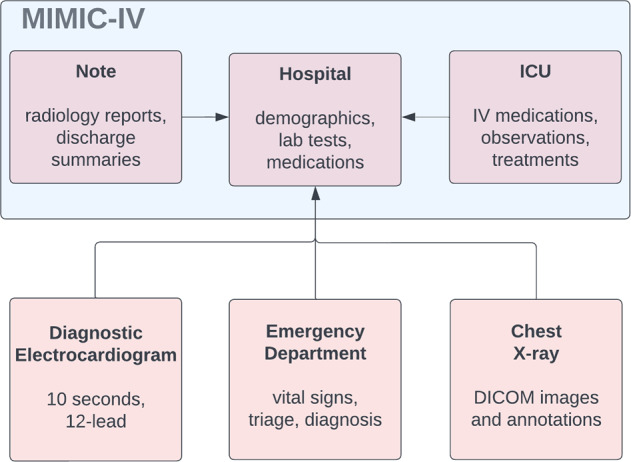
- MIMIC-IV was designed to be backward compatible with MIMIC-III while minimizing processing and organizing data into three modules: hosp, icu, and note.
## Methods
- Collaborative database construction from BIDMC clinical data, transformed and deidentified for release under IRB waiver and data use agreement; the process had three steps: acquisition, transformation, and deidentification.
- Sample/data: all patients admitted to the emergency department or an ICU at BIDMC between 2008–2019, excluding patients younger than 18 at first visit or on a protected list; external coding systems and Massachusetts death records were added.
- Main analysis/workflow: custom SQL scripts to restructure data into relational modules, plus custom linkage algorithms for out-of-hospital mortality and deidentification algorithms for HIPAA identifiers and free text; validation used integrity, consistency, and deidentification checks.
## Limitations
- The paper states that out-of-hospital mortality is only available through linkage to state death records, and deaths are censored at one year from last hospital discharge, so null death dates only indicate survival up to that point.
- The text makes evident that some data are incomplete or unevenly available across modules and time periods (for example, eMAR was deployed hospital-wide only by 2016, and the note module contains only discharge summaries and radiology reports); this is an evident coverage limitation from the text.
- The paper notes that clinical data are “sporadic and noisy,” reflecting routine care rather than research collection; this is a general data-quality limitation stated in the background.
Model-written summary. Check it against the paper before relying on it.
Integrity signals
Registry
Cites
Statistics
Figures
Verification
Claims the paper makes
13 Valid · 3 Not valid · 3 Not checked · 110 Own results and interpretations
Every source the paper cites for this claim was checked and supports it.
In the paper
“Finally, we combined two published algorithms for removing PHI from free-text17,18.”
§ MIMIC-IV, a freely accessible electronic health record dataset > Methods > Deidentification
What the sources say
- Supportedcites [17] Neamatullah I Automated de-identification of free-text medical records BMC medical informatics and decision making 2008 8 1 17 10.1186/1472-6947-8-32 18652655 PMC2526997 source
The Methods sections describe this paper's published algorithm for identifying and removing PHI from free-text medical records. The citing authors' statement that they combined two algorithms describes their own method; this citation identifies one of the algorithms. (LLM, conf=0.92)
- Supportedcites [18] Johnson, A. E. W., Bulgarelli, L. & Pollard, T. J. Deidentification of free-text medical records using pre-trained bidirectional transformers. In Proceedings of the ACM Conference on Health, Inference, and Learning, 214–221 (2020). PMC8330601 34350426 source
The Introduction (page not available in our copy) presents this paper’s BERT model for deidentifying free-text health records and describes measuring how much PHI it removes. The citation can therefore identify one of the two published algorithms; this source need not establish that the citing authors combined them. (LLM, conf=0.91)
plain- Asserted: passes — The authors put it forward as true.
- Checkable: passes — It can be checked against evidence.
- Load-bearing: passes — The paper’s conclusions depend on it.
- Based: passes — The paper gives a reason why it holds.
- Supported
Every source the paper cites for this claim was checked and supports it.
In the paper
“Due to data quality concerns regarding the Social Security Death Master File (SSDMF)13, we did not attempt to link patients to the SSDMF for determining out-of-hospital mortality.”
§ MIMIC-IV, a freely accessible electronic health record dataset > Methods > Acquisition
What the sources say
- Supportedcites [13] Levin MA Lin H-M Prabhakar G McCormick PJ Egorova NN Alive or dead: Validity of the social security administration death master file after 2011 Health Serv Res 2019 51 24 33 10.1111/1475-6773.13069 PMC6338290 30520023 source
The Discussion states that the Death Master File is no longer a reliable single source for mortality data, including out-of-hospital deaths. The decision not to link patients is the citing authors’ own methodological choice; the citation supports the data-quality concern motivating it. (LLM, conf=0.93)
plainstates a cause- Asserted: passes — The authors put it forward as true.
- Checkable: passes — It can be checked against evidence.
- Load-bearing: passes — The paper’s conclusions depend on it.
- Based: passes — The paper gives a reason why it holds.
- Supported
The cited sources support only part of this claim — read each source’s verdict below.
In the paper
“To support research that spans the periods of MIMIC-III (2002–2008) and MIMIC-IV (2008–2019), we have published the MIMIC-III Clinical Database CareVue subset22.”
§ MIMIC-IV, a freely accessible electronic health record dataset > Data Records > Building on earlier versions of MIMIC
What the sources say
- Partly supportedcites [22] Johnson AEW Pollard TJ Mark RG 2022 R. G. Mimic-iii clinical database carevue subset (version 1.4) PhysioNet 10.13026/8a4q-w170 sourceExperimental — accuracy not yet measured
The Abstract says the subset was provided to simplify combining MIMIC-III with MIMIC-IV, and the publication record identifies the released dataset. However, the Background and Methods give the CareVue period as 2001–2008, not the claim’s 2002–2008; the Background confirms MIMIC-IV’s 2008–2019 period. (LLM, conf=0.84)
plainstates a cause- Asserted: passes — The authors put it forward as true.
- Checkable: passes — It can be checked against evidence.
- Load-bearing: passes — The paper’s conclusions depend on it.
- Based: passes — The paper gives a reason why it holds.
- Partly supported
In the paper
“Access to MIMIC-IV is provided via PhysioNet19.”
§ MIMIC-IV, a freely accessible electronic health record dataset > Data Records
What the sources say
- Not checked — no full text of the sourcecites [19] Goldberger AL Physiobank, physiotoolkit, and physionet: components of a new research resource for complex physiologic signals circulation 2000 101 e215 e220 10.1161/01.CIR.101.23.e215 10851218 source
- Asserted: passes — The authors put it forward as true.
- Checkable: passes — It can be checked against evidence.
- Load-bearing: unclear — It is unclear whether the paper’s conclusions depend on it.
- Based: passes — The paper gives a reason why it holds.
A result the paper states — it cites no source for it, so there is none to check. The quote shows it is in the paper.
In the paper
“the d_icd_diagnoses and d_icd_procedures tables contain all codes which were valid at any point during the 2008–2019 time period.”
§ MIMIC-IV, a freely accessible electronic health record dataset > Data Records > Hospital module (hosp)
plain- Asserted: passes — The authors put it forward as true.
- Checkable: passes — It can be checked against evidence.
- Load-bearing: unclear — It is unclear whether the paper’s conclusions depend on it.
- Based: passes — The paper gives a reason why it holds.
29 more claims
Create a free account to see all 129 claims and every source verdict.
- Probably not a substantial claim. 84
- It may state two separate claims as one. 30
Claims other papers make about this one
Each is checked against this paper’s own text: does it say what the citing paper says it does?
The source backs part of the claim, not all of it — or backs it for a different population, condition or comparison.
In the citing paper
“We conducted a study using the publicly available MIMIC-IV dataset, which comprises 431,231 unique hospital admissions from 299,712 patients admitted to an ICU or the ED of the Beth Israel Deaconess Medical Center in Boston, Massachusetts27.”
From DRG-LLaMA : tuning LLaMA model to predict diagnosis-related group for hospitalized patients (2024) · cites this paper as [27]
Experimental — accuracy not yet measuredThe source backs part of the claim, not all of it — or backs it for a different population, condition or comparison.
In the citing paper
“For instance, the MIMIC-IV [148] includes a limited range of modalities, including clinical notes, medical images (chest x-ray Digital Imaging and Communications in Medicine [DICM] images), and time series (diagnostic electrocardiogram and patient records), making it a valuable but constrained resource for training medical M-LLMs.”
From Multimodal Large Language Models in Health Care: Applications, Challenges, and Future Outlook. (2024) · cites this paper as [148]
Experimental — accuracy not yet measuredThe source backs part of the claim, not all of it — or backs it for a different population, condition or comparison.
In the citing paper
“Existing multimodal medical data sets available for public use [84,85,148] are often relatively small in scale and demand the consolidation of numerous resources.”
From Multimodal Large Language Models in Health Care: Applications, Challenges, and Future Outlook. (2024) · cites this paper as [148]
Experimental — accuracy not yet measuredThe source backs part of the claim, not all of it — or backs it for a different population, condition or comparison.
In the citing paper
“- MIMIC-IV: A comprehensive, de-identified EHR dataset supporting tasks such as summarization, question answering, and document retrieval [17].”
From Retrieval-Augmented Generation (RAG) in Healthcare: A Comprehensive Review (2025) · cites this paper as [17]
Experimental — accuracy not yet measuredThe cited source says what the claim attributes to it.
In the citing paper
“In order to build agents that are grounded in medically relevant situations, we use a random sample of diagnostic questions from the US Medical Licensing Exam (USMLE), from deidentified electronic health records (MIMIC-IV)16, and from the New England Journal of Medicine (NEJM) case challenges.”
From AgentClinic: a multimodal benchmark for tool-using clinical AI agents (2026) · cites this paper as [16]
4 more claims about this paper
Create a free account to see every claim other papers make about this one.
Citations
Cites
Goldberger, A. L., Amaral, L. A. N., Glass, L., Hausdorff, J. M., Ivanov, P. C., Mark, R. G., Mietus, J. E., Moody, G. B., Peng, C.-K., & Stanley, H. E. (2000) · Circulation · doi:10.1161/01.cir.101.23.e215 · Cited by 14,809
Self-citationMIMIC-III, a freely accessible critical care database
Johnson, A. E. W., Pollard, T. J., Shen, L., Lehman, L.-W. H., Feng, M., Ghassemi, M., Moody, B., Szolovits, P., Anthony Celi, L., & Mark, R. G. (2016) · Scientific Data · doi:10.1038/sdata.2016.35 · Cited by 8,141 · cited 1×
“More recently, MIMIC-III was published in 2015 and significantly expanded MIMIC-II, containing data for over 40,000 patients 3 .”
MethodSelf-citationPollard, T. J., Johnson, A. E. W., Raffa, J. D., Celi, L. A., Mark, R. G., & Badawi, O. (2018) · Scientific Data · doi:10.1038/sdata.2018.178 · Cited by 1,993 · cited 2×
“0 comprises of 200,859 stays at ICUs and step-down units across 208 hospitals in the continental United States 4 .”
BackgroundSelf-citationSaeed, M., Villarroel, M., Reisner, A. T., Clifford, G., Lehman, L.-W., Moody, G., Heldt, T., Kyaw, T. H., Moody, B., & Mark, R. G. (2011) · Critical Care Medicine · doi:10.1097/ccm.0b013e31820a92c6 · Cited by 1,162
Self-citationBest Practices for Scientific Computing
Wilson, G., Aruliah, D. A., Brown, C. T., Chue Hong, N. P., Davis, M., Guy, R. T., Haddock, S. H. D., Huff, K. D., Mitchell, I. M., Plumbley, M. D., et al. (2014) · PLoS Biology · doi:10.1371/journal.pbio.1001745 · Cited by 723 · cited 1×
“The creation of MIMIC-IV followed best practices in scientific computing 23 .”
MethodJohnson, A., Bulgarelli, L., Pollard, T., Gow, B., Moody, B., Horng, S., Celi, L. A., & Mark, R. (2024) · PhysioNet · doi:10.13026/07hj-2a80 · Cited by 524
Self-citationJohnson, A., Bulgarelli, L., Pollard, T., Horng, S., Celi, L. A., & Mark, R. (2023) · PhysioNet · doi:10.13026/s6n6-xd98 · Cited by 524
Self-citationEarly prediction of circulatory failure in the intensive care unit using machine learning
Hyland, S. L., Faltys, M., Hüser, M., Lyu, X., Gumbsch, T., Esteban, C., Bock, C., Horn, M., Moor, M., Rieck, B., et al. (2020) · Nature Medicine · doi:10.1038/s41591-020-0789-4 · Cited by 477 · cited 1×
“The HiRID database contains high-resolution data for almost 34,000 admissions between 2008–2016 at Bern University Hospital in Switzerland 6,7 .”
BackgroundThe MIMIC Code Repository: enabling reproducibility in critical care research
Johnson, A. E. W., Stone, D. J., Celi, L. A., & Pollard, T. J. (2018) · Journal of the American Medical Informatics Association · doi:10.1093/jamia/ocx084 · Cited by 442 · cited 1×
“The MIMIC Code Repository was originally created for MIMIC-III to enable researchers to share and reuse code 24 .”
MethodSelf-citationAutomated de-identification of free-text medical records
Neamatullah, I., Douglass, M. M., Lehman, L.-W. H., Reisner, A., Villarroel, M., Long, W. J., Szolovits, P., Moody, G. B., Mark, R. G., & Clifford, G. D. (2008) · BMC Medical Informatics and Decision Making · doi:10.1186/1472-6947-8-32 · Cited by 413
Self-citation
Cited by
Items 1,201–1,300 of 3,269
A survey On large language models for medical time series
Liu, X., Zhou, F., Xiao, H., Li, Z., Liu, S., & Qian, L. (2026) · Expert Systems with Applications · doi:10.1016/j.eswa.2026.131364 · Cited by 7
Zeng, Y., Tan, N., He, X., Peng, S., & Qiu, E. (2026) · Scientific Reports · doi:10.1038/s41598-026-38251-x · Cited by 2
Ren, B., Zhou, G., Xue, H., Chen, S., Zhang, Y., Wang, G., & Zhu, F. (2026) · Journal of Intensive Care · doi:10.1186/s40560-026-00862-x · Cited by 2
“The MIMIC-IV database, an updated and expanded version, includes over 70,000 ICU admissions at the same institution between 2008 and 2019 [21].”
Kim, J., Kim, J., Hur, K., & Choi, E. (2026) · Scientific Reports · doi:10.1038/s41598-026-38299-9 · Cited by 11
“For our experiments, we use three open-source EHR datasets: MIMIC-III [31], MIMIC-IV [32], and eICU [33], each of which contains data from patients admitted to intensive care units (ICUs).”
Li, X., Chen, W., Wang, Z., Wang, L., Huai, X., Cheng, H., Wang, Y., & Lyu, J. (2026) · Archives of Gerontology and Geriatrics · doi:10.1016/j.archger.2026.106161 · Cited by 2
Hourani, A., Jakubowska, Z., & Małyszko, J. (2026) · Journal of Clinical Medicine · doi:10.3390/jcm15031191 · Cited by 6
“This retrospective cohort study used the Medical Information Mart for Intensive Care (MIMIC-IV) and the Electronic Intensive Care Unit Collaborative Research Database (eICU-CRD) datasets [26–30].”
Zhang, X., Xu, Y., Lei, Y., Tang, M., Wang, Y., Luo, J., & Zhu, S. (2026) · BMC Infectious Diseases · doi:10.1186/s12879-026-12703-1 · Cited by 7
“This retrospective study was conducted using data from the Medical Information Mart for Intensive Care IV (MIMIC-IV), a publicly available and widely validated critical care database maintained by the Massachusetts Institute of Technology [13].”
Duan, X., Lan, J.-R., Zhu, M., Chen, J.-L., Zhang, C.-Y., Yin, H.-Y., & Gu, W. (2026) · European Journal of Clinical Pharmacology · doi:10.1007/s00228-026-04006-w · Cited by 2
Wang, Y., Wang, W., Sun, X., Yang, X., Chen, J., & Xu, D. (2026) · Frontiers in Medicine · doi:10.3389/fmed.2026.1755389 · Cited by 2
The value of doubt: training LLMs to consider diagnostic uncertainty may improve clinical utility
Sui, M., Rosen, K. L., Heydari, K., Enichen, E. J., & Kvedar, J. C. (2026) · npj Digital Medicine · doi:10.1038/s41746-025-02307-5 · Cited by 3
Wang, Y., Song, Y., Siu, R. K., Nimma, I. R., Yan, Y., Savage, T., Wang, Y., Li, Z., Ramai, D., Wang, J., et al. (2026) · Journal of the American Medical Informatics Association · doi:10.1093/jamia/ocag008 · Cited by 4
Wu, X., Song, Q. Y., Li, D., Liu, Z., Wang, X., Yang, R., He, Y., & Yang, H. (2026) · Digestive and Liver Disease · doi:10.1016/j.dld.2026.01.226 · Cited by 5
Abbasi, F., Takeuchi, T., Orellana, G. M., Inglés, D. P., Bruss, Z. S., Kodavanti, C. K. M., Saa, L., Illescas, A. C., Marinaro, J. L., Harkins, M. S., et al. (2026) · Renal Failure · doi:10.1080/0886022x.2026.2628391 · Cited by 2
“…(ECCO 2 R) at CKRt initiation were assigned a maximal SOFa respiratory sub-score of 4 regardless of their blood gas values. to evaluate the performance of the 4-organ and full SOFa scores in an external dataset, we conducted a validation analysis using the MiMiC-iV database, version 3.1 [29,36,37].”
InfluentialDeng, Y.-H., Dennstädt, F., Filchenko, I., van der Meer, J., Yang, X.-L., Schmidt, M. H., Bassetti, C., Tzovara, A., & Denecke, K. (2026) · Journal of medical systems · doi:10.1007/s10916-026-02343-y · Cited by 4
“[28] Discharge summaries were selected because they most closely resemble the longitudinal, narrative-style diagnostic texts used in the Bern Sleep–Wake Registry, containing free-text descriptions of medical history, diagnoses, risk factors, and treatments rather than isolated problem lists alone.”
Cheema, M. N., Nazir, A., Harmanci, A. O., Harmancı, A. S., Cheema, Y., Masood, S., & Khokhar, F. A. (2026) · The Visual Computer · doi:10.1007/s00371-026-04385-2 · Cited by 2
“…response resource for personalized medicine UK Biobank [114] Biomedical resource of 500,000 participants for personalized medicine studies MIMIC [224] De-identified critical care data for personalized medicine studies MedCLIP [36], Med-Flamingo [60], and Visual Med-Alpaca [127], which perform…”
Zuo, H., Zuo, X., Zhang, Y., & Zheng, W. (2026) · PLoS ONE · doi:10.1371/journal.pone.0342745 · Cited by 2
Diabetes and Pressure Injury in Critical Care Patients ≥65 Years
Alderden, J., Prince, J., Kennerly, S. M., et al. (2026) · Critical Care Nursing Quarterly · doi:10.1097/cnq.0000000000000603 · Cited by 2
Early detection of chronic kidney disease based on a SURD-enhanced machine learning model
Xue, N., Bai, T., Jia, X., & Wei, X. (2026) · Scientific Reports · doi:10.1038/s41598-026-41050-z · Cited by 6
Liu, J., Yuan, Y., & 梁, 云. (2026) · British Journal of Hospital Medicine · doi:10.31083/bjhm50719 · Cited by 2
A large-scale database for clinical trial outcomes and features
Gao, C., Pradeepkumar, J., Das, T., Thati, S., & Sun, J. (2026) · Nature Health · doi:10.1038/s44360-026-00081-6 · Cited by 20
Akkhawatthanakun, K., Narupiyakul, L., Wongpatikaseree, K., Hnoohom, N., Termritthikun, C., & Muneesawang, P. (2026) · Informatics · doi:10.3390/informatics13030039 · Cited by 3
Healthcare Solutions for Noisy Clinical Text: A Federated Privacy-Preserving Approach
Riad, A. B. M. K. I., Mamun, A. A., Akter, S., et al. (2025) · IEEE International Conference on Big Data (BigData) · doi:10.1109/bigdata66926.2025.11400798 · Cited by 2
“For further extended research, we plan to validate and train the proposed model using established, large-scale, de-identified electronic health record (EHR) corpora such as the Medical Information Mart for Intensive Care (MIMIC-III) [32] and the more recent MIMIC-IV [33].”
Wang, J., Hu, J., Chen, Y., Li, S., Jm, P., Dong, R., Hu, X., Jiang, W., Wang, C., Weng, L., et al. (2026) · Pharmacology Research & Perspectives · doi:10.1002/prp2.70235 · Cited by 2
“This MIMIC dataset was obtained from the publicly available MIMIC-IV database [16, 17], which contains serum vancomycin concentrations for adult ICU patients, along with demographic information, laboratory results, and vancomycin administration records.”
A multi-metric evaluation of readability in psychiatric discharge summaries
Li, F., Taylor, C. O., & Zirikly, A. (2026) · BioData Mining · doi:10.1186/s13040-026-00528-2 · Cited by 2
Rahman, F., Guellil, I., Hasan, A., Zhang, H., Falis, M., Casey, A., Wu, H., Guthrie, B., & Alex, B. (2026) · BMC Medical Informatics and Decision Making · doi:10.1186/s12911-026-03417-0 · Cited by 4
“…data with the National Health Service (NHS) EHRs to support research into diverse health conditions [96]; MIMIC-III [97] and its successor MIMIC-IV [98], large, deidentified clinical databases containing detailed hospital-wide and ICU specific data, such as vital signs, medications, lab results,…”
Yadav, T., Tekale, A., Chong, J., & Masum, M. (2026) · Algorithms · doi:10.3390/a19030215 · Cited by 2
“Reliable identification of diagnoses, procedures, and medications from clinical narratives is essential for biomedical research, clinical decision support, and the development of data-driven healthcare systems [1,2].”
Chaieb, M., Ameur, N. B., & Boulila, W. (2026) · Computer Science Review · doi:10.1016/j.cosrev.2026.100960 · Cited by 7
Nakano, H., Horie, R., Gondo, T., Inoue, Y., Inokuchi, R., & Doi, K. (2026) · Journal of Critical Care · doi:10.1016/j.jcrc.2026.155522 · Cited by 2
Picheta, P., & Deniziak, S. R. (2026) · Expert Systems with Applications · doi:10.1016/j.eswa.2026.132084 · Cited by 2
Yin, X., Han, S., Zheng, Z., Tang, L., Liu, J., & Zhang, Y. (2026) · Cardiovascular Diabetology · doi:10.1186/s12933-025-03061-4 · Cited by 4
“This retrospective cohort study used data from the MIMIC-IV 3.1 database, which is jointly maintained by the Massachusetts Institute of Technology (MIT) and Beth Israel Deaconess Medical Center [19].”
InfluentialThe Complement System in the Setting of Critical Illness—A Narrative Review
Ampelakiotou, K., Nikitopoulou, I., Kokkoris, S., Kotanidou, Α., Dimopoulou, I., & Detsika, M. G. (2026) · Biomolecules · doi:10.3390/biom16040505 · Cited by 2
“This review and meta-analytic study involved the MIMIC-IV clinical dataset [42] and three independent proteomic studies.”
Shahnazinia, S., Tavasoli, M., Sarrafzadeh, A., & Karimoddini, A. (2026) · Telematics and Informatics Reports · doi:10.1016/j.teler.2026.100325 · Cited by 6
Wang, L., Wang, D., Tang, B., et al. (2026) · Neurotherapeutics · doi:10.1016/j.neurot.2026.e00896 · Cited by 2
Medical multimodal large language models: A survey
Xiao, H., Hui, N., Xu, Y. D., Li, Z., & Peng, J. (2026) · Information Fusion · doi:10.1016/j.inffus.2026.104386 · Cited by 5
Federated Clinical Learning Cooperative (FCLC)
Tqemaladze, J. (2026) · Longevity Horizon · doi:10.65649/a5k5rw30 · Cited by 6
“2 (Johnson et al., 2023) Simulation: Data was randomly partitioned into five nodes under IID and non-IID conditions using Dirichlet distribution ( α ∈ { ∞ , 1.0, 0.5, 0.1, 0.01}).”
InfluentialSun, M., Lu, P., Cheng, J., Zhao, L., & Ma, J. (2026) · BMC Cardiovascular Disorders · doi:10.1186/s12872-026-05943-1 · Cited by 2
“For the present analysis, we included data from October 1, 2015 to 2022, corresponding to the period during which ICD-10 diagnostic coding was in use [9].”
Yang, J., Xia, Y., Guo, W., Wu, L., Wu, X., & Li, B. (2026) · Frontiers in Cardiovascular Medicine · doi:10.3389/fcvm.2026.1763569 · Cited by 2
Blood biomarker trajectories in ICU-directed prediction models – A scoping review
Rekowski, C. P. V., Fonseca, T. A. H., Araújo, R., Calado, C. R. C., Bento, L. F. N., & Pinto, I. (2026) · The EPMA Journal · doi:10.1007/s13167-026-00456-5 · Cited by 4
“The publicly accessible databases MIMIC-III [66], MIMIC-IV [67], and eICU-CRD [68] had a great impact on model development among studies included in this scoping review.”
Allyn, J., Oliver, M., Cerveau, R., Allou, N., Barennes, T., & Ferdynus, C. (2026) · Critical Care · doi:10.1186/s13054-026-06034-5 · Cited by 4
Clinical agents fail silently on patient identity
Klang, E., Glicksberg, B. S., Gorenshtein, A., Gavin, N., Freeman, R., Stump, L. S., Charney, A. W., Ting, D. S. W., Omar, M., & Nadkarni, G. N. (2026) · International Journal of Medical Informatics · doi:10.1016/j.ijmedinf.2026.106514 · Cited by 10
Li, R., Cao, S., Liu, R., & Duprey, A. (2026) · Proceedings of the ACM on Measurement and Analysis of Computing Systems · doi:10.1145/3805636 · Cited by 4
Natural Language Processing in Healthcare: From Unstructured Data to Clinical Intelligence
Kumar, D., Choudhary, N., Gupta, V., Tanwar, R., Bahmani, K., Antal, S., Jarora, S., Gupta, S., Shaikh, M. S., Webster, T. J., et al. (2026) · Intelligent Systems with Applications · doi:10.1016/j.iswa.2026.200698 · Cited by 3
Yu, Z. (2026) · Internal Medicine Journal · doi:10.1111/imj.70515 · Cited by 2
“16 MIMIC-IV contains comprehensive de-identi fi ed health data from patients admitted to the intensive care units (ICUs) of Beth Israel Deaconess Medical Center (BIDMC), Boston, MA, between 2008 and 2022.”
Yu, Z., & Qin, F. (2026) · Internal and Emergency Medicine · doi:10.1007/s11739-026-04446-3 · Cited by 2
Byun, H., Lee, D., Jung, M., & Jang, B. (2026) · Journal of Medical Systems · doi:10.1007/s10916-026-02440-y · Cited by 3
“The analysis is conducted using clinical data from the MIMIC-IV electronic health record (EHR) dataset [31–33], a large-scale, de-identified EHR repository.”
Zheng, H., Zhu, Y., Jiang, L. Y., et al. (2023) · Annual Meeting of the Association for Computational Linguistics (ACL) · doi:10.18653/v1/2023.acl-srw.18 · Cited by 2
Using Artificial Intelligence to Generate Synthetic Health Data
Girosi, F., Katragadda, S. P., Steier, J., & Vardavas, R. (2023) · RAND Corporation eBooks · doi:10.7249/wra2892-1 · Cited by 2
Shi, X., Shi, Y., Fan, L., Yang, J. L., Chen, H., Ni, K., & Yang, J. (2023) · Journal of Intensive Care · doi:10.1186/s40560-023-00707-x · Cited by 6
“The data were obtained from two databases: the Medical Information Market for Intensive Care IV (MIMIC-IV) and the eICU Collaborative Research Data-base (eICU-CRD) [22, 23].”
MethodCohen, A. M., Kaner, J., Miller, R., Kopesky, J. W., & Hersh, W. (2023) · Journal of the American Medical Informatics Association · doi:10.1093/jamia/ocad244 · Cited by 3
“The most widely publicly available clinical datasets, MIMIC II-IV, 60,61 are based primarily on critical-care patients and not on the pediatric neurology population focused on here.”
BackgroundXu, H.-B., Yuan, Y., Wu, J., et al. (2024) · Brain Hemorrhages · doi:10.1016/j.hest.2024.01.001 · Cited by 2
Aali, M. N., Mannhardt, F., & Toussaint, P. J. (2024) · Lecture notes in business information processing · doi:10.1007/978-3-031-56107-8_23 · Cited by 2
Song, L., Li, M., Zhang, T., Huang, L., Ying, J., & Lan, Y. (2024) · BMC Pulmonary Medicine · doi:10.1186/s12890-024-03022-9 · Cited by 2
Зарубина, Т. В., Rauzina, S., Астанин, П. А., et al. (2024) · Annals of the Russian academy of medical sciences · doi:10.15690/vramn17390 · Cited by 2
Zhu, S., Yan, J., Gong, S., Feng, X., Ning, G., & Xu, L. (2024) · Blood Purification · doi:10.1159/000539787 · Cited by 5
“We obtained data from Medical Information Mart for Intensive Care-Ⅳ (MIMIC-IV), which is a large, freely available database comprising deidenti fi ed data on patients who were admitted to the critical care units of the Beth Israel Deaconess Medical Center between 2008 and 2019 [14].”
Puri, A., Giri, M., Huang, H., et al. (2024) · Frontiers in Cardiovascular Medicine · doi:10.3389/fcvm.2024.1400915 · Cited by 2
“Therefore, utilizing the Medical Information Mart for Intensive Care-IV (MIMIC-IV) database (28), we hypothesized that an elevated BUN/creatinine ratio could increase the risk of in-hospital mortality among ICU patients with VTE.”
BackgroundMethodFan, H., Zhou, Y., Chen, M., Qiu, K., Feng, X., Zhou, C., Zhu, M., Huang, R., & Hu, T. (2024) · Pharmacotherapy The Journal of Human Pharmacology and Drug Therapy · doi:10.1002/phar.2947 · Cited by 4
“22 The study was conducted according to the tenets of the Declaration of Helsinki.”
An Explainable Multimodal Data Fusion Approach for Heart Failure Detection
Botros, J., Mourad-Chehade, F., & Laplanche, D. (2024) · IEEE International Symposium on Medical Measurements and Applications (MeMeA) · doi:10.1109/memea60663.2024.10596902 · Cited by 2
Engelhardt, S. (2024) · European Heart Journal - Digital Health · doi:10.1093/ehjdh/ztae061 · Cited by 2
Emergency Department Length of Stay Classification Based on Ensemble Methods and Rule Extraction
Aziz, W., Nicalaou, A., Stylianides, C., Panayides, A. S., Kakas, A. C., Kyriacou, E. C., & Pattichis, C. S. (2024) · Studies in health technology and informatics · doi:10.3233/shti240783 · Cited by 3
RedactBuster: Entity Type Recognition from Redacted Documents
Beltrame, M., Conti, M., Guglielmin, P., Marchiori, F., & Orazi, G. (2024) · Lecture notes in computer science · doi:10.1007/978-3-031-70890-9_23 · Cited by 9
Miao, S., Yang, M., Li, W., Yang, Z., & Yan, J. (2024) · Frontiers in Pharmacology · doi:10.3389/fphar.2024.1394553 · Cited by 3
Wang, H. Z., Wu, S., Pan, D., Ning, Y., Yang, L., Feng, C., Guo, J., Liu, Z., & Gu, Y. (2024) · BMC Cardiovascular Disorders · doi:10.1186/s12872-024-04184-4 · Cited by 2
“Access to this platform is granted upon completion of the online course provided by the National Institutes of Health (NIH) [16].”
MethodLarge Language Models for Transforming Categorical Data to Interpretable Feature Vectors
Huesmann, K., & Linsen, L. (2024) · IEEE Transactions on Visualization and Computer Graphics · doi:10.1109/tvcg.2024.3460652 · Cited by 3
Xu, J., He, Q., Wang, M., Wang, Z., Wu, W., Li, L., Wang, W., & Sun, X. (2024) · Anaesthesia Critical Care & Pain Medicine · doi:10.1016/j.accpm.2024.101441 · Cited by 10
Feng, Q., Lv, Z., Ba, C., & Zhang, Y. Q. (2024) · Scientific Reports · doi:10.1038/s41598-024-74294-8 · Cited by 2
Shen, Z., Yang, B., Cai, G., et al. (2024) · Journal of Investigative Surgery · doi:10.1080/08941939.2024.2432964 · Cited by 2
Developing a Medical Question-Answering Chatbot for Egyptian Arabic: A Comparative Study
Ismail, E., Yahya, M., Nabil, M., Ashraf, Y., Elshaer, Z., & Khoriba, G. A. (2024) · International Mobile, Intelligent, and Ubiquitous Computing Conference (MIUCC) · doi:10.1109/miucc62295.2024.10783570 · Cited by 3
“The authors apply the Medical Information Mart for Intensive Care-MIMIC-IV [41] dataset.”
Reinforcement Learning for Heart Failure Treatment Optimization in the Intensive Care Unit
Drudi, C., Fechner, M., Mollura, M., Pace, A., Rätsch, G., & Barbieri, R. (2024) · Annual International Conference of the IEEE Engineering in Medicine and Biology Society (EMBC) · doi:10.1109/embc53108.2024.10781564 · Cited by 4
Li, S., Huang, S., Feng, Y., & Mao, Y. (2024) · BMC Cardiovascular Disorders · doi:10.1186/s12872-024-04396-8 · Cited by 4
Predictive model for assessing the prognosis of rhabdomyolysis patients in the intensive care unit
Xiong, Y., Shi, H., Wang, J., Gu, Q., Song, Y., Kong, W., Lyu, J., Zhao, M., & Meng, X. (2025) · Frontiers in Medicine · doi:10.3389/fmed.2024.1518129 · Cited by 3
EHRGPT: Leveraging language models for generating synthetic health records
Pamisetty, G., Batreddy, S., Verma, P., & Babu, C. S. (2024) · IEEE International Conference on Big Data (BigData) · doi:10.1109/bigdata62323.2024.10825057 · Cited by 3
Guo, R. Z., Smith, R., Chen, Q., Ritchie, A., & Poon, S. K.-S. (2025) · Digital Health · doi:10.1177/20552076251314097 · Cited by 4
Evaluating the Impact of Pulse Oximetry Bias in Machine Learning Under Counterfactual Thinking
Martins, I. S., de Matos, J. C. R. G., Gonçalves, T., Celi, L. A., Wong, A.-K. I., & Cardoso, J. S. (2025) · Lecture notes in computer science · doi:10.1007/978-3-031-82007-6_21 · Cited by 8
Self-citationZhan, L., Yang, Y., Nie, B., Kou, Y., Du, S., Tian, Y., Huang, Y., Ye, R., Huang, Z., Luo, B., et al. (2025) · Frontiers in Medicine · doi:10.3389/fmed.2025.1514327 · Cited by 2
“Consequently, patient consent is deemed unnecessary for the utilization of this data (17, 18).”
Chen, X.-H., Zhao, J.-J., Chen, C., & Yao, L. (2025) · European journal of medical research · doi:10.1186/s40001-025-02386-w · Cited by 4
Du, S., Yu, Z., Li, J. P., Jiang, Y., Wang, J., Hu, J., & Su, N. (2025) · Scientific Reports · doi:10.1038/s41598-025-91012-0 · Cited by 2
“2)] database 19 to conduct a cohort study to investigate the relationship between BGR and the risk of death in critically ill patients with CKD stages 1–4. risk, helping us better understand the role of this ratio in the course of critically ill patients with CKD stages 1–4 and potentially…”
Fang, S., Wang, Y., Nan, W., Feng, Y., Su, W., Wang, Y., & Jiang, X. (2025) · Frontiers in Pharmacology · doi:10.3389/fphar.2025.1518716 · Cited by 4
Towards Holistic Disease Risk Prediction using Small Language Models
Björkdahl, L., Pauli, O., Östman, J., Ceccobello, C., Lundell, S., & Kjellberg, M. (2024) · International Conference on Machine Learning and Applications · doi:10.1109/icmla61862.2024.00125 · Cited by 7
“2, an anonymized dataset containing medical data from patients admitted to the intensity care unit (ICU) at the Beth Israel Deaconess Medical Center, MA, U.S., between 2008-2019 [21].”
Yu, Y., Li, L., Chen, Y., & Luo, Y. (2025) · Frontiers in Endocrinology · doi:10.3389/fendo.2025.1544223 · Cited by 2
Zhang, Z., Tang, S., Chen, L., Zhao, Y., Hu, T., Sun, N., Sun, Q., Liang, W., & Wei, X. (2025) · Scientific Reports · doi:10.1038/s41598-025-93384-9 · Cited by 2
“The mortality data were extracted directly from the databases, which maintain comprehensive patient outcome records 13,14 .”
Yang, Y., Luo, H., Zhang, Y., et al. (2025) · PLoS ONE · doi:10.1371/journal.pone.0320047 · Cited by 2
Huang, F., Yi, J., Li, Q., Zhou, T., Yue, D., Gong, X., & Meng, H. (2025) · Frontiers in Neurology · doi:10.3389/fneur.2025.1521043 · Cited by 5
Liu, R., Shen, J., Gu, Y., Chen, Y., Zhang, J., Wu, Q., Xu, C., & Fan, F. (2025) · IEEE Journal of Biomedical and Health Informatics · doi:10.1109/jbhi.2025.3554495 · Cited by 4
“The MIMIC IV dataset is an update of MIMIC III that incorporates recent data and improves signal collection quality [29].”
Qin, Y., Wu, A., Wang, Y., Qin, X., Zhang, J., & Guo, X. (2025) · Heart & Lung · doi:10.1016/j.hrtlng.2025.04.002 · Cited by 2
Huang, Z., Ge, H., & Sun, Y. (2025) · Frontiers in Medicine · doi:10.3389/fmed.2025.1523535 · Cited by 2
Chen, S., Nie, R., Luan, H., Shen, X., Wang, Y., Gui, Y., Zeng, X., & Yuan, H. (2025) · Rheumatology International · doi:10.1007/s00296-025-05822-6 · Cited by 2
Fang, Y., Shen, X., Dou, A., Xie, H. W., & Xie, K. (2025) · Frontiers in Medicine · doi:10.3389/fmed.2025.1538322 · Cited by 2
“Informed consent was waived due to data anonymization and the fact that the analyses conducted do not influence clinical decision-making or patient care (20, 21).”
Khaniyev, T., Çekiç, E., Koc, M. A., Dogan, I., & Hanalıoğlu, Ş. (2025) · Neurocritical Care · doi:10.1007/s12028-025-02246-9 · Cited by 4
“A large body of literature on explainable artificial intelligence [30, 33] has recently focused on alleviating the problem of explaining the predictions of black-box models.”
Huang, Y., Wang, G., Xia, X., Mei, J., Zhang, C., & Zhang, Y. (2025) · Frontiers in Cardiovascular Medicine · doi:10.3389/fcvm.2025.1533575 · Cited by 3
Lin, S., Zhang, J., Dang, X., & Zhan, Q. (2025) · Frontiers in Pharmacology · doi:10.3389/fphar.2025.1588846 · Cited by 2
Gao, D., & Wang, A. (2025) · BMC Cardiovascular Disorders · doi:10.1186/s12872-025-04742-4 · Cited by 3
“It encompasses comprehensive records including demographics, surgical information, various clinical scores, laboratory indicators, medication records, vital signs, and survival prognosis [11].”
Schmidt, L., Pigat, L., Sheikhalishahi, S., Sander, J., Kaspar, M., Wang, B., & Hinske, L. C. (2025) · Journal of Critical Care · doi:10.1016/j.jcrc.2025.155123 · Cited by 2
Wang, Y., & Xu, Y. H. (2025) · PLoS ONE · doi:10.1371/journal.pone.0324904 · Cited by 2
Zappalá, S., Scaravilli, V., Rovati, L., Bosone, M., Alfieri, F., Ancona, A., & Grasselli, G. (2025) · Journal of Critical Care · doi:10.1016/j.jcrc.2025.155105 · Cited by 2
Latent class growth analysis of dynamic PaCo2 patterns and clinical outcomes in acute brain injury
Liu, J., Peng, B., Huang, B., et al. (2025) · Scientific Reports · doi:10.1038/s41598-025-04793-9 · Cited by 2
“The authors completed the required training and obtained authorization to access the database (certification number: 11522514) 12 .”
Zhou, Y., Ni, Y.-N., Lan, L., Wan, H., & Luo, F. (2025) · Journal of Clinical Medicine · doi:10.3390/jcm14113916 · Cited by 2
“The MIMIC-IV is a collaboration between Beth Israel Deaconess Medical Center (BIDMC) and the Massachusetts Institute of Technology (MIT) that contains data on ICU patients admitted to BIDMC from 2008–2022 [19,20].”
Luo, F., Wang, Z., Gao, T., Wang, B., Gao, Y., Liu, M., Jiang, H., & Li, X. Q. (2025) · Reviews in Cardiovascular Medicine · doi:10.31083/rcm28261 · Cited by 4
“This retrospective study used the freely accessible MIMIC-IV database ( https://mimic.mit.edu), which contains over 50,000 intensive care units (ICU) admissions at Beth Israel Deaconess Medical Center (Boston, Massachusetts) from 2008 to 2019 [9].”
Xu, H., Mo, R., Liu, Y., Niu, H., Cai, X., & He, P. (2025) · PLoS ONE · doi:10.1371/journal.pone.0325110 · Cited by 3
Enhancing Delirium Prediction in ICU Older Patients Through the 5‐Factor Modified Frailty Index
Li, X., Cheng, H., Tang, Y., Li, T., Huang, Y., Li, Y., Liang, X., Wang, L., Lyu, J., & Wang, Y. (2025) · Nursing in Critical Care · doi:10.1111/nicc.70098 · Cited by 2
Medical AI can transform medicine — but only if we carefully track the data it touches
Vaid, A. (2025) · Nature · doi:10.1038/d41586-025-01946-8 · Cited by 2
Metadata
- Authors
- Johnson, A. E. W., Bulgarelli, L., Shen, L., Gayles, A., Shammout, A., Horng, S., Pollard, T. J., Hao, S., Moody, B., Gow, B., Lehman, L.-W. H., Celi, L. A., & Mark, R. G.
- Affiliations
- Hospital for Sick Children (CA)
- Massachusetts Institute of Technology (US)
- Beth Israel Deaconess Medical Center (US)
- Corresponding author
- Johnson, Alistair E. W.
- ORCID
- Venue
- Scientific Data
- Published
- 2023-01-03
- Volume
- 10
- Issue
- 1
- Pages
- 1-1
- ISSN
- 2052-4463 (ISSN-L)
- PMC
- PMC9810617
- OpenAlex
- W4313439128
- Semantic Scholar
- 5425de16356015c2f26d2a50684c6c46d6998f51
- Cited by
- 3,401
- References
- 25
- Citations by year
- 2026: 1421 · 2025: 1175 · 2024: 649 · 2023: 154
- Type
- data paper
- Language
- en
- Update notices
- Open access
- gold
- doi.org
- Licence
- cc-by
- creativecommons.org/licenses/by/4.0 (tdm)
- creativecommons.org/licenses/by/4.0 (vor)
- Locations
- Scientific Data (publishedVersion, cc-by)
- PubMed Central (publishedVersion, cc-by)
- PubMed (publishedVersion)
- DOAJ (DOAJ: Directory of Open Access Journals) (submittedVersion, cc-by-sa)
- Funders
- U.S. Department of Health & Human Services | National Institutes of Health (NIH-R01-EB017205)
- Topics
- Physical Sciences › Computer Science › Artificial Intelligence › Machine Learning in Healthcare
- Health Sciences › Health Professions › Health Information Management › Electronic Health Records Systems
- Health Sciences › Health Professions › Health Information Management › Medical Coding and Health Information
- Keywords
- MIMIC-IV, electronic health records, clinical research data, hospital patient data, open data access, Beth Israel Deaconess Medical Center
- MeSH terms
- Hospitals, Humans, Databases, Factual, Electronic Health Records
About these checks
Registry, retraction, Cites and statistics results are computed, not judged, with one exception: a printed reference that no index lists is read once by a model before it counts as a citation error. Claims are extracted by a model and kept only when their quote appears verbatim in the text; each cited source is then checked, with a model’s help, for whether it says what the claim relies on. Those verdicts can be wrong — read the claim’s quote and the cited source before relying on one.
The claim verdicts this report counts are experimental: their accuracy is not yet measured.
A language model drew the claims from the paper on 2026-10-02, under version 3 of the claim definition (model deepseek-v4.1-flash, prompt extract-v3).
A second model labelled each claim on 2026-10-02 (model jev-1.13-20260917, definition revision gold-guideline-v0.2).
Cited sources are checked with a language model’s help (gpt-6-sol).
Statistics and arithmetic are recomputed, not judged.
Confidence bands are shown only for fields calibrated on our annotated test set. None is calibrated yet, so no band is shown.
What counts as a claim ›How we measure confidence ›How we check this ›
Are you an author, or do you see a problem with this page? Request a review
Data sources
Bibliographic data: Semantic Scholar, OpenAlex, Crossref.
Contains information from the Semantic Scholar Academic Graph Datasets, made available under the ODC Attribution License (ODC-BY 1.0).
Semantic Scholar’s data is described in: Kinney, R., et al. (2023). The Semantic Scholar Open Data Platform. arXiv:2301.10140.
