

Airway Microbial Diversity is Inversely Associated with Mite-Sensitized Rhinitis and Asthma in Early Childhood
Open accessThe DOI matches its Crossref record; 50 of the 50 references it cites were found in a registry or an index.
Abstract
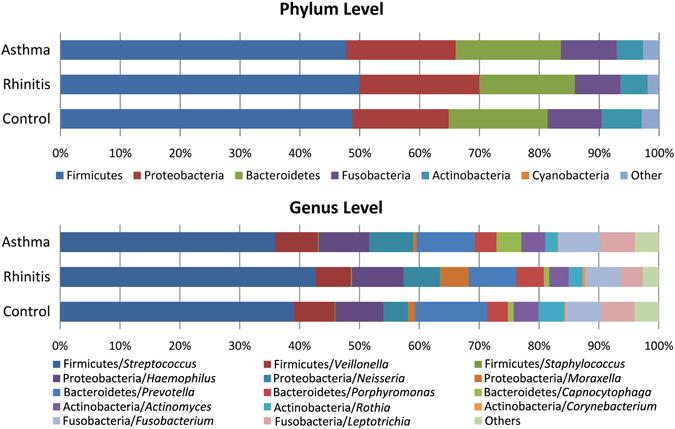
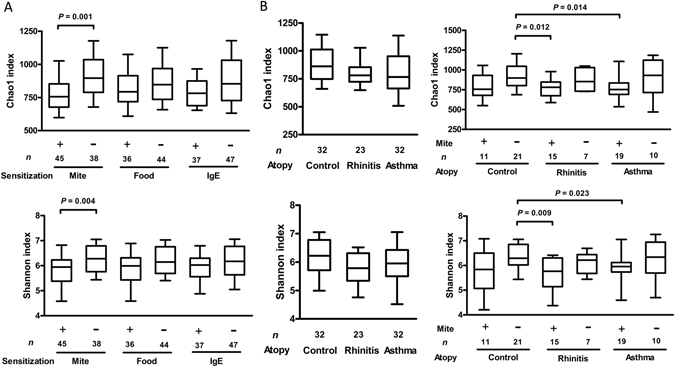
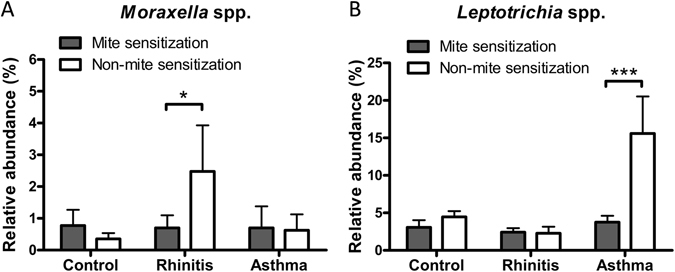
Microbiota plays an important role in regulating immune responses associated with atopic diseases. We sought to evaluate relationships among airway microbiota, serum IgE levels, allergic sensitization and their relevance to rhinitis and asthma. Microbial characterization was performed using Illumina-based 16S rRNA gene sequencing of 87 throat swabs collected from children with asthma (n = 32) and rhinitis (n = 23), and from healthy controls (n = 32). Data analysis was performed using QIIME (Quantitative Insights Into Microbial Ecology) v1.8. Significantly higher abundance of Proteobacteria was found in children with rhinitis than in the healthy controls (20.1% vs. 16.1%, P = 0.009). Bacterial species richness (Chao1 index) and diversity (Shannon index) were significantly reduced in children with mite sensitization but not in those with food or IgE sensitization. Compared with healthy children without mite sensitization, the mite-sensitized children with rhinitis and asthma showed significantly lower Chao1 and Shannon indices. Moraxella and Leptotrichia species were significantly found in the interaction of mite sensitization with rhinitis and asthma respectively. Airway microbial diversity appears to be inversely associated with sensitization to house dust mites. A modulation between airway dysbiosis and responses to allergens may potentially cause susceptibility to rhinitis and asthma in early childhood.
Overview
The claims and statistics of this paper haven’t been checked yet.
Free: it reads the open-access text and checks the first 5 claims that cite a source we can check. Create a free account to check every claim.
Integrity signals
Registry
Cites
Statistics
Figures
Verification
Claims the paper makes
The claims and statistics of this paper haven’t been checked yet.
Free: it reads the open-access text and checks the first 5 claims that cite a source we can check. Create a free account to check every claim.
Claims other papers make about this one
Each is checked against this paper’s own text: does it say what the citing paper says it does?
The source backs part of the claim, not all of it — or backs it for a different population, condition or comparison.
In the citing paper
“Accordingly, modulation between airway dysbiosis and allergen response has been associated with the worsening of allergy symptoms (559, 560).”
From Aspergillus fumigatus and Aspergillosis in 2019 (2019) · cites this paper as [559]
Experimental — accuracy not yet measuredThe source backs part of the claim, not all of it — or backs it for a different population, condition or comparison.
In the citing paper
“Activities such as hiking promote microbial diversity, which is essential for immune resilience, whereas urbanization and limited natural exposure have been associated with increased chronic disease risk [41,42,43,44,45,46,47].”
From The Power of Environment: A Comprehensive Review of the Exposome's Role in Healthy Aging, Longevity, and Preventive Medicine-Lessons from Blue Zones and Cilento (2025) · cites this paper as [43]
Experimental — accuracy not yet measured
Self-check
Percentages, sums and reported differences re-computed from the paper’s own numbers.
The self-check needs the paper’s full text.
Citations
Cites
QIIME allows analysis of high-throughput community sequencing data
Caporaso, J. G., Kuczynski, J., Stombaugh, J., Bittinger, K., Bushman, F. D., Costello, E. K., Fierer, N., Peña, A. G., Goodrich, J. K., Gordon, J. I., et al. (2010) · Nature Methods · doi:10.1038/nmeth.f.303 · Cited by 34,887
Search and clustering orders of magnitude faster than BLAST
Edgar, R. C. (2010) · Bioinformatics · doi:10.1093/bioinformatics/btq461 · Cited by 20,826
Statistical significance for genomewide studies
Storey, J. D., & Tibshirani, R. (2003) · Proceedings of the National Academy of Sciences · doi:10.1073/pnas.1530509100 · Cited by 9,692
McDonald, D., Price, M. N., Goodrich, J., Nawrocki, E. P., DeSantis, T. Z., Probst, A., Andersen, G. L., Knight, R., & Hugenholtz, P. (2012) · The ISME Journal · doi:10.1038/ismej.2011.139 · Cited by 5,064
The human microbiome: at the interface of health and disease
Cho, I., & Blaser, M. J. (2012) · Nature Reviews Genetics · doi:10.1038/nrg3182 · Cited by 3,449
Differential abundance analysis for microbial marker-gene surveys
Paulson, J. N., Stine, O. C., Bravo, H. C., & Pop, M. (2013) · Nature Methods · doi:10.1038/nmeth.2658 · Cited by 2,428
Pathogen Recognition by the Innate Immune System
Kumar, H., Kawai, T., & Akira, S. (2011) · International Reviews of Immunology · doi:10.3109/08830185.2010.529976 · Cited by 2,257
PANDAseq: paired-end assembler for Illumina sequences
Masella, A. P., Bartram, A. K., Truszkowski, J. M., Brown, D. G., & Neufeld, J. D. (2012) · BMC Bioinformatics · doi:10.1186/1471-2105-13-31 · Cited by 2,132
Disordered Microbial Communities in Asthmatic Airways
Hilty, M., Burke, C., Pedro, H., Cardenas, P., Bush, A., Bossley, C., Davies, J., Ervine, A., Poulter, L., Pachter, L., et al. (2010) · PLoS ONE · doi:10.1371/journal.pone.0008578 · Cited by 1,824
Measuring beta diversity for presence–absence data
Koleff, P., Gaston, K. J., & Lennon, J. J. (2003) · Journal of Animal Ecology · doi:10.1046/j.1365-2656.2003.00710.x · Cited by 1,736
Cited by
Aspergillus fumigatus and Aspergillosis in 2019
Latgé, J.-P., & Chamilos, G. (2019) · Clinical Microbiology Reviews · doi:10.1128/cmr.00140-18 · Cited by 1,400
Role of the microbiome in human development
Dominguez-Bello, M. G., Godoy-Vitorino, F., Knight, R., & Blaser, M. J. (2019) · Gut · doi:10.1136/gutjnl-2018-317503 · Cited by 783
“Indeed, it seems possible that some bacterial cells of the uterine cervix 10 may enter with the sperm during fertilisation and reach the egg at the time of fertilisation, implantation or early embryonic development.”
BackgroundLeptotrichia species in human infections II
Eribe, E. R. K., & Olsen, I. (2017) · Journal of Oral Microbiology · doi:10.1080/20002297.2017.1368848 · Cited by 172
“Also, human skin emanation samples and oropharyngeal samples of mite-food-sensitized children with rhinitis and asthma were found to contain Leptotrichia species [31,92].”
BackgroundSokolowska, M., Frei, R., Lunjani, N., Akdis, C. A., & O’Mahony, L. (2018) · Asthma Research and Practice · doi:10.1186/s40733-017-0037-y · Cited by 148
“Indeed, airway microbial diversity appears to be inversely associated with sensitization to house dust mites in early childhood [81, 82].”
BackgroundRecent developments and highlights in mechanisms of allergic diseases: Microbiome
Lunjani, N., Satitsuksanoa, P., Lukasik, Z., Sokolowska, M., Eiwegger, T., & O'Mahony, L. (2018) · Allergy · doi:10.1111/all.13634 · Cited by 120
“with rhinitis, which may be clinically important given the Proteobacteria‐related asthma associations described above.(69) Dysbiosis of the inferior turbinate mucosa microbiota, particularly an increase in”
BackgroundChiu, C.-Y., Chan, Y.-L., Tsai, M.-H., Wang, C.-J., Chiang, M.-H., & Chiu, C.-C. (2019) · World Allergy Organization Journal · doi:10.1016/j.waojou.2019.100021 · Cited by 118
Self-citationChiu, C., Cheng, M., Chiang, M., Kuo, Y., Tsai, M., Chiu, C., & Lin, G. (2019) · Pediatric Allergy and Immunology · doi:10.1111/pai.13096 · Cited by 120
Self-citationValverde-Molina, J., & García-Marcos, L. (2023) · Nutrients · doi:10.3390/nu15030486 · Cited by 92
“Dysbiosis may influence the presence of allergic reactions in response to exposure to allergens, which may cause susceptibility to asthma in early infancy [76].”
BackgroundTa, L. D. H., Yap, G. C., Tay, C. J. X., Lim, A. S. M., Huang, C., Chu, C. W., de Sessions, P. F., Shek, L. P., Goh, A. E. N., Bever, H. P. S. V., et al. (2018) · Journal of Allergy and Clinical Immunology · doi:10.1016/j.jaci.2018.01.032 · Cited by 96
Self-citationEpithelial Barrier in the Nasal Mucosa, Related Risk Factors and Diseases
Zhang, R., Zhang, L., Li, P., Pang, K., Liu, H., & Tian, L. (2023) · International Archives of Allergy and Immunology · doi:10.1159/000528969 · Cited by 105
The neighbourhood natural environment is associated with asthma in children: A birth cohort study
Cavaleiro Rufo, J., Paciência, I., Hoffimann, E., Moreira, A., Barros, H., & Ribeiro, A. I. (2021) · Allergy · doi:10.1111/all.14493 · Cited by 80
Yuan, Y., Wang, C., Wang, G., Guo, X., Jiang, S., Zuo, X., Wang, X., Hsu, A., Qi, M., & Wang, F. (2022) · Frontiers in Immunology · doi:10.3389/fimmu.2021.771136 · Cited by 89
“However, the results are inconsistent as to whether there are differences in the diversity of airway microbiota between AR and HC (38, 44), which may be due to the different regional environments, different types of allergens and different amounts of allergens in the study population.”
BackgroundSelf-citationMicrobial Dysbiosis Tunes the Immune Response Towards Allergic Disease Outcomes
Augustine, T., Kumar, M., Khodor, S. A., & van Panhuys, N. (2022) · Clinical Reviews in Allergy & Immunology · doi:10.1007/s12016-022-08939-9 · Cited by 86
“Other common microbial populations found in the mucosal airways of asthmatic patients include Prevotella, Selenomonas, Butyrivibrio, [97], and Neisseria [97, 101].”
BackgroundMicrobiome and the immune system: From a healthy steady-state to allergy associated disruption
Mezouar, S., Chantran, Y., Michel, J., Fabre, A., Dubus, J. ‐., Léone, M., Sérémé, Y., Mège, J., Ranque, S., Desnues, B., et al. (2018) · Human Microbiome Journal · doi:10.1016/j.humic.2018.10.001 · Cited by 83
Qiu, P., Dong, Y. H., Zhu, T., Luo, Y., Kang, X., Pang, M.-X., Li, H., Xu, H., Gu, C., Pan, S.-H., et al. (2018) · Phytomedicine · doi:10.1016/j.phymed.2018.09.209 · Cited by 54
Chiu, C., Chan, Y., Tsai, M., Wang, C., Chiang, M., Chiu, C., & Su, S. (2020) · Scientific Reports · doi:10.1038/s41598-020-70528-7 · Cited by 59
Self-citationChiu, C., Cheng, M., Chiang, M., Wang, C., Tsai, M., & Lin, G. (2020) · Journal of Clinical Medicine · doi:10.3390/jcm9030887 · Cited by 57
“Asthma associated plasma histidine was not correlated with any urine metabolites, whereas urine 1-methylnicotinamide and TMAO showed a strong positive correlation with plasma mannose and lysine, respectively.”
MethodSelf-citationChiu, C., Chou, H., Chang, L., Fan, W., Dinh, M. C. V., Kuo, Y., Chung, W., Lai, H., Hsieh, W., & Su, S. (2020) · Allergy · doi:10.1111/all.14438 · Cited by 46
Self-citationGan, W., Yang, F., Meng, J., Liu, F., Liu, S., & Xian, J. (2020) · European Archives of Oto-Rhino-Laryngology · doi:10.1007/s00405-020-06311-1 · Cited by 44
Lung Microbiome Participation in Local Immune Response Regulation in Respiratory Diseases
Lira-Lucio, J. A., Falfán‐Valencia, R., Ramírez‐Venegas, A., Buendía-Roldán, I., Rojas‐Serrano, J., Mejía, M. E., & Pérez-Rubio, G. (2020) · Microorganisms · doi:10.3390/microorganisms8071059 · Cited by 51
“Asthma is a chronic and heterogeneous respiratory disease involving eosinophilic and noneosinophilic inflammatory pathways; in recent decades, despite new therapeutic options, improved sanitary conditions, and access to the health system, its prevalence has increased in industrialized countries; although the hereditar…”
BackgroundNotarbartolo, V., Carta, M., Accomando, S., & Giuffrè, M. (2023) · Nutrients · doi:10.3390/nu15184014 · Cited by 55
“In fact, microbial diversity seems to be inversely associated with the risk of developing allergic pathologies [68].”
BackgroundSmoking related environmental microbes affecting the pulmonary microbiome in Chinese population
Liu, X., Sun, W., Ma, W., Wang, H., Xu, K., Zhao, L., & He, Y. (2022) · The Science of The Total Environment · doi:10.1016/j.scitotenv.2022.154652 · Cited by 37
Human microbial ecology and the rising new medicine
Godoy‐Vitorino, F. (2019) · Annals of Translational Medicine · doi:10.21037/atm.2019.06.56 · Cited by 40
“The human-associated microbiota colonizes either the surfaces of the host epithelium or their fluids, including the skin (26), the airways (27), oral sites (28), vaginal/cervical (29) or the gut (30).”
BackgroundChoi, R., Ham, J. R., Ryu, H.-S., Lee, S., Miguel, M. A., Paik, M., Ji, M., Park, K.-W., Kang, K.-Y., Lee, H.-I., et al. (2020) · Nutrients · doi:10.3390/nu12051426 · Cited by 36
“The bacterial community richness, evenness, and diversity were measured using the Chao1 index, Shannon index, and inverse Simpson index, respectively [32].”
Chiu, C., Cheng, M., Chiang, M., Wang, C., Tsai, M., & Lin, G. (2021) · Scientific Reports · doi:10.1038/s41598-021-02925-5 · Cited by 36
Self-citationAssociation of upper airway bacterial microbiota and asthma: systematic review
Losol, P., Park, H.-S., Song, W., Hwang, Y.-K., Kim, S., Holloway, J. W., & Chang, Y. (2022) · Asia Pacific Allergy · doi:10.5415/apallergy.2022.12.e32 · Cited by 39
“In children with asthma, nasal microbiota dominated by Corynebacterium and Dolosigranulum may reduce loss of asthma control, compared to clusters dominated with Moraxella, Staphylococcus, and Streptococcus [3].”
BackgroundResultInfluentialAliberti, S. M., & Capunzo, M. (2025) · Nutrients · doi:10.3390/nu17040722 · Cited by 29
Gosens, R., Hiemstra, P. S., Adcock, I. M., Bracke, K. R., Dickson, R. P., Hansbro, P. M., Krauss‐Etschmann, S., Smits, H. H., Stassen, F. R. M., & Bartel, S. (2020) · European Respiratory Journal · doi:10.1183/13993003.02320-2019 · Cited by 31
Urine Bacteria-Derived Extracellular Vesicles and Allergic Airway Diseases in Children
Samra, M. S., Nam, S. K., Lim, D. H., Kim, D. H., Yang, J., Kim, Y., & Kim, J. H. (2018) · International Archives of Allergy and Immunology · doi:10.1159/000492677 · Cited by 29
Rufo, J. C., Ribeiro, A. I., Paciência, I., Delgado, L., & Moreira, A. M. (2020) · Pediatric Allergy and Immunology · doi:10.1111/pai.13213 · Cited by 26
Sdona, E., Ekström, S., Andersson, N., Håkansson, N., Wolk, A., Westman, M., van Hage, M., Kull, I., Melén, E., & Bergström, A. (2022) · Clinical and Translational Allergy · doi:10.1002/clt2.12188 · Cited by 22
“47,48 Major strengths of our study include the population ‐ based prospective longitudinal design, long follow ‐ up time with limited loss to follow ‐ up.”
Paciência, I., Sharma, N., Hugg, T. T., Rantala, A. K., Heibati, B., Al‐Delaimy, W. K., Jaakkola, M. S., & Jaakkola, J. J. K. (2024) · Environmental Health Perspectives · doi:10.1289/ehp13948 · Cited by 28
Microbiome in Nasal Mucosa of Children and Adolescents with Allergic Rhinitis: A Systematic Review
Azevedo, A. C., Hilário, S., & Gonçalves, M. F. M. (2023) · Children · doi:10.3390/children10020226 · Cited by 27
Wang, Y., Li, X., Gu, S., & Fu, J. (2023) · Frontiers in Immunology · doi:10.3389/fimmu.2023.1079154 · Cited by 27
Association of Allergic Diseases and Related Conditions with Dietary Fiber Intake in Korean Adults
Lee, H., Lee, K., Son, S., Kim, Y. C., Kwak, J. W., Kim, H. G., Lee, S. H., & Kim, T. H. (2021) · International Journal of Environmental Research and Public Health · doi:10.3390/ijerph18062889 · Cited by 19
“Further research is needed on the mechanism of different effects of dietary fiber intake depending on the allergen type [36].”
BackgroundA Novel Approach Based on Bi-Random Walk to Predict Microbe-Disease Associations
Shen, X., Zhu, H., Jiang, X., Hu, X. T., & Yang, J. (2018) · Lecture notes in computer science · doi:10.1007/978-3-319-95957-3_78 · Cited by 19
Tay, C. J. X., Ta, L. D. H., Yeong, Y. X. O., Yap, G. C., Chu, J. J. H., Lee, B. W., & Tham, E. H. (2021) · International Archives of Allergy and Immunology · doi:10.1159/000513325 · Cited by 20
Guo, Z., Huang, L., & Lai, S. (2024) · Heliyon · doi:10.1016/j.heliyon.2024.e24528 · Cited by 26
Multiplex fatty acid imaging inside cells by Raman microscopy
Uematsu, M., Kita, Y., Shimizu, T., & Shindou, H. (2020) · The FASEB Journal · doi:10.1096/fj.202000514r · Cited by 16
Nasopharyngeal microbial profiles associated with the risk of airway allergies in early childhood
Tsai, M., Shih, H.-J., Su, K., Liao, S., Hua, M., Yao, T., Lai, S., Yeh, K., Chen, L., Huang, J., et al. (2022) · Journal of Microbiology Immunology and Infection · doi:10.1016/j.jmii.2022.01.006 · Cited by 17
Self-citationThe role of the environment in shaping the trends of childhood asthma – An Asian perspective
Leung, A. S. Y., Tham, E. H., Li, J., Pacharn, P., Takizawa, T., Lee, E., Xing, Y., Leung, T. F., Hong, S., & Wong, G. (2021) · Pediatric Allergy and Immunology · doi:10.1111/pai.13508 · Cited by 14
Ramos-Tapia, I., Reynaldos-Grandón, K. L., Pérez‐Losada, M., & Castro‐Nallar, E. (2023) · Frontiers in Allergy · doi:10.3389/falgy.2023.1223306 · Cited by 12
Hanif, T., Dhaygude, K., Kankainen, M., Renkonen, J., Mattila, P., Ojala, T., Joenväärä, S., Mäkelä, M. J., Pelkonen, A. S., Kauppi, P., et al. (2019) · Journal of Allergy and Clinical Immunology · doi:10.1016/j.jaci.2019.02.002 · Cited by 15
Lung microbiota dysbiosis and the implications of SARS-CoV-2 infection in pregnancy
Ezechukwu, H. C., Diya, C. A., Egoh, I. J., Abiodun, M. J., Grace, J.-U. A., Okoh, G. R., Adu, K. T., & Adegboye, O. A. (2021) · Therapeutic Advances in Infectious Disease · doi:10.1177/20499361211032453 · Cited by 15
Linking the westernised oropharyngeal microbiome to the immune response in Chinese immigrants
Guo, J., Zhang, X., Saiganesh, A., Peacock, C. S., Chen, S., Dykes, G. A., Hales, B. J., Souëf, P. N. L., & Zhang, G. (2020) · Allergy Asthma and Clinical Immunology · doi:10.1186/s13223-020-00465-7 · Cited by 12
Self-citationThe Airway Microbiota Signatures of Infection and Rejection in Lung Transplant Recipients
Su, J., Li, C., Liu, H., Lian, Q., Chen, A., You, Z., Li, K., Cai, Y., Lin, Y.-X., Pan, J.-B., et al. (2022) · Microbiology Spectrum · doi:10.1128/spectrum.00344-21 · Cited by 14
“In addition, Rothia, Granulicatella, Neisseria, Actinomyces ̧Leptotrichia, Lactobacillus and unclassi ed Aerococcaceae have been found to be associated with asthma [38-44], suggesting an interaction between these microbiota constituents and the immune system in the lung.”
BackgroundThe Changes in Bacterial Microbiome Associated with Immune Disorder in Allergic Respiratory Disease
Lyu, J., Kou, F., Men, X., Liu, Y., Tang, L., & Shu, W. (2022) · Microorganisms · doi:10.3390/microorganisms10102066 · Cited by 10
“In the current study, samples from AR patients analyzed were mainly collected from the upper respiratory tract and intestine, samples from CRS patients were mainly focused on the upper respiratory tract, and samples from asthmatic patients were more widely distributed, including upper and lower respiratory tract and i…”
BackgroundInfluentialLau, A. S.-Y., Mitsuyama, E., Odamaki, T., Xiao, J., & Liong, M. (2019) · Journal of Medicinal Food · doi:10.1089/jmf.2018.4276 · Cited by 10
“55 Meanwhile, a decrease in Actinobacteria, which is .”
Dedikova, O. V., Zakharova, I. N., Kuchina, A. E., Berezhnaya, I. V., & Sugian, N. G. (2023) · Pediatrics Consilium Medicum · doi:10.26442/26586630.2023.1.202092 · Cited by 10
Microecology research: a new target for the prevention of asthma
Shi, H., Lan, Y.-H., Hu, Z.-C., Yan, Z.-N., Liu, Z., Kadier, X., Ma, L., Yu, J., & Liu, J. (2020) · Chinese Medical Journal · doi:10.1097/cm9.0000000000001127 · Cited by 9
Liu, S., Lin, Z., You, L., Zhou, J., Yang, Q., Hu, Z., Liang, Y., & Sun, B. (2025) · World Allergy Organization Journal · doi:10.1016/j.waojou.2025.101132 · Cited by 6
“37 In contrast to Cluster 2, Cluster 1 has a higher diversity of the respiratory microbiome, which is somewhat contrary to our initial expectations.”
Shen, Y., Liu, C., Luo, J., Wang, J., & Zhang, D. (2022) · Journal of Healthcare Engineering · doi:10.1155/2022/5186991 · Cited by 6
“At present, in otorhinolaryngologyrelated diseases, a complicated bacterial spectrum such as rhinosinusitis [7, 8], otitis media [9], and allergic rhinitis [10, 11] has been identified by second-generation sequencing.”
BackgroundHomma, T., Kawahara, T., Mikuni, H., Uno, T., Sato, H., Fujiwara, A., Uchida, Y., Fukuda, Y., Manabe, R., Ida, H., et al. (2019) · International Archives of Allergy and Immunology · doi:10.1159/000495761 · Cited by 6
McKay, J. A., Crown, M. R., Bashton, M., Pearce, D. A., Entwistle, J., & Sangal, V. (2024) · Environmental Microbiology Reports · doi:10.1111/1758-2229.13233 · Cited by 9
“Human-associated taxa were more prevalent among the home samples, whereas environmental microbes which were previously reported to be associated with decreased risk of some NCDs are more abundant in dust samples from daycare settings.”
BackgroundInfluentialDu, L., Cheng, X., Liu, B., Hao, Y., Long, Z., Hu, Q., Huo, B., Xie, T., Cheng, Q., Zhou, Y., et al. (2025) · International Journal of Molecular Sciences · doi:10.3390/ijms262412061 · Cited by 9
“Moraxella had a significant interaction with dust mite sensitization and the pathogenesis of AR, and it was a key microbiota involved in the occurrence of AR associated with dust mite exposure [42].”
InfluentialHershey, G. K. K., Sherenian, M. G., & Baye, T. M. (2022) · Elsevier eBooks · doi:10.1016/b978-0-323-80912-2.00002-0 · Cited by 6
Yu, H., Tsai, J., Lin, C. R., Wang, J., Wen, Y.-H., Wu, S. S., Hou, Y., Lee, I., Tu, H., & Lee, Y.-C. (2019) · Allergology International · doi:10.1016/j.alit.2019.06.001 · Cited by 6
Chang, Y., Yeh, K., Huang, J., Su, K., Tsai, M., Hua, M., Liao, S., Lai, S., Chen, L., & Chiu, C. (2022) · Pediatric Allergy and Immunology · doi:10.1111/pai.13785 · Cited by 5
Self-citationDobrakowski, Ł., Łacwik, P., Mucha, M., Rychlik, B., Błauż, A., Seweryn, M. T., Strapagiel, D., Majak, J., Feleszko, W., Antczak, A. J., et al. (2025) · Clinical & Experimental Allergy · doi:10.1111/cea.70029 · Cited by 3
Liu, H., Li, Z., Zhang, X., Zhao, J., Chai, J., & Chang, C. (2025) · Microorganisms · doi:10.3390/microorganisms13081761 · Cited by 4
“However, Parabacteroides , Lachnospiraceae , Leptotrichia , Bacteroides , and Parasut-terella were found to be enriched in the patients with asthma, consistent with the previous findings [28–30].”
Woo, C., Bhuiyan, M. I. U., Kim, D., Kumari, P., Lee, S.-K., Park, J. Y., Dong, K., Lee, K., & Yamamoto, N. (2022) · Experimental and Applied Acarology · doi:10.1007/s10493-022-00755-2 · Cited by 3
Effects of chronic allergic lung inflammation on gut microbiota and depression-like behavior in mice
Kanaya, A., Luković, E., Emala, C. W., & Mikami, M. (2025) · doi:10.37349/eaa.2025.100978 · Cited by 2
“For example, previous studies reported stool microbial composition in children with mite-sensitized asthma and rhinitis [17]; however, associated symptoms in patients were not investigated.”
The role of virus in nasal inflammation
Wang, C., Zhang, Y.-M., Li, M., & Cheng, K. (2025) · European journal of medical research · doi:10.1186/s40001-025-03516-0 · Cited by 2
“In children, reduced microbial diversity in the nasal cavity may be associated with subsequent rhinitis, asthma, as well as allergen sensitization [16].”
Self-citationSubgingival biofilm microbiome in individuals with asthma and periodontitis: Metagenomic analysis
Pinto, G. R., Filho, P. C. C., Carvalho, R. D. D. O., Conceição, R. R., Fortuna, V., Gomes‐Filho, I. S., Trindade, S. C., & Sarmento, V. A. (2024) · Oral Diseases · doi:10.1111/odi.14913 · Cited by 3
Pharyngeal Microbiome in Atopic Dermatitis: A 16S rRNA Sequencing Study
Zhang, T., Shi, J., Li, X., Liu, H., Wei, Y., & Li, H. (2025) · Experimental Dermatology · doi:10.1111/exd.70031 · Cited by 2
Ye, X., Tan, S.-Y., Ma, Q., Wang, Z., Wu, T., Mao, Z., Wang, Q., Zheng, C., Peng, X., You, F., et al. (2025) · International Journal of Surgery · doi:10.1097/js9.0000000000004331 · Cited by 1
“Neisseria , another key genus, is part of the normal upper respiratory microbiota [ 66 , 67 ] .”
The impact of microbiota and diet on asthma
Adrover, C. S., & Marull, I. P. (2017) · Dipòsit Digital de Documents de la UAB (Universitat Autònoma de Barcelona)
The Airway Microbiota Signatures of Infection and Rejection in Lung Transplant RecipientsPreprint
Su, J., Li, C., Liu, H., Chen, A., You, Z., Lian, Q., Li, K., Cai, Y., Lin, Y.-X., Pan, J.-B., et al. (2021) · Research Square · doi:10.21203/rs.3.rs-304542/v1
A METAGENOMIC ASSESSMENT OF BACTERIAL CONTAMINATION OF DUST EVENTS IN SENEGAL
Marone, A., Mbengue, M., Jenkins, G., Niang, D. N., Dramé, M. S., Kanteh, A., Khan, D., Antonio, M., & Touré‐Kâne, C. (2021) · International Journal of Advanced Research · doi:10.21474/ijar01/12610
“…are the most common pathogens in acute and chronic sinusitis and otitis media, which are usually complicated by poorly controlled symptoms of allergic rhinitis (Chiu 2017) Neisseria species have been identified to be abundant in asthmatics and related to the degree of eosinophilic inflammation.”
BackgroundInfluentialThe changes of microbiota associated with immunological disturbances in allergic respiratory diseasePreprint
Lyu, J., Kou, F., Men, X., Liu, Y., Tang, L., & Wen, S. (2022) · doi:10.22541/au.164905942.28613699/v1
Reviewer response for version 1
Walsh, C. J. (2022) · doi:10.1099/acmi.0.000497.v1.3
Rudkin, J. (2022) · doi:10.1099/acmi.0.000497.v1.5
Rudkin, J. (2022) · doi:10.1099/acmi.0.000497.v2.5
Reviewer response for version 2
Walsh, C. J. (2022) · doi:10.1099/acmi.0.000497.v2.3
Rashad, A., Bahgat, M., ELBadawy, N. E., Sayed, A. E., & El-Hady, H. I. A. (2023) · The Egyptian Journal of Medical Microbiology · doi:10.21608/ejmm.2023.312061
Acute Bronchiolitis and Other Predictors for Early Diagnosis of Childhood Asthma
Risteska-Nejasmic, V., & Gjorgjievski, D. (2023) · South East European Journal of Immunology · doi:10.3889/seejim.2023.6049
“In addition, a strong association between childhood asthma and allergic rhinitis was found [21].”
BackgroundGuo, J., Zhang, X., Saiganesh, A., Peacock, C. S., Chen, S., Dykes, G. A., Hales, B. J., Souëf, P. N. L., & Zhang, G. (2020) · Figshare · doi:10.6084/m9.figshare.12720031
Self-citationGuo, J., Zhang, X., Saiganesh, A., Peacock, C. S., Chen, S., Dykes, G. A., Hales, B. J., Souëf, P. N. L., & Zhang, G. (2020) · Figshare · doi:10.6084/m9.figshare.12720028
Self-citationWang, N., Chen, J., Li, J., Wei, H., He, L., An, Z., Wu, W., & Li, J. (2026) · Environmental Pollution · doi:10.1016/j.envpol.2026.129207 · Cited by 1
Metadata
- Authors
- Chiu, C.-Y., Chan, Y.-L., Tsai, Y.-S., Chen, S.-A., Wang, C.-J., Chen, K.-F., & Chung, I.-F.
- Affiliations
- Chang Gung University (TW)
- Chang Gung Memorial Hospital (TW)
- National Yang Ming University (TW)
- Corresponding author
- Chiu, Chih-Yung
- Chung, I.-Fang
- Venue
- Scientific Reports
- Published
- 2017-05-12
- Volume
- 7
- Issue
- 1
- Pages
- 1820-1820
- ISSN
- 2045-2322 (ISSN-L)
- PMC
- PMC5431806
- OpenAlex
- W2613895329
- Cited by
- 84
- References
- 50
- Citations by year
- 2026: 1 · 2025: 9 · 2024: 4 · 2023: 10 · 2022: 20 · 2021: 8 · 2020: 14 · 2019: 8 · 2018: 8 · 2017: 2
- FWCI
- 6.42
- Type
- journal article
- Language
- en
- Open access
- gold
- doi.org
- Licence
- cc-by
- creativecommons.org/licenses/by/4.0 (tdm)
- creativecommons.org/licenses/by/4.0 (vor)
- Locations
- Scientific Reports (publishedVersion, cc-by)
- PubMed Central (publishedVersion, cc-by)
- PubMed (publishedVersion)
- DOAJ (DOAJ: Directory of Open Access Journals) (submittedVersion, cc-by-sa)
- Funders
- Chang Gung University
- Chang Gung Medical Foundation (CMRPG2E0301)
- National Yang-Ming University
- Topics
- Health Sciences › Medicine › Pulmonary and Respiratory Medicine › Asthma and respiratory diseases
- Health Sciences › Medicine › Immunology and Allergy › Allergic Rhinitis and Sensitization
- Physical Sciences › Environmental Science › Health, Toxicology and Mutagenesis › Indoor Air Quality and Microbial Exposure
- Keywords
- airway microbiome, house dust mite sensitization, allergic rhinitis, childhood asthma, atopic sensitization, serum IgE, Proteobacteria, bacterial diversity, dysbiosis, Moraxella, Leptotrichia, food sensitization
- MeSH terms
- Allergens, Animals, Asthma, Child, Preschool, Disease Susceptibility, Female, Humans, Immunization, Male, Mites, Case-Control Studies, Respiratory Mucosa, Biodiversity, Microbiota, Rhinitis, Allergic
About these checks
Registry, retraction, Cites and statistics results are computed, not judged, with one exception: a printed reference that no index lists is read once by a model before it counts as a citation error. Claims are extracted by a model and kept only when their quote appears verbatim in the text; each cited source is then checked, with a model’s help, for whether it says what the claim relies on. Those verdicts can be wrong — read the claim’s quote and the cited source before relying on one.
Statistics and arithmetic are recomputed, not judged.
Confidence bands are shown only for fields calibrated on our annotated test set. None is calibrated yet, so no band is shown.
What counts as a claim ›How we measure confidence ›How we check this ›
Are you an author, or do you see a problem with this page? Request a review
Data sources
Bibliographic data: Semantic Scholar, OpenAlex, Crossref.
Contains information from the Semantic Scholar Academic Graph Datasets, made available under the ODC Attribution License (ODC-BY 1.0).
Semantic Scholar’s data is described in: Kinney, R., et al. (2023). The Semantic Scholar Open Data Platform. arXiv:2301.10140.
