

RGD delivery of truncated coagulase to tumor vasculature affords local thrombotic activity to induce infarction of tumors in mice
Open accessThe DOI matches its Crossref record; 46 of the 46 references it cites were found in a registry or an index.
Abstract
Induction of thrombosis in tumor vasculature represents an appealing strategy for combating cancer. Herein, we combined unique intrinsic coagulation properties of staphylocoagulase with new acquired functional potentials introduced by genetic engineering, to generate a novel bi-functional fusion protein consisting of truncated coagulase (tCoa) bearing an RGD motif on its C-terminus for cancer therapy. We demonstrated that free coagulase failed to elicit any significant thrombotic activity. Conversely, RGD delivery of coagulase retained coagulase activity and afforded favorable interaction of fusion proteins with prothrombin and α v β 3 endothelial cell receptors, as verified by in silico, in vitro, and in vivo experiments. Although free coagulase elicited robust coagulase activity in vitro, only targeted coagulase (tCoa-RGD) was capable of producing extensive thrombosis, and subsequent infarction and massive necrosis of CT26 mouse colon, 4T1 mouse mammary and SKOV3 human ovarian tumors in mice. Additionally, systemic injections of lower doses of tCoa-RGD produced striking tumor growth inhibition of CT26, 4T1 and SKOV3 solid tumors in animals. Altogether, the nontoxic nature, unique shortcut mechanism, minimal effective dose, wide therapeutic window, efficient induction of thrombosis, local effects and susceptibility of human blood to coagulase suggest tCoa-RGD fusion proteins as a novel and promising anticancer therapy for human trials.
Overview
The claims and statistics of this paper haven’t been checked yet.
Free: it reads the open-access text and checks the first 5 claims that cite a source we can check. Create a free account to check every claim.
Integrity signals
Registry
Cites
Statistics
Figures
Verification
Claims the paper makes
The claims and statistics of this paper haven’t been checked yet.
Free: it reads the open-access text and checks the first 5 claims that cite a source we can check. Create a free account to check every claim.
Claims other papers make about this one
Each is checked against this paper’s own text: does it say what the citing paper says it does?
The check wasn’t confident either way, so it gives no verdict — never disputed.
In the citing paper
“The process of tumor formation and progression is influenced by two factors, namely genetic/epigenetic changes in the tumor cells and the rearrangement of the components of the tumor microenvironment (TME) through mutual and dynamic crosstalk [1].”
From Tumor microenvironment complexity and therapeutic implications at a glance (2020) · cites this paper as [1]
Experimental — accuracy not yet measuredThe check wasn’t confident either way, so it gives no verdict — never disputed.
In the citing paper
“The dynamic interactions of cancer cells with their microenvironment consisting of stromal cells (cellular part) and extracellular matrix (ECM) components (non-cellular) is essential to stimulate the heterogeneity of cancer cell, clonal evolution and to increase the multidrug resistance ending in cancer cell progression and metastasis.”
From Tumor microenvironment complexity and therapeutic implications at a glance (2020) · cites this paper as [1]
Experimental — accuracy not yet measured
Self-check
Percentages, sums and reported differences re-computed from the paper’s own numbers.
The self-check needs the paper’s full text.
Citations
Cites
1 retracted
Javaheri, T., Kazemi, Z., Pencik, J., Pham, H. T., Kauer, M., Noorizadeh, R., Sax, B., Nivarthi, H., Schlederer, M., Maurer, B., et al. (2016) · Cell Death & Disease · doi:10.1038/cddis.2016.268 · Cited by 18
Self-citationRetractedMolecular dynamics with coupling to an external bath
Berendsen, H. J. C., Postma, J. P. M., van Gunsteren, W. F., DiNola, A., & Haak, J. R. (1984) · The Journal of Chemical Physics · doi:10.1063/1.448118 · Cited by 30,700
Particle mesh Ewald: An N ⋅log( N ) method for Ewald sums in large systems
Darden, T., York, D., & Pedersen, L. (1993) · The Journal of Chemical Physics · doi:10.1063/1.464397 · Cited by 30,546
LINCS: A linear constraint solver for molecular simulations
Hess, B., Bekker, H., Berendsen, H. J. C., & Fraaije, J. G. E. M. (1997) · Journal of Computational Chemistry · doi:10.1002/(sici)1096-987x(199709)18:12<1463::aid-jcc4>3.0.co;2-h · Cited by 18,260
GROMACS: A message-passing parallel molecular dynamics implementation
Berendsen, H. J. C., van der Spoel, D., & van Drunen, R. (1995) · Computer Physics Communications · doi:10.1016/0010-4655(95)00042-e · Cited by 10,405
Settle: An analytical version of the SHAKE and RATTLE algorithm for rigid water models
Miyamoto, S., & Kollman, P. A. (1992) · Journal of Computational Chemistry · doi:10.1002/jcc.540130805 · Cited by 7,344
The I-TASSER Suite: protein structure and function prediction
Yang, J., Yan, R., Roy, A., Xu, D., Poisson, J., & Zhang, Y. (2015) · Nature Methods · doi:10.1038/nmeth.3213 · Cited by 5,596
The HADDOCK2.2 Web Server: User-Friendly Integrative Modeling of Biomolecular Complexes
van Zundert, G. C. P., Rodrigues, J. P. G. L. M., Trellet, M., Schmitz, C., Kastritis, P. L., Karaca, E., Melquiond, A. S. J., van Dijk, M., de Vries, S. J., & Bonvin, A. M. J. J. (2016) · Journal of Molecular Biology · doi:10.1016/j.jmb.2015.09.014 · Cited by 2,785
Definition and testing of the GROMOS force-field versions 54A7 and 54B7
Schmid, N., Eichenberger, A. P., Choutko, A., Riniker, S., Winger, M., Mark, A. E., & van Gunsteren, W. F. (2011) · European Biophysics Journal · doi:10.1007/s00249-011-0700-9 · Cited by 2,507
Xiong, J.-P., Stehle, T., Zhang, R., Joachimiak, A., Frech, M., Goodman, S. L., & Arnaout, M. A. (2002) · Science · doi:10.1126/science.1069040 · Cited by 1,613
A consistent empirical potential for water–protein interactions
Hermans, J., Berendsen, H. J. C., Van Gunsteren, W. F., & Postma, J. P. M. (1984) · Biopolymers · doi:10.1002/bip.360230807 · Cited by 773
Tissue factor- and factor X-dependent activation of protease-activated receptor 2 by factor VIIa
Camerer, E., Huang, W., & Coughlin, S. R. (2000) · Proceedings of the National Academy of Sciences · doi:10.1073/pnas.97.10.5255 · Cited by 675
Nierodzik, M. L., & Karpatkin, S. (2006) · Cancer Cell · doi:10.1016/j.ccr.2006.10.002 · Cited by 502
Tumor Infarction in Mice by Antibody-Directed Targeting of Tissue Factor to Tumor Vasculature
Huang, X., Molema, G., King, S., Watkins, L., Edgington, T. S., & Thorpe, P. E. (1997) · Science · doi:10.1126/science.275.5299.547 · Cited by 477
Liu, S. (2009) · Bioconjugate Chemistry · doi:10.1021/bc900167c · Cited by 344
Contribution of Coagulases towards Staphylococcus aureus Disease and Protective Immunity
Cheng, A. G., McAdow, M., Kim, H. K., Bae, T., Missiakas, D. M., & Schneewind, O. (2010) · PLoS Pathogens · doi:10.1371/journal.ppat.1001036 · Cited by 324
Staphylocoagulase is a prototype for the mechanism of cofactor-induced zymogen activation
Friedrich, R., Panizzi, P., Fuentes-Prior, P., Richter, K., Verhamme, I., Anderson, P. J., Kawabata, S.-I., Huber, R., Bode, W., & Bock, P. E. (2003) · Nature · doi:10.1038/nature01962 · Cited by 263 · cited 1×
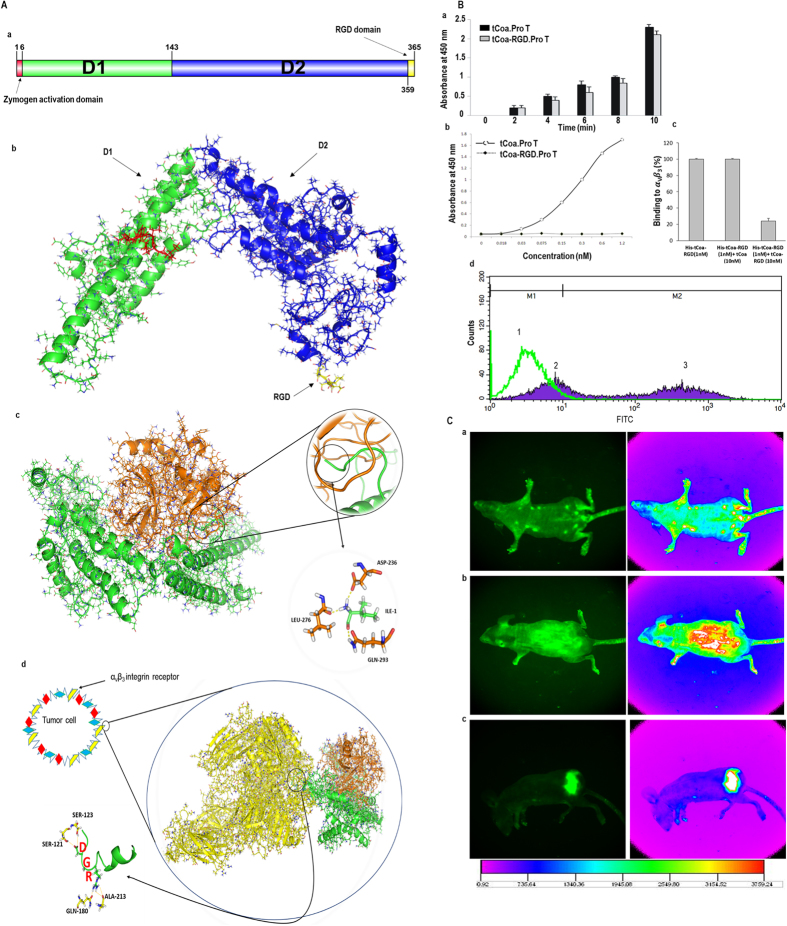
“The modeled structure is docked to prothrombin (PDB: 1nu9 (15)) by HADDOCK 2.”
MethodNilsson, F., Kosmehl, H., Zardi, L., & Neri, D. (2001) · PubMed · Cited by 235
Activation of blood coagulation in cancer: implications for tumour progression
Lima, L. G., & Monteiro, R. Q. (2013) · Bioscience Reports · doi:10.1042/bsr20130057 · Cited by 210
Modulating tumor hypoxia by nanomedicine for effective cancer therapy
Jahanban‐Esfahlan, R., de la Guardia, M., Ahmadi, D., & Yousefi, B. (2018) · Journal of Cellular Physiology · doi:10.1002/jcp.25859 · Cited by 201 · cited 2×
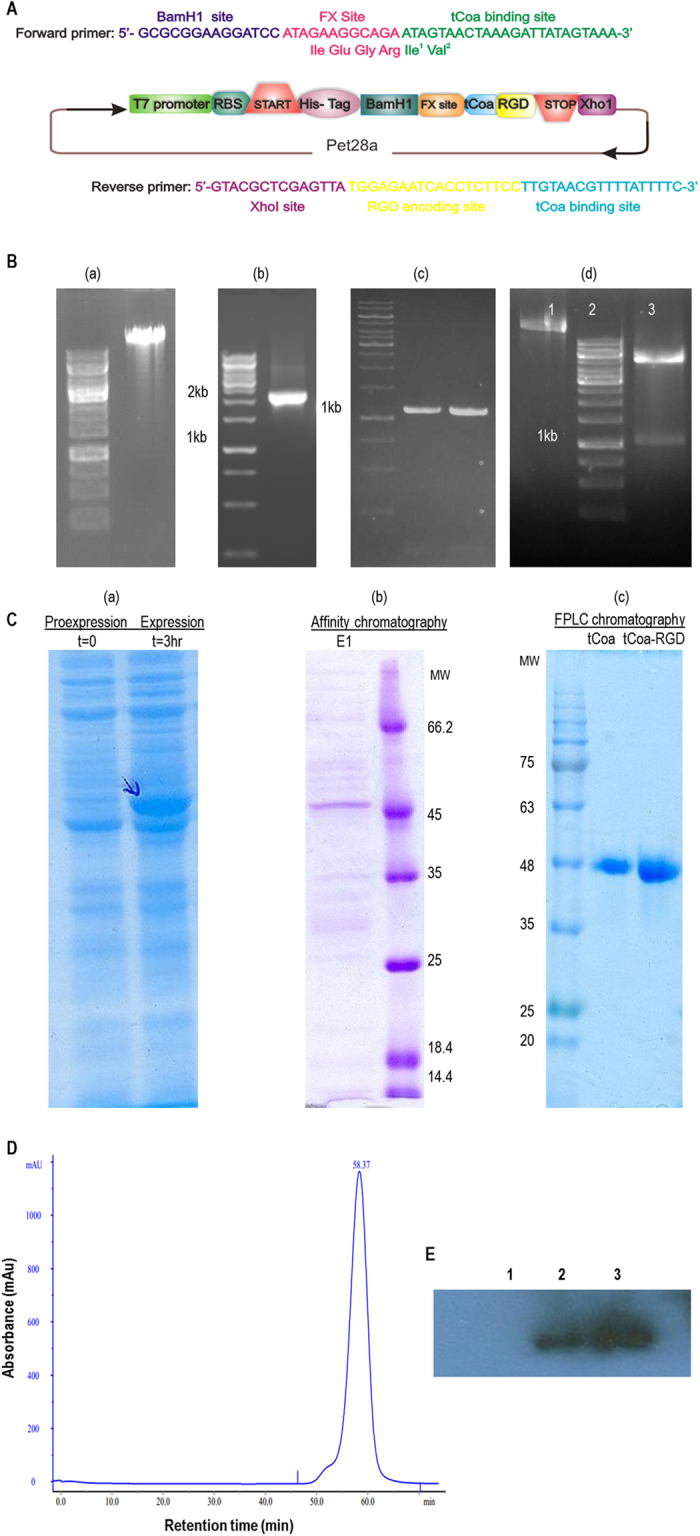
“(E) Western blotting analysis of tCoa-RGD: (1) before protein induction, (2) after protein induction, and (3) after purification, Abbreviations: T = time, E1 = elute1, MW = molecular weight.”
BackgroundMethodSelf-citationThrombin Generation and the Pathogenesis of Cancer
Ruf, W., & Mueller, B. (2006) · Seminars in Thrombosis and Hemostasis · doi:10.1055/s-2006-939555 · Cited by 170
STAT3 regulated ARF expression suppresses prostate cancer metastasis
Pencik, J., Schlederer, M., Gruber, W., Unger, C., Walker, S. M., Chalaris, A., Marié, I. J., Hassler, M. R., Javaheri, T., Aksoy, O., et al. (2015) · Nature Communications · doi:10.1038/ncomms8736 · Cited by 170
Self-citationBode, W., & Huber, R. (1976) · FEBS Letters · doi:10.1016/0014-5793(76)80443-7 · Cited by 155
Bieker, R., Kessler, T., Schwöppe, C., Padró, T., Persigehl, T., Bremer, C., Dreischalück, J., Kolkmeyer, A., Heindel, W., Mesters, R. M., et al. (2009) · Blood · doi:10.1182/blood-2008-04-150318 · Cited by 139 · cited 2×
“(E) Western blotting analysis of tCoa-RGD: (1) before protein induction, (2) after protein induction, and (3) after purification, Abbreviations: T = time, E1 = elute1, MW = molecular weight.”
BackgroundMethodRan, S., Gao, B., Duffy, S. L., Watkins, L. R., Rote, N., & Thorpe, P. E. (1998) · PubMed · Cited by 128
Jiang, X., Bailly, M. A., Panetti, T. S., Cappello, M., Konigsberg, W. H., & Bromberg, M. E. (2004) · Journal of Thrombosis and Haemostasis · doi:10.1111/j.1538-7836.2004.00545.x · Cited by 106
PAR-1 and Thrombin: The Ties That Bind the Microenvironment to Melanoma Metastasis
Zigler, M., Kamiya, T., Brantley, E. C., Villares, G. J., & Bar‐Eli, M. (2011) · Cancer Research · doi:10.1158/0008-5472.can-11-1432 · Cited by 97
THE PARADOX IN THERAPEUTIC DEFIBRINATION
REID, H. A., & Chan, K. E. (1968) · The Lancet · doi:10.1016/s0140-6736(68)91463-3 · Cited by 95
Coagulases as Determinants of Protective Immune Responses against Staphylococcus aureus
McAdow, M. E., DeDent, A. C., Emolo, C., Cheng, A. G., Kreiswirth, B. N., Missiakas, D. M., & Schneewind, O. (2012) · Infection and Immunity · doi:10.1128/iai.00562-12 · Cited by 88
Tumor vascular infarction: prospects and challenges
Jahanban-Esfahlan, R., Seidi, K., & Zarghami, N. (2017) · International Journal of Hematology · doi:10.1007/s12185-016-2171-3 · Cited by 88
Self-citationProstate-specific membrane antigen directed selective thrombotic infarction of tumors.
Liu, C., Huang, H., Doñate, F., Dickinson, C. D., Santucci, R. A., El-Sheikh, A., Vessella, R., & Edgington, T. S. (2002) · PubMed · Cited by 79
Kessler, T., Bieker, R., Padró, T., Schwöppe, C., Persigehl, T., Bremer, C., Kreuter, M., Berdel, W. E., & Mesters, R. M. (2005) · Clinical Cancer Research · doi:10.1158/1078-0432.ccr-05-0389 · Cited by 76
Fibrinogen Substrate Recognition by Staphylocoagulase·(Pro)thrombin Complexes
Panizzi, P. R., Friedrich, R., Fuentes‐Prior, P., Richter, K., BOCK, P. E., & Bode, W. (2005) · Journal of Biological Chemistry · doi:10.1074/jbc.m507956200 · Cited by 75
The staphylocoagulase family of zymogen activator and adhesion proteins
Panizzi, P. R., Friedrich, R., Fuentes‐Prior, P., Bode, W., & BOCK, P. E. (2004) · Cellular and Molecular Life Sciences · doi:10.1007/s00018-004-4285-7 · Cited by 72
Hu, P., Yan, J., Sharifi, J., Bai, T., Khawli, L. A., & Epstein, A. L. (2003) · PubMed · Cited by 65
Tumor rim cells: From resistance to vascular targeting agents to complete tumor ablation
Seidi, K., Jahanban-Esfahlan, R., & Zarghami, N. (2017) · Tumor Biology · doi:10.1177/1010428317691001 · Cited by 41
Self-citationContributions of thrombin targets to tissue factor‐dependent metastasis in hyperthrombotic mice
Yokota, N., Zarpellon, A., Chakrabarty, S., Bogdanov, V. Y., Gruber, A., Castellino, F., Mackman, N., Ellies, L. G., Weiler-Guettler, H., Ruggeri, Z. M., et al. (2013) · Journal of Thrombosis and Haemostasis · doi:10.1111/jth.12442 · Cited by 36
Structural Basis for Reduced Staphylocoagulase-mediated Bovine Prothrombin Activation
Friedrich, R., Panizzi, P. R., Kawabata, S., Bode, W., BOCK, P. E., & Fuentes‐Prior, P. (2005) · Journal of Biological Chemistry · doi:10.1074/jbc.m507957200 · Cited by 27
YK-4-279 effectively antagonizes EWS-FLI1 induced leukemia in a transgenic mouse model
Minas, T. Z., Han, J., Javaheri, T., Hong, S.-H., Schlederer, M., Saygideğer-Kont, Y., Çelik, H., Mueller, K. M., Temel, I., Özdemirli, M., et al. (2015) · Oncotarget · doi:10.18632/oncotarget.5520 · Cited by 23
Self-citationBrand, C., Schliemann, C., Ring, J., Keßler, T., Bäumer, S., Angenendt, L., Mantke, V., Ross, R., Hintelmann, H., Spieker, T., et al. (2016) · Oncotarget · doi:10.18632/oncotarget.6725 · Cited by 21
Intravascular Coagulation and Fibrinolysis by Stapliylocoagiilase. Comparison with Thrombin
Jeljaszewicz, J., Niewiarowski, S., Popławski, A., Prokopowicz, J., & Worowski, K. (1965) · Thrombosis and Haemostasis · doi:10.1055/s-0038-1656244 · Cited by 13
Targeting the Vasculature of Colorectal Carcinoma with a Fused Protein of (RGD) 3‐tTF
Huang, Z., Zhao, Y., Luo, W., You, J., Li, S.-W., Yi, W.-C., Wang, S., Yan, J., & Luo, Q. (2013) · The Scientific World JOURNAL · doi:10.1155/2013/637086 · Cited by 12
Repurposing Treprostinil for Enhancing Hematopoietic Progenitor Cell Transplantation
Kazemi, Z., Bergmayr, C., Prchal‐Murphy, M., Javaheri, T., Themanns, M., Pham, H. T. T., Strohmaier, W., Sexl, V., Freissmuth, M., & Zebedin-Brandl, E. M. (2016) · Molecular Pharmacology · doi:10.1124/mol.116.103267 · Cited by 12
Self-citationStaphylocoagulase as a hemostatic agent.
Mojovic, B., Mojovic, N., Tager, M., & Drummond, M. C. (1969) · PubMed Central · Cited by 7
Huang, F., Li, Y., Wang, H., Huang, Y., Lin, Y., & Tan, G. (2008) · Journal of Zhejiang University SCIENCE B · doi:10.1631/jzus.b0820120 · Cited by 7
Jp, S., & Prou-Wartelle, O. (1967) · PubMed · Cited by 3
Research works printed but not linked: 1
- Soulier JP et Prou-Wartelle O Effets de l’injection de staphylocoagulase chez le lapin. Essais de prevention du syndrome de defibrination Nouvelle. Revue. Franc. d’Hematologie 1967 7 779 800 4230712
Cited by
Tumor microenvironment complexity and therapeutic implications at a glance
Baghban, R., Roshangar, L., Jahanban-Esfahlan, R., Seidi, K., Ebrahimi-Kalan, A., Jaymand, M., Kolahian, S., Javaheri, T., & Zare, P. (2020) · Cell Communication and Signaling · doi:10.1186/s12964-020-0530-4 · Cited by 1,784
“The process of tumor formation and progression is influenced by two factors, namely genetic/epigenetic changes in the tumor cells and the rearrangement of the components of the tumor microenvironment (TME) through mutual and dynamic crosstalk [1] .”
BackgroundSelf-citationTargeting the tumour vasculature: from vessel destruction to promotion
Guelfi, S., Hodivala-Dilke, K., & Bergers, G. (2024) · Nature Reviews Cancer · doi:10.1038/s41568-024-00736-0 · Cited by 183
Tumor target amplification: Implications for nano drug delivery systems
Seidi, K., Neubauer, H. A., Moriggl, R., Jahanban-Esfahlan, R., & Javaheri, T. (2018) · Journal of Controlled Release · doi:10.1016/j.jconrel.2018.02.020 · Cited by 145
“There has been a consensus that the recognition of disease-specific cell-surface receptors permits the targeted delivery of therapeutics to diseased cells [6,7].”
BackgroundSelf-citationThe roles of Wnt/β‐catenin pathway in tissue development and regenerative medicine
Majidinia, M., Aghazadeh, J., Jahanban‐Esfahlani, R., & Yousefi, B. (2018) · Journal of Cellular Physiology · doi:10.1002/jcp.26265 · Cited by 132
Self-citationAyoubi‐Joshaghani, M. H., Seidi, K., Azizi, M., Jaymand, M., Javaheri, T., Jahanban‐Esfahlan, R., & Hamblin, M. R. (2020) · Advanced Functional Materials · doi:10.1002/adfm.202004098 · Cited by 137
Self-citation
Metadata
- Authors
- Jahanban-Esfahlan, R., Seidi, K., Monhemi, H., Adli, A. D. F., Minofar, B., Zare, P., Farajzadeh, D., Farajnia, S., Behzadi, R., Abbasi, M. M., Zarghami, N., & Javaheri, T.
- Affiliations
- Tabriz University of Medical Sciences (IR)
- Czech Academy of Sciences (CZ)
- Azarbaijan Shahid Madani University (IR)
- Pasteur Institute of Iran (IR)
- University of Veterinary Medicine Vienna (AT)
- Corresponding author
- Zarghami, Nosratollah
- Javaheri, Tahereh
- ORCID
- Venue
- Scientific Reports
- Published
- 2017-08-15
- Volume
- 7
- Issue
- 1
- Pages
- 8126-8126
- ISSN
- 2045-2322 (ISSN-L)
- PMC
- PMC5557930
- OpenAlex
- W2743664513
- Cited by
- 58
- References
- 46
- Citations by year
- 2026: 5 · 2025: 6 · 2024: 10 · 2023: 7 · 2022: 10 · 2021: 4 · 2020: 5 · 2019: 4 · 2018: 5 · 2017: 2
- FWCI
- 3.21
- Type
- journal article
- Language
- en
- Open access
- gold
- doi.org
- Licence
- cc-by
- creativecommons.org/licenses/by/4.0 (tdm)
- creativecommons.org/licenses/by/4.0 (vor)
- Locations
- Scientific Reports (publishedVersion, cc-by)
- PubMed Central (publishedVersion, cc-by)
- PubMed (publishedVersion)
- ASEP (submittedVersion, public-domain)
- DOAJ (DOAJ: Directory of Open Access Journals) (submittedVersion, cc-by-sa)
- Funders
- National Science Foundation
- Iran National Science Foundation
- Tabriz University of Medical Sciences
- University of Tabriz
- Drug Applied Research Center, Tabriz University of Medical Sciences
- Topics
- Life Sciences › Biochemistry, Genetics and Molecular Biology › Biotechnology › Bacterial Cancer Therapy
- Health Sciences › Medicine › Hematology › Blood Coagulation and Thrombosis Mechanisms
- Life Sciences › Immunology and Microbiology › Immunology › Toxin Mechanisms and Immunotoxins
- Keywords
- staphylocoagulase, RGD peptide, tumor infarction, fusion protein, integrin αvβ3, prothrombin, targeted cancer therapy, tumor necrosis, tumor growth inhibition, colon cancer, breast cancer, ovarian cancer
- MeSH terms
- Animals, Bacterial Proteins, Cells, Cultured, Coagulase, Humans, Infarction, Mice, Inbred C57BL, Mice, Nude, Mutation, Neoplasms, Neovascularization, Pathologic, Oligopeptides, Recombinant Fusion Proteins, Thrombosis, Xenograft Model Antitumor Assays, Cell Line, Tumor, Tumor Burden
About these checks
Registry, retraction, Cites and statistics results are computed, not judged, with one exception: a printed reference that no index lists is read once by a model before it counts as a citation error. Claims are extracted by a model and kept only when their quote appears verbatim in the text; each cited source is then checked, with a model’s help, for whether it says what the claim relies on. Those verdicts can be wrong — read the claim’s quote and the cited source before relying on one.
Statistics and arithmetic are recomputed, not judged.
Confidence bands are shown only for fields calibrated on our annotated test set. None is calibrated yet, so no band is shown.
What counts as a claim ›How we measure confidence ›How we check this ›
Are you an author, or do you see a problem with this page? Request a review
Data sources
Bibliographic data: Semantic Scholar, OpenAlex, Crossref.
Contains information from the Semantic Scholar Academic Graph Datasets, made available under the ODC Attribution License (ODC-BY 1.0).
Semantic Scholar’s data is described in: Kinney, R., et al. (2023). The Semantic Scholar Open Data Platform. arXiv:2301.10140.
