

Cognitive performance in healthy older adults relates to spontaneous switching between states of functional connectivity during rest
Open accessThe DOI matches its Crossref record; 74 of the 74 references it cites were found in a registry or an index.
Abstract
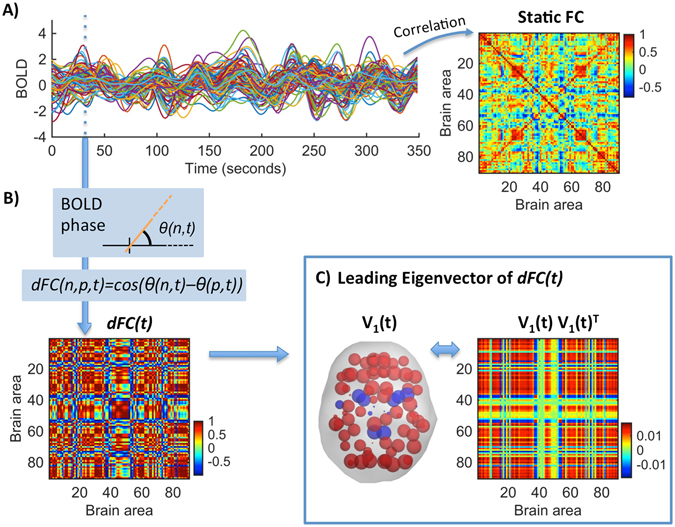
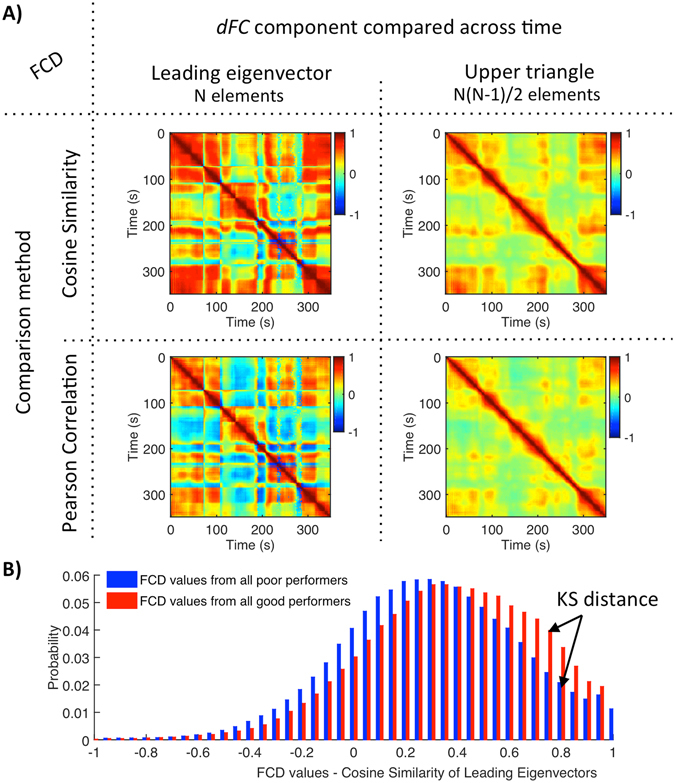
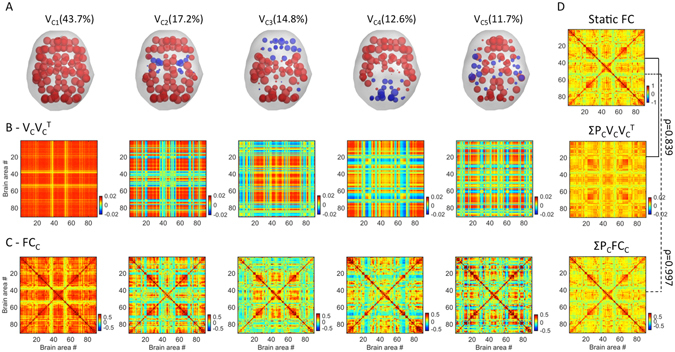
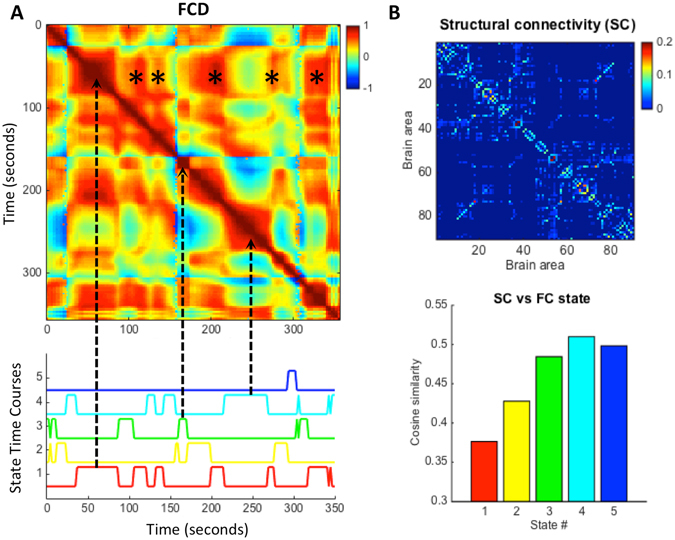
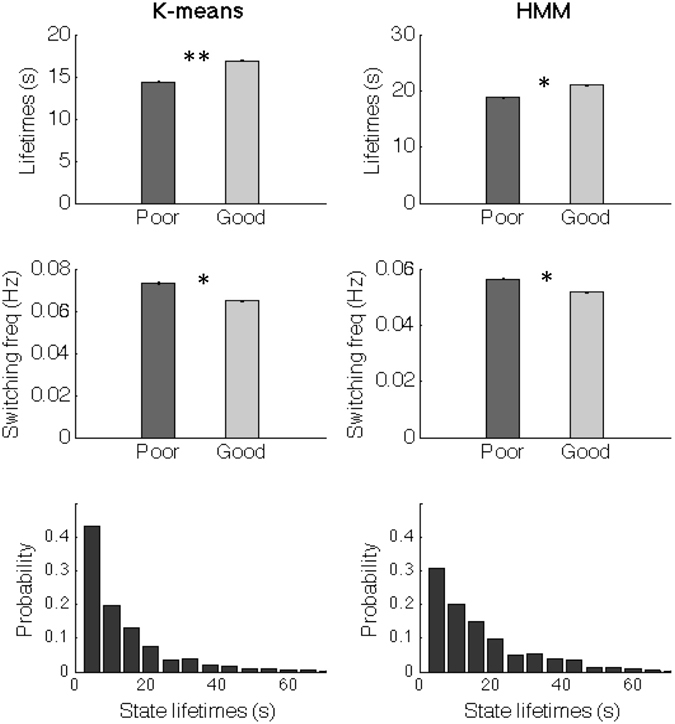
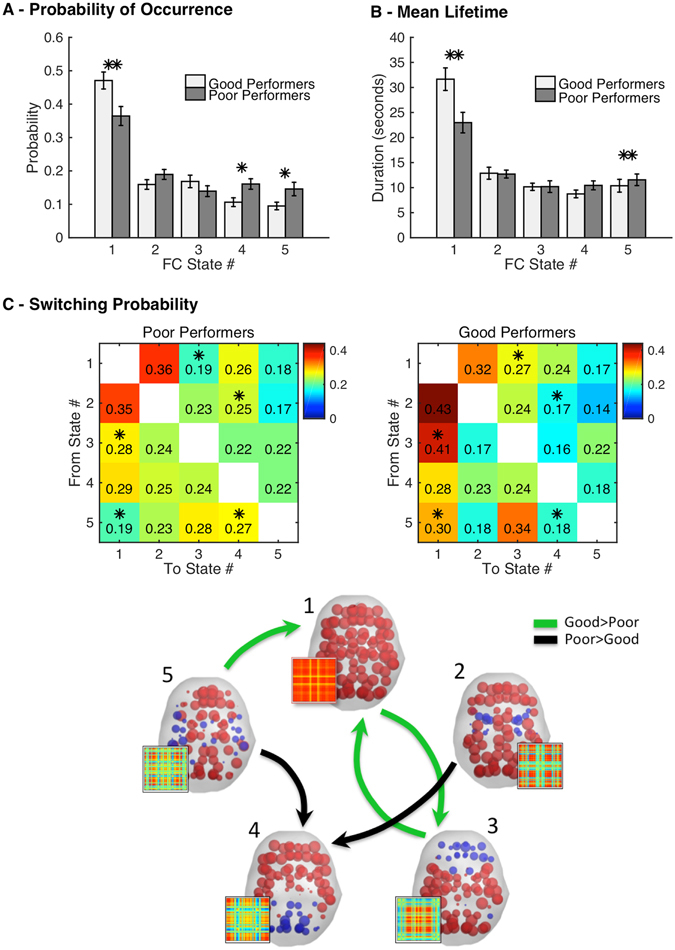
Growing evidence has shown that brain activity at rest slowly wanders through a repertoire of different states, where whole-brain functional connectivity (FC) temporarily settles into distinct FC patterns. Nevertheless, the functional role of resting-state activity remains unclear. Here, we investigate how the switching behavior of resting-state FC relates with cognitive performance in healthy older adults. We analyse resting-state fMRI data from 98 healthy adults previously categorized as being among the best or among the worst performers in a cohort study of >1000 subjects aged 50+ who underwent neuropsychological assessment. We use a novel approach focusing on the dominant FC pattern captured by the leading eigenvector of dynamic FC matrices. Recurrent FC patterns – or states – are detected and characterized in terms of lifetime, probability of occurrence and switching profiles. We find that poorer cognitive performance is associated with weaker FC temporal similarity together with altered switching between FC states. These results provide new evidence linking the switching dynamics of FC during rest with cognitive performance in later life, reinforcing the functional role of resting-state activity for effective cognitive processing.
Overview
The claims and statistics of this paper haven’t been checked yet.
Free: it reads the open-access text and checks the first 5 claims that cite a source we can check. Create a free account to check every claim.
Integrity signals
Registry
Cites
Statistics
Figures
Verification
Claims the paper makes
The claims and statistics of this paper haven’t been checked yet.
Free: it reads the open-access text and checks the first 5 claims that cite a source we can check. Create a free account to check every claim.
Claims other papers make about this one
Each is checked against this paper’s own text: does it say what the citing paper says it does?
The source backs part of the claim, not all of it — or backs it for a different population, condition or comparison.
In the citing paper
“Ease of transitions between brain states distinguishes younger from older individuals, and is further linked with executive function indexed by the D-KEFS.”
From Cognitive and behavioural flexibility: Neural mechanisms and clinical considerations (2021) · cites this paper as [51]
Experimental — accuracy not yet measuredThe cited source says what the claim attributes to it.
In the citing paper
“Older adults who performed more poorly on a battery of cognitive tests exhibited greater frequency of switching between dynamic brain states, whereas high performers exhibited a tendency to be in a state characterized by global coherence (108).”
From Brain Mechanisms Supporting Flexible Cognition and Behavior in Adolescents With Autism Spectrum Disorder (2021) · cites this paper as [108]
In the citing paper
“older adults performing well on a cognitive test battery were found to exhibit brain states characterized by global coherence, whereas those performing poorly exhibited greater frequency of switching between dynamic brain states51.”
From Cognitive and behavioural flexibility: Neural mechanisms and clinical considerations (2021) · cites this paper as [51]
Self-check
Percentages, sums and reported differences re-computed from the paper’s own numbers.
The self-check needs the paper’s full text.
Citations
Cites
Tzourio-Mazoyer, N., Landeau, B., Papathanassiou, D., Crivello, F., Etard, O., Delcroix, N., Mazoyer, B., & Joliot, M. (2002) · NeuroImage · doi:10.1006/nimg.2001.0978 · Cited by 16,319
Advances in functional and structural MR image analysis and implementation as FSL
Smith, S. M., Jenkinson, M., Woolrich, M. W., Beckmann, C. F., Behrens, T. E. J., Johansen-Berg, H., Bannister, P. R., De Luca, M., Drobnjak, I., Flitney, D. E., et al. (2004) · NeuroImage · doi:10.1016/j.neuroimage.2004.07.051 · Cited by 13,630
Jenkinson, M., Bannister, P., Brady, M., & Smith, S. (2002) · NeuroImage · doi:10.1006/nimg.2002.1132 · Cited by 11,888
Jenkinson, M., Beckmann, C. F., Behrens, T. E. J., Woolrich, M. W., & Smith, S. M. (2012) · NeuroImage · doi:10.1016/j.neuroimage.2011.09.015 · Cited by 11,314
Fast robust automated brain extraction
Smith, S. M. (2002) · Human Brain Mapping · doi:10.1002/hbm.10062 · Cited by 10,496
Functional connectivity in the resting brain: a network analysis of the default mode hypothesis
Greicius, M. D., Krasnow, B., Reiss, A. L., & Menon, V. (2003) · Proceedings of the National Academy of Sciences · doi:10.1073/pnas.0135058100 · Cited by 6,358
A Fuzzy Relative of the ISODATA Process and Its Use in Detecting Compact Well-Separated Clusters
Dunn, J. C. (1973) · Journal of Cybernetics · doi:10.1080/01969727308546046 · Cited by 5,049
Finding community structure in networks using the eigenvectors of matrices
Newman, M. E. J. (2006) · Physical Review E · doi:10.1103/physreve.74.036104 · Cited by 4,761
Consistent resting-state networks across healthy subjects
Damoiseaux, J. S., Rombouts, S. A. R. B., Barkhof, F., Scheltens, P., Stam, C. J., Smith, S. M., & Beckmann, C. F. (2006) · Proceedings of the National Academy of Sciences · doi:10.1073/pnas.0601417103 · Cited by 4,326
Andersson, J. L. R., & Sotiropoulos, S. N. (2016) · NeuroImage · doi:10.1016/j.neuroimage.2015.10.019 · Cited by 3,500
Cited by
Items 201–300 of 435
Zhang, J., Du, Y., Jin, L., Yang, W., Cao, D., Luo, N., Yang, Z., Tang, K., Chu, C., Xiao, X., et al. (2025) · Biological Psychiatry · doi:10.1016/j.biopsych.2025.05.010 · Cited by 8
The Comet Toolbox: Improving robustness in network neuroscience through multiverse analysis
Burkhardt, M., & Gießing, C. (2026) · Imaging Neuroscience · doi:10.1162/imag.a.1122 · Cited by 8
Cross-module switching diversity of brain network nodes in resting and cognitive states
Yi, C., Fan, Y., & Wu, Y. (2022) · Cognitive Neurodynamics · doi:10.1007/s11571-022-09894-z · Cited by 8
“Previous studies have shown that the topology and dynamic behaviours of BFNs are highly correlated with the rich and complex cognitive functions of the brain (Crossley et al. 2013; Cabral et al. 2017; Telesford et al. 2016).”
BackgroundCahart, M., Giampietro, V., Naysmith, L. F., Muraz, M., Zelaya, F. O., Williams, S., & O’Daly, O. (2024) · Scientific Reports · doi:10.1038/s41598-024-70293-x · Cited by 8
“The LEiDA analyses were carried out in MATLAB R2020a (MathWorks, Natick, MA, USA) using scripts adapted from Cabral et al., 2017 ( 21 ; https:// github. com/ juani tacab ral/ LEiDA).”
MethodCurran, J., Allen, A. J. H., Rider, C. F., Shutt, R., & Carlsten, C. (2024) · Environment International · doi:10.1016/j.envint.2024.109213 · Cited by 8
Atypical attentional network dynamics in adolescent depression during emotional movie viewing
Cahart, M., Giampietro, V., & O’Daly, O. (2025) · Social Cognitive and Affective Neuroscience · doi:10.1093/scan/nsaf011 · Cited by 8
Martín-Fernández, J., Estebaranz, N. C., Félez, E., Navarro-Peris, N., Rosário, P. J. S. L. F., Hernández-Bisshopp, R., & Domínguez-Báez, J. (2025) · Frontiers in Psychology · doi:10.3389/fpsyg.2025.1542505 · Cited by 8
Rodríguez-González, V., Nùñez, P., Gómez, C., Shigihara, Y., Hoshi, H., Tola-Arribas, M. Á., Cano, M., Peral, Á. L. G., García‐Azorín, D., Hornero, R., et al. (2023) · NeuroImage · doi:10.1016/j.neuroimage.2023.120332 · Cited by 9
Zhou, B., Wu, X., Tang, L., & Li, C. (2022) · Frontiers in Aging Neuroscience · doi:10.3389/fnagi.2022.806032 · Cited by 9
Evaluating the Effect of Semantic Congruency and Valence on Multisensory Integration
Letts, E., Basharat, A., & Barnett‐Cowan, M. (2022) · Multisensory Research · doi:10.1163/22134808-bja10073 · Cited by 8
Neural dynamics at rest associated with patterns of ongoing thoughtPreprint
Karapanagiotidis, T., Vidaurre, D., Quinn, A. J., Vatansever, D., Poerio, G. L., Jefferies, E., Margulies, D. S., Nichols, T. E., Woolrich, M. W., & Smallwood, J. (2018) · bioRxiv (Cold Spring Harbor Laboratory) · doi:10.1101/454371 · Cited by 8
Self-citationYe, S., Dave, A., Salami, A., & Ziaei, M. (2025) · Neurobiology of Aging · doi:10.1016/j.neurobiolaging.2025.09.004 · Cited by 7
Creativity in Music: The Brain Dynamics of Jazz Improvisation
Mota, P. A. D., Fernandes, H. M., Queiroga, A. T. L., Stark, E. A., Vohryzek, J., Cabral, J., Heggli, O. A., Sousa, N., Deco, G., Kringelbach, M. L., et al. (2025) · Annals of the New York Academy of Sciences · doi:10.1111/nyas.70042 · Cited by 7
“The partition into five substates is in line with the literature, where 5 − 10 functional networks emerge during rest [37, 42].”
InfluentialSelf-citationLiu, Q., Xiong, H., Shi, W., Di, S., Cheng, X., Liu, N., Luo, N., Zhang, Y., & Jiang, T. (2026) · Nature Mental Health · doi:10.1038/s44220-025-00583-4 · Cited by 7
Effects of Age on Resting‐State Cortical Networks
Gohil, C., Kohl, O., Pitt, J., van Es, M. W. J., Quinn, A. J., Vidaurre, D., Turner, M. R., Nobre, A. C., & Woolrich, M. W. (2026) · Human Brain Mapping · doi:10.1002/hbm.70516 · Cited by 7
Self-citationZhou, J., Zhu, H., Wang, J., & Sun, J. (2023) · IEEE Transactions on Neural Systems and Rehabilitation Engineering · doi:10.1109/tnsre.2023.3276896 · Cited by 7
Metastable dynamics emerge from local excitatory–inhibitory homeostasis in the cortex at rest
dos Santos, F. P., & Verschure, P. F. M. J. (2025) · Network Neuroscience · doi:10.1162/netn_a_00460 · Cited by 7
Lu, J., Hu, Q., Lei, Y., Wang, C., Deng, Q., Yang, B., Gao, Q., Zhu, Z., Wu, N., Dai, Y., et al. (2025) · eNeuro · doi:10.1523/eneuro.0066-25.2025 · Cited by 7
“InspiredbyCabral etal.,theyintro-duced the Leading Eigenvector Dynamics Analysis to get FC matrix for each single time point in fMRI (Cabral et al., 2017), A linear mixed-effects (LME) model was used in this analysis.”
Segal, A., Charquero‐Ballester, M., Vaisvaser, S., Cabral, J., Ben‐Zion, Z., Vidaurre, D., Stark, E. A., McManners, H., Woolrich, M. W., Ehlers, A., et al. (2025) · Psychological Medicine · doi:10.1017/s0033291725100913 · Cited by 7
Self-citationDai, R., Toiviainen, P., Vuust, P., Jacobsen, T., & Brattico, E. (2026) · Psychology of Aesthetics Creativity and the Arts · doi:10.1037/aca0000681 · Cited by 7
Ng, J., Yu, J., Feusner, J. D., & Hawco, C. S. (2024) · Imaging Neuroscience · doi:10.1162/imag_a_00234 · Cited by 6
“We used Leading Eigenvector Dynamic Analysis (LEiDA) ( Cabral et al., 2017) to generate phase dFC states while minimizing computational costs and avoiding the challenges of the traditional “sliding window” approaches ( Preti et al., 2017) (see Fig.”
BackgroundMethodResultInfluentialDynamic functional connectivity to tile the spatiotemporal mosaic of brain states
Ville, D. V. D., & Liégeois, R. (2024) · Imaging Neuroscience · doi:10.1162/imag_a_00364 · Cited by 6
Impaired network organization in mild age‐related hearing loss
Tong, Z., Xing, C., Xu, X., Xǔ, J., Wu, Y., Salvi, R., Yin, X., Zhao, F., Chen, Y., & Cai, Y. (2025) · MedComm · doi:10.1002/mco2.70002 · Cited by 6
The Possibility Space Concept in Neuroscience: Possibilities, Constraints, and Explanations
Ross, L. N., Jirsa, V., & McIntosh, A. R. (2025) · European Journal of Neuroscience · doi:10.1111/ejn.70038 · Cited by 6
“This section highlights the main features of hard constraints, the ways they provide explanations, and how they capture important features of complex systems.”
Lim, J., Cooper, K., & Stamoulis, C. (2025) · Network Neuroscience · doi:10.1162/netn_a_00452 · Cited by 6
“Higher dFC similarity (lower temporal and/or cross-scan variability) has been associated with better cognitive performance in both adults (Cabral et al., 2017) and children (Fu et al., 2023).”
Garrigosa, M. S., Perl, Y. S., Kringelbach, M. L., Erritzøe, D., Nutt, D. J., Carhart-Harris, R. L., Vohryzek, J., & Deco, G. (2025) · Annals of the New York Academy of Sciences · doi:10.1111/nyas.15391 · Cited by 8
“17,18 In other words, they explicitly express whole-brain activity by modeling local dynamics interacting on the structural scaffold, thereby bridging the explanatory gap between the structure and function of brain organization.”
Self-citationAlzheimer’s Disease: Insights from Large-Scale Brain Dynamics Models
Yang, L., Lu, J., Li, D., Xiang, J., Yan, T., Sun, J., & Wang, B. (2023) · Brain Sciences · doi:10.3390/brainsci13081133 · Cited by 6
“According to existing research findings, models can reveal the structural and functional relationships of the brain [20–22], understand the working mechanisms of the brain [23,24], explore the pathogenic mechanisms of brain diseases [25–27], and explain processes such as the development or evolution of the brain neura…”
Brain imaging of a gamified cognitive flexibility task in young and older adults
Wang, P., Guo, S.-J., & Li, H. (2024) · Brain Imaging and Behavior · doi:10.1007/s11682-024-00883-w · Cited by 6
“These findings suggest a collaborative role of more sophisticated methods (Cabral et al., 2017 ; Capous-kova et al., 2023 ; Yang et al., 2019a, b).”
Caprioglio, E., & Berthouze, L. (2024) · Frontiers in Network Physiology · doi:10.3389/fnetp.2024.1436046 · Cited by 6
“…of pathological or pharmacological alterations (Lee et al., 2018; Lord et al., 2019; Hancock et al., 2023b), brain injury (Hellyer et al., 2015), the aging brain (Cabral et al., 2017) [as well as the aging rat brain (Alteriis et al., 2024)], and after brain stimulation (Bapat et al., 2024).”
BackgroundDynamic Functional Connectivity
Ahrends, C., & Vidaurre, D. (2025) · Neuromethods · doi:10.1007/978-1-0716-4438-6_11 · Cited by 7
Self-citationDynamic Fingerprinting of the Human Functional Connectome
Ghaffari, A., Zhao, Y., Chen, X., Langley, J. A., & Hu, X. (2026) · Brain Connectivity · doi:10.1177/21580014261420882 · Cited by 6
“Resting-state studies have used a wide range of state numbers (Cabral et al., 2017; Chen et al., 2016; Hus-sain et al., 2023), so to determine the optimal number of states that captures as much diversity in brain dynamics as possible, we incrementally increased K and examined whether all states…”
Cohesive communities in dynamic brain functional networks
Fan, Y., Fan, Q., Zhou, L., Wang, R., Lin, P., & Wu, Y. (2021) · Physical review. E · doi:10.1103/physreve.104.014302 · Cited by 6
Monteiro, T. S., King, B. R., Seer, C., Mantini, D., & Swinnen, S. P. (2022) · NeuroImage · doi:10.1016/j.neuroimage.2022.119025 · Cited by 6
Resistance to Extinction of Evaluative Fear Conditioning in Delusion Proneness
Louzolo, A., Lebedev, A. V., Björnsdotter, M., Acar, K., Ahrends, C., Kringelbach, M. L., Ingvar, M., Olsson, A., & Petrović, P. (2022) · Schizophrenia Bulletin Open · doi:10.1093/schizbullopen/sgac033 · Cited by 7
“We used Leading Eigenvector Dynamics Analysis (LEiDA) 59,60 ; see also Supplementary figures 2 and 3) to estimate dynamic functional connectivity via clusters of phase coherence.”
MethodSelf-citationDynamic changes in the central autonomic network of patients with anorexia nervosa
de la Cruz, F., Schumann, A., Suttkus, S., Helbing, N., & Bär, K. (2023) · European Journal of Neuroscience · doi:10.1111/ejn.15969 · Cited by 6
“Thus, we recommend interpreting these results with caution and suggest further research to assess the effects of different parameter settings and methodological approaches (Cabral et al., 2017; Eavani et al., 2013).”
MethodTime varying dynamics of hallucinations in clinical and non-clinical voice-hearers
Marschall, T. M., Koops, S., Brederoo, S., Cabral, J., Ćurĉić‐Blake, B., & Sommer, I. E. (2023) · NeuroImage Clinical · doi:10.1016/j.nicl.2023.103351 · Cited by 6
Self-citationAbnormal resting-state brain network dynamics in toddlers with autism spectrum disorder
Li, X., Wu, S., Yang, W., Jiang, C., Zhao, Z., Wang, H., & Lin, F. (2025) · European Child & Adolescent Psychiatry · doi:10.1007/s00787-025-02651-7 · Cited by 5
“Previous studies have highlighted the potential role of global signal coherence in cognitive processing, pointing out that individuals with poorer cognitive performance have a lower occurrence rate [ 14].”
Dynamic cycles between brain states during creative storytelling
Liang, X., Cai, M., Jing, G., Zhang, C., Nichols, E. S., & Liu, L. (2025) · NeuroImage · doi:10.1016/j.neuroimage.2025.121053 · Cited by 6
Ray, S., Kalsi, N., Boecker, H., Upadhyay, N., & Panda, R. (2025) · npj Systems Biology and Applications · doi:10.1038/s41540-025-00574-2 · Cited by 5
“Then, we use the k-means clustering algorithm that was applied to the concatenated matrix using the L1 distance (a.k.a. “ Manhattan distance ” ) as implemented in MATLAB (MathWorks Inc.) 19,53,54 .”
InfluentialPatton, A., & Davidsen, J. (2025) · PLoS Computational Biology · doi:10.1371/journal.pcbi.1013093 · Cited by 6
Altered electrophysiological meta-state dynamics in disorders of consciousness
Nùñez, P., Tewarie, P. K. B., Rodríguez-González, V., Alnagger, N., van der Lande, G., Vitello, M. M., Cardone, P., Thibaut, A., Belloli, L. M. L., Laureys, S., et al. (2025) · NeuroImage · doi:10.1016/j.neuroimage.2025.121519 · Cited by 5
From Nodes to Edges: Edge-Based Laplacians for Brain Signal Processing
Santoro, A., Nurisso, M., & Petri, G. (2025) · European Signal Processing Conference (EUSIPCO) · doi:10.23919/eusipco63237.2025.11226642 · Cited by 5
“The phases are then combined to form edge signals in the following way: where we chose f as either the sine or cosine function to encode the edge-based phase synchronization between brain regions [31, 32].”
Zhang, J., Han, S., Shen, Y., Wu, X., Zhao, Y., Wu, Z., Luo, N., Yang, Z., Li, D., Song, M., et al. (2026) · BMC Medicine · doi:10.1186/s12916-026-04687-1 · Cited by 5
“When a V c contains both positive and negative elements, it indicates that brain regions can be divided (1) into two distinct communities based on the sign of these elements [44].”
Hitac: a hierarchical taxonomic classifier for fungal ITS sequences compatible with QIIME2
Miranda, F. M., Azevedo, V., Ramos, R. T. J., Renard, B. Y., & Piro, V. C. (2024) · BMC Bioinformatics · doi:10.1186/s12859-024-05839-x · Cited by 5
Yang, Y., Liu, Y.-X., Wei, J., Guo, Q.-L., Hao, Z.-P., Xue, J., Liu, J.-Y., Guo, H., & Li, Y. (2024) · Journal of Neurophysiology · doi:10.1152/jn.00027.2024 · Cited by 5
Bhavna, K., Ghosh, N., Banerjee, R., & Roy, D. (2024) · Scientific Reports · doi:10.1038/s41598-024-72945-4 · Cited by 5
“…components analysis (PCA) is a multivariate, unsupervised dimension reduction technique that separates the data into a set of orthogonal principal components, also known as leading eigenvectors, which are then arranged according to how much variation they contribute to the total variance 39 .”
van der Horn, H. J., Wick, T. V., Ling, J. M., McQuaid, J. R., Nathaniel, U., Miller, S. D., Kumar, D. S., Zotev, V., Vakhtin, A. A., Ryman, S. G., et al. (2025) · Cortex · doi:10.1016/j.cortex.2024.12.022 · Cited by 4
Self-citationComplexity changes in functional state dynamics suggest focal connectivity reductions
Blair, D. S., Soriano‐Mas, C., Cabral, J., Moreira, P. S., Morgado, P. F., & Deco, G. (2022) · Frontiers in Human Neuroscience · doi:10.3389/fnhum.2022.958706 · Cited by 5
“This requires two important innovations to the LEiDA framework.”
BackgroundMethodResultInfluentialSelf-citationLou, W., Li, X., Jin, R., & Peng, W. (2024) · Pain · doi:10.1097/j.pain.0000000000003152 · Cited by 5
Wang, C., Lu, Y., Lin, Y., Wang, C., & Tian, P. (2023) · Frontiers in Integrative Neuroscience · doi:10.3389/fnint.2022.922577 · Cited by 5
“Previous evidence has suggested that the LEiDA framework is highly flexible, robust, and precise (Glerean et al., 2012; PonceAlvarez et al., 2015; Cabral et al., 2017), allowing for recurrent states that were detected and characterized in resting state and task conditions in the healthy brain.”
BackgroundInfluentialUncovering dynamic human brain phase coherence networks
Olsen, A. S., Brammer, A., Fisher, P. M., & Mørup, M. (2026) · Proceedings of the National Academy of Sciences · doi:10.1073/pnas.2518287123 · Cited by 4
Neudorf, J., Shen, K., & McIntosh, A. R. (2025) · Imaging Neuroscience · doi:10.1162/imag.a.5 · Cited by 4
“Specifically, k - means clustering (with k ranging from 2 to 20) was applied to the leading eigenvectors of all subjects’ timepoints (261 timepoints × 197 subjects = 51,417 leading eigenvectors; see Cabral et al., 2017 for further details about this method).”
InfluentialAltered brain state dynamics between preterm and term-born infants
Damera, S. R., Basu, S. K., Kapse, K. J., Murnick, J. G., Andescavage, N. N., Limperopoulos, C., & Asis‐Cruz, J. D. (2025) · Imaging Neuroscience · doi:10.1162/imag.a.65 · Cited by 4
“Allen et al., ( Abrol et al., 2017; Allen et al., 2014; Cabral et al., 2017; Mart í nez et al., 2020; Stevner et al., 2019) initially hypothesized that this state may be related to drowsiness as the transition from wakefulness to sleep is characterized by increased subcortical connectivity and…”
InfluentialDai, R., Toiviainen, P., Campo, F. F., Cantou, P., Fasano, M. C., Kleber, B., Vuust, P., & Brattico, E. (2025) · Frontiers in Human Neuroscience · doi:10.3389/fnhum.2025.1651074 · Cited by 4
Dai, R., Toiviainen, P., Campo, F. F., & Brattico, E. (2025) · Frontiers in Neuroscience · doi:10.3389/fnins.2025.1649733 · Cited by 4
Guo, H., Liu, Y., Li, Y., Guo, Q.-L., Hao, Z.-P., Yang, Y., & Wei, J. (2025) · NeuroImage · doi:10.1016/j.neuroimage.2025.121119 · Cited by 4
Ikani, N., Tyborowska, A., Kohn, N., Günther, N., Siegle, G. J., Schene, A. H., Vorstman, J. A. S., Harmer, C. J., Kas, M. J., Vrijsen, J. N., et al. (2025) · BMC Psychiatry · doi:10.1186/s12888-025-06860-x · Cited by 4
“Between these regions we will determine dynamic functional connectivity patterns, summarized by measures like overall lifetime of dynamic brain states and switching frequency (probabilities) between these brain states as described before [45, 116, 117].”
Hierarchical Characterization of Brain Dynamics via State Space-Based Vector Quantization
Yang, Y., & Wolfers, T. (2025) · Lecture notes in computer science · doi:10.1007/978-3-032-05162-2_38 · Cited by 4
Özel, P. (2024) · Brain Sciences · doi:10.3390/brainsci15010004 · Cited by 5
Zheng, Y., Yang, Y., Zhen, Y., Wang, X., Liu, L., Zheng, H., Zheng, H., & Tang, S. (2025) · Brain Sciences · doi:10.3390/brainsci15030263 · Cited by 4
“Time-varying information can be extracted using the Leading Eigenvector Dynamics Analysis (LEiDA) by computing the inter-regional phase coherence across the scan [14].”
InfluentialVariation in high-amplitude events across the human lifespan
Jo, Y., Tanner, J., Seguin, C., Faskowitz, J., & Betzel, R. F. (2026) · Network Neuroscience · doi:10.1162/netn.a.515 · Cited by 4
“This approach builds upon existing frameworks to track the temporal dynamics in the brain ’ s functional connectivity (Cabral et al., 2017; Karahano ğ lu & Van De Ville, 2015; X. Liu, Chang, & Duyn, 2013; X. Liu & Duyn, 2013; Shine et al., 2015).”
Warthen, K., Welsh, R. C., Sanford, B., Koppelmans, V., Burmeister, M., & Mickey, B. J. (2021) · Frontiers in Systems Neuroscience · doi:10.3389/fnsys.2021.629488 · Cited by 4
Dynamic functional connectivity
França, L. G. S., Fenn‐Moltu, S., & Batallé, D. (2023) · Elsevier eBooks · doi:10.1016/b978-0-323-85280-7.00006-3 · Cited by 4
Hoffner, G., Castro, P., Uhrig, L., Signorelli, C. M., Dupont, M., Tasserie, J., Destexhe, A., Cofré, R., Sitt, J. D., & Jarraya, B. (2025) · eLife · doi:10.7554/elife.101688 · Cited by 4
Mercadal, B., Guasch-Morgades, M., Mencarelli, L., Koch, G., Ruffini, G., & Initiative, A. D. N. (2025) · bioRxiv (Cold Spring Harbor Laboratory) · doi:10.1101/2025.07.09.663817 · Cited by 4
“65,83,84 Our results show that models incorporating both cooperative and competitive interactions, particularly those using Ising connectomes with sparsity constraints (Ising-L1), best capture the distribution of brain states.”
de Almeida, L. C. (2024) · LA Referencia (Red Federada de Repositorios Institucionales de Publicaciones Científicas) · Cited by 4
Liu, Z., Xia, H., & Chen, A. (2024) · GeroScience · doi:10.1007/s11357-024-01366-y · Cited by 3
“States predominantly observed in younger adults (SY1, SY2 and SY3) may reflect more healthy brain function typical of youth, while states more prevalent in older adults (SO1, SO2 and SO3) may signify disrupted or compensatory brain function associated with aging [87, 88].”
Wigley, I. M. M., Lautarescu, A., Vartiainen, E., Pulli, E., Hashempour, N., Merisaari, H., Bano, W., Luotonen, S., Jolly, A., Suuronen, I., et al. (2026) · Pediatric Research · doi:10.1038/s41390-025-04726-2 · Cited by 3
“Speci fi cally, a method called Leading Eigenvector Dynamics Analysis (LEiDA 22 ), which detects recurrent modes of phase coupling in fMRI signals, has identi fi ed subsystems that closely match functional networks reported in the literature, such as the default mode (DMN), limbic, dorsal attention…”
InfluentialSelf-citationGraph Theory for Brain Signal Processing
Laskaris, N., Adamos, D. A., & Bezerianos, A. (2023) · Handbook of Neuroengineering · doi:10.1007/978-981-16-5540-1_66 · Cited by 3
Disselhoff, V., András, J., Latal, B., Schnider, B., Wehrle, F. M., Hagmann, C. F., Held, U., Tuura, R., Fauchère, J., & Hüppi, P. S. (2024) · Pediatric Research · doi:10.1038/s41390-024-03241-0 · Cited by 3
Reduced switching between brain states in insomnia: evidence from modeling of fMRI brain dynamics
Jespersen, K. V., Stevner, A. B. A., Kringelbach, M. L., Someren, E. J. W. V., Vidaurre, D., & Vuust, P. (2025) · Cerebral Cortex · doi:10.1093/cercor/bhaf314 · Cited by 3
Self-citationSuperior pitch identification ability revealed by cortical complexity measures in nonmusicians
Hou, J., Chen, C., O’Boyle, M. W., & Dong, Q. (2022) · Psychology of Music · doi:10.1177/03057356221110634 · Cited by 3
“A subsequent dynamic RSFC study found that PI ability for nonmusicians with musical training was associated with RSFC within regions thought to mediate working memory, attention, and executive control, while in non-musicians without musical training RSFC correlated with regions contributing to auditory and visuospatia…”
MethodInfluentialState-base dynamic functional connectivity analysis of fMRI data during facial emotional processing
Tamimi, M. G., & Daliri, M. R. (2025) · Brain Imaging and Behavior · doi:10.1007/s11682-025-01059-w · Cited by 3
“The identified states were suggested to reflect ongoing cognition (Damaraju et al., 2014; Cabral et al., 2017; Hudetz et al., 2014).”
Cohen, Z., Steinbrenner, M., Piper, R. J., Tangwiriyasakul, C., Richardson, M. P., Sharp, D. J., Violante, I. R., & Carmichael, D. W. (2024) · Frontiers in Neuroscience · doi:10.3389/fnins.2024.1354523 · Cited by 3
Whole-brain modeling to predict optimal deep brain stimulation targeting
Fernandes, H. M., Deco, G., & Kringelbach, M. L. (2021) · Elsevier eBooks · doi:10.1016/b978-0-12-821861-7.00011-7 · Cited by 3
Self-citationComparing Task-Relevant Information Across Different Methods of Extracting Functional ConnectivityPreprint
Stulz, S. B., Insabato, A., Deco, G., Gilson, M., & Senden, M. (2018) · bioRxiv (Cold Spring Harbor Laboratory) · doi:10.1101/509059 · Cited by 3
“The neuroimaging literature comprises many studies that utilize the multivariate nature of functional connectivity to investigate cognitive processing (Cabral, Vidaurre, et al., 2017; Gonzalez-Castillo et al., 2015; Senden et al., 2018, 2017).”
BackgroundMethodInfluentialSelf-citationSweet anticipation: Predictability of familiar music in autismPreprint
Mota, P. A. D., Stark, E. A., Fernandes, H. M., Ahrends, C., Cabral, J., Gebauer, L., Happe, F. G. E., Vuust, P., & Kringelbach, M. L. (2020) · bioRxiv (Cold Spring Harbor Laboratory) · doi:10.1101/2020.08.03.233668 · Cited by 3
Self-citationGomes, M. T., Fernandes, H. M., & Cabral, J. (2020) · bioRxiv (Cold Spring Harbor Laboratory) · doi:10.1101/2020.11.04.368274 · Cited by 3
Self-citationCognitive and Psychiatric Relevance of Dynamic Functional Connectivity States in ChildrenPreprint
Fu, Z., Sui, J., Iraji, A., Liu, J., & Calhoun, V. D. (2023) · Research Square · doi:10.21203/rs.3.rs-1964400/v2 · Cited by 3
Cognitive function linked to temporal occupancy of Brain-Ventricle (BraVe) modesPreprint
Campo, F. F., Miguel, V., Brattico, E., Nigro, S. L., Tafuri, B., Logroscino, G., Cabral, J., & (ADNI), T. A. D. N. I. (2025) · bioRxiv (Cold Spring Harbor Laboratory) · doi:10.1101/2025.01.04.631289 · Cited by 3
“To investigate the existence of recurrent phase-coupling modes, and whether their occurrence varied with AD progression, we applied the Leading Eigenvector Dynamics Analysis (LEiDA) methodology 52 .”
InfluentialSelf-citationOlsen, A. S., Ortvald, E., Madsen, K. H., Schmidt, M. N., & Mørup, M. (2023) · IEEE International Conference on Acoustics, Speech, and Signal Processing Workshops (ICASSPW) · doi:10.1109/icasspw59220.2023.10193021 · Cited by 2
“Leading eigenvector dynamics analysis (LEiDA) [6] is a dynamic functional connectivity (dFC) method that computes the leading eigenvector of instantaneous phase coherence maps.”
Neudorf, J., Rokos, L., Shen, K., Kent, B. A., & McIntosh, A. R. (2026) · Imaging Neuroscience · doi:10.1162/imag.a.1278 · Cited by 3
“…change over time, even at rest, and that these dynamics are meaningful as they are associated with cognitive ability in young and older adults ( Cabral et al., 2017; Cohen, 2018; Hutchison et al., 2013; Neudorf et al., 2025) and disease ( Cohen, 2018; Dautricourt et al., 2022; Jin et al.,…”
A complexity-science framework for studying flow: using media to probe brain-phenomenology dynamics
Hancock, F., Kee, R., Rosas, F. E., Girn, M., Kotler, S., Mannino, M., & Huskey, R. (2026) · NeuroImage · doi:10.1016/j.neuroimage.2026.122050 · Cited by 2
Lifeguard training sharpens brain dynamics in novices during drowning detection
Cahart, M., Smith, M. S., Sharpe, B. T., Williams, S., Hill, S., Talbot, J., Grazier, N., Lythgoe, D. J., & Smith, J. (2025) · Safety Science · doi:10.1016/j.ssci.2025.106957 · Cited by 2
Gao, L., An, H., Yin, L., Ma, L., Niu, X., & Guo, X. (2026) · Chaos Solitons & Fractals · doi:10.1016/j.chaos.2026.118167 · Cited by 2
Cahart, M., Daly, O. O., Cai, Z., Mariani, N., Borsinni, A., Mondelli, V., Eiff, B., Rota, S., Nicholson, T. R., Rida, L., et al. (2026) · Brain Behavior & Immunity - Health · doi:10.1016/j.bbih.2026.101274 · Cited by 2
“We performed Leading Eigenvector Dynamics Analysis (LEiDA) in MATLAB R2020a (MathWorks, Natick, MA, USA) using scripts adapted from Cabral et al. (2017) [https://github.com/juanitacabral/LEiDA].”
InfluentialArousal-driven critical roaming reproduces human functional connectivity dynamics
Pathak, A., & Battaglia, D. A. (2026) · PLoS Biology · doi:10.1371/journal.pbio.3003916 · Cited by 2
Graph Theory for Brain Signal Processing
Laskaris, N., Adamos, D. A., & Bezerianos, A. (2021) · Handbook of Neuroengineering · doi:10.1007/978-981-15-2848-4_66-2 · Cited by 2
Dynamic brain network models: How interactions in the structural connectome shape brain dynamics
Cabral, J., & Griffiths, J. D. (2024) · Elsevier eBooks · doi:10.1016/b978-0-443-13480-7.00001-6 · Cited by 2
Self-citationImaging Connectomics and the Understanding of Brain Diseases
Insabato, A., Deco, G., & Gilson, M. (2019) · Advances in experimental medicine and biology · doi:10.1007/978-981-32-9721-0_8 · Cited by 2
Self-citationBrain’s Dynamic Functional Organization with Simultaneous EEG-fMRI Networks
Ayres-Ribeiro, F., Wirsich, J., Abreu, R., Jorge, J., Teixeira, A. S., Francisco, A. P., & Figueiredo, P. (2023) · Springer proceedings in complexity · doi:10.1007/978-3-031-28276-8_1 · Cited by 2
Sun, Z., Li, C., Sun, L., Yang, W., Qu, X., Li, Y., Duan, X., Guo, F., Sun, X., Yang, M., et al. (2024) · Frontiers in Psychiatry · doi:10.3389/fpsyt.2024.1392958 · Cited by 2
Mapping multi-modal dynamic network activity during naturalistic music listening
Faber, S. E. M., Brown, T., Carpentier, S. M., & McIntosh, A. R. (2025) · Imaging Neuroscience · doi:10.1162/imag_a_00413 · Cited by 2
de la Cruz, F., Giuliano, M. D., Rieger, K., Schumann, A., & Bär, K. (2025) · European Eating Disorders Review · doi:10.1002/erv.3188 · Cited by 2
“For instance, reduced transitions between brain states correlate with diminished cognitive abilities, while an extended duration in energetically costly states can hinder adaptive functioning during cognitively demanding tasks (Ram-irez‐Mahaluf et al. 2020; Cabral et al. 2017).”
van der Velden, A. M., Vohryzek, J., Dagnino, P. C., Kuyken, W., Montero-Marin, J., Collin, G., Kringelbach, M. L., & Ruhé, H. G. (2026) · Biological Psychiatry Global Open Science · doi:10.1016/j.bpsgos.2026.100753 · Cited by 2
“…substates (phase-locking patterns) evolving in time, thus making it possible to characterize changes in the depressive rumination brain state in terms of dynamic measures such as the probability of occurrence (fractional occupancy) and stability (lifetimes) of the meta-stable substates (22,24).”
Self-citationBeyond networks: Functional connectivity as eigenmode resonance
Cabral, J. M. S., & Sun, H. (2026) · Aperture Neuro · doi:10.52294/001c.162128 · Cited by 2
Self-citationZhang, F.-Y., Ge, M., Guo, Z.-T., Xie, C., Yang, Z., & Song, Z. (2020) · Acta Physica Sinica · doi:10.7498/aps.69.20200050 · Cited by 2
Wang, W., Wang, W., Zhao, H., Wang, Z., Luo, X., & Ouyang, J. (2023) · Brain‐X · doi:10.1002/brx2.41 · Cited by 2
Li, H., & Fan, Y. (2018) · arXiv (Cornell University) · doi:10.48550/arxiv.1809.05560 · Cited by 2
Larabi, D. I. (2020) · University of Groningen research database (University of Groningen / Centre for Information Technology) · doi:10.33612/diss.118152005 · Cited by 2
Metadata
- Authors
- Cabral, J., Vidaurre, D., Marques, P., Magalhães, R., Silva Moreira, P., Miguel Soares, J., Deco, G., Sousa, N., & Kringelbach, M. L.
- Affiliations
- Aarhus University (DK)
- University of Oxford (GB)
- Clinical Academic Center of Braga (PT)
- Institució Catalana de Recerca i Estudis Avançats (ES)
- Corresponding author
- Cabral, Joana
- ORCID
- Venue
- Scientific Reports
- Published
- 2017-07-11
- Volume
- 7
- Issue
- 1
- Pages
- 5135-5135
- ISSN
- 2045-2322 (ISSN-L)
- PMC
- PMC5506029
- OpenAlex
- W2726287250
- Semantic Scholar
- 86766b967738ff8cd83700173b478d53cd3810c9
- Cited by
- 386
- References
- 74
- Citations by year
- 2026: 37 · 2025: 75 · 2024: 50 · 2023: 55 · 2022: 58 · 2021: 42 · 2020: 32 · 2019: 26 · 2018: 9 · 2017: 2
- FWCI
- 10.83
- Type
- journal article
- Language
- en
- Open access
- gold
- doi.org
- Licence
- cc-by
- creativecommons.org/licenses/by/4.0 (tdm)
- creativecommons.org/licenses/by/4.0 (vor)
- Locations
- Scientific Reports (publishedVersion, cc-by)
- PubMed Central (publishedVersion, cc-by)
- PubMed (publishedVersion)
- RECERCAT (Consorci de Serveis Universitaris de Catalunya) (publishedVersion, cc-by)
- Monash University Research Portal (Monash University) (submittedVersion, other-oa)
- DOAJ (DOAJ: Directory of Open Access Journals) (submittedVersion, cc-by-sa)
- Scopus (Elsevier) (submittedVersion)
- MPG.PuRe (Max Planck Society) (submittedVersion, other-oa)
- Repositori digital de la UPF (Universitat Pompeu Fabra) (submittedVersion, cc-by)
- Portuguese National Funding Agency for Science, Research and Technology (RCAAP Project by FCT) (submittedVersion, other-oa)
- Funders
- Wellcome Trust (098369/Z/12/Z, 098369)
- European Commission (HBP SGA1, NORTE-01-0145-FEDER-000013, 720270, HORIZON2020, NORTE2020)
- National Research Foundation (DNRF117)
- Danmarks Grundforskningsfond (615539, DNRF117)
- Fundação para a Ciência e a Tecnologia (PDE/BDE/113604/2015, 01-0145, COMPETE, FCOMP-01-0124-FEDER-037298, NORTE-01–0145-FEDER-000013, PDE/BDE/113601/2015, PORTUGAL 2020, NORTE2020, NORTE-01-0145, FCOMP-01-0124-FEDER)
- European Regional Development Fund (COMPETE, 01-0145-FEDER-000013, FCOMP‐01‐0124‐FEDER‐037298, 01-0145, NORTE-01-0145-FEDER-000013, 720270, NORTE-2020)
- Agencia Estatal de Investigación (PSI2016-75688-P)
- FP7 Ideas: European Research Council (295129)
- Topics
- Life Sciences › Neuroscience › Cognitive Neuroscience › Functional Brain Connectivity Studies
- Life Sciences › Neuroscience › Cognitive Neuroscience › Neural dynamics and brain function
- Health Sciences › Medicine › Radiology, Nuclear Medicine and Imaging › Advanced MRI Techniques and Applications
- Keywords
- resting-state functional connectivity, cognitive performance, older adults, aging, dynamic functional connectivity, leading eigenvector, healthy aging
- MeSH terms
- Aged, Brain, Cognition, Female, Humans, Magnetic Resonance Imaging, Male, Middle Aged, Neuropsychological Tests, Rest, Cohort Studies, Connectome, Healthy Volunteers
About these checks
Registry, retraction, Cites and statistics results are computed, not judged, with one exception: a printed reference that no index lists is read once by a model before it counts as a citation error. Claims are extracted by a model and kept only when their quote appears verbatim in the text; each cited source is then checked, with a model’s help, for whether it says what the claim relies on. Those verdicts can be wrong — read the claim’s quote and the cited source before relying on one.
Statistics and arithmetic are recomputed, not judged.
Confidence bands are shown only for fields calibrated on our annotated test set. None is calibrated yet, so no band is shown.
What counts as a claim ›How we measure confidence ›How we check this ›
Are you an author, or do you see a problem with this page? Request a review
Data sources
Bibliographic data: Semantic Scholar, OpenAlex, Crossref.
Contains information from the Semantic Scholar Academic Graph Datasets, made available under the ODC Attribution License (ODC-BY 1.0).
Semantic Scholar’s data is described in: Kinney, R., et al. (2023). The Semantic Scholar Open Data Platform. arXiv:2301.10140.
