

Characterization of a new pathway that activates lumisterol in vivo to biologically active hydroxylumisterols
Open accessThe DOI matches its Crossref record; 70 of the 70 references it cites were found in a registry or an index.
Abstract
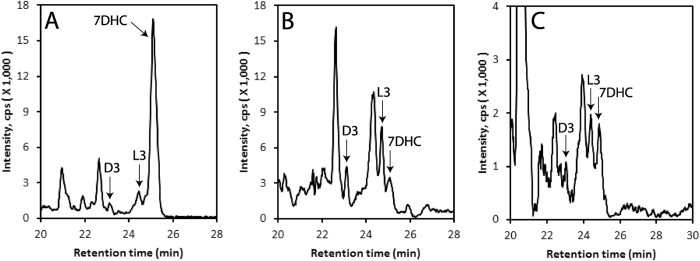
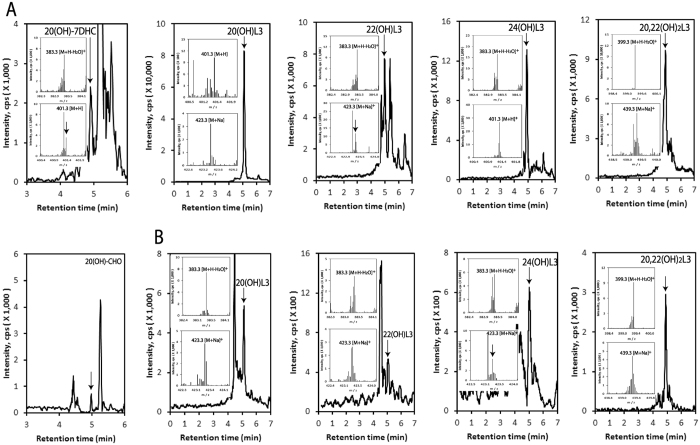
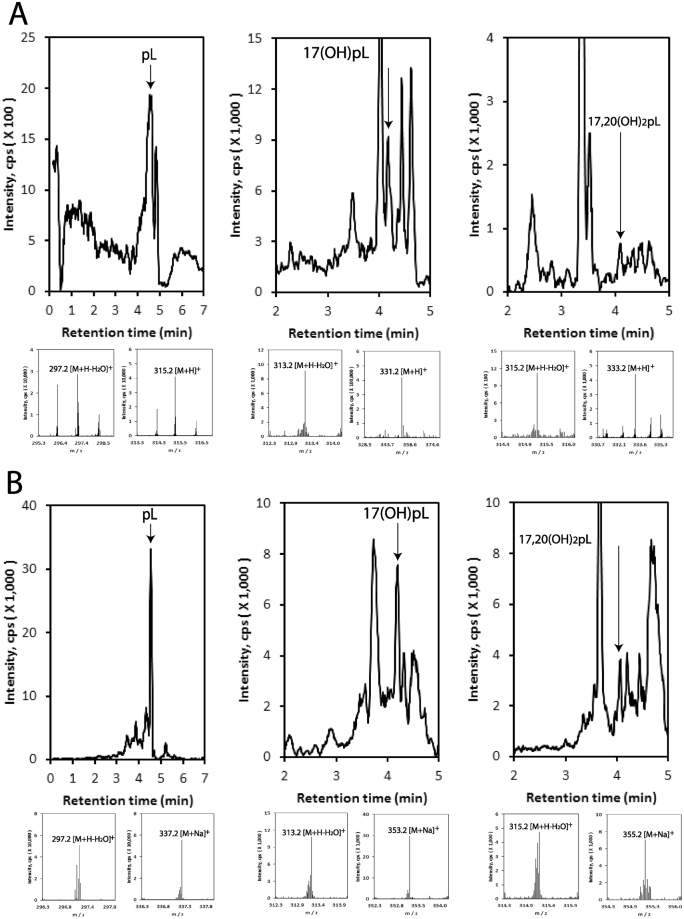
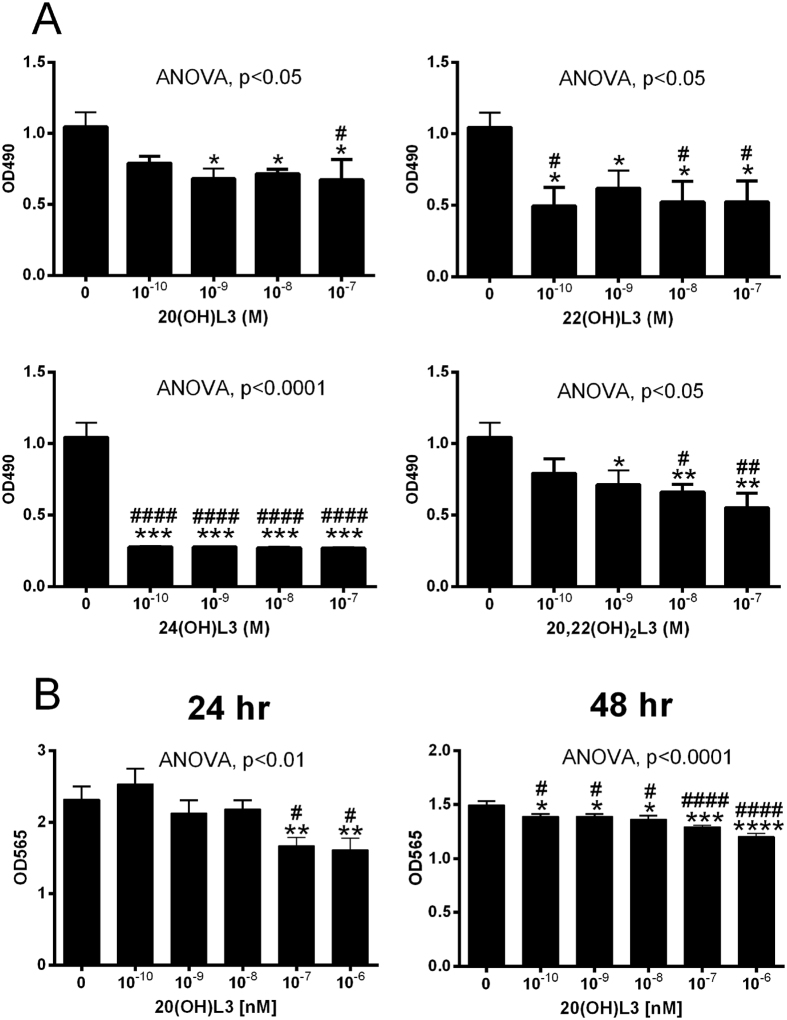
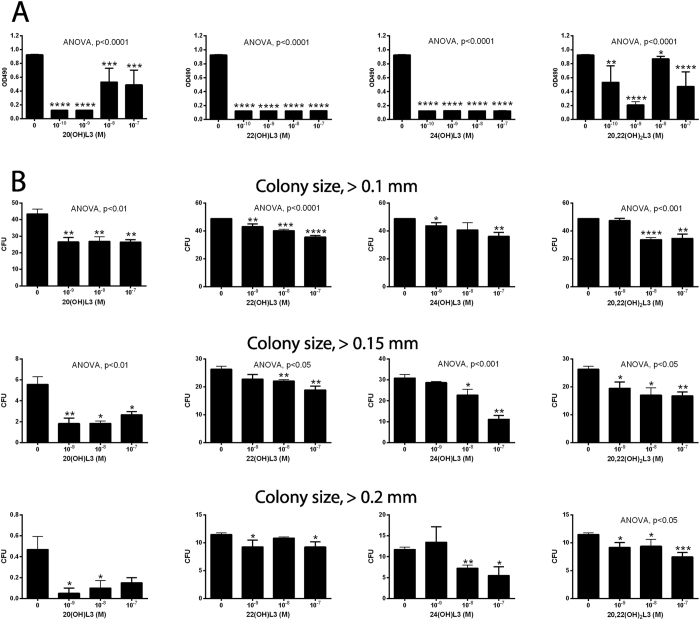
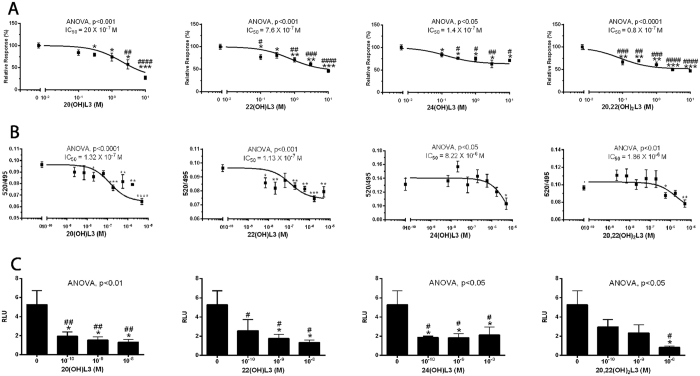
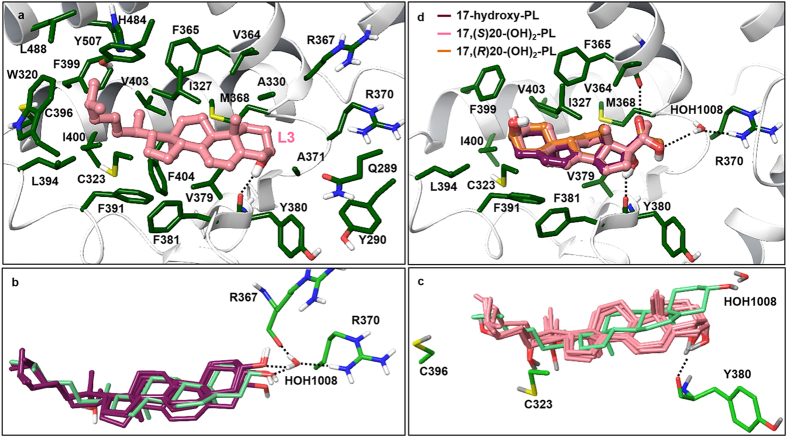
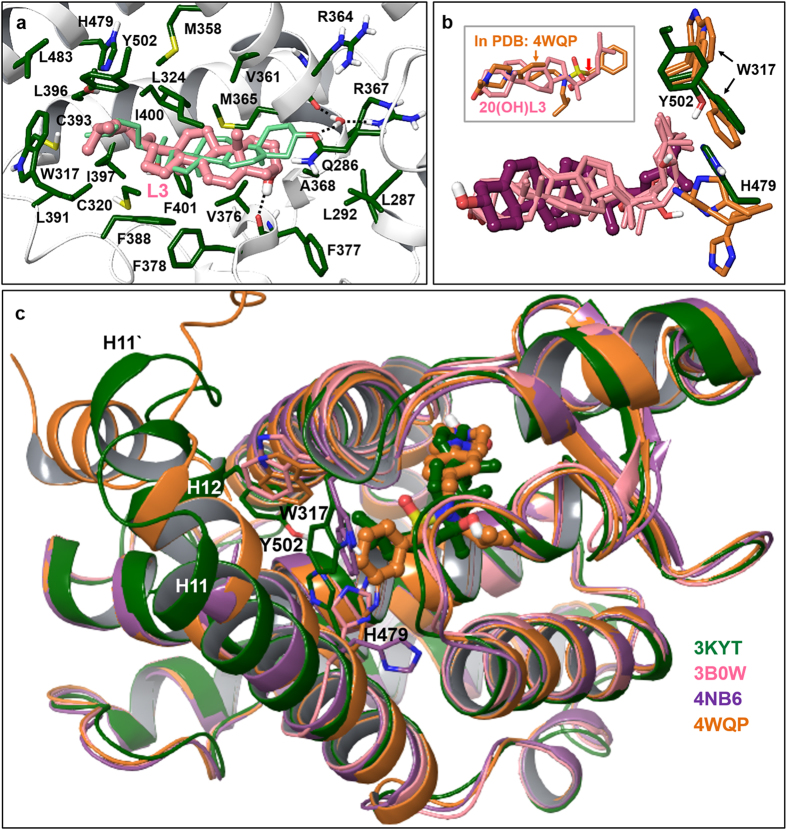
Using LC/qTOF-MS we detected lumisterol, 20-hydroxylumisterol, 22-hydroxylumisterol, 24-hydroxylumisterol, 20,22-dihydroxylumisterol, pregnalumisterol, 17-hydroxypregnalumisterol and 17,20-dihydroxypregnalumisterol in human serum and epidermis, and the porcine adrenal gland. The hydroxylumisterols inhibited proliferation of human skin cells in a cell type-dependent fashion with predominant effects on epidermal keratinocytes. They also inhibited melanoma proliferation in both monolayer and soft agar. 20-Hydroxylumisterol stimulated the expression of several genes, including those associated with keratinocyte differentiation and antioxidative responses, while inhibiting the expression of others including RORA and RORC. Molecular modeling and studies on VDRE-transcriptional activity excludes action through the genomic site of the VDR. However, their favorable interactions with the A-pocket in conjunction with VDR translocation studies suggest they may act on this non-genomic VDR site. Inhibition of RORα and RORγ transactivation activities in a Tet-on CHO cell reporter system, RORα co-activator assays and inhibition of (RORE)-LUC reporter activity in skin cells, in conjunction with molecular modeling, identified RORα and RORγ as excellent receptor candidates for the hydroxylumisterols. Thus, we have discovered a new biologically relevant, lumisterogenic pathway, the metabolites of which display biological activity. This opens a new area of endocrine research on the effects of the hydroxylumisterols on different pathways in different cells and the mechanisms involved.
Overview
The claims and statistics of this paper haven’t been checked yet.
Free: it reads the open-access text and checks the first 5 claims that cite a source we can check. Create a free account to check every claim.
Integrity signals
Registry
Cites
Statistics
Figures
Verification
Claims the paper makes
The claims and statistics of this paper haven’t been checked yet.
Free: it reads the open-access text and checks the first 5 claims that cite a source we can check. Create a free account to check every claim.
Claims other papers make about this one
Each is checked against this paper’s own text: does it say what the citing paper says it does?
The source backs part of the claim, not all of it — or backs it for a different population, condition or comparison.
In the citing paper
“20(OH)L3, 22-(OH)L3, 20,22-(OH)2L3 and pL were also measured in serum with the 20-(OH)L3 concentration being highest at 25.2 nM, more than half the mean 25(OH)D3 concentrations listed in Table 2.”
From The serum vitamin D metabolome: what we know and what is still to discover (2019) · cites this paper as [225]
Experimental — accuracy not yet measuredThe cited source says what the claim attributes to it.
In the citing paper
“Previously, some studies reported that 1,25(OH)2D3, 20(OH)D3, 20(OH)L3, 22(OH)L3, 24(OH)L3 and 20,22(OH)2L3 inhibited proliferation of a variety of cell types, including normal and immortalized human keratinocytes [45,59,60].”
The cited source says what the claim attributes to it.
In the citing paper
“Our previous study showed that there was a significant induction of the expression of anti-oxidant genes by 20(OH)L3 in human keratinocytes [45].”
The cited source says what the claim attributes to it.
In the citing paper
“Our previous studies demonstrated the anti-proliferative effects of hydroxy-derivatives of vitamin D3 [40,41,77] and hydroxylumisterols on keratinocytes [45].”
The cited source says what the claim attributes to it.
In the citing paper
“Major products were identified as 20-(OH)L3, 22-(OH)L3, 24(OH)L3 and 20,22-(OH)2L3, with a small amount of the C20-C22 cleavage product, pregnalumisterol (pL) [184, 225].”
From The serum vitamin D metabolome: what we know and what is still to discover (2019) · cites this paper as [225]
13 more claims about this paper
Create a free account to see every claim other papers make about this one.
Self-check
Percentages, sums and reported differences re-computed from the paper’s own numbers.
The self-check needs the paper’s full text.
Citations
Cites
Holick, M. F. (2007) · New England Journal of Medicine · doi:10.1056/nejmra070553 · Cited by 13,720
The Molecular Biology, Biochemistry, and Physiology of Human Steroidogenesis and Its Disorders
Miller, W. L., & Auchus, R. J. (2011) · Endocrine Reviews · doi:10.1210/er.2010-0013 · Cited by 2,458
Melanin pigmentation in mammalian skin and its hormonal regulation
Slominski, A., Tobin, D. J., Shibahara, S., & Wortsman, J. (2004) · Physiological Reviews · doi:10.1152/physrev.00044.2003 · Cited by 2,015
Self-citationVitamin D: Metabolism, Molecular Mechanism of Action, and Pleiotropic Effects
Christakos, S., Dhawan, P., Verstuyf, A., Verlinden, L., & Carmeliet, G. (2016) · Physiological Reviews · doi:10.1152/physrev.00014.2015 · Cited by 1,957
Vitamin D: a millenium perspective
Holick, M. F. (2003) · Journal of Cellular Biochemistry · doi:10.1002/jcb.10338 · Cited by 1,319
Jetten, A. M. (2009) · Nuclear Receptor Signaling · doi:10.1621/nrs.07003 · Cited by 673
Self-citationHolick, M. F., MacLaughlin, J. A., & Doppelt, S. H. (1981) · Science · doi:10.1126/science.6256855 · Cited by 558
Slominski, A. T., Zmijewski, M. A., Skobowiat, C., Zbytek, B., Slominski, R. M., & Steketee, J. D. (2012) · Advances in Anatomy, Embryology and Cell Biology · doi:10.1007/978-3-642-19683-6 · Cited by 496
Self-citationSlominski (2012) · doi:10.1007/978-3-642-19683-6_1 · Cited by 461
Key role of CRF in the skin stress response system
Slominski, A. T., Zmijewski, M. A., Zbytek, B., Tobin, D. J., Theoharides, T. C., & Rivier, J. (2013) · Endocrine Reviews · doi:10.1210/er.2012-1092 · Cited by 400
Self-citation
Research works printed but not linked: 1
- Kim T-K Correlation between secosteroid induced vitamin D receptor activity in melanoma cells and computer-modeled receptor binding strength Mol Cell Endocrinol 2012 361 143 152 10.1016/j.mce.2012.04.001 22546549 PMC3409337 · DOI · Paper page
Cited by
Skin Senescence: Mechanisms and Impact on Whole-Body Aging
Franco, A. C., Aveleira, C., & Cavadas, C. (2022) · Trends in Molecular Medicine · doi:10.1016/j.molmed.2021.12.003 · Cited by 321
“Moreover, L3-hydroxiderivates, the products of L3 catalysis by CYP11A1, can also interact with VDRs [113] and liver X receptors (LXRs) [114].”
BackgroundArgano, C., Mirarchi, L., Amodeo, S., Orlando, V., Torres, A., & Corrao, S. (2023) · International Journal of Molecular Sciences · doi:10.3390/ijms242015485 · Cited by 204
“Furthermore, different nutrients such as vitamins and minerals can also affect the antioxidant balance [202–204].”
BackgroundThe serum vitamin D metabolome: what we know and what is still to discover
Tuckey, R. C., Cheng, C. Y. S., & Slominski, A. T. (2019) · The Journal of Steroid Biochemistry and Molecular Biology · doi:10.1016/j.jsbmb.2018.09.003 · Cited by 245
Self-citationSlominski, R. M., Chen, J. Y., Raman, C., & Slominski, A. T. (2024) · Proceedings of the National Academy of Sciences · doi:10.1073/pnas.2308374121 · Cited by 195
Self-citationSepidarkish, M., Farsi, F., Akbari-Fakhrabadi, M., Namazi, N., Almasi-Hashiani, A., Maleki Hagiagha, A., & Heshmati, J. (2019) · Pharmacological Research · doi:10.1016/j.phrs.2018.11.011 · Cited by 163
“One of the interesting effects of these derived metabolites is elevating the gene expression of antioxidant agents including CAT, SOD and GPX [8].”
BackgroundPhotoprotective Properties of Vitamin D and Lumisterol Hydroxyderivatives
Slominski, A. T., Chaiprasongsuk, A., Janjetović, Z., Kim, T., Stefan, J., Slominski, R. M., Hanumanthu, V. S., Raman, C., Qayyum, S., Song, Y., et al. (2020) · Cell Biochemistry and Biophysics · doi:10.1007/s12013-020-00913-6 · Cited by 155
Self-citationChaiprasongsuk, A., Janjetovic, Z., Kim, T.-K., Jarrett, S. G., D'Orazio, J. A., Holick, M. F., Tang, E. K. Y., Tuckey, R. C., Panich, U., Li, W., et al. (2019) · Redox Biology · doi:10.1016/j.redox.2019.101206 · Cited by 146
Self-citationThe Impact of Vitamin D on Skin Aging
Bocheva, G., Slominski, R. M., & Slominski, A. T. (2021) · International Journal of Molecular Sciences · doi:10.3390/ijms22169097 · Cited by 121
Self-citationEpidermal lipids: key mediators of atopic dermatitis pathogenesis
Bhattacharya, N., Sato, W. J., Kelly, A., Ganguli-Indra, G., & Indra, A. K. (2019) · Trends in Molecular Medicine · doi:10.1016/j.molmed.2019.04.001 · Cited by 128
Biological Effects of CYP11A1-Derived Vitamin D and Lumisterol Metabolites in the Skin
Slominski, A. T., Kim, T., Janjetović, Z., Slominski, R. M., Li, W., Jetten, A. M., Indra, A. K., Mason, R. S., & Tuckey, R. C. (2024) · Journal of Investigative Dermatology · doi:10.1016/j.jid.2024.04.022 · Cited by 116
Self-citationThe significance of CYP11A1 expression in skin physiology and pathology
Slominski, R. M., Raman, C., Elmets, C. A., Jetten, A. M., Slominski, A. T., & Tuckey, R. C. (2021) · Molecular and Cellular Endocrinology · doi:10.1016/j.mce.2021.111238 · Cited by 106
Self-citationVitamin D Signaling in Psoriasis: Pathogenesis and Therapy
Brożyna, A. A., Slominski, R. M., Nedoszytko, B., Zmijewski, M. A., & Slominski, A. T. (2022) · International Journal of Molecular Sciences · doi:10.3390/ijms23158575 · Cited by 100
“These would act as agonists on VDR, LXR, and AhR receptors and as inverse agonists on RORs.”
BackgroundInfluentialSelf-citationNon-Skeletal Activities of Vitamin D: From Physiology to Brain Pathology
Bivona, G., Agnello, L., Bellia, C., Iacolino, G., Scazzone, C., Sasso, B. L., & Ciaccio, M. (2019) · Medicina · doi:10.3390/medicina55070341 · Cited by 93
Vitamin D and lumisterol derivatives can act on liver X receptors (LXRs)
Slominski, A. T., Kim, T., Qayyum, S., Song, Y., Janjetović, Z., Oak, A. S. W., Slominski, R. M., Raman, C., Stefan, J., Mier-Aguilar, C. A., et al. (2021) · Scientific Reports · doi:10.1038/s41598-021-87061-w · Cited by 89
Self-citationJetten, A. M., Takeda, Y., Slominski, A. T., & Kang, H. S. (2018) · Current Opinion in Toxicology · doi:10.1016/j.cotox.2018.01.005 · Cited by 90
“It was further shown that RORα and RORγ coexpression synergistically enhance Th17 differentiation, while RORα/RORγ double knockout mice exhibit a greater impaired Th17 generation and completely protected mice against experimental autoimmune encephalomyelitis.”
BackgroundInfluentialSelf-citationJetten, A. M., & Cook, D. N. (2019) · The Annual Review of Pharmacology and Toxicology · doi:10.1146/annurev-pharmtox-010919-023711 · Cited by 89
“Alternatively, UVB can convert D3 to lumisterol (L3), which is subsequently metabolized by CYP11A1 to various hydroxylumisterols such as 20(OH)L3 (83).”
BackgroundSelf-citationMalignant Melanoma: An Overview, New Perspectives, and Vitamin D Signaling
Slominski, R. M., Kim, T., Janjetović, Z., Brożyna, A. A., Podgórska, E., Dixon, K. M., Mason, R. S., Tuckey, R. C., Sharma, R., Crossman, D. K., et al. (2024) · Cancers · doi:10.3390/cancers16122262 · Cited by 86
Self-citationSepidarkish, M., Akbari‐Fakhrabadi, M., Daneshzad, E., Yavari, M., Rezaeinejad, M., Morvaridzadeh, M., & Heshmati, J. (2019) · Clinical Nutrition · doi:10.1016/j.clnu.2019.05.004 · Cited by 81
Gege, C. (2021) · Expert Opinion on Drug Discovery · doi:10.1080/17460441.2021.1948833 · Cited by 76
Retinoic Acid Receptor-Related Orphan Receptors: Critical Roles in Tumorigenesis
Fan, J., Lv, Z., Yang, G., Liao, T. T., Xu, J., Wu, F., Huang, Q., Guo, M., Hu, G., Zhou, M. L., et al. (2018) · Frontiers in Immunology · doi:10.3389/fimmu.2018.01187 · Cited by 74
“Together with RORα, RORγ was found to be expressed in melanoma cell lines and could bind with vitamin D3 derivatives, including 20(OH)D3 and 20,23(OH)2D3 (5), active forms of secosteroids and lumisterol can have anti-melanoma activity through action on RORα and RORγ (22, 24, 25, 39).”
BackgroundEvolutionary formation of melatonin and vitamin D in early life forms: insects take centre stage
Kim, T., Slominski, R. M., Pyza, E., Kleszczyński, K., Tuckey, R. C., Reiter, R. J., Holick, M. F., & Slominski, A. T. (2024) · Biological reviews/Biological reviews of the Cambridge Philosophical Society · doi:10.1111/brv.13091 · Cited by 74
“QTof LC – MS detection of m/z with retention times corresponding to listed standards as described previously (Kim et al ., 2020, 2022; Slominski et al ., 2017 a , 2022), or with modi fi cations as described below.”
InfluentialSelf-citationCharacterization of serotonin and N ‐acetylserotonin systems in the human epidermis and skin cells
Slominski, A. T., Kim, T., Kleszczyński, K., Semak, I. V., Janjetović, Z., Sweatman, T. W., Skobowiat, C., Steketee, J. D., Lin, Z., Postlethwaite, A. E., et al. (2019) · Journal of Pineal Research · doi:10.1111/jpi.12626 · Cited by 68
Self-citationRORα controls inflammatory state of human macrophages
Moharrami, N. N., Tande, E. B., Ryan, L., Espevik, T., & Boyartchuk, V. (2018) · PLoS ONE · doi:10.1371/journal.pone.0207374 · Cited by 66
Slominski, A. T., Kim, T., Slominski, R. M., Song, Y., Janjetović, Z., Podgórska, E., Reddy, S. B., Song, Y., Raman, C., Tang, E. K. Y., et al. (2022) · The FASEB Journal · doi:10.1096/fj.202200578r · Cited by 62
Self-citationSlominski, A. T., Brożyna, A. A., Zmijewski, M. A., Janjetović, Z., Kim, T., Slominski, R. M., Tuckey, R. C., Mason, R. S., Jetten, A. M., Guroji, P., et al. (2020) · Advances in experimental medicine and biology · doi:10.1007/978-3-030-46227-7_13 · Cited by 57
Self-citationVitamin D and lumisterol novel metabolites can inhibit SARS-CoV-2 replication machinery enzymes
Qayyum, S., Mohammad, T., Slominski, R. M., Hassan, M. I., Tuckey, R. C., Raman, C., & Slominski, A. T. (2021) · American Journal of Physiology-Endocrinology and Metabolism · doi:10.1152/ajpendo.00174.2021 · Cited by 49
“a basis to design high-affinity inhibitors with improved pharmacological properties (17).”
BackgroundSelf-citationChaiprasongsuk, A., Janjetović, Z., Kim, T., Tuckey, R. C., Li, W., Raman, C., Panich, U., & Slominski, A. T. (2020) · Free Radical Biology and Medicine · doi:10.1016/j.freeradbiomed.2020.05.016 · Cited by 49
“HEKn were isolated from neonatal foreskin and cultured as previously described [29, 46].”
BackgroundMethodSelf-citationPreclinical and clinical characterization of the RORγt inhibitor JNJ-61803534
Xue, X., Leon-Tabaldo, A. D., Luna-Roman, R., Castro, G., Albers, M., Schoetens, F., DePrimo, S. E., Devineni, D., Wilde, T. C., Goldberg, S., et al. (2021) · Scientific Reports · doi:10.1038/s41598-021-90497-9 · Cited by 49
Melnik, B. C., John, S. M., Carrera‐Bastos, P., & Schmitz, G. (2020) · Cancers · doi:10.3390/cancers12082111 · Cited by 48
Lan, S., Lai, C., Chang, S.-P., Lu, L., Hung, S., & Lin, W. (2020) · Scientific Reports · doi:10.1038/s41598-020-71271-9 · Cited by 46
Tuckey, R. C., Li, W., Ma, D., Cheng, C. Y. S., Wang, K., Kim, T., Jeayeng, S., & Slominski, A. T. (2018) · The Journal of Steroid Biochemistry and Molecular Biology · doi:10.1016/j.jsbmb.2018.02.008 · Cited by 42
Self-citationChaiprasongsuk, A., Janjetović, Z., Kim, T., Schwartz, C. J., Tuckey, R. C., Tang, E. K. Y., Raman, C., Panich, U., & Slominski, A. T. (2020) · International Journal of Molecular Sciences · doi:10.3390/ijms21249374 · Cited by 42
“Hydroxylumisterols have been reported to interact with the retinoic acid-related orphan receptors α and γ (RORα/γ), inhibiting RORγ- and RORα-mediated transcriptional activity [1,12].”
BackgroundSelf-citationMarkiewicz, A., Brożyna, A. A., Podgórska, E., Elas, M., Urbańska, K., Jetten, A. M., Slominski, A. T., Jóźwicki, W., Orłowska-Heitzman, J., Dyduch, G., et al. (2019) · Scientific Reports · doi:10.1038/s41598-019-45161-8 · Cited by 41
Self-citationEcoeur, F., Weiss, J., Kaupmann, K., Hintermann, S., Orain, D., & Guntermann, C. (2019) · Frontiers in Immunology · doi:10.3389/fimmu.2019.00577 · Cited by 41
Detection of 7-Dehydrocholesterol and Vitamin D3 Derivatives in Honey
Kim, T., Atigadda, V. R., Brzeminski, P., Fabisiak, A., Tang, E. K. Y., Tuckey, R. C., & Slominski, A. T. (2020) · Molecules · doi:10.3390/molecules25112583 · Cited by 36
“20(OH)-7DHC is also detectable in human skin; however, it is unclear which enzyme is responsible for its production [61].”
BackgroundSelf-citationWasiewicz, T., Piotrowska, A., Wierzbicka, J., Slominski, A. T., & Zmijewski, M. A. (2018) · International Journal of Molecular Sciences · doi:10.3390/ijms19092583 · Cited by 37
“In addition, other receptors such as retinoic orphan acid receptors (ROR)α and γ can be considered since vitamin D hydroxyderivatives can act as reverse agonists on these receptors [62,83] and related pregnalumisterol derivatives can also act on RORα and RORγ [15].”
BackgroundSelf-citationProtection from Ultraviolet Damage and Photocarcinogenesis by Vitamin D Compounds
Gordon‐Thomson, C., Tongkao‐on, W., Song, E. J., Carter, S. E., Dixon, K. M., & Mason, R. S. (2014) · Springer eBooks · doi:10.1007/978-1-4939-0437-2_17 · Cited by 34
Novel CYP11A1-Derived Vitamin D and Lumisterol Biometabolites for the Management of COVID-19
Qayyum, S., Slominski, R. M., Raman, C., & Slominski, A. T. (2022) · Nutrients · doi:10.3390/nu14224779 · Cited by 27
“The phenotypic effect of 1,25(OH)2D3 is predominantly mediated through an interaction with the VDR leading to the transcriptional activation of more than 3000 genes [4,6,8–10].”
BackgroundInfluentialSelf-citationKaraś, K., Sałkowska, A., Walczak‐Drzewiecka, A., Ryba, K., Dastych, J., Bachorz, R. A., & Ratajewski, M. (2018) · Toxicology Letters · doi:10.1016/j.toxlet.2018.07.002 · Cited by 27
Brożyna, A. A., Jóźwicki, W., Jetten, A. M., & Slominski, A. T. (2019) · Experimental Dermatology · doi:10.1111/exd.14002 · Cited by 26
Self-citationMarini, F., Falcini, F., Stagi, S., Fabbri, S., Ciuffi, S., Rigante, D., Matucci‐Cerinic, M., & Brandi, M. L. (2020) · Scientific Reports · doi:10.1038/s41598-020-74861-9 · Cited by 25
Holick, M. F., & Slominski, A. T. (2023) · Elsevier eBooks · doi:10.1016/b978-0-323-91386-7.00006-4 · Cited by 40
Self-citationBeneficial health effects of ultraviolet radiation: expert review and conference report
Riedmann, U., Dibben, C. J. L., de Gruijl, F. R., Gorman, S., Hart, P. H., Hoel, D. G., Levy, C., Lindqvist, P. G., Norval, M., Parikh, S., et al. (2025) · Photochemical & Photobiological Sciences · doi:10.1007/s43630-025-00743-6 · Cited by 26
Self-citationGorini, F., & Tonacci, A. (2024) · Nutrients · doi:10.3390/nu16111762 · Cited by 25
“…metabolites can bind, in addition to the non-genomic VDR site, to AhR, LXRs, and peroxisome proliferator-activated receptor gamma (PPAR γ ), suggesting the potential of these products to play a pivotal role not only in the skin but also in other organs that present these receptors [50,55].”
BackgroundThe Role of Retinoic-Acid-Related Orphan Receptor (RORs) in Cellular Homeostasis
Nematisouldaragh, D., Kirshenbaum, E., Uzonna, M., Kirshenbaum, L. A., & Rabinovich-Nikitin, I. (2024) · International Journal of Molecular Sciences · doi:10.3390/ijms252111340 · Cited by 22
Silva, W. G. M. D., Han, J. Z. R., Yang, C., Tongkao‐on, W., McCarthy, B. Y., Ince, F. A., Holland, A. J. A., Tuckey, R. C., Slominski, A. T., Abboud, M., et al. (2021) · JBMR Plus · doi:10.1002/jbm4.10555 · Cited by 23
“24(OH)L3 and 20(OH)D3 were enzymatically synthesized using recombinant CYP11A1, procedures as described.((21,26)) Other compoundswere purchased: 1,25(OH)2D3 (Sapphire Bioscience, Sydney, Australia).”
BackgroundMethodSelf-citationAlternative pathways for vitamin D metabolism
Slominski, A. T., Tuckey, R. C., Jenkinson, C., Li, W., & Jetten, A. M. (2023) · Elsevier eBooks · doi:10.1016/b978-0-323-91386-7.00001-5 · Cited by 25
Self-citationMoin, A. S. M., Sathyapalan, T., Butler, A. E., & Atkin, S. L. (2021) · Frontiers in Endocrinology · doi:10.3389/fendo.2021.638621 · Cited by 23
“In the alternative pathway, vitamin D is activated by CYP11A1, resulting in the production of over 10 different metabolites (36, 38–43); this includes activation of lumisterol, a photoproduct of pro-vitamin D (44).”
BackgroundEditorial: Steroids and Secosteroids in the Modulation of Inflammation and Immunity
Slominski, A. T., Mahata, B., Raman, C., & Bereshchenko, O. (2021) · Frontiers in Immunology · doi:10.3389/fimmu.2021.825577 · Cited by 21
Self-citationBrzeminski, P., Fabisiak, A., Slominski, R. M., Kim, T., Janjetović, Z., Podgórska, E., Song, Y., Saleem, M., Reddy, S. B., Qayyum, S., et al. (2022) · Bioorganic Chemistry · doi:10.1016/j.bioorg.2022.105660 · Cited by 21
Self-citationBrożyna, A. A., Kim, T., Zabłocka, M., Jóźwicki, W., Yue, J., Tuckey, R. C., Jetten, A. M., & Slominski, A. T. (2020) · Nutrients · doi:10.3390/nu12113541 · Cited by 18
Self-citationProtection from Ultraviolet Damage and Photocarcinogenesis by Vitamin D Compounds
Silva, W. G. M. D., Abboud, M., Yang, C., Dixon, K. M., Rybchyn, M. S., & Mason, R. S. (2020) · Advances in experimental medicine and biology · doi:10.1007/978-3-030-46227-7_12 · Cited by 19
Is Vitamin D Signaling Regulated by and Does It Regulate Circadian Rhythms?
Slominski, A. T., Slominski, R. M., Kamal, M., Holick, M. F., Tuckey, R. C., Reiter, R. J., Li, W., & Jetten, A. M. (2025) · The FASEB Journal · doi:10.1096/fj.202503003r · Cited by 20
“…of pre-vitamin D3, such as lumisterol and tachysterol [17, 21], can be activated through enzymatic hydroxylation mediated by CYP enzymes [40, 69, 87–89], and their hydroxyderivatives exert their biological activities through interactions with RORα/γ and AhR receptors [35, 69, 75, 76, 87], or…”
Self-citationPatel, R., Nandini, N., Kharkwal, H., Saha, M., Murugesan, S., Sharma, S., & Chander, S. (2025) · Biomedicines · doi:10.3390/biomedicines13041002 · Cited by 18
“Lumisterol, a human secosteroid metabolite, is synthesized from 7-dehydrocholesterol via photoisomerization in the epidermis upon UV irradiation [56].”
Synthetic Chemical Probes That Dissect Vitamin D Activities
Nagata, A., Akagi, Y., Asano, L., Kotake, K., Kawagoe, F., Mendoza, A. D. L., Masoud, S. S., Usuda, K., Yasui, K., Takemoto, Y., et al. (2019) · ACS Chemical Biology · doi:10.1021/acschembio.9b00718 · Cited by 17
Tuckey, R. C., Tang, E. K. Y., Chen, Y. A., & Slominski, A. T. (2021) · The Journal of Steroid Biochemistry and Molecular Biology · doi:10.1016/j.jsbmb.2021.105929 · Cited by 17
Self-citationLote-Oke, R., Pawar, J., Kulkarni, S. V., Sanas, P., Kajale, N., Gondhalekar, K. M., Khadilkar, V. V., Kamat, S. S., & Khadilkar, A. V. (2020) · Scientific Reports · doi:10.1038/s41598-020-76955-w · Cited by 14
Vitamin D stimulates placental L-type amino acid transporter 1 (LAT1) in preeclampsia
Jia, X., Cao, Y., Ye, L., Liu, X., Huang, Y., Yuan, X., Lu, C., Xu, J., & Zhu, H. F. (2022) · Scientific Reports · doi:10.1038/s41598-022-08641-y · Cited by 13
Silva, W. G. M. D., McCarthy, B. Y., Han, J. Z. R., Yang, C., Holland, A. J. A., Stern, H. S., Dixon, K. M., Tang, E. K. Y., Tuckey, R. C., Rybchyn, M. S., et al. (2023) · Metabolites · doi:10.3390/metabo13070775 · Cited by 12
“The 24(OH)L3 was enzymatically synthesized using recombinant CYP11A1 and purified using procedures as previously described [72,80].”
BackgroundMethodSelf-citationZelzer, S., Meinitzer, A., Herrmann, M., Goessler, W., & Enko, D. (2021) · Biomolecules · doi:10.3390/biom11091288 · Cited by 12
“, lumisterol derivates) might be present in the samples [34,35].”
BackgroundMetabolic activation of lumisterol to biologically active metabolites and their mechanism of action
Slominski, A. T., Kim, T., Janjetović, Z., Ravichandran, S., Song, Y., Podgórska, E., Slominski, R. M., Ewendt, F., Song, Y., Szpotan, J., et al. (2026) · Biochemical Pharmacology · doi:10.1016/j.bcp.2026.117711 · Cited by 12
Self-citationDomżalski, P., Piotrowska, A., Tuckey, R. C., & Zmijewski, M. A. (2024) · International Journal of Molecular Sciences · doi:10.3390/ijms252010914 · Cited by 10
“In past studies, CYP11A1-derived 20(OH)L 3 , 22(OH)L 3 , 24(OH)L 3 and 20,22(OH)L 3 were shown inhibit the proliferation of human melanoma cells (SKMel-188) [16].”
BackgroundResultInfluentialSelf-citationThe cyclin‐dependent kinase inhibitor AT7519 is a human RORγt agonist
Karaś, K., Pastwińska, J., Sałkowska, A., Karwaciak, I., Bachorz, R. A., & Ratajewski, M. (2025) · Immunology and Cell Biology · doi:10.1111/imcb.12851 · Cited by 9
“12,13 Recently, some studies have highlighted the potential of ROR c t agonists in increasing the efficacy of the immune system against cancer.”
Zawierucha, J., Małyszko, J., Malyszko, J. S., Prystacki, T., Marcinkowski, W., & Dryl-Rydzyńska, T. (2019) · Frontiers in Endocrinology · doi:10.3389/fendo.2019.00040 · Cited by 9
Vitamin D endocrine system in breast cancer
Linowiecka, K., Wolnicka-Głubisz, A., & Brożyna, A. A. (2021) · Acta Biochimica Polonica · doi:10.18388/abp.2020_5961 · Cited by 10
“Vitamin D derivatives 20(OH)D3, 20(OH)D2 and 20,23(OH)2D3 can interact with RORα and RORγ in an antagonistic or inverse agonistic manner (Slominski et al., 2014c; Slominski et al., 2017c).”
BackgroundInfluentialKühn, J., Brandsch, C., Bailer, A. C., Kiourtzidis, M., Hirche, F., Chen, C., Markó, L., Bartolomaeus, T. U. P., Löber, U., Michel, S., et al. (2024) · The Journal of Nutritional Biochemistry · doi:10.1016/j.jnutbio.2024.109746 · Cited by 9
Identification of RORγ as a favorable biomarker for colon cancer
Pan, X., Li, B., Zhang, G., Gong, Y., Liu, R., Chen, B., & Li, Y. (2021) · Journal of International Medical Research · doi:10.1177/03000605211008338 · Cited by 9
“Other researchers identified that RORc ligands also function as antitumor modulators in the inhibition of migration and cell viability in breast cancer and melanoma.(16,17) However, RORc was identified as an oncogene in liver cancer, lung cancer, prostate cancer, gastric cancer, cervical cancer, and multiple myeloma.”
BackgroundOlder Korean men with inadequate vitamin D status have lower odds of radiologic osteoarthritis
Kim, S., Lee, G. W., & Park, C. Y. (2022) · Scientific Reports · doi:10.1038/s41598-022-15025-9 · Cited by 8
Oral Intake of Lumisterol Affects the Metabolism of Vitamin D
Kotwan, J., Kühn, J., Baur, A. C., & Stangl, G. I. (2021) · Molecular Nutrition & Food Research · doi:10.1002/mnfr.202001165 · Cited by 8
Soeberdt, M., Kilić, A., & Abels, C. (2020) · Experimental Dermatology · doi:10.1111/exd.14145 · Cited by 9
Fabregat-Cabello, N., Darimont, P., Huyghebaert, L., Reynier, P., Annweiler, C., Miléa, D., Goff, C. M. L., & Cavalier, E. (2019) · Analytical Methods · doi:10.1039/c9ay01896d · Cited by 7
Metabolism of Lumisterol2 by CYP27A1
Wu, D., Nealon, G. L., Liu, Y., Kim, T., Slominski, A. T., & Tuckey, R. C. (2023) · The Journal of Steroid Biochemistry and Molecular Biology · doi:10.1016/j.jsbmb.2023.106370 · Cited by 6
“This is similar to the effects of CYP27A1- and CYP11A1-derived hydroxyderivatives of L3 [11,12].”
BackgroundMethodInfluentialSelf-citationVitamin D status in non-pregnant women of reproductive age: a study in Southern Thailand
Jaruratanasirikul, S., Boonrusmee, S., Kasemsripitak, S., Saengkaew, T., Chimrung, K., & Sriplung, H. (2023) · Scientific Reports · doi:10.1038/s41598-023-42557-5 · Cited by 8
“At least, two or three in vivo non-canonical pathways of vitamin D3 activation generating novel D3-hydroxyderivatives different from 25-hydroxyvitamin D have been identified 21–27 leading to production of non-or low-calcemic analogs 22,23 ) and of lumisterol activation 25–27 .”
BackgroundZhang, J., Feng, M., Pan, L., Wang, F., Wu, P., You, Y., Hua, M., Zhang, T., Wang, Z., Zong, L., et al. (2021) · Scientific Reports · doi:10.1038/s41598-021-85531-9 · Cited by 5
Jetten, A. M., Beak, J. Y., Slominski, A. T., & Jensen, B. C. (2021) · Springer eBooks · doi:10.1007/978-3-030-78315-0_14 · Cited by 6
Self-citationEvaluation of the activity of cardiac glycosides on RORγ and RORγT nuclear receptors
Karwaciak, I., Pastwińska, J., Sałkowska, A., Bachorz, R. A., & Ratajewski, M. (2024) · Archives of Biochemistry and Biophysics · doi:10.1016/j.abb.2024.110085 · Cited by 5
Nuclear orphan receptors: A novel therapeutic agent in neuroinflammation
Thakur, K., Khan, H., Grewal, A. K., & Singh, T. G. (2023) · International Immunopharmacology · doi:10.1016/j.intimp.2023.110845 · Cited by 4
Schwarz, P. F., Perhal, A. F., Guder, F., González, J. E. H., Janssen, K., Sağıroğlu, E., Tahir, A., Kirchmair, J., Rochel, N., Dirsch, V. M., et al. (2025) · Journal of Natural Products · doi:10.1021/acs.jnatprod.5c00416 · Cited by 3
Hormones and Hormone Precursors of the Skin
Kemény, L. V., & Fisher, D. E. (2019) · Elsevier eBooks · doi:10.1016/b978-0-12-813814-4.00023-7 · Cited by 3
Orphan nuclear receptors: structural mechanisms, ligand discovery, and therapeutic potential
Liu, Y., Wei, S., Wang, Z., Yang, H., Chen, Z., Ren, M., & Fu, X. (2026) · Cellular Signalling · doi:10.1016/j.cellsig.2026.112653 · Cited by 2
RORα as a context-dependent transcriptional stabilizer in the nervous system
Zhang, H., Li, J., Liu, H., Hu, X., Zhang, S., Yu, Q., Kuang, G., Liu, L., Wang, Z., Yu, D., et al. (2026) · Neuroscience & Biobehavioral Reviews · doi:10.1016/j.neubiorev.2026.106970
Self-citationSpecial Issue “Vitamin D Signaling in Human Health and Diseases”
Rovito, D. (2026) · International Journal of Molecular Sciences · doi:10.3390/ijms27219463
Kumari, N., Tripathi, A., Kumar, S., & Tyagi, R. K. (2026) · Cellular Signalling · doi:10.1016/j.cellsig.2026.112987
Metadata
- Authors
- Slominski, A. T., Kim, T.-K., Hobrath, J. V., Janjetovic, Z., Oak, A. S. W., Postlethwaite, A., Lin, Z., Li, W., Takeda, Y., Jetten, A. M., & Tuckey, R. C.
- Affiliations
- University of Alabama at Birmingham (US)
- Birmingham VA Medical Center (US)
- University of Dundee (GB)
- University of Tennessee Health Science Center (US)
- National Institutes of Health (US)
- The University of Western Australia (AU)
- Corresponding author
- Slominski, Andrzej T.
- ORCID
- Venue
- Scientific Reports
- Published
- 2017-09-12
- Volume
- 7
- Issue
- 1
- Pages
- 11434-11434
- ISSN
- 2045-2322 (ISSN-L)
- PMC
- PMC5595834
- OpenAlex
- W2751533291
- Cited by
- 82
- References
- 70
- Citations by year
- 2026: 4 · 2025: 5 · 2024: 9 · 2023: 7 · 2022: 7 · 2021: 16 · 2020: 12 · 2019: 13 · 2018: 8
- FWCI
- 9.25
- Type
- journal article
- Language
- en
- Open access
- gold
- doi.org
- Licence
- cc-by
- creativecommons.org/licenses/by/4.0 (tdm)
- creativecommons.org/licenses/by/4.0 (vor)
- Locations
- Scientific Reports (publishedVersion, cc-by)
- PubMed Central (publishedVersion, cc-by)
- PubMed (publishedVersion)
- Discovery Research Portal (University of Dundee) (submittedVersion, cc-by)
- UWA Profiles and Research Repository (UWA) (submittedVersion, cc-by)
- Funders
- U.S. Department of Veterans Affairs (IP1 BX001607, I01 CX001400)
- National Institutes of Health (1s10od010678-01, Z01-ES-101586)
- National Institute of Environmental Health Sciences (Z01ES101586)
- National Institute of Arthritis and Musculoskeletal and Skin Diseases (R21AR066505, R21AR063242, R01AR071189, R01AR056666)
- National Center for Research Resources (S10RR026377)
- Topics
- Life Sciences › Biochemistry, Genetics and Molecular Biology › Biochemistry › Cholesterol and Lipid Metabolism
- Life Sciences › Immunology and Microbiology › Immunology › Psoriasis: Treatment and Pathogenesis
- Health Sciences › Medicine › Endocrinology, Diabetes and Metabolism › Vitamin D Research Studies
- Keywords
- lumisterol, RORα, RORγ, keratinocyte differentiation, melanoma cell proliferation, epidermis, adrenal gland, skin cells, gene expression, vitamin D metabolites
- MeSH terms
- Animals, Chromatography, Liquid, Dose-Response Relationship, Drug, Epidermis, Ergosterol, Humans, Models, Molecular, Molecular Conformation, Swine, Molecular Structure, Biomarkers, Keratinocytes, Receptors, Calcitriol, Spectrometry, Mass, Matrix-Assisted Laser Desorption-Ionization, Cell Line, Tumor, Metabolic Networks and Pathways, Nuclear Receptor Subfamily 1, Group F, Member 3
About these checks
Registry, retraction, Cites and statistics results are computed, not judged, with one exception: a printed reference that no index lists is read once by a model before it counts as a citation error. Claims are extracted by a model and kept only when their quote appears verbatim in the text; each cited source is then checked, with a model’s help, for whether it says what the claim relies on. Those verdicts can be wrong — read the claim’s quote and the cited source before relying on one.
Statistics and arithmetic are recomputed, not judged.
Confidence bands are shown only for fields calibrated on our annotated test set. None is calibrated yet, so no band is shown.
What counts as a claim ›How we measure confidence ›How we check this ›
Are you an author, or do you see a problem with this page? Request a review
Data sources
Bibliographic data: Semantic Scholar, OpenAlex, Crossref.
Contains information from the Semantic Scholar Academic Graph Datasets, made available under the ODC Attribution License (ODC-BY 1.0).
Semantic Scholar’s data is described in: Kinney, R., et al. (2023). The Semantic Scholar Open Data Platform. arXiv:2301.10140.
