

Characterization of a new pathway that activates lumisterol in vivo to biologically active hydroxylumisterols
Open accessThe DOI matches its Crossref record; 70 of the 70 references it cites were found in a registry or an index.
Abstract
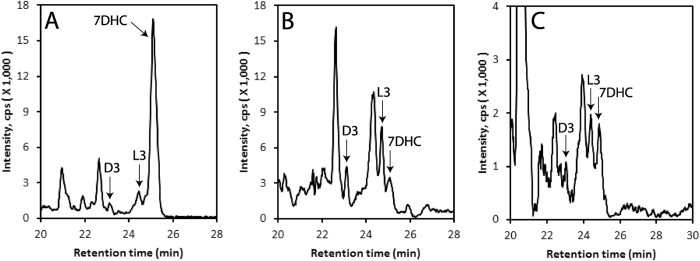
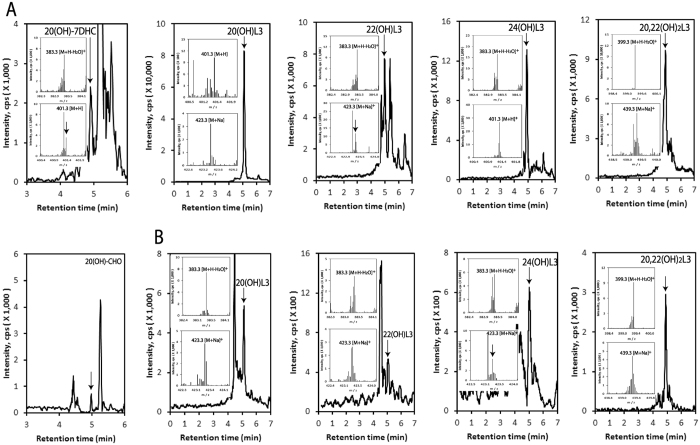
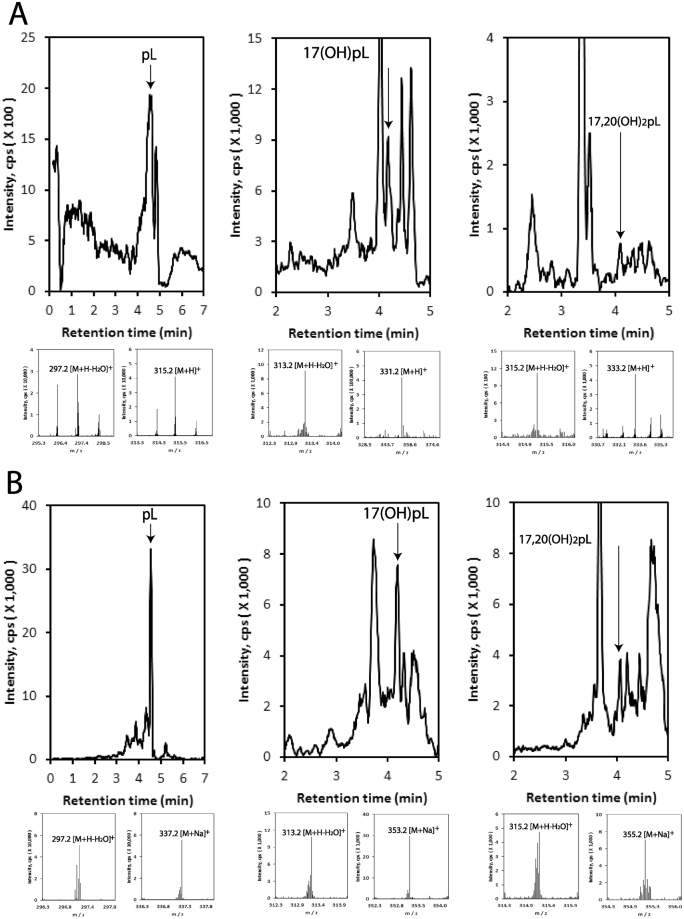
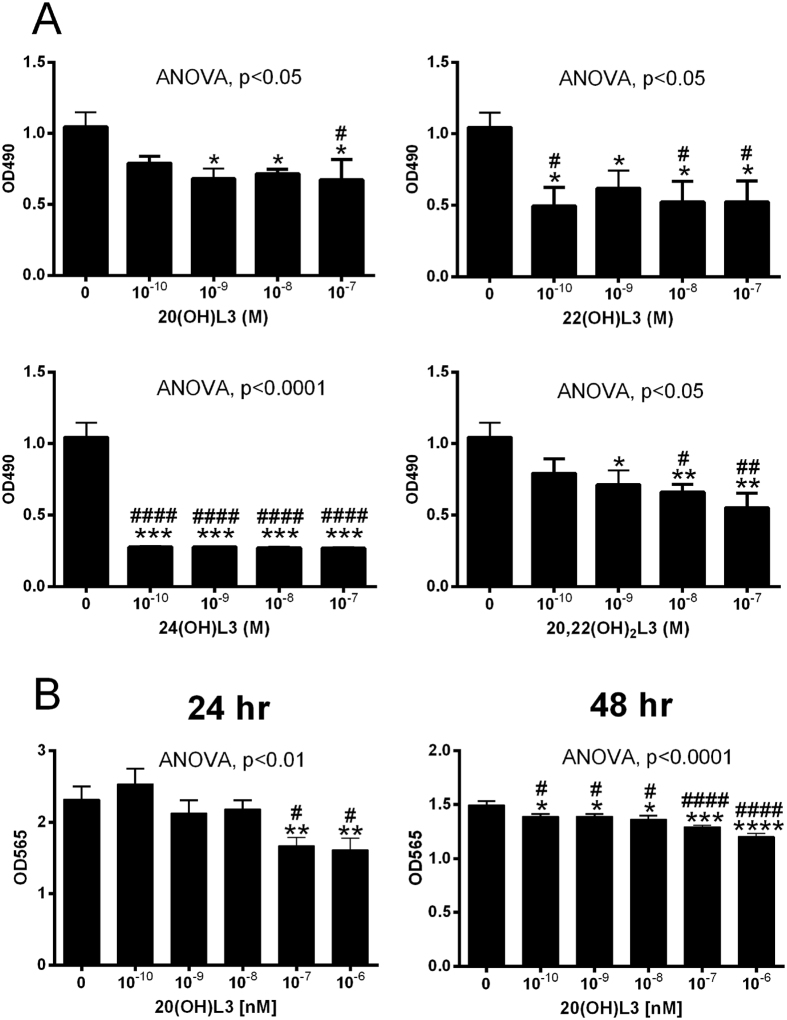
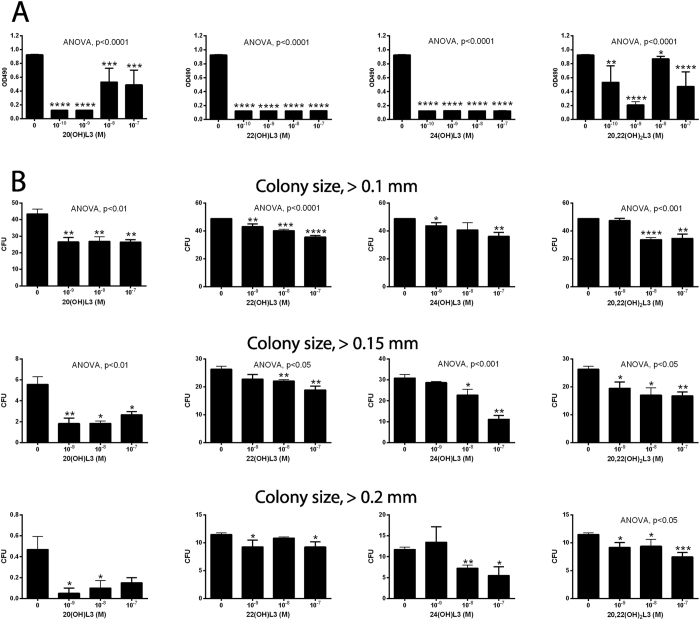
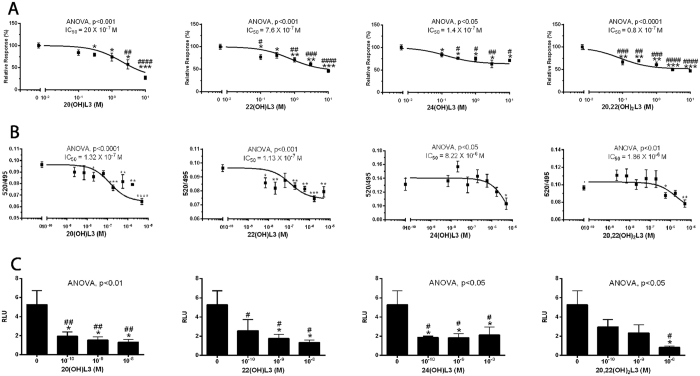
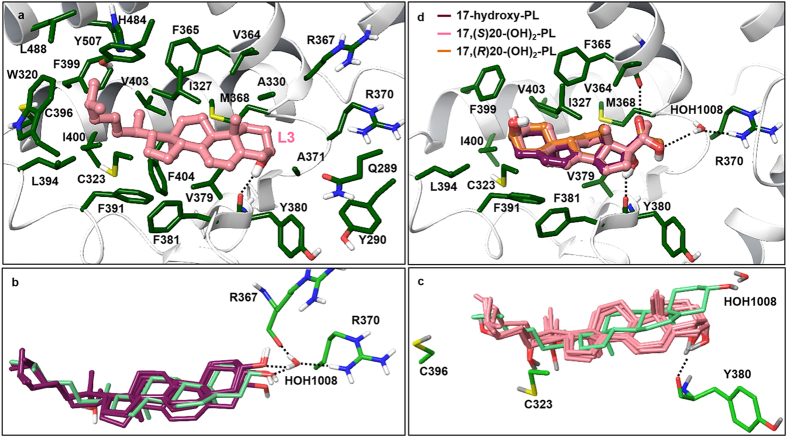
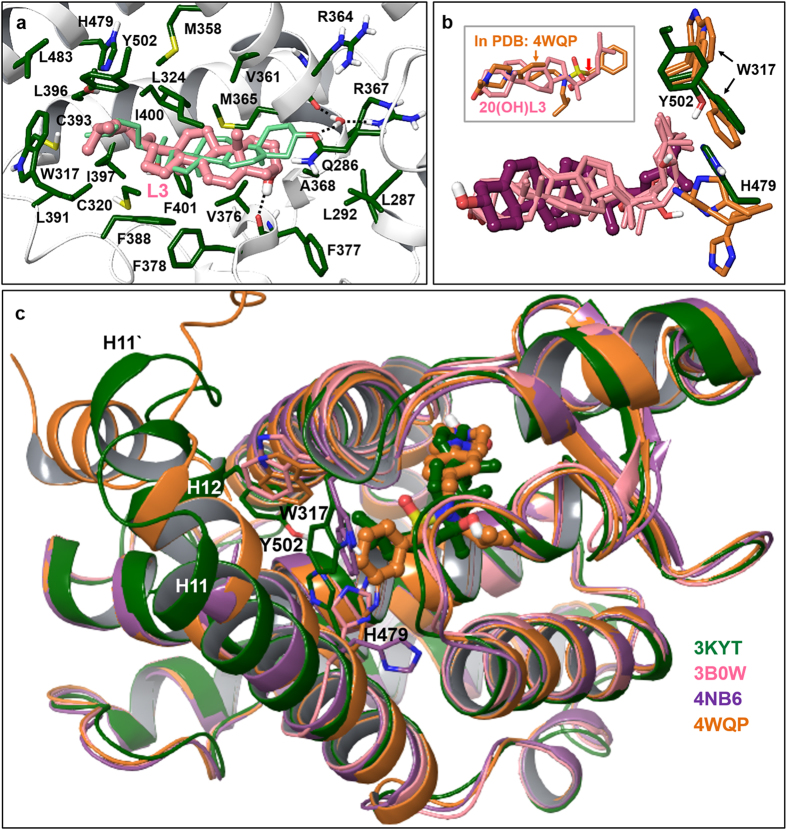
Using LC/qTOF-MS we detected lumisterol, 20-hydroxylumisterol, 22-hydroxylumisterol, 24-hydroxylumisterol, 20,22-dihydroxylumisterol, pregnalumisterol, 17-hydroxypregnalumisterol and 17,20-dihydroxypregnalumisterol in human serum and epidermis, and the porcine adrenal gland. The hydroxylumisterols inhibited proliferation of human skin cells in a cell type-dependent fashion with predominant effects on epidermal keratinocytes. They also inhibited melanoma proliferation in both monolayer and soft agar. 20-Hydroxylumisterol stimulated the expression of several genes, including those associated with keratinocyte differentiation and antioxidative responses, while inhibiting the expression of others including RORA and RORC. Molecular modeling and studies on VDRE-transcriptional activity excludes action through the genomic site of the VDR. However, their favorable interactions with the A-pocket in conjunction with VDR translocation studies suggest they may act on this non-genomic VDR site. Inhibition of RORα and RORγ transactivation activities in a Tet-on CHO cell reporter system, RORα co-activator assays and inhibition of (RORE)-LUC reporter activity in skin cells, in conjunction with molecular modeling, identified RORα and RORγ as excellent receptor candidates for the hydroxylumisterols. Thus, we have discovered a new biologically relevant, lumisterogenic pathway, the metabolites of which display biological activity. This opens a new area of endocrine research on the effects of the hydroxylumisterols on different pathways in different cells and the mechanisms involved.
Overview
The claims and statistics of this paper haven’t been checked yet.
Free: it reads the open-access text and checks the first 5 claims that cite a source we can check. Create a free account to check every claim.
Integrity signals
Registry
Cites
Statistics
Figures
Verification
Claims the paper makes
The claims and statistics of this paper haven’t been checked yet.
Free: it reads the open-access text and checks the first 5 claims that cite a source we can check. Create a free account to check every claim.
Claims other papers make about this one
Each is checked against this paper’s own text: does it say what the citing paper says it does?
The source backs part of the claim, not all of it — or backs it for a different population, condition or comparison.
In the citing paper
“20(OH)L3, 22-(OH)L3, 20,22-(OH)2L3 and pL were also measured in serum with the 20-(OH)L3 concentration being highest at 25.2 nM, more than half the mean 25(OH)D3 concentrations listed in Table 2.”
From The serum vitamin D metabolome: what we know and what is still to discover (2019) · cites this paper as [225]
Experimental — accuracy not yet measuredThe cited source says what the claim attributes to it.
In the citing paper
“Previously, some studies reported that 1,25(OH)2D3, 20(OH)D3, 20(OH)L3, 22(OH)L3, 24(OH)L3 and 20,22(OH)2L3 inhibited proliferation of a variety of cell types, including normal and immortalized human keratinocytes [45,59,60].”
The cited source says what the claim attributes to it.
In the citing paper
“Our previous study showed that there was a significant induction of the expression of anti-oxidant genes by 20(OH)L3 in human keratinocytes [45].”
The cited source says what the claim attributes to it.
In the citing paper
“Our previous studies demonstrated the anti-proliferative effects of hydroxy-derivatives of vitamin D3 [40,41,77] and hydroxylumisterols on keratinocytes [45].”
The cited source says what the claim attributes to it.
In the citing paper
“Major products were identified as 20-(OH)L3, 22-(OH)L3, 24(OH)L3 and 20,22-(OH)2L3, with a small amount of the C20-C22 cleavage product, pregnalumisterol (pL) [184, 225].”
From The serum vitamin D metabolome: what we know and what is still to discover (2019) · cites this paper as [225]
13 more claims about this paper
Create a free account to see every claim other papers make about this one.
Self-check
Percentages, sums and reported differences re-computed from the paper’s own numbers.
The self-check needs the paper’s full text.
Citations
Cites
Holick, M. F. (2007) · New England Journal of Medicine · doi:10.1056/nejmra070553 · Cited by 13,720
The Molecular Biology, Biochemistry, and Physiology of Human Steroidogenesis and Its Disorders
Miller, W. L., & Auchus, R. J. (2011) · Endocrine Reviews · doi:10.1210/er.2010-0013 · Cited by 2,458
Melanin pigmentation in mammalian skin and its hormonal regulation
Slominski, A., Tobin, D. J., Shibahara, S., & Wortsman, J. (2004) · Physiological Reviews · doi:10.1152/physrev.00044.2003 · Cited by 2,015
Self-citationVitamin D: Metabolism, Molecular Mechanism of Action, and Pleiotropic Effects
Christakos, S., Dhawan, P., Verstuyf, A., Verlinden, L., & Carmeliet, G. (2016) · Physiological Reviews · doi:10.1152/physrev.00014.2015 · Cited by 1,957
Vitamin D: a millenium perspective
Holick, M. F. (2003) · Journal of Cellular Biochemistry · doi:10.1002/jcb.10338 · Cited by 1,319
Jetten, A. M. (2009) · Nuclear Receptor Signaling · doi:10.1621/nrs.07003 · Cited by 673
Self-citationHolick, M. F., MacLaughlin, J. A., & Doppelt, S. H. (1981) · Science · doi:10.1126/science.6256855 · Cited by 558
Slominski, A. T., Zmijewski, M. A., Skobowiat, C., Zbytek, B., Slominski, R. M., & Steketee, J. D. (2012) · Advances in Anatomy, Embryology and Cell Biology · doi:10.1007/978-3-642-19683-6 · Cited by 496
Self-citationSlominski (2012) · doi:10.1007/978-3-642-19683-6_1 · Cited by 461
Key role of CRF in the skin stress response system
Slominski, A. T., Zmijewski, M. A., Zbytek, B., Tobin, D. J., Theoharides, T. C., & Rivier, J. (2013) · Endocrine Reviews · doi:10.1210/er.2012-1092 · Cited by 400
Self-citationHolick, M. F. (2016) · PubMed · Cited by 375
Slominski, A. T., Kim, T., Takeda, Y., Janjetovic, Z., Brożyna, A. A., Skobowiat, C., Wang, J., Postlethwaite, A., Li, W., Tuckey, R. C., et al. (2014) · The FASEB Journal · doi:10.1096/fj.13-242040 · Cited by 269
Self-citationCutaneous hypothalamic–pituitary–adrenal axis homolog: regulation by ultraviolet radiation
Skobowiat, C., Dowdy, J. C., Sayre, R. M., Tuckey, R. C., & Slominski, A. (2011) · American Journal of Physiology-Endocrinology and Metabolism · doi:10.1152/ajpendo.00217.2011 · Cited by 269
Self-citationSlominski, A. T., Kim, T., Shehabi, H. Z., Semak, I., Tang, E. K. Y., Nguyen, M. N., Benson, H. A. E., Korik, E., Janjetovic, Z., Chen, J., et al. (2012) · The FASEB Journal · doi:10.1096/fj.12-208975 · Cited by 266
Self-citationMultifunctional roles of gelsolin in health and diseases
Li, G. H., Arora, P. D., Chen, Y., McCulloch, C. A., & Liu, P. (2012) · Medicinal Research Reviews · doi:10.1002/med.20231 · Cited by 254
Vitamin D metabolism and function in the skin
Bikle, D. D. (2011) · Molecular and Cellular Endocrinology · doi:10.1016/j.mce.2011.05.017 · Cited by 252
Koya, R. C., Fujita, H., Shimizu, S., Ohtsu, M., Takimoto, M., Tsujimoto, Y., & Kuzumaki, N. (2000) · Journal of Biological Chemistry · doi:10.1074/jbc.275.20.15343 · Cited by 247
Slominski, A., Zjawiony, J., Wortsman, J., Semak, I., Stewart, J., Pisarchik, A., Sweatman, T., Marcos, J., Dunbar, C., & C. Tuckey, R. (2004) · European Journal of Biochemistry · doi:10.1111/j.1432-1033.2004.04356.x · Cited by 243
Self-citationSlominski, A. T., Kim, T.-K., Li, W., Postlethwaite, A., Tieu, E. W., Tang, E. K. Y., & Tuckey, R. C. (2015) · Scientific Reports · doi:10.1038/srep14875 · Cited by 229
Self-citationKallen, J., Schlaeppi, J.-M., Bitsch, F., Delhon, I., & Fournier, B. (2004) · Journal of Biological Chemistry · doi:10.1074/jbc.m400302200 · Cited by 218
On the role of skin in the regulation of local and systemic steroidogenic activities
Slominski, A. T., Manna, P. R., & Tuckey, R. C. (2015) · Steroids · doi:10.1016/j.steroids.2015.04.006 · Cited by 183
Self-citationCook, D. N., Kang, H. S., & Jetten, A. M. (2015) · Nuclear Receptor Research · doi:10.11131/2015/101185 · Cited by 173
Self-citationDelayed Wound Healing in the Absence of Intercellular Adhesion Molecule-1 or L-Selectin Expression
Nagaoka, T., Kaburagi, Y., Hamaguchi, Y., Hasegawa, M., Takehara, K., Steeber, D. A., Tedder, T. F., & Sato, S. (2000) · The American Journal of Pathology · doi:10.1016/s0002-9440(10)64534-8 · Cited by 172
Slominski, A. T., Kim, T.-K., Li, W., Yi, A.-K., Postlethwaite, A., & Tuckey, R. C. (2014) · The Journal of Steroid Biochemistry and Molecular Biology · doi:10.1016/j.jsbmb.2013.10.012 · Cited by 170
Self-citationGuryev, O., Carvalho, R. A., Usanov, S., Gilep, A., & Estabrook, R. W. (2003) · Proceedings of the National Academy of Sciences · doi:10.1073/pnas.2336107100 · Cited by 170
Bikle, D. D. (2011) · Experimental Dermatology · doi:10.1111/j.1600-0625.2010.01202.x · Cited by 169
Jetten, A. M., Kang, H. S., & Takeda, Y. (2013) · Frontiers in Endocrinology · doi:10.3389/fendo.2013.00001 · Cited by 169
Self-citationThe cytochrome P450scc system opens an alternate pathway of vitamin D3 metabolism
Slominski, A., Semak, I., Zjawiony, J., Wortsman, J., Li, W., Szczesniewski, A., & Tuckey, R. C. (2005) · The FEBS Journal · doi:10.1111/j.1742-4658.2005.04819.x · Cited by 155
Self-citationSlominski, A. T., Janjetovic, Z., Fuller, B. E., Zmijewski, M. A., Tuckey, R. C., Nguyen, M. N., Sweatman, T., Li, W., Zjawiony, J., Miller, D., et al. (2010) · PLoS ONE · doi:10.1371/journal.pone.0009907 · Cited by 149
Self-citationStructure and Function of the Stratum Corneum Extracellular Matrix
Elias, P. M. (2012) · Journal of Investigative Dermatology · doi:10.1038/jid.2012.246 · Cited by 147
Slominski, A. T., Kim, T.-K., Hobrath, J. V., Oak, A. S. W., Tang, E. K. Y., Tieu, E. W., Li, W., Tuckey, R. C., & Jetten, A. M. (2017) · The Journal of Steroid Biochemistry and Molecular Biology · doi:10.1016/j.jsbmb.2016.09.024 · Cited by 143
Self-citationMelanoma Resistance: A Bright Future for Academicians and a Challenge for Patient Advocates
Slominski, A. T., & Carlson, J. A. (2014) · Mayo Clinic Proceedings · doi:10.1016/j.mayocp.2014.02.009 · Cited by 127
Self-citationPathways and products for the metabolism of vitamin D3 by cytochrome P450scc
Tuckey, R. C., Li, W., Zjawiony, J. K., Zmijewski, M. A., Nguyen, M. N., Sweatman, T., Miller, D., & Slominski, A. (2008) · The FEBS Journal · doi:10.1111/j.1742-4658.2008.06406.x · Cited by 118
Self-citationSlominski, A. T., Kim, T.-K., Janjetovic, Z., Tuckey, R. C., Bieniek, R., Yue, J., Li, W., Chen, J., Nguyen, M. N., Tang, E. K. Y., et al. (2011) · American Journal of Physiology-Cell Physiology · doi:10.1152/ajpcell.00203.2010 · Cited by 113
Self-citationDixon, K. M., Norman, A. W., Sequeira, V. B., Mohan, R., Rybchyn, M. S., Reeve, V. E., Halliday, G. M., & Mason, R. S. (2011) · Cancer Prevention Research · doi:10.1158/1940-6207.capr-11-0165 · Cited by 112
Kim, T.-K., Lin, Z., Tidwell, W. J., Li, W., & Slominski, A. T. (2015) · Molecular and Cellular Endocrinology · doi:10.1016/j.mce.2014.07.024 · Cited by 108
Self-citationJanjetovic, Z., Tuckey, R. C., Nguyen, M. N., Thorpe, E. M., & Slominski, A. T. (2010) · Journal of Cellular Physiology · doi:10.1002/jcp.21992 · Cited by 103
Self-citationYamamoto, M., Zhao, M., Hiroshima, Y., Zhang, Y., Shurell, E., Eilber, F. C., Bouvet, M., Noda, M., & Hoffman, R. M. (2016) · PLOS ONE · doi:10.1371/journal.pone.0160882 · Cited by 102
Slominski, A. T., Kim, T.-K., Shehabi, H. Z., Tang, E. K. Y., Benson, H. A. E., Semak, I., Lin, Z., Yates, C. R., Wang, J., Li, W., et al. (2014) · Molecular and Cellular Endocrinology · doi:10.1016/j.mce.2013.12.012 · Cited by 100
Self-citationSlominski, A., Semak, I., Wortsman, J., Zjawiony, J., Li, W., Zbytek, B., & Tuckey, R. C. (2006) · The FEBS Journal · doi:10.1111/j.1742-4658.2006.05302.x · Cited by 98
Self-citationSlominski, A. T., Janjetović, Z., Kim, T., Wright, A. C., Grese, L., Riney, S. J., Nguyen, M. N., & Tuckey, R. C. (2012) · UWA Profiles and Research Repository (UWA) · Cited by 93
Self-citationJanjetovic, Z., Brozyna, A. A., Tuckey, R. C., Kim, T.-K., Nguyen, M. N., Jozwicki, W., Pfeffer, S. R., Pfeffer, L. M., & Slominski, A. T. (2011) · British Journal of Cancer · doi:10.1038/bjc.2011.458 · Cited by 91
Self-citationSlominski, A. T., Zmijewski, M. A., Semak, I., Sweatman, T., Janjetovic, Z., Li, W., Zjawiony, J. K., & Tuckey, R. C. (2009) · PLoS ONE · doi:10.1371/journal.pone.0004309 · Cited by 90
Self-citationKawaguchi, K., Igarashi, K., Murakami, T., Chmielowski, B., Kiyuna, T., Zhao, M. D., Zhang, Y., Singh, A. S., Unno, M., Nelson, S. D., et al. (2016) · Oncotarget · doi:10.18632/oncotarget.13231 · Cited by 83
Slominski, A. T., Kim, T.-K., Chen, J., Nguyen, M. N., Li, W., Yates, C. R., Sweatman, T., Janjetovic, Z., & Tuckey, R. C. (2012) · The International Journal of Biochemistry & Cell Biology · doi:10.1016/j.biocel.2012.07.027 · Cited by 81
Self-citationNorman, A. W., Bishop, J. E., Bula, C. M., Olivera, C. J., Mizwicki, M. T., Zanello, L. P., Ishida, H., & Okamura, W. H. (2002) · Steroids · doi:10.1016/s0039-128x(01)00167-2 · Cited by 81
Kawaguchi, K., Murakami, T., Chmielowski, B., Igarashi, K., Kiyuna, T., Unno, M., Nelson, S. D., Russell, T. A., Dry, S., Li, Y., et al. (2016) · Oncotarget · doi:10.18632/oncotarget.12328 · Cited by 78
Slominski, A. T., Janjetovic, Z., Kim, T.-K., Wasilewski, P., Rosas, S., Hanna, S., Sayre, R. M., Dowdy, J. C., Li, W., & Tuckey, R. C. (2015) · The Journal of Steroid Biochemistry and Molecular Biology · doi:10.1016/j.jsbmb.2015.01.014 · Cited by 77
Self-citationNovel vitamin D photoproducts and their precursors in the skin
Slominski, A., Kim, T.-K., Zmijewski, M. A., Janjetovic, Z., Li, W., Chen, J., Kusniatsova, E. I., Semak, I., Postlethwaite, A., Miller, D. D., et al. (2013) · Dermato-Endocrinology · doi:10.4161/derm.23938 · Cited by 76
Self-citationRORα and RORγ expression inversely correlates with human melanoma progression
Brożyna, A. A., Jóźwicki, W., Skobowiat, C., Jetten, A., & Slominski, A. T. (2016) · Oncotarget · doi:10.18632/oncotarget.11211 · Cited by 70
Self-citationChemical synthesis of 20S-hydroxyvitamin D3, which shows antiproliferative activity
Li, W., Chen, J., Janjetovic, Z., Kim, T.-K., Sweatman, T., Lu, Y., Zjawiony, J., Tuckey, R. C., Miller, D., & Slominski, A. (2010) · Steroids · doi:10.1016/j.steroids.2010.05.021 · Cited by 68
Self-citationKim, T.-K., Wang, J., Janjetovic, Z., Chen, J., Tuckey, R. C., Nguyen, M. N., Tang, E. K. Y., Miller, D., Li, W., & Slominski, A. T. (2012) · Molecular and Cellular Endocrinology · doi:10.1016/j.mce.2012.04.001 · Cited by 67
Self-citationZmijewski, M. A., Li, W., Zjawiony, J. K., Sweatman, T. W., Chen, J., Miller, D. D., & Slominski, A. T. (2009) · Steroids · doi:10.1016/j.steroids.2008.10.017 · Cited by 62
Self-citationClassical and non‐classical metabolic transformation of vitamin D in dermal fibroblasts
Slominski, A. T., Kim, T., Li, W., & Tuckey, R. C. (2016) · Experimental Dermatology · doi:10.1111/exd.12872 · Cited by 62
Self-citationBNIP3 Plays Crucial Roles in the Differentiation and Maintenance of Epidermal Keratinocytes
Moriyama, M., Moriyama, H., Uda, J., Matsuyama, A., Osawa, M., & Hayakawa, T. (2014) · Journal of Investigative Dermatology · doi:10.1038/jid.2014.11 · Cited by 60
Zmijewski, M. A., Li, W., Chen, J., Kim, T.-K., Zjawiony, J. K., Sweatman, T. W., Miller, D. D., & Slominski, A. T. (2011) · Steroids · doi:10.1016/j.steroids.2010.10.009 · Cited by 51
Self-citationVitamin D analogs 17, 20S(OH)2pD and 17,20R(OH)2pD are noncalcemic and exhibit antifibrotic activity
Slominski, A. T., Li, W., Bhattacharya, S. K., Smith, R. A., Johnson, P. L., Chen, J., Nelson, K. E., Tuckey, R. C., Miller, D., Jiao, Y., et al. (2011) · Journal of Investigative Dermatology · doi:10.1038/jid.2010.425 · Cited by 51
Self-citationWasiewicz, T., Szyszka, P., Cichorek, M., Janjetovic, Z., Tuckey, R., Slominski, A., & Zmijewski, M. (2015) · International Journal of Molecular Sciences · doi:10.3390/ijms16046645 · Cited by 48
Self-citationMetabolism of vitamin D2 to 17, 20,24-trihydroxyvitamin D2 by cytochrome p450scc (CYP11A1)
Nguyen, M. N., Slominski, A., Li, W., Ng, Y. R., & Tuckey, R. C. (2009) · Drug Metabolism and Disposition · doi:10.1124/dmd.108.025619 · Cited by 48
Self-citationVitamin D derivatives enhance cytotoxic effects of H2O2 or cisplatin on human keratinocytes
Piotrowska, A., Wierzbicka, J., Ślebioda, T., Woźniak, M., Tuckey, R. C., Slominski, A. T., & Żmijewski, M. A. (2016) · Steroids · doi:10.1016/j.steroids.2016.04.002 · Cited by 48
Self-citationNoncalcemic 20-hydroxyvitamin D3 inhibits human melanoma growth in in vitro and in vivo models
Skobowiat, C., Oak, A. S. W., Kim, T.-K., Yang, C. H., Pfeffer, L. M., Tuckey, R. C., & Slominski, A. T. (2017) · Oncotarget · doi:10.18632/oncotarget.14193 · Cited by 44
Self-citationEvidence that stress to the epidermal barrier influenced the development of pigmentation in humans
Elias, P. M., Menon, G., Wetzel, B. K., & Williams, J. (. W. (2009) · Pigment Cell & Melanoma Research · doi:10.1111/j.1755-148x.2009.00588.x · Cited by 44
Lumisterol is metabolized by CYP11A1: discovery of a new pathway
Tuckey, R. C., Slominski, A. T., Cheng, C. Y. S., Chen, J., Kim, T.-K., Xiao, M., & Li, W. (2014) · The International Journal of Biochemistry & Cell Biology · doi:10.1016/j.biocel.2014.08.004 · Cited by 43
Self-citationSynthesis and photo-conversion of androsta- and pregna-5,7-dienes to vitamin D3-like derivatives
Zmijewski, M. A., Li, W., Zjawiony, J. K., Sweatman, T. W., Chen, J., Miller, D. D., & Slominski, A. T. (2008) · Photochemical & Photobiological Sciences · doi:10.1039/b809005j · Cited by 41
Self-citationWierzbicka, J., Zmijewski, M. A., Piotrowska, A., Nedoszytko, B., Lange, M., Tuckey, R. C., & Slominski, A. T. (2016) · Molecular and Cellular Endocrinology · doi:10.1016/j.mce.2016.08.006 · Cited by 36
Self-citationKarczmarewicz, E., Czekuć-Kryśkiewicz, E., & Płudowski, P. (2013) · Dermato-Endocrinology · doi:10.4161/derm.25531 · Cited by 27
Taylor, R. S., Griffiths, C. E. M., Brown, M. D., Swanson, N. A., & Nickoloff, B. J. (1990) · Journal of the American Academy of Dermatology · doi:10.1016/0190-9622(90)70097-2 · Cited by 27
Oral intake of 7-dehydrocholesterol increases vitamin D3 concentrations in the liver and kidney
Kühn, J., Hirche, F., Geißler, S., & Stangl, G. I. (2015) · The Journal of Steroid Biochemistry and Molecular Biology · doi:10.1016/j.jsbmb.2015.12.017 · Cited by 22
Kawaguchi, M., Yamamoto, K., Kanemaru, A., Tanaka, H., Umezawa, K., Fukushima, T., & Kataoka, H. (2016) · Oncotarget · doi:10.18632/oncotarget.11863 · Cited by 13
Role for Id‐1 in immunobiology of normal keratinocytes and in basal cell carcinoma
Chaturvedi, V., Bonish, B. K., Bacon, P. E., Qin, J., Denning, M. F., Foreman, K. E., Díaz, M. O., Robinson, J. K., & Nickoloff, B. J. (2003) · Experimental Dermatology · doi:10.1034/j.1600-0625.2003.00066.x · Cited by 9
Research works printed but not linked: 1
- Kim T-K Correlation between secosteroid induced vitamin D receptor activity in melanoma cells and computer-modeled receptor binding strength Mol Cell Endocrinol 2012 361 143 152 10.1016/j.mce.2012.04.001 22546549 PMC3409337 · DOI · Paper page
Cited by
Skin Senescence: Mechanisms and Impact on Whole-Body Aging
Franco, A. C., Aveleira, C., & Cavadas, C. (2022) · Trends in Molecular Medicine · doi:10.1016/j.molmed.2021.12.003 · Cited by 321
“Moreover, L3-hydroxiderivates, the products of L3 catalysis by CYP11A1, can also interact with VDRs [113] and liver X receptors (LXRs) [114].”
BackgroundArgano, C., Mirarchi, L., Amodeo, S., Orlando, V., Torres, A., & Corrao, S. (2023) · International Journal of Molecular Sciences · doi:10.3390/ijms242015485 · Cited by 204
“Furthermore, different nutrients such as vitamins and minerals can also affect the antioxidant balance [202–204].”
BackgroundThe serum vitamin D metabolome: what we know and what is still to discover
Tuckey, R. C., Cheng, C. Y. S., & Slominski, A. T. (2019) · The Journal of Steroid Biochemistry and Molecular Biology · doi:10.1016/j.jsbmb.2018.09.003 · Cited by 245
Self-citationSlominski, R. M., Chen, J. Y., Raman, C., & Slominski, A. T. (2024) · Proceedings of the National Academy of Sciences · doi:10.1073/pnas.2308374121 · Cited by 195
Self-citationSepidarkish, M., Farsi, F., Akbari-Fakhrabadi, M., Namazi, N., Almasi-Hashiani, A., Maleki Hagiagha, A., & Heshmati, J. (2019) · Pharmacological Research · doi:10.1016/j.phrs.2018.11.011 · Cited by 163
“One of the interesting effects of these derived metabolites is elevating the gene expression of antioxidant agents including CAT, SOD and GPX [8].”
Background
Metadata
- Authors
- Slominski, A. T., Kim, T.-K., Hobrath, J. V., Janjetovic, Z., Oak, A. S. W., Postlethwaite, A., Lin, Z., Li, W., Takeda, Y., Jetten, A. M., & Tuckey, R. C.
- Affiliations
- University of Alabama at Birmingham (US)
- Birmingham VA Medical Center (US)
- University of Dundee (GB)
- University of Tennessee Health Science Center (US)
- National Institutes of Health (US)
- The University of Western Australia (AU)
- Corresponding author
- Slominski, Andrzej T.
- ORCID
- Venue
- Scientific Reports
- Published
- 2017-09-12
- Volume
- 7
- Issue
- 1
- Pages
- 11434-11434
- ISSN
- 2045-2322 (ISSN-L)
- PMC
- PMC5595834
- OpenAlex
- W2751533291
- Cited by
- 82
- References
- 70
- Citations by year
- 2026: 4 · 2025: 5 · 2024: 9 · 2023: 7 · 2022: 7 · 2021: 16 · 2020: 12 · 2019: 13 · 2018: 8
- FWCI
- 9.25
- Type
- journal article
- Language
- en
- Open access
- gold
- doi.org
- Licence
- cc-by
- creativecommons.org/licenses/by/4.0 (tdm)
- creativecommons.org/licenses/by/4.0 (vor)
- Locations
- Scientific Reports (publishedVersion, cc-by)
- PubMed Central (publishedVersion, cc-by)
- PubMed (publishedVersion)
- Discovery Research Portal (University of Dundee) (submittedVersion, cc-by)
- UWA Profiles and Research Repository (UWA) (submittedVersion, cc-by)
- Funders
- U.S. Department of Veterans Affairs (IP1 BX001607, I01 CX001400)
- National Institutes of Health (1s10od010678-01, Z01-ES-101586)
- National Institute of Environmental Health Sciences (Z01ES101586)
- National Institute of Arthritis and Musculoskeletal and Skin Diseases (R21AR066505, R21AR063242, R01AR071189, R01AR056666)
- National Center for Research Resources (S10RR026377)
- Topics
- Life Sciences › Biochemistry, Genetics and Molecular Biology › Biochemistry › Cholesterol and Lipid Metabolism
- Life Sciences › Immunology and Microbiology › Immunology › Psoriasis: Treatment and Pathogenesis
- Health Sciences › Medicine › Endocrinology, Diabetes and Metabolism › Vitamin D Research Studies
- Keywords
- lumisterol, RORα, RORγ, keratinocyte differentiation, melanoma cell proliferation, epidermis, adrenal gland, skin cells, gene expression, vitamin D metabolites
- MeSH terms
- Animals, Chromatography, Liquid, Dose-Response Relationship, Drug, Epidermis, Ergosterol, Humans, Models, Molecular, Molecular Conformation, Swine, Molecular Structure, Biomarkers, Keratinocytes, Receptors, Calcitriol, Spectrometry, Mass, Matrix-Assisted Laser Desorption-Ionization, Cell Line, Tumor, Metabolic Networks and Pathways, Nuclear Receptor Subfamily 1, Group F, Member 3
About these checks
Registry, retraction, Cites and statistics results are computed, not judged, with one exception: a printed reference that no index lists is read once by a model before it counts as a citation error. Claims are extracted by a model and kept only when their quote appears verbatim in the text; each cited source is then checked, with a model’s help, for whether it says what the claim relies on. Those verdicts can be wrong — read the claim’s quote and the cited source before relying on one.
Statistics and arithmetic are recomputed, not judged.
Confidence bands are shown only for fields calibrated on our annotated test set. None is calibrated yet, so no band is shown.
What counts as a claim ›How we measure confidence ›How we check this ›
Are you an author, or do you see a problem with this page? Request a review
Data sources
Bibliographic data: Semantic Scholar, OpenAlex, Crossref.
Contains information from the Semantic Scholar Academic Graph Datasets, made available under the ODC Attribution License (ODC-BY 1.0).
Semantic Scholar’s data is described in: Kinney, R., et al. (2023). The Semantic Scholar Open Data Platform. arXiv:2301.10140.
