

The DOI matches its Crossref record; 7 of the 7 references it cites were found in a registry or an index.
Response of soil microbial community to application of biochar in cotton soils with different continuous cropping years
Open accessAbstract
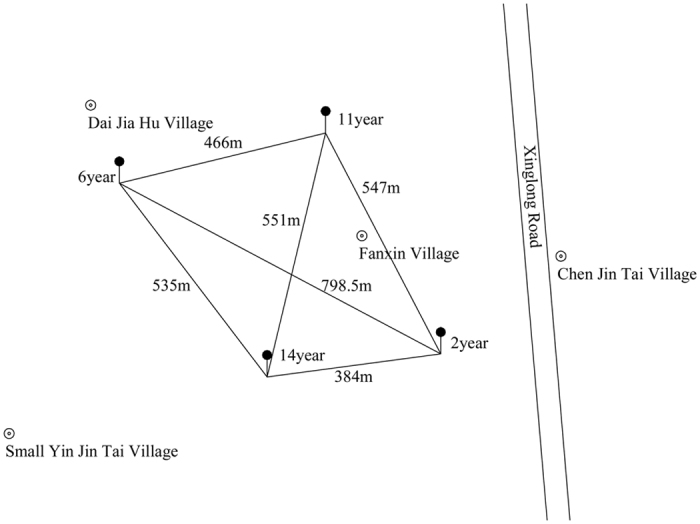
The bacterial community in soils of cotton that have continuously been cropped for 2 years, 6 years, 11 years and 14 years and treated with biochar (B0, 0 t·ha−1; B1, 12.5 t·ha−1; and B2, 20 t·ha−1) was investigated using next-generation sequencing. Of the 45 bacterial genera (relative abundance ratio of genera greater than 0.3%), 21 genera were affected (p < 0.05) by the biochar treatment, whereas 20 genera were affected by the continuous cropping. Between the soils that have been continuously cropped for 2 years and 14 years, 12 different genera were significantly observed (p < 0.05), and 6 genera belonged to the phylum Acidobacteria. The relative abundance of Sphingomonas and Pseudomonas in the biochar-treated soils was significantly higher than that in the soil without biochar treatment (p < 0.05), and the relative abundance of Sphingomonas and Pseudomonas in soils that have been continuously cropped for 2 years and 6 years was significantly higher than that in the soils continuously cropped for 11 years and 14 years (p < 0.05). The results suggest that the biochar application has a significant impact on the soil bacterial community, which may improve the microbial diversity of continuous cropping systems in cotton soils.
Overview
The claims and statistics of this paper haven’t been checked yet.
Run the check — free, no account needed. It reads the open-access text and checks the sources it cites.
Integrity signals
Registry
Cites
Statistics
Figures
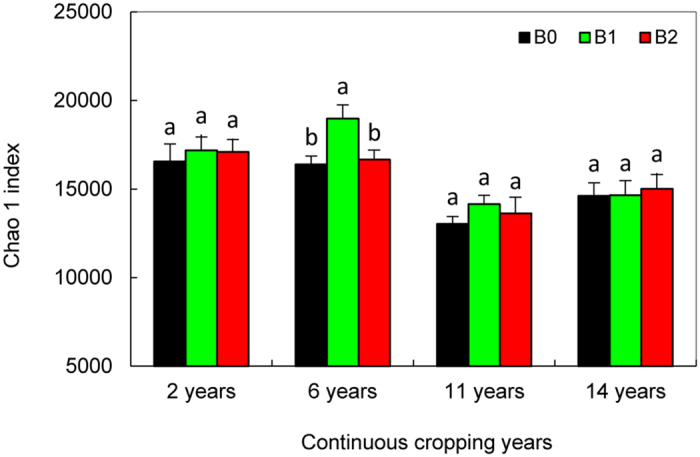
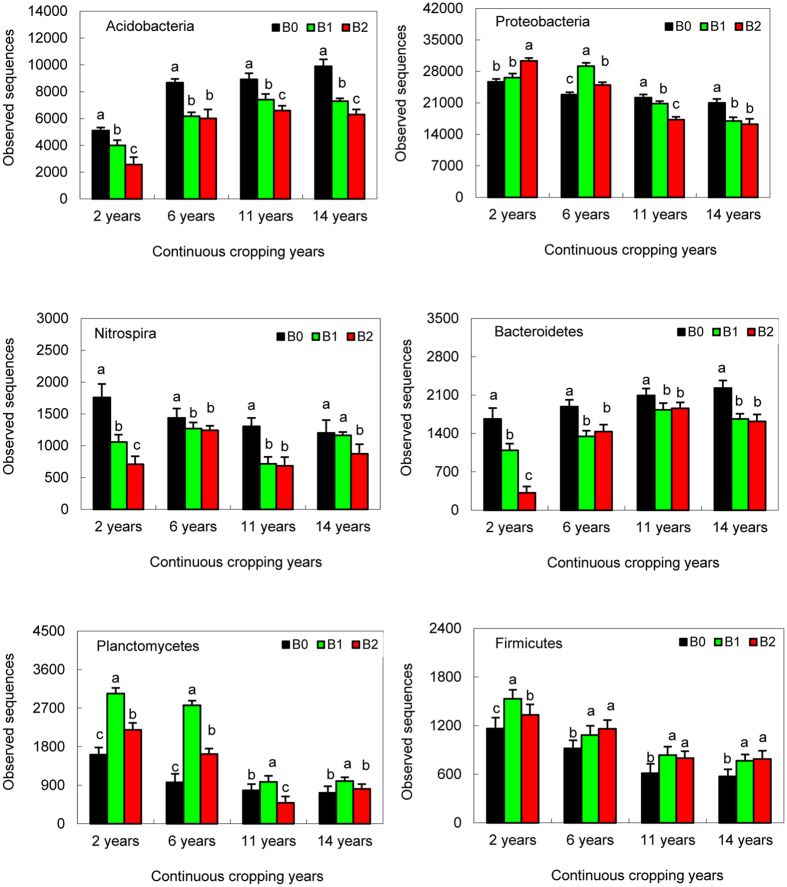
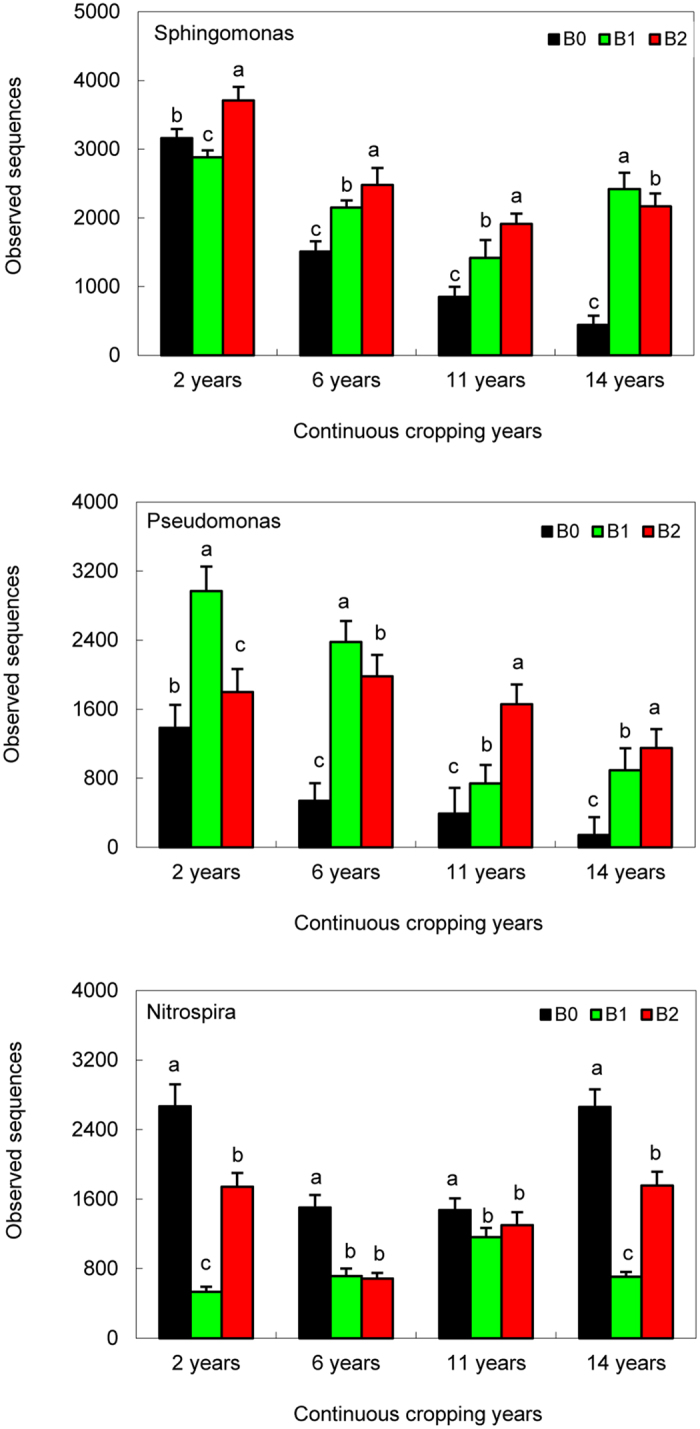
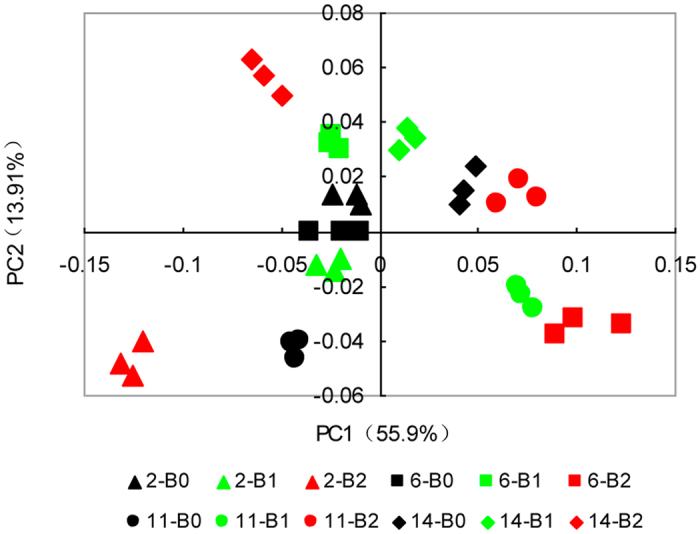
Verification
Claims the paper makes
The claims and statistics of this paper haven’t been checked yet.
Run the check — free, no account needed. It reads the open-access text and checks the sources it cites.
Claims other papers make about this one
Each is checked against this paper’s own text: does it say what the citing paper says it does?
The source backs part of the claim, not all of it — or backs it for a different population, condition or comparison.
In the citing paper
“21 of 45 bacterial genera were affected by biochar in monsoon climate soils and the abundance of the Sphingomonas and Pseudomonas genera were increased, whereas Nitrospira abundance was reduced (Han et al., 2017).”
From Comparing straw, compost, and biochar regarding their suitability as agricultural soil amendments to affect soil structure, nutrient leaching, microbial communities, and the fate of pesticides (2021) · cites this paper as Han et al., 2017
Experimental — accuracy not yet measured
Self-check
Percentages, sums and reported differences re-computed from the paper’s own numbers.
The self-check needs the paper’s full text.
Citations
Cites
Biochar effects on soil biota – A review
Lehmann, J., Rillig, M. C., Thies, J., Masiello, C. A., Hockaday, W. C., & Crowley, D. (2011) · Soil Biology and Biochemistry · doi:10.1016/j.soilbio.2011.04.022 · Cited by 5,074
Lauber, C. L., Hamady, M., Knight, R., & Fierer, N. (2009) · Applied and Environmental Microbiology · doi:10.1128/aem.00335-09 · Cited by 4,063
Glaser, B., Lehmann, J., & Zech, W. (2002) · Biology and Fertility of Soils · doi:10.1007/s00374-002-0466-4 · Cited by 2,890
A review of biochar and its use and function in soil
Sohi, S. P., Krull, E., Lopez-Capel, E., & Bol, R. (2010) · Advances in Agronomy · doi:10.1016/s0065-2113(10)05002-9 · Cited by 2,240
Atkinson, C. J., Fitzgerald, J. D., & Hipps, N. A. (2010) · Plant and Soil · doi:10.1007/s11104-010-0464-5 · Cited by 2,154
Jones, R. T., Robeson, M. S., Lauber, C. L., Hamady, M., Knight, R., & Fierer, N. (2009) · The ISME Journal · doi:10.1038/ismej.2008.127 · Cited by 1,230
Using poultry litter biochars as soil amendments
Chan, K. Y., Van Zwieten, L., Meszaros, I., Downie, A., & Joseph, S. (2008) · Soil Research · doi:10.1071/sr08036 · Cited by 1,103
Research works printed but not linked: 25
- Lehmann, J., Gaunt, J. & Rondon, M. Bio-char sequestration in terrestrial ecosystems – a review. Mitig Adapt Strat Glob Change 11, 403–427 (2006). · DOI · Paper page
- Ogawa, M., Okimori, Y. & Takahashi, F. Carbon sequestration by carbonisation of biomass and forestation: three case studies. Mitig Adapt Strat Glob Change 11, 429–444 (2006). · DOI
- Lehmann, J. Bioenergy in the black. Front Ecol Environ 5, 381–387 (2007). · DOI · Paper page
- Zhou, Z. J. et al. Biodegradation of a biochar-modified waterborne polyacrylate membrane coating for controlled-release fertilizer and its effects on soil bacterial community profiles. Environ Sci Pollut R 22, 8672–8682 (2015). · DOI
- Graber, E. R. et al. Biochar impact on development and productivity of pepper and tomato grown in fertigated soilless media. Plant Soil 337, 481–496 (2010). · DOI · Paper page
- Zackrisson, O., Nilsson, M. C. & Wardle, D. A. Key ecological function of charcoal from wildfire in the Boreal forest. Oikos 77, 10–19 (1996). · DOI
- Pietikäinen, J., Kiikkilä, O. & Fritze, H. Charcoal as a habitat for microbes and its effect on the microbial community of the underlying humus. Oikos 89, 231–242 (2000). · DOI
- Steinbeiss, S., Gleixner, G. & Antonietti, M. Effect of biochar amendment on soil carbon balance and soil microbial activity. Soil Biol Biochem 41, 1301–1310 (2009). · DOI · Paper page
- Deenik, J. L., McClellan, T., Uehara, G., Antal, M. J. & Campbell, S. Charcoal volatile matter content influence plant growth and soil nitrogen transformations. Soil Sci Soc Am J 74, 1259–1270 (2010). · DOI · Paper page
- Dempster, D. N., Gleeson, D. B., Solaiman, Z. M., Jones, D. L. & Murphy, D. V. Decreased soil microbial biomass and nitrogen mineralisation with Eucalyptus biochar addition to a coarse textured soil. Plant Soil. doi:10.1007/s11104-011-1067-5 (2011). · DOI · Paper page
- Spokas, K. A., Baker, J. M. & Reicosky, D. C. Ethylene: potential key for biochar amendment impacts. Plant Soil 333, 443–452 (2010). · DOI · Paper page
- Ussiri, D. A. N. & Lal, R. Carbon sequestration in reclaimed minesoils. Crit Rev Plant Sci 24, 151–165 (2005). · DOI
- Edgar, R. C. Search and clustering orders of magnitude faster than BLAST. Bioinformatics 26, 2460–2461 (2010). · DOI
- Khodadad, C. L. M., Zimmerman, A. R., Green, S. J., Uthandi, S. & Foster, J. S. Taxa-specific changes in soil microbial community composition induced by pyrogenic carbon amendments. Soil Biol Biochem 43, 385–392 (2011). · DOI
- Su, P. et al. Taxon-specific responses of soil microbial communities to different soil priming effects induced by addition of plant residues and their biochars. J Soil Sediment 1–11, doi:10.1007/s11368-015-1238-8 (2015). · DOI
- Carson, J. K., Campbell, L., Rooney, D., Clipson, N. & Gleeson, D. B. Minerals in soil select distinct bacterial communities in their microhabitats. FEMS Microbiol Ecol 67, 381–388 (2009). · DOI
- Griffiths, R. I. et al. The bacterial biogeography of British soils. Environ Microbiol 13, 1642–1654 (2011). · DOI
- Shen, C. C. et al. Soil pH drives the spatial distribution of bacterial communities along elevation on Changbai Mountain. Soil Biol Biochem 57, 204–211 (2013). · DOI
- Chu, H. Y. et al. Soil bacterial diversity in the Arctic is not fundamentally different from that found in other biomes. Environ Microbiol 12, 2998–3006 (2010). · DOI
- Männistö, M. K., Tiirola, M. & Häggblom, M. M. Bacterial communities in Arctic fields of Finnish Lapland are stable but highly pH dependent. FEMS Microbiol Ecol 59, 452–465 (2007). · DOI
- Sun, D. Q. et al. Effect of volatile organic compounds absorbed to fresh biochar on survival of Bacillus mucilaginosus and structure of soil microbial communities. J Soil Sediment 15, 271–281 (2015). · DOI
- Gopalakrishnan, S., Srinivas, V., Prakash, B., Sathya, A. & Vijayabharathi, R. Plant growth-promoting traits of Pseudomonas geniculata isolated from chickpea nodules. Biotech 5, 653–661 (2015).
- Liu, H. et al. Characterization of a phenazine producing strain Pseudomonas chlororaphis GP72 with broad spectrum antifungal activity from green pepper rhizosphere. Curr Microbiol 54, 302–306 (2007). · DOI
- Yu, F. B., Shan, S. D., Luo, L. P., Guan, L. B. & Qin, H. Isolation and characterization of a Sphingomonas sp. strain F-7 degrading fenvalerate and its use in bioremediation of contaminated soil. J Environ Sci Health B 48, 198–207 (2013). · DOI
- Steiner, C., Das, K. C., Garcia, M., Forster, B. & Zech, W. Charcoal and smoke extract stimulate the soil microbial community in a highly weathered xanthic Ferralsol. Pedobiologia 51, 359–366 (2008). · DOI
Cited by
Sorted by citations
Siedt, M., Schäffer, A., Smith, K. E. C., Nabel, M., Roß-Nickoll, M., & van Dongen, J. T. (2021) · Science of The Total Environment · doi:10.1016/j.scitotenv.2020.141607 · Cited by 563
RETRACTED: Biochar modulating soil biological health: A review
Bolan, S., Sharma, S., Mukherjee, S., Kumar, M., Rao, C. S., Nataraj, K. C., Singh, G., Vinu, A., Bhowmik, A., Sharma, H., et al. (2024) · Science of The Total Environment · doi:10.1016/j.scitotenv.2023.169585 · Cited by 209
Retracted
Metadata
- Authors
- Han, G., Lan, J., Chen, Q., Yu, C., & Bie, S.
- Affiliations
- Hubei Academy of Agricultural Sciences (CN)
- Corresponding author
- Han, Guangming
- Lan, Jiayang
- Venue
- Scientific Reports
- Published
- 2017-08-31
- Volume
- 7
- Issue
- 1
- Pages
- 10184-10184
- ISSN
- 2045-2322 (ISSN-L)
- PMC
- PMC5578980
- OpenAlex
- W2747464706
- Cited by
- 80
- References
- 7
- Citations by year
- 2026: 3 · 2025: 9 · 2024: 7 · 2023: 15 · 2022: 15 · 2021: 11 · 2020: 10 · 2019: 7 · 2018: 3
- FWCI
- 6.00
- Type
- journal article
- Language
- en
- Open access
- gold
- doi.org
- Locations
- Scientific Reports (publishedVersion, cc-by)
- PubMed Central (publishedVersion, cc-by)
- PubMed (publishedVersion)
- Funders
- National Natural Science Foundation of China
- Hubei Academy of Agricultural Sciences
- Topics
- Life Sciences › Agricultural and Biological Sciences › Soil Science › Soil Carbon and Nitrogen Dynamics
- Physical Sciences › Environmental Science › Ecology › Microbial Community Ecology and Physiology
- Life Sciences › Agricultural and Biological Sciences › Plant Science › Plant-Microbe Interactions and Immunity
- Keywords
- biochar, soil microbial communities, cotton soils, continuous cropping, soil bacterial diversity, Acidobacteria, Sphingomonas, Pseudomonas, microbial succession
- MeSH terms
- Crop Production, Bacteria, Charcoal, Gossypium, DNA, Bacterial, DNA, Ribosomal, Phylogeny, RNA, Ribosomal, 16S, Soil Microbiology, Sequence Analysis, DNA, High-Throughput Nucleotide Sequencing, Microbiota
About these checks
Registry, retraction, Cites and statistics results are computed, not judged, with one exception: a printed reference that no index lists is read once by a model before it counts as a citation error. Claims are extracted by a model and kept only when their quote appears verbatim in the text; each cited source is then checked, with a model’s help, for whether it says what the claim relies on. Those verdicts can be wrong — read the claim’s quote and the cited source before relying on one.
Statistics and arithmetic are recomputed, not judged.
Confidence bands are shown only for fields calibrated on our annotated test set. None is calibrated yet, so no band is shown.
What counts as a claim ›How we measure confidence ›How we check this ›
Are you an author, or do you see a problem with this page? Request a review
