

Gut microbiota composition is associated with polypharmacy in elderly hospitalized patients
Open accessThe DOI matches its Crossref record; 55 of the 56 references it cites were found in a registry or an index.
Abstract
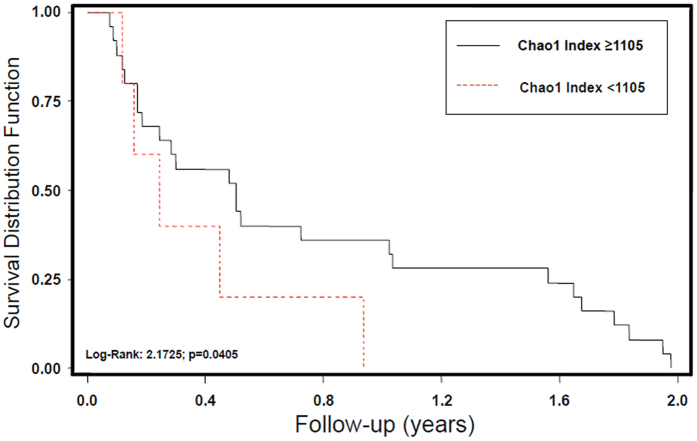
Reduced biodiversity and increased representation of opportunistic pathogens are typical features of gut microbiota composition in aging. Few studies have investigated their correlation with polypharmacy, multimorbidity and frailty. To assess it, we analyzed the fecal microbiota from 76 inpatients, aged 83 ± 8. Microbiome biodiversity (Chao1 index) and relative abundance of individual bacterial taxa were determined by next-generation 16S rRNA microbial profiling. Their correlation with number of drugs, and indexes of multimorbidity and frailty were verified using multivariate linear regression models. The impact of gut microbiota biodiversity on mortality, rehospitalizations and incident sepsis was also assessed after a 2-year follow-up, using Cox regression analysis. We found a significant negative correlation between the number of drugs and Chao1 Index at multivariate analysis. The number of drugs was associated with the average relative abundance of 15 taxa. The drug classes exhibiting the strongest association with single taxa abundance were proton pump inhibitors, antidepressants and antipsychotics. Conversely, frailty and multimorbidity were not significantly associated with gut microbiota biodiversity. Very low Chao1 index was also a significant predictor of mortality, but not of rehospitalizations and sepsis, at follow-up. In aging, polypharmacy may thus represent a determinant of gut microbiota composition, with detrimental clinical consequences.
Overview
The claims and statistics of this paper haven’t been checked yet.
Free: it reads the open-access text and checks the first 5 claims that cite a source we can check. Create a free account to check every claim.
Integrity signals
Registry
Cites
Statistics
Figures
Verification
Claims the paper makes
The claims and statistics of this paper haven’t been checked yet.
Free: it reads the open-access text and checks the first 5 claims that cite a source we can check. Create a free account to check every claim.
Claims other papers make about this one
Each is checked against this paper’s own text: does it say what the citing paper says it does?
The cited source says what the claim attributes to it.
In the citing paper
“In a large cohort study in elderly hospitalized patients, antipsychotics were one of the three drug classes that exhibited the strongest association with single taxa abundance, together with PPIs and antidepressants (Ticinesi et al., 2017).”
From The Microbiota-Gut-Brain Axis (2019) · cites this paper as Ticinesi et al., 2017
The cited source says what the claim attributes to it.
In the citing paper
“One study demonstrated that there was a significant negative correlation between the number of different drugs consumed and microbial diversity, although it is unknown if the lower diversity resulted in reduced cognitive function (Ticinesi et al., 2017).”
From The Microbiota-Gut-Brain Axis (2019) · cites this paper as Ticinesi et al., 2017
The cited source says what the claim attributes to it.
In the citing paper
“Specifically, the drug classes that had the strongest association with single taxa abundance were PPIs, antidepressants and antipsychotics.”
From The Microbiota-Gut-Brain Axis (2019) · cites this paper as Ticinesi et al., 2017
In the citing paper
“Polypharmacy amplifies these effects in older adults, eroding biodiversity, curtailing SCFA production, and fostering expansions of Streptococcus and Lactobacillus spp.102,103”
From Gut dysbiosis in oncology: a risk factor for immunoresistance (2026) · doi:10.1038/s41422-025-01212-6 · cites this paper as [103]
Self-check
Percentages, sums and reported differences re-computed from the paper’s own numbers.
The self-check needs the paper’s full text.
Citations
Cites
QIIME allows analysis of high-throughput community sequencing data
Caporaso, J. G., Kuczynski, J., Stombaugh, J., Bittinger, K., Bushman, F. D., Costello, E. K., Fierer, N., Peña, A. G., Goodrich, J. K., Gordon, J. I., et al. (2010) · Nature Methods · doi:10.1038/nmeth.f.303 · Cited by 34,887
The SILVA ribosomal RNA gene database project: improved data processing and web-based tools
Quast, C., Pruesse, E., Yilmaz, P., Gerken, J., Schweer, T., Yarza, P., Peplies, J., & Glöckner, F. O. (2012) · Nucleic Acids Research · doi:10.1093/nar/gks1219 · Cited by 33,055
Search and clustering orders of magnitude faster than BLAST
Edgar, R. C. (2010) · Bioinformatics · doi:10.1093/bioinformatics/btq461 · Cited by 20,826
A global clinical measure of fitness and frailty in elderly people
Rockwood, K. (2005) · Canadian Medical Association Journal · doi:10.1503/cmaj.050051 · Cited by 8,968 · cited 1×
“Prevalence of chronic renal failure, (n, %) 14 (19)”
BackgroundRichness of human gut microbiome correlates with metabolic markers
Le Chatelier, E., Nielsen, T., Qin, J., Prifti, E., Hildebrand, F., Falony, G., Almeida, M., Arumugam, M., Batto, J.-M., Kennedy, S., et al. (2013) · Nature · doi:10.1038/nature12506 · Cited by 4,662
The Human Intestinal Microbiome in Health and Disease
Lynch, S. V., & Pedersen, O. (2016) · New England Journal of Medicine · doi:10.1056/nejmra1600266 · Cited by 3,637
Gut microbiota composition correlates with diet and health in the elderly
Claesson, M. J., Jeffery, I. B., Conde, S., Power, S. E., O’Connor, E. M., Cusack, S., Harris, H. M. B., Coakley, M., Lakshminarayanan, B., O’Sullivan, O., et al. (2012) · Nature · doi:10.1038/nature11319 · Cited by 3,314
Diet–microbiota interactions as moderators of human metabolism
Sonnenburg, J. L., & Bäckhed, F. (2016) · Nature · doi:10.1038/nature18846 · Cited by 2,257
Disentangling type 2 diabetes and metformin treatment signatures in the human gut microbiota
MetaHIT consortium, Forslund, K., Hildebrand, F., Nielsen, T., Falony, G., Le Chatelier, E., Sunagawa, S., Prifti, E., Vieira-Silva, S., Gudmundsdottir, V., et al. (2015) · Nature · doi:10.1038/nature15766 · Cited by 2,116
Population-based metagenomics analysis reveals markers for gut microbiome composition and diversity
Zhernakova, A., Kurilshikov, A., Bonder, M. J., Tigchelaar, E. F., Schirmer, M., Vatanen, T., Mujagic, Z., Vila, A. V., Falony, G., Vieira-Silva, S., et al. (2016) · Science · doi:10.1126/science.aad3369 · Cited by 1,914
Cited by
Items 101–200 of 218
Zheng, N., Li, S., Dong, B., Sun, W. C., Li, H.-R., Zhang, Y., Li, P., Fang, Z., Chen, C., Han, X., et al. (2020) · Clinical Microbiology and Infection · doi:10.1016/j.cmi.2020.10.033 · Cited by 22
Gut microbiota in relation to frailty and clinical outcomes
D’Amico, F., Barone, M., Brigidi, P., & Turroni, S. (2023) · Current Opinion in Clinical Nutrition & Metabolic Care · doi:10.1097/mco.0000000000000926 · Cited by 26
“On the other hand, it is well known that gut microbes can be affected by several types of drugs [43], including proton pump inhibitors (PPIs) [44], whose long-term use in older adults has been associated with an increased rate of fractures [45].”
BackgroundMichaelis, L., Berg, L., & Maier, L. (2023) · Biological Psychiatry · doi:10.1016/j.biopsych.2023.06.004 · Cited by 22
“Nonantibiotic drugs are of particular interest, as some of them are taken over a longer period of time or in combination, especially in elderly patients (59).”
Zhao, M., Xia, P., Zhang, X., He, H., & Hou, T. (2023) · Food & Function · doi:10.1039/d3fo00963g · Cited by 20
Longitudinal gut microbiome dynamics in relation to age and senescence in a wild animal population
Worsley, S. F., Davies, C. S., Lee, C. Z., Mannarelli, M., Burke, T. A., Komdeur, J., Dugdale, H. L., & Richardson, D. S. (2024) · Molecular Ecology · doi:10.1111/mec.17477 · Cited by 19
“For example, in humans, medication intake and the probability of living in residential care increase with age, while physical activity and dietary quality decrease, all of which can directly impact the GM (Claesson et al., 2012; Ticinesi et al., 2017).”
The gut microbiota and nervous system: Age-defined and age-defying
Madison, A. A., & Kiecolt‐Glaser, J. K. (2021) · Seminars in Cell and Developmental Biology · doi:10.1016/j.semcdb.2020.12.009 · Cited by 19
“medication had the strongest association with single taxa abundance [112].”
BackgroundChen, H., Cao, T., Zhang, B., & Cai, H. (2023) · Frontiers in Pharmacology · doi:10.3389/fphar.2023.1097284 · Cited by 18
Helicobacter pylori Related Diseases and Osteoporotic Fractures (Narrative Review)
Fisher, L., Fisher, A., & Smith, P. N. (2020) · Journal of Clinical Medicine · doi:10.3390/jcm9103253 · Cited by 21
Skillington, O., Mills, S., Gupta, A., Mayer, E. A., Gill, C. I. R., Rio, D. D., O’Riordan, K. J., Cryan, J. F., Ross, R. P., & Stanton, C. (2021) · Nutrition and Healthy Aging · doi:10.3233/nha-210129 · Cited by 18
“[181] Ticinesi A, Milani C, Lauretani F, Nouvenne A, Mancabelli L, Lugli GA, Turroni F, Duranti S, Mangifesta M, Viappiani A, Ferrario C, Maggio M, Ventura M, Meschi T.”
BackgroundGut and airway microbiota and their role in COVID-19 infection and pathogenesis: a scoping review
Liu, T. F. D., Philippou, E., Kolokotroni, O., Siakallis, G., Rahima, K., & Constantinou, C. (2021) · Infection · doi:10.1007/s15010-021-01715-5 · Cited by 19
Chaudhary, S., Kaur, P., Singh, T. A., Bano, K. S., Vyas, A., Mishra, A. K., Singh, P., & Mehdi, M. M. (2024) · Biogerontology · doi:10.1007/s10522-024-10146-2 · Cited by 22
“Through producing mediators that drive all of the systemic effects, the bacterial metabolism of nutrients is expected to influences skeletal muscle cell functionality (Ticinesi et al. 2017b).”
Colard‐Thomas, J., Thomas, Q. D., & Viala, M. (2023) · Cancers · doi:10.3390/cancers15082276 · Cited by 22
“Because many patients are taking multiple medications, some studies have examined the additional effect of polypharmacy [40,41].”
BackgroundMicrobiota Composition in Diverticular Disease: Implications for Therapy
Tursi, A., Papa, V., Lopetuso, L. R., Settanni, C. R., Gasbarrini, A., & Papa, A. (2022) · International Journal of Molecular Sciences · doi:10.3390/ijms232314799 · Cited by 19
“Moreover, multimorbidity, when two or more chronic diseases occur, has been recently associated with fecal microbiota dysbiosis [58,59].”
BackgroundAssociation of SARS-CoV-2 and Polypharmacy with Gut–Lung Axis: From Pathogenesis to Treatment
Malik, J. A., Ahmed, S., Yaseen, Z., Alanazi, M., Alharby, T. N., Alshammari, H. A., & Anwar, S. (2022) · ACS Omega · doi:10.1021/acsomega.2c02524 · Cited by 17
Peredo-Lovillo, A. G., Romero‐Luna, H. E., Juárez‐Trujillo, N., & Jiménez‐Fernández, M. (2023) · Journal of Applied Microbiology · doi:10.1093/jambio/lxad133 · Cited by 16
Lee, J. A., Chico, T., & Renshaw, S. A. (2017) · FEBS Journal · doi:10.1111/febs.14346 · Cited by 15
Briguglio, M. (2021) · Frontiers in Medicine · doi:10.3389/fmed.2021.650947 · Cited by 13
Sánchez-de-Lara-Sánchez, S., & Sánchez‐Pérez, A. M. (2022) · Journal of Alzheimer s Disease · doi:10.3233/jad-220615 · Cited by 15
“Differences in more than 15 taxa were found associated to polypharmacy (e.g., positive association was observed in Bradyrhizo-bium, Coprobacter, Helicobacter , and Prevotella ), in comparison with healthy, active elderly subjects without polypharmacy [110].”
Rowan-Nash, A. D., Araos, R., D’Agata, E. M. C., & Belenky, P. A. (2020) · iScience · doi:10.1016/j.isci.2020.100905 · Cited by 14
Normal Gut Microbiomes in Diverse Populations: Clinical Implications
Shete, O., & Ghosh, T. S. (2024) · Annual Review of Medicine · doi:10.1146/annurev-med-051223-031809 · Cited by 12
Skarpengland, T., Macpherson, M. E., Hov, J. R., Kong, X. Y., Bohov, P., Halvorsen, B. L., Fevang, B., Berge, R. K., Aukrust, P., & Jørgensen, S. F. (2021) · Journal of Clinical Immunology · doi:10.1007/s10875-021-01146-9 · Cited by 14
The possible role of gut microbiota dysbiosis in the pathophysiology of delirium in older persons
Ticinesi, A., Parise, A., Nouvenne, A., Cerundolo, N., Prati, B., & Meschi, T. (2023) · Microbiome Research Reports · doi:10.20517/mrr.2023.15 · Cited by 15
Self-citationThe Gut Microbiome and Treatment-Resistance in Schizophrenia
Seeman, M. V. (2019) · Psychiatric Quarterly · doi:10.1007/s11126-019-09695-4 · Cited by 14
Associations Between Walking Speed and Gut Microbiome Composition in Older Men From the MrOS Study
Farsijani, S., Cauley, J. A., Cawthon, P. M., Langsetmo, L., ORWOLL, E. S., Kado, D. M., Kiel, D. P., & Newman, A. B. (2024) · The Journals of Gerontology Series A · doi:10.1093/gerona/glae030 · Cited by 12
Molinaro, M., Torrente, Y., Villa, C., & Farini, A. (2024) · International Journal of Molecular Sciences · doi:10.3390/ijms25010631 · Cited by 11
Interactions between Medications and the Gut Microbiome in Inflammatory Bowel Disease
Eckenberger, J., Butler, J. C., Bernstein, C. N., Shanahan, F., & Claesson, M. J. (2022) · Microorganisms · doi:10.3390/microorganisms10101963 · Cited by 14
“Taking multiple medications at the same time can lead to increased side effects and drug interactions that amplify adverse complications [52].”
BackgroundGobbini, É., Langlais, A., Missy, P., Chanoine, S., Besse, B., Souquet, P.-J., Barlési, F., Audigier-Valette, C., Métivier, A.-C., Monnet, I., et al. (2025) · European Journal of Cancer · doi:10.1016/j.ejca.2025.115560 · Cited by 10
Raeisi, H., Spigaglia, P., Sadeghi, A., Barbanti, F., Tillotson, G. S., Safarpour, H., Zali, M., & Mojarad, E. N. (2025) · Gut Pathogens · doi:10.1186/s13099-025-00717-0 · Cited by 10
“…by a decrease in the abundance of Bac-teroidaceae , Lachnospiraceae , Ruminococcacae , Bifido-bacterium , Lactobacillus , and Faecalibacterium , and an increase in the abundance of Enterococcaceae and Enterobacteriaceae [117, 118], which may compromise the gut environment for C. difficile growth.”
Polypharmacy is associated with altered gut microbiota diversity in older post-stroke inpatients
Matsumoto, A., Yoshimura, Y., Wakabayashi, H., Nagano, F., Shimazu, S., Kido, Y., Shiraishi, A., Hamada, T., Yoneda, K., & Maeda, K. (2025) · Clinical Nutrition ESPEN · doi:10.1016/j.clnesp.2025.10.015 · Cited by 11
Intermodulation of gut-lung axis microbiome and the implications of biotics to combat COVID-19
Aishwarya, S., Gunasekaran, K., & Margret, A. A. (2021) · Journal of Biomolecular Structure and Dynamics · doi:10.1080/07391102.2021.1994875 · Cited by 11
“tially worsen the rate of viral infection (Ticinesi et al., 2017),”
BackgroundA Unique Gut Microbiome–Physical Function Axis Exists in Older People with HIV: An Exploratory Study
Dillon, S. M., Abdo, M., Wilson, M. P., Liu, J., Jankowski, C. M., Robertson, C. E., Tunçil, Y. E., Hamaker, B. R., Frank, D. N., MaWhinney, S., et al. (2021) · AIDS Research and Human Retroviruses · doi:10.1089/aid.2020.0283 · Cited by 11
Carlo, P. D., Serra, N., Gulotta, G., Giammanco, A., Colomba, C., Melfa, G., Fasciana, T., & Sergi, C. M. (2018) · European Journal of Clinical Microbiology & Infectious Diseases · doi:10.1007/s10096-018-3213-y · Cited by 10
Flach, J., Koks, M., van der Waal, M. B., Claassen, E., & Larsen, O. F. A. (2018) · PharmaNutrition · doi:10.1016/j.phanu.2018.10.001 · Cited by 11
Microbiome: A Key Regulator of Body-Brain Interactions
O’Riordan, K. J., Aburto, M. R., Nagpal, J. K., Clarke, G. A., & Cryan, J. F. (2025) · Advances in experimental medicine and biology · doi:10.1007/978-3-031-89525-8_6 · Cited by 10
Aznou, A., Drenth, J. P. H., Nieuwdorp, M., & Meijnikman, A. S. (2025) · Yearbook of pediatric endocrinology · doi:10.1210/jendso/bvaf130 · Cited by 10
“In the hospitalized cohort, a significant association between polypharmacy of dysbiosis and polypharmacy was found, which was independent of other multimorbidity parameters [99].”
Ferns, G. A. (2018) · Translational Metabolic Syndrome Research · doi:10.1016/j.tmsr.2018.04.003 · Cited by 13
Wei, K., Yang, Y., Chen, C., Yang, Y., Hu, K. R., & Chen, Q. (2025) · Journal of Oral Microbiology · doi:10.1080/20002297.2025.2580559 · Cited by 7
“Polypharmacy, in particular, has been associated with microbial diversity and alterations in community structure in the gut, possibly due to antimicrobial properties of drugs [15–17].”
InfluentialThe 3 Ds: Depression, Dysbiosis, and Clostridiodes difficile
Boustany, A., Feuerstadt, P., & Tillotson, G. (2024) · Advances in Therapy · doi:10.1007/s12325-024-02972-0 · Cited by 9
“Meanwhile, Ticinesi et al. [44], in their study on polypharmacy in the elderly, reported a significant negative correlation between the number of drugs and microbial diversity, as measured by the Chao index.”
MethodSausa, M., Paladino, L., Scalia, F., Zummo, F. P., Vergilio, G., Rappa, F., Cappello, F., Gratie, M. I., Proia, P., Felice, V. D., et al. (2025) · Nutrients · doi:10.3390/nu17091550 · Cited by 10
“While IL-10 generally acts to suppress excessive inflammation and restore tissue homeostasis, recent studies have revealed its pleiotropic nature, showing that it can also exhibit pro-inflammatory effects under certain conditions [4,55,56].”
Gnatzy, L., Ismailos, G., Vertzoni, M., & Reppas, C. I. (2023) · European Journal of Pharmaceutical Sciences · doi:10.1016/j.ejps.2023.106510 · Cited by 8
Faysal, M. F., Zehravi, M., Amin, M. A., Rab, S. O., Jahnavi, P., Arjun, U. V. N. V., Gupta, J. K., Billah, A. A. M., Vodeti, R., Prasad, P. D., et al. (2025) · Pathology - Research and Practice · doi:10.1016/j.prp.2025.156090 · Cited by 7
Effects of Coffee on Intestinal Microbiota, Immunity, and Disease
Preda, M., Popa, M. I., Mihai, M. M., Oţelea, T. C., & Holban, A. M. (2019) · Elsevier eBooks · doi:10.1016/b978-0-12-815864-7.00012-x · Cited by 7
D’Agata, E. M. C., Geffert, S. F., McTavish, R. K., Wilson, F., & Cameron, C. G. (2019) · Infection Control and Hospital Epidemiology · doi:10.1017/ice.2019.208 · Cited by 7
Association between exercise and changes in gut microbiota profile: a review
Khaledi, M., Darvishi, M., Sameni, F., Shahrjerdi, S., Karami, E., Barahui, N., Hemmati, J., Hasheminasab, M. S., Sanae, M.-J., Akhavan‐Sigari, R., et al. (2023) · Sport Sciences for Health · doi:10.1007/s11332-023-01132-1 · Cited by 7
“Efficient gut microbiota controls immune system homeostasis by regulating the anti-inflammatory [52] and reducing chronic inflammation [53].”
Bose, D., Saha, P., Roy, S., Trivedi, A., More, M., Klimas, N. G., Tuteja, A. K., & Chatterjee, S. (2024) · International Journal of Molecular Sciences · doi:10.3390/ijms25116093 · Cited by 6
“A lower α -diversity index, like the Chao 1 index, was associated with mortality among elderly patients [19]. α -Diversity could be used for its predictive value, especially as an indicator for the onset of neurodegeneration, which is majorly observed among the GWI Veteran cohort [20,21].”
BackgroundGut microbiota alters drug metabolism and therapeutic outcomes
Guo, F., Bai, Y., & Lei, X. (2026) · Cell Host & Microbe · doi:10.1016/j.chom.2026.06.001 · Cited by 7
Pain Management - From Acute to Chronic and Beyond
Aslanidis, T., & Nouris, C. (2023) · Pharmaceutical science. · doi:10.5772/intechopen.107760 · Cited by 6
Recurrence of Clostridioides difficile infection and mortality in older inpatients
Remelli, F., Mattioli, I., Govoni, B., Zurlo, A., GIORGIO, R. D., Volpato, S., & Cultrera, R. (2024) · European Geriatric Medicine · doi:10.1007/s41999-024-00942-x · Cited by 5
“In agreement with previous studies [1, 5, 21–24], our study population presented several risk factors for CD infection onset, including advanced age, i.e., likely patients coming from a LTC or a nursing home, as well as multiple comorbidities and polypharmacy.”
The Role of the Gut Microbiome in Bipolar Disorder and its Common Medical Comorbidities
Jones, G. H., Pinjari, O. F., Vecera, C. M., Smith, K., Barrera, A., & Machado‐Vieira, R. (2023) · Frontiers in Neuroendocrinology · doi:10.1016/j.yfrne.2023.101078 · Cited by 5
Gut microbiota and the ways to correct it in chronic kidney disease
Стуров, Н. В., Popov, S. V., & Belikov, I. (2023) · Indian Journal of Nephrology · doi:10.4103/ijn.ijn_469_21 · Cited by 5
“[16,20] Glycosylation of mucus and mucin plays a key role in the formation of the microbiota.”
BackgroundGut Microbes: The Gut Brain Connection
Lynch, C. M. K., O’Riordan, K. J., Clarke, G. A., & Cryan, J. F. (2023) · Springer eBooks · doi:10.1007/978-3-031-46712-7_4 · Cited by 6
Gut microbiome as a therapeutic target in the treatment of depression and anxiety
Ab, K. (2021) · S S Korsakov Journal of Neurology and Psychiatry · doi:10.17116/jnevro2021121111129 · Cited by 6
Gawlik-Kotelnicka, O., Sobczak, M., Palma, J., Popławska, M., Skonieczna-Żydecka, K., Plewka, M., Pawliczak, R., & Strzelecki, D. (2025) · Computational and Structural Biotechnology Journal · doi:10.1016/j.csbj.2025.05.035 · Cited by 4
“Indeed, a prior study linked general polypharmacotherapy to decreased microbiota diversity [77].”
Dumitru, C. N., Dumitru, A. O., Goroftei, L., Niculet, E., Ignat, M. D., Baroiu, L., Nechita, A., & Balan, G. (2026) · Pharmaceutics · doi:10.3390/pharmaceutics18060651 · Cited by 4
“[5,19,76,104].”
Li, S., Zhao, C., Ren, W., Zhang, Z., Wang, W., Zhang, Q., Ma, M., Zhao, G., Chen, F., (281351), H. L., et al. (2026) · The Innovation Life · doi:10.59717/j.xinn-life.2026.100208 · Cited by 4
Cunningham-Oakes, E., Carlisle, D., Booth, J., Frankland, A., McDowell, M., Pilgrim, J., Rzeszutek, A. M., Evans, C., Larkin, S., Li, A., et al. (2026) · EBioMedicine · doi:10.1016/j.ebiom.2026.106317 · Cited by 4
“Moreover, this approach is not limited by bacterial culture 10 and is suitable for detecting complex polymicrobial infections, including rare organisms in patients experiencing polypharmacy 11 .”
BackgroundManaging Infectious Disease in the Critically Ill Elderly Patient
Mukherjee, K., Burruss, S. K., Brooks, S. E., & May, A. K. (2019) · Current Geriatrics Reports · doi:10.1007/s13670-019-00291-9 · Cited by 4
Human gut microbiome: the hypothesis of a gut-muscle axis in the elderly
Ticinesi, A., Tana, C., Nouvenne, A., & Meschi, T. (2018) · Deutsche Zeitschrift für Sportmedizin · doi:10.5960/dzsm.2018.355 · Cited by 4
Self-citationWhen antidepressants meet the gut microbiota: implications and challenges
Cussotto, S., Colle, R., David, D. J. P., & Corruble, E. (2024) · International Clinical Psychopharmacology · doi:10.1097/yic.0000000000000558 · Cited by 3
The role of the gut microbiome in antibiotic-driven antimicrobial resistance
Joshi, G., Rani, S., Bharti, D., Panda, N., Chavan, P., Mathpal, S., Ramaiah, S., & Anbarasu, A. (2026) · Frontiers in Microbiology · doi:10.3389/fmicb.2026.1856738 · Cited by 5
“These findings emphasise that antibiotic-microbi-ome interactions cannot be evaluated in isolation from the broader medication context (Ticinesi et al., 2017).”
Zeng, C., Chen, H., Cao, T., Wang, L., Jiao, S., Lin, C., Zhang, B., & Cai, H. (2024) · Food and Chemical Toxicology · doi:10.1016/j.fct.2024.114490 · Cited by 3
de Sonis, A. M. (2024) · Pharmaceutical science. · doi:10.5772/intechopen.112906 · Cited by 4
Bao, J., Wang, L., Li, S., Guo, J., Ma, P., Huang, X., Guo, G., Zhang, H., & Wang, Y. (2024) · Animals · doi:10.3390/ani14223195 · Cited by 3
“In this study, the t -test function in R was used to analyze methane emissions, milk production, and bacterial α diversity indices (Simpson [26], Chao1 [27], Observe, Pielou [28]) between the two groups.”
Gut Microbiome in the Elderly Hospitalized Patient
Ticinesi, A., Milani, C., Lauretani, F., Nouvenne, A., Tana, C., Ventura, M., & Meschi, T. (2019) · Elsevier eBooks · doi:10.1016/b978-0-12-815249-2.00030-0 · Cited by 3
Self-citationThe pathophysiology of gut–brain connection
Scalese, G., & Severi, C. (2021) · Elsevier eBooks · doi:10.1016/b978-0-12-821927-0.00001-2 · Cited by 2
The potential of marine-derived compounds in geroscience
Giuliani, M. E., Giordani, C., Bertoni, G., Francini, E., Bigossi, G., Lai, G., Marcozzi, S., Alimi, S. S., Perini, D., Piccinini, A., et al. (2025) · Ageing Research Reviews · doi:10.1016/j.arr.2025.102935 · Cited by 3
Dhieb, D., & Bastaki, K. (2026) · Frontiers in Nutrition · doi:10.3389/fnut.2026.1778794 · Cited by 2
“Epidemiologic studies (85, 86) have shown that many antidepressants also possess antimicrobial properties and are associated with microbiome shifts at the population level (85–88).”
Liu, C., Zhu, Z., Lin, H., Bush, W. S., Jenq, R. R., Cominelli, F., Pillai, J. A., Haines, J. L., Zhu, X., Xu, R., et al. (2026) · Frontiers in Molecular Biosciences · doi:10.3389/fmolb.2026.1735332 · Cited by 2
“Polypharmacy adds another layer of complexity, because multiple medications, including non-antibiotic drugs, can alter gut microbial composition and may reduce the generalizability of microbiome-targeted interventions (Ticinesi et al., 2017; Vich Vila et al., 2020; Nagata et al., 2022).”
Gut microbiota as a therapeutic target in sepsis-induced multi-organ dysfunction: a review
Zhao, X., Ma, T., Yu, J., & Hu, Y. (2026) · Frontiers in Cellular and Infection Microbiology · doi:10.3389/fcimb.2026.1823125 · Cited by 3
Dutta, S., Dutta, T. K., Nanda, P. K., Dhar, P., Das, A. K., & Bhunia, A. K. (2026) · Probiotics and Antimicrobial Proteins · doi:10.1007/s12602-026-11136-1 · Cited by 3
Microbiome: pharmacokinetics, pharmacodynamics and drug/xenobiotic interactions
Ojezele, M. O. (2020) · African Journal of Clinical and Experimental Microbiology · doi:10.4314/ajcem.v21i2.1 · Cited by 2
Metabolic effects of duodenojejunal bypass surgery in a rat model of type 1 diabetes
Vangoitsenhoven, R., Wilson, R. L., Sharma, G., Punchai, S., Corcelles, R., Froylich, D., Mulya, A., Schauer, P. R., Brethauer, S. A., Kirwan, J. P., et al. (2020) · Surgical Endoscopy · doi:10.1007/s00464-020-07741-y · Cited by 2
Gut Microbiota and Healthy Aging
Siegwald, L., & Brüssow, H. (2019) · Elsevier eBooks · doi:10.1016/b978-0-12-801238-3.62168-2 · Cited by 2
Gut microbiota and motoric-cognitive frailty in hospitalized older persons
Lauretani, F., Longobucco, Y., & Maggio, M. G. (2021) · Current Opinion in Clinical Nutrition & Metabolic Care · doi:10.1097/mco.0000000000000739 · Cited by 3
Self-citationThe Gut Microbiome And Its Impact On Neurological Health: A Systematic Review
Chintharala, K., Asif, S., Reddy, N., Panjiyar, B. K., & Adusumilli, M. (2024) · Journal of Neurological Sciences and Research. · doi:10.52793/jnsrr.2024.4(1)-33 · Cited by 1
“Mood and personality can be impacted by genetically modified substances, which encompass both antibiotics and non-antibiotic medications [9].”
BackgroundZhang, T., Wang, Y., Gu, Y., Wu, J., Zhan, X., & Gong, P. (2025) · International Journal of Biological Macromolecules · doi:10.1016/j.ijbiomac.2025.143478 · Cited by 2
Wu, Q., Pan, H., Zeng, X., Xiong, F., Lv, Y., Jiang, Z., Li, J., Wang, L., & Wang, X. (2025) · Frontiers in Cellular and Infection Microbiology · doi:10.3389/fcimb.2025.1456794 · Cited by 1
Yu, L., Bi, M., & Xie, L. (2025) · Rejuvenation Research · doi:10.1177/15491684251365971 · Cited by 1
“10 For instance, optimizing drug selection/ dosage and integrating microbiota modulation (e.g., probiotics) may improve health outcomes.”
Ruiz‐Ruiz, S., Piquer-Esteban, S., Pérez-Rocher, B., Pérez‐Brocal, V., Arnau, V., Artacho, A., Diaz, W., Jiménez‐Hernández, N., Pons, J., Ja, C., et al. (2026) · Scientific Reports · doi:10.1038/s41598-026-35033-3 · Cited by 1
“In contrast, Coprobacter has been associated with polypharmacy in the elderly 54 .”
Gut microbiome signatures associated with depression and obesity
Mora‐Martínez, C., Molina-Mendoza, G. V., Cénit, M. C., Medina-Rodriguez, E. M., Larroya-García, A., Sánchez‐Carro, Y., González-Blanco, L., Bobes, J., López-García, P., Zorrilla, M. Z., et al. (2026) · mSystems · doi:10.1128/msystems.01263-25 · Cited by 3
“In humans, some studies associate antide pressant use with microbiome shifts (57, 58), while others report no significant effects (30, 59).”
Peng, L., Zhou, X., Liu, J., Chen, J., Zhang, J., Tan, F., Li, B., Liang, Y., Li, Q., Chang, Z., et al. (2026) · Frontiers in Immunology · doi:10.3389/fimmu.2026.1757548 · Cited by 1
“Investigation of the gut-kidney axis and microbiome alterations could reveal novel pathways linking immunosuppression to altered oxalate metabolism and stone formation (46, 47).”
Olivares, D. V. F., Halverson, T., & Alagiakrishnan, K. (2026) · Future Pharmacology · doi:10.3390/futurepharmacol6020030 · Cited by 2
“The use of antipsychotics has been found to alter the gut microbiome composition, leading to an increase in Prevotella , Victivallis , and an unclassified member of the Desulfovi-bronaceae family [51].”
Focus on gut microbiota in age-associated body changes
Agafonova, E. V. (2021) · Medical alphabet · doi:10.33667/2078-5631-2021-9-44-51 · Cited by 1
Mikrobiota jelitowa a leki. Interakcje wpływające na skuteczność i bezpieczeństwo farmakoterapii
Nycz, J., & Zajdel, A. (2021) · Postępy Higieny i Medycyny Doświadczalnej · doi:10.2478/ahem-2021-0009 · Cited by 1
Microbiome Association of Polypharmacy in Geriatric Population
Pazhani, G. P., Veerapandian, M., Malayandi, R., & Ramamurthy, T. (2022) · Springer eBooks · doi:10.1007/978-981-16-7672-7_9 · Cited by 1
Medication and Health Risks Associated With Neglected Side Effects on Gut Microbiota
Velikova, T. V., Nakov, R., & Ianiro, G. (2021) · Elsevier eBooks · doi:10.1016/b978-0-12-819265-8.00074-7 · Cited by 1
Barry, D. J. (2020) · Elsevier eBooks · doi:10.1016/b978-0-323-43044-9.00217-x · Cited by 2
The Effect of SARS-CoV-2 on the Gut and Its Microbiome: What We Know and What We Would Like to Know
Евдокимова, Н. В., & Chernenkaya, T. V. (2024) · Russian Sklifosovsky Journal Emergency Medical Care · doi:10.23934/2223-9022-2023-12-4-658-666 · Cited by 2
Nutritional Epigenetics and Gut Microbiome
Mohanan, A., Harilal, S. L., Plakkot, B., Pottakkat, B., & Kanakkaparambil, R. (2024) · Epigenetics and human health · doi:10.1007/978-3-031-54215-2_7 · Cited by 1
Compositional characteristics of the gut microbiome in patients with uremia
Wu, Z., Bian, M., Zhang, H., Wang, M., Wang, P., Shao, Y., Shen, L., & Zhu, G. (2024) · Indian Journal of Pathology and Microbiology · doi:10.4103/ijpm.ijpm_554_23 · Cited by 1
Association between proton pump inhibitor use and migraine: a systematic review and meta-analysis
Satapathy, P., Khatib, M. N., Vadia, N., Menon, S. V., Chennakesavulu, K., Panigrahi, R., Shabil, M., Singh, M. P., Sah, S. K., Lingamaiah, D., et al. (2025) · The Journal of Headache and Pain · doi:10.1186/s10194-025-02000-8 · Cited by 1
“Additionally, polypharmacy, including the use of PPIs, may alter gut microbiota, which could influence the gut-brain axis and potentially contribute to migraine episodes through disruptions in gastric signaling and nutrient absorption [17, 32, 33].”
The role of gut bacteria in healthy ageing
Naghibi, M., & Day, R. O. (2019) · Nursing and Residential Care · doi:10.12968/nrec.2019.21.7.382
Dietary Protein and Muscle in Aging People
Cesari, M., & Marzetti, E. (2018) · MDPI eBooks · doi:10.3390/books978-3-03897-458-1
Chait, Y. A. (2021) · uO Research (University of Ottawa) · doi:10.20381/ruor-25988
Associação entre microbioma intestinal e ocorrência de delirium em idosos agudamente enfermos
Carvalho, F. B. G. (2021) · Digital Library of Theses and Dissertations (Universidade de São Paulo) · doi:10.11606/t.5.2021.tde-09082021-085157
If drugs with metabolic action affect the intestinal microbiota. Literature review
Fadieienko, G. D., Gridnyev, O., & Gridneiva, S. V. (2022) · Modern Gastroenterology · doi:10.30978/mg-2022-1-37
Gut Microbiome and COVID 19 Role of Probiotics on Gut Lung Axis
Kumari, M., Bhushan, B., Sharma, D., Ganju, L., Varshney, R. K., & Meena, R. C. (2022) · Defence Life Science Journal · doi:10.14429/dlsj.7.17786 · Cited by 1
Stege, P. B. (2022) · Utrecht University Repository (Utrecht University) · doi:10.33540/1530
Pharmacological treatments and the microbiome—Antibiotics and nonantibiotic drugs
Foster, J. A., & Clarke, G. A. (2024) · Elsevier eBooks · doi:10.1016/b978-0-12-814800-6.00003-0
Metadata
- Authors
- Ticinesi, A., Milani, C., Lauretani, F., Nouvenne, A., Mancabelli, L., Lugli, G. A., Turroni, F., Duranti, S., Mangifesta, M., Viappiani, A., Ferrario, C., Maggio, M., Ventura, M., & Meschi, T.
- Affiliations
- University of Parma (IT)
- Corresponding author
- Ticinesi, Andrea
- ORCID
- Venue
- Scientific Reports
- Published
- 2017-09-11
- Volume
- 7
- Issue
- 1
- Pages
- 11102-11102
- ISSN
- 2045-2322 (ISSN-L)
- PMC
- PMC5593887
- OpenAlex
- W2753822230
- Semantic Scholar
- bc403fcb27b112b7e6b745ea1713c8ca39adf351
- Cited by
- 211
- References
- 56
- Citations by year
- 2026: 19 · 2025: 20 · 2024: 22 · 2023: 26 · 2022: 24 · 2021: 25 · 2020: 28 · 2019: 24 · 2018: 20 · 2017: 3
- FWCI
- 8.37
- Type
- journal article
- Language
- en
- Open access
- gold
- doi.org
- Licence
- cc-by
- creativecommons.org/licenses/by/4.0 (tdm)
- creativecommons.org/licenses/by/4.0 (vor)
- Locations
- Scientific Reports (publishedVersion, cc-by)
- PubMed Central (publishedVersion, cc-by)
- PubMed (publishedVersion)
- Institutional Research Information System University of Ferrara (University of Ferrara) (submittedVersion)
- Topics
- Life Sciences › Biochemistry, Genetics and Molecular Biology › Molecular Biology › Gut microbiota and health
- Health Sciences › Medicine › Geriatrics and Gerontology › Pharmaceutical Practices and Patient Outcomes
- Health Sciences › Medicine › Gastroenterology › Gastrointestinal motility and disorders
- Keywords
- gut microbiota, polypharmacy, hospitalized older adults, frailty, multimorbidity, opportunistic pathogens, proton pump inhibitors, antidepressants, antipsychotic drugs, mortality, hospital readmission, sepsis, aging
- MeSH terms
- Gastrointestinal Microbiome, Biological Variation, Population, Aged, Aged, 80 and over, Female, Hospitalization, Humans, Male, Phenotype, RNA, Ribosomal, 16S, Comorbidity, Survival Analysis, Polypharmacy, Biodiversity, Metagenome, Metagenomics, Symptom Assessment, Patient Outcome Assessment
About these checks
Registry, retraction, Cites and statistics results are computed, not judged, with one exception: a printed reference that no index lists is read once by a model before it counts as a citation error. Claims are extracted by a model and kept only when their quote appears verbatim in the text; each cited source is then checked, with a model’s help, for whether it says what the claim relies on. Those verdicts can be wrong — read the claim’s quote and the cited source before relying on one.
Statistics and arithmetic are recomputed, not judged.
Confidence bands are shown only for fields calibrated on our annotated test set. None is calibrated yet, so no band is shown.
What counts as a claim ›How we measure confidence ›How we check this ›
Are you an author, or do you see a problem with this page? Request a review
Data sources
Bibliographic data: Semantic Scholar, OpenAlex, Crossref.
Contains information from the Semantic Scholar Academic Graph Datasets, made available under the ODC Attribution License (ODC-BY 1.0).
Semantic Scholar’s data is described in: Kinney, R., et al. (2023). The Semantic Scholar Open Data Platform. arXiv:2301.10140.
