

Gut microbiota composition is associated with polypharmacy in elderly hospitalized patients
Open accessThe DOI matches its Crossref record; 55 of the 56 references it cites were found in a registry or an index.
Abstract
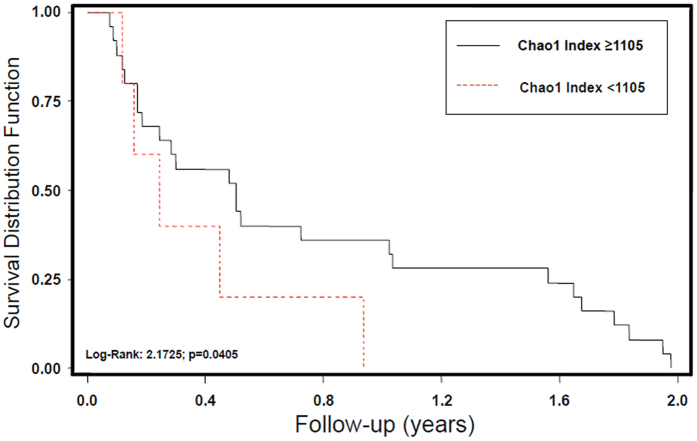
Reduced biodiversity and increased representation of opportunistic pathogens are typical features of gut microbiota composition in aging. Few studies have investigated their correlation with polypharmacy, multimorbidity and frailty. To assess it, we analyzed the fecal microbiota from 76 inpatients, aged 83 ± 8. Microbiome biodiversity (Chao1 index) and relative abundance of individual bacterial taxa were determined by next-generation 16S rRNA microbial profiling. Their correlation with number of drugs, and indexes of multimorbidity and frailty were verified using multivariate linear regression models. The impact of gut microbiota biodiversity on mortality, rehospitalizations and incident sepsis was also assessed after a 2-year follow-up, using Cox regression analysis. We found a significant negative correlation between the number of drugs and Chao1 Index at multivariate analysis. The number of drugs was associated with the average relative abundance of 15 taxa. The drug classes exhibiting the strongest association with single taxa abundance were proton pump inhibitors, antidepressants and antipsychotics. Conversely, frailty and multimorbidity were not significantly associated with gut microbiota biodiversity. Very low Chao1 index was also a significant predictor of mortality, but not of rehospitalizations and sepsis, at follow-up. In aging, polypharmacy may thus represent a determinant of gut microbiota composition, with detrimental clinical consequences.
Overview
The claims and statistics of this paper haven’t been checked yet.
Free: it reads the open-access text and checks the first 5 claims that cite a source we can check. Create a free account to check every claim.
Integrity signals
Registry
Cites
Statistics
Figures
Verification
Claims the paper makes
The claims and statistics of this paper haven’t been checked yet.
Free: it reads the open-access text and checks the first 5 claims that cite a source we can check. Create a free account to check every claim.
Claims other papers make about this one
Each is checked against this paper’s own text: does it say what the citing paper says it does?
The cited source says what the claim attributes to it.
In the citing paper
“In a large cohort study in elderly hospitalized patients, antipsychotics were one of the three drug classes that exhibited the strongest association with single taxa abundance, together with PPIs and antidepressants (Ticinesi et al., 2017).”
From The Microbiota-Gut-Brain Axis (2019) · cites this paper as Ticinesi et al., 2017
The cited source says what the claim attributes to it.
In the citing paper
“One study demonstrated that there was a significant negative correlation between the number of different drugs consumed and microbial diversity, although it is unknown if the lower diversity resulted in reduced cognitive function (Ticinesi et al., 2017).”
From The Microbiota-Gut-Brain Axis (2019) · cites this paper as Ticinesi et al., 2017
The cited source says what the claim attributes to it.
In the citing paper
“Specifically, the drug classes that had the strongest association with single taxa abundance were PPIs, antidepressants and antipsychotics.”
From The Microbiota-Gut-Brain Axis (2019) · cites this paper as Ticinesi et al., 2017
In the citing paper
“Polypharmacy amplifies these effects in older adults, eroding biodiversity, curtailing SCFA production, and fostering expansions of Streptococcus and Lactobacillus spp.102,103”
From Gut dysbiosis in oncology: a risk factor for immunoresistance (2026) · doi:10.1038/s41422-025-01212-6 · cites this paper as [103]
Self-check
Percentages, sums and reported differences re-computed from the paper’s own numbers.
The self-check needs the paper’s full text.
Citations
Cites
QIIME allows analysis of high-throughput community sequencing data
Caporaso, J. G., Kuczynski, J., Stombaugh, J., Bittinger, K., Bushman, F. D., Costello, E. K., Fierer, N., Peña, A. G., Goodrich, J. K., Gordon, J. I., et al. (2010) · Nature Methods · doi:10.1038/nmeth.f.303 · Cited by 34,887
The SILVA ribosomal RNA gene database project: improved data processing and web-based tools
Quast, C., Pruesse, E., Yilmaz, P., Gerken, J., Schweer, T., Yarza, P., Peplies, J., & Glöckner, F. O. (2012) · Nucleic Acids Research · doi:10.1093/nar/gks1219 · Cited by 33,055
Search and clustering orders of magnitude faster than BLAST
Edgar, R. C. (2010) · Bioinformatics · doi:10.1093/bioinformatics/btq461 · Cited by 20,826
A global clinical measure of fitness and frailty in elderly people
Rockwood, K. (2005) · Canadian Medical Association Journal · doi:10.1503/cmaj.050051 · Cited by 8,968 · cited 1×
“Prevalence of chronic renal failure, (n, %) 14 (19)”
BackgroundRichness of human gut microbiome correlates with metabolic markers
Le Chatelier, E., Nielsen, T., Qin, J., Prifti, E., Hildebrand, F., Falony, G., Almeida, M., Arumugam, M., Batto, J.-M., Kennedy, S., et al. (2013) · Nature · doi:10.1038/nature12506 · Cited by 4,662
The Human Intestinal Microbiome in Health and Disease
Lynch, S. V., & Pedersen, O. (2016) · New England Journal of Medicine · doi:10.1056/nejmra1600266 · Cited by 3,637
Gut microbiota composition correlates with diet and health in the elderly
Claesson, M. J., Jeffery, I. B., Conde, S., Power, S. E., O’Connor, E. M., Cusack, S., Harris, H. M. B., Coakley, M., Lakshminarayanan, B., O’Sullivan, O., et al. (2012) · Nature · doi:10.1038/nature11319 · Cited by 3,314
Diet–microbiota interactions as moderators of human metabolism
Sonnenburg, J. L., & Bäckhed, F. (2016) · Nature · doi:10.1038/nature18846 · Cited by 2,257
Disentangling type 2 diabetes and metformin treatment signatures in the human gut microbiota
MetaHIT consortium, Forslund, K., Hildebrand, F., Nielsen, T., Falony, G., Le Chatelier, E., Sunagawa, S., Prifti, E., Vieira-Silva, S., Gudmundsdottir, V., et al. (2015) · Nature · doi:10.1038/nature15766 · Cited by 2,116
Population-based metagenomics analysis reveals markers for gut microbiome composition and diversity
Zhernakova, A., Kurilshikov, A., Bonder, M. J., Tigchelaar, E. F., Schirmer, M., Vatanen, T., Mujagic, Z., Vila, A. V., Falony, G., Vieira-Silva, S., et al. (2016) · Science · doi:10.1126/science.aad3369 · Cited by 1,914
Composition, variability, and temporal stability of the intestinal microbiota of the elderly
Claesson, M. J., Cusack, S., O'Sullivan, O., Greene-Diniz, R., de Weerd, H., Flannery, E., Marchesi, J. R., Falush, D., Dinan, T., Fitzgerald, G., et al. (2011) · Proceedings of the National Academy of Sciences · doi:10.1073/pnas.1000097107 · Cited by 1,754
Shin, N.-R., Lee, J.-C., Lee, H.-Y., Kim, M.-S., Whon, T. W., Lee, M.-S., & Bae, J.-W. (2014) · Gut · doi:10.1136/gutjnl-2012-303839 · Cited by 1,550
Odamaki, T., Kato, K., Sugahara, H., Hashikura, N., Takahashi, S., Xiao, J.-Z., Abe, F., & Osawa, R. (2016) · BMC Microbiology · doi:10.1186/s12866-016-0708-5 · Cited by 1,521
Through Ageing, and Beyond: Gut Microbiota and Inflammatory Status in Seniors and Centenarians
Biagi, E., Nylund, L., Candela, M., Ostan, R., Bucci, L., Pini, E., Nikkïla, J., Monti, D., Satokari, R., Franceschi, C., et al. (2010) · PLoS ONE · doi:10.1371/journal.pone.0010667 · Cited by 1,483
Proton pump inhibitors affect the gut microbiome
Imhann, F., Bonder, M. J., Vich Vila, A., Fu, J., Mujagic, Z., Vork, L., Tigchelaar, E. F., Jankipersadsing, S. A., Cenit, M. C., Harmsen, H. J. M., et al. (2016) · Gut · doi:10.1136/gutjnl-2015-310376 · Cited by 1,371
O’Toole, P. W., & Jeffery, I. B. (2015) · Science · doi:10.1126/science.aac8469 · Cited by 1,202
Gnjidic, D., Hilmer, S. N., Blyth, F. M., Naganathan, V., Waite, L., Seibel, M. J., McLachlan, A. J., Cumming, R. G., Handelsman, D. J., & Le Couteur, D. G. (2012) · Journal of Clinical Epidemiology · doi:10.1016/j.jclinepi.2012.02.018 · Cited by 1,176
Gut Microbiota and Extreme Longevity
Biagi, E., Franceschi, C., Rampelli, S., Severgnini, M., Ostan, R., Turroni, S., Consolandi, C., Quercia, S., Scurti, M., Monti, D., et al. (2016) · Current Biology · doi:10.1016/j.cub.2016.04.016 · Cited by 1,025
Proton pump inhibitors alter the composition of the gut microbiota
Jackson, M. A., Goodrich, J. K., Maxan, M.-E., Freedberg, D. E., Abrams, J. A., Poole, A. C., Sutter, J. L., Welter, D., Ley, R. E., Bell, J. T., et al. (2016) · Gut · doi:10.1136/gutjnl-2015-310861 · Cited by 895
Neutrophil ageing is regulated by the microbiome
Zhang, D., Chen, G., Manwani, D., Mortha, A., Xu, C., Faith, J. J., Burk, R. D., Kunisaki, Y., Jang, J.-E., Scheiermann, C., et al. (2015) · Nature · doi:10.1038/nature15367 · Cited by 839
Xenobiotics shape the physiology and gene expression of the active human gut microbiome
Maurice, C. F., Haiser, H. J., & Turnbaugh, P. J. (2013) · Cell · doi:10.1016/j.cell.2012.10.052 · Cited by 811
Mechanisms and consequences of intestinal dysbiosis
Weiss, G. A., & Hennet, T. (2017) · Cellular and Molecular Life Sciences · doi:10.1007/s00018-017-2509-x · Cited by 775
Salvi, F., Miller, M. D., Grilli, A., Giorgi, R., Towers, A. L., Morichi, V., Spazzafumo, L., Mancinelli, L., Espinosa, E., Rappelli, A., et al. (2008) · Journal of the American Geriatrics Society · doi:10.1111/j.1532-5415.2008.01935.x · Cited by 581
Estaki, M., Pither, J., Baumeister, P., Little, J. P., Gill, S. K., Ghosh, S., Ahmadi-Vand, Z., Marsden, K. R., & Gibson, D. L. (2016) · Microbiome · doi:10.1186/s40168-016-0189-7 · Cited by 476
Gut microbiota: A player in aging and a target for anti-aging intervention
Vaiserman, A. M., Koliada, A. K., & Marotta, F. (2017) · Ageing Research Reviews · doi:10.1016/j.arr.2017.01.001 · Cited by 465
Interpreting prevotella and bacteroides as biomarkers of diet and lifestyle
Gorvitovskaia, A., Holmes, S. P., & Huse, S. M. (2016) · Microbiome · doi:10.1186/s40168-016-0160-7 · Cited by 461
Proton Pump Inhibitors Exacerbate NSAID-Induced Small Intestinal Injury by Inducing Dysbiosis
Wallace, J. L., Syer, S., Denou, E., de Palma, G., Vong, L., McKnight, W., Jury, J., Bolla, M., Bercik, P., Collins, S. M., et al. (2011) · Gastroenterology · doi:10.1053/j.gastro.2011.06.075 · Cited by 460
Signatures of early frailty in the gut microbiota
Jackson, M. A., Jeffery, I. B., Beaumont, M., Bell, J. T., Clark, A. G., Ley, R. E., O’Toole, P. W., Spector, T. D., & Steves, C. J. (2016) · Genome Medicine · doi:10.1186/s13073-016-0262-7 · Cited by 436
Composition and temporal stability of the gut microbiota in older persons
Jeffery, I. B., Lynch, D. B., & O’Toole, P. W. (2016) · The ISME Journal · doi:10.1038/ismej.2015.88 · Cited by 421
The influence of non-steroidal anti-inflammatory drugs on the gut microbiome
Rogers, M. A. M., & Aronoff, D. M. (2016) · Clinical Microbiology and Infection · doi:10.1016/j.cmi.2015.10.003 · Cited by 346
Biagi, E., Nylund, L., Candela, M., Ostan, R., Bucci, L., Pini, E., Nikkïla, J., Monti, D., Satokari, R., Franceschi, C., et al. (2010) · PLoS ONE · doi:10.1371/annotation/df45912f-d15c-44ab-8312-e7ec0607604d · Cited by 345
Freedberg, D. E., Toussaint, N. C., Chen, S. P., Ratner, A. J., Whittier, S., Wang, T. C., Wang, H. H., & Abrams, J. A. (2015) · Gastroenterology · doi:10.1053/j.gastro.2015.06.043 · Cited by 322
Assessing the Fecal Microbiota: An Optimized Ion Torrent 16S rRNA Gene-Based Analysis Protocol
Milani, C., Hevia, A., Foroni, E., Duranti, S., Turroni, F., Lugli, G. A., Sanchez, B., Martín, R., Gueimonde, M., van Sinderen, D., et al. (2013) · PLoS ONE · doi:10.1371/journal.pone.0068739 · Cited by 307
Self-citationNutrition and the gut microbiome in the elderly
Salazar, N., Valdés-Varela, L., González, S., Gueimonde, M., & de los Reyes-Gavilán, C. G. (2017) · Gut Microbes · doi:10.1080/19490976.2016.1256525 · Cited by 282
The Microbiota and Microbiome in Aging: Potential Implications in Health and Age‐Related Diseases
Zapata, H. J., & Quagliarello, V. J. (2015) · Journal of the American Geriatrics Society · doi:10.1111/jgs.13310 · Cited by 279
Macedo, D., Filho, A. J. M. C., Soares de Sousa, C. N., Quevedo, J., Barichello, T., Júnior, H. V. N., & Freitas de Lucena, D. (2017) · Journal of Affective Disorders · doi:10.1016/j.jad.2016.09.012 · Cited by 261
Milani, C., Ticinesi, A., Gerritsen, J., Nouvenne, A., Lugli, G. A., Mancabelli, L., Turroni, F., Duranti, S., Mangifesta, M., Viappiani, A., et al. (2016) · Scientific Reports · doi:10.1038/srep25945 · Cited by 217
Self-citationThe antipsychotic olanzapine interacts with the gut microbiome to cause weight gain in mouse
Morgan, A. P., Crowley, J. J., Nonneman, R. J., Quackenbush, C. R., Miller, C. N., Ryan, A. K., Bogue, M. A., Paredes, S. H., Yourstone, S., Carroll, I. M., et al. (2014) · PLoS ONE · doi:10.1371/journal.pone.0115225 · Cited by 197
Bahr, S. M., Tyler, B. C., Wooldridge, N., Butcher, B. D., Burns, T. L., Teesch, L. M., Oltman, C. L., Azcarate-Peril, M. A., Kirby, J. R., & Calarge, C. A. (2015) · Translational Psychiatry · doi:10.1038/tp.2015.135 · Cited by 197
The influence of proton pump inhibitors and other commonly used medication on the gut microbiota
Imhann, F., Vich Vila, A., Bonder, M. J., Lopez Manosalva, A. G., Koonen, D. P. Y., Fu, J., Wijmenga, C., Zhernakova, A., & Weersma, R. K. (2017) · Gut Microbes · doi:10.1080/19490976.2017.1284732 · Cited by 192
Hospitalization type and subsequent severe sepsis
Prescott, H. C., Dickson, R. P., Rogers, M. A. M., Langa, K. M., & Iwashyna, T. J. (2015) · American Journal of Respiratory and Critical Care Medicine · doi:10.1164/rccm.201503-0483oc · Cited by 181
Drug Metabolism by the Host and Gut Microbiota: A Partnership or Rivalry?
Swanson, H. I. (2015) · Drug Metabolism and Disposition · doi:10.1124/dmd.115.065714 · Cited by 178
Tsai, C.-F., Chen, M.-H., Wang, Y.-P., Chu, C.-J., Huang, Y.-H., Lin, H.-C., Hou, M.-C., Lee, F.-Y., Su, T.-P., & Lu, C.-L. (2017) · Gastroenterology · doi:10.1053/j.gastro.2016.09.007 · Cited by 175
Helicobacter pylori and Extragastric Diseases
Franceschi, F., Tortora, A., Gasbarrini, G., & Gasbarrini, A. (2014) · Helicobacter · doi:10.1111/hel.12159 · Cited by 173
Helicobacter pylori and extragastric diseases
Franceschi, F., & Gasbarrini, A. (2007) · Best Practice & Research Clinical Gastroenterology · doi:10.1016/j.bpg.2006.10.003 · Cited by 138
Effects of Proton Pump Inhibitors on the Gastric Mucosa-Associated Microbiota in Dyspeptic Patients
Paroni Sterbini, F., Palladini, A., Masucci, L., Cannistraci, C. V., Pastorino, R., Ianiro, G., Bugli, F., Martini, C., Ricciardi, W., Gasbarrini, A., et al. (2016) · Applied and Environmental Microbiology · doi:10.1128/aem.01437-16 · Cited by 108
Helicobacter pylori and extragastric diseases
Goni, E., & Franceschi, F. (2016) · Helicobacter · doi:10.1111/hel.12340 · Cited by 98
Bajaj, J. S., Betrapally, N. S., Hylemon, P. B., Thacker, L. R., Daita, K., Kang, D. J., White, M. B., Unser, A. B., Fagan, A., Gavis, E. A., et al. (2015) · Scientific Reports · doi:10.1038/srep18559 · Cited by 92
The human gut microbiota and its interactive connections to diet
Milani, C., Ferrario, C., Turroni, F., Duranti, S., Mangifesta, M., van Sinderen, D., & Ventura, M. (2016) · Journal of Human Nutrition and Dietetics · doi:10.1111/jhn.12371 · Cited by 75
Self-citationNakata, T., Kyoui, D., Takahashi, H., Kimura, B., & Kuda, T. (2016) · Carbohydrate Polymers · doi:10.1016/j.carbpol.2016.01.064 · Cited by 63
Nouvenne, A., Ticinesi, A., Lauretani, F., Maggio, M. G., Lippi, G., Guida, L., Morelli, I., Ridolo, E., Borghi, L., & Meschi, T. (2014) · PLoS ONE · doi:10.1371/journal.pone.0110001 · Cited by 43 · cited 1×
“Prevalence of cardiovascular diseases (n, %) 40 (52)”
BackgroundSelf-citationTicinesi, A., Nouvenne, A., Folesani, G., Prati, B., Morelli, I., Guida, L., Turroni, F., Ventura, M., Lauretani, F., Maggio, M. G., et al. (2015) · BMJ Open · doi:10.1136/bmjopen-2015-009316 · Cited by 43
Self-citationGastrointestinal Microbiota and Their Contribution to Healthy Aging
Mello, A. M., Paroni, G., Daragjati, J., & Pilotto, A. (2016) · Digestive Diseases · doi:10.1159/000443350 · Cited by 40
Meschi, T., Ticinesi, A., Prati, B., Montali, A., Ventura, A., Nouvenne, A., & Borghi, L. (2016) · Internal and Emergency Medicine · doi:10.1007/s11739-016-1390-1 · Cited by 23
Self-citationOmics Approaches To Probe Microbiota and Drug Metabolism Interactions
Nichols, R. G., Hume, N. E., Smith, P. B. W., Peters, J. M., & Patterson, A. D. (2016) · Chemical Research in Toxicology · doi:10.1021/acs.chemrestox.6b00236 · Cited by 12
Cited by
Cryan, J. F., O'Riordan, K. J., Cowan, C. S. M., Sandhu, K. V., Bastiaanssen, T. F. S., Boehme, M., Codagnone, M. G., Cussotto, S., Fulling, C., Golubeva, A. V., et al. (2019) · Physiological Reviews · doi:10.1152/physrev.00018.2018 · Cited by 5,286
The gut microbiome: Relationships with disease and opportunities for therapy
Durack, J., & Lynch, S. V. (2019) · Journal of Experimental Medicine · doi:10.1084/jem.20180448 · Cited by 943
“, 2016), and the number of prescription drugs consumed (Ticinesi et al., 2017).”
BackgroundThe Human Gut Microbiome: From Association to Modulation
Schmidt, T. S. B., Raes, J., & Bork, P. (2018) · Cell · doi:10.1016/j.cell.2018.02.044 · Cited by 845
A Comprehensive Review on the Role of the Gut Microbiome in Human Neurological Disorders
Sorboni, S. G., Moghaddam, H. S., Jafarzadeh-Esfehani, R., & Soleimanpour, S. (2022) · Clinical Microbiology Reviews · doi:10.1128/cmr.00338-20 · Cited by 522
Gut Microbiota, Muscle Mass and Function in Aging: A Focus on Physical Frailty and Sarcopenia
Ticinesi, A., Nouvenne, A., Cerundolo, N., Catania, P., Prati, B., Tana, C., & Meschi, T. (2019) · Nutrients · doi:10.3390/nu11071633 · Cited by 418
Self-citation
Metadata
- Authors
- Ticinesi, A., Milani, C., Lauretani, F., Nouvenne, A., Mancabelli, L., Lugli, G. A., Turroni, F., Duranti, S., Mangifesta, M., Viappiani, A., Ferrario, C., Maggio, M., Ventura, M., & Meschi, T.
- Affiliations
- University of Parma (IT)
- Corresponding author
- Ticinesi, Andrea
- ORCID
- Venue
- Scientific Reports
- Published
- 2017-09-11
- Volume
- 7
- Issue
- 1
- Pages
- 11102-11102
- ISSN
- 2045-2322 (ISSN-L)
- PMC
- PMC5593887
- OpenAlex
- W2753822230
- Cited by
- 211
- References
- 56
- Citations by year
- 2026: 19 · 2025: 20 · 2024: 22 · 2023: 26 · 2022: 24 · 2021: 25 · 2020: 28 · 2019: 24 · 2018: 20 · 2017: 3
- FWCI
- 8.37
- Type
- journal article
- Language
- en
- Open access
- gold
- doi.org
- Licence
- cc-by
- creativecommons.org/licenses/by/4.0 (tdm)
- creativecommons.org/licenses/by/4.0 (vor)
- Locations
- Scientific Reports (publishedVersion, cc-by)
- PubMed Central (publishedVersion, cc-by)
- PubMed (publishedVersion)
- Institutional Research Information System University of Ferrara (University of Ferrara) (submittedVersion)
- Topics
- Life Sciences › Biochemistry, Genetics and Molecular Biology › Molecular Biology › Gut microbiota and health
- Health Sciences › Medicine › Geriatrics and Gerontology › Pharmaceutical Practices and Patient Outcomes
- Health Sciences › Medicine › Gastroenterology › Gastrointestinal motility and disorders
- Keywords
- gut microbiota, polypharmacy, hospitalized older adults, frailty, multimorbidity, opportunistic pathogens, proton pump inhibitors, antidepressants, antipsychotic drugs, mortality, hospital readmission, sepsis, aging
- MeSH terms
- Gastrointestinal Microbiome, Biological Variation, Population, Aged, Aged, 80 and over, Female, Hospitalization, Humans, Male, Phenotype, RNA, Ribosomal, 16S, Comorbidity, Survival Analysis, Polypharmacy, Biodiversity, Metagenome, Metagenomics, Symptom Assessment, Patient Outcome Assessment
About these checks
Registry, retraction, Cites and statistics results are computed, not judged, with one exception: a printed reference that no index lists is read once by a model before it counts as a citation error. Claims are extracted by a model and kept only when their quote appears verbatim in the text; each cited source is then checked, with a model’s help, for whether it says what the claim relies on. Those verdicts can be wrong — read the claim’s quote and the cited source before relying on one.
Statistics and arithmetic are recomputed, not judged.
Confidence bands are shown only for fields calibrated on our annotated test set. None is calibrated yet, so no band is shown.
What counts as a claim ›How we measure confidence ›How we check this ›
Are you an author, or do you see a problem with this page? Request a review
Data sources
Bibliographic data: Semantic Scholar, OpenAlex, Crossref.
Contains information from the Semantic Scholar Academic Graph Datasets, made available under the ODC Attribution License (ODC-BY 1.0).
Semantic Scholar’s data is described in: Kinney, R., et al. (2023). The Semantic Scholar Open Data Platform. arXiv:2301.10140.
