

Gut microbiota composition is associated with polypharmacy in elderly hospitalized patients
Open accessThe DOI matches its Crossref record; 55 of the 56 references it cites were found in a registry or an index.
Abstract
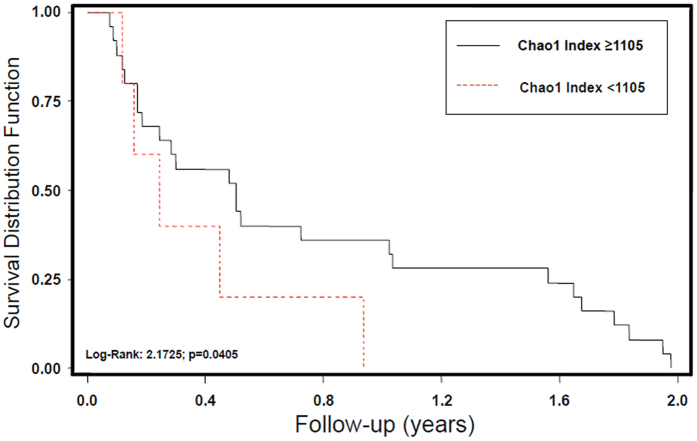
Reduced biodiversity and increased representation of opportunistic pathogens are typical features of gut microbiota composition in aging. Few studies have investigated their correlation with polypharmacy, multimorbidity and frailty. To assess it, we analyzed the fecal microbiota from 76 inpatients, aged 83 ± 8. Microbiome biodiversity (Chao1 index) and relative abundance of individual bacterial taxa were determined by next-generation 16S rRNA microbial profiling. Their correlation with number of drugs, and indexes of multimorbidity and frailty were verified using multivariate linear regression models. The impact of gut microbiota biodiversity on mortality, rehospitalizations and incident sepsis was also assessed after a 2-year follow-up, using Cox regression analysis. We found a significant negative correlation between the number of drugs and Chao1 Index at multivariate analysis. The number of drugs was associated with the average relative abundance of 15 taxa. The drug classes exhibiting the strongest association with single taxa abundance were proton pump inhibitors, antidepressants and antipsychotics. Conversely, frailty and multimorbidity were not significantly associated with gut microbiota biodiversity. Very low Chao1 index was also a significant predictor of mortality, but not of rehospitalizations and sepsis, at follow-up. In aging, polypharmacy may thus represent a determinant of gut microbiota composition, with detrimental clinical consequences.
Overview
The claims and statistics of this paper haven’t been checked yet.
Free: it reads the open-access text and checks the first 5 claims that cite a source we can check. Create a free account to check every claim.
Integrity signals
Registry
Cites
Statistics
Figures
Verification
Claims the paper makes
The claims and statistics of this paper haven’t been checked yet.
Free: it reads the open-access text and checks the first 5 claims that cite a source we can check. Create a free account to check every claim.
Claims other papers make about this one
Each is checked against this paper’s own text: does it say what the citing paper says it does?
The cited source says what the claim attributes to it.
In the citing paper
“In a large cohort study in elderly hospitalized patients, antipsychotics were one of the three drug classes that exhibited the strongest association with single taxa abundance, together with PPIs and antidepressants (Ticinesi et al., 2017).”
From The Microbiota-Gut-Brain Axis (2019) · cites this paper as Ticinesi et al., 2017
The cited source says what the claim attributes to it.
In the citing paper
“One study demonstrated that there was a significant negative correlation between the number of different drugs consumed and microbial diversity, although it is unknown if the lower diversity resulted in reduced cognitive function (Ticinesi et al., 2017).”
From The Microbiota-Gut-Brain Axis (2019) · cites this paper as Ticinesi et al., 2017
The cited source says what the claim attributes to it.
In the citing paper
“Specifically, the drug classes that had the strongest association with single taxa abundance were PPIs, antidepressants and antipsychotics.”
From The Microbiota-Gut-Brain Axis (2019) · cites this paper as Ticinesi et al., 2017
In the citing paper
“Polypharmacy amplifies these effects in older adults, eroding biodiversity, curtailing SCFA production, and fostering expansions of Streptococcus and Lactobacillus spp.102,103”
From Gut dysbiosis in oncology: a risk factor for immunoresistance (2026) · doi:10.1038/s41422-025-01212-6 · cites this paper as [103]
Self-check
Percentages, sums and reported differences re-computed from the paper’s own numbers.
The self-check needs the paper’s full text.
Citations
Cites
QIIME allows analysis of high-throughput community sequencing data
Caporaso, J. G., Kuczynski, J., Stombaugh, J., Bittinger, K., Bushman, F. D., Costello, E. K., Fierer, N., Peña, A. G., Goodrich, J. K., Gordon, J. I., et al. (2010) · Nature Methods · doi:10.1038/nmeth.f.303 · Cited by 34,887
The SILVA ribosomal RNA gene database project: improved data processing and web-based tools
Quast, C., Pruesse, E., Yilmaz, P., Gerken, J., Schweer, T., Yarza, P., Peplies, J., & Glöckner, F. O. (2012) · Nucleic Acids Research · doi:10.1093/nar/gks1219 · Cited by 33,055
Search and clustering orders of magnitude faster than BLAST
Edgar, R. C. (2010) · Bioinformatics · doi:10.1093/bioinformatics/btq461 · Cited by 20,826
A global clinical measure of fitness and frailty in elderly people
Rockwood, K. (2005) · Canadian Medical Association Journal · doi:10.1503/cmaj.050051 · Cited by 8,968 · cited 1×
“Prevalence of chronic renal failure, (n, %) 14 (19)”
BackgroundRichness of human gut microbiome correlates with metabolic markers
Le Chatelier, E., Nielsen, T., Qin, J., Prifti, E., Hildebrand, F., Falony, G., Almeida, M., Arumugam, M., Batto, J.-M., Kennedy, S., et al. (2013) · Nature · doi:10.1038/nature12506 · Cited by 4,662
The Human Intestinal Microbiome in Health and Disease
Lynch, S. V., & Pedersen, O. (2016) · New England Journal of Medicine · doi:10.1056/nejmra1600266 · Cited by 3,637
Gut microbiota composition correlates with diet and health in the elderly
Claesson, M. J., Jeffery, I. B., Conde, S., Power, S. E., O’Connor, E. M., Cusack, S., Harris, H. M. B., Coakley, M., Lakshminarayanan, B., O’Sullivan, O., et al. (2012) · Nature · doi:10.1038/nature11319 · Cited by 3,314
Diet–microbiota interactions as moderators of human metabolism
Sonnenburg, J. L., & Bäckhed, F. (2016) · Nature · doi:10.1038/nature18846 · Cited by 2,257
Disentangling type 2 diabetes and metformin treatment signatures in the human gut microbiota
MetaHIT consortium, Forslund, K., Hildebrand, F., Nielsen, T., Falony, G., Le Chatelier, E., Sunagawa, S., Prifti, E., Vieira-Silva, S., Gudmundsdottir, V., et al. (2015) · Nature · doi:10.1038/nature15766 · Cited by 2,116
Population-based metagenomics analysis reveals markers for gut microbiome composition and diversity
Zhernakova, A., Kurilshikov, A., Bonder, M. J., Tigchelaar, E. F., Schirmer, M., Vatanen, T., Mujagic, Z., Vila, A. V., Falony, G., Vieira-Silva, S., et al. (2016) · Science · doi:10.1126/science.aad3369 · Cited by 1,914
Cited by
Cryan, J. F., O'Riordan, K. J., Cowan, C. S. M., Sandhu, K. V., Bastiaanssen, T. F. S., Boehme, M., Codagnone, M. G., Cussotto, S., Fulling, C., Golubeva, A. V., et al. (2019) · Physiological Reviews · doi:10.1152/physrev.00018.2018 · Cited by 5,286
The gut microbiome: Relationships with disease and opportunities for therapy
Durack, J., & Lynch, S. V. (2019) · Journal of Experimental Medicine · doi:10.1084/jem.20180448 · Cited by 943
“, 2016), and the number of prescription drugs consumed (Ticinesi et al., 2017).”
BackgroundThe Human Gut Microbiome: From Association to Modulation
Schmidt, T. S. B., Raes, J., & Bork, P. (2018) · Cell · doi:10.1016/j.cell.2018.02.044 · Cited by 845
A Comprehensive Review on the Role of the Gut Microbiome in Human Neurological Disorders
Sorboni, S. G., Moghaddam, H. S., Jafarzadeh-Esfehani, R., & Soleimanpour, S. (2022) · Clinical Microbiology Reviews · doi:10.1128/cmr.00338-20 · Cited by 522
Gut Microbiota, Muscle Mass and Function in Aging: A Focus on Physical Frailty and Sarcopenia
Ticinesi, A., Nouvenne, A., Cerundolo, N., Catania, P., Prati, B., Tana, C., & Meschi, T. (2019) · Nutrients · doi:10.3390/nu11071633 · Cited by 418
Self-citationHaran, J. P., Bhattarai, S. K., Foley, S. E., Dutta, P., Ward, D. V., Bucci, V., & McCormick, B. A. (2019) · mBio · doi:10.1128/mbio.00632-19 · Cited by 412
“Polypharmacy has been shown to represent a determinant of gut microbiota composition independent of specific drug classes and has detrimental clinical consequences (54).”
Ticinesi, A., Lauretani, F., Milani, C., Nouvenne, A., Tana, C., Del Rio, D., Maggio, M., Ventura, M., & Meschi, T. (2017) · Nutrients · doi:10.3390/nu9121303 · Cited by 401
“Finally, data from our research group referring to 76 older patients (mean age 83) hospitalized for acute extraintestinal disease showed that the average relative abundance of seven bacterial taxa was significantly associated with the Rockwood Clinical Frailty Scale [66].”
BackgroundMethodSelf-citationNutrition and Frailty: Opportunities for Prevention and Treatment
Ni Lochlainn, M., Cox, N. J., Wilson, T., Hayhoe, R. P. G., Ramsay, S. E., Granic, A., Isanejad, M., Roberts, H. C., Wilson, D., Welch, C., et al. (2021) · Nutrients · doi:10.3390/nu13072349 · Cited by 280
Painold, A., Mörkl, S., Kashofer, K., Halwachs, B., Dalkner, N., Bengesser, S., Birner, A., Fellendorf, F., Platzer, M., Queissner, R., et al. (2019) · Bipolar Disorders · doi:10.1111/bdi.12682 · Cited by 240
Ageing: from inflammation to cancer
Leonardi, G. C., Accardi, G., Monastero, R., Nicoletti, F., & Libra, M. (2018) · Immunity & Ageing · doi:10.1186/s12979-017-0112-5 · Cited by 241
Adjusting for age improves identification of gut microbiome alterations in multiple diseases
Ghosh, T. S., Das, M., Jeffery, I. B., & O'Toole, P. W. (2020) · eLife · doi:10.7554/elife.50240 · Cited by 233
Sasso, J. M., Ammar, R. M., Tenchov, R., Lemmel, S., Kelber, O., Grieswelle, M., & Zhou, Q. A. (2023) · ACS Chemical Neuroscience · doi:10.1021/acschemneuro.3c00127 · Cited by 204
The Microbiome as a Modifier of Neurodegenerative Disease Risk
Fang, P., Kazmi, S. A., Jameson, K. G., & Hsiao, E. Y. (2020) · Cell Host & Microbe · doi:10.1016/j.chom.2020.06.008 · Cited by 226
“One metagenomic study reported that increased abundance of A. municiphila, Prevotella copri, and Eubacterium in L-DOPA-naïve patients correlated with alterations in microbial metabolism of tryptophan and beta-glucuronide (Bedarf et al., 2017).”
ResultInfluentialAging, Frailty, and the Microbiome—How Dysbiosis Influences Human Aging and Disease
Haran, J. P., & McCormick, B. A. (2021) · Gastroenterology · doi:10.1053/j.gastro.2020.09.060 · Cited by 216
Gut microbiota, cognitive frailty and dementia in older individuals: A systematic review
Ticinesi, A., Tana, C., Nouvenne, A., Prati, B., Lauretani, F., & Meschi, T. (2018) · Clinical Interventions in Aging · doi:10.2147/cia.s139163 · Cited by 215
“24,31,99,100 This phenomenon, especially when associated with microbiota composition instability, can promote systemic inflammation through the absorption of bacterial toxins such as LPS.”
BackgroundSelf-citationAge-dependent changes in GI physiology and microbiota: time to reconsider?
An, R., Wilms, E., Masclee, A. A. M., Smidt, H., Zoetendal, E. G., & Jonkers, D. (2018) · Gut · doi:10.1136/gutjnl-2017-315542 · Cited by 209
Microbiota and Lifestyle: A Special Focus on Diet
Redondo-Useros, N., Nova, E., González-Zancada, N., Díaz, L. E., Gómez-Martínez, S., & Marcos, A. (2020) · Nutrients · doi:10.3390/nu12061776 · Cited by 189
Strasser, B., Wolters, M., Weyh, C., Krüger, K., & Ticinesi, A. (2021) · Nutrients · doi:10.3390/nu13062045 · Cited by 176
“of dysbiosis have been documented in older multimorbid patients admitted to hospital, where acute illness, underlying chronic diseases, polypharmacy and forced inactivity play as powerful disruptors of the intestinal microbial ecology [29,30].”
BackgroundSelf-citationGut microbiota alterations associated with reduced bone mineral density in older adults
Das, M., Cronin, O., Keohane, D. M., Cormac, E. M., Nugent, H., Nugent, M., Molloy, C., O’Toole, P. W., Shanahan, F., Molloy, M. G., et al. (2019) · Rheumatology · doi:10.1093/rheumatology/kez302 · Cited by 185
Gut Dysbiosis and Muscle Aging: Searching for Novel Targets against Sarcopenia
Picca, A., Fanelli, F., Calvani, R., Mulè, G., Pesce, V., Sisto, A., Pantanelli, C., Bernabei, R., Landi, F., & Marzetti, E. (2018) · Mediators of Inflammation · doi:10.1155/2018/7026198 · Cited by 181
“Notably, these changes were reported to impact mortality, rehospitalizations, and incident sepsis [55].”
BackgroundPicca, A., Ponziani, F. R., Calvani, R., Marini, F., Biancolillo, A., Coelho-Júnior, H. J., Gervasoni, J., Primiano, A., Putignani, L., Del Chierico, F., et al. (2019) · Nutrients · doi:10.3390/nu12010065 · Cited by 172
Nagata, N., Nishijima, S., Miyoshi-Akiyama, T., Kojima, Y., Kimura, M., Aoki, R., Ohsugi, M., Ueki, K., Miki, K., Iwata, E., et al. (2022) · Gastroenterology · doi:10.1053/j.gastro.2022.06.070 · Cited by 178
Psychotropics and the Microbiome: a Chamber of Secrets…
Cussotto, S., Clarke, G., Dinan, T. G., & Cryan, J. F. (2019) · Psychopharmacology · doi:10.1007/s00213-019-5185-8 · Cited by 163
Fernandes, R., Viana, S. D., Nunes, S., & Reis, F. (2019) · Biochimica et Biophysica Acta (BBA) - Molecular Basis of Disease · doi:10.1016/j.bbadis.2018.09.032 · Cited by 168
NSAID–Gut Microbiota Interactions
Maseda, D., & Ricciotti, E. (2020) · Frontiers in Pharmacology · doi:10.3389/fphar.2020.01153 · Cited by 159
“This is in agreement with the fact that the coadministration of drugs may cause changes in the composition of the microbiota to favor the abundance of taxa that have metabolizing capacity for those drugs (Ticinesi et al., 2017).”
Drug–gut microbiota interactions: implications for neuropharmacology
Walsh, J., Griffin, B. T., Clarke, G., & Hyland, N. P. (2018) · British Journal of Pharmacology · doi:10.1111/bph.14366 · Cited by 149
“The co-administration of drugs may precipitate shifts in the composition of the microbiota to favour the abundance of microbial taxa that have metabolizing capacity for those drugs (Ticinesi et al., 2017).”
BackgroundInfluentialGut Microbiota: A Perspective for Psychiatrists
Rea, K., Dinan, T. G., & Cryan, J. F. (2020) · Neuropsychobiology · doi:10.1159/000504495 · Cited by 141
Dietary Protein and Muscle in Aging People: The Potential Role of the Gut Microbiome
Ni Lochlainn, M., Bowyer, R. C. E., & Steves, C. J. (2018) · Nutrients · doi:10.3390/nu10070929 · Cited by 138
“Among older hospitalised patients, polypharmacy has been associated with gut microbiota dysbiosis [99].”
BackgroundDietary Protein and Muscle in Aging People: The Potential Role of the Gut Microbiome
Ni Lochlainn, M., Bowyer, R. C. E., & Steves, C. J. (2018) · doi:10.20944/preprints201806.0152.v1 · Cited by 138
Association of metformin administration with gut microbiome dysbiosis in healthy volunteers
Elbere, I., Kalnina, I., Silamikelis, I., Konrade, I., Zaharenko, L., Sekace, K., Radovica-Spalvina, I., Fridmanis, D., Gudra, D., Pirags, V., et al. (2018) · PLOS ONE · doi:10.1371/journal.pone.0204317 · Cited by 134
“The connection between reduced alpha diversity and the further increase in the representation of opportunistic pathogens has been described before in the context of antibiotic treatment, various diseases and aging [11, 42–45].”
Jemimah, S., Chabib, C., Hadjileontiadis, L. J., & Shehhi, A. A. (2023) · PLoS ONE · doi:10.1371/journal.pone.0285346 · Cited by 149
“While most studies have documented medications taken by participants, only one study has addressed polypharmacy [17], which refers to the use of five or more daily medications, and is known to be detrimental to gut microbiome composition [48].”
BackgroundAge-related changes in intestinal immunity and the microbiome
Walrath, T., Dyamenahalli, K. U., Hulsebus, H. J., McCullough, R. L., Idrovo, J., Boe, D. M., McMahan, R. H., & Kovacs, E. J. (2020) · Journal of Leukocyte Biology · doi:10.1002/jlb.3ri0620-405rr · Cited by 141
Gut microbes in neurocognitive and mental health disorders
Halverson, T., & Alagiakrishnan, K. (2020) · Annals of Medicine · doi:10.1080/07853890.2020.1808239 · Cited by 125
“Elderly patients on antidepressant treatment were found to have increased abundance of Helicobacter, Asteroleplasma, and Marinilactibacillus along with increased members of the Bacillus and Succinivibronaceae family [142].”
BackgroundTowards a mechanistic understanding of reciprocal drug–microbiome interactions
Zimmermann, M., Patil, K. R., Typas, A., & Maier, L. (2021) · Molecular Systems Biology · doi:10.15252/msb.202010116 · Cited by 121
“…approach Exploring the factors that explain inter-individual differences in the intestinal microbiome composition across large population cohorts have repeatedly identified medication as a main contributor (Falony et al , 2016; Ticinesi et al , 2017; Jackson et al , 2018; Vich Vila et al , 2020).”
Lochlainn, M. N., Bowyer, R. C. E., Moll, J. M., García, M. P., Wadge, S., Baleanu, A.-F., Nessa, A., Sheedy, A., Akdag, G., Hart, D. J., et al. (2024) · Nature Communications · doi:10.1038/s41467-024-46116-y · Cited by 126
“With age, the resilience of the gut microbiome is reduced, as it becomes more vulnerable to disease, medications, and lifestyle changes, with changed species richness and increased inter-individual variability 13 – 16 .”
BackgroundGut Microbiota Status in COVID-19: An Unrecognized Player?
Zeppa, S. D., Agostini, D., Piccoli, G., Stocchi, V., & Sestili, P. (2020) · Frontiers in Cellular and Infection Microbiology · doi:10.3389/fcimb.2020.576551 · Cited by 127
“org 5 Unfortunately, only two research articles dated before COVID-19 pandemic dealt with the issue of polypharmacy and microbiota (Ticinesi and Milani, 2017; Vich Vila et al., 2020).”
BackgroundProbiotics and prebiotics: focus on psychiatric disorders – a systematic review
Barbosa, R. S. D., & Vieira-Coelho, M. A. (2020) · Nutrition Reviews · doi:10.1093/nutrit/nuz080 · Cited by 93
Impact of Protein Intake in Older Adults with Sarcopenia and Obesity: A Gut Microbiota Perspective
Prokopidis, K., Cervo, M. M., Gandham, A., & Scott, D. (2020) · Nutrients · doi:10.3390/nu12082285 · Cited by 99
“An association between greater medication use with increased incidence of physical frailty and sarcopenia has been observed, which may be partly explained by the potential impact of polypharmacy on microbiota composition [68].”
BackgroundMcGovern, A. S., Hamlin, A. S., & Winter, G. (2019) · Australian & New Zealand Journal of Psychiatry · doi:10.1177/0004867419877954 · Cited by 89
“In a study of 76 elderly participants on polypharmacy, antidepressant use was positively correlated with several taxa (Ticinesi et al., 2017).”
BackgroundSystematically investigating the impact of medication on the gut microbiome
Maier, L., & Typas, A. (2017) · Current Opinion in Microbiology · doi:10.1016/j.mib.2017.11.001 · Cited by 98
Microbiota–drug interactions: Impact on metabolism and efficacy of therapeutics
Wilkinson, E. M., Ilhan, Z. E., & Herbst‐Kralovetz, M. M. (2018) · Maturitas · doi:10.1016/j.maturitas.2018.03.012 · Cited by 102
The intestinal microbiome and its relevance for functionality in older persons
Ticinesi, A., Tana, C., & Nouvenne, A. (2019) · Current Opinion in Clinical Nutrition & Metabolic Care · doi:10.1097/mco.0000000000000521 · Cited by 80
“[24] 76 patients hospitalized for acute extraintestinal diseases 83 6 Rockwood Clinical Frailty Scale Gut microbiota dysbiosis was significantly associated with polypharmacy and not with frailty, and predicted long-term mortality The abundance of seven taxa was significantly and independently associated with frailty L…”
BackgroundSelf-citationTicinesi, A., Guerra, A., Nouvenne, A., Meschi, T., & Maggi, S. (2023) · Nutrients · doi:10.3390/nu15051138 · Cited by 79
“, an imbalance between pathobionts and symbionts [80,81].”
BackgroundSelf-citationGut microbiota and physical frailty through the mediation of sarcopenia
Casati, M., Ferri, E., Azzolino, D., Cesari, M., & Arosio, B. (2019) · Experimental Gerontology · doi:10.1016/j.exger.2019.110639 · Cited by 75
Gut microbiota composition and frailty in elderly patients with Chronic Kidney Disease
Margiotta, E., Miragoli, F., Callegari, M. L., Vettoretti, S., Caldiroli, L., Meneghini, M., Zanoni, F., & Messa, P. (2020) · PLoS ONE · doi:10.1371/journal.pone.0228530 · Cited by 80
Interactions between gut microbiota and skeletal muscle
Gizard, F., Fernandez, A., & Vadder, F. D. (2020) · Nutrition and Metabolic Insights · doi:10.1177/1178638820980490 · Cited by 81
Deif, R., & Salama, M. (2021) · Frontiers in Psychiatry · doi:10.3389/fpsyt.2021.650318 · Cited by 79
“Similarly, the use of antidepressants has been correlated with increased bacterial taxa, namely the Helicobacter, Asteroleplasma, Marinilactibacillus genera, Bacillus, and Succinivibrionaceae (31).”
BackgroundMethodTargeting the Microbiota in Pharmacology of Psychiatric Disorders
Pascale, A., Marchesi, N., Govoni, S., & Barbieri, A. (2020) · Pharmacological Research · doi:10.1016/j.phrs.2020.104856 · Cited by 67
Association Between Gut Microbiome and Frailty in the Older Adult Population in Korea
Lim, M. Y., Hong, S. P., Kim, J., & Nam, Y. (2021) · The Journals of Gerontology Series A · doi:10.1093/gerona/glaa319 · Cited by 72
Mancabelli, L., Milani, C., Biase, R. D., Bocchio, F., Fontana, F., Lugli, G. A., Alessandri, G., Tarracchini, C., Viappiani, A., Conto, F. D., et al. (2024) · mSystems · doi:10.1128/msystems.01294-23 · Cited by 67
Self-citationThomann, A., Wüstenberg, T., Wirbel, J., Knoedler, L.-L., Thomann, P. A., Zeller, G., Ebert, M., Lis, S., & Reindl, W. (2022) · BMC Medicine · doi:10.1186/s12916-022-02550-7 · Cited by 63
Roadmap for alleviating the manifestations of ageing in the cardiovascular system
Liberale, L., Tual-Chalot, S., Sedej, S., Ministrini, S., Georgiopoulos, G., Grunewald, M., Bäck, M., Bochaton-Piallat, M.-L., Boon, R. A., Ramos, G. C., et al. (2025) · Nature Reviews Cardiology · doi:10.1038/s41569-025-01130-5 · Cited by 59
“Specific lifestyle changes during ageing, including changes in diet and activity, polypharmacy and increased use of hospital and assisted living facilities, might elicit changes in the gut microbiota 414,415 .”
Juárez‐Fernández, M., Porras, D., García‐Mediavilla, M. V., Román-Sagüillo, S., González‐Gallego, J., Nistal, E., & Sánchez‐Campos, S. (2020) · Nutrients · doi:10.3390/nu13010016 · Cited by 66
“[71] studied the differences between a cohort of 76 elderly hospitalized and multimorbid patients and a group of 25 healthy active elderly volunteers.”
BackgroundEffects of gut microbiota on neurodegenerative diseases
Khatoon, S., Kalam, N., Rashid, S., & Bano, G. (2023) · Frontiers in Aging Neuroscience · doi:10.3389/fnagi.2023.1145241 · Cited by 51
“For instance, medication intake was linked favorably with Bradyrhizobium, Coprobacter, Helicobacter, and Prevotella and negatively with Massilia and Lachnospiraceae in a study of hospitalized elderly patients and healthy controls (Ticinesi et al., 2017).”
BackgroundGut microbiota: An intermediary between metabolic syndrome and cognitive deficits in schizophrenia
Zeng, C., Yang, P., Cao, T., Gu, Y., Li, N., Zhang, B., Xu, P., Liu, Y., Luo, Z., & Cai, H. (2020) · Progress in Neuro-Psychopharmacology and Biological Psychiatry · doi:10.1016/j.pnpbp.2020.110097 · Cited by 55
Vinberg, M., Ottesen, N. M., Meluken, I., Sørensen, N., Pedersen, O. B., Kessing, L. V., & Miskowiak, K. W. (2018) · Acta Psychiatrica Scandinavica · doi:10.1111/acps.12976 · Cited by 60
“This is in line with the results of a recent study of 76 elderly hospitalized patients where antipsychotics and antidepressants had the strongest associations with gut microbiota composition (51).”
ResultCharacterization of the gut microbiota in frail elderly patients
Zhang, L., Liao, J., Chen, Q., Chen, M., Kuang, Y., Chen, L., & Wen, H. (2019) · Aging Clinical and Experimental Research · doi:10.1007/s40520-019-01385-2 · Cited by 50
Diverticular Disease: a Gut Microbiota Perspective
Ticinesi, A., Nouvenne, A., Corrente, V., Tana, C., Mario, F. D., & Meschi, T. (2019) · Journal of Gastrointestinal and Liver Diseases · doi:10.15403/jgld-277 · Cited by 52
“, the presence of two or more chronic diseases, has been recently associated with fecal microbiota dysbiosis in two separate studies, performed in hospitalized older patients [94] and a cohort of community-dwelling twins [95], respectively.”
BackgroundSelf-citationAlmeida, H. M., Sardeli, A. V., Conway, J., Duggal, N. A., & Cavaglieri, C. R. (2022) · Ageing Research Reviews · doi:10.1016/j.arr.2022.101773 · Cited by 50
Rahman, M. M., Islam, F., Mim, S. A., Khan, M. S., Islam, M. R., Haque, M. A., Mitra, S., Emran, T. B., & Rauf, A. (2022) · Journal of Nanomaterials · doi:10.1155/2022/4217529 · Cited by 48
RetractedBorgiani, G., Possidente, C., Fabbri, C., Oliva, V., Bloemendaal, M., Vásquez, A. A., Dinan, T. G., Vieta, E., Menchetti, M., Ronchi, D. D., et al. (2024) · International Clinical Psychopharmacology · doi:10.1097/yic.0000000000000533 · Cited by 49
“Another study conducted on elderly multimorbid patients found a positive association between antidepressants and several taxa, including Asteroleplasma, Helicobacter, Marinilactibacillus, unclassified members (UM) of the Bacilli class, and Succinivibrionacae family (Ticinesi et al. , 2017).”
The gut microbiome and antipsychotic treatment response
Seeman, M. V. (2020) · Behavioural Brain Research · doi:10.1016/j.bbr.2020.112886 · Cited by 47
Gut Microbiota and Microbiota-Related Metabolites as Possible Biomarkers of Cognitive Aging
Ticinesi, A., Nouvenne, A., Tana, C., Prati, B., & Meschi, T. (2019) · Advances in experimental medicine and biology · doi:10.1007/978-3-030-25650-0_8 · Cited by 52
Self-citationThe metabolomics side of frailty: Toward personalized medicine for the aged
Picca, A., Coelho‐Júnior, H. J., Cesari, M., Marini, F., Miccheli, A., Gervasoni, J., Bossola, M., Landi, F., Bernabei, R., Marzetti, E., et al. (2019) · Experimental Gerontology · doi:10.1016/j.exger.2019.110692 · Cited by 48
Effects of Probiotics and Prebiotics on Frailty and Ageing: A Narrative Review
Jayanama, K., & Theou, O. (2019) · Current Clinical Pharmacology · doi:10.2174/1574884714666191120124548 · Cited by 51
The gut microbiome and frailty
Piggott, D. A., & Tuddenham, S. (2020) · Translational research · doi:10.1016/j.trsl.2020.03.012 · Cited by 46
Evidence for the Contribution of Gut Microbiota to Age-Related Anabolic Resistance
Watson, M. D., Cross, B. L., & Grosicki, G. J. (2021) · Nutrients · doi:10.3390/nu13020706 · Cited by 39
Farini, A., Tripodi, L., Villa, C., Strati, F., Facoetti, A., Baselli, G., Troisi, J., Landolfi, A., Lonati, C., Molinaro, D., et al. (2022) · EMBO Molecular Medicine · doi:10.1038/s44321-026-00445-1 · Cited by 46
“EV2A), suggesting a reduced muscle innate immune response (Ticinesi et al, 2017).”
RetractedFrahm, N., Hecker, M., & Zettl, U. K. (2019) · Scientific Reports · doi:10.1038/s41598-019-40283-5 · Cited by 41
Gemikonakli, G., Mach, J., & Hilmer, S. N. (2020) · The Journals of Gerontology Series A · doi:10.1093/gerona/glaa047 · Cited by 44
Gemikonakli, G., Mach, J., Zhang, F., Bullock, M., Tran, T., El-Omar, E. M., & Hilmer, S. N. (2022) · The Journals of Gerontology Series A · doi:10.1093/gerona/glac195 · Cited by 42
“Furthermore, polypharmacy, independent of the type of medications used in combination, is associated with changes in the microbiome (20,21).”
BackgroundResultTicinesi, A., Nouvenne, A., Cerundolo, N., Parise, A., & Meschi, T. (2023) · Nutrients · doi:10.3390/nu15102367 · Cited by 38
“This is particularly true for the oldest old patients with a high burden of multimorbidity and polypharmacy, who generally exhibit disruption of gut microbial communities with an overrepresentation of opportunistic pathogens [274,275].”
BackgroundSelf-citationWen, N.-N., Sun, L., Qian, G., & Zheng, G.-H. (2024) · World Journal of Clinical Cases · doi:10.12998/wjcc.v12.i35.6815 · Cited by 40
Among older adults, age-related changes in the stool microbiome differ by HIV-1 serostatus
Liu, J., Johnson, R. L., Dillon, S. M., Kroehl, M., Frank, D. N., Tunçil, Y. E., Zhang, X., Ir, D., Robertson, C. E., Seifert, S. M., et al. (2019) · EBioMedicine · doi:10.1016/j.ebiom.2019.01.033 · Cited by 40
“For instance, the RA of Prevotella was strongly positively correlated with stool levels of all 3 SCFAs while Subdoligranulum and Alistipeswere inversely correlated with acetate and propionate levels in PLWH, but not controls.”
BackgroundInfluentialKaur, S., Thukral, S. K., Kaur, P., & Samota, M. K. (2021) · Future Foods · doi:10.1016/j.fufo.2021.100043 · Cited by 41
Pretorius, L., Kell, D. B., & Pretorius, E. (2018) · Frontiers in Neuroscience · doi:10.3389/fnins.2018.00851 · Cited by 36
“Perturbations of the gut microbiota can occur as consequences of antibiotic treatment (especially during infancy), dietary changes, sedentary behavior, food additives, non-steroidal anti-inflammatory and other drugs (Wallace, 2013; Ticinesi et al., 2017; Maier et al., 2018) and various other conditions (Pistollato et…”
BackgroundHaran, J. P., Zeamer, A. L., Ward, D. V., Dutta, P., Bucci, V., & McCormick, B. A. (2021) · The Journals of Gerontology Series A · doi:10.1093/gerona/glab167 · Cited by 40
Age-related diseases, therapies and gut microbiome: A new frontier for healthy aging
Barone, M., D’Amico, F., Rampelli, S., Brigidi, P., & Turroni, S. (2022) · Mechanisms of Ageing and Development · doi:10.1016/j.mad.2022.111711 · Cited by 35
Dementia, infections and vaccines: 30 years of controversy
Ecarnot, F., Boccardi, V., Calcagno, A., Franceschi, C., Fülöp, T., Itzhaki, R. F., Michel, J., Panza, F., Rainero, I., Solfrizzi, V., et al. (2023) · Aging Clinical and Experimental Research · doi:10.1007/s40520-023-02409-8 · Cited by 34
“showed that the Chao1 index of biodiversity was associated with 2-year survival after discharge in patients hospitalized with extra-intestinal illness, whereby patients with greater diversity of gut microbiota had better survival [53].”
Self-citationThe Role of Gut Microbiota in the Etiopathogenesis of Multiple Chronic Diseases
Pires, L., Gonzaléz‐Paramás, A. M., Heleno, S. A., & Calhelha, R. C. (2024) · Antibiotics · doi:10.3390/antibiotics13050392 · Cited by 37
“A recent meta-analysis, a testament to the complexity of this field, examined over 2500 gut microbiome datasets from individuals aged 20–89 with various conditions [118], such as Inflammatory Bowel Disease (IBD), CVD, T2DM, intestinal polyps, and colorectal cancer (CRC).”
BackgroundGut microbiota in surgical and critically ill patients
Ho, K. M., Kalgudi, S., Corbett, J.-M., & Litton, E. (2020) · Anaesthesia and Intensive Care · doi:10.1177/0310057x20903732 · Cited by 33
Targeting the Gut Microbiota to Improve Dietary Protein Efficacy to Mitigate Sarcopenia
Castro, E. D. M., Murphy, C. H., & Roche, H. M. (2021) · Frontiers in Nutrition · doi:10.3389/fnut.2021.656730 · Cited by 34
“The differences in dietary intake, medication use, and clinical status between the subgroups had an effect on modulating the gut microbiota (52, 57, 58) and may have acted as confounding variables that contributed to the associations observed between health and gut microbiota composition in the study (31).”
BackgroundAssociation Between Gut Microbiota and Delirium in Acutely Ill Older Adults
Garcez, F. B., de Alencar, J. C. G., Fernández, S. S. M., Avelino‐Silva, V. I., Sabino, É. C., Martins, R. C. R., Franco, L. A. M., Ribeiro, S. M. L., de Souza, H. P., & Avelino‐Silva, T. J. (2023) · The Journals of Gerontology Series A · doi:10.1093/gerona/glad074 · Cited by 35
Misera, A., Łoniewski, I., Palma, J., Kulaszyńska, M., Czarnecka, W., Kaczmarczyk, M., Liśkiewicz, P., Samochowiec, J., & Skonieczna‐Żydecka, K. (2023) · Frontiers in Microbiology · doi:10.3389/fmicb.2023.1125022 · Cited by 30
Haran, J. P., Ward, D. V., Bhattarai, S. K., Loew, E. B., Dutta, P., Higgins, A., McCormick, B. A., & Bucci, V. (2021) · Gut Microbes · doi:10.1080/19490976.2021.1897209 · Cited by 28
“Polypharmacy has been shown to represent a determinant of gut microbiota composition independent of specific drug classes that have detrimental clinical consequences.(79) We also obtained age, sex, race, and length of NH stay from the medical record.”
BackgroundOu, J., Elizalde, P., Guo, H., Qin, H., Tobe, B. T. D., & Choy, J. S. (2022) · mBio · doi:10.1128/mbio.02191-22 · Cited by 34
Awe, T., Fasawe, A. S., Sawe, C., Ogunware, A. E., Jamiu, A. T., & Allen, M. O. (2024) · AIMS neuroscience · doi:10.3934/neuroscience.2024004 · Cited by 57
Mucci, N., Tommasi, E., Chiarelli, A., Lulli, L. G., Traversini, V., Galea, R. P., & Arcangeli, G. (2022) · International Journal of Environmental Research and Public Health · doi:10.3390/ijerph19031043 · Cited by 27
“are consistent with what was previously reported regarding the influence of the hospital environment on hospitalized patients [91,92].”
ResultChenhuichen, C., Cabello-Olmo, M., Barajas, M. A., Izquierdo, M., Ramírez‐Vélez, R., Zambom-Ferraresi, F., & Martínez‐Velilla, N. (2022) · Experimental Gerontology · doi:10.1016/j.exger.2022.111809 · Cited by 27
Review on the Alteration of Gut Microbiota: The Role of HIV Infection and Old Age
Ashuro, A. A., Lobie, T. A., Ye, D., Leng, R., Li, B., Pan, H., & Fan, Y. (2020) · AIDS Research and Human Retroviruses · doi:10.1089/aid.2019.0282 · Cited by 30
Gut dysbiosis in oncology: a risk factor for immunoresistance
(2026) · doi:10.1038/s41422-025-01212-6 · Cited by 24
Research progress of gut microbiota and frailty syndrome
Wang, X. Q., & Wu, M. (2021) · Open Medicine · doi:10.1515/med-2021-0364 · Cited by 25
Ticinesi, A., Nouvenne, A., Tana, C., Prati, B., Cerundolo, N., Miraglia, C., Angelis, G. L. D., Mario, F. D., & Meschi, T. (2018) · PubMed Central · doi:10.23750/abm.v89i9-s.7906 · Cited by 26
“These changes, which may in part derive from changes in dietary habits, are more pronounced in those who exhibit a lower degree of functional autonomy, in those who live in nursing homes (44,45) and in patients with polypharmacy (46).”
BackgroundSelf-citationClassical methods and perspectives for manipulating the human gut microbial ecosystem
Avalos, J. A. J., Arrevillaga-Boni, G., González‐López, L., García-Carvajal, Z. Y., & González‐Ávila, M. (2020) · Critical Reviews in Food Science and Nutrition · doi:10.1080/10408398.2020.1724075 · Cited by 26
Chait, Y. A., Mottawea, W., Tompkins, T. A., & Hammami, R. (2020) · Progress in Neuro-Psychopharmacology and Biological Psychiatry · doi:10.1016/j.pnpbp.2020.110182 · Cited by 25
Microbial–Immune Crosstalk in Elderly-Onset Inflammatory Bowel Disease: Unchartered Territory
Meng, G., Monaghan, T. M., Duggal, N. A., Tighe, P., & Peerani, F. (2023) · Journal of Crohn s and Colitis · doi:10.1093/ecco-jcc/jjad025 · Cited by 23
Exploring the human gut microbiota targets in relation to the use of contemporary antidepressants
Lin, S.-K. K., Chen, H., Chen, C.-H., Chen, I., Lu, M., Hsu, C., Chiu, Y.-H., Wang, T.-Y., Chen, H., Chung, Y.-C. E., et al. (2023) · Journal of Affective Disorders · doi:10.1016/j.jad.2023.10.016 · Cited by 24
Exercise–microbiota interactions in aging‐related sarcopenia
Burtscher, J., Ticinesi, A., Millet, G. P., Burtscher, M., & Strasser, B. (2022) · Journal of Cachexia Sarcopenia and Muscle · doi:10.1002/jcsm.12942 · Cited by 22
“macy progressively can promote gut microbiota dysbiosis with increased representation of opportunistic pathogens.(21,22) In”
BackgroundSelf-citationIntestinal microbiota: a new perspective on delaying aging?
Zhang, Y., Wang, X., Li, W., Yang, Y., Wu, Z., Lyu, Y., & Yue, C. (2023) · Frontiers in Microbiology · doi:10.3389/fmicb.2023.1268142 · Cited by 20
Gut microbiota influence frailty syndrome in older adults: mechanisms and therapeutic strategies
Wang, X., Fan, L., Meng, C., Wang, Y., Deng, L.-E., Yuan, Z., Zhang, J., Li, Y., & Lv, S. (2023) · Biogerontology · doi:10.1007/s10522-023-10082-7 · Cited by 21
“However, Ticinesi et al. (Ticinesi et al. 2017) found no links between frailty in older individuals and the diversity of intestinal microbiota, multimorbidity, or other conditions.”
Metadata
- Authors
- Ticinesi, A., Milani, C., Lauretani, F., Nouvenne, A., Mancabelli, L., Lugli, G. A., Turroni, F., Duranti, S., Mangifesta, M., Viappiani, A., Ferrario, C., Maggio, M., Ventura, M., & Meschi, T.
- Affiliations
- University of Parma (IT)
- Corresponding author
- Ticinesi, Andrea
- ORCID
- Venue
- Scientific Reports
- Published
- 2017-09-11
- Volume
- 7
- Issue
- 1
- Pages
- 11102-11102
- ISSN
- 2045-2322 (ISSN-L)
- PMC
- PMC5593887
- OpenAlex
- W2753822230
- Cited by
- 211
- References
- 56
- Citations by year
- 2026: 19 · 2025: 20 · 2024: 22 · 2023: 26 · 2022: 24 · 2021: 25 · 2020: 28 · 2019: 24 · 2018: 20 · 2017: 3
- FWCI
- 8.37
- Type
- journal article
- Language
- en
- Open access
- gold
- doi.org
- Licence
- cc-by
- creativecommons.org/licenses/by/4.0 (tdm)
- creativecommons.org/licenses/by/4.0 (vor)
- Locations
- Scientific Reports (publishedVersion, cc-by)
- PubMed Central (publishedVersion, cc-by)
- PubMed (publishedVersion)
- Institutional Research Information System University of Ferrara (University of Ferrara) (submittedVersion)
- Topics
- Life Sciences › Biochemistry, Genetics and Molecular Biology › Molecular Biology › Gut microbiota and health
- Health Sciences › Medicine › Geriatrics and Gerontology › Pharmaceutical Practices and Patient Outcomes
- Health Sciences › Medicine › Gastroenterology › Gastrointestinal motility and disorders
- Keywords
- gut microbiota, polypharmacy, hospitalized older adults, frailty, multimorbidity, opportunistic pathogens, proton pump inhibitors, antidepressants, antipsychotic drugs, mortality, hospital readmission, sepsis, aging
- MeSH terms
- Gastrointestinal Microbiome, Biological Variation, Population, Aged, Aged, 80 and over, Female, Hospitalization, Humans, Male, Phenotype, RNA, Ribosomal, 16S, Comorbidity, Survival Analysis, Polypharmacy, Biodiversity, Metagenome, Metagenomics, Symptom Assessment, Patient Outcome Assessment
About these checks
Registry, retraction, Cites and statistics results are computed, not judged, with one exception: a printed reference that no index lists is read once by a model before it counts as a citation error. Claims are extracted by a model and kept only when their quote appears verbatim in the text; each cited source is then checked, with a model’s help, for whether it says what the claim relies on. Those verdicts can be wrong — read the claim’s quote and the cited source before relying on one.
Statistics and arithmetic are recomputed, not judged.
Confidence bands are shown only for fields calibrated on our annotated test set. None is calibrated yet, so no band is shown.
What counts as a claim ›How we measure confidence ›How we check this ›
Are you an author, or do you see a problem with this page? Request a review
Data sources
Bibliographic data: Semantic Scholar, OpenAlex, Crossref.
Contains information from the Semantic Scholar Academic Graph Datasets, made available under the ODC Attribution License (ODC-BY 1.0).
Semantic Scholar’s data is described in: Kinney, R., et al. (2023). The Semantic Scholar Open Data Platform. arXiv:2301.10140.
