

The DOI matches its Crossref record; 60 of the 60 references it cites were found in a registry or an index.
Distinct gut microbiome patterns associate with consensus molecular subtypes of colorectal cancer
Open accessPublished version of a preprint
Abstract
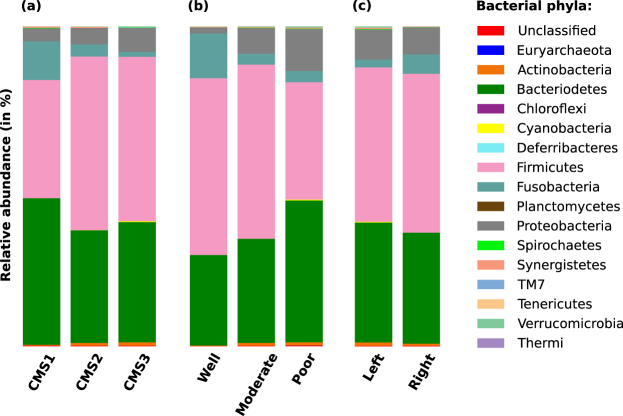
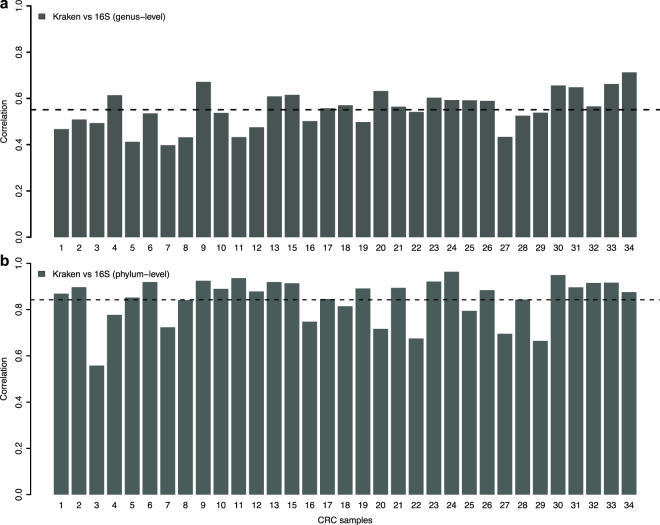
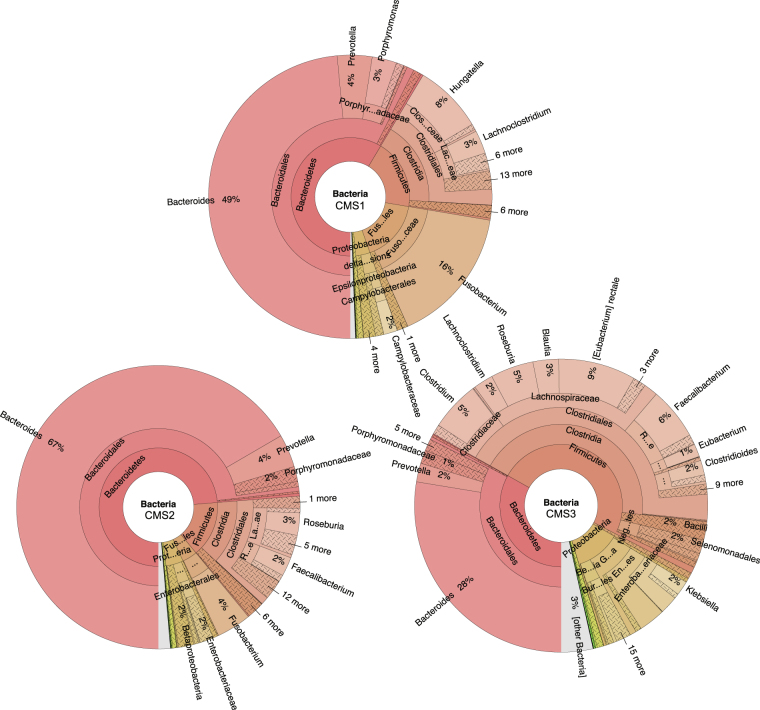
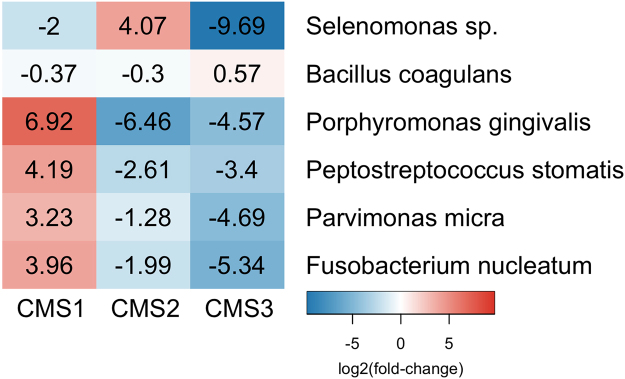
Colorectal cancer (CRC) is a heterogeneous disease and recent advances in subtype classification have successfully stratified the disease using molecular profiling. The contribution of bacterial species to CRC development is increasingly acknowledged, and here, we sought to analyse CRC microbiomes and relate them to tumour consensus molecular subtypes (CMS), in order to better understand the relationship between bacterial species and the molecular mechanisms associated with CRC subtypes. We classified 34 tumours into CRC subtypes using RNA-sequencing derived gene expression and determined relative abundances of bacterial taxonomic groups using 16S rRNA amplicon metabarcoding. 16S rRNA analysis showed enrichment of Fusobacteria and Bacteroidetes, and decreased levels of Firmicutes and Proteobacteria in CMS1. A more detailed analysis of bacterial taxa using non-human RNA-sequencing reads uncovered distinct bacterial communities associated with each molecular subtype. The most highly enriched species associated with CMS1 included Fusobacterium hwasookii and Porphyromonas gingivalis. CMS2 was enriched for Selenomas and Prevotella species, while CMS3 had few significant associations. Targeted quantitative PCR validated these findings and also showed an enrichment of Fusobacterium nucleatum, Parvimonas micra and Peptostreptococcus stomatis in CMS1. In this study, we have successfully associated individual bacterial species to CRC subtypes for the first time.
Overview
The claims and statistics of this paper haven’t been checked yet.
Run the check — free, no account needed. It reads the open-access text and checks the sources it cites.
Integrity signals
Registry
Cites
Statistics
Figures
Verification
Claims the paper makes
The claims and statistics of this paper haven’t been checked yet.
Run the check — free, no account needed. It reads the open-access text and checks the sources it cites.
Claims other papers make about this one
Each is checked against this paper’s own text: does it say what the citing paper says it does?
In the citing paper
“A study associated F nucleatum with the consensus molecular subtype 1 of CRC,32”
From Influence of the Gut Microbiome, Diet, and Environment on Risk of Colorectal Cancer (2020) · cites this paper as [32]
Self-check
Percentages, sums and reported differences re-computed from the paper’s own numbers.
The self-check needs the paper’s full text.
Citations
Cites
Moderated estimation of fold change and dispersion for RNA-seq data with DESeq2
Love, M. I., Huber, W., & Anders, S. (2014) · Genome Biology · doi:10.1186/s13059-014-0550-8 · Cited by 95,106
The Sequence Alignment/Map format and SAMtools
Li, H., Handsaker, B., Wysoker, A., Fennell, T., Ruan, J., Homer, N., Marth, G., Abecasis, G., Durbin, R., & 1000 Genome Project Data Processing Subgroup (2009) · Bioinformatics · doi:10.1093/bioinformatics/btp352 · Cited by 62,041
Subramanian, A., Tamayo, P., Mootha, V. K., Mukherjee, S., Ebert, B. L., Gillette, M. A., Paulovich, A., Pomeroy, S. L., Golub, T. R., Lander, E. S., et al. (2005) · Proceedings of the National Academy of Sciences · doi:10.1073/pnas.0506580102 · Cited by 53,625 · cited 2×
“The biological categories and corresponding gene-sets used in the analysis were extracted from MSigDB[29] (version 5.2).”
MethodInfluentialSTAR: ultrafast universal RNA-seq aligner
Dobin, A., Davis, C. A., Schlesinger, F., Drenkow, J., Zaleski, C., Jha, S., Batut, P., Chaisson, M., & Gingeras, T. R. (2013) · Bioinformatics · doi:10.1093/bioinformatics/bts635 · Cited by 51,709
Robinson, M. D., McCarthy, D. J., & Smyth, G. K. (2010) · Bioinformatics · doi:10.1093/bioinformatics/btp616 · Cited by 41,364 · cited 1×
“0) [25], we identified bacterial taxa whose abundances are significantly different among CMS subtypes.”
BackgroundQIIME allows analysis of high-throughput community sequencing data
Caporaso, J. G., Kuczynski, J., Stombaugh, J., Bittinger, K., Bushman, F. D., Costello, E. K., Fierer, N., Peña, A. G., Goodrich, J. K., Gordon, J. I., et al. (2010) · Nature Methods · doi:10.1038/nmeth.f.303 · Cited by 34,887
Cancer incidence and mortality worldwide: Sources, methods and major patterns in GLOBOCAN 2012
Ferlay, J., Soerjomataram, I., Dikshit, R., Eser, S., Mathers, C., Rebelo, M., Parkin, D. M., Forman, D., & Bray, F. (2015) · International Journal of Cancer · doi:10.1002/ijc.29210 · Cited by 28,766
HTSeq—a Python framework to work with high-throughput sequencing data
Anders, S., Pyl, P. T., & Huber, W. (2015) · Bioinformatics · doi:10.1093/bioinformatics/btu638 · Cited by 21,464 · cited 1×
“1p1)[20] for each sample and the raw read counts were transformed to TPM values using R and Bioconductor package DESeq2 (v1.”
MethodFLASH: fast length adjustment of short reads to improve genome assemblies
Magoč, T., & Salzberg, S. L. (2011) · Bioinformatics · doi:10.1093/bioinformatics/btr507 · Cited by 15,366
Comprehensive molecular characterization of human colon and rectal cancer
The Cancer Genome Atlas Network (2012) · Nature · doi:10.1038/nature11252 · Cited by 8,499
Cited by
Sorted by citations
Influence of the Gut Microbiome, Diet, and Environment on Risk of Colorectal Cancer
Song, M., Chan, A. T., & Sun, J. (2020) · Gastroenterology · doi:10.1053/j.gastro.2019.06.048 · Cited by 752
Gut microbiota in colorectal cancer development and therapy
Wong, C. C., & Yu, J. (2023) · Nature Reviews Clinical Oncology · doi:10.1038/s41571-023-00766-x · Cited by 779
Marcos-Zambrano, L. J., Karađuzović-Hadžiabdić, K., Lončar-Turukalo, T., Przymus, P., Trajkovik, V., Aasmets, O., Berland, M., Gruca, A., Telalović, J. H., Hron, K., et al. (2021) · Frontiers in Microbiology · doi:10.3389/fmicb.2021.634511 · Cited by 447
“) (Feng et al., 2015; Purcell et al., 2017).”
Testa, U., Pelosi, E., & Castelli, G. (2018) · Medical Sciences · doi:10.3390/medsci6020031 · Cited by 403
“Interestingly, distinct gut microbiome species are associated with CMS of colorectal cancer; thus, the most highly-enriched microbial species associated with CSM1 included Fusobacterium hwasookii and Porphyromanas gingivalis; and CMS2 was enriched for Selemonas and Prevotella species, while CMS3 had few significant as…”
BackgroundThe gut microbial metabolite formate exacerbates colorectal cancer progression
Ternes, D., Tsenkova, M., Pozdeev, V. I., Meyers, M., Koncina, E., Atatri, S., Schmitz, M., Karta, J., Schmoetten, M., Heinken, A., et al. (2022) · Nature Metabolism · doi:10.1038/s42255-022-00558-0 · Cited by 339
Dohlman, A. B., Mendoza, D. A., Ding, S., Gao, M. C., Dressman, H. K., Iliev, I. D., Lipkin, S. M., & Shen, X. (2021) · Cell Host & Microbe · doi:10.1016/j.chom.2020.12.001 · Cited by 287
“05), several of which belonged to the Fusobacterium co-abundance group (Figure S5A) and have previously been implicated in CRC (Kostic et al., 2013; Purcell et al., 2017; Warren et al., 2013).”
BackgroundInfluentialMicrobiome in Colorectal Cancer: How to Get from Meta-omics to Mechanism?
Ternes, D., Karta, J., Tsenkova, M., Wilmes, P., Haan, S., & Letellier, E. (2020) · Trends in Microbiology · doi:10.1016/j.tim.2020.01.001 · Cited by 267
Gupta, A., Dhakan, D. B., Maji, A., Saxena, R., K., V., Mahajan, S., Pulikkan, J., Kurian, J., Gomez, A. M., Scaria, J., et al. (2019) · mSystems · doi:10.1128/msystems.00438-19 · Cited by 233
“CRC cases and 53 healthy control samples from a Chinese cohort (19), and a group of”
BackgroundColorectal cancer-associated microbiota contributes to oncogenic epigenetic signatures
Sobhani, I., Bergsten, E., Couffin, S., Amiot, A., Nebbad, B., Barau, C., de’Angelis, N., Rabot, S., Canouï‐Poitrine, F., Mestivier, D., et al. (2019) · Proceedings of the National Academy of Sciences · doi:10.1073/pnas.1912129116 · Cited by 221
“16 evidence of gene expression silencing by gene methylation in overall one third of human 377 tumor tissues (5) and significant associations between abundance of Parvimonas micra and 378 Bacteroides fragilis with highly methylated tumors (16).”
BackgroundResultRoberti, M. P., Yonekura, S., Duong, C. P. M., Picard, M., Ferrere, G., Tidjani Alou, M., Rauber, C., Iebba, V., Lehmann, C. H. K., Amon, L., et al. (2020) · Nature Medicine · doi:10.1038/s41591-020-0882-8 · Cited by 208
Allen, J., & Sears, C. L. (2019) · Genome Medicine · doi:10.1186/s13073-019-0621-2 · Cited by 208
Role of SCFAs in gut microbiome and glycolysis for colorectal cancer therapy
Wang, G., Yu, Y., Wang, Y., Wang, J., Guan, R., Sun, Y., Shi, F., Gao, J., & Fu, X. (2019) · Journal of Cellular Physiology · doi:10.1002/jcp.28436 · Cited by 200
Wang, X., Jia, Y., Wen, L., Mu, W., Wu, X., Liu, T., Liu, X., Fang, J., Luan, Y., Chen, P., et al. (2021) · Cancer Research · doi:10.1158/0008-5472.can-20-3827 · Cited by 194
“gingivaliswas associatedwith tumor consensus molecular subtypes (CMS), which are closely associated with colorectal cancer (11).”
BackgroundNew Insights Into the Cancer–Microbiome–Immune Axis: Decrypting a Decade of Discoveries
Jain, T., Sharma, P., Are, A. C., Vickers, S. M., & Dudeja, V. (2021) · Frontiers in Immunology · doi:10.3389/fimmu.2021.622064 · Cited by 187
Colorectal Cancers: An Update on Their Molecular Pathology
Inamura, K. (2018) · Cancers · doi:10.3390/cancers10010026 · Cited by 182
“From this, four CMSs were established (Figure 1).”
BackgroundIntegrative analysis of exogenous, endogenous, tumour and immune factors for precision medicine
Ogino, S., Nowak, J. A., Hamada, T., Phipps, A. I., Peters, U., Milner, D. A., Giovannucci, E. L., Nishihara, R., Giannakis, M., Garrett, W. S., et al. (2018) · Gut · doi:10.1136/gutjnl-2017-315537 · Cited by 170
Priya, S., Burns, M. B., Ward, T., Mars, R. A. T., Adamowicz, E. M., Lock, E. F., Kashyap, P., Knights, D., & Blekhman, R. (2022) · Nature Microbiology · doi:10.1038/s41564-022-01121-z · Cited by 174
Saffarian, A., Mulet, C., Regnault, B., Amiot, A., Nhieu, J. T. V., Ravel, J., Sobhani, I., Sansonetti, P. J., & Pédron, T. (2019) · mBio · doi:10.1128/mbio.01315-19 · Cited by 167
“Among the diverse set of bacterial taxa identified in these studies, Fusobacterium, Bacteroides fragilis, and Parvimonas micra were found to be consistently associated with the tumor tissues (21, 22), while other taxa, like Providencia (23), Roseburia, Ruminococcus and Oscillibacter (24), and Streptococcus gallolyticu…”
BackgroundZhao, L., Zhang, X., Zhou, Y., Fu, K., Lau, H. C.-H., Chun, T. W.-Y., Cheung, A. H. K., Coker, O. O., Wei, H., Wu, W. K. K., et al. (2022) · Oncogene · doi:10.1038/s41388-022-02395-7 · Cited by 145
“micra was found to be associated with the consensus molecular subtype 1 of CRC [18].”
BackgroundIntestinal bacteria and colorectal cancer: etiology and treatment
Dougherty, M. W., & Jobin, C. (2023) · Gut Microbes · doi:10.1080/19490976.2023.2185028 · Cited by 145
Fusobacterium nucleatum and colorectal cancer: From phenomenon to mechanism
Ou, S., Wang, H., Tao, Y., Luo, K., Ye, J., Ran, S., Guan, Z., Wang, Y., Hu, H., & Huang, R. (2022) · Frontiers in Cellular and Infection Microbiology · doi:10.3389/fcimb.2022.1020583 · Cited by 139
Colorectal Cancer and Metabolism
Brown, R. E., Short, S. P., & Williams, C. S. (2018) · Current Colorectal Cancer Reports · doi:10.1007/s11888-018-0420-y · Cited by 129
Hale, V. L., Jeraldo, P., Chen, J., Mundy, M. B., Yao, J. Z., Priya, S., Keeney, G., Lyke, K. J., Ridlon, J. M., White, B. A., et al. (2018) · Genome Medicine · doi:10.1186/s13073-018-0586-6 · Cited by 127
“However few CRC 100 microbiome studies account for MMR status [23, 24] or microbial dynamics [2], and no studies, 101 to our knowledge, have assessed both MMR status and microbial community dynamics.”
BackgroundThe role of Fusobacterium nucleatum in colorectal cancer: from carcinogenesis to clinical management
Sun, C., Li, B., Wang, B., Zhao, J., Zhang, X., Li, T., Li, W., Tang, D., Qiu, M., Wang, X., et al. (2019) · Chronic Diseases and Translational Medicine · doi:10.1016/j.cdtm.2019.09.001 · Cited by 125
Gut Microbiome: A Promising Biomarker for Immunotherapy in Colorectal Cancer
Temraz, S. N., Nassar, F. J., Nasr, R., Charafeddine, M., Mukherji, D., & Shamseddine, A. I. (2019) · International Journal of Molecular Sciences · doi:10.3390/ijms20174155 · Cited by 125
“Moreover, the consensus molecular subtypes (CMS1, CMS2, and CMS3) ought to be taken into consideration as each subtype was associated with specific bacterial species [70], as well as tumor location in CRC (left or right sided).”
BackgroundRisk Factor Profiles Differ for Cancers of Different Regions of the Colorectum
Wang, L., Lo, C., He, X., Hang, D., Wang, M., Wu, K., Chan, A. T., Ogino, S., Giovannucci, E. L., & Song, M. (2020) · Gastroenterology · doi:10.1053/j.gastro.2020.03.054 · Cited by 117
The Cancer Microbiome: Recent Highlights and Knowledge Gaps
Knippel, R. J., Drewes, J. L., & Sears, C. L. (2021) · Cancer Discovery · doi:10.1158/2159-8290.cd-21-0324 · Cited by 112
“anaerobius leads to ROS accumulation promoting bacterial colonization and cellular proliferation respectively (31,32).”
BackgroundSun, J., Chen, F., & Wu, G. (2023) · The ISME Journal · doi:10.1038/s41396-023-01483-0 · Cited by 118
“5%), and the absence of Firmicutes (<3%) and Proteobacteria (<3%) in CMS1 patients (the expression of immunoinfiltration-related genes is significantly increased) [8].”
BackgroundUnderstanding human health through metatranscriptomics
Ojala, T., Kankuri, E. M., & Kankainen, M. (2023) · Trends in Molecular Medicine · doi:10.1016/j.molmed.2023.02.002 · Cited by 113
Mouradov, D., Greenfield, P. A., Li, S., In, E.-J., Storey, C., Sakthianandeswaren, A., Georgeson, P., Buchanan, D. D., Ward, R. L., Hawkins, N. J., et al. (2023) · Gastroenterology · doi:10.1053/j.gastro.2023.03.205 · Cited by 105
Parvimonas micra as a putative non-invasive faecal biomarker for colorectal cancer
Löwenmark, T., Löfgren‐Burström, A., Zingmark, C., Eklöf, V., Dahlberg, M. L., Wai, S. N., Larsson, P. G., Ljuslinder, I., Edin, S., & Palmqvist, R. (2020) · Scientific Reports · doi:10.1038/s41598-020-72132-1 · Cited by 96
Doocey, C. M., Finn, K., Murphy, C. P., & Guinane, C. M. (2022) · BMC Microbiology · doi:10.1186/s12866-022-02465-6 · Cited by 98
Microbiome distinctions between the CRC carcinogenic pathways
DeDecker, L. C., Coppedge, B., Avelar‐Barragan, J., Karnes, W. E., & Whiteson, K. (2021) · Gut Microbes · doi:10.1080/19490976.2020.1854641 · Cited by 91
“2015 Mucosa X X X Tumors and precursor lesions Purcell et al.(49) 2017 Mucosa X X Tumors Hale et al.”
BackgroundInfluentialYang, S. Y., Cho, M. S., & Kim, N. K. (2018) · Expert Review of Anticancer Therapy · doi:10.1080/14737140.2018.1442217 · Cited by 89
Genetic and epigenetic dependencies in colorectal cancer development
Parmar, S., & Easwaran, H. (2022) · Gastroenterology report · doi:10.1093/gastro/goac035 · Cited by 89
Back to the Colorectal Cancer Consensus Molecular Subtype Future
Menter, D. G., Davis, J. S., Broom, B. M., Overman, M. J., Morris, J. S., & Kopetz, S. (2019) · Current Gastroenterology Reports · doi:10.1007/s11894-019-0674-9 · Cited by 88
BRAF Mutated Colorectal Cancer: New Treatment Approaches
Molina‐Cerrillo, J., Román, M. S., Pozas, J., Alonso‐Gordoa, T., Pozas, M., Conde, E., Cancio-Suárez, M. R., Grande, E., García‐Bermejo, L., & Carrato, A. (2020) · Cancers · doi:10.3390/cancers12061571 · Cited by 78
Sheng, Q., Du, H., Cheng, X., Cheng, X.-B., Tang, Y., Pan, L., Wang, Q., & Lin, J. (2019) · Oncology Letters · doi:10.3892/ol.2019.10841 · Cited by 70
Association between Fusobacterium nucleatum and colorectal cancer: Progress and future directions
Zhang, S., Cai, S., & Ma, Y. (2018) · Journal of Cancer · doi:10.7150/jca.24048 · Cited by 77
“Therefore, Fusobacterium enrichment may be associated with specific molecular subsets of CRCs[62].”
BackgroundZella, D., Curreli, S., Benedetti, F., Krishnan, S., Cocchi, F., Latinovic, O., Denaro, F., Romerio, F., Djavani, M. M., Charurat, M. E., et al. (2018) · Proceedings of the National Academy of Sciences · doi:10.1073/pnas.1815660115 · Cited by 72
Analysis of oral microbiota in Japanese oral cancer patients using 16S rRNA sequencing
Takahashi, Y., Park, J., Hosomi, K., Yamada, T., Kobayashi, A., Yamaguchi, Y., Iketani, S., Kunisawa, J., Mizuguchi, K., Maeda, N., et al. (2019) · Journal of Oral Biosciences · doi:10.1016/j.job.2019.03.003 · Cited by 70
Petrick, J. L., Barber, L. E., Andersen, S. W., Florio, A. A., Palmer, J. R., & Rosenberg, L. A. (2021) · Frontiers in Oncology · doi:10.3389/fonc.2021.734998 · Cited by 71
“Additionally, gut microbiome profiles have been reported to differ by CRC molecular subtype (32), which differ by anatomic location (33).”
BackgroundUgai, T., Haruki, K., Harrison, T. A., Cao, Y., Qu, C., Chan, A. T., Campbell, P. T., Akimoto, N., Berndt, S. I., Brenner, H., et al. (2022) · The American Journal of Gastroenterology · doi:10.14309/ajg.0000000000002171 · Cited by 73
Bergsten, E., Mestivier, D., Donnadieu, F., Pédron, T., Barau, C., Tsoumtsa, L. L., Mettouchi, A., Lemichez, E., Gorgette, O., Chamaillard, M., et al. (2023) · Gut Microbes · doi:10.1080/19490976.2023.2265138 · Cited by 75
“In CRC patients, P. micra , like other oral patho-bionts, has been shown to be associated with the CMS1 subtype, which makes up 14% of all CRC cases, 49 and with an over-activation of genes involved in immune responses.”
BackgroundDifferences Regarding the Molecular Features and Gut Microbiota Between Right and Left Colon Cancer
Kim, K., Castro, E. J., Shim, H., Advincula, J. V. G., & Kim, Y. W. (2018) · Annals of Coloproctology · doi:10.3393/ac.2018.12.17 · Cited by 68
Inamura, K. (2020) · Seminars in Cancer Biology · doi:10.1016/j.semcancer.2020.06.006 · Cited by 63
Prostate diseases and microbiome in the prostate, gut, and urine
Miyake, M., Tatsumi, Y., Ohnishi, K., Fujii, T., Nakai, Y., Tanaka, N., & Fujimoto, K. (2022) · Prostate International · doi:10.1016/j.prnil.2022.03.004 · Cited by 64
Wang, B., Deng, J., Donati, V. L., Merali, N., Frampton, A. E., Giovannetti, E., & Deng, D. (2024) · Pathogens · doi:10.3390/pathogens13010093 · Cited by 73
“In an observational study by Purcell et al., the abundance of P. gingivalis and F. nucleatum were correlated with the consensus molecular subtypes (CMS) of CRC [49].”
BackgroundInfluentialFusobacterium nucleatum: ecology, pathogenesis and clinical implications
Jiang, S., Chen, Y., & Fang, J. (2025) · Nature Reviews Microbiology · doi:10.1038/s41579-025-01237-z · Cited by 76
“Clinically, F. nucleatum frequently co-occurs with P. gingivalis in oral squamous cell carcinoma and CRC, which suggests potential synergistic roles in carcinogenesis 131,132 .”
Dadgar-Zankbar, L., Elahi, Z., Shariati, A., Khaledi, A., Razavi, S., & Khoshbayan, A. (2024) · Cell Communication and Signaling · doi:10.1186/s12964-024-01909-y · Cited by 68
Differences in the bacteriome of swab, saliva, and tissue biopsies in oral cancer
Gopinath, D., Menon, R. K., Wie, C. C., Banerjee, M., Panda, S., Mandal, D. P., Behera, P. K., Roychoudhury, S., Kheur, S. M., Botelho, M. G., et al. (2021) · Scientific Reports · doi:10.1038/s41598-020-80859-0 · Cited by 65
Zhang, W., Wang, S., Wang, H., Tang, Y.-J., Tang, Y., & Liang, X. (2019) · Experimental Cell Research · doi:10.1016/j.yexcr.2019.111634 · Cited by 57
Targeting Programmed Fusobacterium nucleatum Fap2 for Colorectal Cancer Therapy
Ganesan, K., Guo, S., Fayyaz, S., Zhang, G., & Xu, B. (2019) · Cancers · doi:10.3390/cancers11101592 · Cited by 59
Porphyromonas: A neglected potential key genus in human microbiomes
Guilloux, C.-A., Lamoureux, C., Beauruelle, C., & Héry-Arnaud, G. (2020) · Anaerobe · doi:10.1016/j.anaerobe.2020.102230 · Cited by 56
Colorectal Cancer-Associated Microbiome Patterns and Signatures
Zhao, L., Cho, W. C. S., & Nicolls, M. R. (2021) · Frontiers in Genetics · doi:10.3389/fgene.2021.787176 · Cited by 56
The potential role of P.gingivalis in gastrointestinal cancer: a mini review
Liu, X., Gao, Z.-Y., Sun, C., Wen, H., Gao, B., Li, S., & Tong, Q. (2019) · Infectious Agents and Cancer · doi:10.1186/s13027-019-0239-4 · Cited by 50
Díaz‐Basabe, A., Lattanzi, G., Perillo, F., Amoroso, C., Baeri, A., Farini, A., Torrente, Y., Penna, G., Rescigno, M., Ghidini, M., et al. (2024) · Gut Microbes · doi:10.1080/19490976.2024.2388801 · Cited by 54
Sphyris, N., Hodder, M. C., & Sansom, O. J. (2021) · Cancers · doi:10.3390/cancers13051000 · Cited by 49
“Interestingly, distinct microbiota profiles associate preferentially with each CRC subtype [236,237], and the composition of the microbiota differs significantly between right- and left-sided colon tumours [219,224,238], likely reflecting the profound differences in the underlying disease pathology.”
BackgroundPorphyromonas gingivalis in Colorectal Cancer and its Association to Patient Prognosis
Kerdreux, M., Edin, S., Löwenmark, T., Bronnec, V., Löfgren‐Burström, A., Zingmark, C., Ljuslinder, I., Palmqvist, R., & Ling, A. (2023) · Journal of Cancer · doi:10.7150/jca.83395 · Cited by 46
“micra [28], which is in line with our finding of a putative association between P.”
ResultKneis, B., Wirtz, S. J., Weber, K., Denz, A., Gittler, M. M., Geppert, C. I., Brunner, M., Krautz, C., Siebenhüner, A. R., Schierwagen, R., et al. (2023) · International Journal of Molecular Sciences · doi:10.3390/ijms24043265 · Cited by 53
Salvucci, M., Crawford, N., Stott, K. J., Bullman, S., Longley, D. B., & Prehn, J. H. M. (2021) · Gut · doi:10.1136/gutjnl-2021-325193 · Cited by 42
Principles of Molecular Utility for CMS Classification in Colorectal Cancer Management
Rejali, L., Asl, R. S., Sanjabi, F., Fatemi, N., Aghdaei, H. A., Niasar, M. S., Moghadam, P. K., Mojarad, E. N., Mini, E., & Nobili, S. (2023) · Cancers · doi:10.3390/cancers15102746 · Cited by 50
“Collectively, strong immunological and inflammatory marks have been correlated with the CRC subtypes [122].”
BackgroundInfluentialConde‐Pérez, K., Aja‐Macaya, P., Buetas, E., Trigo‐Tasende, N., Nasser‐Ali, M., Rumbo‐Feal, S., Nión, P., Arribas, E. M., Estévez, L. S., Otero‐Alén, B., et al. (2024) · Molecular Oncology · doi:10.1002/1878-0261.13604 · Cited by 44
“Colorectal dysbiosis is characterized by the loss of mutualistic species, significant reduction in microbial biodiversity, and strong decline in healthy microbiota functions [25,29,30,35,49,73].”
BackgroundInfluentialBacterial lipopolysaccharide modulates immune response in the colorectal tumor microenvironment
Sulit, A. K., Daigneault, M. C., Allen‐Vercoe, E., Silander, O., Hock, B. D., McKenzie, J., Pearson, J. F., Frizelle, F., Schmeier, S., & Purcell, R. V. (2023) · npj Biofilms and Microbiomes · doi:10.1038/s41522-023-00429-w · Cited by 45
“Taxa associated with the oral cavity have also been found to be enriched in CRC 18 – 21 , possibly driving the increase seen in species richness 18 .”
Marongiu, L., Landry, J. J. M., Rausch, T., Abba, M. L., Delécluse, S., Delecluse, H., & Allgayer, H. (2021) · Molecular Oncology · doi:10.1002/1878-0261.13070 · Cited by 40
Chen, C., Su, Q., Zi, M., Hua, X., & Zhang, Z. (2025) · npj Biofilms and Microbiomes · doi:10.1038/s41522-025-00818-3 · Cited by 45
“CMS1 tumors — typically right-sided, MSI-H, and immunologically active — were shown to be enriched for oral pathogens including Fusobacterium nucleatum , Parvimonas micra , and Porphyromonas gingivalis , alongside upregulation of interferon-γ and TNF signaling 25 .”
Genomic landscape of colorectal carcinogenesis
Kim, J. C., & Bodmer, W. F. (2022) · Journal of Cancer Research and Clinical Oncology · doi:10.1007/s00432-021-03888-w · Cited by 37
“On the other hand, CRC microbiomes might be associated CMS, for example, elevated abundance of Fusobacterium, Peptostreptococcus, or Parvimonas, to be associated with CMS1, underscored the potential role of oral poly-microbial communities in the development of a subset of CRC pathogenesis (Purcell et al. 2017).”
BackgroundHARMONIES: A Hybrid Approach for Microbiome Networks Inference via Exploiting Sparsity
Jiang, S., Xiao, G., Koh, A. Y., Chen, Y., Yao, B., Li, Q., & Zhan, X. (2020) · Frontiers in Genetics · doi:10.3389/fgene.2020.00445 · Cited by 36
Association of the microbiome with colorectal cancer development (Review)
Abdulla, M., Agarwal, D., Singh, J. K., Traiki, T. A. B., Pandey, M. K., Ahmad, R., & Srivastava, S. K. (2021) · International Journal of Oncology · doi:10.3892/ijo.2021.5197 · Cited by 34
Current status and future perspective of immune checkpoint inhibitors in colorectal cancer
Zhou, C., Cheng, X., & Tu, S. (2021) · Cancer Letters · doi:10.1016/j.canlet.2021.07.023 · Cited by 35
The human microbiome and genitourinary malignancies
Nicolaro, M., Portal, D. E., Shinder, B. M., Patel, H. V., & Singer, E. A. (2020) · Annals of Translational Medicine · doi:10.21037/atm-20-2976 · Cited by 31
“pathological processes such as aging, atherosclerosis, obesity, diabetes, CNS dysfunction, and even malignancies such as colorectal cancers (6-8).”
BackgroundQueen, J., Shaikh, F. Y., & Sears, C. L. (2023) · Nature Cancer · doi:10.1038/s43018-023-00602-2 · Cited by 34
Gut Microbiome–Colorectal Cancer Relationship
Yadav, D., Sainatham, C., Filippov, E., Kanagala, S. G., Ishaq, S. M., & Jayakrishnan, T. (2024) · Microorganisms · doi:10.3390/microorganisms12030484 · Cited by 33
“…, Peptostreptococcus spp, Solobacterium moorei , Clostridium symbiosum , Anaerococcus spp, Porphyromonas spp, Prevotella intermedia , Bacteroides fragilis , Streptococcus constellatus , Granuclicatella adiacens , Treponema denticola , Porphyromonas gingivalis and Tannerrella forsthica [24,25,70].”
BackgroundApplying artificial intelligence in the microbiome for gastrointestinal diseases: A review
Zeng, T., Yu, X., & Chen, Z. (2021) · Journal of Gastroenterology and Hepatology · doi:10.1111/jgh.15503 · Cited by 30
“28 Second, the gene-targeted amplicons and metagenomics big data could support the integration of novel microbiome signatures.”
BackgroundA New Comorbidity in Periodontitis: Fusobacterium nucleatum and Colorectal Cancer
Mesa, F., Mesa-López, M. J., VALENZUELA, J. E., Benavides‐Reyes, C., Nibali, L., Ide, M., Mainas, G., Rizzo, M., & Magán‐Fernández, A. (2022) · Medicina · doi:10.3390/medicina58040546 · Cited by 34
“This finding reaffirms the theory of the role played by the oral microbiome in the development of CRC [55], together with the fact that 40% of the patients showed identical Fn strains in CRC samples and in saliva samples [56].”
ResultDistinct changes in the colonic microbiome associated with acute diverticulitis
O’Grady, M. J., Turner, G. A., Sulit, A. K., Frizelle, F., & Purcell, R. V. (2022) · Colorectal Disease · doi:10.1111/codi.16271 · Cited by 30
“abundance was Fusobacterium, which is correlated with the pathogenesis of colorectal cancer through activation of host inflammatory responses [25, 42].”
BackgroundAn epigenetic signature of advanced colorectal cancer metastasis
Rodger, E. J., Gimenez, G., Ajithkumar, P., Stockwell, P. A., Almomani, S. N., Bowden, S. A., Leichter, A. L., Ahn, A., Pattison, S. T., McCall, J. L., et al. (2023) · iScience · doi:10.1016/j.isci.2023.106986 · Cited by 32
Higashi, D. L., Krieger, M., Qin, H., Zou, Z., Palmer, E. A., Kreth, J., & Merritt, J. L. (2023) · Environmental Microbiology Reports · doi:10.1111/1758-2229.13153 · Cited by 29
“It has been suggested that P. micra exhibits the strongest correlation with consensus molecular subtype 1 CRC (Purcell et al., 2017).”
BackgroundInfluentialThe role of microbiomes in gastrointestinal cancers: new insights
Yarahmadi, A., & Afkhami, H. (2024) · Frontiers in Oncology · doi:10.3389/fonc.2023.1344328 · Cited by 30
Löwenmark, T., Li, X., Löfgren‐Burström, A., Zingmark, C., Ling, A., Kellgren, T. G., Larsson, P. G., Ljuslinder, I., Wai, S. N., Edin, S., et al. (2022) · Cancer Immunology Immunotherapy · doi:10.1007/s00262-022-03179-4 · Cited by 29
Jin, M., Wu, J., Shi, L., Zhou, B., Shang, F., Chang, X., Dong, X., Deng, S., Liu, L., Cai, K., et al. (2022) · Frontiers in Microbiology · doi:10.3389/fmicb.2022.993285 · Cited by 29
“found that certain gut microbiome patterns including Fusobacterium hwasookii and Porphyromonas gingivalis enrichment is associated with the CMS 1 subtype in CRC (Purcell et al., 2017).”
BackgroundLöwenmark, T., Löfgren‐Burström, A., Zingmark, C., Ljuslinder, I., Dahlberg, M. L., Edin, S., & Palmqvist, R. (2022) · Cancers · doi:10.3390/cancers14235937 · Cited by 30
“nucleatum in tumour tissue and tumours of CMS subgroup 1 were found [22,25].”
BackgroundAja‐Macaya, P., Conde‐Pérez, K., Trigo‐Tasende, N., Buetas, E., Nasser‐Ali, M., Nión, P., Rumbo‐Feal, S., Ladra, S., Bou, G., Mira, Á., et al. (2025) · Scientific Reports · doi:10.1038/s41598-025-10999-8 · Cited by 35
Sheikh, A. A., Taube, J. H., & Greathouse, K. L. (2021) · Carcinogenesis · doi:10.1093/carcin/bgab060 · Cited by 26
Gut microbiota in colorectal cancer: From pathogenesis to clinic
Fusco, W., Bricca, L., Kaitsas, F., Tartaglia, M., Venturini, I., Rugge, M., Gasbarrini, A., Cammarota, G., & Ianiro, G. (2024) · Best Practice & Research Clinical Gastroenterology · doi:10.1016/j.bpg.2024.101941 · Cited by 32
Hawkins, G. M., Burkett, W. C., McCoy, A. N., Nichols, H. B., Olshan, A. F., Broaddus, R. R., Merker, J. D., Weissman, B. E., Brewster, W. R., Roach, J. M., et al. (2022) · Gynecologic Oncology · doi:10.1016/j.ygyno.2022.02.021 · Cited by 27
Mohammadi, M., Mirzaei, H., & Motallebi, M. (2021) · Anaerobe · doi:10.1016/j.anaerobe.2021.102501 · Cited by 26
Small-molecule drugs of colorectal cancer: Current status and future directions
Yang, Y., Liu, P., Zhou, M., Yin, L., Wang, M., Liu, T., Jiang, X., & Gao, H. (2023) · Biochimica et Biophysica Acta (BBA) - Molecular Basis of Disease · doi:10.1016/j.bbadis.2023.166880 · Cited by 27
Kim, M., Lee, S., Choi, S., Lee, H., Kwon, S. S., Byun, J., Kim, Y. A., Rhee, K., Choi, J. R., Kim, T. I., et al. (2020) · Scientific Reports · doi:10.1038/s41598-020-76467-7 · Cited by 25
Implication of gut microbes and its metabolites in colorectal cancer
Kumar, A., Ali, A., Kapardar, R. K., Dar, G. M., Nimisha, Apurva, A., Sharma, A. K., Verma, R., Sattar, R. S. A., Ahmad, E., et al. (2022) · Journal of Cancer Research and Clinical Oncology · doi:10.1007/s00432-022-04422-2 · Cited by 26
Wielandt, A. M., Hurtado, C., Mauricio Moreno, C., Villarroel, C., Castro, M., Estay, M., Simian, D., Martínez, M., Vial, M. T., Kronberg, U., et al. (2020) · Tumor Biology · doi:10.1177/1010428320938492 · Cited by 24
Drug–Microbiota Interaction in Colon Cancer Therapy: Impact of Antibiotics
Mohamed, A. A., Menon, H., Chulkina, M., Yee, N. S., & Pinchuk, I. V. (2021) · Biomedicines · doi:10.3390/biomedicines9030259 · Cited by 27
Microbiome in drug resistance to colon cancer
Pandey, K. R., & Umar, S. (2021) · Current Opinion in Physiology · doi:10.1016/j.cophys.2021.100472 · Cited by 24
Oral pathogen in the pathogenesis of colorectal cancer
Yu, T., Zhou, Y., & Fang, J. (2021) · Journal of Gastroenterology and Hepatology · doi:10.1111/jgh.15743 · Cited by 25
Altered Gut Microbiota Associated With Hemorrhage in Chronic Radiation Proctitis
Liu, L., Chen, C., Chen, C., Chen, B., Xiao, N., & Liang, J. (2021) · Frontiers in Oncology · doi:10.3389/fonc.2021.637265 · Cited by 23
Serrated neoplasia in the colorectum: gut microbiota and molecular pathways
Kang, X., Zhang, R., Kwong, T. N. Y., Lui, R. N.-S., Wu, W. K. K., Sung, J. J. �., Yu, J. Q., & Wong, S. H. (2020) · Gut Microbes · doi:10.1080/19490976.2020.1863135 · Cited by 23
DeepLINK: Deep learning inference using knockoffs with applications to genomics
Zhu, Z., Fan, Y., Kong, Y., Lv, J., & Sun, F. (2021) · Proceedings of the National Academy of Sciences · doi:10.1073/pnas.2104683118 · Cited by 23
The Gut Microbiome, Microsatellite Status and the Response to Immunotherapy in Colorectal Cancer
Sillo, T. O., Beggs, A. D., Middleton, G., & Akingboye, A. A. (2023) · International Journal of Molecular Sciences · doi:10.3390/ijms24065767 · Cited by 25
“These differences in the gut microbiome profile also extend to different molecular and genomic subtypes of CRC [18,19].”
BackgroundMethodRemodelling of colorectal cancer cell signalling by microbiota and immunity in diabetes
Gutiérrez‐Salmerón, M. T., Lucena, S. R., Chocarro‐Calvo, A., García-Martínez, J. M., Orozco, R. M. M., & García‐Jiménez, C. (2021) · Endocrine Related Cancer · doi:10.1530/erc-20-0315 · Cited by 22
Ros, J., Baraibar, I., Martini, G., Salvà, F., Gonzalez, N. S., Cuadra‐Urteaga, J. L., Dienstmann, R., Tabernero, J. M., & Élez, E. (2021) · Current Treatment Options in Oncology · doi:10.1007/s11864-021-00913-5 · Cited by 22
Metadata
- Authors
- Purcell, R. V., Visnovska, M., Biggs, P. J., Schmeier, S., & Frizelle, F. A.
- Affiliations
- University of Otago (NZ)
- Massey University (NZ)
- Corresponding author
- Purcell, Rachel V.
- Venue
- Scientific Reports
- Published
- 2017-09-14
- Volume
- 7
- Issue
- 1
- Pages
- 11590-11590
- ISSN
- 2045-2322 (ISSN-L)
- PMC
- PMC5599497
- OpenAlex
- W2950036522
- Cited by
- 227
- References
- 60
- Citations by year
- 2026: 16 · 2025: 24 · 2024: 21 · 2023: 34 · 2022: 33 · 2021: 40 · 2020: 20 · 2019: 21 · 2018: 17
- FWCI
- 6.48
- Type
- journal article
- Language
- en
- Open access
- gold
- doi.org
- Locations
- Scientific Reports (publishedVersion, cc-by)
- bioRxiv (Cold Spring Harbor Laboratory) (acceptedVersion)
- PubMed Central (publishedVersion, cc-by)
- PubMed (publishedVersion)
- DOAJ (DOAJ: Directory of Open Access Journals) (submittedVersion)
- Funders
- Hugh Green Foundation
- Maurice and Phyllis Paykel Trust
- Colorectal Surgical Society of Australia and New Zealand
- Topics
- Life Sciences › Biochemistry, Genetics and Molecular Biology › Molecular Biology › Gut microbiota and health
- Health Sciences › Dentistry › Periodontics › Oral microbiology and periodontitis research
- Health Sciences › Medicine › Oncology › Colorectal Cancer Treatments and Studies
- Keywords
- colorectal cancer, gut microbiota, consensus molecular subtypes, Fusobacterium nucleatum, Porphyromonas gingivalis, Prevotella, bacterial taxa, tumor molecular subtypes, 16S rRNA metabarcoding
- MeSH terms
- Gastrointestinal Microbiome, Adult, Aged, Aged, 80 and over, Female, Humans, Male, Middle Aged, RNA, Ribosomal, 16S, Biomarkers, Tumor, Colorectal Neoplasms, Reproducibility of Results, Gene Expression Regulation, Neoplastic, Computational Biology, Gene Expression Profiling, Metagenome, Metagenomics, Transcriptome
About these checks
Registry, retraction, Cites and statistics results are computed, not judged, with one exception: a printed reference that no index lists is read once by a model before it counts as a citation error. Claims are extracted by a model and kept only when their quote appears verbatim in the text; each cited source is then checked, with a model’s help, for whether it says what the claim relies on. Those verdicts can be wrong — read the claim’s quote and the cited source before relying on one.
Statistics and arithmetic are recomputed, not judged.
Confidence bands are shown only for fields calibrated on our annotated test set. None is calibrated yet, so no band is shown.
What counts as a claim ›How we measure confidence ›How we check this ›
Are you an author, or do you see a problem with this page? Request a review
