

The DOI matches its Crossref record; 60 of the 60 references it cites were found in a registry or an index.
Distinct gut microbiome patterns associate with consensus molecular subtypes of colorectal cancer
Open accessPublished version of a preprint
Abstract
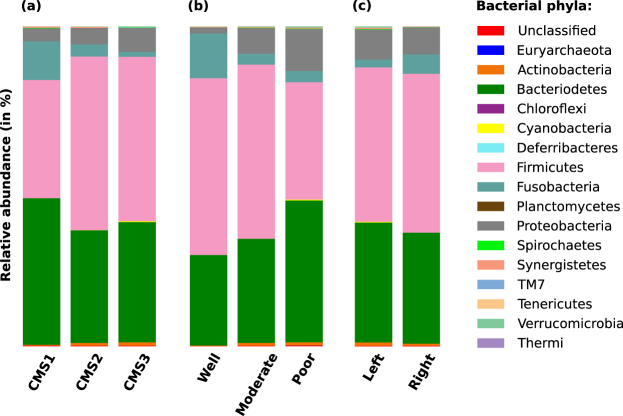
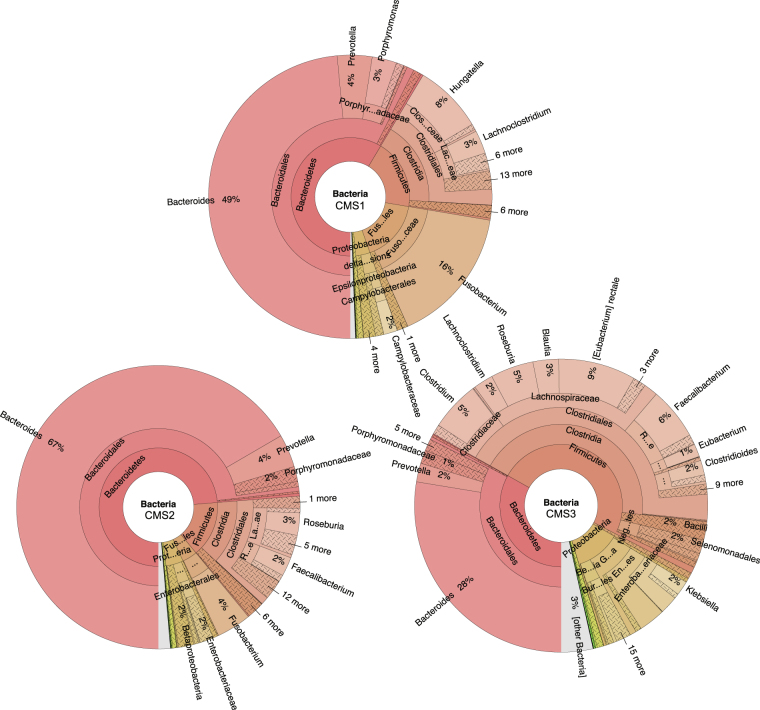
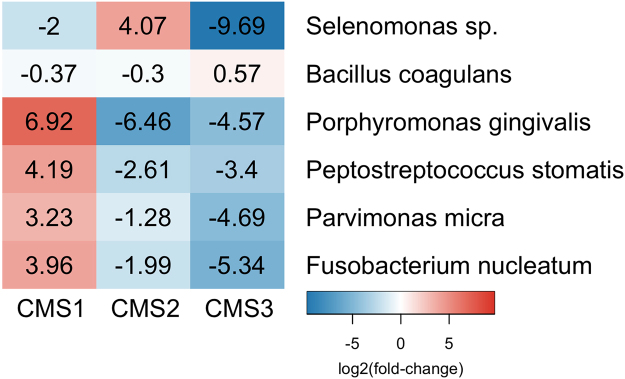
Colorectal cancer (CRC) is a heterogeneous disease and recent advances in subtype classification have successfully stratified the disease using molecular profiling. The contribution of bacterial species to CRC development is increasingly acknowledged, and here, we sought to analyse CRC microbiomes and relate them to tumour consensus molecular subtypes (CMS), in order to better understand the relationship between bacterial species and the molecular mechanisms associated with CRC subtypes. We classified 34 tumours into CRC subtypes using RNA-sequencing derived gene expression and determined relative abundances of bacterial taxonomic groups using 16S rRNA amplicon metabarcoding. 16S rRNA analysis showed enrichment of Fusobacteria and Bacteroidetes, and decreased levels of Firmicutes and Proteobacteria in CMS1. A more detailed analysis of bacterial taxa using non-human RNA-sequencing reads uncovered distinct bacterial communities associated with each molecular subtype. The most highly enriched species associated with CMS1 included Fusobacterium hwasookii and Porphyromonas gingivalis. CMS2 was enriched for Selenomas and Prevotella species, while CMS3 had few significant associations. Targeted quantitative PCR validated these findings and also showed an enrichment of Fusobacterium nucleatum, Parvimonas micra and Peptostreptococcus stomatis in CMS1. In this study, we have successfully associated individual bacterial species to CRC subtypes for the first time.
Overview
The claims and statistics of this paper haven’t been checked yet.
Run the check — free, no account needed. It reads the open-access text and checks the sources it cites.
Integrity signals
Registry
Cites
Statistics
Figures
Verification
Claims the paper makes
The claims and statistics of this paper haven’t been checked yet.
Run the check — free, no account needed. It reads the open-access text and checks the sources it cites.
Claims other papers make about this one
Each is checked against this paper’s own text: does it say what the citing paper says it does?
In the citing paper
“A study associated F nucleatum with the consensus molecular subtype 1 of CRC,32”
From Influence of the Gut Microbiome, Diet, and Environment on Risk of Colorectal Cancer (2020) · cites this paper as [32]
Self-check
Percentages, sums and reported differences re-computed from the paper’s own numbers.
The self-check needs the paper’s full text.
Citations
Cites
Moderated estimation of fold change and dispersion for RNA-seq data with DESeq2
Love, M. I., Huber, W., & Anders, S. (2014) · Genome Biology · doi:10.1186/s13059-014-0550-8 · Cited by 95,106
The Sequence Alignment/Map format and SAMtools
Li, H., Handsaker, B., Wysoker, A., Fennell, T., Ruan, J., Homer, N., Marth, G., Abecasis, G., Durbin, R., & 1000 Genome Project Data Processing Subgroup (2009) · Bioinformatics · doi:10.1093/bioinformatics/btp352 · Cited by 62,041
Subramanian, A., Tamayo, P., Mootha, V. K., Mukherjee, S., Ebert, B. L., Gillette, M. A., Paulovich, A., Pomeroy, S. L., Golub, T. R., Lander, E. S., et al. (2005) · Proceedings of the National Academy of Sciences · doi:10.1073/pnas.0506580102 · Cited by 53,625 · cited 2×
“The biological categories and corresponding gene-sets used in the analysis were extracted from MSigDB[29] (version 5.2).”
MethodInfluentialSTAR: ultrafast universal RNA-seq aligner
Dobin, A., Davis, C. A., Schlesinger, F., Drenkow, J., Zaleski, C., Jha, S., Batut, P., Chaisson, M., & Gingeras, T. R. (2013) · Bioinformatics · doi:10.1093/bioinformatics/bts635 · Cited by 51,709
Robinson, M. D., McCarthy, D. J., & Smyth, G. K. (2010) · Bioinformatics · doi:10.1093/bioinformatics/btp616 · Cited by 41,364 · cited 1×
“0) [25], we identified bacterial taxa whose abundances are significantly different among CMS subtypes.”
BackgroundQIIME allows analysis of high-throughput community sequencing data
Caporaso, J. G., Kuczynski, J., Stombaugh, J., Bittinger, K., Bushman, F. D., Costello, E. K., Fierer, N., Peña, A. G., Goodrich, J. K., Gordon, J. I., et al. (2010) · Nature Methods · doi:10.1038/nmeth.f.303 · Cited by 34,887
Cancer incidence and mortality worldwide: Sources, methods and major patterns in GLOBOCAN 2012
Ferlay, J., Soerjomataram, I., Dikshit, R., Eser, S., Mathers, C., Rebelo, M., Parkin, D. M., Forman, D., & Bray, F. (2015) · International Journal of Cancer · doi:10.1002/ijc.29210 · Cited by 28,766
HTSeq—a Python framework to work with high-throughput sequencing data
Anders, S., Pyl, P. T., & Huber, W. (2015) · Bioinformatics · doi:10.1093/bioinformatics/btu638 · Cited by 21,464 · cited 1×
“1p1)[20] for each sample and the raw read counts were transformed to TPM values using R and Bioconductor package DESeq2 (v1.”
MethodFLASH: fast length adjustment of short reads to improve genome assemblies
Magoč, T., & Salzberg, S. L. (2011) · Bioinformatics · doi:10.1093/bioinformatics/btr507 · Cited by 15,366
Comprehensive molecular characterization of human colon and rectal cancer
The Cancer Genome Atlas Network (2012) · Nature · doi:10.1038/nature11252 · Cited by 8,499
The consensus molecular subtypes of colorectal cancer
Guinney, J., Dienstmann, R., Wang, X., de Reyniès, A., Schlicker, A., Soneson, C., Marisa, L., Roepman, P., Nyamundanda, G., Angelino, P., et al. (2015) · Nature Medicine · doi:10.1038/nm.3967 · Cited by 5,170 · cited 9×
“Gene expression profiles from each patient were used as input data to the publicly available CMS subtype classifier[6] (see Materials and Methods).”
BackgroundMethodResultInfluentialKraken: ultrafast metagenomic sequence classification using exact alignments
Wood, D. E., & Salzberg, S. L. (2014) · Genome Biology · doi:10.1186/gb-2014-15-3-r46 · Cited by 4,521 · cited 3×
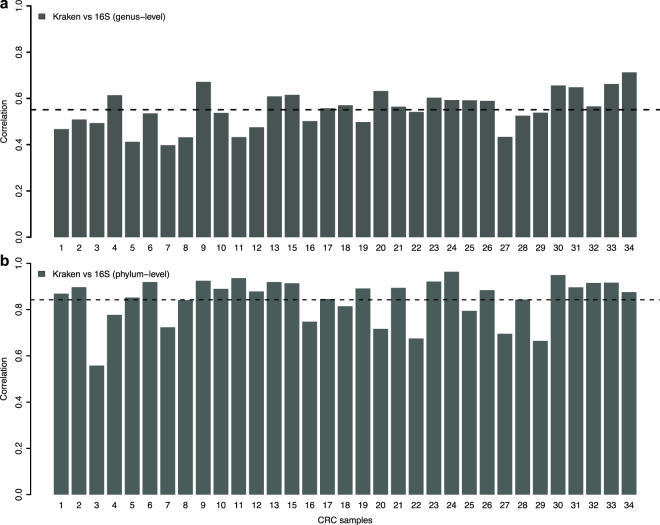
“validate the consistency of the two approaches, we compared phylum and genus level abundances derived through 16S rRNA analysis or separately derived through non-human mapped RNA-seq reads using Kraken[24].”
MethodInfluentialControlling the false discovery rate in behavior genetics research
Benjamini, Y., Drai, D., Elmer, G., Kafkafi, N., & Golani, I. (2001) · Behavioural Brain Research · doi:10.1016/s0166-4328(01)00297-2 · Cited by 4,146 · cited 2×
“We extracted genes that are up- or down-regulated, using a Benjamini and Hochberg false-discovery rate (FDR)[28] adjusted P-value (< 0.”
MethodInfluentialKostic, A. D., Chun, E., Robertson, L., Glickman, J. N., Gallini, C. A., Michaud, M., Clancy, T. E., Chung, D. C., Lochhead, P., Hold, G. L., et al. (2013) · Cell Host & Microbe · doi:10.1016/j.chom.2013.07.007 · Cited by 2,718 · cited 1×
“colorectal carcinogenesis by recruitment of infiltrating immune cells[42] and modulating E-cadherin/β-catenin signalling[43].”
BackgroundRubinstein, M. R., Wang, X., Liu, W., Hao, Y., Cai, G., & Han, Y. W. (2013) · Cell Host & Microbe · doi:10.1016/j.chom.2013.07.012 · Cited by 2,476
Commensal Host-Bacterial Relationships in the Gut
Hooper, L. V., & Gordon, J. I. (2001) · Science · doi:10.1126/science.1058709 · Cited by 2,362 · cited 1×
“The human colon plays host to a vast and complex microbial community of < 10(12) microorganisms[7], and a growing body of evidence points to a role for gut microbial dysbiosis in the development of CRC[8].”
BackgroundFusobacterium nucleatum infection is prevalent in human colorectal carcinoma
Castellarin, M., Warren, R. L., Freeman, J. D., Dreolini, L., Krzywinski, M., Strauss, J., Barnes, R., Watson, P., Allen-Vercoe, E., Moore, R. A., et al. (2012) · Genome Research · doi:10.1101/gr.126516.111 · Cited by 2,043 · cited 1×
“Increased carriage of Fusobacterium nucleatum has been frequently associated with CRC[38-40].”
BackgroundGenomic analysis identifies association of Fusobacterium with colorectal carcinoma
Kostic, A. D., Gevers, D., Pedamallu, C. S., Michaud, M., Duke, F., Earl, A. M., Ojesina, A. I., Jung, J., Bass, A. J., Tabernero, J., et al. (2012) · Genome Research · doi:10.1101/gr.126573.111 · Cited by 1,960 · cited 1×
“Increased carriage of Fusobacterium nucleatum has been frequently associated with CRC[38-40].”
BackgroundThe Type 1 Diabetes Genetics Consortium, Barrett, J. C., Clayton, D. G., Concannon, P., Akolkar, B., Cooper, J. D., Erlich, H. A., Julier, C., Morahan, G., Nerup, J., et al. (2009) · Nature Genetics · doi:10.1038/ng.381 · Cited by 1,746
Jass, J. R. (2006) · Histopathology · doi:10.1111/j.1365-2559.2006.02549.x · Cited by 1,416 · cited 1×
“Studies of molecular features, such as BRAF, KRAS and TP53 mutation status, microsatellite instability (MSI), CpG island methylator phenotype (CIMP), somatic copy number alterations (SCNA), and activation of various molecular pathways such as WNT and MYC, have been used with some success to stratify CRC into subgroups…”
BackgroundSolexaQA: at-a-glance quality assessment of Illumina second-generation sequencing data
Cox, M. P., Peterson, D. A., & Biggs, P. J. (2010) · BMC Bioinformatics · doi:10.1186/1471-2105-11-485 · Cited by 1,357 · cited 1×
“6)[17] was used to trim low-quality segments of”
MethodSelf-citationYu, J. Q., Feng, Q., Wong, S. H., Zhang, D., Liang, Q. Y., Qin, Y., Tang, L., Zhao, H., Stenvang, J., Li, Y., et al. (2015) · Gut · doi:10.1136/gutjnl-2015-309800 · Cited by 1,273 · cited 3×
“These bacterial species have been identified in metagenomics studies as markers of CRC using faecal samples[10], and have been described in an oral-microbe-induced colorectal tumorigenesis model, proposed by”
BackgroundResultComparison of Sequencing Utility Programs
Aronesty, E. (2013) · The Open Bioinformatics Journal · doi:10.2174/1875036201307010001 · Cited by 1,144
Li, H., Courtois, E. T., Sengupta, D., Tan, Y., Chen, K. H., Goh, J. J. L., Kong, S. L., Chua, C., Hon, L. K., Tan, W. S., et al. (2017) · Nature Genetics · doi:10.1038/ng.3818 · Cited by 1,080 · cited 1×
“First, the small number of patients (33) in our study Figure 3.”
BackgroundRole of the Serrated Pathway in Colorectal Cancer Pathogenesis
Leggett, B., & Whitehall, V. (2010) · Gastroenterology · doi:10.1053/j.gastro.2009.12.066 · Cited by 1,015
Human Gut Microbiome and Risk for Colorectal Cancer
Ahn, J., Sinha, R., Pei, Z., Dominianni, C., Wu, J., Shi, J., Goedert, J. J., Hayes, R. B., & Yang, L. (2013) · JNCI: Journal of the National Cancer Institute · doi:10.1093/jnci/djt300 · Cited by 947 · cited 3×
“bacteria in tumours compared to controls[9, 36, 48].”
BackgroundResultMicrobial Dysbiosis in Colorectal Cancer (CRC) Patients
Sobhani, I., Tap, J., Roudot‐Thoraval, F., Roperch, J. P., Letulle, S., Langella, P., Corthier, G., Nhieu, J. T. V., & Furet, J. (2011) · PLoS ONE · doi:10.1371/journal.pone.0016393 · Cited by 859 · cited 1×
“Comparison of faecal microbiomes from CRC patients and healthy controls[9-12] has identified particular bacterial species that are enriched in CRC, and analysis of tumour, adenoma, and matched normal tissue from the same patients found that changes in local communities of potentially interacting bacterial taxa are ass…”
BackgroundTumour-associated and non-tumour-associated microbiota in colorectal cancer
Flemer, B., Lynch, D. B., Brown, J. M. R., Jeffery, I. B., Ryan, F. J., Claesson, M. J., O'Riordain, M., Shanahan, F., & O'Toole, P. W. (2017) · Gut · doi:10.1136/gutjnl-2015-309595 · Cited by 804
Gut mucosal microbiome across stages of colorectal carcinogenesis
Nakatsu, G., Li, X., Zhou, H., Sheng, J., Wong, S. H., Wu, W. K. K., Ng, S. C., Tsoi, H., Dong, Y., Zhang, N., et al. (2015) · Nature Communications · doi:10.1038/ncomms9727 · Cited by 701 · cited 1×
“Comparison of faecal microbiomes from CRC patients and healthy controls[9-12] has identified particular bacterial species that are enriched in CRC, and analysis of tumour, adenoma, and matched normal tissue from the same patients found that changes in local communities of potentially interacting bacterial taxa are ass…”
BackgroundMicrobiota organization is a distinct feature of proximal colorectal cancers
Dejea, C. M., Wick, E. C., Hechenbleikner, E. M., White, J. R., Mark Welch, J. L., Rossetti, B. J., Peterson, S. N., Snesrud, E. C., Borisy, G. G., Lazarev, M., et al. (2014) · Proceedings of the National Academy of Sciences · doi:10.1073/pnas.1406199111 · Cited by 700 · cited 1×
“23 invasion of the mucous layer, and a study by Dejea et al[53] found that biofilms were present in > 90% of right-sided CRC; all of the CMS1 tumours in our study were right”
BackgroundBecht, E., de Reyniès, A., Giraldo, N. A., Pilati, C., Buttard, B., Lacroix, L., Selves, J., Sautès-Fridman, C., Laurent-Puig, P., & Fridman, W. H. (2016) · Clinical Cancer Research · doi:10.1158/1078-0432.ccr-15-2879 · Cited by 590 · cited 1×
“However, a study by Becht et al, found that an inflammatory CRC micro-environmental signature was highly associated with CMS4 in their transcriptomic analysis[33].”
BackgroundTowards the Human Colorectal Cancer Microbiome
Marchesi, J. R., Dutilh, B. E., Hall, N., Peters, W. H. M., Roelofs, R., Boleij, A., & Tjalsma, H. (2011) · PLoS ONE · doi:10.1371/journal.pone.0020447 · Cited by 552 · cited 1×
“Comparison of faecal microbiomes from CRC patients and healthy controls[9-12] has identified particular bacterial species that are enriched in CRC, and analysis of tumour, adenoma, and matched normal tissue from the same patients found that changes in local communities of potentially interacting bacterial taxa are ass…”
BackgroundThe human gut microbiome as a screening tool for colorectal cancer
Zackular, J. P., Rogers, M. A. M., Ruffin, M. T., & Schloss, P. D. (2014) · Cancer Prevention Research · doi:10.1158/1940-6207.capr-14-0129 · Cited by 551 · cited 2×
“bacteria in tumours compared to controls[9, 36, 48].”
ResultMicrobiota disbiosis is associated with colorectal cancer
Gao, Z., Guo, B., Gao, R., Zhu, Q., & Qin, H. (2015) · Frontiers in Microbiology · doi:10.3389/fmicb.2015.00020 · Cited by 537 · cited 1×
“The human colon plays host to a vast and complex microbial community of < 10(12) microorganisms[7], and a growing body of evidence points to a role for gut microbial dysbiosis in the development of CRC[8].”
BackgroundFlanagan, L., Schmid, J., Ebert, M., Soucek, P., Kunicka, T., Liska, V., Bruha, J., Neary, P., Dezeeuw, N., Tommasino, M., et al. (2014) · European Journal of Clinical Microbiology & Infectious Diseases · doi:10.1007/s10096-014-2081-3 · Cited by 498 · cited 3×
“Quantitative PCR Levels of the Porphyromonas gingivalis, Bacillus coagulans, Selenomas sp., F. nucleatum, P. stomatis, P. micra and the reference gene, prostaglandin transporter (PGT)[26] were simultaneously measured from genomic DNA extracted from CRC tumour samples, using qPCR on a LightCycler®480 thermocycler (Roch…”
MethodDysbiosis Signature of Fecal Microbiota in Colorectal Cancer Patients
Wu, N., Yang, X., Zhang, R., Li, J., Xiao, X., Hu, Y., Chen, Y., Yang, F., Lu, N., Wang, Z., et al. (2013) · Microbial Ecology · doi:10.1007/s00248-013-0245-9 · Cited by 454 · cited 1×
“bacteria in tumours compared to controls[9, 36, 48].”
Han, Y. W., Shi, W., Huang, G. T.-J., Kinder Haake, S., Park, N.-H., Kuramitsu, H., & Genco, R. J. (2000) · Infection and Immunity · doi:10.1128/iai.68.6.3140-3146.2000 · Cited by 435 · cited 1×
“nucleatum possesses a unique adhesion molecule, FadA, that allows it to adhere to and invade epithelial cells[41]; it has also shown to potentiate”
BackgroundGallimidi, A. B., Fischman, S. L., Revach, B., Bulvik, R., Maliutina, A., Rubinstein, A. M., Nussbaum, G., & Elkin, M. (2015) · Oncotarget · doi:10.18632/oncotarget.4209 · Cited by 434 · cited 1×
“This oral pathogen has been reported to synergistically promote oral cancer[47] and is associated with CRC, although only some studies reported increased levels of the”
BackgroundMolecular Pathways Involved in Colorectal Cancer: Implications for Disease Behavior and Prevention
Colussi, D., Brandi, G., Bazzoli, F., & Ricciardiello, L. (2013) · International Journal of Molecular Sciences · doi:10.3390/ijms140816365 · Cited by 429
Colorectal Cancer and the Human Gut Microbiome: Reproducibility with Whole-Genome Shotgun Sequencing
Vogtmann, E., Hua, X., Zeller, G., Sunagawa, S., Voigt, A. Y., Hercog, R., Goedert, J. J., Shi, J., Bork, P., & Sinha, R. (2016) · PLOS ONE · doi:10.1371/journal.pone.0155362 · Cited by 366 · cited 1×
“data is quite low (76 genera, and only 13 on the phylum level); it is possible that using RNA-seq derived bacterial abundances is more sensitive in detecting taxa than 16S rRNA sequencing, as has been shown previously for whole shotgun sequencing compared to 16S rRNA sequencing[30].”
MethodAssociation of Fusobacterium nucleatum with immunity and molecular alterations in colorectal cancer
Nosho, K. (2016) · World Journal of Gastroenterology · doi:10.3748/wjg.v22.i2.557 · Cited by 344 · cited 1×
“to have an association with immune response in the development of CRC[44].”
BackgroundMehta, R. S., Nishihara, R., Cao, Y., Song, M., Mima, K., Qian, Z. R., Nowak, J. A., Kosumi, K., Hamada, T., Masugi, Y., et al. (2017) · JAMA Oncology · doi:10.1001/jamaoncol.2016.6374 · Cited by 325
Fusobacterium nucleatum in colorectal carcinoma tissue according to tumor location
Mima, K., Cao, Y., Chan, A. T., Qian, Z. R., Nowak, J. A., Masugi, Y., Shi, Y., Song, M., da Silva, A., Gu, M., et al. (2016) · Clinical and Translational Gastroenterology · doi:10.1038/ctg.2016.53 · Cited by 284 · cited 1×
“was associated with a CRC subtype characterised by CpG island methylation, MSI and inflammatory signatures[15], and higher prevalence in right-sided tumours[46], all hallmarks of CMS1[6].”
BackgroundHajishengallis, G., & Lamont, R. J. (2016) · Trends in Microbiology · doi:10.1016/j.tim.2016.02.010 · Cited by 275 · cited 1×
“biofilms in extra-intestinal infections facilitates synergistic pathogenicity[51, 52], and the high enrichment of these bacteria in CMS1 suggests that similar community synergy may be occurring in the tumour microenvironment.”
BackgroundMira‐Pascual, L., Cabrera‐Rubio, R., Ocon, S. M., Costales, P., Parra, A., Suárez, A., Morís, F., Rodrigo, L., Mira, Á., & Collado, M. C. (2014) · Journal of Gastroenterology · doi:10.1007/s00535-014-0963-x · Cited by 269 · cited 1×
“Although bacterial dysbiosis, as shown through 16S rRNA and metagenomics studies, have previously been associated with CRC compared to controls[9, 10, 36, 37], and a recent study by Burns et al[14] has linked microbial composition with loss-of-function mutations in tumours, this is the first time that different bacter…”
ResultVirulence genes are a signature of the microbiome in the colorectal tumor microenvironment
Burns, M. B., Lynch, J., Starr, T. K., Knights, D., & Blekhman, R. (2015) · Genome Medicine · doi:10.1186/s13073-015-0177-8 · Cited by 231 · cited 1×
“Increased carriage of Fusobacterium nucleatum has been frequently associated with CRC[38-40].”
Dunne, P. D., McArt, D. G., Bradley, C. A., O’Reilly, P. G., Barrett, H. L., Cummins, R., O’Grady, T., Arthur, K., Loughrey, M. B., Allen, W. L., et al. (2016) · Clinical Cancer Research · doi:10.1158/1078-0432.ccr-16-0032 · Cited by 162 · cited 1×
“In addition, several studies have recently highlighted the issue of the confounding influence of intra-tumoural heterogeneity when using molecular classification[31, 32].”
BackgroundTGFβ signaling directs serrated adenomas to the mesenchymal colorectal cancer subtype
Fessler, E., Drost, J., van Hooff, S. R., Linnekamp, J. F., Wang, X., Jansen, M., De Sousa E Melo, F., Prasetyanti, P. R., IJspeert, J. E., Franitza, M., et al. (2016) · EMBO Molecular Medicine · doi:10.15252/emmm.201606184 · Cited by 159 · cited 1×
“gene array data[34, 35], most published studies reporting of CMS classification have used expression data from the cohorts used in the initial study.”
MethodMetabolic and Community Synergy of Oral Bacteria in Colorectal Cancer
Flynn, K. J., Baxter, N. T., & Schloss, P. D. (2016) · mSphere · doi:10.1128/msphere.00102-16 · Cited by 156
Molecular phenotypes of colorectal cancer and potential clinical applications
Kocarnik, J., Shiovitz, S., & Phipps, A. I. (2015) · Gastroenterology report · doi:10.1093/gastro/gov046 · Cited by 133
Orth, R., O’brien-simpson, N. M., Dashper, S. G., & Reynolds, E. C. (2011) · Molecular Oral Microbiology · doi:10.1111/j.2041-1014.2011.00612.x · Cited by 97 · cited 1×
“biofilms in extra-intestinal infections facilitates synergistic pathogenicity[51, 52], and the high enrichment of these bacteria in CMS1 suggests that similar community synergy may be occurring in the tumour microenvironment.”
BackgroundBurns, M. B., Montassier, E., Abrahante, J. E., Priya, S., Niccum, D. E., Khoruts, A., Starr, T. K., Knights, D., & Blekhman, R. (2018) · PLoS Genetics · doi:10.1371/journal.pgen.1007376 · Cited by 87
Use of multivariate analysis to suggest a new molecular classification of colorectal cancer
Domingo, E., Ramamoorthy, R., Oukrif, D., Rosmarin, D. N., Presz, M., Wang, H., Pulker, H., Lockstone, H. E., Hveem, T. S., Cranston, T., et al. (2012) · The Journal of Pathology · doi:10.1002/path.4139 · Cited by 79 · cited 1×
“Studies of molecular features, such as BRAF, KRAS and TP53 mutation status, microsatellite instability (MSI), CpG island methylator phenotype (CIMP), somatic copy number alterations (SCNA), and activation of various molecular pathways such as WNT and MYC, have been used with some success to stratify CRC into subgroups…”
BackgroundGrenier, D. (1992) · Oral Microbiology and Immunology · doi:10.1111/j.1399-302x.1992.tb00589.x · Cited by 79 · cited 1×
“gingivalis is also a known biofilm former that co-aggregates with Treponema denticola and Tannerrella forsythia[49, 50], both of which also show enrichment in CMS1.”
BackgroundFessler, E., Jansen, M., Melo, F. D. S. E., Zhao, L., Prasetyanti, P. R., Rodermond, H. M., Kandimalla, R., Linnekamp, J. F., Franitza, M., van Hooff, S. R., et al. (2016) · Oncogene · doi:10.1038/onc.2016.134 · Cited by 54 · cited 1×
“gene array data[34, 35], most published studies reporting of CMS classification have used expression data from the cohorts used in the initial study.”
MethodLennard, K. S., Goosen, R. W., & Blackburn, J. M. (2016) · PLOS ONE · doi:10.1371/journal.pone.0166282 · Cited by 45 · cited 2×
“was associated with a CRC subtype characterised by CpG island methylation, MSI and inflammatory signatures[15], and higher prevalence in right-sided tumours[46], all hallmarks of CMS1[6].”
BackgroundT reponema denticola improves adhesive capacities of P orphyromonas gingivalis
Meuric, V., Martin, B., Guyodo, H., Rouillon, A., Tamanai‐Shacoori, Z., Barloy-Hubler, F., & Bonnaure‐Mallet, M. (2012) · Molecular Oral Microbiology · doi:10.1111/omi.12004 · Cited by 40 · cited 1×
“gingivalis is also a known biofilm former that co-aggregates with Treponema denticola and Tannerrella forsythia[49, 50], both of which also show enrichment in CMS1.”
BackgroundPurcell, R. V., Pearson, J. F., Frizelle, F., & Keenan, J. I. (2016) · Scientific Reports · doi:10.1038/srep34554 · Cited by 34 · cited 1×
“(PGT)[26] were simultaneously measured from genomic DNA extracted from CRC tumour samples, using qPCR on a LightCycler®480 thermocycler (Roche Diagnostics, Indianapolis, IN, USA), as previously described[27].”
MethodFusobacterium hwasookii sp. nov., Isolated from a Human Periodontitis Lesion
Cho, E., Park, S., Lim, Y. K., Shin, Y., Paek, J., Hwang, C. H., Chang, Y.-H., & Kook, J. (2014) · Current Microbiology · doi:10.1007/s00284-014-0692-7 · Cited by 32 · cited 1×
“nucleatum[45], was one of the bacterial species most strongly associated with CMS1 in our cohort.”
BackgroundBurns, M. B., Montassier, E., Abrahante, J., Priya, S., Niccum, D. E., Khoruts, A., Starr, T. K., Knights, D., & Blekhman, R. (2016) · bioRxiv (Cold Spring Harbor Laboratory) · doi:10.1101/090795 · Cited by 7 · cited 2×
“Although bacterial dysbiosis, as shown through 16S rRNA and metagenomics studies, have previously been associated with CRC compared to controls[9, 10, 36, 37], and a recent study by Burns et al[14] has linked microbial composition with loss-of-function mutations in tumours, this is the first time that different bacter…”
BackgroundResult
Cited by
Sorted by citations
Influence of the Gut Microbiome, Diet, and Environment on Risk of Colorectal Cancer
Song, M., Chan, A. T., & Sun, J. (2020) · Gastroenterology · doi:10.1053/j.gastro.2019.06.048 · Cited by 752
Gut microbiota in colorectal cancer development and therapy
Wong, C. C., & Yu, J. (2023) · Nature Reviews Clinical Oncology · doi:10.1038/s41571-023-00766-x · Cited by 779
Marcos-Zambrano, L. J., Karađuzović-Hadžiabdić, K., Lončar-Turukalo, T., Przymus, P., Trajkovik, V., Aasmets, O., Berland, M., Gruca, A., Telalović, J. H., Hron, K., et al. (2021) · Frontiers in Microbiology · doi:10.3389/fmicb.2021.634511 · Cited by 447
“) (Feng et al., 2015; Purcell et al., 2017).”
Testa, U., Pelosi, E., & Castelli, G. (2018) · Medical Sciences · doi:10.3390/medsci6020031 · Cited by 403
“Interestingly, distinct gut microbiome species are associated with CMS of colorectal cancer; thus, the most highly-enriched microbial species associated with CSM1 included Fusobacterium hwasookii and Porphyromanas gingivalis; and CMS2 was enriched for Selemonas and Prevotella species, while CMS3 had few significant as…”
BackgroundThe gut microbial metabolite formate exacerbates colorectal cancer progression
Ternes, D., Tsenkova, M., Pozdeev, V. I., Meyers, M., Koncina, E., Atatri, S., Schmitz, M., Karta, J., Schmoetten, M., Heinken, A., et al. (2022) · Nature Metabolism · doi:10.1038/s42255-022-00558-0 · Cited by 339
Metadata
- Authors
- Purcell, R. V., Visnovska, M., Biggs, P. J., Schmeier, S., & Frizelle, F. A.
- Affiliations
- University of Otago (NZ)
- Massey University (NZ)
- Corresponding author
- Purcell, Rachel V.
- Venue
- Scientific Reports
- Published
- 2017-09-14
- Volume
- 7
- Issue
- 1
- Pages
- 11590-11590
- ISSN
- 2045-2322 (ISSN-L)
- PMC
- PMC5599497
- OpenAlex
- W2950036522
- Cited by
- 227
- References
- 60
- Citations by year
- 2026: 16 · 2025: 24 · 2024: 21 · 2023: 34 · 2022: 33 · 2021: 40 · 2020: 20 · 2019: 21 · 2018: 17
- FWCI
- 6.48
- Type
- journal article
- Language
- en
- Open access
- gold
- doi.org
- Locations
- Scientific Reports (publishedVersion, cc-by)
- bioRxiv (Cold Spring Harbor Laboratory) (acceptedVersion)
- PubMed Central (publishedVersion, cc-by)
- PubMed (publishedVersion)
- DOAJ (DOAJ: Directory of Open Access Journals) (submittedVersion)
- Funders
- Hugh Green Foundation
- Maurice and Phyllis Paykel Trust
- Colorectal Surgical Society of Australia and New Zealand
- Topics
- Life Sciences › Biochemistry, Genetics and Molecular Biology › Molecular Biology › Gut microbiota and health
- Health Sciences › Dentistry › Periodontics › Oral microbiology and periodontitis research
- Health Sciences › Medicine › Oncology › Colorectal Cancer Treatments and Studies
- Keywords
- colorectal cancer, gut microbiota, consensus molecular subtypes, Fusobacterium nucleatum, Porphyromonas gingivalis, Prevotella, bacterial taxa, tumor molecular subtypes, 16S rRNA metabarcoding
- MeSH terms
- Gastrointestinal Microbiome, Adult, Aged, Aged, 80 and over, Female, Humans, Male, Middle Aged, RNA, Ribosomal, 16S, Biomarkers, Tumor, Colorectal Neoplasms, Reproducibility of Results, Gene Expression Regulation, Neoplastic, Computational Biology, Gene Expression Profiling, Metagenome, Metagenomics, Transcriptome
About these checks
Registry, retraction, Cites and statistics results are computed, not judged, with one exception: a printed reference that no index lists is read once by a model before it counts as a citation error. Claims are extracted by a model and kept only when their quote appears verbatim in the text; each cited source is then checked, with a model’s help, for whether it says what the claim relies on. Those verdicts can be wrong — read the claim’s quote and the cited source before relying on one.
Statistics and arithmetic are recomputed, not judged.
Confidence bands are shown only for fields calibrated on our annotated test set. None is calibrated yet, so no band is shown.
What counts as a claim ›How we measure confidence ›How we check this ›
Are you an author, or do you see a problem with this page? Request a review
