

The DOI matches its Crossref record; 60 of the 60 references it cites were found in a registry or an index.
Distinct gut microbiome patterns associate with consensus molecular subtypes of colorectal cancer
Open accessPublished version of a preprint
Abstract
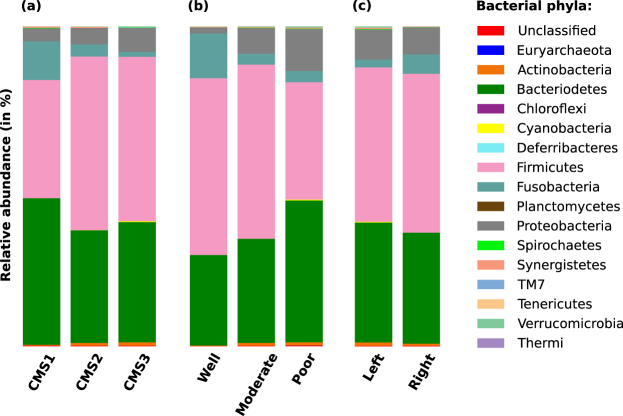
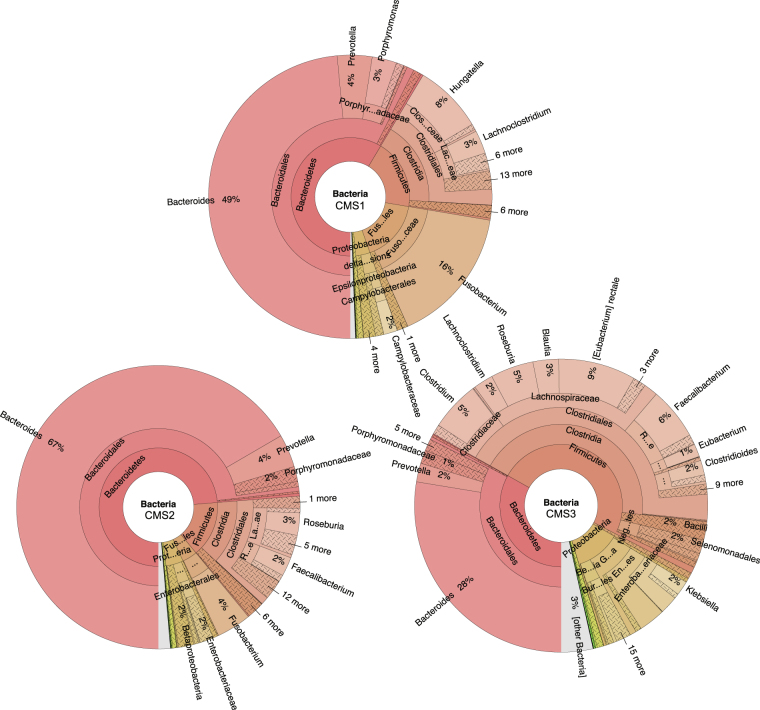
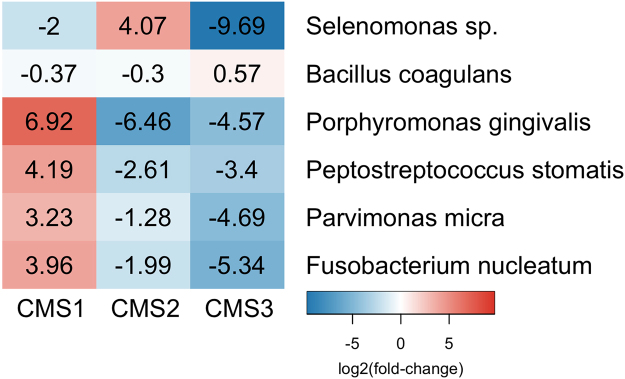
Colorectal cancer (CRC) is a heterogeneous disease and recent advances in subtype classification have successfully stratified the disease using molecular profiling. The contribution of bacterial species to CRC development is increasingly acknowledged, and here, we sought to analyse CRC microbiomes and relate them to tumour consensus molecular subtypes (CMS), in order to better understand the relationship between bacterial species and the molecular mechanisms associated with CRC subtypes. We classified 34 tumours into CRC subtypes using RNA-sequencing derived gene expression and determined relative abundances of bacterial taxonomic groups using 16S rRNA amplicon metabarcoding. 16S rRNA analysis showed enrichment of Fusobacteria and Bacteroidetes, and decreased levels of Firmicutes and Proteobacteria in CMS1. A more detailed analysis of bacterial taxa using non-human RNA-sequencing reads uncovered distinct bacterial communities associated with each molecular subtype. The most highly enriched species associated with CMS1 included Fusobacterium hwasookii and Porphyromonas gingivalis. CMS2 was enriched for Selenomas and Prevotella species, while CMS3 had few significant associations. Targeted quantitative PCR validated these findings and also showed an enrichment of Fusobacterium nucleatum, Parvimonas micra and Peptostreptococcus stomatis in CMS1. In this study, we have successfully associated individual bacterial species to CRC subtypes for the first time.
Overview
The claims and statistics of this paper haven’t been checked yet.
Run the check — free, no account needed. It reads the open-access text and checks the sources it cites.
Integrity signals
Registry
Cites
Statistics
Figures
Verification
Claims the paper makes
The claims and statistics of this paper haven’t been checked yet.
Run the check — free, no account needed. It reads the open-access text and checks the sources it cites.
Claims other papers make about this one
Each is checked against this paper’s own text: does it say what the citing paper says it does?
In the citing paper
“A study associated F nucleatum with the consensus molecular subtype 1 of CRC,32”
From Influence of the Gut Microbiome, Diet, and Environment on Risk of Colorectal Cancer (2020) · cites this paper as [32]
Self-check
Percentages, sums and reported differences re-computed from the paper’s own numbers.
The self-check needs the paper’s full text.
Citations
Cites
Moderated estimation of fold change and dispersion for RNA-seq data with DESeq2
Love, M. I., Huber, W., & Anders, S. (2014) · Genome Biology · doi:10.1186/s13059-014-0550-8 · Cited by 95,106
The Sequence Alignment/Map format and SAMtools
Li, H., Handsaker, B., Wysoker, A., Fennell, T., Ruan, J., Homer, N., Marth, G., Abecasis, G., Durbin, R., & 1000 Genome Project Data Processing Subgroup (2009) · Bioinformatics · doi:10.1093/bioinformatics/btp352 · Cited by 62,041
Subramanian, A., Tamayo, P., Mootha, V. K., Mukherjee, S., Ebert, B. L., Gillette, M. A., Paulovich, A., Pomeroy, S. L., Golub, T. R., Lander, E. S., et al. (2005) · Proceedings of the National Academy of Sciences · doi:10.1073/pnas.0506580102 · Cited by 53,625 · cited 2×
“The biological categories and corresponding gene-sets used in the analysis were extracted from MSigDB[29] (version 5.2).”
MethodInfluentialSTAR: ultrafast universal RNA-seq aligner
Dobin, A., Davis, C. A., Schlesinger, F., Drenkow, J., Zaleski, C., Jha, S., Batut, P., Chaisson, M., & Gingeras, T. R. (2013) · Bioinformatics · doi:10.1093/bioinformatics/bts635 · Cited by 51,709
Robinson, M. D., McCarthy, D. J., & Smyth, G. K. (2010) · Bioinformatics · doi:10.1093/bioinformatics/btp616 · Cited by 41,364 · cited 1×
“0) [25], we identified bacterial taxa whose abundances are significantly different among CMS subtypes.”
BackgroundQIIME allows analysis of high-throughput community sequencing data
Caporaso, J. G., Kuczynski, J., Stombaugh, J., Bittinger, K., Bushman, F. D., Costello, E. K., Fierer, N., Peña, A. G., Goodrich, J. K., Gordon, J. I., et al. (2010) · Nature Methods · doi:10.1038/nmeth.f.303 · Cited by 34,887
Cancer incidence and mortality worldwide: Sources, methods and major patterns in GLOBOCAN 2012
Ferlay, J., Soerjomataram, I., Dikshit, R., Eser, S., Mathers, C., Rebelo, M., Parkin, D. M., Forman, D., & Bray, F. (2015) · International Journal of Cancer · doi:10.1002/ijc.29210 · Cited by 28,766
HTSeq—a Python framework to work with high-throughput sequencing data
Anders, S., Pyl, P. T., & Huber, W. (2015) · Bioinformatics · doi:10.1093/bioinformatics/btu638 · Cited by 21,464 · cited 1×
“1p1)[20] for each sample and the raw read counts were transformed to TPM values using R and Bioconductor package DESeq2 (v1.”
MethodFLASH: fast length adjustment of short reads to improve genome assemblies
Magoč, T., & Salzberg, S. L. (2011) · Bioinformatics · doi:10.1093/bioinformatics/btr507 · Cited by 15,366
Comprehensive molecular characterization of human colon and rectal cancer
The Cancer Genome Atlas Network (2012) · Nature · doi:10.1038/nature11252 · Cited by 8,499
Cited by
Sorted by citations
Items 101–200 of 227
The crosstalk of the human microbiome in breast and colon cancer: A metabolomics analysis
Mukherjee, A. G., Wanjari, U. R., Bradu, P., Murali, R., Kannampuzha, S., Loganathan, T., Doss, C. G. P., Arun Prakash, B. P., Renu, K., Dey, A., et al. (2022) · Critical Reviews in Oncology/Hematology · doi:10.1016/j.critrevonc.2022.103757 · Cited by 22
Conde‐Pérez, K., Buetas, E., Aja‐Macaya, P., Arribas, E. M., Iglesias‐Corrás, I., Trigo‐Tasende, N., Nasser‐Ali, M., Estévez, L. S., Rumbo‐Feal, S., Otero‐Alén, B., et al. (2023) · Molecular Oncology · doi:10.1002/1878-0261.13506 · Cited by 22
“P . micra appears in high abundance in tumors specifically characterized by a clear immunological response or Consensus Molecular Subtype 1 (CMS1) [13] and moreover, a recent study demonstrated that high levels of P. micra and F. nucleatum into CRC tumors were associated with decreased 5-year cancer…”
BackgroundResultDing, X., Huang, H., Zhang, F., & Jiang, J. (2024) · Current Treatment Options in Oncology · doi:10.1007/s11864-024-01282-5 · Cited by 22
“Key oral pathogens, such as Fusobacterium nucleatum and Porphyromonas gingivalis , have been identified as promoters of CRC progression [21].”
Ray, P., Pandey, U., & Aich, P. (2020) · Journal of Applied Microbiology · doi:10.1111/jam.14853 · Cited by 20
“QIIME was used for the OTU generation and taxonomic mapping (Caporaso et al. 2010; Purcell et al. 2017).”
MethodDichotomous colorectal cancer behaviour
Aljama, S., Lago, E. P., Zafra, O., Sierra, J., Simón, D., Santos, C., Rodríguez-Pascual, J., & Garcia‐Romero, N. (2023) · Critical Reviews in Oncology/Hematology · doi:10.1016/j.critrevonc.2023.104067 · Cited by 21
“These bacteria form biofilms in the tumor and are frequently associated with other oral bacteria, Treponema denticola and Tannerella forsythia (Purcell et al., 2017).”
Molecular subtyping improves prognostication of Stage 2 colorectal cancer
Purcell, R. V., Schmeier, S., Lau, Y. C., Pearson, J. F., & Frizelle, F. A. (2019) · BMC Cancer · doi:10.1186/s12885-019-6327-4 · Cited by 19
“Intra-tumoural heterogeneity may also affect the classification of CMS4 tumours, as the EMT-associated genes seen in CMS4 tumours may reflect upregulated genes derived from fibroblast and mesenchymal cells present in the stromal background rather than directly from the tumour itself [9, 10, 21, 22], and several studie…”
BackgroundMethodWhen human cells meet bacteria: precision medicine for cancers using the microbiota.
Zhang, H., & Sun, L. (2018) · Europe PMC (PubMed Central) · Cited by 20
Taylor, W. S., Pearson, J. F., Miller, A. L., Schmeier, S., Frizelle, F., & Purcell, R. V. (2020) · PLoS ONE · doi:10.1371/journal.pone.0233170 · Cited by 18
Tudorache, M., Treteanu, A. R., Pîrcălăbioru, G. G., Lixandru-Petre, I.-O., Bolocan, A., & Andronic, O. (2025) · Cancers · doi:10.3390/cancers17142294 · Cited by 19
“In particular, stratification of CRC based on the microsatellite instability status (MSI vs. MSS) and the Consensus Molecular Subtypes (CMS) framework reveals distinct microbial signatures that may influence treatment resistance [69–71].”
Sikavi, D. R., Nguyen, L. H., Haruki, K., Ugai, T., Ma, W., Wang, D. D., Thompson, K. N., Yan, Y., Branck, T. A., Wilkinson, J. E., et al. (2021) · Clinical and Translational Gastroenterology · doi:10.14309/ctg.0000000000000338 · Cited by 19
Differential colitis susceptibility of Th1- and Th2-biased mice: A multi-omics approach
Mukhopadhyay, S., Saha, S., Chakraborty, S., Prasad, P., Ghosh, A., & Aich, P. (2022) · PLoS ONE · doi:10.1371/journal.pone.0264400 · Cited by 18
“We used QIIME for the OTU generation and taxonomic mapping [31, 32].”
MethodHatta, M. N. A., Hanif, E. A. M., Chin, S., Low, T. Y., & Neoh, H. (2023) · Bioscience Reports · doi:10.1042/bsr20230609 · Cited by 20
Impact of the ileal microbiota on colon cancer
Roberti, M. P., Rauber, C., Kroemer, G., & Zitvogel, L. (2021) · Seminars in Cancer Biology · doi:10.1016/j.semcancer.2021.09.016 · Cited by 18
Phipps, A. I., Hill, C. M., Lin, G. I., Malen, R. C., Reedy, A. M., Kahsai, O. J., Ammar, H., Curtis, K. R., Ma, N., Randolph, T. W., et al. (2025) · Gastro Hep Advances · doi:10.1016/j.gastha.2025.100644 · Cited by 19
“At least one study reported that Fn enrichment was associated with consensus molecular subtype 1 tumors 11 (described by dMMR, CIMP-high, BRAF -mutated, and with high levels of immune in fi ltration and activation 41 ).”
Microbiomes and Resistomes in Biopsy Tissue and Intestinal Lavage Fluid of Colorectal Cancer
Yuan, Y., Chen, Y., Yao, F., Zeng, M., Xie, Q., Shafiq, M., Noman, S. M., & Jiao, X. (2021) · Frontiers in Cell and Developmental Biology · doi:10.3389/fcell.2021.736994 · Cited by 17
The gut microflora assay in patients with colorectal cancer: in feces or tissue samples?
Rezasoltani, S., Dabiri, H., Asadzadeh‐Aghdaei, H., Sepahi, A. A., Modarressi, M. H., & Mojarad, E. N. (2019) · Iranian Journal of Microbiology · doi:10.18502/ijm.v11i1.696 · Cited by 17
“The international CRC subtyping consortium (CRCSC) re-analyzed 18 published datasets and identified four consensus molecular subtypes (CMS): CMS1 (MSI Immune, 14%), hypermutated, microsatellite unstable, strong immune activation; CMS2 (Canonical, 37%), epithelial, chromosomally unstable, marked WNT and MYC signaling a…”
MethodTakenaka, I. K. T. M., Bartelli, T. F., Defelicibus, A., Sendoya, J. M., Golubicki, M., Robbio, J., Serpa, M. S., Branco, G. P., Santos, L. B. C., Claro, L. C. L., et al. (2022) · Frontiers in Oncology · doi:10.3389/fonc.2022.809441 · Cited by 17
“(59), and more recently, it was also implicated in the regulation of the PI3K/AKT signaling pathway, inhibiting the epithelial-tomesenchymal transition in CRC cells (60).”
BackgroundInfluentialRayan, M., Sayed, T. S., Hussein, O., Therachiyil, L., Maayah, Z. H., Maccalli, C., Shahab Uddin, M. S., Prehn, J. H. M., & Korashy, H. M. (2024) · Cellular & Molecular Biology Letters · doi:10.1186/s11658-024-00538-0 · Cited by 20
Functional links between the microbiome and the molecular pathways of colorectal carcinogenesis
Permain, J., Hock, B. D., Eglinton, T. I., & Purcell, R. V. (2024) · Cancer and Metastasis Reviews · doi:10.1007/s10555-024-10215-5 · Cited by 17
“A study of the tumour microbiome in the context of CMS found that CMS1 cancers were significantly associated with tumour-resident oral pathogens, including Fusobacterium species, compared to other CMS subtypes [24].”
BackgroundInfluentialBig Data in Gastroenterology Research
Alizadeh, M. A., Moura, N. S., Schledwitz, A., Patil, S. A., Ravel, J., & Raufman, J. (2023) · International Journal of Molecular Sciences · doi:10.3390/ijms24032458 · Cited by 17
Abdurasulova, I. N., Тарасова, Е. А., Nikiforova, I. G., Ilves, A. G., Ивашкова, Е. В., Matsulevich, A. V., Tatarinov, A. E., Shangina, L. V., Ермоленко, Е. И., Клименко, В. М., et al. (2018) · S S Korsakov Journal of Neurology and Psychiatry · doi:10.17116/jnevro201811808262 · Cited by 16
Gut microbiome in colorectal cancer: metagenomics from bench to bedside
Esfahani, A. T., Zafarjafarzadeh, N., Vakili, F., Bizhanpour, A., Mashaollahi, A., Kordestani, B. K., Baratinamin, M., & Mohammadpour, S. (2025) · JNCI Cancer Spectrum · doi:10.1093/jncics/pkaf026 · Cited by 15
“110 Some studies reported changes in the microbiome following cancer treatment.”
Tumor Profiling at the Service of Cancer Therapy
Fernández–Rozadilla, C., Simões, A. R., LLeonart, M. E., Carnero, A., & Carracedo, Á. (2021) · Frontiers in Oncology · doi:10.3389/fonc.2020.595613 · Cited by 17
Insect Freeze-Tolerance Downunder: The Microbial Connection
Morgan‐Richards, M., Marshall, C. J., Biggs, P. J., & Trewick, S. A. (2023) · Insects · doi:10.3390/insects14010089 · Cited by 14
“Despite depletion, rRNA sequences are very abundant in all organisms and likely to be represented among data, and these suit taxonomic analyses of community composition [111,112].”
BackgroundBurkett, W. C., Clontz, A. D., Keku, T. O., & Bae-Jump, V. L. (2023) · Biochimica et Biophysica Acta (BBA) - Reviews on Cancer · doi:10.1016/j.bbcan.2023.189000 · Cited by 23
Li, X., Wu, D., Li, Q., Gu, J., Gao, W., Zhu, X., Yin, W., Zhu, R., Zhu, L., & Jiao, N. (2023) · Physiological Genomics · doi:10.1152/physiolgenomics.00103.2023 · Cited by 15
Higashi, D. L., McGuire, S., AbdelRahman, Y. M., Zou, Z., Qin, H., Anderson, D. A., Palmer, E. A., Kreth, J., & Merritt, J. L. (2022) · Microbiology Spectrum · doi:10.1128/spectrum.00465-22 · Cited by 14
“micra in colorectal tumors [5, 40-42], while others have reported an association of P.”
BackgroundZhang, W., Zhang, J., Liu, T., Xing, J., Zhang, H., Wang, D., & Tang, D. (2022) · Journal of Cancer Research and Clinical Oncology · doi:10.1007/s00432-022-04081-3 · Cited by 14
Pani, G. (2023) · Cancers · doi:10.3390/cancers15092583 · Cited by 16
“nucleatum in CMS1 compared to other CMSs [48,49], while Ternes et al.”
ResultStrategies for the treatment of colorectal cancer caused by gut microbiota
de Souza, J. B., de Castro, M. C. A. B., & Cavalcanti, I. M. F. (2021) · Life Sciences · doi:10.1016/j.lfs.2021.120202 · Cited by 14
Knippel, R. J., & Sears, C. L. (2021) · Journal of the National Comprehensive Cancer Network · doi:10.6004/jnccn.2021.7062 · Cited by 14
Super-taxon in human microbiome are identified to be associated with colorectal cancer
Dai, W., Li, C., Li, T., Hu, J., & Zhang, H. (2022) · BMC Bioinformatics · doi:10.1186/s12859-022-04786-9 · Cited by 12
“anaerobius) have an increased risk of developing CRC [34, 35].”
BackgroundKim, N., Gim, J., Lee, B. J., Choi, B. I., Yoon, H. S., Kim, S. H., Joo, M. K., Park, J., & Kim, C. (2022) · Scientific Reports · doi:10.1038/s41598-022-17823-7 · Cited by 14
Early onset colorectal cancer in Canterbury, New Zealand
Thompson, N., Gatenby, G., Waddell, O., Purcell, R. V., Keenan, J. I., Pearson, J. F., Frizelle, F. A., & Glyn, T. (2023) · ANZ Journal of Surgery · doi:10.1111/ans.18357 · Cited by 12
Keystone pathobionts associated with colorectal cancer promote oncogenic reprograming
Jones, J. P., Shi, Q., Nath, R. R., & Brito, I. (2024) · PLoS ONE · doi:10.1371/journal.pone.0297897 · Cited by 12
Molecular Variances Between Right- and Left-sided Colon Cancers
Puccini, A., Marshall, J. L., & Salem, M. E. (2018) · Current Colorectal Cancer Reports · doi:10.1007/s11888-018-0411-z · Cited by 12
Senthakumaran, T., Tannæs, T. M., Moen, A. E. F., Brackmann, S. A., Jahanlu, D., Rounge, T. B., Bemanian, V., & Tunsjø, H. S. (2024) · Molecular Oncology · doi:10.1002/1878-0261.13700 · Cited by 10
Nguyen, D. K., Kang, M., Oh, S., Park, H.-J., Kim, S. H., Yu, J. H., Lee, Y., Lee, H. S., Yang, J. W., Seo, Y., et al. (2024) · Animal Cells and Systems · doi:10.1080/19768354.2024.2442401 · Cited by 10
Philip, D., Hodgkiss, R., Radhakrishnan, S. K., Sinha, A., & Acharjee, A. (2025) · Journal of Translational Medicine · doi:10.1186/s12967-025-06552-w · Cited by 13
“Genera like Selenomonas [106, 107] and Thermus [97, 108] were also seen to be abundant in patients with both CRC and GC, reinforcing their potential as biomarkers.”
Widjaja, F., & Rietjens, I. M. C. M. (2023) · Biomedicines · doi:10.3390/biomedicines11102658 · Cited by 12
Autoprobiotics in the Treatment of Patients with Colorectal Cancer in the Early Postoperative Period
Ермоленко, Е. И., Baryshnikova, N. V., Alekhina, G., Zakharenko, A., Тен, О. А., Кащенко, В. А., Lavrenova, N. S., Gushchina, O. O., Сергеевич, О. Т., MOROZOVA, A. D., et al. (2024) · Microorganisms · doi:10.3390/microorganisms12050980 · Cited by 10
Role of gut microbiome in the outcome of cancer immunotherapy
Ma, J., Zhu, W., & Liu, B. (2021) · International Journal of Cancer · doi:10.1002/ijc.33524 · Cited by 11
“The composition of the gut microbiome significantly affects the development of cancer and tumor heterogeneity.(5) Accordingly, distinct Abbreviations: AHCT, allogeneic hematopoietic cell transplantation; APC, antigen-presenting cell; CRC, colorectal cancer; CTLA-4, cytotoxic T-lymphocyte antigen 4; DC, dendritic cell;…”
BackgroundStott, K. J., Phillips, B., Parry, L., & May, S. (2021) · Bioscience Reports · doi:10.1042/bsr20204113 · Cited by 10
Effect of gut microbiota on colorectal cancer progression and treatment
Alasiri, G. A. (2022) · Saudi Medical Journal · doi:10.15537/smj.2022.43.12.20220367 · Cited by 11
Role of Gut Microbiome in Immune Regulation and Immune Checkpoint Therapy of Colorectal Cancer
Shi, L., Xu, Y., & Feng, M. (2022) · Digestive Diseases and Sciences · doi:10.1007/s10620-022-07689-0 · Cited by 9
“Fusobacterium nucleatum, a common oral anaerobic Gram-negative rod bacterium, was found to be associated with the molecular subtype 1 of CRC [44].”
BackgroundMetaFunc: taxonomic and functional analyses of high throughput sequencing for microbiomes
Sulit, A. K., Kolisnik, T., Frizelle, F., Purcell, R. V., & Schmeier, S. (2023) · Gut Microbiome · doi:10.1017/gmb.2022.12 · Cited by 9
Understanding the microbiome: a primer on the role of the microbiome in colorectal neoplasia
Watson, K. M. (2020) · Annals of Gastroenterology · doi:10.20524/aog.2020.0467 · Cited by 9
“hwasookii and Prophyromonas gingivalis [40].”
BackgroundMetagenomics and transcriptomics data from human colorectal cancer
Visnovska, T., Biggs, P. J., Schmeier, S., Frizelle, F., & Purcell, R. V. (2019) · Scientific Data · doi:10.1038/s41597-019-0117-3 · Cited by 9
Devall, M. A. M., & Casey, G. (2021) · Oncotarget · doi:10.18632/oncotarget.27935 · Cited by 8
“Distinct patterns of gut microbiota have been associated with MSI-H status [44].”
BackgroundAbbass, M. A., Leach, B., & Church, J. M. (2021) · Genes · doi:10.3390/genes12101515 · Cited by 8
“As with any hereditary loss of DNA repair, both alleles of a downstream tumor suppressor gene can be affected simultaneously, accelerating tumorigenesis.”
BackgroundInfluentialMicrobiome and Colorectal Cancer Management
Alrahawy, M., Javed, S., Atif, H., ElSanhoury, K., Mekhaeil, K., & Eskander, G. H. (2022) · Cureus · doi:10.7759/cureus.30720 · Cited by 8
“Recently, host-microbe interactions in CRC tumours have been studied to prove an association between specific tumour mutations and distinct microbial, metabolic, and interaction profiles [42].”
BackgroundIs the oral pathogen, Porphyromona gingivalis, associated to colorectal cancer?: a systematic review
Navarro-Sánchez, A., Nieto-Vitoria, M. Á., López-López, J. A., Martínez-Crespo, J. J., & Navarro‐Mateu, F. (2025) · BMC Cancer · doi:10.1186/s12885-025-13770-4 · Cited by 8
Sadeghi, M., Mestivier, D., Carbonnelle, É., Benamouzig, R., Khazaie, K., & Sobhani, I. (2024) · Frontiers in Oncology · doi:10.3389/fonc.2023.1313735 · Cited by 7
“Virulent bacteria are a signi fi cant environmental factor associated with an increased risk of CRC, as shown by studies that have focused on the relationship between CRC and diet (13), in fl ammation (14), and immune cell in fi ltrates in the colonic mucosa (15).”
BackgroundThe Oral Microbiome and Cancer
Deng, J., Sun, C., Xu, G., Wang, B., Tzortzopoulou, E., Deng, D., & Giovannetti, E. (2025) · Advances in experimental medicine and biology · doi:10.1007/978-3-031-79146-8_10 · Cited by 9
Rates of metachronous adenoma after curative resection for left-sided or right-sided colon cancer
Lam, Y. F., Seto, W., Tong, T. S. M., Cheung, K. S., Lo, O. S., Hung, I. F., Law, W. L., & Leung, W. K. (2018) · Intestinal Research · doi:10.5217/ir.2018.00013 · Cited by 7
The Presence of Periodontal Pathogens in Gastric Cancer
de Leeuw, M. A., & Duval, M. X. (2020) · Exploratory Research and Hypothesis in Medicine · doi:10.14218/erhm.2020.00024 · Cited by 8
Bayesian Modeling of Microbiome Data for Differential Abundance AnalysisPreprint
Li, Q., Jiang, S., Koh, A. Y., Xiao, G., & Zhan, X. (2019) · arXiv (Cornell University) · doi:10.48550/arxiv.1902.08741 · Cited by 10
“Moreover, Peptostreptococcus stomatis and Parvimonas micra were found to be enriched in a CRC subtype by Purcell et al. (2017).”
BackgroundHighly Sensitive DNA Testing of Fusobacterium nucleatum in Colorectal Tumors
Hullar, M. A. J., Kahsai, O. J., Hill, C. M., Levy, L., Malen, R. C., Curtis, K. R., Ammar, H., Sillah, A., Reedy, A. M., Lampe, J. W., et al. (2025) · Cancer Epidemiology Biomarkers & Prevention · doi:10.1158/1055-9965.epi-24-1020 · Cited by 8
Boatman, S. M., Mott, S. L., Shaukat, A., Melton, G. B., Gaertner, W. B., Weiser, M. R., Ikramuddin, S., Madoff, R. D., Hassan, I., & Goffredo, P. (2022) · Surgery · doi:10.1016/j.surg.2022.07.041 · Cited by 6
Mukhopadhyay, S., Ray, P., & Aich, P. (2022) · Life Sciences · doi:10.1016/j.lfs.2022.121212 · Cited by 6
Human gene and microbial analyses in rectal cancer complete responses to radiotherapy
Sulit, A. K., Wilson, K., Pearson, J. F., Silander, O., Sampurno, S., Michael, M., Ramsay, R. G., Heriot, A. G., Frizelle, F., & Purcell, R. V. (2023) · BJS Open · doi:10.1093/bjsopen/zrad035 · Cited by 6
An appraisal of emerging second line therapies for metastatic colorectal cancer
Smolenschi, C., Perret, A., Dall'Armellina, F., Boige, V., Malka, D., Hollebecque, A., & Ducreux, M. P. (2020) · Expert Review of Gastroenterology & Hepatology · doi:10.1080/17474124.2021.1840975 · Cited by 6
HIV infection among women and children and antidiscrimination laws: an overview.
Gittler, J., & Rennert, S. (1992) · PubMed · Cited by 5
Pathway-Specific Insights into Colorectal Cancer Through Comprehensive Multi-Omics Data Integration
Karaman, T., Okullu, S. Ö., Akçapınar, G. B., & Sezerman, O. U. (2025) · Biology · doi:10.3390/biology14050468 · Cited by 5
“Transcriptome and microbiome 16S rRNA raw datasets were obtained from a recent study titled ‘Distinct gut microbiome patterns associate with consensus molecular subtypes of colorectal cancer’ published by Rachel V. Purcell et al. in 2017 [24].”
Bacteroides fragilis Promotes Mesenchymal Subtype in Colorectal Cancer
Chang, S. Y., Park, J., Park, S. J., Park, J. J., Cheon, J. H., Kim, D.-K., & Kim, T. I. (2025) · Cancers · doi:10.3390/cancers17233822 · Cited by 5
“Recent studies suggest that microbial compositions may differ by CRC subtype, with specific bacterial species enriched in CMS1, CMS2 and CMS3 tumors [26].”
Liu, G., Su, L., Kong, C., Huang, L., Zhu, X., Zhang, X., Ma, Y., & Wang, J. (2024) · BMC Gastroenterology · doi:10.1186/s12876-024-03408-3 · Cited by 5
“Morevoer, there is a correlation between CMS and gut microbes [16–18].”
BackgroundConsensus Molecular Subtypes of Primary Colon Tumors and Their Hepatic Metastases
Lau, Y. C., Schmeier, S., Frizelle, F., & Purcell, R. V. (2021) · Future Science OA · doi:10.2144/fsoa-2021-0021 · Cited by 5
“1) with default parameters, as previously described [4].”
MethodAzlan, P. I. H. M. M., Chin, S., Low, T. Y., Neoh, H., & Jamal, R. (2018) · PROTEOMICS · doi:10.1002/pmic.201800176 · Cited by 5
Shared and disease-specific host gene-microbiome interactions across human diseasesPreprint
Priya, S., Burns, M. B., Ward, T., Mars, R. A. T., Adamowicz, E. M., Lock, E. F., Kashyap, P., Knights, D., & Blekhman, R. (2021) · bioRxiv (Cold Spring Harbor Laboratory) · doi:10.1101/2021.03.29.437589 · Cited by 5
Fang, Y., Peng, J., Li, Z., Jiang, R., Lin, Y., Shi, Y., Sun, J., Zhuo, D., Ou, Q., Chen, J., et al. (2022) · medRxiv · doi:10.1101/2022.11.08.22282099 · Cited by 5
Intratumoral microbiota in cancer: molecular mechanism and therapeutic strategies
Yu, Y., Guo, Z., Luo, Z., Dian, Y., Yang, X., Chen, X., Zeng, F., & Deng, G. (2026) · Molecular Biomedicine · doi:10.1186/s43556-026-00473-w · Cited by 4
Senaprom, S., Namjud, N., Ondee, T., Bumrungpert, A., & Pongpirul, K. (2024) · Nutrients · doi:10.3390/nu16223933 · Cited by 5
“Porphyromonas has been identified in the digestive tract, with two primary species: P. asaccharolytica [89] and P. gingivalis [90].”
Arvelo, F. A., Sojo, F. J., & Cotte, C. (2021) · Investigación Clínica · doi:10.22209/ic.v62n4a09 · Cited by 5
Kumavath, R. N. (2018) · InTech eBooks · doi:10.5772/intechopen.68370 · Cited by 4
Zhao, L., Zhou, Y., Zhao, R., Coker, O. O., Zhang, X., Chu, E. S., Wei, H., Wu, W. K. K., Wong, S. H., Sung, J. J. �., et al. (2020) · doi:10.21203/rs.3.rs-25974/v1 · Cited by 4
“micra has also been reported to be associated with colon cancer consensus molecular subtype 1 [28].”
BackgroundBergsten, E., Mestivier, D., Donnadieu, F., Pédron, T., Barau, C., Tsoumtsa, L. L., Mettouchi, A., Lemichez, E., Gorgette, O., Chamaillard, M., et al. (2022) · bioRxiv (Cold Spring Harbor Laboratory) · doi:10.1101/2022.05.14.491935 · Cited by 4
Rethinking Colorectal Cancer Microbiome: From Universal Biomarkers to Patient-Stratified Signatures
Schena, C. A., Laterza, V., Covino, M., & Rosa, F. (2026) · Gastrointestinal Disorders · doi:10.3390/gidisord8020026 · Cited by 3
“…microbiomes to CMS classification, revealing that oral-associated taxa like Fn , P. gingivalis , and Porphyromonas species were more common in CMS1 tumors, while CMS2 tumors showed enrichment in Selenomonas and Prevotella species, and CMS4 tumors exhibited other unique microbial associations [46].”
Boatman, S. M., Kohn, J. F., Mott, S. L., Gaertner, W. B., Madoff, R. D., Melton, G. B., Shaukat, A., Hassan, I., & Goffredo, P. (2024) · Journal of Gastrointestinal Surgery · doi:10.1016/j.gassur.2024.02.024 · Cited by 3
Bachelle, S. V., Bah, S. Y., Addo, R. T., Bediako‐Bowan, A., Egyir, B., Tsatsu, S. E., Dzudzor, B., & Amarh, V. (2024) · Scientific Reports · doi:10.1038/s41598-024-74299-3 · Cited by 3
“Even though several studies have investigated CRC-associated microbiota 30–34 , very limited data exist in the context of the Ghanaian population.”
BackgroundInnate Immune Pattern Recognition and the Development of Intestinal Cancer
Siegel, S. J., & Rakoff-Nahoum, S. (2019) · Current cancer research · doi:10.1007/978-3-030-04155-7_14 · Cited by 3
Why Does a High-Fat Diet Increase Cancer Risk?
Benham, V., & Bernard, J. J. (2018) · Future Oncology · doi:10.2217/fon-2017-0610 · Cited by 3
Carvalho, R. D. D. O., Carmo, F. L. R. D., da Silva, S. H., Cordeiro, B. F., Vaz, A. B. M., Gimenez, E. G. T., Goulart, L., Goés‐Neto, A., Loir, Y. L., Jan, G., et al. (2018) · InTech eBooks · doi:10.5772/intechopen.72031 · Cited by 4
“nucleatum, create a particular condition by recruiting T cells resembling the immunological aspects in speciic colorectal tumors [94].”
BackgroundSpigaglia, P. (2025) · Toxins · doi:10.3390/toxins17100513 · Cited by 2
“Although a low bacterial biomass has been associated with the CMS2 subtype of CRC, a higher proportion of B. fragilis has been observed in patients with tumors of this subtype compared to patients with other CMS subtypes [192] (Figure 2).”
Jemimah, S., Majdalawieh, A. F., Hamad, M. A., & Mahasneh, A. (2025) · Computers in Biology and Medicine · doi:10.1016/j.compbiomed.2025.111346 · Cited by 2
Li, X. Y., Wang, Q., Yuan, Q., & Wang, L. (2026) · Frontiers in Immunology · doi:10.3389/fimmu.2026.1795736 · Cited by 3
Mani, P., Mehra, L., Deepak, R. K., Tiwari, A., Kumar, S., Chethan, R., Dutta, R., Dash, N. R., Yadav, R., Deo, S. V. S., et al. (2025) · Human Pathology · doi:10.1016/j.humpath.2025.105840 · Cited by 2
Role of the Microbiome in the Formation and Development of Colorectal Cancer
Zwinsova, B., Brychtová, V., Hrivňáková, M., Dubská, L. Z., Bencsiková, B., Nenutil, R., Vídeňská, P., & Budínská, E. (2019) · Klinicka onkologie · doi:10.14735/amko2019261 · Cited by 3
Zhang, K.-K., Sun, Y. P., & Pan, Y. (2023) · PubMed Central · doi:10.12182/20230160509 · Cited by 2
Does Sidedness Matter in Unresectable Colorectal Cancer?
Kamath, S. D., & Khorana, A. A. (2019) · Annals of Surgical Oncology · doi:10.1245/s10434-019-07315-w · Cited by 2
Thorndal, C., Kragsnæs, M. S., Nilsson, A. C., Holm, D. K., Christensen, R. D., Ellingsen, T., Kjeldsen, J., & Bjørsum‐Meyer, T. (2025) · Therapeutic Advances in Gastroenterology · doi:10.1177/17562848241309868 · Cited by 1
“29 64 The genera decreased in abundance including species producing short-chain fatty acids (SFCAs), which are essential molecules that fulfil 70% of the energy needs of colonocytes, the cells lining the colon.”
Zhang, X., Sun, S., Cheng, S., Dai, J., Du, F., Wang, J., Wei, D., Yan, Y., & Liu, Y. (2025) · Frontiers in Cellular and Infection Microbiology · doi:10.3389/fcimb.2025.1601688 · Cited by 1
Korobkova, L., Thornton, M. E., Collin, M. A., Morin, E. L., Aoued, H. S., Sannigrahi, S., Bhinderwala, N., Garza, K. M., Siebert, E. R., Walum, H., et al. (2025) · Biological Psychiatry · doi:10.1016/j.biopsych.2025.08.020 · Cited by 1
Michaud, D. S., Platz, E. A., Garrett, W. S., Waterboer, T., Kaaks, R., Pasanisi, F., Abilleira, E., Pala, V. M., Milani, L., Castilla, J., et al. (2025) · Cancer Epidemiology Biomarkers & Prevention · doi:10.1158/1055-9965.epi-25-1084 · Cited by 1
Gut Microbiota in Colorectal Cancer Carcinogenesis: The Evolution of Hypotheses
Glazunova, E. V., Kurnosov, A., Molodtsova, P. A., Moskalenko, A. M., Makarov, V. V., & Zlobovskaya, O. A. (2025) · Molecular Biology · doi:10.1134/s0026893325700335 · Cited by 1
“Less common are some other molecular pathways that lead to CRC [13, 25].”
InfluentialInterplay Between Gut Microbiota and Cholesterol Metabolism in Colorectal Cancer
Li, S. W., Au, O. T. H., Lau, E. Y. T., Lu, R. Y., Zaleski, A. L., & Liang, Q. (2026) · International Journal of Molecular Sciences · doi:10.3390/ijms27062553 · Cited by 1
“Distinct gut microbiome patterns have been associated with CMSs, such as F . nucleatum enrichment in CMS1 and CMS3 [115,116].”
The gut microbiome and colorectal cancer
Dietz, M. A., Subramanian, S., & Staley, C. M. (2026) · Clinical Microbiology Reviews · doi:10.1128/cmr.00332-25 · Cited by 1
“Additionally, distinct subtypes of CRC have been found to have distinct microbial compositions within their TME, indicating that the tumor-microbe relationship may differ based on CRC subtype (276).”
Cross-study analyses of microbial abundance using generalized common factor methods
Hayes, M. G., Langille, M. G. I., & Gu, H. (2023) · BMC Bioinformatics · doi:10.1186/s12859-023-05509-4 · Cited by 1
“Genera we identified that have been previously associated with CRC in additional studies include Fusobacterium (Purcell et al., 2017; Chen et al., 2012), Porphorymonas (Purcell et al.”
ResultInfluentialTheodoropoulos, G. E. (2021) · The microbiomes of humans, animals, plants, and the environment · doi:10.1007/978-3-030-59642-2_4 · Cited by 1
Boatman, S. M., Kohn, J. F., Mott, S. L., Marmor, S., Madoff, R. D., Gaertner, W. B., Shaukat, A., Melton, G. B., Hassan, I., & Goffredo, P. (2023) · Techniques and Innovations in Gastrointestinal Endoscopy · doi:10.1016/j.tige.2023.07.003 · Cited by 1
The influence of gut microbiota on immunotherapy for Colorectal Cancer
de Melo, F. F. (2023) · Gastrointestinal Tract · doi:10.54844/git.2023.421 · Cited by 1
Metadata
- Authors
- Purcell, R. V., Visnovska, M., Biggs, P. J., Schmeier, S., & Frizelle, F. A.
- Affiliations
- University of Otago (NZ)
- Massey University (NZ)
- Corresponding author
- Purcell, Rachel V.
- Venue
- Scientific Reports
- Published
- 2017-09-14
- Volume
- 7
- Issue
- 1
- Pages
- 11590-11590
- ISSN
- 2045-2322 (ISSN-L)
- PMC
- PMC5599497
- OpenAlex
- W2950036522
- Cited by
- 227
- References
- 60
- Citations by year
- 2026: 16 · 2025: 24 · 2024: 21 · 2023: 34 · 2022: 33 · 2021: 40 · 2020: 20 · 2019: 21 · 2018: 17
- FWCI
- 6.48
- Type
- journal article
- Language
- en
- Open access
- gold
- doi.org
- Locations
- Scientific Reports (publishedVersion, cc-by)
- bioRxiv (Cold Spring Harbor Laboratory) (acceptedVersion)
- PubMed Central (publishedVersion, cc-by)
- PubMed (publishedVersion)
- DOAJ (DOAJ: Directory of Open Access Journals) (submittedVersion)
- Funders
- Hugh Green Foundation
- Maurice and Phyllis Paykel Trust
- Colorectal Surgical Society of Australia and New Zealand
- Topics
- Life Sciences › Biochemistry, Genetics and Molecular Biology › Molecular Biology › Gut microbiota and health
- Health Sciences › Dentistry › Periodontics › Oral microbiology and periodontitis research
- Health Sciences › Medicine › Oncology › Colorectal Cancer Treatments and Studies
- Keywords
- colorectal cancer, gut microbiota, consensus molecular subtypes, Fusobacterium nucleatum, Porphyromonas gingivalis, Prevotella, bacterial taxa, tumor molecular subtypes, 16S rRNA metabarcoding
- MeSH terms
- Gastrointestinal Microbiome, Adult, Aged, Aged, 80 and over, Female, Humans, Male, Middle Aged, RNA, Ribosomal, 16S, Biomarkers, Tumor, Colorectal Neoplasms, Reproducibility of Results, Gene Expression Regulation, Neoplastic, Computational Biology, Gene Expression Profiling, Metagenome, Metagenomics, Transcriptome
About these checks
Registry, retraction, Cites and statistics results are computed, not judged, with one exception: a printed reference that no index lists is read once by a model before it counts as a citation error. Claims are extracted by a model and kept only when their quote appears verbatim in the text; each cited source is then checked, with a model’s help, for whether it says what the claim relies on. Those verdicts can be wrong — read the claim’s quote and the cited source before relying on one.
Statistics and arithmetic are recomputed, not judged.
Confidence bands are shown only for fields calibrated on our annotated test set. None is calibrated yet, so no band is shown.
What counts as a claim ›How we measure confidence ›How we check this ›
Are you an author, or do you see a problem with this page? Request a review
