

Kinase inhibitor screening using artificial neural networks and engineered cardiac biowires
Open accessThe DOI matches its Crossref record; 64 of the 64 references it cites were found in a registry or an index.
Abstract
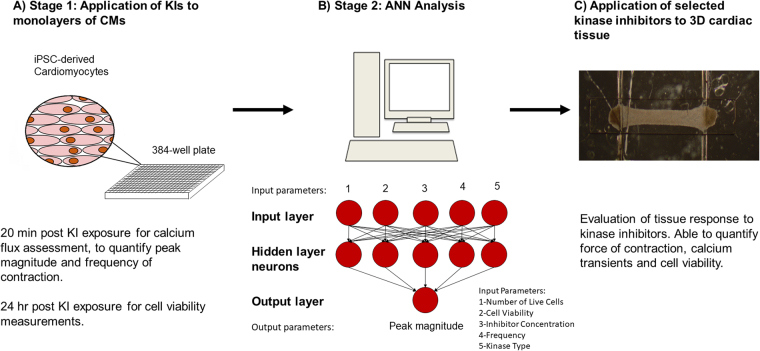
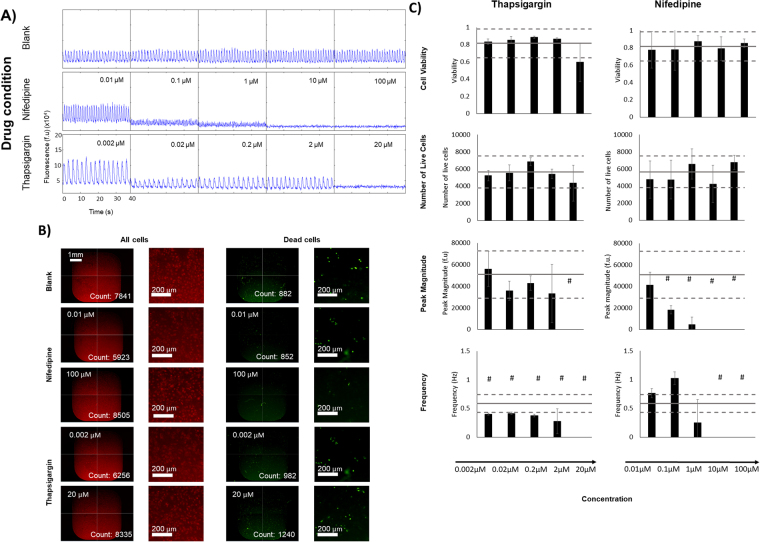
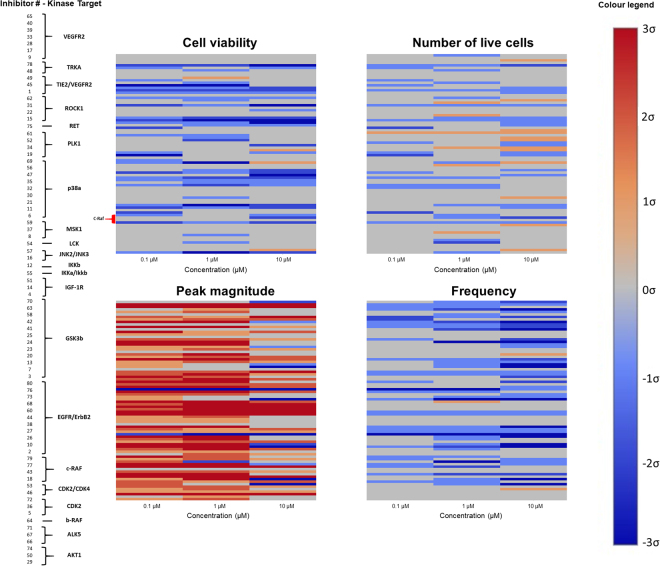
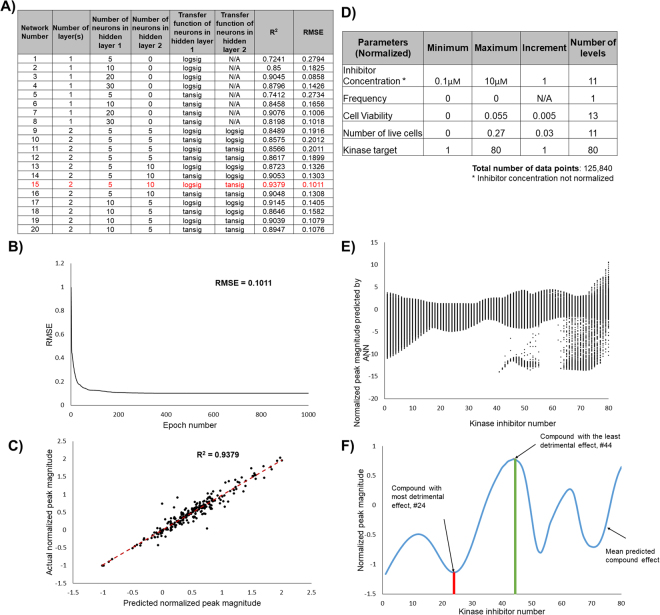
Kinase inhibitors are often used as cancer targeting agents for their ability to prevent the activation of cell growth and proliferation signals. Cardiotoxic effects have been identified for some marketed kinase inhibitors that were not detected during clinical trials. We hypothesize that more predictive cardiac functional assessments of kinase inhibitors on human myocardium can be established by combining a high-throughput two-dimensional (2D) screening assay and a high-content three-dimensional (3D) engineered cardiac tissue (Biowire TM) based assay, and using human induced pluripotent stem cell-derived CMs (hiPSC-CMs). A subset (80) of compounds from the GlaxoSmithKline published kinase inhibitor set were tested on hiPSC-CM monolayers and significant effects on cell viability, calcium transients, and contraction frequency were observed. Artificial neural network modelling was then used to analyze the experimental results in an efficient and unbiased manner to select for kinase inhibitors with minimal effects on cell viability and function. Inhibitors of specific interest based on the modeling were evaluated in the 3D Biowire tissues. The three-dimensional Biowire platform eliminated oversensitivity in detecting both Ca 2+ transient amplitude enhancements as well as the acute detrimental effects on cell viability due to the kinase inhibitor application as compared to the monolayer testing.
Overview
The claims and statistics of this paper haven’t been checked yet.
Free: it reads the open-access text and checks the first 5 claims that cite a source we can check. Create a free account to check every claim.
Integrity signals
Registry
Cites
Statistics
Figures
Verification
Claims the paper makes
The claims and statistics of this paper haven’t been checked yet.
Free: it reads the open-access text and checks the first 5 claims that cite a source we can check. Create a free account to check every claim.
Claims other papers make about this one
Each is checked against this paper’s own text: does it say what the citing paper says it does?
The source backs part of the claim, not all of it — or backs it for a different population, condition or comparison.
In the citing paper
“This model helps identify cardiotoxic effects for some available kinase inhibitors that were not detected during clinical trials.”
From Cardiovascular disease models: A game changing paradigm in drug discovery and screening (2019) · cites this paper as [337]
Experimental — accuracy not yet measuredIn the citing paper
“For example, Conant et al. [337] have developed an artificial neural network model to analyze the experimental results in an efficient and unbiased manner to select kinase inhibitors with maximum efficacy and minimum side effects on cardiac cell viability and function.”
From Cardiovascular disease models: A game changing paradigm in drug discovery and screening (2019) · cites this paper as [337]
Self-check
Percentages, sums and reported differences re-computed from the paper’s own numbers.
The self-check needs the paper’s full text.
Citations
Cites
Slamon, D. J., Leyland-Jones, B., Shak, S., Fuchs, H., Paton, V., Bajamonde, A., Fleming, T., Eiermann, W., Wolter, J., Pegram, M., et al. (2001) · New England Journal of Medicine · doi:10.1056/nejm200103153441101 · Cited by 11,500
ERBB receptors and cancer: the complexity of targeted inhibitors
Hynes, N. E., & Lane, H. A. (2005) · Nature Reviews Cancer · doi:10.1038/nrc1609 · Cited by 3,313
Agatonovic-Kustrin, S., & Beresford, R. (2000) · Journal of Pharmaceutical and Biomedical Analysis · doi:10.1016/s0731-7085(99)00272-1 · Cited by 1,957
Tu, J. V. (1996) · Journal of Clinical Epidemiology · doi:10.1016/s0895-4356(96)00002-9 · Cited by 1,818
Kehat, I., Kenyagin‐Karsenti, D., Snir, M., Segev, H., Amit, M., Gepstein, A., Livne, E., Binah, O., Itskovitz‐Eldor, J., & Gepstein, L. (2001) · Journal of Clinical Investigation · doi:10.1172/jci12131 · Cited by 1,814
Kehat, I., Kenyagin‐Karsenti, D., Snir, M., et al. (2001) · Journal of Clinical Investigation · doi:10.1172/jci200112131 · Cited by 1,536
Impact of high-throughput screening in biomedical research
Macarron, R., Banks, M. N., Bojanic, D., Burns, D. J., Cirovic, D. A., Garyantes, T., Green, D. V. S., Hertzberg, R. P., Janzen, W. P., Paslay, J. W., et al. (2011) · Nature Reviews Drug Discovery · doi:10.1038/nrd3368 · Cited by 1,364
Cardiotoxicity associated with tyrosine kinase inhibitor sunitinib
Chu, T. F., Rupnick, M. A., Kerkela, R., Dallabrida, S. M., Zurakowski, D., Nguyen, L., Woulfe, K., Pravda, E., Cassiola, F., Desai, J., et al. (2007) · The Lancet · doi:10.1016/s0140-6736(07)61865-0 · Cited by 1,083
Biowire: a platform for maturation of human pluripotent stem cell–derived cardiomyocytes
Nunes, S. S., Miklas, J. W., Liu, J., Aschar-Sobbi, R., Xiao, Y., Zhang, B., Jiang, J., Massé, S., Gagliardi, M., Hsieh, A., et al. (2013) · Nature Methods · doi:10.1038/nmeth.2524 · Cited by 952
Self-citationIKK/NF- B signaling: balancing life and death - a new approach to cancer therapy
Luo, J.-L. (2005) · Journal of Clinical Investigation · doi:10.1172/jci26322 · Cited by 878
Wang, Y., Huang, S., Sah, V. P., Ross, J., Brown, J. H., Han, J., & Chien, K. R. (1998) · Journal of Biological Chemistry · doi:10.1074/jbc.273.4.2161 · Cited by 842
Intragenic ERBB2 kinase mutations in tumours
Stephens, P., Hunter, C., Bignell, G., Edkins, S., Davies, H., Teague, J., Stevens, C., O'Meara, S., Smith, R., Parker, A., et al. (2004) · Nature · doi:10.1038/431525b · Cited by 802
Molecular mechanisms of cardiotoxicity of tyrosine kinase inhibition
Force, T., Krause, D. S., & Van Etten, R. A. (2007) · Nature Reviews Cancer · doi:10.1038/nrc2106 · Cited by 801
D’Uva, G., Aharonov, A., Lauriola, M., Kain, D., Yahalom-Ronen, Y., Carvalho, S., Weisinger, K., Bassat, E., Rajchman, D., Yifa, O., et al. (2015) · Nature Cell Biology · doi:10.1038/ncb3149 · Cited by 657
Cardiac Toxicity of Sunitinib and Sorafenib in Patients With Metastatic Renal Cell Carcinoma
Schmidinger, M., Zielinski, C. C., Vogl, U. M., Bojic, A., Bojic, M., Schukro, C., Ruhsam, M., Hejna, M., & Schmidinger, H. (2008) · Journal of Clinical Oncology · doi:10.1200/jco.2007.15.6331 · Cited by 615
Bowles, E. J. A., Wellman, R., Feigelson, H. S., Onitilo, A. A., Freedman, A. N., Delate, T., Allen, L. A., Nekhlyudov, L., Goddard, K. A. B., Davis, R. L., et al. (2012) · JNCI Journal of the National Cancer Institute · doi:10.1093/jnci/djs317 · Cited by 566
Development of a drug screening platform based on engineered heart tissue
Hansen, A., Eder, A., Bönstrup, M., Flato, M., Mewe, M., Schaaf, S., Aksehirlioglu, B., Schwörer, A., Uebeler, J., & Eschenhagen, T. (2010) · Circulation Research · doi:10.1161/circresaha.109.211458 · Cited by 510
Neuregulins Promote Survival and Growth of Cardiac Myocytes
Zhao, Y.-Y., Sawyer, D. R., Baliga, R. R., Opel, D. J., Han, X., Marchionni, M. A., & Kelly, R. A. (1998) · Journal of Biological Chemistry · doi:10.1074/jbc.273.17.10261 · Cited by 504
Self-citationRaf-1 protein kinase is required for growth of induced NIH/3T3 cells
Kolch, W., Heidecker, G., Lloyd, P., & Rapp, U. R. (1991) · Nature · doi:10.1038/349426a0 · Cited by 474
Use of an Artificial Neural Network for the Diagnosis of Myocardial Infarction
Baxt, W. G. (1991) · Annals of Internal Medicine · doi:10.7326/0003-4819-115-11-843 · Cited by 472
Glycogen Synthase Kinase-3β: A Novel Regulator of Cardiac Hypertrophy and Development
Hardt, S. E., & Sadoshima, J. (2002) · Circulation Research · doi:10.1161/01.res.0000018952.70505.f1 · Cited by 438
Glycogen synthase kinase 3β (GSK3β) in tumorigenesis and cancer chemotherapy
Luo, J. (2009) · Cancer Letters · doi:10.1016/j.canlet.2008.05.045 · Cited by 429
β-Arrestin–mediated β1-adrenergic receptor transactivation of the EGFR confers cardioprotection
Noma, T., Lemaire, A., Naga Prasad, S. V., Barki-Harrington, L., Tilley, D. G., Chen, J., Le Corvoisier, P., Violin, J. D., Wei, H., Lefkowitz, R. J., et al. (2007) · Journal of Clinical Investigation · doi:10.1172/jci31901 · Cited by 418
Artificial neural network models of knowledge representation in chemical engineering
Hoskins, J. C., & Himmelblau, D. M. (1988) · Computers & Chemical Engineering · doi:10.1016/0098-1354(88)87015-7 · Cited by 415
Human Engineered Heart Tissue: Analysis of Contractile Force
Mannhardt, I., Breckwoldt, K., Letuffe-Brenière, D., Schaaf, S., Schulz, H., Neuber, C., Benzin, A., Werner, T., Eder, A., Schulze, T., et al. (2016) · Stem Cell Reports · doi:10.1016/j.stemcr.2016.04.011 · Cited by 398
Yu, H., & Wilamowski, B. (2011) · Electrical Engineering Handbook · doi:10.1201/b10604-15 · Cited by 395
Cardiac Safety of Lapatinib: Pooled Analysis of 3689 Patients Enrolled in Clinical Trials
Perez, E. A., Koehler, M., Byrne, J., Preston, A. J., Rappold, E., & Ewer, M. S. (2008) · Mayo Clinic Proceedings · doi:10.1016/s0025-6196(11)60896-3 · Cited by 388
Mechanisms of Cardiac Dysfunction Associated With Tyrosine Kinase Inhibitor Cancer Therapeutics
Chen, M. H., Kerkelä, R., & Force, T. (2008) · Circulation · doi:10.1161/circulationaha.108.776831 · Cited by 379
Human engineered heart tissue as a versatile tool in basic research and preclinical toxicology
Schaaf, S., Shibamiya, A., Mewe, M., Eder, A., Stöhr, A., Hirt, M. N., Rau, T., Zimmermann, W.-H., Conradi, L., Eschenhagen, T., et al. (2011) · PLoS ONE · doi:10.1371/journal.pone.0026397 · Cited by 365
Force, T., & Kolaja, K. L. (2011) · Nature Reviews Drug Discovery · doi:10.1038/nrd3252 · Cited by 363
Comprehensive characterization of the Published Kinase Inhibitor Set
Elkins, J. M., Fedele, V., Szklarz, M., Abdul Azeez, K. R., Salah, E., Mikolajczyk, J., Romanov, S., Sepetov, N., Huang, X.-P., Roth, B. L., et al. (2016) · Nature Biotechnology · doi:10.1038/nbt.3374 · Cited by 323
Chen, J., Fujii, K., Zhang, L., Roberts, T., & Fu, H. (2001) · Proceedings of the National Academy of Sciences · doi:10.1073/pnas.141224398 · Cited by 316
Cardiotoxicity induced by tyrosine kinase inhibitors
Orphanos, G. S., Ioannidis, G. N., & Ardavanis, A. G. (2009) · Acta Oncologica · doi:10.1080/02841860903229124 · Cited by 284
Applications of artificial neural networks in chemical engineering
Himmelblau, D. M. (2000) · Korean Journal of Chemical Engineering · doi:10.1007/bf02706848 · Cited by 273
Cardiotoxicity associated with the cancer therapeutic agent sunitinib malate
Telli, M. L., Witteles, R. M., Fisher, G. A., & Srinivas, S. (2008) · Annals of Oncology · doi:10.1093/annonc/mdn168 · Cited by 237
Gordon, L. I., Burke, M. A., Singh, A. T. K., Prachand, S., Lieberman, E. D., Sun, L., Naik, T. J., Prasad, S. V. N., & Ardehali, H. (2009) · Journal of Biological Chemistry · doi:10.1074/jbc.m804570200 · Cited by 185
Lal, H., Ahmad, F., Zhou, J., Yu, J. E., Vagnozzi, R. J., Guo, Y., Yu, D., Tsai, E. J., Woodgett, J., Gao, E., et al. (2014) · Circulation · doi:10.1161/circulationaha.113.008364 · Cited by 166
Ingwall, J. S. (2002) · Basic science for the cardiologist · doi:10.1007/978-1-4615-1093-2 · Cited by 153
Bilancia, D., Rosati, G., Dinota, A., Germano, D., Romano, R., & Manzione, L. (2007) · Annals of Oncology · doi:10.1093/annonc/mdm220 · Cited by 151
Distinct roles of GSK-3α and GSK-3β phosphorylation in the heart under pressure overload
Matsuda, T., Zhai, P., Maejima, Y., Hong, C., Gao, S., Tian, B., Goto, K., Takagi, H., Tamamori-Adachi, M., Kitajima, S., et al. (2008) · Proceedings of the National Academy of Sciences · doi:10.1073/pnas.0808315106 · Cited by 137
Michael, A., Haq, S., Chen, X., Hsich, E., Cui, L., Walters, B., Shao, Z., Bhattacharya, K., Kilter, H., Huggins, G., et al. (2004) · Journal of Biological Chemistry · doi:10.1074/jbc.m401413200 · Cited by 131
The Role of Glycogen Synthase Kinase 3β in the Transformation of Epidermal Cells
Ma, C., Wang, J., Gao, Y., Gao, T.-W., Chen, G., Bower, K. A., Odetallah, M., Ding, M., Ke, Z., & Luo, J. (2007) · Cancer Research · doi:10.1158/0008-5472.can-06-4665 · Cited by 118
Bello, C. L., Mulay, M., Huang, X., Patyna, S. J., Dinolfo, M., Levine, S. C., Vugt, A. V., Toh, M., Baum, C. M., & Rosen, L. S. (2009) · Clinical Cancer Research · doi:10.1158/1078-0432.ccr-09-1521 · Cited by 107
Seeding Collaborations to Advance Kinase Science with the GSK Published Kinase Inhibitor Set (PKIS)
Drewry, D., Willson, T., & Zuercher, W. (2014) · Current Topics in Medicinal Chemistry · doi:10.2174/1568026613666131127160819 · Cited by 106
Trastuzumab-Induced Cardiotoxicity: Heart Failure at the Crossroads
Sengupta, P. P., Northfelt, D., Gentile, F., Zamorano, J. L., & Khandheria, B. K. (2008) · Mayo Clinic Proceedings · doi:10.4065/83.2.197 · Cited by 104
Neural Networks as Robust Tools in Drug Lead Discovery and Development
Winkler, D. A. (2004) · Molecular Biotechnology · doi:10.1385/mb:27:2:139 · Cited by 95
Cheng, H., Kari, G., Dicker, A. P., Rodeck, U., Koch, W. J., & Force, T. L. (2011) · Circulation Research · doi:10.1161/circresaha.111.255695 · Cited by 90
Cardiotoxicity of Trastuzumab in Clinical Practice
McArthur, H. L., & Chia, S. (2007) · New England Journal of Medicine · doi:10.1056/nejmc070065 · Cited by 85
Cardiac resynchronization sensitizes the sarcomere to calcium by reactivating GSK-3β
Kirk, J. A., Holewinski, R. J., Kooij, V., Agnetti, G., Tunin, R. S., Witayavanitkul, N., de Tombe, P. P., Gao, W. D., Van Eyk, J., & Kass, D. A. (2014) · Journal of Clinical Investigation · doi:10.1172/jci69253 · Cited by 85
Cohen, J. D., Babiarz, J. E., Abrams, R. M., Guo, L., Kameoka, S., Chiao, E., Taunton, J., & Kolaja, K. L. (2011) · Toxicology and Applied Pharmacology · doi:10.1016/j.taap.2011.08.020 · Cited by 79
Effect of thapsigargin on cardiac muscle cells
Wrzosek, A., Schneider, H. M., Grueninger, S., & Chiesi, M. (1992) · Cell Calcium · doi:10.1016/0143-4160(92)90063-x · Cited by 67
Dranchak, P., MacArthur, R., Guha, R., Zuercher, W. J., Drewry, D. H., Auld, D. S., & Inglese, J. (2013) · PLoS ONE · doi:10.1371/journal.pone.0057888 · Cited by 66
The Industrial Electronics Handbook - Five Volume Set
Wilamowski, B. M., & Irwin, J. D. (2011) · CRC Press eBooks · doi:10.1201/noe1439802892 · Cited by 60
Mego, M., Rečková, M., Obertová, J., Syčová-Milá, Z., Brozmanova, K., & Mardiak, J. (2007) · Annals of Oncology · doi:10.1093/annonc/mdm489 · Cited by 55
Sunitinib causes dose‐dependent negative functional effects on myocardium and cardiomyocytes
Rainer, P. P., Doleschal, B., Kirk, J. A., Sivakumaran, V., Saad, Z., Groschner, K., Maechler, H., Höefler, G., Bauernhofer, T., Samonigg, H., et al. (2012) · British Journal of Urology · doi:10.1111/j.1464-410x.2012.11134.x · Cited by 54
Sunitinib, Hypertension, and Heart Failure: A Model for Kinase Inhibitor-Mediated Cardiotoxicity
Gupta, R., & Maitland, M. L. (2011) · Current Hypertension Reports · doi:10.1007/s11906-011-0229-4 · Cited by 50
Jacob, F., Yonis, A. Y., Cuello, F., Luther, P. K., Schulze, T., Eder, A., Streichert, T., Mannhardt, I., Hirt, M. N., Schaaf, S., et al. (2016) · PLoS ONE · doi:10.1371/journal.pone.0145937 · Cited by 48
Nifedipine does not induce but rather prevents apoptosis in cardiomyocytes
Rabkin, S. W., & Kong, J. Y. (2000) · European Journal of Pharmacology · doi:10.1016/s0014-2999(99)00880-8 · Cited by 29
Artificial neural networks for medical diagnosis using biomedical dataset
Al-Shayea, Q. K., Refae, G. A. E., & Yaseen, S. G. (2013) · International Journal of Behavioural and Healthcare Research · doi:10.1504/ijbhr.2013.054519 · Cited by 25
ELECTROPHYSIOLOGICAL ANALYSIS OF THE ACTION OF NIFEDIPINE AND NICARDIPINE ON MYOCARDIAL FIBERS
Charnet, P., Ouadid‐Ahidouch, H., Richard, S., & Nargeot, J. (1987) · Fundamental and Clinical Pharmacology · doi:10.1111/j.1472-8206.1987.tb00575.x · Cited by 25
Ahadian, S., Mizuseki, H., & Kawazoe, Y. (2010) · Journal of Membrane Science · doi:10.1016/j.memsci.2010.12.011 · Cited by 21
Self-citationAhadian, S., Mizuseki, H., & Kawazoe, Y. (2009) · Microfluidics and Nanofluidics · doi:10.1007/s10404-009-0549-8 · Cited by 13
Self-citationChakrabarti, S., Svojanovsky, S. R., Slavik, R., Georg, G. I., Wilson, G. S., & Smith, P. G. (2009) · SLAS DISCOVERY · doi:10.1177/1087057109351312 · Cited by 11
BIOWIRE: Tissue culture and drug screening platform using high fidelity 3D engineered cardiac tissue
Yimu, Z., & Radisic, M. (2016) · Frontiers in Bioengineering and Biotechnology · doi:10.3389/conf.fbioe.2016.01.00590 · Cited by 4
Self-citation
Cited by
Concepts of Artificial Intelligence for Computer-Assisted Drug Discovery
Yang, X., Wang, Y., Byrne, R., Schneider, G., & Yang, S. (2019) · Chemical Reviews · doi:10.1021/acs.chemrev.8b00728 · Cited by 1,022
Advances in organ-on-a-chip engineering
Zhang, B., Korolj, A., Lai, B. F. L., & Radisic, M. (2018) · Nature Reviews Materials · doi:10.1038/s41578-018-0034-7 · Cited by 1,017
Self-citationCardiovascular disease models: A game changing paradigm in drug discovery and screening
Savoji, H., Mohammadi, M. H., Rafatian, N., Toroghi, M. K., Wang, E. Y., Zhao, Y., Korolj, A., Ahadian, S., & Radisic, M. (2019) · Biomaterials · doi:10.1016/j.biomaterials.2018.09.036 · Cited by 223
Self-citationMinimally Invasive and Regenerative Therapeutics
Ashammakhi, N., Ahadian, S., Darabi, M. A., El Tahchi, M., Lee, J., Suthiwanich, K., Sheikhi, A., Dokmeci, M. R., Oklu, R., & Khademhosseini, A. (2019) · Advanced Materials · doi:10.1002/adma.201804041 · Cited by 190
Self-citationMastikhina, O., Moon, B.-U., Williams, K., Hatkar, R., Gustafson, D., Mourad, O., Sun, X., Koo, M., Lam, A. Y. L., Sun, Y., et al. (2020) · Biomaterials · doi:10.1016/j.biomaterials.2019.119741 · Cited by 185
Metadata
- Authors
- Conant, G., Ahadian, S., Zhao, Y., & Radisic, M.
- Affiliations
- University of Toronto (CA)
- University Health Network (CA)
- Corresponding author
- Radisic, Milica
- Venue
- Scientific Reports
- Published
- 2017-09-18
- Volume
- 7
- Issue
- 1
- Pages
- 11807-11807
- ISSN
- 2045-2322 (ISSN-L)
- PMC
- PMC5603510
- OpenAlex
- W2754401477
- Cited by
- 25
- References
- 63
- Citations by year
- 2026: 1 · 2024: 1 · 2023: 1 · 2022: 2 · 2021: 1 · 2020: 9 · 2019: 5 · 2018: 5
- FWCI
- 4.02
- Type
- journal article
- Language
- en
- Open access
- gold
- doi.org
- Licence
- cc-by
- creativecommons.org/licenses/by/4.0 (tdm)
- creativecommons.org/licenses/by/4.0 (vor)
- Locations
- Scientific Reports (publishedVersion, cc-by)
- Europe PMC (PubMed Central) (publishedVersion, cc-by)
- PubMed Central (publishedVersion, cc-by)
- PubMed (publishedVersion)
- Funders
- California HIV/AIDS Research Program
- National Institutes of Health (2r01hl076485-16, 2R01 HL076485, HL076485)
- Canadian Institutes of Health Research (CHRP-493737-16, MOP-126027 and MOP-137107, 137107_1, 126027_1)
- Natural Sciences and Engineering Research Council of Canada (CHRP 493737-16, RGPIN 326982‐10, 493737-16)
- National Heart, Lung, and Blood Institute (R01-HL076485)
- Topics
- Health Sciences › Medicine › Cardiology and Cardiovascular Medicine › Cardiac electrophysiology and arrhythmias
- Health Sciences › Medicine › Cardiology and Cardiovascular Medicine › Chemotherapy-induced cardiotoxicity and mitigation
- Health Sciences › Veterinary › Small Animals › Animal testing and alternatives
- Keywords
- kinase inhibitors, cardiotoxicity, human induced pluripotent stem cell-derived cardiomyocytes, artificial neural networks, high-content screening, calcium transients, cardiomyocyte contraction, drug repurposing, cardioprotection
- MeSH terms
- Cell Survival, Humans, Myocardium, Neural Networks, Computer, Tissue Engineering, Myocytes, Cardiac, Protein Kinase Inhibitors, Induced Pluripotent Stem Cells
About these checks
Registry, retraction, Cites and statistics results are computed, not judged, with one exception: a printed reference that no index lists is read once by a model before it counts as a citation error. Claims are extracted by a model and kept only when their quote appears verbatim in the text; each cited source is then checked, with a model’s help, for whether it says what the claim relies on. Those verdicts can be wrong — read the claim’s quote and the cited source before relying on one.
Statistics and arithmetic are recomputed, not judged.
Confidence bands are shown only for fields calibrated on our annotated test set. None is calibrated yet, so no band is shown.
What counts as a claim ›How we measure confidence ›How we check this ›
Are you an author, or do you see a problem with this page? Request a review
Data sources
Bibliographic data: Semantic Scholar, OpenAlex, Crossref.
Contains information from the Semantic Scholar Academic Graph Datasets, made available under the ODC Attribution License (ODC-BY 1.0).
Semantic Scholar’s data is described in: Kinney, R., et al. (2023). The Semantic Scholar Open Data Platform. arXiv:2301.10140.
