

Local Production of Activated Factor X in Atherosclerotic Plaque Induced Vascular Smooth Muscle Cell Senescence
Open accessThe DOI matches its Crossref record; 26 of the 26 references it cites were found in a registry or an index.
Abstract
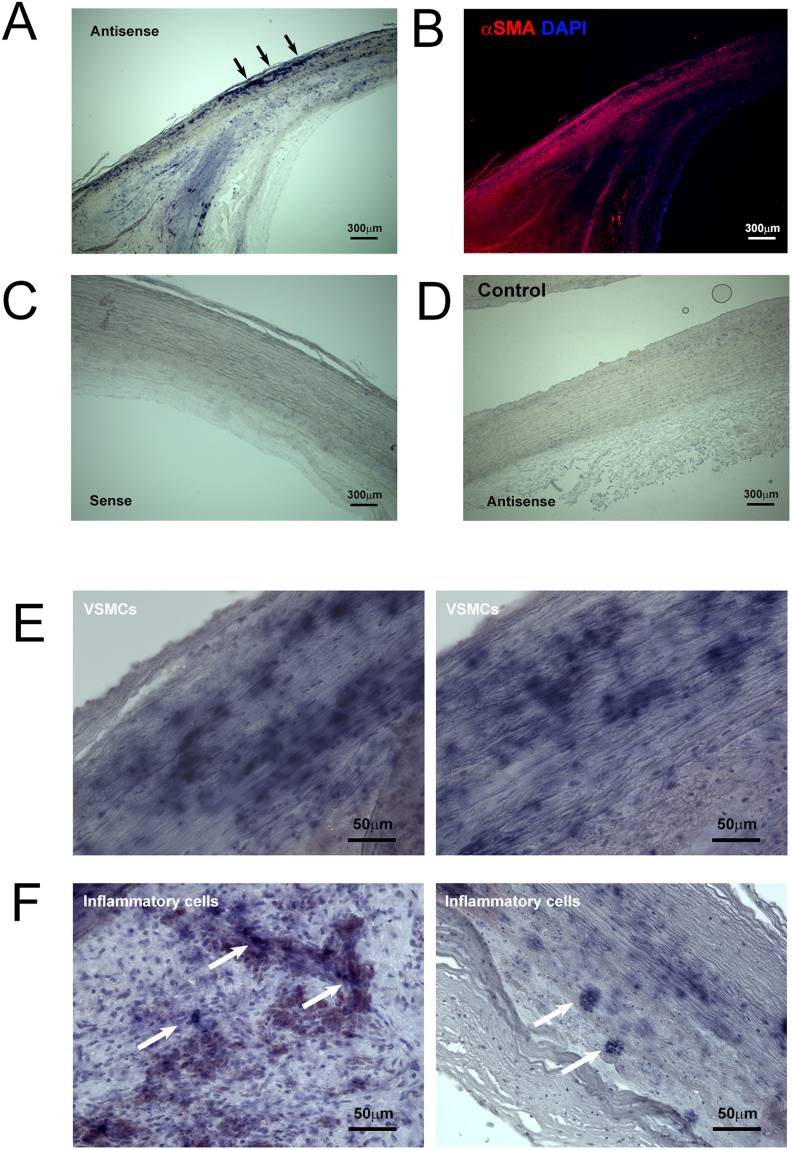
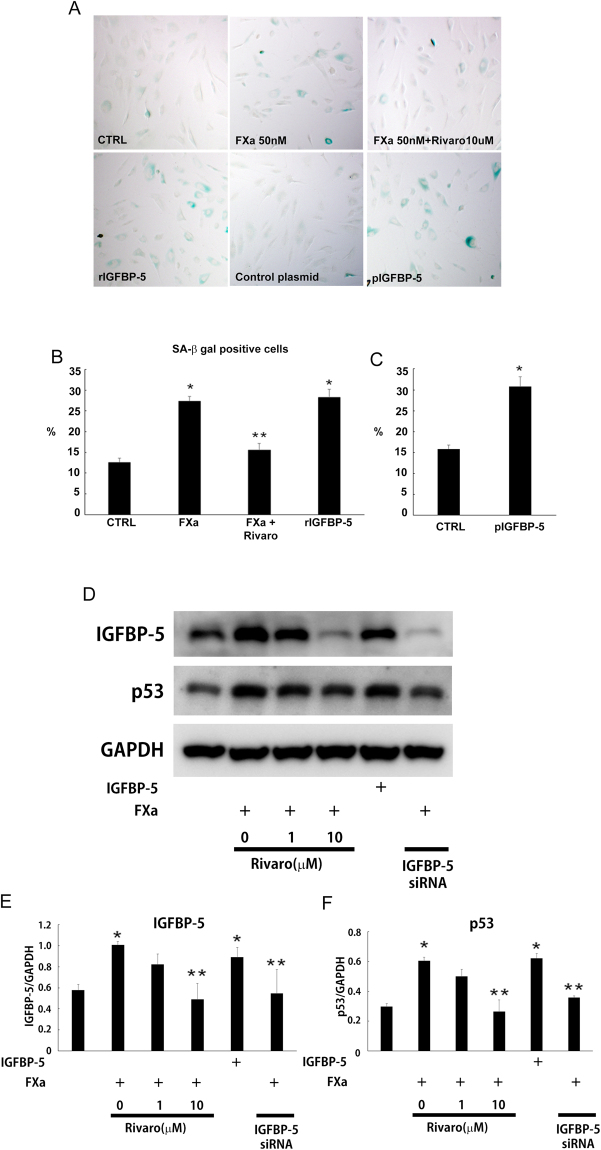
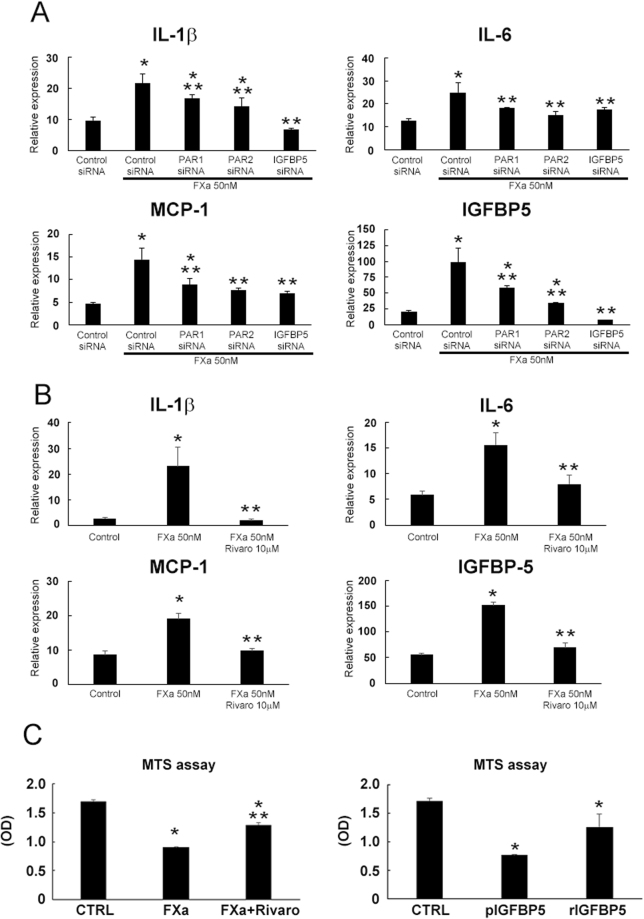
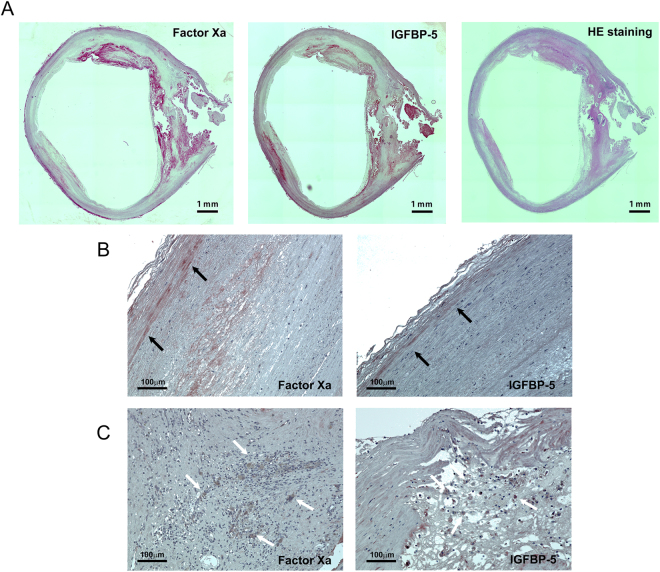
Our previous study demonstrated that coagulation factor Xa (FXa) induced endothelial cell senescence, resulting in inflammation and impaired angiogenesis. This mechanism is dictated through protease-activated receptors, PARs, insulin-like growth factor-binding protein 5 (IGFBP-5), and p53. Activation of PARs contributes to the pathophysiology of several chronic inflammatory diseases, including atherosclerosis. Thus, we speculated that similar mechanism might participate in the progression of atherosclerotic plaques. In the present study, we successfully identified the cells that produced FX/Xa in atherosclerosis using human atherosclerotic plaques obtained from carotid endarterectomy. In situ hybridization for FX revealed that FX was generated in vascular smooth muscle cells (VSMC), inflammatory cells, and endothelial cells. Then, we examined the effects of FXa on the growth of VSMC in vitro. The present study revealed that chronic FXa stimulation significantly induced the senescence of VSMC with concomitant upregulation of IGFBP-5 and p53. Inhibition of FXa signaling with rivaroxaban or knock down of IGFBP-5 significantly reduced FXa-induced VSMC senescence and inflammatory cytokine production. Finally, we confirmed that FXa and IGFBP-5 are co-distributed in atherosclerotic plaques. In conclusion, induction of senescence of VSMC induced by locally produced FX/Xa may contribute to the progression of atherosclerosis.
Overview
The claims and statistics of this paper haven’t been checked yet.
Free: it reads the open-access text and checks the first 5 claims that cite a source we can check. Create a free account to check every claim.
Integrity signals
Registry
Cites
Statistics
Figures
Verification
Claims the paper makes
The claims and statistics of this paper haven’t been checked yet.
Free: it reads the open-access text and checks the first 5 claims that cite a source we can check. Create a free account to check every claim.
Claims other papers make about this one
Each is checked against this paper’s own text: does it say what the citing paper says it does?
The source backs part of the claim, not all of it — or backs it for a different population, condition or comparison.
In the citing paper
“In human carotid artery atherosclerosis, senescent VSMCs were associated with phenotypical features of plaque instability80,134,136,137 and accounted for 18% of all plaque cells.134”
From Senescence-induced inflammation: an important player and key therapeutic target in atherosclerosis (2020) · cites this paper as [137]
Experimental — accuracy not yet measuredIn the citing paper
“Rivaroxaban attenuates VSMC senescence, by inhibiting the signalling cascade between Factor Xa and Insulin-like growth factor-binding protein 5.137”
From Senescence-induced inflammation: an important player and key therapeutic target in atherosclerosis (2020) · cites this paper as [137]
Self-check
Percentages, sums and reported differences re-computed from the paper’s own numbers.
The self-check needs the paper’s full text.
Citations
Cites
Origin and physiological roles of inflammation
Medzhitov, R. (2008) · Nature · doi:10.1038/nature07201 · Cited by 6,618
Rivaroxaban in Patients with a Recent Acute Coronary Syndrome
Mega, J. L., Braunwald, E., Wiviott, S. D., Bassand, J.-P., Bhatt, D. L., Bode, C., Burton, P., Cohen, M., Cook-Bruns, N., Fox, K. A. A., et al. (2012) · New England Journal of Medicine · doi:10.1056/nejmoa1112277 · Cited by 1,897
Cellular senescence and the senescent secretory phenotype: therapeutic opportunities
Tchkonia, T., Zhu, Y., van Deursen, J., Campisi, J., & Kirkland, J. L. (2013) · Journal of Clinical Investigation · doi:10.1172/jci64098 · Cited by 1,774
Inflammation and Coagulation in Inflammatory Bowel Disease: The Clot Thickens
Danese, S., Papa, A., Saibeni, S., Repici, A., Malesci, A., & Vecchi, M. (2007) · The American Journal of Gastroenterology · doi:10.1111/j.1572-0241.2006.00943.x · Cited by 384
Management of venous thrombo-embolism: an update
Konstantinides, S., & Torbicki, A. (2014) · European Heart Journal · doi:10.1093/eurheartj/ehu243 · Cited by 383
Scotton, C. J., Krupiczojc, M. A., Königshoff, M., Mercer, P. F., Lee, Y. C. G., Kaminski, N., Morser, J., Post, J. M., Maher, T. M., Nicholson, A. G., et al. (2009) · Journal of Clinical Investigation · doi:10.1172/jci33288 · Cited by 319
Thrombus Formation on Atherosclerotic Plaques: Pathogenesis and Clinical Consequences
Rauch, U., Osende, J. I., Fuster, V., Badimon, J. J., Fayad, Z., & Chesebro, J. H. (2001) · Annals of Internal Medicine · doi:10.7326/0003-4819-134-3-200102060-00014 · Cited by 297
Early Atherosclerosis Exhibits an Enhanced Procoagulant State
Borissoff, J. I., Heeneman, S., Kilinç, E., Kaššák, P., Van Oerle, R., Winckers, K., Govers-Riemslag, J. W. P., Hamulyák, K., Hackeng, T. M., Daemen, M. J. A. P., et al. (2010) · Circulation · doi:10.1161/circulationaha.109.907121 · Cited by 208
Kim, K. S., Seu, Y. B., Baek, S.-H., Kim, M. J., Kim, K. J., Kim, J. H., & Kim, J.-R. (2007) · Molecular Biology of the Cell · doi:10.1091/mbc.e07-03-0280 · Cited by 199
Overview of the New Oral Anticoagulants: Opportunities and Challenges
Yeh, C. H., Hogg, K., & Weitz, J. I. (2015) · Arteriosclerosis, Thrombosis, and Vascular Biology · doi:10.1161/atvbaha.115.303397 · Cited by 189
Cited by
Source of chronic inflammation in aging
Sanada, F., Taniyama, Y., Muratsu, J., Otsu, R., Shimizu, H., Rakugi, H., & Morishita, R. (2018) · Frontiers in Cardiovascular Medicine · doi:10.3389/fcvm.2018.00012 · Cited by 413
“Additionally, we have recently identified that coagulation factor X is locally synthesized at high levels in human atherosclerotic plaques, specifically in endothelial cells, smooth muscle cells, and inflammatory cells (41).”
BackgroundSelf-citationSenescence-induced inflammation: an important player and key therapeutic target in atherosclerosis
Stojanović, S. D., Fiedler, J., Bauersachs, J., Thum, T., & Sedding, D. G. (2020) · European Heart Journal · doi:10.1093/eurheartj/ehz919 · Cited by 188
“senescence, by inhibiting the signalling cascade between Factor Xa and Insulin-like growth factor-binding protein 5.(137) The cardiovas-”
BackgroundSignaling Pathways of the Insulin-like Growth Factor Binding Proteins
Baxter, R. C. (2023) · Endocrine Reviews · doi:10.1210/endrev/bnad008 · Cited by 179
Vascular smooth muscle cell senescence and age-related diseases: State of the art
Chi, C., Li, D.-J., Jiang, Y.-J., Tong, J., Fu, H., Wu, Y.-H., & Shen, F.-M. (2019) · Biochimica et Biophysica Acta (BBA) - Molecular Basis of Disease · doi:10.1016/j.bbadis.2018.08.015 · Cited by 158
Cellular senescence and cardiovascular diseases: moving to the “heart” of the problem
Evangelou, K., Vasileiou, P. V. S., Papaspyropoulos, A., Hazapis, O. G., Petty, R., Demaria, M., & Gorgoulis, V. G. (2022) · Physiological Reviews · doi:10.1152/physrev.00007.2022 · Cited by 136
Senescent Cells: A Therapeutic Target in Cardiovascular Diseases
Suda, M., Paul, K. H., Minamino, T., Miller, J. D., Lerman, A., Ellison-Hughes, G. M., Tchkonia, T., & Kirkland, J. L. (2023) · Cells · doi:10.3390/cells12091296 · Cited by 112
“Other signals driving VSMC senescence are chronic exposure to high levels of the coagulation factor Xa [119,120], leading to chronic inflammation and stimulating p53 and insulin-like growth factor binding protein 5 (IGFBP-5) expression [121].”
BackgroundHadri, K. E., Smith, R., Duplus, E., & Amri, C. E. (2021) · International Journal of Molecular Sciences · doi:10.3390/ijms23010077 · Cited by 76
IGF Binding Protein-5 Induces Cell Senescence
Sanada, F., Taniyama, Y., Muratsu, J., Otsu, R., Shimizu, H., Rakugi, H., & Morishita, R. (2018) · Frontiers in Endocrinology · doi:10.3389/fendo.2018.00053 · Cited by 80
“Interestingly, the FXa- and IGFBP-5-positive areas within the atherosclerotic plaques of human were similarly distributed (37).”
BackgroundSelf-citationMultifaceted role of extracellular vesicles in atherosclerosis
Konkoth, A. A., Saraswat, R., Dubrou, C., Sabatier, F., Leroyer, A. S., Lacroix, R., Duchez, A., & Dignat‐George, F. (2020) · Atherosclerosis · doi:10.1016/j.atherosclerosis.2020.11.006 · Cited by 81
Lucà, F., Oliva, F. G., Abrignani, M. G., Fusco, S. A. D., Parrini, I., Canale, M. L., Giubilato, S., Cornara, S., Nesti, M., Rao, C. M., et al. (2023) · Journal of Clinical Medicine · doi:10.3390/jcm12185955 · Cited by 63
“…factor associated with AF, might be inadequate in addressing other concurrent thrombotic, proatherogenic, and proinflammatory elements linked to the pathogenesis of both stroke and AF, resulting in a non-comprehensive protection against the incidence of ischemic stroke in AF patients [231,232].”
Senescence in Vascular Smooth Muscle Cells and Atherosclerosis
Zha, Y., Zhuang, W., Yang, Y., Zhou, Y., Li, H., & Liang, J. (2022) · Frontiers in Cardiovascular Medicine · doi:10.3389/fcvm.2022.910580 · Cited by 63
Molecular mechanisms and cardiovascular implications of cancer therapy-induced senescence
Abdelgawad, I. Y., Sadak, K. T., Lone, D. W., Dabour, M. S., Niedernhofer, L. J., & Zordoky, B. N. M. (2020) · Pharmacology & Therapeutics · doi:10.1016/j.pharmthera.2020.107751 · Cited by 51
Jannati, S., Patnaik, R., & Banerjee, Y. (2024) · International Journal of Molecular Sciences · doi:10.3390/ijms25168727 · Cited by 47
Ali, I., Zhang, H., Zaidi, S. A. A., & Zhou, G. (2024) · Ageing Research Reviews · doi:10.1016/j.arr.2024.102273 · Cited by 41
Fledderus, J., Vanchin, B., Rots, M. G., & Krenning, G. (2021) · Journal of Personalized Medicine · doi:10.3390/jpm11020103 · Cited by 34
“, EC activation [85,86], inflammatory cell invasion [86,87], foam cell formation [88,89], senescence [90] and VSMC migration and proliferation [91,92]), and the identification of druggable anti-inflammatory targets is the subject of intense research in cardiovascular medicine.”
BackgroundPapadaki, S., & Tselepis, A. D. (2019) · Angiology · doi:10.1177/0003319719840861 · Cited by 33
Ding, Y., Li, X., Zhou, M., Cai, L., Tang, H., Xie, T., Shi, Z., & Fu, W. (2020) · Vascular Pharmacology · doi:10.1016/j.vph.2020.106818 · Cited by 30
Thrombosis in the pathogenesis of abdominal aortic aneurysm
Bontekoe, J., Matsumura, J. S., & Liu, B. (2023) · JVS Vascular Science · doi:10.1016/j.jvssci.2023.100106 · Cited by 29
“rivaroxaban.(56) Aneurysm tissue samples cultured with rivaroxaban also exhibited significantly increased levels of the anti-inflammatory cytokine, IL-10, compared with untreated AAA samples.”
BackgroundCells in Atherosclerosis: Focus on Cellular Senescence from Basic Science to Clinical Practice
Molnár, A., Pásztor, D. T., Tarcza, Z., & Merkely, B. P. (2023) · International Journal of Molecular Sciences · doi:10.3390/ijms242417129 · Cited by 27
“The Renin-Angiotensin-Aldosterone System (RAAS) activation, the chronic exposure to high levels of the coagulation factor Xa, and the MCP-1 and TGF-ß signaling pathways are further VSMC senescence inducers [19,51,52].”
BackgroundAntithrombotic Therapy: Prevention and Treatment of Atherosclerosis and Atherothrombosis
Olie, R. H., van der Meijden, P. E. J., Spronk, H. M. H., & Cate, H. T. (2020) · Handbook of experimental pharmacology · doi:10.1007/164_2020_357 · Cited by 26
Alaaeddine, R. A., AlZaim, I., Hammoud, S. H., Arakji, A., Eid, A. H., Abd‐Elrahman, K. S., & EL‐Yazbi, A. F. (2021) · Clinical Science · doi:10.1042/cs20201445 · Cited by 22
Habibi, A., Ruf, W., & Schurgers, L. J. (2025) · Cell Communication and Signaling · doi:10.1186/s12964-025-02066-6 · Cited by 20
“FXa in complex with TF-FVIIa and EPCR can cleave both PAR1 and PAR2 in vitro [12–14] whereas the binary complex TF-FVIIa signals via PAR2 only [15] and in the context of integrin adhesion receptors [16].”
Put out the fire: The pleiotropic anti-inflammatory action of non-vitamin K oral anticoagulants
Russo, V., & Fabiani, D. (2022) · Pharmacological Research · doi:10.1016/j.phrs.2022.106335 · Cited by 19
Fujikawa, T., Sanada, F., Taniyama, Y., Shibata, K., Katsuragi, N., Koibuchi, N., Akazawa, K., Kanemoto, Y., Kuroyanagi, H., Shimazu, K., et al. (2021) · Cancers · doi:10.3390/cancers13205072 · Cited by 18
“For reverse transcription, total RNA from cells or tissues was prepared as described previously [9].”
MethodSelf-citationRole of rivaroxaban in the prevention of atherosclerotic events
Sanmartín, M., Bellmunt-Montoya, S., Cosín-Sales, J., García–Moll, X., Riera‐Mestre, A., Almendro‐Delia, M., Hernández, J. L., Lozano, F., Mazón, P., & Fernández, C. S. (2019) · Expert Review of Clinical Pharmacology · doi:10.1080/17512433.2019.1637732 · Cited by 18
Intracellular glutamine level determines vascular smooth muscle cell-derived thrombogenicity
Koyama, S., Yamashita, A., Matsuura, Y., Saito, Y., Maekawa, K., Gi, T., Kitamura, K., & Asada, Y. (2021) · Atherosclerosis · doi:10.1016/j.atherosclerosis.2021.05.012 · Cited by 15
Paraboschi, E. M., Khera, A. V., Merlini, P. A., Gigante, L., Peyvandi, F., Chaffin, M. D., Menegatti, M., Busti, F., Girelli, D., Martinelli, N., et al. (2019) · Haematologica · doi:10.3324/haematol.2019.237750 · Cited by 12
Carbonare, L. D., Mottes, M., Brunelli, A., Deiana, M., Cheri, S., Suardi, S., & Valenti, M. T. (2019) · Journal of Clinical Medicine · doi:10.3390/jcm8030329 · Cited by 12
“Due to their key role in various signaling pathways in both vascular and immune systems, factor Xa and thrombin appear to participate in atherosclerosis and plaque progression as well as in remodeling and fibrosis processes [7].”
BackgroundMillenaar, D., Bachmann, P., Böhm, M., Custodis, F., & Schirmer, S. H. (2020) · Vascular Pharmacology · doi:10.1016/j.vph.2020.106661 · Cited by 11
Sanada, K., Yoshimura, M., Ikeda, N., Baba, K., Nishimura, H., Nishimura, K., Nonaka, Y., Maruyama, T., Miyamoto, T., Mori, M., et al. (2021) · The Journal of Physiological Sciences · doi:10.1186/s12576-021-00802-4 · Cited by 10
The IGF-1 senescence switch: a biphasic model for SASP-driven aging and precision senomodulation
Manni, E., Al‐kuraishy, H. M., Hussain, N. R., Abdelaziz, A. M., & Batiha, G. E. (2026) · Cytokine · doi:10.1016/j.cyto.2026.157143 · Cited by 9
Chronic Coronary Syndrome: Overcoming Clinical Practice Guidelines. The role of the COMPASS Strategy
Arribas, F., Barrios, V., Amaro, M. B., Martí‐Almor, J., Martínez, J. G., Duque, J. A. A., Ortiz, M. R., Vázquez, R., & Valle, A. (2020) · Current Cardiology Reviews · doi:10.2174/1573403x16999200817111150 · Cited by 8
Sphingosine kinase 1 inhibition aggravates vascular smooth muscle cell calcification
Razazian, M., Bahiraii, S., Jannat, I., Tiffner, A., Beilhack, G. F., Levkau, B., Voelkl, J. G. J., & Alesutan, I. (2025) · Pflügers Archiv - European Journal of Physiology · doi:10.1007/s00424-025-03068-6 · Cited by 9
“Similarly, SPHK1 governs the induction of VSMC mitogenesis by factor-Xa [13], which is able to induce VSMC senescence in atherosclerotic plaques [60].”
González‐Juanatey, J. R., Almendro‐Delia, M., Cosín-Sales, J., Bellmunt-Montoya, S., Gómez‐Doblas, J. J., Riambau, V., García–Moll, X., García‐Alegría, J., Hernández, J. L., Lozano, F. S., et al. (2020) · Expert Review of Clinical Pharmacology · doi:10.1080/17512433.2020.1772056 · Cited by 8
Imakiire, S., Kimuro, K., Yoshida, K., Masaki, K., Izumi, R., Imabayashi, M., Watanabe, T., Ishikawa, T., Hosokawa, K., Matsushima, S., et al. (2025) · American Journal of Physiology-Lung Cellular and Molecular Physiology · doi:10.1152/ajplung.00303.2024 · Cited by 6
Hernández, J. L., Lozano, F. S., Riambau, V., Almendro‐Delia, M., Cosín-Sales, J., Bellmunt-Montoya, S., García‐Alegría, J., García–Moll, X., Gómez‐Doblas, J. J., González‐Juanatey, J. R., et al. (2020) · Drugs in Context · doi:10.7573/dic.2020-5-5 · Cited by 7
Bravo, M. C., Tejiram, S., McLawhorn, M. M., Moffatt, L. T., Orfeo, T., Jett‐Tilton, M., Pusateri, A. E., Shupp, J. W., & Brummel‐Ziedins, K. E. (2019) · Military Medicine · doi:10.1093/milmed/usy397 · Cited by 6
Tan, M., Ma, J., Yang, X., You, Q., Guo, X., Li, Y., Wang, R. Y., Han, G., Chen, Y., Qiu, X., et al. (2021) · Journal of Proteomics · doi:10.1016/j.jprot.2021.104449 · Cited by 6
Chronic Inflammation and Aging (Inflammaging)
Tan, B. L., & Norhaizan, M. E. (2021) · Springer eBooks · doi:10.1007/978-3-030-82859-2_4 · Cited by 6
IGFBP5 Promotes Atherosclerosis in APOE−/− Mice Through Phenotypic Transformation of VSMCs
Xiang, A., Guan, H., Su, P., Zhang, L., Chen, X., & Yu, Q. (2025) · Current Issues in Molecular Biology · doi:10.3390/cimb47070555 · Cited by 3
Katsuumi, G., & Minamino, T. (2021) · Elsevier eBooks · doi:10.1016/b978-0-12-822514-1.00007-9 · Cited by 2
Liu, S., Wang, Z., Cao, H., Cui, J., He, Y., Li, Y., An, X., Zhang, L., & Song, Y. (2026) · Comprehensive physiology · doi:10.1002/cph4.70150
“Furthermore, previous studies have indicated that collagen (Hachiya et al. 2009), EGF (Springer 2009), PARs (Sanada et al. 2017), EPGN (Arruda-Silva et al. 2021), and SELL (Ghorbel et al. 2014) are closely associated with tissue remodeling and repair processes.”
Metadata
- Authors
- Sanada, F., Muratsu, J., Otsu, R., Shimizu, H., Koibuchi, N., Uchida, K., Taniyama, Y., Yoshimura, S., Rakugi, H., & Morishita, R.
- Affiliations
- The University of Osaka (JP)
- Kumamoto University (JP)
- Hyogo Medical University (JP)
- Corresponding author
- Taniyama, Yoshiaki
- Morishita, Ryuichi
- ORCID
- Venue
- Scientific Reports
- Published
- 2017-12-07
- Volume
- 7
- Issue
- 1
- Pages
- 17172-17172
- ISSN
- 2045-2322 (ISSN-L)
- PMC
- PMC5719421
- OpenAlex
- W2771771060
- Cited by
- 41
- References
- 26
- Citations by year
- 2026: 1 · 2025: 4 · 2024: 2 · 2023: 5 · 2022: 3 · 2021: 9 · 2020: 8 · 2019: 6 · 2018: 3
- FWCI
- 3.58
- Type
- journal article
- Language
- en
- Open access
- gold
- doi.org
- Licence
- cc-by
- creativecommons.org/licenses/by/4.0 (tdm)
- creativecommons.org/licenses/by/4.0 (vor)
- Locations
- Scientific Reports (publishedVersion, cc-by)
- PubMed Central (publishedVersion, cc-by)
- PubMed (publishedVersion)
- DOAJ (DOAJ: Directory of Open Access Journals) (submittedVersion)
- Funders
- Ministry of Education, Culture, Sports, Science and Technology
- Bayer Yakuhin
- Japan Society for the Promotion of Science (16K08469)
- Topics
- Health Sciences › Medicine › Hematology › Blood Coagulation and Thrombosis Mechanisms
- Life Sciences › Immunology and Microbiology › Immunology › Atherosclerosis and Cardiovascular Diseases
- Health Sciences › Medicine › Physiology (medical) › Nitric Oxide and Endothelin Effects
- Keywords
- factor Xa, atherosclerosis, vascular smooth muscle cell senescence, protease-activated receptors, IGFBP-5, p53, rivaroxaban, inflammatory cytokines, atherosclerotic plaque, carotid endarterectomy, coagulation, endothelial cell senescence
- MeSH terms
- Cells, Cultured, Humans, Muscle, Smooth, Vascular, Signal Transduction, Factor Xa, Cellular Senescence, Insulin-Like Growth Factor Binding Protein 5, Plaque, Atherosclerotic
About these checks
Registry, retraction, Cites and statistics results are computed, not judged, with one exception: a printed reference that no index lists is read once by a model before it counts as a citation error. Claims are extracted by a model and kept only when their quote appears verbatim in the text; each cited source is then checked, with a model’s help, for whether it says what the claim relies on. Those verdicts can be wrong — read the claim’s quote and the cited source before relying on one.
Statistics and arithmetic are recomputed, not judged.
Confidence bands are shown only for fields calibrated on our annotated test set. None is calibrated yet, so no band is shown.
What counts as a claim ›How we measure confidence ›How we check this ›
Are you an author, or do you see a problem with this page? Request a review
Data sources
Bibliographic data: Semantic Scholar, OpenAlex, Crossref.
Contains information from the Semantic Scholar Academic Graph Datasets, made available under the ODC Attribution License (ODC-BY 1.0).
Semantic Scholar’s data is described in: Kinney, R., et al. (2023). The Semantic Scholar Open Data Platform. arXiv:2301.10140.
