

Leveraging uncertainty information from deep neural networks for disease detection
Open accessPublished version of a preprint
The DOI matches its Crossref record; 66 of the 69 references it cites were found in a registry or an index.
Abstract
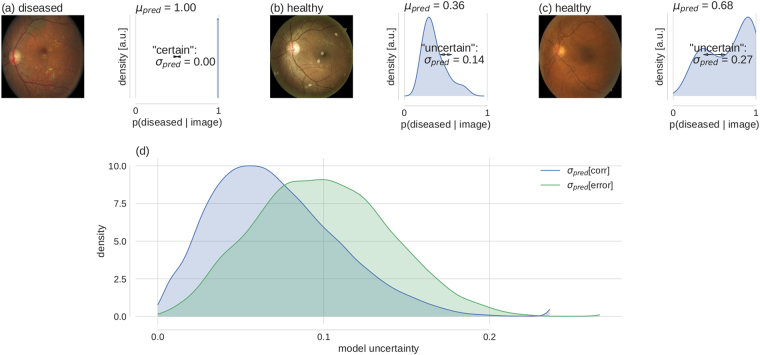
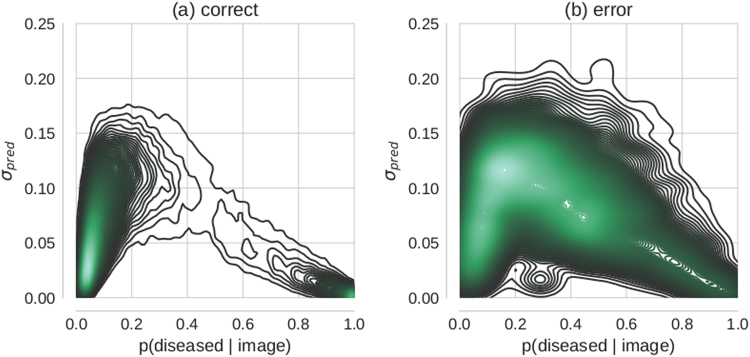
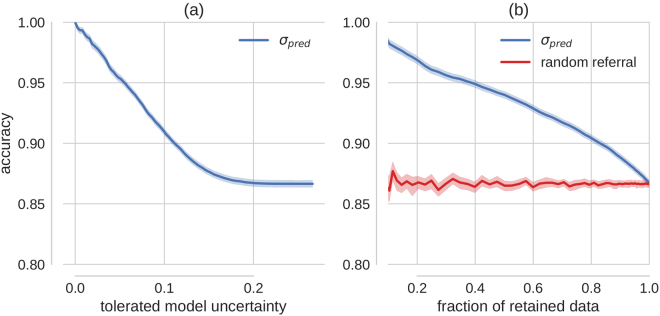
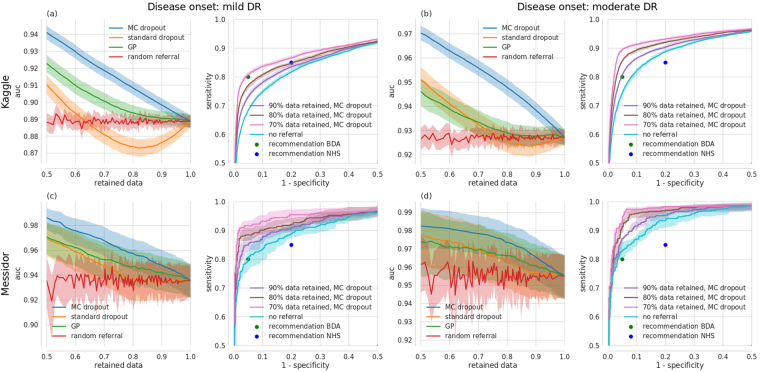
Deep learning (DL) has revolutionized the field of computer vision and image processing. In medical imaging, algorithmic solutions based on DL have been shown to achieve high performance on tasks that previously required medical experts. However, DL-based solutions for disease detection have been proposed without methods to quantify and control their uncertainty in a decision. In contrast, a physician knows whether she is uncertain about a case and will consult more experienced colleagues if needed. Here we evaluate drop-out based Bayesian uncertainty measures for DL in diagnosing diabetic retinopathy (DR) from fundus images and show that it captures uncertainty better than straightforward alternatives. Furthermore, we show that uncertainty informed decision referral can improve diagnostic performance. Experiments across different networks, tasks and datasets show robust generalization. Depending on network capacity and task/dataset difficulty, we surpass 85% sensitivity and 80% specificity as recommended by the NHS when referring 0−20% of the most uncertain decisions for further inspection. We analyse causes of uncertainty by relating intuitions from 2D visualizations to the high-dimensional image space. While uncertainty is sensitive to clinically relevant cases, sensitivity to unfamiliar data samples is task dependent, but can be rendered more robust.
Overview
The claims and statistics of this paper haven’t been checked yet.
Free: it reads the open-access text and checks the first 5 claims that cite a source we can check. Create a free account to check every claim.
Integrity signals
Registry
Cites
Statistics
Figures
Verification
Claims the paper makes
The claims and statistics of this paper haven’t been checked yet.
Free: it reads the open-access text and checks the first 5 claims that cite a source we can check. Create a free account to check every claim.
Claims other papers make about this one
Each is checked against this paper’s own text: does it say what the citing paper says it does?
The source backs part of the claim, not all of it — or backs it for a different population, condition or comparison.
In the citing paper
“Leibig al. [50] | et | 2017 | CNN | Classification | Diabetic Retinopathy | 3 | MC dropout”
From A review of uncertainty quantification in deep learning: Techniques, applications and challenges (2021) · cites this paper as [50]
Experimental — accuracy not yet measuredIn the citing paper
“This human-in-the-loop decision-making pipeline is known as selective prediction and has been commonly found to improve performance in non–text-based applications [25,26].”
From Identifying Deprescribing Opportunities With Large Language Models in Older Adults: Retrospective Cohort Study (2025) · cites this paper as [25]
In the citing paper
“In addition to producing valuable measures that function as uncertainty measures [358, 359, 66], these techniques can also lessen deep neural networks susceptibility to adversarial attacks [357, 360].”
From An overview of deep learning in medical imaging focusing on MRI (2019) · cites this paper as [358]
In the citing paper
“However, the intraobserver agreement was far from perfect, which is likely due to multiple factors, including the inherent model uncertainty of the network structure (43,44), the stochastic nature of network training, and the variation between the training and testing image data sets (24,45).”
From Deep learning approach for evaluating knee MR images: achieving high diagnostic performance for cartilage lesion detection. (2018) · cites this paper as [45]
Self-check
Percentages, sums and reported differences re-computed from the paper’s own numbers.
The self-check needs the paper’s full text.
Citations
Cites
Very Deep Convolutional Networks for Large-Scale Image Recognition
Simonyan, K., & Zisserman, A. (2014) · arXiv · doi:10.48550/arxiv.1409.1556 · Cited by 114,148
ImageNet classification with deep convolutional neural networks
Krizhevsky, A., Sutskever, I., & Hinton, G. E. (2017) · Communications of the ACM · doi:10.1145/3065386 · Cited by 112,155 · cited 8×
“960] Messidor Single best44 (0) vs (1, 2, 3) 0.”
BackgroundInfluentialLeCun, Y., Bengio, Y., & Hinton, G. (2015) · Nature · doi:10.1038/nature14539 · Cited by 84,126
ImageNet Large Scale Visual Recognition Challenge
Russakovsky, O., Deng, J., Su, H., Krause, J., Satheesh, S., Ma, S., Huang, Z., Karpathy, A., Khosla, A., Bernstein, M., et al. (2015) · International Journal of Computer Vision · doi:10.1007/s11263-015-0816-y · Cited by 39,380 · cited 1×
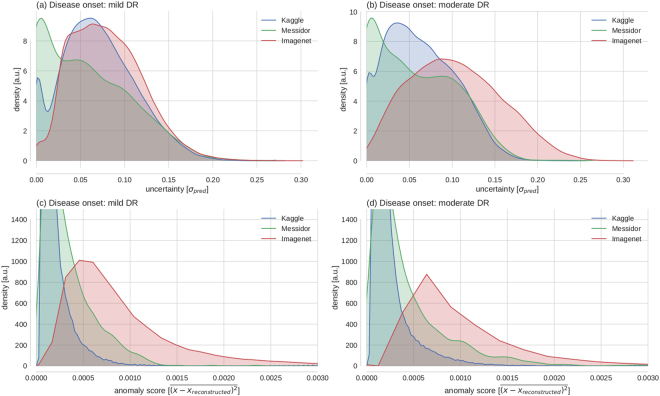
“The space of images with content unknown to the disease detection networks was sampled by performing predictions with associated uncertainties on the 2012 Imagenet validation set (49101 coloured, non-fundus images from 1000 different categories) 58 (Fig.”
Method(2014) · Cited by 33,419
Advances in neural information processing systems 7
Cios, K., & Shields, M. (1997) · Neurocomputing · doi:10.1016/s0925-2312(97)90018-7 · Cited by 22,059
Deep learning in neural networks: an overview
Schmidhuber, J. (2015) · Neural Networks · doi:10.1016/j.neunet.2014.09.003 · Cited by 18,570 · cited 7×
“960] Messidor Single best44 (0) vs (1, 2, 3) 0.”
BackgroundMethodInfluentialDermatologist-level classification of skin cancer with deep neural networks
Esteva, A., Kuprel, B., Novoa, R. A., Ko, J., Swetter, S. M., Blau, H. M., & Thrun, S. (2017) · Nature · doi:10.1038/nature21056 · Cited by 14,362 · cited 1×
“This paradigm can readily be applied to recently published high performance disease detection networks 14,15 as well as other medical tasks and datasets as initial work on image registration 60 and genome data 61 has already shown.”
Method(2010) · International Conference on Machine Learning · Cited by 13,995
Gaussian Processes for Machine Learning
Rasmussen, C. E., & Williams, C. K. I. (2005) · doi:10.7551/mitpress/3206.001.0001 · Cited by 11,705
Research works printed but not linked: 8
- Lipton, Z. C., Kale, D. C., Elkan, C. & Wetzell, R. Learning to Diagnose with LSTM Recurrent Neural Networks. International Conference on Learning Representations (ICLR) (2016).
- Kingma, D. P., Salimans, T. & Welling, M. Variational Dropout and the Local Reparameterization Trick. Advances in Neural Information Processing Systems (2015).
- Bishop, C. M. Pattern Recognition and Machine Learning, Springer-Verlag New York, Inc., Secaucus, NJ, USA, (2006).
- Gal, Y. Uncertainty in Deep Learning. Ph.D. thesis, University of Cambridge (2016).
- Angermueller, C. & Stegle, O. Multi-task deep neural network to predict CpG methylation profiles from low-coverage sequencing data. NIPS MLCB workshop (2015).
- Damianou AC Lawrence ND Deep Gaussian Processes International Conference on Artificial Intelligence and Statistics 2013 31 207 215
- Cho E Cho MJ Variance of sample variance with replacement International Journal of Pure and Applied Mathematics 2009 52 43 47
- Al-Rfou, R. et al. Theano: A Python framework for fast computation of mathematical expressions. arXiv:1605.02688 (2016). · arXiv
Cited by
Items 201–300 of 533
Brain Tumour Segmentation Using Probabilistic U-Net
Savadikar, C., Kulhalli, R., & Garware, B. (2021) · Lecture notes in computer science · doi:10.1007/978-3-030-72087-2_22 · Cited by 21
Quantifying deep neural network uncertainty for atrial fibrillation detection with limited labels
Chen, B., Javadi, G., Hamilton, A., Sibley, S. R., Laird, P., Abolmaesumi, P., Maslove, D. M., & Mousavi, P. (2022) · Scientific Reports · doi:10.1038/s41598-022-24574-y · Cited by 23
Aleatory-aware deep uncertainty quantification for transfer learning
Kabir, H. M. D., Khanam, S., Khozeimeh, F., Khosravi, A., Mondal, S. K., Nahavandi, S., & Acharya, U. R. (2022) · Computers in Biology and Medicine · doi:10.1016/j.compbiomed.2022.105246 · Cited by 29
Calibrating Healthcare AI: Towards Reliable and Interpretable Deep Predictive ModelsPreprint
Thiagarajan, J. J., Sattigeri, P., Rajan, D., & Venkatesh, B. (2020) · arXiv (Cornell University) · doi:10.48550/arxiv.2004.14480 · Cited by 24
“While the former objective can be handled by incorporating a variety of prediction calibration strategies [10,14], a large class of interpretability tools are used to support model introspection [1,17,2,9].”
BackgroundRole of calibration in uncertainty-based referral for deep learning
Zhang, R., Gatsonis, C. A., & Steingrimsson, J. A. (2023) · Statistical Methods in Medical Research · doi:10.1177/09622802231158811 · Cited by 21
“For models that involve dropout, we used a dropout rate of 0.2 as in Leibig et al. 29 and Filos et al. 30 We considered all combinations of uncertainty estimators, network architectures, and sample sizes; and for each combination, we trained for a total of 100 epochs.”
BackgroundMethodInfluentialUncertainty, Evidence, and the Integration of Machine Learning into Medical Practice
Grote, T., & Berens, P. (2023) · The Journal of Medicine and Philosophy A Forum for Bioethics and Philosophy of Medicine · doi:10.1093/jmp/jhac034 · Cited by 30
Self-citationPopat, R., & Ive, J. (2023) · Frontiers in Digital Health · doi:10.3389/fdgth.2023.1188338 · Cited by 21
“(16) and skin cancer in the study by Combalia et al.”
BackgroundMethodSub-Ensembles for Fast Uncertainty Estimation in Neural Networks
Valdenegro-Toro, M. (2023) · IEEE International Conference on Computer Vision Workshops · doi:10.1109/iccvw60793.2023.00445 · Cited by 35
Uncertainty-Aware Health Diagnostics via Class-Balanced Evidential Deep Learning
Xia, T., Dang, T., Han, J., Qendro, L., & Mascolo, C. (2024) · IEEE Journal of Biomedical and Health Informatics · doi:10.1109/jbhi.2024.3360002 · Cited by 30
“For instance, Lei et al. utilized uncertainty estimation in diagnosing diabetic retinopathy from fundus images of the eye [5], [6].”
BackgroundMethodSURE: SUrvey REcipes for Building Reliable and Robust Deep Networks
Li, Y., Chen, Y., Yu, X., Chen, D., & Shen, X. (2024) · IEEE Computer Society Conference on Computer Vision and Pattern Recognition/Proceedings - IEEE Computer Society Conference on Computer Vision and Pattern Recognition/Proceedings · doi:10.1109/cvpr52733.2024.01657 · Cited by 31
“In safety-critical areas such as medical diagnostics [2, 43, 56], robotics [29, 49], autonomous driving [9, 18, 49], and earth observation systems [24, 52], decisions based on overconfident predictions can result in severe consequences.”
BackgroundLi, D., Qiu, T., Chen, S., Li, Q., & Xu, S. (2021) · Annual Computer Security Applications Conference · doi:10.1145/3485832.3485916 · Cited by 30
“, predictive uncertainty) in the presence of dataset shift has received a due amount of attention in the context of image classification [6, 25], medical diagnoses [26], and natural language processing [39], but not in the context of malware detection.”
BackgroundSocrates, V., Wright, D. S., Huang, T., Fereydooni, S., Dien, C., Chi, L., Albano, J., Patterson, B., Sasidhar Kanaparthy, N., Wright, C. X., et al. (2025) · JMIR Aging · doi:10.2196/69504 · Cited by 17
“This human-in-the-loop decision-making pipeline is known as selective prediction and has been commonly found to improve performance in non–text-based applications [25,26].”
Improving predictive uncertainty estimation using Dropout–Hamiltonian Monte Carlo
Hernández, S., Vergara, D., Valdenegro-Toro, M., & Jorquera, F. (2019) · Soft Computing · doi:10.1007/s00500-019-04195-w · Cited by 21
Bonato, J., Cotogni, M., & Sabetta, L. (2024) · Lecture notes in computer science · doi:10.1007/978-3-031-73232-4_1 · Cited by 38
Um, T. T., Pfister, F., Pichler, D., Endo, S., Lang, M., Hirche, S., Fietzek, U. M., & Kulić, D. (2018) · arXiv (Cornell University) · doi:10.48550/arxiv.1808.02870 · Cited by 21
Macêdo, D., & Ludermir, T. B. (2021) · arXiv (Cornell University) · doi:10.48550/arxiv.2105.14399 · Cited by 26
“Some proposals required model structural changes to tackle OOD detection [39], and certain trials used uncertainty or confidence estimation/calibration techniques [13, 20, 28, 16, 34].”
Identifying healthy individuals with Alzheimer’s disease neuroimaging phenotypes in the UK Biobank
Azevedo, T., Bethlehem, R. A. I., Whiteside, D. J., Swaddiwudhipong, N., Rowe, J. B., Lió, P., Rittman, T., Initiative, T. A. D. N., Silbert, L. C., Lind, B., et al. (2023) · Communications Medicine · doi:10.1038/s43856-023-00313-w · Cited by 20
“Such uncertainty measures allow for a better characterisation of the model ’ s output rather than solely a deterministic value 37 , ultimately strengthening the con fi dence in results derived from these stochastic models 38 .”
Lee, L. H., Bradburn, E., Papageorghiou, A. T., & Noble, J. A. (2020) · Lecture notes in computer science · doi:10.1007/978-3-030-60334-2_2 · Cited by 16
Ensembles of Deep Learning Framework for Stomach Abnormalities Classification
Saeed, T., Loo, C. K., & Kassim, M. S. S. (2021) · Computers, materials & continua/Computers, materials & continua (Print) · doi:10.32604/cmc.2022.019076 · Cited by 17
“The MC sample variance is evaluated for imagebased diabetic retinopathy diagnosis [32] and demonstrates this context is beneficial.”
BackgroundSinha, S., Franciosa, P., & Ceglarek, D. J. (2020) · IEEE Transactions on Industrial Informatics · doi:10.1109/tii.2020.3043226 · Cited by 16
“Successful applications of the above have been done in healthcare [18] and load forecasting [19].”
BackgroundTo pretrain or not? A systematic analysis of the benefits of pretraining in diabetic retinopathy
Srinivasan, V., Strodthoff, N., Ma, J., Binder, A., Müller, K., & Samek, W. (2022) · PLoS ONE · doi:10.1371/journal.pone.0274291 · Cited by 17
“Systematic study of using uncertainty measures for DR were also conducted by [43, 44].”
Translation of morphological and functional musculoskeletal imaging
Pedoia, V., & Majumdar, S. (2018) · Journal of Orthopaedic Research® · doi:10.1002/jor.24151 · Cited by 16
“44 Recent literature reports examples of applications of Bayesian drop out techniques to model uncertainty applied to neuroimaging 45 and experiments showing the robustness of deep learning to label noise.”
BackgroundFast Memory-efficient Extreme Events Prediction in Complex Time series
Wambura, S. M., Li, H., & Nigussie, A. (2020) · International Conference on Robot Systems and Applications (ICRSA) · doi:10.1145/3402597.3402609 · Cited by 20
“By giving prior to the network parameters W , the network aim to find the posterior distribution of W , instead of point estimation [8, 15, 24, 40].”
BackgroundBayesian Modelling in Practice: Using Uncertainty to Improve Trustworthiness in Medical ApplicationsPreprint
Ruhe, D., Cinà, G., Tonutti, M., Bruin, D. D., & Elbers, P. (2019) · Pure Amsterdam UMC · doi:10.13140/rg.2.2.13807.48807 · Cited by 19
Predicting neural network confidence using high-level feature distance
Wang, J., Ai, J., Lu, M., Liu, J., & Wu, Z. (2023) · Information and Software Technology · doi:10.1016/j.infsof.2023.107214 · Cited by 18
Quantifying Uncertainty of Deep Neural Networks in Skin Lesion Classification
Molle, P. V., Verbelen, T., Boom, C. D., Vankeirsbilck, B., Vylder, J. D., Diricx, B., Kimpe, T. R. L., Simoens, P., & Dhoedt, B. (2019) · Lecture notes in computer science · doi:10.1007/978-3-030-32689-0_6 · Cited by 19
Gundersen, K., Alendal, G., Oleynik, A., & Blaser, N. (2020) · Algorithms · doi:10.3390/a13060145 · Cited by 16
To Trust or Not To Trust Prediction Scores for Membership Inference Attacks
Hintersdorf, D., Struppek, L., & Kersting, K. (2022) · International Joint Conference on Artificial Intelligence · doi:10.24963/ijcai.2022/422 · Cited by 22
“Our argumentation is based on the already known overconfidence of modern deep neural architectures [19, 8, 5, 14].”
BackgroundSagittal Cervical Spine Landmark Point Detection in X-Ray Using Deep Convolutional Neural Networks
Fard, A. P., Ferrantelli, J., Dupuis, A.-L., & Mahoor, M. H. (2022) · IEEE Access · doi:10.1109/access.2022.3180028 · Cited by 20
“Using Bayesian CNN [32], Lee et al .”
MethodDeep Active Learning for Automatic Mitotic Cell Detection on HEp-2 Specimen Medical Images
Anaam, A., Al–antari, M. A., Hussain, J., Samee, N. M. A., Alabdulhafith, M. I., & Gofuku, A. (2023) · Diagnostics · doi:10.3390/diagnostics13081416 · Cited by 18
“Moreover, due to the high variability of different HEp-2 cell patterns and the limitation of accurately annotating a large number of microscopic images, it is significant to provide an uncertainty quantification (UQ) measure for the DL detectors’ predictions for a robust diagnosis [82,83].”
Efficient Priors for Scalable Variational Inference in Bayesian Deep Neural Networks
Krishnan, R., Subedar, M. M., & Tickoo, O. (2019) · IEEE International Conference on Computer Vision Workshops · doi:10.1109/iccvw.2019.00102 · Cited by 22
“Following [18], quantitative comparison of uncertainty estimates are made by calculating area under the curve (AUC) of precision-recall (auPR) values by retaining different percentages (0.”
BackgroundMethodMeaningful uncertainties from deep neural network surrogates of large-scale numerical simulationsPreprint
Anderson, G. J., Gaffney, J., Spears, B. K., Bremer, P., Anirudh, R., & Thiagarajan, J. J. (2020) · arXiv (Cornell University) · doi:10.48550/arxiv.2010.13749 · Cited by 16
“MC dropout has been used to obtain epistemic uncertainty estimates from DNNs in many areas of science as far ranging as cosmology [11], medical imaging [12], chemistry [13], and many more.”
MethodPepe, A., Egger, J., Codari, M., Willemink, M. J., Gsaxner, C., Li, J., Roth, P. M., Schmalstieg, D., Mistelbauer, G., & Fleischmann, D. (2023) · Computers in Biology and Medicine · doi:10.1016/j.compbiomed.2023.107365 · Cited by 15
Uncertainty Analysis of Deep Kernel Learning Methods on Diabetic Retinopathy Grading
Siebert, M., Graßhoff, J., & Rostalski, P. (2023) · IEEE Access · doi:10.1109/access.2023.3343642 · Cited by 15
“MCD-and DE-based approaches are observed to frequently provide good calibration, whereas more sophisticated VI approaches may sometimes even perform worse than regular CNNs [12], [14].”
BackgroundMethodInfluentialChegini, M., & Far, A. M. (2023) · Computer Methods in Biomechanics and Biomedical Engineering Imaging & Visualization · doi:10.1080/21681163.2023.2297983 · Cited by 25
“…studies have illustrated that there is a relationship between uncertainty and the misclassification rate of a classifier explicitly and this determine that the misclassification rate increases with the growing up of uncertainty in some cases (Leibig et al. 2017; Zhou et al. 2020; Song et al. 2021).”
InfluentialBernasconi, A., Gill, R. S., & Bernasconi, N. (2024) · Epilepsia · doi:10.1111/epi.17989 · Cited by 15
“Using Bayesian uncertainty estimation that enables risk assessment, 39,40 our predictions were stratified according to the confidence to be truly lesional.”
Kummaraka, U., & Srisuradetchai, P. (2024) · Forecasting · doi:10.3390/forecast6030033 · Cited by 17
“Leibig et al. [14] showed that dropout-based Bayesian uncertainty measures effectively capture decision-making uncertainty in disease detection with deep neural networks, surpassing traditional methods.”
MethodA Novel Deep Ensemble Method for Selective Classification of Electrocardiograms
Argha, A., Alinejad‐Rokny, H., Baumgartner, M., Schreier, G., Celler, B. G., Redmond, S. J., Butcher, K., Ooi, S., & Lovell, N. H. (2024) · IEEE Transactions on Biomedical Engineering · doi:10.1109/tbme.2024.3476088 · Cited by 16
“For instance, early work by Leibig et al. [23] demonstrated how quantifying uncertainty in diabetic retinopathy diagnosis could improve the interpretability and safety of DL applications in ophthalmology.”
Uninformed Teacher-Student for hard-samples distillation in weakly supervised mitosis localization
Fernandez‐Martín, C., Silva-Rodríguez, J., Kiraz, U., Morales, S., Janssen, E. A. M., & Naranjo, V. (2024) · Computerized Medical Imaging and Graphics · doi:10.1016/j.compmedimag.2024.102328 · Cited by 14
Ewals, L. J. S., Heesterbeek, L. J. J., Yu, B., van der Wulp, K., Mavroeidis, D., Funk, M., Snijders, C. C. P., Jacobs, I., Nederend, J., Pluyter, J. R., et al. (2024) · JMIR AI · doi:10.2196/52211 · Cited by 15
“The sole adjustment involved calibrating (or rescaling) the output of the model to accommodate the changed distribution of malignant cases (Multimedia Appendix 2 [35,38,39]).”
BackgroundDR-GPT: A large language model for medical report analysis of diabetic retinopathy patients
Jaskari, J., Sahlsten, J., Summanen, P. A., Moilanen, J., Lehtola, E., Aho, M., Säpyskä, E., Hietala, K., & Kaski, K. K. (2024) · PLoS ONE · doi:10.1371/journal.pone.0297706 · Cited by 17
“In addition, we have also evaluated the DR-GPT on a binary DR classification system (RDR) used in previous studies [5, 6, 7].”
MethodMapping the unseen: Robust IP geolocation through the lens of uncertainty quantification
Liu, X., Wang, X., Li, C., Walker, J., Tai, W., Zhong, T., Wang, Y. J., Zhou, F., & Chen, K. (2025) · Computer Networks · doi:10.1016/j.comnet.2025.111405 · Cited by 16
Blattmann, M., Lindenmeyer, A., Franke, S., Neumuth, T., & Schneider, D. (2025) · PLOS Digital Health · doi:10.1371/journal.pdig.0000801 · Cited by 16
“Predominantly used methods in medical uncertainty estimation studies include Monte Carlo dropout, Bayesian neural networks, model ensembles, and variational autoencoders [25–39].”
Benchmarking Scalable Predictive Uncertainty in Text Classification
Landeghem, J. V., Blaschko, M. B., Anckaert, B., & Moens, M. (2022) · IEEE Access · doi:10.1109/access.2022.3168734 · Cited by 22
“Prior work hypothesizes model uncertainty to be mostly impacted [72], [129].”
BackgroundRobust Motor Imagery Tasks Classification Approach Using Bayesian Neural Network
Hermosilla, D. M., Codorniú, R. T., Lamar-Carbonell, S., Zamora, R. S., Tamayo-Pacheco, J. J., Mayor, J. J. V., & Delisle-Rodríguez, D. (2023) · Sensors · doi:10.3390/s23020703 · Cited by 18
“In medical applications, uncertainty analysis has been widely used for disease diagnoses, such as COVID-19 [22], tuberculosis [23], ataxia [24], cancer [25], diabetic retinopathy [26,27], and epileptogenic brain malformations [28].”
Delving into Discrete Normalizing Flows on SO(3) Manifold for Probabilistic Rotation Modeling
Liu, Y., Liu, H., Yin, Y., Wang, Y., Chen, B., & Wang, H. (2023) · IEEE Computer Society Conference on Computer Vision and Pattern Recognition/Proceedings - IEEE Computer Society Conference on Computer Vision and Pattern Recognition/Proceedings · doi:10.1109/cvpr52729.2023.02037 · Cited by 26
“Endowing a neural network with the ability to express uncertainty along with the prediction is of crucial influence to safety and interpretability-critical systems and provides valuable information for downstream tasks [4, 19, 32].”
BackgroundTraining an automated circulating tumor cell classifier when the true classification is uncertain
Nanou, A., Stoecklein, N. H., Doerr, D., Driemel, C., Terstappen, L. W. M. M., & Coumans, F. A. W. (2024) · PNAS Nexus · doi:10.1093/pnasnexus/pgae048 · Cited by 17
“Label uncertainty is a common problem in image-based medical diagnostics (22, 23).”
BackgroundActive Vision in the Era of Convolutional Neural Networks
Gallos, D., & Ferrie, F. P. (2019) · Canadian Conference on Computer and Robot Vision · doi:10.1109/crv.2019.00019 · Cited by 15
“Gal’s method for approximating an output probability and thus estimating uncertainty has found a wide range of applications in the literature, including semantic segmentation [23], pose estimation [24], active learning [25] and medical imaging [26].”
MethodChen, Z., Wang, Y., Lin, D., Cheng, D. Z., Hong, L., Ed, H., & Cui, C. M. (2021) · ACM International Conference on Web Search and Data Mining (WSDM) · doi:10.1145/3437963.3441770 · Cited by 14
“ble of neural networks contains some diversity, and the variation of their predictions can be used as an estimate of model uncertainty. A lot of research work results are based on the ensemble method [3, 7, 9, 26, 38]. For example, [9] demonstrates promising results uses deep ensembles for diagnosis and referral in re…”
Ayhan, M. S., Neubauer, J., Uzel, M. M., Gelişken, F., & Berens, P. (2024) · Scientific Reports · doi:10.1038/s41598-024-57798-1 · Cited by 16
“This combination had led to performance improvements in previous work 23–26 .”
Self-citationToward a hemorrhagic trauma severity score: fusing five physiological biomarkers
Bhat, A., Podstawczyk, D. A., Walther, B. K., Aggas, J. R., Machado-Aranda, D., Ward, K. R., & Guiseppi‐Elie, A. (2020) · Journal of Translational Medicine · doi:10.1186/s12967-020-02516-4 · Cited by 13
“Uncertainty or error information has been utilized to support medical diagnostics where a prediction accuracy of 87% has been reported for a training accuracy of 90% [87].”
BackgroundWan, Q., Xia, H., Zhang, X., Wang, L., Song, S. L., & Fu, X. (2021) · IEEE/ACM International Symposium on Microarchitecture (MICRO) · doi:10.1145/3466752.3480120 · Cited by 13
“…machine learning tools, Bayesian Neural Networks (BNNs) have been increasingly employed in a wide range of real-world AI applications which require reliable and robust decision making such as self-driving, rescue robots, disease diagnosis, scene understanding, and so on [1, 32, 38, 57].”
BackgroundQuantifying uncertainty in machine learning classifiers for medical imaging
Valen, J., Balki, I., Mendez, M., Qu, W., Levman, J. E. D., Bilbily, A., & Tyrrell, P. N. (2022) · International Journal of Computer Assisted Radiology and Surgery · doi:10.1007/s11548-022-02578-3 · Cited by 13
“Uncertainty modeling has previously been applied to fields like self-driving cars [7], computer vision [1], and diabetic retinopathy fundus images [3].”
BackgroundMethodInfluentialImproving Reliability of Clinical Models Using Prediction Calibration
Thiagarajan, J. J., Venkatesh, B., Rajan, D., & Sattigeri, P. (2020) · Lecture notes in computer science · doi:10.1007/978-3-030-60365-6_8 · Cited by 13
Bayesian Neural Networks for Cellular Image Classification and Uncertainty AnalysisPreprint
Deodato, G., Ball, C., & Zhang, X. (2019) · bioRxiv (Cold Spring Harbor Laboratory) · doi:10.1101/824862 · Cited by 13
COMPARISON OF UNCERTAINTY QUANTIFICATION METHODS FOR CNN-BASED REGRESSION
Wursthorn, K., Hillemann, M., & Ulrich, M. (2022) · The international archives of the photogrammetry, remote sensing and spatial information sciences/International archives of the photogrammetry, remote sensing and spatial information sciences · doi:10.5194/isprs-archives-xliii-b2-2022-721-2022 · Cited by 17
“For applications such as autonomous driving (McAllister et al., 2017) or the analysis of medical imaging results (Leibig et al., 2017) where the predictions are relevant for the safety of road users or the patient, uncertainty estimates are essential.”
BackgroundUncertainty Quantification for Text Classification
Zhang, D., Şensoy, M., Makrehchi, M., Taneva-Popova, B., Gui, L., & He, Y. (2023) · International ACM SIGIR Conference on Research and Development in Information Retrieval (SIGIR) · doi:10.1145/3539618.3594243 · Cited by 15
“In many situations [12, 22, 33], it will be useful to distinguish the reducible uncertainty caused by the model’s lack of in-domain knowledge (called epistemic uncertainty or model uncertainty ) from the irreducible uncertainty caused by the inherent stochasticity or noise in the input data (called…”
BackgroundMethodEfficient Multi-task Uncertainties for Joint Semantic Segmentation and Monocular Depth Estimation
Landgraf, S., Hillemann, M., Kapler, T., & Ulrich, M. (2025) · Lecture notes in computer science · doi:10.1007/978-3-031-85187-2_22 · Cited by 16
Stochastic gradient sampling for enhancing neural networks training
Yun, J. (2025) · Neural Computing and Applications · doi:10.1007/s00521-025-11242-1 · Cited by 15
Chagas, P., Souza, L., Pontes, I., Calumby, R. T., Ângelo, M. F., Duarte, A. A., dos‐Santos, W. L. C., & de Oliveira, L. R. (2022) · Computer Methods in Biomechanics and Biomedical Engineering Imaging & Visualization · doi:10.1080/21681163.2022.2029573 · Cited by 14
“They used variance as uncertainty metric, and, as the work of Leibig et al. (2017), high variance scores correlated to incorrect classifications.”
MethodResidue-Based Natural Language Adversarial Attack Detection
Raina, V., & Gales, M. (2022) · Conference of the North American Chapter of the Association for Computational Linguistics: Human Language Technologies (NAACL-HLT) · doi:10.18653/v1/2022.naacl-main.281 · Cited by 17
“However, Bayesian approaches aren’t always practical in implementation and thus many different approaches to approximate this uncertainty have been suggested in literature (Leibig et al., 2017; Gal, 2016; Gal and Ghahramani, 2016).”
Quantile Autoencoder With Abnormality Accumulation for Anomaly Detection of Multivariate Sensor Data
Ryu, S., Yim, J., Seo, J., Yu, Y., & Seo, H. (2022) · IEEE Access · doi:10.1109/access.2022.3187426 · Cited by 13
Towards Trustworthy Predictions from Deep Neural Networks with Fast Adversarial Calibration
Tomani, C., & Buettner, F. (2021) · AAAI Publications (The Association for the Advancement of Artificial Intelligence (AAAI)) · doi:10.1609/aaai.v35i11.17188 · Cited by 26
Feng, S., & Wang, C. (2024) · Neural Networks · doi:10.1016/j.neunet.2024.106485 · Cited by 11
Determination of Skeletal Age From Hand Radiographs Using Deep Learning
Bram, J. T., Pareek, A., Beber, S. A., Jones, R. H., Shariatnia, M., Dalili-Yazdi, A., Tracey, O. C., Green, D. W., & Fabricant, P. D. (2025) · The American Journal of Sports Medicine · doi:10.1177/03635465251359618 · Cited by 12
“Similar to the approach used by Leibig et al, 20 we quantified the model’s uncertainty as s pred , which we redefined to represent the sample standard deviation of the predictions produced by different folds of the model and conducted corresponding analyses (Figure 8).”
Position Paper: Integrating Explainability and Uncertainty Estimation in Medical AI
Fan, X. (2025) · International Joint Conference on Neural Networks (IJCNN) · doi:10.1109/ijcnn64981.2025.11228229 · Cited by 11
“The variance among these sampled predictions indicates the system’s uncertainty [36].”
Intharah, T., Wiratchawa, K., Wanna, Y., Junsawang, P., Titapun, A., Techasen, A., Boonrod, A., Laopaiboon, V., Chamadol, N., & Khuntikeo, N. (2023) · Artificial Intelligence in Medicine · doi:10.1016/j.artmed.2023.102539 · Cited by 10
Ortiz, P., Casas, E. G., Orescanin, M., Powell, S. W., Petković, V., & Hall, M. (2023) · Artificial Intelligence for the Earth Systems · doi:10.1175/aies-d-22-0056.1 · Cited by 14
“To manage the imbalanced nature of the data one can include a custom loss function that weighs more learning on underrepresented values as is commonly done with image classi fi cation (Filos et al. 2019; Leibig et al. 2017).”
MethodPropagating Uncertainty Across Cascaded Medical Imaging Tasks for Improved Deep Learning Inference
Mehta, R., Christinck, T., Nair, T., Lemaître, P., Arnold, D. L., & Arbel, T. (2019) · Lecture notes in computer science · doi:10.1007/978-3-030-32689-0_3 · Cited by 16
Benchmarking Uncertainty Quantification on Biosignal Classification Tasks Under Dataset Shift
Xia, T., Han, J., & Mascolo, C. (2022) · Studies in computational intelligence · doi:10.1007/978-3-031-14771-5_25 · Cited by 16
Heslinga, F. G., Pluim, J. P. W., Houben, A. J. H. M., Schram, M. T., Henry, R. M. A., Stehouwer, C. D. A., van Greevenbroek, M. M. J., Berendschot, T. T. J. M., & Veta, M. (2020) · SPIE Medical Imaging: Computer-Aided Diagnosis · doi:10.1117/12.2549574 · Cited by 14
“This result is in line with the finding of Leibig et al.(17) who leveraged prediction uncertainty to successfully refer fundus images with signs of diabetic retinopathy that were difficult to grade.”
ResultLeveraging Uncertainty in Deep Learning for Selective ClassificationPreprint
Yildirim, M. Y., Özer, M., & Davulcu, H. (2019) · arXiv (Cornell University) · doi:10.48550/arxiv.1905.09509 · Cited by 10
“A recent study in the medical domain [18] has demonstrated the potential of the model uncertainty for selective classification.”
BackgroundEstimating uncertainty of earthquake rupture using Bayesian neural networkPreprint
Ahamed, S., & Uddin, M. M. (2019) · arXiv (Cornell University) · doi:10.48550/arxiv.1911.09660 · Cited by 11
“Prediction uncertainty estimation is vital in many applications: diseases detection [Leibig et al., 2017, Liu et al., 2018, Nair et al., 2019], autonomous vehicle driving [Kendall et al., 2015, McAllister et al., 2017, Burton et al., 2017], and estimating risk [Hoeting et al., 1999, Tong and…”
BackgroundUncertainty Estimation in Deep 2D Echocardiography SegmentationPreprint
Dahal, L., Kafle, A., & Khanal, B. (2020) · arXiv (Cornell University) · doi:10.48550/arxiv.2005.09349 · Cited by 14
“Uncertainty modeling and estimation are being increasingly used in deep learning-based medical imaging applications [16,9,4,22,12,18].”
BackgroundGonzalez Osorio, F., Perdomo Charry, O. J., Toledo Cortes, S., & Pava, M. D. L. (2020) · LA Referencia (Red Federada de Repositorios Institucionales de Publicaciones Científicas) · doi:10.1007/978-3-030-63419-3_21 · Cited by 30
Deep Bayesian survival analysis of rail useful lifetime
Zeng, C., Huang, J., Wang, H., Xie, J., & Zhang, Y. (2023) · Engineering Structures · doi:10.1016/j.engstruct.2023.116822 · Cited by 14
Martinez, J. A. C., da Costa, G. A. O. P., Messias, C. G., Soler, L. D. S., Almeida, C. A., & Feitosa, R. Q. (2024) · ISPRS Journal of Photogrammetry and Remote Sensing · doi:10.1016/j.isprsjprs.2024.03.004 · Cited by 15
Uncertainty‐guided U‐Net for soil boundary segmentation using Monte Carlo dropout
Zhou, X., Sheil, B. B., Suryasentana, S. K., & Shi, P. (2024) · Computer-Aided Civil and Infrastructure Engineering · doi:10.1111/mice.13396 · Cited by 11
“Leibig et al. (2017) measured uncertainty using MC dropout and demonstrated that incorporating uncertainty information in decision-making could enhance model performance.”
Li, X., Zheng, Q., Zhang, S., Fu, S., Chen, Y., & Ye, K. (2025) · Symmetry · doi:10.3390/sym17050794 · Cited by 9
Sekar, P., Raja, K., & Ramaswamy, K. (2025) · Scientific Reports · doi:10.1038/s41598-025-21337-3 · Cited by 12
Lemmer, S. J., Guo, A., & Corso, J. J. (2023) · ACM International Conference on Intelligent User Interfaces (IUI) · doi:10.1145/3581641.3584092 · Cited by 12
“In other cases, framed as selective prediction [19, 20, 23, 27, 28, 43, 45, 81], the AI sends low-confidence inferences to a human—a “second opinion” in medical terms [9, 41, 65].”
BackgroundNasr, M. C. B., de Araujo-Filho, P. F., Kaddoum, G., & Mourad, A. (2024) · IEEE Internet of Things Journal · doi:10.1109/jiot.2024.3439440 · Cited by 10
“However, implementing the Bayesian approaches can be challenging, and various techniques proposed in the literature have emerged to approximate this uncertainty, such as the ones proposed in [41], [42], and [43].”
Leveraging Uncertainty in Deep Learning for Pancreatic Adenocarcinoma Grading
Ghoshal, B., Ghoshal, B., & Tucker, A. (2022) · Lecture notes in computer science · doi:10.1007/978-3-031-12053-4_42 · Cited by 9
Prabhudesai, S., Hauth, J. M., Guo, D., Rao, A. U. K., Banović, N., & Huan, X. (2023) · Frontiers in Computer Science · doi:10.3389/fcomp.2023.1071174 · Cited by 15
“This can exacerbate problems with inappropriate trust and reliance on AI-based CDSS (Bussone et al., 2015), with potential harm to patient health (Strickland, 2019).”
BackgroundInfluential3D convolutional neural networks to estimate assembly process parameters using 3D point-clouds
Sinha, S., Glorieux, E., Franciosa, P., & Ceglarek, D. J. (2019) · doi:10.1117/12.2526062 · Cited by 9
Learn To Be Uncertain: Leveraging Uncertain Labels In Chest X-rays With Bayesian Neural Networks
Yang, H., Yang, J., Pan, Y., Cao, K., Song, Q., Gao, F., & Yin, Y. (2019) · IEEE Computer Society Conference on Computer Vision and Pattern Recognition/Proceedings - IEEE Computer Society Conference on Computer Vision and Pattern Recognition/Proceedings · Cited by 9
On the Use of Uncertainty in Classifying Aedes Albopictus Mosquitoes
Adhane, G. W., Dehshibi, M. M., & Masip, D. (2021) · IEEE Journal of Selected Topics in Signal Processing · doi:10.1109/jstsp.2021.3122886 · Cited by 10
“Dropout-based Bayesian uncertainty measure was evaluated by Leibig et al. [24] for estimating diabetic retinopathy from fundus images.”
MethodUncertainty estimation for classification and risk prediction on medical tabular dataPreprint
Meijerink, L., Cinà, G., & Tonutti, M. (2020) · arXiv (Cornell University) · doi:10.48550/arxiv.2004.05824 · Cited by 11
“A way to solve this problem, also employed in Leibig et al. [2017], is using class weighting in the loss, i.e. artificially putting more weight on the minority class 4 .”
MethodUncertainty Calibration for Counterfactual Propensity Estimation in Recommendation
Hu, W., Sun, X., Liu, Q., Wu, L., & Wang, L. (2025) · IEEE Transactions on Knowledge and Data Engineering · doi:10.1109/tkde.2025.3552658 · Cited by 9
“If all conversion labels are available, the prediction errors E = { e u,i | ( u, i ) ∈ D} can be calculated, the ideal loss function is: where e u,i is the prediction error and we adopt the cross entropy in this paper.”
Tchokponhoue, G. A. D., & Idri, A. (2025) · Applied Soft Computing · doi:10.1016/j.asoc.2025.114249 · Cited by 9
Influence of uncertainty estimation techniques on false-positive reduction in liver lesion detection
Bhat, I., Pluim, J. P. W., Viergever, M. A., & Kuijf, H. J. (2022) · The Journal of Machine Learning for Biomedical Imaging · doi:10.59275/j.melba.2022-5937 · Cited by 8
“Leibig et al. (2017) showed that the detection of diabetic retinopathy improved when predictions with estimated uncertainty above a certain threshold were referred to an expert.”
BackgroundQuantization for Bayesian Deep Learning: Low-Precision Characterization and Robustness
Lin, J.-L., Krishnan, R., Ranipa, K., Subedar, M. M., Sanghavi, V., Arunachalam, M., Tickoo, O., Iyer, R., & Kandemir, M. (2023) · IEEE International Symposium on Workload Characterization · doi:10.1109/iiswc59245.2023.00020 · Cited by 12
“For example, when employing Bayesian neural networks (BNNs) in real-world medical diagnosis application [27], the models not only make predictions about diseases but also provide an uncertainty measure alongside their predictions that helps us understand how much to trust the model predictions.”
BackgroundMetacognitive AI: Framework and the Case for a Neurosymbolic Approach
Wei, H., Shakarian, P., Lebiere, C. J., Draper, B. A., Krishnaswamy, N., & Nirenburg, S. (2024) · Lecture notes in computer science · doi:10.1007/978-3-031-71170-1_7 · Cited by 29
Guo, L., Xie, G., Xu, X., & Ren, J. (2020) · Sensors · doi:10.3390/s20205786 · Cited by 9
Using Explainable AI to Measure Feature Contribution to Uncertainty
Brown, K. E., & Talbert, D. A. (2022) · Proceedings of the ... International Florida Artificial Intelligence Research Society Conference · doi:10.32473/flairs.v35i.130662 · Cited by 8
“Epistemic uncertainty provides a numerical measure of how similar an input instance is compared to the data on which the neural network has been trained and can be used to effectively indicate to human practitioners which instances should be referred to domain experts (Brown and Talbert 2019; Leibig et al. 2017).”
BackgroundMethodFeng, D., Chen, X., Wang, X., Lv, J., Bai, L., Zhang, S., & Zhou, Z. (2022) · Proceedings - IEEE Symposium on Computer-Based Medical Systems · doi:10.1109/cbms55023.2022.00061 · Cited by 8
“For example, Leibig et al. [1] used a Bayesian deep neural network to measure the uncertainty and allowed referring a subset of difficult diabetic retinopathy cases for further inspection; Carneiro et al. [2] assessed the reliability of a particular classification result and rejected test samples…”
BackgroundMethodTuniyazi, A., Mu, T., Li, Q., Li, H., Jiang, X., Han, F., Gong, H., Wang, W., Lang, X., Wang, B., et al. (2022) · Optics and Lasers in Engineering · doi:10.1016/j.optlaseng.2022.107298 · Cited by 8
Machine Learning in Neuroimaging of Epilepsy
Lee, H. M., Gill, R. S., Bernasconi, N., & Bernasconi, A. (2023) · Neuromethods · doi:10.1007/978-1-0716-3195-9_27 · Cited by 11
Uncertainty-Informed Detection of Epileptogenic Brain Malformations Using Bayesian Neural Networks
Gill, R. S., Caldairou, B., Bernasconi, N., & Bernasconi, A. (2019) · Lecture notes in computer science · doi:10.1007/978-3-030-32251-9_25 · Cited by 12
Ursuleanu, T. F., Luca, A. R., Gheorghe, L., Grigorovici, R., Iancu, S., Hlusneac, M., Preda, C., & Grigorovici, A. (2021) · E-Health Telecommunication Systems and Networks · doi:10.4236/etsn.2021.102003 · Cited by 8
“GURs (recurring unit gated) created by [87] [88] solve the problem of increasing the time complexity of LSTM, when large amounts of data are used [4].”
Background
Metadata
- Authors
- Leibig, C., Allken, V., Ayhan, M. S., Berens, P., & Wahl, S.
- Affiliations
- University of Tübingen (DE)
- Bernstein Center for Computational Neuroscience Tübingen (DE)
- Carl Zeiss (Germany) (DE)
- Corresponding author
- Leibig, Christian
- Venue
- Scientific Reports
- Published
- 2017-12-19
- Volume
- 7
- Issue
- 1
- Pages
- 17816-17816
- ISSN
- 2045-2322 (ISSN-L)
- PMC
- PMC5736701
- OpenAlex
- W2951965145
- Semantic Scholar
- d46155be59bed4d7d2082b02bcb6734a6d66c428
- Cited by
- 510
- References
- 69
- Citations by year
- 2026: 47 · 2025: 50 · 2024: 41 · 2023: 63 · 2022: 60 · 2021: 90 · 2020: 80 · 2019: 52 · 2018: 25 · 2017: 2
- FWCI
- 33.37
- Type
- journal article
- Language
- en
- Open access
- gold
- doi.org
- Licence
- cc-by
- creativecommons.org/licenses/by/4.0 (tdm)
- creativecommons.org/licenses/by/4.0 (vor)
- Locations
- Scientific Reports (publishedVersion, cc-by)
- bioRxiv (Cold Spring Harbor Laboratory) (acceptedVersion, cc-by-nc)
- Europe PMC (PubMed Central) (publishedVersion, cc-by)
- PubMed Central (publishedVersion, cc-by)
- PubMed (publishedVersion)
- DOAJ (DOAJ: Directory of Open Access Journals) (submittedVersion)
- Funders
- Deutsche Forschungsgemeinschaft (EXC307)
- Eberhard Karls Universität Tübingen (EXC 307)
- Bundesministerium für Bildung und Forschung (01GQ1601)
- Topics
- Health Sciences › Medicine › Radiology, Nuclear Medicine and Imaging › Retinal Imaging and Analysis
- Physical Sciences › Computer Science › Computer Vision and Pattern Recognition › Advanced Neural Network Applications
- Health Sciences › Medicine › Health Informatics › Artificial Intelligence in Healthcare and Education
- Keywords
- Bayesian uncertainty quantification, deep neural network, diabetic retinopathy detection, fundus images, diagnostic decision-making, uncertainty visualization, medical image analysis, generalization to unseen data
- MeSH terms
- Machine Learning, Deep Learning, Algorithms, Bayes Theorem, Diabetic Retinopathy, Female, Humans, Image Processing, Computer-Assisted, Retina, Sensitivity and Specificity, Neural Networks, Computer, Uncertainty
About these checks
Registry, retraction, Cites and statistics results are computed, not judged, with one exception: a printed reference that no index lists is read once by a model before it counts as a citation error. Claims are extracted by a model and kept only when their quote appears verbatim in the text; each cited source is then checked, with a model’s help, for whether it says what the claim relies on. Those verdicts can be wrong — read the claim’s quote and the cited source before relying on one.
Statistics and arithmetic are recomputed, not judged.
Confidence bands are shown only for fields calibrated on our annotated test set. None is calibrated yet, so no band is shown.
What counts as a claim ›How we measure confidence ›How we check this ›
Are you an author, or do you see a problem with this page? Request a review
Data sources
Bibliographic data: Semantic Scholar, OpenAlex, Crossref.
Contains information from the Semantic Scholar Academic Graph Datasets, made available under the ODC Attribution License (ODC-BY 1.0).
Semantic Scholar’s data is described in: Kinney, R., et al. (2023). The Semantic Scholar Open Data Platform. arXiv:2301.10140.
