

Leveraging uncertainty information from deep neural networks for disease detection
Open accessPublished version of a preprint
The DOI matches its Crossref record; 66 of the 69 references it cites were found in a registry or an index.
Abstract
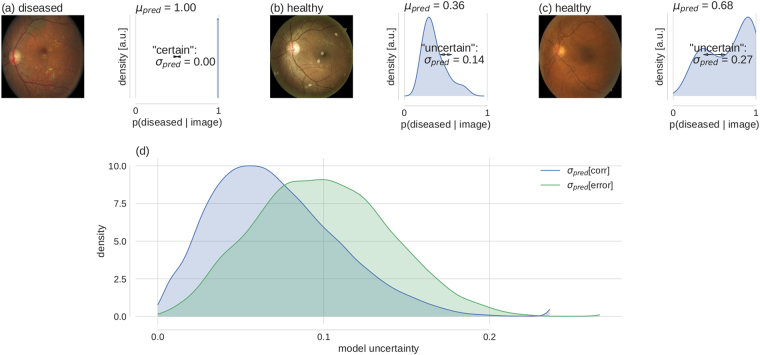
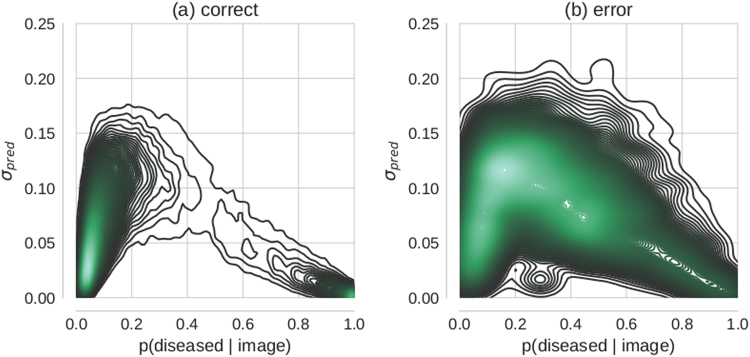
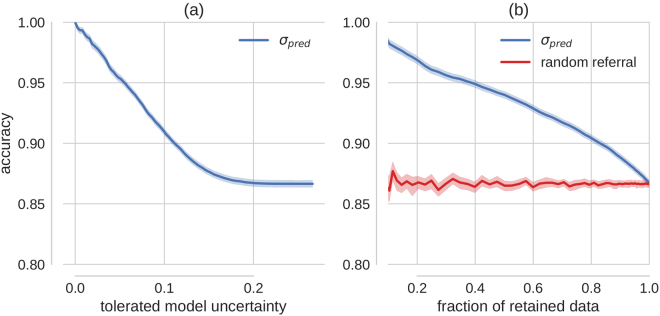
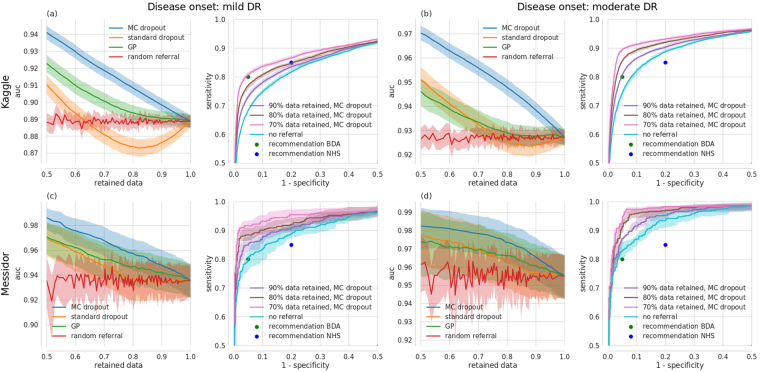
Deep learning (DL) has revolutionized the field of computer vision and image processing. In medical imaging, algorithmic solutions based on DL have been shown to achieve high performance on tasks that previously required medical experts. However, DL-based solutions for disease detection have been proposed without methods to quantify and control their uncertainty in a decision. In contrast, a physician knows whether she is uncertain about a case and will consult more experienced colleagues if needed. Here we evaluate drop-out based Bayesian uncertainty measures for DL in diagnosing diabetic retinopathy (DR) from fundus images and show that it captures uncertainty better than straightforward alternatives. Furthermore, we show that uncertainty informed decision referral can improve diagnostic performance. Experiments across different networks, tasks and datasets show robust generalization. Depending on network capacity and task/dataset difficulty, we surpass 85% sensitivity and 80% specificity as recommended by the NHS when referring 0−20% of the most uncertain decisions for further inspection. We analyse causes of uncertainty by relating intuitions from 2D visualizations to the high-dimensional image space. While uncertainty is sensitive to clinically relevant cases, sensitivity to unfamiliar data samples is task dependent, but can be rendered more robust.
Overview
The claims and statistics of this paper haven’t been checked yet.
Free: it reads the open-access text and checks the first 5 claims that cite a source we can check. Create a free account to check every claim.
Integrity signals
Registry
Cites
Statistics
Figures
Verification
Claims the paper makes
The claims and statistics of this paper haven’t been checked yet.
Free: it reads the open-access text and checks the first 5 claims that cite a source we can check. Create a free account to check every claim.
Claims other papers make about this one
Each is checked against this paper’s own text: does it say what the citing paper says it does?
The source backs part of the claim, not all of it — or backs it for a different population, condition or comparison.
In the citing paper
“Leibig al. [50] | et | 2017 | CNN | Classification | Diabetic Retinopathy | 3 | MC dropout”
From A review of uncertainty quantification in deep learning: Techniques, applications and challenges (2021) · cites this paper as [50]
Experimental — accuracy not yet measuredIn the citing paper
“This human-in-the-loop decision-making pipeline is known as selective prediction and has been commonly found to improve performance in non–text-based applications [25,26].”
From Identifying Deprescribing Opportunities With Large Language Models in Older Adults: Retrospective Cohort Study (2025) · cites this paper as [25]
In the citing paper
“In addition to producing valuable measures that function as uncertainty measures [358, 359, 66], these techniques can also lessen deep neural networks susceptibility to adversarial attacks [357, 360].”
From An overview of deep learning in medical imaging focusing on MRI (2019) · cites this paper as [358]
In the citing paper
“However, the intraobserver agreement was far from perfect, which is likely due to multiple factors, including the inherent model uncertainty of the network structure (43,44), the stochastic nature of network training, and the variation between the training and testing image data sets (24,45).”
From Deep learning approach for evaluating knee MR images: achieving high diagnostic performance for cartilage lesion detection. (2018) · cites this paper as [45]
Self-check
Percentages, sums and reported differences re-computed from the paper’s own numbers.
The self-check needs the paper’s full text.
Citations
Cites
Very Deep Convolutional Networks for Large-Scale Image Recognition
Simonyan, K., & Zisserman, A. (2014) · arXiv · doi:10.48550/arxiv.1409.1556 · Cited by 114,148
ImageNet classification with deep convolutional neural networks
Krizhevsky, A., Sutskever, I., & Hinton, G. E. (2017) · Communications of the ACM · doi:10.1145/3065386 · Cited by 112,155 · cited 8×
“960] Messidor Single best44 (0) vs (1, 2, 3) 0.”
BackgroundInfluentialLeCun, Y., Bengio, Y., & Hinton, G. (2015) · Nature · doi:10.1038/nature14539 · Cited by 84,126
ImageNet Large Scale Visual Recognition Challenge
Russakovsky, O., Deng, J., Su, H., Krause, J., Satheesh, S., Ma, S., Huang, Z., Karpathy, A., Khosla, A., Bernstein, M., et al. (2015) · International Journal of Computer Vision · doi:10.1007/s11263-015-0816-y · Cited by 39,380 · cited 1×
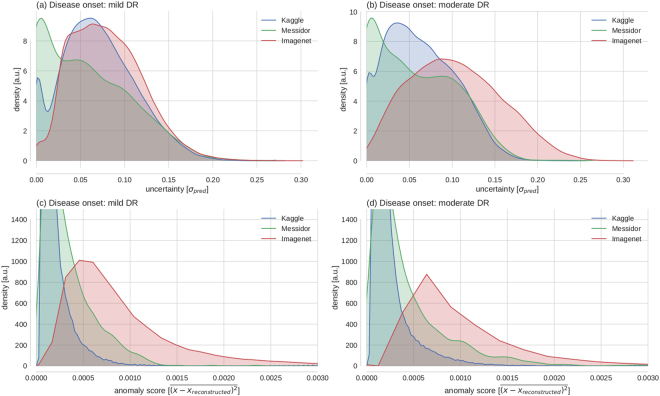
“The space of images with content unknown to the disease detection networks was sampled by performing predictions with associated uncertainties on the 2012 Imagenet validation set (49101 coloured, non-fundus images from 1000 different categories) 58 (Fig.”
Method(2014) · Cited by 33,419
Advances in neural information processing systems 7
Cios, K., & Shields, M. (1997) · Neurocomputing · doi:10.1016/s0925-2312(97)90018-7 · Cited by 22,059
Deep learning in neural networks: an overview
Schmidhuber, J. (2015) · Neural Networks · doi:10.1016/j.neunet.2014.09.003 · Cited by 18,570 · cited 7×
“960] Messidor Single best44 (0) vs (1, 2, 3) 0.”
BackgroundMethodInfluentialDermatologist-level classification of skin cancer with deep neural networks
Esteva, A., Kuprel, B., Novoa, R. A., Ko, J., Swetter, S. M., Blau, H. M., & Thrun, S. (2017) · Nature · doi:10.1038/nature21056 · Cited by 14,362 · cited 1×
“This paradigm can readily be applied to recently published high performance disease detection networks 14,15 as well as other medical tasks and datasets as initial work on image registration 60 and genome data 61 has already shown.”
Method(2010) · International Conference on Machine Learning · Cited by 13,995
Gaussian Processes for Machine Learning
Rasmussen, C. E., & Williams, C. K. I. (2005) · doi:10.7551/mitpress/3206.001.0001 · Cited by 11,705
Research works printed but not linked: 8
- Lipton, Z. C., Kale, D. C., Elkan, C. & Wetzell, R. Learning to Diagnose with LSTM Recurrent Neural Networks. International Conference on Learning Representations (ICLR) (2016).
- Kingma, D. P., Salimans, T. & Welling, M. Variational Dropout and the Local Reparameterization Trick. Advances in Neural Information Processing Systems (2015).
- Bishop, C. M. Pattern Recognition and Machine Learning, Springer-Verlag New York, Inc., Secaucus, NJ, USA, (2006).
- Gal, Y. Uncertainty in Deep Learning. Ph.D. thesis, University of Cambridge (2016).
- Angermueller, C. & Stegle, O. Multi-task deep neural network to predict CpG methylation profiles from low-coverage sequencing data. NIPS MLCB workshop (2015).
- Damianou AC Lawrence ND Deep Gaussian Processes International Conference on Artificial Intelligence and Statistics 2013 31 207 215
- Cho E Cho MJ Variance of sample variance with replacement International Journal of Pure and Applied Mathematics 2009 52 43 47
- Al-Rfou, R. et al. Theano: A Python framework for fast computation of mathematical expressions. arXiv:1605.02688 (2016). · arXiv
Cited by
Items 301–400 of 533
Masayoshi, K., Katada, Y., Ozawa, N., Ibuki, M., Negishi, K., & Kurihara, T. (2022) · Informatics in Medicine Unlocked · doi:10.1016/j.imu.2022.101060 · Cited by 8
Augmentation by Counterfactual Explanation -Fixing an Overconfident Classifier
Singla, S., Murali, N., Arabshahi, F., Triantafyllou, S., & Batmanghelich, K. N. (2023) · IEEE Winter Conference on Applications of Computer Vision · doi:10.1109/wacv56688.2023.00470 · Cited by 12
“For optimal decision making, the DNN should produce accurate predictions as well as quantify uncertainty over its predictions [8, 38].”
MethodLearn2Agree: Fitting with Multiple Annotators Without Objective Ground Truth
Wang, C., Gao, Y., Fan, C., Hu, J., Lam, T. L., Lane, N. D., & Bianchi‐Berthouze, N. (2023) · Lecture notes in computer science · doi:10.1007/978-3-031-39539-0_13 · Cited by 15
“…Bayesian methods, where parameters of the posterior distribution (e.g. mean and variance) of the uncertainty are estimated with Monte Carlo dropout Leibig et al. (2017); Kendall et al. (2017); Ma et al. (2017) and parametric learning Hu et al. (2020); Charpentier et al. (2020) etc.; and ii)…”
Exploiting Uncertainties from Ensemble Learners to Improve Decision-Making in Healthcare AIPreprint
Tan, Y., Jin, B., Yue, X., Chen, Y., & Sangiovanni-Vincentelli, A. L. (2020) · arXiv (Cornell University) · doi:10.48550/arxiv.2007.06063 · Cited by 10
“Variance Metric (VAR) The variance (or standard deviation) metric [19, 20] measures how spread out the individual learners’ predictions are from the ensemble prediction ŷ i .”
BackgroundFan, H., Ferianc, M., & Luk, W. W. (2022) · ACM/IEEE Design Automation Conference (DAC) · doi:10.1145/3489517.3530451 · Cited by 12
“Invalid uncertainty estimates can result in overconfident and uncalibrated decisions, which present hazards for deploying NNs in safety-critical applications such as in healthcare or autonomous driving [11, 15].”
BackgroundComparative evaluation of uncertainty estimation and decomposition methods on liver segmentation
Cangalovic, V. S., Thielke, F., & Meine, H. (2023) · International Journal of Computer Assisted Radiology and Surgery · doi:10.1007/s11548-023-03001-1 · Cited by 8
“MC dropout retains the computational efficiency of NNs at training time without architecture modifications and is thus a popular choice for approximating BNNs [8–10].”
BackgroundBayesian deep learning methods applied to diabetic retinopathy disease: a review
Ismael, H. R., & Hassan, M. M. (2023) · Indonesian Journal of Electrical Engineering and Computer Science · doi:10.11591/ijeecs.v30.i2.pp1167-1177 · Cited by 19
A Flexible and Adaptive Framework for Abstention Under Class ImbalancePreprint
Shrikumar, A., Alexandari, A. M., & Kundaje, A. B. (2018) · arXiv (Cornell University) · Cited by 7
Evaluating subgroup disparity using epistemic uncertainty in mammographyPreprint
Lu, C., Lemay, A., Hoebel, K., & Kalpathy–Cramer, J. (2021) · arXiv (Cornell University) · doi:10.48550/arxiv.2107.02716 · Cited by 10
High Frequency EEG Artifact Detection with Uncertainty via Early Exit ParadigmPreprint
Qendro, L., Campbell, A., Lió, P., & Mascolo, C. (2021) · arXiv (Cornell University) · doi:10.48550/arxiv.2107.10746 · Cited by 7
“Particularly within a medical setting, a highly uncertain false prediction, like the one provided by E(4)G , is more informative for a clinician-in-the-loop framework, where uncertain samples could be transferred to a human expert for further investigation (Leibig et al., 2017).”
H-Calibration: Rethinking Classifier Recalibration With Probabilistic Error-Bounded Objective
Huang, W., Cao, G., Xia, J., Chen, J., Wang, H., & Zhang, J. (2025) · IEEE Transactions on Pattern Analysis and Machine Intelligence · doi:10.1109/tpami.2025.3582796 · Cited by 8
“Calibration ensures that machine learning models provide meaningful and interpretable predicted probabilities, consistent with realized outcomes, making it a key mathematical formulation for model reliability [12], [17], [30], [31], [31], [32], [33], [34], [35].”
Naeem, O. B., & Saleem, Y. (2024) · Journal of Imaging · doi:10.3390/jimaging10100256 · Cited by 8
“This approach bore similarities to previous studies, such as the utilization of dropout-based Bayesian uncertainty measures by Leibig et al. to enhance the detection of diabetic retinopathy from fundus images [23,24].”
ResultYuan, H., Zhu, M., Yang, R., Liu, H., Li, I., & Hong, C. (2025) · Health care science · doi:10.1002/hcs2.70009 · Cited by 9
“ A large variance demonstrates that the process of I i by M u is either highly sensitive to neuron connectivity altering or akin to random guessing, reflecting significant uncertainty [51, 93].”
Exploring Instance-Level Uncertainty for Medical Detection
Yang, J., Liang, Y., Zhang, Y., Song, W., Wang, K., & He, L. (2021) · IEEE International Symposium on Biomedical Imaging (ISBI) · doi:10.1109/isbi48211.2021.9434165 · Cited by 6
“As for classification tasks, example works include the modeling of uncertainty for diabetic retinopathy diagnosis from fundus images [4] and lesion detection from knee MRI [5].”
MethodDensity regression and uncertainty quantification with Bayesian deep noise neural networks
Zhang, D., Liu, T., & Kang, J. (2023) · Stat · doi:10.1002/sta4.604 · Cited by 7
“When the AI model is not sufficiently certain in its assessment of a patient, the patient should be referred to human physicians for further evaluation (Jiang et al., 2012; Leibig et al., 2017).”
Fuzzy Multiview Graph Learning on Sparse Electronic Health Records
Tang, T., Han, Z., Yu, S., Bagirov, A., & Zhang, Q. (2024) · IEEE Transactions on Fuzzy Systems · doi:10.1109/tfuzz.2024.3415730 · Cited by 7
“However, the diverse compositions within structured and unstructured EHRs can introduce uncertainties during feature alignment in multi-view learning [18].”
BackgroundToward Safe Decision-Making via Uncertainty Quantification in Machine Learning
Cobb, A. D., Jalaian, B. A., Bastian, N. D., & Russell, S. (2021) · Springer eBooks · doi:10.1007/978-3-030-77283-3_19 · Cited by 6
Lu, H., Mardanshahi, A., Cantero‐Chinchilla, S., Gryllias, K., & Chronopoulos, D. (2024) · Journal of Physics Conference Series · doi:10.1088/1742-6596/2647/18/182022 · Cited by 6
Out of Distribution Detection for Intra-operative Functional Imaging
Adler, T. J., Ayala, L. A., Ardizzone, L., Kenngott, H. G., Vemuri, A., Müller-Stich, B. P., Rother, C., Köthe, U., & Maier-Hein, L. (2019) · Lecture notes in computer science · doi:10.1007/978-3-030-32689-0_8 · Cited by 6
“Although initial steps with respect to uncertainty estimation and compensation have been taken in the field of optical imaging [1, 2, 5, 8, 9, 15], we are, to our knowledge, the first to address the problem of OoD detection to prevent algorithms from presenting spurious results.”
BackgroundLearn-By-Calibrating: Using Calibration As A Training Objective
Thiagarajan, J. J., Venkatesh, B., & Rajan, D. (2020) · IEEE International Conference on Acoustics Speech and Signal Processing · doi:10.1109/icassp40776.2020.9053195 · Cited by 9
“to utilize prediction uncertainties in deep models to shed light onto when and how much to trust the predictions [3, 4, 5, 6].”
BackgroundLemmer, S. J., Song, J. Y., & Corso, J. J. (2021) · CHI Conference on Human Factors in Computing Systems · doi:10.1145/3411764.3445181 · Cited by 8
“In parallel, some work has focused on the medical domain for selective prediction, noting the danger of misdiagnosis [40, 47, 50, 57, 74].”
BackgroundMcCartney, M., Sengupta, U., & Juniper, M. P. (2021) · Journal of Engineering for Gas Turbines and Power · doi:10.1115/1.4052145 · Cited by 6
Confidence-Guided Radiology Report Generation.Preprint
Wang, Y., Lin, Z., Tian, J., Shi, Z., Zhang, Y., Fan, J., & He, Z. (2021) · arXiv (Cornell University) · Cited by 6
Toh, S. Y., Cai, C., Wang, L. R., Bai, X., Ngeow, J. Y. Y., & Fan, X. (2025) · CHI Conference Extended Abstracts on Human Factors in Computing Systems (CHI EA) · doi:10.1145/3706599.3719791 · Cited by 12
“Some of the more common estimation methods used to derive UQ for medical imaging include Monte-Carlo Dropout and Deep Ensemble [39], which have been applied to the detection and classification of diseases from fundus, histology, dermoscopic, MRI and X-ray images [38, 40, 42, 43].”
Nakanishi, R., Hirata, A., & Kubota, Y. (2025) · Sensors · doi:10.3390/s26010212 · Cited by 6
Potenzial von Methoden der künstlichen Intelligenz für die Qualitätssicherung
Berens, P., Waldstein, S. M., Ayhan, M. S., Kuemmerle, L. B., Agostini, H. T., Stahl, A., & Ziemssen, F. (2020) · Der Ophthalmologe · doi:10.1007/s00347-020-01063-z · Cited by 7
Self-citationContreras, I., Calm, R., Sainz, M. Á., Herrero, P., & Vehí, J. (2021) · Mathematics · doi:10.3390/math9060631 · Cited by 5
SLOVA: Uncertainty estimation using single label one-vs-all classifier
Wójcik, B., Grela, J., Śmieja, M., Misztal, K., & Tabor, J. (2022) · Applied Soft Computing · doi:10.1016/j.asoc.2022.109219 · Cited by 5
“Although calibration allows for aligning predictive probabilities with model accuracy on in-distribution data, this technique may not be adequate for detecting OOD data [28].”
MethodCalibration of Automatic Seizure Detection Algorithms
Borovac, A., Rúnarsson, T. P., Thorvardsson, G., & Guðmundsson, S. (2022) · IEEE Signal Processing in Medicine and Biology Symposium · doi:10.1109/spmb55497.2022.10014868 · Cited by 6
“Due to the extra computational cost, Monte Carlo dropout is infrequently used for this purpose but it has the additional benefit of providing probability estimates that are better calibrated than those obtained with standard dropout [44].”
BackgroundAutomated Placement of Scan and Pre-Scan Volumes for Breast MRI Using a Convolutional Neural Network
Allen, T. J., Bancroft, L. C. H., Wang, K., Wang, P. N., Ünal, O., Estkowski, L. D., Cashen, T., Bayram, E., Strigel, R. M., & Holmes, J. H. (2023) · Tomography · doi:10.3390/tomography9030079 · Cited by 5
ACT-Net: Anchor-Context Action Detection in Surgery Videos
Hao, L., Hu, Y. P., Lin, W., Wang, Q., Li, H., Fu, H., Duan, J., & Liu, J. (2023) · Lecture notes in computer science · doi:10.1007/978-3-031-43996-4_19 · Cited by 7
“Moreover, they do not provide any information about the reliability of their output, which is a key requirement for integrating into assistance systems of surgery [11].”
BackgroundA Generalized Approach to Determine Confident Samples for Deep Neural Networks on Unseen Data
Zhang, M., Leung, K., Ma, Z., Jin, W., & Avinash, G. (2019) · Lecture notes in computer science · doi:10.1007/978-3-030-32689-0_7 · Cited by 6
Optimal convergence rates of deep neural networks in a classification setting
Meyer, J. T. (2023) · Electronic Journal of Statistics · doi:10.1214/23-ejs2187 · Cited by 9
“Neural Networks have shown outstanding results in many classification tasks such as image recognition [7], language recognition [4], cancer recognition [10], and other disease detection [16].”
BackgroundHongshu, L., Seedat, N., & Ive, J. (2024) · Frontiers in Artificial Intelligence · doi:10.3389/frai.2024.1374162 · Cited by 5
“Popular Bayesian approximations (e.g., model ensembles and dropout techniques) have primarily been studied in the general NLP domain (Ovadia et al., 2019) or for continuous healthcare data (Combalia et al., 2020; Leibig et al., 2017).”
BackgroundLearn to Estimate Labels Uncertainty for Quality AssurancePreprint
Tomczack, A., Navab, N., & Albarqouni, S. (2019) · arXiv (Cornell University) · doi:10.48550/arxiv.1909.08058 · Cited by 5
“Having said that, Leibig et al. [15] raised a valid point in their discussion regarding the ambiguity of the uncertainty source, specifically, the epistimic and labels uncertainty.”
Block Annotation: Better Image Annotation for Semantic Segmentation with Sub-Image DecompositionPreprint
Lin, H., Upchurch, P., & Bala, K. (2020) · arXiv (Cornell University) · doi:10.48550/arxiv.2002.06626 · Cited by 5
“The uncertainty of predictions is correlated with incorrect predictions [31, 29].”
BackgroundBeyond the Mean-Field: Structured Deep Gaussian Processes Improve the Predictive UncertaintiesPreprint
Lindinger, J., Reeb, D., Lippert, C., & Rakitsch, B. (2020) · arXiv (Cornell University) · doi:10.48550/arxiv.2005.11110 · Cited by 11
“However, these methods can be applied in safety-critical applications only if they return predictive distributions allowing to quantify the uncertainty of the prediction [17].”
BackgroundUncertainty-guided attention learning for malaria parasite detection in thick blood smears
Xiong, H., Wang, Z., Sharan, R. V., & Berkovsky, S. (2025) · Neural Networks · doi:10.1016/j.neunet.2025.107833 · Cited by 3
Uncertainty quantification and explainable AI in orthopaedic imaging: A timely call to action
Tafti, A. P., Gu, Q., & Plate, J. F. (2025) · Journal of Clinical Orthopaedics and Trauma · doi:10.1016/j.jcot.2025.103208 · Cited by 4
Youssef, Y. B., Amdouni, A., Manita, G., & Hassine, M. (2025) · Network Modeling Analysis in Health Informatics and Bioinformatics · doi:10.1007/s13721-025-00653-8 · Cited by 5
“Monte Carlo dropout provides a tractable approximation (Gal and Ghahramani 2016 ); Leibig et al. ( 2017 ) showed uncertainty correlates with error in diabetic retinopathy screening; Dusenberry et al. ( 2020 ) compared methods for calibration and out-of-distribution detection.”
ODIRNet: a robust deep neural network for diabetic retinopathy
Ray, R., Jena, S., Biswal, S. K., Parida, P., & Darswal, M. (2025) · Engineering Research Express · doi:10.1088/2631-8695/adbc48 · Cited by 4
Jeffrey, J., RajKumar, A., Pandey, S., Bathala, L., & Yalavarthy, P. K. (2025) · Computerized Medical Imaging and Graphics · doi:10.1016/j.compmedimag.2025.102630 · Cited by 4
Sinha, S., Franciosa, P., & Ceglarek, D. J. (2020) · IEEE International Conference on Industrial Informatics (INDIN) · doi:10.1109/indin45582.2020.9442245 · Cited by 4
Kim, Y., Kim, K., & Choe, Y. H. (2023) · Quantitative Imaging in Medicine and Surgery · doi:10.21037/qims-23-840 · Cited by 4
Deep learning ensemble framework for multiclass diabetic retinopathy classification
Saxena, M., Narra, P., Saxena, M., & Saxena, R. (2024) · TELKOMNIKA (Telecommunication Computing Electronics and Control) · doi:10.12928/telkomnika.v22i3.25794 · Cited by 4
Landgraf, S., Qin, R., & Ulrich, M. (2026) · ISPRS Open Journal of Photogrammetry and Remote Sensing · doi:10.1016/j.ophoto.2026.100146 · Cited by 9
Application of Deep Learning in Biological Big Data Analysis
Shukla, R., Yadav, A. K., & Singh, T. R. (2020) · Advances in information security, privacy, and ethics book series · doi:10.4018/978-1-7998-3444-1.ch006 · Cited by 4
Wang, L., Wang, D., Zhang, C., Liu, S., & Zhang, M. (2021) · Optical Fiber Communication Conference · doi:10.1364/ofc.2021.w6a.45 · Cited by 5
Uncertainty Informed Anomaly Scores with Deep Learning: Robust Fault Detection with Limited Data
Zgraggen, J., Pizza, G., & Huber, L. G. (2022) · PHM Society European Conference · doi:10.36001/phme.2022.v7i1.3342 · Cited by 4
Efficient Uncertainty Quantification for Multilabel Text Classification
Yu, J., Cristea, A. I., Harit, A., Sun, Z., Aduragba, O. T., Shi, L., & Moubayed, N. A. (2022) · International Joint Conference on Neural Networks (IJCNN) · doi:10.1109/ijcnn55064.2022.9892871 · Cited by 6
“…estimation has been successfully used on a wide range of applications, such as semantic segmentation [23], language modelling [24], diabetic retinopathy [25], transport data analysis [26], magnetic resonance imaging (MRI) segmentation [27], text classification [28] and learning analytics [29].”
MethodPerception and Semantic Aware Regularization for Sequential Confidence Calibration
Peng, Z., Luo, Y., Chen, T., Xu, K., & Huang, S. (2023) · IEEE Computer Society Conference on Computer Vision and Pattern Recognition/Proceedings - IEEE Computer Society Conference on Computer Vision and Pattern Recognition/Proceedings · doi:10.1109/cvpr52729.2023.01027 · Cited by 6
“Calibration of scalar classification has been extensively studied for a long time [77,105, 114, 157].”
BackgroundGeneralisation and reliability of deep learning for digital pathology in a clinical setting
Pocevičiūtė, M. (2023) · Linköping studies in science and technology. Dissertations · doi:10.3384/9789180753005 · Cited by 6
“For example, the most uncertain predictions may be marked for further evaluation by medical experts, enabling them to concentrate on difficult cases [72, 27].”
BackgroundElongated Physiological Structure Segmentation via Spatial and Scale Uncertainty-Aware Network
Zhang, Y., Xi, R., Fu, H., Towey, D., Bai, R., Higashita, R., & Liu, J. (2023) · Lecture notes in computer science · doi:10.1007/978-3-031-43901-8_31 · Cited by 4
Using Ensemble Classifiers to Detect Incipient AnomaliesPreprint
Jin, B., Tan, Y., Liu, A., Yue, X., Chen, Y., & Sangiovanni-Vincentelli, A. L. (2020) · arXiv (Cornell University) · doi:10.48550/arxiv.2008.08710 · Cited by 4
“In literature, a variety of ensemble methods have been proposed on the estimation of decision uncertainties [9, 20, 21].”
BackgroundMacêdo, D., & Ludermir, T. B. (2021) · arXiv (Cornell University) · Cited by 4
Nasr, M. C. B., de Araujo-Filho, P. F., Kaddoum, G., & Mourad, A. (2025) · IEEE Internet of Things Journal · doi:10.1109/jiot.2025.3580286 · Cited by 3
“In the literature, various techniques to approximate this uncertainty using heuristic approximations were proposed [28], [29], [30], which employs heuristic approximations of epistemic uncertainty.”
Improving Accuracy and Calibration via Differentiated Deep Mutual Learning
Liu, H., Cui, P., Wang, B., Chen, W., Zhang, Y., Zhu, J., & Hu, X. (2025) · IEEE Computer Society Conference on Computer Vision and Pattern Recognition/Proceedings - IEEE Computer Society Conference on Computer Vision and Pattern Recognition/Proceedings · doi:10.1109/cvpr52734.2025.02404 · Cited by 5
“In safety-critical areas such as medical diagnosis [4, 18], self-driving cars [20], and protein engineering [6], accurate uncertainty estimation (i.e., well-calibrated prediction) is crucial for reliable model deployment.”
Benchmarking Uncertainty and Its Disentanglement in Multi-label Chest X-Ray Classification
Baur, S., Samek, W., & Ma, J. (2025) · Lecture notes in computer science · doi:10.1007/978-3-032-06593-3_18 · Cited by 7
Yuebo, M. E. N. G., Yin, G., Ye, S., Wang, Q., Liu, G., Li, X., & Geng, X. (2026) · Engineering Applications of Artificial Intelligence · doi:10.1016/j.engappai.2026.114129 · Cited by 3
ALMansour, A. G. M., & Alshomrani, F. (2026) · Scientific Reports · doi:10.1038/s41598-026-48187-x · Cited by 3
DISCO: Decoupling representation learning and risk control for reliable credit card fraud detection
Zhu, R., Zhang, X., Wang, T., Liao, J., Chung, S., & Zhang, X. (2026) · Decision Support Systems · doi:10.1016/j.dss.2026.114717 · Cited by 4
Radial Bayesian Neural Networks: Robust Variational Inference In Big Models
Farquhar, S., Osborne, M. A., & Gal, Y. (2019) · Cited by 3
Humm, B. G., Bense, H., Bock, J., Classen, M., Halvani, O., Herta, C., Hoppe, T., Juwig, O., & Siegel, M. (2020) · Informatik-Spektrum · doi:10.1007/s00287-020-01259-2 · Cited by 3
Model Uncertainty for Annotation Error Correction in Deep Learning Based Intrusion Detection System
Chen, W., Li, H., Zeng, Y., Ren, Z., & Zheng, X. (2019) · IEEE International Conference on Smart Cloud (SmartCloud) · doi:10.1109/smartcloud.2019.00033 · Cited by 3
“1 explains the details of adopting SV to detect annotation errors [13].”
BackgroundSpears, T., Zohren, S., & Roberts, S. (2020) · The Journal of Financial Data Science · doi:10.2139/ssrn.3664497 · Cited by 7
“This is despite innovations and demonstrable utility within a diverse range of application domains, including computer vision, medicine and astrophysics [7–9].”
BackgroundUncertainty Quantification for Text Classification
Zhang, D., Şensoy, M., Makrehchi, M., & Taneva-Popova, B. (2023) · Lecture notes in computer science · doi:10.1007/978-3-031-28241-6_38 · Cited by 5
Confidence intervals of survival predictions with neural networks trained on molecular data
Roblin, E., Cournède, P.-H., & Michiels, S. (2023) · Informatics in Medicine Unlocked · doi:10.1016/j.imu.2023.101426 · Cited by 4
Exploring Structure-Wise Uncertainty for 3D Medical Image Segmentation
Vasiliuk, A., Frolova, D., Belyaev, M., & Shirokikh, B. (2023) · Lecture notes in electrical engineering · doi:10.1007/978-981-16-6775-6_2 · Cited by 5
Jin, B., Tan, Y., Chen, Y., Poolla, K. R., & Sangiovanni-Vincentelli, A. L. (2020) · arXiv (Cornell University) · doi:10.48550/arxiv.2007.03167 · Cited by 3
“The MC-dropout technique was also applied to the estimation of decision uncertainty in diabetic retinopathy diagnosis [18] and also the detection of low-severity faults in chiller systems [13].”
BackgroundMethodGeneralizing Fault Detection Against Domain Shifts Using Stratification-Aware Cross-ValidationPreprint
Tan, Y., Jin, B., Cui, Q., Yue, X., & Sangiovanni-Vincentelli, A. L. (2020) · arXiv (Cornell University) · doi:10.48550/arxiv.2008.08713 · Cited by 3
Building Calibrated Deep Models via Uncertainty Matching with Auxiliary Interval Predictors
Thiagarajan, J. J., Venkatesh, B., Sattigeri, P., & Bremer, P. (2020) · Proceedings of the AAAI Conference on Artificial Intelligence · doi:10.1609/aaai.v34i04.6062 · Cited by 19
Case study: Lymph node malignancy classification for head and neck cancer radiation therapy
Wang, J., Chen, L., Dohopolski, M. J., & Sher, D. J. (2024) · Elsevier eBooks · doi:10.1016/b978-0-12-822000-9.00017-3 · Cited by 2
Explorations of the Softmax Space: Knowing When the Neural Network Doesn’t Know
Sikar, D., Garcez, A. D., & Weyde, T. (2026) · Lecture notes in computer science · doi:10.1007/978-3-032-21477-5_20 · Cited by 2
Robustness of Bayesian Methods in Healthcare System Assessment: A Comprehensive Review
Akhtar, M. T. (2025) · International Journal of Statistics in Medical Research · doi:10.6000/1929-6029.2025.14.62 · Cited by 2
“(2017) [40] showed that Monte Carlo dropout can approximate Bayesian inference in CNNs, allowing uncertainty estimation in DR classification.”
InfluentialTchokponhoue, G. A. D., & Idri, A. (2026) · Results in Engineering · doi:10.1016/j.rineng.2026.110453 · Cited by 2
Leveraging deep learning to infer continuous predictions from ordinal labels in medical imaging
Hoebel, K., Lemay, A., Campbell, J. P., Ostmo, S. R., Chiang, M. F., Bridge, C. P., Li, M., Singh, P., Coyner, A. S., & Kalpathy–Cramer, J. (2026) · PLOS Digital Health · doi:10.1371/journal.pdig.0001248 · Cited by 2
Neural network-based estimation and control of cyber-physical systems using artificial intelligence
Ohemeng, M. O. (2026) · Internet of Things · doi:10.1016/j.iot.2026.102096 · Cited by 2
Regression with Uncertainty Quantification in Large Scale Complex Data
Wilkins, N., Johnson, M., & Nwogu, I. (2022) · Conference proceedings/Conference proceedings - IEEE International Conference on Systems, Man, and Cybernetics · doi:10.1109/smc53654.2022.9945367 · Cited by 3
“the model’s confidence in its predicted values is a high source of potential risk and liability [1].”
BackgroundKeydana, S. (2018) · Cited by 2
Brown, K. E., Talbert, S., & Talbert, D. A. (2023) · PubMed Central · Cited by 4
Calibration Methods for Automatic Seizure Detection Algorithms
Borovac, A., Agustsson, D. H., Rúnarsson, T. P., & Guðmundsson, S. (2024) · Springer eBooks · doi:10.1007/978-3-031-51893-5_3 · Cited by 2
Implicit generative prior for Bayesian neural networks
Liu, Y., & Wang, X. (2024) · The Annals of Applied Statistics · doi:10.1214/24-aoas1908 · Cited by 2
A semi-supervised multiscale generalized-VAE framework for one-class classification
Sharma, R., & Awate, S. P. (2024) · Neurocomputing · doi:10.1016/j.neucom.2024.129172 · Cited by 2
Certainty in Uncertainty! An Improved GI Bleeding Detection Pipeline with Uncertainty Estimation
Alavala, S., & Gorthi, S. (2024) · Indian Conference on Computer Vision, Graphics and Image Processing · doi:10.1145/3702250.3702271 · Cited by 2
“This uncertainty may be from various factors like image quality variations, ambiguous features, and limitations in training data, which can significantly impact the reliability and clinical utility of these models [21, 23].”
Assessing the quality of whole slide images in cytology from nuclei features
Barthe, P., Brixtel, R., Caillot, Y., Lemoine, B., Renouf, A., Thurotte, V., Beniken, O., Bougleux, S., & Lézoray, O. (2025) · Journal of Pathology Informatics · doi:10.1016/j.jpi.2025.100420 · Cited by 2
“26 To the best of our knowledge, no similar work has yet been done for cytology, which we propose in the following sections.”
Gayap, H. T., & Akhloufi, M. A. (2025) · Applied Biosciences · doi:10.3390/applbiosci4010011 · Cited by 5
“Recently, deep learning technologies have emerged as powerful tools for medical image analysis, offering promising solutions for automated lung CT segmentation [4–6].”
Schoeffer, J., De‐Arteaga, M., & Elmer, J. (2025) · ACM Conference on Fairness, Accountability, and Transparency (FAccT) · doi:10.1145/3715275.3732070 · Cited by 7
“Uncertainty is considered a key concept in decision support [24, 42, 82], and label indeterminacy provides a novel perspective for developing techniques to estimate and communicate this uncertainty.”
Optimizing Three Critical Factors for Practical and Effective OOD Detection Fine-Tuning
Choi, H., Chung, J., & Jeong, H. (2026) · Lecture notes in computer science · doi:10.1007/978-3-032-31930-2_29 · Cited by 2
“Assigning high confidence to out-of-distribution (OOD) data is a crucial problem in safety-critical fields such as autonomous driving [14] and medicine [19]; to address this, a benchmark and the maximum softmax probability (MSP) baseline were proposed [10].”
Verantwortlich Forschen mit und zu Big Data-Analysen und Künstlicher Intelligenz
Heesen, J. (2019) · Springer eBooks · doi:10.1007/978-3-662-60564-6_14 · Cited by 2
A Brief View on Medical Diagnosis Applications with Deep Learning
Köse, U., Deperlioğlu, Ö., Alzubi, J. A. A., & Pătruţ, B. (2020) · Studies in computational intelligence · doi:10.1007/978-981-15-6325-6_3 · Cited by 2
Correctness-preserving Compression of Datasets and Neural Network Models
Joseph, V., Chalapathi, N., Bhaskara, A., Gopalakrishnan, G. L., Panchekha, P., & Zhang, M. (2020) · IEEE/ACM International Workshop on Software Correctness for HPC Applications (Correctness) · doi:10.1109/correctness51934.2020.00006 · Cited by 3
“Our tools could be used to expose atypical examples for further human inspection [2], choose not to classify certain examples when the compressed model is uncertain [3]–[6], or to aid in explaining the behavior of compressed models.”
MethodChagas, P., Souza, L., Pontes, I., Calumby, R. T., Ângelo, M. F., Duarte, A. A., dos‐Santos, W. L. C., & de Oliveira, L. R. (2021) · doi:10.5753/sbcas.2021.16070 · Cited by 3
“Leibig et al. [2017] proposed a deep-learning-based approach to detect diabetic retinopathy (DR) from fundus images.”
BackgroundLayerwise Approximate Inference for Bayesian Uncertainty Estimates on Deep Neural Networks
Zhang, N., Chen, X., & Quan, L. (2021) · International Joint Conference on Neural Networks (IJCNN) · doi:10.1109/ijcnn52387.2021.9534229 · Cited by 2
PathoSpotter: Computational Intelligence Applied to Nephropathology
de Oliveira, L. R., Chagas, P., Duarte, A. A., Calumby, R. T., Santos, E., Ângelo, M. F., & dos Santos, W. (2022) · Springer eBooks · doi:10.1007/978-3-031-11570-7_16 · Cited by 2
Specialists Outperform Generalists in Ensemble ClassificationPreprint
Meyen, S., Göppert, F., Alber, H., Ulrike Von Luxburg, A., & Franz, V. H. (2021) · arXiv (Cornell University) · doi:10.48550/arxiv.2107.04381 · Cited by 3
“For example, a deep neural network may take an image of a patient’s retina and predict whether the patient suffers from a retinal disease (example taken from Ayhan et al., 2020, Leibig et al., 2017, Ayhan and Berens, 2018).”
BackgroundMcCartney, M., Sengupta, U., & Juniper, M. P. (2021) · doi:10.31224/osf.io/kmha9 · Cited by 2
“The best way to leverage uncertainty in control is an ongoing area of research, largely taking place in the context of medial diagnoses, where it has been shown that referring to experts when the model uncertainty is high significantly improves overall performance [21] and reinforcement learning, where the uncertainty…”
BackgroundTrust it or Not: Confidence-Guided Automatic Radiology Report GenerationPreprint
Wang, Y., Lin, Z., Xu, Z., Dong, H., Luo, J. D., Tian, J., Shi, Z., Zhang, Y., Fan, J., & He, Z. (2023) · SSRN Electronic Journal · doi:10.2139/ssrn.4482859 · Cited by 2
Detection and Grading of Diabetic Retinopathy using Optimized BiLSTM ClassifierPreprint
Senapati, A., Tripathy, H. K., Mishra, S., Mallik, S., & Shah, M. A. (2024) · Research Square · doi:10.21203/rs.3.rs-4551982/v1 · Cited by 2
Landgraf, S., Qin, R., & Ulrich, M. (2025) · Qeios · doi:10.32388/yljos8 · Cited by 2
Madhukar, A. (2025) · Preprints.org · doi:10.20944/preprints202508.1986.v1 · Cited by 2
Metadata
- Authors
- Leibig, C., Allken, V., Ayhan, M. S., Berens, P., & Wahl, S.
- Affiliations
- University of Tübingen (DE)
- Bernstein Center for Computational Neuroscience Tübingen (DE)
- Carl Zeiss (Germany) (DE)
- Corresponding author
- Leibig, Christian
- Venue
- Scientific Reports
- Published
- 2017-12-19
- Volume
- 7
- Issue
- 1
- Pages
- 17816-17816
- ISSN
- 2045-2322 (ISSN-L)
- PMC
- PMC5736701
- OpenAlex
- W2951965145
- Semantic Scholar
- d46155be59bed4d7d2082b02bcb6734a6d66c428
- Cited by
- 510
- References
- 69
- Citations by year
- 2026: 47 · 2025: 50 · 2024: 41 · 2023: 63 · 2022: 60 · 2021: 90 · 2020: 80 · 2019: 52 · 2018: 25 · 2017: 2
- FWCI
- 33.37
- Type
- journal article
- Language
- en
- Open access
- gold
- doi.org
- Licence
- cc-by
- creativecommons.org/licenses/by/4.0 (tdm)
- creativecommons.org/licenses/by/4.0 (vor)
- Locations
- Scientific Reports (publishedVersion, cc-by)
- bioRxiv (Cold Spring Harbor Laboratory) (acceptedVersion, cc-by-nc)
- Europe PMC (PubMed Central) (publishedVersion, cc-by)
- PubMed Central (publishedVersion, cc-by)
- PubMed (publishedVersion)
- DOAJ (DOAJ: Directory of Open Access Journals) (submittedVersion)
- Funders
- Deutsche Forschungsgemeinschaft (EXC307)
- Eberhard Karls Universität Tübingen (EXC 307)
- Bundesministerium für Bildung und Forschung (01GQ1601)
- Topics
- Health Sciences › Medicine › Radiology, Nuclear Medicine and Imaging › Retinal Imaging and Analysis
- Physical Sciences › Computer Science › Computer Vision and Pattern Recognition › Advanced Neural Network Applications
- Health Sciences › Medicine › Health Informatics › Artificial Intelligence in Healthcare and Education
- Keywords
- Bayesian uncertainty quantification, deep neural network, diabetic retinopathy detection, fundus images, diagnostic decision-making, uncertainty visualization, medical image analysis, generalization to unseen data
- MeSH terms
- Machine Learning, Deep Learning, Algorithms, Bayes Theorem, Diabetic Retinopathy, Female, Humans, Image Processing, Computer-Assisted, Retina, Sensitivity and Specificity, Neural Networks, Computer, Uncertainty
About these checks
Registry, retraction, Cites and statistics results are computed, not judged, with one exception: a printed reference that no index lists is read once by a model before it counts as a citation error. Claims are extracted by a model and kept only when their quote appears verbatim in the text; each cited source is then checked, with a model’s help, for whether it says what the claim relies on. Those verdicts can be wrong — read the claim’s quote and the cited source before relying on one.
Statistics and arithmetic are recomputed, not judged.
Confidence bands are shown only for fields calibrated on our annotated test set. None is calibrated yet, so no band is shown.
What counts as a claim ›How we measure confidence ›How we check this ›
Are you an author, or do you see a problem with this page? Request a review
Data sources
Bibliographic data: Semantic Scholar, OpenAlex, Crossref.
Contains information from the Semantic Scholar Academic Graph Datasets, made available under the ODC Attribution License (ODC-BY 1.0).
Semantic Scholar’s data is described in: Kinney, R., et al. (2023). The Semantic Scholar Open Data Platform. arXiv:2301.10140.
