

Leveraging uncertainty information from deep neural networks for disease detection
Open accessPublished version of a preprint
The DOI matches its Crossref record; 66 of the 69 references it cites were found in a registry or an index.
Abstract
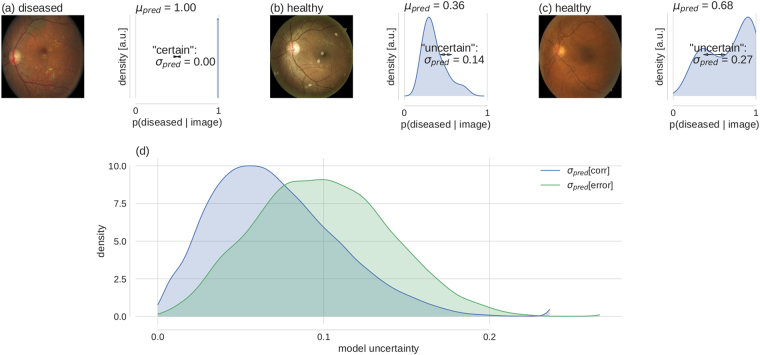
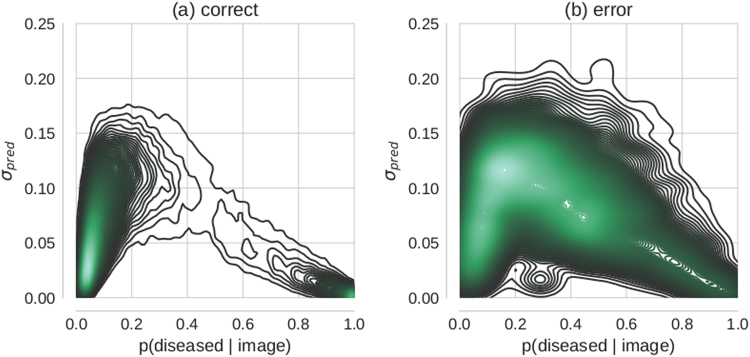
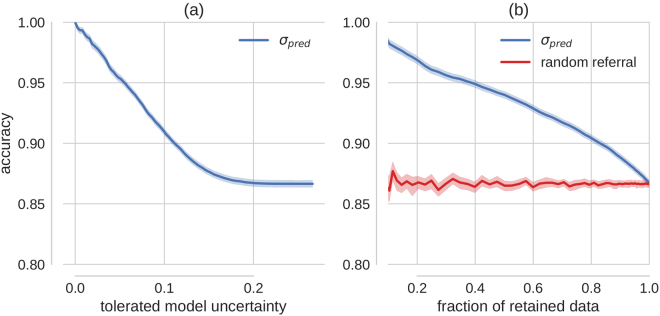
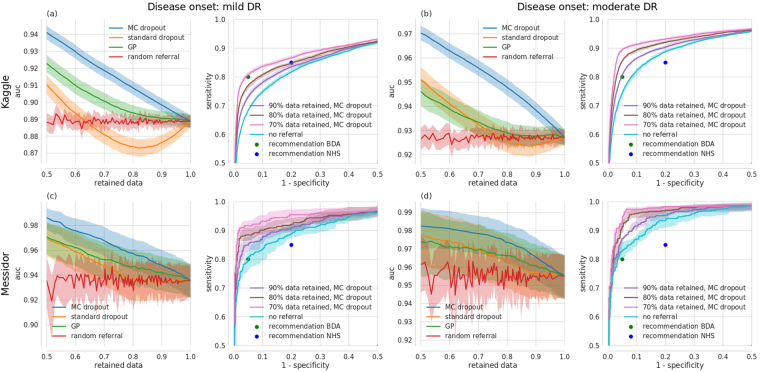
Deep learning (DL) has revolutionized the field of computer vision and image processing. In medical imaging, algorithmic solutions based on DL have been shown to achieve high performance on tasks that previously required medical experts. However, DL-based solutions for disease detection have been proposed without methods to quantify and control their uncertainty in a decision. In contrast, a physician knows whether she is uncertain about a case and will consult more experienced colleagues if needed. Here we evaluate drop-out based Bayesian uncertainty measures for DL in diagnosing diabetic retinopathy (DR) from fundus images and show that it captures uncertainty better than straightforward alternatives. Furthermore, we show that uncertainty informed decision referral can improve diagnostic performance. Experiments across different networks, tasks and datasets show robust generalization. Depending on network capacity and task/dataset difficulty, we surpass 85% sensitivity and 80% specificity as recommended by the NHS when referring 0−20% of the most uncertain decisions for further inspection. We analyse causes of uncertainty by relating intuitions from 2D visualizations to the high-dimensional image space. While uncertainty is sensitive to clinically relevant cases, sensitivity to unfamiliar data samples is task dependent, but can be rendered more robust.
Overview
The claims and statistics of this paper haven’t been checked yet.
Free: it reads the open-access text and checks the first 5 claims that cite a source we can check. Create a free account to check every claim.
Integrity signals
Registry
Cites
Statistics
Figures
Verification
Claims the paper makes
The claims and statistics of this paper haven’t been checked yet.
Free: it reads the open-access text and checks the first 5 claims that cite a source we can check. Create a free account to check every claim.
Claims other papers make about this one
Each is checked against this paper’s own text: does it say what the citing paper says it does?
The source backs part of the claim, not all of it — or backs it for a different population, condition or comparison.
In the citing paper
“Leibig al. [50] | et | 2017 | CNN | Classification | Diabetic Retinopathy | 3 | MC dropout”
From A review of uncertainty quantification in deep learning: Techniques, applications and challenges (2021) · cites this paper as [50]
Experimental — accuracy not yet measuredIn the citing paper
“This human-in-the-loop decision-making pipeline is known as selective prediction and has been commonly found to improve performance in non–text-based applications [25,26].”
From Identifying Deprescribing Opportunities With Large Language Models in Older Adults: Retrospective Cohort Study (2025) · cites this paper as [25]
In the citing paper
“In addition to producing valuable measures that function as uncertainty measures [358, 359, 66], these techniques can also lessen deep neural networks susceptibility to adversarial attacks [357, 360].”
From An overview of deep learning in medical imaging focusing on MRI (2019) · cites this paper as [358]
In the citing paper
“However, the intraobserver agreement was far from perfect, which is likely due to multiple factors, including the inherent model uncertainty of the network structure (43,44), the stochastic nature of network training, and the variation between the training and testing image data sets (24,45).”
From Deep learning approach for evaluating knee MR images: achieving high diagnostic performance for cartilage lesion detection. (2018) · cites this paper as [45]
Self-check
Percentages, sums and reported differences re-computed from the paper’s own numbers.
The self-check needs the paper’s full text.
Citations
Cites
Very Deep Convolutional Networks for Large-Scale Image Recognition
Simonyan, K., & Zisserman, A. (2014) · arXiv · doi:10.48550/arxiv.1409.1556 · Cited by 114,148
ImageNet classification with deep convolutional neural networks
Krizhevsky, A., Sutskever, I., & Hinton, G. E. (2017) · Communications of the ACM · doi:10.1145/3065386 · Cited by 112,155 · cited 8×
“960] Messidor Single best44 (0) vs (1, 2, 3) 0.”
BackgroundInfluentialLeCun, Y., Bengio, Y., & Hinton, G. (2015) · Nature · doi:10.1038/nature14539 · Cited by 84,126
ImageNet Large Scale Visual Recognition Challenge
Russakovsky, O., Deng, J., Su, H., Krause, J., Satheesh, S., Ma, S., Huang, Z., Karpathy, A., Khosla, A., Bernstein, M., et al. (2015) · International Journal of Computer Vision · doi:10.1007/s11263-015-0816-y · Cited by 39,380 · cited 1×
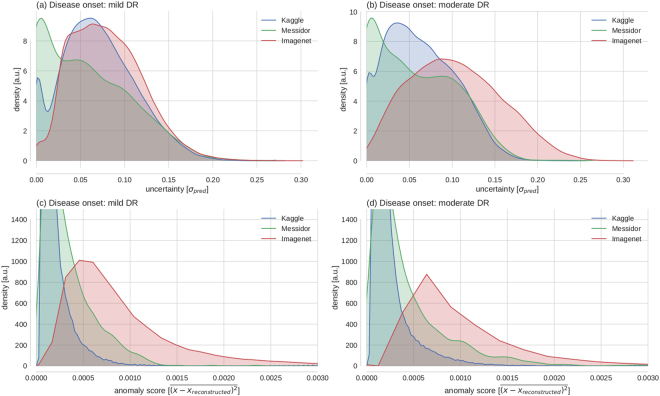
“The space of images with content unknown to the disease detection networks was sampled by performing predictions with associated uncertainties on the 2012 Imagenet validation set (49101 coloured, non-fundus images from 1000 different categories) 58 (Fig.”
Method(2014) · Cited by 33,419
Advances in neural information processing systems 7
Cios, K., & Shields, M. (1997) · Neurocomputing · doi:10.1016/s0925-2312(97)90018-7 · Cited by 22,059
Deep learning in neural networks: an overview
Schmidhuber, J. (2015) · Neural Networks · doi:10.1016/j.neunet.2014.09.003 · Cited by 18,570 · cited 7×
“960] Messidor Single best44 (0) vs (1, 2, 3) 0.”
BackgroundMethodInfluentialDermatologist-level classification of skin cancer with deep neural networks
Esteva, A., Kuprel, B., Novoa, R. A., Ko, J., Swetter, S. M., Blau, H. M., & Thrun, S. (2017) · Nature · doi:10.1038/nature21056 · Cited by 14,362 · cited 1×
“This paradigm can readily be applied to recently published high performance disease detection networks 14,15 as well as other medical tasks and datasets as initial work on image registration 60 and genome data 61 has already shown.”
Method(2010) · International Conference on Machine Learning · Cited by 13,995
Gaussian Processes for Machine Learning
Rasmussen, C. E., & Williams, C. K. I. (2005) · doi:10.7551/mitpress/3206.001.0001 · Cited by 11,705
Research works printed but not linked: 8
- Lipton, Z. C., Kale, D. C., Elkan, C. & Wetzell, R. Learning to Diagnose with LSTM Recurrent Neural Networks. International Conference on Learning Representations (ICLR) (2016).
- Kingma, D. P., Salimans, T. & Welling, M. Variational Dropout and the Local Reparameterization Trick. Advances in Neural Information Processing Systems (2015).
- Bishop, C. M. Pattern Recognition and Machine Learning, Springer-Verlag New York, Inc., Secaucus, NJ, USA, (2006).
- Gal, Y. Uncertainty in Deep Learning. Ph.D. thesis, University of Cambridge (2016).
- Angermueller, C. & Stegle, O. Multi-task deep neural network to predict CpG methylation profiles from low-coverage sequencing data. NIPS MLCB workshop (2015).
- Damianou AC Lawrence ND Deep Gaussian Processes International Conference on Artificial Intelligence and Statistics 2013 31 207 215
- Cho E Cho MJ Variance of sample variance with replacement International Journal of Pure and Applied Mathematics 2009 52 43 47
- Al-Rfou, R. et al. Theano: A Python framework for fast computation of mathematical expressions. arXiv:1605.02688 (2016). · arXiv
Cited by
Items 101–200 of 533
Papadopoulos, A., Topouzis, F., & Delopoulos, A. N. (2021) · Scientific Reports · doi:10.1038/s41598-021-93632-8 · Cited by 54
Thiagarajan, J. J., Thopalli, K., Rajan, D., & Turaga, P. K. (2022) · Scientific Reports · doi:10.1038/s41598-021-04529-5 · Cited by 69
Vessel-CAPTCHA: An efficient learning framework for vessel annotation and segmentation
Dang, V. N., Galati, F., Cortese, R., Giacomo, G. D., Marconetto, V., Mathur, P., Lekadir, K., Lorenzi, M., Prados, F., & Zuluaga, M. A. (2021) · Medical Image Analysis · doi:10.1016/j.media.2021.102263 · Cited by 59
Uncertainty estimation for deep learning-based automated analysis of 12-lead electrocardiograms
Vranken, J. F., van de Leur, R. R., Gupta, D. K., Juárez‐Orozco, L. E., Hassink, R. J., van der Harst, P., Doevendans, P. A., Gulshad, S., & van Es, R. (2021) · European Heart Journal - Digital Health · doi:10.1093/ehjdh/ztab045 · Cited by 53
“Therefore, all prior deep learning models reported have been promoted without any evaluation or management of the uncertainty associated with their estimations.(7,8) It has been argued that the Softmax output (the probability distribution of predicted classes) of a regular DNN can also be interpreted as a measure of u…”
BackgroundCalderon-Ramirez, S., Yang, S., Moemeni, A., Colreavy‐Donnelly, S., Elizondo, D. A., Oala, L., Rodríguez‐Capitán, J., Jiménez-Navarro, M. F., López‐Rubio, E., & Molina‐Cabello, M. A. (2021) · IEEE Access · doi:10.1109/access.2021.3085418 · Cited by 51
“For instance, comparing uncertainty estimations of [25], [26] to the ones yielded in [40], is difficult as different uncertainty measures yield different uncertainty value ranges for different data sets.”
BackgroundHu, X., Guo, R., Chen, J., Li, H., Waldmannstetter, D., Zhao, Y., Li, B., Shi, K., & Menze, B. (2020) · IEEE Journal of Biomedical and Health Informatics · doi:10.1109/jbhi.2020.2972694 · Cited by 47
“This theory has been applied to many medical applications [26]–[28], but there is limited research on zone-based normalization uncertainty analysis to judge the superiority of an algorithm.”
BackgroundHierarchical deep network with uncertainty-aware semi-supervised learning for vessel segmentation
Li, C., Ma, W., Sun, L., Ding, X., Huang, Y., Wang, G., & Yu, Y. (2021) · Neural Computing and Applications · doi:10.1007/s00521-021-06578-3 · Cited by 64
Clinical deployment environments: Five pillars of translational machine learning for health
Harris, S. K., Bonnici, T., Keen, T., Lilaonitkul, W., White, M. J., & Swanepoel, N. (2022) · Frontiers in Digital Health · doi:10.3389/fdgth.2022.939292 · Cited by 54
“To address this problem, there is good evidence that methods such as Bayesian deep learning and various uncertainty estimates (40) can provide promising ways to detect and refer data samples with high probability of misprediction for human expert review (41 – 43).”
Li, R., Yin, C., Yang, S., Qian, B., & Zhang, P. (2020) · Journal of Medical Internet Research · doi:10.2196/20645 · Cited by 53
“In terms of interpreting deep learning models, uncertainty is becoming an important concern [31,32].”
BackgroundDetecting Unexpected Faults of High-Speed Train Bogie Based on Bayesian Deep Learning
Wu, Y., Jin, W., Li, Y., Sun, Z., & Ren, J. (2020) · IEEE Transactions on Vehicular Technology · doi:10.1109/tvt.2020.3048027 · Cited by 47
“By this approach, the uncertainty in deep neural networks can be measured with some metrics, such as aleatoric uncertainty and epistemic uncertainty [26], [27].”
BackgroundRadial Bayesian Neural Networks: Beyond Discrete Support In Large-Scale Bayesian Deep Learning
Farquhar, S., Osborne, M., & Gal, Y. (2019) · arXiv · doi:10.48550/arxiv.1907.00865 · Cited by 43
“Area under the receiver operating characteristic curve (AUC-ROC) is the best measure of model performance on this task because the classes are unbalanced [22].”
BackgroundMethodInfluentialScaling Hamiltonian Monte Carlo Inference for Bayesian Neural Networks with Symmetric SplittingPreprint
Cobb, A. D., & Jalaian, B. A. (2020) · arXiv (Cornell University) · doi:10.48550/arxiv.2010.06772 · Cited by 53
“This would allow us to leverage the properties of HMC in modern deep learning architectures that are already starting to play a key part in safety-critical applications such as in medical diagnosis [Leibig et al., 2017], self-driving vehicles [Filos et al.”
BackgroundMethodIdentifying Causal-Effect Inference Failure with Uncertainty-Aware Models
Jesson, A., Mindermann, S., Shalit, U., & Gal, Y. (2020) · neural information processing systems · doi:10.48550/arxiv.2007.00163 · Cited by 93
“for diabetic retinopathy [34].”
Propagating Uncertainty Across Cascaded Medical Imaging Tasks for Improved Deep Learning Inference
Mehta, R., Christinck, T., Nair, T., Bussy, A., Premasiri, S., Costantino, M., Chakravarty, M. M., Arnold, D. L., Gal, Y., & Arbel, T. (2021) · IEEE Transactions on Medical Imaging · doi:10.1109/tmi.2021.3114097 · Cited by 58
“Recently, MC-Dropout based uncertainty estimation has been applied to a variety of medical imaging problems [27]–[29], ranging from modality synthesis [2] to lung nodule detection [27] and brain lesion detection and segmentation [5].”
Uncertainty-guided graph attention network for parapneumonic effusion diagnosis
Hao, J., Liu, J., Pereira, E., Liu, R., Zhang, J., Zhang, Y., Yan, K., Gong, Y., Zheng, J., Zhang, J., et al. (2021) · Medical Image Analysis · doi:10.1016/j.media.2021.102217 · Cited by 41
“We follow (Leibig et al., 2017) and set T = 100 to improve the quality of the uncertainty estimation.”
BackgroundConfidence-Aware Graph Neural Networks for Learning Reliability Assessment Commitments
Park, S., Chen, W., Han, D., Tanneau, M., & Hentenryck, P. V. (2023) · IEEE Transactions on Power Systems · doi:10.1109/tpwrs.2023.3298735 · Cited by 44
“Unlike other critical applications such as semantic segmentation for self-driving AI [55] or medical image diagnosis [56], ML approaches in power systems have not been extensively studied through the lens of uncertainty quantification.”
BackgroundGonzález-Gonzalo, C., Liefers, B. J., van Ginneken, B., & Sánchez, C. I. (2020) · IEEE Transactions on Medical Imaging · doi:10.1109/tmi.2020.2994463 · Cited by 43
“5 However, future work would benefit from integrating techniques, such as approaches to leverage the uncertainty in the classifier’s decisions [47], to quantitatively determine if inpainted images fall within the original distribution and ensure the classifier’s predictions are meaningful.”
WDCCNet: Weighted Double-Classifier Constraint Neural Network for Mammographic Image Classification
Wang, Y., Wang, Z., Feng, Y., & Zhang, L. (2021) · IEEE Transactions on Medical Imaging · doi:10.1109/tmi.2021.3117272 · Cited by 42
Embedded deep learning in ophthalmology: making ophthalmic imaging smarter
Teikari, P., Najjar, R. P., Schmetterer, L. F., & Miléa, D. (2019) · Therapeutic Advances in Ophthalmology · doi:10.1177/2515841419827172 · Cited by 43
Stevenson, C. H., Hong, S. C., & Ogbuehi, K. C. (2018) · Clinical and Experimental Ophthalmology · doi:10.1111/ceo.13433 · Cited by 40
Kang, D. Y., DeYoung, P. N., Tantiongloc, J., Coleman, T. P., & Owens, R. L. (2021) · npj Digital Medicine · doi:10.1038/s41746-021-00515-3 · Cited by 47
Personalized tourism recommendation model based on temporal multilayer sequential neural network
Xiao, X., Li, C., Wang, X., & Zeng, A. (2025) · Scientific Reports · doi:10.1038/s41598-024-84581-z · Cited by 41
Dohopolski, M. J., Chen, L., Sher, D. J., & Wang, J. (2020) · Physics in Medicine and Biology · doi:10.1088/1361-6560/abb71c · Cited by 42
“Leibig et al adopted a referral algorithm that ‘sent’ images with larger uncertainty for further diagnostic testing, which significantly improved the overall accuracy within the images retained (Leibig et al 2017).”
BackgroundCicalese, P. A., Mobiny, A., Shahmoradi, Z., Yi, X., Mohan, C., & Nguyen, H. V. (2020) · IEEE Journal of Biomedical and Health Informatics · doi:10.1109/jbhi.2020.3039162 · Cited by 44
“thy fundus images could be improved substantially through a referral system [60].”
BackgroundEntropic Out-of-Distribution Detection
Macêdo, D., Ren, T. I., Zanchettin, C., Oliveira, A. L. I., & Ludermir, T. (2021) · International Joint Conference on Neural Networks (IJCNN) · doi:10.1109/ijcnn52387.2021.9533899 · Cited by 53
“Methods based on uncertainty/confidence estimation/calibration [17], [19], [18], [20], [21] have been”
BackgroundMethodBenchmarking Bayesian Deep Learning on Diabetic Retinopathy Detection TasksPreprint
Band, N., Rudner, T. G. J., Feng, Q., Filos, A., Nado, Z., Dusenberry, M. W., Jerfel, G., Tran, D., & Gal, Y. (2022) · arXiv (Cornell University) · doi:10.48550/arxiv.2211.12717 · Cited by 55
“Bayesian deep learning has been applied successfully to a wide range of real-world prediction problems such as medical diagnosis [8, 28, 36, 65], computer vision [29, 30, 32], scientific discovery [37, 42], and autonomous driving [2, 17, 27, 30–32, 41].”
BackgroundMethodInfluentialLeingang, O., Riedl, S., Mai, J., Reiter, G. S., Faustmann, G., Fuchs, P., Scholl, H. P. N., Sivaprasad, S., Rueckert, D., Lotery, A. J., et al. (2023) · Scientific Reports · doi:10.1038/s41598-023-46626-7 · Cited by 38
On Last-Layer Algorithms for Classification: Decoupling Representation from Uncertainty EstimationPreprint
Brosse, N., Riquelme, C., Martin, A. O., Gelly, S., & Moulines, É. (2020) · arXiv (Cornell University) · doi:10.48550/arxiv.2001.08049 · Cited by 42
“More concretely, deep models are now applied to diverse fields such as physics [ABCG + 15, RWR + 18, HRH18], biology [AIP + 15], healthcare [LAA + 17, NPAA18, LKN + 18], or autonomous driving [KG17, MKG18] to name a few.”
MethodConfidence Estimation for Machine Learning-Based Quantitative Photoacoustics
Gröhl, J., Kirchner, T., Adler, T. J., & Maier‐Hein, L. (2018) · Journal of Imaging · doi:10.3390/jimaging4120147 · Cited by 34
Liang, S., & Gu, Y. (2020) · Sensors · doi:10.3390/s20113153 · Cited by 39
“The authors of Reference [19] trained ResNet50 [17] for the classification of fundus diseases and achieved 75% accuracy.”
BackgroundBig Data and Artificial Intelligence: Opportunities and Threats in Electrophysiology
van de Leur, R. R., Boonstra, M., Bagheri, A., Roudijk, R. W., Sammani, A., Taha, K., Doevendans, P. A., van der Harst, P., van Dam, P. M., Hassink, R. J., et al. (2020) · Arrhythmia & Electrophysiology Review · doi:10.15420/aer.2020.26 · Cited by 37
“They have been applied to detect diabetic retinopathy in fundus images using DNNs, where one study showed that overall accuracy could be improved when uncertain cases were referred to a physician.(103) Another study suggested that uncertainty measures were able to detect when a different type of scanner was used that…”
MethodAseeri, A. O. (2021) · Computers · doi:10.3390/computers10060082 · Cited by 43
Convergence rates of deep ReLU networks for multiclass classification
Bos, T., & Schmidt-Hieber, J. (2022) · Electronic Journal of Statistics · doi:10.1214/22-ejs2011 · Cited by 61
Balanced Energy Regularization Loss for Out-of-distribution Detection
Choi, H.-J., Jeong, H., & Choi, J. (2023) · IEEE Computer Society Conference on Computer Vision and Pattern Recognition/Proceedings - IEEE Computer Society Conference on Computer Vision and Pattern Recognition/Proceedings · doi:10.1109/cvpr52729.2023.01506 · Cited by 55
“However, there is a challenge in the practical use of deep neural networks in areas where safety is crucial, such as autonomous driving and medical diagnosis [20,25].”
Designing accurate emulators for scientific processes using calibration-driven deep models
Thiagarajan, J. J., Venkatesh, B., Anirudh, R., Bremer, P., Gaffney, J., Anderson, G. J., & Spears, B. K. (2020) · Nature Communications · doi:10.1038/s41467-020-19448-8 · Cited by 38
CODEs: Chamfer Out-of-Distribution Examples against Overconfidence Issue
Tang, K., Miao, D., Peng, W., Wu, J., Shi, Y., Gu, Z., Tian, Z., & Wang, W. (2021) · IEEE/CVF International Conference on Computer Vision (ICCV) · doi:10.1109/iccv48922.2021.00119 · Cited by 43
“Besides, it has been validated that models for confidence calibration on the input distribution cannot be used for out-of-distribution [29].”
MethodPrediction of flexible pavement 3-D finite element responses using Bayesian neural networks
Okte, E., & Al‐Qadi, I. L. (2021) · International Journal of Pavement Engineering · doi:10.1080/10298436.2021.1993219 · Cited by 33
“Although there are application of Bayesian regression for pavement performance prediction (Jiménez and Mrawira 2012; Liu and Gharaibeh 2014), there are currently no applications of BNN in pavement engineering, speci fi cally in the development of surrogate models in which data can be sparse due to…”
MethodThe Role of MRI in the Treatment of Drug-Resistant Focal Epilepsy
Bernasconi, A., & Bernasconi, N. (2022) · European Neurology · doi:10.1159/000525262 · Cited by 33
Wat zei je? Detecting Out-of-Distribution Translations with Variational TransformersPreprint
Xiao, T. Z., Gomez, A. N., & Gal, Y. (2020) · arXiv (Cornell University) · doi:10.48550/arxiv.2006.08344 · Cited by 45
“This information can be used, for example, to detect out-of-training-distribution examples for selective classification by referring uncertain inputs to an expert for annotation [24], or for a human-in-the-loop approach to reduce data labelling costs [11, 41, 20].”
Empirical validation of Conformal Prediction for trustworthy skin lesions classification
Fayyad, J., Alijani, S., & Najjaran, H. (2024) · Computer Methods and Programs in Biomedicine · doi:10.1016/j.cmpb.2024.108231 · Cited by 43
Photonic probabilistic machine learning using quantum vacuum noise
Choi, S., Salamin, Y., Roques‐Carmes, C., Dangovski, R., Luo, D., Chen, Z., Horodynski, M., Sloan, J., Uddin, S. Z., & Soljacic, M. (2024) · Nature Communications · doi:10.1038/s41467-024-51509-0 · Cited by 45
“N independent outcomes can be sampled from different probabilities by time-multiplexing the bias signal.”
BackgroundHaas, J., & Rabus, B. (2021) · Remote Sensing · doi:10.3390/rs13081472 · Cited by 39
“To measure the real-world usefulness of uncertainty methods, we use an experimental design proposed by Leibig et al. [5].”
BackgroundMethodInfluentialProjection pursuit adaptation on polynomial chaos expansions
Zeng, X., & Ghanem, R. (2022) · Computer Methods in Applied Mechanics and Engineering · doi:10.1016/j.cma.2022.115845 · Cited by 34
“The combination of statistics and ML methods to improve the prediction performance is not unusual, for example, the Bayesian neural networks [56, 57, 58].”
MethodXie, J., Yu, R., Zhang, H., Lee, S., Billah, S. M., & Carroll, J. M. (2024) · arXiv (Cornell University) · doi:10.48550/arxiv.2407.08882 · Cited by 41
“This approach has been explored in the context of other AI-based systems, such as medical diagnosis [71, 72] and autonomous vehicles [73].”
BackgroundEntropic Out-of-Distribution Detection: Seamless Detection of Unknown Examples
Macêdo, D., Ren, T. I., Zanchettin, C., Oliveira, A. L. I., & Ludermir, T. B. (2021) · IEEE Transactions on Neural Networks and Learning Systems · doi:10.1109/tnnls.2021.3112897 · Cited by 40
Uncertainty-aware Prediction Validator in Deep Learning Models for Cyber-physical System Data
Çatak, F. Ö., Yue, T., & Ali, S. (2022) · ACM Transactions on Software Engineering and Methodology · doi:10.1145/3527451 · Cited by 31
“, [26, 33, 49], focus only on quantifying uncertainty.”
Uncertainty-Aware Interpretable Deep Learning for Slum Mapping and Monitoring
Fisher, T., Gibson, H., Liu, Y., Abdar, M., Posa, M., Salimi‐Khorshidi, G., Hassaïne, A., Cai, Y. S., Rahimi, K., & Mamouei, M. (2022) · Remote Sensing · doi:10.3390/rs14133072 · Cited by 34
Inhibited Softmax for Uncertainty Estimation in Neural NetworksPreprint
Możejko, M., Susik, M., & Karczewski, R. (2018) · arXiv (Cornell University) · doi:10.48550/arxiv.1810.01861 · Cited by 41
“Such technique, called Monte Carlo dropout [Gal and Ghahramani, 2015], belongs to the Bayesian Neural Networks environment and has been since used in the real-life scenarios [e.g. Leibig et al., 2017].”
MethodAttention Guided Lymph Node Malignancy Prediction in Head and Neck Cancer
Chen, L., Dohopolski, M. J., Zhou, Z., Wang, K., Wang, R., Sher, D. J., & Wang, J. (2021) · International Journal of Radiation Oncology*Biology*Physics · doi:10.1016/j.ijrobp.2021.02.004 · Cited by 30
Uncertainty Quantification in Deep Learning for Safer Neuroimage Enhancement
Tanno, R., Worrall, D., Kaden, E., Ghosh, A., Grussu, F., Bizzi, A., Sotiropoulos, S. N., Criminisi, A., & Alexander, D. C. (2019) · arXiv · doi:10.48550/arxiv.1907.13418 · Cited by 30
“The uncertainty metric based on MC dropout has also shown promise in disease grading of retinal fundal images [62, 63], and more recently an extension based on test-time augmentation was introduced by [64].”
BackgroundMethodFast-BCNN: Massive Neuron Skipping in Bayesian Convolutional Neural Networks
Wan, Q., & Fu, X. (2020) · IEEE/ACM International Symposium on Microarchitecture (MICRO) · doi:10.1109/micro50266.2020.00030 · Cited by 31
“As a key example, Bayesian Convolutional Neural Networks (BCNNs) are one of the most successful Bayesian models that are employed across a wide range of domains, such as disease detection [5], self-driving [6] and scene understanding [7].”
BackgroundMethodOut-of-Distribution Detection in Long-Tailed Recognition with Calibrated Outlier Class Learning
Miao, W., Pang, G., Bai, X. P., Li, T., & Zheng, J. G. (2024) · Proceedings of the AAAI Conference on Artificial Intelligence · doi:10.1609/aaai.v38i5.28217 · Cited by 48
Adler, T. J., Ardizzone, L., Vemuri, A., Ayala, L. A., Gröhl, J., Kirchner, T., Wirkert, S., Kruse, J., Rother, C., Köthe, U., et al. (2019) · International Journal of Computer Assisted Radiology and Surgery · doi:10.1007/s11548-019-01939-9 · Cited by 34
Integrating artificial intelligence with smartphone-based imaging for cancer detection in vivo
Song, B., & Liang, R. (2024) · Biosensors and Bioelectronics · doi:10.1016/j.bios.2024.116982 · Cited by 29
Li, B., Nelson, M. S., Savari, O., Loeffler, A. G., & Eliceiri, K. W. (2022) · Journal of Pathology Informatics · doi:10.1016/j.jpi.2022.100158 · Cited by 29
Less Is More: Surgical Phase Recognition From Timestamp Supervision
Ding, X., Yan, X., Wang, Z., Zhao, W., Zhuang, J., Xu, X., & Li, X. (2023) · IEEE Transactions on Medical Imaging · doi:10.1109/tmi.2023.3242980 · Cited by 39
“[57] uses Monte Carlo dropout to conduct uncertainty estimation and shows that uncertainty-informed decisions can improve diagnostic performance.”
MethodMehrtens, H. A., Kurz, A., Bucher, T.-C., & Brinker, T. J. (2023) · Medical Image Analysis · doi:10.1016/j.media.2023.102914 · Cited by 22
Multi Agent System for Machine Learning Under Uncertainty in Cyber Physical Manufacturing System
Yong, B. X., & Brintrup, A. M. (2019) · Studies in computational intelligence · doi:10.1007/978-3-030-27477-1_19 · Cited by 28
Uncertainty-based Out-of-Distribution Classification in Deep Reinforcement Learning
Sedlmeier, A., Gabor, T., Phan, T., Belzner, L., & Linnhoff-Popien, C. (2020) · International Conference on Agents and Artificial Intelligence (ICAART) · doi:10.5220/0008949905220529 · Cited by 33
“Both approaches have been used for tasks as diverse as machine vision (Kendall and Gal, 2017) or disease detection (Leibig et al., 2017).”
MethodUncertainty Based Detection and Relabeling of Noisy Image LabelsPreprint
Köhler, J. M., Autenrieth, M., & Beluch, W. (2019) · arXiv (Cornell University) · doi:10.48550/arxiv.1906.11876 · Cited by 35
“In the former, k% of the training labels are randomly flipped to another label (k ∈ [20, 40, 60]).”
BackgroundCalibrated Reliable Regression using Maximum Mean Discrepancy
Cui, P., Hu, W., & Zhu, J. (2020) · arXiv · doi:10.48550/arxiv.2006.10255 · Cited by 27
“For example, the accurate uncertainty estimation can reduce the occurrence of accidents [2] in medical diagnosis, warn users in time in self-driving systems [3] and better meet consumers’ order needs of internet services especially on special events [4].”
BackgroundUncertainty Quantification for Machine Learning in Healthcare: A SurveyPreprint
López, L. J. L., Elsharief, S., Jorf, D. A., Darwish, F., Ma, C., & Shamout, F. E. (2025) · arXiv (Cornell University) · doi:10.48550/arxiv.2505.02874 · Cited by 53
Jung, K.-H., Park, H., & Hwang, W. (2017) · Hanyang Medical Reviews · doi:10.7599/hmr.2017.37.2.61 · Cited by 29
Uncertainty Quantification using Variational Inference for Biomedical Image Segmentation
Sagar, A. (2022) · IEEE/CVF Winter Conference on Applications of Computer Vision Workshops (WACVW) · doi:10.1109/wacvw54805.2022.00010 · Cited by 27
Rethinking Missing Data: Aleatoric Uncertainty-Aware Recommendation
Wang, C., Feng, F., Zhang, Y., Wang, Q., Hu, X., & He, X. (2023) · IEEE Transactions on Big Data · doi:10.1109/tbdata.2023.3300547 · Cited by 29
“It is usually used to detect the out-of-distribution samples in risk-sensitive fields [31, 32], such as automatic control [31] and disease detection [32].”
BackgroundKim, Y., Kim, K., & Choe, Y. H. (2019) · Computer Methods and Programs in Biomedicine · doi:10.1016/j.cmpb.2019.105150 · Cited by 27
Bayesian Neural Networks with Maximum Mean Discrepancy regularization
Pomponi, J., Scardapane, S., & Uncini, A. (2021) · Neurocomputing · doi:10.1016/j.neucom.2021.01.090 · Cited by 29
“In the context of BNNs, entropy allows to obtain a simple measure of uncertainty [22].”
BackgroundConservative Uncertainty Estimation By Fitting Prior Networks
Ciosek, K., Fortuin, V., Tomioka, R., Hofmann, K., & Turner, R. E. (2020) · International Conference on Learning Representations · Cited by 68
Improving Uncertainty Estimations for Mammogram Classification using Semi-Supervised Learning
Calderon-Ramirez, S., Murillo-Hernandez, D., Rojas-Salazar, K., Calvo-Valverde, L.-A., Yang, S., Moemeni, A., Elizondo, D. A., López‐Rubio, E., & Molina‐Cabello, M. A. (2021) · International Joint Conference on Neural Networks (IJCNN) · doi:10.1109/ijcnn52387.2021.9533719 · Cited by 26
Prediction Surface Uncertainty Quantification in Object Detection Models for Autonomous Driving
Çatak, F. Ö., Yue, T., & Ali, S. (2021) · IEEE International Conference on Artificial Intelligence Testing (AITest) · doi:10.1109/aitest52744.2021.00027 · Cited by 30
Lee, H. H., & Kim, H. (2022) · Magnetic Resonance in Medicine · doi:10.1002/mrm.29214 · Cited by 30
Beyond K-complex binary scoring during sleep: probabilistic classification using deep learning
Lechat, B., Hansen, K. L., CATCHESIDE, P. G., & Zajamšek, B. (2020) · SLEEP · doi:10.1093/sleep/zsaa077 · Cited by 24
“Probabilistic scoring, through Bayesian statistics [20], can quantify uncertainties re-lated to the training data selection and labeling accuracy [21].”
BackgroundHyperparameter-Free Out-of-Distribution Detection Using Softmax of Scaled Cosine SimilarityPreprint
Techapanurak, E., Suganuma, M., & Okatani, T. (2019) · arXiv (Cornell University) · doi:10.48550/arxiv.1905.10628 · Cited by 29
“It is reported that predicted uncertainty is useful for real-world applications [18, 24, 7].”
BackgroundDeep probabilistic tracking of particles in fluorescence microscopy images
Spilger, R., Lee, J.-Y., Chagin, V. O., Schermelleh, L., Cardoso, M. C., Bartenschlager, R. F. W., & Rohr, K. (2021) · Medical Image Analysis · doi:10.1016/j.media.2021.102128 · Cited by 25
Chow, J. K., Peter, W. C. H., Tan, P. S., Tan, T. J., Li, Z., & Wang, Y.-H. (2023) · Structural Health Monitoring · doi:10.1177/14759217221150376 · Cited by 22
Uncertainty-Based Out-of-Distribution Detection in Deep Reinforcement Learning
Sedlmeier, A., Gabor, T., Phan, T., & Belzner, L. (2019) · Digitale Welt · doi:10.1007/s42354-019-0238-z · Cited by 31
Block Annotation: Better Image Annotation With Sub-Image Decomposition
Lin, H., Upchurch, P., & Bala, K. (2019) · IEEE/CVF International Conference on Computer Vision (ICCV) · doi:10.1109/iccv.2019.00539 · Cited by 28
“The uncertainty of predictions is correlated with incorrect predictions [31, 29].”
BackgroundAntico, M., Sasazawa, F., Takeda, Y., Jaiprakash, A. T., Wille, M., Pandey, A. K., Crawford, R., Carneiro, G., & Fontanarosa, D. (2020) · IEEE Access · doi:10.1109/access.2020.3044355 · Cited by 27
Leveraging the Bhattacharyya coefficient for uncertainty quantification in deep neural networks
Molle, P. V., Verbelen, T., Vankeirsbilck, B., Vylder, J. D., Diricx, B., Kimpe, T. R. L., Simoens, P., & Dhoedt, B. (2021) · Neural Computing and Applications · doi:10.1007/s00521-021-05789-y · Cited by 25
Dufumier, B., Gori, P., Battaglia, I., Victor, J., Grigis, A., & Duchesnay, É. (2021) · arXiv (Cornell University) · doi:10.48550/arxiv.2106.01132 · Cited by 37
“It has been successfully applied in the medical imaging field to diabetic retinopathy diagnosis [15, 47].”
MethodSTUaNet: Understanding Uncertainty in Spatiotemporal Collective Human Mobility
Zhou, Z., Wang, Y., Xie, X., Qiao, L., & Li, Y. (2021) · International World Wide Web Conference (WWW) · doi:10.1145/3442381.3449817 · Cited by 33
“(2) Dropout-based BNN: We realize this BNN method with dropout [7, 8], and this mechanism is widely applied in uncertainty quantification for numerous risk-sensitive tasks, ranging from computer vision [14, 18] to NWF [21, 29].”
MethodAraújo, T., Aresta, G., Schmidt-Erfurth, U. M., & Bogunović, H. (2023) · Scientific Reports · doi:10.1038/s41598-023-43018-9 · Cited by 30
DUDES: Deep Uncertainty Distillation using Ensembles for Semantic Segmentation
Landgraf, S., Wursthorn, K., Hillemann, M., & Ulrich, M. (2024) · PFG – Journal of Photogrammetry Remote Sensing and Geoinformation Science · doi:10.1007/s41064-024-00280-4 · Cited by 40
“These shortcomings are especially se-Segmentation vere for safety-critical applications like autonomous driving [27] and the analysis of medical imaging [23] or computer vision tasks that have high demands on reliability like industrial inspection [37] and automation [38].”
BackgroundUncertainty Measurements for the Reliable Classification of Mammograms
Tardy, M., Scheffer, B., & Mateus, D. (2019) · Lecture notes in computer science · doi:10.1007/978-3-030-32226-7_55 · Cited by 31
Uncertainty-Aware Training of Neural Networks for Selective Medical Image Segmentation
Ding, Y., Liu, J., Xu, X., Huang, M., Zhuang, J., Xiong, J., & Shi, Y. (2020) · Medical Imaging with Deep Learning · Cited by 39
Deep Learning in LncRNAome: Contribution, Challenges, and Perspectives
Alam, T., Al-Absi, H. R. H., & Schmeier, S. (2020) · Non-Coding RNA · doi:10.3390/ncrna6040047 · Cited by 22
“However, for real-life healthcare-related problems, we not only prefer a high prediction capability but also need to measure how confident the model is about its prediction, which enables us to evaluate the reliability of the model in clinical decision support systems, for example [120].”
BackgroundConfidence Scoring Using Whitebox Meta-models with Linear Classifier ProbesPreprint
Chen, T., Navrátil, J., Iyengar, V., & Shanmugam, K. (2018) · arXiv (Cornell University) · doi:10.48550/arxiv.1805.05396 · Cited by 26
“Monte Carlo dropout was also used to estimate uncertainty in diagnosing diabetic retinopathy from fundus images (Leibig et al., 2017).”
MethodTowards calibrated and scalable uncertainty representations for neural networksPreprint
Seedat, N., & Kanan, C. (2019) · arXiv (Cornell University) · doi:10.48550/arxiv.1911.00104 · Cited by 22
“• Predictive Entropy: which is widely used in information theory has been argued to be a good measure to evaluate uncertainty [14, 13], where a higher predictive entropy corresponds to a greater degree of uncertainty [18].”
BackgroundUncertainty-Aware COVID-19 Detection from Imbalanced Sound Data
Xia, T., Han, J., Qendro, L., Dang, T., & Mascolo, C. (2021) · Interspeech 2021 · doi:10.21437/interspeech.2021-1320 · Cited by 20
Trustworthy medical AI systems need to know when they don’t know
Grote, T. (2021) · Journal of Medical Ethics · doi:10.1136/medethics-2021-107463 · Cited by 20
Ursuleanu, T. F., Luca, A. R., Gheorghe, L., Grigorovici, R., Iancu, S., Hlusneac, M., Preda, C., & Grigorovici, A. (2021) · Diagnostics · doi:10.3390/diagnostics11081373 · Cited by 27
Modeling Annotation Uncertainty with Gaussian Heatmaps in Landmark Localization
Thaler, F., Payer, C., Urschler, M., & Štern, D. (2021) · The Journal of Machine Learning for Biomedical Imaging · doi:10.59275/j.melba.2021-77a7 · Cited by 23
Multiple Instance Learning Using 3D Features for Melanoma Detection
Pereira, P. M. M., Thomaz, L. A., Tavora, L. M. N., Assunção, P., Fonseca-Pinto, R., Paiva, R. P., & de Faria, S. M. M. (2022) · IEEE Access · doi:10.1109/access.2022.3192444 · Cited by 21
Trust it or not: Confidence-guided automatic radiology report generation
Wang, Y., Lin, Z., Xu, Z., Dong, H., Luo, J., Tian, J., Shi, Z., Huang, L., Zhang, Y., Fan, J., et al. (2024) · Neurocomputing · doi:10.1016/j.neucom.2024.127374 · Cited by 26
“These methods mostly quantify the uncertainties through the predicted classes such as segmentation [15], [16], [36], detection [37], [38], classification [14], [39], sentiment analysis and named entity”
MethodBayesian deep learning applied to diabetic retinopathy with uncertainty quantification
Hassan, M. M., & Ismael, H. R. (2025) · Heliyon · doi:10.1016/j.heliyon.2025.e41802 · Cited by 21
“In the medical field, where the accurate detection of diseases such as cancer can mean the difference between life and death, the capability for quantifying uncertainty is crucial for building trust in automated diagnostic systems [2].”
Uncertainty aware and explainable diagnosis of retinal disease
Singh, A., Sengupta, S., Rasheed, M. A., Jayakumar, V., & Lakshminarayanan, V. (2021) · SPIE Medical Imaging: Imaging Informatics for Healthcare, Research, and Applications · doi:10.1117/12.2581362 · Cited by 26
“There are also studies showing the effect of uncertainty for diagnosis from retinal fundus images.(17) The present study is one of the first to report both the explanations and uncertainty analysis.”
BackgroundInfluentialBDNNSurv: Bayesian Deep Neural Networks for Survival Analysis Using Pseudo Values
Feng, D., & Zhao, L. (2021) · Journal of Data Science · doi:10.6339/21-jds1018 · Cited by 20
Zhu, W., Qiu, P., Leporé, N., Dumitrascu Oana, M., & Wang, Y. (2023) · International Symposium on Medical Information Processing and Analysis (SIPAIM) · doi:10.1117/12.2669772 · Cited by 24
“Dataset Split Method AU ROC Training(all) Testing(all) Leibig et al.(21) 0.”
MethodCRUDE: Calibrating Regression Uncertainty Distributions EmpiricallyPreprint
Zelikman, E., Healy, C., Zhou, S., & Avati, A. (2020) · arXiv (Cornell University) · doi:10.48550/arxiv.2005.12496 · Cited by 24
“Uncertainty estimates are important across a wide range of applications, from medical diagnosis to weather forecasting to autonomous driving [15, 22, 2].”
BackgroundCritical evaluation of deep neural networks for wrist fracture detection
Raisuddin, A. M., Vaattovaara, E., Nevalainen, M. T., Nikki, M. J., Järvenpää, E., Makkonen, K., Pinola, P., Palsio, T., Niemensivu, A., Tervonen, O. A., et al. (2021) · Scientific Reports · doi:10.1038/s41598-021-85570-2 · Cited by 110
Metadata
- Authors
- Leibig, C., Allken, V., Ayhan, M. S., Berens, P., & Wahl, S.
- Affiliations
- University of Tübingen (DE)
- Bernstein Center for Computational Neuroscience Tübingen (DE)
- Carl Zeiss (Germany) (DE)
- Corresponding author
- Leibig, Christian
- Venue
- Scientific Reports
- Published
- 2017-12-19
- Volume
- 7
- Issue
- 1
- Pages
- 17816-17816
- ISSN
- 2045-2322 (ISSN-L)
- PMC
- PMC5736701
- OpenAlex
- W2951965145
- Cited by
- 510
- References
- 69
- Citations by year
- 2026: 47 · 2025: 50 · 2024: 41 · 2023: 63 · 2022: 60 · 2021: 90 · 2020: 80 · 2019: 52 · 2018: 25 · 2017: 2
- FWCI
- 33.37
- Type
- journal article
- Language
- en
- Open access
- gold
- doi.org
- Licence
- cc-by
- creativecommons.org/licenses/by/4.0 (tdm)
- creativecommons.org/licenses/by/4.0 (vor)
- Locations
- Scientific Reports (publishedVersion, cc-by)
- bioRxiv (Cold Spring Harbor Laboratory) (acceptedVersion, cc-by-nc)
- Europe PMC (PubMed Central) (publishedVersion, cc-by)
- PubMed Central (publishedVersion, cc-by)
- PubMed (publishedVersion)
- DOAJ (DOAJ: Directory of Open Access Journals) (submittedVersion)
- Funders
- Deutsche Forschungsgemeinschaft (EXC307)
- Eberhard Karls Universität Tübingen (EXC 307)
- Bundesministerium für Bildung und Forschung (01GQ1601)
- Topics
- Health Sciences › Medicine › Radiology, Nuclear Medicine and Imaging › Retinal Imaging and Analysis
- Physical Sciences › Computer Science › Computer Vision and Pattern Recognition › Advanced Neural Network Applications
- Health Sciences › Medicine › Health Informatics › Artificial Intelligence in Healthcare and Education
- Keywords
- Bayesian uncertainty quantification, deep neural network, diabetic retinopathy detection, fundus images, diagnostic decision-making, uncertainty visualization, medical image analysis, generalization to unseen data
- MeSH terms
- Machine Learning, Deep Learning, Algorithms, Bayes Theorem, Diabetic Retinopathy, Female, Humans, Image Processing, Computer-Assisted, Retina, Sensitivity and Specificity, Neural Networks, Computer, Uncertainty
About these checks
Registry, retraction, Cites and statistics results are computed, not judged, with one exception: a printed reference that no index lists is read once by a model before it counts as a citation error. Claims are extracted by a model and kept only when their quote appears verbatim in the text; each cited source is then checked, with a model’s help, for whether it says what the claim relies on. Those verdicts can be wrong — read the claim’s quote and the cited source before relying on one.
Statistics and arithmetic are recomputed, not judged.
Confidence bands are shown only for fields calibrated on our annotated test set. None is calibrated yet, so no band is shown.
What counts as a claim ›How we measure confidence ›How we check this ›
Are you an author, or do you see a problem with this page? Request a review
Data sources
Bibliographic data: Semantic Scholar, OpenAlex, Crossref.
Contains information from the Semantic Scholar Academic Graph Datasets, made available under the ODC Attribution License (ODC-BY 1.0).
Semantic Scholar’s data is described in: Kinney, R., et al. (2023). The Semantic Scholar Open Data Platform. arXiv:2301.10140.
