

Leveraging uncertainty information from deep neural networks for disease detection
Open accessPublished version of a preprint
The DOI matches its Crossref record; 66 of the 69 references it cites were found in a registry or an index.
Abstract
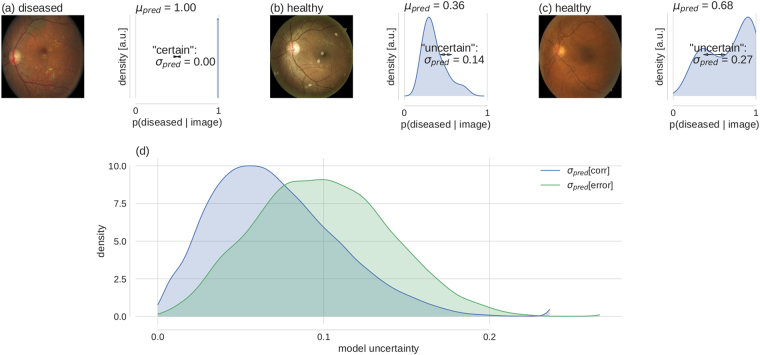
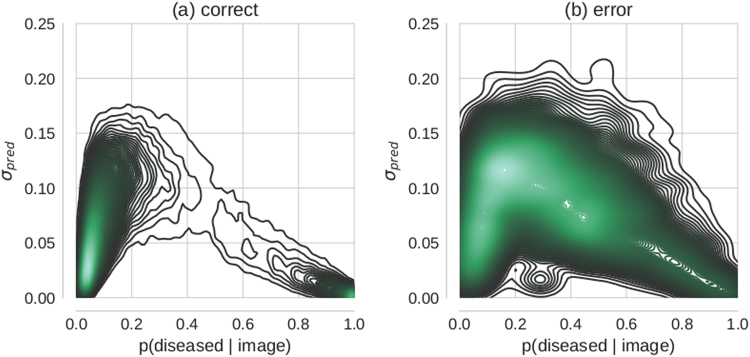
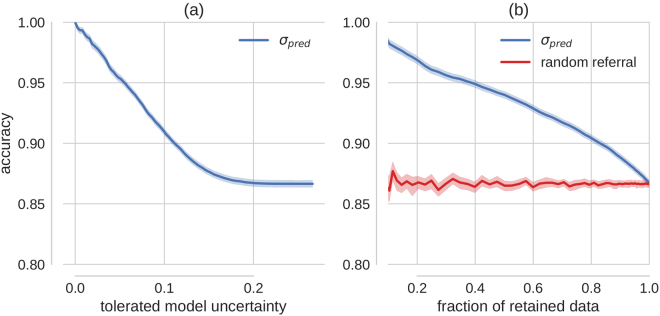
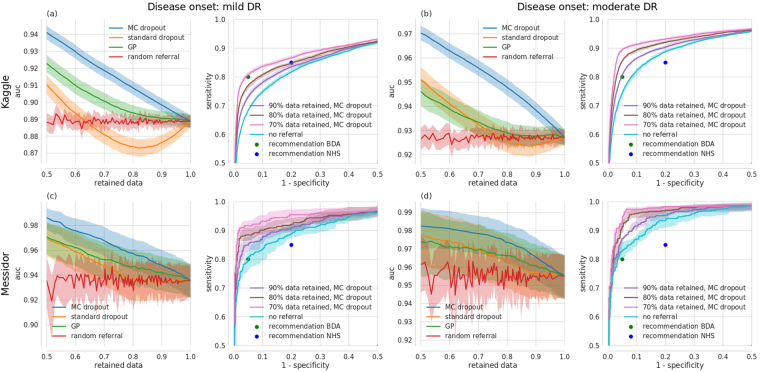
Deep learning (DL) has revolutionized the field of computer vision and image processing. In medical imaging, algorithmic solutions based on DL have been shown to achieve high performance on tasks that previously required medical experts. However, DL-based solutions for disease detection have been proposed without methods to quantify and control their uncertainty in a decision. In contrast, a physician knows whether she is uncertain about a case and will consult more experienced colleagues if needed. Here we evaluate drop-out based Bayesian uncertainty measures for DL in diagnosing diabetic retinopathy (DR) from fundus images and show that it captures uncertainty better than straightforward alternatives. Furthermore, we show that uncertainty informed decision referral can improve diagnostic performance. Experiments across different networks, tasks and datasets show robust generalization. Depending on network capacity and task/dataset difficulty, we surpass 85% sensitivity and 80% specificity as recommended by the NHS when referring 0−20% of the most uncertain decisions for further inspection. We analyse causes of uncertainty by relating intuitions from 2D visualizations to the high-dimensional image space. While uncertainty is sensitive to clinically relevant cases, sensitivity to unfamiliar data samples is task dependent, but can be rendered more robust.
Overview
The claims and statistics of this paper haven’t been checked yet.
Free: it reads the open-access text and checks the first 5 claims that cite a source we can check. Create a free account to check every claim.
Integrity signals
Registry
Cites
Statistics
Figures
Verification
Claims the paper makes
The claims and statistics of this paper haven’t been checked yet.
Free: it reads the open-access text and checks the first 5 claims that cite a source we can check. Create a free account to check every claim.
Claims other papers make about this one
Each is checked against this paper’s own text: does it say what the citing paper says it does?
The source backs part of the claim, not all of it — or backs it for a different population, condition or comparison.
In the citing paper
“Leibig al. [50] | et | 2017 | CNN | Classification | Diabetic Retinopathy | 3 | MC dropout”
From A review of uncertainty quantification in deep learning: Techniques, applications and challenges (2021) · cites this paper as [50]
Experimental — accuracy not yet measuredIn the citing paper
“This human-in-the-loop decision-making pipeline is known as selective prediction and has been commonly found to improve performance in non–text-based applications [25,26].”
From Identifying Deprescribing Opportunities With Large Language Models in Older Adults: Retrospective Cohort Study (2025) · cites this paper as [25]
In the citing paper
“In addition to producing valuable measures that function as uncertainty measures [358, 359, 66], these techniques can also lessen deep neural networks susceptibility to adversarial attacks [357, 360].”
From An overview of deep learning in medical imaging focusing on MRI (2019) · cites this paper as [358]
In the citing paper
“However, the intraobserver agreement was far from perfect, which is likely due to multiple factors, including the inherent model uncertainty of the network structure (43,44), the stochastic nature of network training, and the variation between the training and testing image data sets (24,45).”
From Deep learning approach for evaluating knee MR images: achieving high diagnostic performance for cartilage lesion detection. (2018) · cites this paper as [45]
Self-check
Percentages, sums and reported differences re-computed from the paper’s own numbers.
The self-check needs the paper’s full text.
Citations
Cites
Very Deep Convolutional Networks for Large-Scale Image Recognition
Simonyan, K., & Zisserman, A. (2014) · arXiv · doi:10.48550/arxiv.1409.1556 · Cited by 114,148
ImageNet classification with deep convolutional neural networks
Krizhevsky, A., Sutskever, I., & Hinton, G. E. (2017) · Communications of the ACM · doi:10.1145/3065386 · Cited by 112,155 · cited 8×
“960] Messidor Single best44 (0) vs (1, 2, 3) 0.”
BackgroundInfluentialLeCun, Y., Bengio, Y., & Hinton, G. (2015) · Nature · doi:10.1038/nature14539 · Cited by 84,126
ImageNet Large Scale Visual Recognition Challenge
Russakovsky, O., Deng, J., Su, H., Krause, J., Satheesh, S., Ma, S., Huang, Z., Karpathy, A., Khosla, A., Bernstein, M., et al. (2015) · International Journal of Computer Vision · doi:10.1007/s11263-015-0816-y · Cited by 39,380 · cited 1×
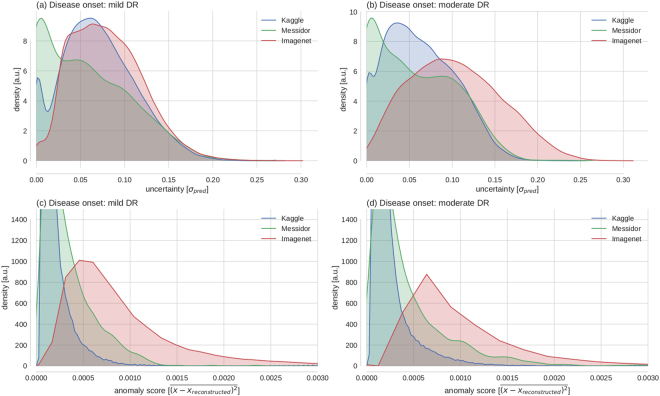
“The space of images with content unknown to the disease detection networks was sampled by performing predictions with associated uncertainties on the 2012 Imagenet validation set (49101 coloured, non-fundus images from 1000 different categories) 58 (Fig.”
Method(2014) · Cited by 33,419
Advances in neural information processing systems 7
Cios, K., & Shields, M. (1997) · Neurocomputing · doi:10.1016/s0925-2312(97)90018-7 · Cited by 22,059
Deep learning in neural networks: an overview
Schmidhuber, J. (2015) · Neural Networks · doi:10.1016/j.neunet.2014.09.003 · Cited by 18,570 · cited 7×
“960] Messidor Single best44 (0) vs (1, 2, 3) 0.”
BackgroundMethodInfluentialDermatologist-level classification of skin cancer with deep neural networks
Esteva, A., Kuprel, B., Novoa, R. A., Ko, J., Swetter, S. M., Blau, H. M., & Thrun, S. (2017) · Nature · doi:10.1038/nature21056 · Cited by 14,362 · cited 1×
“This paradigm can readily be applied to recently published high performance disease detection networks 14,15 as well as other medical tasks and datasets as initial work on image registration 60 and genome data 61 has already shown.”
Method(2010) · International Conference on Machine Learning · Cited by 13,995
Gaussian Processes for Machine Learning
Rasmussen, C. E., & Williams, C. K. I. (2005) · doi:10.7551/mitpress/3206.001.0001 · Cited by 11,705
Research works printed but not linked: 8
- Lipton, Z. C., Kale, D. C., Elkan, C. & Wetzell, R. Learning to Diagnose with LSTM Recurrent Neural Networks. International Conference on Learning Representations (ICLR) (2016).
- Kingma, D. P., Salimans, T. & Welling, M. Variational Dropout and the Local Reparameterization Trick. Advances in Neural Information Processing Systems (2015).
- Bishop, C. M. Pattern Recognition and Machine Learning, Springer-Verlag New York, Inc., Secaucus, NJ, USA, (2006).
- Gal, Y. Uncertainty in Deep Learning. Ph.D. thesis, University of Cambridge (2016).
- Angermueller, C. & Stegle, O. Multi-task deep neural network to predict CpG methylation profiles from low-coverage sequencing data. NIPS MLCB workshop (2015).
- Damianou AC Lawrence ND Deep Gaussian Processes International Conference on Artificial Intelligence and Statistics 2013 31 207 215
- Cho E Cho MJ Variance of sample variance with replacement International Journal of Pure and Applied Mathematics 2009 52 43 47
- Al-Rfou, R. et al. Theano: A Python framework for fast computation of mathematical expressions. arXiv:1605.02688 (2016). · arXiv
Cited by
A review of uncertainty quantification in deep learning: Techniques, applications and challenges
Abdar, M., Pourpanah, F., Hussain, S., Rezazadegan, D., Liu, L., Ghavamzadeh, M., Fieguth, P., Cao, X., Khosravi, A., Acharya, U. R., et al. (2021) · Information Fusion · doi:10.1016/j.inffus.2021.05.008 · Cited by 3,111
“[45] 2017 CNN diabetic retinopathy √”
Opportunities and obstacles for deep learning in biology and medicine
Ching, T., Himmelstein, D. S., Beaulieu-Jones, B. K., Kalinin, A. A., Do, B. T., Way, G. P., Ferrero, E., Agapow, P.-M., Zietz, M., Hoffman, M. M., et al. (2018) · Journal of The Royal Society Interface · doi:10.1098/rsif.2017.0387 · Cited by 2,310
“[45] estimated the uncertainty of deep networks for diabetic retinopathy diagnosis by linking dropout networks with approximate Bayesian inference.”
BackgroundAn overview of deep learning in medical imaging focusing on MRI
Lundervold, A. S., & Lundervold, A. (2019) · Zeitschrift für Medizinische Physik · doi:10.1016/j.zemedi.2018.11.002 · Cited by 2,058
“In addition to producing valuable measures that function as uncertainty measures [65,355,356], these techniques can also lessen deep neural networks susceptibility to adversarial attacks [354,357].”
BackgroundA Unifying Review of Deep and Shallow Anomaly Detection
Ruff, L., Kauffmann, J. R., Vandermeulen, R. A., Montavon, G., Samek, W., Kloft, M., Dietterich, T. G., & Muller, K.-R. (2021) · Proceedings of the IEEE · doi:10.1109/jproc.2021.3052449 · Cited by 914
A Survey of Deep Active Learning
Ren, P., Xiao, Y., Chang, X., Huang, P.-Y., Li, Z., Gupta, B. B., Chen, X., & Wang, X. (2022) · ACM Computing Surveys · doi:10.1145/3472291 · Cited by 1,169
“In addition, in practice, researchers often also use a powerful and low-cost Monte-Carlo dropout (MC-dropout) [156] stochastic regularization technique to obtain posterior samples, consequently attaining good performance on real-world datasets [80, 94].”
MethodOn the interpretability of artificial intelligence in radiology: challenges and opportunities
Reyes, M., Meier, R., Pereira, S., Silva, C. A., Dahlweid, F.-M., Tengg-Kobligk, H. V., Summers, R. M., & Wiest, R. (2020) · Radiology: Artificial Intelligence · doi:10.1148/ryai.2020190043 · Cited by 484
“Uncertainty estimation has also been used to assist in the referral of wrongly classified medical images for disease detection (30).”
MethodHein, M., Andriushchenko, M., & Bitterwolf, J. (2019) · 2019 IEEE/CVF Conference on Computer Vision and Pattern Recognition (CVPR) · doi:10.1109/cvpr.2019.00013 · Cited by 428
“Moreover, note that the quite useful models for confidence calibration on the input distribution like [10, 12, 18] cannot be used for out-of-distribution detection as it has been observed in [21].”
BackgroundMethodNair, T., Precup, D., Arnold, D. L., & Arbel, T. (2020) · Medical Image Analysis · doi:10.1016/j.media.2019.101557 · Cited by 451
Deep Learning for Medical Anomaly Detection – A Survey
Fernando, T., Gammulle, H., Denman, S., Sridharan, S., & Fookes, C. (2022) · ACM Computing Surveys · doi:10.1145/3464423 · Cited by 399
“[77], where they illustrate how the computed measure of uncertainty can be utilised to refer a subset of difficult cases for further inspection.”
BackgroundConfidence calibration and predictive uncertainty estimation for deep medical image segmentation
Mehrtash, A., Wells, W. M., Tempany, C. M., Abolmaesumi, P., & Kapur, T. (2020) · IEEE Transactions on Medical Imaging · doi:10.1109/tmi.2020.3006437 · Cited by 428
“nearities, which provide an approximation to a probabilistic Gaussian process. Implementing MC dropout is straightforward and has been applied in several application domains including medical imaging [18]. In a similar Bayesian approach, Teye et al. [19] showed that training NNs with BN [7] can be used to approximate…”
MethodKwon, Y., Won, J.-H., Kim, B. J., & Paik, M. C. (2020) · Computational Statistics & Data Analysis · doi:10.1016/j.csda.2019.106816 · Cited by 424
Deep learning in bioinformatics: Introduction, application, and perspective in the big data era
Li, Y., Huang, C., Ding, L., Li, Z., Pan, Y., & Gao, X. (2019) · Methods · doi:10.1016/j.ymeth.2019.04.008 · Cited by 401
Understanding Measures of Uncertainty for Adversarial Example Detection
Smith, L., & Gal, Y. (2018) · arXiv (Cornell University) · doi:10.48550/arxiv.1803.08533 · Cited by 162
“Some works in the literature estimate the epistemic uncertainty of a dropout model using the estimated variance of the MC samples, rather than the mutual information (Leibig et al., 2017; Feinman et al., 2017; Carlini & Wagner, 2017a).”
MethodLiu, F., Zhou, Z., Samsonov, A., Blankenbaker, D., Larison, W., Kanarek, A., Lian, K., Kambhampati, S., & Kijowski, R. (2018) · Radiology · doi:10.1148/radiol.2018172986 · Cited by 297
Lambert, B., Forbes, F., Doyle, S., Dehaene, H., & Dojat, M. (2024) · Artificial Intelligence in Medicine · doi:10.1016/j.artmed.2024.102830 · Cited by 269
A generalized deep learning framework for whole-slide image segmentation and analysis
Khened, M., Kori, A., Rajkumar, H., Krishnamurthi, G., & Srinivasan, B. (2021) · Scientific Reports · doi:10.1038/s41598-021-90444-8 · Cited by 239
“Epistemic uncertainty can be approximated by using test time Bayesian dropouts as discussed in (Leibig et al., 2017), which estimates uncertainty by Montecarlo simulations with Bayesian dropout.”
MethodAbdar, M., Samami, M., Dehghani Mahmoodabad, S., Doan, T., Mazoure, B., Hashemifesharaki, R., Liu, L., Khosravi, A., Acharya, U. R., Makarenkov, V., et al. (2021) · Computers in Biology and Medicine · doi:10.1016/j.compbiomed.2021.104418 · Cited by 237
“[32] leveraged uncertainty information from deep neural networks (DNNs) used for diabetic detection.”
BackgroundMethodSeoni, S., Jahmunah, V., Salvi, M., Barua, P. D., Molinari, F., & Acharya, U. R. (2023) · Computers in Biology and Medicine · doi:10.1016/j.compbiomed.2023.107441 · Cited by 239
What Do Compressed Deep Neural Networks Forget?
Hooker, S., Courville, A. C., Clark, G., Dauphin, Y., & Frome, A. (2019) · arXiv (Cornell University) · doi:10.48550/arxiv.1911.05248 · Cited by 84
“Our PIE methodology could conceivably be explored as a mechanism to surface a tractable subset of atypical examples for further human inspection (Leibig et al., 2017; Zhang, 1992), to choose not to classify certain examples when the model is uncertain (Bartlett & Wegkamp, 2008; Cortes et al.”
MethodCombining the strengths of radiologists and AI for breast cancer screening: a retrospective analysis
Leibig, C., Brehmer, M., Bunk, S., Byng, D., Pinker, K., & Umutlu, L. (2022) · The Lancet Digital Health · doi:10.1016/s2589-7500(22)00070-x · Cited by 202
“Furthermore, decision referral maintained or improved radiologist specificity across all device manufacturers (appendix pp 16, 17).”
Self-citationBayesian neural networks for uncertainty quantification in data-driven materials modeling
Olivier, A., Shields, M. D., & Graham-Brady, L. (2021) · Computer Methods in Applied Mechanics and Engineering · doi:10.1016/j.cma.2021.114079 · Cited by 191
Bayesian neural networks for flight trajectory prediction and safety assessment
Zhang, X., & Mahadevan, S. (2020) · Decision Support Systems · doi:10.1016/j.dss.2020.113246 · Cited by 195
COVID-19 Control by Computer Vision Approaches: A Survey
Ulhaq, A., Born, J., Khan, A. A., Gomes, D. P. S., Chakraborty, S., & Paul, M. (2020) · IEEE Access · doi:10.1109/access.2020.3027685 · Cited by 216
“This work utilizes Bayesian deep learning to compute uncertainty estimations that are deemed crucial for medical imaging [96].”
A review of uncertainty estimation and its application in medical imaging
Zou, K., Chen, Z., Yuan, X., Shen, X., Wang, M., & Fu, H. (2023) · Meta-Radiology · doi:10.1016/j.metrad.2023.100003 · Cited by 158
Pedoia, V., Norman, B., Mehany, S. N., Bucknor, M. D., Link, T. M., & Majumdar, S. (2019) · Journal of Magnetic Resonance Imaging · doi:10.1002/jmri.26246 · Cited by 162
“The uncertainty in image annotations is a point of great discussion in the field of deep learning applied to medical imaging.(34) The recent literature reports examples of applications of Bayesian dropout techniques to model uncertainty applied to neuroimaging(35) and experiments showing the robustness of deep learnin…”
On closures for reduced order models—A spectrum of first-principle to machine-learned avenues
Ahmed, S. E., Pawar, S. A., San, O., Rasheed, A., Iliescu, T., & Noack, B. R. (2021) · Physics of Fluids · doi:10.1063/5.0061577 · Cited by 211
Exploiting epistemic uncertainty of anatomy segmentation for anomaly detection in retinal OCT
Seebock, P., Orlando, J. I., Schlegl, T., Waldstein, S. M., Bogunovic, H., Klimscha, S., Langs, G., & Schmidt-Erfurth, U. (2020) · IEEE Transactions on Medical Imaging · doi:10.1109/tmi.2019.2919951 · Cited by 164
“Furthermore, disease classification methods based on deep learning were observed to be benefited by the usage of epistemic uncertainties [21].”
Background(2018) · Cited by 162
Self-citationToward Explainable Artificial Intelligence for Precision Pathology
Klauschen, F., Dippel, J., Keyl, P., Jurmeister, P., Bockmayr, M., Mock, A., Buchstab, O., Alber, M., Ruff, L., Montavon, G., et al. (2024) · Annual Review of Pathology: Mechanisms of Disease · doi:10.1146/annurev-pathmechdis-051222-113147 · Cited by 139
Lee, J.-H., Yu, H.-J., Kim, M. J., Kim, J., & Choi, J. (2020) · BMC Oral Health · doi:10.1186/s12903-020-01256-7 · Cited by 163
Dzobo, K., Adotey, S. K., Thomford, N. E., & Dzobo, W. (2020) · OMICS A Journal of Integrative Biology · doi:10.1089/omi.2019.0038 · Cited by 176
“Importantly, computational algorithms are now able to go beyond diagnosis of diabetic retinopathy and macular degeneration, with new and better algorithms able to perform referrals (Leibig et al., 2017; Ramachandran et al., 2018).”
Huang, L., Ruan, S., Xing, Y., & Feng, M. (2024) · Medical Image Analysis · doi:10.1016/j.media.2024.103223 · Cited by 121
Tanno, R., Worrall, D. E., Kaden, E., Ghosh, A., Grussu, F., Bizzi, A., Sotiropoulos, S. N., Criminisi, A., & Alexander, D. C. (2021) · NeuroImage · doi:10.1016/j.neuroimage.2020.117366 · Cited by 113
Dolezal, J. M., Srisuwananukorn, A., Karpeyev, D., Ramesh, S., Kochanny, S., Cody, B., Mansfield, A. S., Rakshit, S., Bansal, R., Bois, M. C., et al. (2022) · Nature Communications · doi:10.1038/s41467-022-34025-x · Cited by 147
Uncertainty quantification for plant disease detection using Bayesian deep learning
Hernández, S., & López, J. L. (2020) · Applied Soft Computing · doi:10.1016/j.asoc.2020.106597 · Cited by 160
Leveraging Uncertainty Estimates for Predicting Segmentation Quality
DeVries, T., & Taylor, G. W. (2018) · arXiv (Cornell University) · doi:10.48550/arxiv.1807.00502 · Cited by 51
“The second uncertainty estimation method we consider is Monte-Carlo dropout (MC-dropout) [6], which has previously seen success in the field of medical imaging [17, 28].”
MethodDR|GRADUATE: uncertainty-aware deep learning-based diabetic retinopathy grading in eye fundus images
Araújo, T., Aresta, G., Mendonça, L., Penas, S., Maia, C., Carneiro, Â., Mendonça, A. M., & Campilho, A. (2020) · Medical Image Analysis · doi:10.1016/j.media.2020.101715 · Cited by 133
Deep-learning jets with uncertainties and more
Bollweg, S., Haussmann, M., Kasieczka, G., Luchmann, M., Plehn, T., & Thompson, J. (2020) · SciPost Physics · doi:10.21468/scipostphys.8.1.006 · Cited by 126
“In this paper we will, for the first time, use Bayesian networks for standard classification with uncertainties in the uncertainty-obsessed field of particle physics, namely top tagging [ 42 ] .”
MethodQuan, H., Khosravi, A., Yang, D., & Srinivasan, D. (2019) · IEEE Transactions on Neural Networks and Learning Systems · doi:10.1109/tnnls.2019.2956195 · Cited by 138
“Researchers have reported its key benefits in critical applications such as autonomous vehicles, medical diagnostics, safety systems, and energy networks [105]–[107].”
BackgroundMethodPullanagari, R. R., Dehghan-Shoar, M. H., Yule, I. J., & Bhatia, N. (2021) · Remote Sensing of Environment · doi:10.1016/j.rse.2021.112353 · Cited by 129
Rączkowska, A., Możejko, M., Zambonelli, J., & Szczurek, E. (2019) · Scientific Reports · doi:10.1038/s41598-019-50587-1 · Cited by 123
Rączkowski, Ł., Możejko, M., Zambonelli, J., & Szczurek, E. (2019) · doi:10.1101/658138 · Cited by 124
Accurate diagnosis of lymphoma on whole-slide histopathology images using deep learning
Syrykh, C., Abreu, A., Amara, N., Siegfried, A., Maisongrosse, V., Frenois, F. X., Martin, L., Rossi, C., Laurent, C., & Brousset, P. (2020) · npj Digital Medicine · doi:10.1038/s41746-020-0272-0 · Cited by 115
“In our model, and as previously observed by Leibig et al.17, incorrect predictions of the algorithm on familiar data were characterised by higher variance values (i.e. uncertainty level), and ROC AUC increased for all networks as uncertainty tolerance decreased.”
MethodRecent trends and advances in fundus image analysis: A review
Iqbal, S., Khan, T. M., Naveed, K., Naqvi, S. S., & Nawaz, S. J. (2022) · Computers in Biology and Medicine · doi:10.1016/j.compbiomed.2022.106277 · Cited by 148
Fusion of Probability Density Functions
Koliander, G., El-Laham, Y., Djurić, P. M., & Hlawatsch, F. (2022) · Proceedings of the IEEE · doi:10.1109/jproc.2022.3154399 · Cited by 141
Monte Carlo Dropout for Uncertainty Estimation and Motor Imagery Classification
Hermosilla, D. M., Codorniú, R. T., Baracaldo, R. L., Zamora, R. S., Delisle-Rodríguez, D., Mayor, J. J. V., & Álvarez, J. R. N. (2021) · Sensors · doi:10.3390/s21217241 · Cited by 143
Trainable Undersampling for Class-Imbalance Learning
Peng, M., Zhang, Q., Xing, X., Gui, T., Huang, X., Jiang, Y., Ding, K., & Chen, Z. (2019) · Proceedings of the AAAI Conference on Artificial Intelligence · doi:10.1609/aaai.v33i01.33014707 · Cited by 139
“Following the work of (Leibig et al. 2017), we used the AUCROC to measure the performance.”
MethodMulticenter Validation of a Deep Learning Detection Algorithm for Focal Cortical Dysplasia
Gill, R. S., Lee, H.-M., Caldairou, B., Hong, S., Barba, C., Deleo, F., D’Incerti, L., Coelho, V. C. M., Lenge, M., Semmelroch, M. K. H. G., et al. (2021) · Neurology · doi:10.1212/wnl.0000000000012698 · Cited by 135
“11 Here, we tested the hypothesis that a multicenter-validated computer deep learning algorithm operating directly on T1-weighted and FLAIR MRI voxel detects MRI-negative FCD.”
BackgroundImproving the repeatability of deep learning models with Monte Carlo dropout
Lemay, A., Hoebel, K., Bridge, C. P., Befano, B., de Sanjosé, S., Egemen, D., Rodríguez, A. C., SCHIFFMAN, M. H., Campbell, J. P., & Kalpathy–Cramer, J. (2022) · npj Digital Medicine · doi:10.1038/s41746-022-00709-3 · Cited by 129
Mena, J., Pujol, O., & Vitrià, J. (2022) · ACM Computing Surveys · doi:10.1145/3477140 · Cited by 114
“To date, four use cases have been implemented: a Diabetic Retinopathy Diagnosis tool [50], an Autonomous Vehicle Scene Segmentation [64], a Galaxy Zoo [87] and Fishyscapes tasks [4], providing results and a benchmark only for the first of these.”
MethodRisk-Aware Machine Learning Classifier for Skin Lesion Diagnosis
Mobiny, A., Singh, A., & Van Nguyen, H. (2019) · Journal of Clinical Medicine · doi:10.3390/jcm8081241 · Cited by 103
“For instance, it has been shown to reliably estimate the prediction uncertainty in drug discovery [49] and diabetic retinopathy [12].”
BackgroundMethodInfluentialOlsson, H., Kartasalo, K., Mulliqi, N., Capuccini, M., Ruusuvuori, P., Samaratunga, H., Delahunt, B., Lindskog, C., Janssen, E. A. M., Blilie, A., et al. (2022) · Nature Communications · doi:10.1038/s41467-022-34945-8 · Cited by 111
“The problem of how quantifying the uncertainty of deep learning models has been addressed using different techniques, such as coupling deep learning models with Bayesian inference, Monte-Carlo dropout, or deep ensembles 18 – 20 .”
BackgroundMethodUncertainty Quantification and Deep Ensembles
Rahaman, R., & Thiéry, A. H. (2021) · neural information processing systems · doi:10.48550/arxiv.2007.08792 · Cited by 164
Luca, A. R., Ursuleanu, T. F., Gheorghe, L., Grigorovici, R., Iancu, S., Hlusneac, M., & Grigorovici, A. (2022) · Informatics in Medicine Unlocked · doi:10.1016/j.imu.2022.100911 · Cited by 124
Reducing Uncertainty in Undersampled MRI Reconstruction With Active Acquisition
Zhang, Z., Romero, A., Muckley, M. J., Vincent, P., Yang, L., & Drozdzal, M. (2019) · 2019 IEEE/CVF Conference on Computer Vision and Pattern Recognition (CVPR) · doi:10.1109/cvpr.2019.00215 · Cited by 106
“In medical imaging, uncertainty is often used to display probable errors [3] and has been mainly studied in the context of image segmentation [6, 22].”
BackgroundEvaluating pointwise reliability of machine learning prediction
Nicora, G., Rios, M., Abu-Hanna, A., & Bellazzi, R. (2022) · Journal of Biomedical Informatics · doi:10.1016/j.jbi.2022.103996 · Cited by 97
Demystifying Brain Tumor Segmentation Networks: Interpretability and Uncertainty Analysis
Natekar, P., Kori, A., & Krishnamurthi, G. (2020) · Frontiers in Computational Neuroscience · doi:10.3389/fncom.2020.00006 · Cited by 103
“(Leibig et al., 2017) show that uncertainties estimated using Bayesian dropout were more effective and”
Computational biology: deep learning
Jones, W., Alasoo, K., Fishman, D., & Parts, L. (2017) · Emerging Topics in Life Sciences · doi:10.1042/etls20160025 · Cited by 100
Estimating Example Difficulty using Variance of Gradients
Agarwal, C., D'souza, D., & Hooker, S. (2022) · 2022 IEEE/CVF Conference on Computer Vision and Pattern Recognition (CVPR) · doi:10.1109/cvpr52688.2022.01012 · Cited by 65
“…through case-based reasoning [11,30,39], it can also be used to surface a tractable subset of atypical examples for further human auditing [46,73], for active learning to inform model improvements, and to choose not to clas-* sify some instances when the model is uncertain [7,14,21].”
BackgroundTowards neural networks that provably know when they don't knowPreprint
Meinke, A., & Hein, M. (2019) · arXiv (Cornell University) · doi:10.48550/arxiv.1909.12180 · Cited by 101
“However, several cases of high confidence predictions far away from the training data have been reported for neural networks, e.g. fooling images (Nguyen et al., 2015), for out-of-distribution (OOD) images (Hendrycks & Gimpel, 2017a) or in medical diagnosis (Leibig et al., 2017).”
BackgroundMethodUncertainty Estimation in Medical Image Classification: Systematic Review
Kurz, A., Hauser, K., Mehrtens, H. A., Krieghoff‐Henning, E., Hekler, A., Kather, J. N., Fröhling, S., Kalle, C. V., & Brinker, T. J. (2022) · JMIR Medical Informatics · doi:10.2196/36427 · Cited by 121
“Similar to Leibig et al [12], the authors report retained data versus AUROC curves and show that the AUROC values improve when referring uncertain samples to a medical expert.”
BackgroundMethodResultInfluentialPetersen, E., Potdevin, Y., Mohammadi, E., Zidowitz, S., Breyer, S., Nowotka, D., Henn, S., Pechmann, L., Leucker, M., Rostalski, P., et al. (2022) · IEEE Access · doi:10.1109/access.2022.3178382 · Cited by 113
“Especially in medical applications, precisely quantifying the model’s uncertainty in making a given decision is essential [175], [327], [328].”
BackgroundAyhan, M. S., Kuehlewein, L., Aliyeva, G., INHOFFEN, W., Ziemssen, F., & Berens, P. (2020) · Medical Image Analysis · doi:10.1016/j.media.2020.101724 · Cited by 110
Self-citationUncertainty Estimation in Deep Neural Networks for Dermoscopic Image Classification
Combalia, M., Hueto, F., Puig, S., Malvehy, J., & Vilaplana, V. (2020) · 2020 IEEE/CVF Conference on Computer Vision and Pattern Recognition Workshops (CVPRW) · doi:10.1109/cvprw50498.2020.00380 · Cited by 75
“Leibig [28] also uses Monte Carlo dropout at test time for diabetic retinopathy detection from fundus images and shows that uncertainty informed decision referral can improve diagnostic performance.”
BackgroundSources of Uncertainty in Supervised Machine Learning—a Statisticians’ View
Gruber, C., Schenk, P. O., Schierholz, M., Kreuter, F., & Kauermann, G. (2026) · Statistical Science · doi:10.1214/25-sts1003 · Cited by 99
Shi, W., Yan, G., Li, Y., Li, H., Liu, T., Sun, C., Wang, G., Zhang, Y., Zou, Y., & Wu, D. (2020) · NeuroImage · doi:10.1016/j.neuroimage.2020.117316 · Cited by 91
“…also haracterize the deviation from the typical developmental trajectory. ore importantly, it can potentially handle the abnormal patterns that ere uncommon in normal brains, and it has been used in many neuoimaging studies for disease detection ( Leibig et al., 2017 ; Tanno et al., 019 , 2017 ).”
MethodTranslational machine learning for psychiatric neuroimaging
Walter, M., Alizadeh, S., Jamalabadi, H., Lueken, U., Dannlowski, U., Walter, H., Olbrich, S., Čolić, L., Kambeitz, J. P., Koutsouleris, N., et al. (2018) · Progress in Neuro-Psychopharmacology and Biological Psychiatry · doi:10.1016/j.pnpbp.2018.09.014 · Cited by 91
“While new to psychiatry, such approach has recently been tested for detection of diabetic retinopathy where difficult-to-classify cases are identified and are referred to other algorithms or an experienced clinician (Leibig et al., 2017).”
Nazir, T., Irtaza, A., Shabbir, Z., Javed, A., Akram, U., & Mahmood, M. T. (2019) · Artificial Intelligence in Medicine · doi:10.1016/j.artmed.2019.07.003 · Cited by 77
San, O., Rasheed, A., & Kvamsdal, T. (2021) · GAMM-Mitteilungen · doi:10.1002/gamm.202100007 · Cited by 91
“Some of the active areas of research in this context are: cost function modification to accommodate the model Jacobian [185], grow-when-required network [208], physics-informed neural networks (PINNs) [247,276,365], embedding hard physical constraints in a neural network [230], leveraging uncertainty information [189]…”
MethodAbdar, M., Fahami, M. A., Rundo, L., Radeva, P. I., Frangi, A. F., Acharya, U. R., Khosravi, A., Lam, H., Jung, A., & Nahavandi, S. (2022) · IEEE Transactions on Industrial Informatics · doi:10.1109/tii.2022.3168887 · Cited by 85
“Uncertainty estimates are, however, critical in medical image analysis [9]–[11].”
Model-Based and Data-Driven Strategies in Medical Image Computing
Rueckert, D., & Schnabel, J. A. (2019) · Proceedings of the IEEE · doi:10.1109/jproc.2019.2943836 · Cited by 83
“, by referring cases with the most uncertain decisions for further inspection by a human expert [69].”
BackgroundPredictive uncertainty estimation for out-of-distribution detection in digital pathology
Linmans, J., Elfwing, S., van der Laak, J., & Litjens, G. (2023) · Medical Image Analysis · doi:10.1016/j.media.2022.102655 · Cited by 75
Nair, T., Precup, D., Arnold, D. L., & Arbel, T. (2018) · Lecture notes in computer science · doi:10.1007/978-3-030-00928-1_74 · Cited by 92
Waveform embedding: Automatic horizon picking with unsupervised deep learning
Shi, Y., Wu, X., & Fomel, S. B. (2020) · Geophysics · doi:10.1190/geo2019-0438.1 · Cited by 77
“Introducing uncertainty estimation of the network prediction can help to improve the reliability and quality control capability of the results (Gal and Ghahramani, 2016; Leibig et al., 2017; Feng et al., 2018), thus allowing some postprocessing to refine the result.”
BackgroundQuantifying the unknown impact of segmentation uncertainty on image-based simulations
Krygier, M., LaBonte, T., Martinez, C., Norris, C., Sharma, K., Collins, L. N., Mukherjee, P. P., & Roberts, S. A. (2021) · Nature Communications · doi:10.1038/s41467-021-25493-8 · Cited by 79
Zhang, X., Chan, F. T. S., & Mahadevan, S. (2022) · Knowledge-Based Systems · doi:10.1016/j.knosys.2022.108418 · Cited by 84
A Systematic Comparison of Bayesian Deep Learning Robustness in Diabetic Retinopathy Tasks
Filos, A., Farquhar, S., Gomez, A. N., Rudner, T. G. J., Kenton, Z., Smith, L., Alizadeh, M., de Kroon, A., & Gal, Y. (2019) · arXiv (Cornell University) · doi:10.48550/arxiv.1912.10481 · Cited by 67
“[30], we augment training dataset using affine transformations, including random zooming (by up to ±10%), random translations (independent shifts by up to ±25 pixels) and random rotations (by up to ±π).”
BackgroundMethodInfluentialHyperparameter-Free Out-of-Distribution Detection Using Cosine Similarity
Techapanurak, E., Suganuma, M., & Okatani, T. (2021) · Lecture notes in computer science · doi:10.1007/978-3-030-69538-5_4 · Cited by 74
Predicting brain age with complex networks: From adolescence to adulthood
Bellantuono, L., Marzano, L., Rocca, M. L., Duncan, D., Lombardi, A., Maggipinto, T., Monaco, A., Tangaro, S., Amoroso, N., & Bellotti, R. (2020) · NeuroImage · doi:10.1016/j.neuroimage.2020.117458 · Cited by 74
Integrating uncertainty in deep neural networks for MRI based stroke analysis
Herzog, L., Murina, E., Dürr, O., Wegener, S., & Sick, B. (2020) · Medical Image Analysis · doi:10.1016/j.media.2020.101790 · Cited by 66
Zou, Q., & Chen, S. (2021) · Reliability Engineering & System Safety · doi:10.1016/j.ress.2021.107800 · Cited by 71
Hierarchical Inference with Bayesian Neural Networks: An Application to Strong Gravitational Lensing
Wagner-Carena, S., Park, J. W., Birrer, S., Marshall, P. J., Roodman, A. J., & Wechsler, R. H. (2021) · The Astrophysical Journal · doi:10.3847/1538-4357/abdf59 · Cited by 74
“Since then, BNNs have been used with success in data problems ranging from semantic image segmentation (Kampffmeyer et al. 2016), to disease detection (Leibig et al. 2017), to active learning (Gal et al. 2017b).”
A Survey on Learning to Reject
Zhang, X.-Y., Xie, G.-S., Li, X., Mei, T., & Liu, C. (2023) · Proceedings of the IEEE · doi:10.1109/jproc.2023.3238024 · Cited by 88
“1) Confidence is an effective measurement to quantify and control the uncertainty in decision-making; therefore, it is useful and important in different tasks, such as medical diagnostic [149] and autonomous navigation around pedestrians [167].”
BackgroundAdversarial Robustness on In- and Out-Distribution Improves Explainability
Augustin, M., Meinke, A., & Hein, M. (2020) · Lecture notes in computer science · doi:10.1007/978-3-030-58574-7_14 · Cited by 111
Evaluation of Uncertainty Quantification in Deep Learning
Ståhl, N., Falkman, G., Karlsson, A., & Mathiason, G. (2020) · Communications in Computer and Information Science · doi:10.1007/978-3-030-50146-4_41 · Cited by 43
Uncertainty-Aware Deep Learning Methods for Robust Diabetic Retinopathy Classification
Jaskari, J., Sahlsten, J., Damoulas, T., Knoblauch, J., Särkkä, S., Kärkkäinen, L., Hietala, K., & Kaski, K. K. (2022) · IEEE Access · doi:10.1109/access.2022.3192024 · Cited by 70
Deep Bayesian baseline for segmenting diabetic retinopathy lesions: Advances and challenges
Garifullin, A., Lensu, L. T., & Uusitalo, H. M. T. (2021) · Computers in Biology and Medicine · doi:10.1016/j.compbiomed.2021.104725 · Cited by 64
“Leibig et al. [13] evaluated dropout based uncertainty measures and demonstrated improved diagnostic performance using uncertainty-informed decisions.”
BackgroundA survey of deep learning models in medical therapeutic areas
Nogales, A., García-Tejedor, Á. J., Martín, D. M., Vara, J. S., & Rodríguez, C. A. (2021) · Artificial Intelligence in Medicine · doi:10.1016/j.artmed.2021.102020 · Cited by 63
Learning Loss for Test-Time Augmentation
Kim, I., Kim, Y.-H., & Kim, S. (2020) · neural information processing systems · doi:10.48550/arxiv.2010.11422 · Cited by 83
“In the classification and segmentation tasks, the user makes subsequent revisions in the final decision with estimated uncertainty [45, 28, 34, 33].”
MethodSingh, R. K., Gorantla, R., Allada, S. G., & Narra, P. (2022) · PLoS ONE · doi:10.1371/journal.pone.0276836 · Cited by 65
“This method is known as Monte Carlo (MC) Dropout and is successfully employed in some of the applications in the medical imaging domain [26, 60].”
BackgroundMethodLiao, Z., Girgis, H., Abdi, A., Vaseli, H., Hetherington, J., Rohling, R., Gin, K., Tsang, T., & Abolmaesumi, P. (2020) · IEEE Transactions on Medical Imaging · doi:10.1109/tmi.2019.2959209 · Cited by 56
“is one of the commonly used Bayesian inference approximation method [36], which has been used in medical imaging to derive robust solutions for disease detection, lesion/organ segmentation [37]–[39].”
MethodBayesian autoencoders with uncertainty quantification: Towards trustworthy anomaly detection
Yong, B. X., & Brintrup, A. M. (2022) · Expert Systems with Applications · doi:10.1016/j.eswa.2022.118196 · Cited by 65
Clinical validation of saliency maps for understanding deep neural networks in ophthalmology
Ayhan, M. S., Kuemmerle, L. B., Kuehlewein, L., INHOFFEN, W., Aliyeva, G., Ziemssen, F., & Berens, P. (2022) · Medical Image Analysis · doi:10.1016/j.media.2022.102364 · Cited by 71
Self-citationToledo-Cortés, S., Useche, D. H., Müller, H., & Gonzalez, F. A. (2022) · Computers in Biology and Medicine · doi:10.1016/j.compbiomed.2022.105472 · Cited by 56
Towards increased trustworthiness of deep learning segmentation methods on cardiac MRI
Sander, J., de Vos, B. D., Wolterink, J. M., & Išgum, I. (2019) · SPIE Medical Imaging: Image Processing · doi:10.1117/12.2511699 · Cited by 63
“We chose to use the maximum instead of the mean (as e.g. utilized by Leibig et al. 2 ) because we found that averaging attenuates the uncertainties.”
MethodMaterials property prediction with uncertainty quantification: A benchmark study
Varivoda, D., Dong, R., Omee, S. S., & Hu, J. (2023) · Applied Physics Reviews · doi:10.1063/5.0133528 · Cited by 60
Spatial Uncertainty Sampling for End-to-End ControlPreprint
Amini, A., Soleimany, A. P., Karaman, S., & Rus, D. L. (2018) · arXiv (Cornell University) · doi:10.48550/arxiv.1805.04829 · Cited by 62
“This notion of stochastically sampling from Bayesian NNs to achieve uncertainty estimates has been applied to disease detection [21], reinforcement policy learning [8], as well as scene segmentation [22] and depth estimation [20] for autonomous vehicles.”
BackgroundLoss-Calibrated Approximate Inference in Bayesian Neural NetworksPreprint
Cobb, A. D., Roberts, S., & Gal, Y. (2018) · arXiv (Cornell University) · doi:10.48550/arxiv.1805.03901 · Cited by 60
“Recent applications, which range from diagnosing diabetes (Leibig et al., 2017) to using BNNs to perform end-to-end control in autonomous cars (1)Department of Engineering Science, University of Oxford, Oxford, United Kingdom (2)Department of Computer Science, University of Oxford, Oxford, United Kingdom.”
BackgroundMethodInfluentialPop, R., & Fulop, P. (2018) · arXiv (Cornell University) · doi:10.48550/arxiv.1811.03897 · Cited by 63
“…et al., 2014), a computationally inexpensive and powerful stochastic regularization technique that performs well on real-world datasets (Leibig et al., 2017; Kendall et al., 2015) and has been shown to be equivalent to performing variational inference (Gal & Ghahramani, 2016).”
MethodDeep Ensembles from a Bayesian PerspectivePreprint
Hoffmann, L., & Elster, C. (2021) · arXiv (Cornell University) · doi:10.48550/arxiv.2105.13283 · Cited by 62
“However, quantifying the uncertainty associated with the predictions of a trained network has its own merit and is particularly relevant when decisions are taken in sensitive applications such as medical diagnosis [7] or autonomous driving [8].”
Background
Metadata
- Authors
- Leibig, C., Allken, V., Ayhan, M. S., Berens, P., & Wahl, S.
- Affiliations
- University of Tübingen (DE)
- Bernstein Center for Computational Neuroscience Tübingen (DE)
- Carl Zeiss (Germany) (DE)
- Corresponding author
- Leibig, Christian
- Venue
- Scientific Reports
- Published
- 2017-12-19
- Volume
- 7
- Issue
- 1
- Pages
- 17816-17816
- ISSN
- 2045-2322 (ISSN-L)
- PMC
- PMC5736701
- OpenAlex
- W2951965145
- Cited by
- 510
- References
- 69
- Citations by year
- 2026: 47 · 2025: 50 · 2024: 41 · 2023: 63 · 2022: 60 · 2021: 90 · 2020: 80 · 2019: 52 · 2018: 25 · 2017: 2
- FWCI
- 33.37
- Type
- journal article
- Language
- en
- Open access
- gold
- doi.org
- Licence
- cc-by
- creativecommons.org/licenses/by/4.0 (tdm)
- creativecommons.org/licenses/by/4.0 (vor)
- Locations
- Scientific Reports (publishedVersion, cc-by)
- bioRxiv (Cold Spring Harbor Laboratory) (acceptedVersion, cc-by-nc)
- Europe PMC (PubMed Central) (publishedVersion, cc-by)
- PubMed Central (publishedVersion, cc-by)
- PubMed (publishedVersion)
- DOAJ (DOAJ: Directory of Open Access Journals) (submittedVersion)
- Funders
- Deutsche Forschungsgemeinschaft (EXC307)
- Eberhard Karls Universität Tübingen (EXC 307)
- Bundesministerium für Bildung und Forschung (01GQ1601)
- Topics
- Health Sciences › Medicine › Radiology, Nuclear Medicine and Imaging › Retinal Imaging and Analysis
- Physical Sciences › Computer Science › Computer Vision and Pattern Recognition › Advanced Neural Network Applications
- Health Sciences › Medicine › Health Informatics › Artificial Intelligence in Healthcare and Education
- Keywords
- Bayesian uncertainty quantification, deep neural network, diabetic retinopathy detection, fundus images, diagnostic decision-making, uncertainty visualization, medical image analysis, generalization to unseen data
- MeSH terms
- Machine Learning, Deep Learning, Algorithms, Bayes Theorem, Diabetic Retinopathy, Female, Humans, Image Processing, Computer-Assisted, Retina, Sensitivity and Specificity, Neural Networks, Computer, Uncertainty
About these checks
Registry, retraction, Cites and statistics results are computed, not judged, with one exception: a printed reference that no index lists is read once by a model before it counts as a citation error. Claims are extracted by a model and kept only when their quote appears verbatim in the text; each cited source is then checked, with a model’s help, for whether it says what the claim relies on. Those verdicts can be wrong — read the claim’s quote and the cited source before relying on one.
Statistics and arithmetic are recomputed, not judged.
Confidence bands are shown only for fields calibrated on our annotated test set. None is calibrated yet, so no band is shown.
What counts as a claim ›How we measure confidence ›How we check this ›
Are you an author, or do you see a problem with this page? Request a review
Data sources
Bibliographic data: Semantic Scholar, OpenAlex, Crossref.
Contains information from the Semantic Scholar Academic Graph Datasets, made available under the ODC Attribution License (ODC-BY 1.0).
Semantic Scholar’s data is described in: Kinney, R., et al. (2023). The Semantic Scholar Open Data Platform. arXiv:2301.10140.
