

Leveraging uncertainty information from deep neural networks for disease detection
Open accessPublished version of a preprint
The DOI matches its Crossref record; 66 of the 69 references it cites were found in a registry or an index.
Abstract
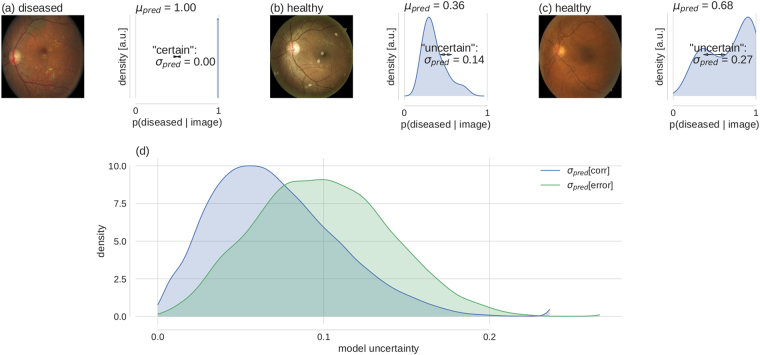
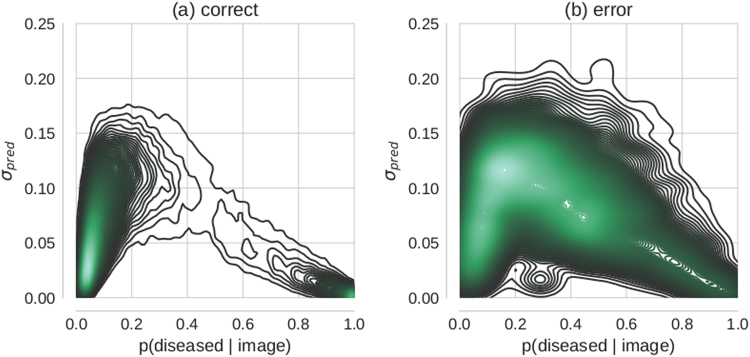
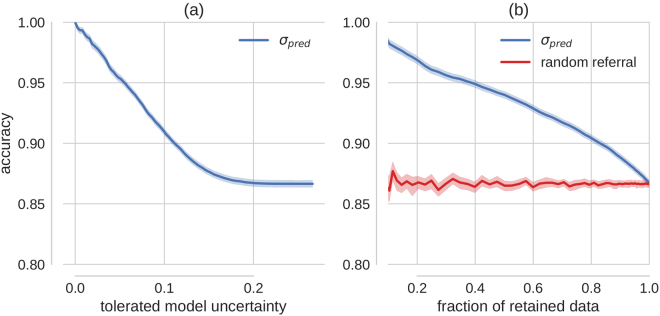
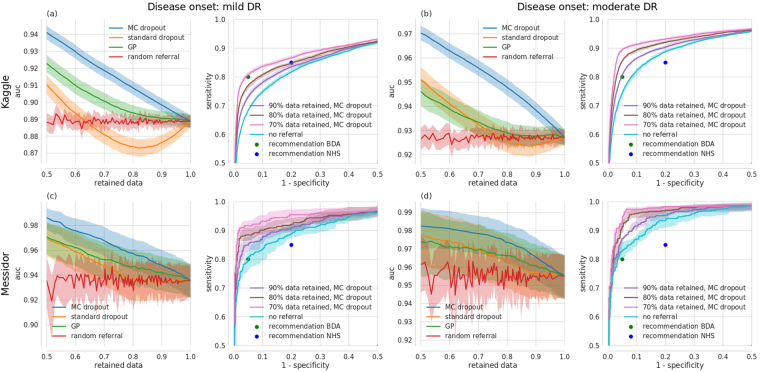
Deep learning (DL) has revolutionized the field of computer vision and image processing. In medical imaging, algorithmic solutions based on DL have been shown to achieve high performance on tasks that previously required medical experts. However, DL-based solutions for disease detection have been proposed without methods to quantify and control their uncertainty in a decision. In contrast, a physician knows whether she is uncertain about a case and will consult more experienced colleagues if needed. Here we evaluate drop-out based Bayesian uncertainty measures for DL in diagnosing diabetic retinopathy (DR) from fundus images and show that it captures uncertainty better than straightforward alternatives. Furthermore, we show that uncertainty informed decision referral can improve diagnostic performance. Experiments across different networks, tasks and datasets show robust generalization. Depending on network capacity and task/dataset difficulty, we surpass 85% sensitivity and 80% specificity as recommended by the NHS when referring 0−20% of the most uncertain decisions for further inspection. We analyse causes of uncertainty by relating intuitions from 2D visualizations to the high-dimensional image space. While uncertainty is sensitive to clinically relevant cases, sensitivity to unfamiliar data samples is task dependent, but can be rendered more robust.
Overview
The claims and statistics of this paper haven’t been checked yet.
Free: it reads the open-access text and checks the first 5 claims that cite a source we can check. Create a free account to check every claim.
Integrity signals
Registry
Cites
Statistics
Figures
Verification
Claims the paper makes
The claims and statistics of this paper haven’t been checked yet.
Free: it reads the open-access text and checks the first 5 claims that cite a source we can check. Create a free account to check every claim.
Claims other papers make about this one
Each is checked against this paper’s own text: does it say what the citing paper says it does?
The source backs part of the claim, not all of it — or backs it for a different population, condition or comparison.
In the citing paper
“Leibig al. [50] | et | 2017 | CNN | Classification | Diabetic Retinopathy | 3 | MC dropout”
From A review of uncertainty quantification in deep learning: Techniques, applications and challenges (2021) · cites this paper as [50]
Experimental — accuracy not yet measuredIn the citing paper
“This human-in-the-loop decision-making pipeline is known as selective prediction and has been commonly found to improve performance in non–text-based applications [25,26].”
From Identifying Deprescribing Opportunities With Large Language Models in Older Adults: Retrospective Cohort Study (2025) · cites this paper as [25]
In the citing paper
“In addition to producing valuable measures that function as uncertainty measures [358, 359, 66], these techniques can also lessen deep neural networks susceptibility to adversarial attacks [357, 360].”
From An overview of deep learning in medical imaging focusing on MRI (2019) · cites this paper as [358]
In the citing paper
“However, the intraobserver agreement was far from perfect, which is likely due to multiple factors, including the inherent model uncertainty of the network structure (43,44), the stochastic nature of network training, and the variation between the training and testing image data sets (24,45).”
From Deep learning approach for evaluating knee MR images: achieving high diagnostic performance for cartilage lesion detection. (2018) · cites this paper as [45]
Self-check
Percentages, sums and reported differences re-computed from the paper’s own numbers.
The self-check needs the paper’s full text.
Citations
Cites
Very Deep Convolutional Networks for Large-Scale Image Recognition
Simonyan, K., & Zisserman, A. (2014) · arXiv · doi:10.48550/arxiv.1409.1556 · Cited by 114,148
ImageNet classification with deep convolutional neural networks
Krizhevsky, A., Sutskever, I., & Hinton, G. E. (2017) · Communications of the ACM · doi:10.1145/3065386 · Cited by 112,155 · cited 8×
“960] Messidor Single best44 (0) vs (1, 2, 3) 0.”
BackgroundInfluentialLeCun, Y., Bengio, Y., & Hinton, G. (2015) · Nature · doi:10.1038/nature14539 · Cited by 84,126
ImageNet Large Scale Visual Recognition Challenge
Russakovsky, O., Deng, J., Su, H., Krause, J., Satheesh, S., Ma, S., Huang, Z., Karpathy, A., Khosla, A., Bernstein, M., et al. (2015) · International Journal of Computer Vision · doi:10.1007/s11263-015-0816-y · Cited by 39,380 · cited 1×
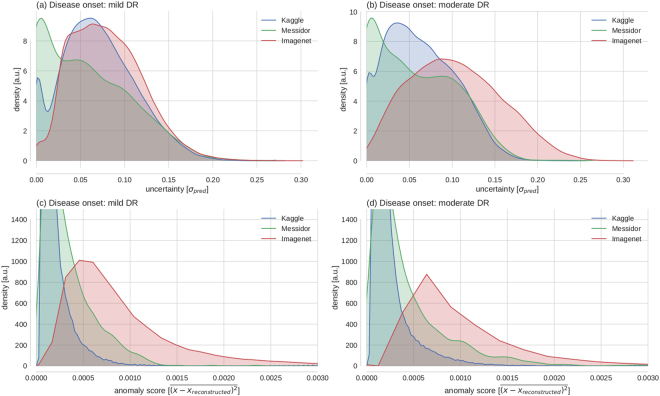
“The space of images with content unknown to the disease detection networks was sampled by performing predictions with associated uncertainties on the 2012 Imagenet validation set (49101 coloured, non-fundus images from 1000 different categories) 58 (Fig.”
Method(2014) · Cited by 33,419
Advances in neural information processing systems 7
Cios, K., & Shields, M. (1997) · Neurocomputing · doi:10.1016/s0925-2312(97)90018-7 · Cited by 22,059
Deep learning in neural networks: an overview
Schmidhuber, J. (2015) · Neural Networks · doi:10.1016/j.neunet.2014.09.003 · Cited by 18,570 · cited 7×
“960] Messidor Single best44 (0) vs (1, 2, 3) 0.”
BackgroundMethodInfluentialDermatologist-level classification of skin cancer with deep neural networks
Esteva, A., Kuprel, B., Novoa, R. A., Ko, J., Swetter, S. M., Blau, H. M., & Thrun, S. (2017) · Nature · doi:10.1038/nature21056 · Cited by 14,362 · cited 1×
“This paradigm can readily be applied to recently published high performance disease detection networks 14,15 as well as other medical tasks and datasets as initial work on image registration 60 and genome data 61 has already shown.”
Method(2010) · International Conference on Machine Learning · Cited by 13,995
Gaussian Processes for Machine Learning
Rasmussen, C. E., & Williams, C. K. I. (2005) · doi:10.7551/mitpress/3206.001.0001 · Cited by 11,705
Research works printed but not linked: 8
- Lipton, Z. C., Kale, D. C., Elkan, C. & Wetzell, R. Learning to Diagnose with LSTM Recurrent Neural Networks. International Conference on Learning Representations (ICLR) (2016).
- Kingma, D. P., Salimans, T. & Welling, M. Variational Dropout and the Local Reparameterization Trick. Advances in Neural Information Processing Systems (2015).
- Bishop, C. M. Pattern Recognition and Machine Learning, Springer-Verlag New York, Inc., Secaucus, NJ, USA, (2006).
- Gal, Y. Uncertainty in Deep Learning. Ph.D. thesis, University of Cambridge (2016).
- Angermueller, C. & Stegle, O. Multi-task deep neural network to predict CpG methylation profiles from low-coverage sequencing data. NIPS MLCB workshop (2015).
- Damianou AC Lawrence ND Deep Gaussian Processes International Conference on Artificial Intelligence and Statistics 2013 31 207 215
- Cho E Cho MJ Variance of sample variance with replacement International Journal of Pure and Applied Mathematics 2009 52 43 47
- Al-Rfou, R. et al. Theano: A Python framework for fast computation of mathematical expressions. arXiv:1605.02688 (2016). · arXiv
Cited by
Items 401–500 of 533
Explaining Uncertainty in Multiple Sclerosis Cortical Lesion Segmentation Beyond Prediction ErrorsPreprint
Molchanova, N., Gordaliza, P. M., Cagol, A., Ocampo‐Pineda, M., Lu, P.-J., Weigel, M., Chen, X., Beck, E. S., Tsagkas, H., Reich, D., et al. (2025) · arXiv (Cornell University) · doi:10.48550/arxiv.2504.04814 · Cited by 5
Dufumier, B. (2022) · theses.fr (ABES) · doi:10.70675/d7d71a04z0514z43e3z840cz71ee3bb8a35b · Cited by 4
Steinmetz, P., Frouin, F., Morard, V., & Buvat, I. (2026) · doi:10.64898/2026.05.04.26350496 · Cited by 2
Cloud-Based Content Management for B5G
Sánchez, S., Ayenew, T. M., & Mehrabi, M. (2021) · Springer eBooks · doi:10.1007/978-3-030-74648-3_15 · Cited by 1
Benefits of spatial uncertainty aggregation for segmentation in digital pathology
Pocevičiūtė, M., Eilertsen, G., & Lundström, C. F. (2024) · Journal of medical imaging · doi:10.1117/1.jmi.11.1.017501 · Cited by 2
“23,24 Similarly, uncertainty heatmaps can be generated and superimposed on the original image for visual inspection.”
BackgroundWang, B., Li, W., Bradlow, A., Watt, A., Chan, A. T. Y., & Bazuaye, E. (2025) · Information Fusion · doi:10.1016/j.inffus.2025.103068 · Cited by 1
“To quantify the prediction uncertainty of machine learning models, various methods have been proposed, such as Monte Carlo simulation and Bayesian inference [54,55].”
TOVis: a visual analytics system for outcome-driven treatment plan optimization
Liu, H., Dai, H., Xu, J., Chen, J., Tao, Y., & Lin, H. B. (2025) · Journal of Visualization · doi:10.1007/s12650-025-01060-x · Cited by 1
“Leibig et al. (2017) leveraged dropout layers in an NN model to derive an uncertainty assessment about the risk of diabetic retinopathy.”
DERİN ÖĞRENME MODELLERİ KULLANARAK RETİNA HASTALIĞI SINIFLANDIRMASI
Ayan, F., & Serttaş, S. (2025) · Beykent üniversitesi fen ve mühendislik bilimleri dergisi · doi:10.20854/bujse.1612453 · Cited by 1
Multiclass Intracranial Hemorrhage Detection and Confidence Aware Triage via Deep Ensemble Learning
Chaudhary, A., Gaur, Y., Abraham, A., & Singh, H. (2025) · IEEE Access · doi:10.1109/access.2025.3626224 · Cited by 1
“Early studies have shown that standard neural-network softmax outputs are poorly calibrated and cannot be trusted as uncertainty estimates [29].”
Deep Learning-Driven Framework for Diabetic Retinopathy Diagnosis and Virtual Ophthalmic Support
Sathar, G., Sunanda, N., Mounika, G., Shailaja, K., Krishna, K. V., & Sikkakoli, A. K. (2025) · International Conference on IoT Based Control Networks and Intelligent Systems (ICICNIS) · doi:10.1109/icicnis66685.2025.11315582 · Cited by 1
“A few studies suggested ensemble models that combined custom CNNs, VGG16 [13], and InceptionV3 [16] architectures, producing better DR detection accuracy.”
Wang, H., Hu, J., & Qu, Y. (2026) · IEEE Transactions on Instrumentation and Measurement · doi:10.1109/tim.2026.3661708 · Cited by 1
“The dropout seeds of three types of uncertainties are set as 0.2, 0, and 0.2, which balances the network’s reasonable performance and the uncertainty quantification in our experiment [40].”
InfluentialLandgraf, S., Hillemann, M., Kapler, T., & Ulrich, M. (2026) · International Journal of Computer Vision · doi:10.1007/s11263-026-02751-0 · Cited by 4
“…to severe consequences, previous work suggests that quantifyingtheuncertaintyinherentinamodel’spredictionis a promising endeavor to make such applications safer (Land-graf et al., 2024a,b; Lee et al., 2018; Leibig et al., 2017; Loquercio et al., 2020; Mukhoti & Gal, 2018; Mukhoti et al., 2023).”
Conformalizing ensemble Gaussian processes with robustness to model mis-specification
Xu, J., Lu, Q., & Giannakis, G. B. (2025) · Asilomar Conference on Signals, Systems and Computers (ACSSC) · doi:10.1109/ieeeconf67917.2025.11443912 · Cited by 1
“Uncertainty quantification (UQ) is paramount for safety-critical applications ranging from robotics and healthcare to surveillance systems [8], [11], where decision-making relies not only on accurate point predictions but also on reliable confidence measures.”
Lefebvre, O., Lemyre, F. C., Éthier, J., Chikouche, L. H., Amriou, L., Poenaru, D., & Vallières, M. (2026) · Journal of the American Medical Informatics Association · doi:10.1093/jamia/ocag034 · Cited by 1
“31,37,38 Complementary to UQ, the hidden stratification literature investigates performance disparities across subgroups, allowing a more interpretable explanation of model limitations.”
Wu, B., Zhu, W., Xiang, D., Chen, X., Peng, T., Gui, C., Peng, Q., & Shi, F. (2026) · IEEE Transactions on Medical Imaging · doi:10.1109/tmi.2026.3685304 · Cited by 1
“For instance, Leibig et al. [27] utilized a dropout-based Bayesian uncertainty measurement technique for diagnosing diabetic retinopathy (DR) from fundus images, allowing the model to assess the variability in its predictions.”
Auxiliary Prompt Tuning of Vision-Language Models for Few-Shot Out-of-Distribution Detection
Miao, W., Pang, G., Wang, Z. X., Zheng, J. Y., & Bai, X. (2025) · IEEE/CVF International Conference on Computer Vision (ICCV) · doi:10.1109/iccv51701.2025.00454 · Cited by 2
“This phenomenon poses critical risks in safety-sensitive applications such as autonomous driving [12] and medical diagnosis [14].”
Abdullahi, S., Jiraraksopakun, Y., Bhatranand, A., Manassakorn, A., Chansangpetch, S., Ratanawongphaibul, K., & Tantisevi, V. (2026) · BioMedInformatics · doi:10.3390/biomedinformatics6030026 · Cited by 1
“This helps clinicians identify locations with high uncertainty that may require additional clinical verification [50,51].”
Randhawa, P., Suddala, S., Hemal, M. A. K. P., Meesala, S. T., Rahman, M. M., Biswas, D., Batumalay, M., & Naik, N. (2026) · BioMedInformatics · doi:10.3390/biomedinformatics6040053 · Cited by 2
Hasan, U., Nayeem, M. A., & Alghamdi, T. G. (2026) · Diagnostics · doi:10.3390/diagnostics16162645 · Cited by 2
Estimating and Factoring the Dropout Induced Distribution with Gaussian Mixture Model
Adachi, J. (2019) · Lecture notes in computer science · doi:10.1007/978-3-030-30487-4_60 · Cited by 1
Eter, N., Pauleikhoff, D., Agostini, H. T., Fleckenstein, M., & Ziemssen, F. (2020) · Der Ophthalmologe · doi:10.1007/s00347-020-01064-y · Cited by 1
Gupta, A., Larsson, V., Matuszewski, D. J., Strömblad, S., & Wählby, C. (2020) · IEEE International Symposium on Biomedical Imaging (ISBI) · doi:10.1109/isbi45749.2020.9098548 · Cited by 2
Deep learning and generative adversarial networks in oral and maxillofacial surgery
Pepe, A., Trotta, G. F., Gsaxner, C., Brunetti, A., Cascarano, G. D., Bevilacqua, V., Shen, D. G., & Egger, J. (2021) · Elsevier eBooks · doi:10.1016/b978-0-12-823299-6.00003-1 · Cited by 1
Simple Direct Uncertainty Quantification Technique Based on Machine Learning Regression
Brown, K. E., & Talbert, D. A. (2022) · Proceedings of the ... International Florida Artificial Intelligence Research Society Conference · doi:10.32473/flairs.v35i.130655 · Cited by 1
“Bayesian dropout has been applied in various critical fields (Leibig et al. 2017; Brown and Talbert 2019; Michelmore, Kwiatkowska, and Gal 2018)”
BackgroundMethodInfluentialMirallès, F., Cauchon, L., Magnan, M.-A., Grégoire, F., Dione, M. M., & Zinflou, A. (2022) · ACM SIGKDD Conference on Knowledge Discovery and Data Mining (KDD) · doi:10.1145/3534678.3539219 · Cited by 1
“But as suggested by other applied studies [21][23], it is a necessary step to characterize the properties of predictive uncertainty for a given application.”
MethodEnergy-Efficient Probabilistic Bayesian Neural Networks for Resource-Constrained Environments
Ishak, M., & Alawad, M. (2025) · ACM Journal on Emerging Technologies in Computing Systems · doi:10.1145/3748651 · Cited by 1
“This uncertainty quantification is particularly valuable in safety-critical applications, such as medical diagnosis [22], astronomy [23], circuits [24], or autonomous driving [25].”
Learning to Abstain via Curve Optimization.Preprint
Alexandari, A. M., Shrikumar, A., & Kundaje, A. B. (2018) · arXiv (Cornell University) · Cited by 1
Macêdo, D., & Ludermir, T. B. (2020) · arXiv (Cornell University) · Cited by 1
Tabassum, A., & Khan, N. (2020) · arXiv (Cornell University) · doi:10.32920/22734344 · Cited by 2
BayesAdapter: Being Bayesian, Inexpensively and Robustly, via Bayesian Fine-tuningPreprint
Deng, Z., Yang, X. H., Zhang, H., Dong, Y., & Zhu, J. (2021) · arXiv (Cornell University) · Cited by 1
Rafael-Palou, X., Aubanell, A., Ceresa, M., Ribas, V. J., Piella, G., & Ballester, M. Á. G. (2021) · arXiv (Cornell University) · doi:10.48550/arxiv.2104.08789 · Cited by 1
“Moreover, the uncertainty metric based on MCDNs also showed promising results in disease grading of retinal fundal images (Leibig et al., 2017; Ayhan and Berens, 2018).”
BackgroundMulti Agent System for Machine Learning Under Uncertainty in Cyber Physical Manufacturing SystemPreprint
Yong, B. X., & Brintrup, A. M. (2020) · arXiv (Cornell University) · doi:10.17863/cam.51696 · Cited by 1
“Deep probabilistic models such as Bayesian Convolutional Neural Network [6, 7] and Deep Gaussian Process [8] are emerging in areas such as computer vision, autonomous vehicles [9] and disease detection [10].”
Wang, C., Gao, Y., Fan, C., Hu, J., Lam, T. L., Lane, N. D., & Bianchi‐Berthouze, N. (2021) · arXiv (Cornell University) · Cited by 1
Macêdo, D., & Ludermir, T. B. (2021) · arXiv (Cornell University) · Cited by 1
AI Predictive Uncertainty: A Step Forward
Babyn, P. (2023) · Radiology · doi:10.1148/radiol.232144 · Cited by 1
Saxena, M., Narra, P., & Saxena, R. (2022) · Research Square · doi:10.21203/rs.3.rs-1954769/v1 · Cited by 1
Apprentissage automatique pour l’aide au diagnostic précoce du cancer du sein
Tardy, M. (2021) · theses.fr (ABES) · doi:10.70675/9b1cebfbz2311z403dza97cza35d46094e2b · Cited by 1
Automatic Detection and Evaluation of Hard Exudates Based on Deep Bayesian Learning
Wu, Y., Jin, W., & Cai, Z. (2018) · Chinese Control Conference (CCC) · doi:10.23919/chicc.2018.8483887
Gupta, A., Larsson, V., Matuszewski, D. J., Strömblad, S., & Wählby, C. (2019) · bioRxiv (Cold Spring Harbor Laboratory) · doi:10.1101/810473
Warner, E., Wang, N. C., Lee, J., & Rao, A. U. K. (2020) · Elsevier eBooks · doi:10.1016/b978-0-12-821259-2.00017-x · Cited by 1
Reducing Risk and Uncertainty of Deep Neural Networks on Diagnosing COVID-19 InfectionPreprint
Sarker, K., Pandit, S., Sarker, A., Belkasim, S. O., & Ji, S. (2021) · arXiv (Cornell University) · doi:10.48550/arxiv.2104.14029 · Cited by 1
“Though greatly understudied, some research works on uncertainty estimation, are curated for real-world healthcare datasets (Leibig et al. 2017; Ayhan et al. 2020).”
4D Ultrasound image guidance for autonomous knee arthroscopy
Antico, M. (2021) · Queensland University of Technology · doi:10.5204/thesis.eprints.211437
Do Not Trust Prediction Scores for Membership Inference Attacks.Preprint
Hintersdorf, D., Struppek, L., & Kersting, K. (2021) · arXiv (Cornell University)
Bollweg, S., Haußmann, M., Kasieczka, G., et al. (2019) · SciPost Physics · doi:10.21468/scipost.report.989
Bollweg, S., Haußmann, M., Kasieczka, G., et al. (2019) · SciPost Physics · doi:10.21468/scipost.report.1019
Bollweg, S., Haußmann, M., Kasieczka, G., et al. (2019) · SciPost Physics · doi:10.21468/scipost.report.1342
Contributor-Aware Defenses Against Adversarial Backdoor AttacksPreprint
Dawson, G., Umer, M., & Robi Polikar, A. (2022) · doi:10.36227/techrxiv.19918651
Unboundedness of Linear Regions of Deep ReLU Neural Networks
Ponomarchuk, A., Koutschan, C., & Moser, B. (2022) · Communications in computer and information science · doi:10.1007/978-3-031-14343-4_1
Rueckert, D., Knolle, M. A., Duchateau, N., Razavi, R., & Kaissis, G. A. (2023) · Springer eBooks · doi:10.1007/978-3-031-05071-8_5
Tabassum, A., & Khan, N. (2023) · doi:10.32920/22734344.v1
The Application of Non-invasive Inverse ECG Techniques in Cardiomyopathy
Boonstra, M. (2023) · Utrecht University Repository (Utrecht University) · doi:10.33540/1807
Frenkel, L., & Goldberger, J. (2023) · IEEE International Symposium on Biomedical Imaging (ISBI) · doi:10.1109/isbi53787.2023.10230543 · Cited by 2
“Uncertainty estimates are important in a wide range of applications, including medical diagnosis, weather forecasting and autonomous driving [1, 2, 3].”
BackgroundCNN Architecture and Classification of Miosis and Mydriasis Clinical Conditions
Sriram, G. K., Rajasekaran, U., & Malini, A. (2023) · Studies in computational intelligence · doi:10.1007/978-981-99-4303-6_8
Bruce, D., Sanghvi, H. A., Behara, R. S., & Agarwal, A. (2023) · SSRN Electronic Journal · doi:10.2139/ssrn.4617143
Application of Deep Learning in Biological Big Data Analysis
Shukla, R., Yadav, A. K., & Singh, T. R. (2023) · IGI Global eBooks · doi:10.4018/979-8-3693-3026-5.ch011
Reliable fabric defect detection via Bayesian uncertainty modeling
Wong, W. K., Chen, Z., Liao, J., & Qu, Y. (2024) · Journal of Textile Engineering & Fashion Technology · doi:10.15406/jteft.2024.10.00371
PathoSpotter: Angewandte Rechnerintelligenz in der Nephropathologie
de Oliveira, L. R., Chagas, P., Duarte, A. A., Calumby, R. T., Santos, E., Ângelo, M. F., & dos Santos, W. (2024) · Springer eBooks · doi:10.1007/978-3-031-65236-3_16
Durga, N., Hanirex, D. K., & Muthukumaravel, A. (2024) · International Conference on Computing, Communication and Networking Technologies (ICCCNT) · doi:10.1109/icccnt61001.2024.10726215
“The aim of these AI systems is to be more deployable in real world clinical settings by enhancing their interpretability [16], uncertainty estimation [17], and solving problems like class imbalance [18].”
BackgroundBayesian Convolutional Neural Network for Detection of Cataract Ocular Disease
Michael, T., Nimy, E., Nyamane, S., & Olusanya, M. O. (2024) · International Conference on Intelligent and Innovative Computing Applications · doi:10.59200/iconic.2024.008
Yao, R., Wu, O., & Wang, F. (2025) · International Journal of Machine Learning and Cybernetics · doi:10.1007/s13042-025-02537-9
“The first strategy [35–37] actually takes the variance term to measure model uncertainty, i.e., which is reducible with the increase in training size.”
A method for classification of data with uncertainty using hypothesis testingPreprint
Yokura, S., & Ichiki, A. (2025) · arXiv (Cornell University) · doi:10.48550/arxiv.2502.08582
“Therefore, it is imperative to consider uncertainty when applying these models in clinical settings (Leibig et al., 2017; Ghesu et al., 2021; Zou et al., 2023; Seoni et al., 2023).”
Liu, J., Han, L., Huang, Z., Lin, Z., Wang, C., & Huang, Z. (2024) · International Congress on Image and Signal Processing (CISP) · doi:10.1109/cisp-bmei64163.2024.10906244
“The two second-class metric used in this article are Variance Metric (VAR) and Kullback Leibler Divergence Metric (KL): 1)Variance Metric (VAR)[14, 15]: The variance (or standard deviation) metric measures the degree of distribution of the predictions of individual learners and the ensemble…”
Bhatt, L. P., & Shakya, S. (2025) · International Conference on Sentiment Analysis and Deep Learning (ICSADL) · doi:10.1109/icsadl65848.2025.10933195
“Uncertainty simulation and appraisal are being progressively used in the deep learning-founded clinical visualization field [3] [4] [5].”
Artery-Fusion Deep Learning for Enhanced Ultrasound Diagnosis of Giant Cell Arteritis
Schaab, S., Bauer, C.-J., Schäfer, V. S., & Albarqouni, S. (2025) · Lecture notes in electrical engineering · doi:10.1007/978-981-96-3863-5_36
Designing Customized Loss Functions for Training Deep Neural Networks
Fard, A. P. (2024) · Digital Commons - DU (University of Denver) · doi:10.56902/etdcrp.2024.15
R, M. S. H. (2025) · International Journal for Research in Applied Science and Engineering Technology · doi:10.22214/ijraset.2025.71029
Retinal Disease Detection and Diagnosis Using Hybrid ResNet-RNN Algorithm
Gnanamalar, S. R., Prasanth, S. V., Sanjay, K., Sanjay, N., & Varnika, S. (2025) · International Conference on Inventive Computation Technologies (ICICT) · doi:10.1109/icict64420.2025.11004687
Deep Learning-Based Empirical Convolutional Methodologies for Diabetic Retinopathy Prognostication
Singh, I., Sharma, T., & Cherian, A. K. (2025) · International Conference in Advances in Power, Signal, and Information Technology (APSIT) · doi:10.1109/apsit63993.2025.11086329
Yang, X. (2025) · Research Square · doi:10.21203/rs.3.rs-7449074/v1
Intelligent Diabetic Retinopathy Detection Using Deep Learning Approach
Patel, H. M., Kalariya, S., Jani, M., & Devmurari, A. (2025) · Lecture notes in networks and systems · doi:10.1007/978-981-96-9196-8_22
Sarafi, K., Ganitidis, T., Αθανασίου, Μ., & Nikita, K. S. (2025) · IEEE International Conference on Bioinformatics and Bioengineering (BIBE) · doi:10.1109/bibe66822.2025.00047
“These methods have been applied in domains such as diabetic retinopathy detection [14], histopathology analysis [15], and brain segmentation [16], where uncertainty quantification improves interpretability and robustness in clinical decision-making.”
Uncertainty Quantification for Metaplasia Detection in Gastrointestinal Histopathology Images
Acosta-Velasquez, R., Cano, F., Romero, E., & Gonzalez, F. A. (2025) · International Symposium on Medical Information Processing and Analysis (SIPAIM) · doi:10.1109/sipaim67325.2025.11283194
“In the context of medical imaging, numerous studies have shown that uncertainty quantification enhances model calibration and aids in the interpretation of erroneous predictions [13], [21].”
Abolfath Beygi Dezfouli, P. (2024) · cIRcle (University of British Columbia) · doi:10.14288/1.0438766 · Cited by 4
Zhang, M., Zhao, N., Qin, J., Ye, G., & Tang, R. (2025) · arXiv (Cornell University) · doi:10.48550/arxiv.2507.08529
“For DeepSeek-R1-Distill-Qwen-32B , after applying our framework, the information quality score increased to 4.1, understanding and reasoning to 3.8, and other dimensions also showed significant improvements [24, 25].”
InfluentialFunctional Diversity in Deep Ensembles via Wasserstein Representation Alignment
Huang, H., & Xuan, J. (2026) · ACM transactions on probabilistic machine learning. · doi:10.1145/3795796
Fernandes, F. A., Gerdes, M. W., Chaltikyan, G., & Omlin, C. W. P. (2026) · Communications in computer and information science · doi:10.1007/978-3-032-15638-9_3
Nourmohammadi, N., Hossain, M. M., Han, T. A., Ara, S. S., & Shamszaman, Z. U. (2026) · arXiv (Cornell University) · doi:10.48550/arxiv.2602.14158
“While Monte Carlo dropout provides valuable insights, exploring Bayesian approaches [10] or medical-specific ensemble methods could yield nuanced uncertainty metrics [20].”
Gonçalves, S. G. F. N. (2022) · Portuguese National Funding Agency for Science, Research and Technology (RCAAP Project by FCT)
A study of machine learning and deep learning methods and their application to medical imaging
Wallis, D. (2021) · theses.fr (ABES) · doi:10.70675/136c540fz5d49z41f4zb634zbd9663332582 · Cited by 1
Precipitation Forecasting with Deep Transfer Active Learning for Agricultural Adaptation
Gikunda, P. (2021) · theses.fr (ABES) · doi:10.70675/cedfbb84z35daz4d9czb9a4z17dbdc7e3963
Protecting Deep Learning Systems Against Attack : Enhancing Adversarial Robustness and Detection
Picot, M. (2023) · theses.fr (ABES) · doi:10.70675/baaedc7fzdbaaz4337z89a4z5cb4d019c9f8 · Cited by 1
Automated quantification of coronal balance in spinal deformity: a safety-aware clinical workflow
Wang, Z., Zhang, Y., Xue, F., Maimaiti, A., Li, Y., Zhang, J., Zhao, W., & Yang, Y. (2026) · Scientific Reports · doi:10.1038/s41598-026-47402-z
Arega, T. W. (2023) · theses.fr (ABES) · doi:10.70675/6f691b31z766dz4a4azb504za7b14d4cf213 · Cited by 3
Quantifying and understanding uncertainty in deep-learning-based medical image segmentation
Lambert, B. (2024) · theses.fr (ABES) · doi:10.70675/a043da9aze69dz4ea2z978dzcd9a570ce0a7 · Cited by 1
Transfer Learning From Hand-Trained Deep Learning Models to Estimate Bone Age From Knee Radiographs
Bram, J. T., Pareek, A., Dalili-Yazdi, A., Shariatnia, M., Beber, S. A., Jones, R. H., Tracey, O. C., Green, D. W., & Fabricant, P. D. (2026) · Orthopaedic Journal of Sports Medicine · doi:10.1177/23259671261424923
“Building upon the method proposed by Leibig et al 23 with slight modifications, the model’s uncertainty was quantified as s pred —the sample standard deviation of predictions produced by different folds of the model—and corresponding analyses were conducted (Figure 11).”
Chodavarapu, R. (2026) · arXiv (Cornell University) · doi:10.48550/arxiv.2605.06475
Kanaparthi, L., & Rao, G. M. (2026) · Biomedical Signal Processing and Control · doi:10.1016/j.bspc.2026.110374
Uncertainty Quantification in Retinal Disease Diagnosis for Enhanced Clinical Decision Support
Jabbair, S. M., Kadhim, M. A., Mahdi, J. F., & Al-Salam, M. S. N. (2026) · International Conference on Smart Multidomain Integrated Learning Environments (ICSMILE) · doi:10.1109/icsmile69273.2026.11519138
“Liebig et al. [12] proposed in 50 Monte Carlo Dropout samples an uncertainty informed breast cancer detection method.”
Nawani, P., Morley, M. G., & Eslami, M. (2025) · IEEE MIT Undergraduate Research Technology Conference (URTC) · doi:10.1109/urtc68753.2025.11533075
“Recently, the introduction of uncertainty quantification has become a key component for clinical relevance and safe deployment of machine learning-based systems in medical fields [13].”
Uncertainty-Aware Super-Resolution for Mammography Phantoms using a Dropout-Enabled SwinIR
Katayama, Y., Hiura, S., Tanaka, R., Saito, S., Ohta, Y., Tani, W., Utsunomiya, A., & Ueda, D. (2026) · Journal of Imaging Informatics in Medicine · doi:10.1007/s10278-026-02024-9
Touameur, O., Harrag, F., Deriche, M. A., & Bouridane, A. (2026) · Journal of Artificial Intelligence and Technology · doi:10.37965/jait.2026.0879
“This referral mechanism both improves overall diagnostic accuracy and aligns model behavior with clinical practice, where cases deemed uncertain by the algorithm prompt secondary evaluation [26].”
Continual Learning for Histopathology Image Classification in Class-Incremental Learning
Wu, Y., Zhao, Y., & Ralescu, A. (2026) · Diagnostics · doi:10.3390/diagnostics16111711
“From a deployment perspective, this is the most manageable error type: a maximum class probability of 38.67% falls well below any reasonable confidence threshold, meaning that an uncertainty-aware system could automatically defer this case to pathologist review [60].”
InfluentialUncertainty-Aware Deep Learning for Safety-Oriented Triage of Occult Wrist Fractures in Radiographs
Agarwal, H., Mishra, E., Siddharth, V., & Annamalai, S. (2026) · International Conference on Trends in Electronics and Informatics (ICOEI) · doi:10.1109/icoei68323.2026.11542028
Markala, A., Ale, S. T., Medishetti, H., Chukagotla, V., & Thota, R. S. (2026) · International Conference on Pervasive Computing and Social Networking (ICPCSN) · doi:10.1109/icpcsn68523.2026.11543827
Kim, H., Jonas, R. A., Ninomiya, T., Hong, R., Sitnilska, V., Howaldt, A., Ong, A. Y., Grün, M., Poschkamp, B., Zhou, Y., et al. (2026) · Research Square · doi:10.21203/rs.3.rs-9848475/v1 · Cited by 2
Predicting Sepsis Onset in ICUs: A Graph Neural Network Framework with Uncertainty Estimation
Furtney, I., Bradley, R. M., & Kabuka, M. R. (2026) · ACM Transactions on Computing for Healthcare · doi:10.1145/3820761
“Leibig et al. demonstrated the utility of uncertainty quantification in improving the safety and reliability of deep learning models for healthcare applications [27].”
Lakkakula, S., Narasimharao, J., Prasuna, P. M., Terumalasetti, S., & Tariq, T. H. S. (2026) · Lecture notes in networks and systems · doi:10.1007/978-3-032-28379-5_21
MobileNetV3-Based Skin Lesion Classification with Grad-CAM and Uncertainty Estimation
Talwar, V., Lagare, P., Sindhu, K., Shee, S., Hunasimarad, V., & Aralimatti, A. (2026) · International Conference on Computing Theory and Wireless Communications (ICCTWC) · doi:10.1109/icctwc68241.2026.11583267
“%]) is a clear indication of the uncertainty estimation utility in clinical triage, e. g. , the cases with high uncertainty can be sent to specialist dermatologists for manual review [17], [20].”
Influential
Metadata
- Authors
- Leibig, C., Allken, V., Ayhan, M. S., Berens, P., & Wahl, S.
- Affiliations
- University of Tübingen (DE)
- Bernstein Center for Computational Neuroscience Tübingen (DE)
- Carl Zeiss (Germany) (DE)
- Corresponding author
- Leibig, Christian
- Venue
- Scientific Reports
- Published
- 2017-12-19
- Volume
- 7
- Issue
- 1
- Pages
- 17816-17816
- ISSN
- 2045-2322 (ISSN-L)
- PMC
- PMC5736701
- OpenAlex
- W2951965145
- Semantic Scholar
- d46155be59bed4d7d2082b02bcb6734a6d66c428
- Cited by
- 510
- References
- 69
- Citations by year
- 2026: 47 · 2025: 50 · 2024: 41 · 2023: 63 · 2022: 60 · 2021: 90 · 2020: 80 · 2019: 52 · 2018: 25 · 2017: 2
- FWCI
- 33.37
- Type
- journal article
- Language
- en
- Open access
- gold
- doi.org
- Licence
- cc-by
- creativecommons.org/licenses/by/4.0 (tdm)
- creativecommons.org/licenses/by/4.0 (vor)
- Locations
- Scientific Reports (publishedVersion, cc-by)
- bioRxiv (Cold Spring Harbor Laboratory) (acceptedVersion, cc-by-nc)
- Europe PMC (PubMed Central) (publishedVersion, cc-by)
- PubMed Central (publishedVersion, cc-by)
- PubMed (publishedVersion)
- DOAJ (DOAJ: Directory of Open Access Journals) (submittedVersion)
- Funders
- Deutsche Forschungsgemeinschaft (EXC307)
- Eberhard Karls Universität Tübingen (EXC 307)
- Bundesministerium für Bildung und Forschung (01GQ1601)
- Topics
- Health Sciences › Medicine › Radiology, Nuclear Medicine and Imaging › Retinal Imaging and Analysis
- Physical Sciences › Computer Science › Computer Vision and Pattern Recognition › Advanced Neural Network Applications
- Health Sciences › Medicine › Health Informatics › Artificial Intelligence in Healthcare and Education
- Keywords
- Bayesian uncertainty quantification, deep neural network, diabetic retinopathy detection, fundus images, diagnostic decision-making, uncertainty visualization, medical image analysis, generalization to unseen data
- MeSH terms
- Machine Learning, Deep Learning, Algorithms, Bayes Theorem, Diabetic Retinopathy, Female, Humans, Image Processing, Computer-Assisted, Retina, Sensitivity and Specificity, Neural Networks, Computer, Uncertainty
About these checks
Registry, retraction, Cites and statistics results are computed, not judged, with one exception: a printed reference that no index lists is read once by a model before it counts as a citation error. Claims are extracted by a model and kept only when their quote appears verbatim in the text; each cited source is then checked, with a model’s help, for whether it says what the claim relies on. Those verdicts can be wrong — read the claim’s quote and the cited source before relying on one.
Statistics and arithmetic are recomputed, not judged.
Confidence bands are shown only for fields calibrated on our annotated test set. None is calibrated yet, so no band is shown.
What counts as a claim ›How we measure confidence ›How we check this ›
Are you an author, or do you see a problem with this page? Request a review
Data sources
Bibliographic data: Semantic Scholar, OpenAlex, Crossref.
Contains information from the Semantic Scholar Academic Graph Datasets, made available under the ODC Attribution License (ODC-BY 1.0).
Semantic Scholar’s data is described in: Kinney, R., et al. (2023). The Semantic Scholar Open Data Platform. arXiv:2301.10140.
